
Day: December 25, 2022
Anders Östlund – Ї retweeted:
If you need one picture which describes the Russian war in Ukraine then you have to use this one from Bakhmut. Russian cannon-fodder left and right.
And they die an disgraceful death, without honor or dignity, because they die only for Putin’s golden palaces. #Ukraine #Bakhmut twitter.com/markito0171/st…
Britain deserves a debate on what form the crowning of the new king next year should take
After her 70-year reign, the death of Elizabeth II in September was a national shock. Much of the country came to a halt. Crowds processed past her lying in state in Edinburgh and London. The accession of Charles III was gracefully handled. The royal funeral was large and dignified. Some 43% of the population of the UK (and 11% of the population of France) watched it on television. It was the end of an era.
Even in those solemn days, there was not, however, a settled national mood about the future. That is more true than ever now, three months into the reign of the 74-year-old king. The opinion polls suggest a two-to-one divide among the public in favour of a hereditary monarch. But under Charles III, the monarchy is still feeling its way into its post-Elizabeth relationship with the nation. The temper of the new era is not yet defined.
Do you have an opinion on the issues raised in this article? If you would like to submit a response of up to 300 words by email to be considered for publication in our letters section, please click here.
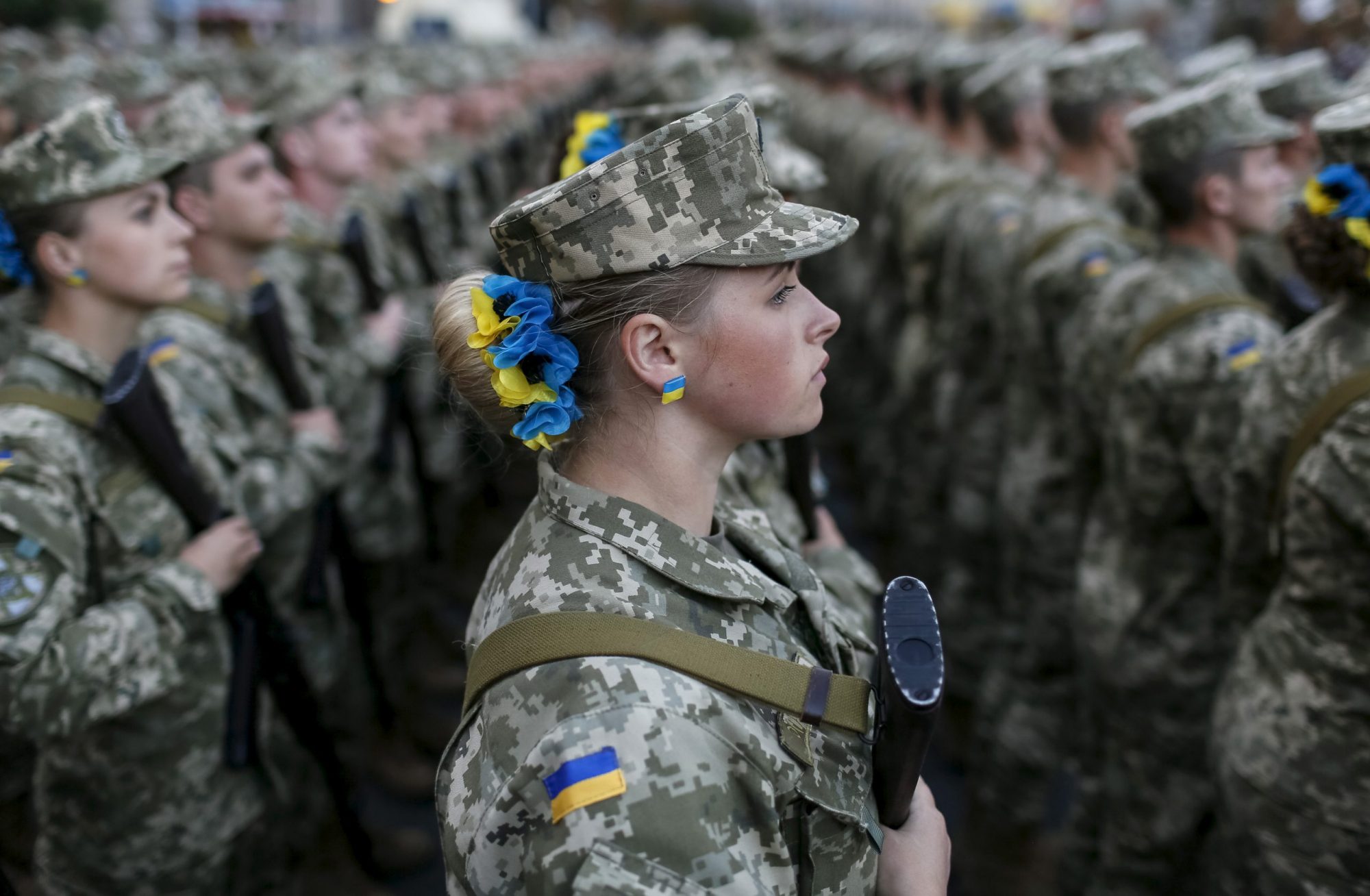
Ahead of the Christmas holiday, Ukrainian President Volodymyr Zelenskyy paid an official visit to the United States. While in Washington DC, he presented the American people with a symbol that is very dear to our hearts: a Ukrainian flag signed by The Watch, as we call the defenders of Bakhmut, a city in eastern Ukraine that is currently witnessing some of the fiercest fighting of the Russian invasion. This flag is a powerful symbol of the global fight for freedom taking place in our country.
In recent months, Bakhmut has become a fortress. Thousands of Ukrainians are on the front line fighting for freedom. Their daily struggle takes place knee-deep in mud and on frozen ground. Freedom is defended inch by inch in the trenches and amid the rubble of a shattered city. Ukraine is currently sacrificing its best people in defense of the free world. They are paying the highest possible price to safeguard their nation’s existence and the right to choose a democratic future.
The situation in Bakhmut is extremely difficult. Before the war, I had not had the opportunity to visit it, but I knew by reputation that it was an extraordinary city of sparkling wines, salt, and roses. Journalists, historians, and local artists have long called Bakhmut one of the most picturesque cities in eastern Ukraine. Based on my recent experience, I believe these claims are an understatement: the magic of Bakhmut is still evident, even though the city now lies in ruins.
Since summer 2022, Putin’s generals have concentrated their forces around Bakhmut in a desperate bid to seize the city. It has become a symbolic prize for the Kremlin that far outweighs any strategic value. They launch wave after wave of massive attacks, often suffering catastrophic casualties. In Russia, soldiers have always been viewed as expendable. This remains true today. But they are many and we also suffer painful losses.
Subscribe to UkraineAlert
As the world watches the Russian invasion of Ukraine unfold, UkraineAlert delivers the best Atlantic Council expert insight and analysis on Ukraine twice a week directly to your inbox.
- Name
First
Last
- Email*
- Name
This field is for validation purposes and should be left unchanged.
Despite the horrors of the battle, we know we must prevail. The essence of our defensive operation is not just to contain the enemy’s efforts but also to destroy a significant part of their offensive potential, both in terms of human resources and equipment. Thanks to a combination of daily heroism and military skill, Ukraine’s defenders have managed to disrupt the enemy’s plans consistently for the past few months. The Russians are unable to make strategic gains. Nevertheless, the battle continues. And the city of salt stands strong like steel.
Spending time with the Ukrainian military in Bakhmut was a great personal honor. President Zelenskyy spoke before our heroes to the accompanying sounds of the heavy artillery exchanges. We knew that at any moment, the conversation could be interrupted by a projectile sizzling above or exploding nearby.
Our visit was just a one-day trip, but the Watch of Bakhmut have been living with the reality of total war for months. Indeed, there are many Ukrainian soldiers in Bakhmut who have been fighting since the Russian invasion first began in 2014. They are ready to fight until the very end, until Ukraine’s victory.
These courageous men and women deserve to come back alive. For this to happen, they need effective weapons and reliable protection. They also need somewhere to return to. Their families must be safe and secure in homes with basic amenities such as electricity and heating. In order to achieve this goal, Ukraine’s skies must be secure.
Democracy cannot be taken for granted. Today, Ukraine is the main battlefield in the global struggle against resurgent authoritarianism. It is clear to Ukrainians that we are not only fighting for our freedom; we are fighting to defend the values of liberty and justice for the entire world. The dilemma is simple: if Ukraine wins, the free world wins; if we lose, all who value democracy and freedom will also lose.
We are confident the people of the United States and President Biden understand perfectly well what is at stake in Ukraine. We wholeheartedly appreciate the support provided to our country. Every single hard-earned US dollar is a bullet aimed at autocracy. This is the arsenal of democracy at work. Americans know the true value of freedom and appreciate the price Ukrainians are paying.
We are extremely grateful for America’s recent commitment to continue supporting Ukraine in 2023. It comes at a critical moment in the conflict. However, we are also acutely aware that US support must remain strong. In order to defeat Russia, Ukraine must receive more heavy weaponry, air defenses, and long-range missiles as well as ammunition, drones, armored vehicles, and much more.
The democratic world cannot afford to lose this war. If Russian dictator Vladimir Putin succeeds in Ukraine, he will inevitably wage further wars of aggression. Crucially, other dictators will view Russia’s success as a green light for their own invasions, plunging the entire world into a new era of violent instability.
There is nothing inevitable about this descent into international lawlessness. It can still be prevented by standing resolutely with Ukraine. The Watch of Bakhmut represent the front line in the global fight for freedom against a rising tide of authoritarianism. By supporting Ukraine today, Western leaders and societies are investing in a better tomorrow.
Andriy Yermak is the head of Ukraine’s Office of the President.
Further reading
The views expressed in UkraineAlert are solely those of the authors and do not necessarily reflect the views of the Atlantic Council, its staff, or its supporters.

The Eurasia Center’s mission is to enhance transatlantic cooperation in promoting stability, democratic values and prosperity in Eurasia, from Eastern Europe and Turkey in the West to the Caucasus, Russia and Central Asia in the East.
Follow us on social media
and support our work
The post Ukraine is the front line of the free world appeared first on Atlantic Council.
Wikimedia commons
- Hundreds of thousands of soldiers and civilians died in the first months of World War I, which changed the way war was waged.
- The war was supposed to be over by Christmas of 1914, but by December the war was stuck in the gruesome trench warfare WWI is known for.
- On Christmas Eve and Day a spontaneous truce broke out on the Western Front against the orders of high command.
World War I is, for good reason, remembered as one of the worst wars fought in human history.
Millions of soldiers and civilians died in a conflict that changed the way war was waged and set the stage for the rest of the 20th century.
But for one night and one day, some units in the warring parties — the armies of France and Britain on one side, and Germany on the other — put down their weapons for the briefest of moments to celebrate a holiday that brought opposing sides together.
The Great War was supposed to be over by Christmas of 1914. But five months after the war began in July, the front was deadlocked. The unprecedented losses at the Battles of Tannenberg, the Marne, and Ypres forced the opposing sides into the gruesome trench warfare that WWI is known for.
Huddled in their trenches on Christmas Eve, soldiers on both sides across the entire Western frontline celebrated the holiday as best as they could. Soon, all along the frontline combatants began to leave their trenches without their weapons, and meet enemy soldiers in no man’s land.
What followed was an amazing episode for humanity. Enemies who were, just hours before, slaughtering each other at a level unseen in human history, were talking, singing, dancing, and eating together as if they were friends.
British and German troops meeting in No-Man’s Land during the unofficial truce, 1914.
Wikimedia Commons
In letters to newspapers and loved ones, soldiers described how a spontaneous truce broke out.
“During Christmas Day our fellows and the Saxons fixed up a table between the two trenches and they spent a happy time together, and exchanged souvenirs and presented one another with little keepsakes,” one British soldier wrote.
“I had a most extraordinary Christmas, and I have come to the conclusion that I would not have spent it out of the trenches for worlds,” another British soldier said in a letter to loved ones. After establishing a truce, the soldier said that “in five minutes the ground between the opposing trenches was full of Germans and Highlanders exchanging cigars for cigarettes, and many other small luxuries.”
In some places, soccer games were held in no man’s land; sometimes against each other, and sometimes with mixed teams. “The regiment actually had a football match with the Germans who beat them 3-2,” an officer in the Royal Army Medical Corps wrote in a letter to a friend in London.
Soldiers on both sides also buried their dead and had Christmas services as if they were in church.
Perhaps the best way to sum up the truce was said by a British soldier whose letter to the Carlisle Journal was published on January 5, 1915:
“All this talk of hate, all this firing at each other that has raged since the beginning of the war quelled and stayed by the magic of Christmas,” he wrote. “It is a great hope for future peace when two great nations hating each other as foes have seldom hated, one side vowing eternal hate and vengeance and setting their venom to music, should on Christmas day and for all that the word implies, lay down their arms, exchange smokes and wish each other happiness.”
“It speaks to the common humanity in the midst of war, and to the very best of who we are — which is one of those things that we recognize during the holiday season,” Lora Vogt, the Curator of Education at the National WWI Museum and Memorial, told Insider.
Though truces were implemented in some combat areas, they were not upheld everywhere along the Western Front, and fighting did occur in some places during the holidays, according to London’s Imperial War Museum.
In areas were truces were established, the high commands of both sides did not approve of the actions of the soldiers. Some units were punished or transferred to other parts of the frontline, and no truces were ever held again for the rest of the war.
A century after the war began, German and British soldiers still get together to play soccer and celebrate Christmas. Now they do so as allies, part of the hopeful peace that the soldiers of 1914 no doubt prayed for in the trenches on the Western Front. Soldiers from the two countries previously played at a NATO base in Afghanistan.
Historical reenactments of the occasion have also been held in various locations throughout Europe, like England and Belgium.
German and British troops participate in a football match to commemorate the Christmas Truce of 1914, at the ISAF Headquarters in Kabul December 24, 2014.
Reuters
e-encators playing the British and German armies play football during a commemoration event to remember the World War one truce football match on June 1, 2014 in Saltburn-by-the-Sea, England.
Photo by Ian Forsyth/Getty Images
People in military WWI uniforms watch the “Game of Truce”, a recreation of a First World War Christmas truce football match, in Aldershot, west of London, on December 17, 2014.
BEN STANSALL/AFP via Getty Images
The National WWI Museum and Memorial has created an online exhibit with a massive collection of letters, some of which were used in this article. See the exhibit and read the accounts here >>
This original version of this post was created by Ben Brimelow and published on 12/25/2017.
Read the original article on Business Insider