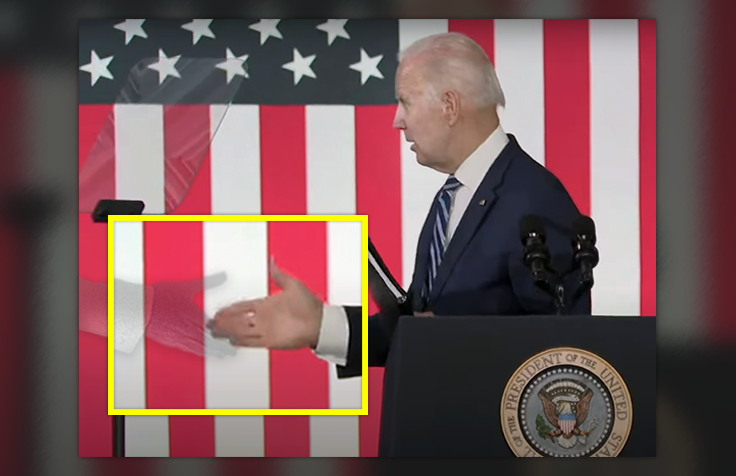
On April 14, 2022, President Joe Biden shook hands with a ghost. We know this for a fact because the Washington Free Beacon broke the story. More than 16.5 million people have viewed the incontestable video evidence.
Nevertheless, the ghost truthers persisted in their delusion. They debased themselves to defend the mental dexterity of a doddering geezer. They afflicted the comfortable by doing rapid response for the most powerful man in the world. Biden was simply “gesturing” to the audience, they insisted. The video lacked “context.”
What a bunch of freaks. They think they’re saving democracy one fact-check at a time, fighting on the front lines of an intellectual war for America’s future, living meaningful lives. They know exactly what they saw. They saw a ghost like everyone else. But they’ll deny it to their graves, where no one will ever visit them.
This one’s for you, ghost. The haters and the losers tried to erase you from existence, but we wouldn’t let them and we never will because we know the truth. You’re a Free Beacon Man of the Year.
There’s so much we’d like to ask you if we had the chance. Who are you? And what do you want? What’s your mission in the realm of the living? Can you fly and walk through walls? How do you perceive time? Is ghost sex real? Is it any good? Above all: Why did you visit the president on that fateful day? And was it just that one time, or are you the reason for all of his aimless wandering?
Was it you, Beau Biden? Did you come back to see if Hunter was still “consoling” your widow? (Probably.) Maybe you wanted to check up on that DuPont heir pedophile you let off on probation? Was it you, Jeffrey Epstein, plotting your revenge on Hillary? Maybe it was Corn Pop making amends with an old rival? Or maybe the ghost of Ted Kennedy trying to track down a waitress sandwich on short notice?
We may never know the answer. But we’ll never give up on this story.
WASHINGTON — Declaring that the central cause of the Jan. 6, 2021, attack on the Capitol was “one man,” the House committee investigating the assault delivered its final report on Thursday, describing in extensive detail how former President Donald J. Trump had carried out what it called “a multipart plan to overturn the 2020 presidential election” and offering recommendations for steps to assure nothing like it could happen again.
It revealed new evidence about Trump’s conduct, and recommended that Congress consider whether to bar Trump and his allies from holding office in the future under the 14th Amendment’s ban on insurrectionists.
“The central cause of Jan. 6 was one man, former President Donald Trump, whom many others followed,” the report said. “None of the events of Jan. 6 would have happened without him.”
The release of the full report was the culmination of the panel’s 18-month inquiry and came three days after the committee voted to formally accuse Trump of inciting insurrection, conspiracy to defraud the United States, obstruction of an act of Congress and one other federal crime as it referred him to the Justice Department for potential prosecution. While the referrals do not compel federal prosecutors to take any action, they sent a powerful signal that a select committee of Congress believes the former president committed crimes.
“Our institutions are only strong when those who hold office are faithful to our Constitution,” Rep. Liz Cheney, R-Wyoming, and the vice chairwoman of the committee, wrote in the report. “Part of the tragedy of Jan. 6 is the conduct of those who knew that what happened was profoundly wrong, but nevertheless tried to downplay it, minimize it or defend those responsible.”
The report contains the committee’s recommendations, which are intended to prevent future presidents from attempting a similar plot. The panel has already endorsed overhauling the Electoral Count Act, the law that Trump and his allies tried to exploit on Jan. 6 in an attempt to cling to power.
Among committee recommendations were a possible overhaul of the Insurrection Act and strengthening the enforcement of the 14th Amendment’s ban on insurrectionists holding office.
The panel also said Congress should consider bolstering its subpoena power and increasing penalties against those who threaten election workers. And it said bar associations should consider whether any of the lawyers who aided Trump should be punished.
The report went into great detail about a supporting cast of lieutenants who enabled him. Mark Meadows, his final chief of staff, and lawyers John Eastman, Rudy Giuliani, Jeffrey Clark and Kenneth Chesebro were named as potential “co-conspirators” in Trump’s various attempts to cling to power.
Trump bashed the report on his social media site, Truth Social, calling it “highly partisan.”
The report was largely an expanded version of the panel’s widely watched set of hearings this summer — which routinely drew more than 10 million viewers — with its chapter topics mirroring the themes of those sessions.
The chapters include Trump’s spreading of lies about the election, the creation of fake slates of pro-Trump electors in states won by President Biden, and the former president’s pressure campaign against state officials, the Justice Department and former Vice President Mike Pence. It documents how Trump summoned a mob of his supporters to Washington and then did nothing to stop them as they attacked the Capitol for more than three hours.
It documented how, at times, even Trump did not believe or take seriously some of the outlandish claims about election fraud being promoted by him and his allies. During a conference call two weeks after Election Day, lawyer Sidney Powell asserted that “communist money” had flowed through countries like Venezuela, Cuba and perhaps China to interfere with the election.
According to testimony provided to the committee by Hope Hicks, a former top aide to Trump, he “muted his speakerphone and laughed at Powell, telling the others in the room, ‘This does sound crazy, doesn’t it?’”
At the same time, it showed how Trump encouraged his most extreme supporters to back him as he energized protesters massing in Washington on Jan. 6, with an organizer of his rally that day noting that he “likes the crazies.”
The nine-member panel was made up of seven Democrats and two Republicans, all of whom gained new prominence through the tightly scripted and highly produced televised hearings.
“Our country has come too far to allow a defeated president to turn himself into a successful tyrant by upending our democratic institutions, fomenting violence and, as I saw it, opening the door to those in our country whose hatred and bigotry threaten equality and justice for all Americans,” Rep. Bennie Thompson, D-Mississippi, and the committee’s chairman, wrote in a foreword to the report.
Among those who received significant criticism in the report was Giuliani, Trump’s personal lawyer, whom he assigned to find ways to stop Biden from assuming power and Trump from losing it.
The committee’s report traced Giuliani’s post-election behavior from the moment Trump put him in charge of legal strategy shortly after the election to his efforts to directly pressure officials in battleground states.
“Rudy was just chasing ghosts,” the report quotes Trump’s former deputy campaign manager, Justin Clark, as saying of the earliest days after the election.
“The Big Lie,” the first chapter, recounts how Trump engaged in a premeditated plan starting on election night to falsely claim that he had won and claim that outstanding votes were fraudulent — and that he went on making those claims for months even after being informed repeatedly by his aides that he was wrong and had lost.
“Donald Trump was no passive consumer of these lies,” the report said. “He actively propagated them. Time and again President Trump was informed that his election fraud claims were not true. He chose to spread them anyway.”
Chapter 2, titled “I Just Want to Find 11,780 Votes,” recounts how Trump sought to pressure officials in Georgia to find the votes he needed to swing the state, which had been won by Biden. It goes on to explore Trump’s largely unsuccessful pressure campaign on a wide array of officials in other swing states he had lost to find ways to reverse the outcome.
Subsequent chapters cover the genesis of the so-called fake electors scheme, in which Trump and his allies sought to promote alternative slates of electors from states he had lost to try to block or delay certification of Biden’s victory, and Trump’s campaign to pressure Pence to bring the fake elector plan to fruition.
Trump was largely reliant on Eastman to provide legal justification for Pence in effect unilaterally deciding whether to accept the outcome of the election, but the report shows that he turned to other aides to help make the case as well. It says that either Trump or Meadows gave John McEntee, director of the Presidential Personnel Office, the job of researching the matter further.
Though McEntee was one of Trump’s close advisers, he was not a lawyer and had no relevant experience.
As Pence resisted and Trump castigated him publicly, officials became increasingly concerned about the vice president’s safety. On the morning of Jan. 6, the report says, “an agent in the Secret Service’s intelligence division was alerted to online chatter “regarding the V.P. being a dead man walking if he doesn’t do the right thing.’”
Chapter 6, called “Be There, Will Be Wild!,” recounts how Trump “summoned a mob for help” through a Twitter post on Dec. 19 that promoted a pro-Trump protest scheduled for Jan. 6 in Washington — a message, the report said, that “focused his supporters’ anger on the joint session of Congress” that would take place that day.
Far-right groups like the Oath Keepers and the Proud Boys mobilized, as did adherents of the QAnon conspiracy theory, the report said.
The report goes on to describe Trump’s three hours of inaction as violence swept across Capitol Hill and some of his supporters called for Pence to be hanged.
Another chapter analyzes the attack on the Capitol itself, showing how the Proud Boys and Oath Keepers appeared to storm the building in a deliberate fashion, and how many individual protesters came to Washington with firearms. Eleven minutes after protesters breached the Capitol building, Trump tweeted angrily about Pence. The violence would continue for hours.
The committee later asked McEntee about Trump’s demeanor during a phone call between the two of them at the end of the day after the violence had been quelled — and specifically about whether Trump expressed sadness.
“No,” McEntee said, according to the report. “I mean, I think he was shocked by, you know, it getting a little out of control, but I don’t remember sadness, specifically.”
One appendix in the report detailed the flood of threats about the potential for violence that law enforcement officials received before Jan. 6, and concluded that the failure to share and act on those threats “jeopardized the lives of the police officers defending the Capitol and everyone in it.”
More than 150 officers were injured during the day’s bloody assault.
For instance, on Dec. 26, 2020, the Secret Service received a tip about the Proud Boys having “a large enough group to march into D.C. armed and will outnumber the police so they can’t be stopped.”
It stressed, “Their plan is to literally kill people,” adding: “Please, please take this tip seriously and investigate further.”
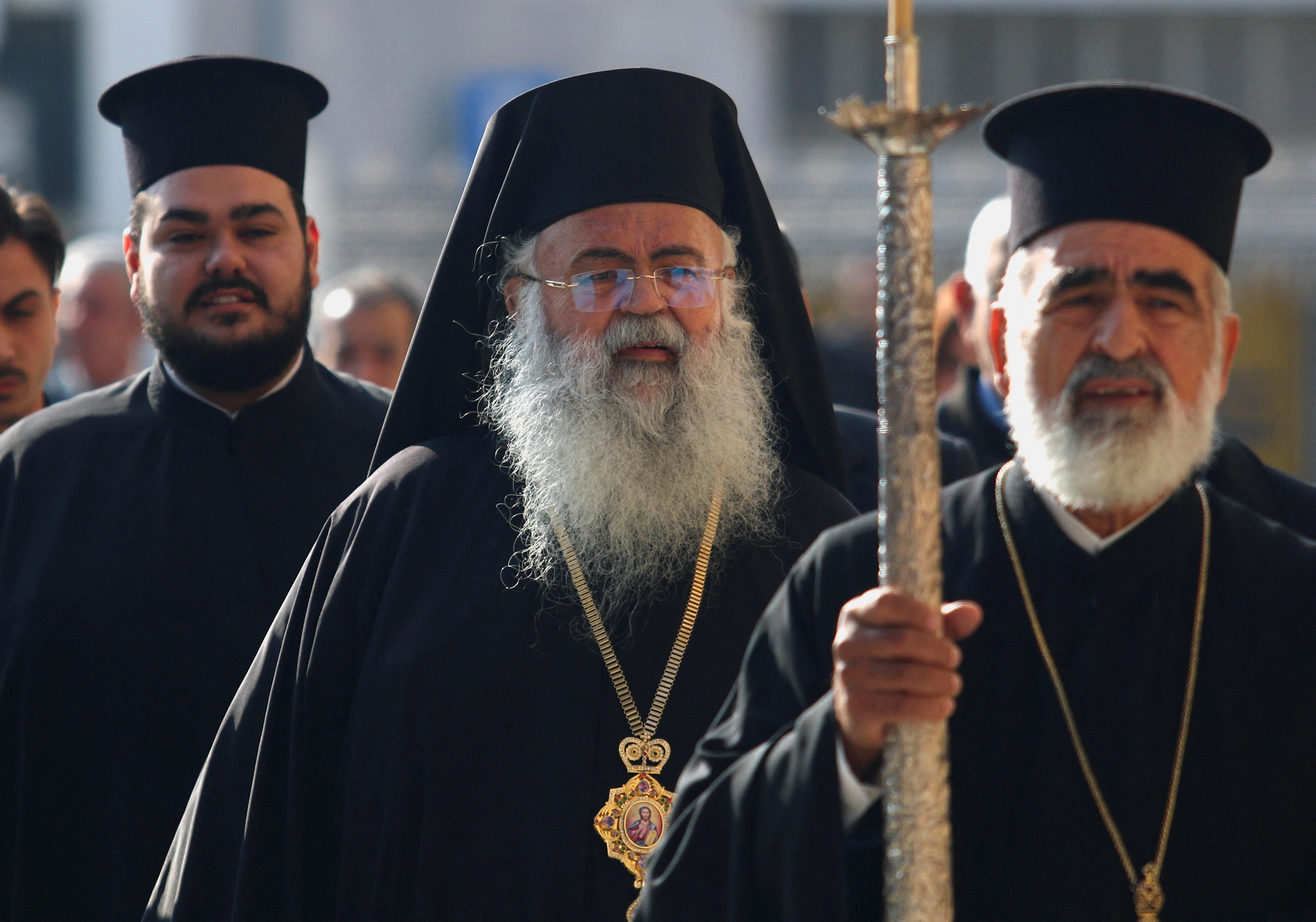
The Church of Cyprus’s ruling body on Saturday elected Georgios, a theologian and former chemistry teacher, as Archbishop of the centuries-old Church, replacing the late Chrysostomos II.
Georgios, 73, will lead the Greek Orthodox Church, which has wide political and social influence on the east Mediterranean island and interests from real estate investments to businesses.
Having read chemistry in Greece and Britain and later taught at high schools, Georgios was elected by a majority on the 16-member Holy Synod.
Custodian of the Church since Chrysostomos’s death, Georgios was close to the late Archbishop, who notably recognised the independence of the Orthodox Church of Ukraine from Russia.
It is one of a handful of Orthodox Churches worldwide to do so, even though it triggered a rift within its ranks.
The selection process was among three frontrunners from a Dec. 18 public vote. read more Georgios came second in that vote, trailing by a wide margin behind Athanasios of Limassol.
Athanasios, viewed as ultra-conservative by detractors but enlightened by supporters, also topped the public vote in the last Archbishop elections in 2006, but was edged out then by manoeuvring from other clerics.
Related Galleries:
Georgios, Cyprus’s newly-elected Archbishop, shortly after a secret ballot of the Church’s ruling Holy Synod, walks outside the Holy Archbishopric in Nicosia, Cyprus, December 24, 2022. REUTERS/Yiannis Kourtoglou
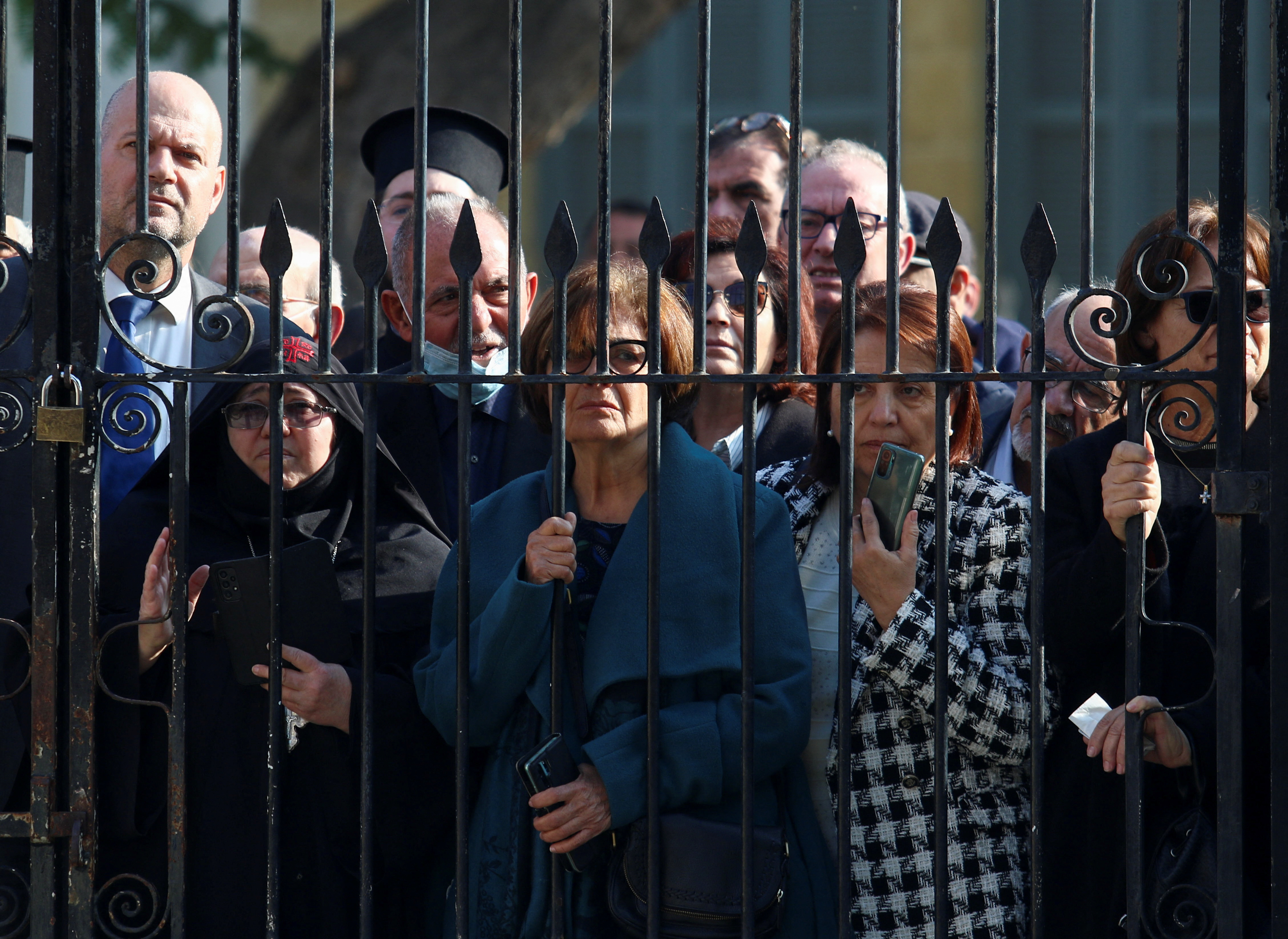
Orthodox faithful wait to see Georgios, Cyprus’s newly-elected Archbishop, shortly after a secret ballot of the Church’s ruling Holy Synod, outside the Holy Archbishopric in Nicosia, Cyprus, December 24, 2022. REUTERS/Yiannis Kourtoglou
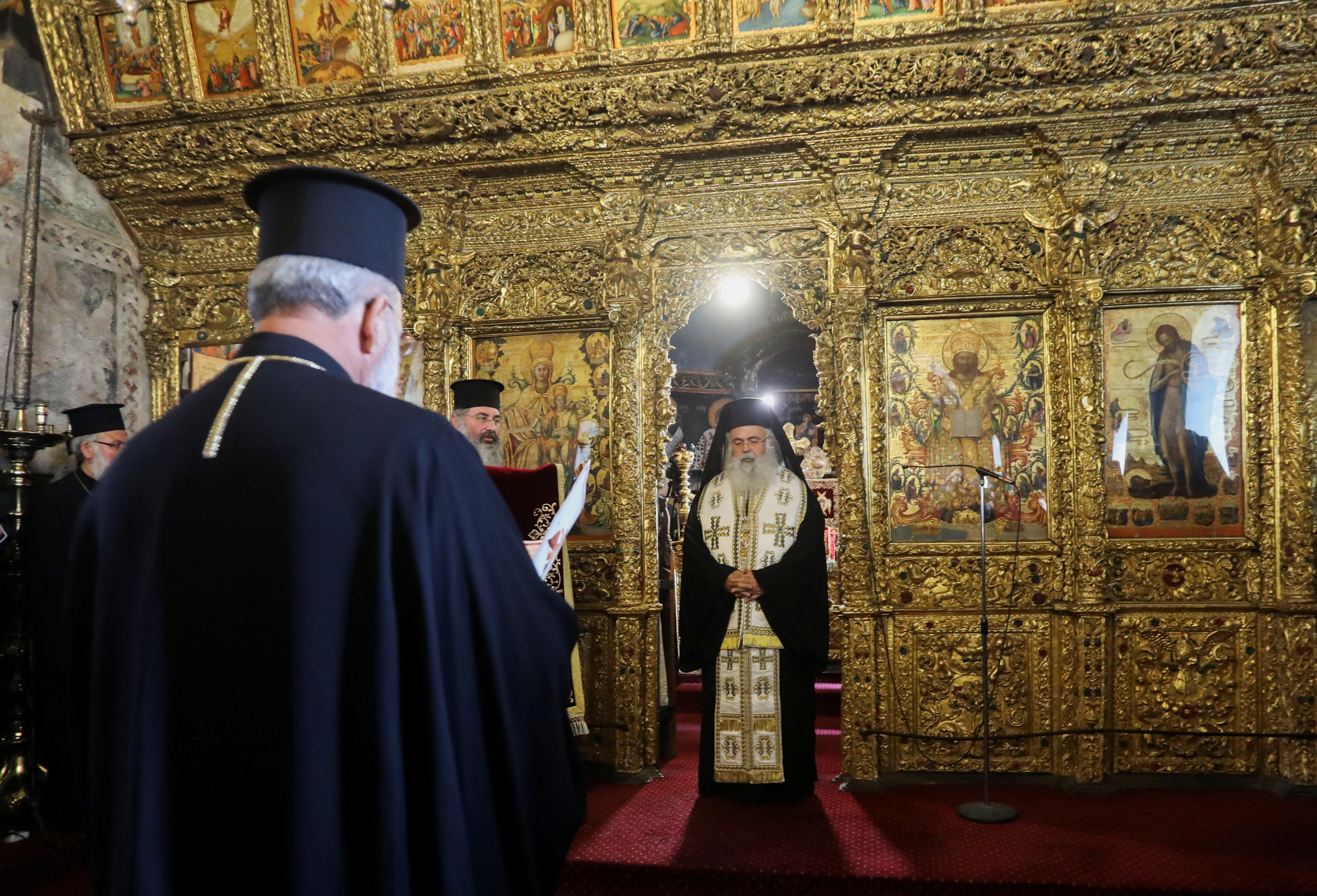
Georgios, Cyprus’s newly-elected Archbishop stands inside the Agios Ioannis Church, shortly after a secret ballot of the Church’s ruling Holy Synod elected him as a new Archbishop in Nicosia, Cyprus, December 24, 2022. REUTERS/Yiannis Kourtoglou
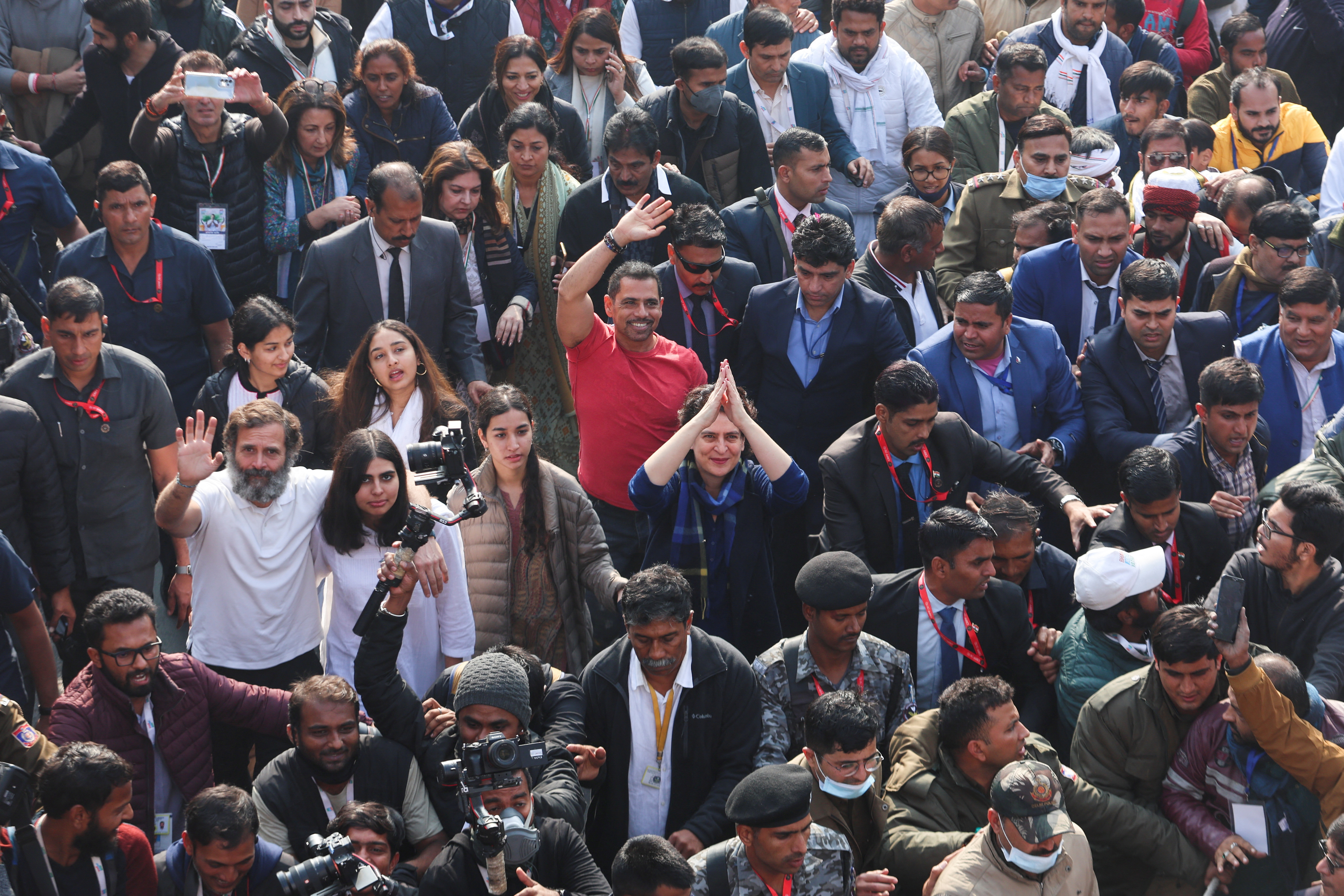
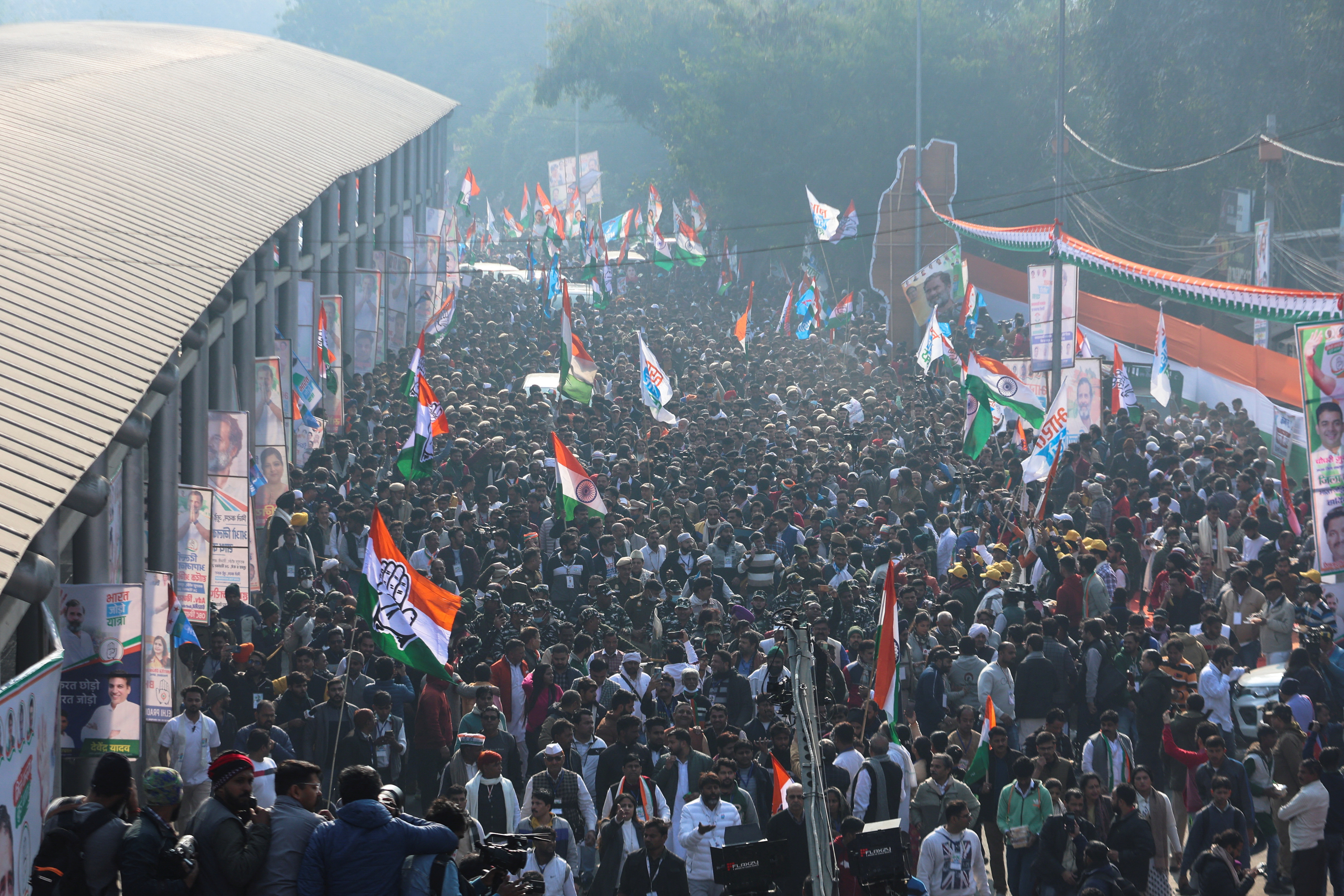
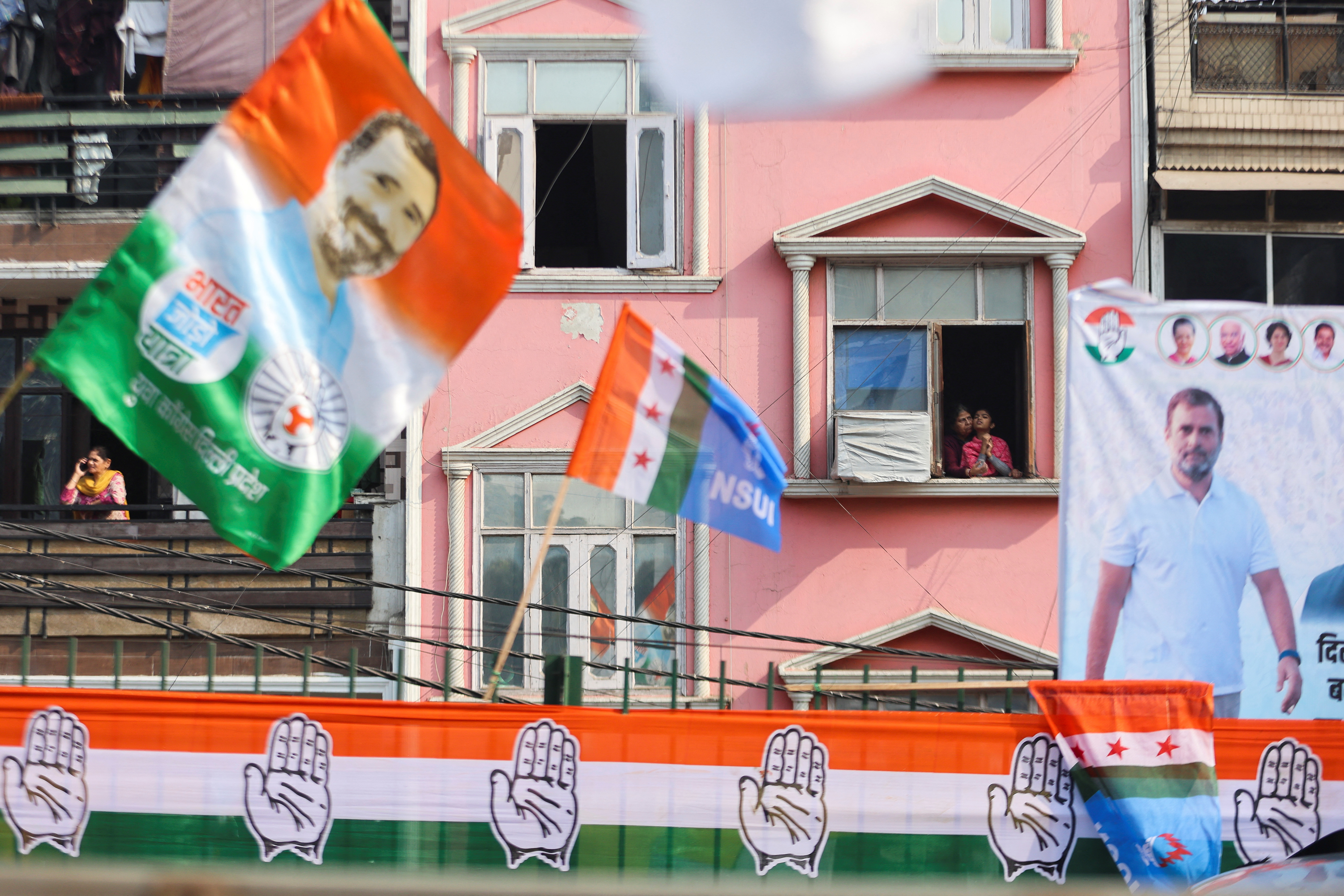
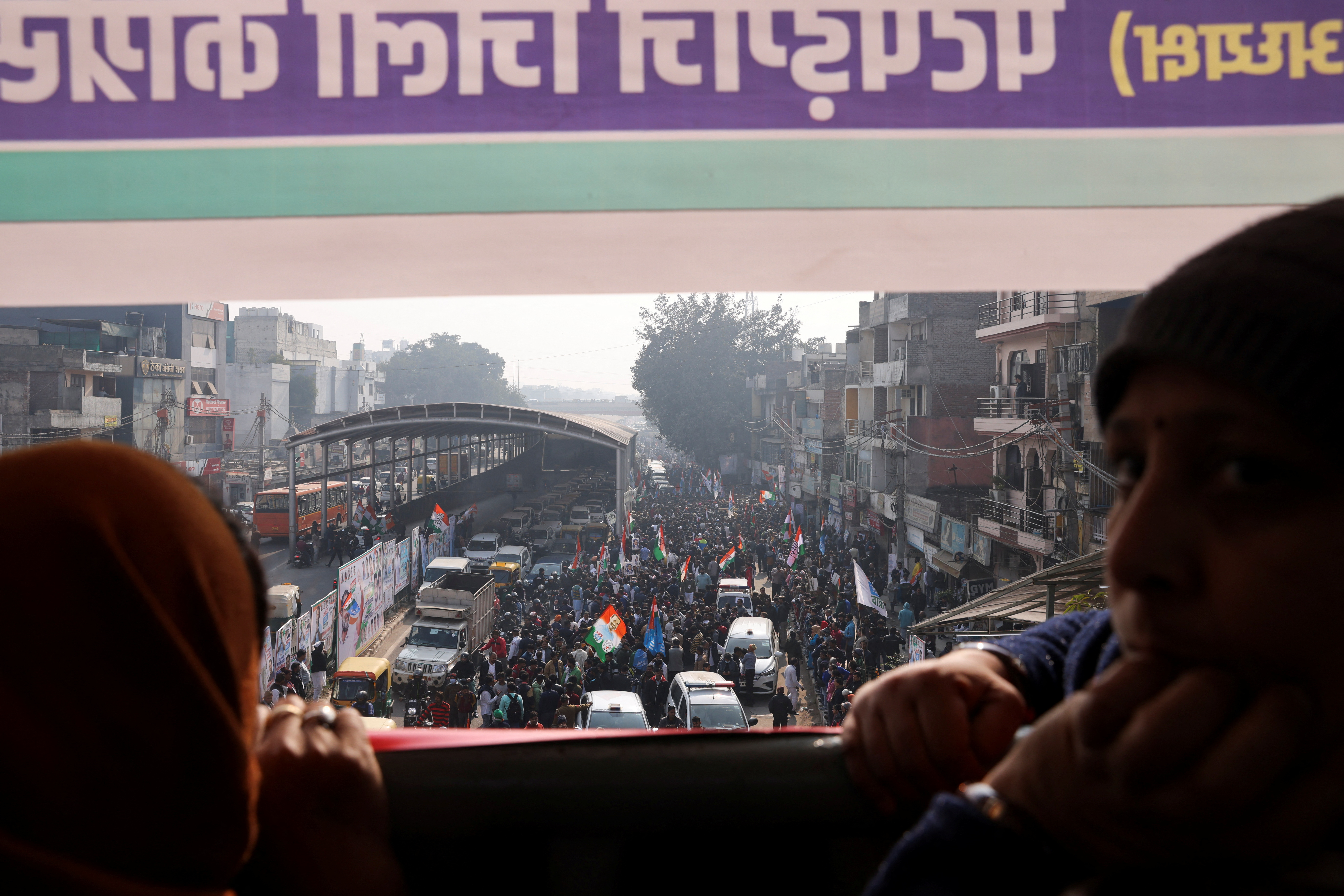
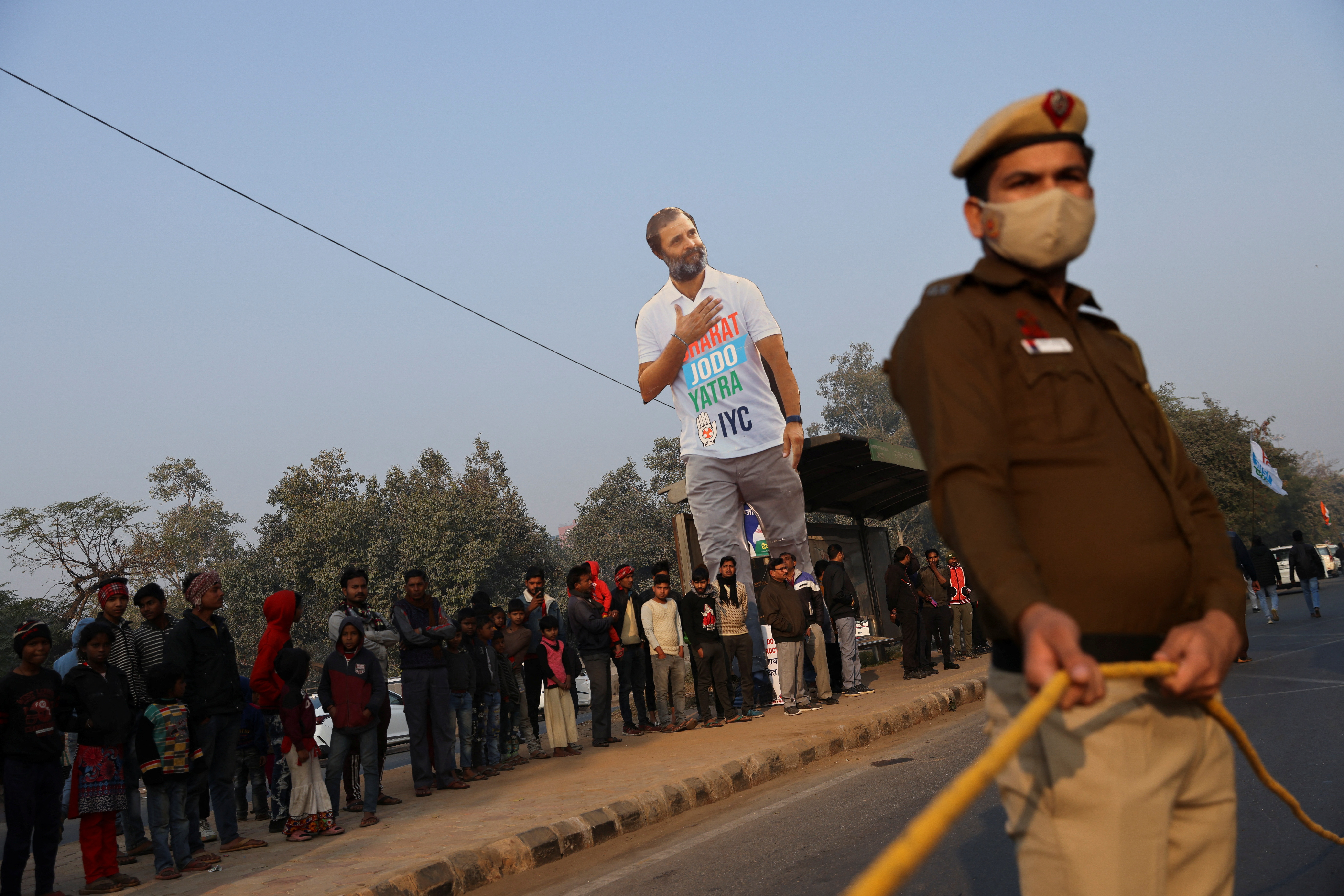
A cross-country march led by Indian opposition leader Rahul Gandhi reached the capital New Delhi on Saturday, hoping to regain some of the popularity it lost to the ruling Hindu-nationalist party.
More than 1,000 people joined Gandhi’s march against “hate and division”, which aims to turn the Congress party’s fortunes around after its drubbing by the Bharatiya Janata Party (BJP) in a 2019 election.
The parade, which has received a better public response than expected, will take a nine-day break in Delhi before starting its final leg on Jan. 3 towards Srinagar in the northernmost Himalayan region of Kashmir.
Gandhi’s mother, former Congress president Sonia Gandhi, party leader Priyanka Gandhi and her husband Robert Vadra joined Saturday’s march.
The Nehru-Gandhi dynasty has controlled the Congress party for decades but has also overseen its recent decline. Rahul Gandhi resigned as Congress president after the last election. The next one is due by 2024.
Sharing a picture of himself hugging his mother during the rally, Gandhi tweeted: “The love I have received from her is what I am sharing with the country”.
The “Unite India Rally” march began in September in the coastal town of Kanyakumari on the southern tip of India. It plans to cover more than 3,500 km (2,200 miles) to reach Srinagar in about 150 days.
Related Galleries:
India’s main opposition Congress Party’s leader Rahul Gandhi, his niece Miraya Vadra, Congress party leader Priyanka Gandhi and her husband Robert Vadra take part in an ongoing Bharat Jodo Yatra (Unite India March), in New Delhi, India, December 24, 2022. REUTERS/Anushree Fadnavis
People take part in an ongoing Bharat Jodo Yatra (Unite India March) by Congress Party leader Rahul Gandhi and his supporters, in New Delhi, India, December 24, 2022. REUTERS/Anushree Fadnavis
Women are seen at the window as they wait for the Bharat Jodo Yatra (Unite India March) by Congress Party’s leader Rahul Gandhi and his supporters to pass by, in New Delhi, India, December 24, 2022. REUTERS/Anushree Fadnavis
Women watch the Bharat Jodo Yatra (Unite India March) by Congress Party’s leader Rahul Gandhi along with his supporters, in New Delhi, India, December 24, 2022. REUTERS/Anushree Fadnavis
People wait for Rahul Gandhi near his cutout as they wait for the Bharat Jodo Yatra (Unite India March) by Congress Party’s leader Rahul Gandhi and with his supporters to pass by, in New Delhi, India, December 24, 2022. REUTERS/Anushree Fadnavis
An arctic blast that has gripped much of the United States this week, disrupting daily life and holiday travel for millions of Americans, was expected to produce the coldest Christmas Eve on record in several cities from Pennsylvania to Florida.
Temperatures are forecast to top out on Friday at just 8 degrees Fahrenheit (-13 Celsius) in Pittsburgh, the largest city in western Pennsylvania, surpassing its previous all-time coldest Christmas Eve high of 13 F, set in 1983, the National Weather Service (NWS) said.
The capital cities of Florida and Georgia – Tallahassee and Atlanta – were likewise expected to record their coldest daytime Christmas Eve high temperatures, while Washington, D.C., was forecast to experience its chilliest Dec. 24 since 1906.
The flurry of yuletide temperature records were predicted as a U.S. deep freeze sharpened by perilous wind chills continued to envelope much of the eastern two-thirds of the nation into the holiday weekend.
The arctic cold combined with a “cyclone bomb” of heavy snow and howling winds roaring out of the Great Lakes region on Friday and into the Upper Mississippi and Ohio valleys to wreak havoc on power systems, roadways and commercial air traffic.
Extreme winter weather was blamed for at least five deaths on Friday.
Two motorists were killed, and numerous others injured, in a 50-vehicle pileup that shut down the Ohio Turnpike in both directions during a blizzard near Toledo, forcing an evacuation of stranded motorists by bus to keep them from freezing in their cars, officials said.
Three more weather-related fatalities were confirmed in neighboring Kentucky – two from car accidents and one a homeless person who died of exposure.
Freezing rain and ice from a separate storm in the Pacific Northwest made travel treacherous there as well on Friday.
From the Canadian to the Mexican border and coast to coast, some 240 million people in all were under winter weather warnings and advisories of some sort on Friday, according to the weather service.
The NWS said its map of existing or impending meteorological hazards “depicts one of the greatest extents of winter weather warnings and advisories ever.”
With energy systems across the country strained by rising demand for heat and storm-related damage to transmission lines, as many as 1.5 million U.S. homes and businesses were left without power on Friday, according to tracking site Poweroutage.us.
The disruptions upended daily routines and holiday plans for millions of Americans during one of the busiest travel periods of the year.
The American Automobile Association had estimated that 112.7 million people planned to venture 50 miles (80 km) or more from home between Friday and Jan. 2. But stormy weather heading into the weekend likely ended up keeping many of them at home.
More than 5,700 U.S. flights were canceled on Friday, according to flight-tracking service FlightAware, while blizzard conditions virtually paralyzed road travel in some regions.
The city of Buffalo and its surrounding county on the edge of Lake Erie in western New York imposed a driving ban, and all three Buffalo-area border crossing bridges were closed to inbound traffic from Canada due to the weather.
The severe weather prompted authorities across the country to open warming centers in libraries and police stations while scrambling to expand temporary shelter for the homeless. The challenge was compounded by the influx of migrants crossing the U.S. southern border by the thousands in recent weeks.
Bitter cold intensified by high winds extended through the Deep South to the U.S.-Mexico border, plunging wind chill factors to single digits Fahrenheit (minus 18 to minus 13 Celsius) in El Paso, Texas. Exposure to such conditions can cause frostbite within minutes.
Related Galleries:
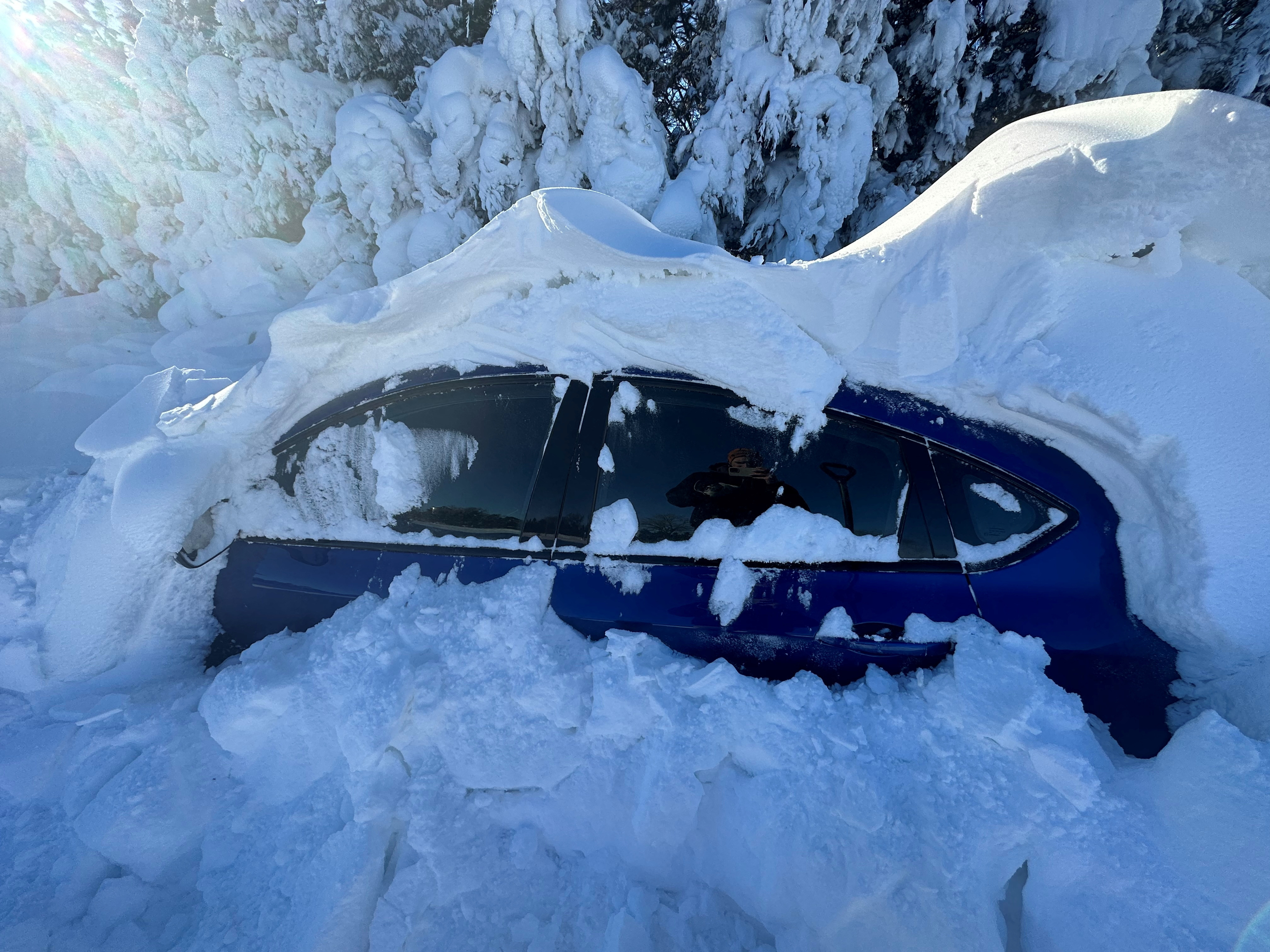
A view of a car covered in snow after heavy snowfall in Regent, North Dakota, U.S. December 23, 2022, in this picture obtained from social media. Blake Rafferty/Twitter@BlakeRafferty1/via REUTERS
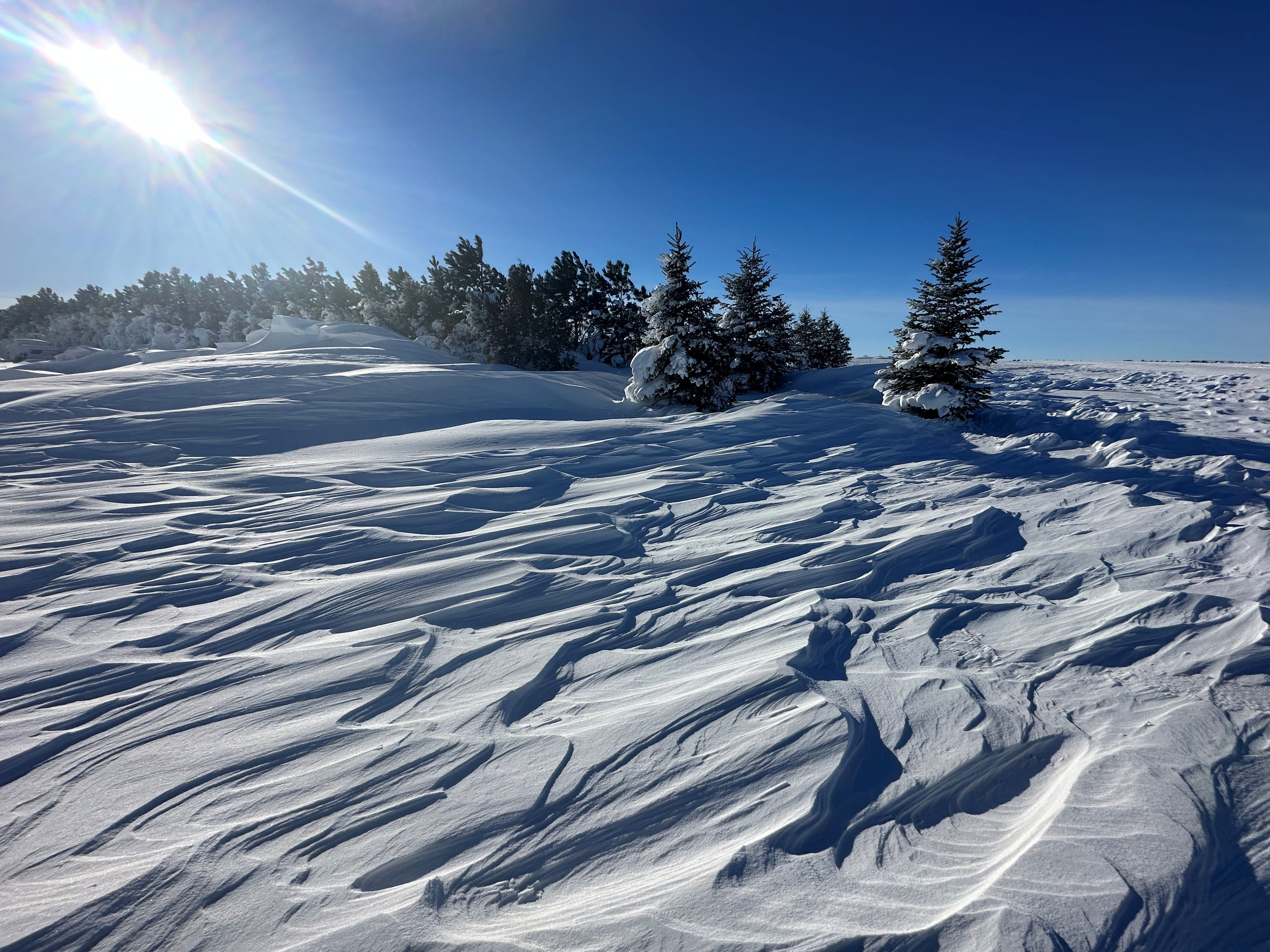
A view of an area after heavy snowfall in Regent, North Dakota, U.S. December 23, 2022, in this picture obtained from social media. Blake Rafferty/Twitter@BlakeRafferty1/via REUTERS
With Election Day approaching, polling showed a tightening race in New York’s 3rd Congressional District: A blue seat on Long Island was in danger of being flipped. Aware of the threat, a political action committee aligned with House Democrats spent just under $3 million in independent expenditures to back their candidate and oppose his Republican opponent, George Santos.
On Santos’s side, though, the last-minute cash infusions were paltry. The Congressional Leadership Fund, a super PAC that backs House Republicans, did not spend any money on the race. The absence was conspicuous: The fund poured more than $1.5 million into the races in the neighboring 4th and 2nd Districts — both of which Republicans won.
Outside help for Santos came in the form of $3,377 from the National Right to Life Victory Fund, according to OpenSecrets, and a $54,000 transfer from Take Back the House 2022 PAC, a group aligned with House Minority Leader Kevin McCarthy, according to federal filings — peanuts in a race that saw millions spent.
“There’s simply no way that Republicans in D.C. weren’t aware of these same red flags.”
Santos ended up not needing the boost: He won the race against Democratic candidate Robert Zimmerman by 8 points. The win was notable only for being one of four New York congressional seats that flipped red — this one in a district that Democrats had held since 2013.
Since the election, however, Santos has risen to infamy, as his official biography has largely fallen apart under scrutiny.
The revelations have led Santos’s opponents to revisit the reasons behind national Republicans’ lack of attention to the close congressional race. “We knew from our research that George Santos’s past was full of deceptive claims and shady financial dealings — and we worked hard to make this known and hold him accountable,” Evan Chernack, Zimmerman’s former campaign manager, told The Intercept. “There’s simply no way that Republicans in D.C. weren’t aware of these same red flags.”
The controversy has raised questions from political strategists, pundits, and elected officials as to how Santos was able to avoid the revelations until after the election, and what role media outlets and opposition researchers played in the failure. Santos’s lawyer claimed the reporting in the New York Times that blew upon the holes in Santos’s biography was a “defamatory” attempt to smear his name, but did not dispute any specific claims. In a tweet Thursday, Santos said he would tell his story “next week.” (Neither the Congressional Leadership Fund nor the Santos campaign immediately responded to requests for comment.)
Since Santos’s resume crumbled, Republicans have been relatively quiet. On Thursday, Nassau County Republican Committee Chair Joseph Cairo said that while Santos deserves a “reasonable amount of time” to respond to recent reporting, “voters deserve a sincere accounting from Mr. Santos.”
Santos had fundraised off an endorsement from fellow New York House Republican Conference Caucus Chair Elise Stefanik, who has been mum on the revelations. And McCarthy, who endorsed Santos in the Republican primary, has not commented on the inconsistencies in Santos’s biography.
If Republicans did know about the inconsistencies in Santos’s biography, Zimmerman’s former campaign manager wonders why they didn’t — and still won’t — come out and disavow him. Zimmerman said, “All of this raises the question: How did GOP leadership continue to enable and support their chosen candidate while he lied to the voters of NY-03?”
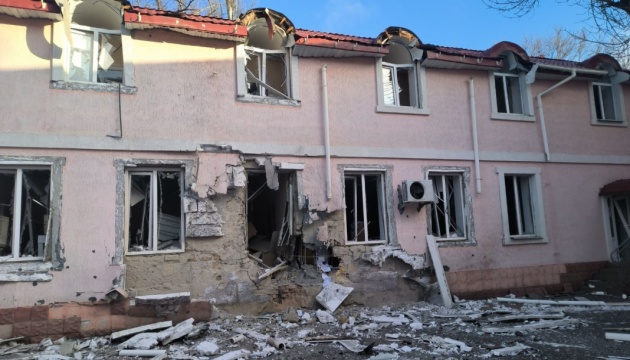
Russian troops shelled the territory of Kherson region 74 periods in excess of the previous day, killing 5 civilians and injuring 17 far more.
“The enemy was attacking the residential neighborhoods of Kherson city mercilessly all day extensive, 36 strikes had been recorded. Russian shells strike essential infrastructure amenities, kindergartens, a university, a hospital, shops, a factory, private properties, and apartment blocks,” Yaroslav Yanushevych, Head of the Kherson Regional Armed forces Administration, posted on Telegram.
Around the past working day, the Russian military killed 5 civilians and hurt 17 additional in Kherson area. In distinct, a child was taken to the medical center with several shrapnel accidents. The female is in really serious affliction.
As noted, the Russian troops boosted the railway transportation of staff, armed forces gear, and ammunition to the locations of military services functions.
NICE, France (AP) — Tunisia’s increasingly authoritarian president appears determined to upend the country’s political system. The strategy is not only threatening a democracy once seen as a model for the Arab world, experts say it is also sending the economy toward a tailspin.
The International Monetary Fund has frozen an agreement meant to help the government get loans to pay public sector salaries and fill budget gaps aggravated by the COVID-19 pandemic and the fallout from Russia’s war in Ukraine.
Foreign investors are pulling out of Tunisia, and ratings agencies are on alert. Inflation and joblessness are on the rise, and many Tunisians, once proud of their country’s relative prosperity, now struggle to make ends meet.
An election debacle a week ago has made matters worse: Just 11% of voters took part in a first-round vote for a new parliament meant to replace a legislature disbanded last year by President Kais Saied. Opposition figures, including from the popular Islamist movement Ennahdha, are demanding that he step down, and unions are threatening a general strike.
Saied himself designed the elections to replace and reshape the parliament, as part of broad reforms that bolster his powers and that he says will solve Tunisia’s multiple crises. But voter disillusionment with the ruling class amid dire economic troubles contributed to a near-boycott of the election.
Tunisia’s Western allies, like the United States and France, have expressed concern and urged the president to forge an inclusive political dialogue that would benefit the sluggish economy. Tunisia was the birthplace of Arab Spring democratic uprisings 12 years ago.
Saied rejected criticism over the low voter turnout, saying what really matters is the second round of voting Jan. 19. He says his reforms are needed to rid the country of the corrupt political class and Tunisia’s foreign enemies. He lashed out at his political foes in the Ennahdha party, which had the largest number of lawmakers in the previous parliament, and ordered the arrest this week of its vice-president and former Prime Minister Ali Larayedeh on terrorism-related charges.
“Saied seems impervious to criticism and intent on bulldozing his way to a new political system no matter how few Tunisians are engaged in the process,” said Monica Marks, a Tunisia expert and professor of Middle East politics at the New York University in Abu Dhabi.
“No Tunisian asked Saied to reinvent the wheel of Tunisian politics, to write a new constitution and revamp the election law,” Marks said. “What Tunisians have been asking for is a more respectful government that meets their bread-and-butter needs and gives them economic dignity.”
Saied’s promises to stabilize the economy helped ensure his landslide victory in the 2019 presidential election.
But he has yet to present an economic recovery plan or strategy for his deeply indebted government to secure funds to pay for food and energy subsidies. The president has sidelined economists in state institutions, stalling the country’s budget and souring the environment for foreign investors.
Tunisians have been hit with soaring food prices and shortages of fuel and basic staples like sugar, vegetable oil and rice in recent months. Inflation has reached 9.1%, the highest in three decades, according to the National Institute of Statistics, and unemployment is at 18% percent, according to the World Bank.
“President Saied naively seems to think that if only he can complete his political roadmap, the economy will fix itself,” said Geoff Porter, a New York City-based North Africa risk assessment analyst, in a recent brief.
Tunisia reached a preliminary agreement with the IMF on a $1.9 billion loan in October. It would enable the heavily indebted Tunisian government to access loans from other donors over a four-year period in return for sweeping economic reforms that include shrinking the public administration sector — one of the world’s largest — and a gradual lifting of subsidies.
The agreement was subject to the IMF executive board’s approval, scheduled for Dec. 19. The state news agency TAP reported that “the government and the IMF have agreed to postpone” the final decision on the loan to give Tunisian officials “more time to present a new reform plan for the country’s sluggish economy.”
Tunisia desperately needs access to the special drawing rights in order to avoid defaulting on external debt and to stabilize the economy, Porter said. He added: “Without the IMF funds, Tunisia’s economic freefall will accelerate.”
Foreign investors operating in Tunisia are worried.
Pharmaceutical manufacturers Novartis and Bayer are leaving the country because they are not getting paid by the insufficiently funded state pharmaceutical distributor.
Royal Dutch Shell, which operates two gas fields that accounted for 40% of Tunisia’s domestic production, announced in November it will exit Tunisia by year’s end. Despite hype over the country’s hydrogen sector, nothing has been done to attract investors as the country’s regulatory institutions are paralyzed by Saied’s political moves, Porter said.
The president has also lost the tentative support of the country’s powerful trade union, the UGTT, for the IMF-prescribed reform plan in exchange for a bailout.
UGTT leader Noureddine Taboubi agreed in August to discuss a new “social contract” to help Tunisians in financial distress, the state TAP news agency reported. But Taboubi, whose influential union represents 67% of Tunisia’s work force, mainly employed in the public sector, recently pulled back on his commitment. He renewed his opposition to the IMF’s main demands to receive a loan program: a public sector wage freeze and restructuring of state-owned enterprises.
___
Bouazza ben Bouazza contributed from Tunis, Tunisia.
A gas tanker apparently stuck under a bridge exploded in Johannesburg on Saturday, killing eight people, injuring scores more and damaging nearby buildings, emergency services said.
The blast broke the roof of the emergency department at the Tambo Memorial hospital, destroyed two houses and several cars, and injured bystanders.
The vehicle caught fire while under a low bridge, but emergency services spokesperson William Ntladi said investigations were ongoing.
:quality(70)/cloudfront-us-east-1.images.arcpublishing.com/tronc/N47KVLWFTV5NN7VVEU35DSUNLA.jpg)
:quality(70)/cloudfront-us-east-1.images.arcpublishing.com/tronc/OYODFSMNGG6VK3A2CYBWVR675A.jpg)
:quality(70)/cloudfront-us-east-1.images.arcpublishing.com/tronc/6QAW6PQQLHF4B3LHYMJN6MPFWY.jpg)
:quality(70)/cloudfront-us-east-1.images.arcpublishing.com/tronc/NC2TWSBXMWLZDQ4CZKGIAT6MQE.jpg)
:quality(70)/cloudfront-us-east-1.images.arcpublishing.com/tronc/GAYOEVTEZJHUDK4TMU6OOLIVJQ.jpg)