Categories
Audio Sources - Full Text Articles

See how the US military has celebrated Christmas at bases around the world

military Christmas USS GHWBAn F/A-18 Hornet decorated with lights and an oversized Santa on board the aircraft carrier USS George H. W. Bush in 2010.

Petty Officer 3rd Class Kevin Steinberg/US Navy

  • The US military has thousands of troops stationed at hundreds of bases in dozens of countries around the world.
  • During the holiday season, service members at these outposts often look for ways to add some Christmas spirit.

When troops are deployed or stationed overseas during the holidays, they do everything they can to bring the Christmas spirit to their duty stations. Commands host special meals, decorate their bases, and conduct concerts or ceremonies to boost troop morale. 

In past years, many US bases around the world have decorated their respective facilities and prepared festive meals for the holiday. From Afghanistan to Kosovo, see how US troops stationed overseas have brought Christmas cheer to their bases.

Soldiers eat a Christmas dinner in Afghanistan.Members of the U.S. military eat Christmas dinner at the Resolute Support Headquarters in Kabul, Afghanistan, Monday, Dec. 25, 2017.Members of the U.S. military eat Christmas dinner at the Resolute Support Headquarters in Kabul, Afghanistan, Monday, Dec. 25, 2017.

AP Photo/Rahmat Gul

Troops walk past a snowman and illuminated tree in Kosovo.US Army soldiers of the 4th Infantry Brigade Combat Team (Airborne) 25th Infantry Division, part of the NATO-led peacekeeping mission in Kosovo (KFOR), walk past a Christmas tree and a synthetic snowman as they prepare their gear during a US military exercise in Camp Bondsteel, near the village of Sojevo, on December 21, 2014.US Army soldiers of the 4th Infantry Brigade Combat Team (Airborne) 25th Infantry Division, part of the NATO-led peacekeeping mission in Kosovo (KFOR), walk past a Christmas tree and a synthetic snowman as they prepare their gear during a US military exercise in Camp Bondsteel, near the village of Sojevo, on December 21, 2014.

ARMEND NIMANI/AFP via Getty Images

Soldiers decorate a base in Afghanistan.oldiers with the NATO-led International Security Assistance Force (ISAF) are socialise near decorations during a special meal on Christmas Day at a military base in Kabul on December 25, 2013.Soldiers with the NATO-led International Security Assistance Force (ISAF) are socialise near decorations during a special meal on Christmas Day at a military base in Kabul on December 25, 2013.

Noorullah Shirzada/AFP via Getty Images

Troops walk past a Santa sign in Kyrgyzstan.US military personnel walk along their camp as they celebrate Christmas at a US base in Manas, 30 kms from Bishkek, on December 25, 2010. The Manas base in Kyrgyzstan is a major stop-off point for US operations into Afghanistan.US military personnel walk along their camp as they celebrate Christmas at a US base in Manas, 30 kms from Bishkek, on December 25, 2010. The Manas base in Kyrgyzstan is a major stop-off point for US operations into Afghanistan.

VYACHESLAV OSELEDKO/AFP via Getty Images

Soldiers toast their drinks at a Christmas dinner in Iraq.U.S. Air Force Majors Marla Ferguson, from Whitehouse, Ohio, left, and Dorothy DeLeon, from Greenville, N.C., right, toast glasses of sparkling cider for Christmas at the military dining hall at Camp Victory on the outskirts of Baghdad, Iraq, Friday, Dec. 25, 2009.U.S. Air Force Majors Marla Ferguson, from Whitehouse, Ohio, left, and Dorothy DeLeon, from Greenville, N.C., right, toast glasses of sparkling cider for Christmas at the military dining hall at Camp Victory on the outskirts of Baghdad, Iraq, Friday, Dec. 25, 2009.

AP Photo/Maya Alleruzzo

Troops eat a Christmas meal in Afghanistan.US soldiers eat lunch on Christmas day at a military camp in Nuristan Province on December 25, 2009.US soldiers eat lunch on Christmas day at a military camp in Nuristan Province on December 25, 2009.

TAUSEEF MUSTAFA/AFP via Getty Images

A US service member dresses as Santa and handed out gifts in Afghanistan.A US soldier from the 101st Airborne dressed as Santa Claus hands out gifts at a combat outpost at the Sabari District Center on Christmas Day December 25, 2008 in Sabari District, Khost Province, Afghanistan.A US soldier from the 101st Airborne dressed as Santa Claus hands out gifts at a combat outpost at the Sabari District Center on Christmas Day December 25, 2008 in Sabari District, Khost Province, Afghanistan.

Photo by Jonathan Saruk/Getty Images

Soldiers sing along at a base in Iraq.US Army handout picture released 27 December 2007 shows Lt. General Ray Odierno, commander of the Multi-National Corps - Iraq (C), singing Christmas songs with Soldiers of the 1st Battalion, 30th Infantry Regiment, 2nd Brigade Combat Team, 3rd Infantry Division at Patrol Base Hawkes in Arab Jbur, south of Baghdad, 25 December 2007US Army handout picture released 27 December 2007 shows Lt. General Ray Odierno, commander of the Multi-National Corps — Iraq (C), singing Christmas songs with Soldiers of the 1st Battalion, 30th Infantry Regiment, 2nd Brigade Combat Team, 3rd Infantry Division at Patrol Base Hawkes in Arab Jbur, south of Baghdad, on December 25, 2007.

Staff Sgt. Curt Cashour/AFP via Getty Images

A soldier decorates a base in Iraq.Specialist Hernandez Lorie from the 4th Infantry Division of the US army sets lights on a Christmas decoration at her base in Tikrit, 180 Kilometers (110 miles) north of the Iraqi capital Baghdad, 23 December 2003.Specialist Hernandez Lorie from the 4th Infantry Division of the US army sets lights on a Christmas decoration at her base in Tikrit, 180 Kilometers (110 miles) north of the Iraqi capital Baghdad, 23 December 2003.

JEWEL SAMAD/AFP via Getty Images


This post was originally created by Caitlin Foster and published on December 21, 2018.

Read the original article on Business Insider
Categories
Audio Sources - Full Text Articles

5 big military moments that took place on Christmas Day

1819_Passage_OfThe_DelawareThe Passage of The Delaware by Thomas Sully

Wikipedia

  • Even though Christmas is a major holiday, big events still happen on that day, even in military spaces.
  • Here are some momentous military developments that took place on December 25.

Christmas is one of the most celebrated holidays on earth, but that doesn’t mean that major events don’t happen during the holiday or that December 25 passes uneventfully every year.

Important events linked to both of America’s most formative wars — the Revolutionary War and the Civil War — took place on Christmas, and British and German troops even celebrated the holiday together on Christmas Day during WWI in a rare truce in the middle of horrific combat.

Here is a look at some of the major military events that have taken place on Christmas, a date with a rather rich history.

1776 — George Washington crosses the Delaware Riverwashington_crossing_the_delaware_Leutze’s depiction of Washington’s attack on the Hessians at Trenton.

en.wikipedia.org

In 1776, Washington led his troops across a 300-yard stretch of the Delaware River in the dead of night between December 25 and 26.

The surprise move would put Washington’s men a 19-mile march away from a garrison of Hessians — German mercenaries hired by the British to help them retain a hold on the rebelling colonies — that the Continental Army took completely by surprise.

The Hessians’ quick surrender at the Battle of Trenton, just 90 minutes into the fight against Washington’s 2,400 soldiers, would be the first of two rebel victories in New Jersey, the other being the Battle of Princeton a week later, as the Continental Army regained control of the colony.

This effectively reversed the British drive that had pushed the rebels across the state in the previous months. The daring crossing of the Delaware ended up being one of the turning points of the Revolutionary War.

1868 — US President Andrew Johnson pardons former Confederate soldiersAndrew Johnson pardons rebels at white housePresident Andrew Johnson Pardoning Rebels at the White House

en.wikipedia.org

Nearly a century later, on Christmas Day 1868, US President Andrew Johnson extended a full pardon and amnesty “to all and to every person who, directly or indirectly, participated in the late insurrection or rebellion.”

The Civil War had ended more than three years earlier, but Union General Ulysses S. Grant’s scorched-earth tactics late in the conflict had left much of the South in ruins. The country emerged from the war in a state of deep division.

Johnson had been a Tennessee congressman, senator, and governor before joining Abraham Lincoln’s presidential ticket. He was tipped in part to attract southern votes. At war’s end, however, he seemed to determine to punish those who had rebelled to preserve the institution of slavery.

The day after being sworn in as the nation’s president, Johnson said that “treason must be made infamous, and traitors must be impoverished.”

But according to the History Department at North Carolina State University, Attorney General James Speed tempered Johnson’s punitive intentions: “Mercy must be largely extended. Some of the great leaders and offenders only must be made to feel the extreme rigor of the law,” Speed advised.

Prior to this blanket Christmas Day amnesty, southerners who had fought for the Confederacy could obtain a pardon provided only that they swore allegiance to the Union (top officials were excluded). Under “Proclamation 179,” pardons were extended “to every person who, directly or indirectly, participated in the late insurrection.”

1914 — German, British, and French soldiers make temporary peace to celebrate Christmas togetherchristmas truce 1914 photoBritish and German troops meet in no man’s land on Christmas Day, 1914.

Wikimedia Commons

On Christmas Day 1914, the year that World War I began, soldiers left their trenches to observe the holiday in peace.

In the midst of brutal trench warfare, British and German soldiers laid down their arms to sing songs, play soccer, and barter with the cigarettes and sweets they had received in care packages.

More than 25 million people would die in that war, but as Smithsonian Magazine noted, for “a few brief hours” that Christmas Day, “men from both sides on the Western Front laid down their arms, emerged from their trenches, and shared food, carols, games and comradeship.”

That holiday truce was not officially sanctioned and, in some places, it was limited to an occasion for each side to bury their dead strewn across no man’s land, the barren stretch of earth between the opposing sides. On the Eastern Front, fighting continued. The Russians did not celebrate Christmas until January.

As the higher commands for the various sides were opposed to the actions soldiers had taken that Christmas, some participants were punished, and no such truce would again be established for the remainder of the war.

1941 — Japan seizes control of Hong Kong at the expense of the United Kingdomjapanese soldiers hong kong 1941 world war iiJapanese soldiers cross into Hong Kong.

Wikimedia Commons

Japan’s aggression during World War II began well before the attack on Pearl Harbor. In 1931, Imperial Japan invaded Manchuria, a vast coastal region in northeastern China. In 1937, it made advances on the rest of the country as well.

It wasn’t until 1941 that Tokyo directly confronted the West with its imperial ambitions, beginning with the December 7 attack on the US naval fleet in Hawaii.

The surprise assault was immediately followed by Japan’s invasion of Hong Kong, a British colony at the time that was defended by local troops from the territory, as well as the United Kingdom, Canada, India, China, and France.

Hundreds died in the 18-day battle for Hong Kong, which ended on Christmas Day 1941. Japan announced the British surrender that day in a radio broadcast.

Imperial Japan would not surrender Hong Kong back to the British Royal Navy until August 30, 1945.

1941 — News breaks that Admiral Émile Muselier captured Saint Pierre and Miquelon, an archipelago near Canada, for the Free French Forcesworld war ii free french saint pierre islands admiral muselierFree French Marines marching along the St. Pierre dock during the occupation on Dec. 26, 1941.

AP

The North American continent does not feature as a major hot spot in the events of World War II.

On Christmas Eve 1941, a small task force of Free French soldiers, operating under the command of Admiral Émile Muselier, stormed the island of St. Pierre, off the coast of Newfoundland, Canada, under the cover of darkness.

They met no resistance, despite the local administrator’s loyalty to France’s Vichy regime, and the island’s administrative centers were taken within an hour.

The storming of the island, which was known for producing liquor that was smuggled into the United States during Prohibition, eliminated what otherwise could have served as a fascist outpost deep among Allied nations.

Indeed, British Prime Minister Winston Churchill had bemoaned the fact that a powerful radio transmitter on the island was regularly airing “Vichy lies and poison throughout the world.”

The news came out quickly. “By five minutes past midnight on December 25, the story of the invasion was telegraphed to Canadian and American newspapers,” according to Douglas Anglin’s “Free French Invasion: The St. Pierre and Miquelon Affaire of 1941.” A day later, Nazi propaganda would falsely claim there had been a bloodbath.

Pierre Bienaimé wrote a previous version of this post.

Read the original article on Business Insider
Categories
Audio Sources - Full Text Articles

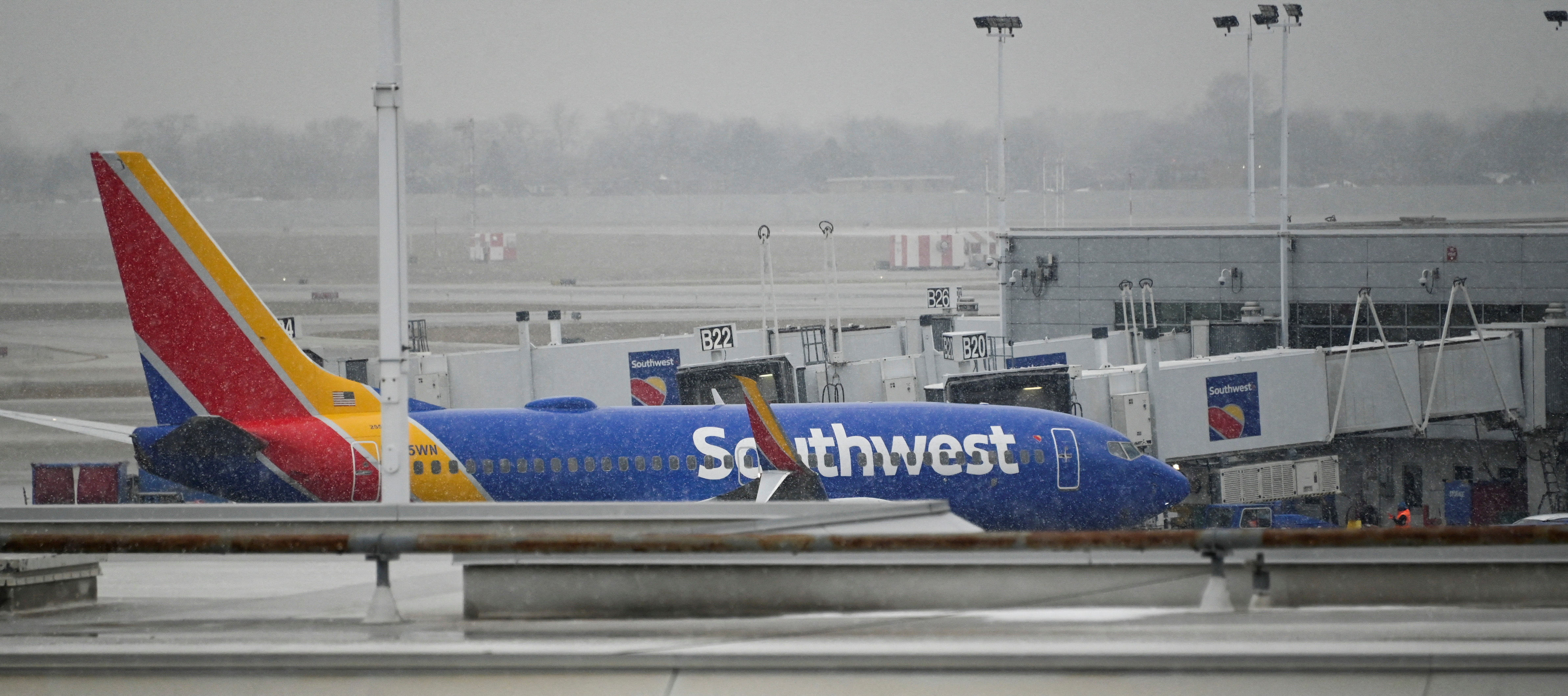
Nearly 2,000 Christmas Eve flights canceled and more than 10,000 delayed in US as brutal winter storms take toll on several states

An aircraft or airplane in heavy winter snow at an airport

Andrew Holt/Getty Images

  • Thousands of flight delays and cancellations sweep the US on Saturday, FlightAware reports.
  • Detroit, Minneapolis, and Atlanta are leading the US in cancellations this holiday weekend, according to FlightAware data.
  • The NWS predicts “potentially life-threatening” weather conditions across the US.

Flight delays and cancellations continue to soar amid winter storms sweeping the US – leaving travelers stranded during the holidays.

The NWS warns of blizzard conditions in the Midwest while an Arctic blast spreads across central and eastern US states throughout the holidays. The report described conditions as “a potentially life-threatening hazard for travelers.”

As a result, nearly 2,000 flights have been canceled in the US and 3,000 have been delayed as of Saturday morning, according to flight tracking site FlightAware.

The extreme conditions mean travelers are uncertain if they’ll make it to their destinations in time for Christmas as nationwide delays increase by the minute.

As it stands, Detroit, Minneapolis, and Atlanta airports have the most cancellations in the US, FlightAware reports. 

According 11Alive News, passengers were stranded at Atlanta’s Hartsfield-Jackson International Airport for hours as their flights were delayed multiple times or flat out canceled.

—Dawn White (@DawnWhiteNews) December 22, 2022

Traveler Christopher Fulton told 11Alive that he was planning to “stay positive” as he experienced back-to-back delays in Atlanta on his journey home to Florida.

“Since I’ve been sitting here, a couple of people’s flights have been canceled,” Fulton told the station. “It sucks for them because Christmas is on Sunday, and they won’t be home to their families in time. It’s heartbreaking.”

The National Weather Service warned Americans this week of blizzards, sub-zero temperatures, and intense winds, Insider’s Jake Epstein reported.

On Friday, the US experienced nearly 6,000 flight cancellations and over 11,000 delays due to the winter storms with Seattle, Chicago, Denver, and New York City claiming the most cancellations, FlightAware data shows.

Read the original article on Business Insider
Categories
Audio Sources - Full Text Articles

Airlines cancel 2,000 U.S. flights on Saturday over winter storm

2022-12-24T17:10:26Z

A plane sits on the airfield as flight cancellations mount during a cold weather front as a weather phenomenon known as a bomb cyclone hits the Upper Midwest, at Midway International Airport in Chicago, Illinois, U.S., December 22, 2022. REUTERS/Matt Marton/File Photo

Airlines canceled nearly 2,000 U.S. flights as of Saturday morning following a massive winter storm that snarled airport operations around the United States and frustrated thousands of holiday travelers.

Total flight delays within, into or out of the United States amounted to about 4,000 as of Saturday morning, according to flight tracking website FlightAware, which showed that total U.S. flight cancellations stood at around 2,000. The flight cancellations on Saturday morning included over 450 from Southwest Airlines (LUV.N) and nearly 400 from Delta Air Lines Inc (DAL.N).

The flight disruptions came as an arctic blast gripped much of the United States on Saturday, causing power outages and car wrecks. Plummeting temperatures were predicted to bring the coldest Christmas Eve on record to several cities from Pennsylvania to Georgia.

Temperatures are forecast to top out on Saturday at just 7 degrees Fahrenheit (minus 13 Celsius) in Pittsburgh, surpassing its previous all-time coldest Christmas Eve high of 13 F, set in 1983, the National Weather Service (NWS) said.

Winter storms have increased in frequency and intensity over the past 70 years, according to the U.S. Global Change Research Program. This is in part due to climate change, according to the Environmental Defense Fund, because the planet evaporates more water into the atmosphere as it warms, leading to more overall precipitation.

On Friday, U.S. flight cancellations stood at 5,936, according to FlightAware.

“Increased air traffic volume and winter weather affecting the Northern half of the U.S. could still cause delays to holiday travel,” the Federal Aviation Administration (FAA) said on Saturday, though travel conditions were expected to improve.

An NBC News affiliate reported that inclement weather canceled over 130 flights as of Saturday morning at the Seattle-Tacoma International Airport. Some passengers there told the news outlet they were not notified before coming to the airport.

An ABC News affiliate showed long lines at the Denver International Airport on Saturday morning, where over 150 flights were delayed and nearly 130 were canceled.

Passenger railroad Amtrak also canceled dozens of trains through Christmas, disrupting holiday travel for thousands.

Categories
Audio Sources - Full Text Articles

Expert found Backdoor credentials in ZyXEL LTE3301 M209

The cybersecurity researcher RE-Solver discovered Backdoor credentials in ZyXEL LTE3301-M209 LTE indoor routers.

Security researcher ReSolver announced the discovery of hardcoded credentials (CVE-2022-40602) in ZyXEL LTE3301-M209 LTE indoor routers.

ZyXEL LTE3301

In previous research, the expert discovered a Telnet backdoor in D-Link DWR-921 which is also present in the ZyXEL LTE3301-M209 as well. 

The researcher analyzed the commander ELF, focusing on the amit* functions that were containing the backdoor in D-Link routers.
Unlike the D-Link analysis, the researchers has no physical access to the device and attempted to retrieve the password from the config.

“The firmware is basically a merge of 3 sections, the LZMA section is the kernel, at 0x148CD6 the root-fs and at 0x90BD36 the www content.” wrote the expert. “Inside the last Squashfs there is a [censored] file which is contains at 0x10 the Zlib magic bytes.”

Once unpacked the file, ReSolver noticed the following sequence:

ZyXEL LTE3301

Despite he did not find Telnet credentials, he discovered something which looks like a backdoor in the webUI.

“Same as before and unpack the config.dat is going to contain the telnet login password” states the expert. “Let’s put things together: On ZyXEL LTE3301 we have two ways to own the device:

  • webUI credentials –> username / WebUIFakePassword
  • telnet credentials  –> root / TelnetFakePassword

Owners of impacted devices have to upgrade them with the latest firmware release as soon as possible.

Below is the timeline for this issue:

  • 12 Sep 2022: Vulnerability reported to ZyXEL
  • 13 Sep 2022: ZyXEL asks for detail in order to replicate the vulnerability.
  • 13 Sep 2022: Details sent to ZyXEL.
  • 14 Sep 2022: ZyXEL confirms that the issues only affect the LTE3301-M209 model. They’re working to the vendor to fix it. They ask to keep the information confidential until the patch has been released.
  • 17 Sep 2022: Waiting for the patch.
  • 19 Oct 2022: The issue is now tracked by CVE-2022-40602
  • 22 Nov 2022: ZyXEL’s security bullettin published. A firmware fix has been released. 
  • 24 Dec 2022 Hopefully users has now updated their own devices, It’s time to make my blog post public.

The expert and the Zyxel PSIRT decided to avoid disclosing the credentials the prevent massive exploitation in the wild.

Follow me on Twitter: @securityaffairs and Facebook and Mastodon

Pierluigi Paganini

(SecurityAffairs – hacking, ZyXEL LTE3301-M209)

The post Expert found Backdoor credentials in ZyXEL LTE3301 M209 appeared first on Security Affairs.

Categories
Audio Sources - Full Text Articles

Tory Lanez Found Guilty of Shooting Megan Thee Stallion

LOS ANGELES — In a courtroom that turned chaotic after a trial that seethed with tension, a Los Angeles jury on Friday found rapper Tory Lanez guilty of three felonies in the 2020 shooting of hip-hop star Megan Thee Stallion. The attack left her wounded with bullet fragments in her feet and Lanez’ conviction could send him to prison for more than 20 years.

Lanez, who was put in handcuffs and led to jail while wearing a powder pink coat with matching pants, showed no visible reaction as the verdict was read.

But moments later, after the jury was escorted out, his father, Sonstar Peterson, leapt up and shouted “This wicked system stands judged before God almighty!” as deputies closed in on him.

[time-brightcove not-tgx=”true”]

Peterson then pointed to the two prosecutors and yelled “You two are evil, wicked people. You know exactly what you did.”

With considerable effort, deputies wrestled him from the courtroom, where he shouted in the hallway.

The jury of seven women and five men deliberated since Thursday before convicting the 30-year-old Canadian rapper, whose legal name is Daystar Peterson, of assault with a semiautomatic firearm, having a loaded, unregistered firearm in a vehicle and discharging a firearm with gross negligence.

Jurors also agreed that there were aggravating factors in the attack, meaning Lanez could face up to 22 years in prison and deportation when is is sentenced on Jan 25.

Three young children, including Lanez’ son, sat in the front row of the courtroom while the verdict was read. A young girl cried and was hugged by Lanez’s stepmother, who was also tearful before she began shouting along with her husband.

Others in the audience shouted agreement, and one woman shouted “we love you Tory” as he was led away.

Supporters of Megan and Lanez gathered outside the courthouse for most of the eight-day trial and crowded the courtroom and the hallway. The scene was tense at times, but remained mostly peaceful until the verdict was read.

Megan Thee Stallion, whose legal name is Megan Pete, testified during the trial that Lanez fired a handgun at the back of her feet and shouted for her to dance as she walked away from an SUV in which they had been riding in the Hollywood Hills in the summer of 2020. She said the two had gotten into a dispute that became especially heated when she started insulting his music.

She needed surgery to remove bullet fragments from her feet.

After the verdict, her lawyer, Alex Spiro said “the jury got it right” and said he was “thankful there is justice for Meg.”

Lanez’ lawyer George Mgdesyan said they were “shocked by the verdict.”

“There was not sufficient evidence to convict Mr. Peterson,” Mgdesyan said in a statement. “We believe this case was not proven beyond a reasonable doubt. We will be exploring all options including an appeal.”

The shooting set off a storm of cultural issues and arguments that peaked during the trial, including the reluctance of Black victims to speak to police, the protection of Black women, gender politics in hip-hop, and online toxicity.

In closing arguments, prosecutors emphasized the courage it took for Megan come forward and the vitriol the 27-year-old faced for it. They said she had no incentive to tell anything but the truth.

After the verdict, District Attorney George Gascón praised her.

“You showed incredible courage and vulnerability with your testimony despite repeated and grotesque attacks that you did not deserve,” Gascón said in a statement. “You faced unjust and despicable scrutiny that no woman should ever face.”

Lanez’ lawyer alleged in his closing argument that the shots were actually fired by Megan’s then-best friend Kelsey Harris in a jealous fight over Lanez, who tried to stop the shooting. The attorney, George Mgdesyan, argued Megan created a more sympathetic narrative by pinning the shooting on Lanez.

“Megan Pete is a liar. She lied about everything in this case from the beginning,” Mgdesyan said. “She lied under oath here.”

Harris denied being the shooter and previously identified Lanez as the one holding the gun. Her attorney, in an email, declined to comment on her involvement.

Lanez began releasing mixtapes in 2009 and saw a steady rise in popularity, moving on to major-label albums. His last two reached the top 10 on Billboard’s charts.

Megan Thee Stallion was already a major rising star at the time of the shooting, and her prominence has surged since.

She won a Grammy for best new artist in 2021, and had No. 1 singles on the Billboard Hot 100 with her own song “Savage,” featuring Beyoncé, and as a guest on Cardi B’s “WAP.”

Categories
Audio Sources - Full Text Articles

CNN’s elevator politics are heading for the basement

19121c5c768fb6ee35d5576afe2d9a7f?s=100&d

Help support Palmer Report! Our articles are all 100% free to read, with no forced subscriptions and nothing hidden behind paywalls. If you value our content, you’re welcome to pay for it:

Pay $5 to Palmer Report:

Pay $25 to Palmer Report:

Pay $75 to Palmer Report:


We knew it had to happen. For the past year and some months, CNN has been cheerlessly sliding into irrelevancy. On and on the network goes, losing viewers, it would seem, every month. CNN now reminds me of elevator music. You know, the type of music (muzak) that would put one to sleep. Yes, “elevator politics” is surely what CNN has become.

But this article is about CNN’s President, Chris Licht. Because apparently, Licht is becoming agitated at all the criticism being thrown his way. And he’s blaming all of this on — liberals? Yes. That is exactly what he is doing.

I am curious why so many in politics choose US to blame whenever they have a problem. What will we be blamed for next? So Licht, in the spirit of many deniers before him, is saying he is shocked — shocked, I tell you! By the “uninformed vitriol” of the criticism thrown his way. And he is saying it is especially bad from the liberals.

“The uninformed vitriol, especially from the left, has been stunning,” a stunned Licht said, stunnedly. “Which proves my point,” he went on. “So much of what passes for news is name-calling, half-truths, and desperation.”

Well, he’s right about THAT. But what he isn’t right about is that CNN is above the fray. In fact, CNN is down in it as deep as it gets. Scandal after scandal plagued the network, and many of the pundits have reportedly been neutered — because of Licht.

Click here to support Palmer Report! Our articles are all 100% free to read, with no forced subscriptions and nothing hidden behind paywalls. If you value our content, you’re welcome to pay for it:

Pay $5 to Palmer Report:

Pay $25 to Palmer Report:

Sign up for the Palmer Report mailing list

Follow Palmer Report on FacebookTwitterPostMastodon


And it is just stunning to me that the man can’t see that. Does he think the majority of people want a vanilla, lightweight, numbingly dull elevator station?


There is no edge left in CNN. Watching them is like watching a watered-down version of the news. Everyone looks miserable, and half the regular faces are gone. I’d be inclined to say more than half.

The prime-time hour at 9:00 PM remains open, like a yawning open wound. It is Licht’s responsibility to fill this hour. He has not done it. It would seem fear rules CNN’s every move. That Licht can’t see that tells me sadly that CNN is likely to stay the elevator station of our time.

Save Palmer Report! Our articles are all 100% free to read, with no forced subscriptions and nothing hidden behind paywalls. If you value our content, you’re welcome to pay for it:

Pay $5 to Palmer Report:

Pay $25 to Palmer Report:

Pay $75 to Palmer Report:

Write for the Palmer Report Community Section.

Help support Palmer Report! Our articles are all 100% free to read, with no forced subscriptions and nothing hidden behind paywalls. If you value our content, you’re welcome to pay for it:

Pay $5 to Palmer Report:

Pay $25 to Palmer Report:

Pay $75 to Palmer Report:

The post CNN’s elevator politics are heading for the basement appeared first on Palmer Report.

Categories
Audio Sources - Full Text Articles

Subpoenaed Fossil Fuel Documents Reveal an Industry Stuck in the Past

The BP-Husky Toledo Refinery stands at sunset in Oregon, Ohio, June 13, 2017.

The BP-Husky Toledo Refinery at sunset in Oregon, Ohio, on June 13, 2017.

Photo: Luke Sharrett/Bloomberg via Getty Images


It’s remarkable how little some industries’ strategies change over the decades. How little they need to change, given how effective they are. That holds especially true for the fossil fuel industry, which has revealed itself via documents submitted to Congress to be hopelessly, permanently trapped in the 1990s.

As part of its investigation into climate disinformation, the House Oversight Committee subpoenaed documents in November 2021 from four of the world’s largest oil companies; their U.S. trade association, the American Petroleum Institute; and the U.S. Chamber of Commerce. The chamber did not comply with the subpoena, but the rest submitted a variety of responsive documents, the most salient of which have been published by the Oversight Committee in two batches. The more than 1,500 pages include internal communications about media relations, advertising, and marketing campaigns from 2015 to 2021.

Taken together, they reveal that the industry’s approach on climate really hasn’t changed since scientists first started warning that the burning of fossil fuels was becoming a problem: push “solutions” that keep fossil fuels profitable, downplay climate impacts, overstate the industry’s commitments, and bully the media if they don’t stay on message. It’s the same five-step plan, deployed to the same end: preserving power, subsidies, and social license.

Step One: Set the Terms

The fossil fuel industry is exceedingly good at seizing the narrative before anyone else even thinks about it. It was doing polling, market research, and focus groups before most industries knew what those things were. So when it sets up the idea of gas as a “bridge fuel” to cleaner sources of energy, it knows how to make it so fundamental that it can come back to it again and again. The “low-carbon” (another winner!) strategies laid out in these documents could have been from the 1990s or even the 1980s when oil companies described “natural gas” (another one!) as an “alternative fuel.”

They’re once again pushing the idea that methane gas — a fossil fuel that emits a greenhouse gas some 80 times more potent than carbon dioxide — is somehow an alternative to fossil fuels. The plan for extending the life of the industry as long as possible appears to lean on “low-carbon solutions”: gas, a reduction in operational emissions and what they call “carbon intensity” — the CO2 emissions associated with each barrel of oil — and carbon capture and storage, or CSS, which they’re banking on as a way to sell business-as-usual as “low carbon.”

And despite the industry’s frequent assertions that it’s not subsidized by the federal government, various internal emails from the oil majors tell a different story.

In 2021 emails in which Shell is mulling whether to join a major carbon capture project with Exxon Mobil, one executive states that the project moving forward is entirely dependent on dramatically expanding 45Q — the tax credit for carbon capture — from what the government has proposed ($35 to $50 per ton of carbon sequestered) to $100 per ton of carbon sequestered. That price tag — $100 per ton of carbon — is one the industry fought against for decades when the shoe was on the other foot, and folks were talking about taxing carbon as opposed to storing it. Now, being able to store carbon and get the right price for it is critical to the industry, as is the government’s support of that paradigm. “If the government funding and regulations don’t happen, Exxon’s management team will not move forward,” the Shell executive writes.

The industry wants to see so much government funding for carbon capture locked in that there’s no choice but to continue down that path.

Throughout the documents, there’s a real sense of urgency around securing a future for gas and scaling up carbon capture (because it magically turns oil into “low-carbon” fuel). Exxon, for example, seems positively jubilant that “IPCC models predict need for CCS as part of future energy mix to reach 2C!”

The documents also make clear that the industry is intent on maximizing a small window of opportunity for CCS — getting the government to invest heavily in this “solution” before everyone figures out it’s not a solution so much as an enabler of the status quo. In a 2017 document outlining the potential for CCS on the Gulf Coast, Shell notes that “the window for CCS to remain relevant with governments and society is closing quickly and action needs to occur within the next decade.”

The industry wants to see so much government funding for CCS locked in that there’s no choice but to continue down that path. And the purpose is clear: enabling the continued burning of fossil fuels. “The value of CCS to Shell is the ability to decarbonize our products,” the document explains. CCS will also help Shell to “retain a larger market share for our products in the energy transition, in addition to reputational value.”

Step Two: Move the Goalposts

That 2 C thing is another persistent trend. While the rest of the world has only just begun to acknowledge that limiting warming to 1.5 degrees Celsius is unlikely to happen, it turns out that the oil companies — all of which supposedly support the Paris climate agreement and its 1.5 C limit — were always shooting for 2. BP was talking about 2 C warming as the goal as early as 2017.

Chevron had officially skipped past 1.5 C as of 2020. The company also seems pretty cynical about the viability of the industry reaching net zero CO2 emissions by 2050, a commitment the United Nations sees as fundamental to keeping warming to 1.5 degrees or less. Fossil fuel companies, the aviation industry, utilities, and the U.S. government have signed onto this commitment.

Chevron has hedged a bit more, committing to net zero by 2050 only in its operations, which leaves out the emissions associated with the use of its oil and gas. And now we know why. A 2020 presentation to the company’s board of directors titled “Chevron’s Approach to Net Zero” points out that a 2050 goal will be much more expensive than, say, 2070. In a 2019 document put out by the Oil and Gas Climate Initiative — a project that brings the global oil majors together to collaborate on climate solutions — Chevron suggests changing “net zero emissions” as a goal to “reduced emissions.”

Step Three: Social License

For all the eye-rolling and snark about their critics and how they just don’t understand the industry, oil executives remain deeply concerned about maintaining a social license to operate: tacit approval from the public to keep on keeping on, an acknowledgement that the benefits they deliver still outweigh the costs, even as the risks are increasing. Shell, the company that seems to be putting the most effort into actually transitioning — although still not what experts say is needed; none of the oil majors invest more than 5 percent of their capital in anything that’s not oil or gas — seems particularly concerned about this.

In a note to Shell’s executive committee, the company’s U.S. president, Gretchen Watkins, and VP of U.S. energy strategy, Jason Klein, explain that in the absence of federal policy on climate, states and cities have filled the void with policies that are often more aggressive than federal policy would be. “While this patchwork of policies and markets creates challenges for a coordinated U.S. energy transition,” they write, “it also creates opportunities for an integrated, respected and credible energy company like Shell to take on an increased leadership role to shape effective policy at multiple levels in the transition, while maintaining a strong societal license to operate.”

In a 2019 energy transition plan, Shell directors also lay out a U.S. reputation strategy, noting that while Shell is a leader among its U.S. peers, “our industry continues to have low credibility and trust with specific stakeholder groups (energy engaged audiences), amidst rising societal expectations on climate action.”

To address this problem, according to the directors, Shell must “secure partnerships with credible external influencers and commercial entities that support and strengthen societal license to operate and grow at country and asset level.”

Step Four: Campus Control

Standard Oil of New Jersey (Exxon Mobil today) was one of the first companies to invest heavily in university research. Back in the 1940s and ’50s, when U.S. companies were just starting to increase campus donations because they came with some appealing tax write-offs, Standard Oil Chair Frank Abrams saw the real value: shaping the minds of tomorrow’s leaders. He encouraged his fellow executives to focus on the “indirect value” of university donations, for example, reducing the number of people who think every problem can be solved by the government. Since Abrams’s day, corporate investing in universities has exploded. Fossil fuel companies fund not only science and technology research, but also public policy, economics, and law centers at campuses across the country, the more prestigious the better.

When students organized through Fossil-Free Research last year to demand that their universities stop taking these research funds, campus spokespeople lined up to defend the practice, saying that it didn’t influence the research. The first peer-reviewed study on the topic, which came out in Nature, told a different story. Researchers Douglas Almond, Xinming Du, and Anna Papp at Columbia University found that the funding sources of various university energy centers played a major role in those centers’ positions on fossil gas.

Fossil-funded centers “are more favorable in their reports towards natural gas than towards renewable energy,” the study found. Meanwhile, centers less dependent on fossil funding “show a reversed pattern with more neutral sentiment towards gas, and favor solar and hydro power.”

Documents BP submitted to Congress back this up. In a 2019 email exchange about the company’s partnership with Princeton, Bob Stout, BP’s former vice president and head of regulatory advocacy and policy, wrote: “These relationships (along with those we have with Harvard, Tufts and Columbia) are key parts of our long-term relationship-building and outreach to policy makers and influencers in the U.S. and globally. … We do not always agree on matters of policy, but we do get valuable intel on the evolving perspectives and priorities of the environmental community and are able to tell the story of what we are doing and why in a more personal and compelling way.”

Step Five: Creative Confrontation

Back in the 1970s, legendary Mobil VP Herb Schmertz pioneered the art of bullying journalists or, as he called it, “creative confrontation.” If journalists weren’t covering Mobil’s point of view, or he thought they were being too critical of Mobil, he called them up and let them know. And he let their bosses and their bosses’ bosses know too. Sometimes he threatened to pull advertising. Once, he cut off the Wall Street Journal from any information whatsoever: press releases, comments from executives, even quarterly earnings reports.

It’s similar to what the American Petroleum Institute and Shell tried to do to Hiroko Tabuchi, the New York Times’s climate accountability reporter. Publicists for the two entities followed Schmertz’s playbook in response to a tweet (now deleted) in which Tabuchi referenced the shared history of the fossil fuel industry and white supremacy, and again in response to a story about the American Chemistry Council, which counts several oil majors as members, lobbying against regulations that would limit the ability to sell single-use disposable plastic. Accusing Tabuchi of bias, inaccuracy, and misunderstanding the industry, Shell and the American Petroleum Institute reached out to her bosses, asking them to “do the right thing.”

If it were only a group of smug flaks congratulating themselves for sending “nastygrams” and saying things like “Let’s work on taking away their birthdays next,” it would be easy to dismiss as clownish theatrics. But there’s quite a bit of evidence that it works. Not just in the ’70s and ’80s, but also today.

Rep. Ro Khanna, D-Calif., who co-chairs the Oversight Committee and helped spearhead the investigation, says he thinks it worked to pull Tabuchi off certain types of climate stories. The Times did not respond to a request for comment on this assertion, and Tabuchi declined to comment. But after covering the committee’s hearings on climate disinformation for a year, Khanna said, “Hiroko’s not covering it anymore. She’s been taken off. So, you know, unfortunately Big Oil succeeds sometimes when they engage in this kind of bullying.”

The House Oversight Committee seems to be susceptible to pressure of some kind itself. Khanna previously told The Intercept that before Republicans take control of the House, the committee would release all the subpoenaed documents to the Senate to continue the investigation or at least finish reviewing them for pertinent information — a task the committee has not had the time or staff resources to complete. But the decision to release the documents has since been reversed, according to Khanna’s press secretary. The committee also decided not to send letters to the Department of Justice or the White House requesting that the investigation continue, Khanna staffers said.

Asked what might stop the fossil fuel industry from continuing to run this same strategy on repeat for the foreseeable future, Khanna said “accountability.” If the House Oversight Committee takes no action by January 2 to either release the documents to the Senate or recommend that the Biden administration pick up the inquiry, that goal will die alongside the unfinished investigation.

The post Subpoenaed Fossil Fuel Documents Reveal an Industry Stuck in the Past appeared first on The Intercept.

Categories
Audio Sources - Full Text Articles

Obama shares his 2022 favorite book and movie lists

Former President Barack Obama’s favorites for 2022 are in. Obama on Friday posted on Instagram his annual reading and watch lists.

“I always look forward to sharing my lists of favorite books, movies, and music with all of you,” Obama wrote in the post.

First, the book list, along with a request for 2023. At the top, perhaps no surprise, his wife’s latest.

See Obama’s top picks to read for 2022 below:

  • “The Light We Carry” by Michelle Obama (which President Obama says he is admittedly “biased” in choosing)
  • “Sea of Tranquility” by Emily St. John Mandel
  • “Trust” by Hernan Diaz
  • “The Revolutionary Samuel Adams” by Stacy Schiff
  • “The Furrows: A Novel” by Namwali Serpell
  • “South to America: A Journey Below the Mason-Dixon to Understand the Soul of a Nation” by Imani Perry
  • “The School for Good Mothers” by Jessamine Chan
  • “Black Cake” by Charmaine Wilkerson
  • “Ducks Two Years in the Oil Sands” by Kate Beaton
  • “An Immense World: How Animal Senses Reveal the Hidden Realms Around Us” by Ed Yong
  • “Liberation Day” by George Saunders
  • “The Candy House” by Jennifer Egan
  • “Afterlives” by Abdulrazak Gurnah

Obama also listed his top picks of movies to watch from 2022:

  • “The Fabelmans”
  • “Decision to Leave”
  • “The Woman King”
  • “Aftersun”
  • “Emily the Criminal”
  • “Petite Maman”
  • “Descendant” (which he also says he is “biased” toward because it was produced by Higher Ground, a production company founded by Barack and Michelle Obama)
  • “Happening”
  • “Till”
  • “Everything Everywhere All at Once”
  • “Top Gun: Maverick”
  • “The Good Boss”
  • “Wheel of Fortune and Fantasy”
  • “A Hero”
  • “Hit the Road”
  • “Tar”
  • “After Yang”

The former president has previously shared his favorite books, movies, TV shows, and songs near the end of the year.

Categories
Audio Sources - Full Text Articles

‘I wasn’t followed’: Idaho ride-share driver comes forward

(NewsNation) — The ride-share driver who brought Kaylee Goncalves and Maddie Mogen home before they were murdered shared exclusive details Friday with NewsNation about the drive home.

A total of 40 days have passed since the killing of the four University of Idaho students, and a suspect has not been named. The driver told NewsNation he’s replayed the night “every single day.”

“I have a very good memory … I wasn’t followed. There was nothing weird. There was absolutely nothing strange about that street,” the driver told NewsNation’s Alex Caprariello. “There were no people in cars with their lights on. It was just a normal night up on Greek row. I mean, you could hear the thumping from the frat houses down the street, but that’s pretty normal.”

The driver is one of the few ride-share drivers in the city of Moscow, and he said knew the murdered girls. He had driven them all home in the past.

The police apparently did not call him or seek him out after the murders. However, after learning about the murders on the news, he called the police and turned in digital information, including a timed receipt from a Taco Bell, to clear his name.

He was never named a person of interest and was cleared immediately.

WP Radio
WP Radio
OFFLINE LIVE