Categories
Audio Sources - Full Text Articles

Score another one for President Biden

Help support Palmer Report! Our articles are all 100% free to read, with no forced subscriptions and nothing hidden behind paywalls. If you value our content, you’re welcome to pay for it:

Pay $5 to Palmer Report:

Pay $25 to Palmer Report:

Pay $75 to Palmer Report:


The Trump administration was not exactly a proponent of energy efficiency. When President Barack Obama left office, Trump overturned new rules that would have required certain common light bulbs to be energy efficient, claiming he was saving Americans from what would have been skyrocketing prices. In another greatest hit, Trump declared in 2019 that we’re all flushing our toilets “10 times, 15 times, as opposed to once” and that his EPA was looking into fixing that supposed problem.

With the Biden administration now steering the ship, America is becoming more energy efficient. In addition, President Joe Biden’s leadership is demonstrating that energy efficiency can be a money-saving proposition.

—

Click here to support Palmer Report! Our articles are all 100% free to read, with no forced subscriptions and nothing hidden behind paywalls. If you value our content, you’re welcome to pay for it:

Pay $5 to Palmer Report:

Pay $25 to Palmer Report:

—

Sign up for the Palmer Report mailing list

—

Follow Palmer Report on Facebook • Twitter • Post • Mastodon

—


This week the Department of Energy (DOE) proposed a new rule aimed at improving lightbulb efficiency, helping the environment while also bringing financial relief to American families. Specifically, the rule would bring consumer savings of $20 billion and lower carbon emissions by 131 million metric tons over 30 years.


Earlier this year, the Biden administration set a goal of taking 100 actions in 2022 to improve energy efficiency standards and lower costs. As this year comes to a close, the new lightbulb efficiency rule marks the administration’s 110th action, reflecting a government that exceeds its own high standards for bringing economic relief while saving the planet.

The DOE’s 110 actions in 2022 include proposed and final standards as well as test procedures and coverage determinations that will enable the agency to issue even stronger efficiency standards. Looking ahead to 2023, Biden’s DOE has already cued up 30 proposed and final rules promoting energy efficiency across several categories. In the meantime, Donald Trump’s legacy is what’s getting flushed again and again down the toilet.

Save Palmer Report! Our articles are all 100% free to read, with no forced subscriptions and nothing hidden behind paywalls. If you value our content, you’re welcome to pay for it:

Pay $5 to Palmer Report:

Pay $25 to Palmer Report:

Pay $75 to Palmer Report:

Write for the Palmer Report Community Section.

Help support Palmer Report! Our articles are all 100% free to read, with no forced subscriptions and nothing hidden behind paywalls. If you value our content, you’re welcome to pay for it:

Pay $5 to Palmer Report:

Pay $25 to Palmer Report:

Pay $75 to Palmer Report:

The post Score another one for President Biden appeared first on Palmer Report.

Categories
Audio Sources - Full Text Articles

Saved Web Pages – Daily Report at 9 p.m. [Inoreader digest]

1636973850.png


Saved Web Pages – Daily Report at 9 p.m.

created by Michael Novakhov  •  Dec 22 2022

The most notable news articles in full text version.
Current Page:
https://www.inoreader.com/stream/user/1006407045/tag/web-pages/view/html
–

George Barros, Kateryna Stepanenko, Riley Bailey, Angela Howard, Layne Philipson, Madison Williams,…
understandingwar.org 13h

Three-hundred days after his country was invaded by Russia, Ukrainian…
edition.cnn.com 15h


You can unsubscribe from those emails at any time.

Inoreader. Take back control of your news feed. Follow us on Twitter and Facebook.
Innologica Ltd. 35 Akad. Boris Stefanov str., 1700 Sofia, Bulgaria

The News And Times Information Network – Blogs By Michael Novakhov – thenewsandtimes.blogspot.com
Categories
Audio Sources - Full Text Articles

Tesla shares tank after doubling U.S. discounts on key models

2022-12-22T21:01:21Z

Tesla is offering $7,500 discounts on Model 3 and Model Y electric vehicles delivered in the United States this month, its website showed on Wednesday (December 21), amid concerns the automaker is facing softening demand as economies slow and EV tax incentives loom. Francis Maguire reports.

A Tesla Model 3 is seen in a showroom in Los Angeles, California U.S. January 12, 2018. REUTERS/Lucy Nicholson

Tesla Inc (TSLA.O) shares tanked on Thursday after the luxury electric car maker started offering $7,500 discounts on Model 3 and Model Y vehicles delivered in the United States this month, fueling concerns the company is facing softening demand as economies slow.

On Dec. 1, Tesla started offering a $3,750 “credit” on Model 3 and Model Y vehicles delivered before the end of the year. It raised the credit to $7,500 on Wednesday. It also recently started offering free supercharging for 10,000 miles (16,093 kms) for vehicles delivered in December.

The rare discounts follow a series of price hikes over the past couple of years by Tesla, which blamed supply chain disruption and inflation.

Shares of Tesla skidded as much as 11.1%, heading for their worst month ever as worries grow over softening demand for electric cars and Chief Executive Elon Musk’s distraction with Twitter, which he purchased in October.

Tesla underperformed the broader market, which fell as data showing a resilient economy fueled worries over the Federal Reserve’s path on hiking interest rates.

Analysts have reduced their estimates for Tesla’s vehicle deliveries for the current quarter, reflecting slowing growth in key markets like the United States and China.

“The fact they seem to be cutting price to increase deliveries volumes doesn’t raise confidence, particularly at a time where we see increasing competition,” Craig Irwin, a senior analyst at ROTH Capital Partners, said.

As the U.S. government plans to introduce tax credits to spur EV demand starting in January, Tesla customers had held off purchases until the incentives take effect, weighing on demand.

The latest discount came just days after the U.S. Treasury Department delayed restrictions on EV incentives until March, meaning Tesla and other U.S.-made electric vehicles will be likely to qualify for the full $7,500 in incentives starting in January.

Tesla is also offering a $5,000 credit in Canada on Model 3 and Model Y vehicles delivered before the end of the year. The automaker has also given a discount of 6,000 yuan ($860) on some models in China to the end of 2022.

Tesla said in October it would miss its vehicle delivery target this year, but downplayed concerns about demand after its revenue missed Wall Street estimates.

($1 = 6.9761 yuan)

Categories
Audio Sources - Full Text Articles

‘Bomb cyclone’ forces DoorDash to pause food deliveries in multiple US cities. Rolling shutdowns could impact New York City, which is ‘teetering on the edge,’ the company said.

DoorDashDoorDash is expanding beyond food delivery.

DoorDash

  • Winter Storm Elliot is intensifying into a ‘bomb cyclone,’ according to The Weather Channel.  
  • DoorDash said it is pausing food deliveries in Minnesota, Iowa, Michigan, and Indiana.
  • Rolling shutdowns are expected in other cities as the storm intensifies, DoorDash said. 

Winter Storm Elliot is intensifying into a ‘bomb cyclone,’ forcing DoorDash to pause food deliveries in various parts of the Midwest and East Coast.

DoorDash, the nation’s No. 1 delivery operator, is suspending operations in multiple cities in Minnesota, Iowa, Michigan, and Indiana. Rolling shutdowns are expected over the next few days as the storm intensifies in other parts of the US, with New York City “teetering on the edge” of a possible pause in food deliveries, the company told Insider late Thursday night.

“We have activated our Severe Weather Protocol in response to Winter Storm Elliot,” the company said. Major cities impacted include Grand Rapids, Minnesota; Des Moines, Iowa; Cedar Rapids, Iowa; Rochester, Minnesota; St. Cloud, Minnesota; Ames, Iowa; Waterloo, Iowa, and Kalamazoo, Michigan.

According to The Weather Channel, Winter Storm Elliot is intensifying in the Plains, Midwest, and Great Lakes. The National Weather Service reports that “over 200 million people, or roughly 60% of the U.S. population, are
under some form of winter weather warnings or advisories across the U.S.”

As the storm hits other cities, DoorDash said consumers can expect more food-delivery shutdowns. 

“We will be suspending operations in more locations depending on the conditions and local warnings over the coming days,” DoorDash told Insider in a statement. “We have activated the protocol throughout the year due to various events, including hurricanes and blizzards.”

The company said it is standard procedure to temporarily shut down food delivery services during hurricanes and severe blizzards to keep drivers safe.

“This is a significant winter storm which risks making travel extremely hazardous and in some cases impossible,” DoorDash spokesperson Julian Crowley told Insider. “We are closely monitoring the difficult conditions on the ground and will resume operations as soon as it is safe to do so. Our thoughts are with local Dashers, merchants, and customers and we thank all of them for their understanding.”

Read the original article on Business Insider
Categories
Audio Sources - Full Text Articles

Putin said he wants the ‘war’ in Ukraine to end, acknowledging for the first time it’s more than just a ‘special military operation’

Russian President Vladimir Putin gestures while speaking during a news conference following a meeting of the State Council on implementing the youth policy in current conditions, at the Kremlin in Moscow, Russia on Thursday, Dec. 22, 2022.Russian President Vladimir Putin gestures while speaking during a news conference following a meeting of the State Council on implementing the youth policy in current conditions, at the Kremlin in Moscow, Russia on Thursday, Dec. 22, 2022.

Sergey Guneev, Sputnik, Kremlin Pool Photo/Associated Press

  • When Russian invaded Ukraine, Putin called the conflict a “special military operation.”
  • On Thursday, he publicly acknowledged the conflict as a “war” for the first time.
  • The apparent reversal prompted criticism from Russians who were prosecuted for calling it a war.

Much of the world has watched the war in Ukraine unfold with horror for ten months, but to Russian President Vladimir Putin, it wasn’t a “war” at all — at least until this week.

Putin on Thursday publicly acknowledged the situation as a “war” for the first time since the invasion was launched in February.

“Our goal is not to spin this flywheel of a military conflict, but, on the contrary, to end this war,” Putin said during a news conference Thursday. “This is what we are striving for.”

When the invasion began and in the months since, Putin has framed it as a “special military operation.” At various times he has said the “operation” was a defensive act against the eastward expansion of NATO or an effort to liberate ethnic Russians from “Nazis” in Ukraine.

Experts said Putin’s use of “special military operation” was part of his efforts to convince the Russian people they were not entering a war, even as Russia’s largely unsuccessful efforts to takeover large swaths of Ukraine and cities like Kyiv suggested otherwise.

Russia also exercised tight control over how state media covered the war, making it illegal to veer away from the Kremlin’s official narrative — effectively making it illegal to even call the conflict in Ukraine an “invasion” or a “war.” Under the law, anyone who spread “false information” about the conflict could face up to 15 years in prison.

Alexei Gorinov, a Moscow municipal councillor, was sentenced to seven years in prison in July after speaking out during a city council meeting about the children who were dying as a result of the war in Ukraine. In August, Yevgeny Roizman, a former mayor of the Russian city of Ekaterinburg, was detained and facing years in prison over his criticism of the war, including calling it an “invasion.”

Putin’s comment on Thursday — and the apparent reversal — was met with criticism from allies of those who were prosecuted for previously using the word “war” to describe the situation in Ukraine, according to The Washington Post.

“Alexei Gorinov was sentenced to seven years for calling the war a war at a meeting of the council of deputies,” Georgy Alburov, an ally of Russian opposition leader Alexei Navalny, said in a tweet. “Vladimir Putin today also publicly called the war a war at his workplace. So either release Gorinov or put Putin in jail for seven years.”

It wasn’t however the first time Putin has claimed he wants the conflict to end quickly. After Indian Prime Minister Narendra Modi criticized the war to Putin’s face in September, the Russian president responded: “I know about your position on the conflict in Ukraine, and I know about your concerns. We want all of this to end as soon as possible.” 

Shortly after Modi’s criticism, the realities of the war were pushed to the forefront in Russia when Putin announced a partial military mobilization, drafting reservists to be sent to Ukraine to fight and prompting protests.

Read the original article on Business Insider
Categories
Audio Sources - Full Text Articles

Kevin McCarthy staffer argued Trump shouldn’t condemn violence on January 6 because the media would ‘win’

Then-Principal Assistant Press Secretary Chad Gilmartin looks on as White House Press Secretary Kayleigh McEnany delivers a briefing at the White House on June 1, 2020.Then-Principal Assistant Press Secretary Chad Gilmartin looks on as White House Press Secretary Kayleigh McEnany delivers a briefing at the White House on June 1, 2020.

Chip Somodevilla/Getty Images

  • Former Trump WH staffer Sarah Matthews described tension in the press office as January 6 unfolded.
  • She said an aide argued that Trump shouldn’t condemn violence because the media would “win.”
  • The aide, Chad Gilmartin, now works for House Minority Leader Kevin McCarthy. 

According to testimony released on Thursday by the January 6 committee, a former White House press aide who is now employed by House Minority Leader Kevin McCarthy pushed back against efforts to get former President Donald Trump to condemn violence at the Capitol amid the assault.

Sarah Matthews, who served as the White House Deputy Press Secretary in 2020 before resigning on the day of the assault on the Capitol, made the revelation when she spoke with committee investigators in February 2022 of this year.

Matthews said that on January 6, 2021, as images emerged of rioters inside the Capitol building, she and other staffers in the White House communications office were having a discussion about the need for former President Donald Trump to issue a condemnation of the violence.

At that point, he had simply issued a tweet urging “everyone at the US Capitol to remain peaceful.”

“It didn’t meet the moment, because I thought there needed to be a forceful condemnation of the violence that was already occurring and a call to action,” Matthews told investigators. She added that White House Press Secretary Kayleigh McEnany was “receptive” to the idea.

But then Chad Gilmartin, then the Principal Assistant Press Secretary, pushed back.

“His reasoning was that he felt like by — condemning the violence acknowledged that these were his supporters and that it would let the media, quote, ‘win,’ end quote,” she told investigators, according to the transcript.

She added that Gilmartin saw a double standard, pointing to Black Lives Matter protests during the summer of 2020 that sometimes grew violent. “Democrats were never asked to condemn that violence,” she said, relaying his view.

She also said that there was a discussion of “well, it could be antifa,” but did not attribute that directly to Gilmartin. She said the argument continued between her, Gilmartin, and McEnany who is married to Sean Gilmartin, a cousin of Chad Gilmartin’s.

“Do you think we’re winning right now?” Matthews recounted yelling in response, pointing at the television.

Matthews went on to say that McEnany didn’t take either side of the dispute and that both she and Gilmartin were “two of the people that she listened to the advice of the most in the office.” She also said Gilmartin appeared to be the only one arguing that point of view.

Gilmartin now works as a communications adviser for House Minority Leader Kevin McCarthy, who appears likely to be the next Speaker of the House. The Republican leader, who was present at the Capitol on January 6, said amid impeachment proceedings days later that Trump “bears responsibility for Wednesday’s attack on Congress by mob rioters.” He also considered censuring Trump.

But since then, McCarthy has re-established a close working relationship with Trump, and has himself defied a subpoena from the January 6 committee.

Neither Gilmartin nor McCarthy’s office immediately responded to Insider’s request for comment.

Read the original article on Business Insider
Categories
Audio Sources - Full Text Articles

Elon Musk says we’re ‘overdue’ for a recession, won’t sell any more Tesla stock for 18-24 months: ‘I need to sell some stock to make sure there was powder dry to account for a worst-case scenario’

Elon Musk in front of a TeslaElon Musk in front of a Tesla

Getty

  • Elon Musk said in a Twitter Spaces chat that he would not sell more Tesla stock for the next 18-24 months. 
  • Musk told listeners on the chat that he needed “powder dry” to prepare for a potential recession. 
  • Musk also attempted to quell investors’ fears that he has become disengaged as Tesla’s CEO since taking over Twitter. 

Elon Musk told Tesla investors he wouldn’t sell additional shares of his EV company in the near future and that he only sold recently to prepare for a potential recession. 

“I’m not selling any stock for, I don’t know, at minimum 18 to 24 months. So you can count on no stock sales until 2025 or something,” Musk said in a Twitter Spaces chat on Thursday. 

“I needed to sell some stock to make sure there was powder dry to account for a worst-case scenario,” he added.

This isn’t the first time Musk has vowed not to sell more Tesla stock this year. In August, after selling more than $8 billion worth of Tesla stock to help finance his purchase of Twitter, Musk tweeted, “no further TSLA sales planned after today.”

Earlier this month, he sold another $3.6 billion in Tesla shares, though. The stock traded at a 52-week low as of Thursday’s close. 

Musk weighed in on the broader economy with a gloomy outlook for the coming year: “from a long-term standpoint, there’s a natural economic cycle that happens, and frankly, we’re overdue for a recession,” he said. 

“It’s shocking that we haven’t had an economic recession in any meaningful sense of the word since 2009,” he added. 

Some investors have expressed worry that Musk has become disengaged as Tesla’s CEO as he shifts his focus to leading Twitter, further causing Tesla’s stock to sink. 

However, Musk said that “there was not a single important meeting that I missed” at Tesla since taking the reigns at Twitter, telling listeners in the Spaces chat that he only sold Tesla shares because he’s “somewhat paranoid, having gone through two very intense recessions.”

Read the original article on Business Insider
Categories
Audio Sources - Full Text Articles

Tidbits: Children find 2,000 year-old oil lamp; an archive of 300 years of Jewish life in Ireland

israeli-antiquities.jpg

Tidbits is a weekly feature of easy news briefs in Yiddish that you can listen to or read, or both!

If you read the articles and don’t know a word, just click on it and the translation appears. You’ll also find the link to the article in English after each news brief.

Listen to the report here:

הערט די „טשיקאַוועסן“ אויף אוידיאָ דאָ:

https://forward.com/wp-content/uploads/2022/12/naftlomp.m4a

אַ גרופּע קינדער האָט געפֿונען אַ 2,000־יאָריקן נאַפֿטלאָמפּ לעבן קיבוץ פּרוד (פּאַראָד) אין צפֿון־גליל — אַ רמז פֿון אַן אוראַלטן ייִדישן דאָרף אין דעם ראַיאָן, האָט געמאָלדן די ישׂראלדיקע אינסטאַנץ פֿון אַנטיקוויטעטן.

די דרײַ קינדער — אַלון כּהן, ליאַם אַטיאַס און רותּם לבֿנת — וואָס זענען אַלע תּלמידים פֿונעם פֿערטן קלאַס אין דער שול פֿונעם קיבוץ, „נוף הגליל“, האָבן אַנטדעקט דעם לאָמפּ בעת אַ שפּאַציר מיט עטלעכע וואָכן צוריק. זיי האָבן באַמערקט אַז עפּעס שטעקט אַרויס פֿון דער ערד און האָבן לכתּחילה געמיינט אַז דאָס איז סתּם אַן אומגעוויינטלעכער שטיין.

אָבער ווען זיי האָבן דאָס אַרויסגעצויגן פֿון ד’רערד האָבן זיי דערזען אַז דאָס איז אַ ליימענער נאַפֿטלאָמפּ. די קינדער האָבן אים געוויזן זייערע עלטערן, וועלכע האָבן אים געבראַכט צו דער אינסטאַנץ. די פֿאָרשטייער פֿון דער אינסטאַנץ האָבן באַשטעטיקט אַז דער לאָמפּ איז בערך 2,000 יאָר אַלט.

די קינדער האָבן געפֿונען דעם לאָמפּ נאָענט צום אָרט וווּ מע פֿירט איצט דורך אַן אויסגראָבונג כּדי צו בויען אַ נײַע געגנט אינעם קיבוץ.

די דירעקטאָרשע פֿון דער שול, דניאלה חזן, האָט ספּעקולירט אַז דער לאָמפּ איז אַרויסגעשטויסן געוואָרן פֿון אונטער דער ערד צוליב די וויברירונגען פֿונעם בוי־פּראָיעקט נישט ווײַט. דער דירעקטאָר פֿון דער אינסטאַנץ, אלי עסקאָזידאָ, האַלט אָבער אַז דאָס איז אַ רעזולטאַט פֿון די רעגנס וואָס פֿאַלן אין דעם סעזאָן. „אַ דאַנק די רעגנס האָט ער געזאָגט — געפֿינען מיר יעדעס יאָר אַזוינע וווּנדערלעכע סורפּריזן פֿון דער ערד.“

צו לייענען די נײַעס אויף ענגליש, גיט אַ קוועטש דאָ.

Read the news in English.

די ישׂראלדיקע נאַציאָנאַלע ביבליאָטעק האָט לעצטנס באַקומען 22 בענד אַרכיוון וואָס דאָקומענטירן מער ווי 300 יאָר ייִדיש לעבן אין אירלאַנד.

די דאַטן־באַזע, צונויפֿגעשטעלט פֿון סטואַרט ראָזענבלאַט, דעם פּרעזידענט פֿון דער גענעאָלאָגישער געזעלשאַפֿט פֿון אירלענדישע ייִדן, נעמט אַרײַן מעטריקעס און טויט־צעטלען געזאַמלט פֿון אַ הייבאַם בײַם סוף 19טן יאָרהונדערט. מע קען דאָרט אויך געפֿינען פּאָליציי־רעגיסטערס פֿון אימיגראַנטן בײַם אָנהייב פֿונעם 20סטן יאָרהונדערט, און אַ סך אַנדערע דאָקומענטן אָנהייבנדיק פֿון די 1700ער יאָרן ביז הײַנט.

אין אַ פּרעסע־קאָמוניקאַט פֿון דער ישׂראלדיקער נאַציאָנאַלער ביבליאָטעק האָט ראָזענבלאַט דערמאָנט נאָך זאַכן וואָס מע קען געפֿינען אין די אַרכיוון. „חתונות,  צענזוסן, שיל־מיטגלידערשאַפֿט און מצבֿה־אויפֿשריפֿטן זענען בלויז אַ טייל פֿון דער אינפֿאָרמאַציע וואָס משפּחות קענען איצט באַקומען, כּדי בעסער צו פֿאַרשטיין זייער רײַכע אירלענדישע קולטור־ירושה,“ האָט ראָזענבלאַט געזאָגט.

די ערשטע ייִדן אין אירלאַנד זענען געווען ספֿרדישע פּליטים אַנטלאָפֿענע פֿון דער שפּאַנישער אינקוויזיציע פֿונעם 15טן יאָרהונדערט. בײַם סוף 19טן יאָרהונדערט האָבן אָנגעהויבן זיך דאָרט באַזעצן ייִדן פֿון מיזרח־אייראָפּע.

עטלעכע באַקאַנטע פֿיגורן פֿון דער ייִדישער געשיכטע זענען דערצויגן געוואָרן אין אירלאַנד, צווישן זיי — הרבֿ יצחק הערצאָג, דער זיידע פֿונעם איצטיקן ישׂראלדיקן פּרעזידענט, וואָס הייסט אויך יצחק יערצאָג. הרבֿ הערצאָג, אַ געטרײַער שטיצער פֿונעם אירלענדישן נאַציאָנאַליזם, האָט פֿון 1916 ביז 1919 געדינט ווי דער רבֿ פֿון בעלפֿאַסט און פֿון 1919 ביז 1936 ווי דער רבֿ פֿון דאָבלין. אין 1936 איז ער באַשטימט געוואָרן ווי דער ערשטער אַשכּנזישער הויפּט־רבֿ פֿון ישׂראל.

צו לייענען די נײַעס אויף ענגליש, גיט אַ קוועטש דאָ.

Read the news in English.

The post Tidbits: Children find 2,000 year-old oil lamp; an archive of 300 years of Jewish life in Ireland appeared first on The Forward.

Categories
Audio Sources - Full Text Articles

Russia mulls early return of space station crew after Soyuz capsule leak

2022-12-23T01:09:05Z

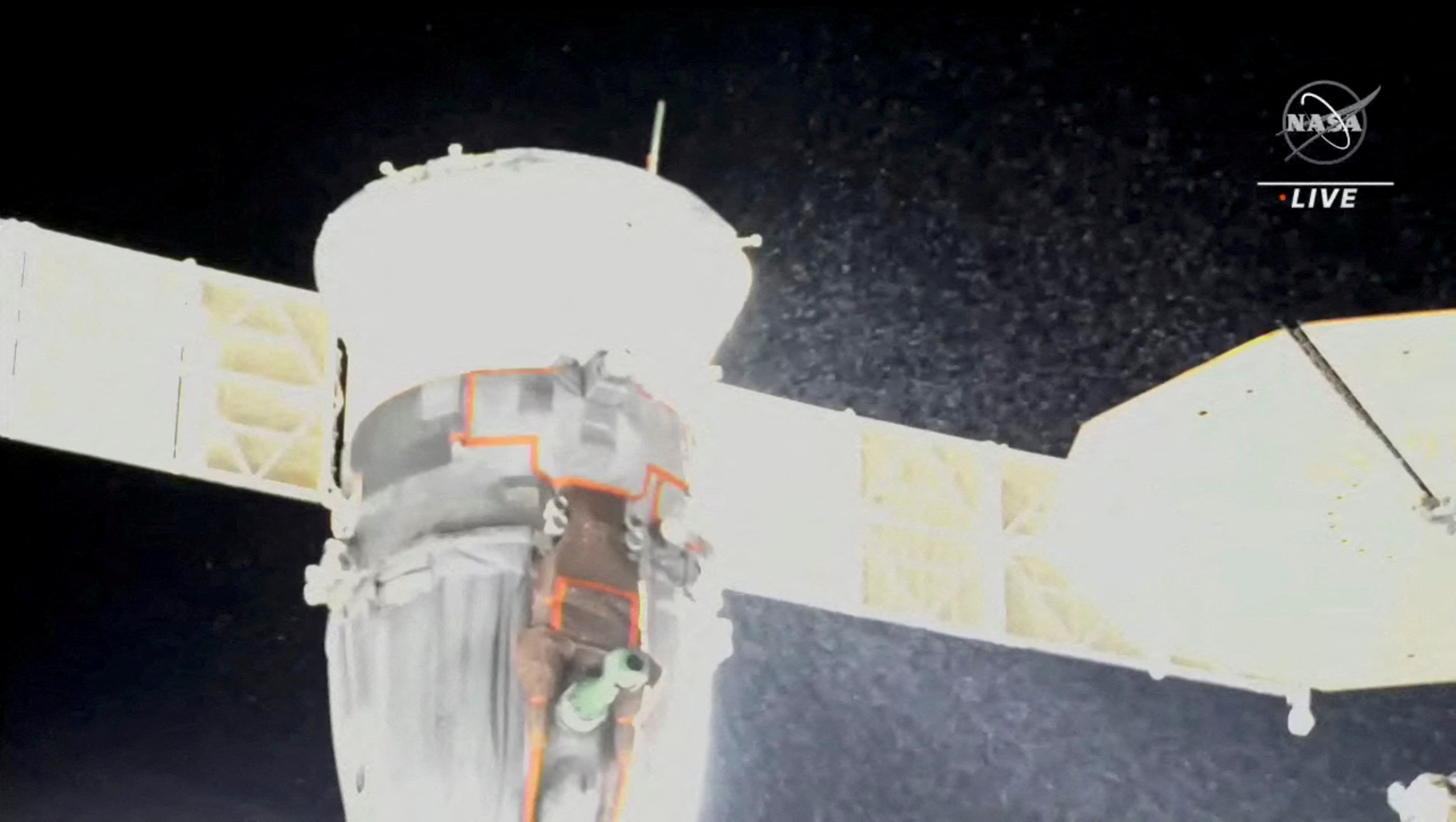
A stream of particles, which NASA says appears to be liquid and possibly coolant, sprays out of the Soyuz spacecraft on the International Space Station, forcing a delay of a routine planned spacewalk by two Russian cosmonauts December 14, 2022 in this still image taken from video. NASA TV/Handout via REUTERS

Russia’s space agency said it is considering a “rescue” plan to send an empty spacecraft to the International Space Station (ISS) to bring home three crew members ahead of schedule, after their Soyuz capsule sprang a coolant leak while docked to the orbiting outpost.

Roscosmos and NASA officials said at a news conference on Thursday they continue to investigate how the coolant line of the capsule’s external radiator sustained a tiny puncture last week, just as two cosmonauts were preparing for a routine spacewalk.

No final decision has been made about the precise means of flying the capsule’s three crew members back to Earth – whether by launching another Soyuz to retrieve them or by the seemingly less likely option of sending them home in the leaky capsule without most of its coolant.

Last week, Sergei Krikalev, Russia’s chief of crewed space programs, said the leak could have been caused by a micrometeoroid strike. But he and his NASA counterparts have left open the possibility of other culprits, such as a hardware failure or an impact by a tiny piece of space debris.

The Dec. 14 leak prompted mission controllers in Moscow to call off the spacewalk as a live NASA webcast showed what appeared to be a flurry of snowflake-like particles spewing from the rear of the Soyuz spacecraft.

The leak lasted for hours and emptied the radiator of coolant used to regulate temperatures inside the crew compartment of the spacecraft.

NASA has said that none of the ISS crew was ever in any danger from the leak.

Cosmonauts Sergey Prokopyev and Dimitri Petelin, who were suited up for the spacewalk at the time, flew to the ISS aboard the now-crippled Soyuz MS-22 capsule along with U.S. astronaut Frank Rubio in September.

They were originally due to fly back home on the same spacecraft in March, but Krikalev and NASA’s ISS program manager, Joel Montalbano, said Roscosmos would return them to Earth two or three weeks early if Russian space officials decide to launch an empty crew capsule for their retrieval.

Four other ISS crew members – two more from NASA, a third Russian cosmonaut and a Japanese astronaut – rode to the ISS in October via a NASA-contracted SpaceX Crew Dragon and they also remain aboard, with their capsule parked at the station.

The leak has upended Russia’s ISS routines for the weeks ahead, forcing a suspension of all future Roscosmos spacewalks as officials in Moscow shift their focus to the leaky MS-22, a designated lifeboat for its three crew members if something goes wrong aboard the space station.

Two U.S. astronauts, Rubio and Josh Cassada, conducted a seven-hour spacewalk without incident on Thursday to install a new roll-out solar array outside the station, NASA said.

If MS-22 is deemed unsafe to carry crew members back to Earth, another Soyuz capsule in line to ferry Russia’s next crew to the station in March would instead “be sent up unmanned to have (a) healthy vehicle on board the station to be able to rescue crew,” Krikalev, Roscosmos’ executive director for human spaceflight, told reporters.

No mention was made of possibly sending a spare SpaceX Dragon for crew retrieval.

Pinpointing the cause of the leak could factor into decisions about the best way to return crew members.

The recent Geminid meteor shower initially seemed to raise the odds of a micrometeoroid strike as the origin, but the leak was facing the wrong way for that to be the case, Montalbano said, though a space rock could have come from another direction.

Sending the stricken MS-22 back to Earth unfixed with humans aboard appeared an unlikely choice given the vital role the coolant system plays to prevent overheating of the capsule’s crew compartment, which Montalbano and Krikalev said was currently being vented with air flow allowed through an open hatch to the ISS.

NASA has previously said the capsule’s temperatures remain “within acceptable limits” and that a recent test of the capsule’s thrusters was performed without a hitch. But Krikalev added that the temperature would rise rapidly if the hatch to the station were closed.

The ISS, a science laboratory spanning the length of a football field, orbits about 250 miles (400 km) above the Earth and has been continuously occupied for two decades, managed by a U.S.-Russian-led partnership that also includes Canada, Japan and 11 European countries.

Categories
Audio Sources - Full Text Articles

China lacked a “zero COVID“ exit plan. Its people are paying the price.

2022-12-23T01:21:38Z
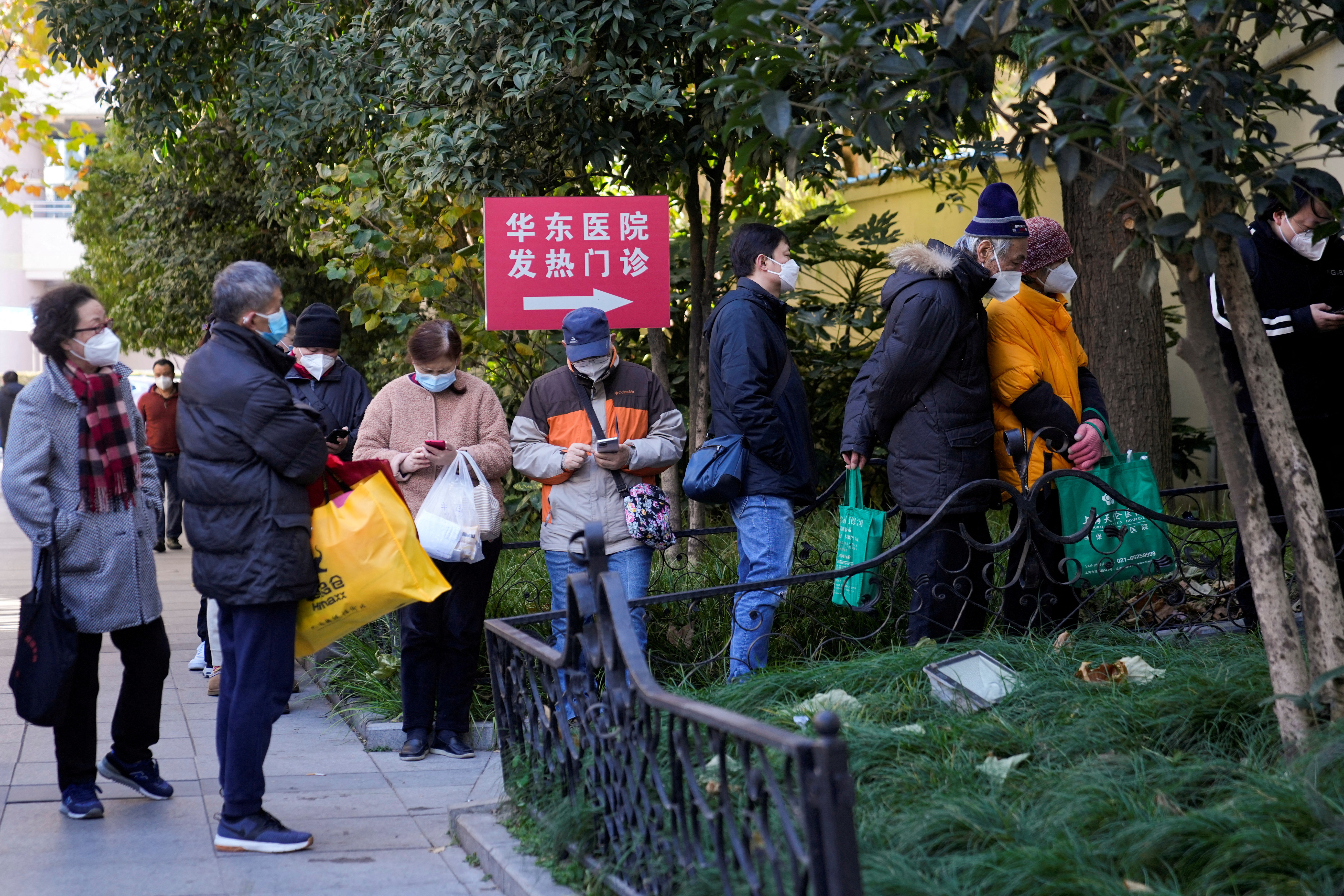
People wearing protective masks line up outside a fever clinic of a hospital, as coronavirus disease (COVID-19) outbreaks continue in Shanghai, China, December 20, 2022. REUTERS/Aly Song

At the public hospital in Shanghai where Nora, a 30-year-old doctor, works, tension has spiraled since China relaxed its stringent zero-COVID policy on Dec. 7.

Patients quarrel with doctors to access drugs that are in short supply, like cough medicines and pain killers. Medics are overloaded; infected staff continue to work because of a scarcity of personnel.

“The policy of controlling covid was relaxed very suddenly,” said Nora, who would not give her full name because of the issue’s sensitivity. “The hospitals should’ve been notified in advance to make adequate preparations.”

After years of enforcing harsh measures to stamp out the coronavirus, President Xi Jinping’s abrupt abandonment of zero-COVID in the face of protests and a widening outbreak has left China scrambling to avert a collapse of its public health system.

Shortages of drugs and testing kits and logistical disruptions are upending daily life. Four hospital workers told Reuters that insufficient planning for the end of zero-COVID had left them to manage a chaotic reopening.

“I think China thought that its policy was successful and that a gradual transition to the endemic phase was feasible, but obviously it was not,” said Kenji Shibuya, a former senior adviser to the World Health Organisation.

More than a dozen global health experts, epidemiologists, residents and political analysts interviewed by Reuters identified the failure to vaccinate the elderly and communicate an exit strategy to the public, as well as excessive focus on eliminating the virus, as causes of the strain on China’s medical infrastructure.

The country spent big on quarantine and testing facilities over the past three years rather than bolstering hospitals and clinics and training medical staff, these people said.

“There is no transition time for the medical system to prepare for this,” said Zuofeng Zhang, professor of epidemiology at the University of California, Los Angeles. “If they could spend a small portion of resources (used) in COVID-19 testing and lockdown, China would be better off in this policy change.”

China’s National Health Commission did not respond to requests for comment on the resilience of the health system and supply of medical staff; whether there were contingency plans to cope with soaring hospital admissions; and whether strict coronavirus measures had impeded improvements to medical capacity.

State media has defended Beijing’s approach while recasting its messaging to emphasize the Omicron variant’s milder nature. In a review of China’s COVID-19 responses, the official Xinhua news agency said on Dec. 9 that Xi had “done right” by taking “resolute actions to curb the virus’ spreading”.

As the outbreak grows, official data on severe cases and mortality rates are unlikely to reflect the situation, experts including Mike Ryan, WHO’s emergencies director, have said. In Beijing, funeral homes and crematoriums are struggling to meet demand.

The National Health Commission has reported only a handful of COVID-related deaths since the reopening, taking China’s official pandemic total to 5,241 deaths, very low by global standards.

Meanwhile, a drive to vaccinate the elderly that began three weeks ago has yet to bear fruit. China’s overall vaccination rate is above 90% but the rate for adults who have had booster shots drops to 57.9%, and to 42.3% for people aged 80 and older, according to government data.

China has declined to roll out Western-made mRNA vaccines, which studies show are more effective than its homegrown shots. The failure to boost vaccination rates among the vulnerable could imperil China’s health system, more than a dozen experts said.

“As we have seen in Hong Kong, unvaccinated older people are at particularly high risk of death and perhaps healthcare capacity in China will be overwhelmed by caseload demand soon,” said Hiroshi Nishiura, a member of Japan’s COVID task force.

Discontent over China’s frequent lockdowns and tough pandemic curbs reached a tipping point in November as protests erupted nationwide. Within days, Beijing announced a sudden relaxation of its zero-COVID rules.

Smaller protests have occurred at medical schools since then, with some students who work on the front lines demanding better protection and medical supplies. The death of a 23-year-old medical student in Chengdu on Dec. 14 fueled public ire at the strain on China’s health system.

“We’re the bottom of the food chain at the hospital,” said a 26-year-old medical student in northern China, who would not give her name nor identify her university for fear of official retribution. “If we’re on the front lines, we don’t have enough protection for ourselves: we have even been asked to reuse face masks.”

China’s zero-COVID quest exacerbated pressure on hospitals and medical staff due to the centralized medical system, with people required to be hospitalised even if they had mild symptoms. The government only started permitting home quarantine on Dec. 7.

While China’s Centre for Disease Control and Prevention continually warned that a large-scale outbreak would have a devastating impact on the health system, the fixation on stamping out the virus strained medical resources.

Some experts like Hong Xiao, researcher at the Fred Hutchinson Cancer Research Center in Seattle, said zero-COVID had proved costly and dangerous to public health, diverting funds and medical staff to the pandemic front line and preventing patients with other conditions from getting treatment.

Other researchers say the current threat to China’s health care system has been exaggerated.

Chen Jiming, a researcher at China’s Foshan University, said there was every chance that China’s medical system could cope now that the country has ended quarantine for asymptomatic and mild cases.

“I do think, now, that China can well mitigate the looming tsunami of COVID-19,” he said. “Sure, the medical systems are under great pressure these days, but I think the government can manage it.”

Still, China’s investment in medical resources such as hospital beds and the growth rate of medical staff slowed during the pandemic, official data show. While overall health spending inched up from 2019 to 2021, it dropped slightly as a share of GDP for the first time in more than six years, to 6.5% last year versus 7.1% in 2020 and 6.6% in 2019.

It is unclear how much went to building quarantine facilities or providing tests, but analysts’ estimates gathered by Reuters in May put China’s planned COVID-related spending this year at around $52 billion.

Faced with a surge in infections, authorities have tried to play catch-up. Local government tenders for the purchase of ventilators and patient monitors have soared, according to a Reuters review. There were 423 tenders for ventilators published between Nov. 15 and Dec. 15, up from 283 in the prior period, and 200 before that.

Even as the government has changed its messaging, urging people to stay home unless they are very sick, patients have been flocking to hospitals and clinics after three years of government propaganda about the dangers of the virus.

In Tianmen, a small city near Wuhan, infected patients have been camped outside clinics as they receive intravenous drips, according to one resident who shared the images with Reuters.

In Hanchuan, in Hubei province, patients sat in their cars to receive IV fluids through vehicle windows, footage on Dec. 14 obtained by Reuters showed.

In some cities, lack of clear guidance on what happens when someone gets infected is adding to the disarray.

At a public hospital in Beijing, a senior doctor said all surgeries had been cancelled except in cases where the patient would probably die the next day.

“Up to 80% of doctors in top hospitals in Beijing are infected with the virus but forced to keep working,” he told Reuters on the condition of anonymity because he was not authorised to speak to the media.

China has about 2 physicians per 1,000 people, versus 4.3 in Germany and 5.8 in Britain, according to the World Health Organisation. And it has 3.6 intensive-care beds per 100,000 people, compared with 34.7 in the United States, 29.2 in Germany and 12.5 in Italy, World Population Review data show.

China had other imperatives for pursuing a strict zero-COVID approach this year, given the threat a large outbreak may have posed to key events. Before the Beijing Winter Olympics in February, the government tightened pandemic controls and state media warned of the dangers of the virus.

Ahead of a Communist Party congress in October where Xi was seeking to cement his rule with a third term, authorities emphasized that there could be no deviating from zero-COVID despite the economic costs and warned of the risks of any reopening.

“Once epidemic prevention and control is relaxed, a large number of people will be infected within a short period of time, a large number of severe cases and deaths will occur, resulting in a run on medical resources,” the People’s Daily, the party’s official newspaper, said in a commentary on Oct. 12 that called for sticking with zero-COVID.

As Xi tightened his grip on power and his focus remained on stamping out the virus at any cost, the leadership did not broadcast any blueprint for how China would move beyond the stultifying restrictions.

When infections began to soar in recent weeks, it became clear the virus had overrun the zero-COVID defenses.

But Xi’s sudden U-turn meant many companies were unprepared with sick-leave policies or protective gear, while many ordinary Chinese, unaccustomed to treating COVID at home, flooded pharmacies in search of cold and flu medications.

Some cities said workers with mild symptoms can continue to go to work, local media reported, adding to confusion. One Shanghai hospital told its staff this week to prepare for a “tragic battle”.

At least 10 medical experts who spoke to Reuters said they expect infections to peak in the next one to two months, around the Lunar New Year holiday that starts on Jan 21.

A wave of deaths akin to what Hong Kong experienced earlier this year is a “good marker of what might happen” in mainland China, said Keith Neal, emeritus professor of epidemiology of infectious diseases at the University of Nottingham.

“The key challenge will be large numbers of serious infections and deaths in a largely susceptible population because they have not had infection or vaccination,” he said.

The U.S.-based Institute of Health Metrics and Evaluation, part of the University of Washington, last week said it expects more than 1 million deaths through 2023 as a result of the abrupt lifting of China’s COVID restrictions.

At her Shanghai hospital, Nora said new infections are rising, though the hospital does not disclose the data publicly. Medics are worried about infecting patients and relatives.

“The hospital doesn’t have a perfect plan to deal with all the problems and the policy is changing every day,” she said.

WP Radio
WP Radio
OFFLINE LIVE