Categories
Audio Sources - Full Text Articles

Griner urges supporters to contact Whelan, help Americans detained abroad

2022-12-21T20:09:24Z

U.S. basketball player Brittney Griner, who was detained at Moscow’s Sheremetyevo airport and later charged with illegal possession of cannabis, stands inside a defendants’ cage before a court hearing in Khimki outside Moscow, Russia August 4, 2022. REUTERS/Evgenia Novozhenina/Pool/File Photo

U.S. basketball star Brittney Griner called on her supporters to write letters to Paul Whelan, the former U.S. Marine held in Russia, days after she was released from a Russian penal colony as part of a prisoner swap.

The two-time Olympic gold medallist and eight-time Women’s National Basketball Association (WNBA) All-Star was arrested in February at an airport outside Moscow for carrying vape cartridges containing hashish oil in her luggage.

Griner’s fans and fellow athletes mounted a campaign for her release and sent letters of support as she was subsequently convicted of drug smuggling and transferred to one of Russia’s most notorious penal colonies.

“Thanks to the efforts of many, including you, I am home after nearly 10 months,” Griner wrote in a letter posted on her Instagram account.

“Your letters helped me to not lose hope during a time where I was full of regret and vulnerable in ways I could have never imagined.”

U.S. officials said they had pressed for the release of both Griner and Whelan, who is being held on what Washington called “sham” espionage charges, but that the Griner swap with arms dealer Viktor Bout was a “one or none” deal as Moscow was treating Whelan’s case differently.

Whelan expressed dismay that more was not done to secure his release and Republican lawmakers were critical of Democratic President Joe Biden, who said the United States would not give up on securing his freedom.

Griner said the letters she received showed the “power of collective hands”.

“There remain too many families with loved ones wrongfully detained,” wrote Griner, who left the Brooke Army Medical Center last week and said she intends to resume her career in the WNBA next season.

“I hope you’ll join me in writing to Paul Whelan and continuing to advocate for other Americans to be rescued and returned to their families,” she added.

Categories
Audio Sources - Full Text Articles

Wall Street jumps with help from Nike, FedEx and consumer sentiment

2022-12-21T20:12:15Z

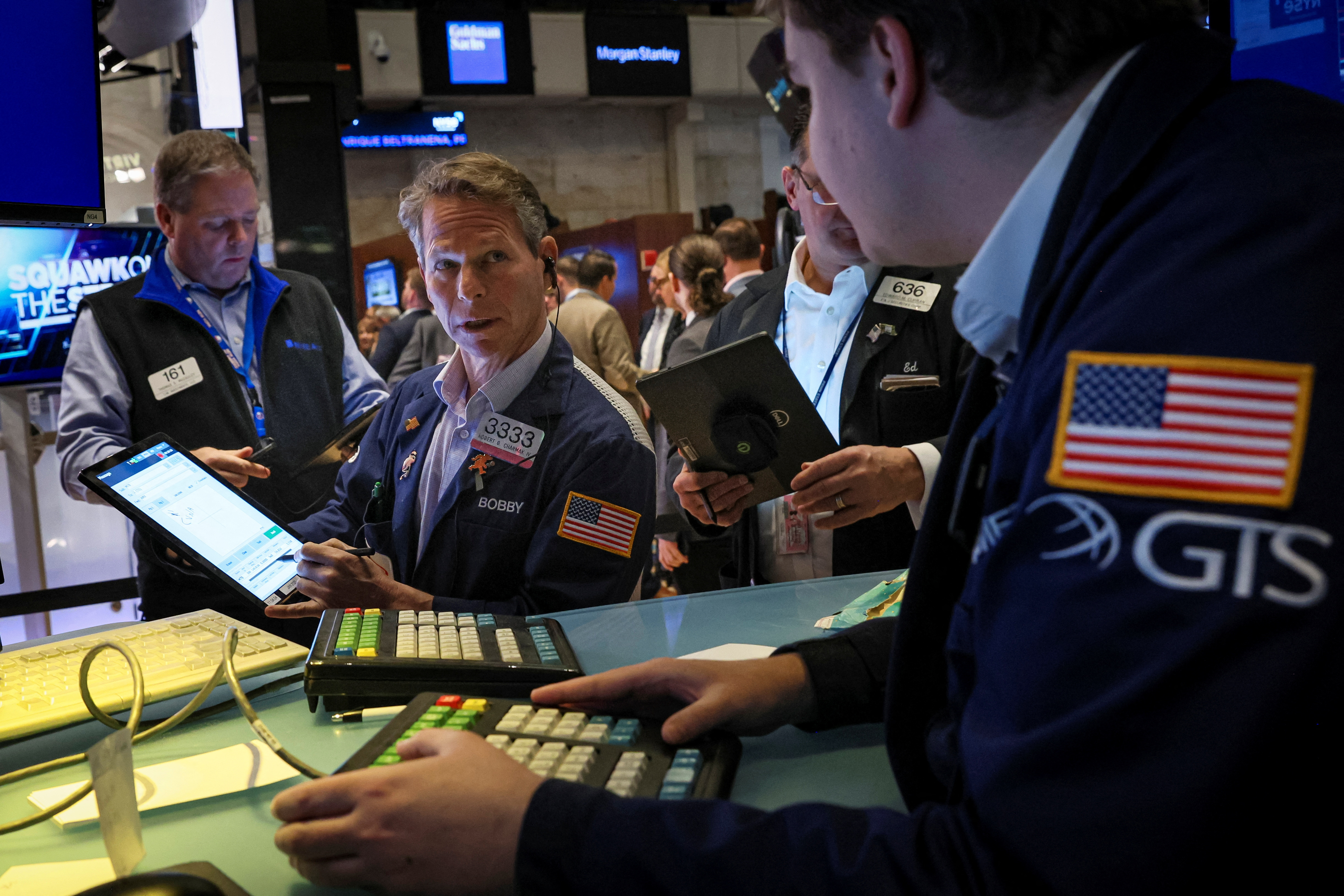
Traders work on the floor of the New York Stock Exchange (NYSE) in New York City, U.S., December 7, 2022. REUTERS/Brendan McDermid

Wall Street’s main stock indexes rallied on Wednesday and were on track for their biggest one-day percentage gain so far this month with help from upbeat Nike (NKE.N) and FedEx (FDX.N) quarterly updates, as well as improving consumer confidence and easing inflation expectations from investors.

Nike Inc shares were up 13% after beating profit expectations for its second quarter on strong holiday demand from North American shoppers, while FedEx gained almost 5% and cruise operator Carnival Corp (CCL.N) climbed almost 7% after posting a smaller-than-expected quarterly loss.

FedEx Corp (FDX.N), which sparked a market selloff in September after pulling financial forecasts, provided financial guidance and announced plans for $1 billion cost cuts.

U.S. consumer confidence rose to an eight-month high in December as inflation retreated and the labor market remained strong while 12-month inflation expectations fell to 6.7%, the lowest since September 2021.

“We’re seeing a broad rally. It’s been helped by upbeat corporate commentary and an improvement in consumer confidence,” said Angelo Kourkafas, investment strategist at Edward Jones in St Louis referring to Nike and FedEx.

Still, Wednesday’s data also showed that U.S. existing home sales slumped 7.7% to a 2-1/2-year low in November as the housing market was hurt by higher mortgage rates.

Fears of a recession following the U.S. central bank’s prolonged interest rate hikes have weighed heavily on equities and these fears have put the S&P on track for its biggest annual decline since 2008 and a loss of almost 5% for December.

“There’s still a lot of uncertainty and we’re likely to see a lot of volatility early in the year as we could be in a mild recessionary environment,” said Kourkafas but he suggested that the market has already priced in a weaker economy.

“We still have some headwinds ahead but maybe we don’t have to price in a recession twice. So far what we’ve seen this year has already priced in a mild recession.”

By 2:16PM ET, the Dow Jones Industrial Average (.DJI) rose 563.25 points, or 1.71%, to 33,412.99, the S&P 500 (.SPX) gained 65.38 points, or 1.71%, to 3,887 and the Nasdaq Composite (.IXIC) added 199.45 points, or 1.89%, to 10,746.56.

Energy firms (.SPNY) were the biggest gainers among the S&P’s 11 major industry sector, tracking higher oil prices after a larger-than-expected draw in U.S. crude stockpiles.

The smallest gainer among the sectors was consumer staples (.SPLRCS) but it was still up 1%.

AMC Entertainment Holdings Inc (AMC.N) was up 3.6% after the cinema-chain operator said it suspended talks to acquire certain assets of bankrupt Cineworld Group (CINE.L).

Advancing issues outnumbered declining ones on the NYSE by a 4.39-to-1 ratio; on Nasdaq, a 2.89-to-1 ratio favored advancers.

The S&P 500 posted 5 new 52-week highs and 3 new lows; the Nasdaq Composite recorded 49 new highs and 211 new lows.

Categories
Audio Sources - Full Text Articles

It’s dark in Kyiv. On Hanukkah, I call on American Jews to help.

use.jpg

Ukrainian President Volodymyr Zelenskyy goes before Congress Wednesday to shore up American resolve to assist Ukraine. He will ask for military assistance. I ask for space heaters.

I live in an apartment in the city’s center. Some of my neighbors have seen missiles fly into the snow-covered streets. The Russians are targeting Ukrainian power plants, so I get heat only sporadically, and warm my place up with space heaters. When I don’t have running water, I melt chunks of ice on my balcony. But my circumstances are better than many people in this city. They have been living in the dark for weeks.

Still, Jewish families are celebrating the Festival of Lights this week in Kyiv, a city where, when I was young, such celebrations would never occur publicly. I fled Ukraine 30 years ago because it was no place for a Jew, and spent most of my adult life in New York and Boston and returned because of my husband’s business. My city is now a much more tolerant place. A giant menorah graces Maidan Nezalezhnosti square, a place of honor where Ukrainians commemorate, among other historical events, the Ukrainian Revolution. I was astonished and delighted to see it there.

My American friends wonder why I don’t leave Ukraine. Come home to safety, they say, reminding me that I’m an American citizen. I am a proud American, but I need to stay here now and help others who can’t help themselves. So my American friends ask how they can help. One thing I thought to do was to connect American synagogues to a Ukrainian synagogue, which I came to know writing for the Forward about how Jews are faring during the war. I trust Rabbi Reuven Stamov to funnel contributions and good to needy people, Jewish or not.

Solar chargers, solar lamps, flashlights, and other appliances and devices to keep the darkness at bay and to keep us connected to each other and the outside world are almost always sold out in Ukraine. Space heaters are also nearly impossible to find. On the rare occasion when you find an appliance or device in a store, the prices are so high that most families can’t afford them.

A few weeks ago I reached out to more than 20 synagogues for help. I thought it would be a great mitzvah for them to help provide these devices to families in Kyiv. The significance of such a gesture as Hanukkah approached was not lost on anybody.

The first to respond was Paulette Black from the sisterhood at Beth El Temple Center in Belmont, Massachusetts, a Reform synagogue outside Boston.

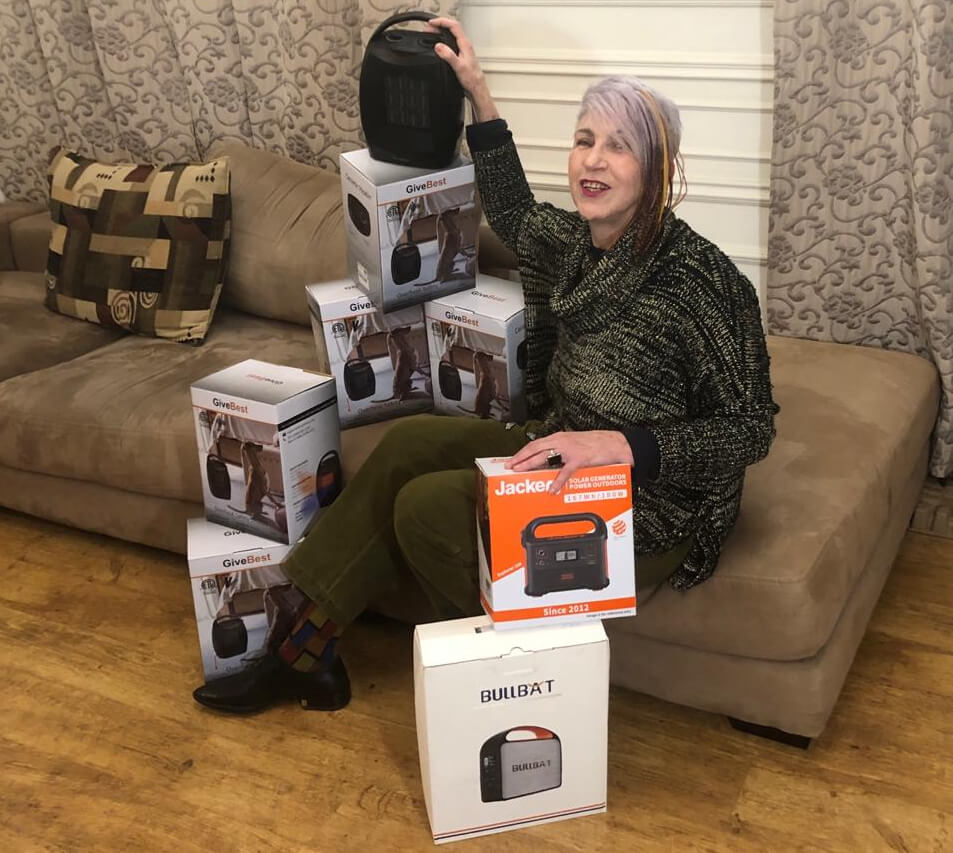
I’m also working with Rabbi Stephanie Kolin of Congregation Beth Elohim in Brooklyn, which has just placed orders for $2,000 worth of devices from Amazon that are heading to Ukraine; Rabbi Annie Tucker of Temple Israel Center in White Plains, New York; and Rabbi Shul Passow of B’Nai Jeshurun in New York City. I hope other American synagogues will help too.

The first shipment — of five portable space heaters — arrived on Friday, and the second — two portable generators — came on Tuesday.

I have also raised $3,000 to buy more of these goods through my daughter’s network of friends. My husband and I left Ukraine with her when she was a baby and raised her in the Boston area. She now works for The Vilna Shul, Boston’s center for Jewish culture.

I’ll pass on what I gather to Stamov, who will distribute them to members of his congregation and others who come to the shul when they need food, as well as medical and spiritual care.

His community is about 100 families spread around the country, with about 30 in Kyiv and 30 in Odesa. The Russians have hit Odesa hard — the blackout there began three weeks ago.

Stamov is also the rabbi for smaller Jewish communities around the country. He is visiting Rivne, in Western Ukraine, this week, where he is presiding at Hanukkah and Shabbat gatherings for 50 people. Many of them had left Ukraine earlier in the war but have returned to be with their families and their rabbi. He told me that they have four hours without power each day and then two hours with power so people with phones, tablets and laptops can recharge them.

The group is celebrating the holiday as if it was the first. They had candles, but no electricity.

People are praying, the rabbi told me, for peace and that the “light not to go out.”

The post It’s dark in Kyiv. On Hanukkah, I call on American Jews to help. appeared first on The Forward.

Categories
Audio Sources - Full Text Articles

This is going absolutely nowhere

republican-party-gop.jpg

Help support Palmer Report! Our articles are all 100% free to read, with no forced subscriptions and nothing hidden behind paywalls. If you value our content, you’re welcome to pay for it:

Pay $5 to Palmer Report:

Pay $25 to Palmer Report:

Pay $75 to Palmer Report:


Help support Palmer Report! Our articles are all 100% free to read, with no forced subscriptions and nothing hidden behind paywalls. If you value our content, you’re welcome to pay for it:

Pay $5 to Palmer Report:

Pay $25 to Palmer Report:


For most of the past six decades, the GOP’s policies have been out of step with the average American. It’s only been recently that the candidates have been just as vile as their end goals that it’s been costing them dearly in elections. Their only real reason for actually winning a four seat majority is because a few voters actually thought the same party that prides itself on doing nothing would somehow tackle inflation that was already going down because of policies the Republicans voted against.


So now that they’re about to gain power you’d think Republicans would at least pretend to still be worried about inflation or even putting forward ways to reduce it. Instead, they’ve mostly dropped all talk of it while threatening to ramp up their investigations of Hunter Biden, a private citizen. The problem is that this investigation only has 5% support with the general public and it’s almost exclusively with Republicans.

To put it in perspective, this ranked seventh among top domestic issues for Americans – and President Clinton’s scandals with Monica Lewinsky had support in the low 30s. If Republicans push this tomfoolery, they’ll almost certainly bleed support. This is why we need to vote them out at every opportunity in 2023 and 2024.

Save Palmer Report! Our articles are all 100% free to read, with no forced subscriptions and nothing hidden behind paywalls. If you value our content, you’re welcome to pay for it:

Pay $5 to Palmer Report:

Pay $25 to Palmer Report:

Pay $75 to Palmer Report:

Write for the Palmer Report Community Section.

Help support Palmer Report! Our articles are all 100% free to read, with no forced subscriptions and nothing hidden behind paywalls. If you value our content, you’re welcome to pay for it:

Pay $5 to Palmer Report:

Pay $25 to Palmer Report:

Pay $75 to Palmer Report:

The post This is going absolutely nowhere appeared first on Palmer Report.

Categories
Audio Sources - Full Text Articles

TIME’s 20 Best Photobooks of 2022

This year, the devastating power of photography pervaded our lives—depictions of war in Ukraine, natural disasters caused by climate change, and the memorial of a monarch were everywhere we looked. But where many of those images were unavoidable, photobooks offer the opportunity to step back and consider a selection of pictures in a more intentional setting.

Selected by TIME’s photography editors, this list captures the numerous possibilities of photography and of the photobook form itself. It celebrates the history of photography, in reimaginings of early documents of the medium such as Alessandra Sanguinetti’s Some Say Ice, as well as contemporary innovations in the field from artists like Wendy Red Star and Justine Kurland.

[time-brightcove not-tgx=”true”]

The books below contain something for everyone. Quiet, poetic photographs from Ian Bates find space alongside a grand statement about our universe, in Andy Saunders’ Apollo Remastered. Yelena Yemchuk’s portraits from Odesa, Ukraine, which offer a record of the present, complement Marilyn Nance’s archive of the past. Taken together, they remind us that while photography can show devastation, it also can demonstrate the hope for a better future.—Eli Cohen

Eduardo & Miguel by Ignacio Coló, Editorial RM


In Eduardo & Miguel, Ignacio Coló follows the lives of the titular 53-year-old twin brothers who the photographer discovered one day walking hand in hand through the streets of a Buenos Aires neighborhood. Through bright and playful portraits, quirky details, and the occasional old family photo, Coló tells a story of a deep twin connection, where one cannot do anything without the other. Their bond is rooted in survival, but each brother maintains a unique sense of self. With its simplicity and thoughtful sequencing, Eduardo & Miguel is an intimate look at the love between two siblings.

Buy now: Eduardo & Miguel

The Truth is in the Soil by Ioanna Sakellaraki, GOST Books


In the years following her father’s death, Ioanna Sakellaraki photographed her exploration of a grieving ritual performed in Greece, known as moirologia, and her experiences with its practitioners. The Truth is in the Soil documents the last vestiges of this dying cultural form, placing portraits of the aging women moirologists alongside mixed-media interpretations of mourning. As the artwork becomes more abstract, Sakellaraki’s somber images leave a lasting impression of people negotiating the reality of death.

Buy now: The Truth is in the Soil

Delegation by Wendy Red Star, Aperture


Wendy Red Star's The Indian Congress, from the series Indian Congress, 2021.
Courtesy of Joslyn Art Museum, Colin ConcesWendy Red Star’s The Indian Congress, from the series Indian Congress, 2021.

Wendy Red Star’s first monograph is an invitation to witness a photographic artist navigating her personal experience and mining historical material to challenge the portrayal of Native Americans throughout history. The Apsáalooke (Crow) photographer experiments with collages, family photos, interpretive archiving, and installations, as well as self-portraiture, with a playful wit and boundless curiosity. Including the photographer’s work from 2006 to the present, Delegation pokes fun at stereotypical portrayals of Native individuals in mainstream culture while also encouraging viewers to reflect on missing pieces in their own knowledge.

Buy now: Delegation

Baldwin Lee by Baldwin Lee, Hunters Point Press


Between 1983 and 1989, Baldwin Lee, a first-generation Chinese American, documented the American South on a series of road trips. Lee focused his lens on the lives of Black Americans, creating an archive of nearly 10,000 photographs that include collaborative portraits and wide landscapes. Baldwin Lee, the monograph edited down to 88 photographs by Barney Kulok, took the photography world by surprise this year. Many were seeing Lee’s timeless and moving body of work for the first time. Lee’s photographs take on the classic photographic qualities of his teachers Minor White and Walker Evans. In an interview with Jessica Bell Brown featured in the book, Lee said, “Looking is a two-way street. Not only is the photographer looking, but the potential subject is looking too. What the subject sees carries great weight.” Baldwin Lee makes clear that there is a shared balance of looking between Lee and those in his photographs.

Buy now: Baldwin Lee

Un/Masked by Elizaveta Porodina, Hatje Cantz Verlag


Elizaveta Porodina’s Un/Masked is a trove of rich surrealist images steeped in beauty and symbolism. Comprising both personal work and fashion commissions—from everyday images of her peers in Germany to the biggest names in entertainment—Porodina’s photography feels singular in the way she imagines, investigates, and celebrates human behavior. Previously a clinical psychologist, Porodina has a vision and voice that come through in highly crafted images, fantastical and haunting all at once.

Buy now: Un/Masked

Odesa by Yelena Yemchuk, GOST Books


Yelena Yemchuk’s Odesa chronicles a photographer’s love for the Ukrainian port city, its inhabitants, and their spirit. A native of Ukraine, Yemchuk focuses on the city’s youth with intimate wonder in this body of work, which includes photographs she made from 2014 to 2019 amid Russia’s annexation of Crimea. Portraits of young Odesans dressed in military gear are woven alongside images of youth navigating romance, joy, and pain. They display both the strength and the nostalgia of the residents of a city in flux. Accompanied by arresting poetry from Ilya Kaminsky, Odesa celebrates the resilience of Ukrainian people with tenderness and care.

Buy now: Odesa

A Great Turn in the Possible by Carrie Mae Weems, D.A.P./Fundación MAPFRE


Carrie Mae Weem's A Class Ponders the Future, from the series Constructing History, 2008.
Courtesy Jack Shainman Gallery, New York and Galerie Barbara Thumm, Berlin.Carrie Mae Weem’s A Class Ponders the Future, from the series Constructing History, 2008.

A Great Turn in the Possible is a sweeping retrospective from the artist Carrie Mae Weems. From her seminal series Kitchen Table, where Weems examines the role of a woman (herself) in the kitchen, to her large-scale presentations of Untitled (Colored People Grid) consisting of tinted portraits of Black youths and overlays of color, this book covers Weems’ multi-genre practice that grapples with themes of class, power, gender, belonging, and the lived experiences of African Americans. In the five essays and 40 projects included, you’ll find the foundation of a career that continues to influence a new generation of photographers.

Buy now: A Great Turn in the Possible

Midwest Materials by Julie Blackmon, Radius Books


For two decades, Julie Blackmon has depicted a fantastical world of playfulness, rambunctiousness, and ominous uncertainty through her carefully staged, satirical photographs of children. In her third monograph, Midwest Materials, Blackmon challenges the mundane narrative of everyday life in her native Missouri through her most imaginative photographs yet. Blackmon asks us to approach these images like puzzles, inviting us to scan them for hidden details that are sure to induce a smidgeon of anxiety and unease. Her book is a welcome departure from reality, and for a moment, a reminder of our own, carefree inner child.

Buy now: Midwest Materials

Apollo Remastered by Andy Saunders, Particular Books


For almost half a century, the original NASA photographic film of the Apollo missions was stored in a frozen vault. But in Apollo Remastered, imaging specialist Andy Saunders takes care to introduce newly enhanced and crisp versions of the original photographs from the missions. Saunders also enhances film from a 16mm “movie” camera through implementing a complex imaging-stacking principle. By pairing stunning images from the moon’s surface with stills from within the spacecraft, Saunders presents a rare look inside these journeys to the moon. The result is an immersive experience that not only captures behind-the-scenes moments, but restores them for future generations.

Buy now: Apollo Remastered

SCUMB Manifesto by Justine Kurland, MACK Books


Valerie Solanas’ 1967 book SCUM (Society for Cutting Up Men) Manifesto argues that men have ruined the world and it is women’s job to fix it. Justine Kurland uses this idea to inform her new photobook, SCUMB (Society for Cutting Up Men’s Books) MANIFESTO, which seeks to disrupt and eliminate the male monopolization of the photographic canon. Kurland does this by cutting images from 150 books by straight, white men, taken from her own personal library, and reconfiguring them to create elaborate new collages. Kurland utilizes the art of collage to destroy any understanding of the original photographs and quite literally carve out space for women artists. From the all-caps text on the cover to the dozens of collages of women’s bodies, homes, cars, and other objects, Kurland makes a bold reclamation of narrative and power.

Buy now: SCUMB Manifesto

The Unseen Saul Leiter by Saul Leiter, D.A.P.


The Unseen Saul Leiter brings together a collection of largely unseen archival images from the late Saul Leiter, one of the first photographers to truly capture New York City in color. Curated by Saul Leiter Foundation co-directors Margit Erb and Michael Parillo, Unseen includes 76 images, chosen from over 10,000 taken between 1948 and 1966, paired with personal stories from Erb and Parillo that offer a look inside their process and personal relationships with Leiter. The edit of images flips between bursting color and gloomy weather in the streets of New York, illuminating the in-between moments that were tucked away years ago, but important to Leiter nonetheless. It is a revelatory and colossal archival project that allows even Leiter’s enthusiasts to discover him all over again.

Buy now: The Unseen Saul Leiter

Notes towards Becoming a Spill by Shikeith, Aperture


In his first monograph, Shikeith strings together intimate studio portraits that highlight Blackness and masculinity. The work seeks to visualize eroticism, vulnerability, tenderness, and joy. Replicating the texture of sweat and tears on Black male subjects, Shikeith’s striking photobook unpacks the complex history of desire while exploring a contemporary narrative of Black masculinity.

Buy now: Notes towards Becoming a Spill

I Just Wanna Surf by Gabriella Angotti-Jones, MASS Books


Kimiko Russell-Halterman, a surfer and waterwoman, pops up over a wave during the Black Sand paddle out near the Manhattan Beach Pier in Los Angeles, Feb. 2021.

In I Just Wanna Surf, Gabriella Angotti-Jones embarks on the revolutionary act of spotlighting Black joy in the two years after the murder of George Floyd. Angotti-Jones’ photobook challenges societal norms by photographing the raw and intimate moments of Black women and non-binary surfers, participants in a sport where the predominance of white men often crowds out images of others who enjoy and excel at it. Angotti-Jones’ work is a visual cultural celebration that enriches the archives of the Black American experience through warm and dynamic photography.

Buy now: I Just Wanna Surf

A Little Louder by Abdo Shanan, Editorial RM/Trobades & Premis Mediterranis Albert Camus


When he began photographing the Hirak protests that shook Algeria in 2019, Abdo Shanan felt conflicted about his role in the movement. “Am I a citizen, or am I a photographer?” Shanan recalls in A Little Louder, his photobook documenting the early months of the protests and the ensuing years as unrest unseated longtime president Abdelaziz Bouteflika, leading to ongoing social upheaval. A compact book, A Little Louder’s pages are crowded with images, the photographs often bleeding into one another. Throughout, Shanan makes a grand and open-ended statement on the possibilities of protest. “We have to convince ourselves,” he writes, “that with small gestures we can make significant progress.”

Buy now: A Little Louder

Last Day in Lagos by Marilyn Nance, CARA/Fourthwall Books


Marilyn Nance/Artists Rights Society (ARS), New York

Marilyn Nance’s Last Day in Lagos chronicles the 1977 Second World Black and African Festival of Arts and Culture, also known as FESTAC ’77, which brought together more than 15,000 artists, intellectuals, and performers from 55 nations in Lagos, Nigeria. Nance served as a photographer for the U.S. contingent of the North American delegation and created one of the most comprehensive photographic accounts of the month-long festival. Her photographs showcase the cultural importance of this event on individual and societal levels, as she approached photographing everyone from well-known performers and cultural leaders to festival workers and attendees with the same attentiveness and consideration. Nance’s immersive archive, woven together with writing from various contributors contextualizing the work, make this culturally significant festival accessible to a wide swath of readers.

Buy now: Last Day in Lagos

Orange Grove by Clifford Prince King, TIS books


Clifford Prince King’s debut monograph is a considered and tender exploration of Black and queer intimacy. This body of work chronicles the period after King moved to Orange Grove in Los Angeles with friend and collaborator Malcolm Marquez. During that time, King used their home as a backdrop for portraits of friends and lovers. The domestic interiors, warm tones, and overlapping bodies in King’s photographs contribute to a vision of a safe haven and a space of shared vulnerability. The work also references King’s 2018 HIV diagnosis, showing how these various realities and identities live in harmony with one another.

Buy now: Orange Grove

Some Say Ice by Alessandra Sanguinetti, MACK Books


Alessandra Sanguinetti first came across Michael Lesy’s 1973 book Wisconsin Death Trip as a child growing up in Argentina. She was moved by the notion of mortality at work in the book’s photographs, made by Charles Van Schaick at the turn of the 20th century in Black River Falls, Wisconsin. Decades later, Sanguinetti visited Wisconsin to recapture Van Schaick’s perspective. While specific in its vision, the resulting series, depicted in stark black-and-white photographs, is an expansive and imaginative meditation on a small town from an outsider’s view.

Buy now: Some Say Ice

We Don’t Say Goodbye by Lorenzo Meloni, GOST Books


For 10 years, Lorenzo Meloni covered the rise, reign, fall, and immediate aftermath of the Islamic State in Iraq, Syria, and Libya. In his new photobook, Meloni showcases his unique approach to conflict photography, which urges the reader to remove their preconceived notions of war to view it through a more holistic lens. The cover of We Don’t Say Goodbye, a replica of graffiti from inside Raqqa prison, where one inmate marked 100 days in detention, sets the tone for the rest of the book: It places the reader in a prison cell. Meloni urges us to expand our imagination and set aside biases about war before he even introduces the first photograph.

Buy now:We Don’t Say Goodbye

Meadowlark by Ian Bates, Deadbeat Club


Initially inspired by the Western Meadowlark bird, photographer Ian Bates spent years traveling through the American West with his camera. Bates presents photographs from that time in his photobook Meadowlark, and pairs them with Jim Harrison’s poem “I Believe,” which speaks to everyday things, humans and nature coexisting in simplicity. The Meadowlark bird, which some believe symbolizes abundance and good fortune, only appears once in Bates’ book as a painted depiction. But the calmness and the loneliness of the entire collection are palpable, and a necessary reminder that there is beauty in the simplicity of the world that Bates captures.

Buy now: Meadowlark

ESOS QUE SABEN (Those who know) by Oscar B. Castillo, Raya Editorial


Oscar B. Castillo’s Esos Que Saben is the culmination of an 8-year-long project about the General Penitentiary of Venezuela, an “open regime” prison completely run by prisoners, and the lives, hopes, and dreams of the members of Free Convict, a Hip Hop collective developed inside the prison. Castillo weaves together photographs, interviews, drawings, collages, documents, and more to explore the intricacies of the prison system in Venezuela. These photographs capture the individuals’ redemption and resilience as they navigate familial and communal support and relentless cycles of violence. The poetic and chaotic black-and-white photographs draw the viewer in, while the personal family photographs, drawings, writing, and interviews from the Free Convict members add depth, creating a holistic and human view inside these prisoners’ lives.

Buy now: ESOS QUE SABEN (Those who know)

Categories
Audio Sources - Full Text Articles

Biden’s Student Loan Forgiveness Plan Is Stalled, But There’s Another Way to Get Your Debt Erased

President Biden’s plan to forgive up to $20,000 in student loan debt for 40 million Americans is stalled—ensnared in conservative legal challenges that could block debt relief for months, or even for good.

But the Department of Education has launched a separate program that could reduce the student loan burden for up to 3.6 million borrowers—and forgive the loans of more than 40,000 Americans.

This initiative was rolled out earlier this year to rectify lenders’ practice of steering borrowers away from programs that could eventually forgiven their student loan debt. It will affect far fewer borrowers than Biden’s student loan forgiveness program, but it could help some of those most in need of debt relief—including people who went into low-paying fields or public service work after college.

[time-brightcove not-tgx=”true”]

Here’s what to know about the student loan review that the Education Department is conducting, and how to know if you might qualify.

What is the new student loan review program?

The new program focuses on borrowers whose loans were put into forbearance. Forbearance pauses monthly student loan payments, but those loans still accrue interest, starkly increasing the amount borrowers owe.

An NPR investigation showed that nearly 5.5 million borrowers spent three years in forbearance even though alternatives like income-driven repayment (IDR)―which use borrowers’ monthly income and family size to dictate student loan payment plans―were available because loan servicers did not enroll or inform people about these other options. Most borrowers under IDR are eligible for forgiveness after 20 or 25 years of payments depending on the type of degree.

Another often-overlooked option for some new graduates is Public Service Loan Forgiveness (PSLF)―a program that forgives student loan debt after 120 qualifying payments for certain nonprofit and government employees.

Announced in April, the one-time account adjustment is part of the Department of Education’s plan to end loan servicers’ practice of putting borrowers in forbearance unnecessarily. Opting for forbearance can set borrowers back years in paying off their student loans.

What does it mean for borrowers?

The Education Department’s review is important because borrowers in an income-driven repayment plan could have their student debt forgiven after making 20 to 25 years of repayments.

The new account adjustment will automatically review borrower’s loan payment histories to add more months towards their payment count, even if they are not currently enrolled in an income-driven repayment plan.

Under the revision, the Department of Education will give borrower’s credit for partial and late payments, as well as payments made under previously ineligible loan types or payment plans.

Borrowers who have had 12 consecutive or 36 cumulative months in forbearance will also have that time added to their payment tally.

Borrowers who applied for PSLF before the end of October 2022 are also eligible for a loan discharge if their time spent in forbearance or deferment reaches the 120 payments required for the program.

Other borrowers, who have not reached the threshold for full forgiveness, can expect to see payment count changes by July 2023.

Borrowers can call their servicers to verify whether they are currently enrolled in income-based repayment, or eligible for it—but no action needs to be taken for borrowers to receive the account adjustment as long as they have a direct loan, meaning their loan is managed by the Department of Education.

Borrowers with federal loans held by commercial lenders thus need to consolidate their loans by May 1 to be eligible for this adjustment.

You can logon to studentaid.gov to check who your loan servicer is.

What about other student loan forgiveness efforts?

In August, the Biden administration announced their student loan debt relief plan, which sought to forgive $10,000 in federal student debt for most borrowers, and up to $20,000 for recipients of Pell Grants.

But the program was paused due to legal challenges by six Republican-led states, stalling more than 40 million borrowers from receiving aid. Of those 40 million, nearly 20 million would have wiped their debt clean.

For now, the future of this initiative remains up in the air as the lawsuit is set to go before the Supreme Court in 2023.

Borrowers are set to resume student loan payments starting next year. The Department of Education extended the student loan pause to 60 days after the Department is allowed to implement Biden’s student loan relief program, or litigation around the initiative is resolved. If this does not happen by June 30, 2023, payments will begin in August.

“Callous efforts to block student debt relief in the courts have caused tremendous financial uncertainty for millions of borrowers who cannot set their family budgets or even plan for the holidays without a clear picture of their student debt obligations,” said U.S. Secretary of Education Miguel Cardona. “I want borrowers to know that the Biden-Harris Administration has their backs and we’re as committed as ever to fighting to deliver essential student debt relief to tens of millions of Americans.”

Categories
Audio Sources - Full Text Articles

Companies Are Adding Sesame to Foods. It’s an Unintended Consequence of a New Allergen Label Law

A new federal law requiring that sesame be listed as an allergen on food labels is having unintended consequences—increasing the number of products with the ingredient.

Food industry experts said the requirements are so stringent that many manufacturers, especially bakers, find it simpler and less expensive to add sesame to a product—and to label it—than to try to keep it away from other foods or equipment with sesame.

As a result, several companies—including national restaurant chains like Olive Garden, Wendy’s and Chick-fil-A and bread makers that stock grocery shelves and serve schools—are adding sesame to products that didn’t have it before. While the practice is legal, consumers and advocates say it violates the spirit of the law aimed at making foods safer for people with allergies.

[time-brightcove not-tgx=”true”]

“It was really exciting as a policy advocate and a mom to get these labels,” said Naomi Seiler, a consultant with the Asthma and Allergy Foundation of America whose 9-year-old daughter, Zoe, is allergic to sesame. “Instead, companies are intentionally adding the allergen to food.”

The new law, which goes into effect Jan. 1, requires that all foods made and sold in the U.S. must be labeled if they contain sesame, which is now the nation’s ninth major allergen. Sesame can be found in obvious places, like sesame seeds on hamburger buns. But it is also an ingredient in many foods from protein bars to ice cream, added to sauces, dips and salad dressings and hidden in spices and flavorings.

Advocates for families coping with allergies lobbied for years to have sesame added to the list of major allergens. Congress in 2004 created labeling requirements for eight: milk, eggs, fish, shellfish, tree nuts, peanuts, wheat and soybeans.

More than 1.6 million people in the U.S. are allergic to sesame, some so severe that they need injections of epinephrine, a drug used to treat life-threatening reactions. Cases of sesame allergy have been rising in recent years along with a growing number of foods that contain the ingredient, said Dr. Ruchi Gupta, a pediatrician and director of the Center for Food Allergy & Asthma Research at Northwestern University.

“Sesame is in so many things that people don’t really understand,” said Gupta, who called the move to add sesame to products “so disappointing.”

“In families that do have a sesame allergy, it is truly challenging,” she said.

Under the new law, enforced by the Food and Drug Administration, companies must now explicitly label sesame as an ingredient or separately note that a product contains sesame. In the U.S., ingredients are listed on product packaging in order of amount. Sesame labeling has been required for years in other places, including Canada, Europe, Australia and New Zealand.

If the ingredients don’t include sesame, companies must take steps to prevent the foods from coming in contact with any sesame, known as cross-contamination.

Food industry experts said the new requirements aren’t simple or practical.

“It’s as if we’ve suddenly asked bakers to go to the beach and remove all the sand,” said Nathan Mirdamadi, a consultant with Commercial Food Sanitation, which advises the industry about food safety.

Some companies include statements on labels that say a food “may contain” a certain product or that the food is “produced in a facility” that also uses certain allergens. However, such statements are voluntary, not required, according to the FDA, and they do not absolve the company of requirements to prevent cross-contamination.

Instead, some companies have taken a different approach. Officials at Olive Garden said that starting this week, the chain is adding “a minimal amount of sesame flour” to the company’s famous breadsticks “due to the potential for cross-contamination at the bakery.”

Chick-fil-A has changed its white bun and multigrain brioche buns to include sesame, while Wendy’s said the company has added sesame to its French toast sticks and buns.

United States Bakery, which operates Franz Family Bakeries in California and the Northwest, notified customers in March that they would add a small amount of sesame flour to all hamburger and hot dog buns and rolls “to mitigate the risk of any adverse reactions to sesame products.”

Although such actions don’t violate the law, the FDA “does not support” them, the agency said in a statement.

“It would make it more difficult for sesame allergic customers to find foods that are safe for them to consume,” the statement said.

Some large companies previously have added other allergens to products and updated their labels. In 2016, Kellogg’s added traces of peanut flour to some cookies and crackers, prompting protests.

That’s frustrating and scary for parents like Kristy Fitzgerald of Crookston, Minnesota. She learned last spring that Pan-O-Gold Baking Co., which supplies breads to schools, health centers and grocery stores across the Midwest, was adding small amounts of sesame to its products, including those served at her daughter’s school. Six-year-old Audrey, in the meantime, has outgrown her allergy to sesame.

Bob Huebner, food safety/quality assurance manager for Pan-O-Gold, told Fitzgerald in a string of emails that the company was forced to add sesame to the product and the label.

“The unfortunate reality is that our equipment and bakeries are not setup for allergen cleanings that would be required to prevent sesame cross-contamination and was not an option for us,” Huebner wrote in an email to Fitzgerald. Huebner replied to an email from the AP but did not respond to questions about the company’s practices.

Fitzgerald started an online petition protesting the move to add sesame.

“At some point, someone is going to feed an allergic child sesame,” Fitzgerald said. “It makes me think the laws need to change to show that this is not an acceptable practice.”

Categories
Audio Sources - Full Text Articles

Anyone Hoping for Aliens to Contact Earth Will Have to Wait Another 400 Years At Least

Nobody knows for certain what the Nobel Prize-winning physicist Enrico Fermi did or didn’t say at the lunch with colleagues at the Los Alamos National Laboratory in New Mexico that took place in 1950. But as the perhaps apocryphal story has it, Fermi was holding forth on the sheer number of stars in the sky and the sheer number of intelligent civilizations the planets orbiting them might harbor, and puzzling out why we’ve never seen or heard any sign of them.

“Where is everybody?” Fermi is said to have asked.

That question, now known as the Fermi Paradox, has long bedeviled astronomers and other scientists studying exobiology—which explores the possibility of other life in the universe. Now, there may be an answer, according to a new paper published on the preprint site arXiv: The aliens are out there, alright. We just have to give them time to notice us and reach out to us.

[time-brightcove not-tgx=”true”]

The paper, written by Amri Wandel, a senior scientist in astrophysics at the Hebrew University of Jerusalem, does not rely on new findings, but is rather a thoughtful analysis of the size and scale of the universe as we understand it today, the probability that life exists on other worlds, and that those life forms would know we’re here and would show a lick of interest in us.

The analysis begins with some basic numbers: There are an estimated 400 billion stars in the Milky Way and an estimated two trillion galaxies in the universe. According to findings by the Kepler Space Telescope and other ground-based and space-based observatories, virtually every star in the sky is circled by at least one planet, and many, like our sun, by a whole litter of them. That makes for trillions upon trillions of worlds on which life could, in theory at least, have taken hold. So why the Great Silence, as researchers from the SETI (Search for Extraterrestrial Intelligence) Institute, in Mountain Valley, Calif. call it?

For starters, we’ve done a very good job of hiding ourselves here on Earth. As Wandel posits, biotic planets like ours may be exceedingly common in the universe, and intelligent species studying them would not pay a whole lot of attention to just one more green and living world. What they’d be looking for would be a green and living world with other intelligent beings.

The first and most conspicuous sign we have given off that we are just such a species are the radio signals that we transmit to one another but that leak through the atmosphere and stream out into space. It has been only about a century since we began emitting those unintentional beacons. Our so-called radio bubble, which streams out in all directions—north and south, east and west—thus measures just 200 light years in diameter. That’s a flyspeck in a galaxy that measures 100,000 light years across and a universe that is a staggering 94 billion light years.

What’s more, if a civilization were to have received our signal and sent back a response by now, it would have to be located just 50 light years away since, it would take 50 years for our radio beacon, traveling at the speed of light, to have reached it, and another 50 years for the receiver to have sent back a message. That’s a whopping century for just a two-way hello. Not that there aren’t candidates within that small footprint in space. According to Wandel, there are an estimated 2,000 stars, harboring who knows how many planets, within 50 light years of Earth.

So how many of those planets might host life? For this, you have to turn to the Drake Equation, created by astronomer and SETI Institute founder Frank Drake. The equation estimates the number of civilizations in our galaxy capable of receiving and responding to radio signals as a factor of a range of variables, including the rate of the formation of sunlike stars, times the proportion of stars that are orbited by planets, times the proportion of those planets that could support life, times the fraction of those on which life actually does emerge, times the fraction of those life forms that develop intelligence, times the fraction that are intelligent enough to receive and transmit signals, times the length of time such a civilization actually sends those signals before either perishing or going silent for any other reason.

That’s an awful lot of speculative x-factors to fill in, and it’s anybody’s guess—or at least educated estimate—as to what number appears on the right-hand side of the equals sign. For the purpose of the 2,000 planets within 50 light years of Earth, Wandel’s own Drake estimates put the number of worlds harboring extant, intelligent life at just two.

A highly advanced alien civilization could, of course, also send a probe toward Earth instead of a radio beacon, but that is even less probable—and harder to do in anywhere near the 100 years we’ve been sending our radio semaphores into space. Never mind all of the talk about Unexplained Aerial Phenomena of late, it would take a long, long time and a lot of technological prowess to send even a relatively small spacecraft our way. Accelerating a 1,000 kg (2,200 lb) probe to even one tenth of the speed of light would, Wandel calculates, take 10,000 times more power than the annual global energy production of Earth.

All of this assumes that we are looking for radio or spacecraft visits today. But the so-called “contact era”—the time when we could expect to have a two way exchange with E.T., might be much, much longer. Even assuming that there are one million intelligent civilizations scattered throughout the galaxy (a big number that seems much smaller when you take into consideration the number of planets circling the Milky Way’s 400 billion stars), Wandel puts the beginning of the contact era at 400 years from now at a minimum.

The possibility does always exist, of course, that other civilizations could be leaking radio signals just the way we are, and that we may detect them before they detect us. But here, technological progress gets in the way. Already, Wandel points out, earthlings are increasingly switching over to radio-silent communications like fiber optics. Ultimately, that could slam the window at least partly shut on the signals we send out—just as similar technological advances could silence other worlds.

None of this means that we won’t hear from the aliens or they won’t hear from us. What it does mean is that that first contact may take much more time than we imagine. The Great Silence may indeed be broken by a Great Hello. The question no one can answer is when.

Categories
Audio Sources - Full Text Articles

Schumer urges show of support for Ukraine with spending bill

WASHINGTON (AP) — The Senate inched closer to passing a $1.7 trillion government funding bill Wednesday with supporters pointing to a visit by Ukrainian President Volodymyr Zelenskyy in the evening as another reason to advance the measure in a show of support for the beleaguered nation.

The measure includes $44.9 billion in emergency assistance to Ukraine and NATO allies, above even President Joe Biden’s emergency request, and ensures that funding flows to the war effort for months to come. The measure would also boost U.S. defense spending by about 10% to $858 billion, addressing concerns from some lawmakers that more investment in the nation’s military is needed to ensure America’s security.

The Senate could approve the bill as soon as Wednesday. The House will then have to take it up and pass the measure before midnight Friday to avoid a partial-government shutdown.

Senate Majority Leader Chuck Schumer, D-N.Y., and Senate Republican leader Mitch McConnell, R-Ky., took to the floor Wednesday urging colleagues to vote for the measure, though they emphasized different priorities.

Schumer said the worst thing Congress could do now is give Russian President Vladimir Putin any signal that the U.S. was wavering in its commitment to defend Ukraine. He also noted that the Senate was voting Wednesday to confirm veteran diplomat Lynne Tracy to be U.S. ambassador to Russia.

“By passing this omnibus and confirming a new ambassador, we can send President Zelenskyy back to Ukraine with the message that the Senate, the Congress and the American people stand unequivocally behind the people of Ukraine,” Schumer said. “And we’re backing that up with real dollars and real resources.”

McConnell is facing pushback from many Republicans who don’t support the spending bill and resent being forced to vote on such a massive package with so little time before a potential shutdown and the Christmas holiday. He highlighted the bill’s spending boost for defense and said that non-defense spending, when excluding a big increase for veterans health care, would not increase at the rate of inflation.

“If Republicans controlled this chamber, we would have handled the appropriations process entirely differently from top to bottom,” McConnell said. “But given the reality of where we stand today, senators have two options this week, just two: we will either give our Armed Forces the resources and the certainty that they need, or we will deny it to them.”

The bill, which runs for 4,155 pages, includes about $772.5 billion for non-defense, discretionary programs and $858 billion for defense and would last through the end of the fiscal year at the end of September.

Lawmakers worked to stuff as many priorities as they could into the sprawling package, likely the last major bill of the current Congress. That includes $27 billion in disaster funding to help communities recovering from disasters and extreme weather events as well as an overhaul of federal election law that aims to prevent any future presidents or presidential candidates from trying to overturn an election.

The bipartisan electoral overhaul was a direct response to former President Donald Trump’s efforts to convince Republican lawmakers and then-Vice President Mike Pence to object to the certification of Biden’s victory on Jan. 6, 2021.

The spending bill also contains scores of policy changes that lawmakers worked furiously to include to avoid having to start over in the new Congress next year.

Examples include a provision from Sen. Josh Hawley, R-Mo., that bans TikTok on government cell phones due to security concerns. Another provision supported by the Maine delegation was added to aid the state’s lobster and Jonah crab fisheries, delaying regulations proposed to help save endangered North Atlantic right whales. And, on the health care front, the bill requires states to keep children enrolled in Medicaid on coverage for at least a year, which advocates say increases access to preventative care.

However, millions who enrolled in the health care program for low-income Americans could start to lose coverage on April 1 because the bill sunsets a requirement of the COVID-19 public health emergency that prohibited states from booting people off Medicaid.

Lawmakers were negotiating on several amendments Wednesday that lawmakers will be seeking in return for allowing speedier consideration of the bill, which easily cleared its first test vote Tuesday night.

“Nobody wants a shutdown. Nobody benefits from a shutdown. And so I hope nobody here will delay this process to fund government ASAP,” Schumer said.

Some Republican senators are raising objections to the measure, not only because the amount of spending but because of Congress’s habit of placing the various appropriations bills into one massive package long after the fiscal year has begun and just before critical deadlines approach.

“Giving us a bill at 1:28 in the morning, that’s over 4,000 pages, that nobody will have an opportunity to read, that we’ll have no idea what’s in it, is not the way to run your personal life, your business life or your government,” said Sen. Rick Scott, R-Fla. “This has to stop.”

House Republicans, including Rep. Kevin McCarthy, the next likely speaker of the House, are encouraging their colleagues in the Senate to only support a short-term extension. That way, they would have more ability to shape the legislation. McCarthy was speaking to senators during their caucus lunch Wednesday. A notice sent by GOP leadership to House members urges them to vote against the measure when it comes to the House.

“This deal is designed to sideline the incoming Republican House Majority by extending many programs for multiple years and providing large funding increases for Democrat priorities on top of the exorbitant spending that has already been appropriated this year,” the notice stated.

Categories
Audio Sources - Full Text Articles

Michael Novakhov retweeted: He is here!! @ZelenskyyUa

Michael Novakhov retweeted:

He is here!! @ZelenskyyUa

FkhjDVzVEAAMk8Z.jpg:large

WP Radio
WP Radio
OFFLINE LIVE