Categories
Audio Sources - Full Text Articles

The Guardian view on the NHS strikes: time to talk about pay, Mr Barclay | Editorial

The government’s refusal to negotiate with unions is based on disingenuous arguments

While justifying the government’s refusal to negotiate with NHS unions over pay, the health secretary, Steve Barclay, has ducked and dived to such an extent that it is little wonder there is “no trust left”, as Christina McAnea, the Unison leader, put it on Monday. Ahead of an unprecedented week of strike action involving both nurses and ambulance workers, Mr Barclay and the government continue to hide behind the fiction that the recommendation of the independent NHS pay review body – which suggested a pay increase of around 4% for nurses – must be the last word on the matter. “Ultimately, independent bodies are there for a reason,” suggested the health secretary last week. “To take the politics out of this kind of stuff.”

As Mr Barclay will know, this is disingenuous nonsense. “Politics” – specifically the politics of austerity – led the current chancellor, Jeremy Hunt, to reject a pay rise recommendation from the review body in 2014 as “unaffordable”. Between 2010 and 2017, nurses’ average earnings fell by 1.2% a year in real terms. This was not down to supposedly apolitical deliberations by the review board; it was a result of a seven-year, government-imposed public sector pay freeze.

Continue reading…

Categories
Audio Sources - Full Text Articles

Why Jonny can’t read: The great disconnect between reading science and policy

By Kathy Hirsh-Pasek, Roberta Michnick Golinkoff

In the spring of 2022, reports showed that only 67 percent of third graders were reading at grade level in the aftermath of the pandemic. Following on the heels of the recently released National Assessment of Educational Progress (NAEP) report, the U.S. now witnesses the largest decline in reading outcomes since 1980. Children from underserved communities have lost as much as half a year of traditional normal reading progress. Learning loss has become a well-worn term for an international crisis prompting governments to seek ways to accelerate learning.

This context has ignited a major reckoning with educational policy and methods. As it turns out, reading scores were not impressive even before the pandemic. According to the 2019 NAEP scores, just 34 percent of students were proficient at reading. By “proficient,” these scores suggest that students can only not just sound out a word, but also gain meaning from text. This low starting point pre-pandemic is the real problem. Someone, something, must be to blame.  According to a recent New York Times article and a widely heard podcast, “Sold a Story,” Professor Lucy Calkins of Columbia University seems to be descending to that mantle.

The reading wars, it turns out, created a false dichotomy between meaning versus phonics as primary drivers of beginning—and later proficient—reading.

Professor Calkin’s balance reading curriculum was used in more than a quarter of U.S. schools. It focused on three cues that students needed to follow to become readers: semantics (is the word meaningful?), syntax (does the word fit grammatically?), and grapho-phonic (can you guess the sound from its first letter?). The bottom line is that this curriculum falls short. As “Sold a Story” reveals, balanced reading was an offspring of Marie Clay’s Reading Recovery program developed in New Zealand and used around the world. A report issued in April of 2022 noted that third and fourth graders who used reading recovery methods were behind those who did not use the program. Culprit revealed.

The science of reading has progressed a great deal in the 50 years since Reading Recovery and the balanced curriculum were introduced. Indeed, this period of scientific discovery can be seen as the end of the so-called reading wars between whole word instruction and phonics—or mastering the letter-to-sound correspondence that enables readers in an alphabetic system to translate print into language (i.e., that “b” translates into “buh”). Brain research helps to adjudicate that the winner of the reading wars was phonics. Professor Bruce McCandless of Stanford University found that children learning phonics activated the brain circuitry used in reading. Those who learned in whole-word methods did not.

Today, the brain circuitry underlying reading is well understood. Professor Stanislas DeHaene of the University of Paris is one of the leaders in this science. Reading, unlike speech, is a cultural phenomenon that must be learned. Professor Steven Pinker once said, “Children learn language in the way that spiders spin webs.” Reading does not work this way. Children need to visually recognize letters, combine the letters, and relate the sounds to the language and meaning systems in the brain. In fact, DeHaene argues that humans co-opted an area of the brain—the visual word form area—that matures as we get more experience in reading. That is, if children can sound out the words, they can tap into the vast resources of their language to glean meaning from print.

The bottom line is that children need to learn phonics and letters to sound out correspondence. Methods like Clay’s and Calkins, based on prior theories of whole-language reading, will not solve the problem. Calkin’s methods, as the podcast “Sold a Story” suggest, can generate readers who pretend to read rather than those who can actually read new words when encountered in print.

On the other hand, phonics alone, while necessary, will also not generate strong readers. A superbly written overview by Anne Castles and colleagues notes that children need to do more than translate letters into sounds: They need to make contact with a rich knowledge base and with a growing language system. In fact, educational methods that focused only on phonics had many children who sat in rows, barking out words for extended periods of time. Many of these children experienced the fourth-grade slump when their phonics knowledge did not translate into meaningful information. Jeanne Chall’s classic 2003 study suggested that the fourth grade slump results from the fact that students who have learned how to decode might not have the rich language base that they need to make meaning from the words that they sound out. Children need to learn in active and engaging ways that are meaningful and joyful.

The reading wars, it turns out, created a false dichotomy between meaning versus phonics as primary drivers of beginning—and later proficient—reading. The scientific answer is more nuanced. It takes both phonics and meaning to create strong readers. Phonics is the tool that allows children to break into the alphabetic system–to understand that the squiggles on the page relate to the words in their vocabularies. Meaning making is the key to finding richness in the narratives and the motivation for wanting to read.

U.S. student reading levels are low and have been low for decades. The pandemic exacerbated this serious educational problem. And this has prompted much reflection in education and in the public square. This is, however, an area in which the science is well developed.

We tend to oversimplify science when and if it moves from the laboratory to policy and classroom practice. Simplification comes at a cost. Even today, policymakers are pressed to understand that language and literacy are intertwined in all reading curricula moving forward. Let’s end the great disconnect between science, policy, and practice. Let’s teach reading in ways that supports a foundation in phonics while making the experience enjoyable, motivating, and meaningful by connecting to children’s lived experiences. Let’s not confuse pedagogy with content. Phonics instruction need not be drilled into children but can be learned at the same time children are learning meaning and are actively involved.

shutterstock_1352058026.jpg?w=270
fblike20.png pinterest20.png twitter20.png email20.png rss20.png  
Categories
Audio Sources - Full Text Articles

In fighting antisemitism, Jews can be our own worst enemies. We shouldn’t be.

12-16-2022-Broken-star-1024x577.jpg

(JTA) — Unless you have been living under a rock for the past few weeks, and even if you’re not Jewish, you can’t miss the fact that antisemitism is back in the news again: Kanye West, Kyrie Irving, Nick Fuentes; extremists returning in droves to Twitter; President Donald Trump kowtowing to antisemites over dinner at Mar-A-Lago; “Saturday Night Live” opening with a monologue trafficking in antisemitic tropes; members of the Black Hebrew Israelites intimidating Jewish fans coming to Barclays Center, and an endless feedback loop of antisemitism coursing across social media.

Coming at a time when antisemitic incidents already had reached the highest point in recent memory, this is the kind of mainstreaming of antisemitism that we haven’t seen since the 1930s.

If there’s one thing I’ve learned as CEO of the Anti-Defamation League, it is that when it comes to the Jewish people, hatred doesn’t discriminate. When Kanye says Jews control the music industry, he’s not talking about rich Jews or conservative Jews. He’s not singling those who may support Likud or those who back Meretz, two Israeli political parties. He’s not calling out Orthodox Jews versus Reform Jews. He’s talking about us all.

Same with the white supremacists who are circulating Great Replacement conspiracy theories about Jews conspiring to bring more people of color and immigrants into America to “replace” white people. They don’t care if you are a die-hard MAGA voter or a card-carrying member of Democratic Socialists of America. It doesn’t matter: If you’re Jewish, you are in their crosshairs.

Another unfortunate example is the Mapping Project, an insidious campaign that ostensibly accused pro-Israel Jews of conspiring together in Boston. However, it didn’t target only Zionist organizations. They targeted all Jewish organizations, from a nonprofit helping the disabled to a Jewish high school.

And yet, while our enemies see us as one, the Jewish community too often seems riven by discord and infighting.

We are divided around religious practices and beliefs. We are deeply riven by politics. We do not see eye to eye when it comes to the State of Israel, and at times we can’t even agree on the definition of antisemitism itself. At times, absurdly, some Jewish leaders seek to tear down other Jewish leaders even as it tears apart the community, as Steven Windmuller, a retired professor at Hebrew Union College in Los Angeles, recently documented. 

I point this out not to diminish the value of debate and dissent — these are fundamental to our tradition. But we need to be mindful of when debate descends into division. 

Indeed, when viewed by those on the outside, these internecine divisions within our community can lead to misunderstandings and confusion. Why can’t Jews agree on anything? At best, hostility makes us look petty, mean and foolish. At worst, it allows antisemites to see within us whatever it is that they hate the most.

Usually in the aftermath of antisemitic attacks such as we saw after the Tree of Life shooting or the hostage situation in Colleyville, Texas, Jews from across the political spectrum set aside our differences and come together in a show of unity. We lock arms, proclaim we are one, call on our policymakers to do more, put up our defensive shields and hope for the best.

But at a time when a celebrity with a cult-like following, Kanye West, or Ye as he now calls himself, is using his platform of 38 million-plus social media followers to spread hateful tropes about Jews — the kinds of unhinged and hateful canards, such as Jewish control and power, that have led to antisemitic attacks throughout history — I would argue that the locking-arms response, while effective in the moment, does not have the staying power that we could achieve if we had a more unified and close-knit Jewish community.

What does have staying power? In this uniquely fragile moment, we must choose to embrace our differences, or at least accept them and lean into Ahavat Yisrael, the love for our fellow Jews. We ferociously can disagree internally while standing completely united to external hate.

We are our brother’s keeper, and any Jew suffering from antisemitism is ultimately our responsibility. We must come together, despite our differences, and fight those who hate our people.

How can Jews stand together against antisemitism while respecting our ideological divides? 

First, this isn’t a moment to try to win each other over. This is a moment to declare that every Jew matters and is worth protecting. We may disagree on many things, but we can appreciate that difference doesn’t have to equal division. We cannot allow the toxic partisanship that has seeped into so much of our society to poison our communal spaces. There are no “Tikkun Olam” Jews. There are no “Trump” Jews. There are only Jews, and we need to remember the dictum — you shall love your neighbor as yourself.

Second, we should recognize that self-defense starts with self-love and self-knowledge. Jewish literacy is essential to our long-term survival. Many like to remark how Rabbi Abraham Joshua Heschel prayed with his feet — but he did so in part because he wrapped tefillin with his hands. This is not to say that we all need to observe our faith in the same manner. There are plenty of Jewish people who opt out of ritual entirely, and yet their connection to our peoplehood is as strong and as valid as those who daven, or pray, every day. But shared values that emanate from Torah still bind us as a people — we need to redouble, not just our efforts to pass on these values to our children in ways that relate to the next generation, but we also must relearn these values ourselves.

Third, we must never allow our ideological blinders to gloss over or ignore antisemitism from those who are generally our political allies. We must be morally firm and call out antisemitism where we see it, and not just when it is convenient politically. We must be equally fierce in the political circles where we belong, where we ultimately have more influence and clout, as in simply calling out hatred by pointing to those on the other side.

During his lifetime, Rabbi Menachem Mendel Schneerson shared his wisdom about the fact that while every Jewish person is a unique individual, as a people we share a “basic commonality that joins us into a single collective entity.” The Lubavitcher Rebbe understood that this unity has sustained the Jewish people throughout history.

If we look to our ancestors, we can see examples of how holding together at times of strife has made our community stronger. It’s quite possible that we may be living in one of those difficult periods again. I hope we can meet the moment.

This article originally appeared on JTA.org.

The post In fighting antisemitism, Jews can be our own worst enemies. We shouldn’t be. appeared first on The Forward.

Categories
Audio Sources - Full Text Articles

Official: Russia, Iran turmoil limited meddling in US vote

FORT MEADE, Md. (AP) — Russia’s war in Ukraine and anti-regime protests in Iran limited both Moscow and Tehran’s ability to try to influence or interfere in the recent U.S. midterm elections, a senior American military official said Monday.

U.S. agencies were on high alert before November’s vote for potential cyberattacks or foreign influence operations, particularly after adversaries were judged by intelligence agencies to have meddled in the last two presidential elections. But there was little sign of disruption in the midterms.

“I was surprised by the lack of activity we saw from the Russians, the Iranians, or the Chinese,” said Army Maj. Gen. William Hartman, who leads the U.S. Cyber National Mission Force, which partners with the National Security Agency in detecting and stopping election intrusions.

Russian President Vladimir Putin has been mired in a prolonged war with tens of thousands of casualties since he ordered an invasion of Ukraine in February. And Iran’s leaders are waging a bloody crackdown against street protests sparked by the September death of a 22-year-old woman, in one of the largest sustained challenges to their power since the 1979 revolution.

Hartman noted that Russia’s domestic, military, and foreign intelligence services are expending more resources than previously expected on Ukraine, which has put up greater resistance than many in Moscow or Washington expected.

Though on an apparently lesser scale than in recent elections, all three countries have been linked by the U.S. to alleged influence efforts this year.

The FBI in October warned that an Iran-linked cyber group was considering so-called “hack-and-leak” operations to publish and amplify stolen data. The Justice Department in March charged five men with surveilling and harassing Chinese dissidents, including a little-known congressional candidate.

And Russia, which was accused by U.S. intelligence of trying to support Donald Trump’s presidential bids in 2016 and 2020, was alleged to be seeking to amplify doubts about the integrity of the election.

Hartman met with reporters after a ceremony establishing the Cyber National Mission Force as a sub-unified command. The designation establishes the mission force, created in 2012 under U.S. Cyber Command, as a permanent entity that can set higher standards for hiring and development for technological expertise in the military, he said.

The model he and other proponents of growing military programs on cyber have suggested is akin to U.S. Joint Special Operations Command, which oversees special forces responsible for high-profile U.S. successes like the raid that killed Osama bin Laden.

“We really want to build the JSOC of Cyber Command,” Hartman said.

The mission force is tasked with several signature priorities of the head of U.S. Cyber Command, Army Gen. Paul Nakasone, who also leads the National Security Agency and is expected to leave both roles next year.

Among the force’s work is its “hunt forward” missions in which military cyber experts go to ally and partner countries to check their networks for intrusions or vulnerabilities. Several dozen U.S. personnel were in Ukraine for months before the larger war began, leaving just before Putin’s invasion.

The force also takes on an election defense role working with the NSA, which spies on electronic communications and is believed to be the nation’s largest intelligence agency.

Hartman declined to say whether members of his force took down or deterred any foreign influence activities this year.

Categories
Audio Sources - Full Text Articles

Key US law enforcement aide being investigated for allegedly extorting former Venezuelan officials

A key consultant to United States law enforcement efforts to pursue corrupt Venezuelan government officials and drug traffickers is now himself being investigated in Spain for allegedly extorting some of the same wealthy Venezuelans targeted in U.S. probes.

Prosecutors in Spain allege that Martin Rodil, the consultant and a prominent expert on Venezuelan corruption, led a group that targeted wealthy Venezuelans suspected of corruption. Members of this group, including three Spanish police officers, are now under investigation for alleged influence-peddling, corruption and money laundering. In court documents, Spanish prosecutors say the former officials, who are prominent figures in Venezuela’s massive public corruption scandal, paid Rodil and his associates in the apparent belief that it would help them avoid criminal charges.

Rodil has not been charged. He did not respond to requests to comment for this story.

Allies of Rodil say that the former Venezuelan officials accusing him are attempting to discredit the U.S. investigations into their own alleged malfeasance by launching a campaign against a key aide to U.S. authorities. They say prosecutors in Spain — a country that some experts call a safe haven for corrupt Venezuelans — are misguidedly pursuing an agenda based on the misinformation campaign of these oligarchs.

Roger Noriega, a former U.S. Assistant Secretary of State in the George W. Bush administration, who more recently has worked with Rodil’s consulting business, called Rodil an effective anti-corruption crusader and said that the payments to him “were made in the context of when Martin was cooperating in carefully monitored activities” overseen by U.S. authorities. The Spanish investigation stems from “a story being spun by criminals with their legal counsel,” Noriega said.

With a wide-ranging consulting practice, Rodil has worked with the U.S. Drug Enforcement Administration as well as the nation’s top prosecutors’ offices.

Rodil has maintained two professional specialties that complement each other: He provides private consulting services to wealthy Venezuelans seeking to relocate to the United States, partially through connecting them with officials involved in his other line of business – helping the U.S. government to pursue corruption and drug cases. These Venezuelans could in essence trade their knowledge of crimes for residency in the US.

In extensive court records filed in the 29th investigative court of Madrid, Spanish prosecutors allege that Rodil tried to extort at least three former Venezuelan officials. In investigative reports and a proposed arrest warrant filed with the court in October, the prosecutors assert that Rodil’s key point of leverage was the perception that with his extensive connections to U.S. and Spanish law enforcement, he could help mitigate their legal troubles.  The investigative documents filed in Spanish court that ICIJ reviewed include alleged examples of Rodil strongly urging Venezuelans to buy his consulting services, but provide little evidence that he made direct threats or deployed coercion. In Spanish criminal cases, prosecutors can make detailed allegations before any charges are filed.

The sums at issue in Spain’s investigation of Rodil pale in comparison to the billions of dollars that the former Venezuelan officials, including Nervis Villalobos, formerly one of Venezuela’s top energy officials, are alleged to have collectively swindled from Venezuelan public coffers. Some of the prominent defendants have been awaiting trial in Spain for years.

The case of Rodil highlights the difficulties of pursuing international corruption cases and the pitfalls of prosecutors conducting work with the motley collection of informants and consultants who are often key to making such cases work. These collaborators often come with complex dealings in risky businesses that can raise allegations of conflicts of interest.

The Department of Justice did not respond to a request to comment for this story.

Spanish prosecutors declined to comment.

A rainmaker in tackling Venezuelan corruption

In recent years, Rodil also gained prominence as a policy expert on Venezuelan corruption and has been quoted by the AP and NPR, as well as ICIJ, and has penned articles on Venezuela for the Daily Beast.

A lengthy 2016 profile by Bloomberg describes Rodil as a gregarious and commanding presence, someone who “mastered the art of being both bulldozer and sweetheart” in delivering critical breakthroughs to U.S. prosecutors.

In just a few years, Rodil rose from obscurity as a low-level researcher at the International Monetary Fund (IMF) to become an important figure in an international effort to fight Venezuelan  corruption, according to Bloomberg. While at the IMF, Rodil was tasked with researching illicit payments relating to Venezuela’s state-run oil and natural gas company, Petróleos de Venezuela, S.A., or PDVSA, whose notorious corruption soon became an obsession, according to Bloomberg. Soon, he was working as a consultant with Noriega, who is a prominent voice for conservative policy positions toward Latin America and a fierce opponent of the leftist governments of presidents Hugo Chavez and, later, Nicolas Maduro.

By 2016, Rodil was working with an array of law enforcement offices and was considered a key asset to U.S. efforts against Venezuelan corruption. It was a time when U.S. prosecutors were zeroing in on a group of Venezuelan former officials who had allegedly looted billions of dollars from PDVSA. The U.S. imposed a raft of new sanctions on the country’s leaders and indicted  the country’s then-president, Maduro, and his predecessor, Chavez.

U.S. officials have called PDVSA a primary organ of Venezuela’s state corruption, as the site of bribery schemes, currency manipulation, and embezzlement. The firm generates a major share of the country’s GDP and has served as the country’s largest employer. In 2002,  Chavez appointed loyalists to top executive posts at the oil and gas firm, sparking street protests and a government crackdown that left 19 people dead. Later that year, Chavez fired 18,000 PDVSA employees who were on strike, cementing his control over the Venezuelan economy.

Various former officials and financial professionals were ultimately indicted in the U.S. for crimes relating to the oil company. Widespread public corruption in Venezuela is believed to have  contributed substantially to the country’s deteriorating infrastructure, rampant inflation and high rates of hunger and starvation.


A copy of Martin Rodil’s Israeli passport.

Bloomberg labeled Rodil a “rainmaker” for U.S. authorities and, by several accounts, his value and closeness to law enforcement was extraordinary. He worked on Venezuelan cases with the DEA, and state and federal prosecutors in Miami and Manhattan. According to Bloomberg, Rodil also began assisting the Israeli government with its own investigations.

Bloomberg reported that Venezuela refused to renew Rodil’s passport, and ICIJ found that Rodil subsequently gained citizenship in Israel, where he has considerable business connections.

“Martin is probably one of the most effective people out there in terms of aggregating information and recruiting witnesses that have been used to indict corrupt Venezuelans,” Roger Noriega said.

Extortion allegations and work with U.S. authorities

Javier Alvarado Ochoa, a former PDVSA executive facing money laundering charges in the U.S. and now living in Spain, told ICIJ that Rodil talked of his extensive connections to U.S. prosecutors and DEA officials. “You have problems here,” Alvarado recalls Rodil telling him. “Prosecutors are waiting for you, they’re investigating you in the United States. Let me help you.”

Rodil “is a very good and subtle extortionist,” Alvarado told ICIJ. “He causes you sickness, so that you have the need to be cured.”
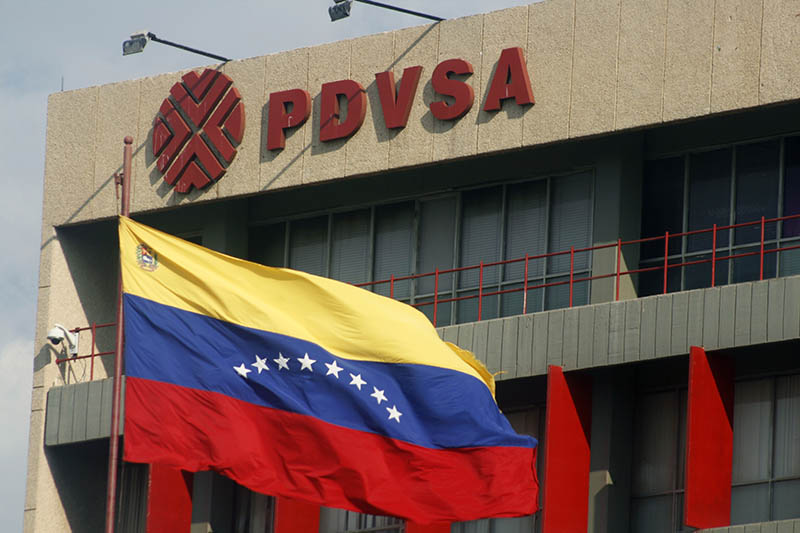

Venezuela’s state-run oil and natural gas company, Petróleos de Venezuela, S.A., or PDVSA. Image: Humberto Matheus/NurPhoto via Getty Images

Alvarado said Rodil demanded $2 million in exchange for helping him with his legal troubles. According to documents provided by Alvarado’s attorney to the Spanish prosecutor in September, Alvarado paid Rodil more than 1.1 million euros (more than $1.2 million)  in three transactions between March and December 2015. Prosecutors in Houston in 2019 charged Alvarado with money laundering, alleging he laundered millions in corrupt proceeds from PDVSA as part of a vast bribery scheme. The U.S. has filed extradition requests for Alvarado that Spanish courts have rejected. Alvarado’s attorneys have claimed his prosecution is “fatally flawed” due to a statute of limitations passing, jurisdictional issues and what they call factual inaccuracies in the indictment.

Between 2016 and 2017, Rodil received more than 6 million euros (around $6.8 million) in payments from Villalobos, according to Spanish court records. In 2018, Villalobos was charged in the U.S. with money laundering involving foreign bribery. Attorneys for Villalobos have also denied the charges and have moved to dismiss the case.

According to the Spanish court records, Hugo Gois, a Portuguese national, sent millions of dollars he had received from Villalobos and others to shell companies registered in jurisdictions such as Cyprus and Scotland, including entities allegedly controlled by Rodil.

Gois was later indicted in Miami in 2018 for allegedly laundering money for Venezuelan officials. U.S. charges against him are pending. Spanish court records indicate that authorities in Spain used Gois’ extensive files to build their own case against Rodil.

Gois did not respond to a request for comment.

The Spanish court records detail the activities of one firm, Glenfield Corp. LP, a Scottish limited partnership, which is a type of incorporation that has become popular with money launderers and oligarchs in recent years. A corporate record shared with ICIJ by Expresso states that Rodil used an agent, who represented himself as the sole shareholder of Glenfield in corporate filings, effectively hiding Rodil’s ownership in the firm in public filings.

The agent’s name, Adrian Matthew Bradley, or sometimes just Matthew Bradley, appears in different variations in the records of dozens of shell companies around the world, according to  leaked documents and public records. ICIJ sent requests for comment to Bradley’s apparent email address, but received no response. “Bradley Matthew Adrian” is a “decoy name” for a fugitive Ukrainian oligarch named Serhiy Kurchenko, according to an article on the website of the Atlantic Council, a Washington think tank. Ukrainian prosecutors have accused Kurchenko of amassing millions of dollars via tax evasion and stealing from bank investors.

Give now and double your impact. Your gift will be matched dollar-for-dollar, up to $100,000, thanks to generous donors.

Just $10 / month can change the world.

Questions around the case

Noriega said he did not have enough information about the payments from Villalobos and others to provide a full explanation, but he said he is confident that the payments were made as a part of a U.S. operation.

The DEA did not respond to a request for comment. In an affidavit submitted to a Spanish judge in October, a former supervisory agent with the DEA named Robert Zachariasiewicz claims that, after ten years of work with Rodil, he “never observed or had reason to suspect improprieties or violations of law in Mr. Rodil’s” professional activities. Zachariasiewicz declined to comment for this story.

Debra LaPrevotte, a former FBI agent who had a focus on corruption cases, told ICIJ that the extortion allegations seem odd because Rodil did not work directly for the U.S. government and would therefore have little ability to influence the direction of cases. “This does not sound like extortion to me,” she said.

LaPrevotte added that payments to a government contractor can be part of a U.S. government operation.

“The government can participate in what appears to be illegal activity to see if a person will bite,” LaPrevotte said.

Do you have a story about corruption, fraud, or abuse of power?

ICIJ accepts information about wrongdoing by corporate, government or public services around the world. We do our utmost to guarantee the confidentiality of our sources.

Noriega, Rodil’s friend and former colleague, said the indicted former Venezuelan officials are simply attempting to discredit the U.S. charges against them. “These guys are criminals,” Noriega said. “I’m still at the stage in life where I believe what the U.S. Department of Justice tells me over what an international crime figure on the lam in Spain says.”

Noriega said that the Spanish investigation’s assertions are further discredited by Spain’s lenient treatment of wealthy Venezuelans fleeing allegations of corruption. Although Spanish prosecutors have charged Villalobos, Alvarado and others for crimes related to PDVSA, the cases have dragged on for years while Spain has denied U.S. requests to extradite. The former officials, meanwhile, live there in luxury.

“Drug traffickers and corrupt actors have a long history of fleeing to Spain to avoid extradition to the U.S.,” said Paul Pelletier, a former federal prosecutor who worked extensively on corruption cases. “It’s a tried and true formula.”

In a 2019 article examining the long-running cases of Villalobos, Alvarado and others, the German researcher Jan-Michael Simon concluded that Spain’s delayed prosecutions “could create a risk that Spanish jurisdiction could be perceived as a safe haven for those involved in Venezuelan state organized crime.”

Three years later, nothing has changed with the cases of Alvarado and Villalobos, Simon told ICIJ, noting that there is an industry in Madrid of white-shoe lawyers and consultants who serve the interests of rich Venezuelan clients. Simon said similar dynamics have emerged in other jurisdictions, such as allegedly corrupt Brazilians living in Peru. “This is the perfect scheme of a safe haven for major figures in international corruption.”

Contributors: Marcos García Rey, Micael Pereira, Gerardo Reyes and Uri Blau. ICIJ worked with Armando.info, Expresso, La Sexta, Moncloa.com, Shomrim and Univision.

Categories
Audio Sources - Full Text Articles

England pick ideal successor to Jones in Borthwick

LONDON (AP) — Steve Borthwick was England rugby’s first choice to replace Eddie Jones as the national coach.

Borthwick was expected to take over from Jones next year after the Rugby World Cup in France but the promotion was accelerated when Jones was fired this month, and confirmed on Monday.

“Planning for the Six Nations and Rugby World Cup begins today,” Borthwick said in a statement. “I will give it everything.”

England is counting on it.

He has only 47 days before England’s Six Nations home opener against Scotland on Feb. 4. He has less than nine months before the team’s World Cup opener against Argentina in Marseille.

But like Wales did in hiring Warren Gatland to replace the sacked Wayne Pivac this month, England believes it got its ideal man to overcome the time constraints and rescue a flailing side that won only five of 12 tests this year.

Even as a player, Borthwick was known for his attention to detail, for studying opponent’s lineouts and patterns, and was made captain in the last two years of his England career under Martin Johnson.

He was still a standout club player in the second row, and a fledgling coach of under-18s, when Jones got him in 2012 to join him as an assistant with the Japan side.

At the 2015 World Cup, Japan upset South Africa and beat Samoa and the United States.

Borthwick followed Jones into the England setup and was the forwards coach for five seasons until leaving in 2020 for Leicester.

He turned around a club team that was scraping the bottom of the Premiership into a top-half side in 2021 and the champion this year. He leaves the Tigers fifth in the standings and unbeaten in the European Cup.

Borthwick brought with him his right hand man at Leicester, Kevin Sinfield. The rugby league great will overlook the England defense. Borthwick was still getting the rest of his staff together.

The English Rugby Football Union has extended 43-year-old Borthwick the confidence to mould the team in his image by giving him the next Rugby World Cup cycle, too, in a five-year contract.

“The English game is full of talent and I want to build a winning team which makes the most of our huge potential and inspires young people to fall in love with rugby union the way I did,” Borthwick said.

“I want the whole country to be proud of us and to enjoy watching us play.”

___

More AP rugby: https://apnews.com/hub/rugby and https://twitter.com/AP_Sports

Categories
Audio Sources - Full Text Articles

U.S. home builder gloom persists, but some hope seen for next year

2022-12-19T18:35:53Z

A “sold” sign is seen outside of a recently purchased home in Washington, U.S., July 7, 2022. REUTERS/Sarah Silbiger/File Photo

Confidence among U.S. single-family home builders fell for a record 12th straight month in December as even a scramble to offer incentives for prospective buyers failed to boost traffic and lift sales in today’s high-inflation, high-interest rate environment.

Kicking off a week of key reports on the health of the foundering U.S. housing market, the National Association of Home Builders on Monday said its NAHB/Wells Fargo Housing Market Index dropped two points to 31 this month, falling short of the median estimate of 34 among economists in a Reuters poll. A reading above 50 indicates that more builders view conditions as good rather than poor.

With the exception of the short-lived plunge during the spring of 2020 when the country locked down during the first wave of COVID-19, December’s reading marked the lowest since June 2012. Moreover, the unbroken string of declines since last December is the longest in a series that dates to the mid-1980s.

The housing market has seen the most pronounced effects so far of the aggressive Federal Reserve interest rate hikes that are aimed at quashing inflation that continues to hold at unacceptably high levels. Interest rates on the most popular type of U.S. home loan topped 7% – the highest since 2001 – in October, and sales of new and existing homes tumbled by more than 30% from January through October.

Since March, the U.S. central bank has lifted its benchmark policy rate from near zero to a range of 4.25%-4.50%. It indicated at its policy meeting last week that rate hikes will continue into next year until it is fully confident that inflation is declining from the four-decade highs touched in mid-2022 back toward its targeted level of 2% at an annual rate.

NAHB said nearly two-thirds of builders were offering incentives, including mortgage rate buydowns, paying points for buyers and price reductions. While the percentage actually cutting prices outright dipped marginally to 35%, the average discount offered rose to 8% from between 5% and 6% earlier in the year.

There were, however, some indications the decline in builder confidence is nearing a bottom, as the gauge of sales expectations over the next six months rose four points to 35.

“The silver lining in this HMI report is that it is the smallest drop in the index in the past six months, indicating that we are possibly nearing the bottom of the cycle for builder sentiment,” said Robert Dietz, NAHB’s chief economist. “Mortgage rates are down from above 7% in recent weeks to about 6.3% today, and for the first time since April, builders registered an increase in future sales expectations.”

Outside economists also see prospects for sales declines leveling out, in part due to builder incentives and the recent drop in mortgage rates.

“The cuts in prices and other incentives will help offset the erosion in homebuying affordability and should help to keep some floor under new home sales,” Matthew Martin, U.S. economist at Oxford Economics wrote. “The latest decline in mortgage rates – if it sticks – will also improve affordability at the margin.”

Meanwhile, the NAHB survey’s measure of current sales conditions dropped three points to 36. The component measuring traffic of prospective buyers was unchanged at 20.

More key housing market data is due this week, all of it expected to show continued weakness across the sector.

On Tuesday the government will publish the November figures for the number of new homes starting construction and volumes of permits being issued for new home building projects, both of which have declined sharply this year.

“The reading far below 50 for the HMI points to ongoing weakness in single-family housing starts,” Oxford’s Martin said.

Both starts and permits are estimated to have fallen further last month.

On Wednesday the National Association of Realtors (NAR) will report on existing home sales for last month, with the sales rate expected to be at its lowest, outside of the pandemic drop, since 2011. The NAR projected last week that sales would keep dropping into next year.

Lastly, on Friday the government will report new home sales for November. They are also predicted to have fallen.

Categories
Audio Sources - Full Text Articles

Brazil“s top court lifts Lula with “secret budget,“ social spending rulings

2022-12-19T18:29:12Z

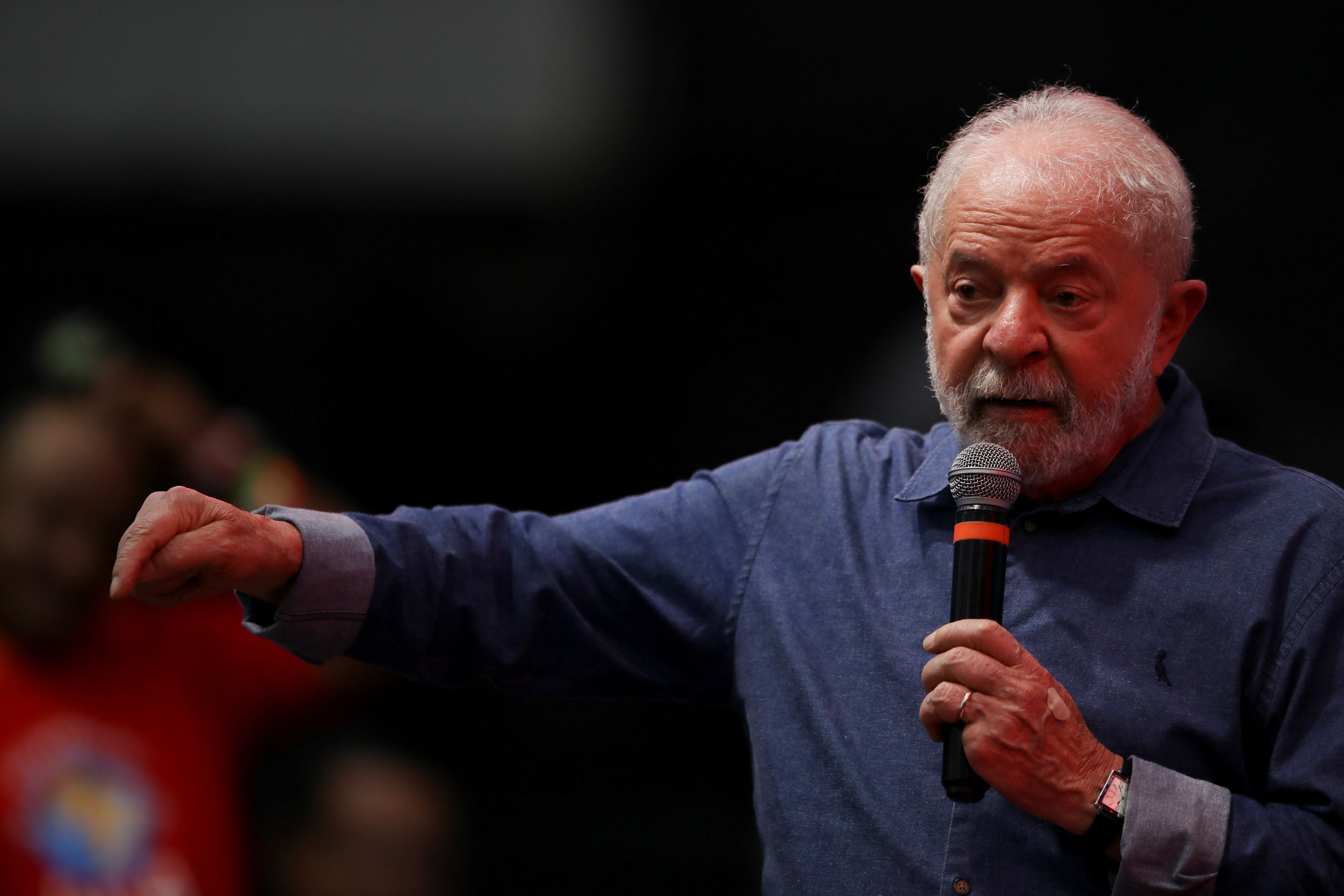
Brazil’s President-elect Luiz Inacio Lula da Silva speaks during a Christmas reunion with waste pickers, in Sao Paulo, Brazil, December 15, 2022. REUTERS/Carla Carniel 

Brazilian President-elect Luiz Inacio Lula da Silva scored two key victories on Monday, after the Supreme Court granted an injunction allowing him to increase social investment, while also outlawing an opaque congressional spending program.

In a decision late on Sunday, Brazilian Supreme Court Justice Gilmar Mendes granted an injunction that removes a 600-reais monthly allowance for poor families from the constitutional spending cap, giving a temporary green light for the payment to be extended into next year.

Then, in a Monday ruling, the full bench of the court ruled that the so-called “Secret Budget” program, which gives Congress greater control over public resources, was illegal.

Those two decisions are a boost for Lula, allowing him to fulfill a campaign pledge to increase social spending while also giving him greater negotiating power over congressional leaders by limiting their ability to extract concessions through untransparent means.

The “Secret Budget” program was used by far-right incumbent Jair Bolsonaro to win support in Congress. It distributed funds to lawmakers through amendments to bills, but was criticized for its lack of transparency.

Supreme Court Justice Roberto Lewandowski cast the deciding vote making the measure illegal, in a defeat for lower house leader, Arthur Lira, and Senate President Rodrigo Pacheco.

After the decision, Lira canceled his Monday agenda to meet with Pacheco.

Mendes’ decision, which still needs to be ratified by the full bench of the Supreme Court, takes the pressure off a constitutional amendment Lula is seeking to pass to allow him to fulfill a campaign pledge and invest more on the country’s poor.

The central component of the bill was raising the ceiling of the spending cap to include Lula’s social package. The bill has passed the Senate and now awaits a vote in the lower house.

Brazil’s real currency , weakened early on Monday after Mendes’ ruling but later clawed back losses.

Lula’s incoming Finance Minister Fernando Haddad told reporters on Monday that talks over the bill would continue, despite Menders’ decision.

“It’s important for the country to bet on good politics, on negotiation, on institutionality, and for us to give strength to the economic policy that … will appease the market’s mood and show that Brazil will be on track from Jan. 1,” he said.

Investors said currency markets were seeking clarity on what the decision meant.

“Mendes’ decision left the market confused,” said Fabrizio Velloni, chief economist at Frente Corretora. “The dollar exchange rate is likely to be very volatile today.”

Lula’s bill aims to exempt at least 100 billion reais ($19 billion) from the spending cap next year in order to boost social welfare programs.

Categories
Audio Sources - Full Text Articles

Who Cares Whether Elon Musk Is CEO of Twitter? He OWNS It.

Twitter headquarters in San Francisco, California, US, on Tuesday, Nov, 29, 2022. Twitter Inc. said it ended a policy designed to suppress false or misleading information about Covid-19, part of Musk's polarizing mission to remake the social network as a place for unmoderated speech. Photographer: David Paul Morris/Bloomberg via Getty Images

Twitter headquarters in San Francisco on Nov. 29, 2022.

Photo: David Paul Morris/Bloomberg via Getty Images

The votes are in, the people have spoken, and Dominion has chosen the winner. Elon Musk will be stepping down as CEO of Twitter!

Should I step down as head of Twitter? I will abide by the results of this poll.

— Elon Musk (@elonmusk) December 18, 2022

As of the moment this was written, there’s been no confirmation from Musk that he’ll actually follow through on this, and if so, when. It will certainly be interesting to see if he does. But also, who cares? Ultimately it makes little or no difference.

It’s important at moments like this to remember how capitalism works. Ready? Here it is: The people who own corporations decide what the corporations do. These owners usually hire a board of directors, which in turn hires the company’s chief executive officer. If the board doesn’t like the CEO’s performance, they replace him or her. If the owners don’t like the board, they replace them.

Of course, it can get more complicated than this. In a publicly traded company — i.e., one in which anyone can buy shares at the current price on a stock market — there’s often extremely diffuse ownership. The largest shareholders in many of America’s companies now are index funds such as those offered by Vanguard, which in turn are owned by millions of people. This often creates what’s called a “principal-agent problem,” a situation in which the principals (in this case, the company’s owners) have a hard time exerting control over their agent (the management). If you have a 401(k), you almost certainly own teeny-tiny amounts of all of America’s biggest companies but have no influence over or even knowledge of how they’re run. Corporate managers constantly take advantage of this dynamic to enrich themselves at the expense of their company’s owners (not to mention at the expense of nonmanagement employees).

There are also anomalous corporate structures such as that of Meta, aka Facebook. Meta has Class A shares, which are publicly traded and provide one vote each in corporate governance matters. And over the past year, the value of Meta’s Class A stock has declined almost 70 percent. With a normal company, Mark Zuckerberg, who owns only about 13 percent of Meta’s Class A stock, would be facing a shareholder revolt and likely be ousted as CEO. But Meta also has Class B shares, which aren’t publicly traded and get 10 votes per share. Zuckerberg owns 90 percent of the company’s Class B shares, which ultimately gives him about 60 percent of the voting power over what the company does. Hence he is autonomous and unfireable.

Neither of these situations apply to Twitter, however. It is privately held, meaning that you can’t just call up a stockbroker and buy some shares in it. There is only one class of stock, but that’s fine for Musk, because he owns the majority of it. He is free to appoint anyone he wants to run the company. After he bought it, he appointed himself. But even if he now abides by this poll and hires someone else, he will still ultimately be in charge. If he doesn’t like a new CEO’s performance for any reason or no reason, he can replace them.

The main trouble is simply that Twitter is a bad business, purely as a business.

This hypothetical person will then face exactly the same problems that Musk faced — except with Musk breathing down their neck every second of every day. The main trouble is simply that Twitter is a bad business, purely as a business. It’s made a yearly profit just twice since it went public in 2013: in 2018 and 2019. In 2020 it lost $1 billion, then another $222 million in 2021. Musk took this money pit and added more suction by borrowing $12 billion to complete his purchase, generating $1.2 billion in additional annual costs for the company with the interest on the debt.

It is true that Musk exacerbated Twitter’s inherent problems by terrifying its advertisers, which in the pre-Musk era provided 90 percent of Twitter’s revenues. In theory, a talented new CEO could try to turn back time by going to Twitter’s ad clientele and telling them: Look, our previous chief executive was psychologically maimed by his father and is a deeply troubled weirdo. We definitely understand your concerns about him, but fortunately he’s out of the picture now.

Except Musk wouldn’t be out of the picture. Everyone in the room would know that the new CEO might be fired by tweet before the meeting was over.

And there are no other plausible sources of income on the horizon with Twitter as it currently exists. Twitter Blue users send the company $8 a month but see half the ads; they also cost money to acquire and verify. It’s plausible that the company is barely breaking even on each new blue checkmark.

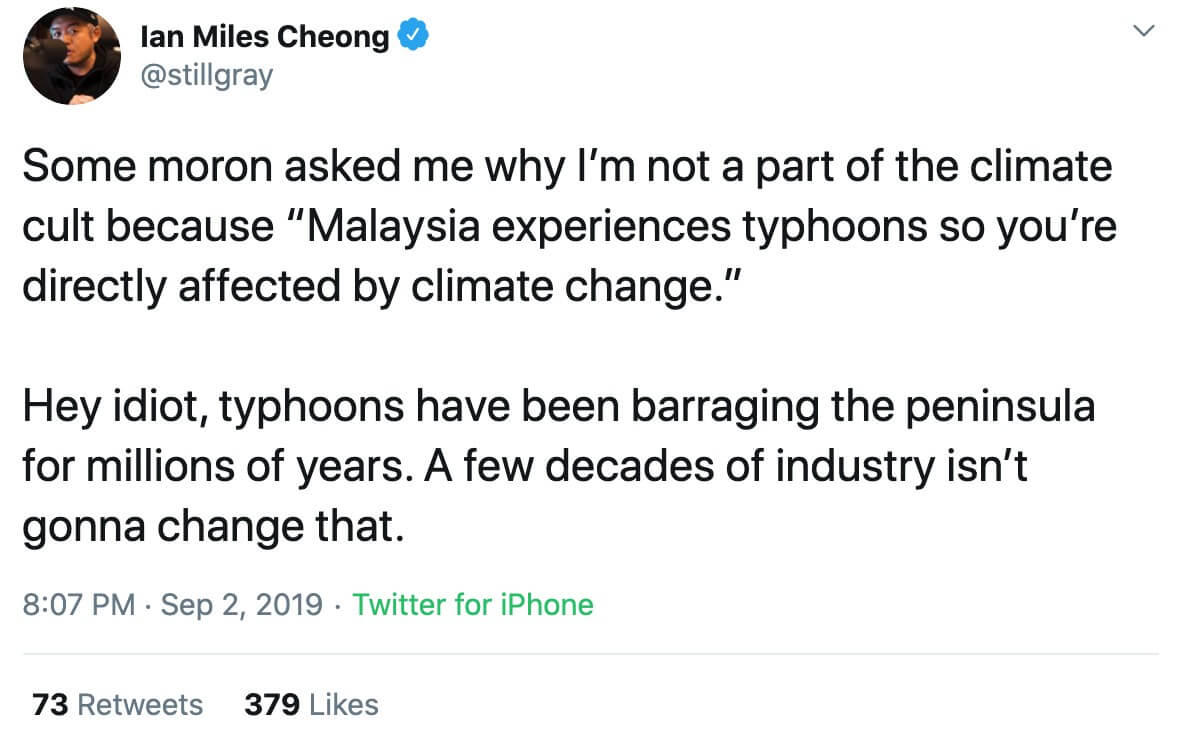
Incredibly enough, the gaming journalist, global-warming denier, and extremely odd person Ian Miles Cheong got it completely right when he told Musk this:

True

— Elon Musk (@elonmusk) December 18, 2022

In other words, Twitter can only survive if it turns itself into a totally different company. That’s not impossible — for instance, before Musk took over, Twitter explored the possibility of becoming a competitor to adult OnlyFans. There’s a lot of money there, with the adult content creator site projecting net revenue of $2.5 billion this year. On the other hand, that would guarantee that almost all large advertisers would flee the platform. And it would certainly come as a surprise to Musk’s legion of right-wing fans, as well as Tesla stockholders.

So in the end, all the cataclysms facing Twitter are structural issues that no other human being can likely solve, rather than — as tempting as it is to think — flaws inherent to Musk personally. You can replace one brick in this wall with another brick, but it’s still probably going to be swamped by the tsunami of capitalism.

All that said, there might be one possible path forward for Twitter, one that could enhance it as a venue for civic discourse and free speech: non-capitalistic ownership, by the public or its workers or both. Unfortunately, this is the one direction in which we can be absolutely certain Musk will not go.

Should Twitter be made into a public utility and/or worker owned?
To @elonmusk and @TwitterSupport please pay attention.

— Jaybefaunt???? (@Jaybefaunt) December 19, 2022

The post Who Cares Whether Elon Musk Is CEO of Twitter? He OWNS It. appeared first on The Intercept.

Categories
Audio Sources - Full Text Articles

Ovechkin revels in Messi winning World Cup with Argentina

ARLINGTON, Va. (AP) — The happiest professional athlete outside of soccer about Lionel Messiwinning the World Cup might be hockey star Alex Ovechkin.

A longtime fan of Messi, Ovechkin is reveling in Messi getting the job done with Argentina, including scoring twice and making a penalty kill in the instant-classic final against France on Sunday.

“I was very excited,” Ovechkin said Monday. “Of course, everybody knows he’s my favorite player and to see finally he get his dream and win the World Cup, it’s pretty big for him and I’m very happy for him.”

Ovechkin got a Messi Barcelona jersey as a gift from teammates to celebrate his 1,000th NHL game three years ago and has met him and taken pictures with him.

There are plenty of parallels between Ovechkin finally hoisting the Stanley Cup with the Washington Capitals in his 13th NHL season and Messi winning the World Cup in likely his last opportunity at age 35. Much like Ovechkin drove the bus on the Capitals’ first title run in franchise history and won the Conn Smythe Trophy as playoff MVP, Messi was dominant throughout the tournament, becoming the first player to score in group play and each of the knockout rounds.

“Yeah, but I don’t know how he’s going to celebrate,” Ovechkin said. “That’s a different part of the story.”

Ovechkin and the Capitals famously went swimming in fountains in Washington and partied with the Cup like few teams have done in recent history. Messi would have to put on quite the show in Buenos Aires to match that feat.

While watching Messi fulfill his dream, Ovechkin is on the verge of making more history in his sport. Last week he became just the third player to reach the 800-goal mark and he is one short of tying and two from passing Gordie Howe for second on the NHL career list.

Ovechkin met Howe, who died in 2016, at the 2009 All-Star Game in Montreal and has a picture of them in his home autographed by “Mr. Hockey.”

“It’s probably my top thing in my collection,” Ovechkin said. “Obviously, Kobe Bryant, Michael Jordan, Wayne Gretzky’s stick, Mario Lemieux’s stick, it’s probably the top one.”

___

Follow AP Hockey Writer Stephen Whyno on Twitter at https://twitter.com/SWhyno

___

AP NHL: https://apnews.com/hub/NHL and https://twitter.com/AP_Sports

WP Radio
WP Radio
OFFLINE LIVE