Categories
Audio Sources - Full Text Articles

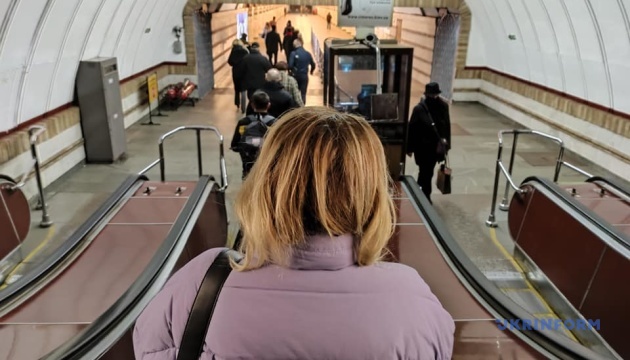
Kyiv subway resumes operation

630_360_1617880688-420.jpg

The Kyiv subway resumed get the job done on the early morning of December 17.

Kyiv Mayor Vitali Klitschko in a Telegram submit mentioned that the Kyiv subway resumed transport solutions at 07:30.

Trains run at weekends with an interval of 10 minutes.

Subway stations also work as bomb shelters in the course of air raid sirens.

Go through also: War update: Russians fired 98 missiles at Ukraine’s territory on Dec 16

As claimed, on Friday, December 16, Russia introduced a new huge attack on Ukraine. In accordance to the data provided by the Commander-in-Chief of the Armed Forces Valeriy Zaluzhnyi, from the locations of the Caspian Sea and the Black Sea, the enemy fired 76 missiles, which include 72 cruise missiles (Kh-101, Kalibr, Kh-22) and 4 guided air-to-floor missiles (Kh-59/Kh-31P) at Ukraine’s important infrastructure. Air protection forces shot down 60 Russian missiles.

Kyiv Mayor Vitali Klitschko verified explosions in the Desnianskyi, Dniprovskyi and Holosiivskyi districts of the money.

iy

Source link

The post Kyiv subway resumes operation appeared first on Ukraine Intelligence.

Categories
Audio Sources - Full Text Articles

Polls open in Tunisian vote boycotted by opposition

2022-12-17T07:12:29Z

TUNIS (Reuters) – Polls opened on Saturday in a Tunisian parliamentary election that will tighten President Kais Saied’s grip on power, capping what his opponents denounce as a march to one-man rule over a country that shook off dictatorship in 2011.

?m=02&d=20221217&t=2&i=1617410168&r=LYNX

FILE PHOTO: Tunisian President Kais Saied arrives to meet with U.S. Secretary of State Antony Blinken (not pictured) during the U.S.-Africa Leaders Summit at the Walter E. Washington Convention Center in Washington, D.C, U.S., December 14, 2022. Mandel Ngan/Pool via REUTERS

Taking place 12 years to the day after vegetable seller Mohamed Bouazizi set himself on fire in an act of protest that sparked the Arab Spring, the vote is being boycotted by political parties which have accused Saied of mounting a coup.

Voters will be choosing a parliament largely defanged by a new constitution, approved with a low turnout in a July referendum that was engineered by Saied to shift Tunisia back towards a presidential system.

Nejib Chebbi, head of an anti-Saied coalition including Ennahda, has labelled the election a “still-born farce”.

Saied shut the previous parliament down last year, surrounding the legislature with tanks and assuming near total authority.

The vote appears to have stirred little interest among a population jaded by political dysfunction and struggling with economic hardship.

Voting is due to take place from 8 a.m.- 6 p.m. (0700 GMT-1700 GMT).

Saied, a former law lecturer who was a political independent when elected president in 2019, has described the election as part of a roadmap for ending the chaos and corruption he says afflicted Tunisia under the previous system.

His opponents including the Islamist Ennahda party meanwhile accuse him of a coup, and have rejected the ballot along with all the president’s other moves since last summer, when he dissolved parliament and began ruling by decree.

The election is taking place against the backdrop of an economic crisis that is fuelling poverty, leading many to attempt the perilous journey to Europe aboard smugglers’ boats.

With the main parties absent, a total of 1,058 candidates – only 120 of them women – are running for 161 seats.

For 10 of those – seven in Tunisia and three decided by expatriate voters – there is just one candidate. A further seven of the seats decided by expatriate voters have no candidates running at all.

Categories
Audio Sources - Full Text Articles

Paratroopers strike enemy positions with UCAV in Luhansk region

630_360_1671260664-154.jpg

In the Luhansk location, Ukrainian paratroopers have struck enemy positions with an unmanned overcome aerial vehicle (UCAV).

The suitable statement was manufactured by the Air Assault Forces of the Armed Forces of Ukraine on Telegram, an Ukrinform correspondent experiences.

The online video depicts the beat general performance of the 80th Individual Air Assault Brigade in just one of districts in the Luhansk region.

https://www.youtube.com/observe?v=u4atPC1qPIY

“Enemy personnel has been strike with a strike drone. Later, the artillerymen-paratroopers fully destroyed a posture of Russian occupiers and an ammunition load (the video clip displays its detonation),” the report states.

A reminder that the Armed Forces of Ukraine have liberated 13 settlements from Russian troops in the Luhansk region so considerably.

Photograph: Air Assault Forces of the Armed Forces of Ukraine

mk

Source link

The post Paratroopers strike enemy positions with UCAV in Luhansk region appeared first on Ukraine Intelligence.

Categories
Audio Sources - Full Text Articles

Two Russian Oniks missiles shot down in Odesa region

630_360_1646577157-576.jpg

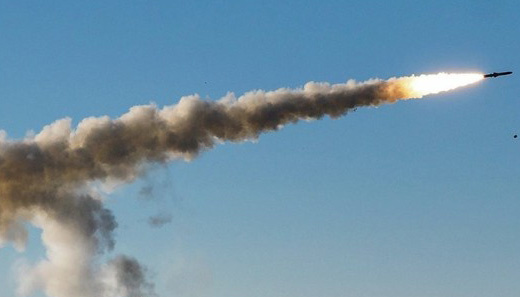
This morning two Russian Oniks-type missiles have been shot down in the Odesa area.

The relevant assertion was made by Spokesperson for Odesa Regional Navy Administration Serhii Bratchuk on Telegram, an Ukrinform correspondent experiences.

“This morning the enemy has launched a further missile assault on the Odesa area. Two Oniks-kind missiles were fired from a coastal missile process in the quickly occupied Crimea. The anti-aircraft protection models destroyed them,” the report states.

A reminder that, in the early morning of December 17, 2022, air raid sirens were being ringing in the Odesa area.

mk

Source link

The post Two Russian Oniks missiles shot down in Odesa region appeared first on Ukraine Intelligence.

Categories
Audio Sources - Full Text Articles

Kyiv mayor says metro service, water supply back after Russian strikes

2022-12-17T06:29:17Z

The mayor of Ukraine’s capital said early Saturday the city’s metro system was back in service and that all residents had been reconnected to water supply a day after the latest wave of Russian air strikes on critical infrastructure.

Ukrainian officials said Russia fired more than 70 missiles on Friday in one of its biggest attacks since the Kremlin’s Feb. 24 invasion, forcing emergency blackouts nationwide.

Kyiv Mayor Vitali Klitschko also said heating had been restored to half the city and electricity had been returned to two-thirds.

“But schedules of emergency outages are being implemented,” he wrote on the Telegram messaging app. “Because the deficit of electricity is significant.”

Klitschko had warned of an “apocalypse” scenario for the Ukrainian capital earlier this month if Russian air strikes on infrastructure continued but also said there was no need yet for people to evacuate.

“We are fighting and doing everything we can to make sure that this does not happen,” he told Reuters on Dec. 7.

Related Galleries:

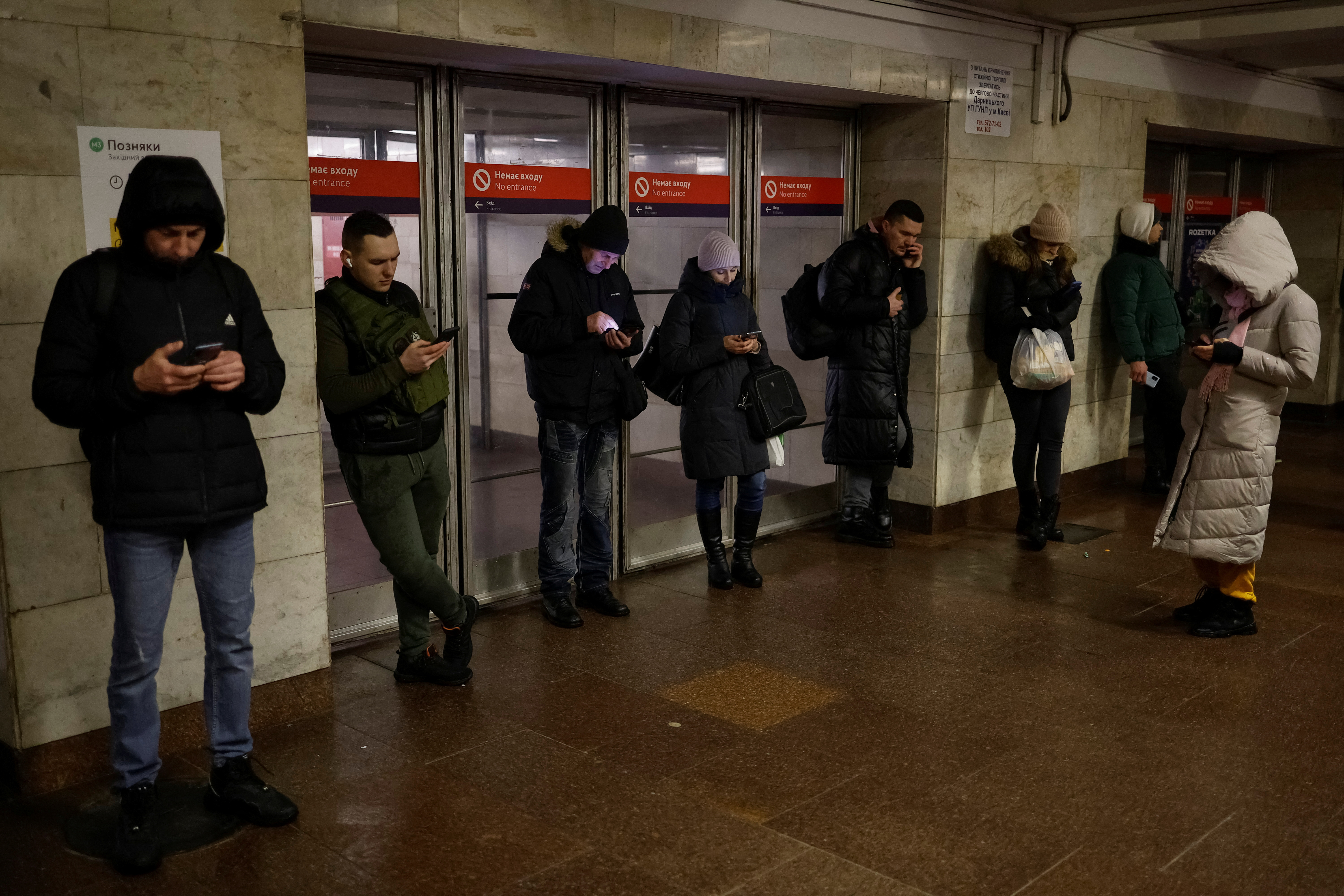
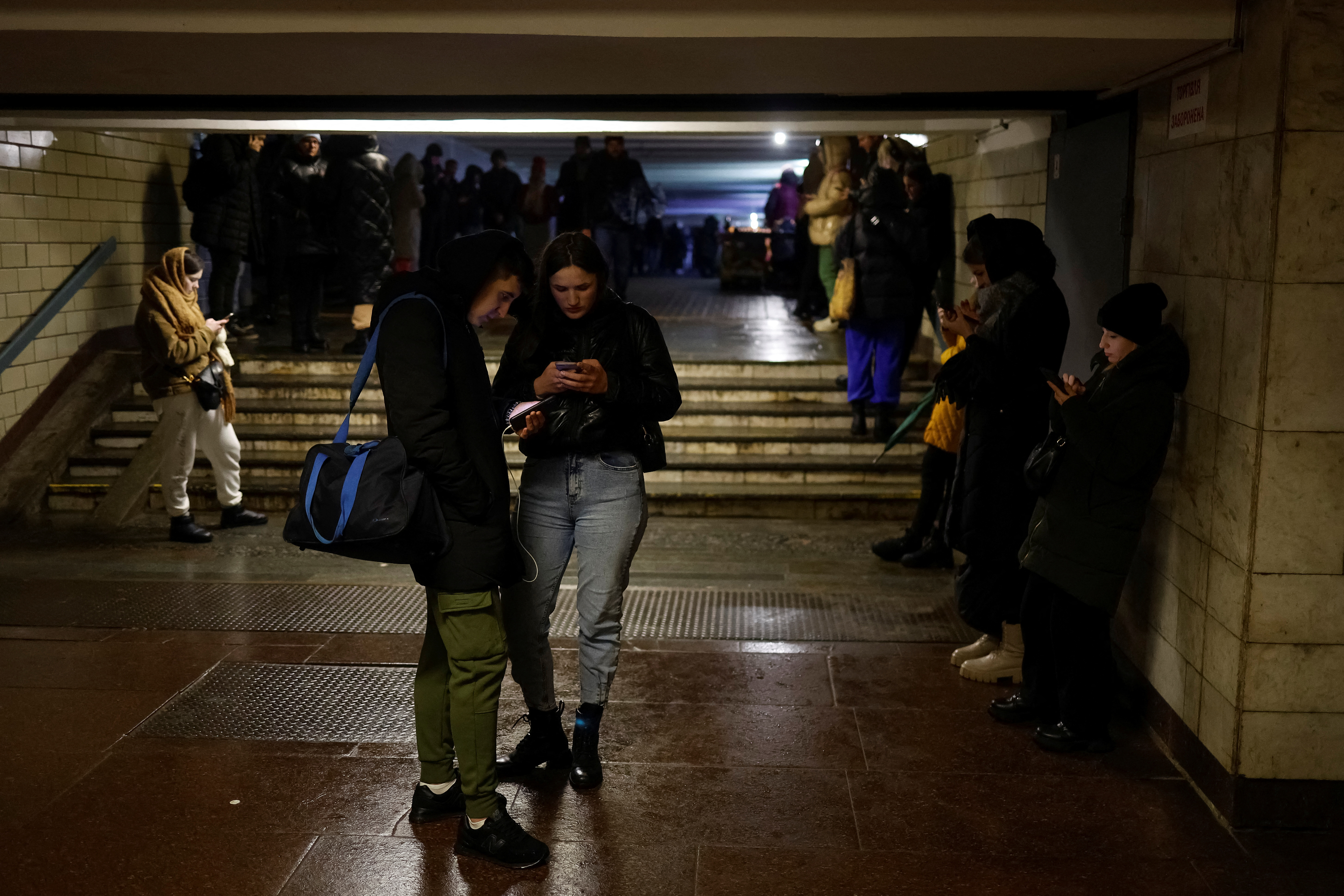
People use mobile internet next to a metro station after critical civil infrastructure was hit by Russian missile attacks, amid Russia’s invasion of Ukraine, in Kyiv, Ukraine December 16, 2022. REUTERS/Valentyn Ogirenko

People use mobile internet next to a metro station after critical civil infrastructure was hit by Russian missile attacks, amid Russia’s invasion of Ukraine, in Kyiv, Ukraine December 16, 2022. REUTERS/Valentyn Ogirenko

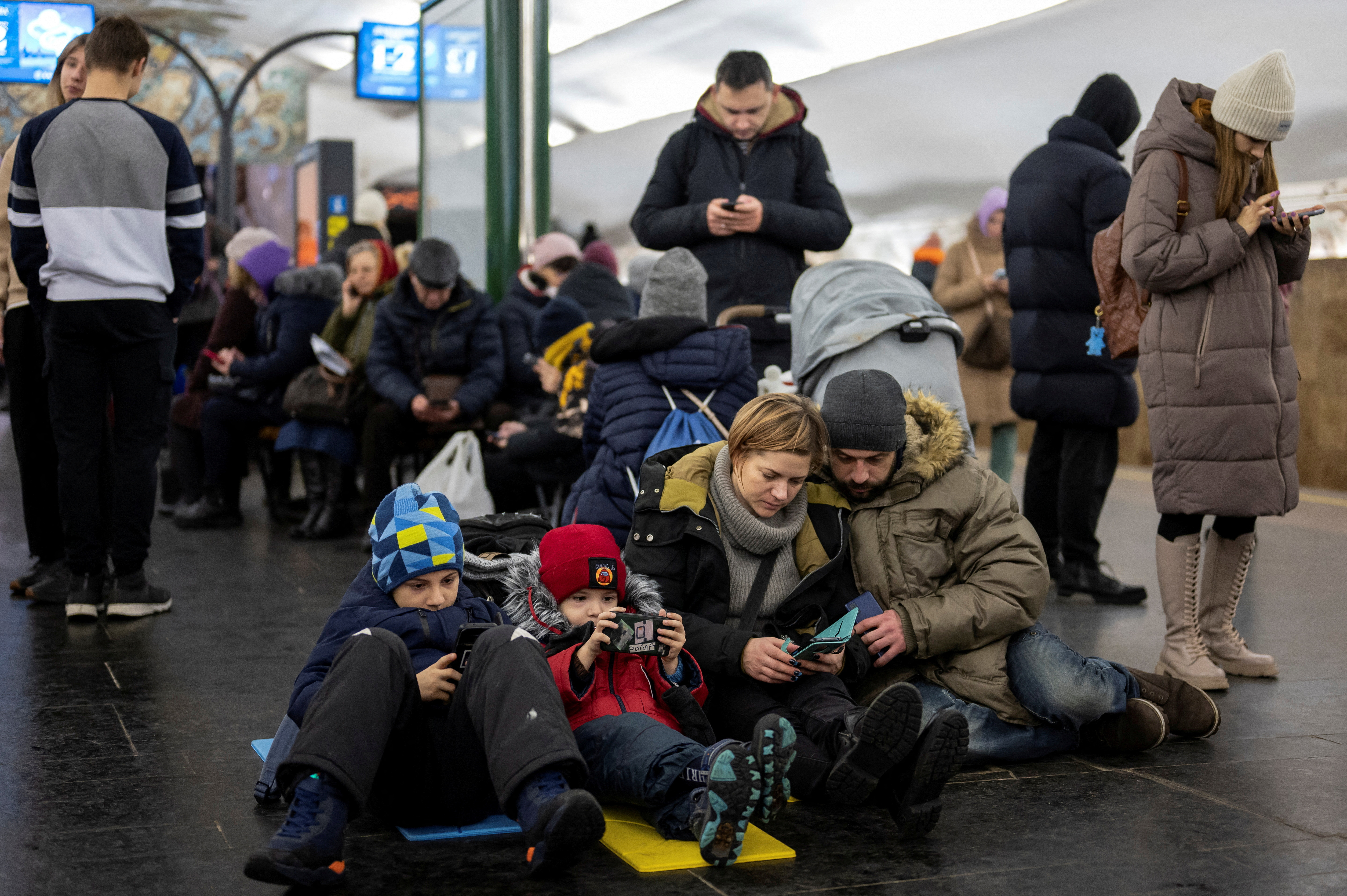
People shelter inside a metro station during massive Russian missile attacks in Kyiv, Ukraine December 16, 2022. REUTERS/Viacheslav Ratynskyi TPX IMAGES OF THE DAY

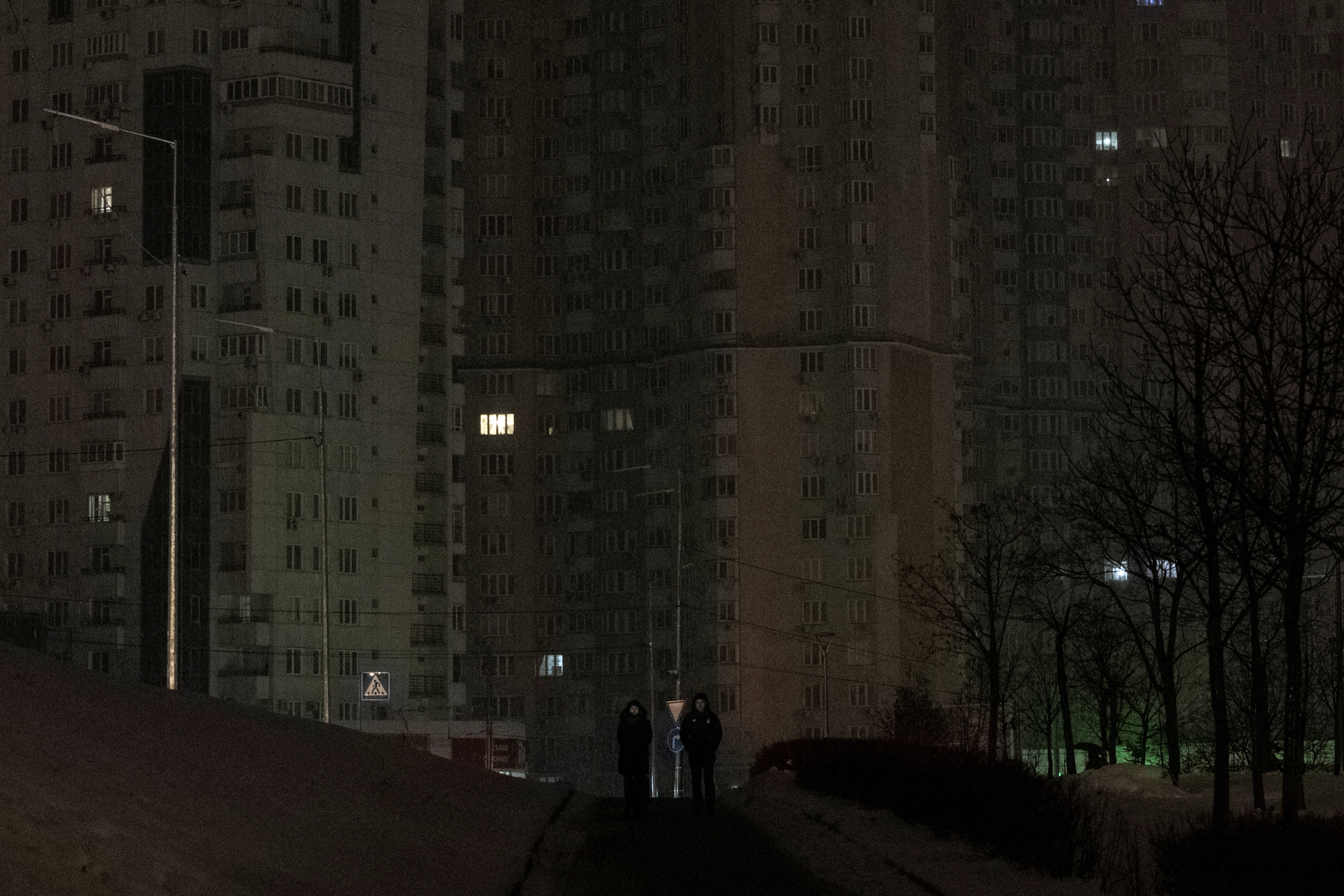
People walk in a dark park after critical civil infrastructure was hit by Russian missile attacks, amid Russia’s invasion of Ukraine, in Kyiv, Ukraine December 16, 2022. REUTERS/Valentyn Ogirenko

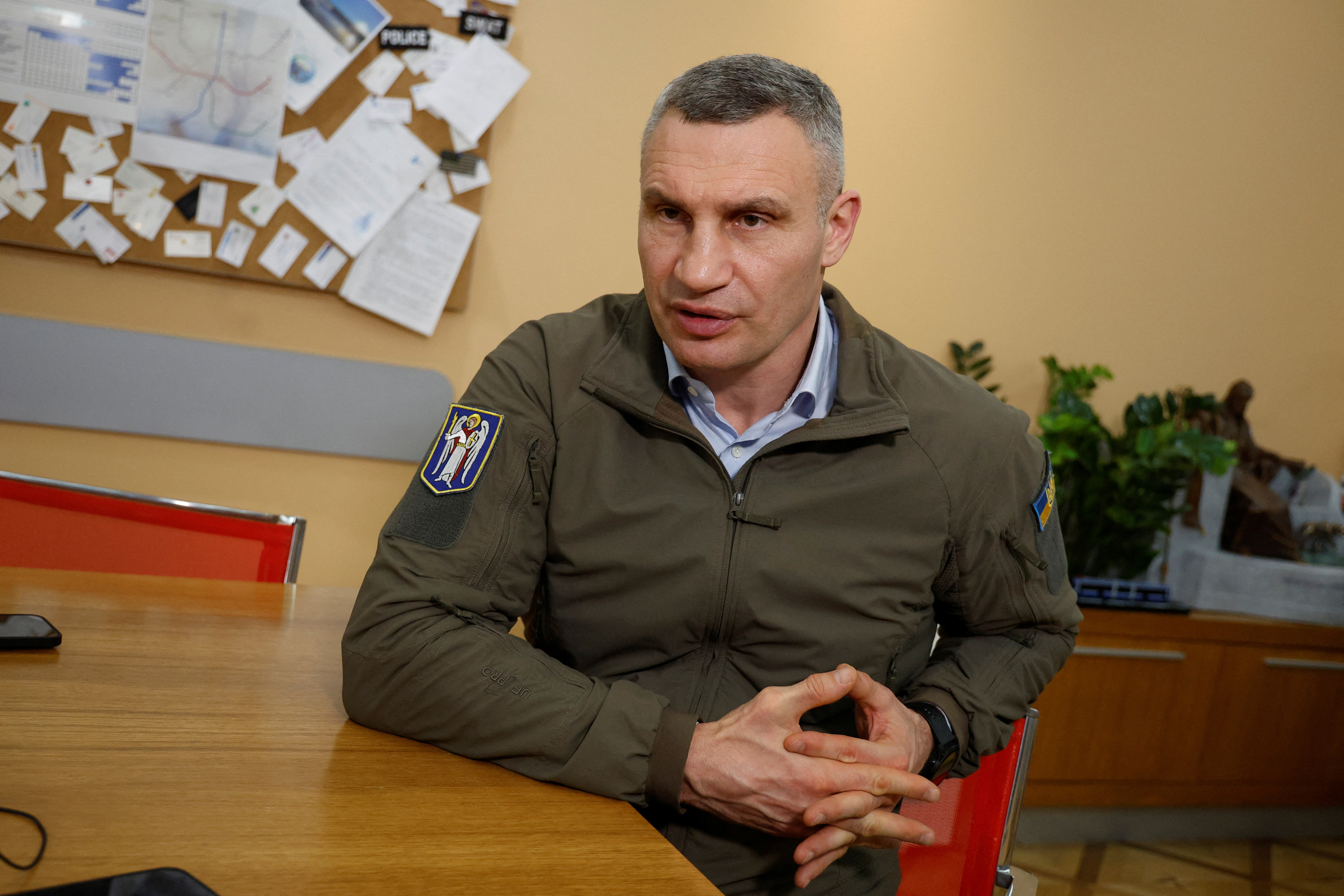
Kyiv Mayor Vitali Klitschko attends an interview with Reuters, amid Russia’s attack on Ukraine, in Kyiv, Ukraine December 7, 2022. REUTERS/Valentyn Ogirenko


Categories
Audio Sources - Full Text Articles

Elon Musk restores Twitter accounts of journalists after suspensions draw backlash

2022-12-17T06:34:34Z

A view of the Twitter logo at its corporate headquarters in San Francisco, California, U.S. November 18, 2022. REUTERS/Carlos Barria/File Photo

Elon Musk reinstated the Twitter accounts of several journalists that were suspended for a day over a controversy on publishing public data about the billionaire’s plane.

The reinstatements came after the unprecedented suspensions evoked stinging criticism from government officials, advocacy groups and journalism organizations from several parts of the globe on Friday, with some saying the microblogging platform was jeopardizing press freedom.

A Twitter pollthat Musk conducted later also showed that a majority of the respondents wanted the accounts restored immediately.

“The people have spoken. Accounts who doxxed my location will have their suspension lifted now,” Musk said in a tweet on Saturday.

Twitter did not immediately respond to a Reuters request for comment. A Reuters check showed the suspended accounts, which included journalists from the New York Times, CNN and the Washington Post, have been reinstated.

Officials from France, Germany, Britain and the European Union earlier condemned the suspensions.

The episode, which one well known security researcher labeled the “Thursday Night Massacre”, is being regarded by critics as fresh evidence of Musk, who considers himself a “free speech absolutist,” eliminating speech and users he personally dislikes.

Shares in Tesla (TSLA.O), an electric car maker led by Musk, slumped 4.7% on Friday and posted their worst weekly loss since March 2020, with investors increasingly concerned about his being distracted and about the slowing global economy.

Roland Lescure, the French minister of industry, tweeted on Friday that, following Musk’s suspension of journalists, he would suspend his own activity on Twitter.

Melissa Fleming, head of communications for the United Nations, tweeted she was “deeply disturbed” by the suspensions and that “media freedom is not a toy.”

The German Foreign Office warned Twitter that the ministry had a problem with moves that jeopardized press freedom.

The suspensions stemmed from a disagreement over a Twitter account called ElonJet, which tracked Musk’s private plane using publicly available information.

On Wednesday, Twitter suspended the account and others that tracked private jets, despite Musk’s previous tweet saying he would not suspend ElonJet in the name of free speech.

Shortly after, Twitter changed its privacy policy to prohibit the sharing of “live location information.”

Then on Thursday evening, several journalists, including from the New York Times, CNN and the Washington Post, were suspended from Twitter with no notice.

In an email to Reuters overnight, Twitter’s head of trust and safety, Ella Irwin, said the team manually reviewed “any and all accounts” that violated the new privacy policy by posting direct links to the ElonJet account.

“I understand that the focus seems to be mainly on journalist accounts, but we applied the policy equally to journalists and non-journalist accounts today,” Irwin said in the email.

The Society for Advancing Business Editing and Writing said in a statement on Friday that Twitter’s actions “violate the spirit of the First Amendment and the principle that social media platforms will allow the unfiltered distribution of information that is already in the public square.”

Musk accused the journalists of posting his real-time location, which is “basically assassination coordinates” for his family.

The billionaire appeared briefly in a Twitter Spaces audio chat hosted by journalists, which quickly turned into a contentious discussion about whether the suspended reporters had actually exposed Musk’s real-time location in violation of the policy.

“If you dox, you get suspended. End of story,” Musk said repeatedly in response to questions. “Dox” is a term for publishing private information about someone, usually with malicious intent.

The Washington Post’s Drew Harwell, one of the journalists who had been suspended but was nonetheless able to join the audio chat, pushed back against the notion that he had exposed Musk or his family’s exact location by posting a link to ElonJet.

Soon after, BuzzFeed reporter Katie Notopoulos, who hosted the Spaces chat, tweeted that the audio session was cut off abruptly and the recording was not available.

In a tweet explaining what happened, Musk said “We’re fixing a Legacy bug. Should be working tomorrow.”

Categories
Audio Sources - Full Text Articles

EXPLAINER: Why Japan is boosting its arms capability, budget

TOKYO (AP) — Japan this week adopted a new national security strategy that includes determination to possess “counterstrike” capability to preempt enemy attacks and double its spending to gain a more offensive footing and improve its resilience to protect itself from growing risks from China, North Korea and Russia. The new strategy marks a historic change to Japan’s exclusively self-defense policy since the end of World War II. Here is a look at Japan’s new security and defense strategies and how they will change the country’s defense posture.

___

COUNTERSTRIKE CAPABILITY

The biggest change in the National Security Strategy is possession of “counterstrike capability” that Japan calls “indispensable.” Japan aims to achieve capabilities ”to disrupt and defeat invasions against its nation much earlier and at a further distance” within about 10 years.

This puts an end to the 1956 government policy that shelved capability to strike enemy targets and only recognized the idea as a constitutional last-ditch defense.

Japan says missile attacks against it have become “a palpable threat” and its current interceptor-reliant missile defense system is insufficient. North Korea launched missiles more than 30 times this year alone including one that overflew Japan, and China fired ballistic missiles into waters near southern Japanese islands.

Japan says the use of counterstrike capability is constitutional if it’s in response to signs of an imminent enemy attack, but experts say it is extremely difficult to conduct such an attack without risking blame for striking first. Opponents say strike capability goes beyond self-defense under Japan’s pacifist constitution.

″(Japan’s) exclusive self-defense policy is hollowed,” the liberal-leaning Asahi newspaper said.

___

DOUBLING DEFENSE SPENDING

Japan aims to double its defense spending to about 2% of its GDP to a total of about 43 trillion yen ($320 billion) through 2027. The new spending target follows the NATO standard and will eventually push Japan’s annual budget to about 10 trillion yen ($73 billion), the world’s third biggest after the United States and China.

Kishida said his government will need an extra 4 trillion yen ($30 billion) annually and proposed tax increases to fund a quarter of it. His tax-raise request backfired and the five-year defense buildup plan had to be released without full funding plans while the governing party continued discussing how to pay for the shortfall.

___

LONG-RANGE MISSILES

Over the next five years, Japan will spend about 5 trillion yen ($37 billion) on long-range missiles, whose planned deployment begins in 2026. Japan will purchase U.S.-made Tomahawks and Joint Air-to-Surface Standoff Missiles, while Japan’s Mitsubishi Heavy Industry will improve and mass-produce a Type-12 surface-to-ship guided missile. Japanese defense officials said they are still finalizing Tomahawk purchase details.

Japan will also develop other types of arsenals, such as hypersonic weapons and unmanned and multi-role vehicles for possible collaboration with the F-X next-generation fighter jet Japan is developing with Britain and Italy for deployment in 2035.

Several standoff missile units are underway at undisclosed locations.

___

CYBERSECURITY

Japan, lacking sufficient cybersecurity and intelligence capability, will have to heavily rely on the United States in those areas in launching long-range cruise missiles at intended targets, experts say.

“Without cybersecurity, Self-Defense Force superiority or Japan-U.S. interoperatibility is difficult to achieve,” according to the five-year defense program also adopted Friday, acknowledging the need to ensure cybersecurity at the SDF and Japanese defense industry.

This is a welcome development for the United States as the Japanese government’s weak cybersecurity has been “a critical impediment to deeper alliance cooperation and expanded information-sharing,” according to Christopher Johnstone, senior advisor and Japan Chair at the Center for Strategic and International Studies.

Japan will spend 8 trillion yen ($58 billion) over the next five years on cross-domain defense including cybersecurity and space.

___

CHINA AS ‘GREATEST STRATEGIC CHALLENGE’

Fear of a regional security environment described as “the severest and most complicated” in the postwar era has been a driving force behind the revision to Japan’s strategy.

China, with its rapid arms buildup, increasingly assertive military activity and rivalry with the U.S., presents “an unprecedented and the greatest strategic challenge” to the peace and security of Japan and the international community, the strategy states.

Russia’s war on Ukraine sparked fears of a Taiwan emergency, accelerating the move to bolster Japan’s deterrence within the next five years. While North Korea keeps advancing its nuclear and missile capabilities, the main threat is still China, for which Japan has had to prepare “by using North Korea’s threat as a cover,” said Tomohisa Takei, a retired admiral in Japan’s navy.

___

STILL EXCLUSIVELY SELF-DEFENSE?

Because of its wartime past as aggressor and devastation after its defeat, Japan’s postwar policy prioritized the economy over security by relying on American troops stationed in Japan under their bilateral security agreement, in a division of roles known as “shield and dagger.”

Prospects for even closer operation with the U.S. military under the new strategy has prompted concerns that Japan would take more offensive responsibility.

Japan says it will keep its pacifist principle of high standards for arms equipment and technology transfer. But some easing is planned to allow currently restricted exports of offensive equipment and components, including those of the next-generation F-X fighter jet, as a way to strengthen the country’s defense equipment industry.

Categories
Audio Sources - Full Text Articles

Russians fired 98 missiles at Ukraine’s territory on Dec 16

630_360_1670260661-504.jpg

On December 16, 2022, Russia launched another enormous missile attack on Ukraine’s civil and power infrastructure, getting fired 98 missiles and opened fire with a number of start rocket devices (MLRS) above 65 situations.

The applicable assertion was produced by the Standard Workers of the Armed Forces of Ukraine on Fb, an Ukrinform correspondent reviews.

Around the past working day, Ukraine’s Protection Forces have repelled enemy attacks in the vicinity of much more than 20 settlements, which include the Luhansk region’s Ploshchanka, Chervonopopivka, Biloohorivka, and the Donetsk region’s Bakhmut, Opytne, Zelenopillia, Andriivka, Marinka, Pobieda and Novomykhailivka.

In the Volyn and Polissia directions, the scenario remained somewhat unchanged. No signals of enemy offensive groupings becoming shaped have been detected.

In the Siverskyi and Slobozhanskyi instructions, Russian invaders introduced artillery strikes close to the Chernihiv region’s Hai, the Sumy region’s Havrylova Sloboda, Seredyna-Buda, Yastrubyne and Kindrativka, and the Kharkiv region’s Strilecha, Starytsia, Ambarne, Vilkhuvatka, Dvorichna and Krasne.

In the Kupiansk way, Russian troops opened fire near the Kharkiv region’s Synkivka, Orlianka, Tabaivka, Berestove and Vyshneve, and the Luhansk region’s Volodymyrivka and Stelmakhivka.

In the Lyman way, Russian occupiers shelled the positions of Ukrainian forces in the vicinity of the Luhansk region’s Makiivka, Ploshchanka, Chervonopopivka, Dibrova and Hirske.

In the Bakhmut and Avdiivka way, the enemy struck about 25 settlements, such as the Donetsk region’s Verkhniokamianske, Spirne, Bilohorivka, Vesele, Soledar, Bakhmutske, Bakhmut, Opytne, Zalizne, Marinka and Perrvomaiske.

In the Novopavlivka direction, Russian occupiers inflicted hearth hurt in the vicinity of the Donetsk region’s Bohoiavlenka, Neskuchne, Prechystivka and Vuhledar.

In the Zaporizhzhia and Kherson directions, Russian invaders proceed to damage civil infrastructure in settlements positioned together the ideal lender of the Dnieper with artillery. Around 35 settlements came underneath enemy fire, namely the Zaporizhzhia region’s Plavni, Huliaipole, Dorozhnianka, Olhivske and Nikopol, and the Khersonr region’s Chornobaivka, Antonivka, Kherson and Mylove.

The enemy is redeploying specified units and withdrawing some of its troops from the Kherson region’s Kakhovka and Nova Kakhovka in the direction of Nyzhni Sirohozy. Russian occupiers are telling local citizens that they will depart Kakhovna prior to the close of the yr and, hence, loyal citizens are available to transfer to the briefly occupied Crimea.

In the Luhansk location, Russian invaders are placing strain on local business people, forcing them to re-sign-up organizations in accordance with Russian regulations.

More than the earlier working day, Ukraine’s missile and artillery units have struck five Russian personnel clusters, a single command submit and one particular ammunition depot.

mk

Source link

The post Russians fired 98 missiles at Ukraine’s territory on Dec 16 appeared first on Ukraine Intelligence.

Categories
Audio Sources - Full Text Articles

In COVID-hit Beijing, funeral homes with sick workers struggle to keep up

2022-12-17T05:54:01Z

Funeral homes across China’s COVID-hit capital Beijing, a city of 22 million, scrambled on Saturday to keep up with calls for funeral and cremation services as workers and drivers testing positive for the novel coronavirus called in sick.

After declaring that the Omicron strain has weakened, and unprecedented public protests against a zero-COVID policy championed by President Xi Jinping, China abruptly shifted its COVID management protocols more than a week ago.

Moving away from endless testing, lockdowns and heavy travel restrictions, China is realigning with a world that has largely reopened to live with COVID.

China has told its population of 1.4 billion to nurse their mild symptoms at home unless symptoms become severe, as cities across China brace for their first waves of infections.

In Beijing, which has yet to report any COVID deaths since the policies changed on Dec. 7, sick workers have hit the staffing of services from restaurants and courier firms to its roughly one dozen funeral parlours.

“We’ve fewer cars and workers now,” a staffer at Miyun Funeral Home told Reuters, adding that there was a mounting backlog of demand for cremation services.

“We’ve many workers who tested positive.”

It was not immediately clear if the struggle to meet the increased demand for cremation was due to a rise in COVID-related deaths.

At Huairou Funeral Home, a body had to wait for three days before it could be cremated, a staffer said.

“You can transport the body here yourself, it’s been busy recently,” the staffer said.

China’s health authority last reported COVID deaths on Dec. 3, in Shandong and Sichuan provinces. The Chinese capital last reported a fatality on Nov. 23.

Yet Chinese media reported on Friday that two veteran state media journalists had died after contracting COVID-19 in Beijing, among the first known deaths since China dismantled most of its zero-COVID policies.

The National Health Commission reported on Saturday no change to its official COVID death tally of 5,235.

China’s abrupt lifting of its ultra-strict policies could spark an explosion of cases and over a million deaths through 2023, according to new projections from the U.S.-based Institute of Health Metrics and Evaluation (IHME).

Cases in China would peak around April 1, when deaths would reach 322,000, it said.

“There’re long queues of hearses here, and it’s hard to say when there’ll be available slots,” said a staffer at Dongjiao Funeral Home.

“Normal deaths,” the staffer said, when asked if the deaths were COVID-related.

The lack of reported COVID deaths for the past 10 days have stirred debate on social media over data disclosure, fuelled also by a dearth of statistics over hospitalisations and the number of seriously ill.

“Why can’t these statistics be found? What’s going on? Did they not tally them or they just aren’t announcing them?” one netizen on Chinese social media asked.

China stopped reporting asymptomatic cases from Wednesday, citing a lack of PCR testing among people with no symptoms that was making it difficult to accurately tally the total count.

Official figures have become an unreliable guide as less testing is being done across the country following the easing of zero-COVID policies.

In Shanghai, more than 1,000 km (620 miles) south of Beijing, local education authorities on Saturday told most schools to hold classes online starting on Monday, to cope with worsening COVID infections across China.

In a sign of staffing crunches to come, Shanghai Disney Resort said on Saturday that entertainment offerings may reduce to a smaller workforce, although the theme park was still operating normally.

Related Galleries:
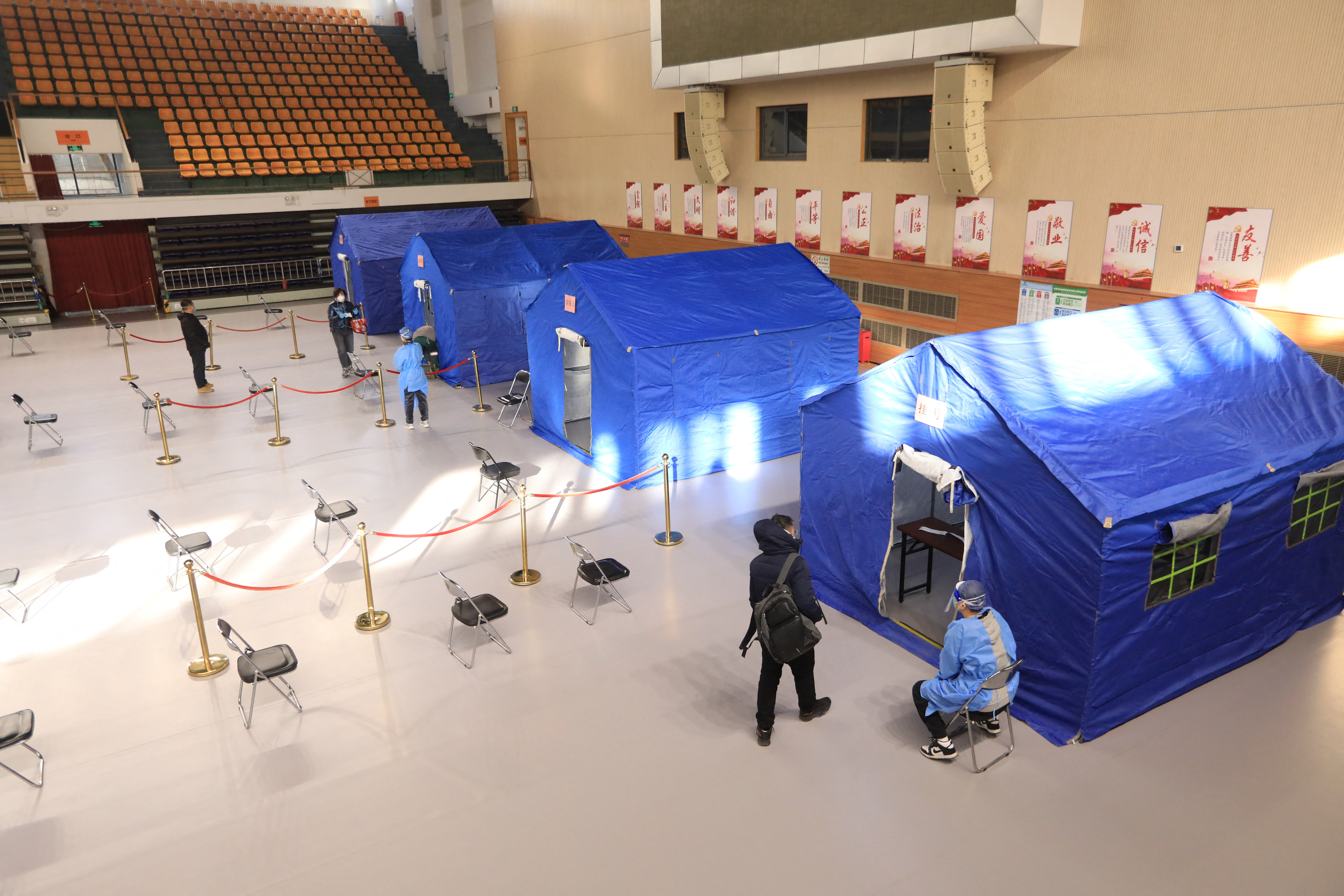
People line up at a makeshift fever clinic set up inside a stadium, amid the coronavirus disease (COVID-19) outbreak in Beijing, China December 14, 2022. China Daily via REUTERS
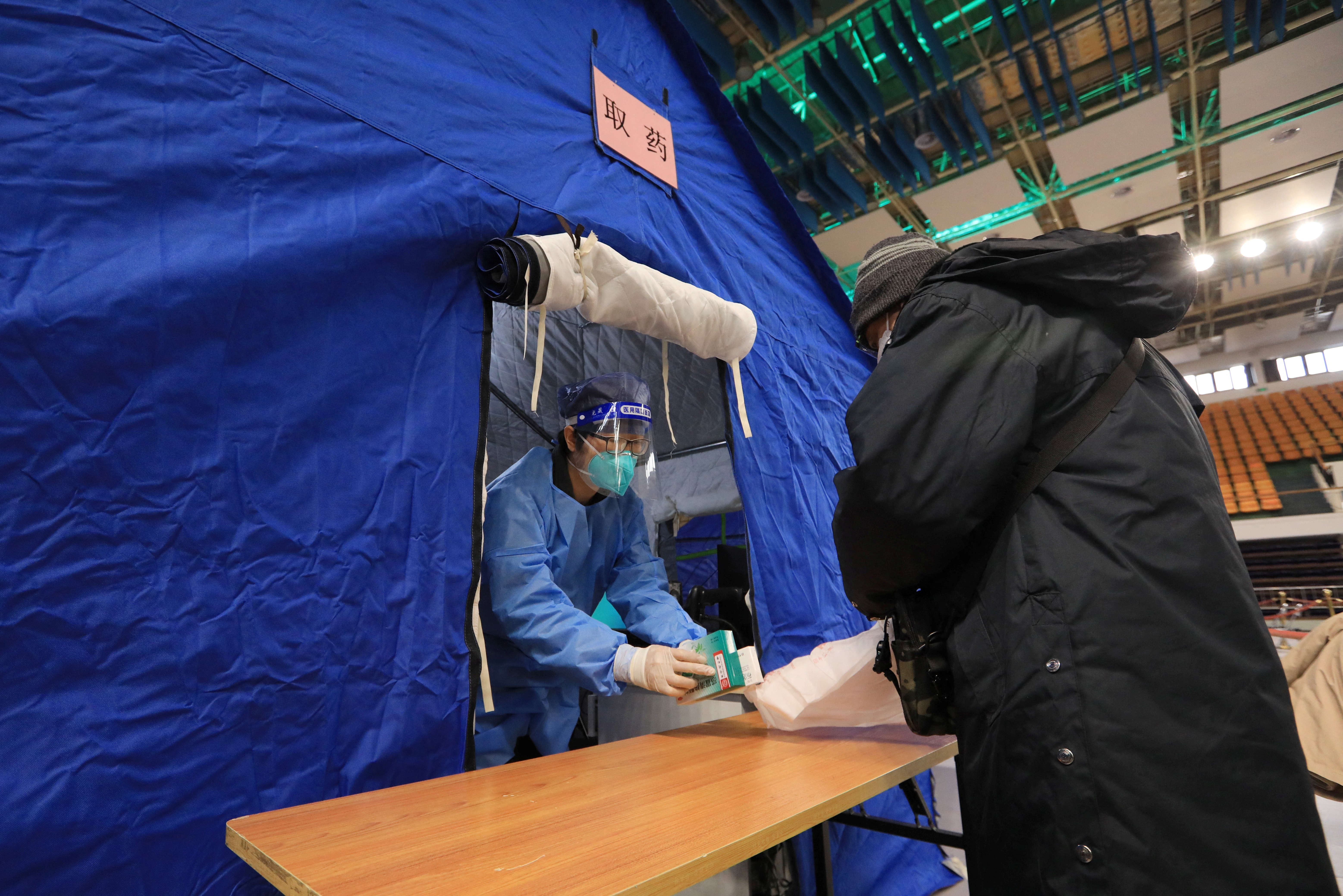
A medical worker hands fever medicine to a resident at a makeshift fever clinic set up inside a stadium, amid the coronavirus disease (COVID-19) outbreak in Beijing, China December 14, 2022. China Daily via REUTERS
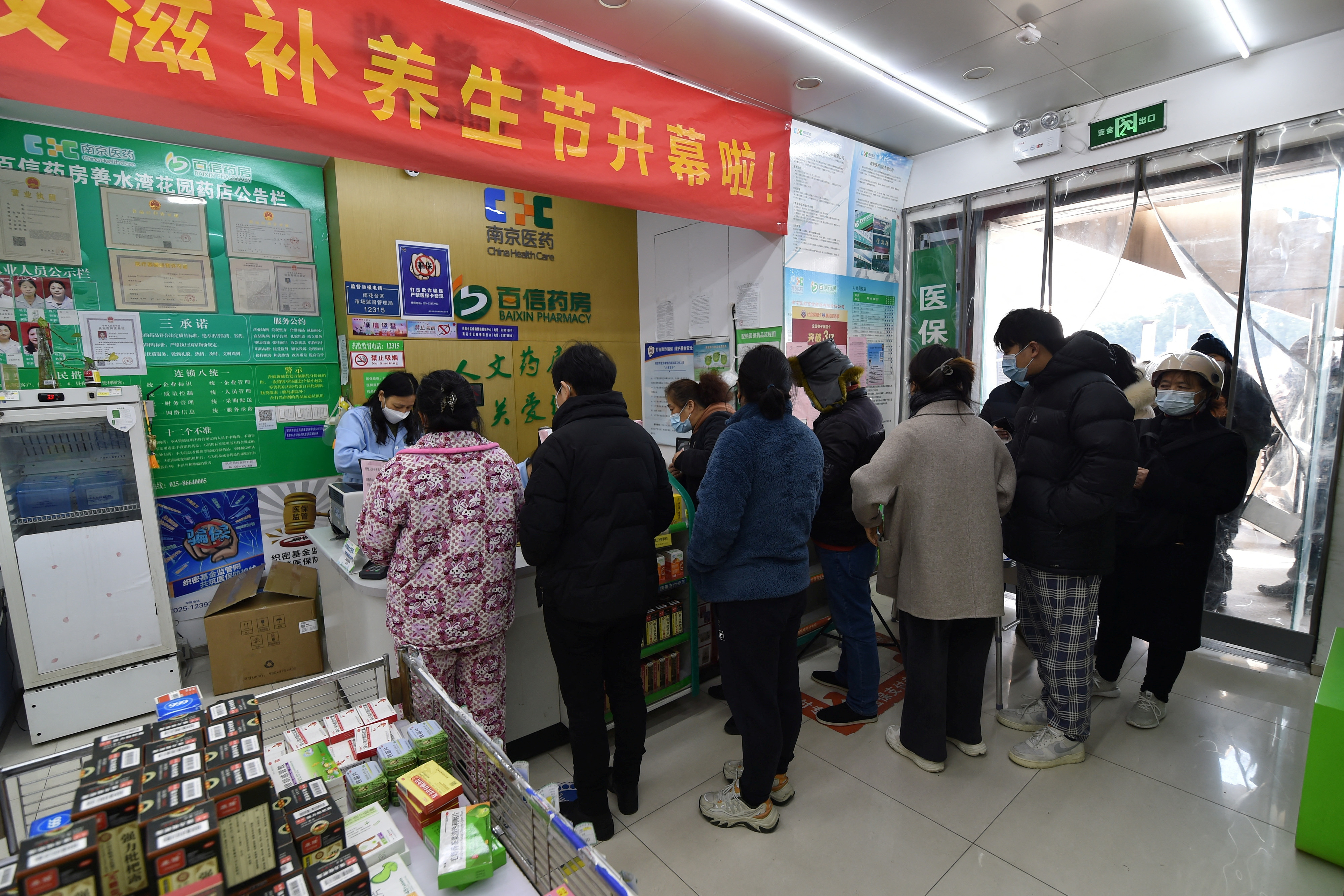
Residents line up at a pharmacy to buy antigen testing kits for the coronavirus disease (COVID-19), in Nanjing, Jiangsu province, China December 15, 2022. China Daily via REUTERS
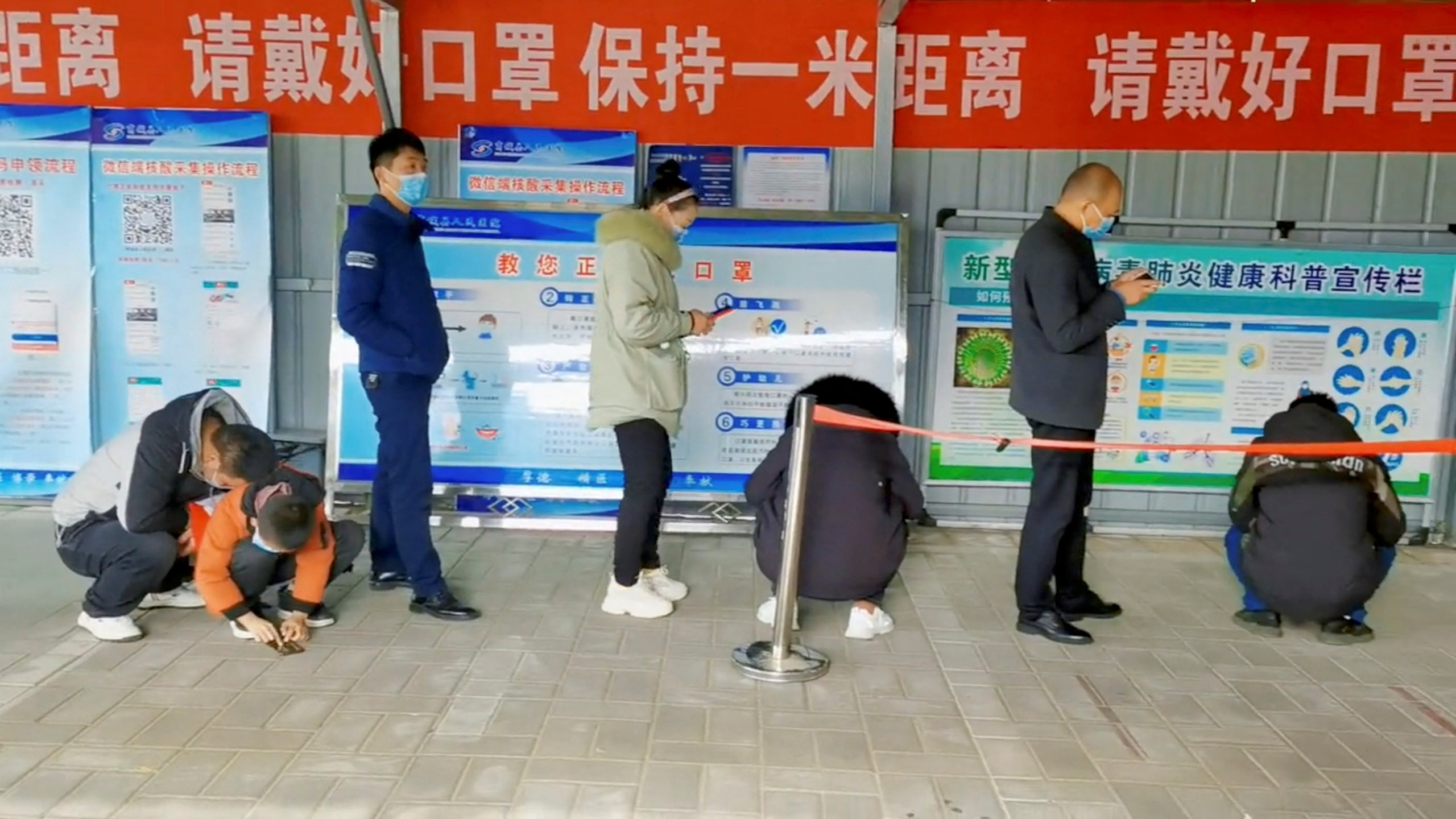
People wait in line at a coronavirus disease (COVID-19) test centre in Xinyang, China, this still image obtained from social media video released December 15, 2022. Video obtained by REUTERS

People wait to purchase medicine at a pharmacy, amid the coronavirus disease (COVID-19) outbreak, in Beijing, China December 16, 2022. REUTERS/Xiaoyu Yin
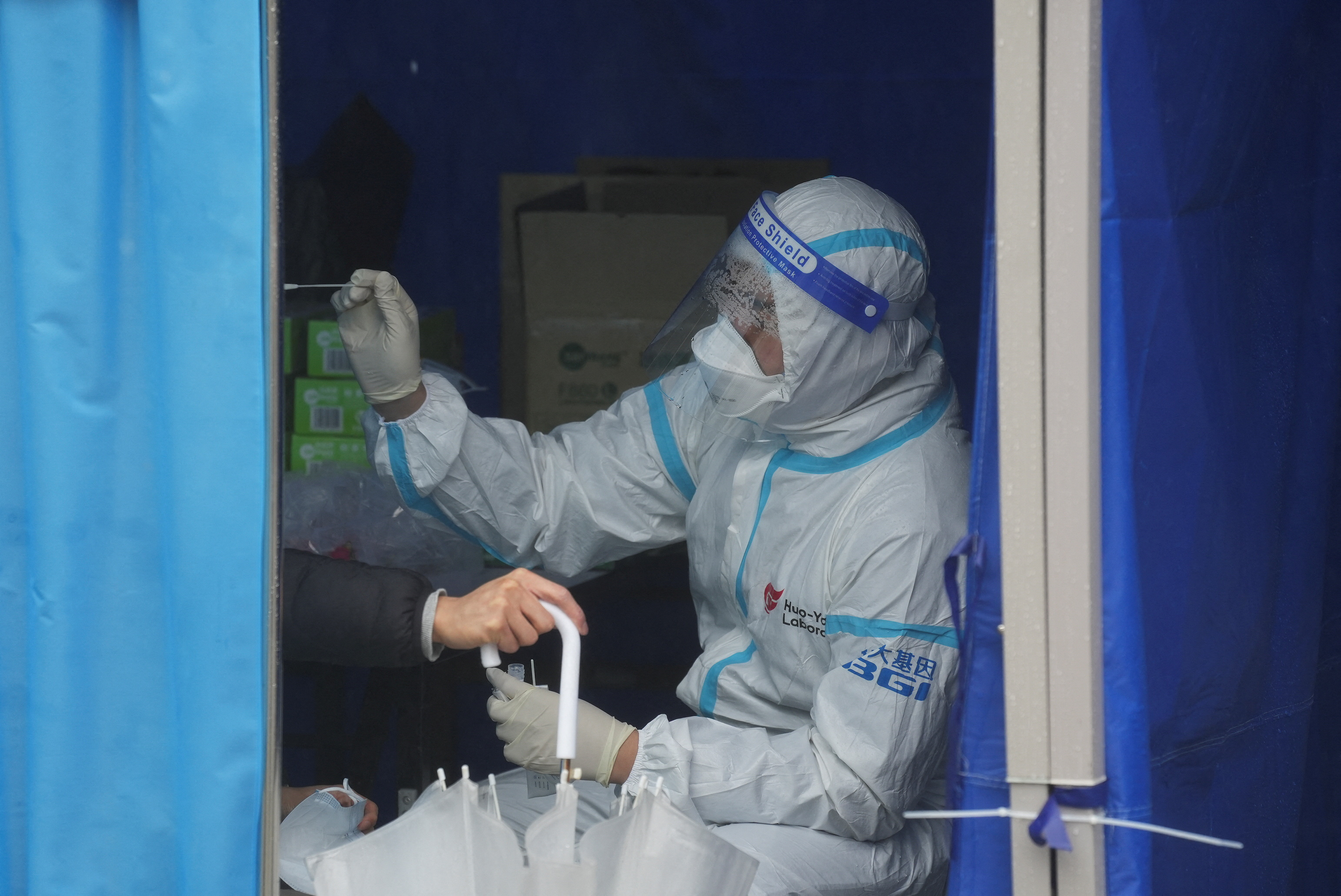
A medical worker collects a swab sample from a person at a makeshift testing site next to a mobile testing vehicle dispatched from mainland China, following the coronavirus disease (COVID-19) outbreak, in Tung Chung, Hong Kong, China February 21, 2022. REUTERS/Lam Yik

Categories
Audio Sources - Full Text Articles

Elon Musk“s team seeks new funding for Twitter – investor

2022-12-17T05:16:31Z

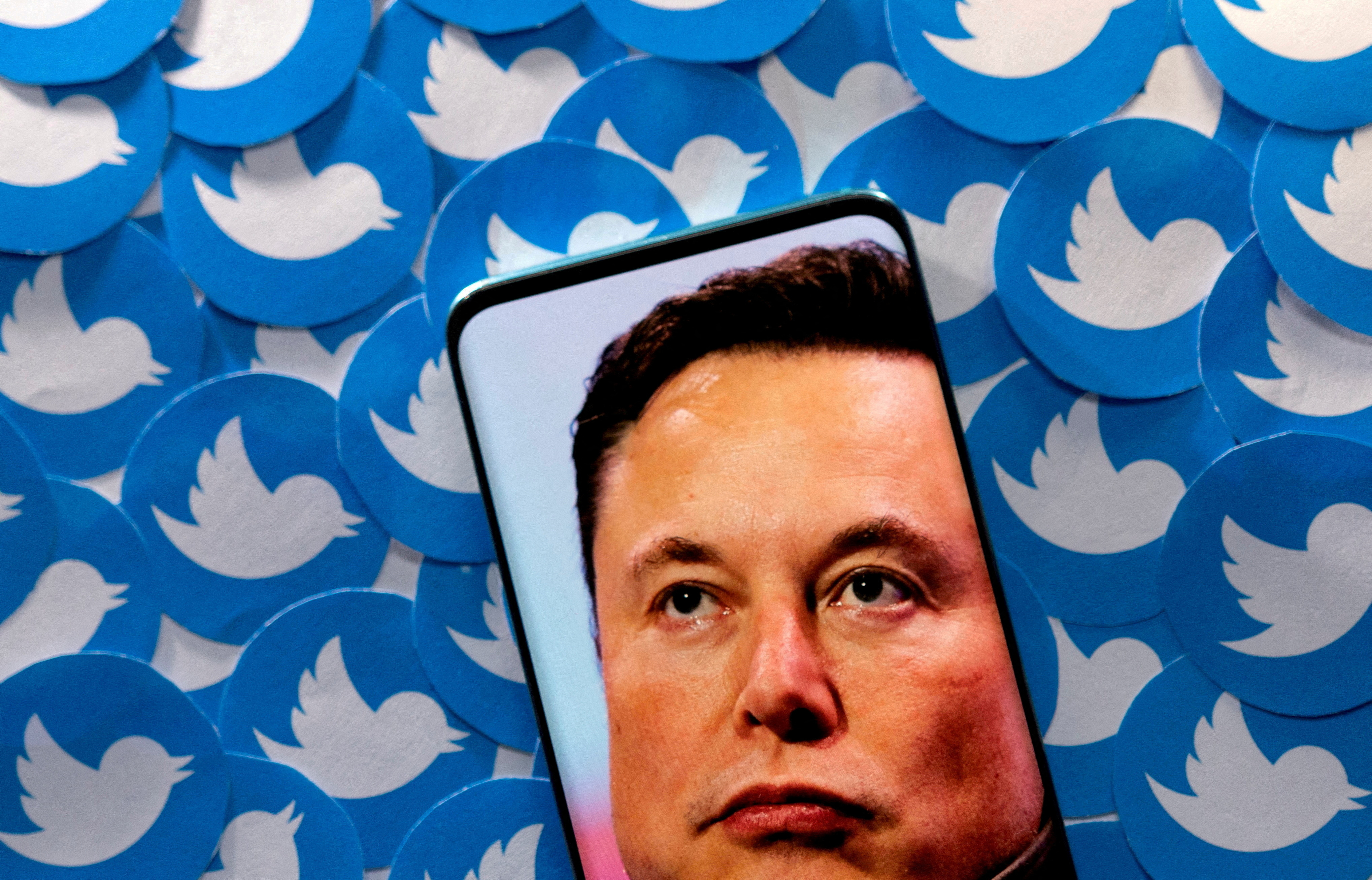
An image of Elon Musk is seen on a smartphone placed on printed Twitter logos in this picture illustration taken April 28, 2022. REUTERS/Dado Ruvic/Illustration/File Photo

Elon Musk’s team has reached out to investors to raise new funds for his struggling social media platform Twitter, one of the investors said.

Ross Gerber, president and CEO at Gerber Kawasaki Wealth & Investment Management, told Reuters that he was contacted by a Musk representative about offering more shares at the same price, $54.20, that Musk paid to take the company private in October.

Jared Birchall, the managing director of Elon Musk’s family office reached out to potential investors this week, news platform Semafor reported on Friday, citing two people familiar with the fundraising effort.

Twitter and Musk did not respond to Reuters requests for comments.

Twitter has seen advertisers flee amid worries about Musk’s approach to policing tweets, hitting revenues and its ability to pay interest on the $13 billion debt that Musk took on to buy the social media company.

Musk sold another $3.6 billion worth of shares in Tesla earlier this week, making it nearly $40 billion worth of shares in the electric-vehicle company sold this year.

Tesla shares on Friday posted their worst weekly loss since March 2020, with investors increasingly concerned about Musk being distracted by Twitter and the slowing global economy.

WP Radio
WP Radio
OFFLINE LIVE