Categories
Audio Sources - Full Text Articles

NASA set to launch first global water survey satellite

2022-12-16T08:12:44Z

A SpaceX rocket was due for launch from California early on Friday carrying a U.S.-French satellite designed to conduct the first global survey of Earth’s surface waters, shedding new light on the mechanics and consequences of climate change.

The Falcon 9 rocket, owned and operated by billionaire Elon Musk’s commercial launch company under NASA contract, was set for blastoff at 3:46 a.m. PST (1146 GMT) from Vandenberg U.S. Space Force Base, about 170 miles (275 km) northwest of Los Angeles.

Weather forecasts on Thursday predicted favorable conditions for liftoff, which a NASA launch services team is managing. The countdown was postponed from Thursday for 24 hours after inspectors detected moisture in two of the rocket’s nine main engines, but the issue was resolved following further analysis, NASA said.

The rocket’s payload, the Surface Water and Ocean Topography satellite, or SWOT, incorporates advanced microwave radar technology to collect high-definition measurements of oceans, lakes, reservoirs and rivers over 90% of the globe.

The data, compiled from radar sweeps of the planet at least twice every 21 days, will be used to enhance ocean-circulation models, bolster weather and climate forecasts and aid in managing scarce freshwater supplies in drought-stricken regions, researchers say.

Components of the SUV-sized satellite were built primarily by NASA’s Jet Propulsion Laboratory (JPL) near Los Angeles and the French space agency CNES.

Nearly 20 years in development by the U.S. space agency with contributions from its counterparts in Canada and Britain, SWOT was one of 15 missions listed by the National Research Council as projects NASA should undertake in the coming decade.

One major thrust of the mission is to explore how oceans absorb atmospheric heat and carbon dioxide in a process that naturally regulates global temperatures and has helped to minimize climate change.

Oceans are estimated to have absorbed more than 90% of the excess heat trapped in Earth’s atmosphere by human-caused greenhouse gas emissions.

Scanning the seas from orbit, SWOT will be able to precisely measure fine differences in surface elevations around the smaller currents and eddies where much of the oceans’ drawdown of heat and carbon is believed to occur, according to scientists.

Understanding the mechanism by which that happens will help answer a pivotal question: What is the tipping point at which oceans start releasing, rather than absorbing, large amounts of heat back to the atmosphere, thus intensifying global warming?

SWOT’s ability to discern smaller surface features also will help study the impacts of rising ocean levels on coastal areas.

More precise data along tidal zones would help predict how far storm-surge flooding may penetrate inland, and the extent of saltwater intrusion into estuaries, wetlands and aquifers.

Freshwater bodies are another key focus of SWOT, equipped to observe the entire length of nearly all rivers wider than 330 feet (100 meters), as well as more than 1 million lakes and reservoirs larger than a few New York City blocks.

Taking inventory of Earth’s water resources repeatedly over SWOT’s three-year mission will enable researchers to better trace fluctuations in the planet’s rivers and lakes during seasonal changes and major weather events.

SWOT’s main radar instrument operates at the so-called Ka-band frequency of the microwave spectrum, allowing its scans to penetrate cloud cover and darkness over wide swaths of Earth’s surface. This enables scientists to accurately map observations in two dimensions regardless of weather or time of day, and to cover large geographic areas more quickly than before.

Previous studies of water bodies relied on data taken at specific points, such as from river or ocean gauges, or from satellites that could only track measurements along a one-dimensional line, requiring scientists to fill in the data gaps through extrapolation.

If all goes as planned, the SWOT satellite will begin producing research data within several months.


Categories
Audio Sources - Full Text Articles

Explosions rock three districts of Kyiv city

630_360_1647257984-763.jpg

Explosions were being read in three districts of the money.

“Explosions in Desniansky district of the money. All companies go to the scene. Continue to be in shelters!” Kyiv Mayor Vitaliy Klitschko posted on Telegram.

Subsequently, Klitschko described explosions in Dniprovsky and Holosiyivsky districts.

In the meantime, citizens of several districts of the money also report the seems of explosions.

As claimed, an air raid warn was declared in Ukraine on the early morning of December 16.

ol

Source link

The post Explosions rock three districts of Kyiv city appeared first on Ukraine Intelligence.

Categories
Audio Sources - Full Text Articles

MCCrash botnet targets private Minecraft servers, Microsoft warns

Microsoft announced that a botnet dubbed MCCrash is launching distributed denial-of-service (DDoS) attacks against private Minecraft servers.

Microsoft spotted a cross-platform botnet, tracked as MCCrash, which has been designed to launch distributed denial-of-service (DDoS) attacks against private Minecraft servers. The IT giant tracks this cluster of activity as DEV-1028.

The experts report that the botnet originates from malicious software downloads on Windows devices, but it supports a propagating mechanism to infect multiple Linux-based devices.

MCCrash enumerates default credentials on Internet-exposed Secure Shell (SSH)-enabled devices.

“The botnet’s spreading mechanism makes it a unique threat, because while the malware can be removed from the infected source PC, it could persist on unmanaged IoT devices in the network and continue to operate as part of the botnet.” reads the post published by Microsoft. “The DEV-1028 botnet is known to launch distributed denial of service (DDoS) attacks against private Minecraft servers.”

The DDoS botnet was designed to target private Minecraft Java servers using crafted packets, experts believe it is behind a DDoS-for-hire service offered on forums or darknet sites.

Most of the infections have been reported in Russia, other countries where experts observed infections are Kazakhstan, Uzbekistan, Ukraine, Belarus, Czechia, Italy, India, and Indonesia.

MCCrash botnet

According to Microsoft, the initial infections were caused by the installation of malicious cracking tools that purport to acquire illegal Windows licenses.

Once the “craking tool” is launched, it executes a PowerShell command to download and launch a fake version of svchost.exe.

The cracking tools contain additional code that downloads and launches a fake version of svchost.exe through a PowerShell command. In some cases, the downloaded file is named svchosts.exe.

Next, svchost.exe launches malicious.py, which is the main Python script that contains all the botnet logic. The malicious code scans the web for systems running Debian, Ubuntu, CentOS, and IoT workloads such as Raspbian, then launches a dictionary attack to propagate.

Once a device is found, the bot downloads the file Updater.zip from repo[.]ark—event[.]net onto the device to create the file fuse. Then, the fuse file downloads a copy of malicious.py onto the device.

Minecraft MCCrash botnet 2

“Based on our analysis, the botnet is primarily used to launch DDoS attacks against private Minecraft servers using known server DDoS commands and unique Minecraft commands.” continues the report. Below are some supported commands specifically designed to target Minecraft servers.

ATTACK_RAKNET Attack on RakNet protocol (used by Minecraft servers)
ATTACK_NETTY Minecraft – Login handshake Packet
ATTACK_[MCBOT|MINE] Minecraft – Login Start Packet
ATTACK_[MCPING|PING] Minecraft – Login Success Packet
ATTACK_MCDATA Minecraft – Login Handshake, Login Start and Close Window Packets
ATTACK_MCCRASH Minecraft – Login Handshake and Login Start packets, using Username with env variable

The ATTACK_MCCRASH command sends ${env:random payload of specific size:-a} as the username in order to saturate the resources of the server and make it crash.

The analysis of the malware revealed that it was designed to target Minecraft server 1.12.2 version, however, the experts speculate all versions between 1.7.2 and 1.18.2 can be affected by this attack. 

“The wide range of at-risk Minecraft servers highlights the impact this malware could have had if it was specifically coded to affect versions beyond 1.12.2. The unique ability of this threat to utilize IoT devices that are often not monitored as part of the botnet substantially increases its impact and reduces its chances of being detected.” concludes the post.

Follow me on Twitter: @securityaffairs and Facebook and Mastodon

Pierluigi Paganini

(SecurityAffairs – hacking, botnet)

The post MCCrash botnet targets private Minecraft servers, Microsoft warns appeared first on Security Affairs.

Categories
Audio Sources - Full Text Articles

Russia launches another major missile attack on Ukraine

KYIV, Ukraine (AP) — Ukrainian authorities reported explosions in at least three cities Friday, saying Russia has launched a major missile attack”= on energy facilities and infrastructure.

Local authorities on social media reported explosions in the capital, Kyiv, southern Kryvyi Rih and northeastern Kharkiv as authorities sounded air raid alarms across the country warning of a new devastating barrage of the Russian strikes that have occurred intermittently since mid-October.

Kharkiv Mayor Ihor Terekhov said on Telegram that the city is without electricity.

The strikes targeting energy infrastructure have been part of a new Russian strategy to try to freeze Ukrainians into submission after several key battlefield losses by Russian forces in recent months.

Categories
Audio Sources - Full Text Articles

Drivers are stuck in limbo as world’s oil supply reshuffles

NEW YORK (AP) — At a gas station outside New York City, retired probation officer Karen Stowe was faced with a pump price she didn’t want to pay. She bought groceries from the convenience store instead, planning to buy cheaper gas elsewhere.

“The price is so high, people have to think very hard about where they’re driving to,” said Stowe, who had just been volunteering at a food pantry. “People are in trouble, and that’s the truth.”

Though drivers in the U.S., Europe and elsewhere are getting a break from the sky-high gasoline prices they endured over the summer, the cost is still difficult for many who have been struggling with relentless inflation. The U.S. average was $3.19 per gallon, down from a record $5 in June, while European Union pump prices have dropped nearly the equivalent of 40 cents, to $6.58 per gallon, since October.

Drivers now hope the situation doesn’t get worse after a series of cutbacks tied to Russia’s war in Ukraine, accidents and the slowing global economy have strained the world’s oil supply. While oil and gasoline prices have dropped despite a recent supply crunch, those threats could end up pushing costs higher this winter.

What’s the world facing?

— An EU ban on imports of most Russian oil took effect last week.

— At the same time, the Group of Seven leading democracies and 27-nation EU capped the price of Russian crude for other countries at $60 per barrel.

— There was a major leak along the Keystone pipeline in the U.S., which halted oil shipments along a major corridor.

— Dozens of oil tankers were stuck in Turkey for days.

— The OPEC+ coalition of oil producers has cut back production.

“The global system can withstand probably a few more days of these outages, but if they persist, they’re going to play a major role in price hikes,” said Claudio Galimberti, senior vice president of analysis at Rystad Energy.

A key reason restrictions on oil supply have not sent prices higher: Traders think there will be less demand for oil in the future, due to fears that the global economy is headed into recession, which would mean less driving and manufacturing. And some investors worry China’s looser COVID-19 restrictions could backfire for the nation’s economy.

“It can quickly turn into a major COVID wave which engulfs the hospitals and then is going to have a worse effect on demand than COVID policy,” Galimberti said.

The restrictions on Russian exports are likely to have a bigger impact on oil prices next month. Although Western nations have banned Russian oil, customers in India and China are buying it, so there’s enough oil on the market for those who need it. More than 97% of Russia’s seaborne crude exports went to China and India last month, according to Refinitiv, a financial market data provider.

“We do not ask our companies to buy Russian oil. We ask them to buy oil,” Indian External Affairs Minister Subrahmanyam Jaishankar said in Parliament last week. “But it is a sensible policy to go where we get the best deal in the interest of Indian people, and that’s exactly what we are trying to do.”

In February, global oil supply could get more limited, because European nations won’t be able to buy Russian refined products such as gasoline and diesel, so Russia could cut back on producing oil.

“So far, there hasn’t been a major decline in Russian production. But once Russia cannot export products to Europe, they will need to decrease production, and that will result in a supply shortage, which will be reflected in the prices most likely,” Galimberti said.

Russia also could decide not to produce oil due to the G-7 price cap. Its oil is selling for less than that now. But if the price goes up and approaches the cap, Russia could decide to take oil off the market, analysts said.

“There’s another shoe to drop on that front,” said Kevin Book, managing director at Clearview Energy Partners.

The price cap will lock in a discount on Russian oil, especially in light of the $100 per barrel Russia earned just a few months ago, White House press secretary Karine Jean-Pierre said.

“We are focused on limiting Putin’s ability to profit from rising prices to fund his illegal war, while promoting stable global energy markets,” Jean-Pierre said. “This is not about Russian oil off the market. This is about the cap — the cap at this level maintains clear incentives for Russia to continue exporting, and we believe that it should.”

International standard Brent crude oil was selling for about $82 a barrel Thursday. That’s likely to grow to $92 per barrel on average next year, according to projections by the U.S. Energy Information Administration. That is still below $125 seen this summer.

When it comes to prices at the pump, they’re lower than they were last year, but Americans have paid $2 to $3 per gallon for most of the last decade, according to AAA data.

In the EU, where taxes account for a larger share of the cost of gasoline, prices fell to 1.70 euros per liter ($6.58 per gallon) in the first week of December from 1.80 euros per liter ($6.96 per gallon) at the end of October, according to figures from the bloc’s executive Commission.

The recent price drop coupled with freezing weather has kept Aria Razdar, 28, behind the wheel of his BMW hatchback in Frankfurt, Germany. During the summer price spike, he would ride a Vespa scooter to work and school, but gasoline prices fell and so did the temperature.

“Right now, prices are a little more reasonable — actually they’re still high, but in comparison,” Razdar, a child care worker studying to be a teacher, said as he finished pumping fuel in an icy wind.

He spent a bit under 30 euros ($32) to fill up for the week, a cost he said he could manage for the convenience of driving 12 minutes to work instead of spending 45 minutes on public transit.

Others also wished prices were lower.

Gary Schwuchow, a retired maintenance supervisor, said he’s taking fewer road trips and saving money because he lives off his pension and Social Security payments.

“I used to be able to fill the tank up for $40 or $42, and now it’s almost $60,” he lamented as he gassed up his Nissan Sentra at a station in Yonkers, New York, where a gallon of regular gas was selling for $3.79. “I don’t fill it anymore. I put in $25 at a time.”

___

McHugh reported from Frankfurt, Germany. Associated Press writers Fatima Hussein in Washington and Ashok Sharma in Delhi contributed.

Categories
Audio Sources - Full Text Articles

Ukraine stalemate sets stage for possible winter escalation

With the war in Ukraine grinding through its 10th month, both sides are locked in a stalemated battle of attrition, which could set the stage for a new round of escalation.

Many observers see the current deadlock as beneficial to Ukraine, allowing it to receive more state-of-the-art weapons from the West and prepare for new counteroffensives. In Russia, there is a growing sense of desperation among hard-liners about what they see as President Vladimir Putin’s hesitancy and lack of a clear strategy.

Military analysts note the fighting is likely to intensify again shortly as the soil freezes. Many point to Russian-occupied areas in the south as the most likely place for the next Ukrainian attack.

“The ground needs to properly freeze before you can move vehicles with more freedom,” Justin Crump, a former British tank commander who heads security consultancy Sibylline, told The Associated Press.

He noted that while it’s harder to sustain military operations in colder weather, it will reopen opportunities for more maneuvering, and “as the winter goes on, both sides will have a growing offensive capability.”

Crump argued the Ukrainian military could try to reclaim parts of the southern Zaporizhzhia region and push toward the strategic port of Mariupol on the Sea of Azov. That would allow Ukraine to cut Russia’s land corridor to Crimea, which it annexed in 2014. Mariupol fell to the Russians in May after a nearly three-month siege that left much of it in ruins.

Independent Ukrainian military analyst Oleh Zhdanov also argued that the Zaporizhzhia region seems a likely target of the next Ukrainian offensive.

“The Ukrainian artillery and rocket systems have concentrated their strikes there,” he said, adding that the military has targeted Russia’s supply lines in the area like it did during a counteroffensive in the neighboring Kherson region that led to a Russian pullback from the capital of the same name.

Russia, which has suffered humiliating military setbacks in recent months, has called up 300,000 reservists to compensate for its heavy battlefield losses. Putin said last week that half of them were still being trained at firing ranges away from the front lines.

“Russia is trying to build up a better striking force rather than just throwing people into the front line,” Crump said. “They think they can last the course and come back in greater numbers next year and do something much more impressive then.”

While working to bolster its attacking force, the Russian military also has stubbornly pressed its effort to ram through the multilayered Ukrainian defenses in the eastern region of Donetsk in dogged trench warfare reminiscent of World War I, making slow progress in recent weeks.

Crump observed that Russia’s apparent strategy behind relentless attacks on the Ukrainian stronghold of Bakhmut in the Donetsk region is to try to force Kyiv to keep a sizable number of troops there and inflict heavy losses.

“It’s all about buying time, lasting the course, grinding down the Ukrainians,” he said. “They want to just reduce the capability of the Ukrainian armed forces by … killing Ukrainian soldiers and destroying Ukrainian equipment faster than Ukraine can generate them.”

Ukraine, in turn, has tried to keep its opponent off balance with surprise attacks, some of them deep inside Russia.

In a watershed development last week, Moscow acknowledged that Ukraine hit its strategic air bases located more than 500 kilometers (more than 300 miles) east of the border with modified Soviet-made drones. Ukraine hasn’t openly claimed credit for the strikes, but the country’s top security official said that Kyiv considers all Russian territory fair game for such attacks.

“Whether or not they have a significant impact on Russian military capability, they’re certainly shattering Russian morale and causing deep confusion,” Crump said of the Ukrainian strikes.

Since October, Moscow has particularly focused on pummeling energy facilities and other key infrastructure with missile and drone strikes in an apparent hope of breaking the will of the Ukrainians and forcing Kyiv to negotiate on Russia’s terms.

“The strikes on the energy infrastructure are aimed at inciting social tension and raising pressure in order to push for talks,” Zhdanov said, adding they haven’t had much impact on the capability of the Ukrainian army, which has mostly relied on diesel generators. He noted Russia’s attacks have only strengthened the Ukraine’s resolve by “causing anger and and a desire to take revenge.”

Ukrainian President Volodymyr Zelenskyy said the bombardments have destroyed half of his country’s infrastructure, urging the U.S. and other Western allies to quickly provide more air defense weapons to fend off the attacks.

U.S. officials said this week that Washington is poised to approve providing Ukraine with a battery of Patriot air defense missile systems, a potent weapon capable of shooting down Russian missiles.

The Kremlin argues that by providing Ukraine with such weapons, training its troops and sharing military intelligence, NATO has effectively become a party to the conflict. It warned Washington the Patriot systems and any U.S. personnel deployed to train Ukrainian troops on using them will be a legitimate target for Russia.

In remarks last week that reflected growing concerns about escalation, NATO Secretary-General Jens Stoltenberg warned that the fighting could spin out of control and morph into “a major war” between the alliance and Russia.

Putin has cast the attacks that left millions of Ukrainians without power, water and heat amid freezing temperatures as a legitimate response to October’s truck bombing of a bridge linking Crimea with Russia’s mainland. The Kremlin blamed Kyiv for the attack.

In a rare acknowledgement that his plans for a quick victory have gone awry. Putin said last week that achieving Moscow’s goals in Ukraine could be a “lengthy process,” but insisted that the Russian military efforts were proceeding in a “stable” way.

Russian hard-liners mocked Putin’s statement.

Igor Strelkov, a former Russian security officer who led separatist forces in eastern Ukraine when the conflict there began in 2014, scathingly criticized Putin and his generals for what he described as their failure to set clear military goals and mobilize all available resources.

“In most units, soldiers and officers don’t understand what they are fighting for,” he said after a short trip to the war zone. “It leads to apathy and erodes combat spirit.”

Strelkov charged that a protracted conflict could be “suicidal for the Russian Federation, its government and elites.”

Retired Col. Viktor Alksnis, a hard-liner known for trying to prevent the 1991 collapse of the Soviet Union, warned that same fate could befall Russia. He said a looming military defeat in Ukraine would lead to Russia’s “shameful capitulation and its subsequent breakup,” arguing that the use of low-yield battlefield nuclear weapons was “the only way to prevent it.”

Dmitry Medvedev, deputy head of Russia’s Security Council chaired by Putin, bluntly warned last month that the continuing Ukrainian offensive could trigger a nuclear response in line with the country’s deterrence doctrine that envisions the use of those weapons when a conventional attack threatens the existence of the Russian state.

By backing Ukraine’s ambitions to reclaim more territory, Medvedev said, “Western powers are pushing the world to a global war.”

Tatiana Stanovaya, an expert with Carnegie Endowment who follows the attitudes by the Kremlin and Russian elites, pointed to a growing sense of hopelessness and despair among the ruling class.

Members of the ruling class have seen the latest Russian military setbacks as a sign that the country is heading toward a military defeat, she noted.

“Everything is being seen as a rapid descent into chaos and even the collapse of the country,” Stanovaya said in a recent analysis.

She pointed at a widening divide between those among the ruling elites who advocate freezing the conflict to allow Russia to recoup its losses and those who favor raising the ante.

“Putin looks like a weak figure to both camps in the elite,” she said.

___

Danica Kirka in London and Yuras Karmanau in Tallinn, Estonia, contributed.

___

Follow AP’s coverage of Ukraine at https://apnews.com/hub/russia-ukraine

Categories
Audio Sources - Full Text Articles

Fire near French city of Lyon kills 10, including 5 children

2022-12-16T07:05:18Z

Ten people, including five children aged 3 to 15 years, were killed after a fire broke out on Friday morning at a residential building in Vaulx-en-Velin, near the French city of Lyon, Interior Minister Gerald Darmanin said.

Darmanin said the cause of the fire was not known at this stage.

“There are several scenarios and a probe will be opened,” he said, adding he was in touch with President Emmanuel Macron over the incident.

Around 180 firefighters were at the site. The fire was now extinguished, Darmanin said, adding he was heading to the site.

The fire occurred in the early hours of Friday morning at a seven-storey residential building. A security cordon has been set up at the site, the authority of the Rhone area said.


Categories
Audio Sources - Full Text Articles

China braces for COVID spread to countryside as holidays near

2022-12-16T07:06:08Z

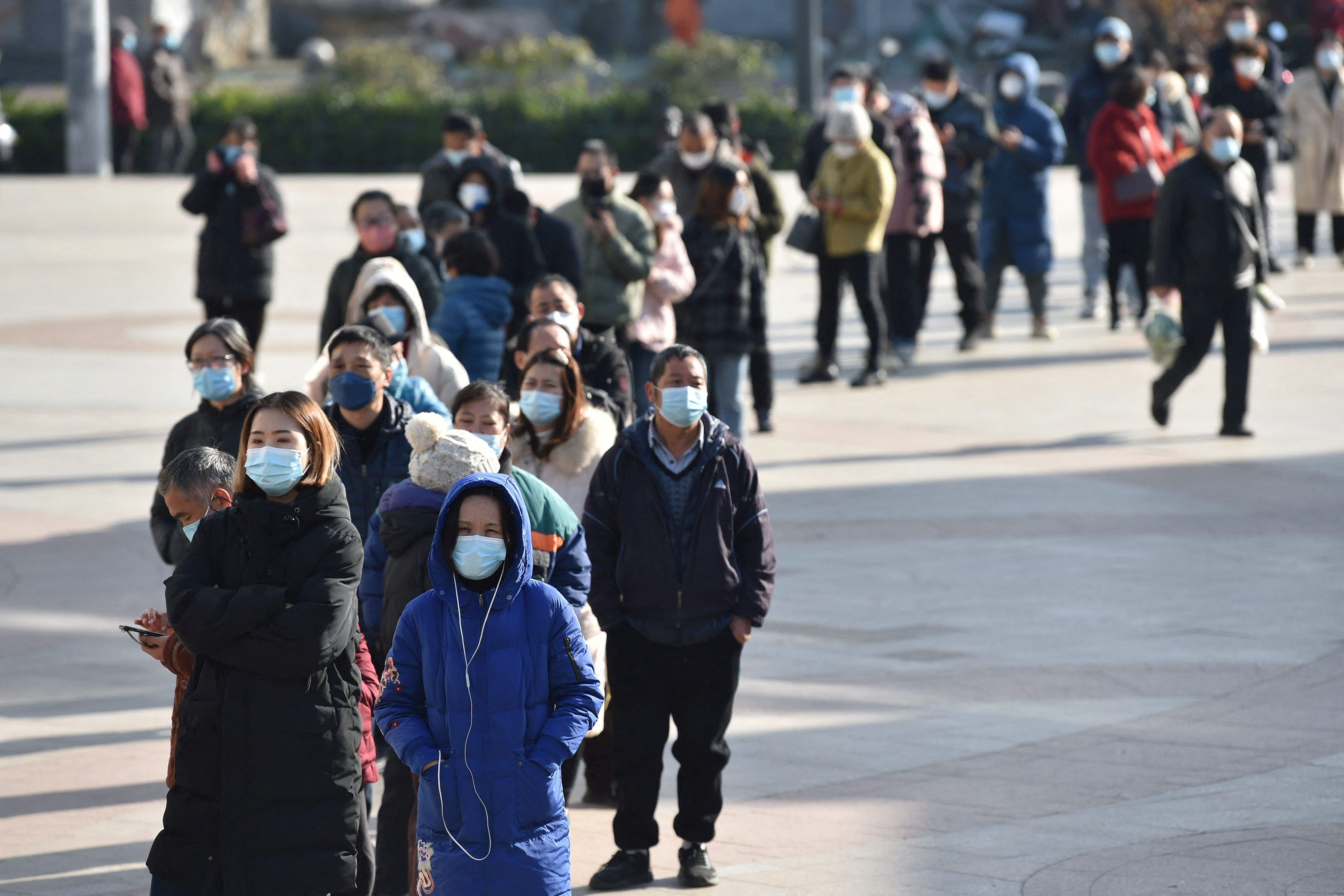
China set out urgent plans to protect rural communities from COVID-19 on Friday as millions of city-dwellers planned holidays for the first time in years after the government abandoned its stringent system of lockdowns and travel curbs.

China’s move last week to start aligning with a world that has largely opened up to live with the virus, followed historic protests against President Xi Jinping’s signature ‘zero-COVID’ policies designed to stamp out COVID.

But the excitement that met this dramatic u-turn has quickly given way to concerns that China is unprepared for the coming wave of infections, and the blow it could deliver to the world’s second-largest economy.

China reported 2,157 new symptomatic COVID-19 infections for Dec. 15 compared with 2,000 a day.

The official figures, however, do not capture the whole picture as testing has dropped, and are at odds with signs of wider spread in cities where long queues outside fever clinics and empty pharmacy shelves have become a common sight.

There is particular concern about China’s hinterland in the run up to local Lunar New Year holidays starting on Jan. 22.

Rural areas are likely to be inundated with travellers returning to their hometowns and villages, which have had little exposure to the virus during the three years since the pandemic erupted.

China’s National Health Commission on Friday said it was ramping up vaccinations and building stocks of ventilators, essential drugs, and test kits in rural areas. It also advised travellers to reduce contact with elderly relatives.

Mainland China’s international borders remain largely shut, but recent decisions to abandon testing prior to domestic travel and disable apps that tracked people’s journey history have freed up people to move around the country.

One of China’s most populous provinces Henan cancelled all holidays for healthcare staff until the end of March to ensure “a smooth transition” as COVID restrictions ease, state media reported late Thursday.

Multiple cities across the country of 1.4 billion people also opened new vaccination sites to encourage the public to take booster shots, the state-run Global Times newspaper reported.

“Go all out” was the message from China’s state asset regulator in a statement late Thursday that urged government-owned drugmakers to ensure supplies of COVID-related medicines to meet “the rapid increase” in demand.

SF Express (002352.SZ), one of China’s largest courier services, said on its official WeChat account that it sent in workers from across the country to keep deliveries going in Beijing amid staff shortages and soaring demand.

It also said it had started a “fast track” for emergency shipments such as medicines and daily necessities, with demand in the capital 300% above normal levels.

The COVID scare in China also led people in Hong Kong, Macau and in some neighbourhoods in Australia to go in search for fever medicines and test kits for family and friends on the mainland.

Thanks to the government’s previously uncompromising controls, China got off lightly compared with many other countries during the pandemic over the past three years, but now many Chinese are resigned to catching the virus at some point.

“Everyone will get it, I guess,” a 29-year-old Beijing resident who requested to be identified by her surname Du, told Reuters on the streets of Beijing.

Analysts fear China will pay a price for letting the virus rapidly rip through a population that lacks “herd immunity” and has low vaccination rates among the elderly.

That has dented prospects for near-term growth, even if the opening up should eventually revive China’s battered economy.

JPMorgan on Friday revised down its expectations for China’s 2022 growth to 2.8%, which is well below China’s official target of 5.5% and would mark one of its worst performances in almost half a century.

China is bracing for “a transitional pain period”, analysts at the bank said, adding they expected infections to spike after the Lunar New Year before the economy starts to recover in mid-2023.

The holidays will be a “big testing ground for how far these COVID cases are going to rise,” said Rob Drijkoningen, co-head of emerging market debt at Neuberger Berman.

President Xi, his ruling Politburo and senior government officials are holding their annual Central Economic Work Conference this week, sources told Reuters.

China’s top state planning body, the National Development and Reform Commission, said “arduous efforts” are needed to sustain the recovery in growth due to an adverse external environment and the global economy’s loss of momentum.

Companies that are already suffering from China’s policy shift are the swathes of firms involved in its quarantining, COVID-tracking and movement-monitoring products and services, which had become big employers over the past three years.

China’s yuan firmed on Friday as traders remained optimistic that more measures to support the economy would emerge from the conference.

Related Galleries:

People wait in line at a coronavirus disease (COVID-19) test centre in Xinyang, China, this still image obtained from social media video released December 15, 2022. Video obtained by REUTERS

People wait to purchase medicine at a pharmacy, amid the coronavirus disease (COVID-19) outbreak, in Beijing, China December 16, 2022. REUTERS/Xiaoyu Yin

Residents line up outside a pharmacy to buy antigen testing kits for the coronavirus disease (COVID-19), in Nanjing, Jiangsu province, China December 15, 2022. China Daily via REUTERS ATTENTION EDITORS – THIS IMAGE WAS PROVIDED BY A THIRD PARTY. CHINA OUT.

Residents line up at a pharmacy to buy antigen testing kits for the coronavirus disease (COVID-19), in Nanjing, Jiangsu province, China December 15, 2022. China Daily via REUTERS


Categories
Audio Sources - Full Text Articles

California to vote on roadmap for carbon neutrality by 2045

SACRAMENTO, Calif. (AP) — California air regulators were set to vote Thursday on an ambitious plan to cut carbon emissions in the state by changing practices in the energy, transportation and agriculture sectors, but critics say it doesn’t go far enough to combat climate change.

The plan puts the state on a path to so-called carbon neutrality by 2045, meaning California will remove as many carbon emissions from the atmosphere as it emits. Doing so will require a rapid reduction in planet-warming emissions and a ramp up of technology to remove remaining greenhouse gases from the air.

California previously set that target as a goal, but Gov. Gavin Newsom signed legislation making it a mandate earlier this year.

Capturing carbon is one of the most controversial elements of the proposal. Critics say it gives the state’s biggest emitters reason to not do enough on their part to mitigate climate change.

At the beginning of Thursday’s meeting, California Air Resources Board Chair Liane Randolph touted the latest version of the plan as the most ambitious to date. It underwent changes after public comments earlier this year.

“Ultimately, achieving carbon neutrality requires deploying all tools available to us to reduce emissions and store carbon,” Randolph said.

The plan does not commit the state to taking any particular actions but sets out a broad roadmap for how California can achieve its goals. Here are the highlights:

RENEWABLE POWER

The implementation of the plan hinges on the state’s ability to transition away from fossil fuels and rely more on renewable resources for energy. It calls for the state to cut liquid petroleum fuel demand by 94% by 2045, and quadruple solar and wind capacity along that same timeframe.

The calls to dramatically lower reliance on oil and gas comes as public officials continue to grapple with how to avoid blackouts when record-breaking heat waves lead Californians to crank up their air conditioning.

TRANSPORTATION

Officials hope a move away from gas-powered cars and trucks reduces greenhouse gas emissions while limiting the public health impact of chemicals these vehicles release.

In a July letter to the air board, Newsom requested that the agency approve aggressive cuts to emissions from planes, a move that would accompany other reductions in the transportation sector as the state transitions to all zero-emission vehicle sales by 2035.

The plan’s targets include having 10% of aviation fuel demand come from electric or hydrogen sources by 2045 and ensuring all medium-duty vehicles sold are zero-emission by 2040. The board has already passed a policy to ban the sale of new cars powered solely by gasoline in the state starting in 2035.

CARBON CAPTURE

The plan refers to carbon capture as a “necessary tool” to implement in the state alongside other strategies to mitigate climate change. It calls for the state to capture 100 million metric tons of carbon dioxide equivalent and store it underground by 2045.

Connie Cho, an attorney for environmental justice group Communities for a Better Environment, called the plan “a huge step forward” to mitigate climate change and protect public health.

“Our communities have been suffering from chronic disease and dying at disproportionate rates for far too long because of the legacy of environmental racism in this country,” Cho said.

But Cho criticized its carbon capture targets, arguing they give a pathway for refineries to continue polluting as the state cuts emissions in other areas.

AGRICULTURE

One of the goals is to achieve a 66% reduction in methane emissions from the agriculture sector by 2045. Cattle are a significant source for releasing methane, a potent, planet-warming gas.

The plan’s implementation would also mean less reliance by the agriculture sector on fossil fuels as an energy source.

___

Sophie Austin is a corps member for the Associated Press/Report for America Statehouse News Initiative. Report for America is a nonprofit national service program that places journalists in local newsrooms to report on undercovered issues. Follow Austin on Twitter: @sophieadanna

Categories
Audio Sources - Full Text Articles

Microsoft revised CVE-2022-37958 severity due to its broader scope

Microsoft-autodesk.png?fit=766%2C401&ssl

Microsoft revised the severity rate for the CVE-2022-37958 flaw which was addressed with Patch Tuesday security updates for September 2022.

Microsoft revised the severity rate for the CVE-2022-37958 vulnerability, the IT giant now rated it as “critical” because it discovered that threat actors can exploit the bug to achieve remote code execution.

The CVE-2022-37958 was originally classified as an information disclosure vulnerability that impacts the SPNEGO Extended Negotiation (NEGOEX) security mechanism.

The SPNEGO Extended Negotiation Security Mechanism (NEGOEX) extends Simple and Protected GSS-API Negotiation Mechanism (SPNEGO) described in [RFC4178].

The SPNEGO Extended Negotiation (NEGOEX) Security Mechanism allows a client and server to negotiate the choice of security mechanism to use.

The issue was initially rated as high severity because the successful exploitation of this issue required an attacker to prepare the target environment to improve exploit reliability.

Microsoft addressed the vulnerability with the release of Patch Tuesday security updates for September 2022.

IBM Security X-Force researcher Valentina Palmiotti demonstrated that this vulnerability is a pre-authentication remote code execution issue that impacts a wide range of protocols. It has the potential to be wormable and can be exploited to achieve remote code execution.

“The vulnerability could allow attackers to remotely execute arbitrary code by accessing the NEGOEX protocol via any Windows application protocol that authenticates, such as Server Message Block (SMB) or Remote Desktop Protocol (RDP), by default.” reads the post published by IBM. “This list of affected protocols is not complete and may exist wherever SPNEGO is in use, including in Simple Message Transport Protocol (SMTP) and Hyper Text Transfer Protocol (HTTP) when SPNEGO authentication negotiation is enabled, such as for use with Kerberos or Net-NTLM authentication.”

Demonstrating CVE-2022-37958 RCE Vuln. Reachable via any Windows application protocol that authenticates. Yes, that means RDP, SMB and many more. Please patch this one, it’s serious! https://t.co/ikOrTvQIJs pic.twitter.com/bOTmL5Fh2H

— chompie (@chompie1337) December 13, 2022

Unlike the CVE-2017-0144 flaw triggered by the EternalBlue exploit, which only affected the SMB protocol, the CVE-2022-37958 flaw could potentially affect a wider range of Windows systems due to a larger attack surface of services exposed to the public internet (HTTP, RDP, SMB) or on internal networks. The expert pointed out that this flaw can be exploited without user interaction or authentication.

IBM announced it will release full technical details in Q2 2023 to give time organizations to apply the security updates.

Follow me on Twitter: @securityaffairs and Facebook and Mastodon

Pierluigi Paganini

(SecurityAffairs – hacking, CVE-2022-37958)

The post Microsoft revised CVE-2022-37958 severity due to its broader scope appeared first on Security Affairs.

WP Radio
WP Radio
OFFLINE LIVE