Categories
Audio Sources - Full Text Articles

Russia rains missiles on Ukraine“s infrastructure, says Kyiv kills civilians

2022-12-16T10:22:59Z

Ukrainian forces staged their heaviest shelling attack in years in the country’s Russian-controlled east on Thursday (December 15), Moscow-installed officials said, as both sides ruled out a Christmas truce in the nearly 10-month-old war. Lauren Anthony reports.

Russia fired dozens of missiles at infrastructure in Ukraine on Friday, forcing emergency power shutdowns across the country amid freezing temperatures and killing and wounding people in their homes in the south, Ukrainian officials said.

Russian-installed officials in occupied eastern Ukraine also reported civilian casualties from Ukrainian shelling in two places.

The latest Russian assault followed warnings from Ukrainian officials that Moscow plans a new all-out offensive early next year, a year after it launched an invasion that has destroyed much of Ukraine but brought little of it under Russian control.

As many as 60 Russian missiles had been spotted heading for Ukraine, Vitaly Kim, governor of the Mykolaiv region in southern Ukraine, said early on Friday, while Oleksiy Kuleba, governor of the Kyiv region, said Russia was “massively attacking”.

Russia has rained missiles on Ukrainian energy infrastructure almost weekly since early October after a series of battlefield defeats. Moscow says it is part of its plan to disable Ukraine’s military, Kyiv says it is a war crime.

“A Russian missile hit a residential building in Kryvyi Rih,” regional governor Valentyn Reznichenko wrote on Facebook. “The stairwell was destroyed. Two people were killed. At least five were wounded, including two children. All are in hospital.”

Russian troops are now bogged down trying to hold on to territory in the south and east, around a fifth of Ukraine. Fighting along the front line is brutal, with many soldiers on both sides thought to be killed or wounded although neither side issues detailed reports of military casualties.

Russian-installed officials said the latest Ukrainian shelling had killed civilians in two places.

Eight people were killed and 23 wounded in the village of Lantrativka, a small settlement close to the border with Russia in the Russian-controlled Luhansk region of Ukraine, the Russian-installed administrator of the region said on Friday.

Leonid Pasechnik called the attack “barbaric”.

He said Ukraine was targeting residential neighbourhoods, schools and shopping districts in an attempt to “kill as many people as possible”. He did not provide evidence and there was no immediate comment from Kyiv.

The head of a separatist, self-styled “people’s militia” in Luhansk said a civilian had also been killed by Ukrainian shelling in the town of Svatove, around 70 km (40 miles) further south, on Friday morning.

Reuters was unable to immediately verify the latest battlefield accounts but recorded at least three explosions in the snow-covered capital Kyiv, with smoke billowing over part of the city. It was not clear if any missiles had got through air defences.

Ukraine has managed to repair much of its power infrastructure to restore electricity and water supplies but each successive attack makes that task harder.

A senior Ukrainian presidential official said emergency power shutdowns were being introduced across the country.

Kyrylo Tymoshenko, deputy head of the presidential office, did not elaborate, but officials said earlier power had been knocked out in the eastern city of Kharkiv, home to more than a million people, and the smaller central city of Poltava.

Infrastructure was also reported to have been hit in the northern Sumy region and in the Odesa region on the Black Sea.

Several railway lines were also left without power, the railway operator said.

With no peace talks in sight, Ukrainian defence chiefs on Thursday predicted Russia would launch a new all-out offensive early next year that could include a second attempt to take the capital, Kyiv.

It could happen as soon as January, President Volodymyr Zelenskiy, General Valery Zaluzhniy and General Oleksandr Syrskiy were quoted as saying in interviews with The Economist magazine.

The push could be launched from the eastern Donbas area, the south or neighbouring Belarus, and could include another ground assault on Kyiv, which Moscow failed to capture early in its invasion, the officials said.

The Russian defence ministry issued video on Friday showing joint exercises by Russian and Belarusian troops in Belarus, using tanks and machine guns as well as drones and practising crossing a river.

Russia launched what it calls a “special military operation” to disarm and “denazify” Ukraine on Feb. 24, since when thousands have been killed, cities reduced to ruins and millions of people forced from their homes in what the West sees as an imperial-style land grab.

With the invasion now in its 10th month, European Union leaders agreed on Thursday to provide 18 billion euros in financing to Ukraine next year and hit Moscow with a ninth package of sanctions.

The measures designate nearly 200 more people and bar investment in Russia’s mining industry, among other steps.

The U.S. military announced it would expand training in Germany of Ukrainian military personnel with 500 troops a month, building on more than 15,000 Ukrainians trained by the United States and its allies since April.

The U.S. Senate passed a bill for a record $858 billion defence budget next year, authorising $45 billion more than proposed by President Joe Biden. The bill, which Biden is expected to quickly sign into law, provides Ukraine with at least $800 million in additional security assistance in 2023.

Both sides have ruled out a Christmas truce and there are currently no talks aimed at ending the conflict, Europe’s largest since World War Two.

Related Galleries:
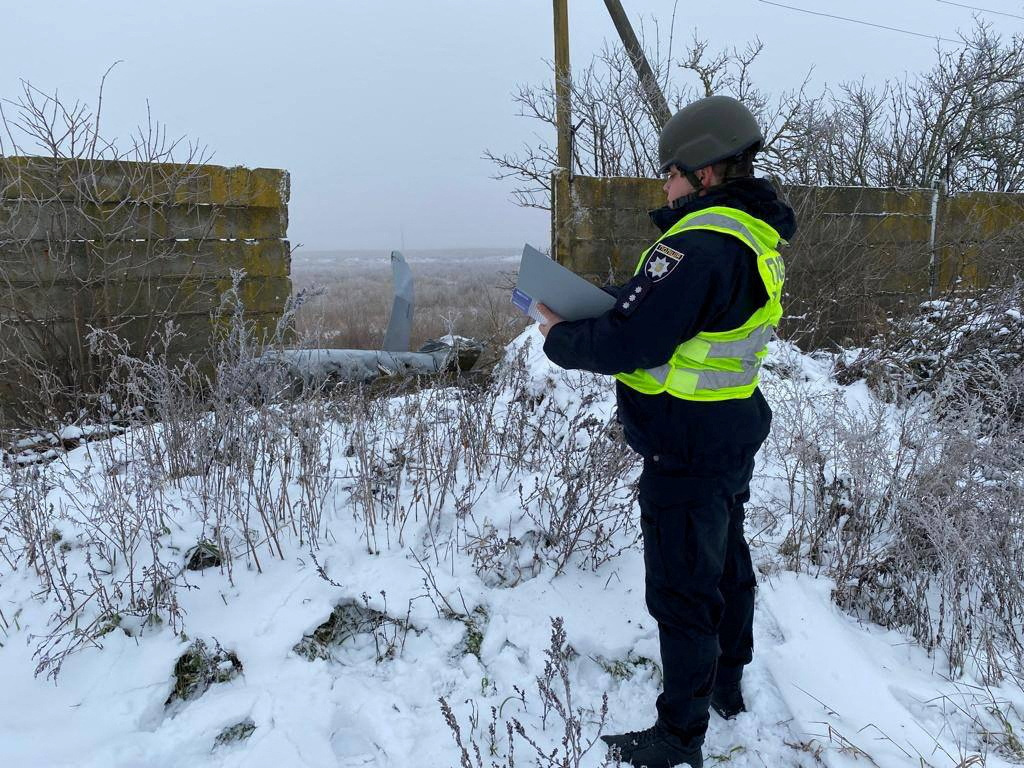
A police officer stands next to a part of a Russian cruise missile shot down by the Ukrainian Air Defence Forces, amid Russia’s attack on Ukraine, in Kyiv region, Ukraine December 16, 2022. Head of the National Police of Kyiv region Andrii Nebytov via Telegram/Handout via REUTERS

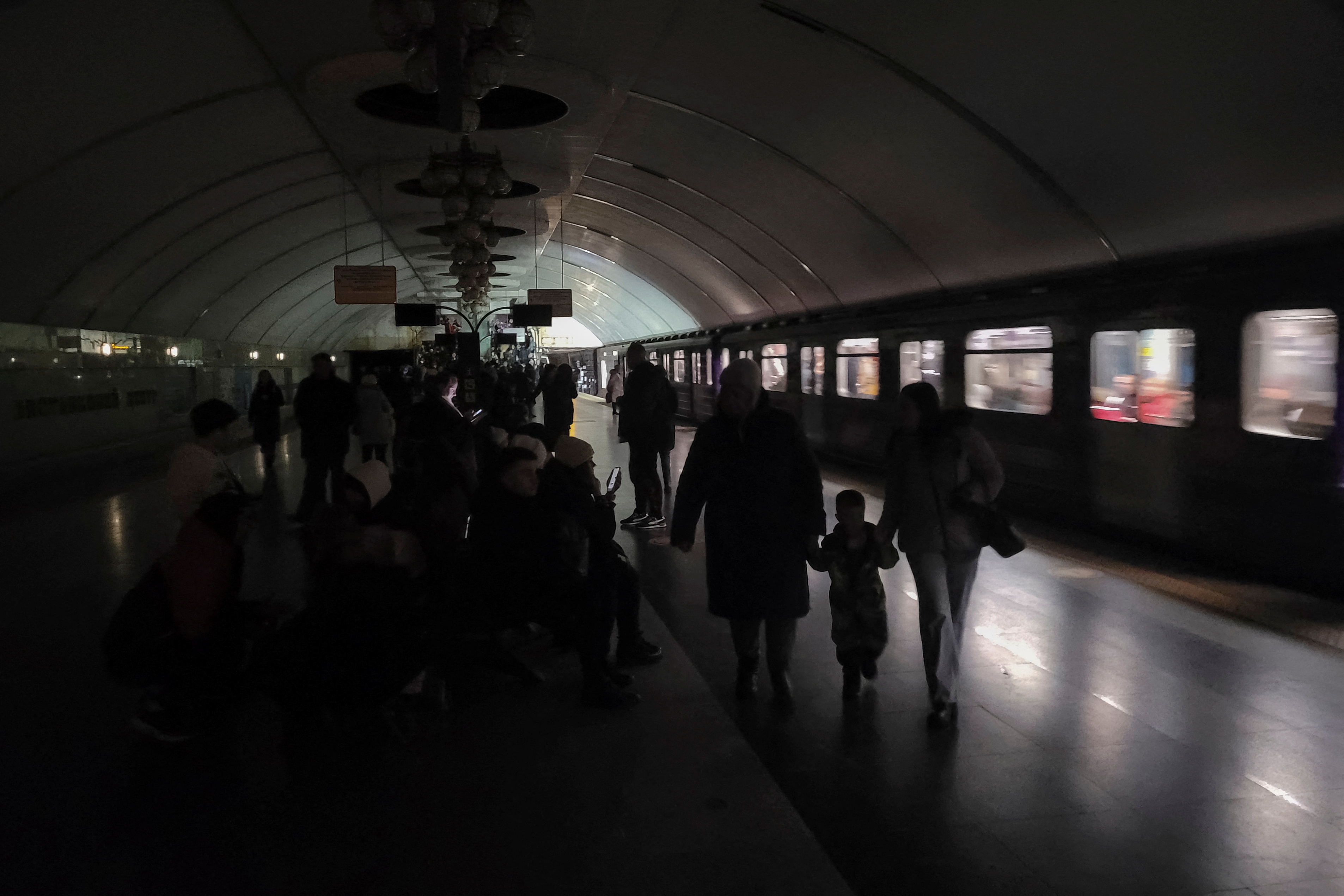
People shelter inside a metro station during partial power outage amid massive Russia’s missile attacks in Kyiv, Ukraine December 16, 2022. REUTERS/Pavlo Podufalov

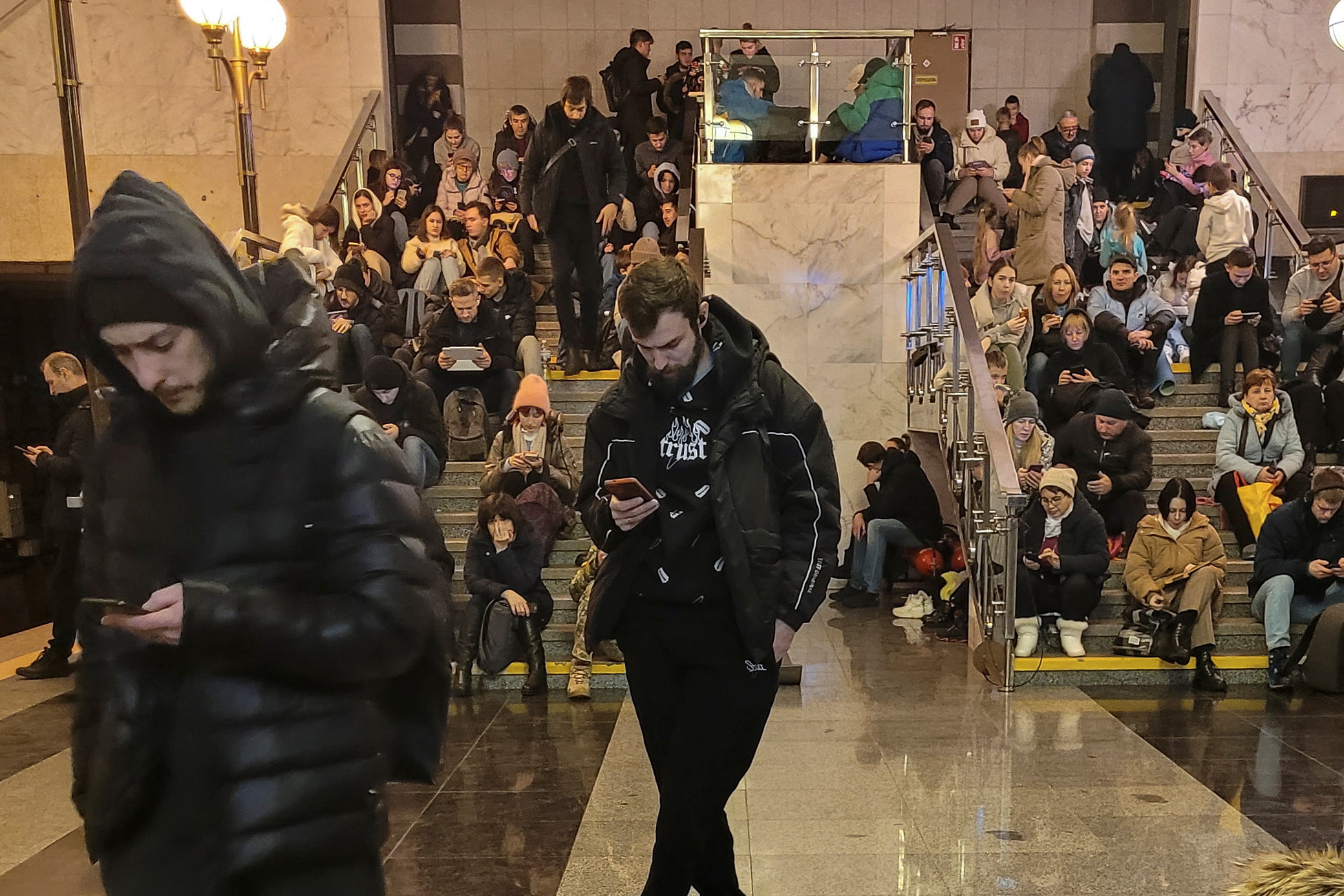
People shelter inside a metro station during massive Russia’s missile attacks in Kyiv, Ukraine December 16, 2022. REUTERS/Pavlo Podufalov

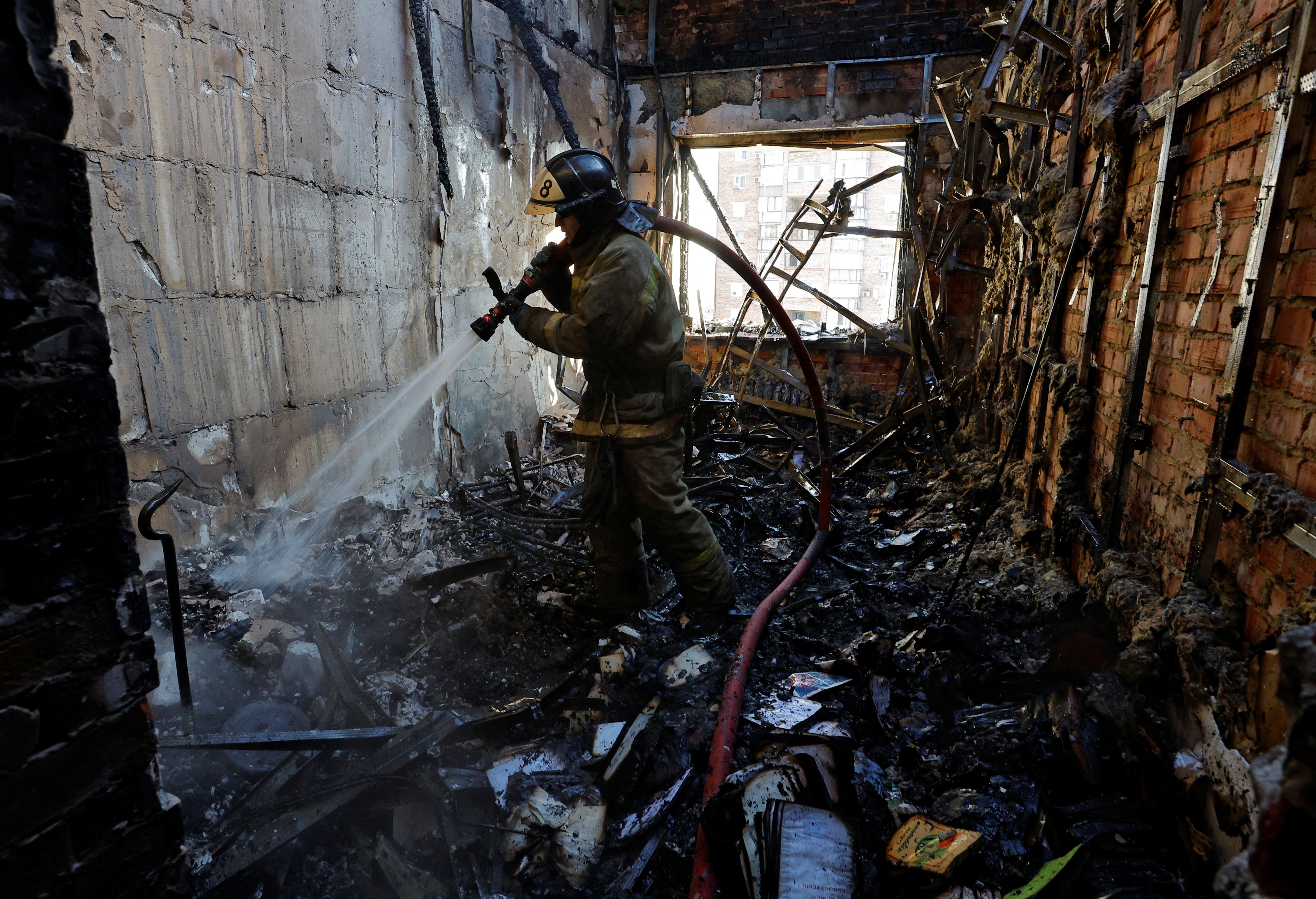
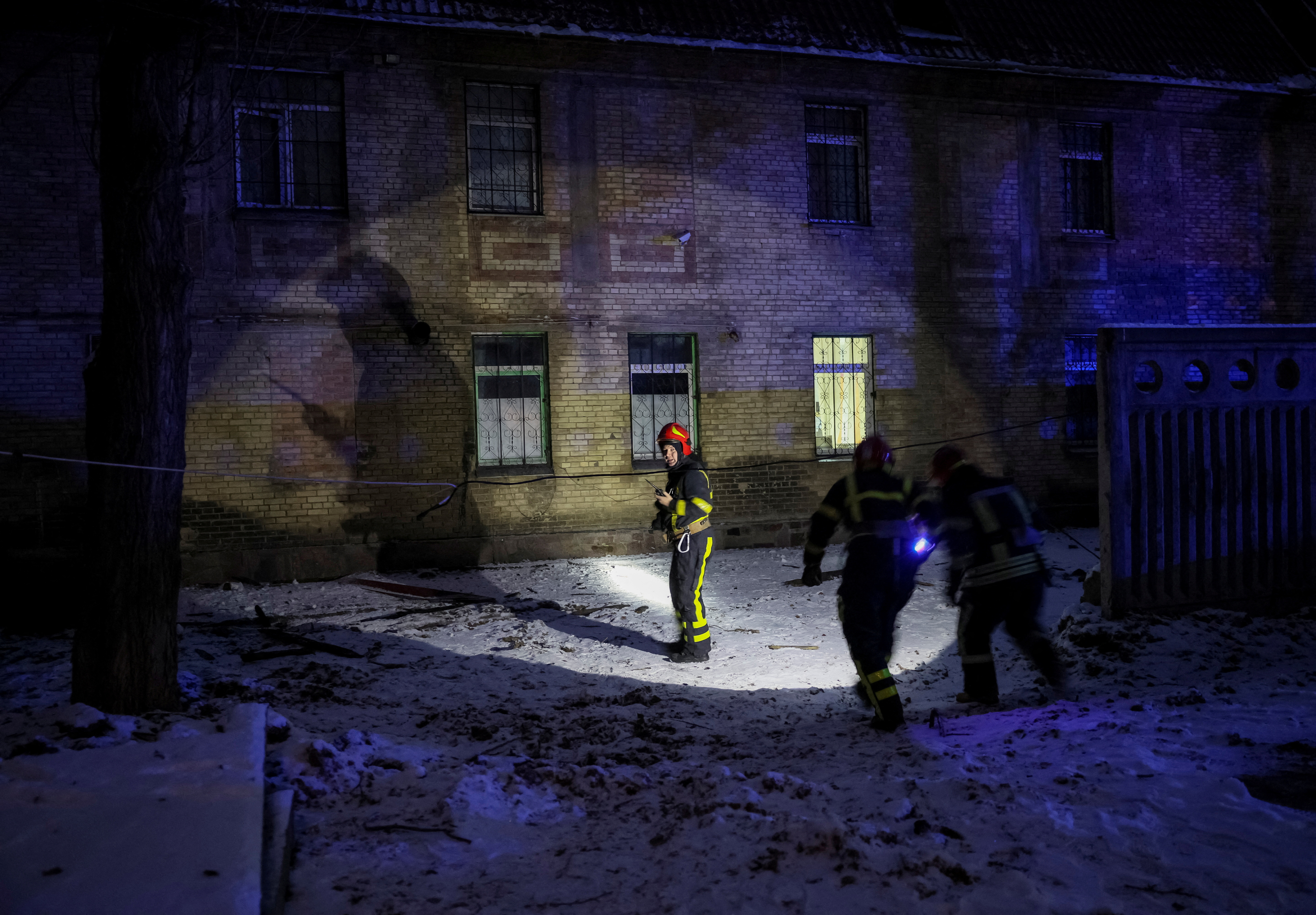
A firefighter works inside a destroyed apartment of a residential building hit by shelling in the course of Russia-Ukraine conflict in Donetsk, Russian-controlled Ukraine, December 15, 2022. REUTERS/Alexander Ermochenko

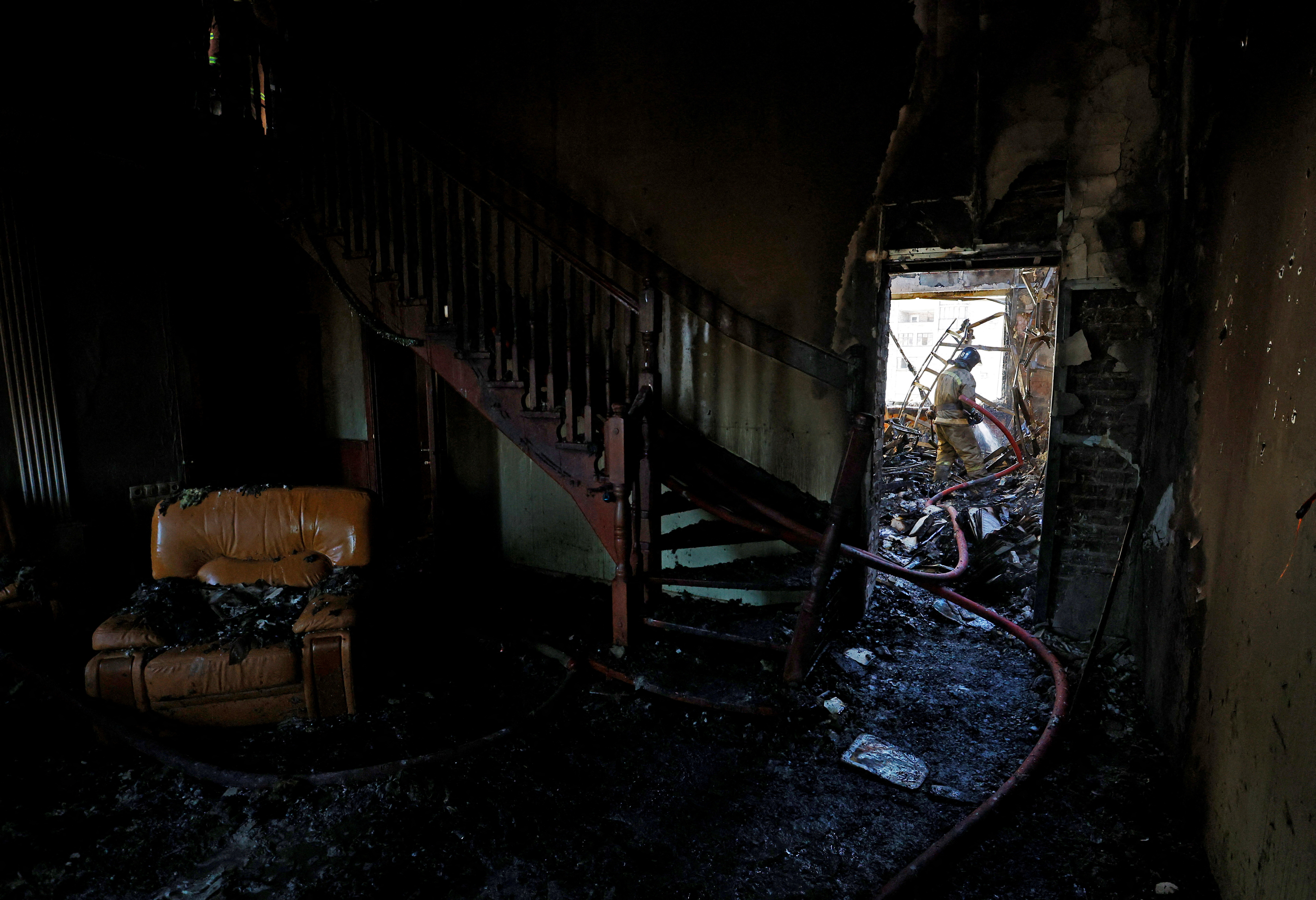
A firefighter works inside a destroyed apartment of a residential building hit by shelling in the course of Russia-Ukraine conflict in Donetsk, Russian-controlled Ukraine, December 15, 2022. REUTERS/Alexander Ermochenko

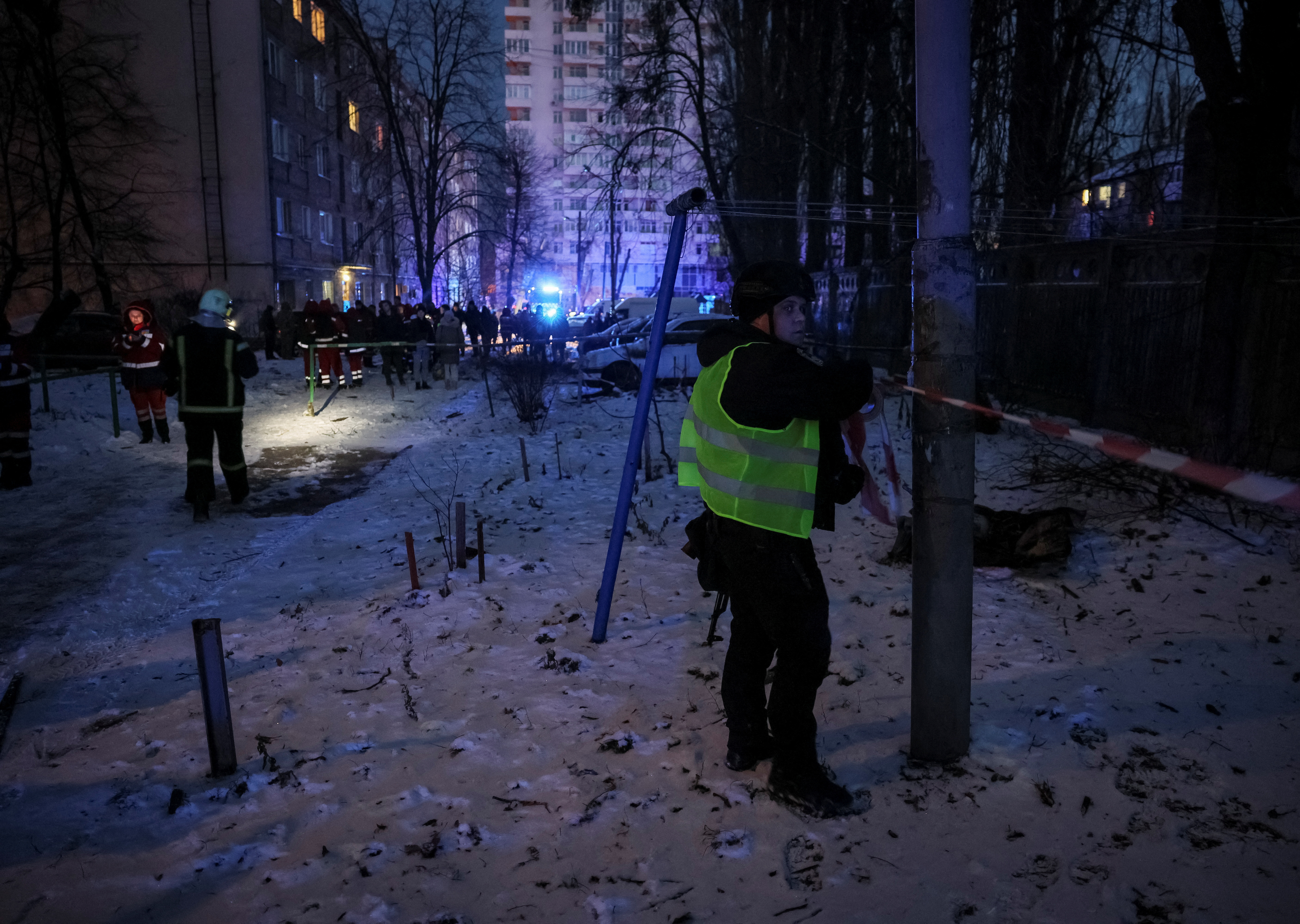
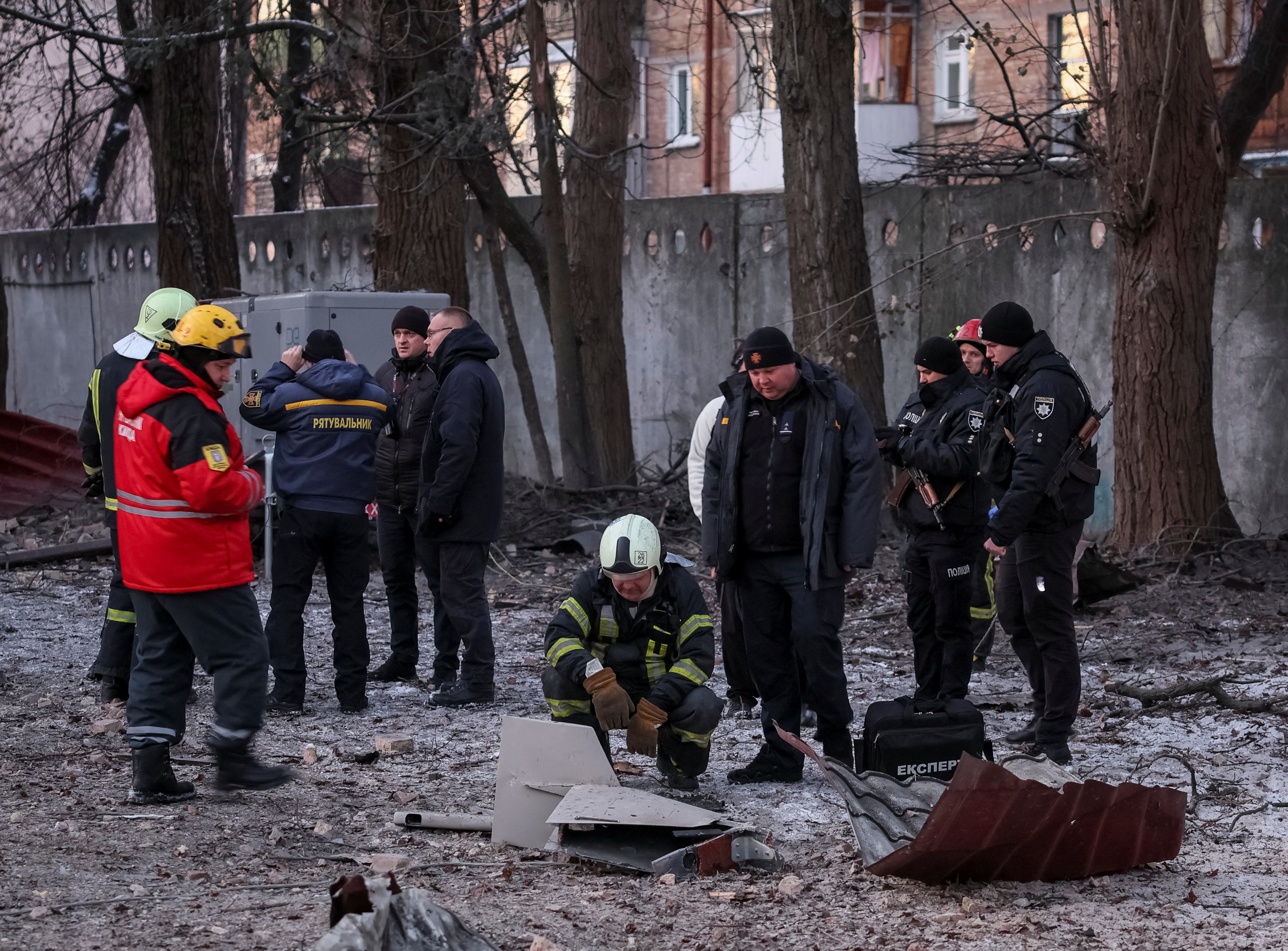
Rescuers and police officers examine parts of the drone at the site of a building destroyed by a Russian drone attack, as their attack on Ukraine continues, in Kyiv, Ukraine December 14, 2022. REUTERS/Gleb Garanich

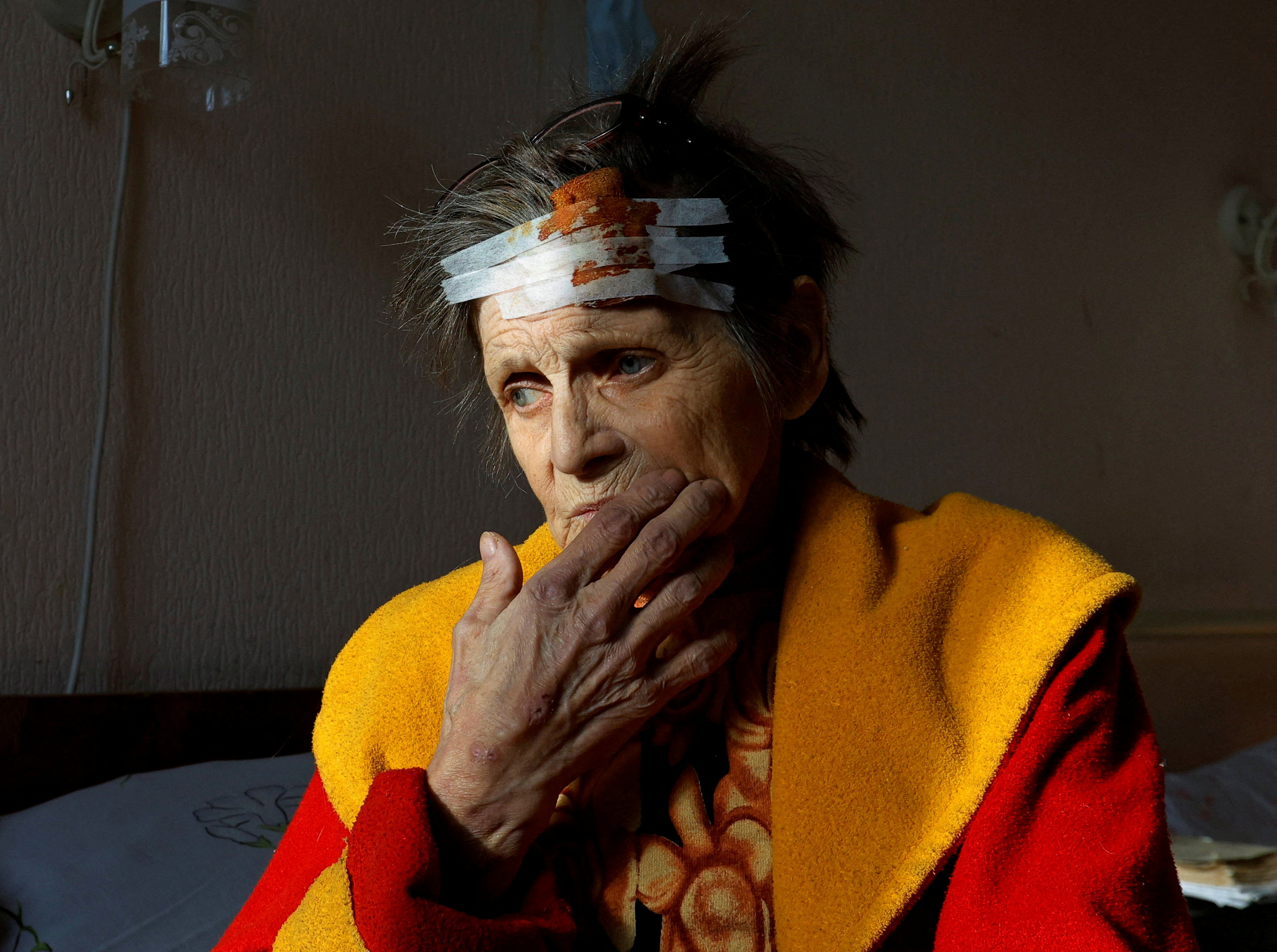
Lyudmila Butsenko, 69, injured by shrapnel in a hospital during recent shelling in the course of Russia-Ukraine conflict, sits in her hospital bed, in Donetsk, Russian-controlled Ukraine, December 15, 2022. REUTERS/Alexander Ermochenko

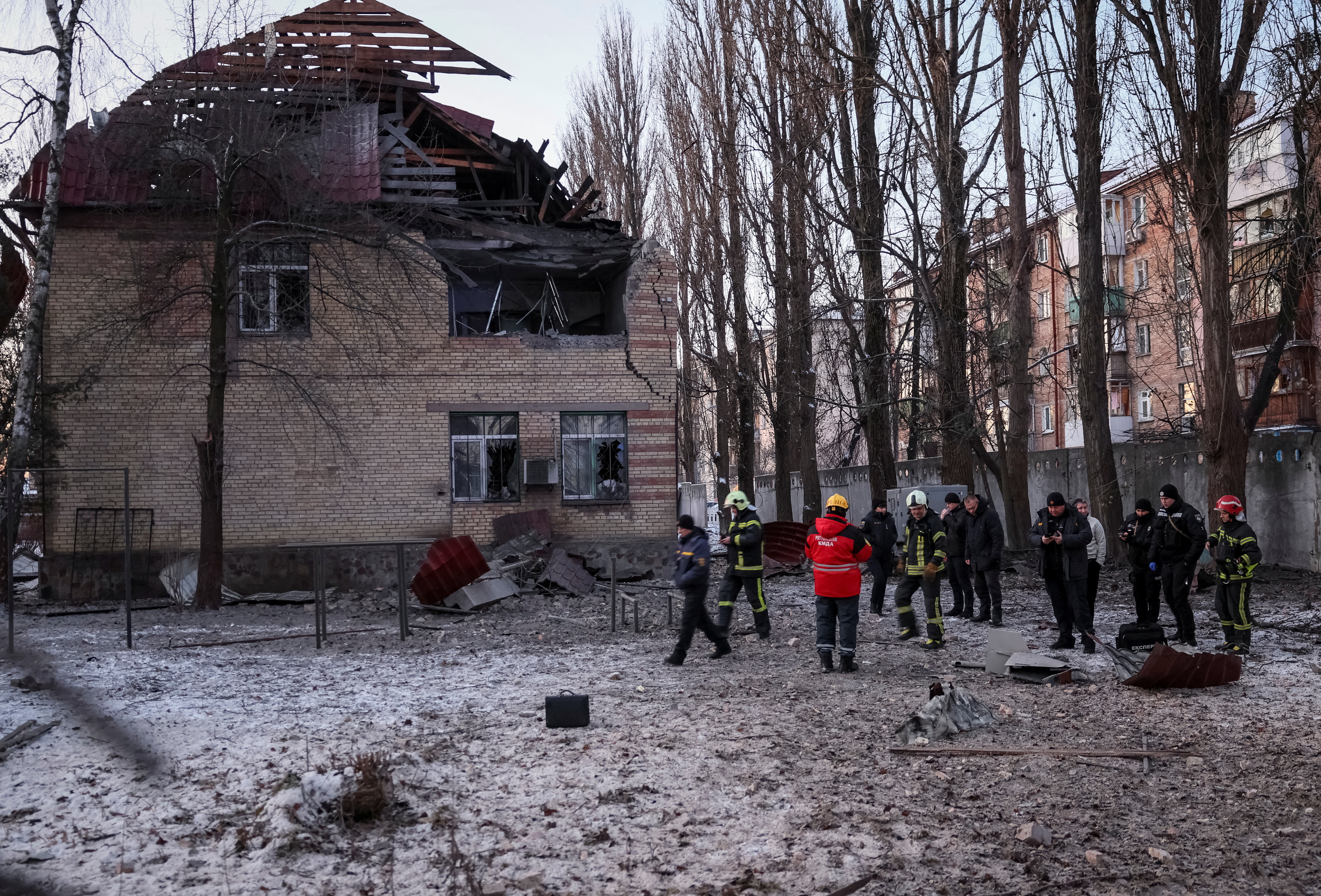
A worker removes debris in front of an office building damaged by shelling in the course of Russia-Ukraine conflict in Donetsk, Russian-controlled Ukraine, December 15, 2022. REUTERS/Alexander Ermochenko

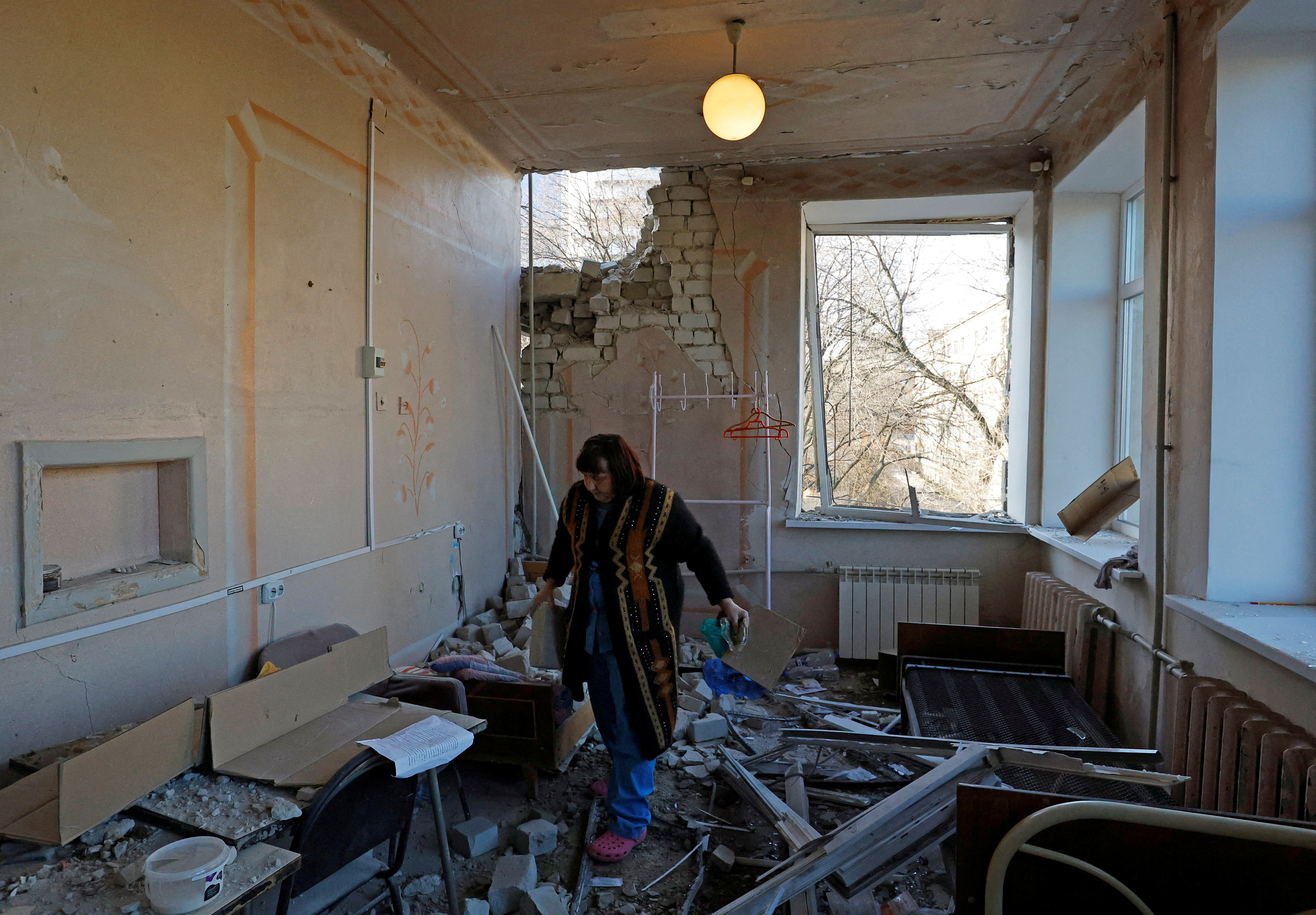
Head nurse Svetlana removes debris from a ward of a hospital hit by shelling in the course of Russia-Ukraine conflict in Donetsk, Russian-controlled Ukraine, December 15, 2022. REUTERS/Alexander Ermochenko

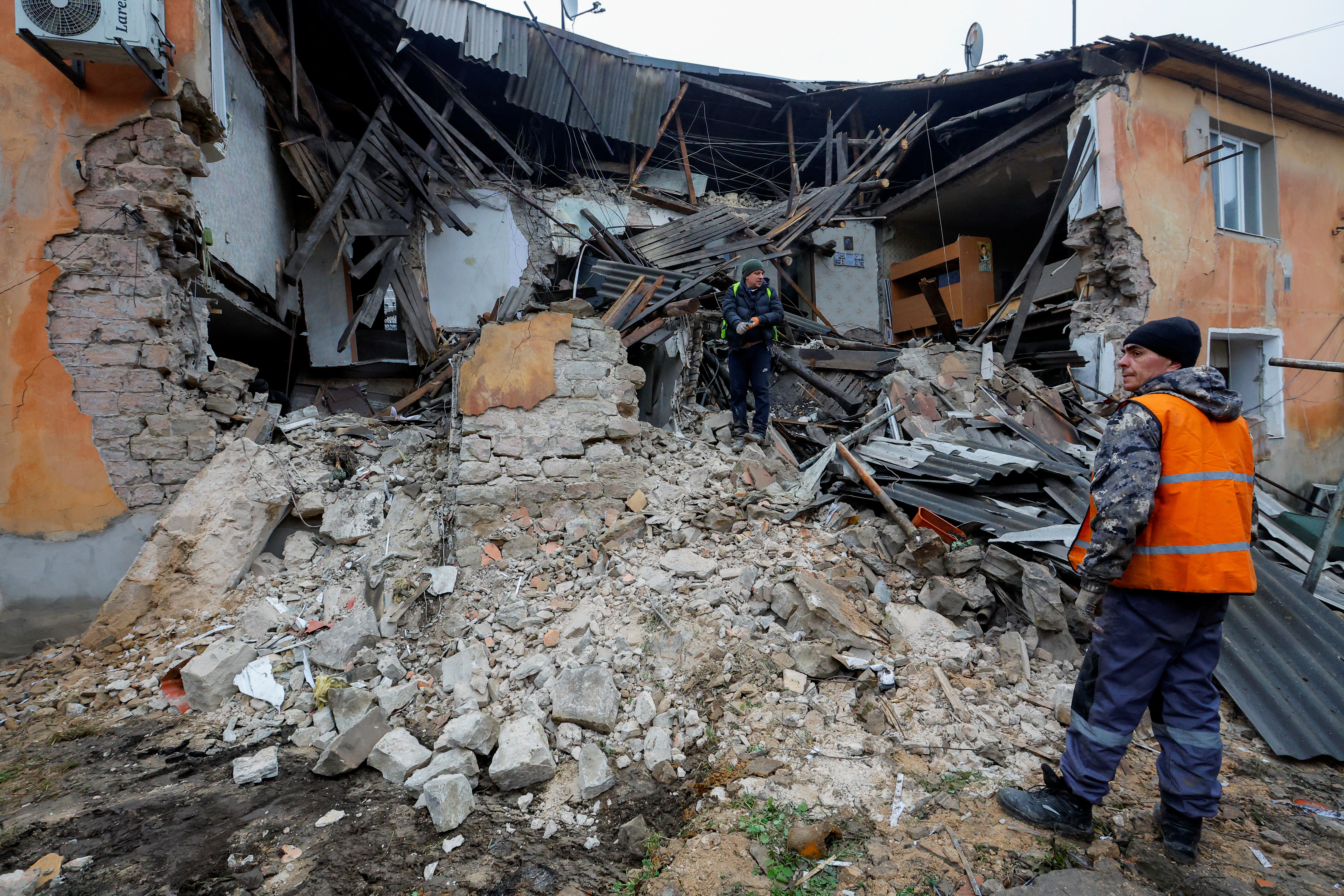
Workers remove debris of a residential building heavily damaged in recent shelling in the course of Russia-Ukraine conflict in Horlivka (Gorlovka) in the Donetsk region, Russian-controlled Ukraine, December 13, 2022. REUTERS/Alexander Ermochenko

Police officers work at the site of a building destroyed by a Russian drone attack, as their attack on Ukraine continues, in Kyiv, Ukraine December 14, 2022. REUTERS/Gleb Garanich

Rescuers and police officers examine parts of the drone at the site of a building destroyed by a Russian drone attack, as their attack on Ukraine continues, in Kyiv, Ukraine December 14, 2022. REUTERS/Gleb Garanich

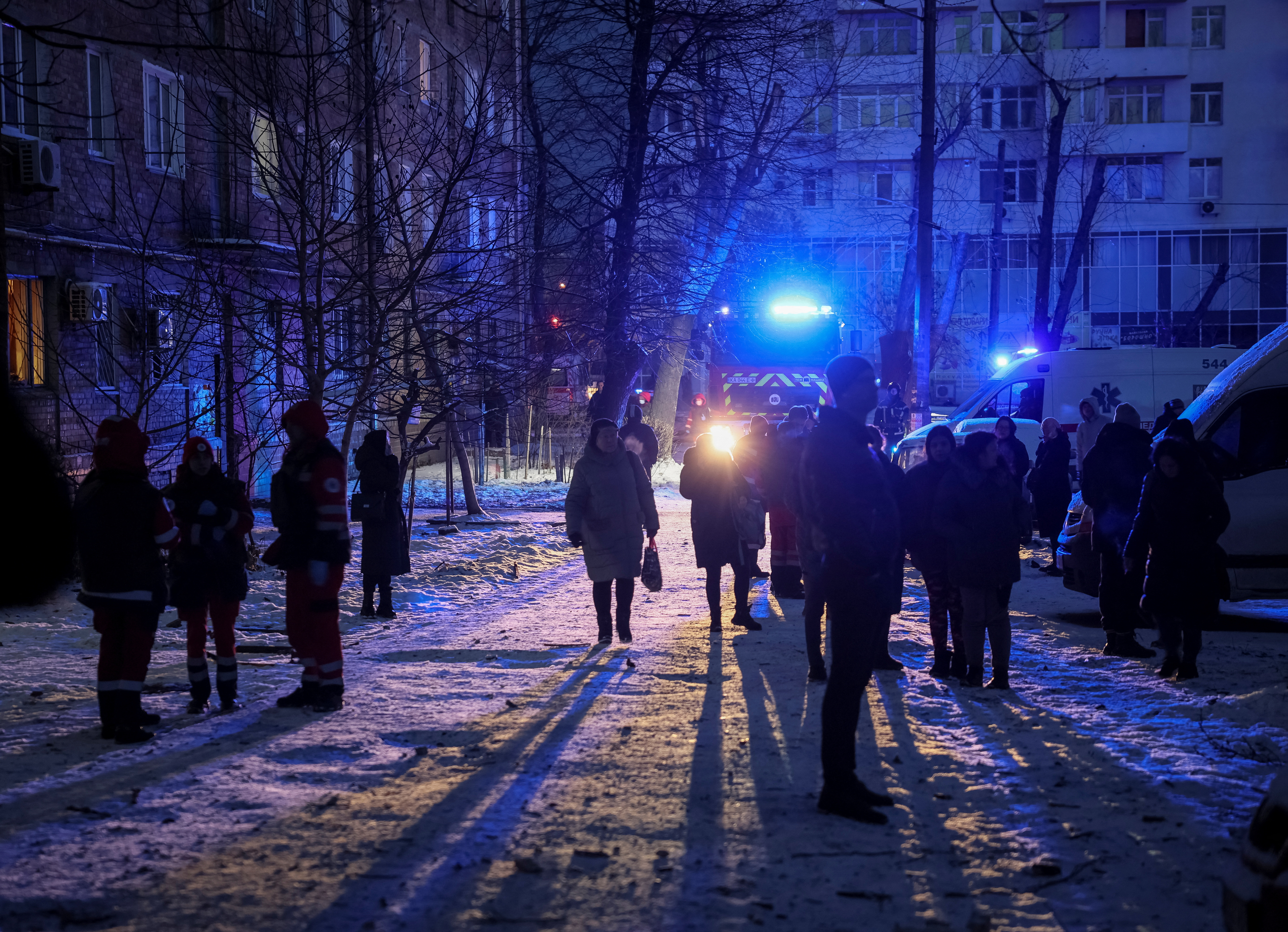
Local residents gather near a building destroyed by a Russian drone attack, as their attack on Ukraine continues, in Kyiv, Ukraine December 14, 2022. REUTERS/Gleb Garanich

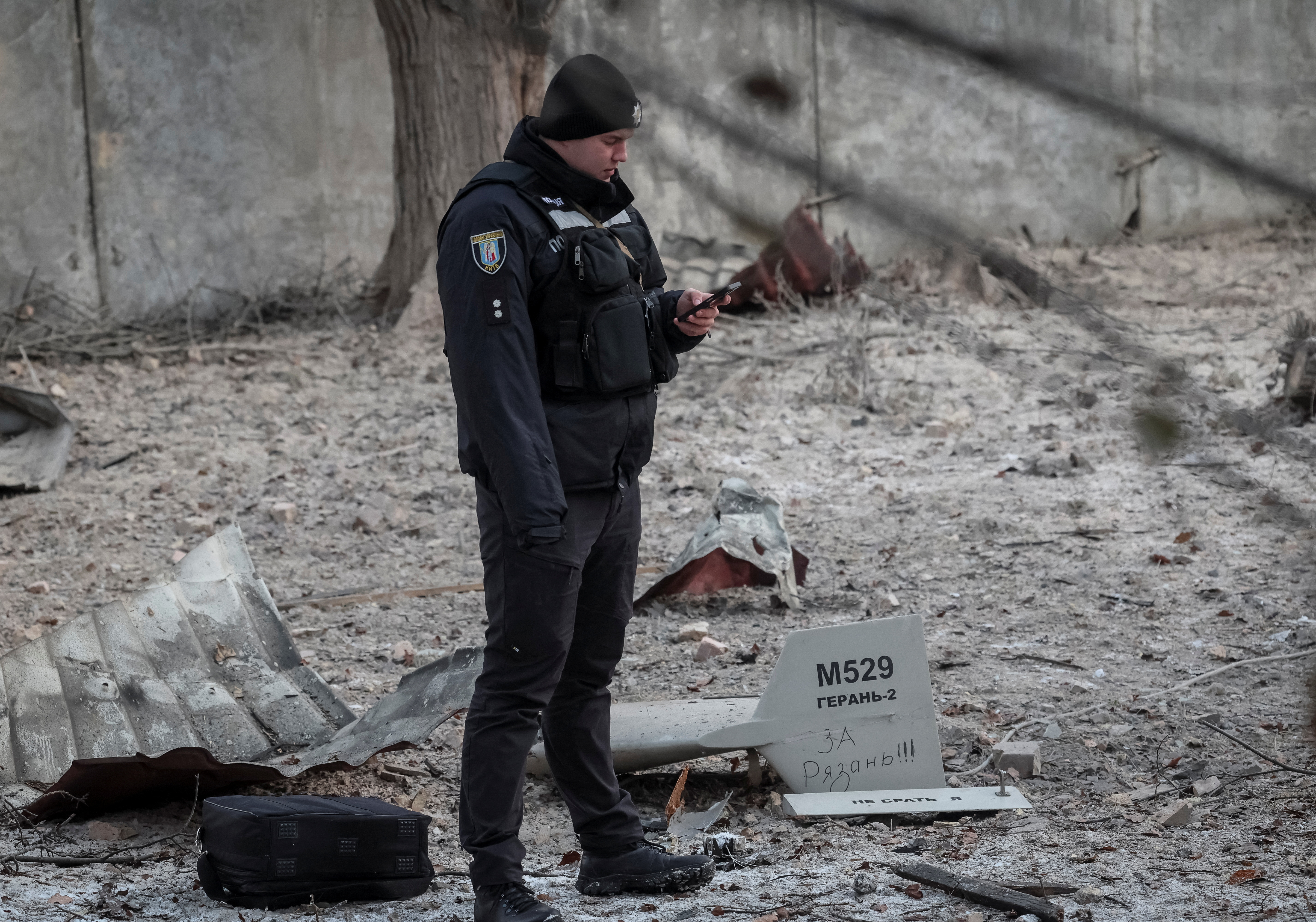
A police officer stands near parts of the drone at the site of a building destroyed by a Russian drone attack, as their attack on Ukraine continues, in Kyiv, Ukraine December 14, 2022. The inscription reads “For Ryazan”. REUTERS/Gleb Garanich
Categories
Audio Sources - Full Text Articles

SBF: Virtue-Signaling Scammer

The former head of crypto exchange FTX, Sam Bankman-Fried, aka SBF, stands accused of many crimes. But no one has ever charged him with reticence.

Between 2019, when he first appeared on the scene, and December 12, 2022, when Bahamian police took him into custody—conveniently preventing him from testifying before Congress the next day—the 30-year-old MIT graduate and former billionaire would not shut up.

No audience was too small. No subject was beyond the pale. Given the opportunity, SBF would announce his veganism, discuss his fashionably liberal politics, and outline the tenets of his utilitarian worldview, his philosophy of “effective altruism.” His remarkable and short-lived career is a case study in high ideals serving as cover for low motives. It also illustrates the double-standard that liberals apply to business scandals.

Words poured from SBF’s disheveled self, faster than you can mint a bitcoin. Last year his net worth soared, reaching an estimated $20 billion. He ascended to the top rank of political donors, giving millions to Joe Biden in 2020 and contributing more money to Democratic candidates in 2022 than everyone but George Soros. Friendly media profiled “The Mysterious Cryptocurrency Magnate Who Became One of Biden’s Biggest Donors” and “A Crypto Emperor’s Vision: No Pants, His Rules.” “I have a lot of things to say,” he told New York magazine.

That’s for sure. SBF admitted to obsessive compulsion, to attention deficit disorder, to depression, and to playing Magic: The Gathering well into adulthood. He would jabber away on social media, during video game sessions, at investor conferences, and on television and podcasts. Rumors swirled about his love life, which may or may not have involved something called a “polycule.”

Invariably the writer or interviewer talking with SBF would mention his parents, described always as “Stanford Law professors,” as if this title granted them an exalted status, a grant of authority and immunity that encompassed their eccentric and exceedingly wealthy son. Less dwelt upon was the fact that one of the Stanford Law professors, Joseph Bankman, was also an FTX staffer embroiled in his son’s activities, while the other, Barbara Fried, was a well-known leftwing activist who cofounded a Democratic super PAC and counseled SBF on his political giving.

Few people looked at SBF with the incredulity he deserved. His pronouncements on ethics and politics were exceedingly banal. Veganism, in today’s world, is neither an original nor a courageous lifestyle—Olive Garden has a vegan menu. Philanthropy existed long before SBF discovered it. Effective altruism sounds nice. But no one has ever argued for impotent selfishness.

The more SBF became concerned with the fate of “humanity,” the less he seems to have been interested in the livelihood of individuals. He was called the “Bentham of Crypto,” a reference to 18th-century thinker Jeremy Bentham, the founder of Utilitarianism, whose guiding philosophy was the “greatest good for the greatest number.” The God-given natural rights of human beings were of subsidiary interest to Bentham—indeed, he didn’t believe in them (or in God) at all. “There were only interests, and the interests of the majority had to prevail,” wrote Gertrude Himmelfarb in her classic Victorian Minds (1968). “The greatest happiness of the greatest number might thus require the greatest misery of the few.”

The FBI needn’t identify Jeremy Bentham, whose mummified corpse sits in the student center at University College London, as an unindicted co-conspirator in this case. Nonetheless, the danger in Benthamism is that its high-mindedness may contribute to a moral callousness, to an instrumental view of other persons, of the sort that we read about in the court filings regarding Bankman-Fried, who kept on chattering to sympathetic audiences as his empire fell apart and the feds were closing in.

Those audiences were sympathetic because SBF was part of the club. He was a celebrity Democrat who combined financial alchemy with highly leveraged virtue-signaling. SBF’s connections may have spared him—and the Democrats who took his money—the embarrassment of congressional cross-examination this week. And they certainly insulate him from becoming a symbol of a corrupt system, a poster-boy for a failed philosophy. He’d be treated differently if he hid all that hair under a MAGA hat.

When Enron imploded in 2001, Ken Lay’s connections to the Republican White House were daily news. Columnist Paul Krugman, a former Enron adviser, wrote that the energy firm’s bankruptcy would prove more significant than the September 11, 2001, terrorist attacks. The editors of the American Prospect wrote, “The Enron scandal should ring down the curtain on a whole philosophy of free-market capitalism and a whole style of government-corporate cronyism.” Author Robert Kuttner said, “Enron is the emblem of the Bush administration’s way of life.” And historian Sean Wilentz declared: “Republicans ruled. Ergo, Enron.”

Will any eminence write, in the coming weeks, “Democrats ruled. Ergo, FTX”? Will journalists draw a connection between SBF’s funneling of investor dollars to progressive causes and candidates for office—mostly, but not all, to Democrats—and the sham economics and cynical politics of the Environmental, Social, and Governance movement running rampant through financial markets? As FTX’s current CEO, John J. Ray III, figures out what happened to the exchange, will he realize that SBF’s privileged background and chic politics allowed the young trader to behave in haphazard and unprofessional ways until, finally, he ran out of other people’s money?

Even now, Bankman-Fried is viewed as an object of pity. “It’s like a Greek tragedy,” a friend of the family told the New York Times after SBF’s arrest. “The story of flying too close to the sun, and having your wings singed.” The problem with this analogy is that Icarus didn’t buy his wings with funds from his investor’s accounts, as the U.S. government says SBF did, while blathering on about saving the world. Icarus was guilty of hubris. Not fraud.

“I f—d up,” Bankman-Fried planned to tell the House Financial Services Committee this week. That’s an understatement. A penniless, imprisoned, and for the moment silent SBF leaves behind a trail of ruin. He is a reminder that sanctimony is a handy tool for scam artists, and that well-credentialed Americans have a bad habit of rewarding a person’s ability to speak with certitude and emphasis and presumed expertise—no matter how dull, unoriginal, obnoxious, insipid, or crooked that person happens to be.

The post SBF: Virtue-Signaling Scammer appeared first on Washington Free Beacon.

Categories
Audio Sources - Full Text Articles

Car bomb strikes police bus in southeast Turkey – minister

2022-12-16T04:12:05Z

DIYARBAKIR, Turkey (Reuters) -A roadside car bomb exploded, damaging a police minibus on a highway in southeast Turkey’s Diyarbakir province on Friday, and nine people in the bus were taken to hospital as a precaution, Interior Minister Suleyman Soylu said.

?m=02&d=20221216&t=2&i=1617289733&r=LYNX

Police forensic experts examine the site after a bomb exploded in a roadside vehicle while a police minibus passed by, in Diyarbakir, Turkey December 16, 2022. REUTERS/Sertac Kayar

Five people, believed to be the perpetrators of the blast and collaborators, have been detained, Soylu said, blaming the attack on “the terrorist organisation,” which usually refers to the outlawed Kurdistan Workers Party (PKK).

Security sources and media reports said earlier that eight police officers were wounded in the explosion, but Soylu told reporters that “nothing happened” to the nine people, including one civilian.

He said all nine were discharged from hospital, where they had been taken as a precaution.

The perpetrator, who Soylu said admitted responsibility, had a sibling in the PKK who was “neutralised” by security forces in 2004, Soylu said.

The blast occurred near a livestock market some 10 km (6 miles) south of the centre of Diyarbakir, the largest city in the region, security sources said.

There was no immediate claim of responsibility. Kurdish, leftist and Islamist militants have all carried out bomb attacks in Turkey in the past.

A bomb killed six people and wounded dozens in Turkey’s largest city, Istanbul, last month. Dozens of people, including a Syrian woman, were detained as suspects.

Turkey blamed Kurdish militants for that blast, but no group claimed responsibility then, either. The PKK and Kurdish-led Syrian Democratic Forces (SDF) denied involvement.

The PKK launched an insurgency against the Turkish state in 1984, largely focused in Turkey’s mainly Kurdish southeast. More than 40,000 people have been killed in the conflict.

It is considered a terrorist organisation by Turkey, the European Union and the United States.

Categories
Audio Sources - Full Text Articles

Stocks and bonds tumble as hawkish central banks dash pivot hopes

2022-12-16T09:33:08Z

World stocks were stuck near one-month lows and government bond markets came under fresh selling pressure on Friday, a day after a slew of central banks jacked up interest rates and signalled that the fight to tame inflation was not over yet.

Interest rates went up in the euro area, Britain, Switzerland, Denmark, Norway, Mexico and Taiwan on Thursday, following a U.S. rate hike a day before, and central bankers vowed to keep raising rates to bring down prices.

This week’s hawkish message from the likes of the European Central Bank and the Federal Reserve brought an abrupt end to optimism that peak rate is almost here.

European stock markets opened lower (.STOXX) and U.S. stock futures were in the red , , pointing to more pain for Wall Street where major indices on Thursday suffered their biggest daily percentage drop in weeks.

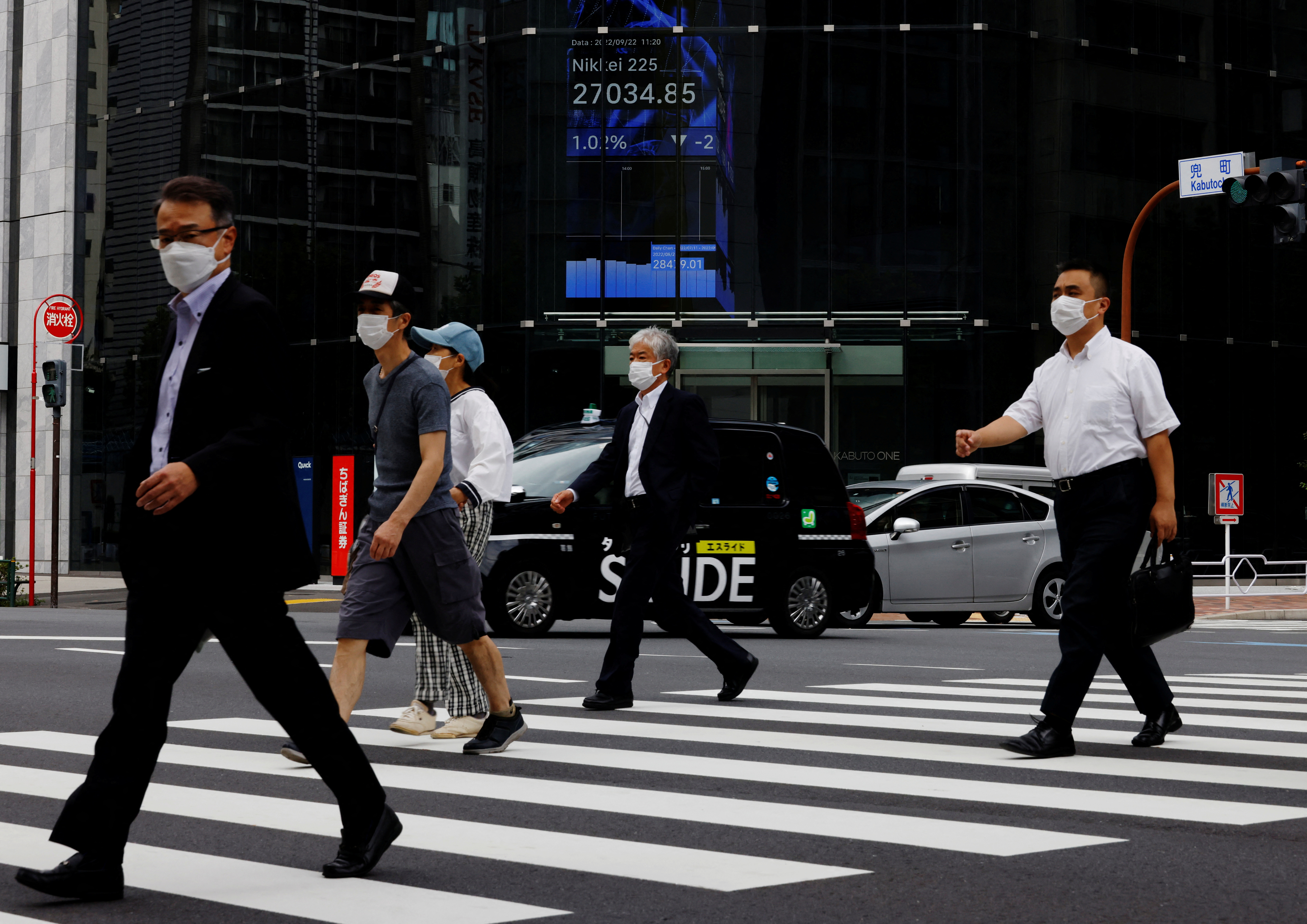
In Asia, Japan’s Nikkei index closed at its lowest in more than a month (.N225) and MSCI’s broadest index of Asia-Pacific shares outside Japan (.MIAPJ0000PUS) was set for its worst week in two months.

All this left MSCI’s world stock index (.MIWD00000PUS) languishing nears its lowest levels in almost a month.

“Central banks delivered a blow to markets that were rebounding in anticipation of policymakers turning dovish on inflation and interest rates,” said Sunil Krishnan, head of multi-asset at Aviva Investors.

The ECB delivered a 50-bps hike like the Fed. Both opted for a smaller increase this time, but flagged there were more increases to come.

Its hawkish message triggered a second day of heavy selling across European bond markets where yields on benchmark 10-year bonds jumped as much as 14 bps , .

The yield on Germany’s rate-sensitive two-year bond yield rose to 2.5% , its highest level since 2008.

The closely-watched gap between Italian and German bond yields widened to 215 bps , while Germany’s yield curve pushed deeper into inverted territory in a sign that investors were positioning for a sharp growth slowdown.

British bond yields also jumped and U.S. Treasury yields edged higher in London trade .

“We now expect the ECB to go to 3.25% (including 50 bps in March) and the Fed to 5.25% which argues for persistent pressure on yields and spreads,” said Christoph Rieger, head of rates and credit research at Commerzbank.

In China, where markets are churning around an uncertain reopening, relief at the apparent resolution of a long-running accounting access dispute with the United States was not enough to bolster sentiment.

A first snapshot of business activity in Europe also provided some positive signs.

A downturn in German economic activity eased for the second straight month in December, with S&P’s Global’s flash composite Purchasing Managers’ Index rising to 48.9 in December from 46.3 in November.

Meanwhile, Japan’s manufacturing activity shrank at the fastest pace in more than two years in December, while U.S. retail sales fell more than expected in November.

The prospect of further monetary tightening globally kept investors nervous about longer-run growth.

In currency markets, the dollar slipped, giving back some of the previous session’s strong gains.

The dollar index , which gauges the currency against six major peers, edged lower to 104.45. That followed a 0.85% surge overnight, its biggest since late September.

The euro was 0.25% firmer at $1.0655 , while the dollar was almost 0.7% weaker at 136.85 yen.

Gold was steady around $1,776 an ounce. Oil gave back some recent gains with Brent crude futures down 1.3% at $80.22 a barrel.

Related Galleries:

The German share price index DAX graph is pictured at the stock exchange in Frankfurt, Germany, December 8, 2022. REUTERS/Staff/File Photo

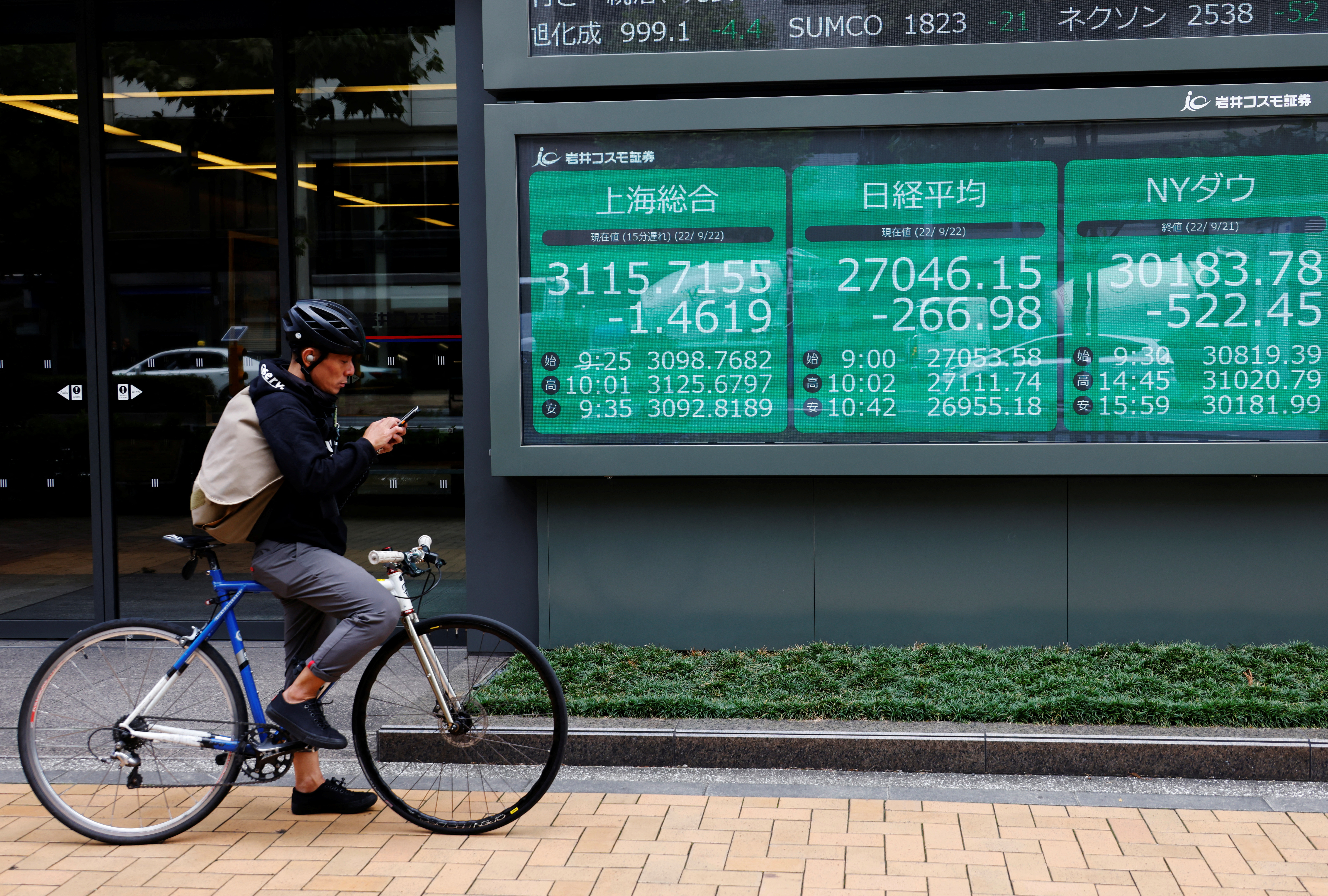
A man on a bicycle stands in front of an electronic board showing Shanghai stock index, Nikkei share price index and Dow Jones Industrial Average outside a brokerage in Tokyo, Japan September 22, 2022. REUTERS/Kim Kyung-Hoon

People pass by an electronic screen showing Japan’s Nikkei share price index inside a commercial building in Tokyo, Japan September 22, 2022. REUTERS/Kim Kyung-Hoon
Categories
Audio Sources - Full Text Articles

Tunisian election to entrench president“s rule

2022-12-16T09:41:09Z

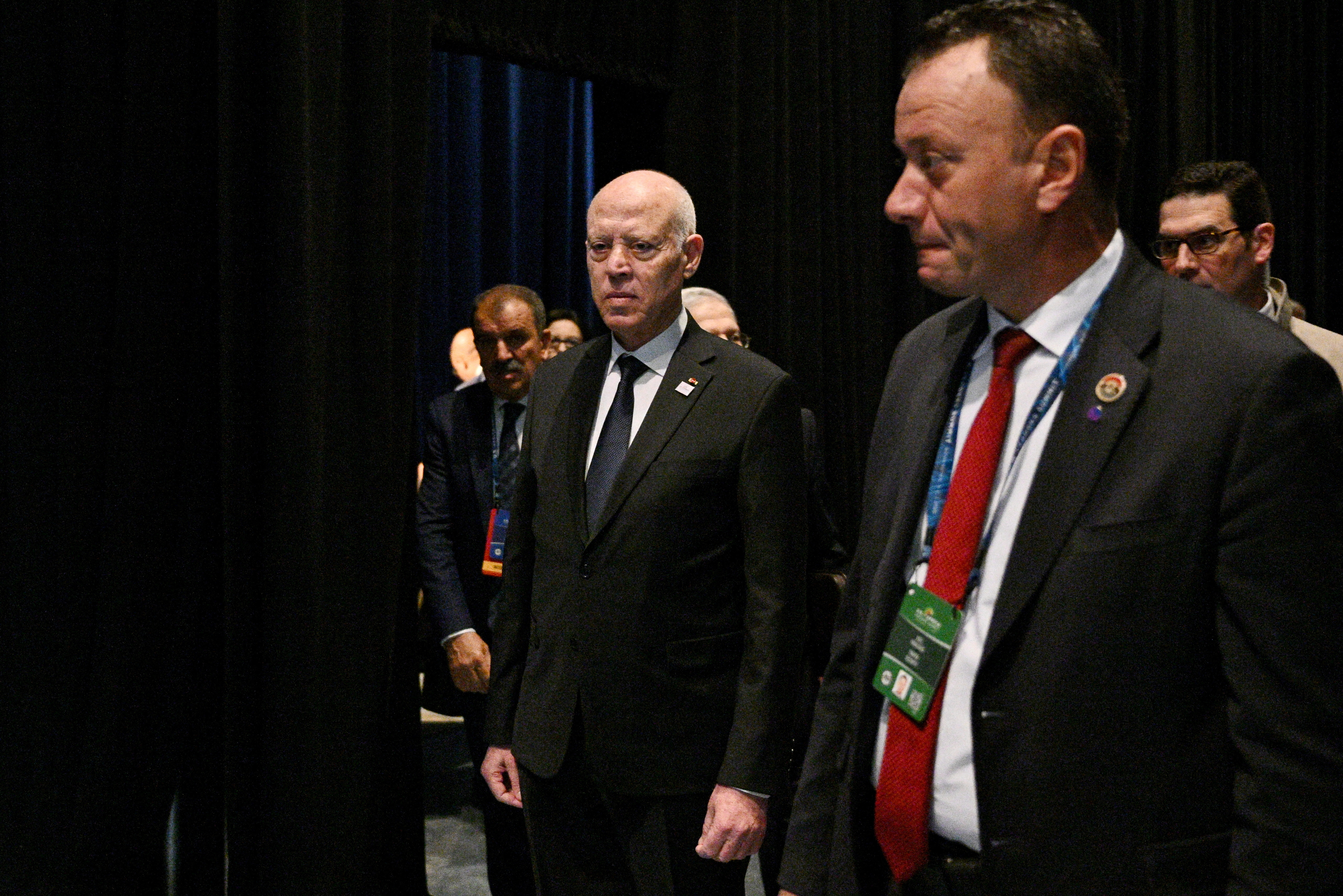
Tunisian President Kais Saied arrives to meet with U.S. Secretary of State Antony Blinken (not pictured) during the U.S.-Africa Leaders Summit at the Walter E. Washington Convention Center in Washington, D.C, U.S., December 14, 2022. Mandel Ngan/Pool via REUTERS

Tunisia holds a parliamentary election on Saturday that will tighten President Kais Saied’s grip on power, capping what his opponents denounce as a march to one-man rule over a country that shook off dictatorship in 2011.

Taking place 12 years to the day after Tunisian vegetable seller Mohamed Bouazizi set himself on fire in an act of protest that sparked the Arab Spring, the ballot bolsters a new political order following Saied’s dissolution last year of the previous legislature.

But it is being boycotted by the parties that shaped Tunisia through the past decade, and appears to have stirred little interest among a population jaded by political dysfunction and struggling with economic hardship.

Tunis construction worker Mohamed Salmi said he did not plan to vote. “They have made our lives hell … Our ultimate dream has become to find a bottle of milk for our children,” he told Reuters.

Saied, a former law lecturer who was a political independent when elected president in 2019, has described the election as part of a roadmap for ending the chaos and corruption he says afflicted Tunisia under the previous system.

Islamist Ennahda and other parties in the post-revolution period meanwhile accuse him of a coup, and have rejected the ballot along with all the president’s other moves since last summer, when he dissolved parliament and began ruling by decree.

Voters will be choosing a parliament largely defanged by a new constitution, approved with a low turnout in a July referendum that was engineered by Saied to shift Tunisia back towards a presidential system.

He appoints the prime minister under the new constitution – a departure from the previous system which gave parliament a central role in picking the cabinet.

Nejib Chebbi, head of an anti-Saied coalition including Ennahda, said the election amounted to a “a still-born farce”, and the result seems unlikely to have any impact on government policy.

It is also taking place amid an economic crisis that is fuelling poverty, leading many to attempt the perilous journey to Europe aboard smugglers’ boats.

The government hopes to secure a $1.9 billion International Monetary Fund (IMF) rescue, but that is dependent on unpopular reforms.

Saied’s rule has drawn opposition from a growing range of groups. The powerful UGTT labour union, which has supported some of his actions but which he has this year cut out of economic policymaking, has come out strongly against him and the election in the run-up to the vote.

Al Bawsala, a non-governmental organisation that has monitored the work of parliament, has said it will boycott the new legislature which it believes will be an instrument for the president.

With the main parties absent, a total of 1,058 candidates – 120 of them women – are running for 161 seats.

For 10 of those – seven in Tunisia and three decided by expatriate voters – there is just one candidate. A further seven of the seats decided by expatriate voters have no candidates running at all.

Categories
Audio Sources - Full Text Articles

Malaysia campsite landslide kills 18, including children, as they sleep

2022-12-16T09:50:59Z

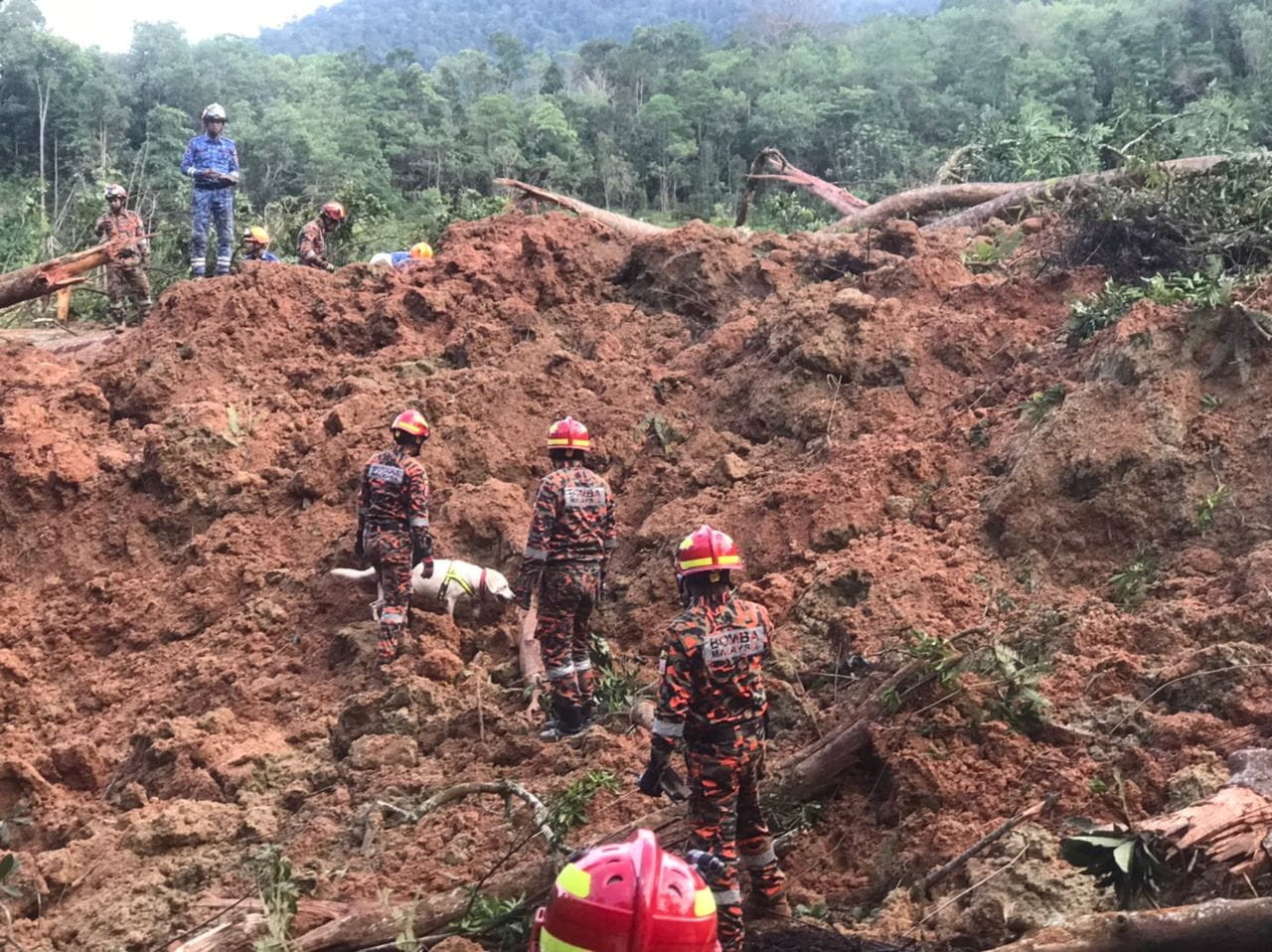
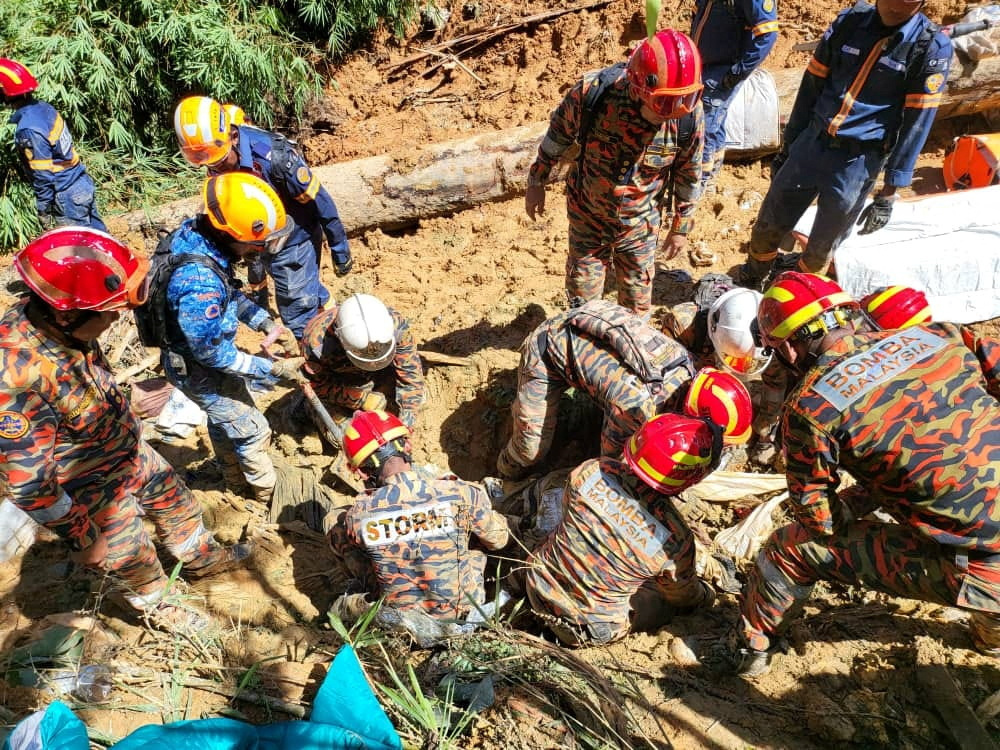
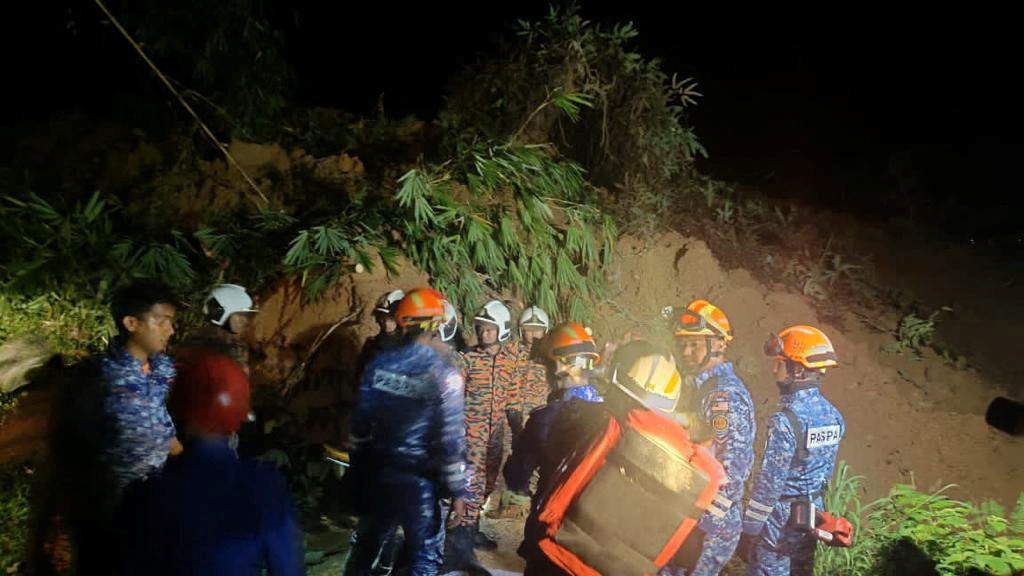
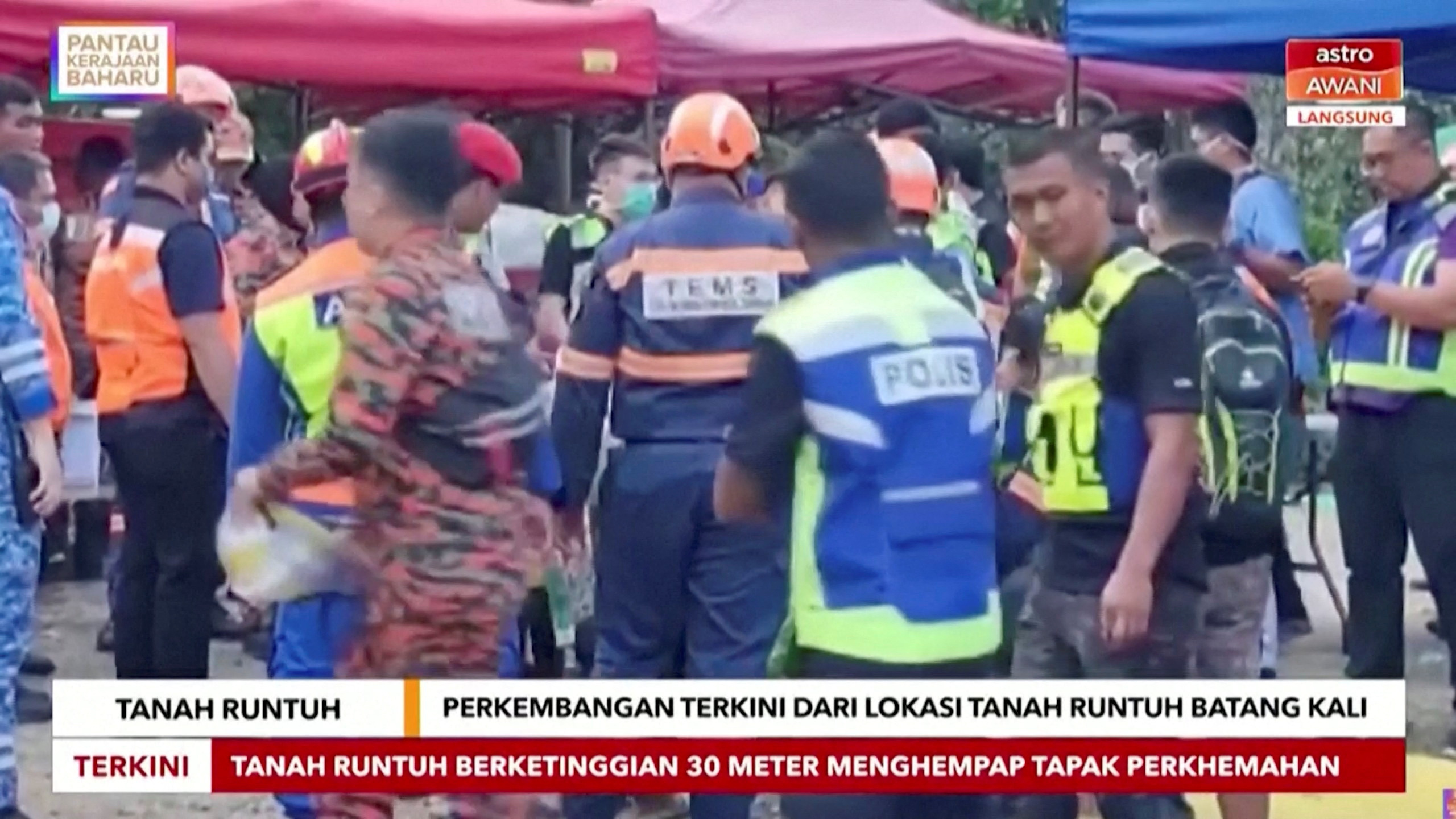
A landslide killed at least 18 people, including children, as they slept in their tents at an unlicensed campsite in Malaysia on Friday, officials said, as search teams scoured thick mud and downed trees for survivors.

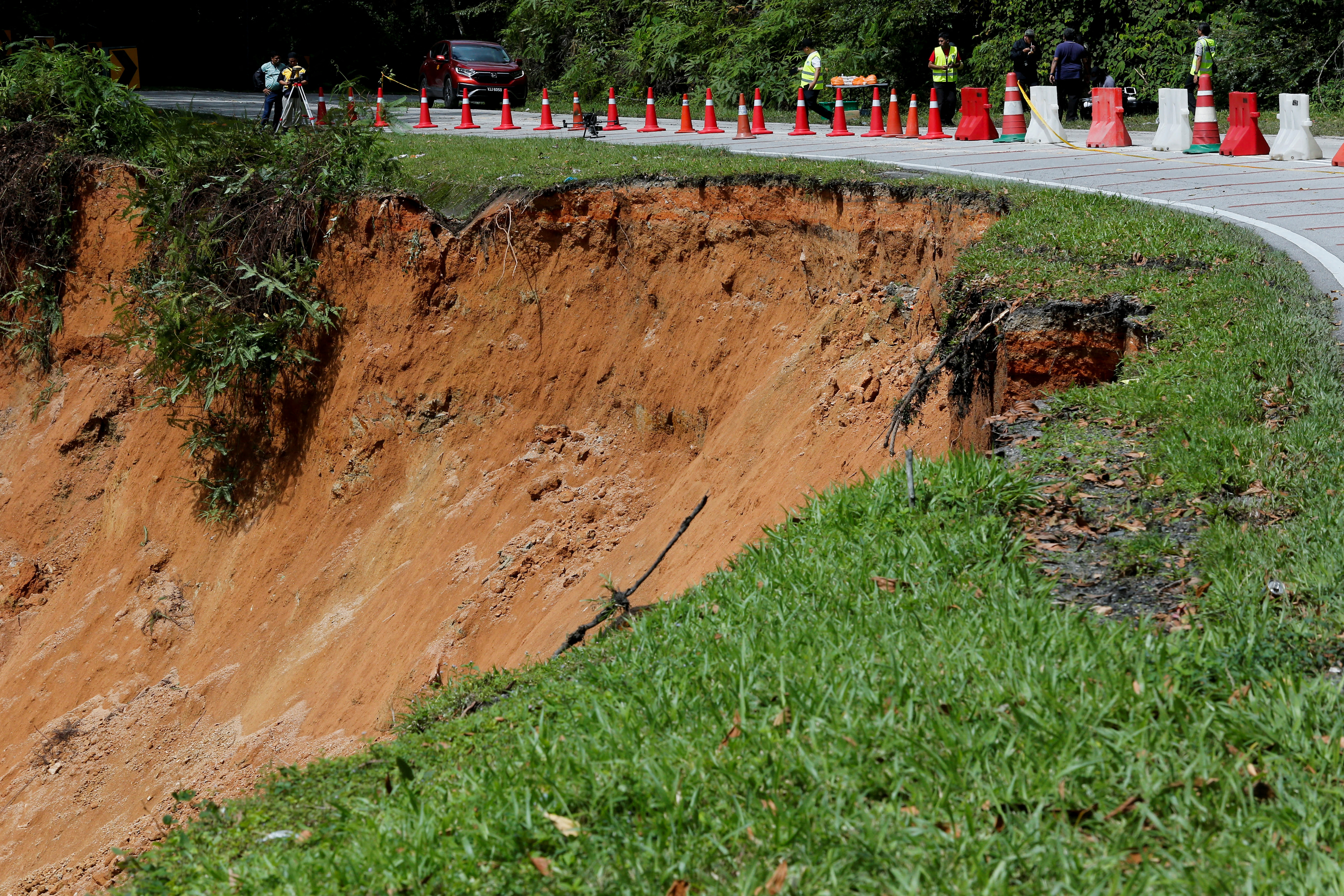
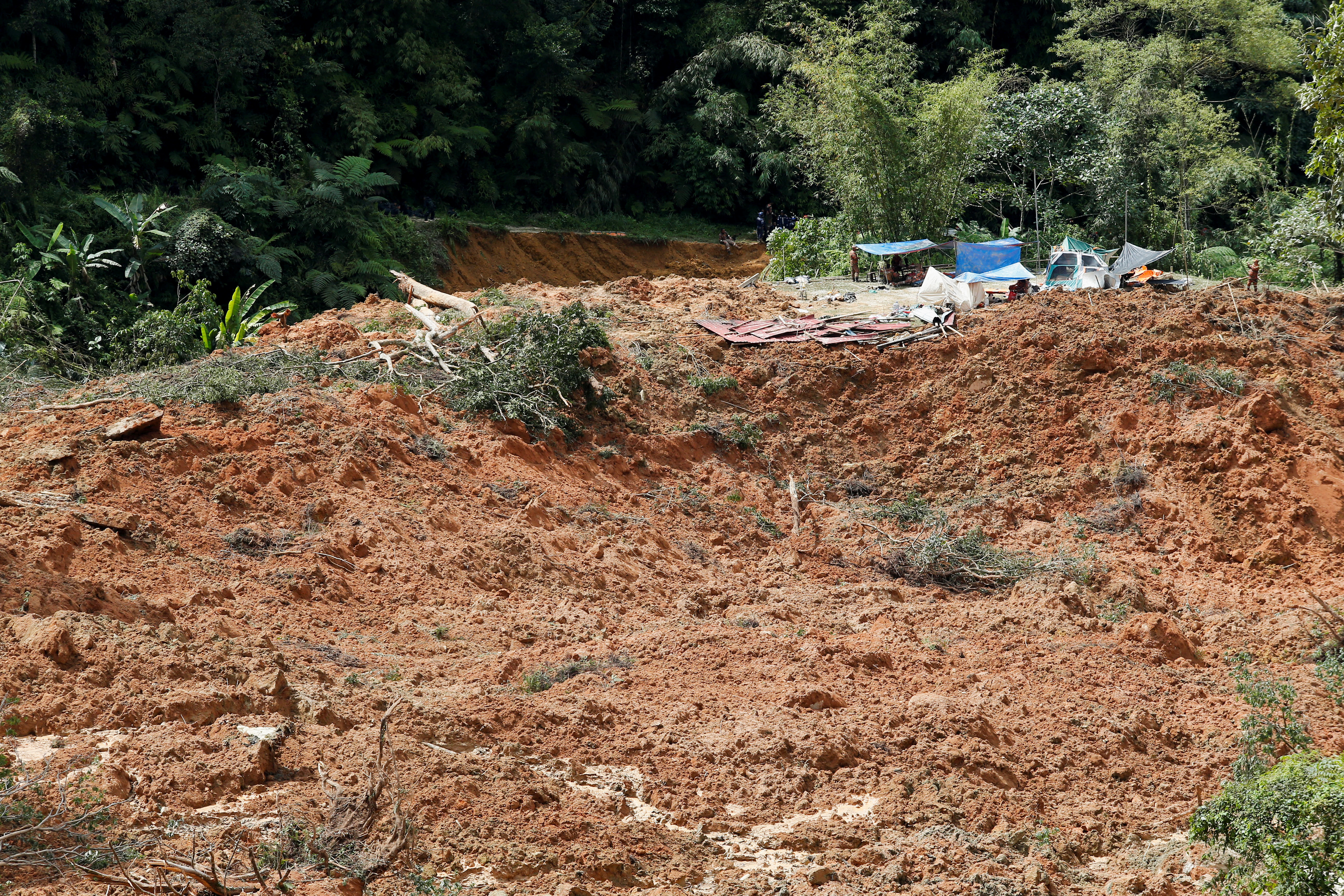
The landslide in Selangor state bordering the capital, Kuala Lumpur, occurred before 3 a.m. (1900 GMT), tearing down a hillside into an organic farm that officials said was operating the campsite illegally.

Among the victims were three children and 10 women, according to the fire and rescue department.

Camper Teh Lynn Xuan, 22, said one of her brothers was killed and another was being treated in hospital.

“I heard a loud sound like thunder, but it was the rocks falling,” she told Malay-language daily Berita Harian.

“We felt the tents becoming unstable and soil was falling around us. Luckily, I was able to leave the tent and go to some place safer. My mother and I managed to crawl out and save ourselves.”

The disaster struck about 50 km (30 miles) north of Kuala Lumpur in Batang Kali, just outside the popular hilltop area of Genting Highlands, known for its resorts, waterfalls and natural beauty.

The earth fell from an estimated height of 30 metres (100 ft) and covered an area of about an acre (0.4 hectares), according to the fire and rescue department’s state director.

An initial investigation showed an embankment of about 450,000 cubic metres of earth had collapsed, according to minister of natural resources, environment and climate change, Nik Nazmi Nik Ahmad.

There were 94 people caught in the landslide but 61 were safe, with 15 missing, according to the Malaysia National Disaster Management Agency.

Eight people were hospitalised, including a pregnant woman, while others had injuries ranging from minor cuts to a suspected spinal injury, health minister Zaliha Mustafa said.

District police chief Suffian Abdullah said the dead were all Malaysians, including a child of about five. Close to 400 personnel were involved in the rescue mission, he said.

Pictures posted on the Father’s Organic Farm Facebook page show a farmhouse in a small valley, with a large area where tents can be set up. The farm owners did not immediately respond to a request for comment.

Its owners were allowed to operate organic farms, but had not applied for licences to run three campsites on the property, Local Government Development Minister Nga Kor Ming told reporters.

If found guilty of violating the law, the owners can be jailed up to three years or fined up to 50,000 ringgit ($11,300), Nga said, adding he had ordered campsites near rivers, hillsides and other high-risk areas nationwide to close for seven days.

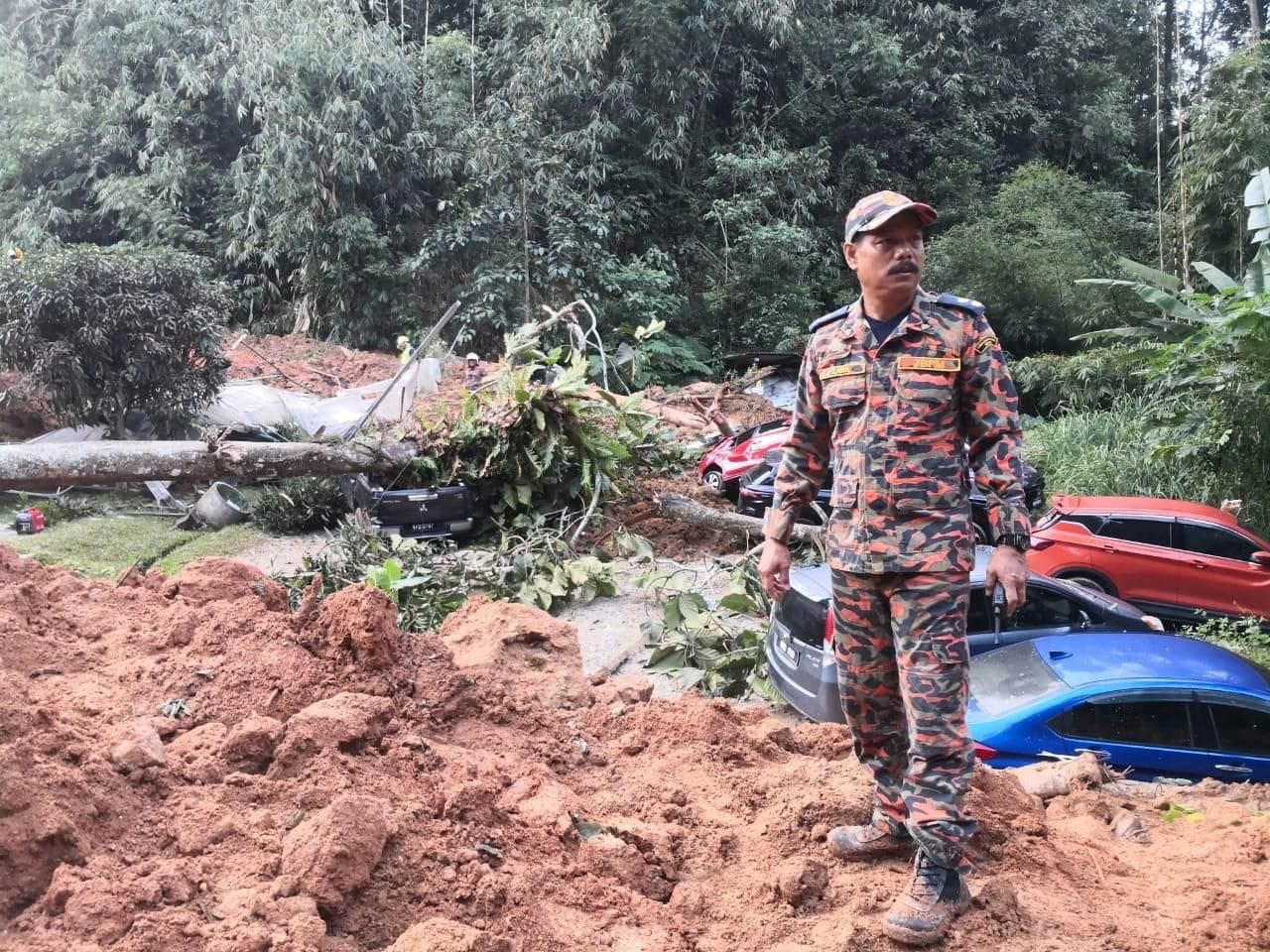
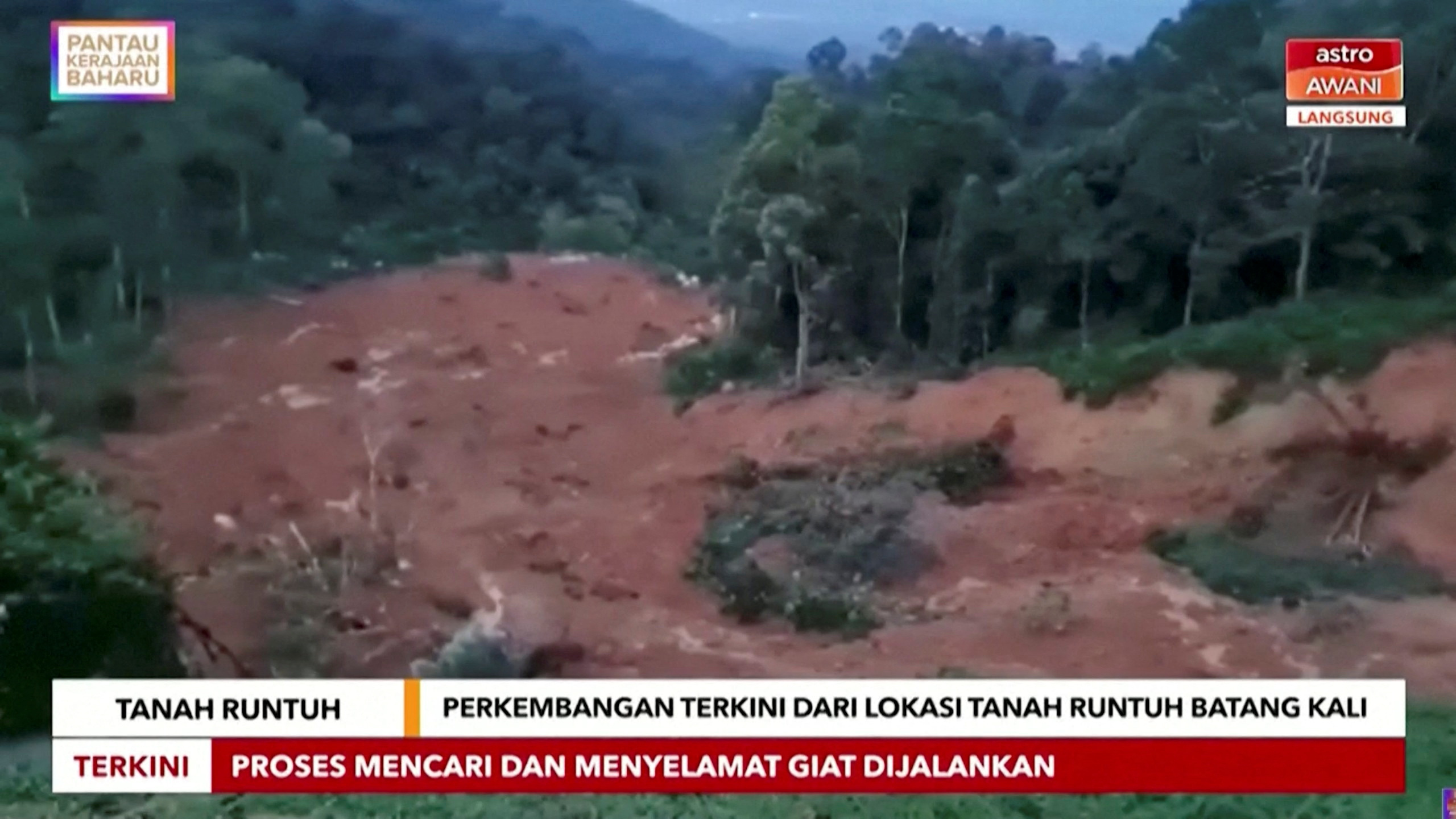
Local television footage showed the aftermath of a large landslide through a steep, forested area beside a road, while images on social media showed rescue workers clambering over thick mud, large trees and other debris.

“I pray that the missing victims can be found safely soon,” minister Nik Nazmi tweeted.

Selangor is the country’s most affluent state and has suffered landslides before, often attributed to forest and land clearance.

Landslides are common in Malaysia, but typically only after heavy rains. Flooding occurs often, with about 21,000 people displaced last year by torrential rain in seven states.

Leong Jim Meng, another camper, said he had not expected a landslide as there had been only light drizzle in recent days.

“My family and I were trapped when the soil covered our tent,” he told Berita Harian. “We managed to run to the parking lot and called the authorities. They arrived quite quickly, about 30 minutes later.”

($1 = 4.4180 ringgit)

Related Galleries:

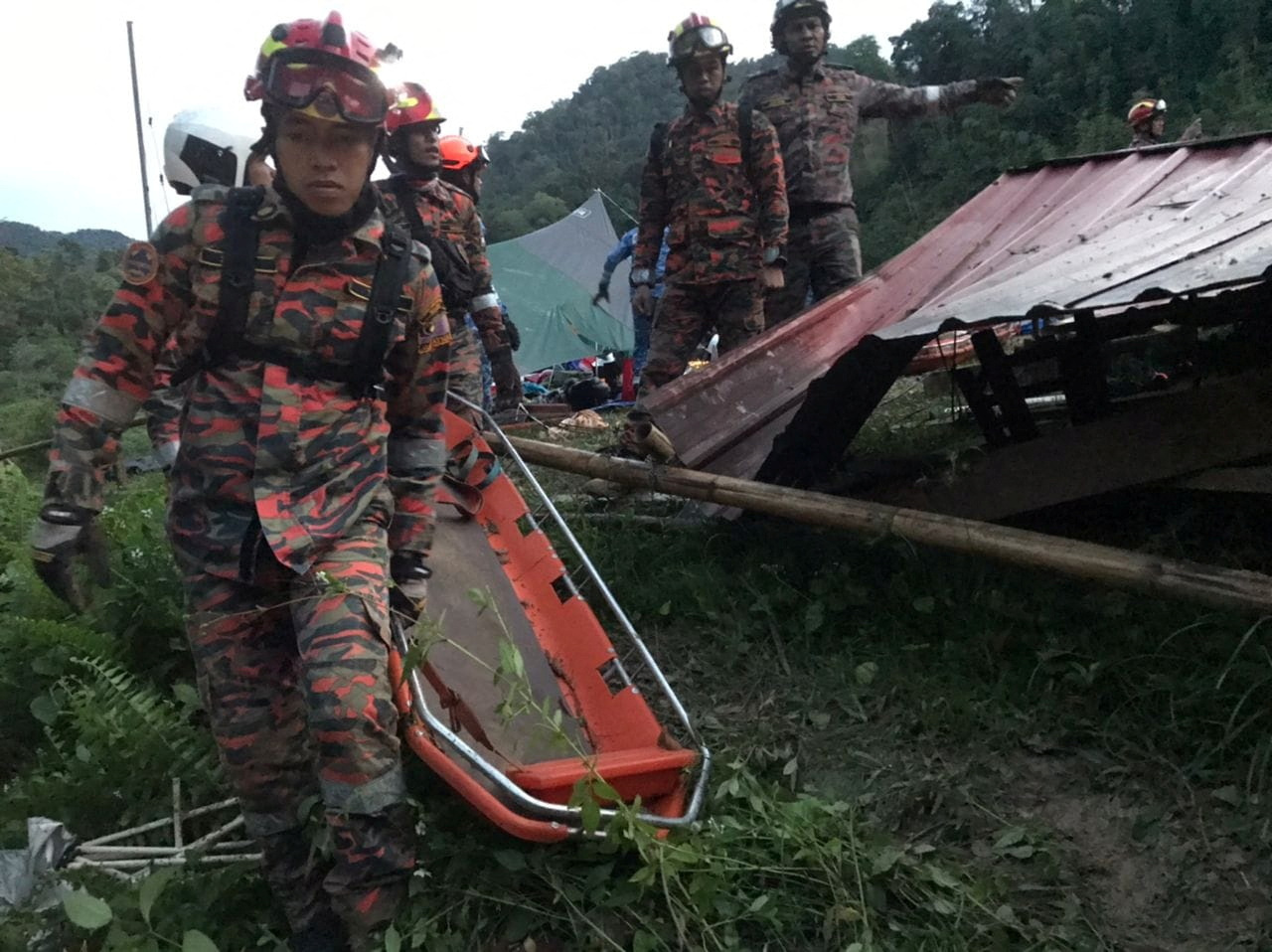
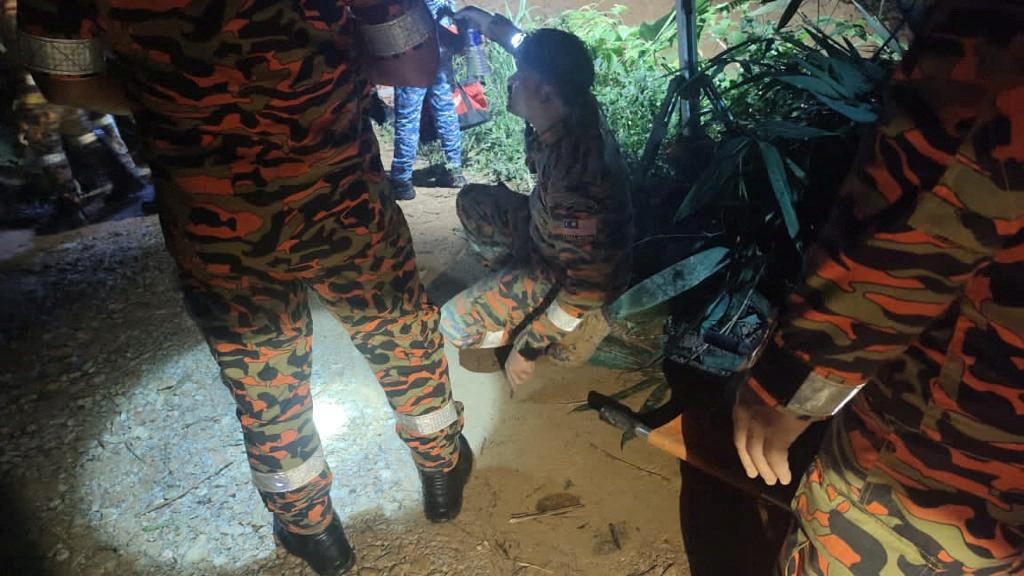
Rescuers work during a rescue and evacuation operation following a landslide at a campsite in Batang Kali, Selangor state, on the outskirts of Kuala Lumpur, Malaysia, December 16, 2022, in this picture obtained from social media. Korporat JBPM/via REUTERS

Rescuers work during a rescue and evacuation operation following a landslide at a campsite in Batang Kali, Selangor state, on the outskirts of Kuala Lumpur, Malaysia, December 16, 2022, in this picture obtained from social media. Korporat JBPM/via REUTERS T

A general view of the landslide in Batang Kali, Selangor state, Malaysia December 16, 2022. REUTERS/Lai Seng Sin

Rescuers work during a rescue and evacuation operation following a landslide at a campsite in Batang Kali, Selangor state, on the outskirts of Kuala Lumpur, Malaysia, December 16, 2022, in this picture obtained from social media. Korporat JBPM/via REUTERS

Rescuers work during a rescue and evacuation operation following a landslide at a campsite in Batang Kali, Selangor state, on the outskirts of Kuala Lumpur, Malaysia, December 16, 2022, in this picture obtained from social media. Korporat JBPM/via REUTERS

A general view of the landslide in Batang Kali, Selangor state, Malaysia December 16, 2022. REUTERS/Lai Seng Sin

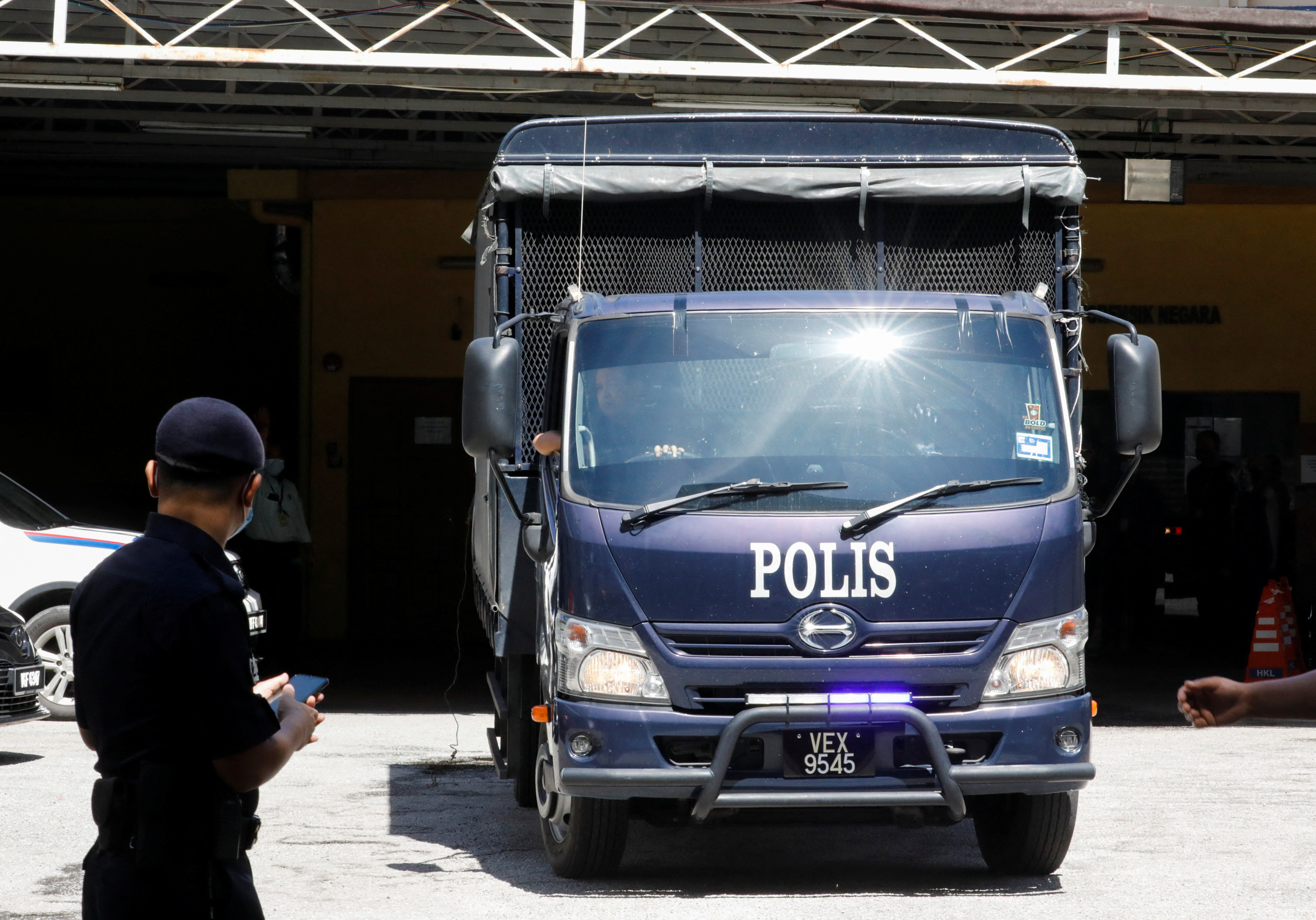
A police truck carrying the dead bodies of Batang Kali landslide victims arrives at Kuala Lumpur Hospital’s mortuary in Kuala Lumpur, Malaysia December 16, 2022. REUTERS/Hasnoor Hussain

Rescuers work during a rescue and evacuation operation following a landslide at a campsite in Batang Kali, Selangor state, on the outskirts of Kuala Lumpur, Malaysia, December 16, 2022. State Fire and Rescue Department/Handout via REUTERS

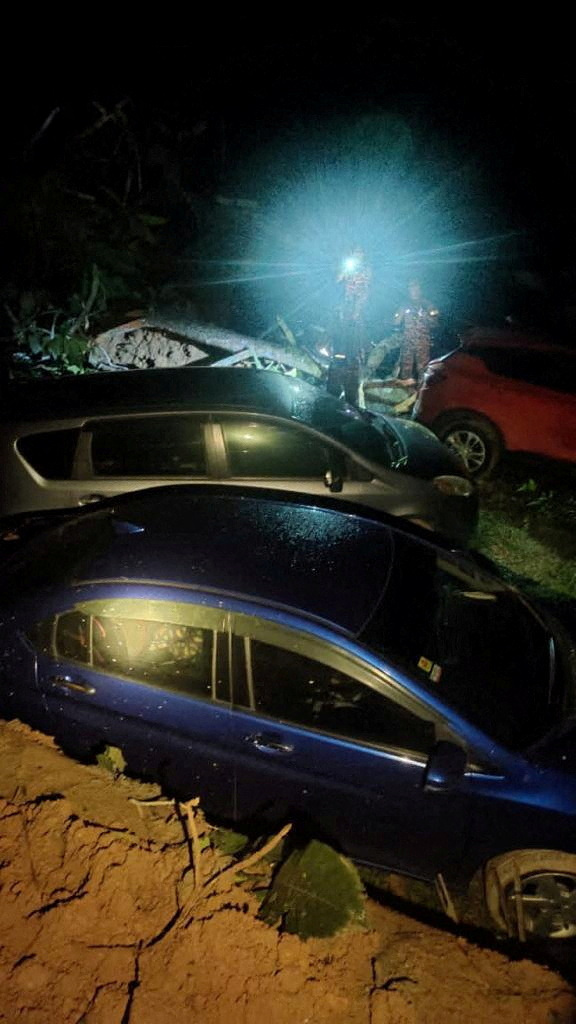
Cars stuck in the mud are seen following a landslide at a campsite in Batang Kali, Selangor state, on the outskirts of Kuala Lumpur, Malaysia, December 16, 2022. State Fire and Rescue Department/Handout via REUTERS

Rescuers work during a rescue and evacuation operation following a landslide at a campsite in Batang Kali, Selangor state, on the outskirts of Kuala Lumpur, Malaysia, December 16, 2022. State Fire and Rescue Department/Handout via REUTERS

A view of the scene after a landslide in Batang Kali, Malaysia, December 16, 2022 in this still image taken from video. Astro Awani/via REUTERS TV/Handout via REUTERS THIS IMAGE HAS BEEN SUPPLIED BY A THIRD PARTY. MANDATORY CREDIT. NO RESALES. NO ARCHIVES. MALAYSIA OUT. NO COMMERCIAL OR EDITORIAL SALES IN MALAYSIA

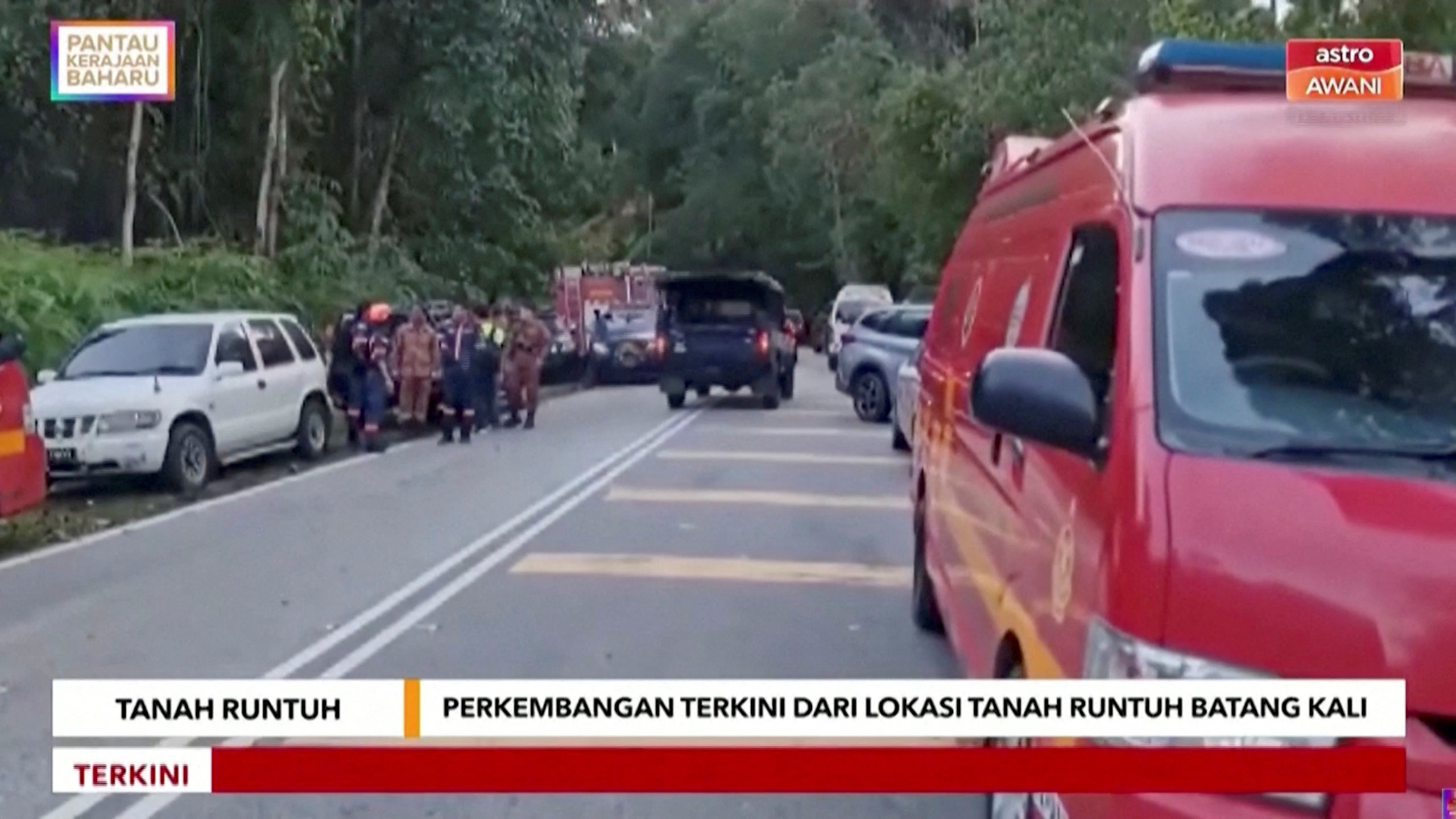
Rescue vehicles are parked by a road during a rescue operation after a landslide in Batang Kali, Malaysia, December 16, 2022 in this still image taken from video. Astro Awani/via REUTERS TV/Handout via REUTERS THIS IMAGE HAS BEEN SUPPLIED BY A THIRD PARTY. MANDATORY CREDIT. NO RESALES. NO ARCHIVES. MALAYSIA OUT. NO COMMERCIAL OR EDITORIAL SALES IN MALAYSIA

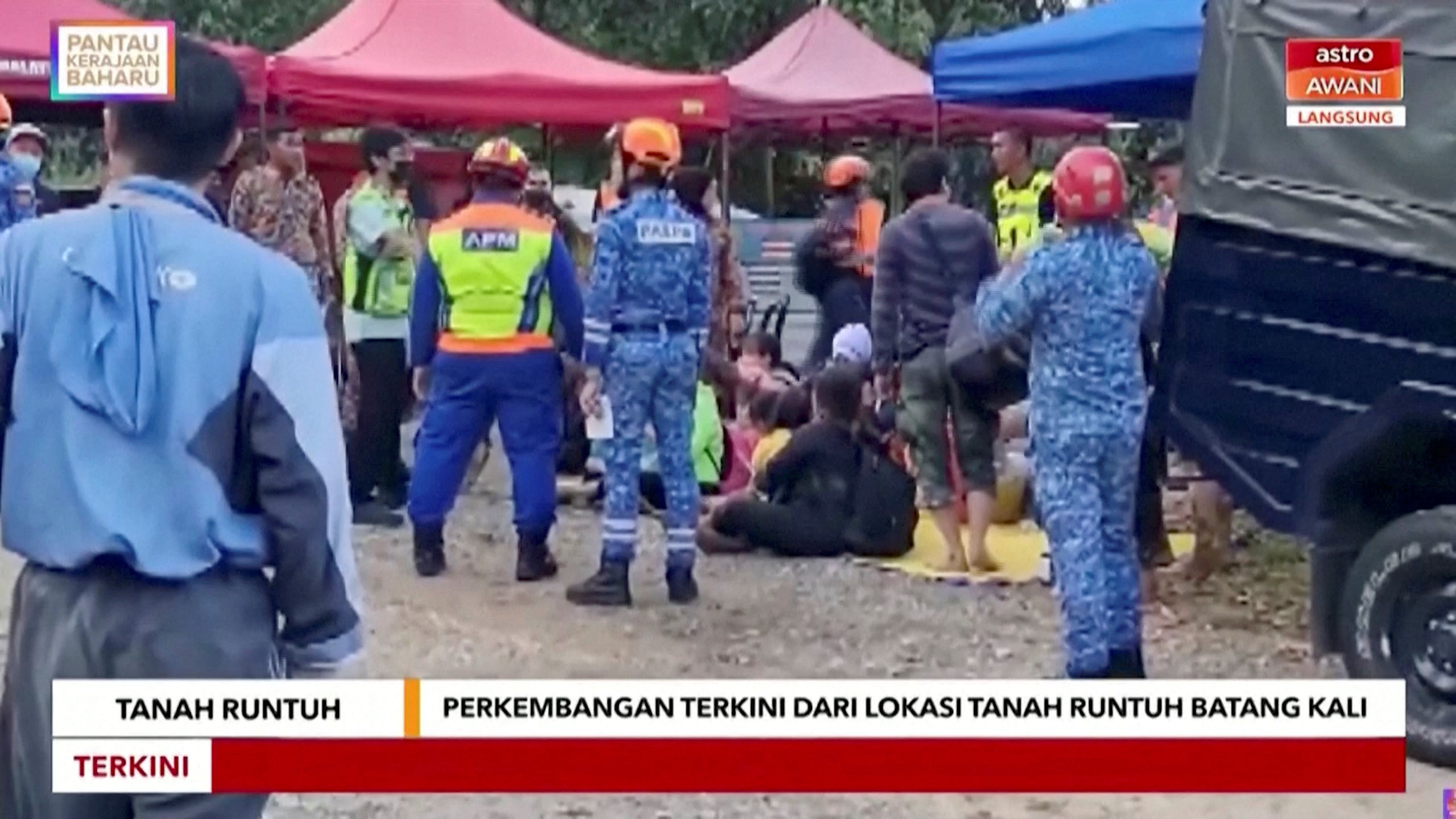
Rescued people sit on mats after a landslide in Batang Kali, Malaysia, December 16, 2022 in this still image taken from video. Astro Awani/via REUTERS TV/Handout via REUTERS THIS IMAGE HAS BEEN SUPPLIED BY A THIRD PARTY. MANDATORY CREDIT. NO RESALES. NO ARCHIVES. MALAYSIA OUT. NO COMMERCIAL OR EDITORIAL SALES IN MALAYSIA

Rescuers and police take part in a rescue operation after a landslide in Batang Kali, Malaysia, December 16, 2022 in this still image taken from video. Astro Awani/via REUTERS TV/Handout via REUTERS THIS IMAGE HAS BEEN SUPPLIED BY A THIRD PARTY. MANDATORY CREDIT. NO RESALES. NO ARCHIVES. MALAYSIA OUT. NO COMMERCIAL OR EDITORIAL SALES IN MALAYSIA
Categories
Audio Sources - Full Text Articles

Explainer: When are attacks on civilian infrastructure war crimes?

2022-12-16T09:32:45Z

Russia’s attacks on Ukraine’s civilian infrastructure, including energy facilities, have been described as possible war crimes by the office of the United Nations High Commissioner for Human Rights and Amnesty International.

On Friday, Russia launched dozens of missiles across Ukraine knocking out electricity in its second biggest city, hitting critical infrastructure in the south and causing explosions in the capital Kyiv, Ukrainian officials said.

Eight people were also killed and 23 injured by Ukrainian shelling in the Russian-controlled Luhansk region of Ukraine, the Russian-installed administrator of the region said.

Reuters could not immediately verify the battlefield reports.

The Geneva conventions and additional protocols shaped by international courts say that parties involved in a military conflict must distinguish between “civilian objects and military objectives” and that attacks on civilian objects are forbidden.

This prohibition is also codified in the Rome Statute of the International Criminal Court (ICC), which earlier this year opened an investigation into possible war crimes in Ukraine.

That seems clear-cut, but some infrastructure owned and used by civilians can also be a military objective. Military objectives are defined as “those objects which by their nature, location, purpose or use make an effective contribution to military action” and whose destruction or capture “offers a definite military advantage”.

Power infrastructure has long been considered a valid military objective as long as it supports an enemy army’s activities, even if the system also supports the civilian population, writes military law expert Michael Schmitt in the Articles of War blog run by the Lieber Institute for Law & Warfare at the United States Military Academy West Point.

As Russia’s strikes on the power infrastructure have intensified, it seems increasingly unlikely that its armed forces can name a “definite” military benefit for each attack.

“Simply put, Russian forces are almost certainly striking many targets that do not qualify as military objectives,” Schmitt argues.

Russia says it attacks military targets including energy infrastructure.

Even if some of the targets could be considered military objectives, that is not the end of the story, says Katharine Fortin, associate professor of international law at Utrecht University.

The military must consider whether the damage and loss incurred by civilians in such attacks are excessive compared to the concrete and direct military advantage, she said.

“In this instance, the incidental loss of life and injury to civilians that can be expected seems very large given that power outages are making it impossible for surgeons to carry on their work, affecting people’s access to healthcare, and creating conditions in which vulnerable people are dying due to the cold or hunger,” she told Reuters.

Nigel Povoas, lead prosecutor for a team of international experts assisting Kyiv war crimes investigators, told Reuters that Russian attacks in the past two months have “focused on eliminating infrastructure crucial to the means of civilian survival such as heat, water, power and medical facilities”.

Both Schmitt and Povoas say the scale and the intensity of the attacks can additionally amount to them being considered as “acts or threats of violence the primary purpose of which is to spread terror among the civilian population”.

This is forbidden under international humanitarian law and was confirmed as a war crime by rulings of the U.N. tribunal for the former Yugoslavia relating to the siege of Sarajevo.

Related Galleries:
Rescuers work at the site of a building destroyed by a Russian drone attack, as their attack on Ukraine continues, in Kyiv, Ukraine December 14, 2022. REUTERS/Gleb Garanich

Parts of the drone are seen at the site of a building destroyed by a Russian drone attack, as their attack on Ukraine continues, in Kyiv, Ukraine December 14, 2022. REUTERS/Gleb Garanich


Categories
Audio Sources - Full Text Articles

Russians find asylum lifeline to US, but at a high price

CHULA VISTA, Calif. (AP) — Phil Metzger promises to arrange entry to the United States for Russian-speaking asylum-seekers through unmatched connections with U.S. border officials and people in Mexico who can guarantee safety while traveling. Though seeking asylum is free, the pastor of Calvary San Diego said his services are “not cheap.”

In an interview with a Russian-language YouTube channel, he touted director computer access to U.S. Customs and Border Protection to enroll migrants and was vague about “opportunists” in Mexico who ensure customers’ safety after they fly there on tourist visas and while they wait in Tijuana to cross.

“I just know there’s a lot of power on that side that I just don’t control,” the evangelical Christian pastor said. “But I do have one control. I control who goes across. So I have to negotiate. To keep those people safe, I have to negotiate with those in power (in Mexico).”

Asylum is supposed to be free and for those most in need; many have been unable to even ask for protection under COVID-19 restrictions that are set to expire Wednesday.

Yet Metzger’s service, as described in the 25-minute interview last month at his church in the San Diego suburb of Chula Vista, is a private money-generating enterprise that uses its government connections to bypass those restrictions. It’s part of an opaque, bewildering patchwork of exemptions CBP has developed. Immigration advocates select who gets in, though CBP has final say.

Asked about an outside group charging money, the Department of Homeland Security said there is no fee related to exemptions from asylum restrictions and that it will “look into any allegation of abuse.”

“DHS takes any allegations of fraud or abuse of our immigration systems very seriously,” it said in a written response to questions about the service.

The pastor did not respond to text, email and phone messages left over a week and his office was closed when a reporter went there on a recent weekday afternoon.

___

This story is part of an ongoing Associated Press series, “Migration Inc,” which investigates individuals and companies that profit from the movement of people who flee violence and civil strife in their homelands.

___

Migrants have been denied rights to seek asylum more than 2.5 million times since March 2020 on grounds of preventing the spread of COVID-19 under Trump-era restrictions known as Title 42.

Exemptions are supposed to be for migrants deemed most vulnerable in Mexico — perhaps for gender identity or sexual orientation, or for being specifically threatened with violence — but some partners say CBP doesn’t question choices and that migrants selected often face no unusual danger. The agency doesn’t publicly identify its partners or how many slots are made available to each, leaving migrants guessing who they are and which ones are best connected to U.S. authorities.

In El Paso, Texas, CBP gives out 70 slots daily, half for the government of Mexico’s Chihuahua state and the rest for attorneys and advocacy groups, said Nicolas Palazzo, an attorney for Las Americas Immigrant Advocacy Center, which participates in the arrangement. He said some attorneys unaffiliated with his organization charge migrants for the service.

In Piedras Negras, Mexico, across from Eagle Pass, Texas, the city government chooses who escapes the reach of Title 42, according to a report last month from the University of Texas at Austin Strauss Center for International Security and Law. In Reynosa, across from McAllen, Texas, a migrant shelter picks who crosses, while in Laredo, Texas, there are no exemptions, the report says.

In San Diego, CBP exempts about 200 people daily, including 40 slots that are set aside for Russian speakers working through Calvary San Diego, said Enrique Lucero, the city of Tijuana’s director of migrant affairs, who regularly communicates with U.S. officials.

Other slots in San Diego are for advocacy groups Al Otro Lado, which operates an online registration list, and Border Angels, which leans on migrant shelter directors to select who gets to cross, and the U.S. Committee for Refugees and Immigrants, a refugee resettlement organization.

CBP is allowing more Russians to enter the United States with Title 42 exemptions, with about 3 in 4 coming through California border crossings with Mexico. In October, it exempted 3,879 Russians, more than triple the same period a year earlier. It exempted 21,626 Russians in the fiscal year that ended Sept. 30, more than five times the previous year.

In the YouTube interview last month with Alex Moore, Metzger said his call center fields more than 1,000 inquiries a day. CBP tells him how many people can cross and “I control who crosses.”

“Honestly, we think it was God opening a door for us,” said Metzger, who grew up in Southern California but spent much of his adult life in Eastern Europe.

Metzger is unclear on who he pays to greet customers in Mexico and bring them to the border, saying he doesn’t know them.

Through a Telegram account called Most V USA, the cost for single adults paying cash was 1,800 (presumably U.S. dollars) Monday — a “price reduction.” For married couples paying cash, the cost was $3,500. Online payments were $300 less for individuals and $500 less for couples. Children were free.

“You pay not for the crossing, but for the consultation on the crossing,” Most V USA says on its website. “We use the only legal way available to our organization — making an appointment with a CBP officer at the border.”

The price includes crossing to the United States safely in groups from Tijuana to San Diego, with a bag containing water and protein bars.

Metzger opened his large church to Ukrainian refugees after Russia’s invasion this year, working with volunteers on a smooth-running operation that deployed a mobile app used to track church attendance. Ukrainians who flew to Tijuana were told to report to a San Diego border crossing as their numbers approached, a system organizers likened to waiting for a restaurant table.

Metzger touts connections with CBP developed during that time and warns about falling for scammers who use his Most V USA brand.

“No, it’s not cheap. No, it’s not easy but we will make sure that it is safe and that you will get into the States,” he said.

___

Associated Press writer Jim Heintz in Moscow contributed.

Categories
Audio Sources - Full Text Articles

Atos terroristas mostram que Ministério da Justiça e Segurança Pública terá enorme desafio no governo Lula

colunacecilia-terrorismo-e-governolula

Ilustração: Júlia Coelho/The Intercept Brasil

Cinco ônibus e três carros queimados, uma delegacia da Polícia Federal depredada e botijões de gás espalhados pelas ruas fechadas em meio ao caos em Brasília. Diante disso, uma Polícia Militar que se omitiu, enquanto o ministro da Justiça, Anderson Torres, jantava em um restaurante da cidade. O político só se pronunciou, via Twitter, mais de duas horas depois do início do pandemônio. No dia seguinte, a Esplanada dos Ministérios amanheceu fechada e havia bloqueios na Praça dos Três Poderes e nas proximidades da sede da PF. O hotel onde o presidente eleito Lula estava hospedado após sua diplomação foi cercado por policiais por segurança.

O novo governo ainda não foi empossado, mas Flávio Dino, anunciado como futuro ministro da Justiça e Segurança Pública, se pronunciou antes do atual líder da pasta. Disse que as cenas eram inaceitáveis e que “as medidas de responsabilização jurídica prosseguirão, nos termos da lei”. Citando artigos da Constituição sobre a competência do governo federal sobre crimes políticos, ele afirmou que, a partir de janeiro, tomará as providências que agora não são possíveis.

Vídeo. Flávio Dino sobre os vândalos bolsonaristas: “Todos estão sendo identificados e as medidas serão tomadas a partir de janeiro”. pic.twitter.com/Hjwry2V6oG

— Blog do Noblat (@BlogdoNoblat) December 13, 2022

O quebra-quebra foi causado por bolsonaristas radicais após José Acácio Serere Xavante ser preso por convocar “pessoas armadas para impedir a diplomação dos eleitos” e levantar suspeitas infundadas contra o processo eleitoral. Conhecido como Cacique Tserere, o índigena recebe apoio financeiro do fazendeiro Didi Pimenta, dono de uma propriedade em Campinápolis, no Mato Grosso, onde mora a família do cacique. Didi já apareceu em vídeo pedindo um pix para “manter os índios” em Brasília.

O jornalista Thalys Machado, que cobriu as manifestações extremistas naquela noite, narrou ter visto uma polícia tímida, negociando com os radicais amistosamente. Ao ser questionado se alguém havia sido preso após os atos terroristas, o governador reeleito do Distrito Federal Ibaneis Rocha respondeu: “Acho que não“.

A reação veio depois. Bolsonaro segue um cadáver presidencial, incentivando radicais a dobrarem a aposta em seus raros pronunciamentos. Acostumado a tratar as coisas públicas como privadas, o presidente abriu as portas do Palácio da Alvorada para seus apoiadores e os abrigou. Dentre eles, estava Oswaldo Eustáquio, investigado no inquérito das fake news. Na manhã da última quinta-feira, a PF cumpriu 103 mandados de busca e apreensão contra envolvidos em manifestações golpistas em oito estados, inclusive contra dois deputados federais bolsonaristas.

Bolsonaro não foi eleito, mas muitos de seus aliados sim. O corpo mole de Ibaneis Rocha e da PM não serão casos isolados nos próximos anos. Lula enfrentará oposição em 14 estados e militares que não se atêm à sua função constitucional em um país onde um terço dos policiais militares flertam com o bolsonarismo radical.

Lula enfrentará a oposição, militares que não se atêm à sua função e PMs que flertam com o bolsonarismo radical.

O Brasil tem mais de meio milhão de policiais militares, civis e bombeiros, e eles têm uma identificação pessoal e ideológica com Bolsonaro. Mas não só. Os PMs são especialmente gratos ao presidente (supostamente) em exercício por terem sido poupados na reforma da previdência. Ao contrário do cidadão comum, eles receberão salário integral ao se aposentar, não terão idade mínima obrigatória para isso e vão pagar menos contribuição.

Desafios

Lula quebrou sua primeira promessa de campanha, a de recriar o Ministério da Segurança Pública, hoje agregado ao Ministério da Justiça, e esse rojão agora está na mão de Flávio Dino. Vou escrever melhor sobre essa dobradinha depois. Mas em linhas gerais, o novo ministro terá que lidar com o problema em duas frentes: as polícias radicalizadas que podem se omitir e gerar ainda mais caos na segurança pública, somadas à defesa da ordem jurídica, dos direitos políticos e das garantias constitucionais.

As frentes não chegam a ser diretamente conflitantes, mas a segurança tem demandas específicas e um desafio enorme diante de si com a expansão das milícias e das facções, as altas taxas de homicídio, o descontrole da política de armas e a inoperância do Sistema Único de Segurança Pública, o SUSP. Sem uma gestão coordenada entre União e estados, o que está ruim pode piorar muito e colocar em xeque a gestão petista, já muito criticada sobre suas políticas de segurança.

A falta de dados e gestão de informações são problemas crônicos no campo da segurança há muito tempo. Há polícias que fazem anotações em caderninhos, faltas um índice nacional de homicídios e um banco único de informações sobre armas e munições. Como gerir a segurança pública de um país que mata muito, tem muitas armas e disputas sangrentas entre grupos armados, sem o mínimo? É a receita do erro.

Temos pouco, mas a coisa pode estar ficando ainda pior. O grupo de trabalho de Justiça e Segurança Pública do governo de transição já levantou a informação de que falta orçamento. Segurança é caro. Dino afirmou que a falta de recursos pode afetar a posse presidencial, o pagamento de diárias de policiais e já falta combustível. “A posse, em si, envolve a mobilização de chefes de estado de outros países que se dirigem naturalmente para prestigiar a posse, e isso exige uma sobredemanda na Polícia Federal. O quadro é que não tem diária hoje. Nem na Polícia Federal, nem na Polícia Rodoviária Federal”, disse.

Os primeiros 100 dias de governo serão um teste de fogo para o ministro, que já está trabalhando no vácuo da ingerência bolsonarista.

The post Atos terroristas mostram que Ministério da Justiça e Segurança Pública terá enorme desafio no governo Lula appeared first on The Intercept.

Categories
Audio Sources - Full Text Articles

Russian troops hit residential house in Kryvyi Rih

630_360_1671178001-204.jpg

The Russian army struck Kryvyi Rih, hitting a household making.

“Kryvyi Rih. Missiles slammed. Do not file or article something on social media web pages,” Oleksandr Vilkul, Head of the Kryvyi Rih city Military Administration, posted on Telegram.

Deputy Head of the President’s Workplace Kyrylo Tymoshenko posted on Telegram that a household creating in Kryvyi Rih was hit as a outcome of the Russian assault, persons could be trapped below the rubble.

Unexpected emergency services are at present doing the job at the website, he included.

Read also: Explosions rock three districts of Kyiv metropolis

As reported, on the early morning of December 16, an air raid notify was announced in Ukraine, Russian troops start missiles.

ol

Source link

The post Russian troops hit residential house in Kryvyi Rih appeared first on Ukraine Intelligence.

WP Radio
WP Radio
OFFLINE LIVE