Categories
Audio Sources - Full Text Articles

Japan trade deficit soars on weak yen, high oil prices

TOKYO (AP) — Japan’s trade deficit surged to over 2 trillion yen ($15 billion) in November as higher costs for oil and a weak yen combined to push imports sharply higher.

It was the 16th straight month of red ink and a record high for the month of November. The country will likely post a record deficit for the year.

The deficit for November was double that for the same month the year before. Exports rose 20% to 8.8 trillion yen ($64 billion) while imports surged 30% from a year earlier to 10.9 trillion yen ($80 billion).

The world’s third-largest economy has been recovering after Japan gradually loosened anti-virus precautions in the second half of the year and reopened its borders to foreign tourists in October.

But its export sector is under pressure from rising costs, shortages of computer chips and some other industrial inputs and weakening demand as central banks in major markets like the United States and European Union impose interest rate hikes to slow business activity and tame inflation.

Shipments to China rose only 3.5%, as the country remained in the throes of its “zero-COVID” restrictions, which hurt business activity including manufacturing. Exports to all of Asia climbed nearly 12%.

Japan’s exports to the U.S. jumped nearly 33%, with the trade surplus rising 54%.

Exports of vehicles were sharply higher as shortages of computer chips and other parts eased. Meanwhile, imports of coal, gas and other fuels surged more than 60%, boosted by higher prices and the weaker yen.

Japan’s imports from Russia dropped 36% in November, with a sharp decline in shipments of oil, natural gas and timber. Tokyo has joined other democracies in imposing sanctions against Moscow for its war on Ukraine, though it has said it will continue to import natural gas from a joint project in Sakhalin in Russia’s Far East.

A weaker currency makes imports more expensive in yen-denominated terms. Japan’s currency has lost value against the U.S. dollar and other currencies as the Federal Reserve and other central banks have raised interest rates while the Bank of Japan has kept its key interest rate at an ultra-low minus 0.1%. Japan’s domestic inflation has remained relatively low and with recessions looming elsewhere, the concern is that higher rates might derail the country’s fragile economic recovery.

Categories
Audio Sources - Full Text Articles

Read the full memo the CEO of Binance sent to staffers after the exchange was hit by more than $1 billion of withdrawals in a day amid the FTX fiasco

2018 10 04T160021Z_1594229591_RC1364CE96F0_RTRMADP_3_MALTA CRYPTOCURRENCY.JPGBinance CEO, Changpeng Zhao.

REUTERS/Darrin Zammit Lupi

  • Shortly after jittery investors withdrew over $1 billion from Binance on Tuesday, its CEO sent a memo to staffers.
  • Changpeng “CZ” Zhao seemed to try to assuage market fears amid the implosion of crypto peer FTX.
  • In the memo, CZ wrote Binance expects “the next several months to be bumpy.” 

On Tuesday, jittery investors withdrew more than $1 billion from Binance, the world’s largest crypto exchange. Hours later, the company’s CEO, Changpeng “CZ” Zhao, sent a memo to staffers where he seemed to try to assuage market fears in the aftermath of the implosion of crypto peer FTX.

“Binance will survive any crypto winter,” CZ wrote in the memo.

Tuesday’s withdrawals marked the biggest single-day withdrawal the exchange had seen since June, per blockchain research group Nansen.

Insider’s Phil Rosen reported on Wednesday that Binance has seen about $3.66 billion in net outflows in the seven days preceding December 13, also citing data compiled by Nansen.

Publicly, CZ appeared to shrug off concerns about customers withdrawing funds, tweeting on Tuesday: “We saw some withdrawals today (net $1.14b ish). We have seen this before. Some days we have net withdrawals; some days we have net deposits. Business as usual for us.”

—CZ 🔶 Binance (@cz_binance) December 13, 2022


But in the memo to staff, CZ wrote that Binance expects “the next several months to be bumpy.” He added that the company will “get past this challenging period.”

In the memo, CZ also seemingly referred to the troubles plaguing crypto peer FTX and its founder and ex-CEO Sam Bankman-Fried — who was arrested in the Bahamas Monday — writing: “With all that is going on, we know that we are at a historic moment in crypto. Rest assured, this organization was built to last.”

Binance declined Insider’s request for comment for this story. 

Read the full memo Changpeng “CZ” Zhao sent to staff on Tuesday. 

“Team: 

You may have seen some of the latest news regarding Binance. The fallout from the FTX implosion has brought with it a lot of extra scrutiny and tough questions. The good news is that, even though the news stories don’t always reflect it, we can answer the tough questions thrown at our business. 

For example, despite today’s news regarding withdrawals, we are in a strong financial position. We often process more than $1b in deposits or withdrawals on a daily basis. So, it’s nothing unusual today.  User assets at Binance are all backed 1:1 and Binance’s capital structure is debt free. We maintain hot wallet balances to ensure that we always have more than enough funds to fulfill withdrawal requests and we top up hot wallet balances accordingly. 

With regard to questions on the temporary halt of withdrawals of USDC, because we auto convert USDC to BUSD in order to retain large liquidity pools, we generally retain USDC deposits for future withdrawals. In today’s case, many people deposited BUSD or USDT to withdraw USDC. When this happens, we need to convert. Our current conversion channels are clunky. We have to go through a bank in NY in USD, which is slow. We will improve this going forward.

With all that is going on, we know that we are at a historic moment in crypto. Rest assured, this organization was built to last. As long as we continue to offer users the best product, user experience, and frictionless trading environment – Binance will survive any crypto winter.

 While we expect the next several months to be bumpy, we will get past this challenging period – and we’ll be stronger for having been through it. As always, I’m grateful to each of you for your incredible dedication and hard work and I’m proud of the incredible business we’ve built together.  

CZ”

Read the original article on Business Insider
Categories
Audio Sources - Full Text Articles

Home flipper profits are slumping at their fastest pace since the 2009 recession and the prognosis isn’t any better for 2023

Hand flipping a house 4x3

Rachel Mendelson/Insider

  • Last quarter saw the fastest drop in home flipping profits since the Great Recession.
  • Flips on more expensive properties pulled overall returns down for the industry.
  • Warm and sunny places like Honolulu saw the lowest returns and cities like Buffalo saw the highest.

It’s the worst time to make money as a home flipper since the Great Recession. 

While people were flipping homes last quarter at the third fastest rate of the past decade, profits from the typical flip plunged by $14,000 — or 18.4% — to $62,000 from the previous period, according to real estate data provider Attom. It was the sector’s fastest quarterly rate of decline since the US was falling into recession in early 2009, and signals trouble for the coming year, Attom said in a report on Thursday.

Though the gross profit was not even at a three-year low, margins crumbled to 25% last quarter, the lowest since 2009 and less than half the 53.1% seen at the top of the market in 2016, the data show.

The sliding fortunes for home flippers may be the fault of the house flipping business model itself: sell as quickly as possible, even if that means not making as much as anticipated, or even taking a loss, Rick Sharga, head of market intelligence at Attom, told Insider.

“If you’re a flipper, time is your enemy,” Sharga said. Though flippers are facing a rapidly deteriorating housing market, “you don’t want to buy a property and then have to wait to sell it because that time costs you money —  financing, taxes, insurance, maintenance,” he said.

What’s more, no one is sure what tomorrow will bring, Sharga continued. The market could keep moving against flippers and force even bigger setbacks, he said.

It was that sentiment that led Houston flipper John Ziomek to sell a project in July for $50,000 less than he anticipated, at a price he said represented no margin, as Insider reported in October. Ziomek was happy to take the profits he made in previous flips over the past decade, and move to the sidelines.

It’s harder to profit on high end properties

Not all flippers are suffering, though.

Anecdotally, it appears that higher-priced properties are dragging the overall numbers lower, according to Sharga. Homes that sell for $750,000 to $1.5 million in some of the most expensive areas of the country are seeing the biggest slump in demand, so flippers of those properties are feeling the pain, he said. 

“The high end market has basically vaporized, there’s nothing there, ” Sharga said, repeating the words of a flipper he knows. “He was, as he put it, ‘writing checks’ to get a couple properties off of his books.” 

Lower-tier home flips are just as robust as they were a year ago, Sharga said. Those flippers have healthy profit margins even if the overall dollar amounts aren’t as high as with luxury homes, he said. 

Some of 2021’s hottest places to move are seeing the biggest dropoff

As is the case with most of the national real estate market — every local market is different. In this case, places that boasted all the qualities of popular pandemic moving spots were among the worst places to flip a home last quarter, the data show.

Home flippers in warm and sunny places like Honolulu and Jackson, Mississippi, didn’t even make a 1% profit or lost money on their renovation projects, according to the data. Meanwhile, flippers in cities with harsh winters like Pittsburgh — where the typical flipper made a 116.9% profit — and Buffalo, New York, had the largest returns. 

Read the original article on Business Insider
Categories
Audio Sources - Full Text Articles

Analysis: Investors bet Fed will blink if recession hits despite “higher for longer“ mantra

2022-12-15T06:11:33Z

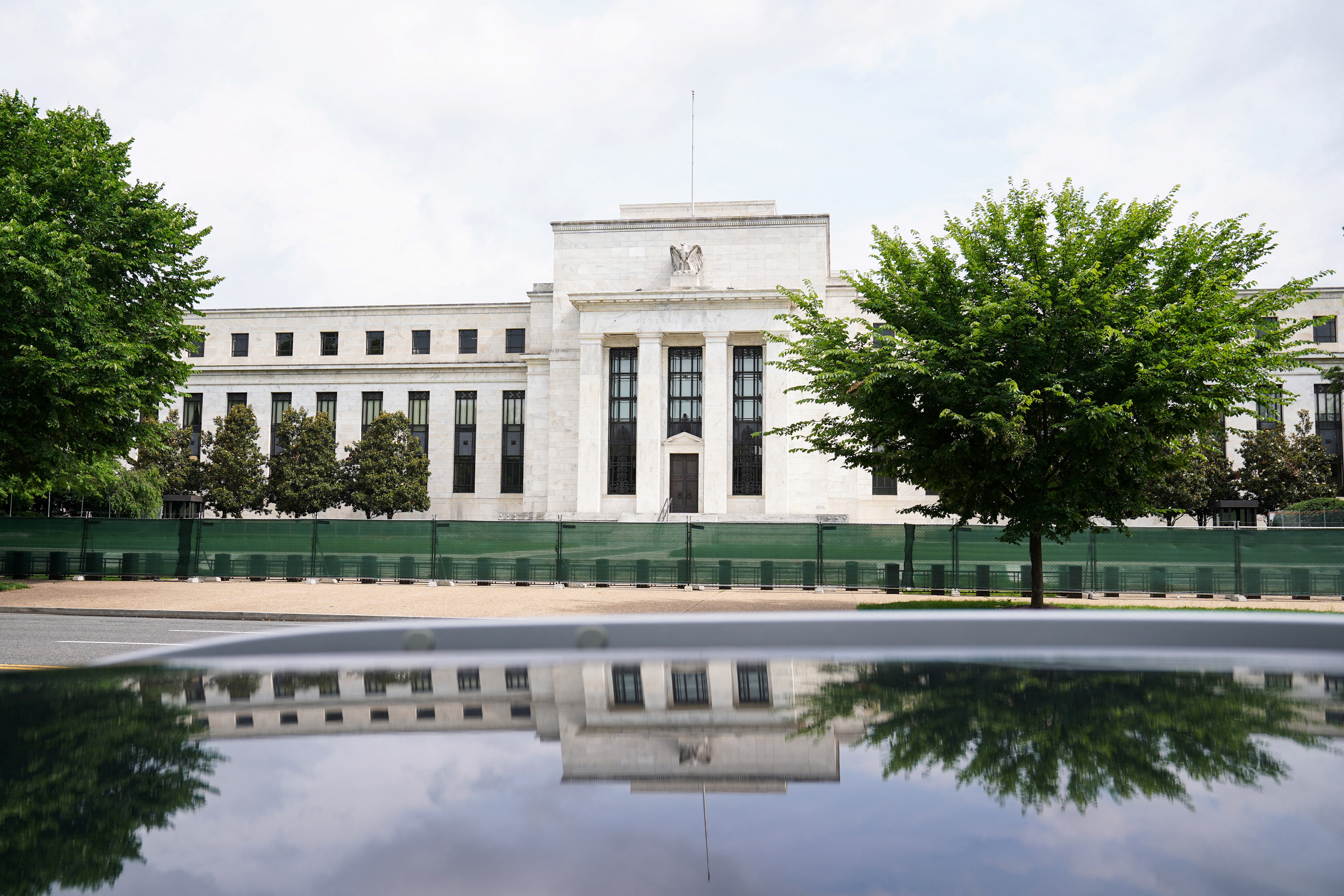
The exterior of the Marriner S. Eccles Federal Reserve Board Building is seen in Washington, D.C., U.S., June 14, 2022. REUTERS/Sarah Silbiger

Some investors believe an expected recession will force the Federal Reserve to loosen monetary policy next year, even as the central bank projects it will raise rates higher than it previously anticipated and keep them there longer as it fights to crush inflation.

The dynamic came into stark focus after the Fed’s monetary policy meeting on Wednesday, when it delivered a widely expected 50 basis point rate increase and projected borrowing costs will rise by an additional 75 basis points by the end of 2023 – half a percentage point higher than officials forecast in September.

Such a move would take the fed funds rate to around 5.1%, according to the median estimate in the Fed’s quarterly summary of economic projections – a level not seen since 2007. The fed funds rate currently stands in the 4.25%-4.50% range.

Rates futures markets told a different story, however, with investors late Wednesday betting the Fed would continue raising rates in the first half of 2023 before cutting them back to around 4.4% by year end.

“The Fed is struggling to convince markets to move in their direction,” said Ed Al-Hussainy, senior global rates strategist at Columbia Threadneedle, who is betting that 10-year Treasuries will continue a recent rebound. “There’s … lack of belief in the Fed’s ability to move rates significantly above 5 percent.”

How much higher borrowing costs will rise and whether restrictive monetary policy will plunge the economy into recession are questions that have consumed investors for months, as the Fed embarks on its most aggressive rate increases since the 1980s to defeat surging inflation.

While Fed Chair Jerome Powell said on Wednesday that the Fed’s projections don’t necessarily mean the economy will fall into a recession, he suggested the risk is worth it and that policymakers have no plans to cushion the blow by cutting rates – echoing a message he has delivered on previous occasions.

Nonetheless, hopes that inflation will peak and allow the Fed to stop raising rates sooner have reverberated throughout markets in recent weeks, sparking a rally in the S&P from its recent lows, toppling the U.S. dollar from a two-decade high and fueling a sharp rebound in battered Treasuries.

Yields on the benchmark 10-year Treasury, which move inversely to prices, recently stood around 3.5%, compared with over 4.2% earlier this year. The S&P 500 has risen by 11.4% in the fourth quarter but remains down some 16% for the year. U.S. consumer prices rose less than expected for a second straight month in November, data showed Tuesday.

“The market moves really describe the challenges that they are facing, which is not so much inflation-fighting credibility, but credibility on being hawkish and sticking to their guns,” said Sonal Desai, CIO of Franklin Templeton Fixed Income, referring to the Fed.

A BofA Global Research survey of fund managers published this week showed 42% expect short-term yields to fall, the highest proportion since March 2020.

Among those forecasting lower rates are fund manager Vanguard, Deutsche Bank and Bank of America, with the last two forecasting a recession next year and predicting that the Fed will start cutting rates by December 2023.

“The markets believe that the Fed is going to have to ease by the end of next year and nothing from the Chairman today disabused them of that notion,” said RJ Gallo, a portfolio manager at Federated Hermes. He is currently overweight U.S. Treasuries and mortgage-backed securities.

Christopher Alwine, head of the global credit team in Vanguard Fixed Income Group, believes the economy will fall into a shallow recession in the second half of next year, prompting the Fed to cut rates by the fourth quarter of 2023.

“We don’t feel the market is that far off on pricing, but a little bit ahead of itself on the easing cycle,” he said.

Plenty of investors believe the Fed will stick to its guns, even if the economy wobbles. The Fed’s economic projections showed rates dropping to 4.1% in 2024, higher than estimated three months ago.

“(The Fed’s) statement and economic projections tell a simple, but persuasive story: This Fed isn’t prepared to ‘pivot’ in any meaningful way until it sees sustained and conclusive evidence of a reversal in inflationary pressures,” said Karl Schamotta, chief market strategist at Corpay.

Desai, of Franklin Templeton, is taking Powell at his word. She is expecting the gyrations that rocked bonds this year to continue, driven in part by investors second-guessing the Fed’s commitment to keeping monetary policy tight.

“The market truly is conditioned to expect that the Fed is going to jump in,” she said. “We have a generation of traders that has never seen the Fed not bail it out when push comes to shove.”


Categories
Audio Sources - Full Text Articles

Adding EVs to U.S. biofuels law is environmental agency“s 2023 task

2022-12-15T06:06:57Z

An electric vehicle is seen charging in Manhattan, New York, U.S., December 7, 2021. REUTERS/Andrew Kelly/File Photo

The Biden administration could change the nation’s biofuel blending law next year to offer lucrative credits to electric vehicle manufacturers like Tesla, a major rewrite that the oil industry criticizes as subsidizing the EV industry.

The Renewable Fuel Standard, enacted in the mid-2000s, mandates the amount of biofuels like landfill or agricultural methane that oil refiners must blend into the nation’s fuel mix, or buy tradable credits – known as RINs – from those that do.

The standard has long served as a battleground between the powerful oil and corn lobbies. The Biden administration’s November proposal would make it possible for electric vehicles charged using power generated by biofuels to receive credits. The proposal would boost benefits for electric vehicle manufacturers such as Tesla (TSLA.O).

Adding the electric vehicle industry to the standard will introduce a new set of stakeholders into an already unwieldy situation. The United States has been using biofuel credits to reduce carbon emissions for years, but its effect has been unclear.

The Environmental Protection Agency (EPA), which administers the program, will sort through stakeholder comments in 2023 to finalize a rule. They must finalize the proposed obligations by mid-June. It is unclear if the EPA will change the proposal.

The transportation sector accounts for about a quarter of the country’s greenhouse gases, and the biofuel blending proposal comes at a time when President Joe Biden’s administration is pushing for lower-polluting energy sources.

“(The EPA) must also hold true to the legacy of RFS as a liquid fuels program — not an electric vehicle program — by rejecting yet another massive regulatory subsidy for electric vehicle manufacturers,” Geoff Moody, an executive at the refinery trade group the American Fuel and Petrochemical Manufacturers, said last month.

The oil industry thinks the RFS mandates are expensive and threaten to put oil refineries, and its blue-collar workers, out of business. Corn and biofuel groups like the mandates, as it increases demand for their products.

The Alliance for Automotive Innovation, an automobile manufacturers trade group, said it supports an “e-RINs” program.

The American Biogas Council also lauded the proposal, saying it will help decarbonize transportation and increase organic materials recycling, especially from small towns, farms and food processors.

Categories
Audio Sources - Full Text Articles

Germany“s half-a-trillion dollar energy bazooka may not be enough

2022-12-15T06:09:51Z

Germany is bleeding cash to keep the lights on. Almost half a trillion dollars, and counting, since the Ukraine war jolted it into an energy crisis nine months ago.

That’s the cumulative scale of the bailouts and schemes the Berlin government has launched to prop up the country’s energy system since prices rocketed and it lost access to gas from main supplier Russia, according to Reuters calculations.

And it may not be enough.

“How severe this crisis will be and how long it will last greatly depends on how the energy crisis will develop,” said Michael Groemling at the German Economic Institute (IW).

“The national economy as a whole is facing a huge loss of wealth.”

The money set aside stands at up to 440 billion euros ($465 billion), according to the calculations, which provide the first combined tally of all of Germany’s drives aimed at avoiding running out of power and securing new sources of energy.

That equates to about 1.5 billion euros a day since Russia invaded Ukraine on Feb. 24. Or around 12% of national economic output. Or about 5,400 euros for each person in Germany.

Europe’s preeminent economy, long a byword for prudent planning, now finds itself at the mercy of the weather. Energy rationing is a risk in the event of a long cold spell this winter, Germany’s first in half a century without Russian gas.

The country has turned to the pricier spot, or cash, energy market to replace some of the lost Russian supplies, helping drive inflation into double-digits. There’s no security in sight either, with the push to build up of two alternatives to Russian fuel – liquefied natural gas (LNG) and renewables – years away from targeted levels.

“The German economy is now in a very critical phase because the future of energy supply is more uncertain than ever,” said Stefan Kooths, vice president and research director business cycles and growth at the Kiel Institute for the World Economy.

“Where does the German economy stand? If we look at price inflation, it has a high fever.”

Asked about the Reuters tally of money set aside, the German finance ministry referred to data on its website. The economy ministry, which is in charge of energy security, said it continued to work on diversifying supply, adding that LNG and the terminals needed to import it were a critical part of this.

The more costly power will be painful indeed for an economy already forecast to shrink the most among G7 nations next year, according to the International Monetary Fund.

Germany’s energy import bill will grow by a combined 124 billion euros this year and next, up from growth of 7 billion for 2020 and 2021, according to data provided by the Kiel Institute, presenting a major challenge for the country’s energy-intense industries.

The country’s chemicals sector, the most exposed to rising power costs, expects production to fall by 8.5% in 2022, according to industry association VCI, which warns of “huge structural breaks in Germany’s industrial landscape”.

The 440 billion euros earmarked to fight the energy crisis is already near the roughly 480 billion euros that the IW says Germany has spent since 2020 to protect its economy from the impact of the COVID-19 pandemic.

The money includes four relief packages worth 295 billion euros, including the 51.5 billion euro bailout of power firm Uniper (UN01.DE) and a 14 billion rescue package for Sefe, formerly known as Gazprom Germania; up to 100 billion in liquidity for utilities to secure their sales against default; and around 10 billion on infrastructure to import LNG.

The sum also includes previously unreported commitments of 52.2 billion euros by state lender KfW (KFW.UL) to help utilities and traders fill up gas caverns, buy coal, replace sources of gas procurement and cover some margin calls, according to KfW data reviewed by Reuters.

Despite these efforts, there is little certainty over how the country can replace Russia; Germany imported around 58 billion cubic metres (bcm) of gas from the country last year, according to data from Eurostat and German industry association BDEW, representing about 17% of its total energy consumption.

Germany wants renewables to account for at least 80% of electricity production by 2030, up from 42% in 2021. At recent rates of expansion, though, that remains a remote goal.

Germany installed just 5.6 gigawatts (GW) of solar capacity and 1.7 GW of onshore wind capacity in 2021, the latest year on record.

To achieve the 80% goal, new onshore wind installations need to increase around six-fold to 10 GW annually, according to an October report by the federal government and Germany’s states. Solar installations must quadruple every year to 22 GW, it said.

Susi Dennison, senior policy fellow at the European Council on Foreign Relations (ECFR) think-tank, said that while Germany had done a “good sticking plaster job” by replacing gas volumes with power from the spot market, it had lost its standing as a thought-leader in clean energy.

“To me what’s really absent in Germany’s strategy is a similar attention to a rapid scaling up of renewables, that now is the time to invest in the infrastructure of hydrogen and wind power, to replace gas.”

In March, Economy Minister Robert Habeck set a target of replacing Russian energy by mid-2024, although many economists and power industry players believe this is too ambitious.

For instance, Marcel Fratzscher, president of the German Institute for Economic Research, and Markus Krebber, CEO of Germany’s biggest power producer RWE (RWEG.DE), reckon it will happen no sooner than 2025, and only then if alternative sources were found or expanded rapidly.

On the LNG front, too, there’s a mountain to climb.

Germany has no LNG infrastructure of its own because its longstanding reliance on Russian gas, so is only now starting to build its LNG import capability.

For the time being, it plans to rely on six floating import terminals to help diversify gas supply, the first of which is due to arrive on Thursday. Three are meant to come online this winter, with the rest to be deployed at the end of 2023, bringing total capacity to at least 29.5 bcm a year.

RWE, Uniper and smaller peer EnBW (EBKG.DE) have pledged to come up with the volumes to make sure the terminals run at full capacity until the end of March 2024. Nonetheless, it remains unclear where the volumes will come from.

Germany has only struck two firm LNG deals since the complete halt of Russian gas supplies in the summer, modest short-term agreements for the next two winter seasons, according to data from the ECFR.

The first is a 1 bcm a year deal between Australia’s Woodside and Uniper, which has since become the subject of Germany’s largest ever corporate bailout. The second was struck between Abu Dhabi National Oil Company and RWE and covers a delivery of 137,000 cubic metres in December and unspecified further shipments in 2023.

Uniper and RWE said they would be able to ensure further supplies via its their LNG portfolio, without giving further details. EnBW said supply contracts were still being worked out and that it was looking for opportunities in the market.

The hectic travel schedule of Habeck and Chancellor Olaf Scholz point to the difficulties in securing major long-term deals that could wean Germany off pricey spot power. They have criss-crossed the globe this year to hunt for additional volumes, including trips to Canada, Qatar, and Norway.

“I think Germany has been doing whatever it can,” said Giovanni Sgaravatti, research analyst at the Bruegel think-tank. “In the LNG market Germany had to start from scratch, which isn’t easy.”

Related Galleries:

Specialists work at high voltage power lines near Hohenhameln, Germany, August 2, 2022. REUTERS/Fabian Bimmer

Demonstrators take part in a protest to promote energy independence from Russia, amid skyrocketing energy prices, in Berlin, Germany, October 22, 2022. REUTERS/Christian Mang

Cars make their way past the Victory Column shows a reduced lighting to save energy due to Russia’s invasion of Ukraine in Berlin, Germany August 6, 2022. REUTERS/Lisi Niesner

Categories
Audio Sources - Full Text Articles

U.S. fuelmakers more than recoup pandemic losses in 2022

2022-12-15T06:14:21Z

A nighttime view of the Torrance Refinery, an oil refinery operated by PBF Energy, in Torrance, California, U.S., March 10, 2022. Picture taken March 10, 2022. Picture taken with a drone. REUTERS/Bing Guan/File Photo

U.S. oil refiner PBF Energy (PBF.N) is closing out one of the best financial years in its history, a wild bounce back from the brink in April 2020 when fuel demand and gasoline prices cratered during the pandemic and the company’s value swooned lower than what it had just paid to buy a California refinery.

PBF’s stock fell by so much that at one point the company was valued at less than the $1 billion it paid for the refinery. Now, the refining company is basically debt-free, and year-to-date its share price has soared 400% even during a bear market on Wall Street.

While the coronavirus pandemic and Russia’s invasion of Ukraine upended worldwide energy markets, the biggest U.S. refiners have emerged stronger and leaner than before the outbreak. Whether they can repeat that performance in 2023 is another story.

The three largest U.S. oil refiners – Valero (VLO.N), Marathon Petroleum (MPC.N) and Phillips 66 (PSX.N) – sport lower debt levels, are bringing in more cash than they were three years ago, when fuel demand was at a peak, according to a Reuters analysis of their financial performance.

Marathon, and Valero’s market valuations reached record highs in 2022; while Phillips 66 and PBF’s are near highs reached in 2019.

When the pandemic hit, big U.S. refiners closed numerous facilities that were less profitable than other operations.

In the United States, five refineries, with a combined capacity of 801,000 bpd, permanently shut in 2020. Gasoline consumption fell by 1.3 million bpd that year. One more refinery in the U.S. would close in 2021, bringing total closures to six and closed capacity over 1 million barrels per day.

Global refining fell by about 3.3 million barrels of daily capacity since the start of 2020, according to industry estimates. Processing capacity is expected to increase by 1 million bpd per day in 2022 and 1.6 million bpd in 2023, mostly in Africa, Asia and the Middle East.

The decline in capacity boosted fuel costs for consumers, but it was a boon for U.S. refiners as profit margins for making diesel, gasoline and other products surged as economic activity rebounded.

U.S. refiners benefited from growing exports and a surge in European natural gas prices that gave U.S.-based refiners an advantage over their European counterparts, who cut runs to save on the higher cost of gas.

Gulf Coast gasoline margins skyrocketed to $40 a barrel from the 2017-2019 average of $11, while per-barrel margins for making diesel jumping to $55 from $13, according to energy consultancy Tudor Pickering Holt.

Fitch Ratings expects U.S. refiners’ margins to fall by 30% to 50% in 2023 and for profits to decline due to slowed worldwide economic activity, higher inventories and the addition of global refining capacity.

Refiners now have $12.6 billion more in working capital in the first three months to 2022 than in the same period in 2019, before the onset of the coronavirus pandemic.

Fitch noted that the companies are using profits to pad their cash balances, “presumably to preserve liquidity ahead of a likely decline in cash flows towards normalized levels,” it said in November.

U.S. refiners are not likely to restart idled facilities, however, and continue to shut plans that cannot make chemicals and plastics, which are considered a better investment for coming years.

Earlier this year, Phillips 66 laid off nearly all of its 450 employees at a shuttered oil refinery in Louisiana as it converted the hurricane-damaged plant to a products terminal.

The one exception would be the opening of Exxon Beaumont’s crude unit but Lyondell plans to shut its 263,776-barrel-per-day Houston plant by the end of 2023.

Categories
Audio Sources - Full Text Articles

Asian stocks sag with dollar on hawkish Fed, China COVID worries

2022-12-15T06:18:46Z

Asian stocks sagged on Thursday, tracking declines on Wall Street after the U.S. Federal Reserve projected higher interest rates would persist for a while.

U.S. Treasury yields remained depressed and the curve deeply inverted as traders continued to fret that tighter policy would trigger a recession. The U.S. dollar languished near a six-month low against major peers.

Rising COVID-19 infections and disappointing economic data in China also weighed on the mood. Crude oil shed some of Wednesday’s strong gains.

Japan’s Nikkei (.N225) eased 0.42%, while South Korea’s Kospi (.KS11) dropped 1.32% and Australia’s stock benchmark (.AXJO) fell 0.64%.

Hong Kong’s Hang Seng (.HSI) tumbled 1.13% and mainland Chinese blue chips (.CSI300) declined 0.15%.

MSCI’s broadest index of Asia-Pacific shares (.MIAP00000PUS) slumped 0.94%, after climbing as high as 160.37 in the previous session for the first time since late August.

Overnight, the U.S. S&P 500 (.SPX) lost 0.61%, although e-Mini futures pointed to a slight 0.09% bounce for Thursday’s reopen.

Europe was headed for a lower open, with Dax futures indicating 0.37% weaker and FTSE futures slipping 0.09%.

Fed Chair Jerome Powell said on Wednesday that the central bank would deliver more rate increases next year even as the economy slips towards a possible recession, arguing that a higher cost would be paid if the U.S. central bank does not get a firmer grip on inflation.

The comments followed the Fed’s decision to raise the benchmark rate by an as-expected half a percentage point – down from recent 75 basis point increases – but projected a terminal rate above 5%, a level not seen since a steep economic downturn in 2007.

“This is a very hawkish signal from the Fed: a substantially higher terminal rate than back in September that also has a real upside risk attached to it,” TD Securities analysts wrote in a research note.

“The Fed essentially acknowledged at this meeting that inflation is likely to remain stickier than initially expected, necessitating a more restrictive policy stance, which will end up pushing the U.S. economy in a recession in 2023,” they added. “The weakening in risk assets and the flattening of the curve suggest that recession fears may be the dominant driver of market price action.”

The 10-year Treasury yield slipped to 3.49% in Tokyo trading, with the two-year yield also edging lower to 4.24%.

The spread between them widened slightly to negative 75.2 basis points. An inverted yield curve has been a reliable indicator of recessions in the past.

The dollar index – which measures the greenback against six top peers, including the euro and sterling – held close to the overnight low of 103.44, a level not seen since June 16. It last stood 0.16% stronger at 103.82.

Some analysts interpreted the reaction in rates and currency markets as a sign that traders doubt Powell’s policy narrative, retaining bets for an earlier easing of inflation and sooner Fed pivot.

“In essence, the market is still of the view that inflation heads towards target in 2023,” Chris Weston, head of research at Pepperstone, wrote in a client note. “The likely result in a potential standoff between the Fed and the markets is volatility.”

The euro eased 0.22% to $1.0659, but still near Wednesday’s more-than-six-month peak at $1.0695.

Sterling edged 0.28% lower to $1.2393, remaining not far from an overnight top at $1.2446, also the strongest in just over six months.

Investors’ eyes will now be trained on policy decisions from the European Central Bank and Bank of England later in the global day, as officials there also stood ready to hike rates again against the rising risks of fomenting recessions.

Crude oil gave back some of its gains from overnight, when it was cheered by projections from OPEC and the International Energy Agency of a rebound in demand next year, partly driven by China’s reopening.

China’s economy, however, lost more steam in November as factory output slowed and retail sales extended declines, hobbled by surging COVID-19 infections and widespread curbs on movement.

Brent crude futures fell 64 cents, or 0.8%, to $82.06 per barrel after closing Wednesday’s session up $2.02, while U.S. crude futures slid 74 cents, or 1.0%, to $76.54, following a $1.94 rise the previous session.

Related Galleries:

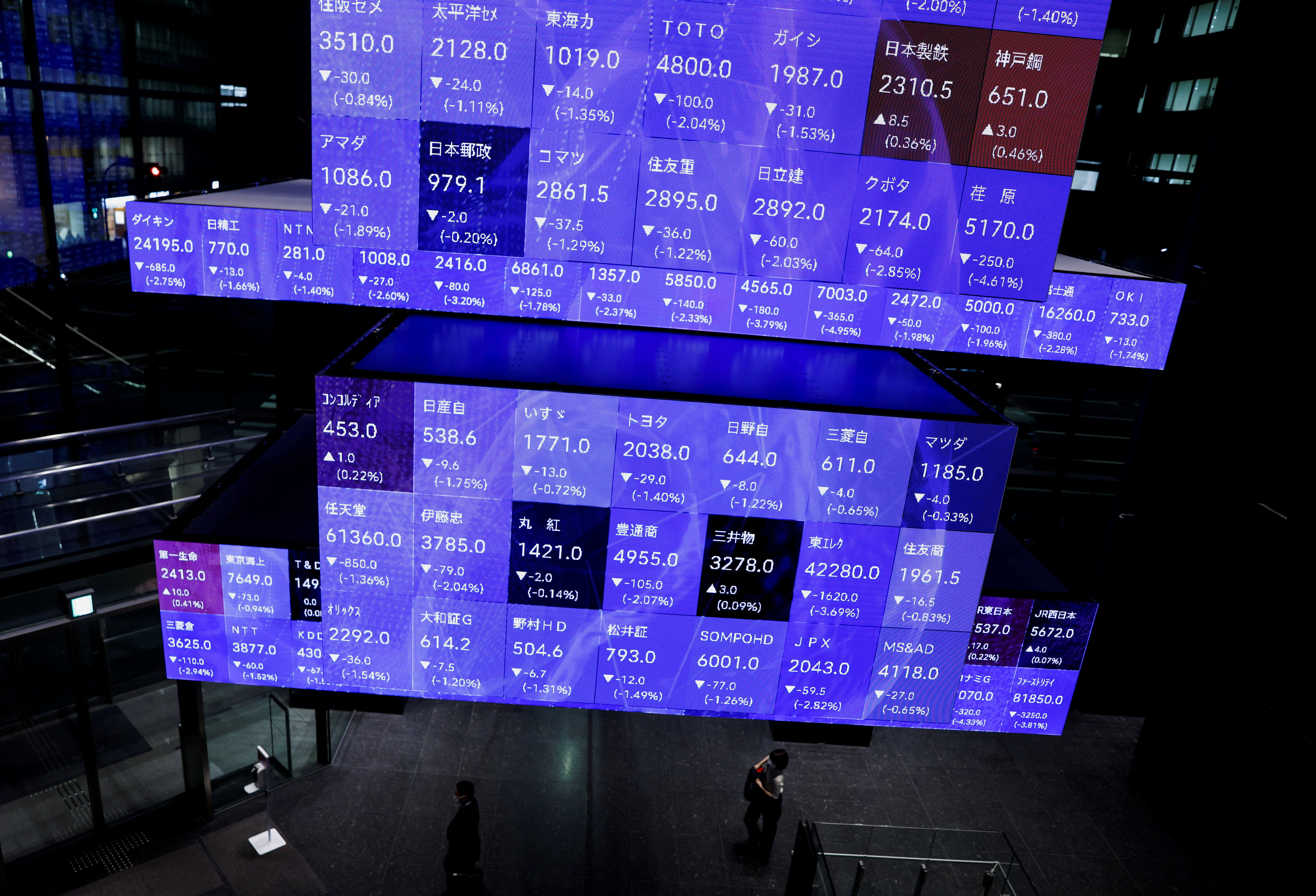
Visitors walk past Japan’s Nikkei stock prices quotation board inside a conference hall in Tokyo, Japan September 14, 2022. REUTERS/Issei Kato

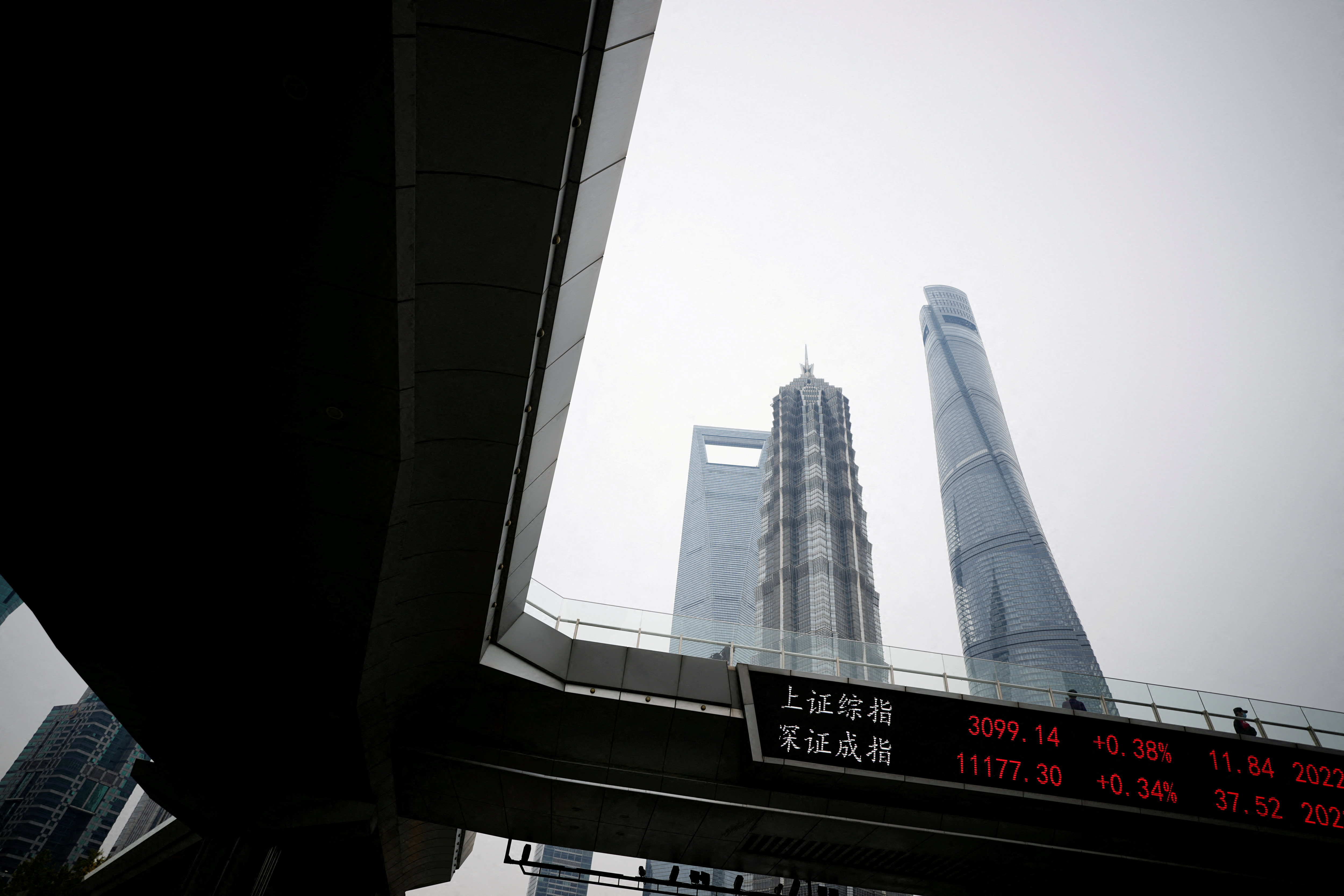
An electronic board shows Shanghai and Shenzhen stock indexes, at the Lujiazui financial district, following the coronavirus disease (COVID-19) outbreak, in Shanghai, China November 14, 2022. REUTERS/Aly Song
Categories
Audio Sources - Full Text Articles

Group casts doubt on Amazon’s claims of reducing plastic

NEW YORK (AP) — A report by environmental group Oceana has found that plastic waste from Amazon packages went up by 18% last year, but Amazon says it has reduced its use of single-use plastic across its network.

According to the Oceana’s estimates, released Thursday, Amazon’s plastic waste jumped from 599 million pounds in 2020 to 709 million pounds last year — an amount that can circle the planet more than 800 times in the form of air pillows, the group said.

For years, the advocacy organization has been pushing the company to release more data around its plastic footprint and commit to reducing any harmful environmental impacts that might stem from it. That idea was put up for a vote two times at Amazon’s annual shareholders meetings during the past two years. The last vote, held in May, got support from 48% of shareholders.

But the e-commerce behemoth had resisted calls to release more data until Tuesday, when it disclosed in a blog post that it used 97,222 metric tons (over 214 million pounds) of single-use plastic last year to ship orders to customers. Amazon also said it was able to reduce the average weight of plastic in a shipment by over 7% but it did not disclose if its overall plastic footprint grew between 2020 and 2021, when it was seeing a boom in sales due to the pandemic.

“While we are making progress, we’re not satisfied,” the company said in the blog post. “We have work to do to continue to reduce packaging, particularly plastic packaging that’s harder to recycle, and we are undertaking a range of initiatives to do so.”

Matt Littlejohn, Oceana’s senior vice president for strategic initiatives, said it was good that Amazon released some data, but the figures it released don’t tell the whole story.

The company’s total data includes plastic used in shipments Amazon fulfills through its warehouses and other parts of its business, such as Whole Foods and Amazon Fresh. But it leaves out what’s used by third-party merchants who sell items on Amazon but don’t use the company’s fulfillment services.

Saige Kolpack, an Amazon spokesperson, said the company’s data reflect most of the plastic used to ship orders to customers because the “significant majority” of items shipped are fulfilled by Amazon. Kolpack declined to say how many of the nearly 2 million merchants who sell on Amazon use its fulfillment services.

The company has also said it offers incentives to get third-party sellers to ship items to customers in the manufacturer’s original packaging, instead of using additional packaging.

Categories
Audio Sources - Full Text Articles

Report: Native Hawaiians hit by missing and murdered scourge

HONOLULU (AP) — The average profile of a missing child in Hawaii: 15 years old, female, from the island of Oahu and Native Hawaiian. That’s according to a report released Wednesday that says much more disaggregated racial and gender data is needed to combat the scourge of missing and murdered Native Hawaiian women.

Key findings of the report, the first of its kind released by a task force created by the state Legislature last year to investigate the issue, include that more than a quarter of missing girls in Hawaii are Native Hawaiian and that members of the U.S. military play an outsized role in the sexual exploitation of children in the state.

Similar studies have shown that Indigenous women in Canada and the U.S. mainland are murdered or go missing at rates disproportionate to their size of the population. While the disturbing trend held for Native Hawaiian girls, a comparable, reliable statistic for Native Hawaiian women eluded the task force because of lacking data, said Nikki Cristobal, the report’s principal investigator. The task force was created amid renewed calls for people to pay more attention to missing and killed Indigenous women and girls and other people of color after the 2021 disappearance of Gabby Petito, a white woman, triggered widespread national media coverage and extensive searches by law enforcement. Petito’s body was later found in Wyoming.

One of the difficulties in addressing the issue, is that determining the true scale can be difficult because many cases have gone unreported or have not been well-documented or tracked. Public and private agencies also don’t always collect statistics on race. And some data groups together Native Hawaiians and other Pacific Islanders, making it nearly impossible to identify the degree to which Hawaii’s Indigenous people are affected. About 20% of the state’s population is Native Hawaiian.

Several states formed similar panels after a groundbreaking report by the Urban Indian Health Institute found that of more than 5,700 cases of missing and slain Indigenous girls in dozens of U.S. cities in 2016, only 116 were recorded in a Justice Department database.

Wyoming’s task force determined that 710 Indigenous people disappeared in that state between 2011 and September 2020 and that Indigenous people made up 21% of homicide victims even though they make up only 3% of the population. In Minnesota, a task force led to the creation of a dedicated office to provide ongoing attention and leadership on the issue.

Agencies such as the state, police departments and the military need to do better at collecting and retaining disaggregated data, Cristobal said.

“Native Hawaiian women and girls are displaced not only through violence, but also through data collection across departments and across islands,” she said.

One of the more disturbing findings of the report was the role of servicemembers in the abuse of children. Publicly available data in 2022 showed that 38% of those arrested for soliciting sex online from law enforcement posing as a 13-year-old during undercover operations were active-duty military personnel, the report said.

In response to a request for comment on the findings, a Department of Defense duty officer said late in the day Wednesday that the message was being forwarded to the right person.

Violence such as “selling and buying girls for sex on military bases, hotels, game rooms, massage parlors and in our own communities,” impact Native Hawaiians at much higher rates than other populations, Cristobal said.

The findings are startling but not new, said Khara Jabola-Carolus, executive director of the Hawaii State Commission on the Status of Women and the task force’s co-chair.

“Instead, it vindicates and validates what Native Hawaiians, sex trafficking and gender-based violence service providers and feminist activists have been saying all along and have been told that they were exaggerating or manipulating facts or just simply providing an anecdote,” she said.

WP Radio
WP Radio
OFFLINE LIVE