Categories
Audio Sources - Full Text Articles

Allowing Non-Americans To Vote Would ‘Enrich’ the ‘Concept of Citizenship,’ Dem Councilwoman Says

Allowing immigrants without American citizenship to vote would “enrich” the “concept of citizenship,” a Boston Democratic councilwoman said on Monday.

“Immigrants with legal status live here, pay taxes, are members of this body politic, and should be able to exercise their right to vote,” Ruthzee Louijeune said in a city council hearing. “Far from diluting the concept of citizenship, noncitizen voting would enrich it by fully incorporating immigrants.”

Louijeune, a Harvard Law School graduate who served as senior counsel for Sen. Elizabeth Warren’s (D., Mass.) 2020 presidential campaign, made the comments as the city council debates whether to open local elections to noncitizen residents, including Deferred Action for Childhood Arrivals recipients, Temporary Protected Status receivers, and other visa holders.

If the measure passes, Boston will become the largest city in the country to allow noncitizens to vote after state courts struck down similar policies in New York City and San Francisco. The Democratic cities’ push to expand voting rights to noncitizens comes as the Biden administration in November extended Temporary Protected Status to hundreds of thousands of migrants from Haiti, El Salvador, Nicaragua, Sudan, Honduras, and Nepal amid record illegal immigration at the southern border.

Republicans in recent years have tried to block Democratic efforts to expand noncitizen voting, arguing that it undermines U.S. citizenship and exposes the country to foreign influence. After Washington, D.C., city council members in October passed a bill to allow illegal immigrants to vote in local elections, Sen. Ted Cruz (R., Texas) introduced legislation to prohibit the city from enforcing the measure, noting that it would permit foreign workers at embassies to vote.

“Allowing noncitizens and illegal immigrants to vote in our elections opens our country up to foreign influence and allows those who are openly violating U.S. law or even working for hostile foreign governments to take advantage,” Cruz said.

Sen. Marco Rubio (R., Fla.) last year similarly introduced a bill that would bar federal funding to cities and states that permit noncitizens to vote. While federal law prohibits noncitizens from voting in federal elections, it does not address state or local elections. Eleven municipalities in Maryland and two in Vermont allow noncitizen voting. State judges ruled earlier this year that New York City’s and San Francisco’s voting measures violated their respective state constitutions.

“The New York State Constitution expressly states that citizens meeting the age and residency requirements are entitled to register and vote in elections,” New York State Supreme Court justice Ralph Porzio wrote in his ruling. “There is no statutory ability for the City of New York to issue inconsistent laws permitting noncitizens to vote.”

Boston’s debate over noncitizen voting comes after Massachusettsans in November voted by more than 7 points to grant illegal immigrants driver’s licenses.

The Boston City Council also approved a measure earlier this month to allow 16 and 17 year olds to vote in local elections. Councilwoman Julia Mejia (D.) said teenagers should be able to vote because they often work and are on the “front lines protesting.” The measure is awaiting Democratic mayor Michelle Wu’s signature. Then it will go to the Massachusetts state house for approval.

The post Allowing Non-Americans To Vote Would ‘Enrich’ the ‘Concept of Citizenship,’ Dem Councilwoman Says appeared first on Washington Free Beacon.
Categories
Audio Sources - Full Text Articles

FTX founder Bankman-Fried“s bail denial could increase chance of extradition

2022-12-14T00:28:54Z

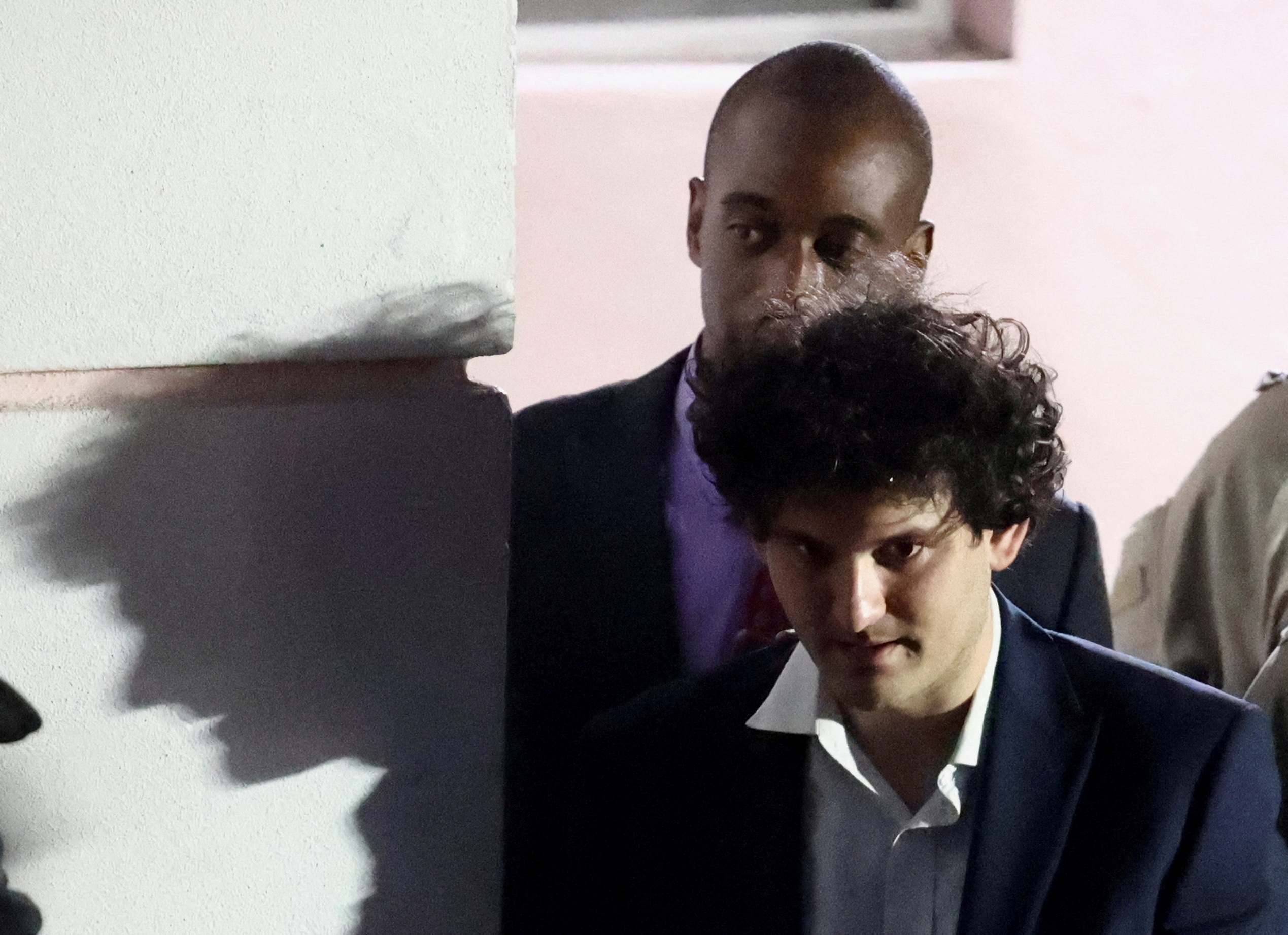
Sam Bankman-Fried, who founded and led FTX until a liquidity crunch forced the cryptocurrency exchange to declare bankruptcy, is escorted out of the Magistrate Court building after his arrest in Nassau, Bahamas December 13, 2022. REUTERS/Dante Carrer

FTX founder Sam Bankman-Fried’s failure to secure release on bail in the Bahamas on Tuesday increases the likelihood that he will consent to extradition to the United States to face fraud charges, legal experts said.

A judge ordered Bankman-Fried to be held at the Bahamas Department of Corrections until at least Feb. 8, citing his “great” risk of flight after New York federal prosecutors unveiled charges against him over the collapse of his once high-flying crypto exchange, FTX.

Before his bail was denied, Bankman-Fried’s lawyer said his client was not waiving his right to extradition proceedings. If he fights removal, the process could involve up to a year or more of hearings and appeals with little hope of success in the end, experts said.

The facility where Bankman-Fried is being held is also known as Fox Hill Prison. A lawyer for Bankman-Fried did not immediately respond to a request for comment.

Attorneys who specialize in extradition say time locked up overseas often encourages defendants to consent to being transferred to their home countries.

“The extradition process can take a year or longer,” said David Haas, a U.S. lawyer who has defended people facing extradition. “Usually people don’t want to sit in a jail overseas. That tends to be a major factor in whether someone challenges extradition.”

A Bahamian corrections official said on Tuesday that Bankman-Fried will initially be held in the facility’s medical department until staff determine the appropriate place for him. Bankman-Fried is scheduled to appear before another Bahamian magistrate judge on Feb. 8.

Like most extradition treaties, the U.S.-Bahamas agreement requires alleged offenses to be considered crimes in both countries. Bankman-Fried is unlikely to convince a Bahamian court that the securities fraud and wire fraud he stands accused of are not illegal in the Bahamas, attorneys said.

“Bahamian law generally reflects American law in these matters,” said white-collar criminal defense attorney Jack Sharman. “I wouldn’t expect differences in the law to be a big extradition problem.”

Bankman-Fried could also argue that he would not receive a fair trial in the United States, would face unjust punishment there or would suffer inhumane treatment, factors a Bahamian court would have to consider before releasing him for extradition.

That has helped some defendants delay extradition, most notably WikiLeaks founder Julian Assange, who has for years fought extradition from the UK to the United States to face charges for allegedly leaking classified military intelligence.

But U.S. prosecutors have recently won favorable rulings in Assange’s extradition proceedings by offering assurances that he would be kept safe in custody. The U.S. and Bahamian authorities could likely broker a similar agreement, Haas said.

“There’s usually a diplomatic component. This is all handled through treaties,” Haas said.


Categories
Audio Sources - Full Text Articles

Twitter has reportedly stopped paying rent on its offices and is considering not paying severance packages to laid-off workers

Twitter logo on building

Tayfun Coskun/Getty Images

  • Elon Musk is increasingly using radical cost-cutting measures at Twitter, according to the New York Times.
  • Twitter is reportedly no longer paying rent on its office buildings, and Musk has told workers not to pay vendors. 
  • Management is reportedly weighing the possibility of not paying severance to former employees.

In Elon Musk’s quest to make Twitter a more profitable company, he is reportedly implementing increasingly extreme cost-cutting measures. 

According to the New York Times, Twitter has stopped paying rent for any of its offices, including its San Francisco headquarters, and Musk has instructed employees to no longer pay Twitter’s vendors. The Times, citing a recent New Hampshire lawsuit, found that Twitter has also refused to pay nearly $200,000 in private plane flights taken in late October. 

Last month, in an effort to save money, Twitter laid off 50% of its more than 7,000-person workforce, promising that fired US-based employees would get 3 months’ pay, including 60 days of salaried pay, and one month of severance. The Times reports that Musk’s team is now weighing the possibility of not paying the severance at all, and risking lawsuits from disgruntled former workers. 

Twitter has also recently listed office supplies for auction in another cost-cutting attempt. 

Twitter did not immediately respond to a request for comment from Insider. 

Musk appears to be trying to save money as Twitter gears up for multiple legal battles, according to the Times. Twitter is reportedly facing an investigation from the Federal Trade Commission, and a potential class-action lawsuit from former employees. Musk has shaken up Twitter’s legal department in recent weeks and has reportedly brought in lawyers from one of his other companies, SpaceX, to help run it. 

The company also faces a hefty interest bill: owing roughly $1 billion in annual payments to banks due to the money Musk borrowed to help finance his $44 billion purchase of Twitter.  

Read the original article on Business Insider
Categories
Audio Sources - Full Text Articles

Apple’s walled garden is preparing to face the ultimate test

Tim CookTim Cook

AP Photo/Richard Drew

  • Apple has maintained control of every corner of the iPhone ecosystem in the name of user security.
  • Apple is prepping to comply with EU regulations by allowing sideloading iOS apps, Bloomberg reports.
  • This will put Apple’s walled garden to the ultimate test, and prove if it was right all along.

For 15 years, Apple has controlled every aspect of the iOS ecosystem — from the apps you’re allowed to install on iPhones and iPads, the look of your home screen, the payment systems you’re allowed to use, and everything in between.

The company has always said that this so-called “walled garden” approach was necessary to helping users have a good experience, protect against viruses and malware, and preserve user privacy. Steve Jobs himself championed this strategy, and is said to have needed to be convinced to bring an App Store to the iPhone at all.

But the European Union’s newly enacted Digital Markets Act is forcing Apple to relinquish its “monopolistic” control over developers and iPhones by 2024. This victory for European regulators also marks the largest hole in Apple’s heavily regulated ecosystem to date.

The new law takes aim at Big Tech companies with highly regulated platforms that serve as gatekeepers between businesses and consumers — encompassing all app store providers, including Google. Apple is reportedly making plans to comply with the new laws, according to a new Bloomberg report. Changes could come as soon as the iOS 17 update, expected to launch in the September of 2023.

This is a first for the iPhone maker, which has not always shown full compliance, even in places where new laws were enacted to curb some of its power over the App Store. Dutch and South Korean regulators, for example, have clashed with Apple, which has so far made few if any changes to how it does business in those countries.

Now, if Apple makes the changes outlined in the Bloomberg story, its walled-garden approach could be put to the ultimate test, as we see the actual effects of opening the floodgates to outsiders.

Sideloading apps and a lighter app review

Downloading software or apps outside of the App Store — also called sideloading — is currently not possible unless users manipulate an iPhone’s fundamental software to bypass Apple’s restrictions.

Apple has long maintained that allowing sideloading would undermine the iOS platform’s security and leave users exposed to the worst elements of the internet. The company’s critics, meanwhile, have argued that the security risks are minimal next to the benefits brought by increased competition in the App Store and more user choice. If sideloading is allowed, as Bloomberg reports is under consideration, we’ll get to see who was right. 

Bloomberg reports that Apple is also preparing to support alternative App Stores, which would theoretically be full of apps not necessarily vetted by the company. That could, in a roundabout way, address the headache for developers that is the App Store review process, where the company audits all apps and updates before they’re allowed to reach customers.

Apple has a full website of security, privacy, and even content requirements that apps must meet in order to be granted a coveted place in the App Store. That process has been criticized as inconsistent and can leave apps pending review for weeks without much communication from Apple.

If sideloading apps is allowed, developers could have a much more direct way of reaching their customers via these outside app stores — though Bloomberg also reports that the company is kicking around the idea of doing some kind of review of apps hosted outside its own App Store, though the details of that plan are currently unclear.


—Kosta Eleftheriou (@keleftheriou) October 3, 2022

The biggest pain for developers could go away

Sideloading would also address one of Apple’s biggest sources of criticism: The so-called “Apple tax.” 

Opening up payment methods to third parties, as it will be required to do under the European law, would mark a major evolution for developers. The current set up requires developers to use Apple’s in-house payment processing service and give Apple an automatic 30% cut of almost all in-app purchases. Apple has defended its fee structure as both necessary and reasonable, given the major role that the App Store plays in the software economy. 

Over the years, everyone from independent app developers to CEOs have decried this provision. The practice recently even caught the attention of new Twitter owner Elon Musk, who declared war against the system.

“It’s a very unique thing to have someone who’s also the richest man in the world to have the same problems that a small app developer — that maybe has one or two employees — is also experiencing,” said Rick VanMeter, executive director of the industry group Coalition for App Fairness, a frequent critic of the so-called “Apple Tax.”


Are you a developer with insights to share on how Apple’s App Store policies impact your business? Got a tip? Contact Diamond Naga Siu securely at dsiu@insider.com or diamondnagasiu@protonmail.com, at 310-986-1383 on Signal and Telegram, or @diamondnagasiu on Twitter.

Read the original article on Business Insider
Categories
Audio Sources - Full Text Articles

Sam Bankman-Fried’s parents were at his hearing in the Bahamas, and his mother laughed during the proceedings, report says

ftx sam bankman-friedSam Bankman-Fried’s parents reportedly attended their son’s hearing in the Bahamas after his arrest, according to the news site CoinDesk.

Getty Images

  • Sam Bankman-Fried’s parents reportedly attended their son’s hearing in the Bahamas after his arrest.
  • Bankman-Fried is facing extradition to the US, where prosecutors have unveiled criminal charges.
  • His mother “laughed several times” when he was called a “fugitive,” CoinDesk reported.

Sam Bankman-Fried appeared at a hearing in the Bahamas on Tuesday with his parents in attendance, according to multiple reports, including from The New York Times and the cryptocurrency site CoinDesk.

At the hearing, which largely focused on if Bankman-Fried would be released on bail, the former FTX CEO indicated that he was not waiving his right to challenge his extradition to the US, according to the report by CoinDesk. The site, which was reporting live from Nassau, in the Bahamas, broke the news of the financial links between FTX and Bankman-Fried’s trading firm Alameda Research in early November.

During the proceedings, Bankman-Fried’s mother Barbara Fried laughed when her son was called a “fugitive,” according to CoinDesk’s report, which described his parents as showing both “dejection and defiance.” She also “clenched her jaw and chewed on the frames of her glasses,” per the Times.

His father, Joseph Bankman, “occasionally put his fingers in his ears as if to drown out the sound of the proceedings,” per CoinDesk.

After the hearing, which ended with Bankman-Fried being denied bail, both parents gave him a hug, per the Times.

Both Fried and Bankman are on the faculty at Stanford Law School, and remain in the Bahamas with their son.

Bankman-Fried’s family received payments by FTX, according to the current CEO of FTX, John J Ray III, who testified before Congress on Tuesday.

The hearing came after the former FTX CEO was arrested on Monday at the request of federal prosecutors in New York. If he is extradited to the US, he can formally receive notice of the criminal charges brought against him.

A grand jury indictment against Bankman-Fried was unsealed on Tuesday, listing counts for fraud and conspiracy, including conspiracy to violate campaign finance laws. 

Prosecutors elaborated on some of the charges at a press conference later in the day, referencing “tens of millions of dollars in illegal campaign contributions” to candidates in both major political parties in the US. 

“These contributions were disguised to look like they were coming from wealthy co-conspirators when, in fact, the contributions were funded by Alameda Research with stolen customer money,” Damian Williams, US Attorney for the Southern District of New York, said at the conference. 

“And all of this dirty money was used in service of Bankman-Fried’s desire to buy bipartisan influence and impact the direction of public policy in Washington,” he said.  

Read the original article on Business Insider
Categories
Audio Sources - Full Text Articles

Washington considers sending advanced air defence system to Ukraine

2022-12-13T23:58:09Z

Some 70 countries and institutions worldwide pledged more than 1 billion euros, or $1.05 billion, in immediate aid to help Ukraine get through a harsh winter as Russian forces batter its energy grid and other critical civilian infrastructure. Lauren Anthony reports.

The United States was finalising plans to send its sophisticated Patriot air defence system to Ukraine in a potentially pivotal move while allies pledged just over 1 billion euros ($1.05 billion) to help Ukrainians survive the freezing winter.

Washington could announce a decision as soon as Thursday on providing the Patriot, two officials told Reuters on Tuesday. The Patriot is considered one of the most advanced U.S. air defence systems and is usually in short supply, with allies around the world vying for it.

Former Russian President Dmitry Medvedev has warned NATO against equipping Kyiv with Patriot missile defences, and it is likely the Kremlin will view the move as an escalation.

With the war in its 10th month, the Patriot system would help Ukraine defend against waves of Russian missile and drone attacks that have pounded the country’s energy infrastructure.

Millions of civilians who are enduring Europe’s biggest conflict since World War Two have had to contend with cuts to electricity, heat and water as harsh winter conditions take hold.

Gaining Patriot air defence capability would be “very, very significant” for the Kyiv government, said Alexander Vindman, a retired Army lieutenant colonel and onetime leader of Ukraine policy at the White House.

“These are going to be quite capable of dealing with a lot of different challenges the Ukrainians have, especially if the Russians bring in short-range ballistic missiles” from Iran.

The Pentagon declined comment. There was no immediate comment from Ukrainian officials.

Kyiv held high-level military talks on Tuesday with Washington, Ukrainian President Volodymyr Zelenskiy’s office said. The United States has given Ukraine $19.3 billion in military assistance since Russia’s invasion on Feb. 24.

One of the U.S. officials said Ukrainian forces would likely be trained in Germany before the Patriot equipment was delivered. Vindman said the training could take several months.

The Pentagon says Russia’s recent surge in missile strikes is partly designed to exhaust Ukraine’s supplies of air defences so it can dominate the skies above the country.

For that reason, the United States and its allies have been delivering more air defences to Kyiv, everything from Soviet-era systems to more modern, Western ones. Washington has provided NASAMS air defence systems that the Pentagon says have flawlessly intercepted Russian missiles in Ukraine.

In Paris, about 70 countries and institutions pledged just over 1 billion euros ($1.05 billion) to help maintain Ukraine’s water, food, energy, health and transport in face of Russia’s attacks, French Foreign Minister Catherine Colonna said.

In a nightly video address, Zelenskiy hailed the pledges as good news. “Every day, we are gaining new strength for Ukraine to get us through this winter,” he said.

Sergey Kovalenko, the head of the YASNO power company, said on Facebook that repairs continued on the electric grid but that the capital Kyiv still only had two-thirds of the power it needed.

In the east, Russia and Ukraine pounded each other’s forces in heavy fighting around the small city of Bakhmut on Tuesday.

Invading Russian forces have fought to seize Bakhmut for months as part of a grinding battle for control of the Donetsk region, one of the four territories the Kremlin claims to have annexed in votes rejected by most countries as illegal.

There are no peace talks under way to end the conflict, which Moscow describes as a “special military operation” against security threats posed by its neighbour. Ukraine and its Western allies call it an unprovoked, imperialist land grab.

Russia on Tuesday dismissed a peace proposal from Zelenskiy that would involve a pullout of Russian troops and demanded that his government accept Russia’s annexations.

Related Galleries:

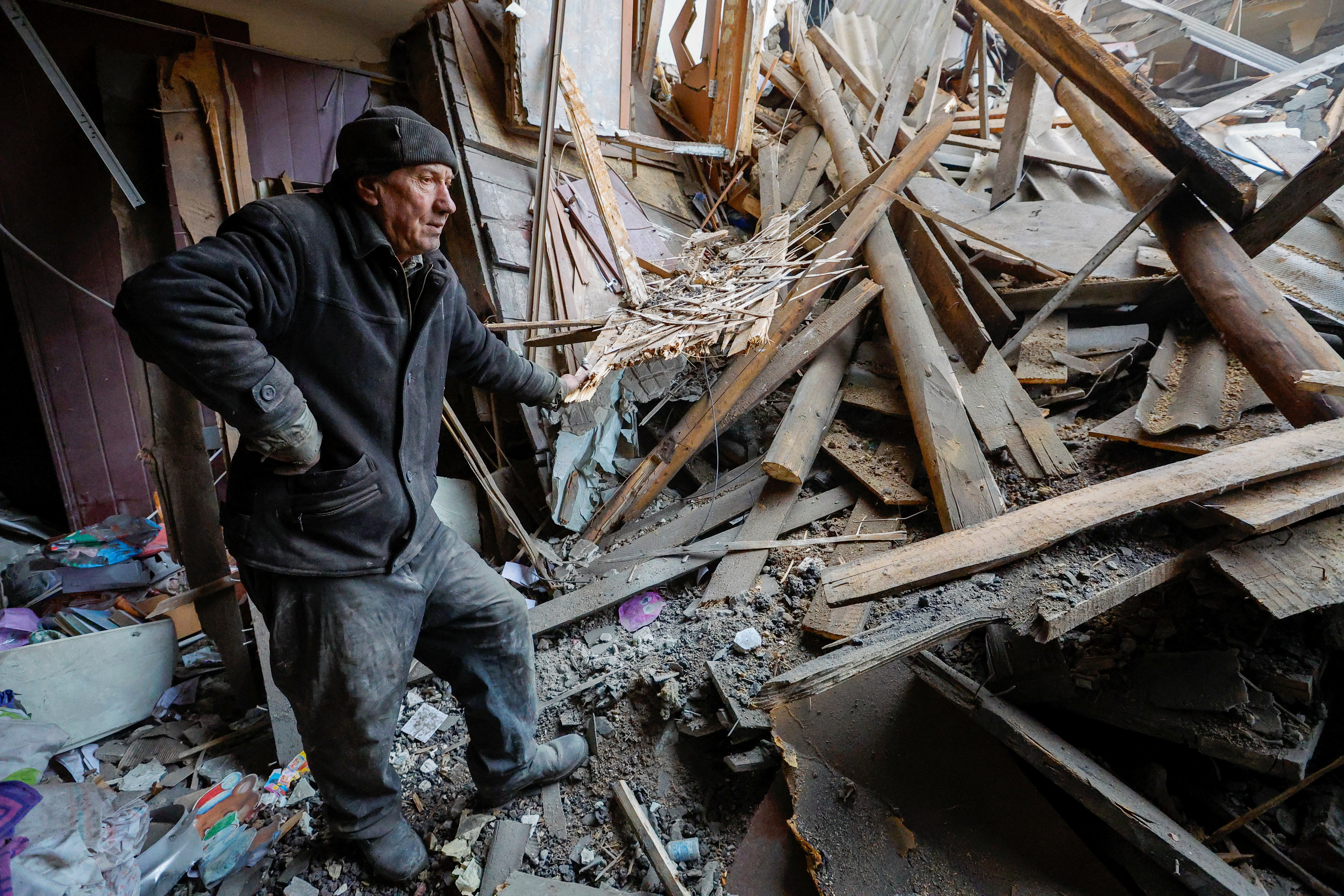
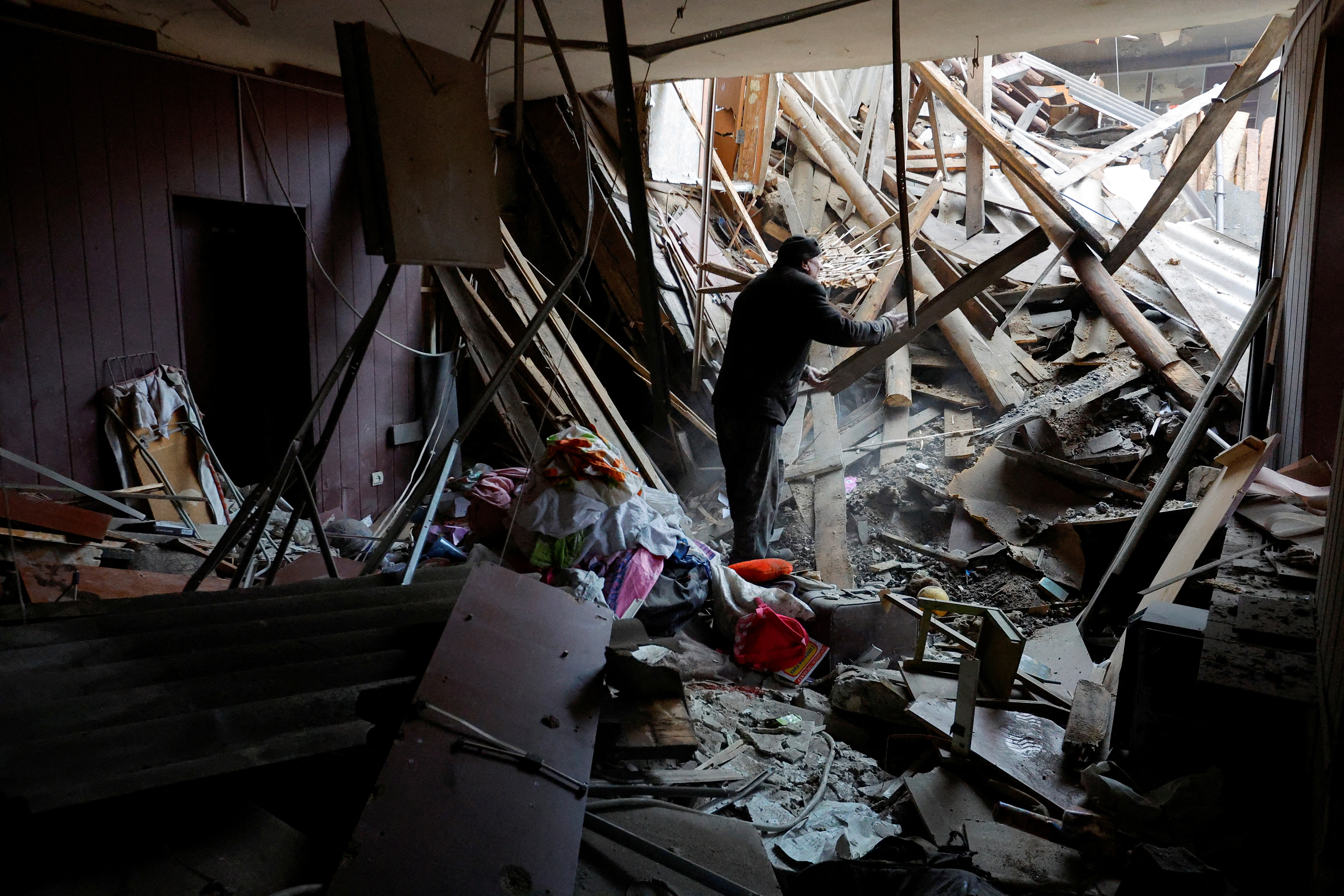
Local resident Sergei stands amid debris while gathering his belongings in an apartment inside a building heavily damaged in recent shelling in the course of Russia-Ukraine conflict in Horlivka (Gorlovka) in the Donetsk region, Russian-controlled Ukraine, December 13, 2022. REUTERS/Alexander Ermochenko

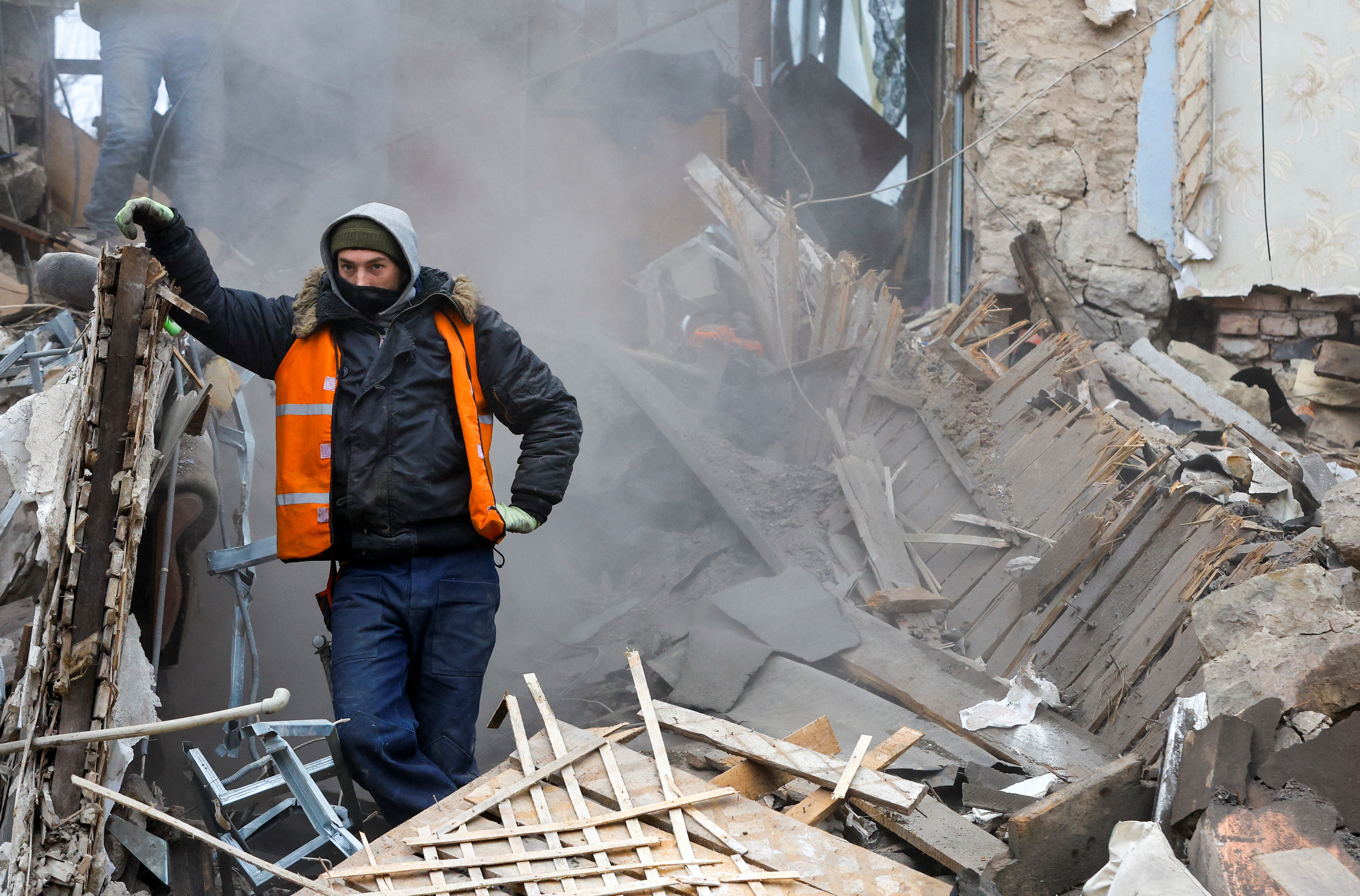
Workers remove debris of a residential building heavily damaged in recent shelling in the course of Russia-Ukraine conflict in Horlivka (Gorlovka) in the Donetsk region, Russian-controlled Ukraine, December 13, 2022. REUTERS/Alexander Ermochenko

Workers remove debris of a residential building heavily damaged in recent shelling in the course of Russia-Ukraine conflict in Horlivka (Gorlovka) in the Donetsk region, Russian-controlled Ukraine, December 13, 2022. REUTERS/Alexander Ermochenko

Local resident Sergei stands amid debris of his apartment in a building heavily damaged in recent shelling in the course of Russia-Ukraine conflict in Horlivka (Gorlovka) in the Donetsk region, Russian-controlled Ukraine, December 13, 2022. REUTERS/Alexander Ermochenko

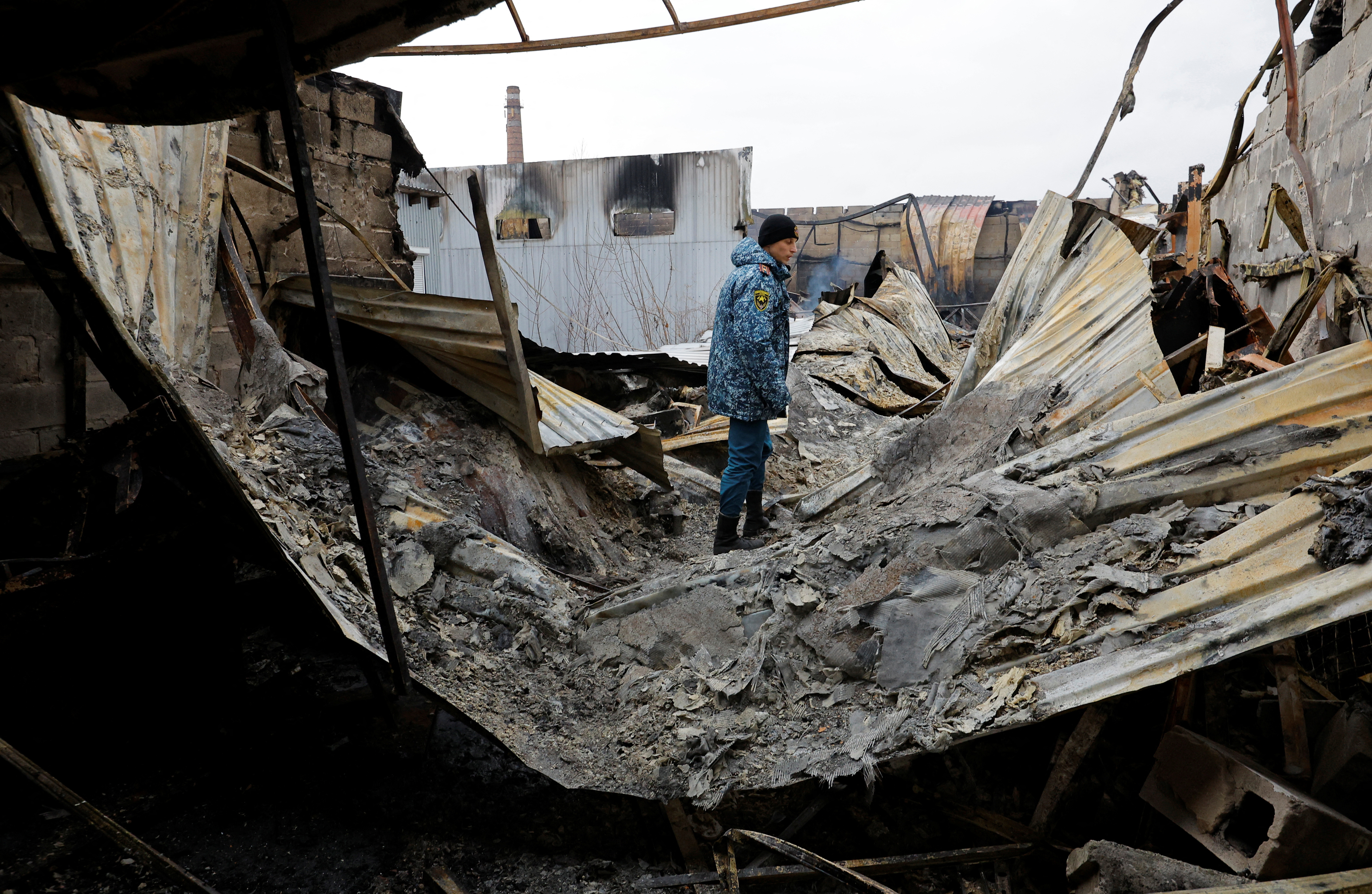
An emergencies ministry member walks at a local market hit by shelling in the course of Russia-Ukraine conflict in Donetsk, Russian-controlled Ukraine, December 12, 2022. REUTERS/Alexander Ermochenko

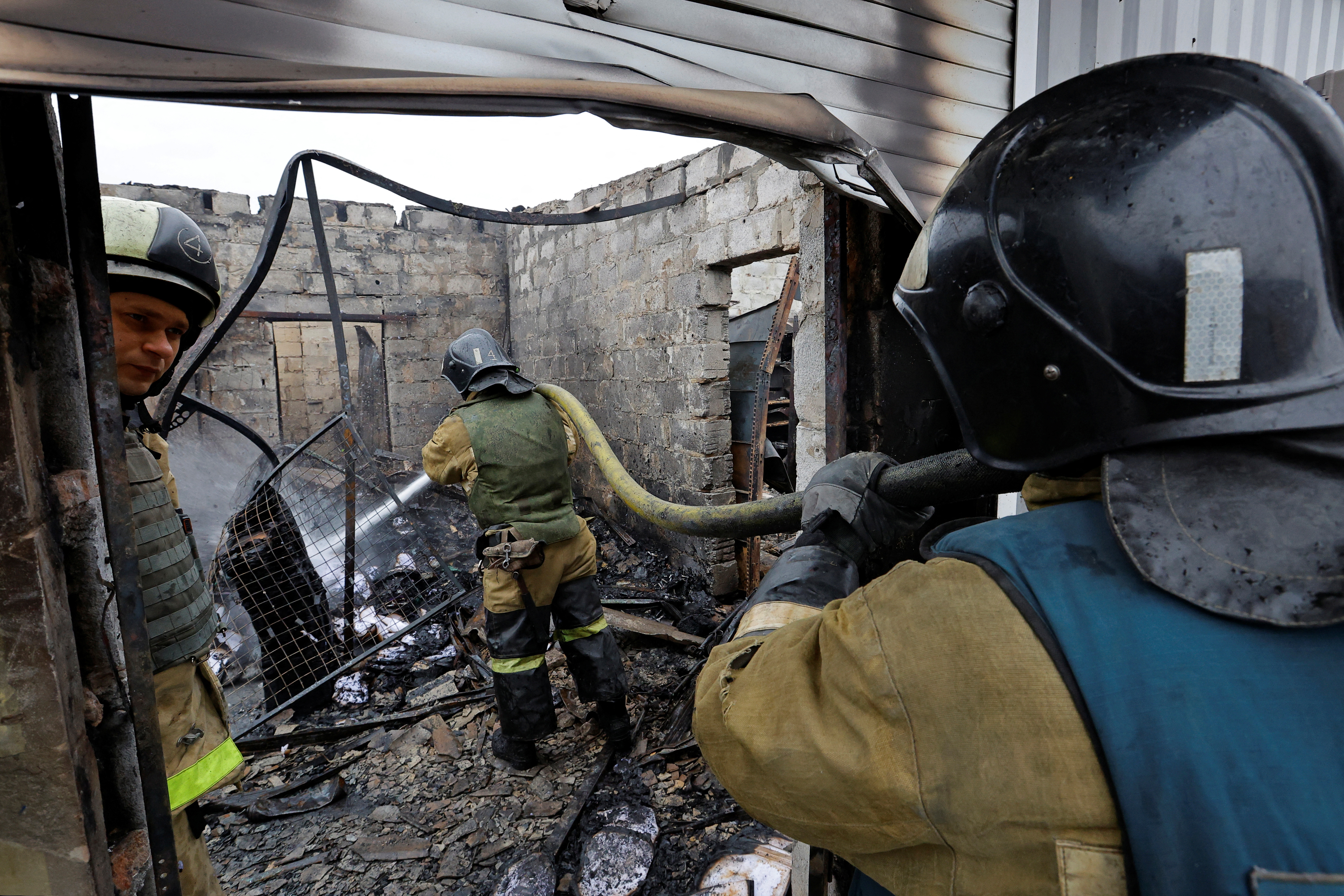
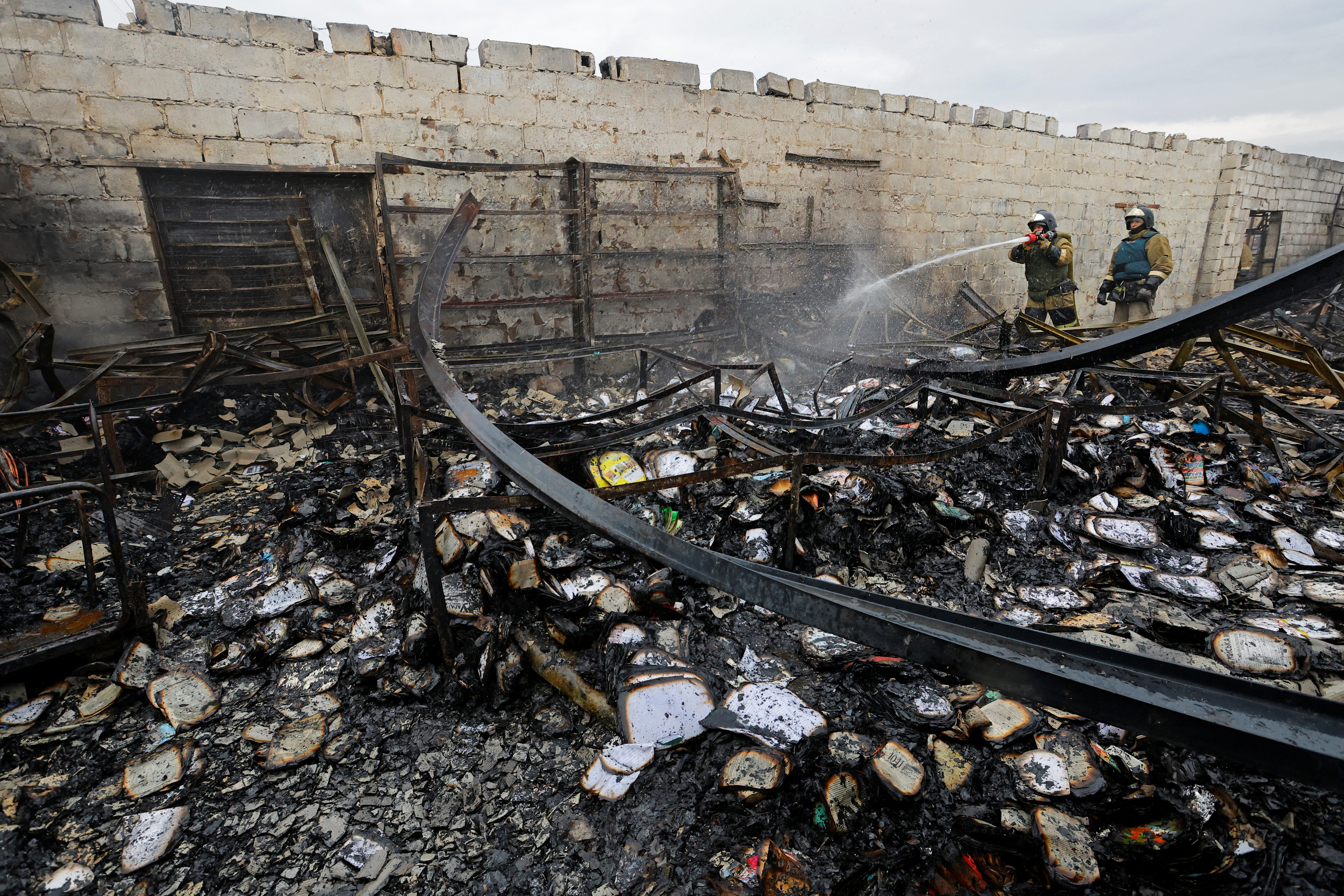
Firefighters work at a local market hit by shelling in the course of Russia-Ukraine conflict in Donetsk, Russian-controlled Ukraine, December 12, 2022. REUTERS/Alexander Ermochenko

Firefighters work at a local market hit by shelling in the course of Russia-Ukraine conflict in Donetsk, Russian-controlled Ukraine, December 12, 2022. REUTERS/Alexander Ermochenko

Firefighters work at a local market hit by shelling in the course of Russia-Ukraine conflict in Donetsk, Russian-controlled Ukraine, December 12, 2022. REUTERS/Alexander Ermochenko

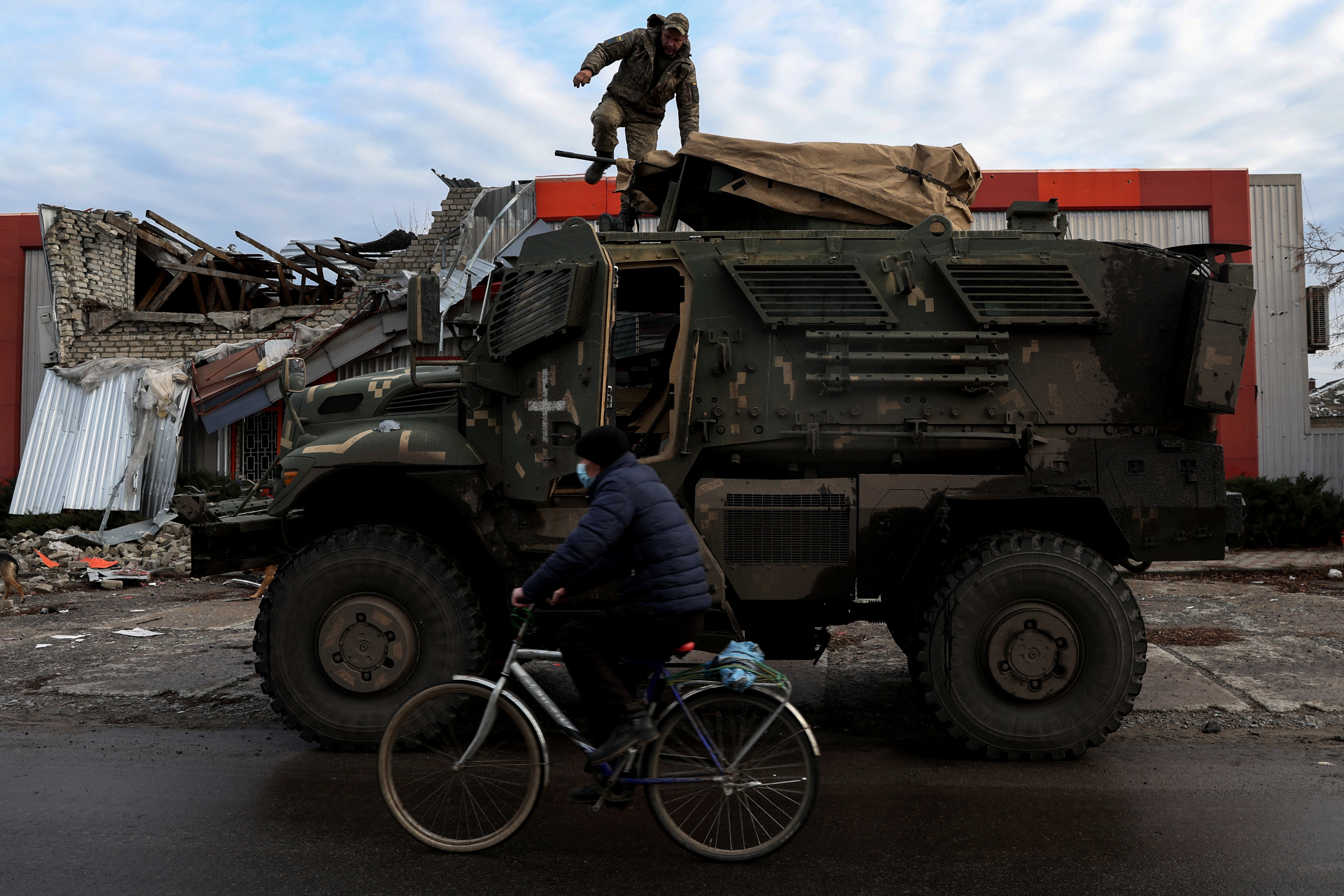
A man wearing a protective face mask rides a bike, as Russia’s attack on Ukraine continues, past a soldier on an American MaxxPro military vehicle in the formerly Russian occupied city of Lyman, Donetsk region of Ukraine, December 11, 2022. REUTERS/Shannon Stapleton

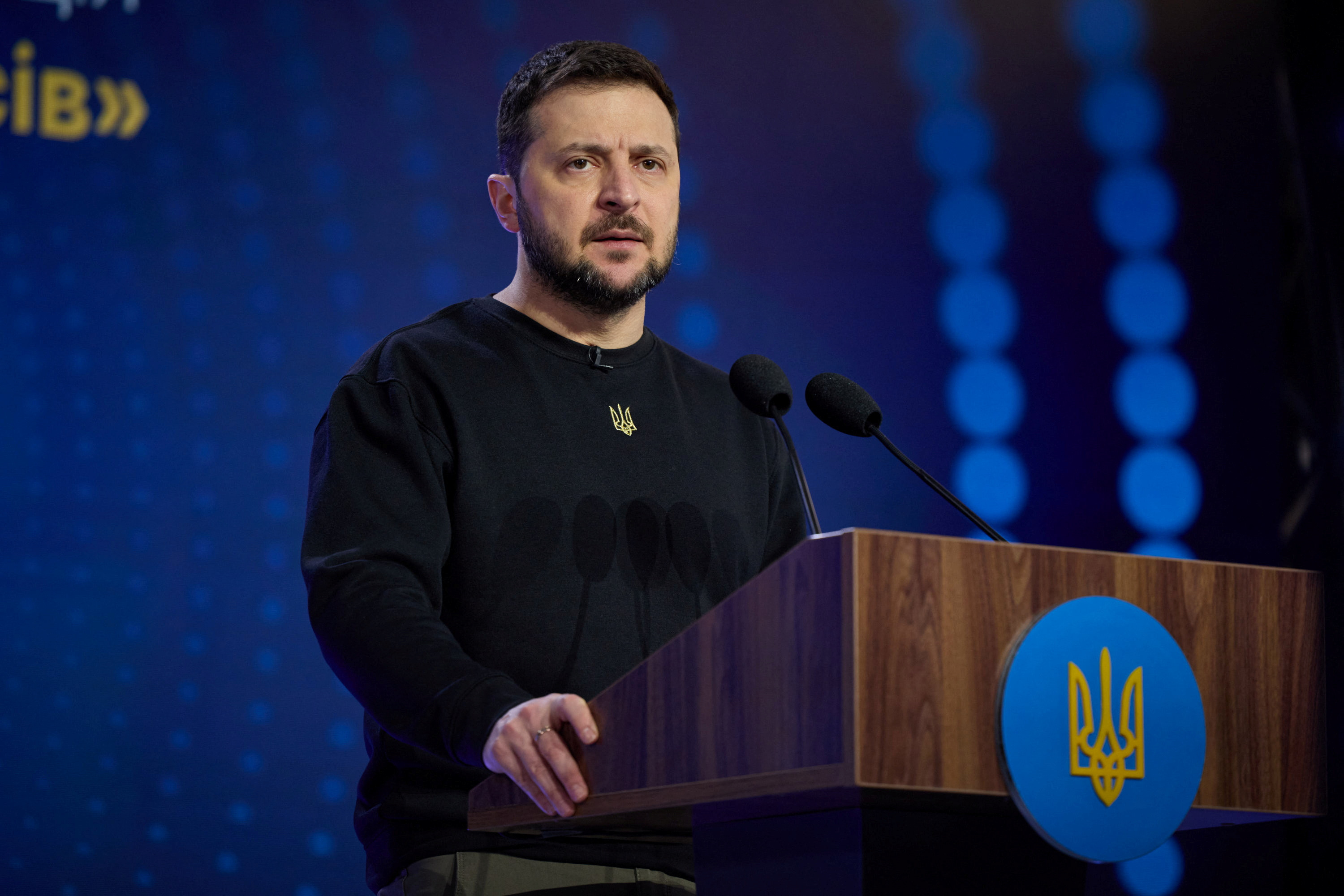
Ukraine’s President Volodymyr Zelenskiy attends an International Human Rights forum, amid Russia’s attack on Ukraine, in Kyiv, Ukraine December 9, 2022. Ukrainian Presidential Press Service/Handout via REUTERS

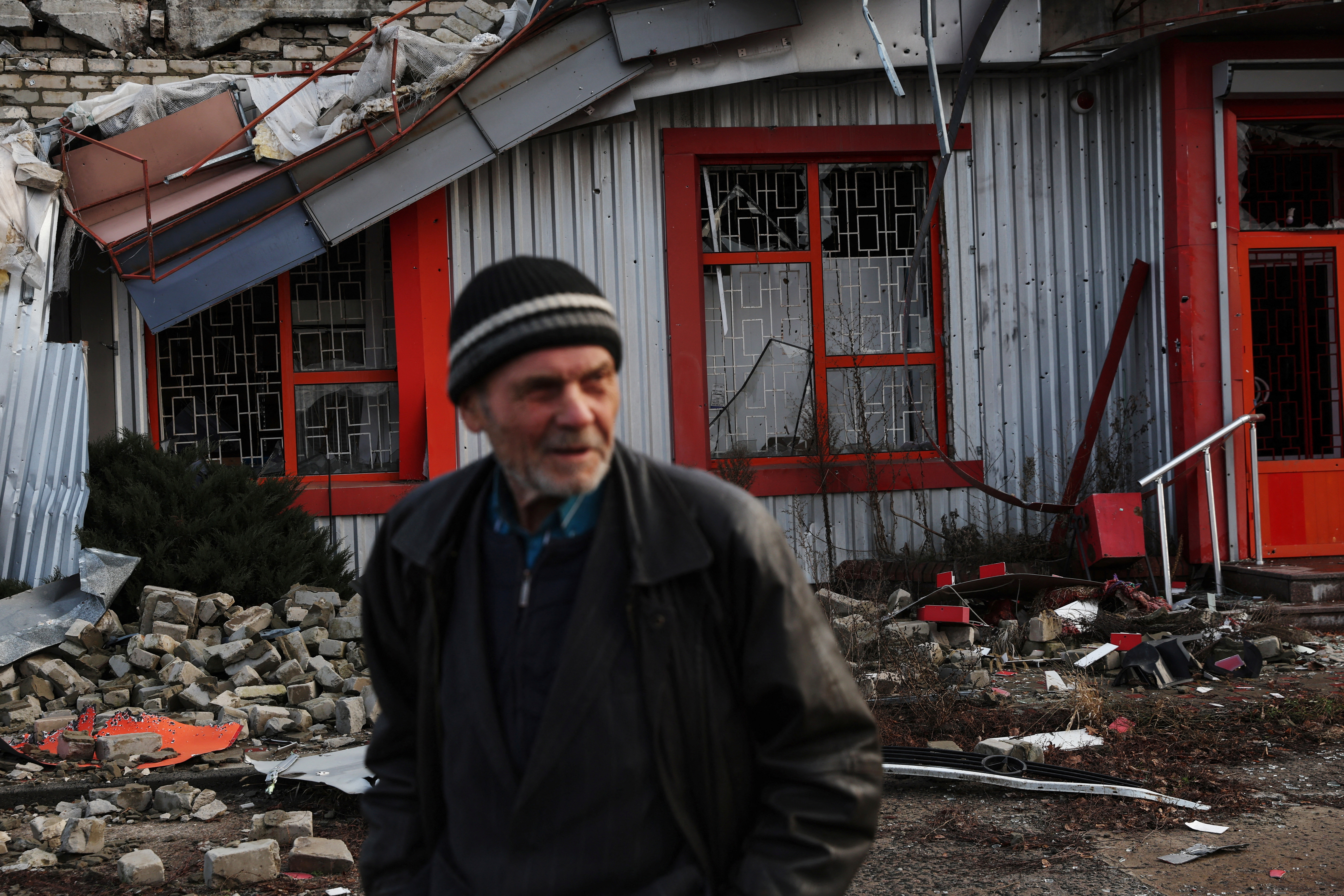
A man walks down by a damaged building, as Russia’s attack on Ukraine continues, inside the war-torn formerly Russian occupied city of Lyman, Donetsk region of Ukraine, December 11, 2022. REUTERS/Shannon Stapleton

The remains of a cathedral on a war-torn church stand, as Russia’s attack on Ukraine continues, in the formerly Russian occupied city of Lyman, Donetsk region of Ukraine, December 11, 2022. REUTERS/Shannon Stapleton
Categories
Audio Sources - Full Text Articles

Exclusive: Musk“s banks to book Twitter loan losses, avoid big hits -sources

2022-12-14T00:00:25Z

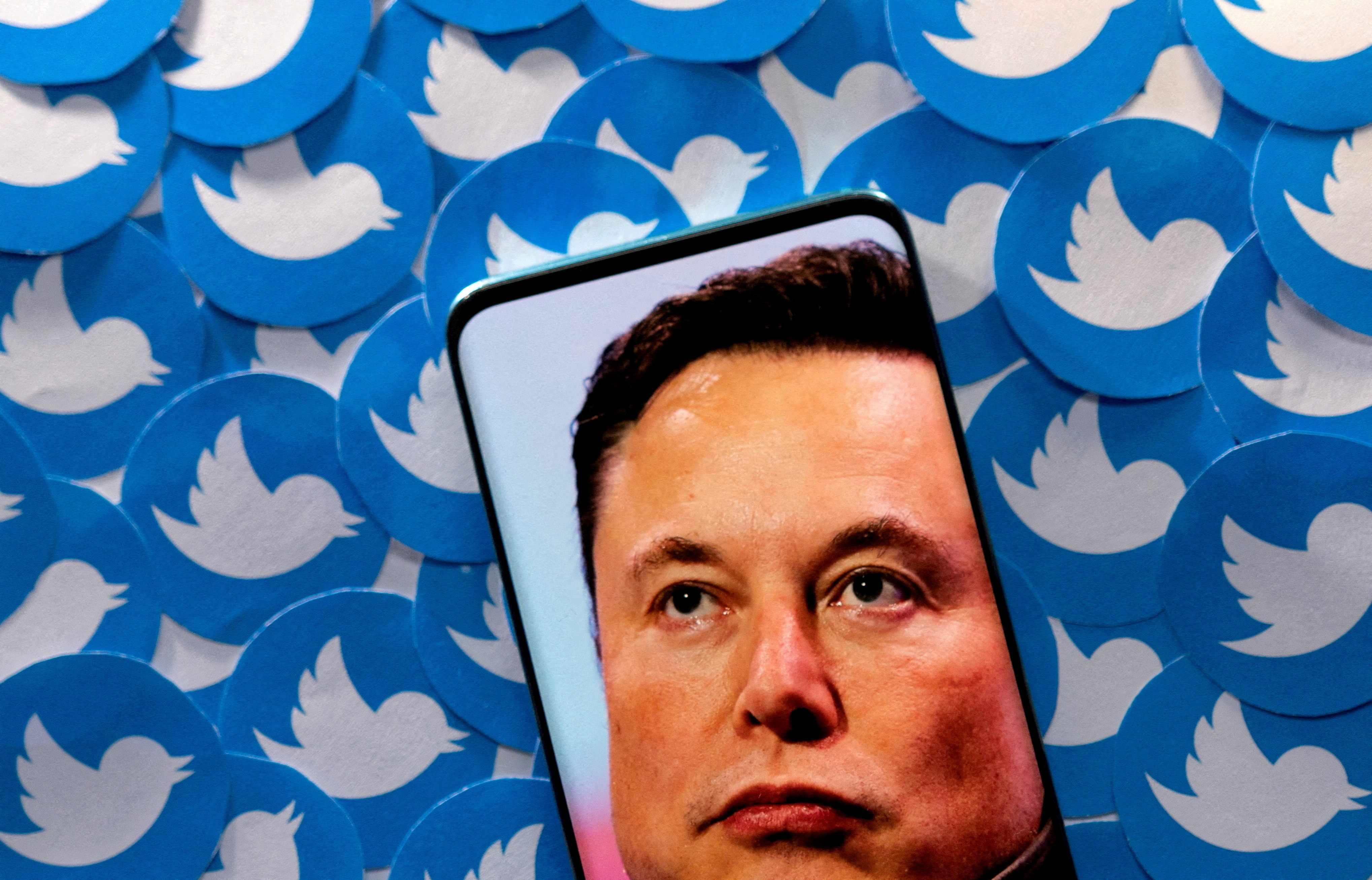
An image of Elon Musk is seen on a smartphone placed on printed Twitter logos in this picture illustration taken April 28, 2022. REUTERS/Dado Ruvic/Illustration/File Photo

Some of the banks that lent Elon Musk $13 billion to buy Twitter are preparing to book losses on the loans this quarter, but they are likely to do so in a way that it does not become a major drag on their earnings, according to three sources with direct knowledge of the situation.

Banks typically sell such loans to investors at the time of the deal. But Twitter’s lenders, led by Morgan Stanley , could face billions of dollars in losses if they tried to do so now, as investors shy away from buying risky debt during a period of economic uncertainty, market participants said. In addition, Twitter has seen advertisers flee amid worries about Musk’s approach to policing tweets, hitting revenues and its ability to pay the interest on the debt.

Banks still have to mark the loan to its market value on their books and set aside funds for losses that are reported in quarterly results. In the absence of a price determined by actual sales of the debt, however, each bank can decide how much to write it down based on its market checks and judgment, according to the three sources who are familiar with the process of determining the value of such loans.

The biggest chunk of the debt — $10 billion worth of loans secured by Twitter’s assets — might have to be written down by as much as 20%, one of the sources said. The hit on the loan, distributed among seven banks, could probably be managed by most of the firms without creating a significant hit to profits, the source added.

Another one of the three sources with direct knowledge of the matter estimated that some banks might only take a 5% to 10% writedown on the secured portion of the loan.

The deliberations of how some of these banks are thinking about accounting for these losses have not been previously reported. They come as Wall Street banks are bracing for lower fourth-quarter earnings due to a slump in investment banking revenue and a rise in loan-loss reserves amid a weakening global economy.

Three banking industry sources said the remaining $3 billion, which is unsecured, could lead to steeper losses for the seven Twitter banks. Reuters could not determine how much the banks were planning to write down the unsecured portion of the debt.

The lenders have considered replacing the unsecured part of the debt with a loan to Musk backed by his shares of Tesla Inc (TSLA.O), the electric carmaker, one of the sources familiar with the talks said. Musk, however, has said it is best to avoid such loans in the current macroeconomic environment. Bloomberg previously reported the margin loan possibility.

Besides Morgan Stanley, the syndicate includes Bank of America Corp (BAC.N), Barclays Plc , Mitsubishi UFJ Financial Group Inc (8306.T), BNP Paribas SA (BNPP.PA), Mizuho Financial Group Inc (8411.T) and Societe Generale SA (SOGN.PA).

SocGen, Musk and representatives for Twitter did not respond to emailed requests for comment. Representatives from the other banks declined to comment.

Under accounting standards, the banks must mark the loan to its market value when some of them report earnings for the fourth quarter in January, several bankers and accountants said.

But with market activity coming to a standstill, the banks have a fair amount of flexibility on how to value them, which means each one could value them differently. They also have leeway on how to report any write downs and the time they take to sell the debt. Leveraged loan deals after the 2008 financial crisis took years to clear.

Each bank would make market checks with two or three potential buyers to arrive at a value of the loans, which an auditor would have to agree with, one of the three sources said.

The person, who is familiar with the thinking of one of the banks in the lending syndicate, added that some lenders are likely to take a smaller hit initially and write it down over time if valuations keep getting worse.

Projected losses could also be divided between investment banking and trading divisions, making it small enough that it doesn’t have to be disclosed separately, one of the sources said. Any writedowns would probably be broken into chunks and spread over several months, reducing the hit to earnings in any one quarter, two of the sources with direct knowledge of the matter said.

Some market participants expect the losses from the debt to be significant unless market conditions improve. Two of the banking industry sources said if the banks tried to sell the loans now, they would not get more than 60 cents to the dollar on the secured bond and an even lower price on the unsecured portion. That would add up to billions of dollars in losses for the syndicate as a whole.

In September, Wall Street lenders led by Bank of America suffered a $700 million loss on the sale of about $4.55 billion in debt backing the leveraged buyout of business software company Citrix Systems Inc.

Some $35 billion to $40 billion of such loans are stuck on banks’ books, according to two fixed income bankers.

Twitter’s bankers, however, are more sanguine. “I wouldn’t bet against Elon Musk,” Morgan Stanley Chief Executive James Gorman said in an interview at Reuters NEXT earlier this month. “We don’t get behind that kind of business and that kind of opportunity unless we believe it is real.”

Categories
Audio Sources - Full Text Articles

Even further down the drain

robert-harrington.jpg

Help support Palmer Report! Our articles are all 100% free to read, with no forced subscriptions and nothing hidden behind paywalls. If you value our content, you’re welcome to pay for it:

Pay $5 to Palmer Report:

Pay $25 to Palmer Report:

Pay $75 to Palmer Report:


Sign up for the Palmer Report mailing list

Help support Palmer Report! Our articles are all 100% free to read, with no forced subscriptions and nothing hidden behind paywalls. If you value our content, you’re welcome to pay for it:

Pay $5 to Palmer Report:

Pay $25 to Palmer Report:

Pay $75 to Palmer Report:

Sign up for the Palmer Report Mailing List.


When last I wrote to you, brothers and sisters, Twitter’s new Fuhrer had tweeted, “My pronouns are Prosecute/Fauci.” Not only did he not delete that unbelievably hateful and stupid tweet, he heaped more shame on it, and proved beyond doubt that he, Elon Musk, is a dangerous lunatic. In his very next tweet, written a mere 16 hours ago (as I write this), Musk said, “The woke mind virus is either defeated or nothing else matters.”

If you’re wondering what a “woke mind” is, let me help you out. It’s Republican code for people who care about the suffering, injustice and poverty of people other than themselves. Elon Musk just said that defeating such people is so important that failure to do so means “nothing else matters.” But then, it’s hardly surprising that a billionaire would not only be indifferent to the suffering of others but would loudly and insistently proclaim indifference to suffering as a thing to be “defeated.” We are not surprised when people like Musk employ martial terms in decrying their enemies. We are not surprised that compassion is his enemy. But we are and should be surprised when millions of people agree with them,

Republicans like to speak in code because if they spell it out their actual message doesn’t sound so good. That’s why they’ve turned the word “woke” into a single word flashpoint of invective. Most of them don’t know exactly what “woke” means but they all agree that it’s horrible and evil and descriptive of Democrats. Just as they don’t know what the word “socialism” means or what’s really on “Hunter Biden’s laptop” or that “Antifa” means “anti-fascist.” These have all nevertheless become rallying slogans calculated to invoke instant hatred.

As you may also recall, after writing the first horrible tweet using Dr. Fauci’s name suggesting that Fauci should be prosecuted (for what Musk does not say, of course), Marjorie Taylor Greene wrote that she “affirmed” Musk’s pronouns. Now, in a separate incident over the weekend, Greene told a group of New York Republicans “I want to tell you something, if Steve Bannon and I had organised [the January 6 insurrection], we would have won. Not to mention, we would’ve been armed.” Greene later said she was being “sarcastic” when she said that. Sorry, but I cannot imagine any tone of voice anyone could possibly use that would render that unequivocal statement as sarcasm.

But it’s clear that Musk is in lockstep with someone like Greene, so much so that she supports him every chance she gets. In other words, the man who’s in charge of the world’s most instantaneous social media platform has the kind of politics someone the likes of Marjorie Taylor Greene applauds. Musk has turned Twitter into social media’s incarnation of Fox News. Twitter has overnight become Elon Musk’s Völkischer Beobachter. Musk is quickly becoming fascisms new voice.


As an advocate of free speech I wouldn’t stand in his way. But as an American living abroad I am horrified by what I see happening in my native country. That fascism could take so popular a foothold in the public imagination of so many Americans is horrifying to me. It’s a small comfort that most Americans are against it. But then, most Germans were against Hitler when he first rose to prominence.

These are dark days and will be darker still if we don’t all become activists against this horrific trend. All of us must join in the struggle against fascism because none of us are safe from it. And, as ever, ladies and gentlemen, brothers and sisters, comrades and friends, stay safe.

Save Palmer Report! Our articles are all 100% free to read, with no forced subscriptions and nothing hidden behind paywalls. If you value our content, you’re welcome to pay for it:

Pay $5 to Palmer Report:

Pay $25 to Palmer Report:

Pay $75 to Palmer Report:

Write for the Palmer Report Community Section.

Help support Palmer Report! Our articles are all 100% free to read, with no forced subscriptions and nothing hidden behind paywalls. If you value our content, you’re welcome to pay for it:

Pay $5 to Palmer Report:

Pay $25 to Palmer Report:

Pay $75 to Palmer Report:

The post Even further down the drain appeared first on Palmer Report.

Categories
Audio Sources - Full Text Articles

Russia-Ukraine war at a glance: what we know on day 294 of the invasion

US finalising plan to send Patriot missile defence system to Ukraine; Suspected Russian FSB officer charged in US sanctions case

Continue reading…

Categories
Audio Sources - Full Text Articles

The Danger of America’s Woefully Incomplete Hate Crimes Data

The FBI’s annual report on hate crime in America, released Monday, shows that about 7,300 hate-crime incidents were reported in the United States in 2021. That number represents a drop of nearly 1,000 incidents from 2020—but experts say it’s a woefully incomplete picture of hate crimes in America.

That’s because nearly 7,000 of the country’s more than 18,000 law-enforcement agencies—including the New York Police Department and Los Angeles Police Department—failed to submit any hate crime data to the federal report. Only 15 of the 750 agencies in the state of California participated, and the state of Florida only reported a single hate crime for 2021. For the 2020 report, more than 80% of jurisdictions participated.

[time-brightcove not-tgx=”true”]

“Hate crimes tear at the fabric of our society and traumatize entire communities,” said Jonathan Greenblatt, the CEO of the Anti-Defamation League, in a statement. “The failure by major states and cities across the country to report hate crime data essentially—and inexcusably—erases the lived experience of marginalized communities across the country.”

Huge gaps in hate crime stats

The FBI defines a hate crime as a “criminal offense which is motivated, in whole or in part, by the offender’s bias(es) against” a victim’s race, religion, disability, gender—or other characteristic. A 1990 law requires the government to track hate crimes, but it remains up to individual law-enforcement agencies whether they tell the FBI how many and what kind of hate crimes they encountered during a given year. This year fewer than two-thirds of police departments provided their hate crime data—a problem that was also seen months ago when the FBI released its 2021 overall crime report.

The biggest problem this year is down to a change in the way that the FBI is collecting crime data from local agencies. The National Incident-Based Reporting System (NIBRS), a new software that seeks to “improve the overall quality of crime data collected by law enforcement” is the big culprit. The FBI announced several years ago that it would transition to the NIBRS by 2021, and about $120 million was distributed to agencies to help phase out the previous Summary Reporting System.

Despite having ample time to make the transition, many jurisdictions waited too long and were unable to make the deadline to submit hate-crime numbers, says Richard Rosenfeld, the Curators’ Distinguished Professor Emeritus of criminology and criminal justice at the University of Missouri–St. Louis.

“The FBI had a choice,” he says. “It could either permit those agencies to submit data they had compiled under the old system so we’d have at least bottom-line measures for major crimes, or the FBI could have done what it did and insist that if you don’t meet the deadline, that your data will not be included.”

Rising hate crimes

Despite the FBI reporting a drop in total reported hate crimes in 2021, the previous year saw the highest number of hate-crime incidents recorded since 2001. The agency itself has issued guidance discouraging comparisons between the 2021 report and those of recent years, and noted in releasing the data that, in the jurisdictions that did participate, hate-crime incidents did not seem to fall.

“Although the hate crime statistics reported to us are lower in 2021, hate crime statistics overall are not decreasing, meaning of the agencies that are reporting to us, they are reporting an increase in hate crime,” the FBI said in a press call before the report’s release, according to VOA News. And states like New Jersey that previously released state-level hate-crime data found that 2021 saw record highs for reported bias incidents locally. California’s state count saw reported hate crime events increase by nearly a third from 2020 to 2021.

The missing data won’t just affect statisticians. It could also have an important impact on vulnerable communities across America.

Susan Corke, Director of the Intelligence Project at the Southern Poverty Law Center, which monitors the radical right in the U.S., warns that the lack of data is especially devastating in the context of armed white-nationalist groups backing candidates for election and winning positions of power. The FBI itself recognizes that these statistics are necessary to help provide lawmakers with “justification for certain legislation” and “help law enforcement address issues for their communities.”

“We want our political debates about crime and hate crime to be based on complete and accurate data,” Rosenfeld tells TIME. “When the data is subject to such uncertainties, then political leaders, advocacy groups, and others are simply able to concoct their own narrative.”

Rosenfeld and Corke both say that making it mandatory for local law enforcement to provide hate-crime statistics to the FBI would be a huge step in helping adjust the numbers in coming years. That decision could only be made by Congress.

President Biden previously signed a law that helped make the reporting of hate crimes more accessible in 2021, and created hotlines for hate crime reporting for non-English speakers.

For now, the Justice Department—which oversees the FBI—maintains that it will be committed to prioritizing the “prevention, investigation and prosecution of hate crimes.”

“No one in this country should be forced to live their life in fear of being attacked because of what they look like, whom they love, or where they worship,” said Associate Attorney General Vanita Gupta in a statement on Monday. “The department will continue to use all of the tools and resources at our disposal to stand up to bias-motivated violence in our communities.”

WP Radio
WP Radio
OFFLINE LIVE