
Day: December 13, 2022
On Monday, the D.C. Circuit heard oral argument in the case United States v Fischer—one of the most important cases we’ve seen in a while relating to criminal prosecutions for the Jan. 6 attack on the Capitol. The case is about a previously obscure statute, at least in this context, that criminalizes corrupt obstruction of an official proceeding, and it’s a charge that DOJ has brought against hundreds of Jan. 6 rioters. Lawfare legal fellow Saraphin Dhanani attended the argument, and Lawfare executive editor Natalie Orpett sat down with her to discuss what the parties argued, how the judges responded, and what might happen to the charge of corrupt obstruction of an official proceeding.
The FBI is destroying America from within.
Destroy the #FBI!
It merged with Mafia and became the FBI-Mob-KGB.
It permeates and suffocates every aspect of life in this country.
Destroy the FBI!
fbireform.org | fbireform.com
Destroy the #FBI!
It merged with Mafia and became the FBI-Mob-KGB.
It permeates and suffocates every aspect of life in this country.
Destroy the FBI!
fbireform.org | fbireform.com
The new documentary “To the End” takes viewers behind the nationwide organizing efforts that culminated in the landmark climate provisions of the 2022 Inflation Reduction Act. The film focuses on Rep. Alexandria Ocasio-Cortez, activist Varshini Prakash, climate policy writer Rhiana Gunn-Wright, and political strategist Alexandra Rojas as they push to keep climate at the top of the national agenda. Ryan Grim talks with the film’s director, Rachel Lears.
Transcript coming soon.
The post Inside the Fight for Climate Justice appeared first on The Intercept.
2022-12-13T10:29:20Z
The U.S.-China row over technology has ratcheted up this week, with Washington confirming talks with Japan and the Netherlands about tightening exports of semiconductor manufacturing equipment to China, and Beijing hitting back.
China on Monday launched a trade dispute at the World Trade Organization opposing U.S. chip export control measures, while Reuters reported on Tuesday that it is preparing a more than 1 trillion yuan ($143 billion) package to support its domestic chip-making industry.
The Biden administration aims to cut China off from advanced semiconductor chips made anywhere in the world with U.S. equipment in a bid to slow Beijing’s technological and military advances, and it issued a series of curbs in October.
Jake Sullivan, the White House national security adviser, on Monday said discussions have taken place with Japan and the Netherlands – both major suppliers of chip making equipment – on adopting similar measures.
“I’m not going to get ahead of any announcements,” he told reporters. “I will just say that we are very pleased with the candor, the substance and the intensity of the discussions.”
Sullivan’s comments followed a report by Bloomberg News that Japan and the Netherlands have agreed in principle to join the U.S.-led technology export control, citing people familiar with the matter.
Asked about the report, Japanese Trade Minister Yasutoshi Nishimura said co-operation in export control figured in a telephone conversation he had with U.S. Commerce Secretary Gina Raimondo, but declined to elaborate.
“I cannot go into details as they are diplomatic exchanges, but Japan has been implementing its export control strictly, based on the foreign exchange and foreign trade law in the spirit of international co-operation,” he told reporters.
A spokesperson for the Dutch foreign ministry declined to comment. Trade Minister Liesje Schreinemacher has said the Netherlands is in talks with the United States on restrictions beyond those currently in place.
In October, U.S. officials said they expected to reach a deal with allies on curbing exports ‘in the near term“.
Apart from top U.S. gear suppliers, Japan’s Tokyo Electron Ltd (8035.T) and Dutch lithography specialist ASML Holding NV (ASML.AS), are companies that make equipment needed to make highly advanced chips, and their governments’ adoption of U.S. curbs would mark a major shift.
The Dutch government has restricted ASML from shipping its most advanced equipment to China since 2019, but curbs announced by Washington in October go further. ASML declined to comment.
A spokesperson for Tokyo Electron said the company was in no position to respond, since the matter had to do with each country’s regulations.
China is Tokyo Electron’s largest market, accounting for 26% of its sales of 1.94 trillion yen ($14.1 billion) in chipmaking equipment for the year that ended in March.
For Japanese chip-testing equipment maker Advantest Corp (6857.T), China is the second-largest market, after Taiwan. Orders of 189 billion yen came in from China in the previous business year, or 27% of its total.
ASML said in November its financial outlook through 2030 would not be impacted by a total ban on equipment sales to China. The company, which cannot currently meet demand, could sell the 15% of its order backlog currently destined for Chinese customers elsewhere.
In another development underlining ties between Tokyo and Washington, IBM Corp and Rapidus, a newly formed chipmaker backed by Japan, unveiled a partnership on Tuesday that aims to make the world’s most advanced chips in Japan by the second half of the decade.
($1=137.5500 yen)
Related Galleries:
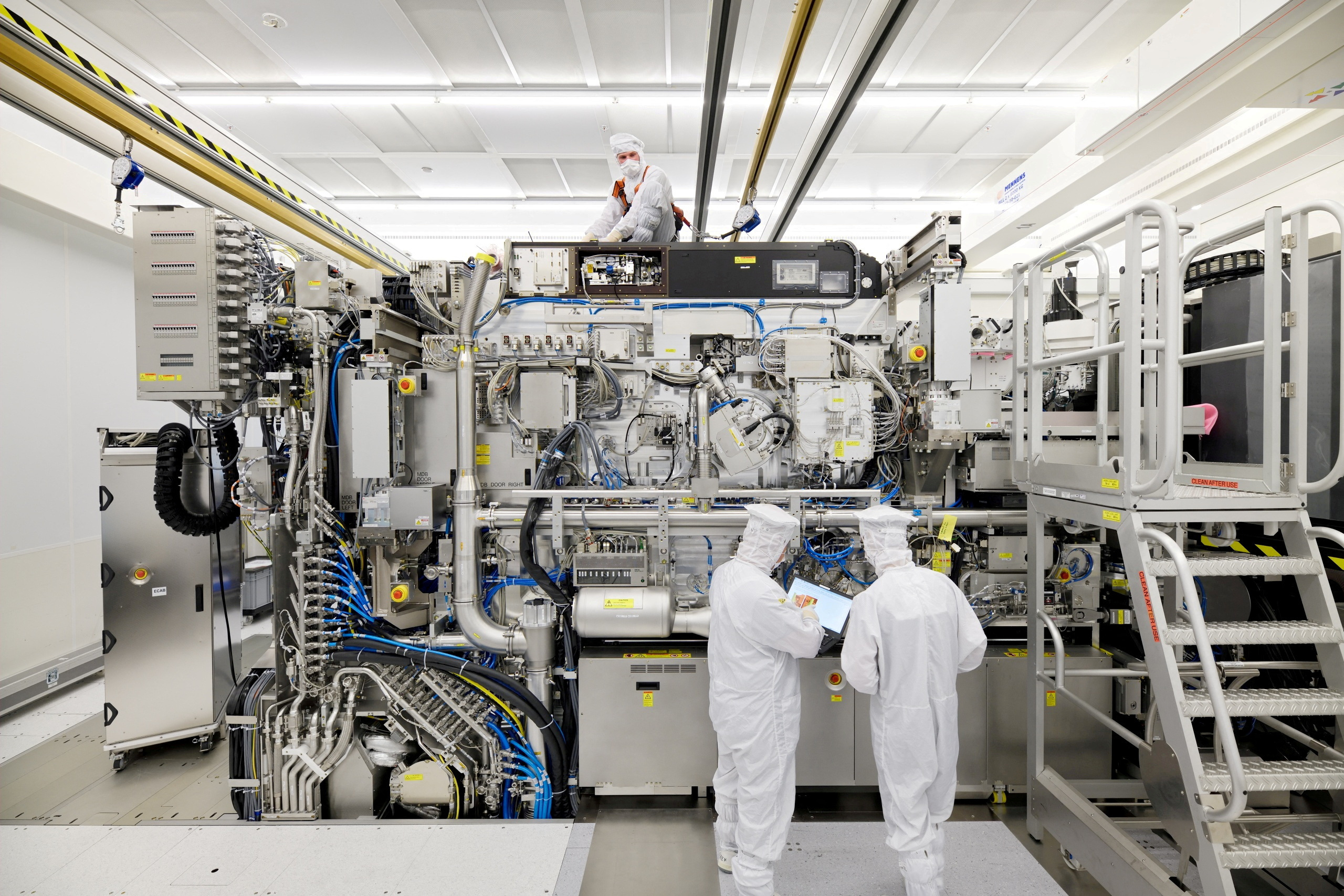
Employees are seen working on the final assembly of ASML’s TWINSCAN NXE:3400B semiconductor lithography tool with its panels removed, in Veldhoven, Netherlands, in this picture taken April 4, 2019. Bart van Overbeeke Fotografie/ASML/Handout via REUTERS/File Photo
ASML logo is seen in this illustration taken February 28, 2022. REUTERS/Dado Ruvic/Illustration/File Photo
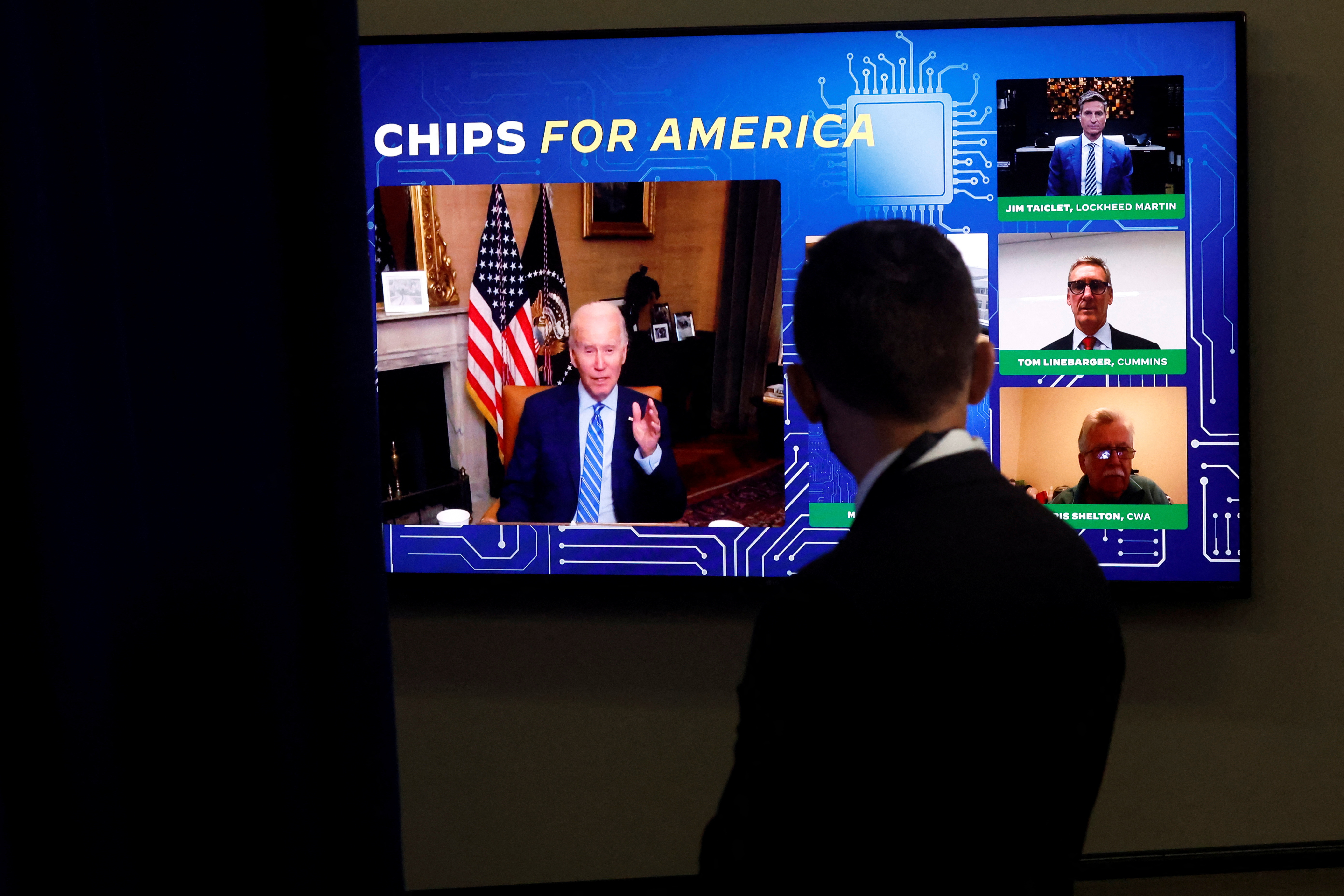
A White House press aide looks on as U.S. President Joe Biden, isolating following his COVID-19 diagnosis, appears virtually in a meeting with business and labor leaders about the Chips Act — relating to U.S. domestic chip and semiconductor manufacturing — in an auditorium on the White House campus in Washington, U.S., July 25, 2022. REUTERS/Jonathan Ernst
2022-12-13T10:43:45Z
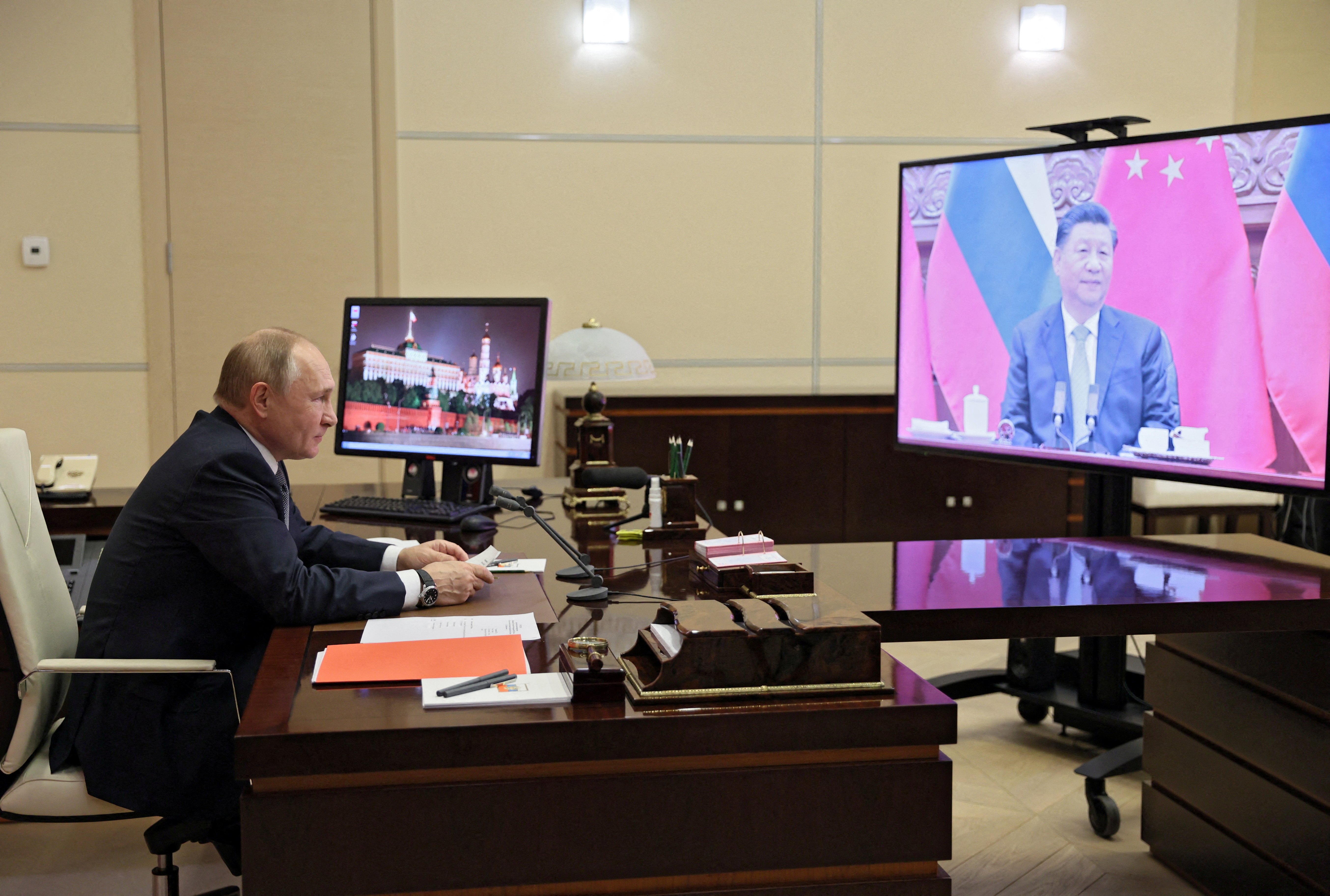
Russian President Vladimir Putin holds talks with Chinese President Xi Jinping via a video link at his residence outside Moscow, Russia December 15, 2021. Sputnik/Mikhail Metzel/Pool via REUTERS
Russian President Vladimir Putin and Chinese leader Xi Jinping will hold talks to discuss the events of 2022 in late December, the Russian business daily Vedomosti reported on Tuesday.
Dmitry Peskov, the Kremlin’s spokesman, told the newspaper that the date and the agenda of the meeting are already known, but an official announcement will come later.
In a daily briefing with reporters later on Tuesday, Peskov said Xi and Putin were “in constant communication”.
He added: “We are preparing to continue this communication. We will inform you in a timely manner as to when and how future contacts will take place.”
The newspaper, citing an unidentified source close to the Russian presidential administration said it was unlikely that the meeting would be face-to-face.
“Details are being worked out,” the source told Vedomosti.
Russia has moved closer to China since sending its armed forces into Ukraine in February as Moscow seeks to boost its political, economic and security relations with non-Western countries.
2022-12-13T10:48:32Z
Ukrainian President Volodymyr Zelenskiy told Ukraine’s allies gathered in Paris on Tuesday he needed at least 800 million euros ($840 million) in urgent winter energy aid as Russian forces target civilian infrastructure across the country.
French President Emmanuel Macron is hosting about 70 countries and institutions to discuss what can be offered between now and March to maintain water, food, energy, health and transport amid freezing temperatures.
“Since Ukraine has got back on top on the ground, Russia, whose military weaknesses have been exposed, has adopted a cynical strategy that targets civilian infrastructure to bring Ukraine to its knees,” Macron said in his opening speech.
“For each of your country’s victories on the ground, Russia’s cowardly response is to bomb power, gas or water infrastructure necessary for the people’s survival this winter,” Macron said.
Macron said France would provide 63 electric generators on top of the 100 delivered in November. With an additional 48.5 million euros, French aid would reach 200 million euros this year, he said.
Zelenskiy said he needed at least 800 million euros of emergency aid to tackle what he said was Russia’s “energy terrorism” and help Ukrainians get through the winter.
“It’s a lot, but the price is less than the cost of blackout,” Zelenskiy said as he addressed the meeting via video link.
“Thousands of companies, social services, continue to function thanks to generators. Hospitals function thanks to generators. Thanks to these generators, hundreds of thousands of jobs have been saved,” he said.
The international meeting will look to create an online mechanism so that Ukraine can put down its urgent needs and donor countries can respond in accordance, Macron said.
Zelenskiy’s wife, Olena Zelenska, attended the Paris meeting in person. European Commission President Ursula von der Leyen said the EU would send 30 million LED bulbs to Ukraine.
“When 50 million of these bulbs are deployed with our partners, this will save 1 GW, the annual output of a nuclear plant,” she said.
A second meeting between France, Ukraine and some 500 French companies will see what can be invested and done in the short to long-term.
The conference is also an opportunity for Macron to show his support for Ukraine, after he came under criticism from some European allies and Ukraine itself over the level of French military support and Macron’s comments on Russia.
Macron’s mixed messages on Ukraine have caused exasperation that has become increasingly public in some east European capitals. The French presidency has dismissed this saying his comments, notably on providing security guarantees for Russia, are taken out of context and Paris has never wavered in its support for Kyiv.
Related Galleries:
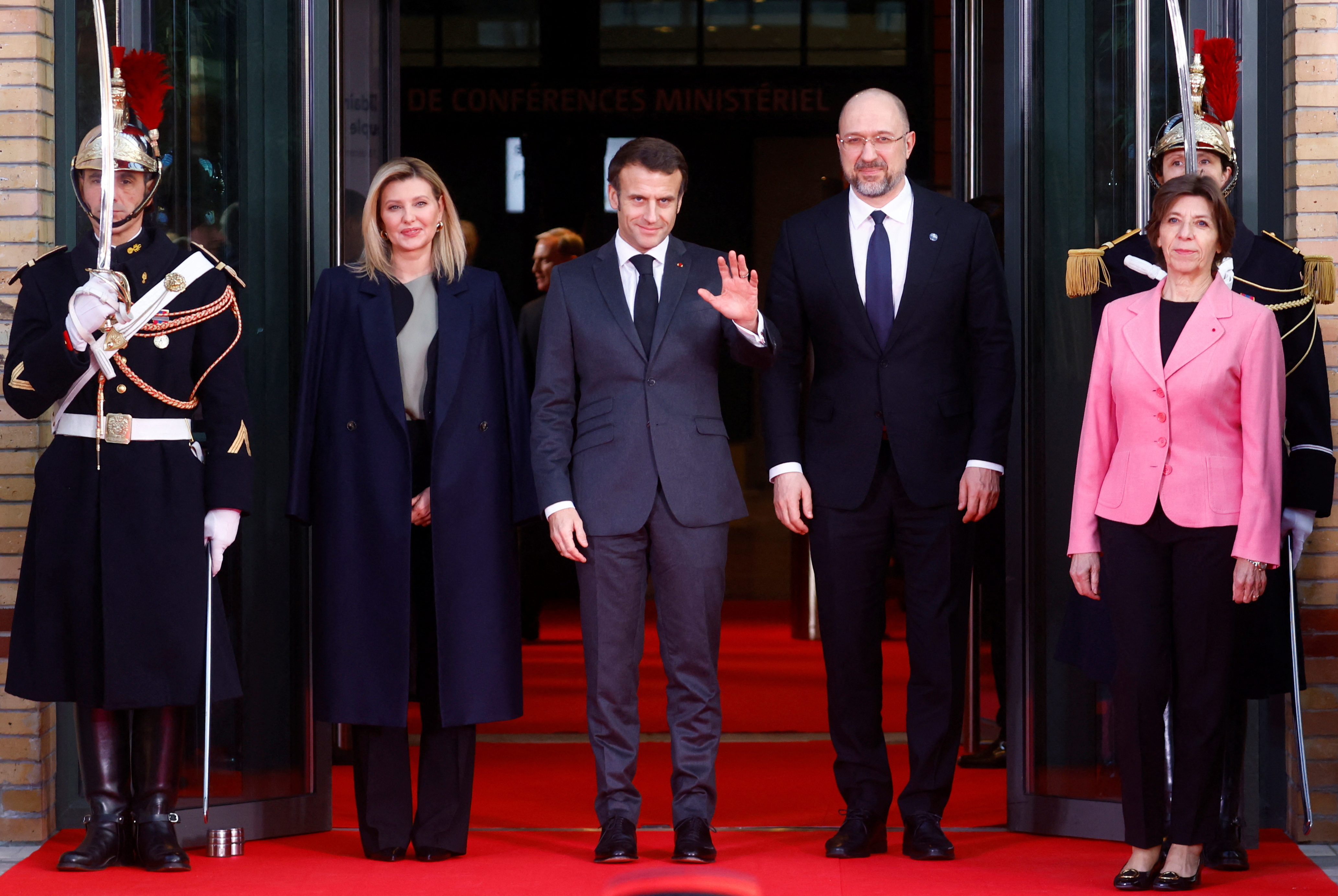
Ukraine’s first lady Olena Zelenska, French President Emmanuel Macron, Ukrainian Prime Minister Denys Shmyhal and French Foreign Minister Catherine Colonna pose as they arrive to attend the international conference “Standing With the Ukrainian People” in Paris, France, December 13, 2022. REUTERS/Gonzalo Fuentes
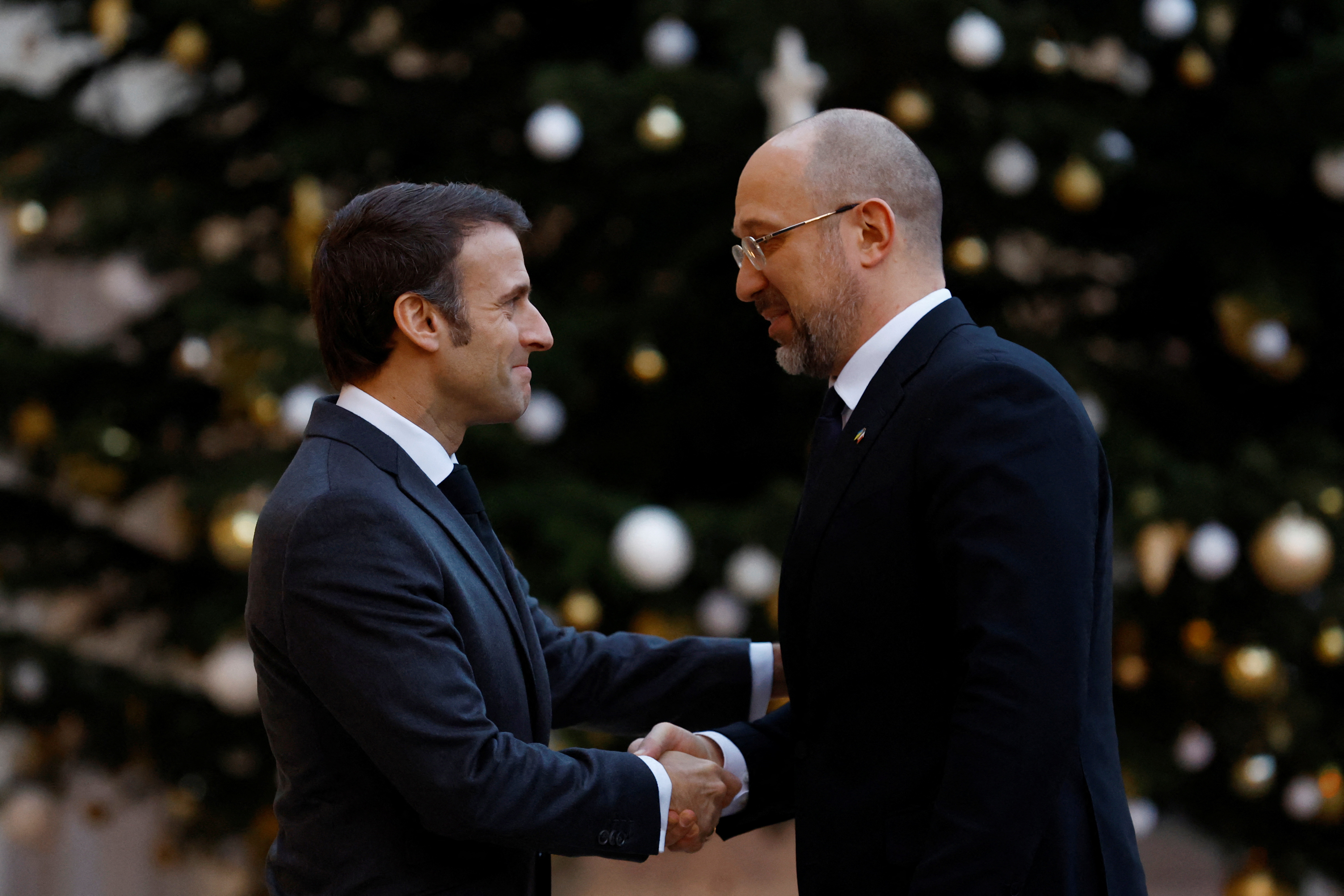
French President Emmanuel Macron welcomes Ukrainian Prime Minister Denys Shmyhal as he arrives for a meeting at the Elysee Palace as part of the international conference “Standing With the Ukrainian People” in Paris, France, December 13, 2022. REUTERS/Gonzalo Fuentes
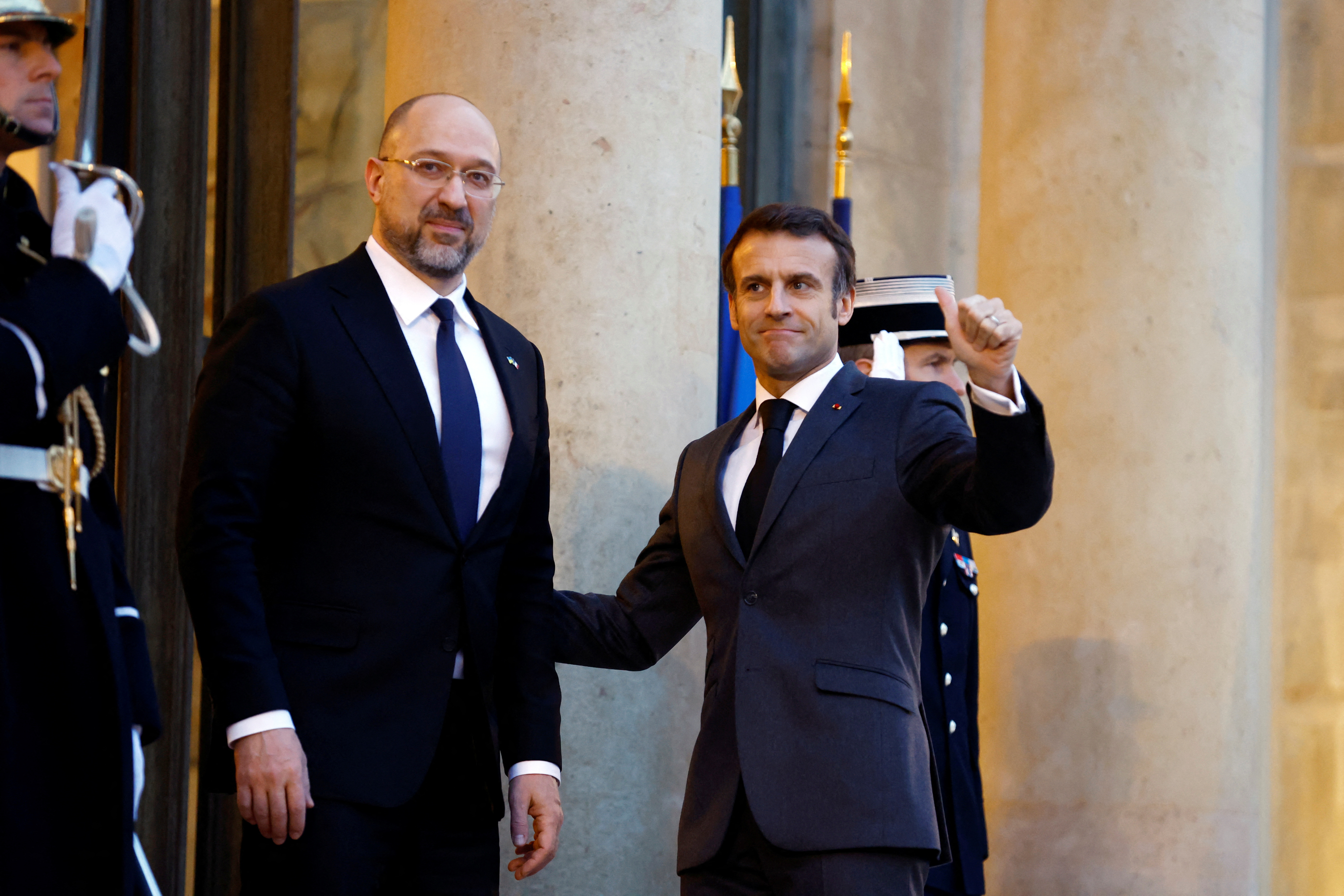
French President Emmanuel Macron welcomes Ukrainian Prime Minister Denys Shmyhal as he arrives for a meeting at the Elysee Palace as part of the international conference “Standing With the Ukrainian People” in Paris, France, December 13, 2022. REUTERS/Gonzalo Fuentes
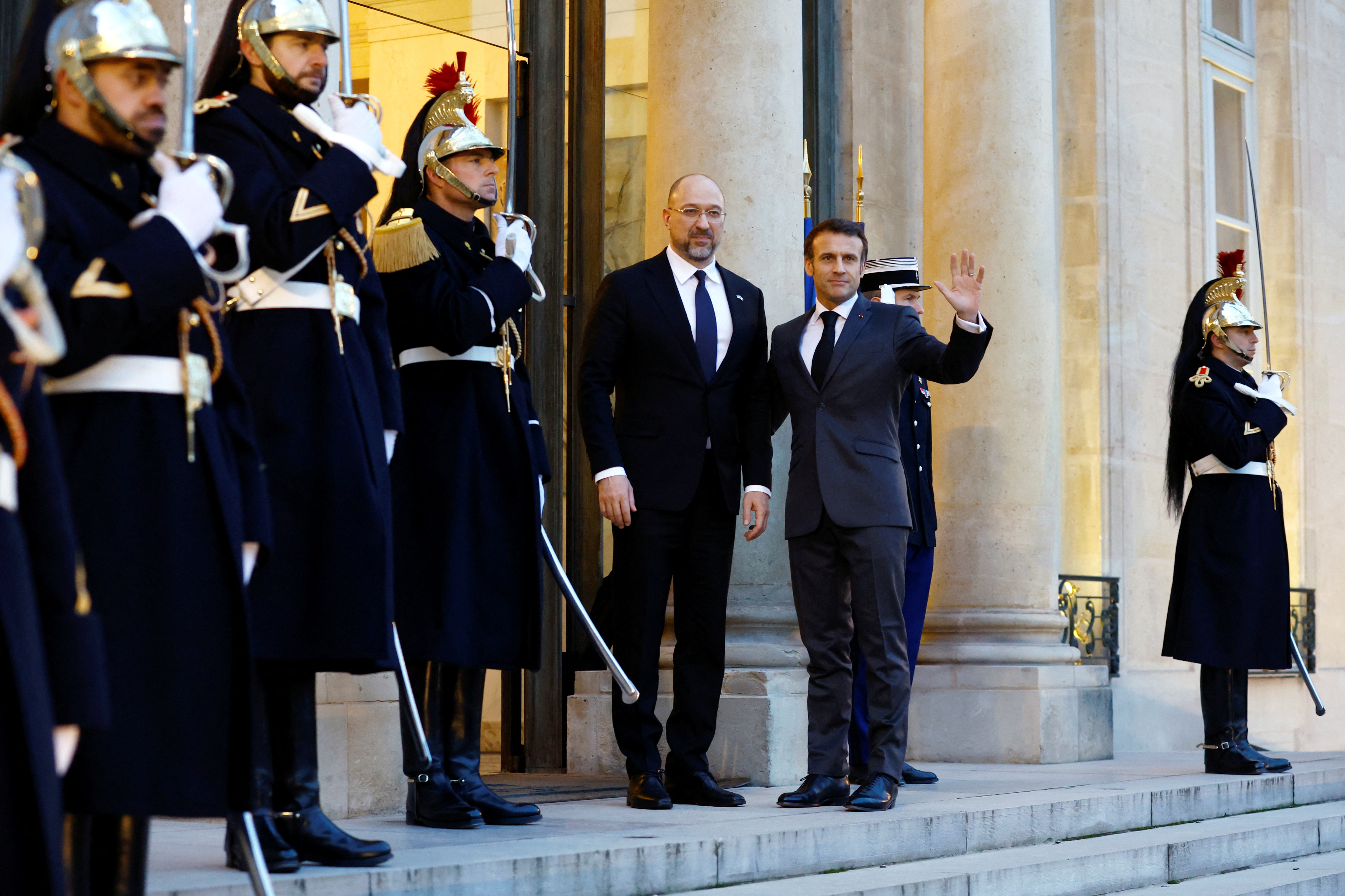
French President Emmanuel Macron welcomes Ukrainian Prime Minister Denys Shmyhal as he arrives for a meeting at the Elysee Palace as part of the international conference “Standing With the Ukrainian People” in Paris, France, December 13, 2022. REUTERS/Gonzalo Fuentes
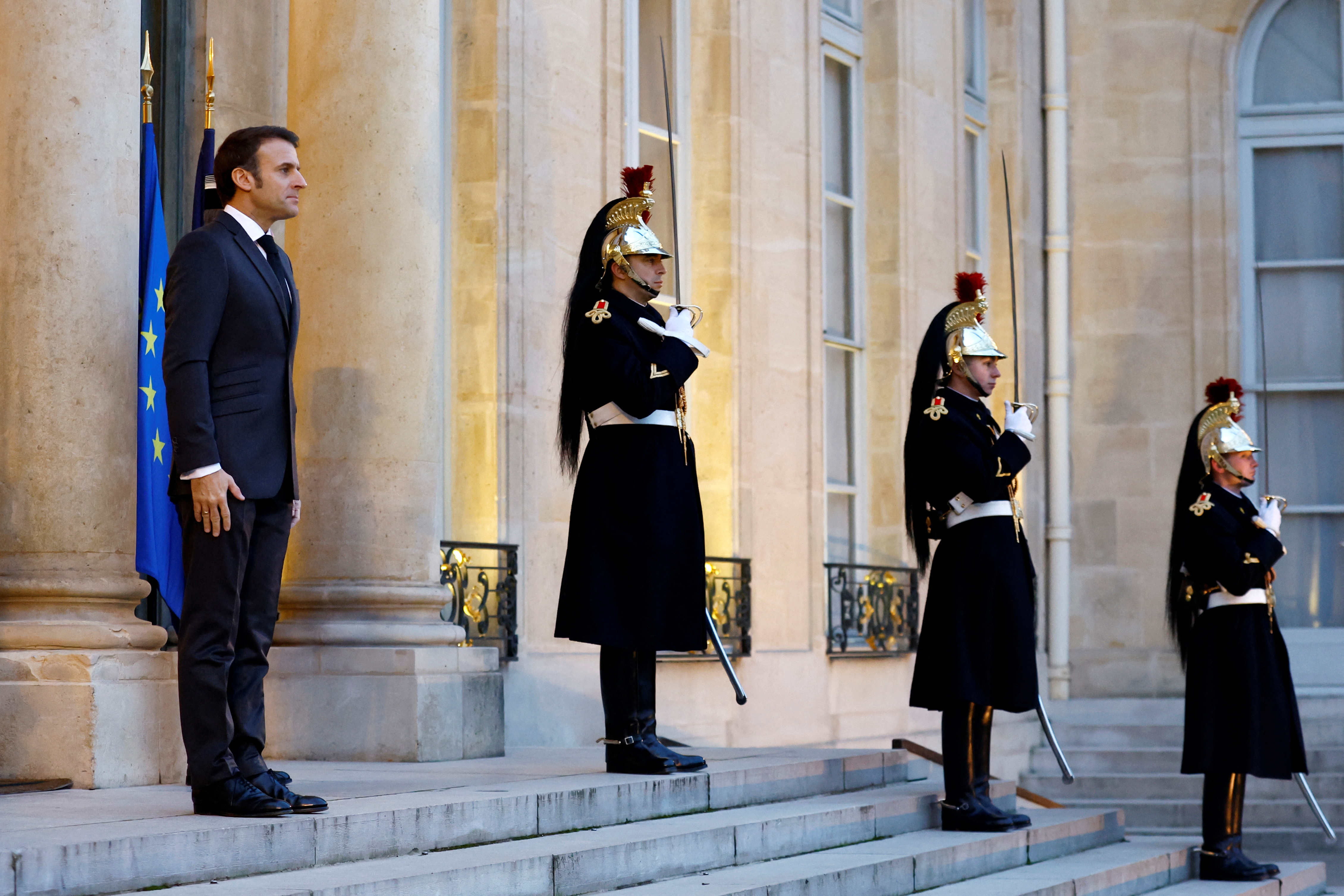
French President Emmanuel Macron welcomes Ukrainian Prime Minister Denys Shmyhal (not seen) as he arrives for a meeting at the Elysee Palace as part of the international conference “Standing With the Ukrainian People” in Paris, France, December 13, 2022. REUTERS/Gonzalo Fuentes
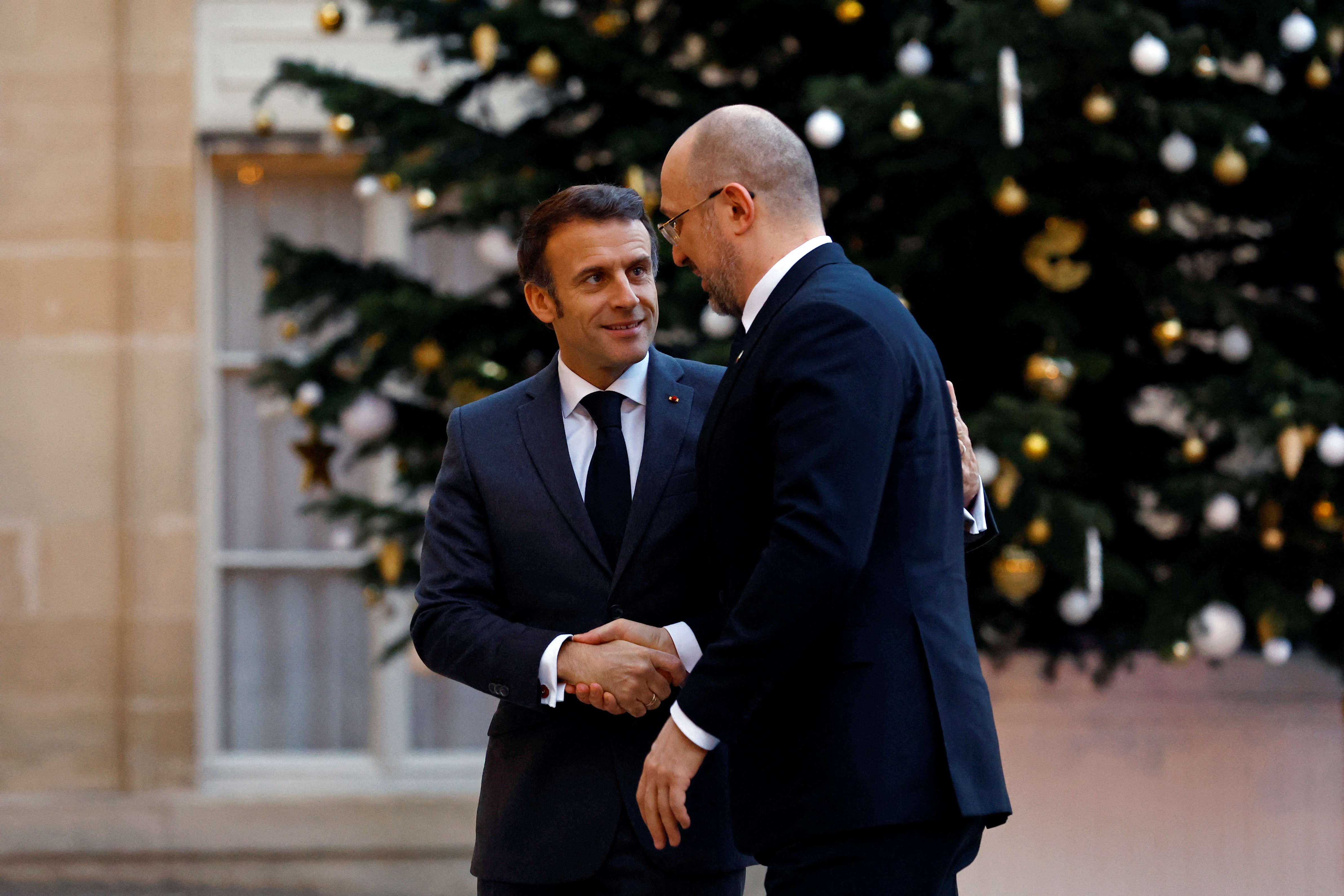
French President Emmanuel Macron welcomes Ukrainian Prime Minister Denys Shmyhal as he arrives for a meeting at the Elysee Palace as part of the international conference “Standing With the Ukrainian People” in Paris, France, December 13, 2022. REUTERS/Gonzalo Fuentes
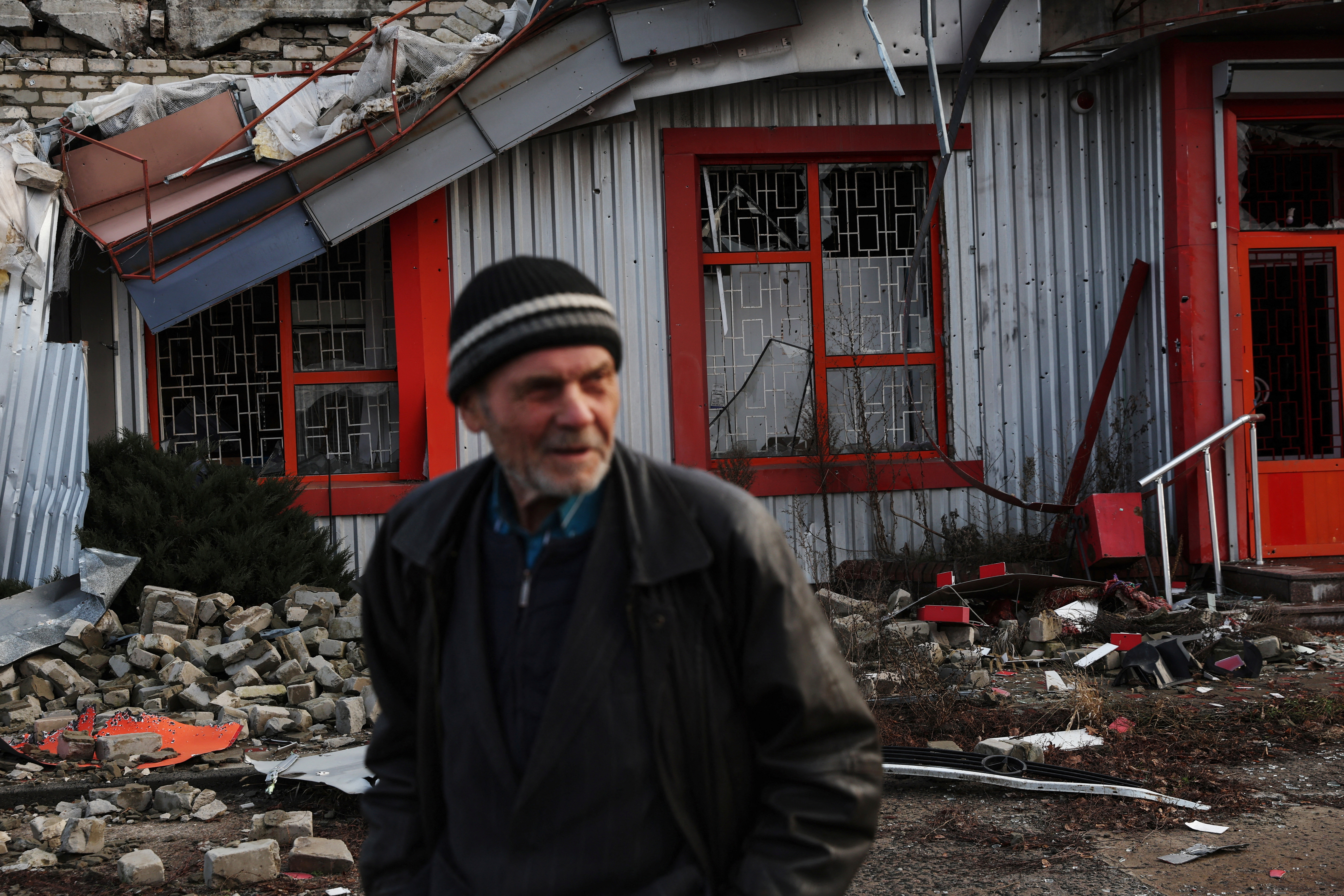
A man walks down by a damaged building, as Russia’s attack on Ukraine continues, inside the war-torn formerly Russian occupied city of Lyman, Donetsk region of Ukraine, December 11, 2022. REUTERS/Shannon Stapleton