Categories
Audio Sources - Full Text Articles

Peru“s new president says she is open to early election talks

2022-12-09T21:16:48Z

Peruvian President Dina Boluarte on Friday said she was willing to discuss early elections with the country’s political and civil organizations, but ruled out kick-starting constitutional changes for the time being.

Boluarte, who took office on Wednesday hours after her predecessor Pedro Castillo was ousted, said she was calling for calm as protests broke out in support of the former president.

Early morning footage on local television showed hundreds of farmers blocking a stretch of Peru’s main coastal highway demanding early elections.

“If society and the situation warrants bringing forward elections, then in conversation with the democratic and political forces in Congress, we will sit down to talk,” she told reporters.

“I am not the one who caused this situation, I am only fulfilling the constitutional role,” she added, calling on the “sisters and brothers who are coming out in protest… to calm down.”

Later on Friday, Boluarte said she had received a call expressing support from Argentina’s President Alberto Fernandez.

“He expressed his support and collaboration in the framework of the strengthening of our democracy, bilateral relations and regional policies,” she said on Twitter.

The 60-year-old lawyer Boluarte, who was Castillo’s vice president, became the first woman to assume the country’s presidency and is set to hold the post until 2026 if no fresh elections are called.

Asked about calls from some leftist parties to draft a new constitution, Boluarte said the long-standing demand should not be abandoned but it was not something she wanted to do in the short term.

“I think this is not the time. Right now Peru is going through a political crisis and we still need to solve the economic and food crisis,” she said.

She said she would name her new cabinet members on Friday or Saturday.

Boluarte said she plans to visit Castillo in prison, adding his “coup d’état surprised us all, including his ministers.”

Castillo tried to dissolve Congress just hours before he was removed from office in an impeachment vote. He was detained and is now facing criminal charges.

Mexican authorities said on Thursday they had started talks with Peru on Castillo’s request for asylum there. On Friday afternoon, Peru’s foreign ministry summoned the Mexican ambassador and said statements by the country’s leaders relating to the matter constituted an “interference in Peru’s internal affairs.”

Peru’s abrupt change of leadership has had limited effects on markets so far. Analysts said economic and financial institutions in the world’s No.2 copper producing nation remain resilient to political volatility.

However, Boluarte, who called for a political truce in her first speech as president, will have to be careful to avoid the fate of other leaders who left the post before their terms ended.

Related Galleries:

Peru’s new President Dina Boluarte arrives to speak to the media at the Government Palace, in Lima, Peru December 8, 2022. Peru’s Presidency/Handout via REUTERS

Peru’s Vice President Dina Boluarte, who was called on by Congress to take the office of president after the legislature approved the removal of President Pedro Castillo in an impeachment trial, attends her swearing-in ceremony in Lima, Peru December 7, 2022. REUTERS/Sebastian Castaneda
Categories
Audio Sources - Full Text Articles

Ohio workers vote for union at GM, LG battery plant

2022-12-09T20:58:27Z

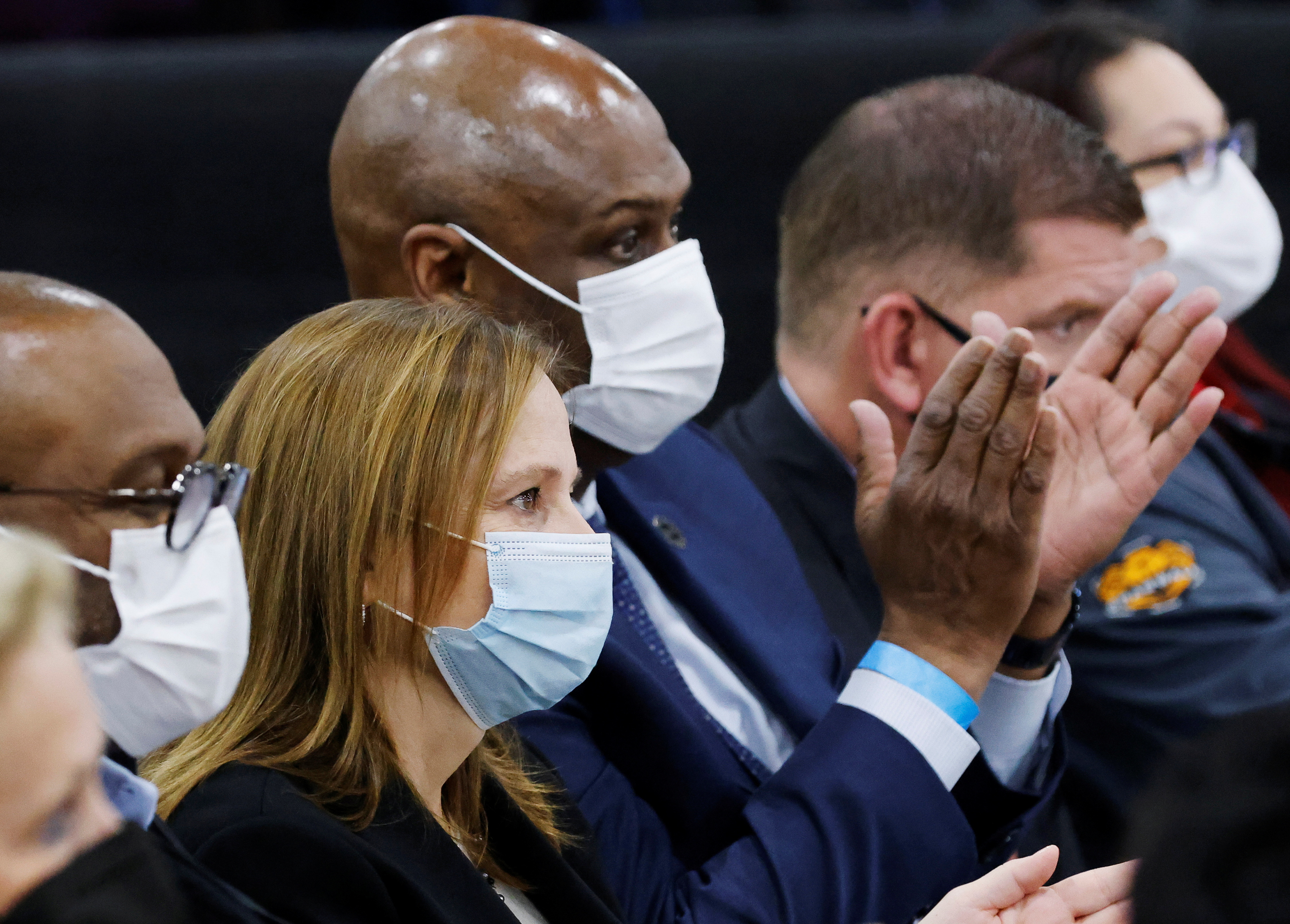
General Motors Chief Executive Mary Barra, United Auto Workers (UAW) President Ray Curry, and U.S. Secretary of Labor Marty Walsh watch as U.S. President Joe Biden delivers remarks after touring the General Motors ‘Factory ZERO’ electric vehicle assembly plant in Detroit, Michigan, U.S. November 17, 2021. REUTERS/Jonathan Ernst

Workers at a General Motors-LG Energy (GM.N), (373220.KS) battery cell factory in northeast Ohio overwhelmingly voted to join the United Auto Workers, a big win for the union seeking to organize the growing electric vehicle supply chain sector.

The National Labor Relations Board said hourly employees at the Ultium Cells LLC plant near Cleveland voted 710 to 16 in favor of joining the union.

Ultium said it respected “the decision of our Ohio workforce supporting representation by the UAW. We look forward to a positive working relationship with the UAW.”

The closely watched vote was a crucial test of the UAW’s ability to organize workers who make parts for electric vehicles. The Detroit Three automakers all have battery plants in the works with South Korean partners.

The UAW may face more opposition at plants in southern states that are less unionized than Ohio.

The UAW petitioned in October to represent about 900 workers at the Ohio plant after a majority of employees signed cards authorizing the union to represent them.

“As the auto industry transitions to electric vehicles, new workers entering the auto sector at plants like Ultium are thinking about their value and worth,” UAW President Ray Curry said Friday. “This vote shows that they want to be a part of maintaining the high standards and wages that UAW members have built in the auto industry.”

President Joe Biden, who in May during a trip to South Korea expressed support for U.S. workers seeking to unionize JV battery plants, on Friday congratulated the workers.

“By rebuilding our infrastructure and our manufacturing of electric vehicle batteries and semi-conductors, these jobs will bring our supply chains back home,” Biden said

Production began in August at the Ohio plant, the first of at least four planned Ultium U.S. battery factories.

GM and LG Energy are considering an Indiana site for a fourth U.S. battery plant. They are building a $2.6 billion plant in Michigan, set to open in 2024. Last week, Ultium said it would boost its planned investment in a $2.3 billion Tennessee plant by another $275 million.

In July, the U.S. Energy Department said it intended to lend Ultium $2.5 billion to help finance new manufacturing facilities. Sources told Reuters the loan could be finalized as soon as next week.

Last week, GM Chief Executive Mary Barra expressed support for unionizing the Ohio plant. Barra told reporters Thursday she wanted to get a labor agreement as soon as possible if Ohio workers voted in favor and said “I don’t think it’s a foregone conclusion that if you’re union you’re more expensive.”

Categories
Audio Sources - Full Text Articles

Trump: Jewish leaders ‘lack loyalty’ and should be ‘ashamed’

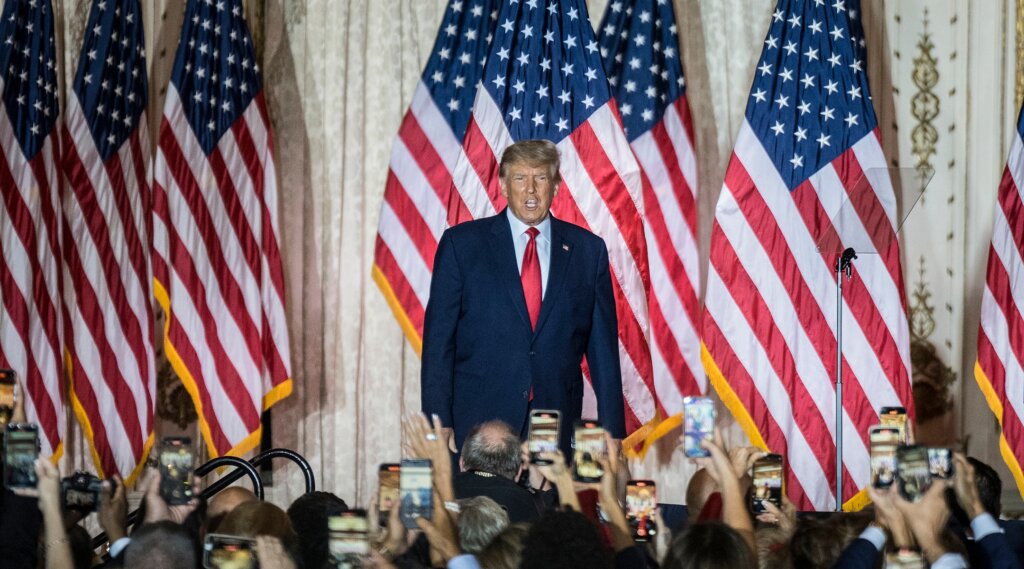
12-9-22-Trump-1024x569.jpg

(JTA) — Former President Donald Trump said Jewish leaders “lack loyalty” and “should be ashamed of themselves,” his latest broadside against the American Jewish community, this time because of criticism of his dinner with two prominent antisemitic figures.

“How quickly Jewish Leaders forgot that I was the best, by far, President for Israel,” Trump said Friday on his social media platform Truth Social before making it an official statement under his campaign for the 2024 presidency. “They should be ashamed of themselves. This lack of loyalty to their greatest friends and allies is why large numbers in Congress, and so many others, have stopped giving support to Israel.”

This is not the first time Trump has accused American Jews of being disloyal, but in the past he has said they were not loyal enough to Israel, not other “greatest friends.” Calling out “Jewish leaders” instead of Jewish Democratic voters also is a new point of rhetoric.

In 2019, Trump said that any Jew who votes for a Democrat shows “a total lack of knowledge or great disloyalty.”

The statement comes less than three weeks after a dinner Trump held with Nick Fuentes, who questions the Holocaust and is labeled a white supremacist by the Anti-Defamation League, and Kanye West, the rapper who now goes by Ye and who has for months peddled a persistent stream of antisemitic invective.

Mainstream Jewish groups have lambasted Trump, but so have Republicans, including a number of Jewish Republicans who were close to him and defended him in the past.

Trump’s post was attached to an op-ed by Wayne Allyn Root, an evangelical Christian who was born Jewish and who defended Trump in 2019, the first time the former president said Jews were disloyal.

In the op-ed, which appeared on various right-wing platforms, Root as he has in the past emphasizes his Jewish roots: “Let me start with a disclaimer: I’m a Jew.” Root repeats arguments Trump has advanced in his defense of the West-Fuentes meeting: that the former president is more supportive of Israel than Democrats are, that West is an old friend who was in trouble and that he did not know who Fuentes was.

This article originally appeared on JTA.org.

The post Trump: Jewish leaders ‘lack loyalty’ and should be ‘ashamed’ appeared first on The Forward.

Categories
Audio Sources - Full Text Articles

EXPLAINER: What Sinema’s switch means for the Senate

WASHINGTON (AP) — Arizona Sen. Kyrsten Sinema’s switch from Democrat to independent won’t change the balance of power in the Senate. But it could affect her political fortunes back home.

Sinema says she won’t caucus with Senate Republicans, so Democrats will still hold the majority next year. And she is expected to continue casting most of her votes with Democrats while separating herself on certain issues.

“Nothing’s going to change for me,” Sinema declared in a video announcing her decision.

A look at what Sinema’s decision means:

WHAT IT MEANS FOR THE SENATE

Not much. Democrats will still be in charge, and day to day operations won’t change for Majority Leader Chuck Schumer. Sinema is still holding her Democratic committee assignments, meaning she can’t upend the party structure too much.

It is unclear exactly what the Senate’s party balance will be, and whether she will still caucus with Democrats – meaning she would be counted as one of their ranks. If she does, Democrats will have a 51-49 majority. If she doesn’t, the balance would be 50-49, with Sinema voting as an independent. Either way, Democrats will have a majority.

WHAT IT MEANS FOR THE DEMOCRATIC AGENDA

Again, it’s unlikely that Sinema’s move will change the party’s path forward, especially now that Republicans will be in the House majority, and little legislation will move through Congress.

Sinema has always voted in an independent manner – championing some party priorities such as same-sex marriage, which she was instrumental in negotiating before Senate passage last week, and opposing others such as a minimum wage increase. She and Sen. Joe Manchin, D-W.V., helped water down much of President Joe Biden’s social spending agenda in the first two years of his presidency.

She has generally voted for Biden’s executive and judicial nominations.

WHAT IT MEANS FOR SINEMA

What it means for Sinema in Arizona is a trickier question.

Democrats are likely to put up a new candidate and put her in a three-way race for reelection in 2024, if she decides to run again. Voters will decide if they like her independent style, modeled after the late Sen. John McCain, or if they would prefer a partisan on the right or left.

“My approach is rare in Washington, and has upset partisans in both parties,” she said.

Categories
Audio Sources - Full Text Articles

U.S. sanctions officials close to El Salvador“s Bukele for alleged corruption

2022-12-09T20:31:13Z

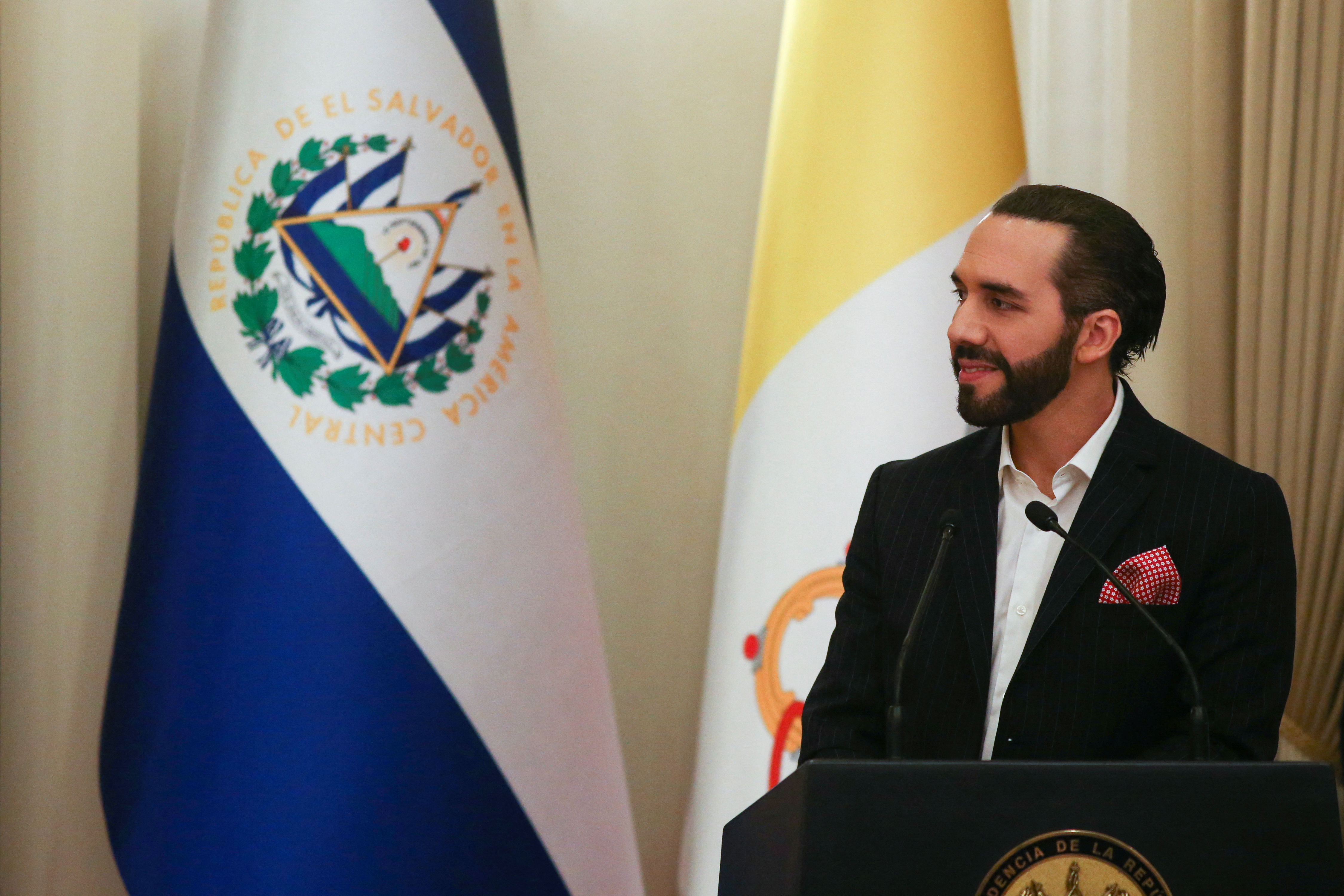
El Salvador’s President Nayib Bukele speaks during a decoration ceremony to the Apostolic Nuncio to El Salvador Santo Gandemi, in San Salvador, El Salvador, October 26, 2022. REUTERS/Jose Cabezas

The United States sanctioned several Central American officials it accused of possible corruption in their respective countries on Friday, including two politicians close to El Salvador’s President Nayib Bukele.

U.S. authorities sanctioned over 40 people under the Magnitsky Act, which authorizes the government to sanction foreign officials for human rights offences, freeze their assets and ban them from entering the United States.

The Treasury Department’s Office of Foreign Assets Control (OFAC) said in a statement Salvadoran Labor Minister Rolando Castro engaged in “misappropriated public funds for his personal benefit,” and used his position to influence unions.

“To the people of the United States, my respect and appreciation. To your government, go ahead, I authorize you to freeze my bank accounts in your country!” Castro said in a tweet with laughing emojis.

The U.S. Treasury Department accused the Salvadoran presidency’s legal secretary, Conan Castro, of obstructing investigations into misappropriation of public funds intended to fight the coronavirus pandemic in 2020.

Neither El Salvador’s presidential office nor Castro responded to a request for comment.

The United States also sanctioned two Guatemalan lawmakers and a former minister, none of whom immediately replied to a request for comment.

It accused Allan Rodriguez, former president of Guatemala’s Congress, of facilitating and receiving bribes in exchange for favoring public contracts and backing a state of emergency bill.

The United States accused Guatemalan congressman Jorge Vargas of leading a network that controlled contracts and operations in government-run ports for personal gain.

The United States also sanctioned Guatemala’s former Minister of Energy and Mines Luis Alfonso Chang, accusing him of asking for “bribes and other favors in exchange for not revoking an oil exploitation license.”

Categories
Audio Sources - Full Text Articles

Former Minnesota police officer gets 3-1/2 years in George Floyd case

2022-12-09T20:44:36Z

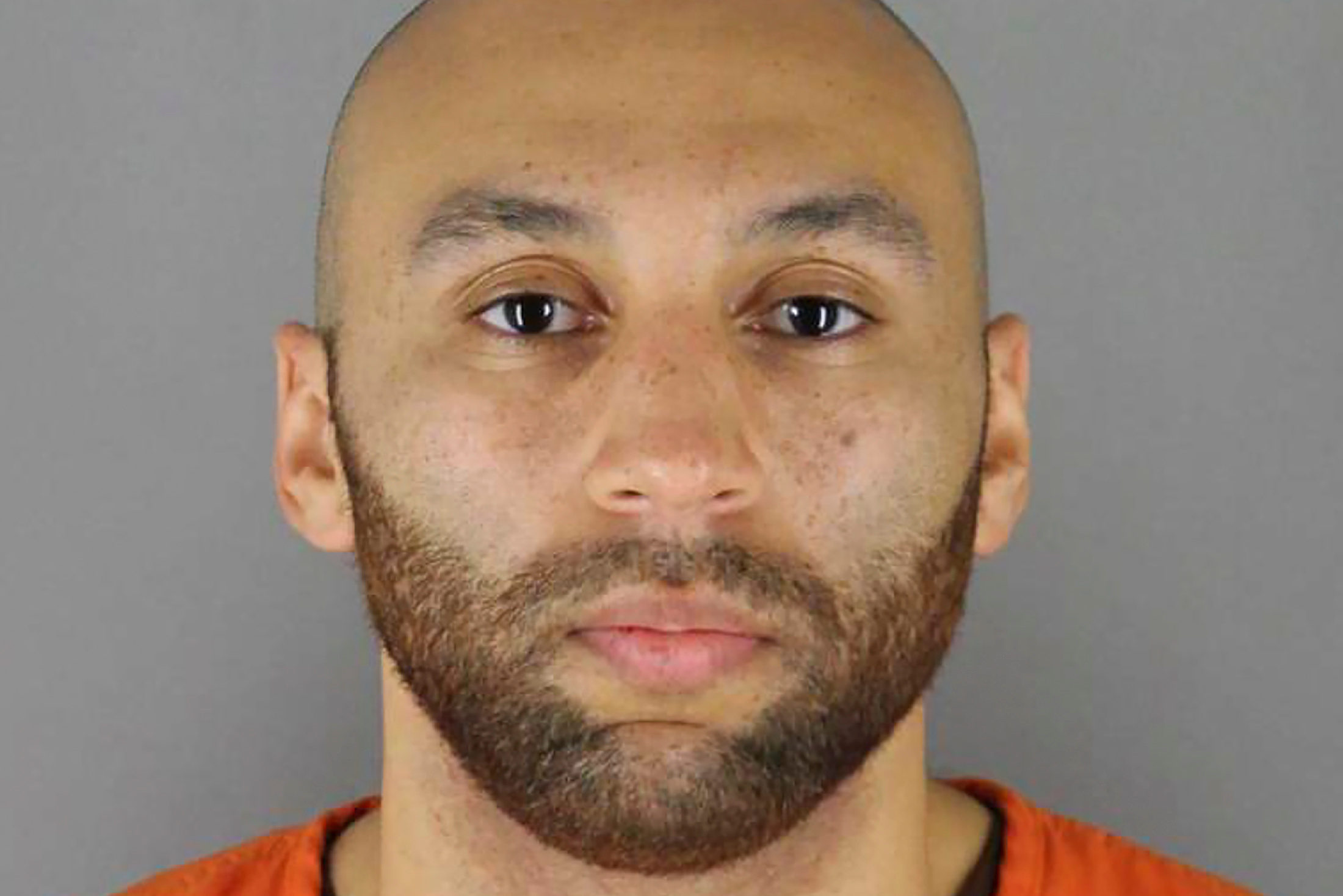
A former Minneapolis police officer was sentenced on Friday to 3-1/2 years in prison for his involvement in the killing of George Floyd, a Black man who died under the knee of another officer in May 2020, triggering nationwide protests against police brutality and racism.

The officer, J. Alexander Kueng, pleaded guilty in October to a single state count of aiding and abetting manslaughter.

He appeared for the sentencing hearing in Hennepin County District Court through a video link from a federal prison in Ohio, where he is serving a 2-1/2- to 3-1/2-year sentence on federal charges stemming from Floyd’s death.

Kueng, who will serve both sentences concurrently, was given credit for 84 days already served.

He was one of four officers who were called to a Minneapolis grocery store on May 25, 2020, and tried to take Floyd into custody on suspicion that he used a fake $20 bill to buy cigarettes.

During the encounter, the senior officer on the scene, Derek Chauvin, pinned the handcuffed Floyd’s neck to the ground with a knee for over nine minutes, causing his death.

Kueng, 29, and fellow officer Thomas Lane helped Chauvin restrain Floyd, while another officer, Tou Thao, kept bystanders from approaching the scene.

Kueng’s sentencing represents a taste of justice for the Floyd family, civil rights lawyer Ben Crump said in a statement.

“While the family faces yet another holiday season without George, we hope that moments like these continue to bring them a measure of peace, knowing that George’s death was not in vain,” Crump said.

Kueng declined to make a comment at the hearing. His attorney, Thomas Plunkett, sought to deflect some blame from Kueng, saying his client was a rookie on his third day on the job at the time of the incident.

Plunkett instead pointed to Minneapolis police leadership, including former Chief Medaria Arradondo.

“They failed Mr. Keung, they failed Mr. Floyd and they failed the community,” Plunkett said. “Justice has become nothing more than mean-spirited revenge.”

Demonstrations and, at times, riots erupted across Minneapolis after the incident. A disturbing video of Floyd’s final minutes circulating on social media helped spark demonstrations across the nation and in large cities around the globe.

Chauvin was convicted of murder in a state trial and sentenced to 22-1/2 years. He also pleaded guilty to related federal charges and is serving a federal sentence of 21 years concurrently.

The three other officers were convicted in federal court of depriving Floyd of his civil rights and sentenced in July to between 2-1/2 and 3-1/2 years in prison.

Kueng’s plea agreement on the state charge includes a sentence of 3-1/2 years to be served concurrently with his three-year federal sentence, a spokesperson for Hennepin County District Court said in October. Lane accepted a similar plea deal in May.

Thao, who rejected a comparable agreement in August, has decided to waive his right to a jury trial. Instead, a state judge will determine his guilt based on evidence submitted jointly by prosecutors and the defense.

Related Galleries:

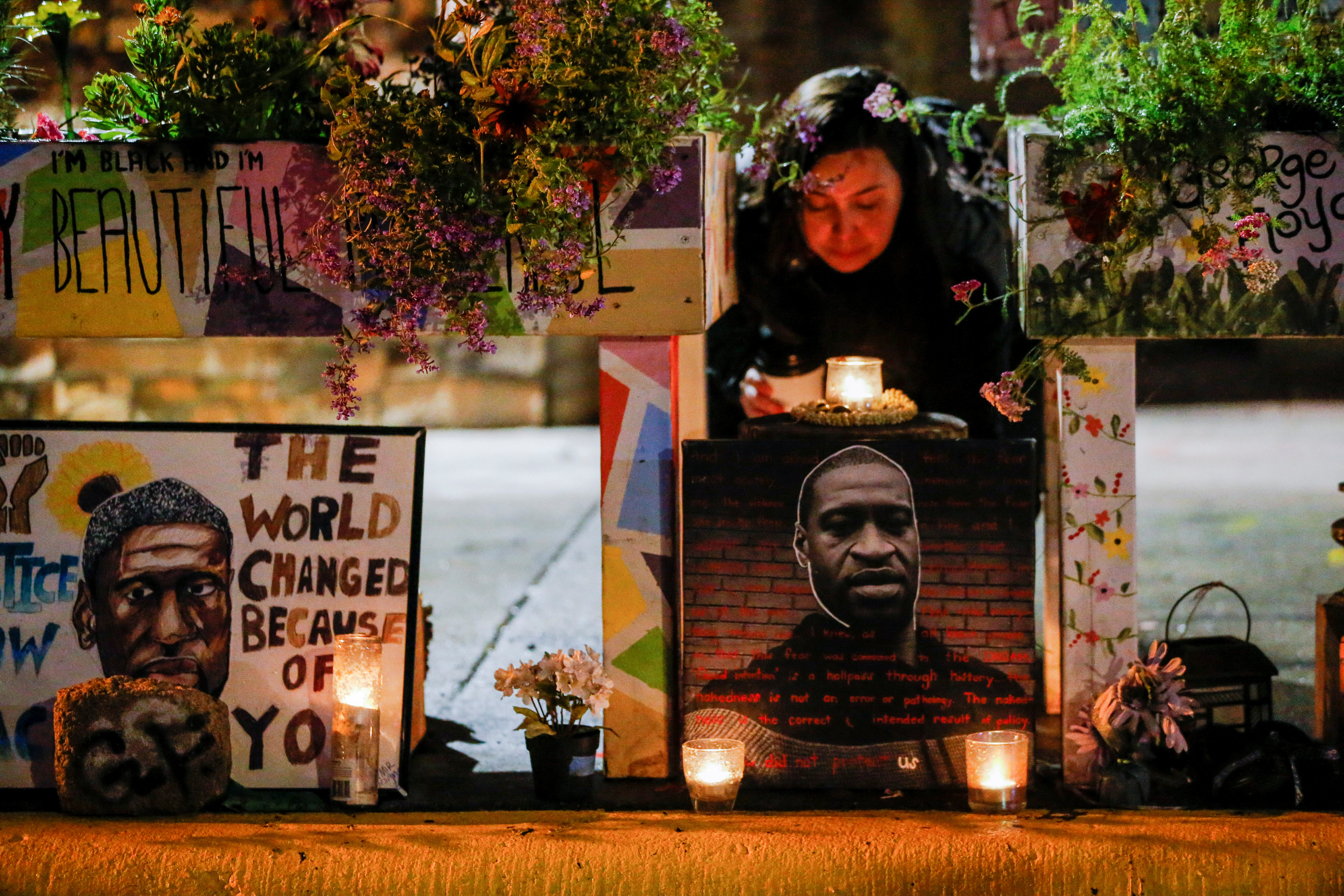
A woman takes part in a march and vigil on the second anniversary of the death of George Floyd, a Black man who was killed in 2020 by white police officer Derek Chauvin by kneeling on his neck, in Minneapolis, Minnesota, U.S. May 25, 2022. REUTERS/Eric Miller

Former Minnesota police officer J. Alexander Kueng poses in a booking photograph at Hennepin County Jail in Minneapolis, Minnesota, U.S. June 3, 2020. Hennepin County Sheriff’s Office/Handout via REUTERS.
Categories
Audio Sources - Full Text Articles

Brittney Griner“s return reignites debate about prisoner swaps

2022-12-09T20:27:12Z

U.S. basketball player Brittney Griner, who was detained at Moscow’s Sheremetyevo airport and later charged with illegal possession of cannabis, walks after the court’s verdict in Khimki outside Moscow, Russia August 4, 2022. REUTERS/Evgenia Novozhenina

Thursday’s release of U.S. basketball star Brittney Griner in exchange for a convicted Russian arms dealer has resurfaced an old question: Do prisoner swaps do more harm than good?

Amid the celebrations following Griner’s return some critics, including members of Congress and federal law enforcement, argued such trades only encourage foreign states to target Americans to gain leverage over the United States.

Families of those detained abroad reject that argument, saying there is no hard evidence to support that and that the U.S. government should focus on deterring and punishing governments which wrongfully detain or imprison U.S. citizens.

The plight of American detainees abroad gained visibility after Griner’s arrest in February and as families stepped up their publicity efforts, concluding that years of quiet diplomacy did little to bring back their loved ones.

The details of Griner’s release highlight the painful trade-offs confronting the Biden administration. After months of negotiations — which U.S. officials had hoped would bring home both Griner and Paul Whelan, a former U.S. Marine Moscow accuses of spying — Russia was only willing to release Griner.

That trade meant a prison release for Viktor Bout, a Russian citizen U.S. authorities have called one of the world’s top illegal arms dealers and who was captured after a global manhunt.

“The Russians and other regimes that take American citizens hostage cannot pretend that there is equivalence between the Brittney Griners of the world and people like Viktor Bout, the so-called ‘Merchant of Death,'” said Senator Bob Menendez, Democratic chairman of the Senate Foreign Relations Committee.

“We must stop inviting dictatorial and rogue regimes to use Americans overseas as bargaining chips.”

The detention of Americans overseas is not new. From the Soviet Union’s capture of U-2 pilot Francis Gary Powers in the 1960s to the Iran hostage crisis of the 1970s and the more recent imprisonment of U.S. citizens in North Korea, Iran and China, administrations have wrestled with the question of whether and when to negotiate.

The problem has become acute, with some governments seemingly using arbitrary detention as a negotiating tactic. In one such case in 2016, North Korea detained American college student Otto Warmbier during a dispute with the international community over that country’s missile launches. Warmbier died just days after his return.

At the same time, U.S. detainees’ friends and families are wielding public pressure on the administration. Brittney Griner’s February arrest in Moscow on charges of possessing vape cartridges containing cannabis oil triggered a surge of support from fans, celebrities and politicians calling for her release and criticizing the Biden administration for not doing more.

Many of the families argue that the U.S. should be willing negotiate and discount the argument that prisoner swaps lead more countries to grab Americans.

“I’m not aware of any concrete evidence that this will encourage more hostage-taking,” said Harrison Li, son of Chinese-American Kai Li, detained by China since 2016. “And I think the important thing to emphasize is the executive order that President Biden put out, which is very clear in providing for proactive, punitive measures that can be placed on these countries.”

Biden in July signed an executive order authorizing U.S. government agencies to impose financial sanctions and other measures on those involved in the wrongful detention of Americans.

Families say they haven’t seen forceful implementation of the order.

The United States does not provide an official figure for how many U.S. citizens are held abroad, but the James W. Foley Legacy Foundation, named after an American journalist abducted and killed in Syria, says that more than 60 U.S. citizens are wrongfully detained in about 18 countries.

Beyond the question of whether prisoner swaps incentivize detentions, the administration also faces criticism from law enforcement, where some question the wisdom of trading high-profile convicts like Bout.

“I don’t think you negotiate with terrorists, it’s a slippery slope, it doesn’t end well,” said Robert Zachariasiewicz, a former U.S. Drug Enforcement Administration agent who helped lead the team that arrested Bout.

“I’ve spoken to a great number of people throughout the Department of Justice at every level. They’re frustrated, they’re disappointed, they’re disenfranchised.”

The administration acknowledges the difficulties.

“Negotiations for release of wrongful detainees are often very difficult — that’s just a reality — in part because of the price that must be paid to bring Americans home to their loved ones and in part because the immediate results can feel unfair or arbitrary,” White House spokesperson Karine Jean-Pierre said after the news of Griner’s release.

Those hard choices meant Washington could either leave Whelan in Russian custody or else return empty-handed after months of negotiations. Whelan’s family called the situation “a catastrophe.”

“Where are all these people with their other solutions on how we get Americans back?” asked Elizabeth Whelan, sister of Paul Whelan. “What’s the alternative? Yes it’s terrible to send someone like Viktor Bout back, for sure, but it means we get Americans home.”

Categories
Audio Sources - Full Text Articles

How did Hanukkah — a holiday about war — get so schlocky?

Stores do not have a great record with Hanukkah. Every year, earlier and earlier, it seems like red and green takes over everything; the other day, I walked past a store that sells bones, taxidermy and fossils, and even it was dominated by a Christmas display. Hanukkah, meanwhile, is usually relegated to a few blue and white Stars of David in a corner and an endcap of candles and matzo. (Why is there always matzo?)

And then there’s the Hanukkah merchandise. The wrong number of branches on the menorah. Dreidels with incorrect letters, or letters printed upside down. Kitschy T-shirts with groan-worthy puns. (“Oy to the world.”) Pillows featuring Passover slogans embroidered next to menorahs. Even Hanukkah trees, wreaths, stockings and, yes, Santa Claus figurines because anything blue and white is Jewish — right?

This year, it seems like the trend of terrible Hanukkah merch is finally changing; finally, some retailers are getting it right. Target has Hanukkah pajamas that are actually kind of cute. The menorahs (well, mostly) have nine branches. But a lot of the options still feel, well, off. 

Sure, there are fewer overt mistakes. But most options still seem pretty divorced from the holiday. Brand Rae Dunn — famous for causing Midwestern moms to fight over mugs at Home Goods — is selling mugs with kitschy slogans like “Love you a latke.” There’s a gnome holding a “live, laugh, latke” sign.

Some more Rae Dunn mugs. Courtesy of HomeGoods

Even the less punny, more serious designs strive to be inspirational with sayings about spreading light to the world. “May your holiday be as bright as a fully-lit menorah,” says a piece of decorative wall art at Bed Bath & Beyond. A mug at Target features an illustration of sufganiyot labeled “filled with love.”

Do they know that Hanukkah is about war, not peace? In the real Hanukkah story, a small group of zealous Jews revolt against the Seleucid empire, as well as their fellow assimilated or Hellenized Jews.

Now that stores (except Walmart) seem to have finally learned how many candles there are on a menorah, I wondered if we might go even further. Perhaps we’re ready for a movement to get away from the Christmas-lite kitsch that defines the holiday. So I talked to one of the only people offering Hanukkah merch that embraces the holiday’s true spirit.

‘Less assimilation, more celebration’

Rachel Kenneth is well positioned to observe the trends in Hanukkah merch; last year, she launched an Instagram account, @hanukkahfails, to track the worst — and, occasionally, the best — of the available products. 

After collecting all the worst Hanukkah merch, including cringey puns and misnumbered menorahs, on her Instagram account, Kenneth jokingly made a mockup of some shirts that felt more legitimately in the Hanukkah spirit, such as a T-shirt that said “Revolt and Rejoice” and a baby onesie reading “guerilla warfare” to reference the Maccabees’ fighting spirit.

The whole thing started out as a “lark,” she said. But to her surprise, there seemed to be actual demand. So this year, she launched a line of merch featuring slogans like  “less assimilation, more celebration” and “death, destruction & dreidels” on T-shirts, sweatshirts and hats.

Her designs, which feature cheery graphics of Stars of David and dreidels, are a clear spoof of the usual Hanukkah options, which are so focused on being inspirational that they miss the real story of the holiday.

“The live-laugh-love-ification of Hanukkah is everywhere,” she said. “Hanukkah is really not about love, it’s really not. It’s not anywhere in the story. We do all gather, so I guess implicit in that is coming together as family or friends, and there’s an element of love there. But it has nothing to do with Hanukkah. And peace — I suppose after the temple was destroyed and rededicated, there was peace?” 

“Last year I wanted the Hanukkah gnomes to go away, and this year I want the ‘live laugh love’ to go away,” she said, laughing. “I’m a little bit, for lack of a better word, grinchy, this time of year.”

Kenneth, who lives in New York, emphasized that she’s glad for any representation of Hanukkah. She grew up in North Florida — which, she made sure to note, is not the part of Florida with the Jewish retirees — and there was little understanding of Judaism outside of her immediate community. She’s glad that people have the opportunity to celebrate Hanukkah in whatever way they want.

“People from more rural areas are happy just to have anything. So it’s kind of a luxury to be picky about it,” she said. 

But she still wishes there were more options, especially at a time of rising antisemitism. Kenneth pointed out that the real story of Hanukkah, with its complex themes about persecution and assimilation, feels more relevant than ever. 

“I hate to be so serious,” she said. “There’s so much intelligent discourse we could be having this time of year. And instead we’re just making more dreidel puns.”

The post How did Hanukkah — a holiday about war — get so schlocky? appeared first on The Forward.

Categories
Audio Sources - Full Text Articles

Griner case latest in string of high-profile prisoner swaps

Associated Press (AP) — Delicate negotiations between the United States and Russia led to basketball star Brittney Griner’s return Friday in exchange for notorious arms dealer Viktor Bout, once nicknamed “the Merchant of Death.”

It’s the latest in a series of high-profile prisoner swaps involving Americans detained abroad. Here is a look at some of the most notable exchanges.

___

FRANCIS GARY POWERS, 1962

Perhaps the most famous one came at the height of the Cold War when Powers, a high-altitude U-2 spy plane pilot who was shot down over the Soviet Union in 1960, was exchanged on a German bridge for Russian spy Col. Rudolph Abel.

The swap was depicted in Steven Spielberg’s 2015 movie “Bridge of Spies.”

Powers was criticized by some for allowing himself to be captured but cleared of wrongdoing. Documents declassified in 1998 show that Soviet intelligence gained no vital information from him, according his biography on the National Air and Space Museum’s website.

___

NICHOLAS DANILOFF, 1986

In August 1986, Gennadiy Zakharov, a 39-year-old Soviet physicist and United Nations employee, was arrested by the FBI on federal espionage charges.

Days later Daniloff, the Moscow bureau chief for U.S. News & World Report, was arrested by the KGB after a Soviet acquaintance handed him a closed package containing maps marked “top secret.”

The administration of President Ronald Reagan called Daniloff’s detention a “setup,” though Moscow denied it was retaliation for Zakharov’s arrest.

That September, Daniloff was released and Zakharov was allowed to leave the U.S.

___

BOWE BERGDAHL, 2014

Bergdahl, a U.S. Army sergeant, was handed over to U.S. special forces in May 2014 after nearly five years in captivity in Afghanistan and arrived at at Fort Sam Houston in San Antonio the following month.

In exchange, the United States released five Taliban prisoners being held at the U.S. military prison at Guantanamo Bay, Cuba.

Bergdahl had vanished from a base in Afghanistan’s Paktika province near the border with Pakistan in June 2009 and was called a deserter by some. He pleaded guilty to desertion and endangering his comrades in October 2017 and was dishonorably discharged, but was not imprisoned.

___

TREVOR REED, 2022

Earlier this year Reed, a Marine veteran imprisoned in Russia for nearly three years, was swapped for Konstantin Yaroshenko, a Russian pilot who had been serving a 20-year federal sentence for conspiring to smuggle cocaine into the U.S.

Reed was arrested in summer 2019 and later sentenced to nine years in prison after Russian authorities said he assaulted an officer while being driven to a police station following a night of heavy drinking.

The U.S. government said he was unjustly detained, and his family maintained his innocence.

Yaroshenko was arrested in Liberia in 2010 and extradited to the U.S on drug trafficking charges.

___

US-IRAN SWAP, 2016

Four Americans including Washington Post reporter Jason Rezaian, former U.S. Marine Amir Hekmati, Christian pastor Saeed Abedini and Nosratollah Khosravi-Roodsari were released from prison by Iranian authorities in January 2016.

The U.S. pardoned or dropped charges against seven Iranians.

Rezaian and Hekmati, who were both charged with espionage by Tehran, said they were tortured while in custody. Abedini was detained for compromising national security, presumably because of Christian proselytizing.

___

RUSSIAN SLEEPER AGENTS, 2010

In what was called the biggest spy swap since the end of the Cold War, 10 sleeper agents who infiltrated suburban America were sentenced to time served and deported in July 2010 after pleading guilty to conspiracy.

They included Anna Chapman, whose sultry photos on social media sites made her a tabloid sensation.

They were exchanged for four Russian prisoners convicted of spying for the West.

___

List compiled by Associated Press writer Mark Pratt in Boston.

Categories
Audio Sources - Full Text Articles

As the National Security Strategy is released, can the Coast Guard stay “Always Ready”?

By Brad McNally

Coinciding closely with the release of the National Security Strategy (NSS) was the release of the United States Coast Guard Strategy (CGS). This was the first high-level service strategy document released by the Coast Guard under new Commandant Admiral Linda Fagan. It built upon the themes of “tomorrow looks different, so will we” and “readiness, resilience, and capability” that she laid out when she took over as the Coast Guard’s senior officer this summer. The CGS lays out a robust strategic framework based on three cornerstones: transforming the Coast Guard’s workforce, sharpening its competitive edge, and advancing its mission excellence.

The NSS and CGS depict no shortage of global challenges, including climate change, energy security, transnational criminal organizations, challenges to the rules-based order, natural disasters, and geopolitical changes. While many of these challenges are not new, they are dynamic and evolving. The Coast Guard has long been operating in the high latitudes — the Arctic and Antarctic — and is one of the few government entities which does so consistently. As the climate changes and the Arctic becomes more accessible, there will be new challenges related to tourism, natural resource extraction, new shipping lanes, and an increased military presence from other nations looking for influence in the region. Recent incidents show that the maritime commons are becoming more contested: efforts by transnational criminal organizations such as drug cartels to exploit the vastness of the oceans for illicit means, and actions taken by foreign-flagged vessels fishing far from where they launched, that were dangerous and not in compliance with international norms. The Coast Guard must remain committed to providing the exceptional service the nation expects in legacy missions such as search and rescue, law enforcement, disaster response, waterways management, and industry engagement. Yet, it is also adapting to meet new and in some cases yet unknown challenges in non-escalatory ways.

The NSS dedicates an entire section to “investing in our strength.” Due to its multi-mission nature conducting humanitarian response, environmental stewardship, law enforcement, and regulatory work, its membership in the intelligence community, and its status as a branch of the armed forces, the CGS lays out a strong case for the Coast Guard’s unique capability to build and sustain partnerships at multiple levels internationally and domestically. With the NSS’s heavy focus on partnerships and cooperation and the Indo-Pacific Strategy specifically mentioning the Coast Guard by name, there is no doubt the Coast Guard will be expected to do more in this arena. This will be especially true in Oceania where the Coast Guard’s unique capabilities in search and rescue, maritime law enforcement, and small vessel operations make it a natural partner for many small island nations in the region. The Coast Guard has capitalized on the recent arrival of new fast response cutters by deploying the boats throughout the region to bolster foreign partner relations and combat illegal, unregulated, and unreported fishing. Funding from Congress for additional cutters, training teams, local liaisons, and mission support needs is required to create a sustained presence in the region and realize the outsized impact the Coast Guard can have on the NSS’s stated goal of “promoting a free and open Indo-Pacific.”

Mirroring the NSS’s focus on “investing in our people” and “modernizing and strengthening our military,” Fagan states early in the CGS, “Delivering improvements for our Coast Guard workforce is my top priority.” Revolutionizing talent management and recruiting, modernizing learning, and improving healthcare and family services are the CGS’s focus for transforming its workforce. The Coast Guard must seize the opportunity to revamp its training systems with a move toward more virtual in-person and virtual self-paced training. Doing so will both help deal with austere budget realities and deliver the training necessary to operate and maintain increasingly complex systems.

While training system improvements will pay long-term dividends, this is only true if there is a full workforce to train. Recruiting is an especially urgent issue as the Coast Guard is suffering from some of the same challenges as the Department of Defense (DOD) in fielding the all-volunteer force. Targeted bonuses and likely increases in 2023 to basic pay and housing allowances will help with recruiting and retention, however these are unlikely to solve the Coast Guard’s already existing personnel shortages. With an estimated 75% of the target population not eligible for military service, the Coast Guard is increasingly competing with the DOD and the civilian sector for the same personnel. The Coast Guard must act aggressively to ensure recruiting efforts can meet mission requirements. While the service has already more closely aligned its medical criteria for accession with the DOD, it should look for innovative ways to help more people who want to serve in the Coast Guard able to realize the opportunity. One area that should be explored immediately is something akin to the Army’s Future Soldier Prep Course, designed to help potential recruits with obesity or trouble on the Armed Forces Qualification Test meet the requirements to attend boot camp.

Harnessing technology to “increase security, prosperity, and values of the American people” comes up several times in the NSS. On this front, the Coast Guard has significant work to do but also tremendous opportunities. The CGS emphasizes investing in critical technology and critical infrastructure, a future-focused integrated approach, expanding a culture of innovation, and leveraging data to sharpen the service’s competitive edge. Although partnering with the DOD to operationalize new technology can be advantageous, the Coast Guard must find its own innovative ways to employ autonomy in the air, on the surface, and below the surface. The service can’t be paralyzed by the rapid increase in autonomous capabilities. It should move quickly to finalize policy and begin fielding more autonomous capabilities, even if only in small field trials. The longer it delays, the further behind it will fall, and the less it will be able to realize technological advantages when faced with challenges.

On the cyber front, it is now clear there is a real and persistent threat in the cyber domain that is here to stay. As the NSS highlights, even in future conflicts not contested in the maritime domain or even near American shores, there is an avenue by which our adversaries can strike deep within our borders. The waterways, ports, navigation aids, vessels, vehicles, and users collectively known as the Maritime Transportation System, account for 90% of global trade travel, $5.4 trillion of annual commerce in the United States, and 31 million American jobs, per the American Association of Port Authorities. It is vulnerable to cyberattacks in ways not previously seen, and must be defended.

Dealing with this threat is one of the greatest challenges to the Coast Guard’s “Always Ready” posture. Previously this meant being ready and responding in the air, on shore, and at sea. It now must include virtually, which is a big leap for the Coast Guard and industry. Given current cyber threats from Russia and China, the Coast Guard should continue investing in cyber security for its own internal networks and accelerate working with industry to strengthen cyber resilience in the larger Maritime Transportation System.

The Coast Guard must maintain its existing strong network of domestic relationships at the federal, state, local, and tribal levels, which are paramount to national security. It must maintain legacy capabilities while developing new ways of operating and uses of technology that meet emerging challenges. And it must safely coexist with adversarial entities who may not share the same level of adherence to international norms. Underpinning all of this are multiple long-term acquisition programs to replace its aging surface fleet, sustain aviation capabilities, improve C5I systems (command, control, communications, cyber, and intelligence), and replace or repair shore infrastructure, including aging buildings, hangars, and piers. To successfully execute all of this, the Coast Guard will need continued support from Congress in an austere budget environment, and it will need to manage these acquisitions — which are some of the largest in the service’s history — effectively.

The CGS lays out an aggressive path to ensure the service can meet the challenges associated with rapid technology, workforce, and geopolitical change. However, it will also be necessary to keep the Coast Guard postured to support the NSS and at the forefront of saving lives, protecting the waterways, defending the country, and remaining “Always Ready.”

The views expressed herein are solely those of the author and do not necessarily represent the views of the U.S. government or the Brookings Institution.


2019-06-05T075011Z_1481254124_RC1F607036
fblike20.png pinterest20.png twitter20.png email20.png rss20.png  
WP Radio
WP Radio
OFFLINE LIVE