Categories
Audio Sources - Full Text Articles

Explainer: Why did past targets to protect nature fail over the last decade?

2022-12-09T06:05:42Z

This month’s U.N. biodiversity talks in Montreal aim to hammer out a new, global agreement. But this isn’t the first time governments have tried to halt environmental loss through agreed targets.

In fact, many of the 24 conservation targets under discussion now aim to avoid past mistakes and improve on the world’s last set of conservation goals – the Aichi Biodiversity Targets.

Here’s a look at the Aichi Targets that expired in 2020 with every single target still unmet.

The Aichi Targets, adopted during the 2010 U.N. Convention on Biological Diversity (CBD) summit in Nagoya, located in Japan’s Aichi prefecture, included goals such as reducing deforestation by at least half during the coming decade and curbing pollution so that it no longer harmed ecosystems.

Many of the targets, however, included vague language and did not hold countries to specific action, experts say.

After parties adopted the Aichi targets, they were expected to devise their own national biodiversity strategies that would mimic the goals laid out by Aichi. Nearly all parties created these strategies, but most were never fully implemented.

The most notable Aichi objective — and one of the few to include a numerical goal — aimed to protect or conserve 17% of all land and inland waters and 10% of the ocean by the end of the decade.

While some progress was made toward that goal, the world ultimately fell short. Today about 15% of the world’s land and 8% of ocean territories are under some form of protection, though the level of protection varies.

And no single country met all 20 Aichi Targets within its own borders, according to a September 2020 U.N. assessment.

About 10% of the targets saw no significant progress, the assessment found. Six of the targets, including the land and ocean conservation target, were deemed “partially achieved.”

“At a global level, none of the Aichi Biodiversity Targets were met or achieved, but we also know that some progress was made at the national level in a number of countries,” said Elizabeth Maruma Mrema, executive secretary of the CBD.

In the end, Aichi was deemed a failure by the United Nations and the CBD secretariat called on parties to come up with another guiding document to direct conservation efforts through 2030 and beyond.

A lack of clearly defined metrics by which to gauge progress made the Aichi goals tough to implement, experts say.

“Aichi was made of aspirational targets, which was great for … enabling people to do a lot, but not great for communication,” said Basile van Havre, who is helping mediate negotiations on the new targets on behalf of the CBD.

One of the reasons the world was able to meet the goal for conserving 17% of land areas globally, he said, was simply that the goal’s success could be defined by that single number.

“It’s important to have measurable targets,” he said.

Monitoring and reporting success was also a big issue with Aichi. Countries largely failed to update others on the progress they were — or were not — making.

“A key priority for us … is the agreement on robust monitoring, planning, reporting and review framework,” said Hugo Schally, a biodiversity negotiator with the European Union.

“Because that is what made the Aichi framework so ineffective, and that’s what generated these negotiation processes.”

A lack of financing to help developing countries meet the Aichi goals was also an obstacle to their success – a point that has led negotiators to include financing plans within the draft being negotiated at the Montreal talks.

The Global Environment Facility, the primary source of financing for international biodiversity protection, has collected around $5 billion from 29 countries for the funding period from 2022 to 2026.

That is hardly enough to make up the $711 billion funding gap per year estimated by a 2019 assessment by several conservation institutes.

The Aichi targets also failed to garner buy-in from governments beyond the environmental ministers who brokered the deal.

“We need the whole of government,” said the CBD’s Mrema. “It’s not the matter to be left to the ministries of environment alone. This is one of the lessons we’ve learned from the failure of the Aichi Biodiversity Targets.”

Related Galleries:

Delegates cheer after the Nagoya Protocol on genetic resources was agreed on at a plenary session of the 10th Conference of the Parties to the Convention on Biological Diversity (COP10) past midnight in Nagoya, central Japan October 30, 2010. REUTERS/Yuriko Nakao

Sea birds fly along the South rookery in St. George, Alaska, U.S., May 24, 2021. Picture taken May 24, 2021. REUTERS/Nathan Howard/File Photo
Categories
Audio Sources - Full Text Articles

Bill protecting same-sex, interracial unions set for passage

The Capitol is seen Wednesday evening as the House of Representatives works to approve the Respect for Marriage Act, a bill already passed in the Senate to codify both interracial and same-gender marriage, in Washington, Dec. 7, 2022. (AP Photo/J. Scott Applewhite)

The Capitol is seen Wednesday evening as the House of Representatives works to approve the Respect for Marriage Act, a bill already passed in the Senate to codify both interracial and same-gender marriage, in Washington, Dec. 7, 2022. (AP Photo/J. Scott Applewhite)

The Capitol is seen Wednesday evening as the House of Representatives works to approve the Respect for Marriage Act, a bill already passed in the Senate to codify both interracial and same-gender marriage, in Washington, Dec. 7, 2022. (AP Photo/J. Scott Applewhite)

WASHINGTON (AP) — The House is set to give final approval Thursday to legislation protecting same-sex marriages in federal law, a monumental step in a decadeslong battle for nationwide recognition of such unions that reflects a stunning turnaround in societal attitudes.

A law requiring all states to recognize same-sex marriages would come as a a relief for hundreds of thousands of couples who have married since the Supreme Court’s 2015 decision that legalized those marriages nationwide. The bipartisan legislation would also protect interracial unions by requiring states to recognize legal marriages regardless of “sex, race, ethnicity, or national origin.”

President Joe Biden backs the bill and said he will “promptly and proudly” sign it into law.

Democrats have moved the bill quickly through the House and Senate since the Supreme Court’s June decision that overturned the federal right to an abortion. That ruling included a concurring opinion from Justice Clarence Thomas that suggested same-sex marriage should also be reconsidered.

Roused to action by the court, the House passed a bill to protect the same-sex unions in July with the support of 47 Republicans, a robust and unexpected show of support that kick-started serious negotiations in the Senate. After months of talks, the Senate passed the legislation last week with 12 Republican votes.

House Speaker Nancy Pelosi, D-Calif., has said she is happy that the marriage legislation will be one of her last acts in leadership before stepping aside in January. “I’m so excited,” she said of the legislation, which she said will ensure that “the federal government will never again stand in the way of marrying the person you love.”

The legislation would not require states to allow same-sex couples to marry, as the Obergefell ruling now does. But it would require states to recognize all marriages that were legal where they were performed and it would protect current same-sex unions if the court’s 2015 Obergefell v. Hodges decision were to be overturned.

While it’s not everything advocates may have wanted, passage of the legislation represents a watershed moment. Just a decade ago, many Republicans openly campaigned on blocking same-sex marriages; today more than two-thirds of the public support them.

Democrats in the Senate, led by Wisconsin’s Tammy Baldwin and Arizona’s Kyrsten Sinema, slowly won over key Republican votes by negotiating an amendment that would clarify that the legislation does not affect the rights of private individuals or businesses that are already enshrined in current law. The amended bill would also make clear that a marriage is between two people, an effort to ward off some far-right criticism that the legislation could endorse polygamy.

In the end, several religious groups, including The Church of Jesus Christ of Latter-day Saints, came out in support of the bill. The Mormon church said it would support rights for same-sex couples as long as they didn’t infringe upon religious groups’ right to believe as they choose.

Still, most Republicans opposed the legislation and some conservative advocacy groups lobbied aggressively against it in recent weeks, arguing that it doesn’t do enough to protect those who want to refuse services for same-sex couples.

“Marriage is the exclusive, lifelong, conjugal union between one man and one woman, and any departure from that design hurts the indispensable goal of having every child raised in a stable home by the mom and dad who conceived him,” the Heritage Foundation’s Roger Severino, vice president of domestic policy, wrote in a recent blog post arguing against the bill.

In Congress, as public sentiment has shifted, Republicans have largely shied away from making that argument. On the House floor Wednesday night, a handful of Republicans voiced opposition over the legislation for process reasons — saying that it hadn’t gotten a full hearing in the House — or by arguing that the religious liberty provisions added by the Senate weren’t enough.

The bill’s supporters will be watching to see whether the 47 Republicans who previously backed the legislation will stick with it, and whether they could gain more votes especially now that it includes the additional religious liberty provisions negotiated by Senate Republicans. Heritage and other groups have been pushing Republicans who support the bill to switch their position.

The almost four dozen Republicans who supported the bill this summer represented a wide range of the GOP caucus — from more moderate members to Pennsylvania Rep. Scott Perry, the chair of the conservative hard-right House Freedom Caucus, and New York Rep. Elise Stefanik, the No. 3 House Republican. All four Republican members of Utah’s congressional delegation also supported the legislation. House Republican leader Kevin McCarthy voted against the measure.

The votes come as the LGBTQ community has faced violent attacks, such as the shooting earlier this month at a gay nightclub in Colorado that killed five people and injured at least 17.

“We have been through a lot,” said Kelley Robinson, the incoming president of the advocacy group Human Rights Campaign. But Robinson says the votes show “in such an important way” that the country values LBGTQ people.

“We are part of the full story of what it means to be an American,” said Robinson, who was inside the Senate chamber for last week’s vote with her wife and young son. “It really speaks to them validating our love.”

The vote was personal for many senators, too. The day the bill passed their chamber, Senate Majority Leader Chuck Schumer was wearing the tie he wore at his daughter’s wedding to another woman. He recalled that day as “one of the happiest moments of my life.”

Baldwin, the first openly gay senator who has been working on gay rights issues for almost four decades, tearfully hugged Schumer as the final vote was underway. She tweeted thanks to the same-sex and interracial couples who she said made the moment possible.

“By living as your true selves, you changed the hearts and minds of people around you,” she wrote.

Categories
Audio Sources - Full Text Articles

Cop who held Floyd’s torso to be sentenced for manslaughter

MINNEAPOLIS (AP) — The former Minneapolis police officer who kneeled on George Floyd’s back while another officer kneeled on the Black man’s neck is expected to be sentenced Friday to 3 1/2 years in prison for manslaughter.

J. Alexander Kueng pleaded guilty in October to a state count of aiding and abetting second-degree manslaughter. The plea came on the same day jury selection was set to begin in his trial. His guilty plea — along with another officer’s decision to let a judge decide his fate — averted what would have been the third long and painful trial over Floyd’s killing.

Floyd died on May 25, 2020, after former Officer Derek Chauvin kneeled on Floyd’s neck for 9 1/2 minutes as Floyd repeatedly said he couldn’t breathe and eventually went limp. The killing, which was recorded on video by a bystander, sparked worldwide protests as part of a broader reckoning over racial injustice.

Kueng kneeled on Floyd’s back during the restraint. Then-Officer Thomas Lane held Floyd’s legs and Tou Thao, also an officer at the time, kept bystanders from intervening. All of the officers were fired and faced state and federal charges.

Kueng, who is already serving a federal sentence for violating Floyd’s civil rights, will appear at Friday’s sentencing hearing via video from a low-security federal prison in Ohio. Kueng has the right to make a statement, but it’s not known if he will.

Floyd’s family members also have the right to make victim impact statements.

As part of his plea agreement, Kueng admitted that he held Floyd’s torso, that he knew from his experience and training that restraining a handcuffed person in a prone position created a substantial risk, and that the restraint of Floyd was unreasonable under the circumstances.

Kueng agreed to a state sentence of 3 1/2 years in prison, to be served at the same time as his federal sentence and in federal custody.

Kueng’s sentencing will bring the cases against all of the former officers a step closer to resolution, though the state case against Thao is still pending.

Thao previously told Judge Peter Cahill that it “would be lying” to plead guilty. In October, he agreed to what’s called a stipulated evidence trial on the aiding and abetting manslaughter count. As part of that process, his attorneys and prosecutors are working out agreed-upon evidence in his case and filing written closing arguments. Cahill will then decide whether he is guilty or not.

If Thao is convicted, the murder count — which carries a presumptive sentence of 12 1/2 years in prison — will be dropped.

Chauvin, who is white, was convicted of state murder and manslaughter charges last year and is serving 22 1/2 years in the state case. He also pleaded guilty to a federal charge of violating Floyd’s civil rights and was sentenced to 21 years. He is serving the sentences concurrently at the Federal Correctional Institution in Tucson, Arizona.

Kueng, Lane and Thao were convicted of federal charges in February: All three were convicted of depriving Floyd of his right to medical care and Thao and Kueng were also convicted of failing to intervene to stop Chauvin during the killing.

Lane, who is white, is serving his 2 1/2-year federal sentence at a facility in Colorado. He’s serving a three-year state sentence at the same time. Kueng, who is Black, was sentenced to three years on the federal counts; Thao, who is Hmong American, got a 3 1/2-year federal sentence.

___

Groves reported from Sioux Falls, South Dakota.

___

For more AP coverage of the killing of George Floyd: https://apnews.com/hub/death-of-george-floyd

Categories
Audio Sources - Full Text Articles

Reports: Many security lapses led to Texas inmate’s escape

HOUSTON (AP) — A multitude of security lapses such as inadequate strip searches, poorly applied restraints, a staffing shortage and an environment where correctional officers became complacent created the conditions that led to the May escape of a Texas inmate, resulting in the deaths of five people, according to two reviews of the incident that were released Thursday.

After Gonzalo Lopez, 46, fled a prison bus on May 12 during an escape in which he was able to break free from his restraints and cut through a caged area of the vehicle. He remained free for three weeks. Authorities fatally shot Lopez on June 2 but not before he had killed 66-year-old Mark Collins and his four grandsons — Waylon Collins, 18; Carson Collins, 16; Hudson Collins, 11; and Bryson Collins, 11 — on the family’s ranch near Centerville, located between Dallas and Houston.

The Texas Department of Criminal Justice, or TDCJ, conducted an internal review of the escape and also hired an outside firm to do an independent review.

Both reports found correctional officers who worked at the Hughes Unit, where Lopez was housed, and who were with him on the bus had violated procedures by not properly strip searching him and not ensuring that his handcuffs were secured and free from being tampered with.

If proper searches had been done, it’s likely they would have found what resembled a handcuff key that Lopez at one point hid in his mouth, as well as two 8-to-10-inch metal weapons that he used to cut through the metal grating of a security door, allowing him to overtake the driver, according to the reports.

“The fact is that if one of these actions was followed in compliance with existing policy, it is likely that the escape could have been prevented,” according to an independent review conducted by Miami-based CGL Companies.

In its internal review, TDCJ uncovered several errors. Correctional officers failed to use on Lopez a device known as the Body Orifice Security Scanner, or “BOSS chair,” which is designed to quickly detect metallic contraband within body cavities of inmates. Leg restraints were improperly placed on Lopez, leaving them loose. A device that’s put between handcuffs to block inmates like Lopez from accessing the keyhole was apparently not placed correctly and didn’t cover the keyhole, possibly helping his escape.

Additionally, two officers had falsified search logs indicating Lopez’s cell had been searched when it had not.

“Public safety is the core mission of TDCJ, and as an agency, we failed to meet that mission,” the agency’s Executive Director Bryan Collier said in a statement. “The agency has worked diligently to hold ourselves accountable, identify the failures that led to the escape, and take steps to ensure it never happens again.”

On the bus, Lopez, who had killed on behalf of Mexican drug cartels, tried to recruit some of the other 15 prisoners on board to join him, asking them if they were, “ready to rock and roll,” according to the reports by TDCJ and CGL Companies, the outside reviewer. One inmate initially said yes but changed his mind after realizing Lopez planned to kill the two officers on the bus, drive the bus to Interstate 45, hijack a car, murder the occupant, and drive to San Antonio until the search scaled down, according to the reports.

Both reviews found staff at the Hughes Unit “had become complacent, and circumvented security procedures in favor of hastily completing responsibilities in a cursory manner. These breakdowns appear to have become routine and a matter of regular practice rather than isolated incidents,” according to CGL’s report.

CGL said the escape also could have likely been prevented if staff at the Hughes Unit “would have scanned Lopez in the BOSS chair prior to transport, a task that would have added less than a minute onto the process.”

The conclusions by the two reviews are similar to many of the findings found in an investigation published earlier this week by the Houston Chronicle and The Marshall Project. The joint investigation also found that the first police officer who arrived after the bus crash didn’t chase or try to shoot Lopez as he fled and despite finding signs that Lopez was hiding out in the Centerville area, authorities failed to warn residents that Lopez could still be in the area.

The reports by TDCJ and CGL briefly mention the deaths of the Collins family but did not provide information on whether Centerville residents should have been warned when Lopez’s DNA was found inside a burglarized cabin on May 31.

Collins and his four grandsons, who were killed June 2, died from gunshots, sharp force injuries and stab wounds. Authorities say that after killing the family, Lopez stole an AR-15-style rifle and a pistol from their ranch, as well as a truck that he drove about 220 miles (350 kilometers) to Atascosa County, south of San Antonio. He was killed there by police.

Attorneys for the Collins family have notified the Texas agency that they plan to file a lawsuit against it over the deaths.

After its investigation, TDCJ initiated disciplinary action against more than 20 staff and supervisors. The agency has made several security changes since the escape, including increasing the required number of officers to three on every transport bus, and beginning the installation of video surveillance equipment on buses.

CGL also made several recommendations, including suggesting TDCJ reconfigure transport buses to improve security and develop strategies to reduce its staff vacancies. In the month before Lopez’s escape, 43% of correctional officer jobs at the Hughes Unit were vacant.

___

Follow Juan A. Lozano on Twitter: twitter.com/juanlozano70

Categories
Audio Sources - Full Text Articles

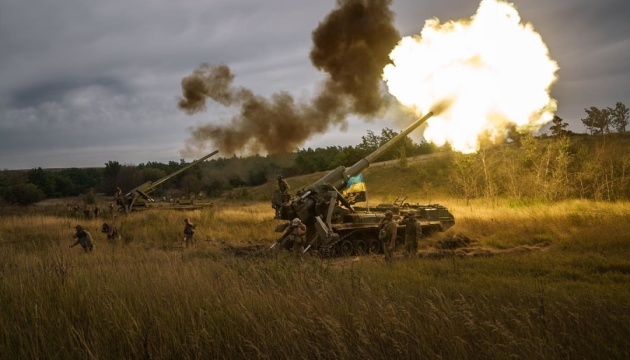
Ukraine Army strikes eight Russian command posts, 11 clusters

630_360_1663735718-305.jpg

Around the past working day, Ukraine’s Protection Forces have repelled enemy attacks in the vicinity of the Luhansk region’s Bilohorivka, and the Donetsk region’s Klishchiivka and Marinka.

The relevant assertion was designed by the Standard Staff members of the Armed Forces of Ukraine on Fb, an Ukrinform correspondent reviews.

On December 8, 2022, Russian troops launched five missile strikes and 3 air strikes, and opened fireplace with various launch rocket devices (MLRS) 54 instances.

According to the Typical Team, the menace of missile strikes on Ukraine’s crucial infrastructure and power services is persisting.

In the Siverskyi course, Russian invaders struck the Sumy region’s Khodyne, Sosnivka, Kindrativka and Zapsillia with mortars.

In the Slobozhanskyi route, Russian troops used mortars and cannon artillery to open fire on the Kharkiv region’s Strilecha, Ternova, Starytsia, Ohirtseve and Kupiansk.

In the Kupiansk path, Russian occupiers are holding the defense. The enemy shelled the Kharkiv region’s Synkivka, Pishchane and Pershotravneve, and the Luhansk region’s Novoselivske and Stelmakhivka with tanks and various artillery pieces.

In the Lyman course, Russian invaders launched artillery strikes on the Luhansk region’s Hrekivka, Makiivka, Ploshchanka, Nevske and Chervonopopivka, and the Donetsk region’s Torske and Hryhorivka.

In the Bakhmut and Avdiivka instructions, Russian troops go on attempts to conduct offensive steps. The enemy made use of tanks, mortars, cannon and rocket artillery to open up hearth on 25 settlements, such as the Donetsk region’s Berdychi, Andriivka, Verkhniokamianske, Berestove, Bilohorivka, Vesele, Soledar, Bakhmut, Opytne, Avdiivka, Pervomaiske, Marinka and Novomykhailivka.

In the Novopavlivka route, Russian invaders are holding the defense. The enemy shelled the Donetsk region’s Vuhledar, Prechystivka, Zolota Nyva and Velyka Novosilka.

In the Zaporizhzhia path, Russian occupiers employed tanks and artillery to open fireplace on 14 settlements, namely the Donetsk region’s Vremivka, Velyka Novosilka and Novopil, and the Zaporizhzhia region’s Dorozhnianka, Huliaipole, Novodanylivka and Stepove.

In the Kherson direction, Russian troops are conducting defensive steps. The enemy applied tanks and artillery to open fireplace on the Kherson region’s Beryslav, Kozatske, Antonivka, Komyshany, Dniprovske and Veletenske, and the outskirts of Kherson.

According to the Common Workers, Russian troops keep on struggling losses. On December 7, 2022, as Ukrainian forces inflicted hearth damage on enemy clusters in the vicinity of the Zaporizhzhia region’s Berdiansk, Tokmak, Melitopol, Polohy, Enerhodar, Dniprorudne and Vasylivka, Russian occupiers missing about 240 troops in wounded. Three ammunition depots and 20 military services gear models ended up destroyed. Tokmak Anti-Tuberculosis Dispensary, applied by Russians as a military medical center, is total of the Russian military services, who have been hurt.

Meanwhile, Ukraine’s artillery and missile units strike 8 Russian command posts, 11 staff,  ammunition and armed forces equipment clusters, and two ammunition depots.

Source link

The post Ukraine Army strikes eight Russian command posts, 11 clusters appeared first on Ukraine Intelligence.

Categories
Audio Sources - Full Text Articles

Asian shares higher as dollar retreats, risk events abound

2022-12-09T05:49:36Z

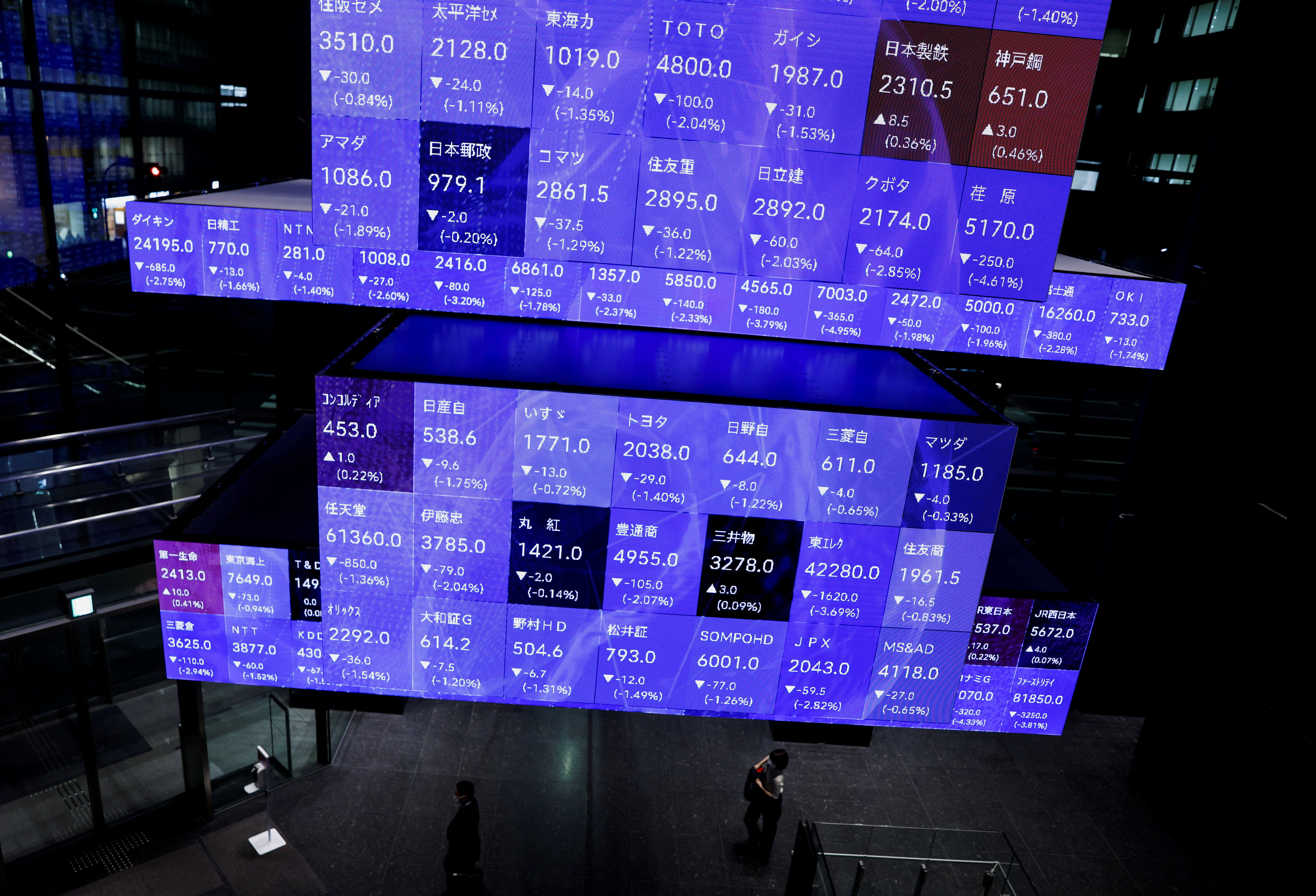
Visitors walk past Japan’s Nikkei stock prices quotation board inside a conference hall in Tokyo, Japan September 14, 2022. REUTERS/Issei Kato/File Photo

Asian shares tracked Wall Street higher on Friday amid hopes that China’s economy would pick up pace as COVID-19 curbs ease, although caution ahead of a week full of risk events, including the Federal Reserve’s policy meeting, could cap sentiment.

The U.S. dollar extended declines for the third straight day, retreating on the Japanese yen, euro and sterling.

The optimism in share markets looks set to extend to Europe, with the pan-region Euro Stoxx 50 futures 0.4% higher. S&P 500 futures rose 0.2%, while Nasdaq futures increased 0.3%.

In Asia, MSCI’s broadest index of Asia-Pacific shares outside Japan (.MIAPJ0000PUS) rose 1.1%, edging closer to a three-month high hit earlier in the week. For the week, it was also set to rise 1.1%.

Japan’s Nikkei (.N225) surged 1.2%.

China’s Premier Li Keqiang, in comments carried by state media, said on Thursday the country’s shift in COVID policy would allow the economy to pick up pace, a day after a top-level party meeting pledged to focus on stabilising growth while optimising pandemic measures.

Investors are piling back into battered Chinese shares even though many economists warn a recovery could be long and bumpy, with the risk of sharp surge in new infections.

Hong Kong’s Hang Seng index (.HSI) advanced 1.6%, with mainland developers (.HSMPI) up a whopping 7.3%. Chinese blue chips (.CSI300), however, saw more subdued gains.

Commodity prices also rallied, with prices for iron ore surging 4.5% on Friday to the highest in six months amid hopes of improved demand from China.

Analysts at Nomura expect 2023 to be a year of outperformance for Asia – with a return of 12% by the end of 2023, although the first quarter could be choppy as weak economic data and Fed’s late cycle hikes lead to softer sentiment.

“We turn even more optimistic on AeJ stocks (Asia excluding Japan) and expect a far better 2023, driven by China’s reopening/recovery push and as the Fed approaches the end of its tightening cycle in the months ahead.”

Apart from China optimism, investors are focused on U.S. producer price inflation figures later in the day for more signs about the health of the U.S. economy, after data overnight showed some loosening in the labour market, with weekly jobless claims rising moderately.

U.S. monthly consumer inflation data is also due next week, with economists forecasting inflation likely slowed slightly to 8.0% in November from a year earlier, compared with 8.2% in October.

Futures have priced in a near-certain possibility that the Fed will slow down its rate hike to 50 basis points next week, but the target U.S. federal funds rate would have to peak around 4.9% by next May.

“This slowing is not a signal that the central bank’s job is nearly done…the slower pace of hikes starts a new phase of the Fed’s tightening cycle,” said Brian Martin, head of G3 economics at ANZ.

“With inflation proving sticky and the labour market still buoyant, the risks to our 5.00% terminal view are to the topside.”

The Fed, the European Central Bank and the Bank of England are all set to announce interest rate decisions next week as policymakers continue to tap the brakes on economic growth through firmer rates to thwart stubbornly high inflation.

The U.S. dollar slid 0.2% against a basket of major currencies on Friday, on top of a drop of 0.4% overnight. It softened 0.4% against the Japanese yen to 136.04 yen.

The euro also rose 0.2% against the greenback to $1.0576, within a whisker of the five month high of $1.0594.

Treasury yields resumed edging lower on Friday, after snapping a three day losing streak the day before. They fell to the lowest in three years earlier in the week on expectations of slower growth or that a recession will curb the rise in rates.

The yield on benchmark 10-year Treasury notes eased 3 basis points to 3.4597%, compared with its U.S. close of 3.493%. The two-year yield touched 4.29%, down from its U.S. close of 4.312%.

The yield curve remains the most inverted since the early 1980s at around -83bps, pointing towards a U.S. recession in the near future.

In the oil market, prices rose after tumbling the day before amid fears a slowdown in the global economy would lead to reduced demand.

U.S. West Texas Intermediate (WTI) crude futures rose 0.7% to $71.96 per barrel, while Brent crude settled at $76.72 a barrel, 0.7% higher.

Gold was slightly higher. Spot gold was traded at $1796.69 per ounce.


Categories
Audio Sources - Full Text Articles

What Do Lessons from History Tell Us About the Future of War?

Michael Lind (moderator) – ASU Long run of War Fellow Co-Founder, New America Dr. Philip Bobbitt – Herbert Wechsler Professor …

supply

The post What Do Lessons from History Tell Us About the Future of War? appeared first on Ukraine Intelligence.

Categories
Audio Sources - Full Text Articles

As China loosens COVID restrictions, protesters fear retribution

2022-12-09T05:17:03Z

Late last month, Shanghai resident Pei was one of many people who came out in support of historic protests against China’s COVID-19 curbs, including filming several seconds of footage of a man being arrested on a street corner.

Almost immediately, Pei said, five or six plainclothes police grabbed him. He was taken to a police station and held for 20 hours, at times with his arms and legs tied to a chair, he told Reuters.

“The policeman who shoved me into the car tried to intimidate me by saying I should be worried if other people find out what I did. Feeling defiant, I told him, I will let the world know what you police are doing,” said Pei, 27. He asked to be identified only by part of his name for fear of repercussions.

Now, as many Chinese residents welcome a relaxation of lockdown measures that have crippled businesses and stoked unemployment, some protesters scooped up by China’s security apparatus face an anxious wait about their fate.

While Pei and other protesters were released with a warning, some rights lawyers and academics note President Xi Jinping’s hard line on dissent over the past decade, and say risks remain of further harassment and prosecution.

“‘Squaring the accounts after the autumn harvests’ is the Party’s way of dealing with people who have betrayed it,” said Lynette Ong, a University of Toronto professor, referring to the practice of delaying score settling until the time is ripe.

China’s Ministry of Public Security did not respond to a request for comment on the laws they might use against protesters. The Shanghai police also did not immediately respond to a request for comment on Pei’s description of how he was arrested or on what further actions they might take.

Last week, in a statement that did not refer to the protests, the Communist Party’s top body in charge of law enforcement agencies said China would crack down on “the infiltration and sabotage activities of hostile forces” and would not tolerate any “illegal and criminal acts that disrupt social order”.

Asked about the protests, China’s foreign ministry has said rights and freedoms must be exercised lawfully.

Reuters was unable to establish how many protesters are still in police custody. Social media appeals for details on the whereabouts of a handful of missing protesters remain online.

The protests, widely seen as a tipping point to an easing in tight COVID restrictions, largely petered out in several cities after police mounted a heavy presence on streets.

The repercussions of protesting in China have grown in recent years under Xi’s tenure, with the Ministry of Public Security introducing guidelines two years ago that have been used by local authorities to ban protesters from taking up jobs such as tour guides or insurance agents, and also make it harder for their family members to obtain government-related jobs.

Zhang Dongshuo, a Beijing-based lawyer who has handled rights cases in the past, said the levels of punishment for protesting in China vary widely.

Those deemed to be bystanders could be let off with a small fine and up to 15 days’ detention, while physical altercations with police could lead to jail terms for disrupting public order or “picking quarrels” and provoking trouble.

Those who shouted slogans calling for the ouster of Xi or the Communist Party – as seen in a number of protests across China – potentially face heavier charges of inciting or engaging in subversion of the state, Zhang said, which in the most extreme cases carry punishment of up to life in prison.

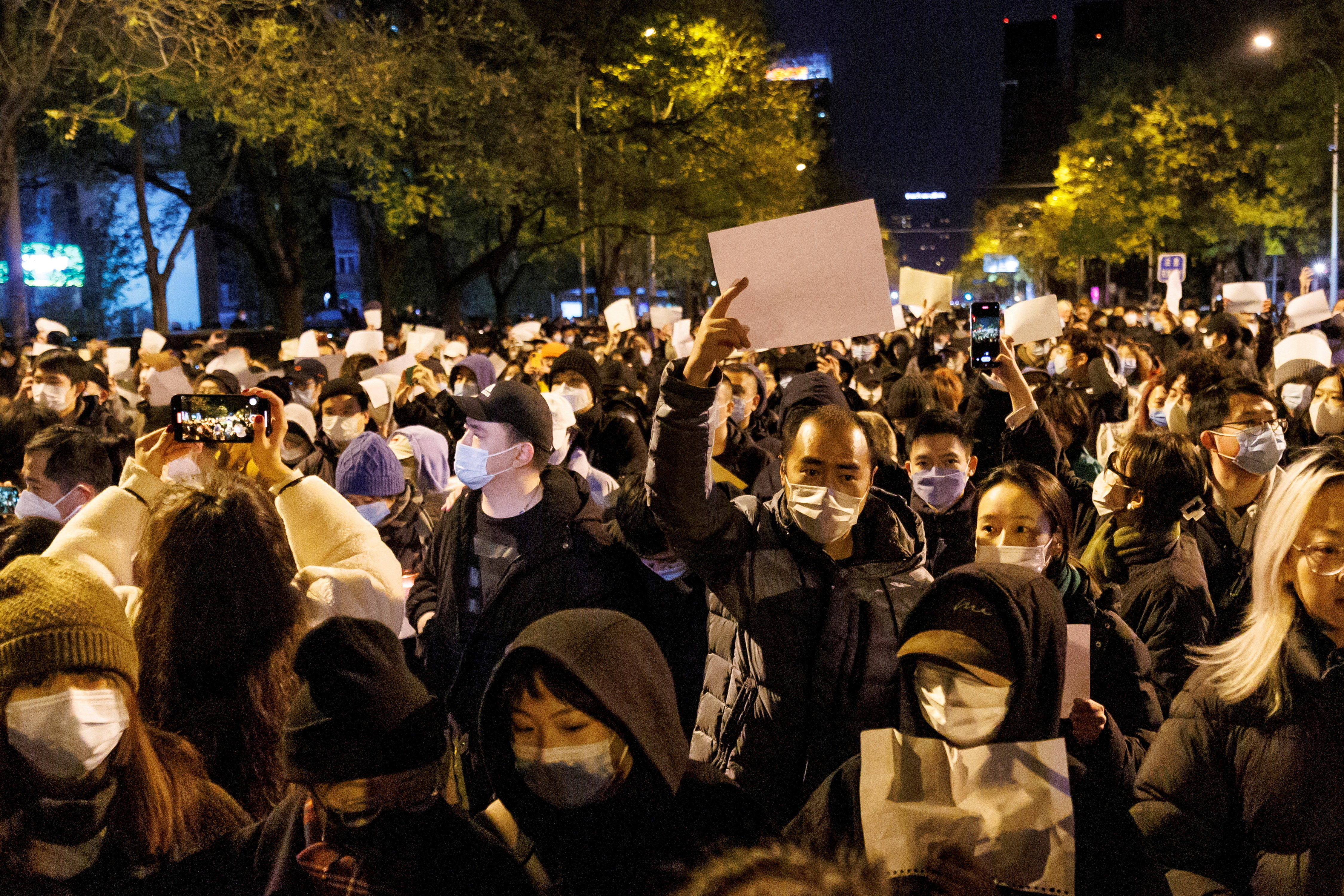
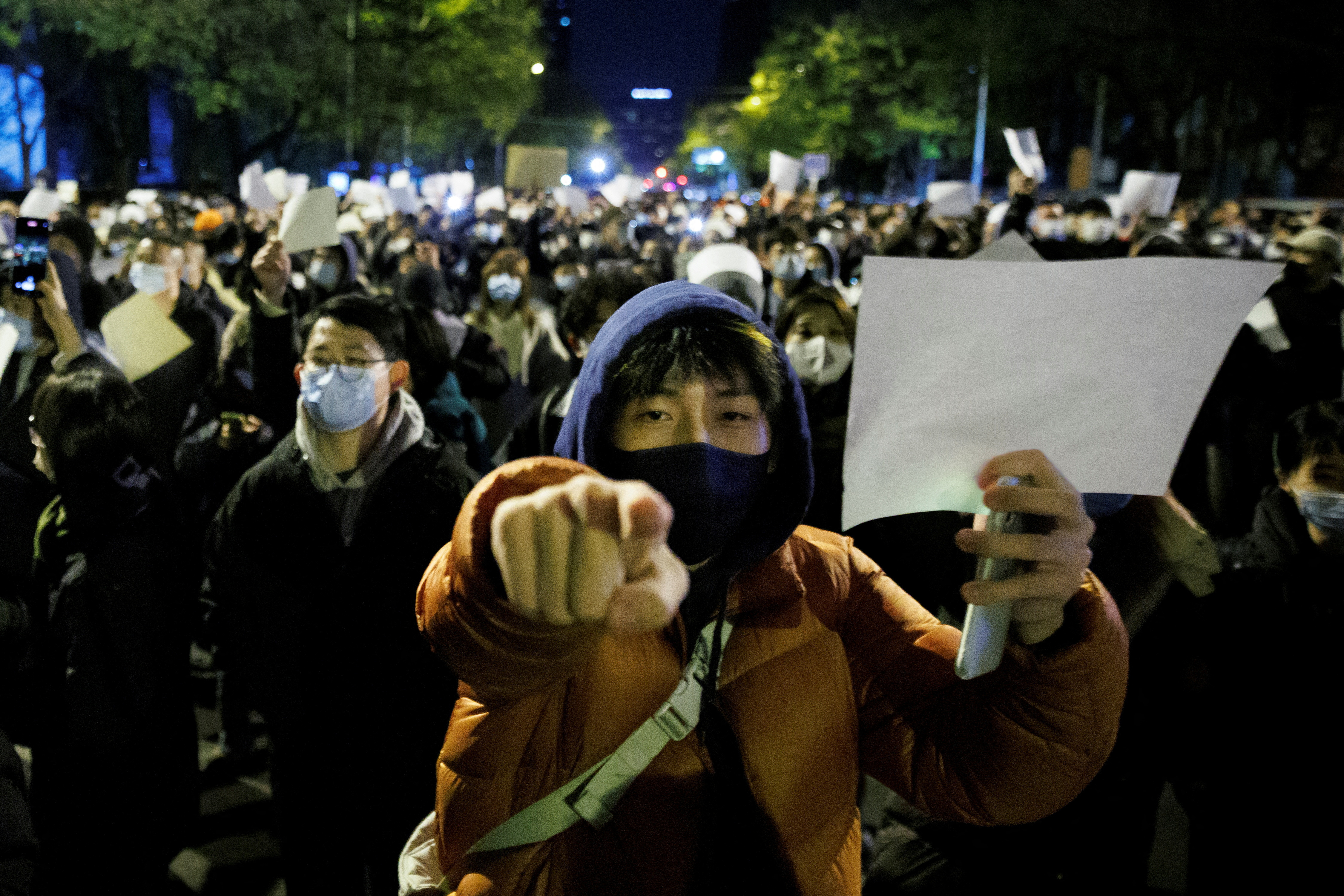
Eiro, another Shanghai protester who was detained after trying to stop police from taking away a fellow protestor, said that during her interrogation, police particularly wanted to know if anyone had distributed blank A4 sheets of paper that were a defining symbol of these protests, as well as the identities of protest organisers.

“The police said there’ll be no punishment for all of us this time, but may call us back after further investigation,” she told Reuters on an encrypted messaging app.

Pei, Eiro and other protesters Reuters spoke to said they were asked by police to sign letters of repentance, with some of them asked to read the letters aloud while being filmed.

During Hong Kong’s protracted anti-China, pro-democracy protests in 2019, thousands were arrested but only charged much later with offences such as rioting and subversion, and many are still in legal proceedings.

“I probably won’t go (protesting) again in the short term,” Eiro said. “Everyone was impulsive this time and had no experience. We hadn’t prepared well and there wasn’t any mature organisation and communication platform that could unite and organise everyone.”

During a meeting in Beijing last week with European Council President Charles Michel, Xi attributed the dissent in part on youths frustrated by the pandemic, according to one senior EU official.

Alfred Wu, assistant professor at Lee Kuan Yew School of Public Policy in Singapore, said a harsher crackdown was only more likely if authorities believed the protests to be organised and political in nature, rather than leaderless and spontaneous.

“They just sprang up organically because people were driven by a sense of hopelessness and desperation about the never-ending COVID restrictions,” Wu said.

For some, however, the desire for broader political freedoms remains undiminished even with the COVID relaxation measures.

“I don’t think this is good news or a victory in our struggle because what we are asking for is liberty,” said Eiro.

Despite the looming shadow of future reprisals by authorities, Pei said he had no regrets.

“It was worth it. It allowed me to personally see the Communist Party’s control over our speech, and to see how the freedom of the people under its rule is deeply restricted.”

Related Galleries:

People hold white sheets of paper in protest of coronavirus disease (COVID-19) restrictions, after a vigil for the victims of a fire in Urumqi, as outbreaks of the coronavirus disease continue in Beijing, China, November 27, 2022. REUTERS/Thomas Peter

People hold white sheets of paper in protest over coronavirus disease (COVID-19) restrictions, after a vigil for the victims of a fire in Urumqi, as outbreaks of COVID-19 continue, in Beijing, China, November 27, 2022. REUTERS/Thomas Peter
Categories
Audio Sources - Full Text Articles

Quiet streets, cautious firms signal China“s slow exit from zero-COVID

2022-12-09T05:18:02Z

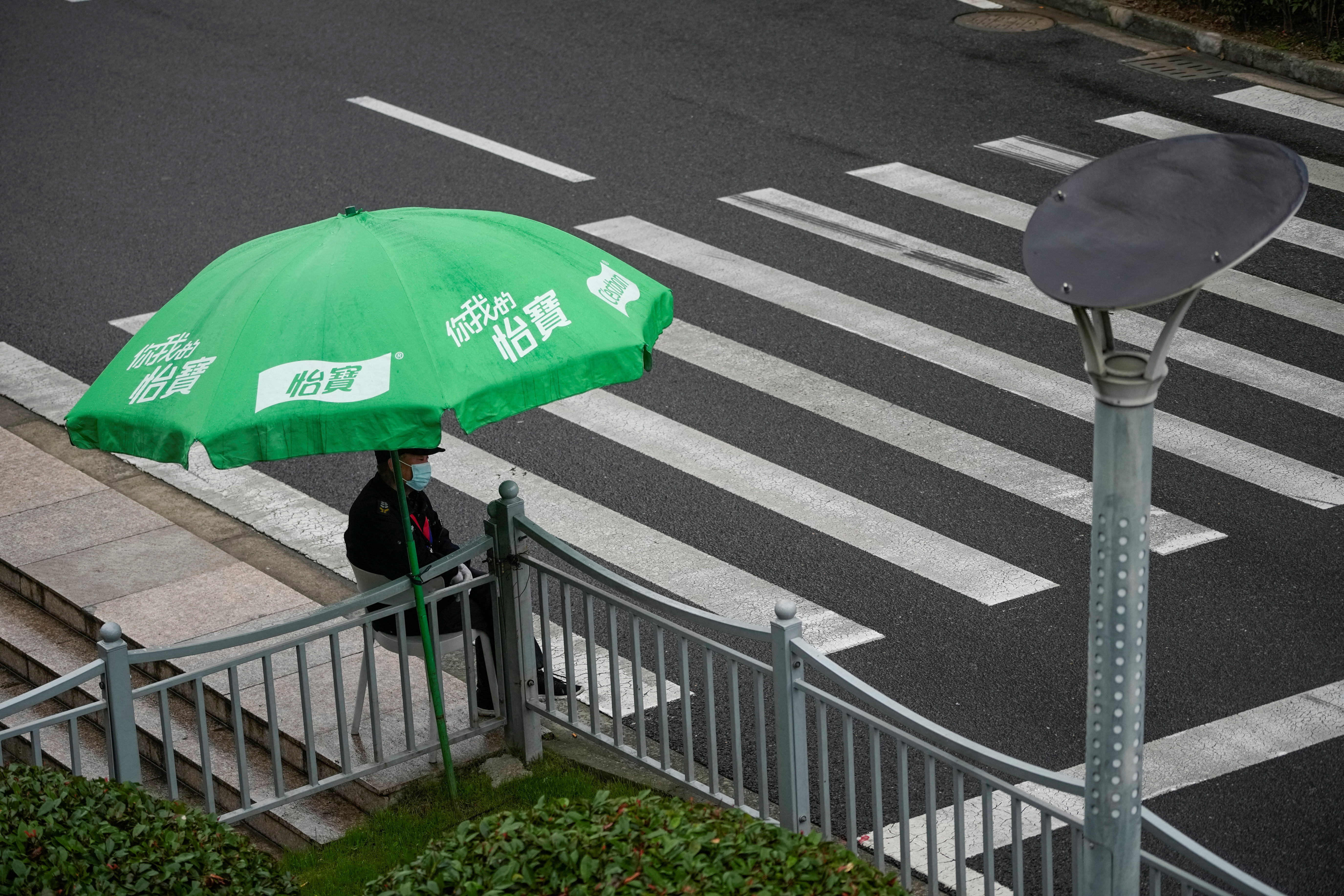
Judging by Friday’s quiet streets in the heart of China’s capital and city eateries adherence to virus curbs, the anxieties created by the ‘zero-COVID’ regime could hinder the world’s second largest economy’s return to health.

Though the government on Wednesday loosened key parts of the strict controls that kept the pandemic largely at bay for the past three years, many people and businesses appear wary of being too quick to shake off the shackles.

In the central city of Wuhan, where the pandemic erupted in late 2019, there were more signs of life with some areas busy with commuters on Friday. But locals say a return to normal is still a long way off.

“They’ve relaxed the measures but still, there’s nobody about,” said a taxi driver surnamed Wang, who didn’t want to give his full name.

“You see these roads, these streets…they ought to be, busy, full of people. But there’s no one. It’s dead out here.”

Yet China has been anything but placid during the past few weeks, with protests against the stifling COVID curbs in many cities across the country that marked the biggest show of public discontent since President Xi Jinping came to power a decade ago.

Little more than a month after the National Health Commission stressed commitment to its strict virus containment policy, saying it was “putting people and lives first”, it has sounded a retreat from “zero-COVID” and officials are now telling people they have less to fear.

Zhong Nanshan, a leading Chinese epidemiologist famed for combating the 2003 SARS epidemic, said that 99% of people now infected with the virus would recover in 7 to 10 days, in comments reported by the People’s Daily, controlled by the ruling Communist Party.

But there are signs the reassuring new message has still to convince many of the country’s 1.4 billion people.

With the need for tests dropped and most infected people now being allowed to isolate at home, some have embraced new found freedoms. For others, habits formed under months of stifling lockdowns, are proving hard to break.

There were several empty seats in what should have been peak rush hour for commuters on the Beijing subway on Friday morning, even though the city this week dropped the need to show negative tests to ride trains or enter offices.

Manufacturers and eateries remain cautious too, retaining COVID-19 curbs until they get a clearer picture of just how workplaces will be affected by the easing of stringent measures.

Businesses told Reuters they are expecting to have to grapple with long periods of absence by sick workers that could hamper operations, perhaps for months.

In downtown Beijing on Friday, a restaurant at a mall that serves local cuisine still doesn’t offer dine-in service while others on the same floor do.

“Although we are now allowed to resume eat-in service, our staff are sick and are still at home, so we haven’t got enough hands to serve meals,” a staffer told Reuters, requesting anonymity.

China’s current tally of 5,235 COVID-related deaths is a tiny fraction of its population of 1.4 billion, and extremely low by global standards. Some experts have warned that toll could rise above 1.5 million if the exit is too hasty.

Analysts expect China’s economy to rebound late next year as it follows the rocky path trodden by the rest of the world to open up and live with the disease. But a surge in infections will likely depress growth in the next few months.

A Reuters poll forecast China’s growth to slow to 3.2% in 2022, far below the official target of around 5.5%, marking one of the worst performances in almost half a century.

“China’s three years behind, so what’s going to happen in China is what happened in the rest of the world,” said Jeffrey Goldstein, a China-based consultant who helps foreign brands manufacture goods in Asia.

“There’s going to be chaos.”

Related Galleries:

A security guard wearing a face mask keeps watch of a street at Lujiazui financial district, as the coronavirus disease (COVID-19) outbreak continues, in Shanghai, China, December 9, 2022. REUTERS/Aly Song

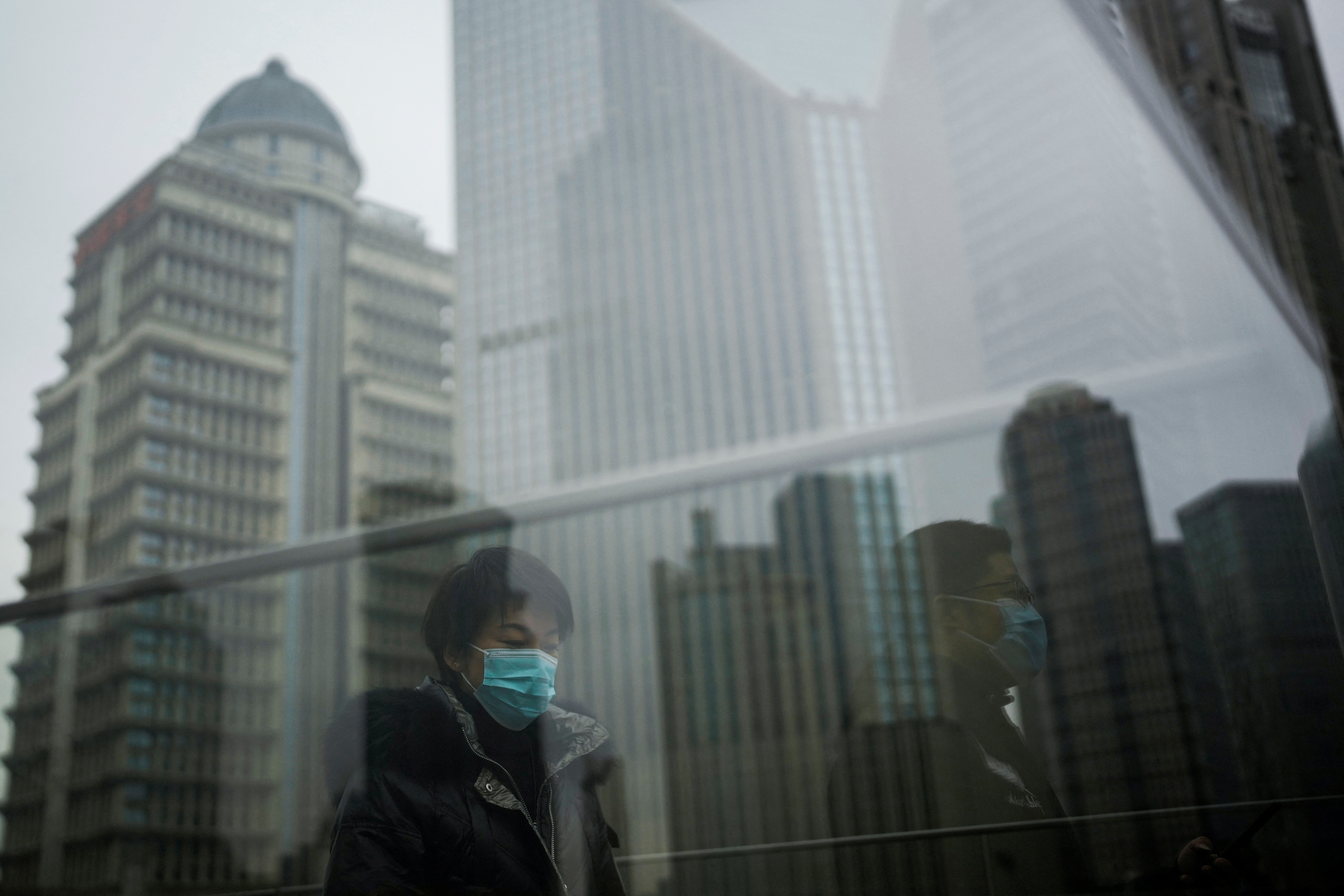
People wearing face masks walk at Lujiazui financial district, as the coronavirus disease (COVID-19) outbreak continues, in Shanghai, China, December 9, 2022. REUTERS/Aly Song

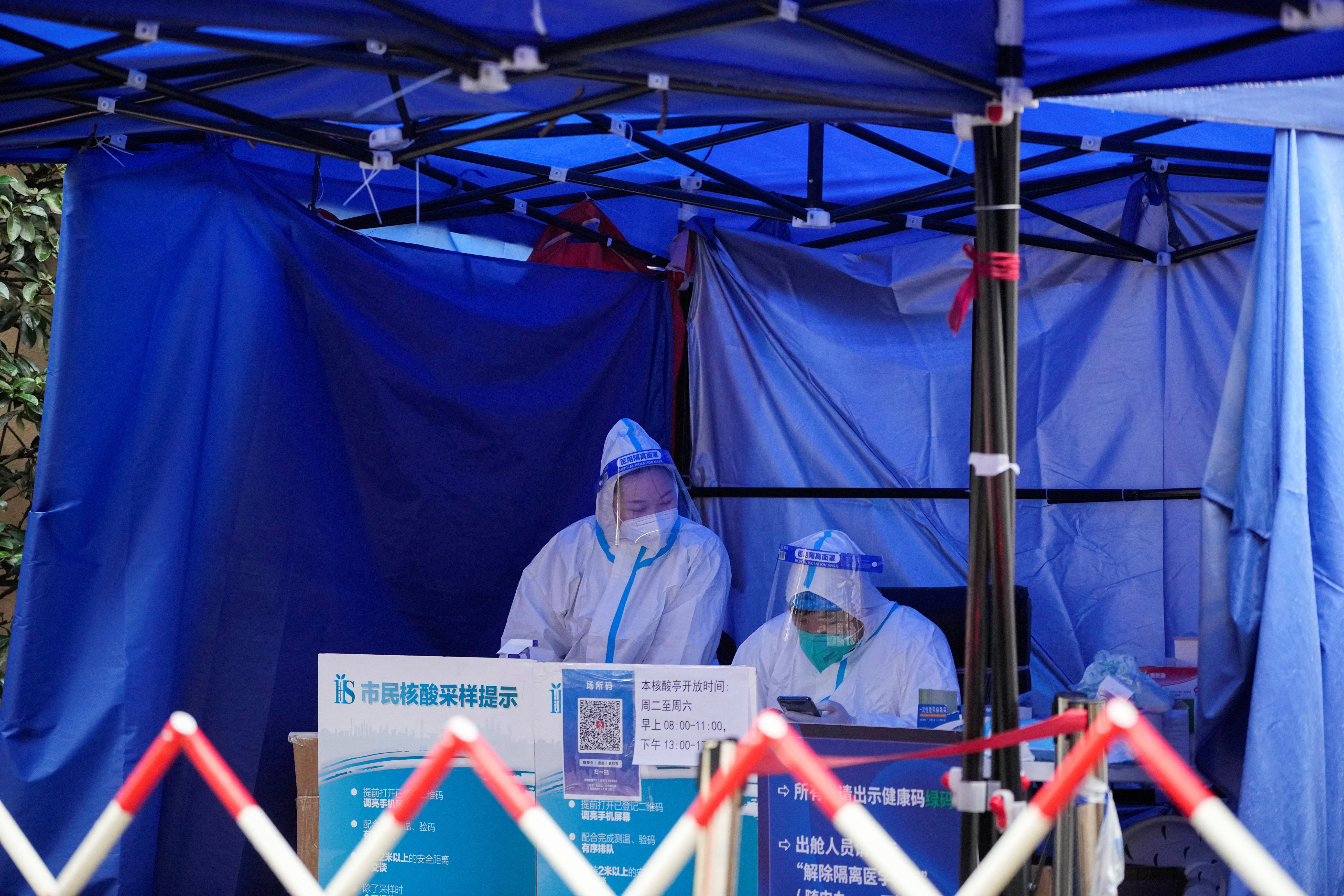
Workers in protective suits wait for people at a nucleic acid testing site, as the coronavirus disease (COVID-19) outbreak continues, in Shanghai, China, December 9, 2022. REUTERS/Aly Song

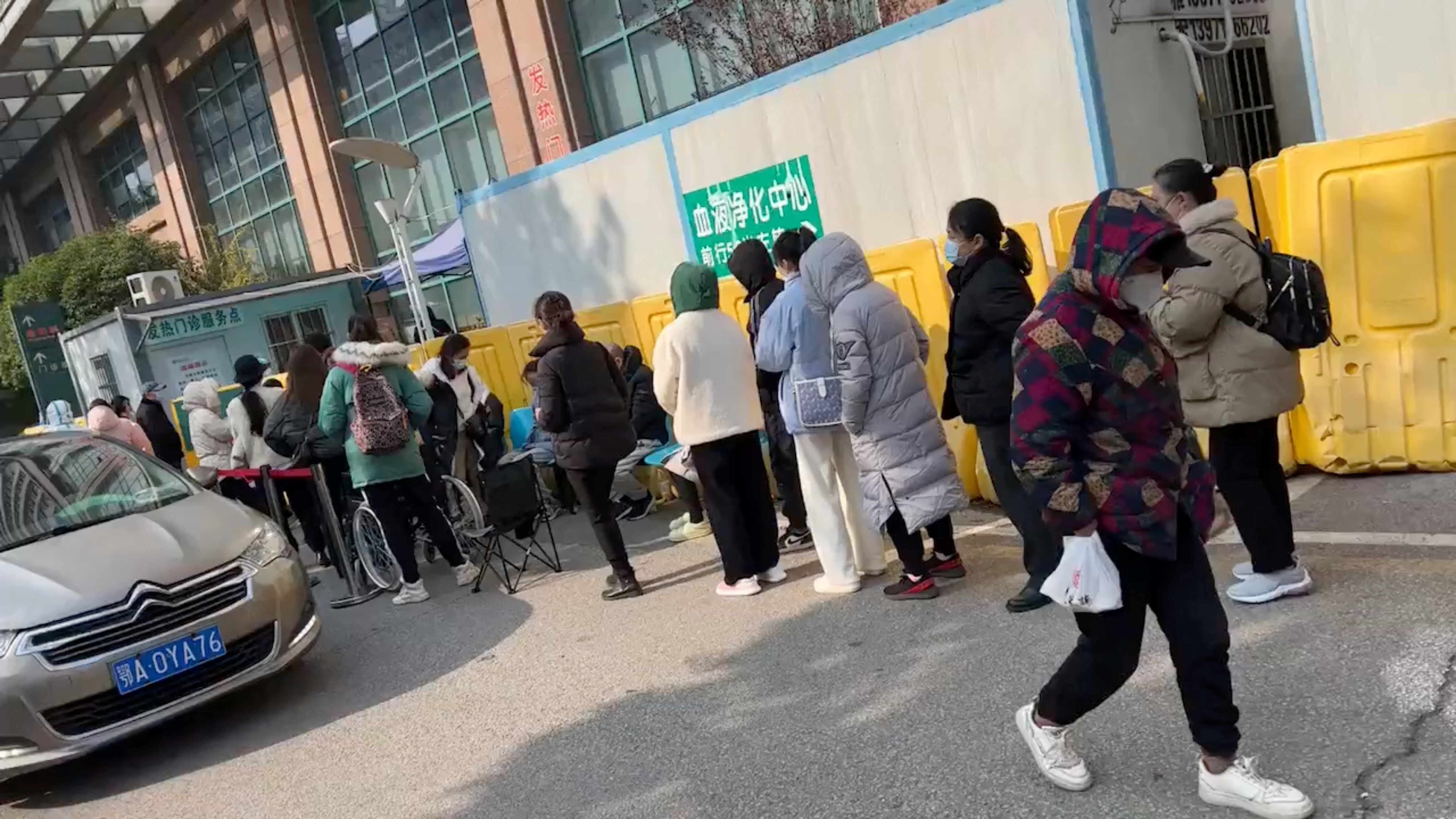
People wait outside a hospital, as the coronavirus disease (COVID-19) outbreak continues, in Wuhan, China, in this screen grab from a video obtained by REUTERS on December 9, 2022.

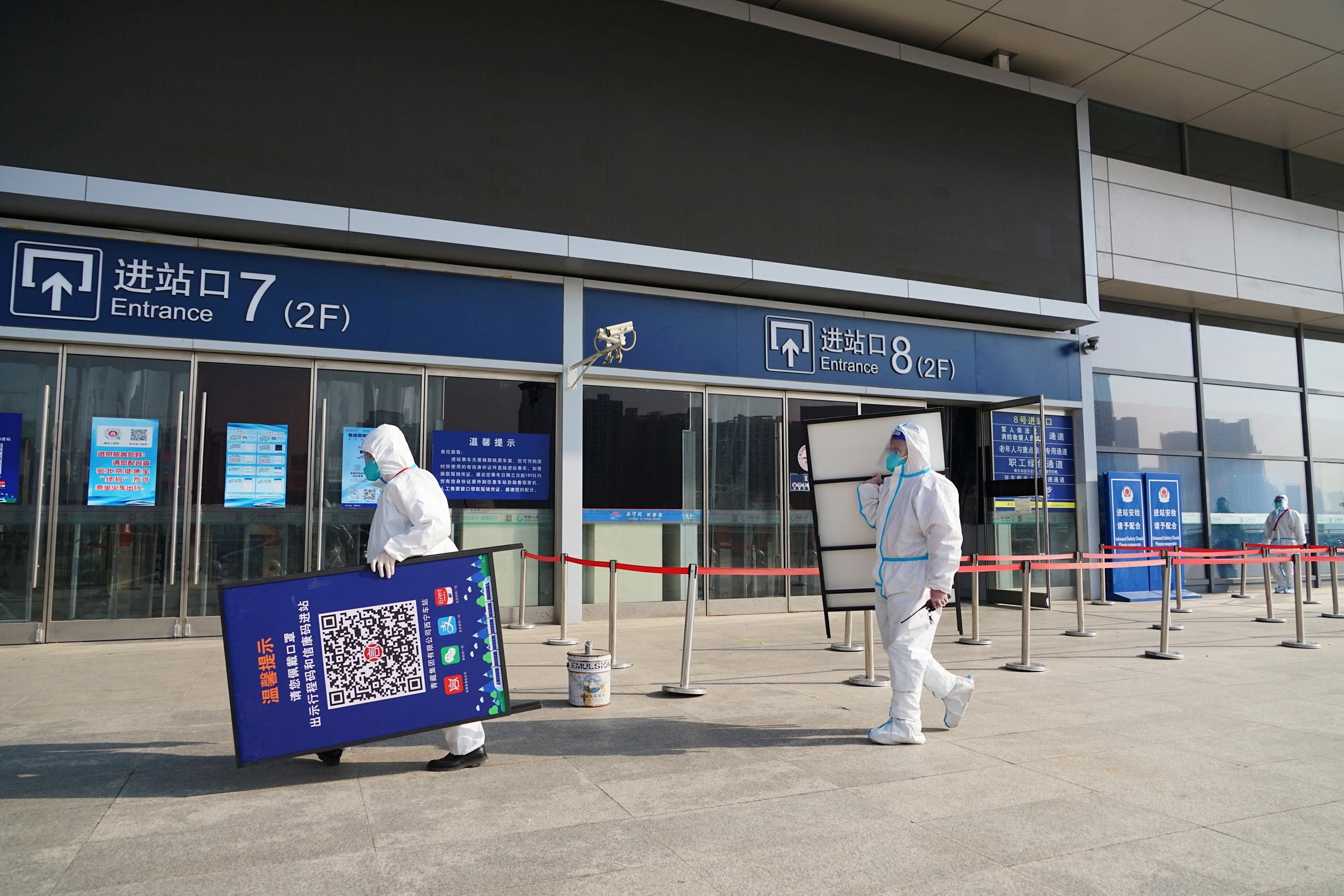
Workers in protective suits remove signs of a health code, which was used as a coronavirus disease (COVID-19) control measure, after the government withdrew this measure, at an entrance of a railway station in Xining, Qinghai province, China December 8, 2022. cnsphoto via REUTERS


Categories
Audio Sources - Full Text Articles

Russia“s war on Ukraine latest news: Russian troops pull back near Kherson

2022-12-01T14:49:31Z

Fears that the Ukraine war could spill over its borders and escalate into a broader conflict eased on Wednesday, as NATO and Poland said it seemed likely a missile that struck a Polish village was a stray from Ukraine. Kyiv, which has blamed Russia, demanded access to the site. Lucy Fielder has more.

Ukraine’s military said Russia had pulled some troops from towns on the opposite bank of the Dnipro River from Kherson city, the first official Ukrainian report of a Russian withdrawal on what is now the main front line in the south..

* Spain has stepped up security at public and diplomatic buildings after a spate of letter bombs, including one sent to Prime Minister Pedro Sanchez and another to the Ukrainian embassy in Madrid, where an official suffered minor injuries.

* Air raid alerts were issued across all of Ukraine following warnings by Ukrainian officials that Russia was preparing a new wave of missile and drone strikes. “An overall air raid alert is in place in Ukraine. Go to shelters,” country’s border service wrote on Telegram messaging app.

* Ukraine’s military said it had found fragments of Russian-fired nuclear-capable missiles with dud warheads in west Ukraine, and that their apparent purpose was to distract air defences.

* The recently liberated Ukrainian city of Kherson has lost its power supply after heavy shelling by Russian forces, the regional governor said.

* European Union governments tentatively agreed on a $60 a barrel price cap on Russian seaborne oil, with an adjustment mechanism to keep the cap at 5% below the market price, an EU diplomat said.

* Russian Foreign Minister Sergei Lavrov said on that big problems had accumulated in the Organization for Security and Cooperation in Europe (OSCE), accusing the West of spurning the chance to make it a real bridge with Russia after the Cold War.

* Lavrov said that discussions with Washington about potential prisoner exchanges were being conducted by the two countries’ intelligence services, and that he hoped they would be successful.

* The European Union needs patience as it sanctions Russia for its invasion of Ukraine, as most measures will only have an impact in the medium and long term, Lithuania’s prime minister said in an interview at  the  Reuters NEXT conference.

* Switzerland has frozen financial assets worth 7.5 billion Swiss francs ($7.94 billion) as of Nov. 25 under sanctions against Russians to punish Moscow for its invasion of Ukraine, the State Secretariat for Economic Affairs (SECO) said.

* Russia said the German parliament’s move to recognise the 1932-33 famine in Ukraine as a Soviet-imposed genocide was an anti-Russian provocation and an attempt by Germany to whitewash its Nazi past.

* Ukraine sacked a top engineer at the Russian-occupied Zaporizhzhia nuclear power plant, accusing him of collaborating with Russian forces, and urged other Ukrainian staff at the plant to remain loyal to Kyiv.

* Russia must withdraw its heavy weapons and military personnel from the Zaporizhzhia plant if the U.N. atomic watchdog’s efforts to create a protection zone are to succeed, Ukrainian Foreign Minister Dmytro Kuleba said.

* In a grim sign of the energy crisis caused by Russian attacks on Ukraine’s electricity grid, nine people have been killed in fires over the past 24 hours as Ukrainians resorted to emergency generators, candles and gas cylinders in violation of safety rules to try to heat their homes after power outages.

* “Remember one thing – the Russians are afraid. And they are very cold and no one will help them, because they do not have popular support,” – Andriy Yermak, chief of Ukrainian presidential staff.

Related Galleries:

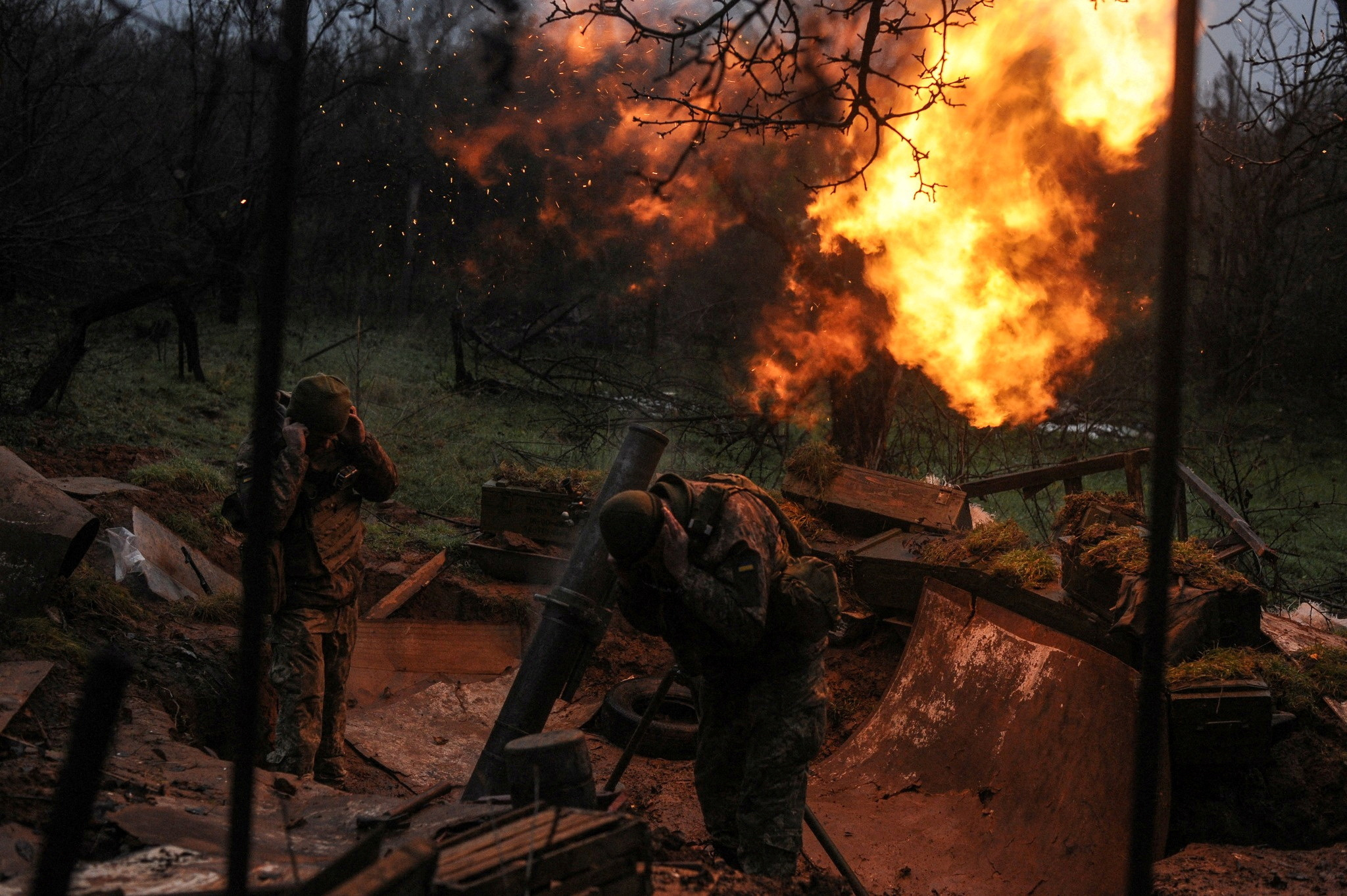
Ukrainian servicemen fire a mortar on a front line, as Russia’s attack on Ukraine continues, in Donetsk region, Ukraine, in this handout image released November 20, 2022. Iryna Rybakova/Press Service of the 93rd Independent Kholodnyi Yar Mechanized Brigade of the Ukrainian Armed Forces/Handout via REUTERS

A view shows the city without electricity after critical civil infrastructure was hit by Russian missile attacks, amid Russia’s invasion of Ukraine, in Kyiv, Ukraine November 23, 2022. REUTERS/Vladyslav Sodel/File Photo

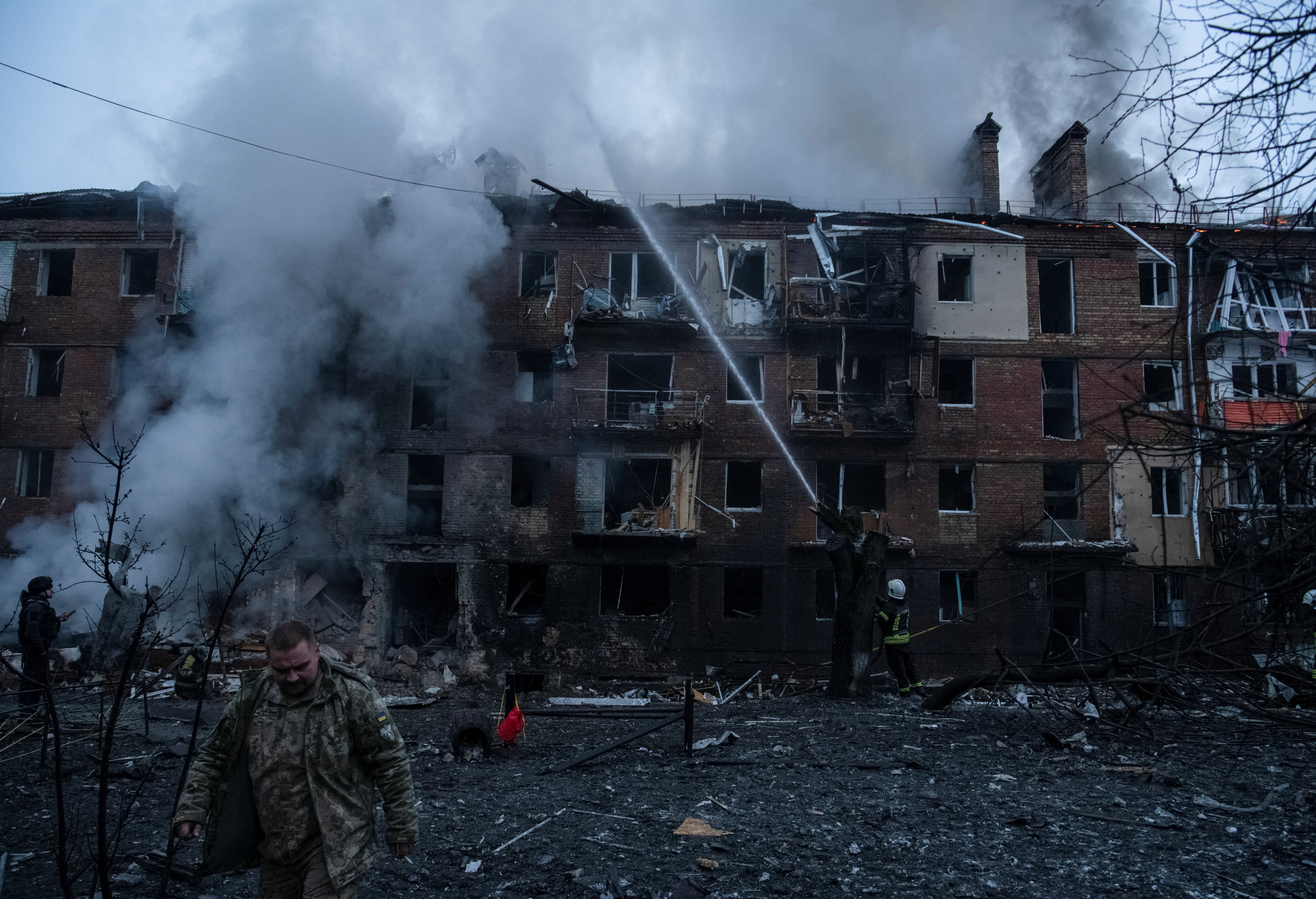
Rescuers work at a site of a residential building destroyed by a Russian missile attack, as Russia’s attack on Ukraine continues, in the town of Vyshhorod, near Kyiv, Ukraine, November 23, 2022. REUTERS/Vladyslav Musiienko

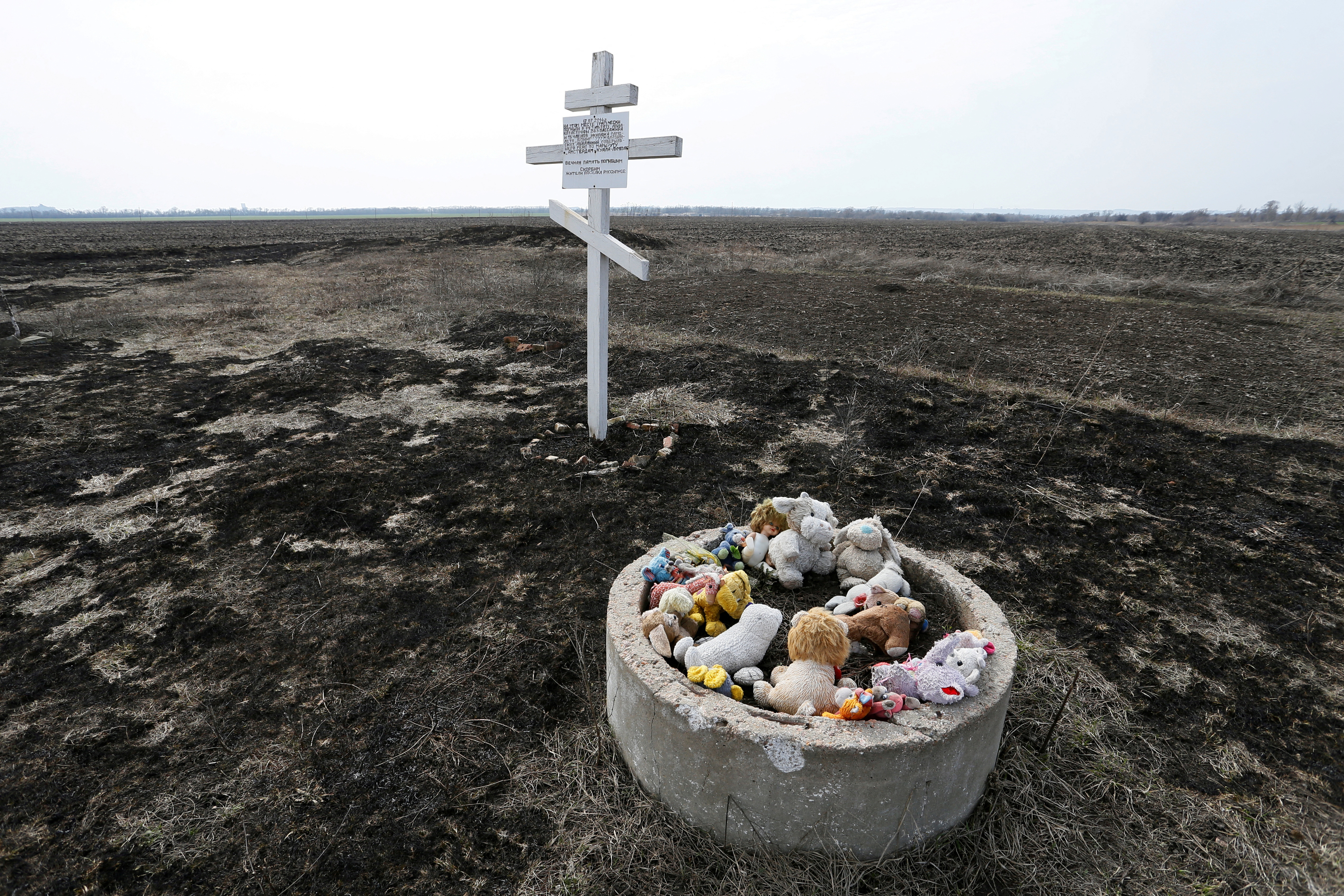
Toys are placed near the cross in memory of victims of Malaysia Airlines Flight MH17 plane crash in the village of Rozsypne in Donetsk region, Ukraine March 9, 2020. REUTERS/Alexander Ermochenko

NATO Secretary General Jens Stoltenberg speaks during a news conference at the Alliance’s headquarters in Brussels, Belgium November 25, 2022. REUTERS/Johanna Geron


WP Radio
WP Radio
OFFLINE LIVE