Categories
Audio Sources - Full Text Articles

The Other Giant Crisis Hanging Over the Islamic Republic of Iran

The Islamic Republic of Iran has existed in a near-constant state of crisis since its creation following the revolution of 1979. In the face of brutal wars, international sanctions, internal dissent, and an ongoing confrontation with the world’s only superpower, the Iranian government has, so far, managed to amble forward.

Today, the regime is facing one of its greatest challenges yet: a massive wave of popular discontent that began in September with the death in police custody of a Kurdish-Iranian woman, Mahsa Jina Amini. This round of protests has been different from past movements owing to its catalyst: Amini had been arrested for wearing an improper headscarf. Protesters have since been challenging Iran’s mandatory hijab law — an ideological pillar, and tool for social control, of the Islamic Republic. Three months in, demonstrators continue to brave overwhelming state violence to take to the streets with chants of “woman, life, freedom,” with a recent general strike highlighting the still-growing popular anger against the regime.

So far, clerical rule has survived thanks largely to a brutal crackdown. Some 15,000 people have reportedly been arrested. Hundreds more have died in the streets at the hands of security forces. Thursday saw the first execution of a man sentenced owing to protest-related charges. The government, though, is hanging on.

Meanwhile, another major threat looms over the regime, simmering beneath the surface yet rarely breaking into public view. It could prove to be the gravest crisis yet for the Islamic Republic.

Iran’s Supreme Leader Ali Khamenei is aging and reportedly ill. His looming death, with no clear successor in place, puts the Islamic Republic on the brink of a succession crisis — exactly the kind of challenge that has unraveled many authoritarian regimes in the past. The crisis may soon empower one of Iran’s powerful security organizations, the Islamic Revolutionary Guard Corps, or IRGC, to take a direct role in governing Iran for the first time in its history.

When protests broke out this September, Khamenei, whose supporters had expected him to deliver a public response, was rendered absent due to lingering ill health from a recent bowel surgery. In recent years, Khamenei, who is 83, has been stricken by an array of serious ailments, including prostate cancer, but has also survived many past predictions of his imminent death.

Though he has since appeared in public to denounce the recent protests as foreign subversion, it is worth considering what Iran will look like, both in terms of domestic and foreign policy, after its supreme leader finally departs from this world. The most recent wave of public rejection towards his regime only serves to emphasize how stark the coming changes may be.

“It is something that almost nobody discusses openly inside Iran, but the whole country is now bracing itself for the issue of succession.”

“Khamenei’s passing will pose a significant challenge to the Islamic Republic because whoever succeeds him will be from a generation that did not participate in the revolution. It is something that almost nobody discusses openly inside Iran, but the whole country is now bracing itself for the issue of succession,” said Sina Azodi, a lecturer on international affairs at George Washington University. “Khamenei took part in the 1979 revolution and was even imprisoned by the Shah’s secret police, the SAVAK, whom he considered stooges of the United States. He has been very skeptical of Western intentions towards Iran, and, once he leaves the scene, one of the major impediments to Iran’s improvement of relations with the West would be gone.”

Khamenei, who became supreme leader in 1989, has ruled Iran almost four times longer than his one and only predecessor, Ruhollah Khomeini, the leader of the revolution and founder of the Islamic Republic. In many ways, the regime that exists today is his own personal creation, and the management of competing power centers inside Iran is dependent on his role as final authority. Khamenei has marginalized most of his competitors inside the clergy, solidifying himself as a near-unquestioned authority within the system. This monopolization of power and influence, common to dictatorships, has made his own place secure, while calling into question the system’s ability to adequately replace him after he dies.

Despite his singular power, factions have emerged inside Iran’s security establishment that may be ready to capitalize on Khamenei’s demise. Most prominent among them is the Islamic Revolutionary Guard Corps, a branch of the armed forces created after the 1979 revolution as an ideological armed service. Today, the IRGC is perhaps the only force inside Iran left with both the strength and incentive to take a direct role in Iranian politics after Khamenei is gone.

Designated as a terrorist organization in a controversial decision by the Trump administration in 2019, the IRGC today is no longer just a military force under the command of the supreme leader. It is also a major economic player inside Iran, owning lucrative businesses and real estate holdings that it will likely seek to preserve regardless of what changes may come in Iranian politics. Understanding the level of mafia-like control that the IRGC exerts over Iranian society today is key to understanding what the country’s politics may look like once its leadership is fair game.

“Looking at their behavior, the IRGC seem primarily interested in their own material benefits, they are not simply ideological. They are in the business of making money, unlike Khamenei, who, at least on the surface, has tried to show some degree of modesty,” said Azodi. “These people are interested in protecting their economic advantages, and they have benefited from international sanctions. They control not just the visible economy but much of the black market. All the luxury goods that come to Iran today arrive through channels controlled by the IRGC.”

Experts say it is highly possible, even likely, that an economically powerful and well-armed IRGC leadership may decide to stage a military coup to take direct control over Iran after Khamenei dies.

Such a coup need not be overt. Many other countries in the region, most famously Egypt and Pakistan, are run from behind-the-scenes by powerful military establishments, even while they maintain a patina of civilian government. Such arrangements have not usually benefited the citizens of these countries, but they have worked quite well for military elites themselves. There is no reason to think that powerful figures in the IRGC would be averse to such an opportunity, nor that they would restrain themselves from seizing it if it emerges after Khamenei’s passing.

The issue of how a possible IRGC-led regime would govern Iran, particularly with regards to the restrictions on personal freedoms that are at the heart of many Iranians’ grievances today, will depend on how its leaders view the continued usefulness of Iran’s clerical establishment.

The Islamic Republic was created as a theocracy, a feat pulled off in no small part thanks to the reverence for clerical authority in the Shia sect of Islam that dominates Iran. Today, though, popular anger over its misrule is increasingly directed at members of the clergy themselves. In addition to personal attacks against Khamenei, Iranians have taken to posting viral videos of themselves slapping the turbans off clerics’ heads as they walk down the street — a visible indication of how far the credibility of this institution has fallen in the eyes of the public. The dim perception of the clergy among ordinary Iranians is likely to play a role in how a possible military-led government may behave.

“With the IRGC as de facto leaders of the Islamic Republic, its stance on domestic issues depends on its leadership’s perception of the question of legitimacy and the role of the Shia clergy,” said Ali Alfoneh, a senior fellow at the Arab Gulf States Institute, and author of “Political Succession in the Islamic Republic of Iran.” “If the Shia clergy is still perceived as a source of legitimacy, the IRGC will continue restricting personal freedoms on religious grounds.”

“Iranian youth spending their free time on sex, drugs, and rock-and-roll can buy an IRGC military dictatorship at least ten years in power.”

Alfoneh went on, “If the IRGC leadership no longer perceives the Shia clergy as a source of legitimacy, it will throw them under the bus and likely give personal, though not political, freedoms to the Iranian public. Iranian ladies wearing mini-skirts, and the majority of Iranian youth spending their free time on sex, drugs, and rock-and-roll can buy an IRGC military dictatorship at least ten years in power.”

There is little sign that the IRGC is ready to make a move for power any time soon, particularly while Khamenei himself may beat the odds again and survive for some years to come. Yet his inevitable departure from the scene, absent a clear successor either chosen by him or allowed to emerge organically from within the clerical establishment, means that a future picture of Iranian politics is already hazily visible on the horizon.

An Iranian government run by the IRGC — either directly as a military dictatorship or, more likely, with a puppet supreme leader under its control — may not just change some of Iran’s domestic policies, but also its approach to the international community.

To be sure, an Iran run by its security elites would not be a democracy. Yet it would likely return to a pragmatic position regarding its relationship with Israel and the West, if not the countries of the Arab world. Though it would fall short of the demands of protesters in the streets today calling for democratic change, such a regime may still transform Iran into something like a socially liberal Saudi Arabia — acceptable to Western interests, no doubt thanks to its richness in fossil fuels, yet still authoritarian at its core.

A relatively pragmatic system such as this is likely to come into existence, regardless of any future ideological changes that may mark an IRGC-run regime after Khamenei’s death, Alfoneh said.

“The IRGC has had excellent relations with Israel and the United States in the past: From 1979 until 1988, Israel was the primary source of the IRGC’s procurement of U.S. produced arms, and the IRGC has also on multiple occasions engaged in tactical alliances of convenience with the United States against the Taliban and against the Islamic State,” he said. “I see no reason why these patterns of behavior should not continue seen under an IRGC-ruled Iran.”

Though its foreign relations could be revised, Alfoneh cautioned that some things just won’t change. “As for more fundamental issues, such as Iran’s nuclear ambitions, missile program, support to proxies, and opposition to great power presence in the Persian Gulf, there will be no change as long as Iran exists as a unified political entity,” he said. “Even if the Islamic Republic collapses, Iranians collectively convert to Zoroastrianism and revive the Sassanid Empire, all these policies will continue as before.”

The post The Other Giant Crisis Hanging Over the Islamic Republic of Iran appeared first on The Intercept.
Categories
Audio Sources - Full Text Articles

Howie Carr: Rot in hell, you animal

To paraphrase Oscar Wilde, it would take a heart of stone not to laugh at the final hours of Whitey Bulger.

This latest report from the inspector general of the Justice Department officially deals with the events leading up to the mass murderer’s brutal killing in a West Virginia prison cell in October 2018.

But the most interesting parts of the story are the quotes from the various Bureau of Prison (BOP) employees – screws, if you will – about what was on the serial-killing cocaine kingpin’s mind in the final days and hours of his bloodthirsty life.

Call the report “The Last Will and Testament of Whitey Bulger.”

Full disclosure: I’m merely reporting Whitey’s last words, but not because I hold any grudge against the late archfiend simply because, according to reports by others, he sought out corrupt FBI agents to obtain C4 explosives that he planned to use to blow me up in the driveway of my own home.

Despite my lack of malice, it did bring a smile to my face when I read on page 29 that less than a month before he was bludgeoned beyond recognition, he complained to his case manager that he had “lost the will to live.”

Whitey elaborated:

“I have no quality of life. My health is gone. I get chest pains when I eat. Chest pains when I lay (sic) down. I feel lethargic all the time. I have memory problems. I’m deteriorating.”

Hey Whitey, here’s a quarter. Call someone who cares!

He was 89 years old. How did he expect to be feeling? And whatever his health, Bulger was still doing a lot better than all the people he’d murdered over the decades.

Remember, he was convicted of 11 murders instead of 19 only because a female juror with a hyphenated last name fell head over heels for him in the courtroom. And that figure of 19 victims was a lowball number too – under oath in 2018, his longtime partner-in-crime Stevie Flemmi admitted to at least 50 murders. Fifty!

Whitey ended up in Hazelton because he’d become a problem at his Florida prison, Coleman, just as previously he’d been transferred from the Tucson pen because he was a troublemaker – “just another old gangster,” as he’s referred to on page 60.

Bulger’s alleged mistreatment by the BOP is another irony, considering his deluxe accommodations during his first Club Fed stint, in 1956-65. Back then he was a BOP VIP – he was being personally watched over by his powerful Congressman John McCormack, as well as by FBI director J. Edgar Hoover, who had several interests in common with the confirmed-bachelor gangster.

In March 2018, Whitey had a run-in with a female nurse (Whitey always had problems with women – go figure). He had asked her for a long-sleeve shirt. Bulger didn’t like her response, and while she ultimately didn’t get the same treatment the Mob hitman gave a couple of 26-year-old women named Deb (namely, strangulation), he did start yelling at the woman.

“You’re treating me like a dog, doing all this to me! You will have your reckoning and will pay for this. I know people and my word is good!”

Yeah, Whitey knew people. Too bad for him they were all dead, even the ones he hadn’t gotten around to murdering before he was lugged in 2011.

That was on page 20 of the report. On the next page, the inspector general quotes from his disciplinary hearing about that run-in, at which time Whitey elaborated about his female nemesis’ day of reckoning:

“I told her… I’ll expose her for giving me a heart attack. She gave me a heart attack due to yelling at me. It was all blown out of proportion. I didn’t threaten her.”

I recall Johnny Martorano being asked at Whitey’s trial in 2013 about what the defendant’s role in the mob was.

“Intimidation, mostly,” Martorano said.

But at the end, a prison nurse yells at Whitey and he takes a heart attack?

In the report, I could have used a few more quotes from Whitey, including from the 2015 disciplinary hearing where he was accused of… pleasuring himself, shall we say.

Did he ever talk to any of the guards about his longtime moll, Catherine Greig? It would be nice to have some of his thoughts on their bizarre relationship, such as how it began. I’d like something like this on the record:

“Did you know that I personally murdered two of Catherine’s brothers-in-law? It was love at first sight.”

At Coleman, he was in an SHU – Special Housing Unit – which was basically solitary confinement. The BOP assessment was that inmate #02182-748 was someone who “threatens the safety and security of the institution and the safety of the staff member.”

Whitey wanted out of Coleman. He didn’t want to die in solitary. He wanted back in General Population. When he arrived in West Virginia, he told the intake screener, “I got two life sentences. I want to go to the yard.”

That surprised the BOP screw, who was familiar with Whitey’s c.v.

“You sure (you want) to go to the yard, man?” he asked Bulger. “I saw the movie.”

“Don’t believe everything you see,” Whitey scoffed.

Then Whitey was wheeled off to get his new mugshot.

“When Bulger was being photographed he stated, ‘Who knows, this might be my last picture.’”

Asked what he meant, Whitey said, “I’m old and will not have too many more transfers in me.”

Very prescient, wasn’t he? You might even say, eerily prescient.

But on the last full day of his life, Whitey kept reiterating that he had no desire to go back into solitary.

“I don’t want to go to the SHU. I love everybody and I’m good with everybody.”

That wasn’t quite so prescient of Whitey, was it? A few hours later, at dawn on Oct. 30, 2018, he was beaten to death in his cell, allegedly by two Mob jailbirds from Massachusetts.

In other words, not everybody loved Whitey. Who knew?


Categories
Audio Sources - Full Text Articles

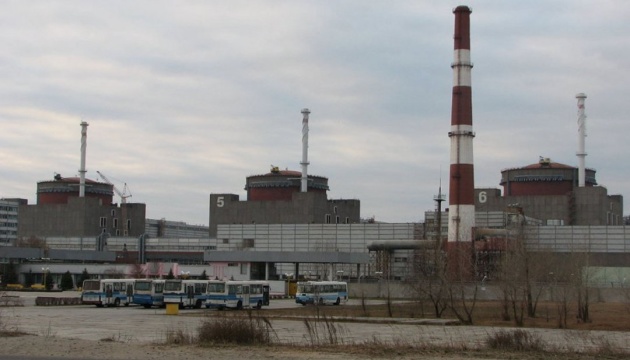
Energoatom says Russians abducted three more employees of Zaporizhzhia NPP

630_360_1462677315-8191.jpg

Russians forces on December 8 kidnapped a few more employees of the Zaporizhzhia nuclear energy plant, in accordance to Ukraine’s Nationwide Nuclear Power Generating Organization Energoatom.

According to Ukrinform, the company’s press support explained this on Telegram.

“Yesterday, December 8, 2022, the Russian army broke into the premises where the ZNPP’s Section of Social Applications is positioned and, in the presence of other workforce, seriously defeat the head of the office, Oleksii Trubenkov, and his deputy, Yurii Androsov. Just after a serious beating, the invaders took them out of the premises and drove them away to an unidentified desired destination,” the report reported.

In addition, the invaders detained and ZNPP personnel Kostiantyn Beiner, who is a certified human being and is directly dependable for nuclear and radiation basic safety. Energoatom believes that with these kinds of steps, the Russians are striving to acquire loyalty from the station’s staff, raise the variety of transfers of staff to the faux JSC “Operating Business of the Zaporizhzhia Nuclear Ability Plant,” which is managed by Rosatom, and report to Putin about the support by Ukrainian staff for Russia’s fascist terrorist actions.

“We once all over again get in touch with on IAEA Director Standard Rafael Grossi and the total environment group to make every single hard work and get all probable actions to free the ZNPP workforce from the captivity of Russian terrorists,” Energoatom mentioned.

As documented, Russian troops captured the ZNPP on March 4. Considering that then, the invaders have positioned army tools and ammunition on the plant’s territory, constantly shelling equally the surrounding location and the plant alone, destroying power strains and leading to external electrical power outages.

Source link

The post Energoatom says Russians abducted three more employees of Zaporizhzhia NPP appeared first on Ukraine Intelligence.

Categories
Audio Sources - Full Text Articles

UK sanctions Russian and Iranian officials, citing human rights abuses

2022-12-09T10:25:21Z

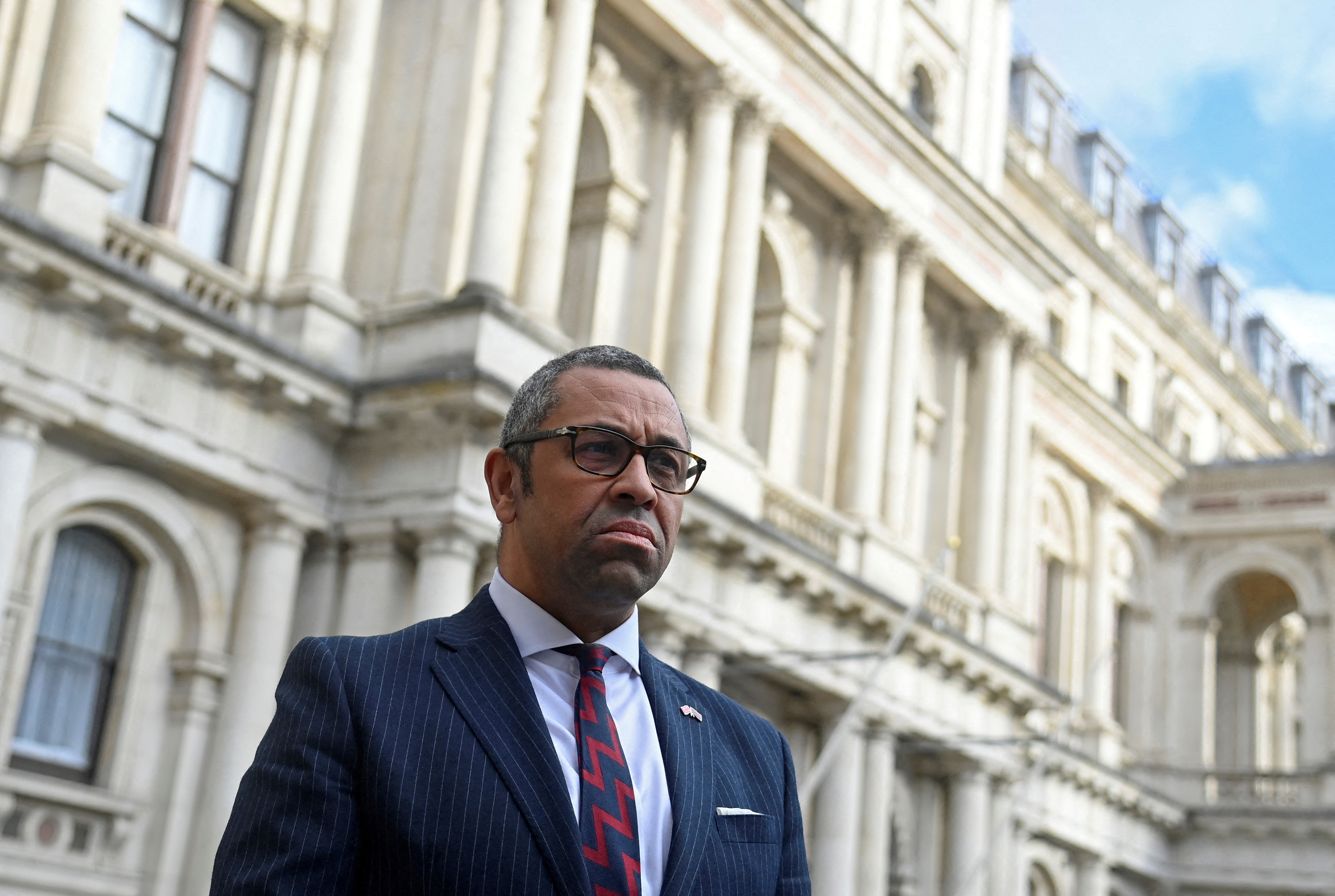
British Foreign Secretary James Cleverly speaks during an interview with Reuters at the Foreign, Commonwealth and Development Office in London, Britain, November 22, 2022. REUTERS/Toby Melville

Britain on Friday announced sanctions against 30 people worldwide, including Russian and Iranian officials, targeting those it deems responsible for acts of torture, sexual violence, and the violent repression of street protests.

The move came a day after France announced plans for new European Union sanctions against Iran over human rights abuses in its security crackdown on popular unrest there as well as its supply of drones to Russia before Moscow’s invasion of Ukraine.

The British government said its sanctions were coordinated with international partners to mark International Anti-Corruption Day and Global Human Rights Day. They encompassed individuals involved in activities including the torture of prisoners and the mobilisation of troops to rape civilians.

“Today our sanctions go further to expose those behind the heinous violations of our most fundamental rights,” Foreign Secretary James Cleverly said in a statement.

Those sanctioned include Russian Colonel Ramil Rakhmatulovich Ibatullin for his role as the commander of the 90th Tank Division, which has been involved in fighting since Russia’s invasion of Ukraine earlier this year.

The government said there have been multiple allegations made against serving members of the 90th Tank Division, including the conviction in Ukraine of a senior lieutenant on sexual abuse charges during the conflict.

Russia, which has said it is conducting a “special military operation” in Ukraine to eliminate threats to its security, has denied committing war crimes or targeting civilians.

Britain also sanctioned 10 Iranian officials connected to Iran’s prison systems. This included six people linked to the Revolutionary Courts that have been responsible for prosecuting protesters with sentences including the death penalty.

Nationwide protests that erupted after the death in police custody of 22-year-old Kurdish Iranian woman Mahsa Amini on Sept. 16 have posed one of the biggest challenges to the Islamic Republic since its establishment in 1979.

The British government sanctioned Ali Cheharmahali and Gholamreza Ziyayi, former directors of Evin prison in Tehran, which it said was a facility notorious for the mistreatment of both Iranian and foreign detainees.

The foreign office said the sanctions against 11 countries across seven sanctions regimes were the most that Britain has ever imposed in one package.

Britain also sanctioned figures involved in Myanmar’s military, which it said were involved in committing massacres, torture and rape.

Among those sanctioned by Britain were Myanmar’s Office of the Chief of Military and Security Affairs, which it said had been involved in torture since last year’s military coup, including rape and sexual violence.

Categories
Audio Sources - Full Text Articles

Futures edge higher ahead of producer prices data

2022-12-09T10:39:13Z

A trader works on the floor of the New York Stock Exchange (NYSE) in New York City, U.S., November 29, 2022. REUTERS/Brendan McDermid

U.S. stock index futures ticked up on Friday ahead of monthly producer prices data that could offer more clues on how long the Federal Reserve will keep raising interest rates to tame decades-high inflation.

Wall Street’s main indexes have come under pressure in December after two consecutive months of gains on fears of a potential recession fueled by the extended U.S. monetary policy tightening as well as downbeat comments from top executives.

The Labor Department’s report, at 8:30 a.m. ET, is expected to show producer prices edged higher to 7.2% last month after an 8% rise in October.

Core producer prices, which exclude volatile food and energy components, are expected to show a 5.9% rise after a 6.7% growth in October.

“The big question is whether this trend can be maintained against a U.S. central bank that doesn’t want to be seen as going soft on inflation, and services and wages data that points to a U.S. economy that is slightly more resilient than originally thought,” said Michael Hewson, chief market analyst at CMC Markets.

Consumer prices data for November will be out next Tuesday, a day ahead of the U.S. central bank’s policy decision where it is widely expected to raise rates by 50 basis points.

U.S. stocks snapped a recent run of losses on Thursday after data showed initial jobless claims modestly rose last week, suggesting the labor market is deteriorating.

Meanwhile, the University of Michigan’s preliminary December reading on the overall index on consumer sentiment is expected to have improved after slumping in November. The data is due at 10:00 a.m. ET.

At 5:15 a.m. ET, Dow e-minis were up 34 points, or 0.1%, S&P 500 e-minis were up 8.75 points, or 0.22%, and Nasdaq 100 e-minis were up 35 points, or 0.3%.

Broadcom Inc (AVGO.O) inched up 3.4% in premarket trading after the chipmaker forecast current-quarter revenue above Wall Street estimates.

DocuSign Inc (DOCU.O) soared 12% after the electronic signature product provider reported better-than-expected third-quarter revenue.

U.S.-listed China stocks rose on optimism over China’s COVID policy pivot. Internet firm Bilibili Inc advanced 5.6%, while search engine giant Baidu Inc climbed 3.7%.

Categories
Audio Sources - Full Text Articles

House passes defense bill scrapping COVID vaccine mandate

WASHINGTON (AP) — A bill to rescind the COVID-19 vaccine mandate for members of the U.S. military and provide nearly $858 billion for national defense passed the House on Thursday as lawmakers scratch off one of the final items on their yearly to-do list.

The bill provides for about $45 billion more for defense programs than President Joe Biden requested, the second consecutive year Congress significantly exceeded his request, as lawmakers seek to boost the nation’s military competitiveness with China and Russia.

The House passed the bill by a vote of 350-80. It now goes to the Senate, where it is expected to pass easily, then to the president to be signed into law.

To win bipartisan support for the bill, Democrats agreed to Republican demands to scrap the requirement for service members to get a COVID-19 vaccination. The bill directs Defense Secretary Lloyd Austin to rescind his August 2021 memorandum imposing the mandate. Only days earlier he voiced support for keeping the mandate in effect.

Rep. Adam Smith, Democratic chairman of the House Armed Services Committee, told colleagues that the decision to impose the vaccine mandate was the right call at the time.

“It saved lives and it made sure that our force was as ready as it could possibly be in the face of the pandemic,” Smith said.

But, he said the directive only required the initial vaccination and by now that protection has worn off.

“It’s time to update the policy,” Smith said.

Republicans said the mandate hurt recruiting and retention efforts. Rep. Mike Rogers, top Republican on the House Armed Services Committee, said he intends in the next Congress to examine who was adversely affected by the mandate, “so we can try to revisit that and make them whole to the extent desirable.”

More than 8,000 active-duty service members were discharged for failure to obey a lawful order when they refused the vaccine.

“Some of the folks who have moved on are not going to want to come back,” said Rogers, who will become chairman of the Armed Services Committee in the next Congress.

Smith said he opposed efforts to reward those service members who disobeyed a military order.

“Orders are not optional in the United States military,” Smith said. “And if Congress expresses the opinion that they are, I cannot imagine anything that would more significantly undermine the good order and discipline within our military.”

Military leaders have argued that troops for decades have been required to get as many as 17 vaccines in order to maintain the health of the force, particularly those deploying overseas. Recruits arriving at the military academies or at basic training get a regimen of shots on their first day — such as measles, mumps and rubella — if they aren’t already vaccinated. And they routinely get flu shots in the fall.

Service leaders have said that the number of troops who requested religious or other exemptions to any of those required vaccines — prior to the COVID pandemic — was negligible.

The politicization of the COVID-19 vaccine, however, triggered an onslaught of exemption requests from troops. As many as 16,000 religious exemptions have been or are still pending, and only about 190 have been approved. Small numbers of temporary and permanent medical exemptions have also been granted.

While the rescission of the COVID-19 vaccine mandate has generated much attention, it takes up one paragraph of what is a 4,408-page bill.

The defense policy legislation is critical in shaping the military’s future. It sets the maximum number of service members authorized to be in the various branches of the military. It authorizes money for specific major weapons programs and it establishes pay and benefits. This year’s bill authorizes money to support a $4.6% pay raise for military members and the Defense Department’s civilian workers.

White House press secretary Karine Jean-Pierre defended the Pentagon’s COVID vaccination policy, but said Biden would judge the bill “on its entirety.”

“What we think happened here is Republicans in Congress have decided that they’d rather fight against the health and well-being of our troops than protecting them,” Jean-Pierre said. “And we believe that it is a mistake.”

____

Associated Press writer Lolita C. Baldor contributed to this report.

Categories
Audio Sources - Full Text Articles

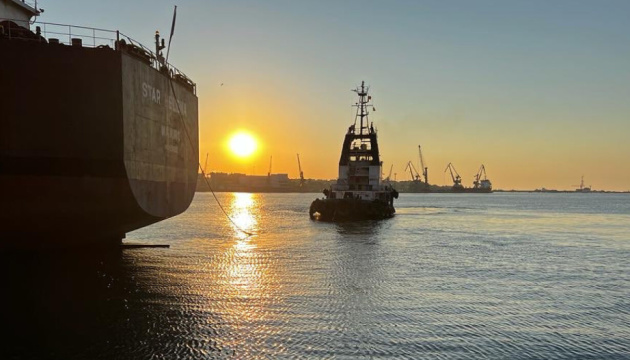
Russia deliberately slowing work of ‘grain corridor,’ vessels waiting in line for 3-5 weeks

630_360_1670499328-437.jpg

Russia is deliberately slowing the do the job of the “grain corridor,” with ships waiting in line for three to 5 weeks and a number of million tonnes of Ukrainian agricultural products not exported just about every month.

Ukrainian President Volodymyr Zelensky mentioned this in a video clip handle to the TRT Globe Forum, which is getting held in Istanbul, in accordance to an Ukrinform correspondent.

“Now we have additional than 13 million tonnes of agricultural items [already] exported, and we can give tens of thousands and thousands more tonnes. Our ports associated in the export grain initiative are operating at only half capacity. And this is only due to the fact Russia is slowing exports, retaining ships ready for inspections. As of these days, a lot more than 80 ships are ready,” Zelensky explained.

He explained that due to the fact of this, hundreds of hundreds of individuals around the globe obtain much less meals, pay back much more for food, “for the reason that just one state is blackmailing every person with food items.”

“The typical ready time for vessels is 3-5 months. Since of this, 2-3 million tonnes of Ukrainian agricultural merchandise are not exported each individual thirty day period,” Zelensky stated.

He said he was certain that there is possible to remedy this issue, in unique, if many directions of Russian aggression in opposition to Ukraine are removed and the protection of the Mykolaiv location and its ports is secured, which will be yet another move in the direction of guaranteeing world wide food stuff security.

Zelensky added that there would be no meals disaster in the world if the Russian fleet had not blocked Ukraine’s Black Sea ports.

“The Russian war versus Ukraine showed the worth of stability in our area. This is just one of the historic errors created by the Russian chief – with his insane aggression, he only proved that the protection of Ukraine and the Black Sea region is critically crucial to international stability, and any aggression in our portion of the globe is a world criminal offense,” the president mentioned.

He famous that Ukraine, Turkey and the UN jointly quit the risk of starvation, and the Grain From Ukraine initiative allows the poorest countries manage stability.

In Istanbul on November 17, Ukraine, the United Nations and Turkey agreed to lengthen the Initiative on the Risk-free Transportation of Grain and Foodstuffs from Ukrainian ports for another 120 times. The initiative was released on July 22, and the first ship with Ukrainian foodstuffs still left the port of Odesa on August 1.

As a lot of as 531 vessels have exported 13.3 million tonnes of Ukrainian foodstuffs to Africa, Asia and Europe given that August 1.

Source link

The post Russia deliberately slowing work of ‘grain corridor,’ vessels waiting in line for 3-5 weeks appeared first on Ukraine Intelligence.

Categories
Audio Sources - Full Text Articles

Some bloodstream infection bacteria grew resistant to last-resort drugs in 2020 – WHO

2022-12-09T09:59:07Z

Two plates which were coated with an antibiotic-resistant bacteria called Klebsiella with a mutation called NDM 1 and then exposed to various antibiotics are seen at the Health Protection Agency in north London March 9, 2011. REUTERS/Suzanne Plunkett/File Photo

Increased drug resistance in bacteria causing bloodstream infections, including against last-resort antibiotics, was seen in the first year of the coronavirus pandemic, a World Health Organization report based on data from 87 countries in 2020 showed.

The overuse and/or misuse of antibiotics has helped microbes to become resistant to many treatments, while the pipeline of replacement therapies in development is alarmingly sparse.

High levels (above 50%) of resistance have been reported in bacteria that typically cause life-threatening bloodstream infections in hospitals such as Klebsiella pneumoniae and Acinetobacter spp, report authors highlighted on Friday.

These infections often require treatment with ‘last-resort’ antibiotics, drugs that are used when all other antibiotics fail.

About 8% of bloodstream infections caused by Klebsiella pneumoniae grew resistant to a vital last-resort group of drugs called carbapenems, the report said.

Rates of antimicrobial resistance (AMR) remain very high, but last-resort antibiotics are only just starting to lose potency, said Dr Carmem Pessoa-Silva, the lead for WHO Global Antimicrobial Resistance Surveillance System, in a media conference.

The message of hope, she said is, “we have a very narrow window of opportunity…for responding to the threat.”

While there is a concerted push to limit the unbridled use of antibiotics, the pace of new research remains grim.

The effort, cost and time it takes to get an antibiotic approved and the limited return on investment have deterred drugmakers, as treatments must be priced cheaply and are designed to be used as little as possible to limit drug resistance.

As a result, the lion’s share of antibiotic development is taking place in a handful of labs of small biopharma companies as a majority of their larger counterparts focus on more lucrative markets.

Only a few big pharmaceutical companies remain in the space — including GSK (GSK.L) and Merck (MRK.N) — down from more than 20 in the 1980s.

A landmark global analysis published earlier this year found that 1.2 million people died in 2019 due to antibiotic-resistant bacterial infections, making AMR a leading cause of death worldwide, higher than HIV/AIDS or malaria.

“Political commitment (on AMR) must now urgently move from aspiration into action,” said Thomas Cueni, director general at International Association of Pharmaceutical Manufacturers and Associations.

The authors of the WHO report said more research is needed to identify the reasons behind the jump in AMR in the period studied, and to what extent it is linked to the accelerated use of antibiotics during the pandemic.

AMR rates also remain difficult to interpret due to insufficient testing and weak laboratory capacity, particularly in low- and middle-income countries, the authors wrote.

Categories
Audio Sources - Full Text Articles

Russian arms dealer Bout: “Hard to describe feelings“ after release from U.S. jail

2022-12-09T10:08:36Z

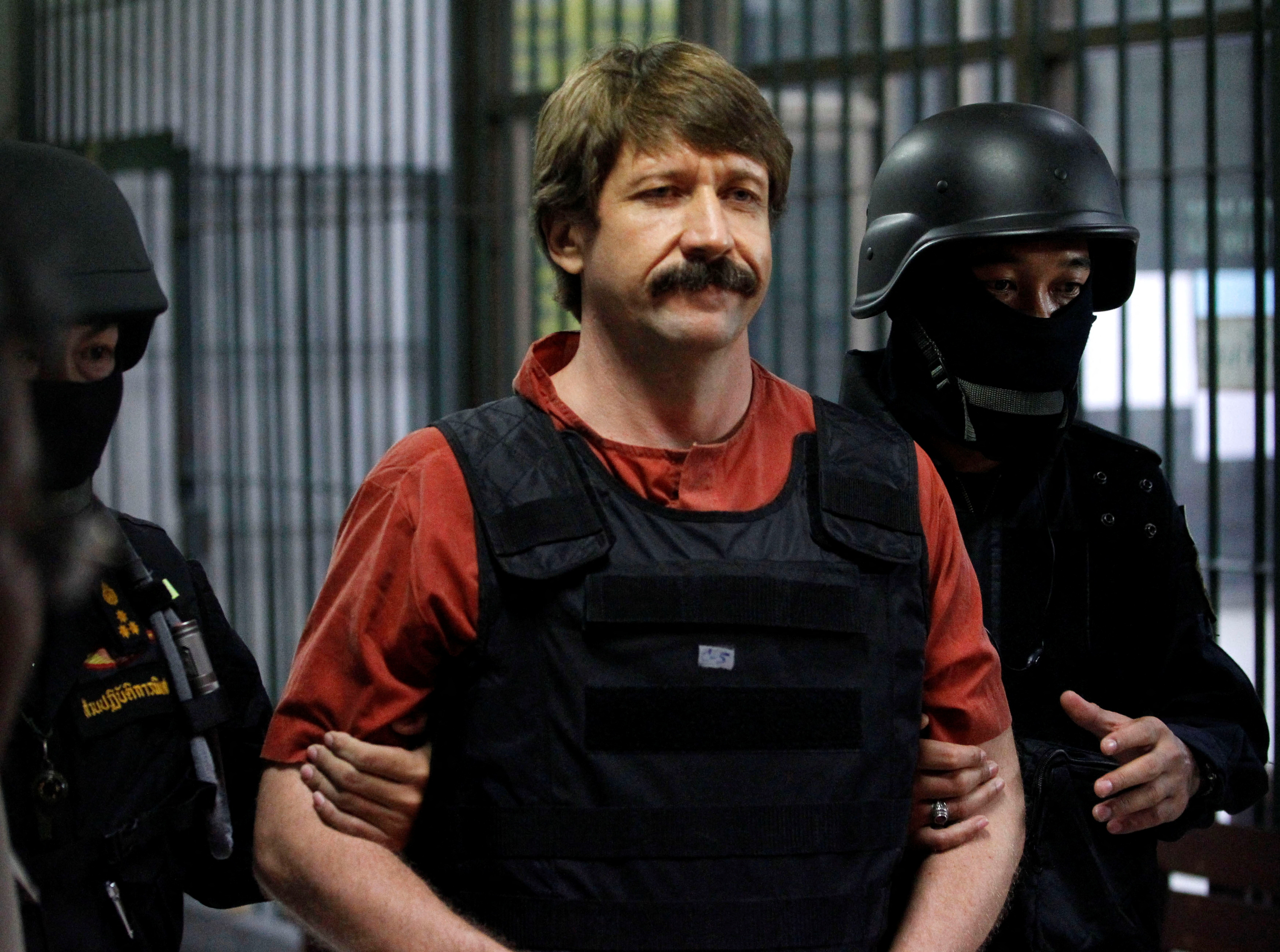
Suspected Russian arms dealer Viktor Bout is escorted by members of a special police unit after a hearing at a criminal court in Bangkok October 5, 2010. REUTERS/Sukree Sukplang

Russian arms dealer Viktor Bout said on Friday it was difficult to find the words to describe his feelings, in an interview with the state-run news outlet RT after being freed by the United States in exchange for U.S. basketball player Brittney Griner.

Bout also said he had not encountered much anti-Russian sentiment during his imprisonment in the United States, and that many of his fellow prisoners had sympathies with Moscow.


Categories
Audio Sources - Full Text Articles

South Korea“s truckers to end strike – Yonhap

2022-12-09T04:35:24Z

South Korea’s truckers union said it has decided to end a nationwide strike that disrupted supply chains, Yonhap reported on Friday, citing the results of a vote by union members.

Related Galleries:

Striking truckers vote on whether to end their strike in Gwangju, South Korea December 9, 2022. Yonhap via REUTERS

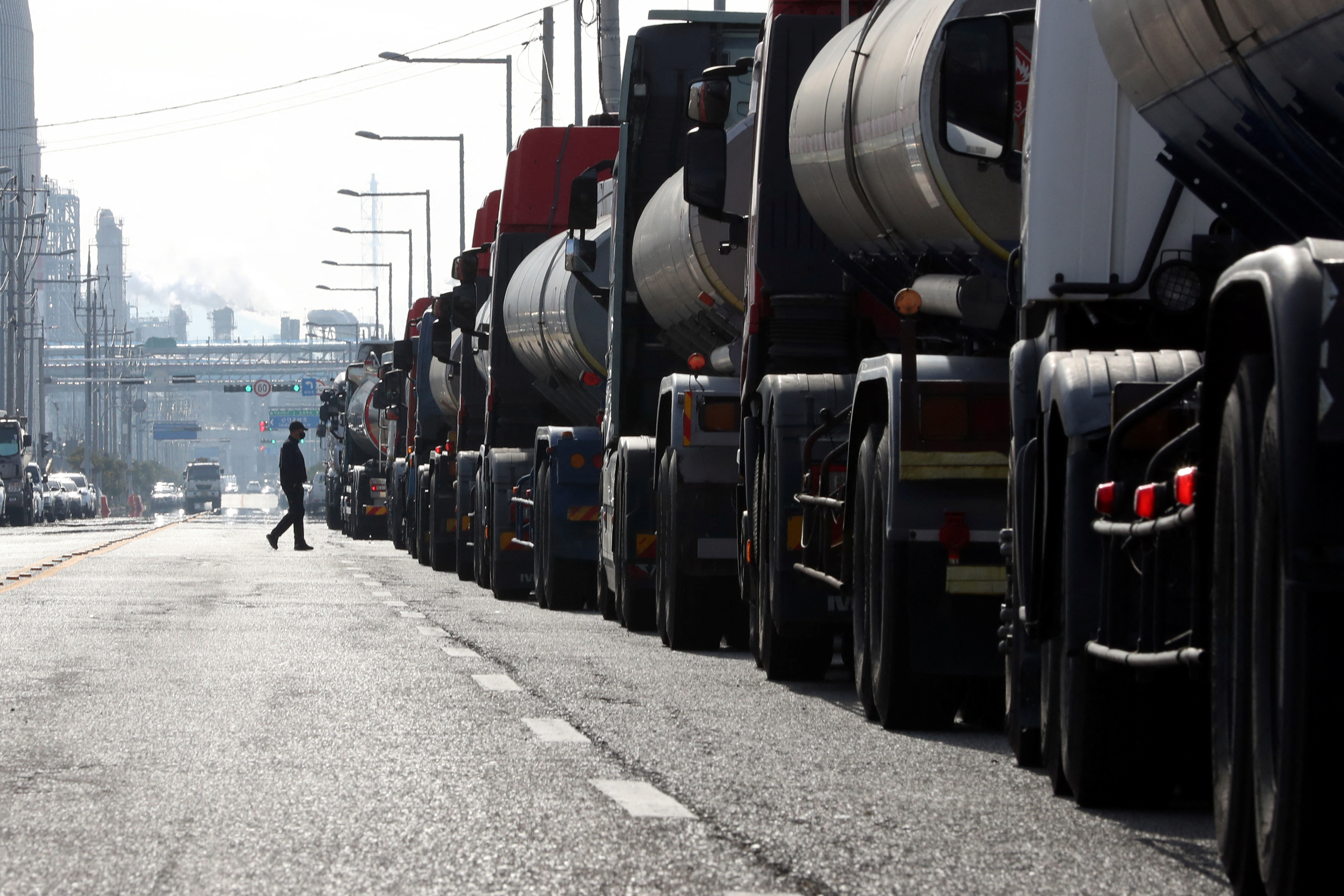
Trucks carrying chemical materials are stopped and parked at an industrial complex in Yeosu due to the ongoing strike by truckers, South Korea December 8, 2022. Yonhap via REUTERS
WP Radio
WP Radio
OFFLINE LIVE