Categories
Audio Sources - Full Text Articles

Biden Admin Dissolves Parent Council on Education After Complaints About its Left-Wing Bias

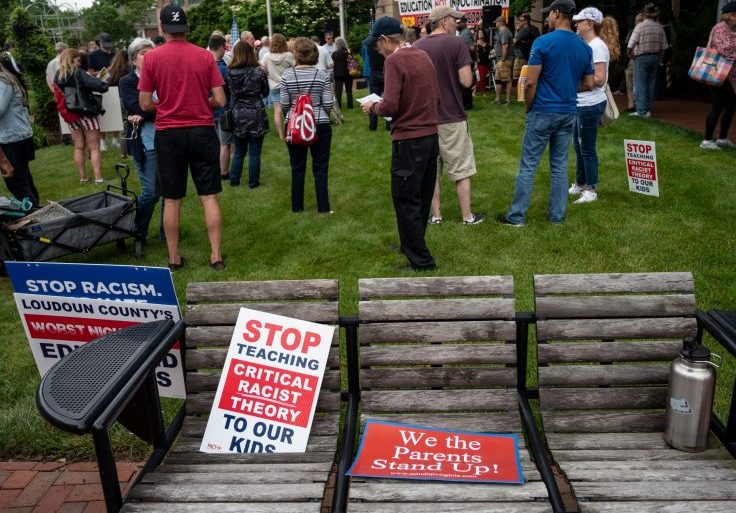
The Biden administration is dissolving a council created to address parental concerns with education after critics claimed it was filled with left-wing activists.

A lawsuit filed by conservative education groups in July accused the National Parents and Families Engagement Council of being “partisan” and “influenced inappropriately.” The council was created a month prior to create “effective relationships” between educators and parents. Under the Federal Advisory Committee Act, advisory groups must be bipartisan and free of outside influence by any special interest.

“The Department has informed Plaintiffs that it is immediately and permanently disbanding the Council and that the Council will not hold any future meetings,” according to the court dismissal obtained by the Daily Caller.

The council included several liberal advocacy groups, the Daily Caller reported:

The council included The National Parents Union, a group that believes schools should be transformed “to eradicate generational, institutions of oppression.” Keri Rodrigues, the president of The National Parents Union, defended a letter by the National School Board Association which compared parents “to domestic terrorists” and requested that federal law enforcement monitor school boards. 

Also on the council was The National Action Network, a group that works towards “a modern civil rights agenda,” and The League of United Latin American Citizens, a group which pushes “educational attainment and political influence” of Hispanic Americans.

The post Biden Admin Dissolves Parent Council on Education After Complaints About its Left-Wing Bias appeared first on Washington Free Beacon.

Categories
Audio Sources - Full Text Articles

Former CNN Personality Michael Avenatti Sentenced to 14 More Years for Fraud

Michael Avenatti, the former CNN personality and onetime Democratic presidential frontrunner who is currently serving prison time for multiple felony convictions, on Monday was sentenced again in Southern California to 14 more years.

WATCH: That Time the Media Dubbed Michael Avenatti ‘Savior of the Republic’

The sentence was announced after the incarcerated porn lawyer pleaded guilty earlier this year to multiple counts of wire fraud and admitted to stealing money from his clients. A U.S. District Court judge on Monday also ordered Avenatti to pay $7 million in restitution.

Avenatti’s latest prison sentence will run consecutively to the five-year term he is already serving for separate convictions. He was previously convicted of stealing book proceeds from his porn star client Stormy Daniels. Avenatti became a media celebrity while representing Daniels during her legal battle against former president Donald Trump, with whom she allegedly had an affair. He was also convicted of attempting to extort Nike to the tune of $25 million.

Prosecutors, who had requested that Avenatti be sentenced to an additional 17.5 years, said the disgraced attorney’s “deplorable acts” were the result of “calculated choices and egregious violations of the trust.” Avenatti, who represented himself, told the judge he was “deeply remorseful and contrite” and therefore deserved no more than six years in prison for his crimes.

Avenatti’s anti-Trump antagonism made him a ubiquitous presence on cable news in 2018. He once appeared on 10 different shows in a 24-hour period. Former CNN host Brian Stelter, among others, went so far as to suggest that Avenatti was a “serious contender” to win the Democratic presidential nomination in 2020. Avenatti was arrested in March 2019.

The post Former CNN Personality Michael Avenatti Sentenced to 14 More Years for Fraud appeared first on Washington Free Beacon.

Categories
Audio Sources - Full Text Articles

Union says Microsoft will recognize unit of videogame testers

2022-12-05T22:09:05Z

A person walks past a Microsoft store in the Manhattan borough of New York City, New York, U.S., January 20, 2022. REUTERS/Carlo Allegri/File Photo

Microsoft Corp (MSFT.O) will voluntarily recognize a union of about 300 videogame testers at subsidiary ZeniMax Studios if they vote to unionize, a first for the company in the United States, the Communication Workers of America union (CWA) said on Monday.

ZeniMax employees at four locations in Maryland and Texas began voting through an online platform on Friday. The company owns major game franchises including The Elder Scrolls and Fallout.

Voluntarily agreeing to bargain with the union would allow Microsoft to avoid a formal election overseen by the U.S. National Labor Relations Board and the legal battles that often ensue.

CWA President Christopher Shelton applauded Microsoft’s move in a statement, saying “when workers have the opportunity to join a union without company interference, it empowers them to have their voices heard in the workplace.”

Microsoft did not immediately respond to a request for comment.

The company in June entered into an agreement with the CWA to remain neutral in union organizing campaigns at Activision Blizzard Inc (ATVI.O), which Microsoft is seeking to purchase for $69 billion. The proposed acquisition is facing antitrust scrutiny from U.S. and European regulators.

Game testers at Activision units Blizzard Albany and Raven Software have voted this year to join unions amid claims by the CWA that the company has threatened and retaliated against union supporters. Activision has denied wrongdoing.

Categories
Audio Sources - Full Text Articles

Attack on North Carolina electric grid “new level of threat,“ governor says

2022-12-05T22:06:20Z

North Carolina Governor Roy Cooper speaks at a Democratic Party watch party as the primary elections wrap up in Raleigh, North Carolina, U.S., May 17, 2022. REUTERS/Jonathan Drake

North Carolina Governor Roy Cooper on Monday warned of a “whole new level of threat” and called for increased security around power stations after this weekend’s gunfire attacks on two electrical substations in Moore County that left nearly all households in the freezing dark.

Schools in Moore County will be closed for a second day on Tuesday and 38,000 households were still without power amid freezing nighttime temperatures after the Saturday shootings that Cooper called criminal attacks.

“Protecting critical infrastructure like our power system must be a top priority,” said Cooper, a Democrat, in a press briefing on Monday. “This kind of attack raises a whole new level of threat.”

Federal agencies including the FBI and the U.S. Department of Energy are investigating the shootings, along with local and state law enforcement. So far, none have suggested a motive and no arrests have been announced.

U.S. President Joe Biden was briefed on the incidents, the White House said on Monday.

“Early evidence suggests that it was deliberate and the investigation is under way,” Department of Homeland Security Secretary Alejandro Mayorkas said in a briefing.

Moore County Sheriff Ronnie Fields said he had no evidence to support online rumors that the attacks were connected to a drag show.

Duke Energy, which provides power to the area, said it had restored electricity to about 7,000 customers by Monday afternoon, from a total of 45,000 who had lost power after the shootings.

Categories
Audio Sources - Full Text Articles

Ukraine warns of emergency blackouts after more missile hits

2022-12-05T22:06:37Z

Ukraine warned there would be emergency blackouts once again in several regions as it repaired damage from missile attacks it said destroyed homes and knocked out power, while Moscow accused Kyiv of attacking deep inside Russia with drones.

A new Russian missile barrage had been anticipated in Ukraine for days and it took place just as emergency blackouts were due to end, with previous damage repaired.

The strikes, which plunged parts of Ukraine back into freezing darkness with temperatures below zero Celsius (32 Fahrenheit), were the latest in weeks of attacks hitting critical infrastructure and cutting off heat and water to many.

At least four people were killed, Ukrainian President Volodymyr Zelenskiy said, adding that most of some 70 missiles were shot down.

“In many regions, there will have to be emergency blackouts,” he said in a late Monday video address. “We will be doing everything to restore stability.”

The United States said it would convene a virtual meeting on Thursday with oil and gas executives to discuss how it can support Ukrainian energy infrastructure, according to a letter seen by Reuters.

Moscow has been hitting Ukraine’s energy infrastructure roughly weekly since early October as it has been forced to retreat on some battlefronts.

In the Zaporizhzhia region, at least two people were killed and several houses destroyed, the deputy head of the presidential office, Kyrylo Tymoshenko, said.

Reuters video showed two bodies covered with blankets lying next to a damaged car in the village of Novosofiivka, some 25 km east of the southern city of Zaporizhzhia.

“Both of my neighbours were killed,” Olha Troshyna 62, said. “They were standing by the car. They were seeing off their son and daughter-in-law.”

Missiles also hit energy plants in the regions of Kyiv and Vinnytsia in central Ukraine, Odesa in the south and Sumy in the north, officials said. Kyiv was one of the regions to be suffering from the most blackouts, according to Zelenskiy.

Ukraine had only just returned to scheduled power outages from Monday rather than the emergency blackouts it has suffered since widespread Russian strikes on Nov. 23, the worst of the attacks on energy infrastructure.

But Ukraine’s largest private energy provider, DTEK, on Monday reported having to disconnect one of its facilities from the power grid, limiting power and heat supply, in what it said was the 17th Russian attack on one of its sites in the last two months.

Ukraine’s air force said it downed over 60 of more than 70 missiles fired by Russia on Monday.

Russia has said the barrages are designed to degrade Ukraine’s military. Ukraine says they are clearly aimed at civilians and thus constitute a war crime. Moscow denies that.

Russia says it is waging a “special military operation” in Ukraine to rid it of nationalists and protect Russian-speaking communities. Ukraine and its allies accuse Moscow of an unprovoked war to grab territory from its pro-Western neighbour.

Russia’s defence ministry on Monday said Ukrainian drones attacked two air bases at Ryazan and Saratov in south-central Russia, killing three servicemen and wounding four, with two aircraft damaged by pieces of the drones when they were shot down.

Ukraine did not directly claim responsibility for the attacks. If it was behind them, they would be the deepest strikes inside the Russian heartland since Moscow invaded Ukraine on Feb. 24.

“The Kyiv regime, in order to disable Russian long-range aircraft, made attempts to strike with Soviet-made unmanned jet aerial vehicles at the military airfields Dyagilevo, in the Ryazan region, and Engels, in the Saratov region,” the Russian defence ministry said.

It said the drones, flying at low altitude, were intercepted by air defences and shot down. The deaths were reported on the Ryazan base, 185 km (115 miles) southeast of Moscow.

Israeli satellite imaging company ImageSat International shared images it said showed burn marks and objects near a Tu-22M aircraft at the Dyagilevo airbase.

The Russian defence ministry called the drone strikes a terrorist act aimed at disrupting its long-range aviation.

Despite that, it said, Russia responded with a “massive strike on the military control system and related objects of the defences complex, communication centres, energy and military units of Ukraine with high-precision air- and sea-based weapons” in which it said all 17 designated targets were hit.

Kyiv’s forces have demonstrated an increasing ability to hit strategic Russian targets far beyond the 1,100 km-long frontline in southern and eastern Ukraine.

Saratov is at least 600 km from the nearest Ukrainian territory. Russian commentators said on social media that if Ukraine could strike that far inside Russia, it might also be capable of hitting Moscow.

Previous mysterious blasts damaged arms stores and fuel depots in regions near Ukraine and knocked out at least seven warplanes in Crimea, the Black Sea peninsula annexed by Russia from Ukraine in 2014.

Ukraine has not claimed responsibility for any of the blasts, saying only that they were “karma” for Russia’s invasion.

“If something is launched into other countries’ air space, sooner or later unknown flying objects will return to (their) departure point,” Ukrainian presidential adviser Mykhailo Podolyak tweeted, tongue in cheek, on Monday.

Related Galleries:

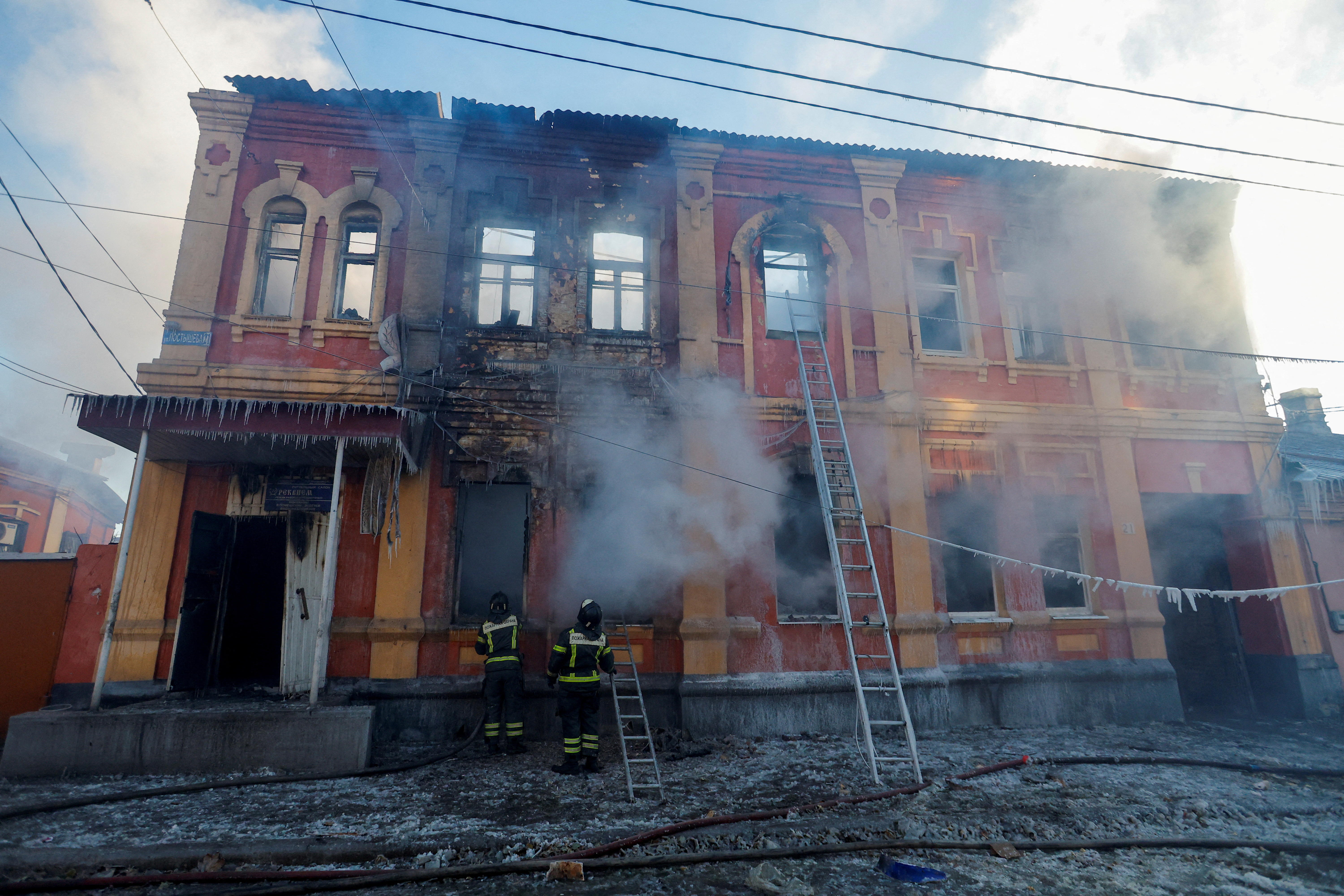
Firefighters work outside an office building destroyed in shelling in the course of Russia-Ukraine conflict in Donetsk, Russian-controlled Ukraine, Ukraine December 5, 2022. REUTERS/Alexander Ermochenko

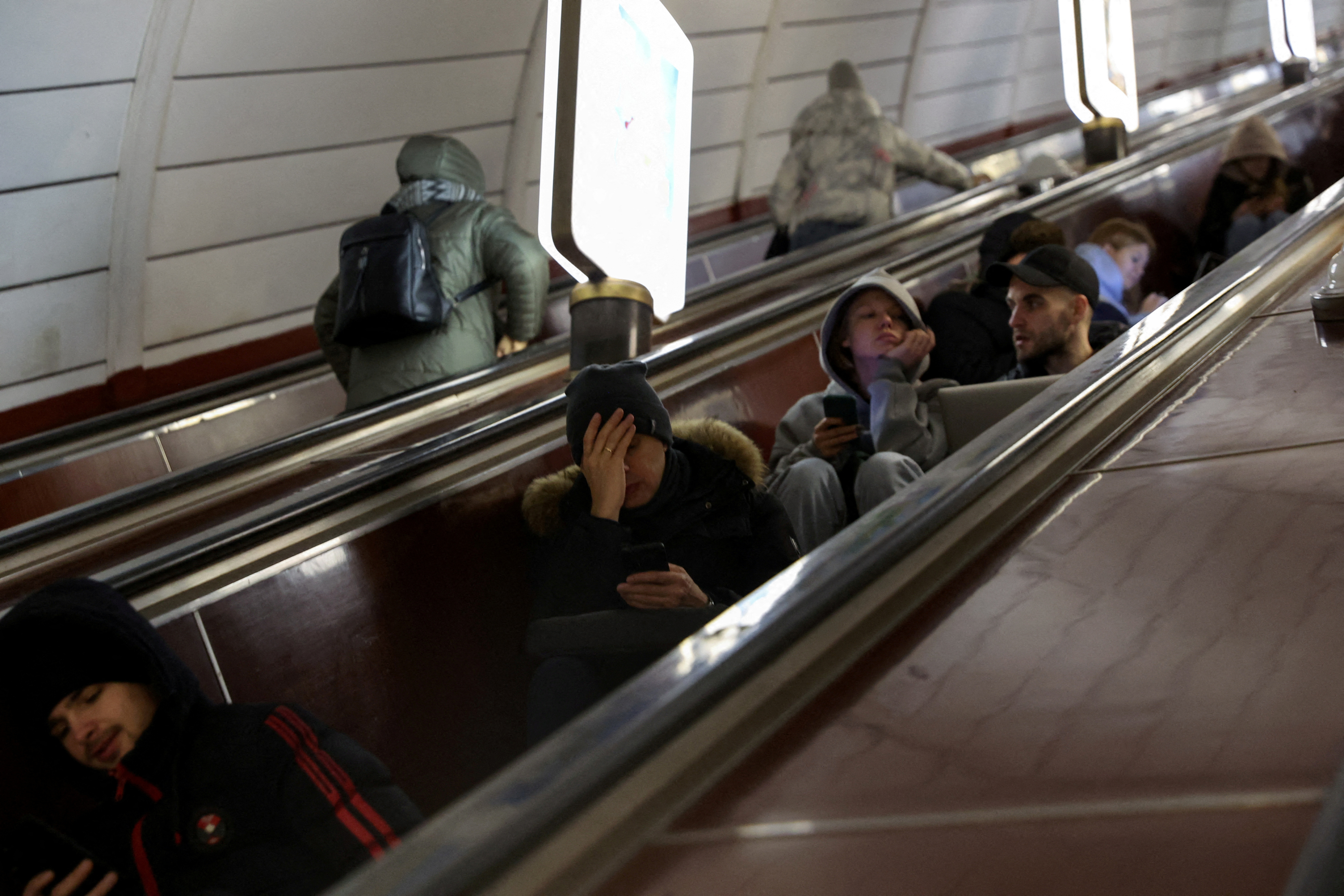
People take shelter inside the metro station amid Russian missile attacks in Kyiv, Ukraine, December 5, 2022. REUTERS/Shannon Stapleton

A man walks down a street of destroyed homes as Russia’s invasion on Ukraine continues in Siversk, Ukraine, December 4, 2022. REUTERS/ Leah Millis
Categories
Audio Sources - Full Text Articles

Exclusive: Musk’s Neuralink faces federal probe, employee backlash over animal tests

2022-12-05T22:24:25Z

Elon Musk arrives at the In America: An Anthology of Fashion themed Met Gala at the Metropolitan Museum of Art in New York City, New York, U.S., May 2, 2022. REUTERS/Andrew Kelly

Elon Musk’s Neuralink, a medical device company, is under federal investigation for potential animal-welfare violations amid internal staff complaints that its animal testing is being rushed, causing needless suffering and deaths, according to documents reviewed by Reuters and sources familiar with the investigation and company operations.

Neuralink Corp is developing a brain implant it hopes will help paralyzed people walk again and cure other neurological ailments. The federal probe, which has not been previously reported, was opened in recent months by the U.S. Department of Agriculture’s Inspector General at the request of a federal prosecutor, according to two sources with knowledge of the investigation. The probe, one of the sources said, focuses on violations of the Animal Welfare Act, which governs how researchers treat and test some animals.

The investigation has come at a time of growing employee dissent about Neuralink’s animal testing, including complaints that pressure from CEO Musk to accelerate development has resulted in botched experiments, according to a Reuters review of dozens of Neuralink documents and interviews with more than 20 current and former employees. Such failed tests have had to be repeated, increasing the number of animals being tested and killed, the employees say. The company documents include previously unreported messages, audio recordings, emails, presentations and reports.

Musk and other Neuralink executives did not respond to requests for comment.

Reuters could not determine the full scope of the federal investigation or whether it involved the same alleged problems with animal testing identified by employees in Reuters interviews. A spokesperson for the USDA inspector general declined to comment. U.S. regulations don’t specify how many animals companies can use for research, and they give significant leeway to scientists to determine when and how to use animals in experiments. Neuralink has passed all USDA inspections of its facilities, regulatory filings show.

In all, the company has killed about 1,500 animals, including more than 280 sheep, pigs and monkeys, following experiments since 2018, according to records reviewed by Reuters and sources with direct knowledge of the company’s animal-testing operations. The sources characterized that figure as a rough estimate because the company does not keep precise records on the number of animals tested and killed. Neuralink has also conducted research using rats and mice.

The total number of animal deaths does not necessarily indicate that Neuralink is violating regulations or standard research practices. Many companies routinely use animals in experiments to advance human health care, and they face financial pressure to quickly bring products to market. The animals are typically killed when experiments are completed, often so they can be examined post-mortem for research purposes.

But current and former Neuralink employees say the number of animal deaths is higher than it needs to be for reasons related to Musk’s demands to speed research. Through company discussions and documents spanning several years, along with employee interviews, Reuters identified four experiments involving 86 pigs and two monkeys that were marred in recent years by human errors. The mistakes weakened the experiments’ research value and required the tests to be repeated, leading to more animals being killed, three of the current and former staffers said. The three people attributed the mistakes to a lack of preparation by a testing staff working in a pressure-cooker environment.

One employee, in a message seen by Reuters, wrote an angry missive earlier this year to colleagues about the need to overhaul how the company organizes animal surgeries to prevent “hack jobs.” The rushed schedule, the employee wrote, resulted in under-prepared and over-stressed staffers scrambling to meet deadlines and making last-minute changes before surgeries, raising risks to the animals.

Musk has pushed hard to accelerate Neuralink’s progress, which depends heavily on animal testing, current and former employees said. Earlier this year, the chief executive sent staffers a news article about Swiss researchers who developed an electrical implant that helped a paralyzed man to walk again. “We could enable people to use their hands and walk again in daily life!” he wrote to staff at 6:37 a.m. Pacific Time on Feb. 8. Ten minutes later, he followed up: “In general, we are simply not moving fast enough. It is driving me nuts!”

On several occasions over the years, Musk has told employees to imagine they had a bomb strapped to their heads in an effort to get them to move faster, according to three sources who repeatedly heard the comment. On one occasion a few years ago, Musk told employees he would trigger a “market failure” at Neuralink unless they made more progress, a comment perceived by some employees as a threat to shut down operations, according to a former staffer who heard his comment.

Five people who’ve worked on Neuralink’s animal experiments told Reuters they had raised concerns internally. They said they had advocated for a more traditional testing approach, in which researchers would test one element at a time in an animal study and draw relevant conclusions before moving on to more animal tests. Instead, these people said, Neuralink launches tests in quick succession before fixing issues in earlier tests or drawing complete conclusions. The result: More animals overall are tested and killed, in part because the approach leads to repeated tests.

One former employee who asked management several years ago for more deliberate testing was told by a senior executive it wasn’t possible given Musk’s demands for speed, the employee said. Two people told Reuters they left the company over concerns about animal research.

The problems with Neuralink’s testing have raised questions internally about the quality of the resulting data, three current or former employees said. Such problems could potentially delay the company’s bid to start human trials, which Musk has said the company wants to do within the next six months. They also add to a growing list of headaches for Musk, who is facing criticism of his management of Twitter, which he recently acquired for $44 billion. Musk also continues to run electric carmaker Tesla Inc and rocket company SpaceX.

The U.S. Food and Drug Administration is in charge of reviewing the company’s applications for approval of its medical device and associated trials. The company’s treatment of animals during research, however, is regulated by the USDA under the Animal Welfare Act. The FDA didn’t immediately comment.

Musk’s impatience with Neuralink has grown as the company, which launched in 2016, has missed his deadlines on several occasions to win regulatory approval to start clinical trials in humans, according to company documents and interviews with eight current and former employees.

Some Neuralink rivals are having more success. Synchron, which was launched in 2016 and is developing a different implant with less ambitious goals for medical advances, received FDA approval to start human trials in 2021. The company’s device has allowed paralyzed people to text and type by thinking alone. Synchron has also conducted tests on animals, but it has killed only about 80 sheep as part of its research, according to studies of the Synchron implant reviewed by Reuters. Musk approached Synchron about a potential investment, Reuters reported in August.

Synchron declined to comment.

In some ways, Neuralink treats animals quite well compared to other research facilities, employees said in interviews, echoing public statements by Musk and other executives. Company leaders have boasted internally of building a “Monkey Disneyland” in the company’s Austin, Texas facility where lab animals can roam, a former employee said. In the company’s early years, Musk told employees he wanted the monkeys at his San Francisco Bay Area operation to live in a “monkey Taj Mahal,” said a former employee who heard the comment. Another former employee recalled Musk saying he disliked using animals for research but wanted to make sure they were “the happiest animals” while alive.

The animals have fared less well, however, when used in the company’s research, current and former employees say.

The first complaints about the company’s testing involved its initial partnership with University of California, Davis, to conduct the experiments. In February, an animal rights group, the Physicians Committee for Responsible Medicine, filed a complaint with the USDA accusing the Neuralink-UC Davis project of botching surgeries that killed monkeys and publicly released its findings. The group alleged that surgeons used the wrong surgical glue twice, which led to two monkeys suffering and ultimately dying, while other monkeys had different complications from the implants.

The company has acknowledged it killed six monkeys, on the advice of USC Davis veterinary staff, because of health problems caused by experiments. It called the issue with the glue a “complication” from the use of an “FDA-approved product.” In response to a Reuters inquiry, a USC Davis spokesperson shared a previous public statement defending its research with Neuralink and saying it followed all laws and regulations.

A federal prosecutor in the Northern District of California referred the animal rights group’s complaint to the USDA Inspector General, which has since launched a formal probe, according to a source with direct knowledge of the investigation. USDA investigators then inquired about the allegations involving the UC Davis monkey research, according to two sources familiar with the matter and emails and messages reviewed by Reuters.

The probe is concerned with the testing and treatment of animals in Neuralink’s own facilities, one of the sources said, without elaborating. In 2020, Neuralink brought the program in-house, and has since built its extensive facilities in California and Texas.

A spokesperson for the U.S. attorney’s office for the Northern District of California declined to comment.

Delcianna Winders, director of the Animal Law and Policy Institute at the Vermont Law and Graduate School, said it is “very unusual” for the USDA inspector general to investigate animal research facilities. Winders, an animal-testing opponent who has criticized Neuralink, said the inspector general has primarily focused in recent years on dog fighting and cockfighting actions when applying the Animal Welfare Act.

The mistakes leading to unnecessary animal deaths included one instance in 2021, when 25 out of 60 pigs in a study had devices that were the wrong size implanted in their heads, an error that could have been avoided with more preparation, according to a person with knowledge of the situation and company documents and communications reviewed by Reuters.

The mistake raised alarms among Neuralink’s researchers. In May 2021, Viktor Kharazia, a scientist, wrote to colleagues that the mistake could be a “red flag” to FDA reviewers of the study, which the company planned to submit as part of its application to begin human trials. His colleagues agreed, and the experiment was repeated with 36 sheep, according to the person with knowledge of the situation. All the animals, both the pigs and the sheep, were killed after the procedures, the person said.

Kharazia did not comment in response to requests.

On another occasion, staff accidentally implanted Neuralink’s device on the wrong vertebra of two different pigs during two separate surgeries, according to two sources with knowledge of the matter and documents reviewed by Reuters. The incident frustrated several employees who said the mistakes – on two separate occasions – could have easily been avoided by carefully counting the vertebrae before inserting the device.

Company veterinarian Sam Baker advised his colleagues to immediately kill one of the pigs to end her suffering.

“Based on low chance of full recovery … and her current poor psychological well-being, it was decided that euthanasia was the only appropriate course of action,” Baker wrote colleagues about one of the pigs a day after the surgery, adding a broken heart emoji.

Baker did not comment on the incident.

Employees have sometimes pushed back on Musk’s demands to move fast. In a company discussion several months ago, some Neuralink employees protested after a manager said that Musk had encouraged them to do a complex surgery on pigs soon. The employees resisted on the grounds that the surgery’s complexity would lengthen the amount of time the pigs would be under anesthesia, risking their health and recovery. They argued they should first figure out how to cut down the time it would take to do the surgery.

“It’s hard on the little piggies,” one of the employees said, referring to the lengthy period under anesthesia.

In September, the company responded to employee concerns about its animal testing by holding a town hall to explain its processes. It soon after opened up the meetings to staff of its federally-mandated board that reviews the animal experiments.

Neuralink executives have said publicly that the company tests animals only when it has exhausted other research options, but documents and company messages suggest otherwise. During a Nov. 30 presentation the company broadcast on YouTube, for example, Musk said surgeries were used at a later stage of the process to confirm that the device works rather than to test early hypotheses. “We’re extremely careful,” he said, to make sure that testing is “confirmatory, not exploratory,” using animal testing as a last resort after trying other methods.

In October, a month before Musk’s comments, Autumn Sorrells, the head of animal care, ordered employees to scrub “exploration” from study titles retroactively and stop using it in the future.

Sorrells did not comment in response to requests.

Neuralink records reviewed by Reuters contained numerous references over several years to exploratory surgeries, and three people with knowledge of the company’s research strongly rejected the assertion that Neuralink avoids exploratory tests on animals. Company discussions reviewed by Reuters showed several employees expressing concerns about Sorrells’ request to change exploratory study descriptions, saying it would be inaccurate and misleading.

One noted that the request seemed designed to provide “better optics” for Neuralink.


Categories
Audio Sources - Full Text Articles

Corruption charges dismissed against ex-New York lieutenant governor; U.S. appeals

2022-12-05T22:01:41Z

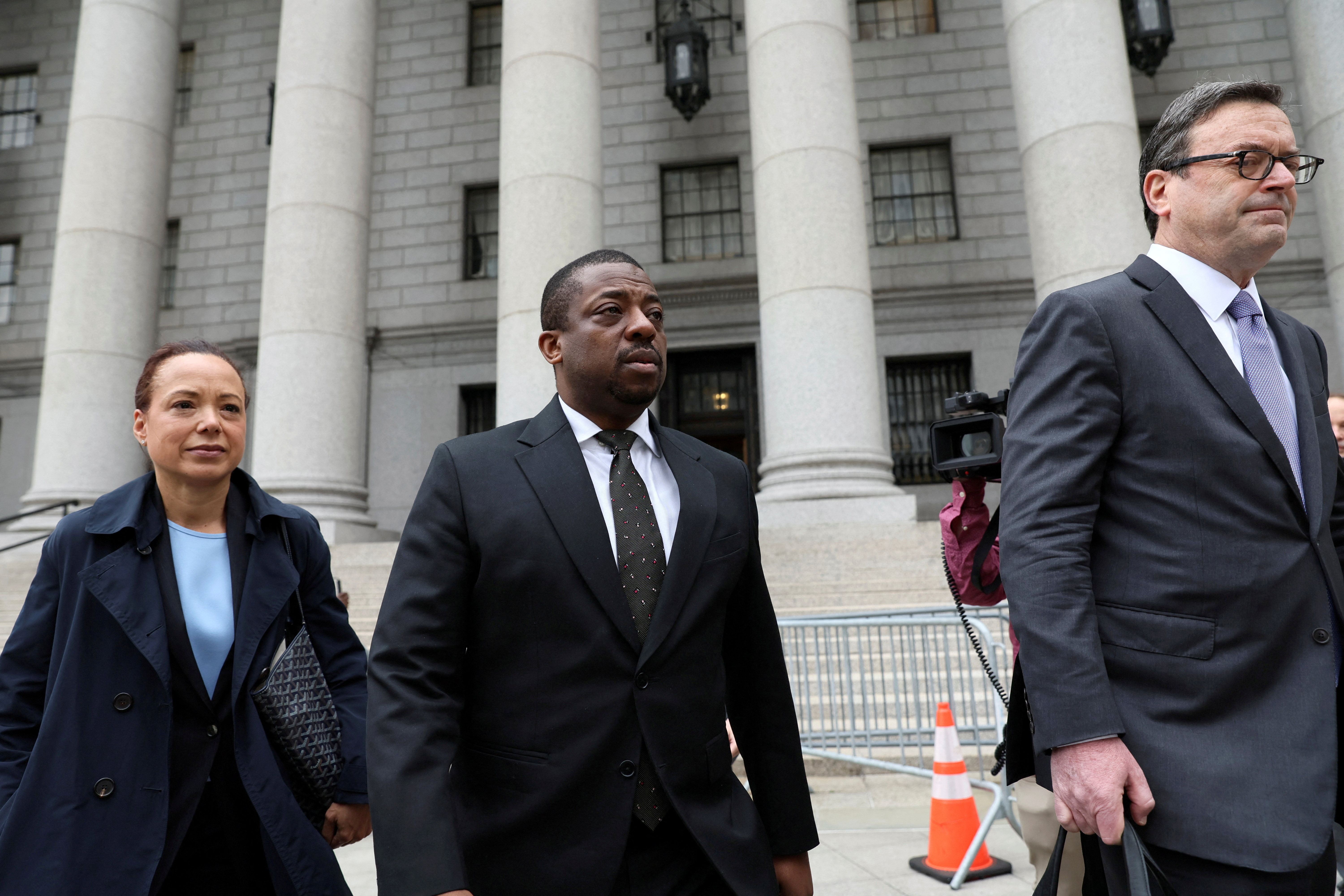
Former New York State Lieutenant Governor Brian Benjamin exits Manhattan federal courthouse following a hearing on bribery charges in New York City, U.S., May 12, 2022. REUTERS/Brendan McDermid

A U.S. judge on Monday dismissed the main criminal counts in the federal government’s corruption case against former New York Lieutenant Governor Brian Benjamin.

U.S. District Judge Paul Oetken in Manhattan said the Department of Justice failed to allege an explicit “quid pro quo” between Benjamin and Gerald Migdol, a real estate developer in Manhattan’s Harlem neighborhood, to support bribery, honest services wire fraud and conspiracy charges in the indictment.

Oetken said prosecutors can pursue two falsification of records charges against Benjamin, concerning the identities of campaign contributors and a background check to become lieutenant governor.

The office of U.S. Attorney Damian Williams in Manhattan appealed the decision late on Monday to the 2nd U.S. Circuit Court of Appeals, also in Manhattan.

Benjamin, selected by Governor Kathy Hochul in August 2021 for the state’s No. 2 job, resigned as lieutenant governor on April 12 when the charges were announced. He pleaded not guilty.

Barry Berke, a lawyer for Benjamin, said his client was “thankful for his vindication” and looked forward to further serving New York and his Harlem community, after what the lawyer called the “flimsy and unwarranted” charges unfairly cost him his job.

Last week the U.S. Supreme Court, which has grown more skeptical of federal prosecutions of public corruption, appeared poised to impose further limits on such prosecutions when it heard arguments in a case involving Joseph Percoco, a former aide to Hochul’s predecessor Andrew Cuomo.

Prosecutors said Benjamin directed a $50,000 state grant in June 2019 to a charity Migdol ran in Harlem, where Benjamin was then a state senator, in exchange for contributions to his 2020 re-election campaign and unsuccessful 2021 bid to become New York City comptroller.
But Oetken said the government merely “implied” an agreement between the men, and the awarding of the grant was not “proof” there had been one.

Migdol pleaded guilty to bribery and fraud charges and cooperated with prosecutors.

The case is U.S. v. Benjamin, U.S. District Court, Southern District of New York, No. 21-cr-00706.

Categories
Audio Sources - Full Text Articles

Trial begins over death of Ugandan woman killed in Utah park

SALT LAKE CITY (AP) — Ludovic Michaud was driving around the scenic red rock landscapes of Utah’s Arches National Park on a windy spring day in 2020 when something unthinkable happened: A metal gate whipped around, sliced through the passenger door of his car and decapitated his new 25-year-old wife, Esther Nakajjigo.

The tragic accident is now at the center of a wrongful death lawsuit Michaud and Nakajjigo’s family are pursuing, in which they argue that the U.S. Park Service was negligent and did not maintain the gates at the entrances and exits to the parks, leading to Nakajjigo’s death.

In opening arguments Monday in Salt Lake City, attorneys representing Michaud and Nakajjigo’s family said they were seeking $140 million in damages from the government.

Their lawsuit claims when the national parks reopened in April 2020 after being shuttered due to COVID-19, rangers at the national park in Utah didn’t secure the gate in place, which in effect “turned a metal pipe into a spear that went straight through the side of a car, decapitating and killing Esther Nakajjigo.”

Attorney Randi McGinn, representing Nakajjigo’s family, on Monday described the death in gruesome detail. After requesting that the family leave the courtroom, she recounted the moment Michaud realized his wife had been killed, when he inhaled the copper-tinged smell of blood, turned to figure out what it was and saw she was dead.

McGinn said Nakajjigo as a woman whose potential was cut short by an early death. She described her history as a prominent women’s rights activist who rose from poverty to become the host of a solutions-oriented reality television series in Uganda focused on empowering women on issues such as education and healthcare.

She worked on fundraising to open a hospital in an underserved part of Kampala, Uganda’s capital, became a philanthropic celebrity and immigrated to the United States for a fellowship at the Boulder, Colorado-based Watson Institute for emerging leaders.

At the heart of the trial is disagreement between the government and Nakajjigo’s family over her earning potential, which is used to calculate a portion of the damages. McGinn likened her to a non-profit CEO who could eventually net an annual income in the hundreds of thousands or millions.

Assistant U.S. Attorney Jeffrey Nelson said an appropriate award would be $3.5 million, far less than the $140 million being pursued. He said he didn’t deny Nakajjigo was an extraordinary person, but argued it was difficult to speculate what kind of work she would have gone on to do. He noted she had recently worked as a host at a restaurant around the time of her death and didn’t have a Bachelor’s degree.

Arches National Park is a 120-square-mile (310-square-kilometer) desert landscape near Moab, Utah, that is visited by more than 1.5 million people annually. It’s known for a series of sculpture-like fins and arches made of an orange sandstone that wind and water have eroded for centuries.

Categories
Audio Sources - Full Text Articles

December serving up baked Alaska and warming most of Arctic

Much of the Arctic is in a burst of freak December warming.

In Utqiagvik, Alaska’s northernmost community formerly known as Barrow, it hit 40 degrees (4.4 degrees Celsius) Monday morning. That’s not only a record by six degrees (3.3 degrees Celsius) but it’s the warmest that region has seen on record from late October to late April, according to Rick Thoman, a climate specialist at the International Arctic Research Center at the University of Alaska Fairbanks.

It rained over the weekend in Nome, Alaska, which is unusual but not unheard of for December and the town also had record-breaking warmth Sunday. Savoonga Creek was flooding and didn’t have snow cover, nor did the town of Teller northwest of Nome, where snow this time of year is used for drinking water, Thoman said.

On Sunday, the Arctic as a whole averaged 11.5 degrees (6.4 degrees Celsius) warmer than the 1979-2000 average temperature and on Monday, computer models showed that average to likely be 10.5 degrees (5.9 degrees Celsius) warmer than normal, according to the University of Maine’s Climate Reanalyzer.

In Nuuk, Greenland, on Friday it was shirt-sleeve weather in December, when the temperature peaked at 54 degrees (12.2 degrees Celsius), 26 degrees (14.4 degrees Celsius) above the normal high mark. In Kangerlussuaq, Greenland, on Friday it hit 48 degrees (8.9 degrees Celsius), which was 34 degrees (18.9 degrees Celsius) warmer than normal.

“The entire Arctic is hot except for small portions of the central and eastern Canadian Arctic and a very small portion of Siberia,” Thoman said from a warmer than normal Fairbanks.

Part of it is because of a system of storms, which is likely just random weather, but part is it from lower than normal sea ice, which is human-caused climate change, Thoman said.

Sea ice in the Arctic is about sixth lowest on record, according to the National Snow and Ice Data Center. It’s far below normal “but we’ve seen worse,” Thoman said.

Sea ice matters because in areas of the Arctic there’s no sun in the winter and the atmosphere is cold. But if there’s open water, that’s usually warmer than the atmosphere.

“Think of that as a heating pad and it’s just emitting heat into the atmosphere,” Thoman said.

Because of that reduced sea ice, much of the Arctic is now warming four times faster than the rest of the globe, which leads to an increase in “winter warm events,” said Danish Meteorological Service ice scientist Jason Box, who studies Greenland.

“Some people cry ‘come off it, it’s just weather’,” Box said. “However, record-setting weather like we’re seeing plenty of examples of in recent years does tell a real story of climate heating.”

___

Follow AP’s climate and environment coverage at https://apnews.com/hub/climate-and-environment

___

Follow Seth Borenstein on Twitter at @borenbears

___

Associated Press climate and environmental coverage receives support from several private foundations. See more about AP’s climate initiative here. The AP is solely responsible for all content.

Categories
Audio Sources - Full Text Articles

Almost half of Kyiv region will have no electricity in coming days

630_360_1666782215-562.jpg

Functions on removing the implications of Russian missile attacks are underway in Kyiv region. NEC Ukrenergo power grid operator has introduced more emergency shutdowns. Therefore, schedules of hourly power outages are currently not in impact in the region.

Oleksiy Kuleba, head of the Kyiv Regional Military services Administration, wrote this on Telegram, Ukrinform reports.

According to him, ability engineers are doing work intensively so that Kyiv area can return to planned power outages as soon as probable.

Nonetheless, Kuleba explained that about half of the region would have no electric power in the coming days.

As noted, Russian missiles strike vitality services in Kyiv, Vinnytsia and Odesa areas on December 5. Regardless of this, the country’s power grid is operating. In some areas, emergency shutdowns are in place in order to stability the method and avoid accidents.

Ukraine’s protection forces shot down around 60 out of a lot more than 70 missiles fired by Russian forces.

iy

Source link

The post Almost half of Kyiv region will have no electricity in coming days appeared first on Ukraine Intelligence.

WP Radio
WP Radio
OFFLINE LIVE