Categories
Audio Sources - Full Text Articles

Exploring a memory: Designer recreates a dress for Diana

LONDON (AP) — This is a dress with a story, and Elizabeth Emanuel wants to tell it.

Shocking pink with a plunging, ruffled neckline and body-hugging shape, the gown was designed by Emanuel for Lady Diana Spencer to wear at a Buckingham Palace party a few days before her marriage to Prince Charles in 1981. It was a visual coming-out event for the future princess, until then largely known for her conservative sweater-and-pearls look.

“This was definitely not a wallflower dress,” said Emanuel, who also designed Diana’s wedding gown. “This was a dress to be seen in and celebrated.”

It was also soon forgotten. In an era before smartphones put a camera in everyone’s pocket and social media made private events public, the dress was mostly seen by the party guests, including Queen Elizabeth II, Princess Grace and Nancy Reagan, but no one else. Emanuel doesn’t know where it is, or even if it still exists.

So she has recreated it, out of bolts of shiny, satin taffeta cut and stitched to match the dramatic sketches she made more than 40 years ago.

Acting on an idea that took shape during Britain’s long coronavirus lockdowns, she did it for herself, for her archive. But also because she wanted to show another side of Diana, who Emanuel believes has been misrepresented by “The Crown,” the popular Netflix series that has brought the story of the princess and her ill-fated marriage to a new generation.

A fan of the series’ first three seasons, Emanuel said she found it hard to watch the last two because of the way Diana was depicted.

Creating a bespoke dress is a long process, requiring multiple fittings that give client and dressmaker lots of time to talk. And throughout the hours they spent together, Diana came across as a happy, vibrant young woman, not the shrinking girl “The Crown” portrays as being buffeted by events beyond her control, Emanuel said.

“She wasn’t like that,” Emanuel said. “She was always very upbeat. And, you know, I like to feel that we were close enough that if she was having huge issues that we might have been aware of it at the time, because those fittings are fairly intimate.”

One of the things the series does right is retrace Diana’s style journey, from the cardigans and bows she wore when she first stepped into the public eye, to frothy ballgowns with frills and flounces and finally to her becoming a global fashion icon in Versace, Dior and Chanel.

Diana grew up in the country, looking to her older sisters for fashion cues. This was a world of hunting, shooting and fishing, where Barbour coats and Wellington boots were everyday wear. It was a culture where no matter how much you cared about your appearance, you had to seem like you weren’t trying too hard.

Diana brought that style sense with her when she moved to London after leaving school and soon became the archetype of the Sloane Ranger, the media name for the wealthy young people who lived near London’s Sloane Square and cultivated the look of bohemian aristocrats.

She was, as former BBC royal reporter Michael Cole put it, “this Sloane Ranger with her sort of pie crust collars and Fair Isle sweaters and rather voluminous skirts. She was a product of the English countryside.”

But after her engagement to the future King Charles III, she began to grow into the glamour of being a princess.

“It actually was a bit of an effort for her to adapt to that role,” Cole said. “She did appreciate and came to understand the power of clothes, the power of image. It helped very much that she had good taste, and I think she had some good advisers.”

In other words, she evolved and learned how to use clothes to project a message.

And perhaps the journey began with the hot pink party gown.

After losing weight, Diana asked Emanuel, her former husband David, and their team to create a dress that would show off her new supermodel figure and transform her image for the celebrities and world leaders invited to the palace.

“She wanted something really spectacular and eye-catching to wear for that because the whole world was going to be there at that party,” Emanuel said at her London studio.

“I think there was a message being sent with this dress, really. That she’d been previously known as Shy Di, but in this dress she definitely was no longer a Shy Di.”

But for Emanuel, the project is about more than simply setting the record straight. It’s about one friend remembering another and the helping hand the princess gave to her career.

There is something touching about the way she looks at this copy and adjusts it on a mannequin roughly as tall as Diana, plainly remembering her famous client.

She recreated a dress that belonged to the Diana she knew, who broke the mold, who was brave, who was ready to walk out on stage. And as she worked, Diana was in her head the whole time.

“As I’m looking at it, I’m imagining her face,” Emanuel said. “The last time that we saw her in the dress was actually at that party and looking so radiant and fantastic. And then all these years later, you know, to recreate it again, it’s kind of strange.″

But that won’t stop her from continuing to explore her memories. She embraced the process of making the dress, of holding a memory in her hand.

Emanuel now has plans to recreate the alternative wedding dress she made for Diana — a spare created in case the tabloids somehow managed to get a photo of the primary dress before the big day. But the dress never leaked, and the spare disappeared from public view.

“I want to see if I can do it right and to delve into all of those memories,” she said. “I will have them. They’ll be there. They won’t just be figments of imagination or floating around digitally. They’ll be real things that I can remember.″
Categories
Audio Sources - Full Text Articles

Canada to boost defence, cyber security in Indo-Pacific policy, focus on “disruptive“ China

2022-11-27T18:45:13Z

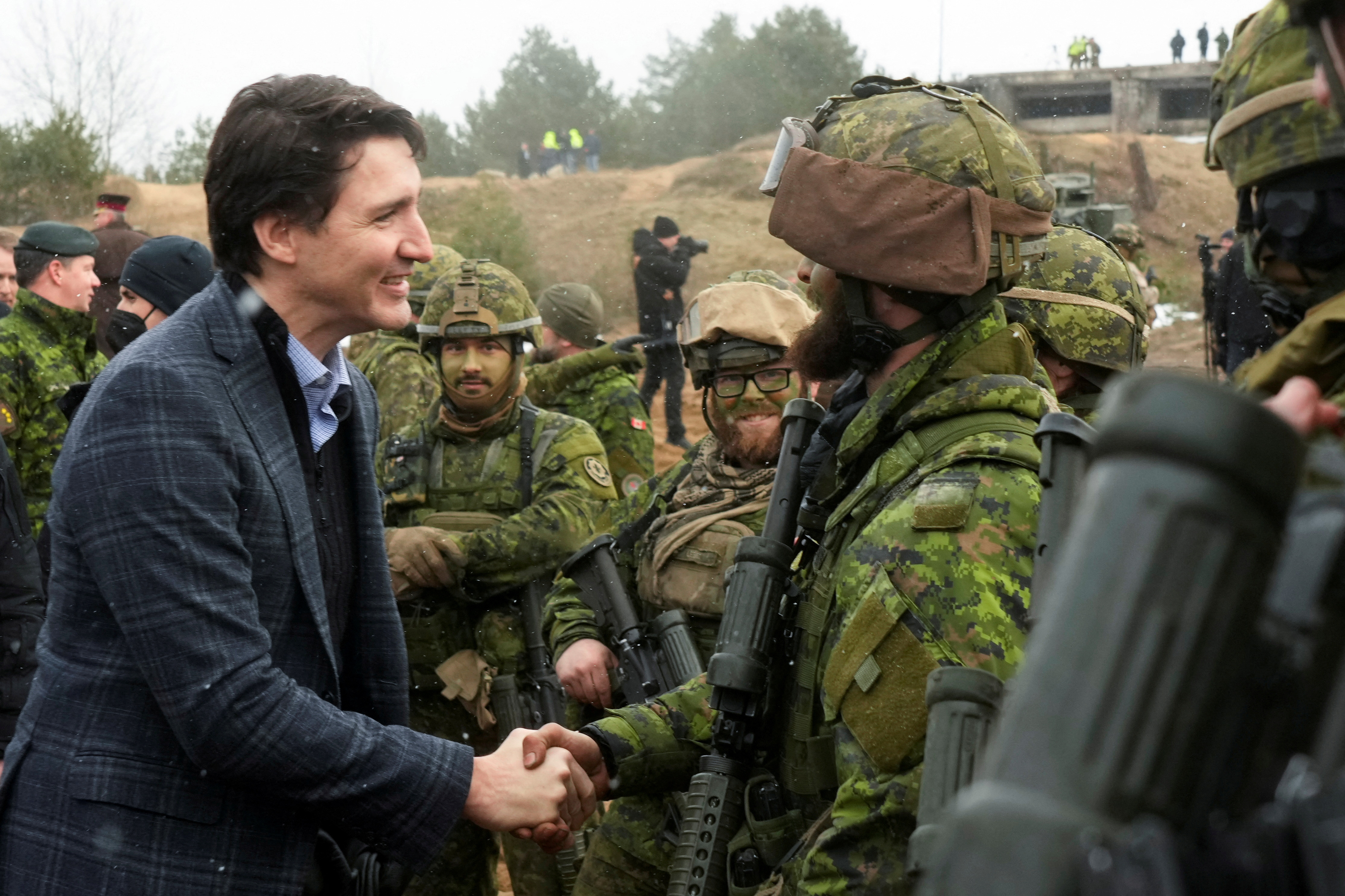
Canadian Prime Minister Justin Trudeau visits members of the Canadian troops, following the Russian invasion of Ukraine, in the Adazi military base, Latvia, March 8, 2022. REUTERS/Ints Kalnins/File Photo

Canada launched its long-awaited Indo-Pacific strategy on Sunday, outlining C$2.3 billion ($1.7 billion) in spending to boost military and cyber security in the region and vowed to deal with a “disruptive” China while working with it on climate change and trade issues.

The plan detailed in a 26-page document said Canada will tighten foreign investment rules to protect intellectual property and prevent Chinese state-owned enterprises from snapping up critical mineral supplies.

Canada is seeking to deepen ties with a fast-growing Indo-Pacific region of 40 countries accounting for almost C$50 trillion in economic activity. But the focus is on China, which is mentioned more than 50 times, at a moment when bilateral ties are frosty.

Four cabinet ministers at a news conference in Vancouver took turns detailing the new plan, saying the strategy was crucial for Canada’s national security and climate as well as its economic goals.

“We will engage in diplomacy because we think diplomacy is a strength, at the same time we’ll be firm and that’s why we have now a very transparent plan to engage with China,” Foreign Minister Melanie Joly said.

Prime Minister Justin Trudeau’s Liberal government wants to diversify trade and economic ties that are overwhelmingly reliant on the United States. Official data for September show bilateral trade with China accounted for under 7% of the total, compared to 68% for the United States.

Canada’s outreach to Asian allies also comes as Washington has shown signs of becoming increasingly leery of free trade in recent years.

The document underscored Canada’s dilemma in forging ties with China, which offers significant opportunities for Canadian exporters, even as Beijing looks to shape the international order into a more “permissive environment for interests and values that increasingly depart from ours,” it added.

Yet, the document said cooperation with the world’s second-biggest economy was necessary to address some of the “world’s existential pressures,” including climate change, global health and nuclear proliferation.

“China is an increasingly disruptive global power,” said the strategy. “Our approach … is shaped by a realistic and clear-eyed assessment of today’s China. In areas of profound disagreement, we will challenge China.”

Tensions with China soared in late 2018 after Canadian police detained a Huawei Technologies executive and Beijing subsequently arrested two Canadians on spying charges. All three were released last year, but relations remain sour.

Canada earlier this month ordered three Chinese companies to divest their investments in Canadian critical minerals, citing national security.

The document, in a section mentioning China, said Ottawa would review and update legislation enabling it to act “decisively when investments from state-owned enterprises and other foreign entities threaten our national security, including our critical minerals supply chains.”

“Because the region is both large and diverse, one size definitely does not fit all,” Canadian Chamber of Commerce President Perrin Beatty said in a statement, adding that Canada’s priorities will need to be very nuanced both between and within countries.

The document said Canada would boost its naval presence in the region and “increase our military engagement and intelligence capacity as a means of mitigating coercive behavior and threats to regional security.”

Canada belongs to the Group of Seven major industrialized nations, which wants significant measures in response to North Korean missile launches.

The document said Ottawa was engaging in the region with partners such as the United States and the European Union.

Canada needed to keep talking to nations it had fundamental disagreements with, it said, but did not name them.

($1 = 1.3377 Canadian dollars)

Categories
Audio Sources - Full Text Articles

“It’s Hard Times”: This Is What Black Friday Looked Like in Kyiv

There was an inevitable dark irony about Black Friday in Kyiv, a city currently blacker than any other as Russia’s ongoing and systematic attempt to bomb civilian infrastructure deprives its residents of light and warmth.

And so it was that just after 4 p.m. in Gulliver, one of the capital’s main shopping centers, the lights went out and a procession of people illuminated by the lights from hundreds of mobile phones fumbled their way to the exits in the hope of returning once power was restored.

“It’s hard times,” said Sergei, a 28-year-old shop assistant in the homewares store Jysk. “It’s challenging but we don’t have a choice.”

Sergei.

Usually a day for snapping up the latest deals on big ticket treats like TVs, mobile phones or the latest designer clothes, Black Friday 2022 was instead an opportunity for Kyiv’s residents to stock up on the essential items they need to get them through what will be a brutal and punishing winter.

Last week the World Health Organization (WHO) said the Ukrainian health system is facing its “darkest days in the war so far,” with millions of people at risk from a “life-threatening” cold season.

The WHO has forecast that around 2-3 million Ukrainians will leave their homes this winter in search of warmth and safety in other European countries, but many millions more will stay.

“We’re shopping for candles,” 27-yeard-old Katya told Kyiv Post. “We’d normally buy clothes and shoes on Black Friday to treat ourselves but this year it’s about survival in one sense.”

Katya and Natasha.

Across Ukraine on Friday, six million households were without power, two days after Russia’s latest salvo of missiles. According to President Zelensky, 600,000 of them were in the capital Kyiv, which had already been experiencing regular rolling blackouts in the preceding weeks.

Another Russian attack is expected in the coming week and just how much more damage Ukraine’s already battered energy infrastructure can take is not known. A total blackout in the capital has not been ruled out.

“Some people are optimistic though,” says 34-year-old Bohdan who works in an electronics store on Khreschatyk Street

“One person bought a 65-inch television so yeah, people are hoping for the best.”

Bogdan.

Such purchases are outliers this year, and right now portable power banks are among the most sought-after items in Kyiv,with many stores selling out on a daily basis, faster than they can replenish stocks.

For the stores that stock such items, Black Friday has at least given them the financial boost they hope for every year from a day of bargains and reduced prices, but other shops have struggled badly.

In the Polo Ralph Lauren store in Gulliver, two shop assistants stood in an otherwise empty store.

“Clothes like this aren’t a high priority for people at the moment,” 30-year-old Taras told Kyiv Post. “They’re buying food and candles and other things they need.”

Victoria and Taras.

With the situation in Kyiv set to worsen in coming weeks and months, the staff here are understandably concerned. “I might have to have to look for another job because I’ve still got bills to pay,” Taras’s colleague, Victoria, says.


The post “It’s Hard Times”: This Is What Black Friday Looked Like in Kyiv appeared first on Kyiv Post.

Categories
Audio Sources - Full Text Articles

Croatia downs Canada 4-1 at World Cup on Kramaric’s 2 goals

AL RAYYAN, Qatar (AP) — Andrej Kramaric scored a pair of goals and Croatia crushed Canada’s hopes of advancing at its first World Cup in 36 years with a 4-1 victory on Sunday.

Alphonso Davies scored Canada’s first-ever World Cup goal seconds into the match but the team’s trip to soccer’s biggest tournament will end on Thursday against Morocco, the Group F leaders after a surprise 2-0 victory over Belgium earlier in the day.

Marko Livaja and Lovro Majer also scored for Croatia, the runner-up to France at the 2018 World Cup in Russia. Captain Luka Modric, 37, was still looking for his first goal of the tournament in what is likely his final World Cup.

Morocco went to the top of Group F with its first win at a World Cup since 1998. But the victory meant that the Canadians needed a win against Croatia for a chance to reach the knockout stage.

___

AP World Cup coverage: https://apnews.com/hub/world-cup and https://twitter.com/AP_Sports

Categories
Audio Sources - Full Text Articles

The Guardian view on Modi’s India: the danger of exporting Hindu chauvinism | Editorial

New Delhi’s foreign policy won’t be insulated from its domestic politics, which demonise India’s 200 million Muslims

When the US state department recently told a court that the Saudi Arabian crown prince, Mohammed bin Salman, should have immunity in a lawsuit over the murder of the journalist Jamal Khashoggi, it portrayed its argument as a legal and not moral position. By way of evidence, it pointed to a rogues’ gallery of foreign leaders previously afforded similar protection. Nestling between Zimbabwe’s Robert Mugabe, who, it was claimed, assassinated political rivals, and Congo’s Joseph Kabila, whose security detail was accused of assaulting protesters in Washington, was India’s Narendra Modi.

Dropping Mr Modi into such a list was no accident. It is a reminder that while New Delhi basks in its diplomatic success at recent G20 and Cop27 summits, it might find the international environment less accommodating if Mr Modi and his Hindu nationalist Bharatiya Janata party (BJP) continue to stir up hatred to win elections. Washington’s gesture suggests that its strategic partnership with India cannot be completely insulated from domestic political issues. Mr Modi’s failure, as chief minister of Gujarat, to prevent anti-Muslim riots in 2002 that left hundreds dead saw him denied a US visa, until he became Indian prime minister. The message from Foggy Bottom was that the ban had not been withdrawn, but suspended, because Mr Modi ran a country that Washington wanted to do business with.

Continue reading…

Categories
Audio Sources - Full Text Articles

The Guardian view on bearing witness: when the mourners too are gone | Editorial

The death of a leader of Argentina’s Mothers of the Plaza de Mayo raises the question of how we can continue to remember

“We conquer death, dear children,” proclaimed Hebe de Bonafini, leader of Argentina’s Mothers of the Plaza de Mayo. She devoted decades to ensuring that her sons, “disappeared” by the military junta in the late 1970s, were kept alive, if only in memory. The Mothers at first demanded the return of their children and then the punishment of those responsible for seizing and killing them. The risks they took were immense: the group’s founders were abducted and thrown into the ocean from “death flights”. But as politicians, the church and almost all of the media remained silent, these working-class housewives stood strong and confronted a brutal regime.

Now Mrs Bonafini too is gone. With her death, at 93, the group has dwindled further, though old companions marched in homage under the blistering sun last Thursday as her ashes were scattered on the plaza. Each day, inevitably, more of those who bore witness to the crimes of the past are lost. In Israel, more than 15,500 Holocaust survivors died last year. More than a third of China’s Tiananmen Mothers – who demand justice for children killed in the bloody crackdown on 1989’s pro-reform protests – have died. This month saw the death of Bao Tong, the most senior official jailed for his sympathy for the demonstrators. At 90, he remained under constant watch by authorities, and was one of the few who dared to break the taboo around the massacre, saying that China could not move forward until it “completely repudiated” the killings.

Continue reading…

Categories
Audio Sources - Full Text Articles

After His Ankle Injury, Here’s What to Know About Neymar’s World Cup Return

On Thursday, Neymar sustained a lateral ligament injury on his right ankle during Brazil’s opening win against Serbia following a tackle from Nikola Milenkovic, leaving fans wondering when he will return.

The team’s doctor also said Neymar had small bone swelling.

The Paris-Saint Germain forward is working “24 hours a day” to recover from his ankle injury and continue to represent his team, Brazilian player Marquinhos told the Associated Press Sunday. “We don’t know when it’s going to happen, but we hope we will have him with us again as soon as possible and in good health mentally and physically.”

[time-brightcove not-tgx=”true”]

Brazil is set to play Switzerland on Monday at 11 a.m. ET.

Will Neymar return?

Neymar, 30, won’t be playing on Monday, but Brazilian soccer manager Tite seems confident that he will return. “I believe that Neymar and Danilo will play [in] the World Cup,” Tite said during a press conference. “I believe in that. Medically, clinically, they can talk more about the stages of the treatment. I have no place to talk. I trust that we will be able to use both of them.”

Following the match against Serbia, Tite says that Neymar was in physiotherapy until five or six in the morning.

Tite added that he had to force Neymar and Danilo, another injured Brazilian player, to stop their physiotherapy and attend the latest training with the team.

The soccer star is working hard to ensure he can continue playing, posting updated pictures of his swollen ankle on his Instagram story and dedicating an Instagram post to the match, calling it one of the most difficult moments of his career. “I have an injury, yes, it’s going to hurt but I’m sure I’ll have the chance to come back because I will do my best to help my country, my teammates and myself,” Neymar said in his post.

Sources told ESPN that Neymar will likely also miss the third match of the group stage against Cameroon, though there has been no official announcement by any team spokesperson.

Brazil’s manager admits it will be hard to find someone who can play at Neymar’s level, but the team has a strong roster to choose from. Neymar’s teammates are more optimistic about the potential of the team.

“We are talking about one of the best players in the world. It’s hard to find someone else on his level,” Brazil midfielder Casemiro said Saturday. “But we have many quality players in the squad who can do a good job replacing him.”

Neymar has a history of getting injured

Neymar has a bad streak of luck at tournaments, suffering a separate ligament injury in a friendly match against Qatar just before the start of the 2019 Copa America. Brazil went on to win the championship without their star player, but Neymar was also left off the roster for the entire tournament.

During the 2014 World Cup, Neymar’s time on the field was also cut short when Juan Camilo Zuniga kneed the soccer star, breaking a vertebra during a quarterfinal match against Colombia.

That injury could have ended his soccer career, Neymar later revealed in an interview with The Player’s Tribune. “I couldn’t move my legs. And the doctor took me out and I started to … to cry. Because it was very painful and I didn’t feel anything. I didn’t feel my legs, so I went to the hospital that’s in the stadium,” he said.

His team then lost against Germany 7-1 in the following semifinal match.

Categories
Audio Sources - Full Text Articles

Ukraine’s General Staff expects Russia to strengthen its grouping of troops in temporarily occupied territories

630_360_1668703178-623.jpg

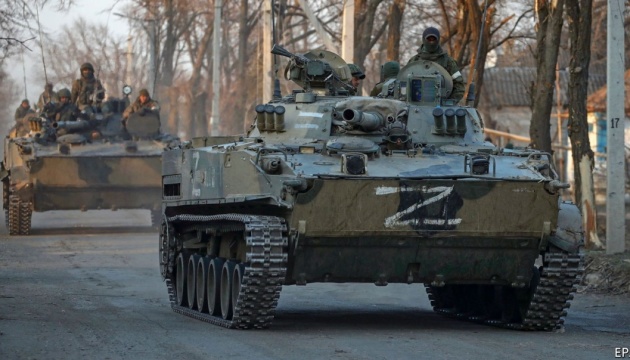
Russia is envisioned to strengthen its grouping of troops in the briefly occupied and captured territories of Ukraine by redeploying unique units from Belarus soon after they receive beat abilities.

In accordance to Ukrinform, the Basic Employees of the Armed Forces of Ukraine said this in a put up on Fb.

As of 18:00 on November 27, the enemy ongoing armed aggression in opposition to Ukraine, launching strikes on civilian infrastructure.

The enemy’s attempts are centered on restraining the actions of the Ukrainian Protection Forces. At the exact time, the invaders proceed to redeploy staff and armed forces devices to replenish units that have suffered losses.

During the day, the Russians carried out 4 missile attacks on civilian targets in the settlements of Rozumivka in the Zaporizhia location and Musiivka in the Dnipropetrovsk area, as properly as about ten assaults employing many rocket launchers.

There even now is a risk of the enemy launching missile strikes in opposition to vital infrastructure throughout Ukraine.

In accordance to the Typical Personnel, the predicament has not adjusted drastically in the Volyn and Polissia directions, with no signals of the enemy forming any assault teams.

Belarus carries on to assistance Russia’s armed aggression from Ukraine by giving its territory and airspace for missile and air strikes.

The models of the Belarusian exclusive functions forces, which are part of a regional grouping of troops of the so-called Union State of Russia and Belarus, are associated in strengthening a area of the point out border.

In the border regions of Russia’s Bryansk and Kursk regions, enemy units carry on to complete the undertaking of masking a section of the Russian-Ukrainian border, conducting provocative actions. In the vicinity of Yanzhulivka, Chernihiv area, the invaders introduced a mortar assault.

In the Kharkiv region, Russian troops shelled the areas of Kozacha Lopan, Strilecha, Izbytske, Ohirtseve, Bochkove, Budarky, Chuhunivka and Ambarne with mortars and rocket artillery.

In the Kupiansk course, the invaders employed all styles of artillery to strike areas of Kupiansk, Kurylivka, Tabaivka, Krokhmalne and Berestove in the Kharkiv region.

In the Lyman course, the enemy is concentrating its principal initiatives on conducting offensive functions. Areas of Makiivka and Nevske in the Luhansk region, as effectively as Yampolivka and Torske in the Donetsk location, came below artillery fire.

In the Bakhmut and Avdiivka directions, Russian troops go on to concentrate their most important efforts on conducting offensive operations. They used tanks, mortars and artillery to shell the locations of Spirne, Yakovlivka, Bakhmutske, Bakhmut, Klishchiivka, Andriivka, Kurdiumivka, Avdiivka, Vodiane, Pervomaiske, Krasnohorivka, Marinka, and Novomykhailivka in the Donetsk region.

In the Novopavlivka path, the Russians fired artillery at the positions of the Ukrainian protection forces and the places of the settlements of Vuhledar, Novoukrainka, Zolota Nyva and Neskuchne in the Donetsk location.

Russian troops are defending in the Zaporizhzhia way. The invaders shelled the regions of Vremivka, Novosilka, Novopillia, Poltavka, Malynivka, Chervone, Zaliznychne, Dorozhnianka, Novodanylivka, and Kamianske with artillery of several calibers.

In the Kryvyi Rih and Kherson directions, Russian troops are conducting positional defense, devoid of stopping to fire artillery at the Ukrainian protection forces and settlements on the proper bank of the Dnipro River, in certain Kherson.

In the meantime, the enemy proceeds to suffer losses. It was established that the hospitals of the briefly occupied Shchastia district in the Luhansk region are overloaded due to the large amount of wounded Russian soldiers. The invaders are compelled to arrange the healthcare evacuation of wounded troopers to Luhansk.

According to the report, Ukrainian forces hit an enemy target on November 25. According to the General Workers, there ended up about 70 Russian servicemen there. The variety of people wounded and killed is becoming specified.

Units of the Ukrainian rocket and artillery forces hit 3 regions of concentration of enemy personnel, weapons and army products.

Source link

The post Ukraine’s General Staff expects Russia to strengthen its grouping of troops in temporarily occupied territories appeared first on Ukraine Intelligence.

Categories
Audio Sources - Full Text Articles

Niece of Iran“s Supreme Leader urges world to cut ties with Tehran – online video

2022-11-27T11:30:04Z

DUBAI (Reuters) – Iranian Supreme Leader Ayatollah Ali Khamenei’s niece, a well known rights activist, has called on foreign governments to cut all ties with Tehran over its violent crackdown on popular unrest kindled by the death in police custody of a young woman.

Iranian Supreme Leader Ayatollah Ali Khamenei’s niece, a well known rights activist, has called on foreign governments to cut all ties with Tehran over its violent crackdown on popular unrest kindled by the death in police custody of Mahsa Amini.

A video of a statement by Farideh Moradkhani, an engineer whose late father was a prominent opposition figure married to Khamenei’s sister, was being widely shared online after what activist news agency HRANA said was her arrest on Nov. 23.

“O free people, be with us and tell your governments to stop supporting this murderous and child-killing regime,” Moradkhani said in the video. “This regime is not loyal to any of its religious principles and does not know any rules except force and maintaining power.”

Khamenei’s office did not immediately respond to a Reuters request for comment.

HRANA said 450 protesters had been killed in more than two months of nationwide unrest as of Nov. 26, including 63 minors. It said 60 members of the security forces had been killed, and 18,173 protesters detained.

The protests, sparked by the death of 22-year-old Kurdish Iranian woman Mahsa Amini after her arrest for “inappropriate attire”, pose one of the strongest challenges to the country’s clerical establishment since the 1979 Islamic Revolution.

Jalal Mahmoudzadeh, a member of parliament from the mainly Kurdish city of Mahabad, said on Sunday that as many as 105 people had been killed in Kurdish-populated areas during the protests. He was speaking in a debate in parliament as quoted by the Entekhan website.

Challenging the Islamic Republic’s legitimacy, protesters from all walks of life have burned pictures of Khamenei and called for the downfall of Iran’s Shi’ite Muslim theocracy.

The video was shared on YouTube on Friday by her brother, France-based Mahmoud Moradkhani, who presents himself as “an opponent of the Islamic Republic” on his Twitter account, and then by prominent Iranian rights activists.

On Nov. 23, Mahmoud Moradkhani reported her sister’s arrest as she was heeding a court order to appear at the Tehran prosecutor’s office. Farideh had been arrested earlier this year by Iran’s Intelligence Ministry and later released on bail.

HRANA said she was in Tehran’s Evin security prison. Moradkhani, it said, had earlier faced a 15-year prison sentence on unspecified charges.

Her father, Ali Moradkhani Arangeh, was a Shi’ite cleric married to Khamenei’s sister and recently passed away in Tehran following years of isolation due to his stance against the Islamic Republic, according to his website.

Farideh Moradkhani added in her video: “Now is the time for all free and democratic countries to recall their representatives from Iran as a symbolic gesture and to expel the representatives of this brutal regime from their countries.”

On Thursday, the United Nations’ top human rights body decided by a comfortable margin to establish a new investigative mission to look into Tehran’s violent security crackdown on the anti-government protests.

Criticism of the Islamic Republic by relatives of top officials is not unprecedented. In 2012, Faezeh Hashemi Rafsanjani, the daughter of late former president Akbar Hashemi Rafsanjani, was sentenced to jail for “anti-state propaganda”.

Iranian authorities released on bail the activist and blogger Hossein Ronaghi on Nov. 26 to undergo medical treatment, according to his brother writing on Twitter.

Concerns had been growing about Ronaghi’s health after he went on a hunger strike last month.

Categories
Audio Sources - Full Text Articles

Bird flu prompts slaughter of 1.8M chickens in Nebraska

OMAHA, Neb. (AP) — Nebraska agriculture officials say another 1.8 million chickens must be killed after bird flu was found on a farm in the latest sign that the outbreak that has already prompted the slaughter of more than 50 million birds nationwide continues to spread.

The Nebraska Department of Agriculture said Saturday that the state’s 13th case of bird flu was found on an egg-laying farm in northeast Nebraska’s Dixon County, about 120 miles (193 kilometers) north of Omaha, Nebraska..

Just like on other farms where bird flu has been found this year, all the chickens on the Nebraska farm will be killed to limit the spread of the disease. The U.S. Department of Agriculture says more than 52.3 million birds in 46 states — mostly chickens and turkeys on commercial farms — have been slaughtered as part of this year’s outbreak.

Nebraska is second only to Iowa’s 15.5 million birds killed with 6.8 million birds now affected at 13 farms.

In most past bird flu outbreaks the virus largely died off during the summer, but this year’s version found a way to linger and started to make a resurgence this fall with more than 6 million birds killed in September.

The virus is primarily spread by wild birds as they migrate across the country. Wild birds can often carry the disease without showing symptoms. The virus spreads through droppings or the nasal discharge of an infected bird, which can contaminate dust and soil.

Commercial farms have taken a number of steps to prevent the virus from infecting their flocks, including requiring workers to change clothes before entering barns and sanitizing trucks as they enter the farm, but the disease can be difficult to control. Zoos have also taken precautions and closed some exhibits to protect their birds.

Officials say there is little risk to human health from the virus because human cases are extremely rare and the infected birds aren’t allowed to enter the nation’s food supply. Plus, any viruses will be killed by properly cooking poultry to 165 degrees Fahrenheit.

But the bird flu outbreak has contributed to the rising prices of chicken and turkey along with the soaring cost of feed and fuel.

WP Radio
WP Radio
OFFLINE LIVE