
Day: November 27, 2022
https://t.co/ClVj0wonpl
China reports fourth straight daily record of new COVID cases reut.rs/3gKGU2d https://t.co/qXyavbxNKQ
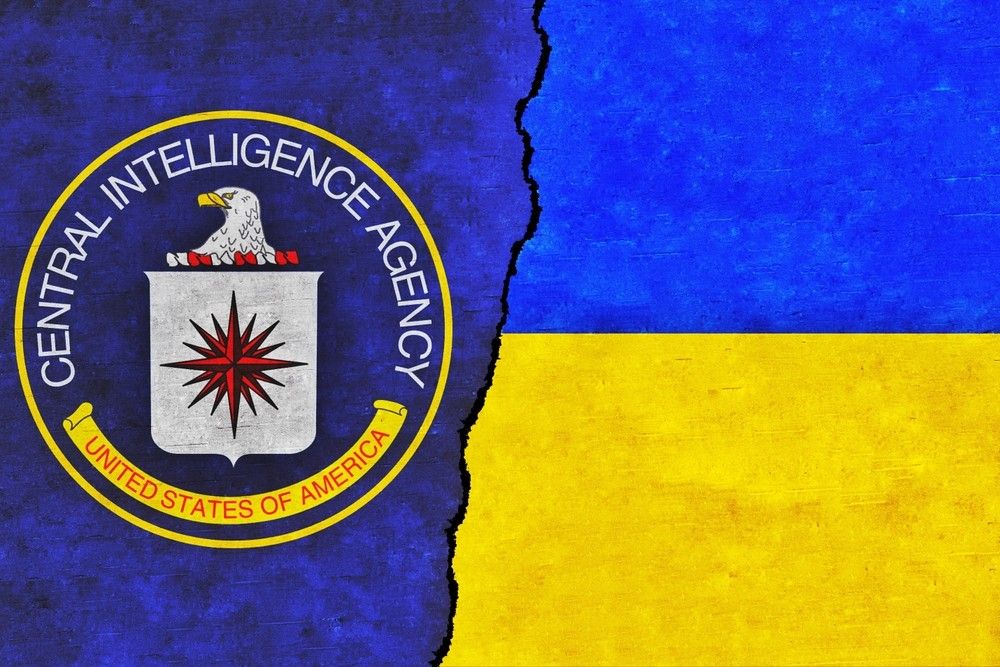
The Central Intelligence Agency is operating in Kyiv and has been for some time, according to new reporting by the New York Times. So, while Biden has insisted on “no U.S. boots on the ground” in Ukraine, there are soft-soled operatives, otherwise known as American spies, providing intelligence and other tactical assistance to Ukraine in its war with Russia.
Sounds like Americans are in this war, like it or not.
The news, based on sourcing from current and former U.S. government officials, is part of a broader report about a “stealthy network” of U.S. and European commandos and spies in “cells” run by the Pentagon’s European Command “to speed allied assistance to Ukrainian troops.” Much of this is operating from military bases in France and Germany and elsewhere. But as the NYT points out, there are European commandos and CIA agents working on the inside.
The commandos are not on the front lines with Ukrainian troops and instead advise from headquarters in other parts of the country or remotely by encrypted communications, according to American and other Western officials, who spoke on the condition of anonymity to discuss operational matters. But the signs of their stealthy logistics, training and intelligence support are tangible on the battlefield.
Several lower-level Ukrainian commanders recently expressed appreciation to the United States for intelligence gleaned from satellite imagery, which they can call up on tablet computers provided by the allies. The tablets run a battlefield mapping app that the Ukrainians use to target and attack Russian troops.
As usual it appears that the administration wants to have it both ways: assure the American people that it is being “restrained” and that we are not “at war” with the Russians, but doing everything but planting a U.S. soldier and a flag inside Ukraine. The CIA, as you will recall, has increasingly had an operational combat focus since 9/11, running elaborate secret prisons overseas, engaging in enhanced interrogations (torture) and manhunting with armed drones and commando teams over the last 20 years. There may be a sliver of daylight between the CIA operatives there today and the U.S. special forces that left Ukraine after Russia invaded, but given the circumstances, is it a meaningful one? Is it all about who is pulling the trigger?
The Russians may not see the distinction and consider this news as further evidence that their war is more with Washington and NATO than with Ukraine. For this and other reasons the NYT report has sparked a heated debate on social media.
What possible value add could the public bring to the debate? They don’t have access to the details or the situational awareness.
— John Sipher (@john_sipher) June 26, 2022
Heer, who is a writer for The Nation, responded to Sipher by saying that military decisions are “subject to civilian oversight,” to which Sipher, whose Twitter profile says he is at the Atlantic Council and is “former CIA Clandestine Service,” quipped, that’s to be done “through elected representatives.”
Right. And I have a bridge to sell you in Fallujah.
Perhaps two percent of Congress through the House and Senate intelligence committees is aware the CIA is operating in Kyiv but like everything — from the 20-year war in Afghanistan to specific operations like the assassination of Qasem Soleimani in 2020 — the whole process has a whiff of retroactive rubberstamping with no room (or interest) for debate in Congress. Operational secrecy and security are no doubt the fig leaf, but when we’re not supposed to be in a war we aren’t supposed to be in a war, right?
“I don’t think people realize that right now the spigot from Congress is fully open. Money, weps, intel, whatever they need,” tweeted Jack Murphy, journalist and Iraq/Afghanistan vet. “The American public is not being appropriately informed about what our government is up to as basically every single op DOD/CIA proposes is getting the green light.”
But then again the CIA acted with impunity through much of its formative years, and it wasn’t until the Church Committee brought all the nastiness to light in the 1970s that the American public was made aware of it. Still, the agency continued to fight bloody proxy wars in places like El Salvador and Nicaragua — and let’s not forget Afghanistan in the 1980s. Are we to believe that there is any more stringent oversight today?
Which brings us to the million dollar question — what do we expect to come from this particular (proxy war) for which the U.S. is engaged well beyond just sending assistance? My Quincy Institute colleague George Beebe, who spent years engaged in Russia analysis for the CIA, wonders if Washington even knows how far it is going here.
“This is reminiscent of the ‘sunk cost’ phenomenon that caused Washington to increase its involvement in Vietnam from a handful of advisors to half a million troops in direct combat,” he tells me.
“In the face of growing Russian success in taking the Donbass, we are doubling down on even more economic sanctions on Russia and deeper U.S. and NATO support for Ukraine. How this is supposed to produce anything beyond an ongoing and very volatile stalemate is very unclear. We seem to have no viable exit plan.”
If history is any guide, we won’t have one, until it’s too late.
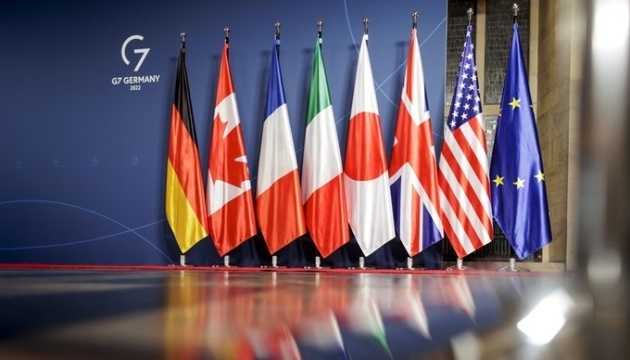
Germany, this year’s chair of the Group of Seven (G7) nations, is initiating the first-ever meeting of G7 justice ministers to discuss the investigation into war crimes committed in Ukraine and the prosecution of war criminals.
German Justice Minister Marco Buschmann said this on Twitter, Ukrinform reports.
“We will talk mainly about the terrible war crimes committed on Ukrainian territory, which we want to investigate and bring the perpetrators to justice. For this, we will agree on even more effective coordination,” the minister said.
According to him, the meeting will take place next Monday and Tuesday in Berlin.
On November 24, Germany proposed holding a meeting of the foreign ministers of the G7 countries due to the latest Russian attacks on Ukraine’s energy infrastructure.
The post G7 Justice Ministers to Hold First-Ever Meeting to Discuss War Crimes in Ukraine appeared first on Kyiv Post.
 |
Michael_Novakhov shared this story . |
There’s now a push to diversify the FBI. The federal agency is looking to fill 1,000 positions, and hope they’ll get more black, brown and female applicants to do it. The female leader in charge of the FBI in the Capital Region says it’s to important to refine the faces of the FBI.
If you think a woman isn’t man enough to work in the FBI, Special Agent Ellen Thumer is here to prove you wrong.
“Can you believe that you’re here?” CBS 6 morning anchor Lara Bryn asked Thumer.
“No! And I think that’s why I originally didn’t think to apply,” said Thumer.
MORE: FBI Director Wray weighs in on potential driver of youth crime
Speaking of women in the FBI, there’s also Janeen DiGuissepi, the special agent in charge for the Albany office. “For me, it’s very humbling. I never thought I’d be an SAC,” said DiGuissepi.
They and Supervisory Special Agent Donald Chu know what it takes to join the ranks of one of the most respected federal organizations. But as minorities, they also know they represent much more than just the agency. They represent entire communities in a highly elite field.
“It’s important for the FBI to reflect the communities we serve,” said Special Agent in Charge DiGuiseppi.
“Sometimes when we go into a community and we want to interview a witness or speak to a victim of a crime, that victim or witness may be reluctant to talk to someone that they feel isn’t like them or represent them,” said Supervisory S.A. Chu.
That’s why the FBI now says it’s critical to diversify its workforce, particularly with special agents. As of August, women in the FBI made up 45.5% of the workforce. But they make up only 22.7% of special agents. Racial and ethnic minorities only account for 27.1% of the FBI nationally, similarly only making up about 20% of special agents.
“It’s very important for the FBI to recognize it needs to do better,” said Chu.
MORE: Fact Check Team: FBI ‘extremely concerned’ that TikTok could pose threat to US
“I do feel like I work with some really amazing women. I also feel like there could be more,” said Thumer.
It’s something DiGuiseppi says she’s working on. She says women make up about 10% of agents in the Albany office, but admits there’s not much diversity in her office otherwise. “Not here but there are a lot of Asian Americans and other diverse groups in the FBI but you have to look at, we’re a small office and we don’t have a lot of turnover.”
The FBI held a recruiting event earlier this month, not solely focused on diversity but also on filling roles they need, whether that be in financial crimes or cybersecurity. “So it’s more than just looking at somebody’s background or skin color. It’s about filling niches so that we can do the best investigations we can for the community,” said DiGuiseppi.
Special Agent Thumer is working to fill one of those niches now, as she gears up for bomb tech training this spring. She started in the FBI years ago as a contractor.
“You are a perfect example of upward mobility so can you talk a little bit about what that means to be able to do that here in the FBI?” CBS 6 asked.
“Once you’re in the FBI, the sky’s the limit in terms of things you can do,” Thumer responded.
“The FBI has always tried to be in the lead, on the forefront of change,” said DiGuiseppi.
Part of that change is recognizing representation does matter.
Germany, this year’s chair of the Group of Seven (G7) nations, is initiating the first-ever meeting of G7 justice ministers to discuss the investigation into war crimes committed in Ukraine and the prosecution of war criminals.
German Justice Minister Marco Buschmann said this on Twitter, Ukrinform reports.
“We will talk mainly about the terrible war crimes committed on Ukrainian territory, which we want to investigate and bring the perpetrators to justice. For this, we will agree on even more effective coordination,” the minister said.
According to him, the meeting will take place next Monday and Tuesday in Berlin.
On November 24, Germany proposed holding a meeting of the foreign ministers of the G7 countries due to the latest Russian attacks on Ukraine’s energy infrastructure.
The post G7 Justice Ministers to Hold First-Ever Meeting to Discuss War Crimes in Ukraine appeared first on Kyiv Post.
NEW YORK (AP) — Oscar, Golden Globe and two-time Grammy winning singer-actress Irene Cara, who starred and sang the title cut from the 1980 hit movie “Fame” and then belted out the era-defining hit “Flashdance … What a Feeling” from 1983′s “Flashdance,” has died. She was 63.
Her publicist, Judith A. Moose, announced the news on social media, writing that a cause of death was “currently unknown.” Moose also confirmed the death to an Associated Press reporter on Saturday. Cara died at her home in Florida. The exact day of her death was not disclosed.
“Irene’s family has requested privacy as they process their grief,” Moose wrote. “She was a beautifully gifted soul whose legacy will live forever through her music and films.”
During her career, Cara had three Top 10 hits on the Billboard Hot 100, including “Breakdance,” “Out Here On My Own,” “Fame” and “Flashdance … What A Feeling,” which spent six weeks at No. 1. She was behind some of the most joyful, high-energy pop anthems of the early ’80s.
Tributes poured in on Saturday on social media, including from Deborah Cox, who called Cara an inspiration, and Holly Robinson Peete, who recalled seeing Cara perform: “The insane combination of talent and beauty was overwhelming to me. This hurts my heart so much.”
She first came to prominence among the young actors playing performing arts high schoolers in Alan Parker’s “Fame,” with co-stars Debbie Allen, Paul McCrane and Anne Mear. Cara played Coco Hernandez, a striving dancer who endures all manner of deprivations, including a creepy nude photo shoot.
“How bright our spirits go shooting out into space, depends on how much we contributed to the earthly brilliance of this world. And I mean to be a major contributor!” she says in the movie.
Cara sang on the soaring title song with the chorus — “Remember my name/I’m gonna live forever/I’m gonna learn how to fly/I feel it coming together/People will see me and cry” — which would go on to be nominated for an Academy Award for best original song. She also sang on “Out Here on My Own,” “Hot Lunch Jam” and “I Sing the Body Electric.”
Three years later, she and the songwriting team of “Flashdance” — music by Giorgio Moroder, lyrics by Keith Forsey and Cara — was accepting the Oscar for best original song for “Flashdance … What a Feeling.”
The movie starred Jennifer Beals as a steel-town girl who dances in a bar at night and hopes to attend a prestigious dance conservatory. It included the hit song “Maniac,” featuring Beals’ character leaping, spinning, stomping her feet and the slow-burning theme song.
“There aren’t enough words to express my love and my gratitude,” Cara told the Oscar crowd in her thanks. “And last but not least, a very special gentlemen who I guess started it all for me many years ago. To Alan Parker, wherever you may be tonight, I thank him.”
The New York-born Cara began her career on Broadway, with small parts in short-lived shows, although a musical called “The Me Nobody Knows” ran over 300 performances. She toured in the musical “Jesus Christ Superstar” as Mary Magdalene in the mid-1990s and a tour of the musical ”Flashdance” toured 2012-14 with her songs.
She also created the all-female band Irene Cara Presents Hot Caramel and put out a double CD with the single “How Can I Make You Luv Me.” Her movie credits include ”Sparkle” and “D.C. Cab.”
___
Associated Press reporters Hillel Italie and Freida Frisaro contributed to this report.
Michael Novakhov retweeted:
В Шанхае вспыхнули протесты из-за коронавирусного локдауна. На антиправительственной акции скандировали “Долой Коммунистическую партию! Долой Си Цзиньпина!” Полиция производила задержания dw.com/a-63905455?mac…