Categories
Audio Sources - Full Text Articles

Kherson resident flees liberated home: “Now the Russians are shelling us” – Kyiv Post

Lada Koslovska, like most Kherson residents, was thrilled when Ukrainian troops liberated the town. But the predicament in the metropolis is nonetheless grim, and now she and her child are leaving.

Koslovska, 47, explained Russian shelling of the metropolis with a pre-war population of 280,000, from the other aspect of the Dnipro River, is the key motive she and her son will shut up their residence and grow to be refugees.

“Psychologically we were all set. It seemed that we could survive, but it is pretty frightening. What the Russians are unable to retain, they will consider to ruin. This is one of the good reasons,” claimed in responses to textual content concerns despatched Koslovska by Kyiv Put up.

Russian troops captured by Russian Federation (RF) forces on Mar. 2 with small battling, and deserted it on Nov 11 without having a shot. Ukrainian reconnaissance troops entered the metropolis the future working day, and inside of a 7 days Russian artillery throughout the river was hammering Kherson homes and organization, as regional authorities have struggled to produce foodstuff, electrical power and warmth.

At most destinations in the metropolis, there is “no electric power, no h2o (and) virtually no phone link,” said volunteer Oleska Kotoslawksy, in a textual content information from Kherson to Kyiv Write-up.

Some strikes had been with banned cluster munitions, reported Oleksandr Leshchenko, a Kherson metropolis spokesman, in assertion. Kherson’s Dnipro River shore, nonetheless an critical supply of water for inhabitants still devoid of doing the job taps in their residences, is unsafe to solution, for the reason that of Russian forces equipped to fireplace from the other facet of the river, a Kherson metropolis police warning mentioned.

Bombardment of Kherson’s riverside and inland suburbs has, information studies explained, intensified in the latest months.

On 24 Nov. a salvo of missiles or artillery rockets strike an apartment in Kherson’s Tavrisky district, blowing three-meter huge holes in an condominium constructing. 7 men and women were being killed and at minimum 21 had been injured, a Friday assertion from the regional protection command stated. From 20 to 24 Nov. Russian shells or rockets struck 45 moments in or around Kherson town, said Halyna Luhova, Kherson regional administration spokeswoman, in a assertion.

“They (Russian artillery) can arrive at any where: in the suburbs and spots closer to the river. From mortars, MLRS, and tanks,” Koslovska said. “People say Russians established up a mortar near to the river and fireplace and then operate. They are hiding in Oleshky and Gola Prystan (on the remaining lender of the Dnipro River) within the household districts.”

Andriy Yusov, a spokesman for the Major Intelligence Directorate of Ukraine’s Ministry of Defense, in Wednesday television remarks mentioned the Kremlin is likely to concentrate on cities like Kherson in long run even much more, because the Russian military is functioning out of prolonged-range, precision-guided cruise missiles, but however has hundreds of S-300 missiles – a weapon usually made use of to shoot at airplanes, but able to hit a ground target at medium ranges of 180-360 km. Kherson is in that selection envelope and will just about undoubtedly be strike again and again, he predicted.

“We see that they (the Russian army) do not specifically strive for precision. In a lot of circumstances, a overlook of a kilometer is usual and ample (accuracy) to hit…civilian houses and hospitals,” Yusov stated.

“When we were below occupation, we tailored, we had been partisans, but we knew for sure when the explosions happened, it was ours, and we were being not afraid…(T)he Ukrainian army is really correct, and when our military was firing at Russians (in Kherson) even the windows in the properties nearby were intact. But now – it is a make any difference of luck,” Koslovksa said.

Even without the need of Russian bombardment, a great deal of Kherson’s electricity grid, communications, logistics chains and civilian infrastructure are more and more below stress, as winter methods and regional authorities have struggled to supply ample meals and electrical energy for people like to survive.

In accordance to information reviews, only a couple bank terminals operate in the overall town, cellular phone communications are normally minimal to text and voice, and the closest trusted gasoline stations are outside the house Kherson on the Mykolaiv highway.

Transformer stations and electric power line rights-of-way for the Kherson, now at periods under hearth by Russian missiles fired from across the Dnipro River, ended up thickly mined by departing Russian troops, mentioned

Volodymyr Kudriatsky, a spokesman for the state power company Ukrenergo, according to an UNIAN information agency report. The mines and booby traps are so dense at some locations, he mentioned, that demining a square meter of power grid territory can final an hour.

Generators, batteries and flashlights are at a top quality, and getting just one is generally impossible, journalist Konstantyn Ryzhenko wrote in his Telegram channel.

Regional authorities have been handing out packaged materials to people across the metropolis, said Yaroslav Yanushevych, a Kherson town spokesman. Volunteer groups, some from afar, were relocating to fill gaps. Ihor Kukobko, head of the NGO Iskra Dobra, explained his group started providing guidance to Kherson people a few days soon after the Russians remaining. The biggest demand at present, he reported, is extensive-storage food items like potatoes and cabbages, candles and batteries, and wooden-fired stoves.

Yaroslav Yanushevych, head of the Kherson regional administration, in remarks to the condition-operate Suspinske information and facts platform mentioned the national federal government has designated Kherson a front-line metropolis and will transport citizens wanting to evacuate at authorities price tag, by bus or by teach.

Koslovska‘s plan is to get out of the town, shift in with her son, and assist out people worse off than herself.

“I strategy to see the older son and consider the young child to a safer position. Simply because Kherson is a entrance-line town. If there were only challenges with electrical power and water, it would not be so terrifying, but shelling knocks me off monitor,” she mentioned. “I want the little one to commit a minimal whilst in a safer area. And next – as quickly as I get to a put in which I can participate, I will uncover a volunteer heart.”


Supply connection

The post Kherson resident flees liberated home: “Now the Russians are shelling us” – Kyiv Post appeared first on Ukraine Intelligence.

Categories
Audio Sources - Full Text Articles

Amazon workers called to strike across globe on Black Friday

2022-11-25T09:15:13Z

The logo of Amazon is seen at the company logistics center in Lauwin-Planque, northern France, November 15, 2022. REUTERS/Pascal Rossignol

Workers at Amazon (AMZN.O) sites across the globe, including in the United States, Germany and France, were expected to go on strike on Black Friday, targeting the online retailer on one of the busiest shopping days of the year with calls for better pay.

A global call for strike action came from the Make Amazon Pay initiative, which listed industrial action planned in over 30 countries across the globe.

Germany’s Verdi union said work stoppages were planned at 10 fulfilment centres in that country.

It demanded the company recognise collective bargaining agreements for the retail and mail order trade sector and called for a further collective agreement on good and healthy work.

A spokesperson for Amazon in Germany would not immediately comment on the demands when contacted by Reuters.

“This is the first time that Amazon has had an international strike day,” said Monika Di Silvestre, Verdi’s representative for Amazon workers.

“This is very important, because a major global corporation like Amazon cannot be confronted locally, regionally or nationally alone,” she added.

Categories
Audio Sources - Full Text Articles

Indonesians pray outdoors after deadly quake destroys town

2022-11-25T09:08:28Z

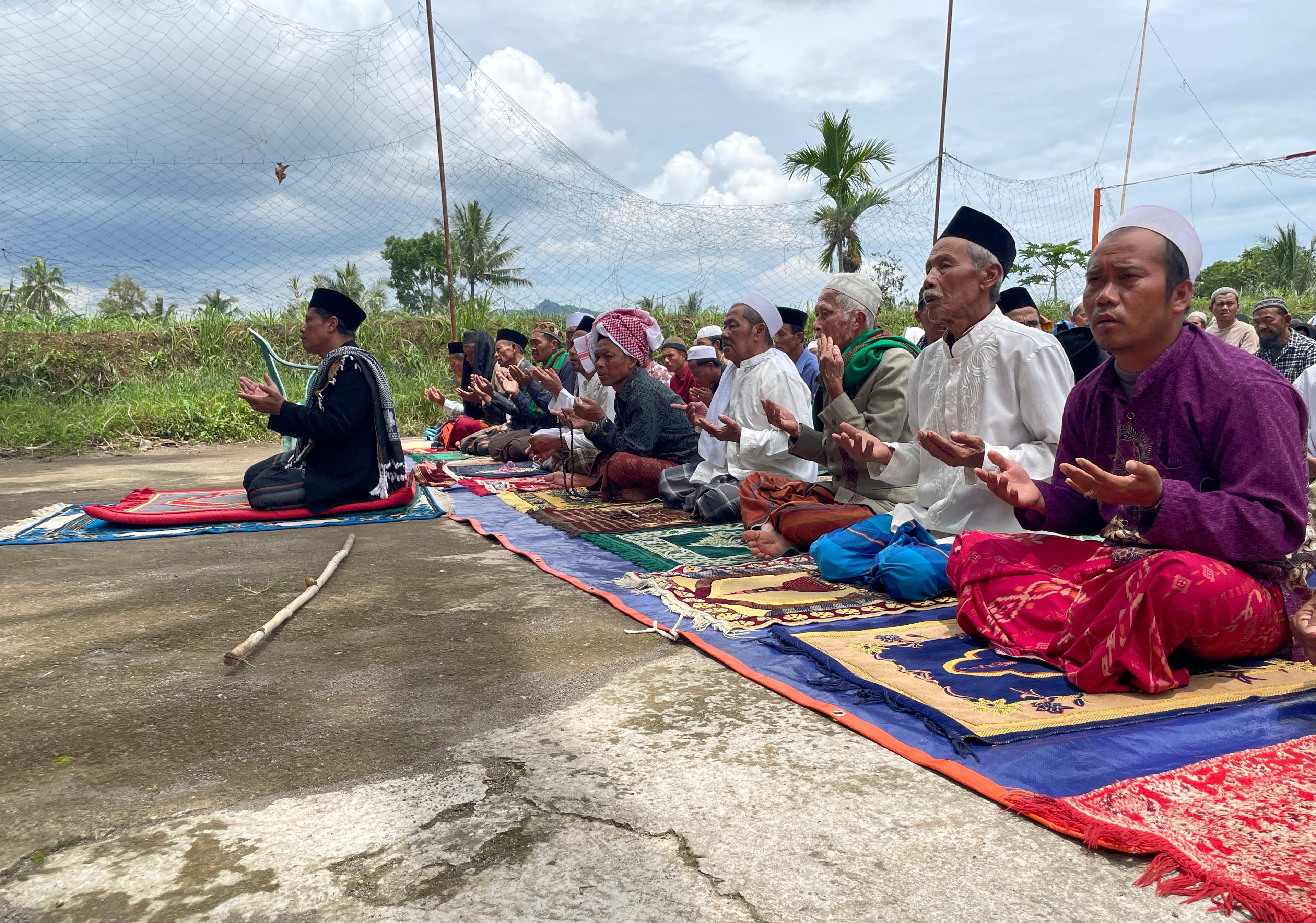
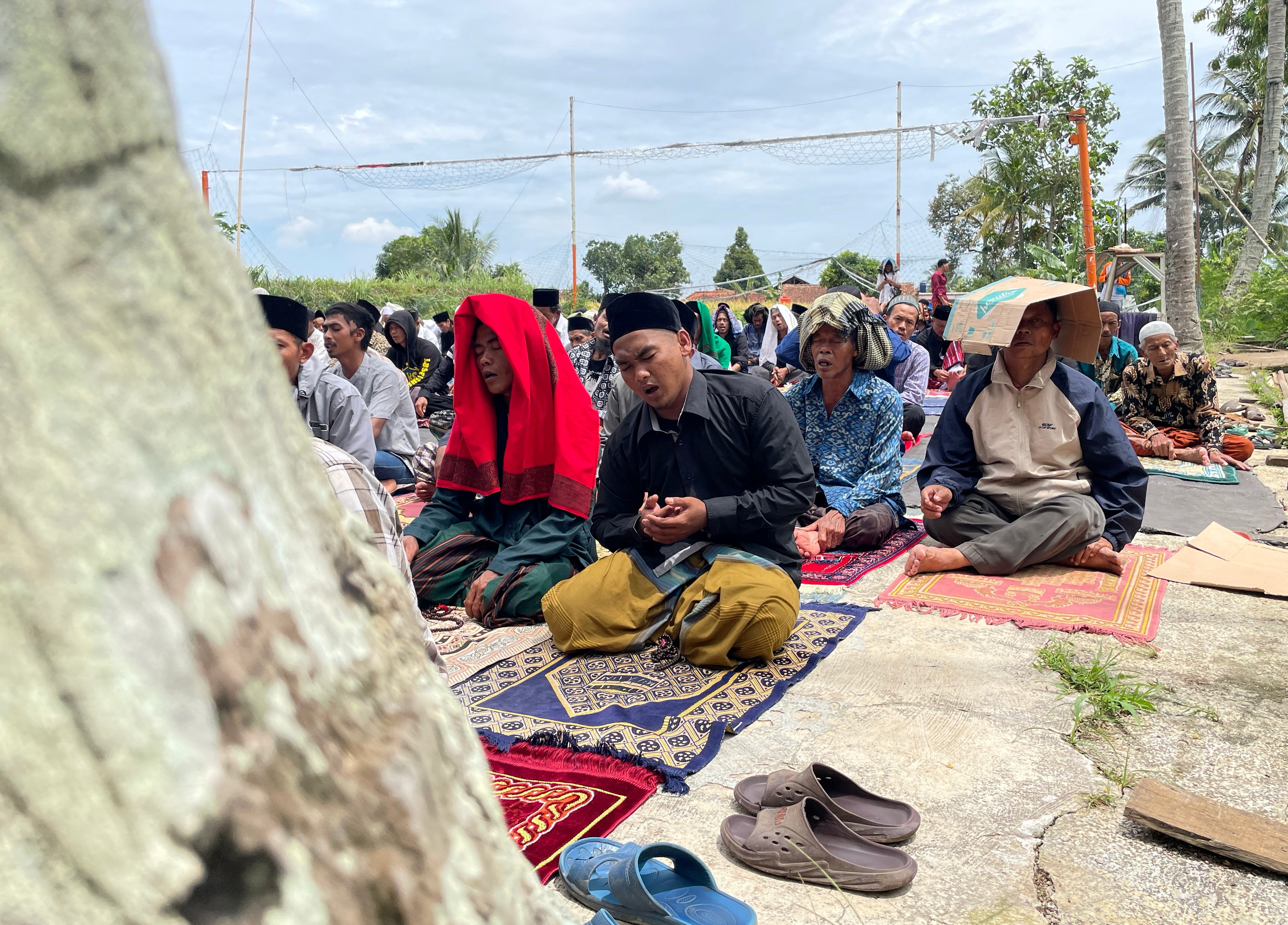
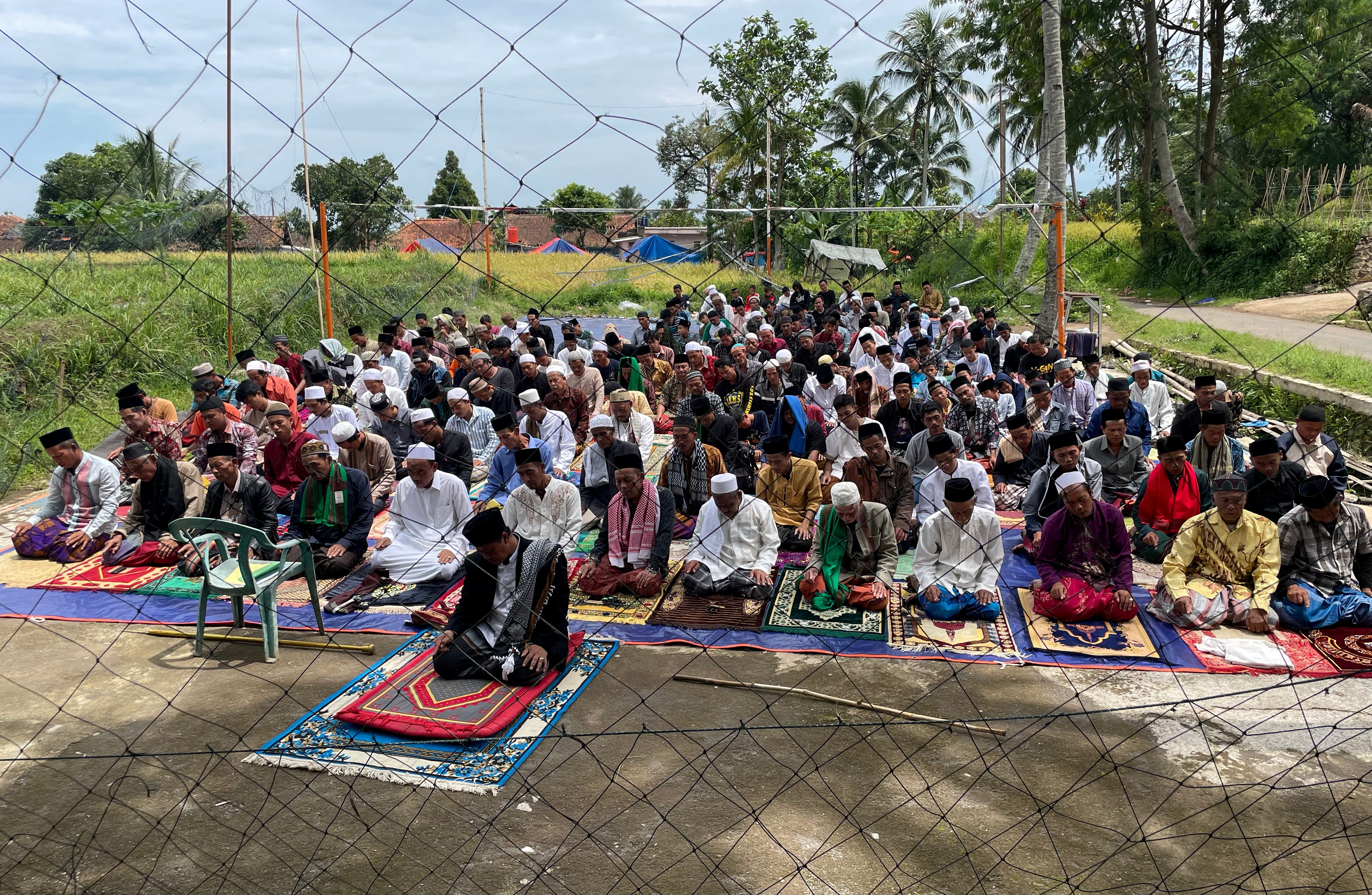
Hundreds of Indonesians prayed out in the open next to rice paddies and in the streets on Friday, after an earthquake flattened their town in western Java and left nearly 300 of their community dead.

Muslim cleric Muhamad Jamhur led a congregation in prayer in an outdoor volleyball court just 200 metres (0.1 miles) from a mosque whose walls were left cracked and windows shattered by the shallow 5.6-magnitude quake that hit the town of Cianjur, about 75 km south of the capital Jakarta, earlier this week.

“After the disaster, we are still afraid. So we had to move here in this volleyball court, not in a mosque. I asked the congregation to stay on guard because disaster might strike again,” Muhamad, 52, said.

Hundreds of aftershocks have rattled the mountainous region, where grieving and traumatised residents are sheltering in tents, awaiting supplies of food, water, and medicines that have been slowed by heavy rains and landslides.

Food vendor Asep Hidayat, who like many others lost his house in the quake, said he was thankful to be able to join in the prayers, even if not in a mosque.

“Prayer still needs to go on, even though we are in a shelter, prayer is an obligation,” he said.

Indonesia’s population is predominantly Muslim.

Rescue teams on Friday continued efforts to clear mud and debris and pull out any victims. About 40 people remain missing, but hopes of finding them alive are slim, the disaster mitigation agency said.

Indonesia is one of the world’s most earthquake-prone nations, regularly recording strong earthquakes offshore where fault lines run.

Monday’s quake was particularly deadly because it struck a densely populated area at a depth of just 10 km. Poor construction standards also caused buildings to collapse, leading to many deaths, officials said.

Related Galleries:

Muslim men pray during Friday prayers at a volleyball field, as their nearest mosque was damaged following Monday’s earthquake, in Cianjur, West Java province, Indonesia, November 25, 2022. REUTERS/Stefanno Sulaiman

Muslim men attend Friday prayers at a volleyball field as their nearest mosque was damaged following Monday’s earthquake in Cianjur, West Java province, Indonesia, November 25, 2022. REUTERS/Stefanno Sulaiman

Muslim men attend Friday prayers at a volleyball field as their nearest mosque was damaged following Monday’s earthquake in Cianjur, West Java province, Indonesia, November 25, 2022. REUTERS/Stefanno Sulaiman
Categories
Audio Sources - Full Text Articles

Musk says Twitter to launch gold, grey checks alongside blue verified mark

2022-11-25T09:24:05Z

Twitter app is seen on a smartphone in this illustration taken, July 13, 2021. REUTERS/Dado Ruvic/Illustration

Twitter will roll out verified gold and grey check marks as it relaunches the coveted blue check service next Friday, Chief Executive Officer Elon Musk said in a tweet, after holding off the rollout earlier this week.

“Gold check for companies, grey check for governments, blue for individuals (celebrities or not). Painful, but necessary,” Musk said in a tweet.

All verified accounts will be manually authenticated before the check is activated, Musk said.

“Individuals can have a secondary tiny logo to show they belong to an organization if verified as such by that organization,” Musk said in another tweet, adding that he will give a longer explanation next week.

The company had paused its recently announced $8 blue check subscription service as fake accounts mushroomed, and had said the sought-after blue check subscription service will be relaunched on Nov. 29. read more

The blue check mark was previously reserved for verified accounts of politicians, famous personalities, journalists and other public figures.

Categories
Audio Sources - Full Text Articles

Hong Kong“s Cardinal Zen among six fined over fund for protesters

2022-11-25T09:10:38Z

One of Asia’s most senior Roman Catholic clerics, Cardinal Joseph Zen, 90, was found guilty of failing to register a now-disbanded fund for pro-democracy protesters and fined HK$4,000($512) on Friday by a Hong Kong court.

The May arrest of Zen and four others by the city’s national security police had triggered criticism from some Western governments, as it was seen to be part of a crackdown on dissent under a sweeping national security law imposed by China.

In her judgment, Principal Magistrate Ada Yim said the fund “had political objectives and thus it was not established solely for charitable purposes”.

Four other trustees of the fund, including barrister Margaret Ng, scholar Hui Po-keung, politician Cyd Ho and singer Denise Ho were fined the same amount, while Sze Ching-wee, its secretary, was fined a smaller amount.

Zen, who has long been a staunch advocate of democratic rights and freedoms and a critic of the Chinese Communist Party, stressed that the fund had aimed to help people in need.

“I’m just a Hong Kong citizen who strongly supports providing humanitarian assistance,” he told reporters after the verdict.

“Although I’m a religious figure, I hope this (case) won’t be associated with our freedom of religion. It’s not related.”

The six were charged with failing to register the “612 Humanitarian Relief Fund” that helped those arrested during pro-democracy protests in 2019 to pay legal and medical fees. All pleaded not guilty.

The Vatican had expressed concern for the safety of Zen, though it stopped short of explicitly criticising authorities at the time.

On Friday, Yim ruled that the fund was a local society run like a trust fund and the committee members shared common political ideals and goals.

Prosecutor Anthony Chau told the court that requiring the fund to register did not infringe on freedom of association, adding that it had spent most of the donations of more than HK$450 million ($57 million) it received.

“It’s the first time ever that anyone had to serve this charge under the societies ordinance for failing to register,” said Ng, the lawyer.

The group would decide take time to decide its next steps as freedom of association in Hong Kong remains “extremely important”, she added.

Zen was represented by lawyer Robert Pang, who told the court the fund should not be considered an association or society, arguing that the defendants were not members of a society and had only helped run a fund.

Even after the verdict, authorities could still take further action against Zen and the rest, as police investigate an accusation of “collusion with foreign forces”.

(This story has been corrected to fix the figure to six, not five in the headline and paragraph 8)


Categories
Audio Sources - Full Text Articles

Australian inquiry finds Morrison“s secret ministries corroded trust

2022-11-25T09:02:55Z

Australia will introduce rules to increase transparency in ministerial appointments after an inquiry into secret ministerial appointments by former Prime Minister Scott Morrison found they had corroded public trust in government.

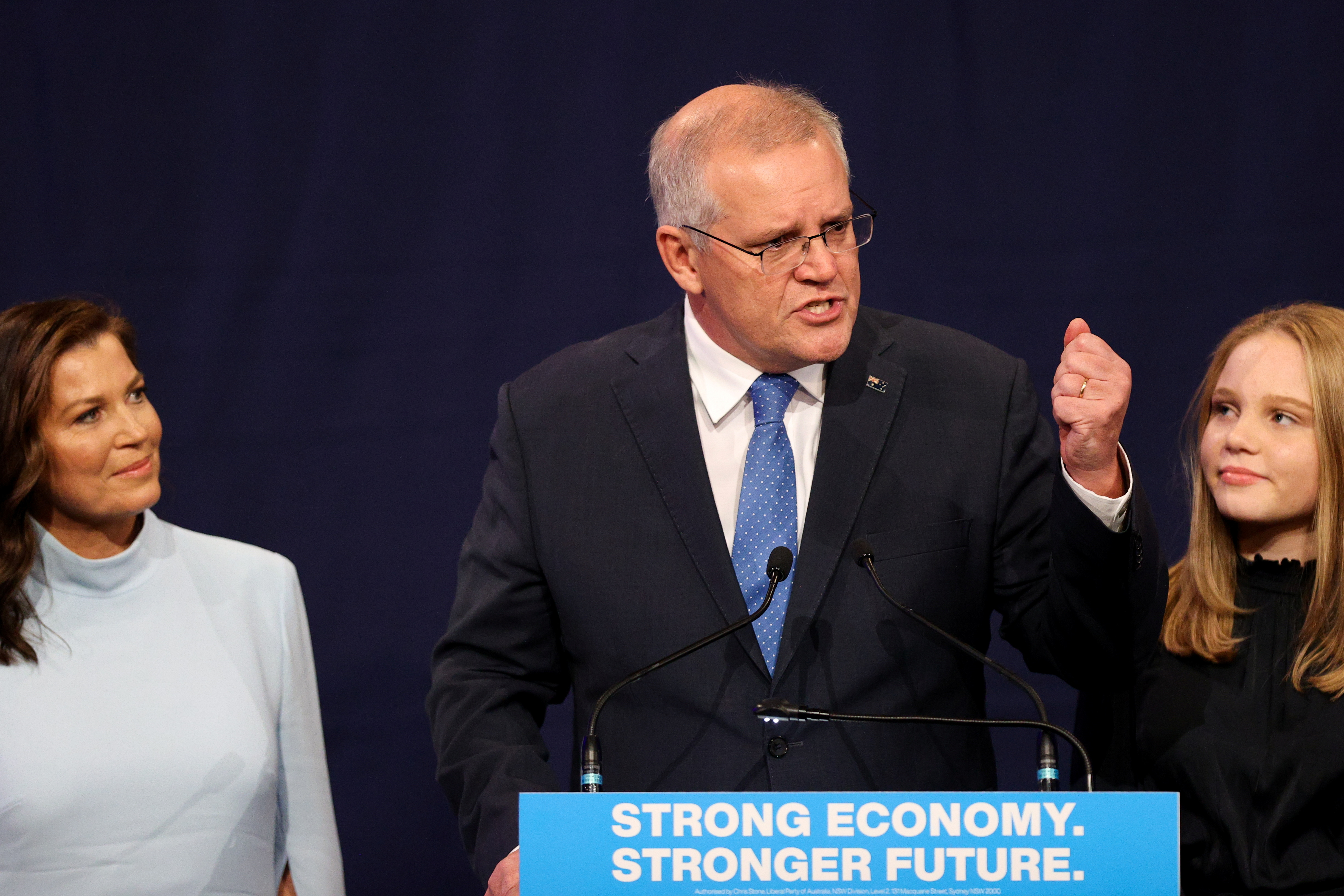
Incumbent Prime Minister Scott Morrison, leader of the Australian Liberal Party, stands next to his wife Jenny and daughter Abbey as he addresses supporters and concedes defeat in the country’s general election in which he ran against Labor Party leader Anthony Albanese, in Sydney, Australia, May 21, 2022. REUTERS/Loren Elliott

Australia will introduce rules to increase transparency in ministerial appointments after an inquiry into secret ministerial appointments by then Prime Minister Scott Morrison found they corroded public trust in government.

Morrison, who lost power in a general election in May, secretly accumulated five ministerial roles during the coronavirus pandemic: health, finance, treasury, resources and home affairs.

Three ministers later said they did not know they were sharing power with Morrison.

An inquiry led by former High Court judge Virginia Bell found the appointments likely hurt public confidence in government. Echoing comments from the solicitor general, Bell said in a report issued on Friday, that the lack of parliamentary accountability undermined responsible government.

“Once the appointments became known, the secrecy with which they had been surrounded was corrosive of trust in government,” Bell said.

Morrison said earlier the appointments were necessary during the pandemic to ensure continuity and as a precaution in case a minister was incapacitated. But the report raised doubts on both counts, arguing for example, that acting ministers could have been quickly appointed if needed.

In a statement shortly after the report was issued, Morrison noted the criticism but defended his actions as lawful and said he would continue in parliament.

“As Prime Minister my awareness of issues regarding national security and the national interest was broader than that known to individual Ministers and certainly to the Inquiry,” he said in a Facebook post.

“This limits the ability for third parties to draw definitive conclusions on such matters.”

Bell recommended six changes, including legislation requiring public notice of ministerial appointments.

Prime Minister Anthony Albanese said his government would adopt all six of the recommendations.

“We’re shining sunlight on a shadow government that preferred to operate in darkness. A government that operated in a cult of secrecy and a culture of cover-up,” Albanese told a news conference after the release of the report.

Bell noted that because Morrison’s extra powers had only been exercised once, the implications of the appointments were limited.

While calling it “troubling” that then senior official Phil Gaetjens, who prepared briefs on the appointments, did not push for more disclosure, the inquiry said responsibility for the decisions lay with the then prime minister.

Morrison communicated with the inquiry through an attorney.

Categories
Audio Sources - Full Text Articles

Russian Lawmakers Approve Bill Banning LGBTQ “Propaganda”

000_32m93y2.jpg

Russian lawmakers unanimously approved a bill banning all forms of LGBTQ “propaganda” in a final reading Thursday, Nov. 24,  as President Vladimir Putin seeks to promote his country as the antithesis of Western liberal values.

Russia already has a law banning so-called “gay propaganda” for minors, and the new bill would broaden it to include adults and effectively ban any public mention of gay relationships.

Rights activists say the new legislation ramps up the crackdown on LGBTQ relationships in Russia, affecting everything from books and films to social media posts and even drag shows.

The legislation will need to backed by the upper house and Putin before becoming a law, steps seen as a formality.

Amid raging tensions with the world’s top democracies as the Kremlin pushes its offensive in Ukraine, Putin has been promoting increasingly conservative values to rally his core constituency.

“Any propaganda of non-traditional sexual relations will have consequences,” Vyacheslav Volodin, the speaker of Russia’s lower house of parliament, the State Duma, said on Telegram.

The legislation, he said, “will protect our children and the future of country from the darkness spread by the US and European states.”

“We have our own traditions and values,” he added.

The bill also prohibits the “propaganda of paedophilia and sex change.”

The legislation bans what authorities deem as LGBTQ “propaganda” in advertisement, books, media and cinema.

Violators will face hefty fines of up to 10 million rubles ($165,000).

The Duma said websites that contain prohibited information will be blocked.

Russian film production companies and book publishers have expressed concern over the bill, saying it could result in the ban of some Russian classics, such as Vladimir Nabokov’s “Lolita”.

“Films that promote such relationships will not receive a distribution certificate,” the Duma said.

LGBTQ rights groups have called on Russia not to adopt the measure, saying it will ban any public mention of sexual minorities.

The post Russian Lawmakers Approve Bill Banning LGBTQ “Propaganda” appeared first on Kyiv Post.

Categories
Audio Sources - Full Text Articles

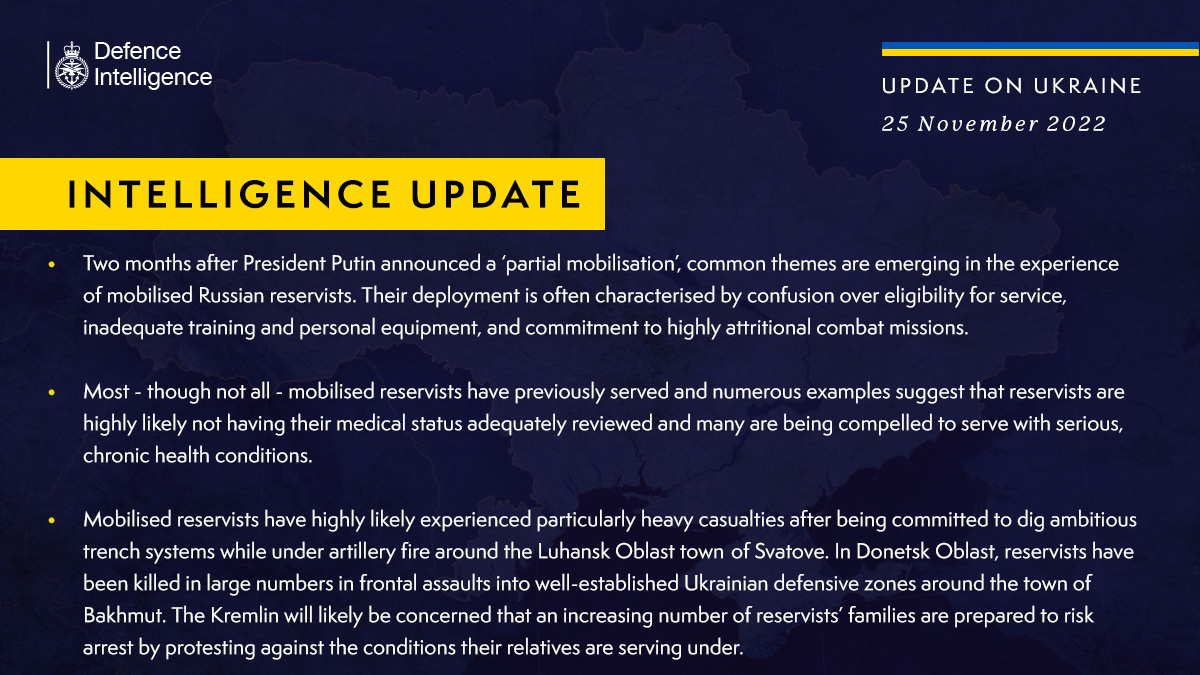
British Defence Intelligence Update Ukraine – 25 November 2022

fizcbwtxgaiinba.jpeg

  • Two months after President Putin announced a ‘partial mobilisation’, common themes are emerging in the experience of mobilised Russian reservists.
  • Their deployment is often characterised by confusion over eligibility for service, inadequate training and personal equipment, and commitment to highly attritional combat missions.
  • Most – though not all – mobilised reservists have previously served and numerous examples suggest that reservists are highly likely not having their medical status adequately reviewed and many are being compelled to serve with serious, chronic health conditions.
  • Mobilised reservists have highly likely experienced particularly heavy casualties after being committed to dig ambitious trench systems while under artillery fire around the Luhansk Oblast town of Svatove.
  • In Donetsk Oblast, reservists have been killed in large numbers in frontal assaults into well-established Ukrainian defensive zones around the town of Bakhmut.
  • The Kremlin will likely be concerned that an increasing number of reservists’ families are prepared to risk arrest by protesting against the conditions their relatives are serving under.

The post British Defence Intelligence Update Ukraine – 25 November 2022 appeared first on Kyiv Post.

Categories
Audio Sources - Full Text Articles

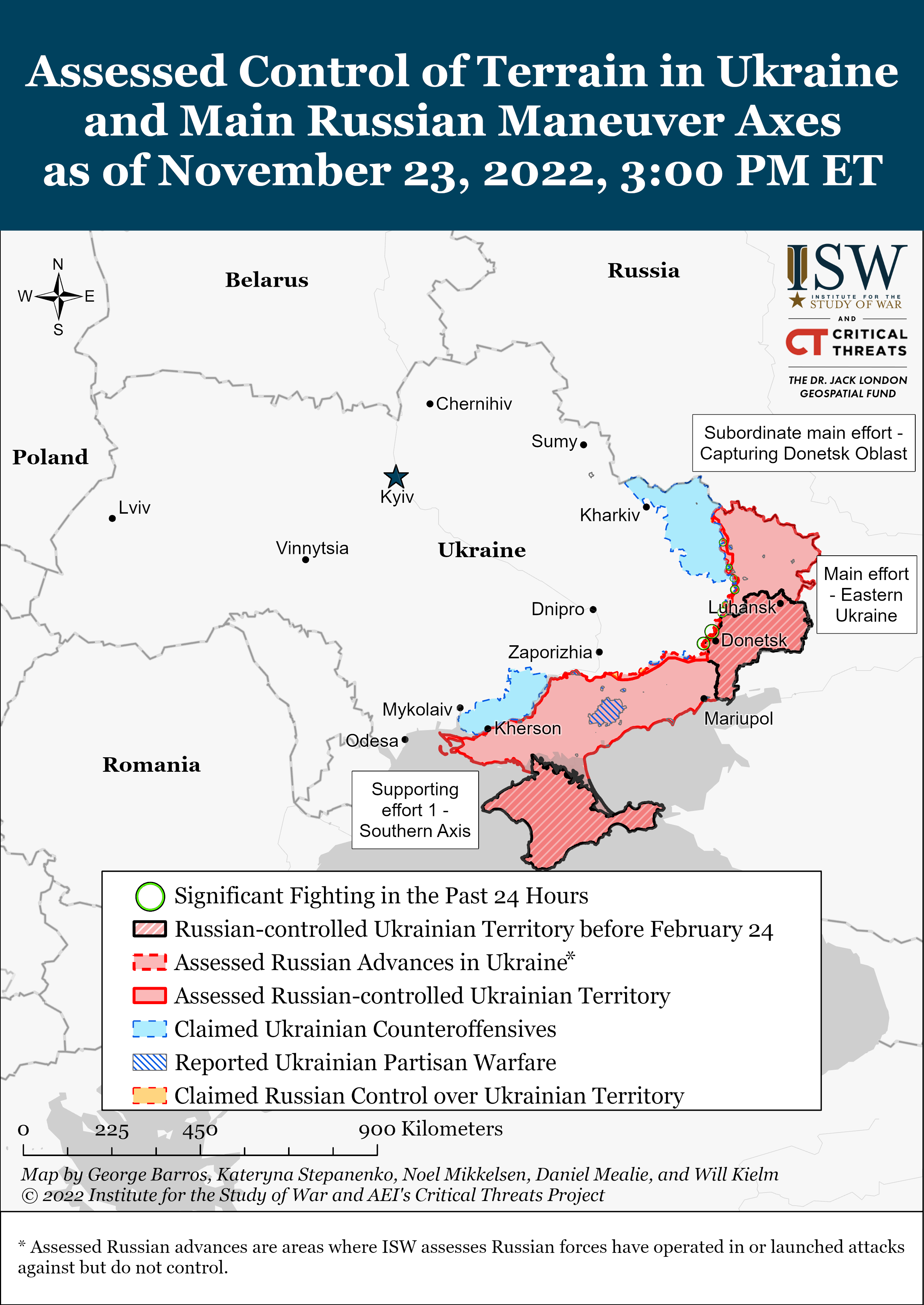
ISW Russian Offensive Campaign Assessment, November 24

draftukrainecotmapnovember232022-1.png

Key Takeaways

  • The Russian military conducted another set of massive, coordinated missile strikes on Ukrainian critical infrastructure.
  • Russian politicians continue to promote openly genocidal rhetoric against Ukraine.
  • The Kremlin continues to pursue its maximalist goals and is likely issuing vague statements about its intent to mislead Western Countries into pressuring Ukraine into negotiations.
  • Russian sources claimed that Ukrainian forces continued counteroffensive operations in the directions of Kreminna and Svatove.
  • Russian forces continued offensive operations around Bakhmut and Avdiivka.
  • Russian forces continued defensive operations on the east (left) bank of the Dnipro River in Kherson Oblast.
  • The Kremlin is continuing crypto-mobilization efforts at the expense of other Russian security services.
  • Russian forces and occupation officials continued to forcibly relocate residents and confiscate their property.

The Russian military conducted another set of massive, coordinated missile strikes on Ukrainian critical infrastructure in a misguided attempt to degrade the Ukrainian will to fight. Ukrainian Air Force Command reported on November 23 that Russian forces launched 70 cruise missiles and five drones at Ukrainian critical infrastructure targets. Ukrainian Air Force Command reported that Ukrainian air defenses shot down 51 of the Russian cruise missiles and all five drones. The Ukrainian General Staff reported that Russian forces struck residential buildings, thermal power plants, and substations in the city of Kyiv as well as in Kyiv, Vinnytsia, Lviv, and Zaporizhia oblasts. Ukrainian, Russian, and social media sources claimed that Russian forces also struck targets in Ivano-Frankivsk, Odesa, Mykolaiv, Kherson, Cherkasy, Dnipropetrovsk, Sumy, Poltava, Kirovohrad, and Kharkiv oblasts. Ukrainian officials reported widespread disruptions to energy, heating, and water supplies as a result of the Russian strikes. ISW has previously assessed that the Russian military is still able to attack Ukrainian critical infrastructure at scale in the near term despite continuing to deplete its arsenal of high-precision weapons systems. Ukrainian Deputy Defense Minister Hanna Malyar stated that the Russian military mistakenly believes that the destruction of energy infrastructure will direct Ukrainian efforts to protect rear areas and divert Ukrainian attention away from the front in eastern and southern Ukraine. Malyar stated that Russia’s campaign against critical infrastructure will not weaken the motivation of Ukraine’s civilian population, and the Ukrainian Security and Defense Council Secretary Oleksiy Danilov asserted that Russian missile and drone strikes will not coerce Ukraine into negotiations.

Prominent Russian politicians continue to promote openly genocidal rhetoric against Ukraine. Moscow City Duma Deputy and pro-Kremlin journalist Andrey Medvedev posted a long rant to his Telegram channel on November 23 wherein he categorically denied the existence of the Ukrainian nation, relegating Ukrainian identity to a “political orientation.” Medvedev called Ukraine a pagan cult of death that worships prisoner executions and called for the total “liquidation of Ukrainian statehood in its current form.”This rhetoric is openly exterminatory and dehumanizing and calls for the conduct of a genocidal war against the Ukrainian state and its people, which notably has pervaded discourse in the highest levels of the Russian political mainstream. As ISW has previously reported, Russian President Vladimir Putin has similarly employed such genocidal language in a way that is fundamentally incompatible with calls for negotiations.

The Kremlin has not backed down from its maximalist goals of regaining control of Ukraine but is rather partially obfuscating Russia’s aims to mislead Western countries into pressuring Ukraine to sue for peace. Kremlin Spokesperson Dmitry Peskov stated on November 21 that changing the current government in Ukraine is not a goal of the Russian “special military operation” in Ukraine, observing that Russian President Vladimir Putin “has already spoken about this.” Putin had said on October 26 that Ukraine has “lost its sovereignty” and come fully under NATO’s control. Putin’s speech at the Valdai Discussion Club on October 27 again rejected Ukraine’s sovereignty, noting that Russia “created” Ukraine and that the “single real guarantee of Ukrainian sovereignty” can only be Russia. Putin has also consistently upheld his talking point that Ukraine is a Nazi state that must be “denazified.” Putin’s demands amount to a requirement for regime change in Kyiv even if he does not explicitly call for it in these recent statements. The fact that Peskov refers back to these comments by Putin makes reading any serious walking-back of Russian aims into Peskov’s comments highly dubious.

The Kremlin’s obfuscation of its aims likely intended for a Western audience is nevertheless confusing Russian war supporters. Peskov’s statement likely aimed to mitigate the effects of Vice-Speaker of the Russian Federation Council Konstantin Kosachev’s pro-war rant declaring that Russia can only normalize relations with Ukraine following the capitulation of the Ukrainian government. The two contrasting statements confused the pro-war community. A Wagner Group-affiliated milblogger sarcastically observed that Russia is aimlessly fighting a war without a clear goal in response to Peskov’s statement. ISW has reported on similar reactions to the Kremlin’s decision to exchange Ukrainian prisoners of war from Mariupol, whom Kremlin officials and propagandists vilified as “Nazis” and ”war criminals.”

The Kremlin’s hesitance to publicly commit fully to an extreme nationalist ideology and to the war is also bewildering propagandists who preach such ideology to the Russian masses. Russian political and military “experts” on a Russian state TV show pushed back against Russian propagandist Vladimir Solovyov’s claim that Kherson Oblast is fully Russian, which would justify the use of nuclear weapons. The “experts” said that the use of nuclear weapons to defend territory that is not fully occupied is irrational and even said that NATO poses no threat to Russia. Russian propagandists have been making outlandish nuclear threats and accusing NATO of planning to attack Russia throughout Putin’s regime and especially before and during the February 2022 invasion of Ukraine; such dismissal of common Kremlin talking points in such a forum is unprecedented. ISW has also previously reported that Russian extreme nationalist ideologist Alexander Dugin accused Putin of not fully committing to the pro-war ideology. Putin has generally sought to balance extreme nationalist talking points to gather support from the nationalist-leaning community and a more moderate narrative to maintain the support of the rest of the Russian population. Russian military failures and the increasing sacrifices Putin is demanding of the Russian people to continue his disastrous invasion are bringing his deliberate obfuscation of war aims and attempts to balance rhetorically into sharp relief, potentially fueling discontent within critical

The post ISW Russian Offensive Campaign Assessment, November 24 appeared first on Kyiv Post.

Categories
Audio Sources - Full Text Articles

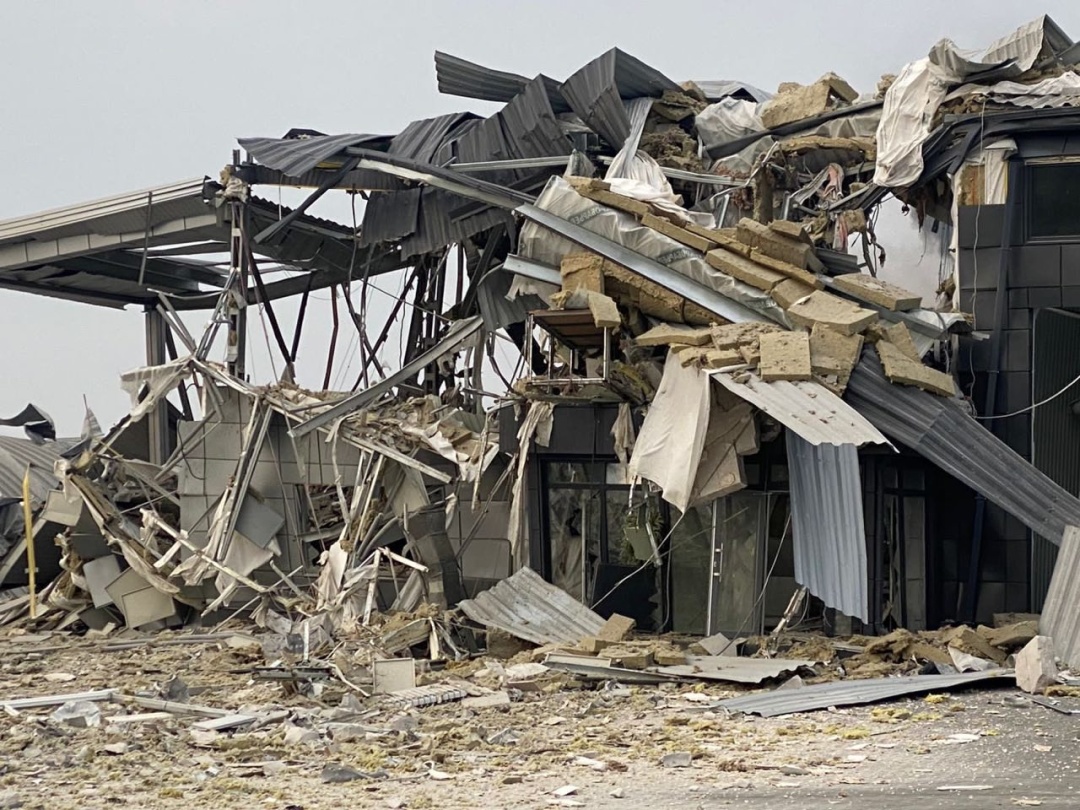
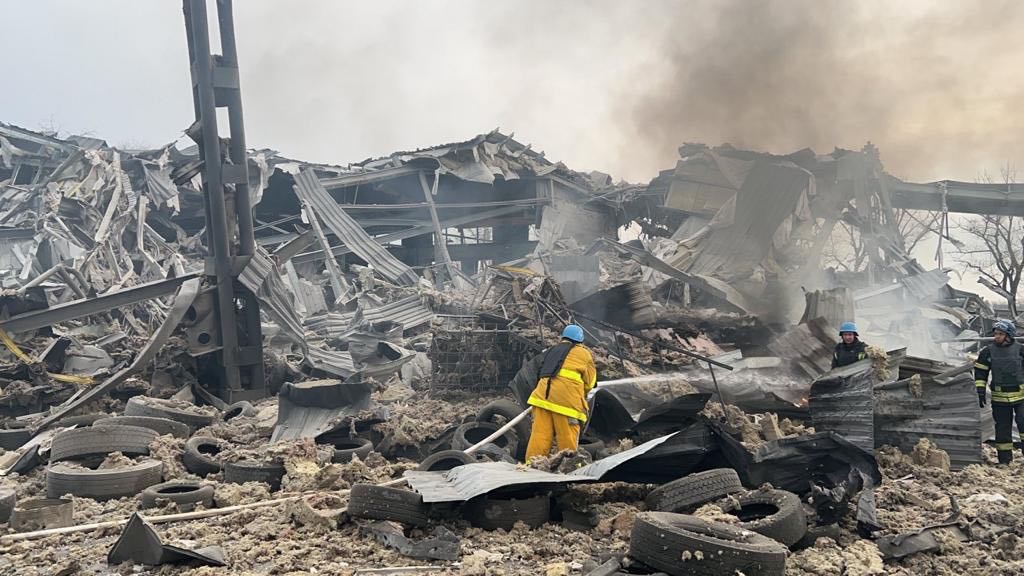
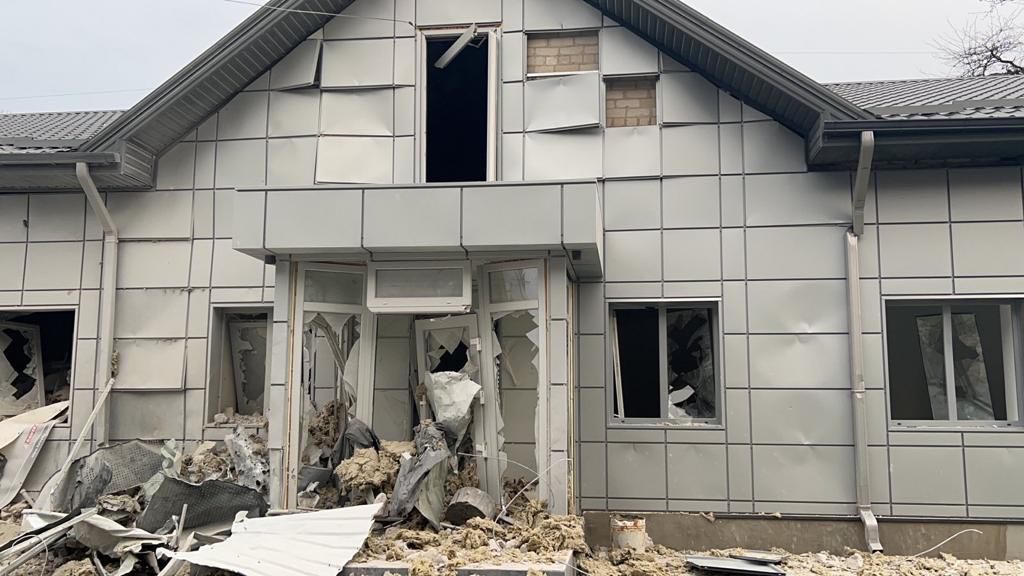
Russian missile destroys service station in Zaporizhzhia region

A support station was ruined in a Russian missile strike in Zaporizhzhia area.

“Following the attack on the healthcare facility, the enemy destroyed a assistance station. Fortunately, there were no casualties in this article possibly. The day is just beginning – acquire care,” Oleksandr Starukh, Head of the Zaporizhzhia Regional Army Administration, posted on Telegram and printed a photograph from the scene.

As noted, the aggressor strike the civilian infrastructure in a village in Zaporizhzhia district.


Study also: Russian troops launch missile attack on Zaporizhzhia suburbs

Photo credit history: Zaporizhzhia Regional Army Administration

ol

Source link

The post Russian missile destroys service station in Zaporizhzhia region appeared first on Ukraine Intelligence.
WP Radio
WP Radio
OFFLINE LIVE