Categories
Audio Sources - Full Text Articles

How Hospital Emergency Preparedness Is Evolving

The biggest lesson COVID-19 taught hospitals is how thin they can be stretched—and that includes morale, says Dr. Yves Duroseau, chair of emergency medicine and co-chair of disaster planning services at Lenox Hill Hospital in New York.

Over the past nearly-three years, “We saw widespread burnout of staff trying to go above and beyond, every single day. That’s not sustainable—it’s too overwhelming,” he says. “That’s why we’re looking at what to do now, because COVID is still a threat, and now we’re looking at issues like monkeypox and polio. Everyone wonders: What’s next?”

Yet a new pandemic surge is far from the only potentially debilitating event facing hospitals. Most health-care centers are continuously revamping their emergency-preparedness strategies on multiple levels, Duroseau says. Like a seemingly endless action movie, threats fire from all directions. Some vary by location: Hospitals need to be prepared for hurricanes along the Gulf and Atlantic coasts, for example, and earthquakes and wildfires on the West Coast.

[time-brightcove not-tgx=”true”]

Taking steps to plan for the next emergency—even if no one knows exactly what it will look like—can help boost resilience. Here’s a look at the top five challenges hospitals are currently facing, followed by the preparedness plans they’re putting into place.

1. The next epidemic

While COVID-19 may have caught many hospital systems off guard, it highlighted how much an infectious agent can spread—and how quickly. Hospital systems now need to ensure they’re ready next time.

“No one believes we’re past current and future threats when it comes to epidemics and pandemics,” says Eric Alberts, senior director of emergency preparedness at Orlando Health in Florida. “Every hospital is still on high alert when it comes to trying to anticipate what’s next.”

2. Violence inside the hospital

The U.S. Bureau of Labor Statistics reports that the rate of injuries from violent attacks against medical professionals grew by 63% from 2011 to 2018, and the Association of American Medical Colleges (AAMC) notes that it’s only gotten worse since then. In a recent survey conducted by National Nurses United, almost half of nurses who responded said they’d experienced workplace violence, mainly initiated by patients. The situation is so serious that some hospitals have created de-escalation teams to calm aggressive patients.

The emergency department is particularly prone to violent outbursts. In one AAMC study, nearly half of ER physicians said they’ve been assaulted, and 70% of ER nurses report being hit or kicked while at work.

3. Climate change

The U.S. Environmental Protection Agency notes that rising global temperatures are associated with significant changes in weather patterns, which can lead to extreme weather events such as heat waves and droughts, more intense hurricanes, frequent tornadoes, flooding, and wildfires.

Of course, this means that more people will require medical attention due to weather events. But it also sets hospitals up for more disruption and possible closure. When Hurricane Ian hit Florida this fall, 16 hospitals in the state had to evacuate patients. In December 2021, a hospital in Colorado had to evacuate a full neonatal intensive care unit due to wildfires—at a time when it was short-staffed due to winter holidays. Incidents like these will continue to become more prevalent, Alberts believes, putting enormous strain on patients and their caregivers.

4. Cyber threats

Cybersecurity threats against health-care systems have been increasing over the past few years. Ransomware—when an attacker paralyzes a hospital’s computer system and demands a ransom to release it—is particularly on the rise. According to AAMC, this type of cyberattack spiked during the pandemic, with one estimate noting that about 1 in 3 health-care organizations globally were hit by ransomware in 2020.

These incidents don’t just put organizations at risk—they can also affect patient care. For example, in October 2020, the University of Vermont Medical Center suffered a ransomware attack that locked employees out of electronic health records, payroll programs, and other digital tools. Patient appointments couldn’t be scheduled, and most surgeries had to be delayed. Although the health-care system refused to pay the ransom, it estimated that the attack cost $50 million in lost revenue.

5. Limited internal resources

Hospitals that are striving to be well-prepared for emergencies often have to struggle with issues like a lack of funding, says Dr. Russ Kino, an emergency medicine specialist and medical director of the Weingart Foundation Emergency Department at Providence Saint John’s Health Center in California.

“Most hospitals already work on thin margins, and those are contracting as insurers reduce coverage,” he says. “Financially and organizationally, we’re in a tight and difficult place.” Plus, he points out, the average tenure of a hospital CEO is about 18 months. “So you tend to have turnover in leadership, and that can reset all emergency preparedness plans.”

Staffing overall is another issue. According to a report from NSI Nursing Solutions, which surveyed over 3,000 U.S. hospitals in January 2022, the average hospital turnover rate is 25% annually, and even higher for nurses at 27%. At the same time, demand is increasing—the American Nurses Association estimates more nursing jobs will be available in 2022 than any other profession in the country. All of that means that as hospitals need to do more when it comes to emergency preparedness, they’re often accomplishing it with a smaller workforce.

Read More: Caring for the Caregivers Post-Pandemic

How hospitals step up

Although the top threats facing hospitals might sound unrelated—cyber threats and hurricanes don’t seem to have much overlap, for example—they’re connected in part because of the way they need to be dealt with, Duroseau says. Many hospitals utilize several main strategies: planning for the worst-case scenario; conducting training drills for these possibilities; boosting collaboration inside and outside the hospital; and renovating with climate change in mind.

For instance, Providence Saint John’s Health Center regularly executes unplanned drills for active-shooter situations, which help ensure that staff can seal off parts of the hospital and lock down within minutes. Lenox Hill Hospital does the same, and staff there are also trained on potential mass-casualty events that might bring dozens of seriously injured people into the ER at once.

“These types of drills let us see where the gaps are with process and staffing,” Duroseau says. “That’s particularly important during times of high staff turnover, which we experienced over COVID.”

Similarly, Lenox Hill runs drills for cyberattacks that would disable an entire computer system or threaten patient care. Duroseau notes that many pieces of hospital equipment, such as infusion machines that deliver medications, run on a web-based platform, which means they could theoretically be hacked. The idea that a cyberattacker could deliver a fatal dose of pain medication from thousands of miles away is terrifying, he says, which is why the hospital trains staffers on how to switch to a manual, offline system during such a scenario.

“It’s hard to play offense on a cyber situation,” he says. “At least we can train people to handle downtime disruptions in a way that protects patients. In general, we all know the areas of vulnerability we have with every kind of threat, and there’s only so much we can do to counter that. But we can try.”

Another crucial aspect for threat management is collaborating with local and national services like fire departments, law enforcement, the state department of health, and the Federal Emergency Management Agency, Alberts says.

“If you take threats seriously, there’s a lot you can do ahead of time if you plan in advance,” he adds. “Coordination internally and with these external stakeholders truly helps us better prepare for and respond to crises of all types and sizes. Having the right people in the right place at the right time is a big factor for any hospital system’s response to a threat.”

That type of collaborative perspective can help mitigate strain in other ways as well, by creating stronger policies between hospitals and their suppliers, he adds. For example, during the first year of the COVID-19 pandemic, health-care systems struggled to secure sufficient personal protective equipment. That situation is unlikely to happen again since hospitals have developed much more robust purchasing and storage policies, Alberts says.

The same philosophy extends to cyber-attack prevention. For instance, Lenox Hill now works closely with its software providers to ensure there are multiple levels of electronic security protections in place. “We never used to ask our technology vendors what they have built in for security—we only wanted to know about functionality overall,” Duroseau says. “Now, it’s the first thing we consider when [evaluating] a new tech contract.”

Planning for weather events can be more straightforward. Hospital staffers might analyze the type of weather issues that have caused problems in the past—and then magnify those to an extreme degree. For instance, that might mean prepping for record snowfall in North Dakota, fortifying walls for multiple tornadoes in Kansas, building new facilities on higher ground in Florida, or ensuring a fireproof perimeter in California. Some hospitals may even relocate—administrators at several of those damaged by Hurricane Ian have said they’re considering moving inland as a buffer against future storms.

“This is an ongoing issue we’re continually trying to better understand, because the effects of climate change will continue to be a major threat,” Alberts says. “Hurricane Ian showed everyone how much rainfall there can be in such a short amount of time, giving us all a great opportunity to leverage this data for future efforts.”

Looking ahead

One of the toughest challenges in preparing for major threats isn’t unique to hospitals: it’s simply not knowing what’s ahead. As Kino points out, there’s no way to plan for every possible contingency. But there’s always the hope that when a threat evolves, it can be handled with resiliency and efficiency.

“Despite everything that’s happened in the past two years, we know we’re doing amazing and uplifting work,” Kino says. “Even on rough days, we’re still a team, and deep down, we love our jobs—that’s why we’re here. It’s pretty incredible to look back and see what we’ve accomplished through a pandemic, widespread burnout, mass-casualty events, and climate change. We found a way, and I think that’s what is fueling every hospital right now: We know we’ll always find a way.”

Categories
Audio Sources - Full Text Articles

“They’re like zombies” – Ukrainian Soldiers Describe Fighting Russians in Donbas

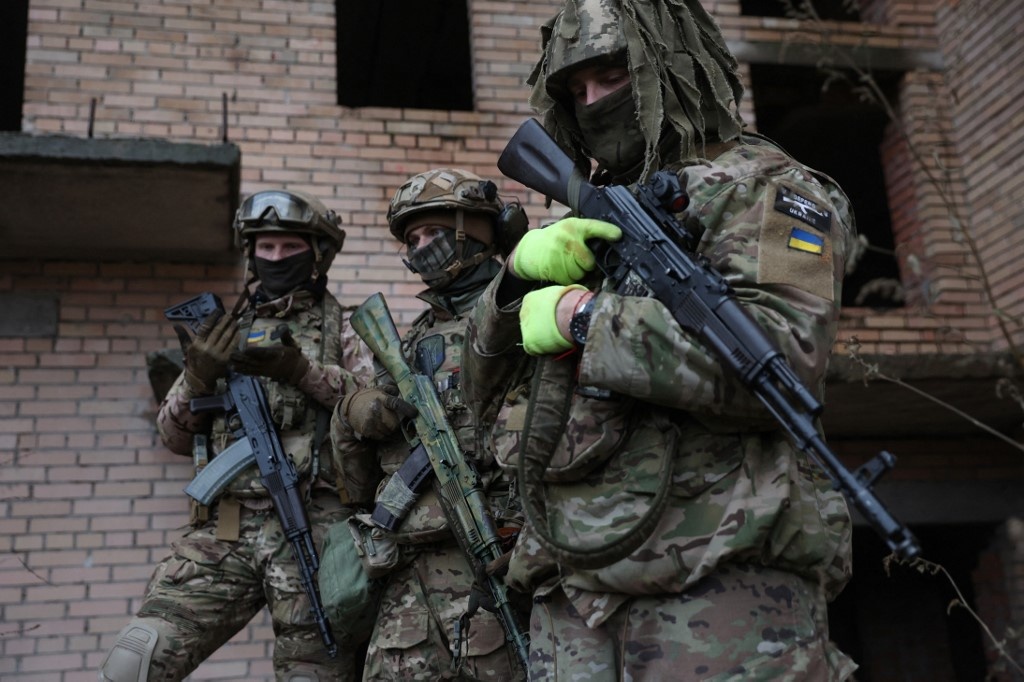
000_32rr222.jpg

Soldiers are battling trench foot while the rain and snow have turned roads to mud and ongoing power outages have led many to question how they will manage to endure the coming cold as winter descends on the frontlines in eastern Ukraine.

But despite the cold and miserable conditions in Donbas to the east, the Russians just keep coming, according to Ukrainian forces near the frontlines.

“They’re like zombies. You shoot them and more come constantly,” a 30-year-old Ukrainian soldier with the call sign Kit, which means whale, told AFP.

Fighting on the front is only getting colder and more wet as the first snows have dusted the area and melted in addition to the sheets of freezing rain that drench the region almost daily.

“I’m suffering from the rain. We literally live in a marsh. Yesterday, I went to the hospital and looked like a big pile of mud.” said Kit.

Other soldiers told AFP that many troops were beginning to suffer from trench foot, a medical condition associated with swelling and numbness of the feet that also afflicted large numbers of soldiers in World War I.

“Infantry is the heart of every army and they suffer a lot,” Taller, the nickname for a 24-year-old fighting with a special forces unit in Donbas, told AFP following a recent training session.

“Their boots are always wet. They sleep very sporadically. Sometimes they have trouble with food supplies,” he added.

– Morale ‘extremely high’-

To help fight back against the arrival of winter, volunteers near the front have organised sprawling depots full of donated supplies that are provided to nearby units.

At one distribution centre in the city of Sloviansk, Slava Kovalenko said he hands out thousands of kilogrammes of goods a week, including clothing, basic medications, candles and canned food.

“Warm clothes are in high demand, long underwear, flu medicine, medicinal tea, pain killer ointment. Everybody comes here asking for that,” said Kovalenko.

And as the temperatures drop, the fighting in Donbas remains unrelenting.

On Thursday, on the outskirts of Bakhmut the sun managed to break through the overcast sky as lines of Ukrainian artillery batteries, infantry fighting vehicles and tanks dotted the rolling steppe near the frontline.

The sound of the battle was deafening as an infantry reserve fighter with the call sign Rambo cast an eye over the ensuing clash from a hill top position.

“We’re getting ready for a counteroffensive,” he told AFP while taking pulls on a vape pen.

Following the retreat of the Russian military from the southern city of Kherson earlier this month, Donbas has become the primary theatre of combat in Ukraine, with the frontlines now shortened and the density of forces increased.

“Our morale is extremely high,” said another soldier nicknamed IT Guy.

“In this area, we increased the number of our troops and increased our offensive movements.”

– ‘We will freeze’ –

With mounting losses on the battlefield, the Kremlin has doubled down on attacking Ukraine’s infrastructure, sending waves of drones and cruise missiles targeting power plants and basic utilities sites.

Power outages are now frequent as electricity is rationed, forcing hospitals in the area to rely more on generators to keep the lights on as they treat soldiers and civilians injured near the frontlines.

“The way they fight and target civil infrastructure, it can cause nothing but fury,” said Oleksiy Yakovlenko, the chief administrator at a hospital in Kramatorsk.

But even as blackouts become more frequent, Yakovlenko promised that his resolve remains unwavering.

“If they expect us to fall on our knees and crawl to them it won’t happen,” Yakovlenko told AFP.

For the civilians caught in the crossfire, the coming winter only promises more pain after their communities were largely left in ruins following the summer fighting season.

In Lyman, the few remaining residents in the city rely largely on handouts from humanitarian aid groups and firewood to heat their homes.

Electricity and gas have been mostly nonexistent in their apartment blocks since the spring, with power only coming in sporadic bursts.

Most are too poor and old to move elsewhere on their own.

“I don’t know how we will make it through the winter,” said Lyman resident Tatiana Kutepova, 62.

“Maybe we will freeze and they will take us to Maslyakivka, our cemetery.”

The post “They’re like zombies” – Ukrainian Soldiers Describe Fighting Russians in Donbas appeared first on Kyiv Post.

Categories
Audio Sources - Full Text Articles

Russia rains missiles on recaptured Ukrainian city

KHERSON, Ukraine (AP) — Natalia Kristenko’s dead body lay covered in a blanket in the doorway of her apartment building for hours overnight. City workers were at first too overwhelmed to retrieve her as they responded to a deadly barrage of attacks that shook Ukraine’s southern city of Kherson.

The 62-year-old had walked outside her home with her husband Thursday evening after drinking tea when the building was struck. Kristenko was killed instantly from a wound to the head. Her husband died hours later in the hospital from internal bleeding.

“Russians took the two most precious people from me,” their bereft daughter, Lilia Kristenko, 38, said, clutching her cat inside her coat as she watched on in horror Friday as responders finally arrived to transport her mother to the morgue.

“They lived so well, they lived differently,” she told The Associated Press. “But they died in one day.”

A barrage of missiles struck the recently liberated city of Kherson for the second day Friday in a marked escalation of attacks since Russia withdrew from the city two weeks ago.

The city was shelled 17 times before midday Thursday, and strikes continued into the evening, killing at least four people and injuring 10, according to Kherson’s military administration. Soldiers in the region had warned that Kherson would face intensified strikes as Russian troops dig in across the Dnieper River.

Scores of people were injured in the strikes that hit residential and commercial buildings, lighting some on fire, blowing ash into the air and littering the streets with shattered glass. The attacks wrought destruction on some residential neighborhoods not previously hit in the war that has just entered its tenth month.

After Kristenko’s parents were hit, she tried to call an ambulance but there was no phone network, she said. Her 66-year-old father was clutching his stomach wound and screaming “it hurts so much I’m doing to die,” she said. He eventually was taken by ambulance to the hospital but died during surgery.

On Friday morning people sifted through what little remained of their destroyed houses and shops. Containers of food lined the floor of a shattered meat store, while across the street customers lined up at a coffee shop where residents said four people died the night before.

“I don’t even know what to say, it was unexpected,” said Diana Samsonova, who works at the coffee shop, which remained open throughout Russia’s occupation and has no plans to close despite the attacks.

The violence is compounding what’s become a dire humanitarian crisis. As Russians retreated, they destroyed key infrastructure, leaving people with little water and electricity. People have become so desperate they’re finding some salvation amid the wreckage.

Outside an apartment building that was badly damaged, residents filled buckets with water that pooled on the ground. Workers at the morgue used puddles to clean their bloody hands.

Valerii Parkhomenko had just parked his car and gone into a coffee shop when a rocket destroyed his vehicle.

“We were all crouching on the floor inside,” he said, showing the ash on his hands. “I feel awful, my car is destroyed, I need this car for work to feed my family,” he said.

Outside shelled apartment buildings residents picked up debris and frantically searched for relatives while paramedics helped the injured.

“I think it’s so bad and I think all countries need to do something about this because it’s not normal,” said Ivan Mashkarynets, a man in his early 20s who was at home with his mother when the apartment block next to him was struck.

“There’s no army, there’s no soldiers. There are just people living here and they’re (still) firing,” he said.

The government has said it will help people evacuate if they want to, but many say they have no place to go.

“There is no work (elsewhere), there is no work here,” said Ihor Novak as he stood on a street examining the aftermath of the shelling. “For now, the Ukrainian army is here and with them we hope it will be safer.”

___

Associated Press writer Mstyslav Chernov in Kherson contributed reporting.

Categories
Audio Sources - Full Text Articles

Security review after protesters disrupt Berlin air traffic

BERLIN (AP) — Authorities in Germany on Friday were reviewing security measures at Berlin’s airport a day after six climate activists invaded the grounds and briefly disrupted flights.

German news agency dpa quoted a spokesman for Berlin Brandenburg Airport saying that Thursday’s incident was being reviewed to determine what further action may be required.

Police said four protesters glued themselves to the ground near the runway, while two others cycled across the premises. The group Uprising of the Last Generation, which has staged numerous road blockades and other stunts to highlight the need for action against climate change, claimed responsibility.

The group said it wanted to highlight the problem of fossil fuel subsidies, such as for jet fuel, which allow a minority of the world’s population to fly while the majority suffer the consequences of climate change stoked by greenhouse gas emissions.

It said the activists notified police of their plans before entering the airport grounds.

The protest was widely criticized by German lawmakers across political lines, though Martin Schirdewan, co-leader of the Left party, said the activists had “put their finger on the wound of political inaction in view of the climate catastrophe.”

Police said five men and one woman aged between 20 and 32 were detained. Five people were released, while the sixth remains in custody. All six are being investigated on suspicion of endangering air traffic, property damage and trespassing.

Airport authorities said 15 planes had to be diverted to nearby airports while five departures were delayed. About 750 passengers were affected by the disruption, it said.

Earlier this month, hundreds of climate protesters blocked private jets from leaving Amsterdam’s Schiphol Airport.

Categories
Audio Sources - Full Text Articles

Elon Musk says Twitter“s verified service with colors to start next week

2022-11-25T12:31:53Z

Twitter app is seen on a smartphone in this illustration taken, July 13, 2021. REUTERS/Dado Ruvic/Illustration

Twitter Inc is planning to roll out its verified service next Friday with different colored checks for individuals, companies and governments, after a botched initial launch led to a surge in users impersonating celebrities and brands on the platform.

Chief Executive Elon Musk on Friday allotted colors for the categories – gold for companies, grey for governments and a blue check for individuals including celebrities.

“Painful, but necessary,” he said, adding that verified accounts will be manually authenticated before a check is activated.

The revamped $8-per-month service will allow individuals to have a smaller, secondary logo of their organizations if verified by them, he said in another tweet on Friday. “Longer explanation next week.”

The social media platform on Monday delayed its relaunch to make it foolproof as the service is expected to help Twitter grow revenue at a time when Musk is trying to retain advertisers after buying the company last month for $44 billion.

The subscription service, which was termed by Musk as a “great leveler”, was paused on Nov. 11 as fake accounts mushroomed, forcing the world’s richest man to bring back the “official” badge to some users.

For instance, one user pretending to be drugmaker Eli Lilly and Co had tweeted that insulin would be free, setting off a drop in the company’s shares and forcing it to issue an apology.

The turmoil led several companies including General Motors (GM.N) and United Airlines (UAL.O) to pause or pull back ads on the platform. User growth on Twitter, however, is at an all-time high, according to Musk.

Categories
Audio Sources - Full Text Articles

German MPs to recognise Stalin famine in Ukraine as ‘genocide’

German MPs are set to approve a resolution declaring as “genocide” the 1930s starvation of millions in Ukraine under Joseph Stalin, adopting language used by Kyiv, according to a draft text seen by AFP on Friday.

The joint text by deputies from Germany’s centre-left-led coalition and the opposition conservatives is intended as a “warning” to Russia as Ukraine faces a potential hunger crisis this winter due to Moscow’s invasion.

Lawmakers plan to vote on the resolution next week, following Ukraine’s memorial day for the famine, which falls each year on the last Saturday in November.

Holodomor, as the famine is known in Ukraine, is among “the list of inhuman crimes by totalitarian systems in which millions of human lives were wiped out” in the first half of the 20th century, the draft text reads.

“People across Ukraine, not just in grain-producing regions, were impacted by hunger and repression. This meets the historical-political definition from today’s perspective for genocide.”

The 1932-33 “Holodomor” — Ukrainian for “death by starvation” — is regarded by Kyiv as a deliberate act of genocide by Stalin’s regime with the intention of wiping out the peasantry.

Stalin’s campaign of forced “collectivisation” seized grain and other foodstuffs and left millions to starve.

The Holodomor has long been a major sticking point in ties between Russia and Ukraine.

Moscow rejects Kyiv’s account, placing the events in the broader context of famines that devastated regions of Central Asia and Russia.

The current conflict has fuelled fears that history may repeat itself. Russia’s targeting of grain storage facilities and its blockade of Ukraine’s Black Sea exports have sparked accusations that Moscow is again using food as a weapon of war.

Robin Wagener of Germany’s Green party, one of the resolution’s initiators, said Russian President Vladimir Putin operated “in the cruel and criminal tradition of Stalin”.

“Once more, the basis for life in Ukraine is meant to be taken away through violence and terror, and the entire country brought to heel,” he told the daily Frankfurter Allgemeine Zeitung.

Wagener said calling Holodomor a genocide was intended as a “message of warning” to Moscow.

The post German MPs to recognise Stalin famine in Ukraine as ‘genocide’ appeared first on Kyiv Post.

Categories
Audio Sources - Full Text Articles

Cheshmi’s late goal sends Iran to 2-0 win over Wales

Al RAYYAN, Qatar (AP) — Rouzbeh Cheshmi scored in the eighth minute of stoppage time to break a scoreless stalemate and Iran went on to defeat Wales 2-0 at the World Cup on Friday.

Cheshmi’s strike from outside the box was just beyond the diving reach of Wales backup goalkeeper Danny Ward, who was pressed into duty when starter Wayne Hennessey was sent off in the 86th minute.

Ramin Rezaeian added a second goal moments later and Iran wildly celebrated while some of the Welsh players dropped in disbelief to the field.

Hennessy was ejected in the 86th minute for a high challenge on Mehdi Taremi.

Gareth Bale made his 110th appearance for Wales, the most all-time for the national team, but the Welsh appeared sluggish early after a 1-1 draw with the United States in their Group B opener.

The match was played after pro-government fans harassed anti-government fans outside the stadium in Qatar, reflecting the divisions afflicting the country.

___

AP World Cup coverage: https://apnews.com/hub/world-cup and https://twitter.com/AP_Sports

Categories
Audio Sources - Full Text Articles

Experts investigate WhatsApp data leak: 500M user records for sale

Cybernews investigated a data sample available for sale containing up-to-date mobile phone numbers of nearly 500 million WhatsApp users.

Original post published by Cybernews: https://cybernews.com/news/whatsapp-data-leak/

On November 16, an actor posted an ad on a well-known hacking community forum, claiming they were selling a 2022 database of 487 million WhatsApp user mobile numbers.

The dataset allegedly contains WhatsApp user data from 84 countries. Threat actor claims there are over 32 million US user records included.

Another huge chunk of phone numbers belongs to the citizens of Egypt (45 million), Italy (35 million), Saudi Arabia (29 million), France (20 million), and Turkey (20 million).

The dataset for sale also allegedly has nearly 10 million Russian and over 11 million UK citizens’ phone numbers.

The threat actor told Cybernews they were selling the US dataset for $7,000, the UK – $2,500, and Germany – $2,000.

Such information is mostly used by attackers for smishing and vishing attacks, so we recommend users to remain wary of any calls from unknown numbers, unsolicited calls and messages.

WhatsApp

WhatsApp is reported to have more than two billion monthly active users globally.

Upon request, the seller of WhatsApp’s database shared a sample of data with Cybernews researchers. There were 1097 UK and 817 US user numbers in the shared sample.

Cybernews investigated all the numbers included in the sample and managed to confirm that all of them are, in fact, WhatsApp users.

The seller did not specify how they obtained the database, suggesting they “used their strategy” to collect the data, and assured Cybernews all the numbers in the instance belong to active WhatsApp users.

Cybernews reached out to WhatsApp’s parent company, Meta, but received no immediate response. We will update the article as soon as we learn more.

The information on WhatsApp users could be obtained by harvesting information at scale, also known as scraping, which violates WhatsApp’s Terms of Service.

This claim is purely speculative. However, quite often, massive data dumps posted online turn out to be obtained by scraping.

WhatsApp

Meta itself, long criticized for letting third parties scrape or collect user data, saw over 533 million user records leaked on a dark forum. The actor was sharing the dataset practically for free.

Days after a massive Facebook data leak made the headlines, an archive containing data purportedly scraped from 500 million LinkedIn profiles had been put for sale on a popular hacker forum.

Leaked phone numbers could be used for marketing purposes, phishing, impersonation, and fraud.

“In this age, we all leave a sizeable digital footprint – and tech giants like Meta should take all precautions and means to safeguard that data,” head of Cybernews research team Mantas Sasnauskas said. “We should ask whether an added clause of ‘scraping or platform abuse is not permitted in the Terms and Conditions’ is enough. Threat actors don’t care about those terms, so companies should take rigorous steps to mitigate threats and prevent platform abuse from a technical standpoint.”

If you want to know how to prevent data leaks, read the original post published by CyberNews.

About the author: Jurgita Lapienytė Chief Editor at CyberNews

Follow me on Twitter: @securityaffairs and Facebook and Mastodon

Pierluigi Paganini

(SecurityAffairs – hacking, WhatsApp)

The post Experts investigate WhatsApp data leak: 500M user records for sale appeared first on Security Affairs.

Categories
Audio Sources - Full Text Articles

Browsing History

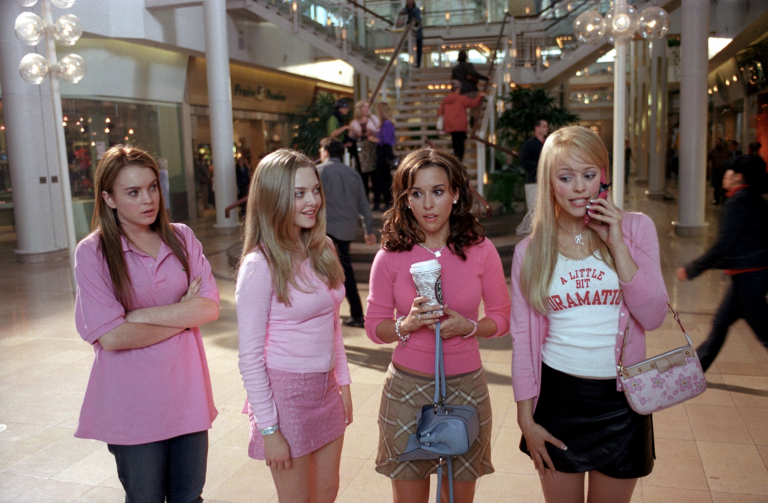
Mean Girls

In the 1995 cult classic Mallrats, Brodie and his buddy T.S. are engaged in a debate over the definition of a food court:

Brodie: Cookie stand is not part of the food court.

T.S.: Of course it is.

Brodie: The food court is downstairs. The cookie stand is upstairs. It’s not like we’re talking quantum physics here.

T.S.: The cookie stand counts as an eatery, the eateries are part of the food court.

Brodie: Bullshit! Eateries that operate within the designated square downstairs qualify as food court. Anything outside of said designated square is considered an autonomous unit for mid-mall snacking.

Brodie is right—the food court is a specifically designated area. The first one appeared in 1971 at the Plymouth Meeting Mall in Pennsylvania—it flopped because it was too small and offered little variety. But then came the food court at the Paramus Park Mall in New Jersey three years later. It was bigger, had better selections, and, more important, was located on the second floor, forcing visitors to go that extra distance, thereby increasing the odds of their purchasing something along the way.

In fact, everything about the mall, from its layout to the sounds and smells (from places like Mrs. Fields and Cinnabon), is designed for you to spend more time and money there. Which turns out to be an easy sell. As Alexandra Lange writes in Meet Me by the Fountain: An Inside History of the Mall, we are drawn to shopping centers because of our inherent need to be together—think of the agora in ancient Greece.

“People love to be in public with other people,” writes Lange. “Seeing happy families is the core of the mall’s strength, and the essence of its ongoing utility. In postwar suburban America, the mall was the only structure designed to fill that need.”

The person most responsible for conceiving this structure is Victor Gruen. An Austrian immigrant, Gruen was part of the design team at the 1939 World’s Fair that envisioned America in 1960. The model contained multi-lane highways with thousands of cars, not to mention enormous skyscrapers and airports. (It was called Futurama.)

Gruen’s original concept for the mall—a word derived from London’s Pall Mall street—was a place that not only included retail but also the post office, library, and medical facilities in a setting replete with fountains, plazas, and greenery. The aim was to transform shopping into a recreation, not a chore. This became known as the Gruen transfer: “the moment when your presence at the mall tips from being goal-oriented (must buy new underwear, must buy birthday gift) into a pleasure in itself.”

The first enclosed mall was a Gruen project, the Southdale Shopping Center in Edina, Minn., built in 1956. As an ad at the time touted, “Every day will be a perfect shopping day.” This, of course, was only made possible with the invention of air conditioning (the first department store to feature climate control was Abraham & Straus in New York in 1919). The other crucial innovation was the escalator.

While elevators take customers directly to their destination, escalators allow them to see everything along the way, once again tempting them to divert from their intended path, explore, and buy.

Diversion became the objective. “To be lost. How frightening. To be *safely* lost. How wonderful,” wrote the science fiction writer Ray Bradbury in “The Aesthetics of Lostness,” what Lange describes as “a manifesto for the mall.”

Bradbury’s idea of a mall, writes Lange, included a “ring of food purveyors including a malt shop, a pizza parlor, a delicatessen, a candy store. Shops selling the things ‘most delicious in our lives’: books (‘why not three’ bookstores?), a record store, an art gallery, hardware, stationery, toys, magic. At the four corners of the block, his anchor stores would be not vast emporia but entertainment: one cinema for new releases and another for classics, a theater, a coffeehouse for music.”

The author was prescient as usual. In fact, Bradbury’s vision was the basis for the Glendale Galleria in California. The designer was Jon Jerde, who not only wanted a visitor to be safely lost. He wanted her immersed in chaos, “confusing her senses spatially, then luring her in to shop with sales, displays, and signs.” Take, for instance, Las Vegas’s Fremont Street Experience, Universal Studios’ CityWalk in L.A., and the mother of all shopping centers, the Mall of America in Bloomington, Minn.—all designed by Jerde.

And yet for all the spectacle, malls are in decline. From the 2,500 malls that dotted America in the 1980s, there are only about 700 today. Nick Egelanian of SiteWorks recently told the Wall Street Journal he expects that number to dwindle to 150 by 2032. And though the decline began well before 2020 (with the migration of retail to the internet), the pandemic made conditions far worse.

Lange devotes many pages to the future of our malls. In the right setting they can be redone as open-air “lifestyle centers” (ironic considering a major benefit of the mall is weather-free environment). “Lifestyle centers do all the things that urban planners have promoted for years as ways of counteracting sprawl,” writes Andrew Blum in Slate. “Squeeze more into less space, combine a mix of activities, and employ a fine-grained street grid to create a public realm.”

Lange laments, however, that this reinvention “is still a private place, owned, operated, and policed by people more interested in the comfort of paying customers than in democratic ideals.” The author would rather see future malls cater to a locally diverse crowd, community-focused, even transit-oriented. And if the mall is our modern-day town square, why can’t we have protests and demonstrations? (My ideal mall would not include protesters.)

Indeed, while chock-full of interesting facts, Meet Me by the Fountain does require the reader to slog through some seriously woke prose: “Built in 1968 as the Buford-Clairmont Mall, Plaza Fiesta … was reborn as the Oriental Mall [sic], and then, in 2000, retrofitted into a place for the area’s growing Latinx community.” (I hope none of the stores sells oriental [sic] carpets.)

Lange does, however, answer one of my biggest questions: Where did all the mall arcades go? In the early 1980s there were about 5,000 of them. Lange traces this back to 1977 when Nolan Bushnell first installed arcade games in his new chain of kid-friendly birthday restaurants. That’s right: The founder of Atari also created Chuck E. Cheese.

But as arcades grew in popularity among teens (think Fast Times at Ridgemont High), so did concerns about juvenile delinquency, vice, and security. “The total number of security guards increased by 300 percent between 1969 and 1988,” Lange points out. At the same time, sales of home video-game consoles were on the rise—why spend all those quarters in an arcade when you can play at home for free? By the end of the ’90s, most of these mall arcades had vanished (though trendy “barcades” have made a bit of a comeback thanks to nostalgic Gen Xers).

In spite of the convenience of shopping from home, Lange is hopeful that our need to be around others will keep the mall alive, albeit in one form or another. “Why we are out—a movie, a sweater, a concert, boba—does not matter as much as having the space in which to be out in the comfort of strangers,” she writes. “Shopping isn’t going anywhere, and it’s so much nicer to do it together.”

As for my ideal mall, all I want is a climate-controlled environment, safe for kids, with interesting stores, a multiplex, an old-school arcade, and an extremely diverse food court, plus those autonomous units for mid-mall snacking.

Meet Me by the Fountain: An Inside History of the Mall

by Alexandra Lange

Bloomsbury, 320 pp., $28

The post Browsing History appeared first on Washington Free Beacon.

Categories
Audio Sources - Full Text Articles

No Good Jew Goes Unpunished

“I’m a bad Jew” is a common admission among American Jews, sometimes sheepish, sometimes boastful, and typically containing a dose of truth. But in her new book, Bad Jews, journalist Emily Tamkin sets out to prove that the subject of her title is a myth. “It is my best attempt,” she writes, “to wrestle with what I believe to be the one truth of American Jewish identity: It can never be pinned down.” The result is alternately perverse and insipid beyond belief. Let me show you what she means.

“The story of Ethel Rosenberg is, in many ways, a Jewish story,” writes Tamkin, after an uneven sketch of the 1950s spy case. “Who, in this, is the Good Jew or the Bad Jew? Is it the Communist Jewish woman who was executed? The Jews who stood by her? Or the Jews who called for her death? The sons, years later trying to push for the exoneration of their mother? Or Roy Cohn, the Jewish man who helped create the environment that killed her?”

Like most questions in the book, these are left unanswered, presumably because Tamkin thinks they are unanswerable. But the answers are blindingly obvious.

Ethel Rosenberg was a bad Jew. We know from Soviet cables and KGB memos that she urged and aided in the recruitment of her relatives as nuclear spies. She betrayed her country, the United States, the best home in exile the Jews have ever known, to arm Joseph Stalin, a demon responsible for the murder of millions and an anti-Semite who tried to stamp out Jewish religion. Ethel was “totally uncritical” in her devotion to communism, a totalitarian ideology that crushes the human spirit and seeks the dissolution of all Jewish identity. Right until the last moment, Ethel had an opportunity to save her life and spare her children from becoming orphans. All she had to do was tell the truth. Instead, she continued to lie, choosing loyalty to Stalin over duty to her children.

The Jews who stood by Ethel were duped or were themselves fellow travelers. The major Jewish organizations that Tamkin scolds, along with the bulk of American Jewry, for supporting the prosecution, saw more clearly than she does. Historian Lucy Dawidowicz, singled out for her support of the Rosenbergs’ execution, devoted her career to the study of the Nazi War Against the Jews and the Jewish tradition that the Nazis sought to destroy. Her work helped preserve that tradition for Jews today. Finally, Roy Cohn didn’t help “create the environment that killed [Ethel],” because Ethel wasn’t killed by an environment.

When she wants to be, Tamkin is rigidly opposed to judgments of any sort. She denies even the possibility of something being “good for the Jews,” or bad. Her reason is that Jews differ—as if this, too, is an unanswerable objection.

Leave normative terms aside; Tamkin is just as obtuse regarding descriptive assessments. At times, she seems impervious to sociology. For example, she takes great issue with Nathan Glazer’s comment that the period of immigrant Jewish life on New York’s Lower East Side was “when the [American] Jews were thus most Jewish.” She protests, “But what did ‘true Jews’ or ‘most Jewish’ actually mean? What made one Jewish life more or less authentic than another?”

Behind these questions is the dogmatic insistence, crucial to Tamkin’s liberal Judaism, that no one is any more Jewish than anyone else. Fine. Some people, however, have a thicker identity than others. Some Irish-Americans have a deep connection to Ireland and some simply drink Guinness on St. Paddy’s Day. Jews who, say, spoke a Jewish language in daily life and had real knowledge of Jewish tradition had a thicker Jewish identity than most American Jews have had since.

Tamkin can’t admit this because, as she writes, she is deeply anxious about her own Jewishness. Though Bad Jews is “a roughly hundred-year history of Jewish American politics, culture, identities, and arguments,” in keeping with the modern fad it is also a personal exploration. Tamkin shoehorns the issue of intermarriage into several chapters, often discussing her own marriage, which is to a non-Jew who didn’t subsequently convert.

Tamkin objects to “the insistence that intermarried Jews are less serious about Judaism and somehow not fully capable of passing  Jewish values on to their children.” She even has an imaginary conversation with a leading Jewish philanthropist on the issue. It ends with the conclusion that he wouldn’t care at all about her “hypothetical future children” on account of their non-Jewish father, making clear that she fails utterly to understand the opposing point of view.

No doubt Tamkin will instill Jewish identity in her children; she writes books on the topic. But in general, one Jewish parent and one Christian parent aren’t as likely as two Jewish parents to raise children who identify strongly as Jews. This is common sense, and the data are clear that children of intermarriage feel that Judaism is less important to them “as it was for their parents” and act accordingly.

Tamkin’s personal leanings often make her an unreliable narrator. She tries to sanitize the Second Intifada as “a Palestinian uprising that came from the failure of the peace process in the first decade of the 2000s and the violence that ensued,” a sentence worthy of Orwell’s “Politics and the English Language.” She describes Jewish Currents, which she admires, as “the magazine founded for the Jewish Left back in 1946,” leaving out that it was Stalinist. She congratulates Rep. Ilhan Omar (D., Minn.) for apologizing for an anti-Semitic remark, without mentioning that Omar quickly walked back the apology and reiterated her conspiracy theory.

Notably bad is Tamkin’s discussion of the neoconservatives. Hostile framings and poor paraphrases of Irving Kristol arguments are one thing. Another is that she doesn’t seem to know what she’s talking about. The first words she uses to describe neocon intellectuals are “free-market capitalists”; in fact, they were notable within the conservative movement for accepting limits on the free market and making peace with the New Deal, while critiquing excesses of the Great Society on empirical grounds. Next, she writes, “Neoconservatives actually started out as leftist radicals. They were disciples of Leon Trotsky.” For most neocons, this is false. Norman Podhoretz, for instance, was never a Trotskyist. Some, like Kristol, had been Trots in college, but their Marxist credentials were far inferior to, say, those of many founding editors and writers of the conservative (no “neo”) National Review.

The problem can be traced to the book’s citations. Tamkin’s pattern is to rely on a single secondary source for information, citing it several times consecutively to cover a topic, before moving on to another single source, also cited several times in a row, for a new topic. In her neocons chapter, she cites Benjamin Balint’s book on Commentary 16 times in a row. I’ve read the book and it is serviceable, but it is only one view on a topic on which countless words have been written. Commentary’s archives are also available online. To rely so thoroughly on single sources is indicative of laziness, frankly, and lack of knowledge.

Tamkin claims to argue that there’s no such thing as a good Jew or bad Jew. But her heart isn’t in it. At every opportunity, she valorizes her bad Jews, the ones who vilify Israel and the American Jewish community. They’re the heroes. Eli Valley, the Jewish cartoonist known for drawing Israelis and pro-Israel Americans as Nazis, she fawns over. Her comment that “multiple people, on learning that I was writing this book, told me that I had to speak to Valley. His work meant so much to them, they told me. It had helped them figure out their own relationship to Jewishness” is perhaps more revealing than she intended.

The flip side is that Tamkin clearly thinks her good Jews are bad. The major Jewish organizations are portrayed throughout as morally indefensible; even Jewish leadership in the civil-rights movement is unconvincingly labeled a “myth.” Anticommunists and Israel supporters are cast as fear- and guilt-ridden tyrants, synogogue-goers as conformist and xenophobic. In her most disgusting passage, Tamkin blames the deadly 2018 shooting at Pittsburgh’s Tree of Life synagogue on Donald Trump and then immediately uses the tragedy to dump on Orthodox Jews—themselves the victims of most anti-Semitic violence—for several paragraphs.

At the end, Tamkin has one last somersault to perform: excusing left-wing anti-Semitism. “When I hear that the fixation should be on antisemitism on the left,” she writes, “I recall that there was a reason that American Jewish professionals in the 1960s decided not to focus on the antisemitism within the Nation of Islam,” namely, that it could detract from the broader progressive struggle. She then has a quote that the response to left-wing anti-Semitism should be “to show up more” to left-wing causes. Sen. Bernie Sanders (I., Vt.), it is made clear, is the ideal type. At last, and in so many words, we have Tamkin’s elusive definition of a good Jew: a leftist.

Bad Jews: A History of American Jewish Politics and Identities

by Emily Tamkin

Harper, 320 pp., $28.99

Elliot Kaufman is the letters editor of the Wall Street Journal.

The post No Good Jew Goes Unpunished appeared first on Washington Free Beacon.

WP Radio
WP Radio
OFFLINE LIVE