Categories
Audio Sources - Full Text Articles

Mexico goalkeeper Ochoa wants more in his 5th World Cup

DOHA, Qatar (AP) — With a post-game hug, Robert Lewandowski paid respect where it was due. Guillermo Ochoa had done it again at the World Cup.

Mexico’s stalwart goalkeeper stopped Lewandowski, one of the game’s best strikers, on a second-half penalty kick that preserved a scoreless draw between El Tri and Poland.

A loss in the match would have dealt a blow to Mexico’s bid for an eighth straight trip to the World Cup’s knockout rounds. Ochoa, 37, is making his fifth consecutive appearance in soccer’s biggest tournament, joining an exclusive club that includes Lionel Messi and Cristiano Ronaldo.

But it wasn’t the first time the seemingly ageless goalkeeper with unruly hair had come up big in the World Cup.

Back in 2014, the player widely known by his nickname Memo, made six saves in the scoreless draw with Brazil, which was among the favorites as the tournament’s host.

He denied Brazilian stars Neymar and Thiago Silva on close-in headers and afterward called it the “game of a lifetime.”

In Russia four years ago, he had nine saves in Mexico’s 1-0 victory over defending champion Germany in the group opener.

“When we need Memo, he always shows up,” defender Jorge Sanchez said.

Qatar could be Ochoa’s final World Cup and he desperately wants to advance past the round of 16 and play in an elusive “quinto partido” — a fifth game. It’s something that has eluded El Tri since Mexico hosted the 1986 tournament.

“There have been great players in history who never had a chance to play at a World Cup, so for me to have the chance to play five is wonderful, amazing,” Ochoa said. “But, of course, I want this World Cup to be very different and to be the best of all time for Mexico.”

Within moments after Tuesday’s draw, memes spread on social media depicting Ochoa as a brick wall, Superman, Neo in the Matrix movies and even Jesus.

But Ochoa, who plays for Club América in Mexico’s Liga MX, pointed afterward to preparation, not heroics.

“We work on that these two weeks, or maybe a month, with goalkeeper coach Gustavo Pinero. But it’s always difficult when you watch the video of Lewandowski’s penalties, it’s complicated because you watch more than 15 to 20 penalties, so you never know which side to choose,” Ochoa said. “At the end I’m happy to save the penalty. He’s a great striker.”

Ochoa started his career with Club América at 18 and played there for seven years before bouncing around Europe with teams in France, Spain and Belgium. He wound up back with Club América in 2019.

While the opener ended in a draw, the save helped — at least momentarily — to quiet the critics who have questioned the team’s form and blasted coach Gerardo Martino for his roster choices.

Mexico finished second in CONCACAF qualifying behind Canada — and ahead of the United States. But the team dropped three of its five tune-up matches heading into he World Cup.

On Saturday at Lusail Stadium El Tri faces Messi and Argentina, who unexpectedly fell 2-1 to Saudi Arabia in their opener. La Albiceleste remain one of the favorites at the tournament despite the loss.

“We have a tough opponent in the next game, but Mexico is also a tough opponent,” Ochoa said. “We’ve worked really hard. We’ve prepared ourselves.”

___

AP World Cup coverage: https://apnews.com/hub/world-cup and https://twitter.com/AP_Sports

Categories
Audio Sources - Full Text Articles

Stand up comedy booms in Venezuela, but politics are off stage

2022-11-24T12:18:14Z

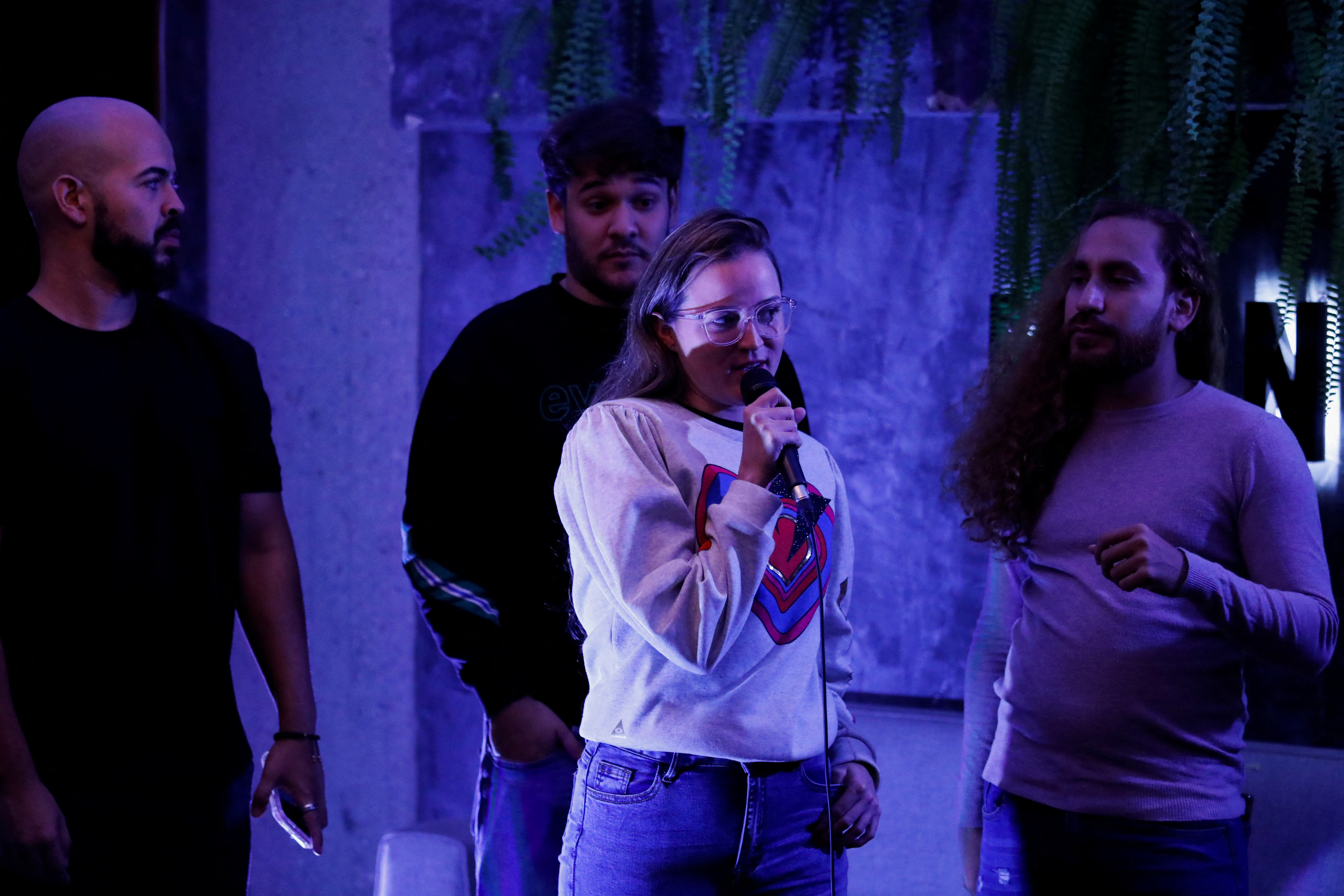
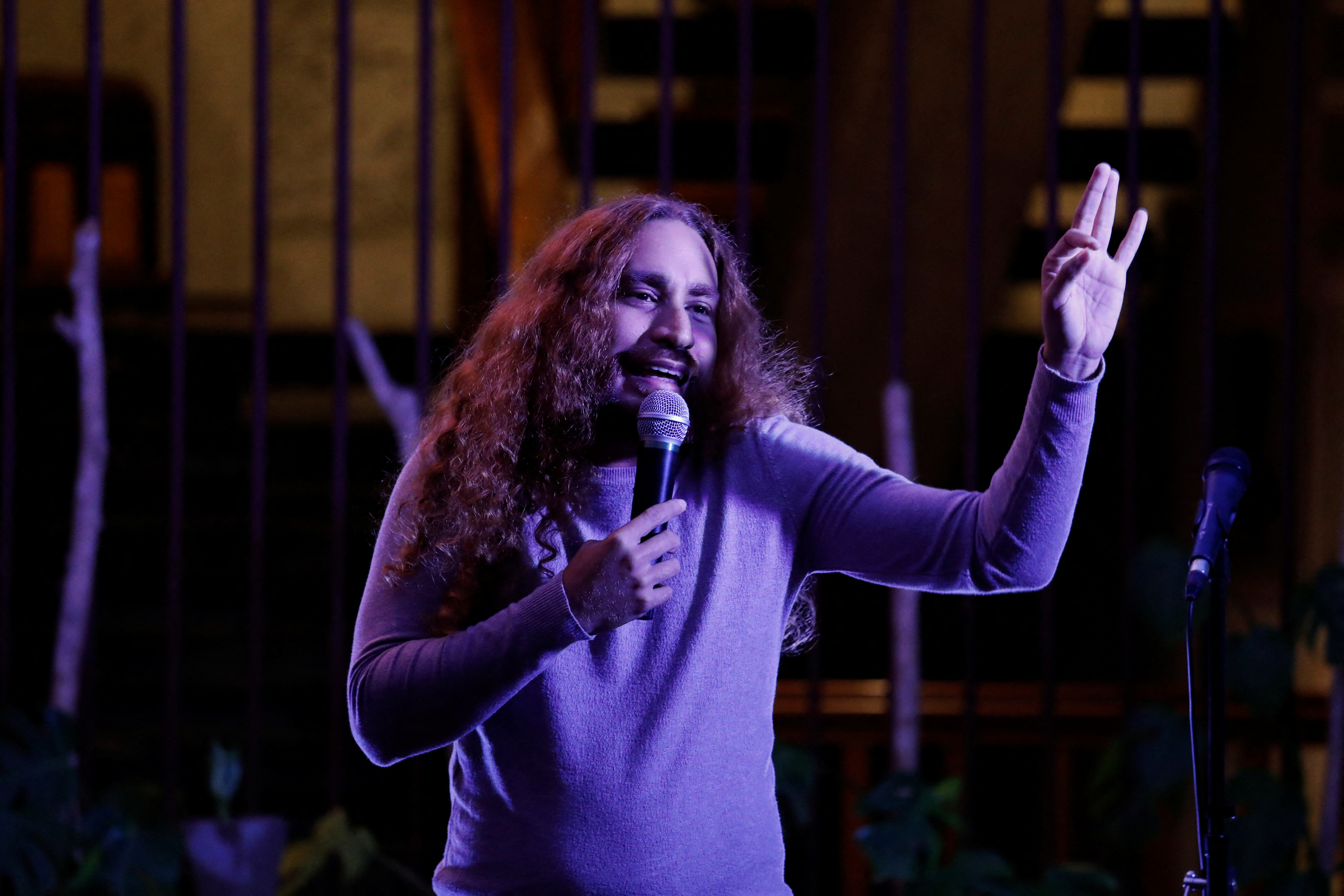
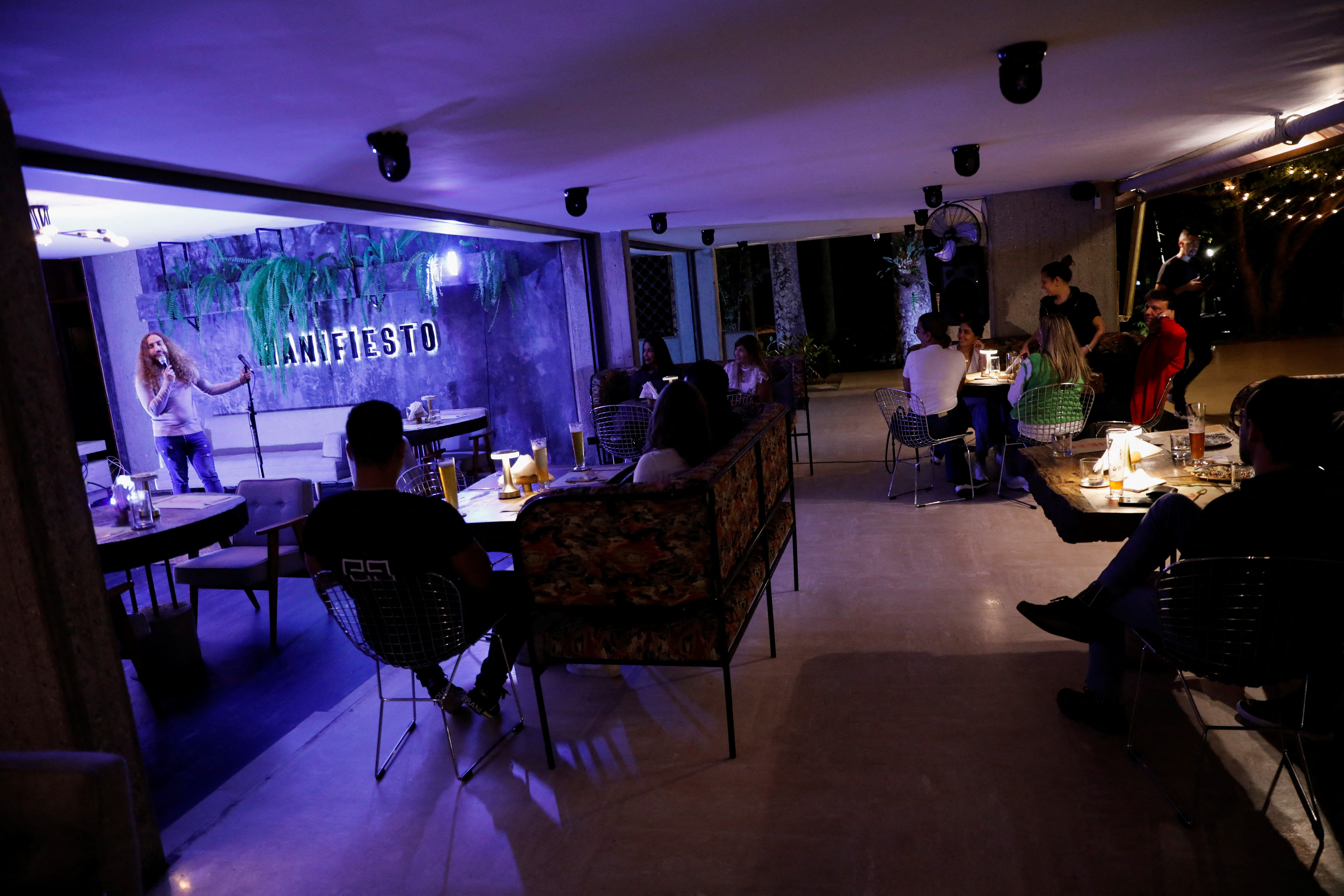
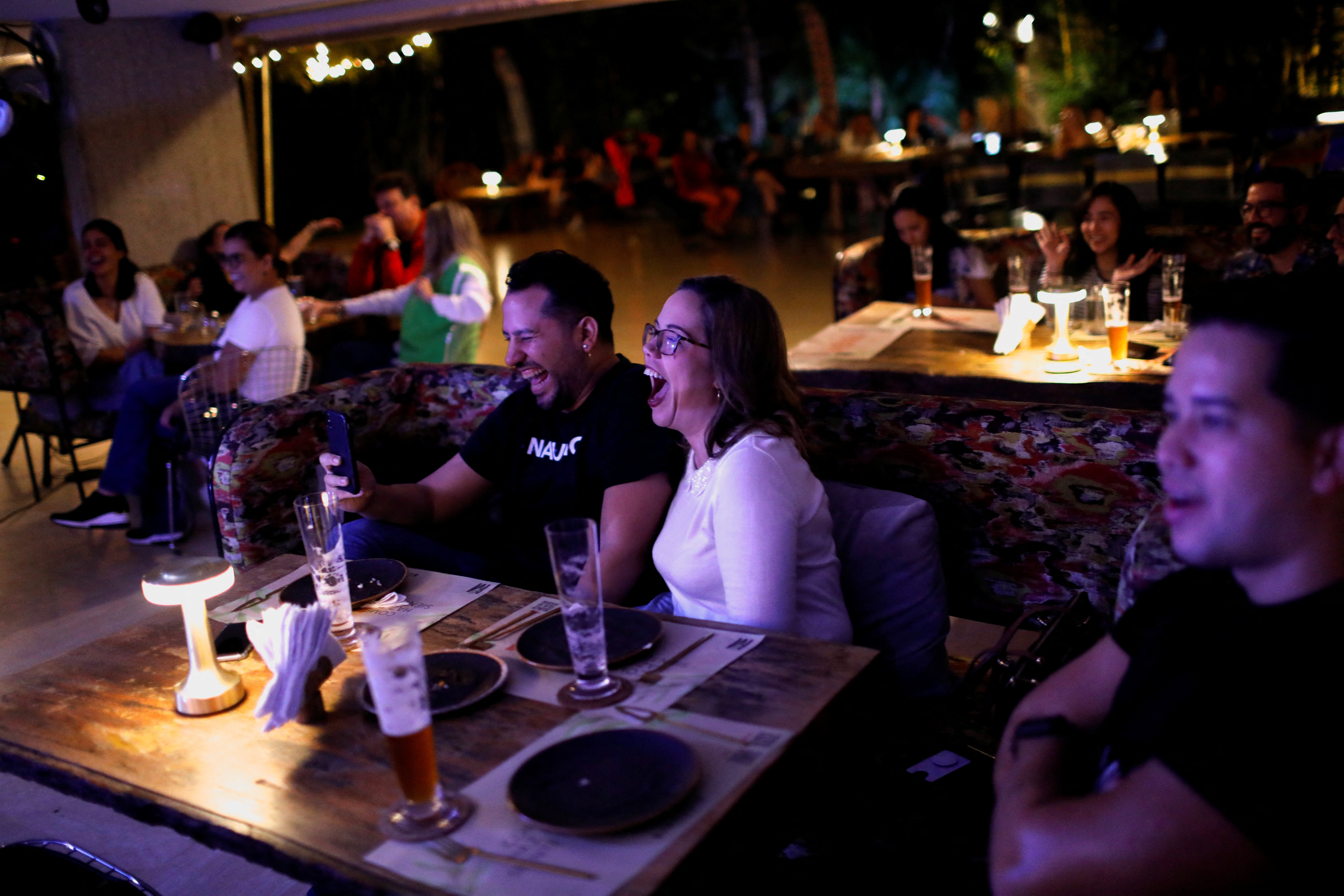
Samuel Rodriguez’s pizzeria in Caracas does not just serve up hot cheesy pies – it also dishes out jokes, offering a stage to young comedians filling the void left by veteran comics who have fled Venezuela’s economic crisis.

Rodriguez, 36, performs himself several days a week in what he describes as a kind of catharsis for dealing with day-to-day problems, at the unlikely spot that is one of a growing number of venues in Venezuela’s capital attracting stand-up fans.

But politics is not necessarily on the menu.

The public and comedians alike are worn out by issues like constant power or water cuts and growing income inequality, Rodriguez noted.

“The subject of (what’s happening in) the country is not touched on in the routines or in the jokes… people are generally tired of it,” he said.

The influx of entertainment venues, including cafes, bars and restaurants, comes after the government relaxed economic regulations three years ago, allowing more transactions in dollars.

Those new opportunities to get onstage, alongside an uptick in video-based social media such as Tik Tok, have been a boon for young comedians, locals say.

Yet for all the gags about daily life, Venezuela’s new generations of comedians tend to steer clear of political jokes.

“(Venezualans’ humor follows) the style of North American comedy … which talks about everyday life, not political issues,” said Laureano Marquez, 59, a renowned humorist and political analyst.

Marquez, who has toured South America and is currently doing gigs in Spain, said a “climate of political repression” has also prompted comedians to avoid touchy topics.

Authorities have closed more than 50 radio stations in Venezuela this year, which non-governmental organizations say is an effort to control information and give state media hegemony over communications and journalist guilds.

Jeneil Tovar, a 39-year-old publicist who moved to full-time comedy a year and a half ago, said she is motivated by seeing the impact on her audience.

“It’s too damn good when you find a purpose in your day-to-day work, getting the laughs,” she said.

Related Galleries:

Stand-up comedian Gabriela Ruiz performs for guests at a bar, in Caracas, Venezuela, November 14, 2022. REUTERS/Leonardo Fernandez Viloria

Stand-up comedian Juan “The Red” Rodriguez performs for guests at a bar, in Caracas, Venezuela, November 14, 2022. REUTERS/Leonardo Fernandez Viloria

Stand-up comedian Juan “The Red” Rodriguez performs for guests at a bar, in Caracas, Venezuela, November 14, 2022. REUTERS/Leonardo Fernandez Viloria

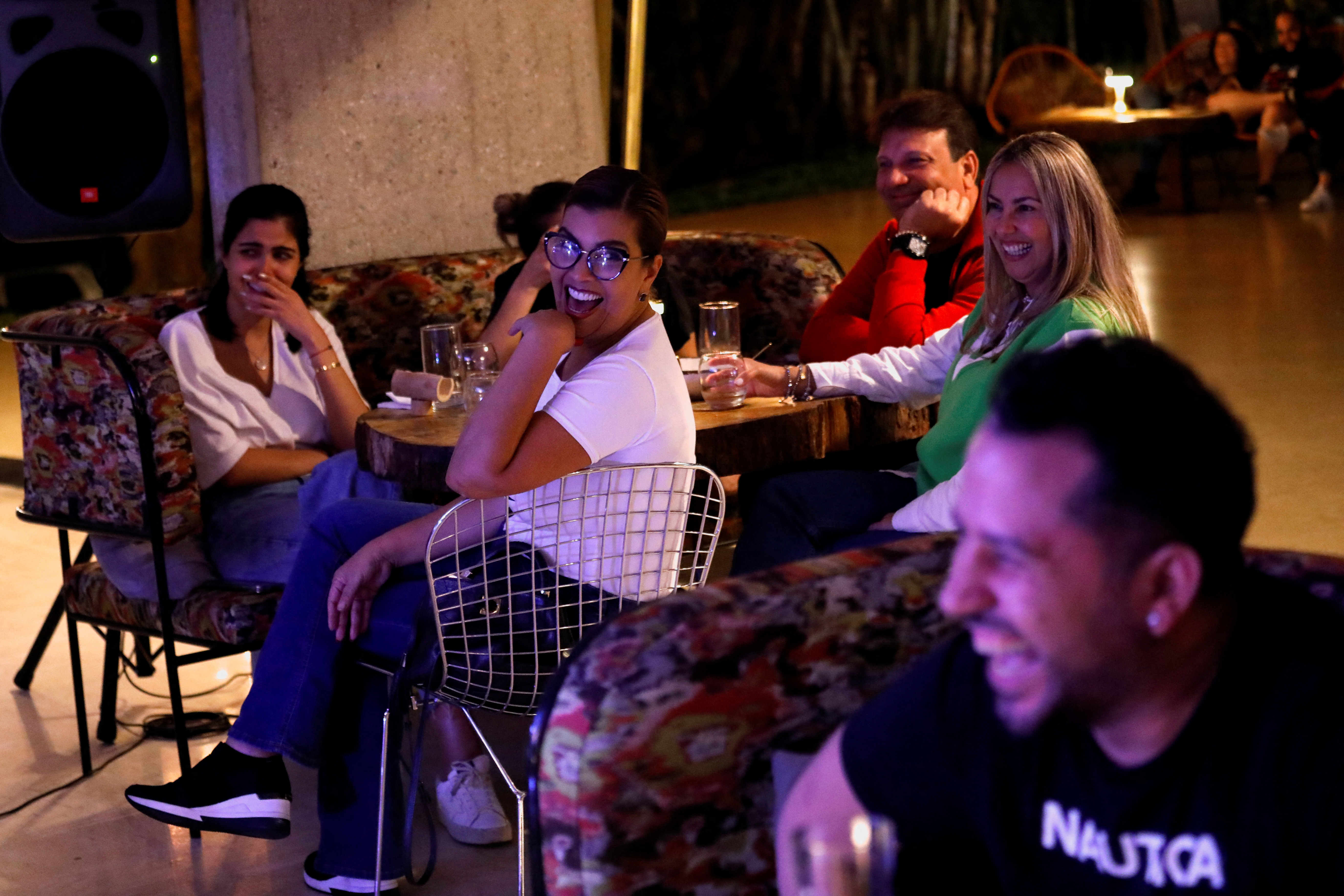
People react during a stand-up performance, in Caracas, Venezuela, November 14, 2022. REUTERS/Leonardo Fernandez Viloria

People react during a stand-up performance, in Caracas, Venezuela, November 14, 2022. REUTERS/Leonardo Fernandez Viloria
Categories
Audio Sources - Full Text Articles

Bordering Georgia“s breakaway regions, villagers fear Russia“s next steps

2022-11-24T12:19:36Z

For displaced villagers living near the border of Georgia’s breakaway region of South Ossetia, the war in Ukraine has brought back terrifying memories of Russian bombardments.

“I know what it feels like hiding in the basement while your village is being bombed. I know that horrible feeling of fear,” said Mari Otinashvili, whose family fled the shelling of her village when she was a 13-year-old in 2008.

After a ceasefire ended that five-day war, Russia recognised South Ossetia and another breakaway region, Abkhazia, as independent states and garrisoned troops there.

In the years since, Russian forces and the separatists they back have erected barbed wire fences along the Administrative Boundary Line, the de facto limit of South Ossetia. The previously unmarked line between two regions of Georgia feels increasingly like an international border.

Barbed wire now runs through gardens in the village of Khurvaleti, and others like it, leaving family members unable to reach relatives on the other side, cut off from their crops and livelihoods.

Villagers say they are frequently detained, accused of straying into South Ossetia, which Georgia and most other nations do not consider to be a separate country.

Otinashvili, who lives in a settlement on the edge of Khurvaleti for families displaced from the breakaway region, fears Russia will seek to take more territory or formally annex the breakaway region, following Moscow’s moves to incorporate parts of eastern and southern Ukraine into the Russian federation.

A couple of days after Russia’s Feb. 24 invasion of Ukraine, which Moscow calls a special military operation, soldiers that Otinashvili said were Russians began moving signs forbidding Georgians to cross.

They shone a powerful light towards her settlement, she said.

“I was so scared I could not stop crying and was shaking for two days. I thought again the war started,” Otinashvili said.

Authorities in South Ossetia planned to hold a so-called referendum in July on whether to become part of Russia, but later suspended the consultation. Georgia has called any such plan to join Russia unacceptable.

Already, in 2017, an agreement with Russia in effect incorporated the armed forces of South Ossetia into Russia’s military command structure. There are also Russian troops stationed in the region. South Ossetia is only recognized as independent from Georgia by a small handful of countries including Russia.

The Kremlin and leadership in South Ossetia did not respond to requests for comment for this story. Georgia’s government did not respond to a request for comment.

Like Georgia, Ukraine is a former Soviet state bordering Russia and the Black Sea.

Moscow in September proclaimed its annexation of four partially occupied regions in Ukraine after the staging of what it called referendums. The United Nations General Assembly overwhelmingly condemned what it called the “attempted illegal annexation.”

Russia previously annexed Ukraine’s Crimea region in 2014.

Responsibility for the war in Georgia is disputed. An EU-backed report concluded in 2009 that it was started by Georgia’s armed forces but that Moscow’s response went beyond reasonable limits and violated international law.

The war was also over Abkhazia – another region internationally recognised as part of Georgia but under the control of Russian-backed separatists. Some 288,000 Georgians remain internally displaced by the war and previous secessionist conflicts in South Ossetia and Abkhazia, according to the U.N. refugee agency.

Life for residents who fled and those who live near the administrative line has been unsettled ever since the war there 14 years ago, with rights groups and the Council of Europe documenting restrictions on freedom of movement, illegal detentions and discrimination against ethnic Georgian citizens among other issues.

Maia Otinashvili, who is unrelated to Mari Otinashvili, says she was walking near Khurvaleti when Russia-backed militants kidnapped her in 2018, pulling her over a barbed-wire fence and into Russia-controlled territory in South Ossetia, where they imprisoned her.

She was then accused of crossing the boundary illegally. She denied the accusation but was sentenced that year by a South Ossetian court to eight months in jail. She was freed after 11 days following an outcry in Georgia.

“They knocked me to the ground and hit me in the back,” Otinashvili, 41, told Reuters.

Reports of such detentions are common and tracked by Georgian authorities and rights groups. Earlier in November three residents were detained in Gori municipality, according to Georgia’s State Security Service, which says the detentions are intended to scare residents.

Villagers describe the detentions as kidnappings, saying Russian or Russian-backed South Ossetian forces constantly push the dividing line forward, erecting barriers, barbed wire fences and signs to turn it into a hard border.

“Anti-occupation” activist David Katsarava has taken to patrolling parts of the line, accusing the Georgian government as well as a civilian European Union monitoring mission of not doing enough to resist what he sees as Russian encroachment and illegal detentions.

Katsarava, who set up a group called Power is in Unity, hands out GPS trackers to shepherds and other residents to locate them rapidly if they run into trouble on the frontier so they can refute claims they have flouted it.

He says Georgia has already lost tracts of land beyond the territory it initially lost control of.

“The creeping occupation will not stop. It can be stopped only when you resist it and when you are constantly close,” he said in an interview. “The Russians must see that we are getting as close as possible to the occupation line.”

Russia’s foreign ministry and South Ossetia’s de facto authorities did not respond to Reuters requests for comment about the allegations of wrongful detentions, or the hardening and movement of the administrative line.

Georgian citizen Genadi Bestaevi was detained in 2019 and held in South Ossetia for two years before he had a stroke in custody and was returned to Georgia, international observers reported. He died three months later aged 53.

South Ossetian authorities said he had illegally crossed the border and accused him of drug smuggling.

His sister, Naira Mestavashvili, 63, said Russian-backed forces took Bestaevi from the bedroom of his house, which was located right next to the barbed wire dividing line.
“My brother is the victim of the Russian occupation. I don’t know what happened to him or what they did to him in prison. He was a healthy man,” said Mestavashvili. The family denies the accusation of smuggling.

The European Union called Bestaevi’s death a “tragic illustration of the devastating consequences of the illegal actions of the de facto regime.”

In Khurvaleti, Valia Valishvili, 88, is stranded on the side of the village controlled by the Russian-backed authorities.

“I am all alone. The guards forbid my family members to come into the occupied territory. If they do cross the border, they will be jailed,” Valishvili said.

Valishvili said Russian forces had told her to leave her home but she refused, saying she had promised her late husband she would not abandon their home.

“They will take everything when I am gone: all my land that is Georgian,” Valishvili said.

Related Galleries:
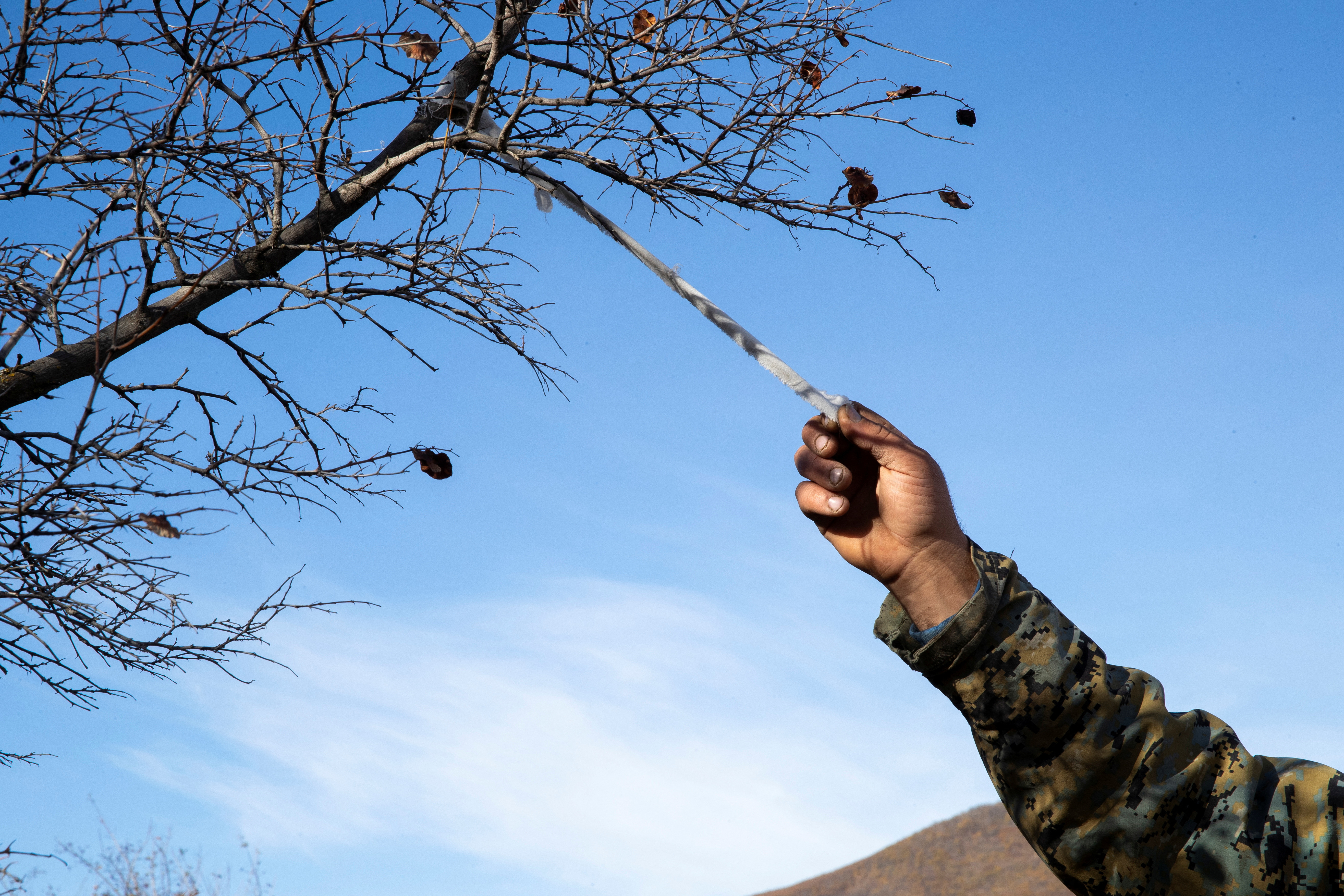
Local farmer Nika Tsiklauri, 33, shows Reuters a piece of white cloth, in the village of Bershueti, Georgia, May 12, 2019. Tsiklauri said that the white pieces of cloth are used to indicate the “border” between the breakaway region of South Ossetia and the rest of Georgia. Tsiklauri said he was resting near where some white cloth was tied, when a Russian militant put a gun to his head, saying that he crossed over their border. Tsiklauri was later let go. “I went close to the occupied borderline, to the trees where the white cloths are, untied them and threw them on the floor, as a protest. I do it often,” Tsiklauri said. REUTERS/Daro Sulakauri SEARCH “SULAKAURI BORDER” FOR THIS STORY. SEARCH “WIDER IMAGE” FOR ALL STORIES

Local people and journalists stand and pass flowers over to Data Vanishvili’s grandson Dato Vanishvili, 14, as he stands in Georgia’s breakaway region of South Ossetia, during 88-year-old Data’s funeral in the village of Khurvaleti, Georgia, March 22, 2021. Data Vanishvili, then already in his eighties, became a symbol of this fearful frontier existence after he, his wife and son woke up in 2013 to find a barbed-wire fence had been erected in the night, putting their home on the Ossetian side of the boundary. Vanishvili became well-known in Georgia for staying put and defiantly speaking out publicly. Despite the risks, he would cross the boundary to get his pension and to buy food. On his deathbed at the age of 88, his final words to his wife were a plea not to abandon their home. “Do not leave the house, do not go anywhere, sit by the stove, the Georgians will help you,” his family recall him saying. He was buried in the breakaway region of South Ossetia. REUTERS/Daro Sulakauri

A Georgian border policeman speaks on the phone near the entrance to the village of Karapila, near the de facto border with Georgia’s breakaway region of South Ossetia, Georgia, July 9, 2021. After the 2008 Russo-Georgian war, Russia recognised South Ossetia and another breakaway region, Abkhazia, as independent states and garrisoned troops there. Russian forces and the separatists they back have erected barbed wire fences along the Administrative Boundary Line, the de facto limit of South Ossetia. The previously unmarked line between two regions of Georgia feels increasingly like an international border. Villagers say they are frequently detained, accused of straying into South Ossetia, which Georgia and most other nations do not consider to be a separate country. REUTERS/Daro Sulakauri

Mari Meladze, 15, poses for a photograph at her school in the village of Odzisi, Georgia, December 27, 2019. “It has been years since anything major has happened in my village, so we have no more international or local attention,” said Meladze. “Right after the war, we had people sponsoring us in art or other activities, but it died away. People are continuing their daily lives, trying to adjust to living next to the Russian-controlled territory. There is always fear that something might happen, but even that people got used to being constantly scared of something. No one dares to go close to the occupied borderline, no one wants to be kidnapped and fined.” REUTERS/Daro Sulakauri
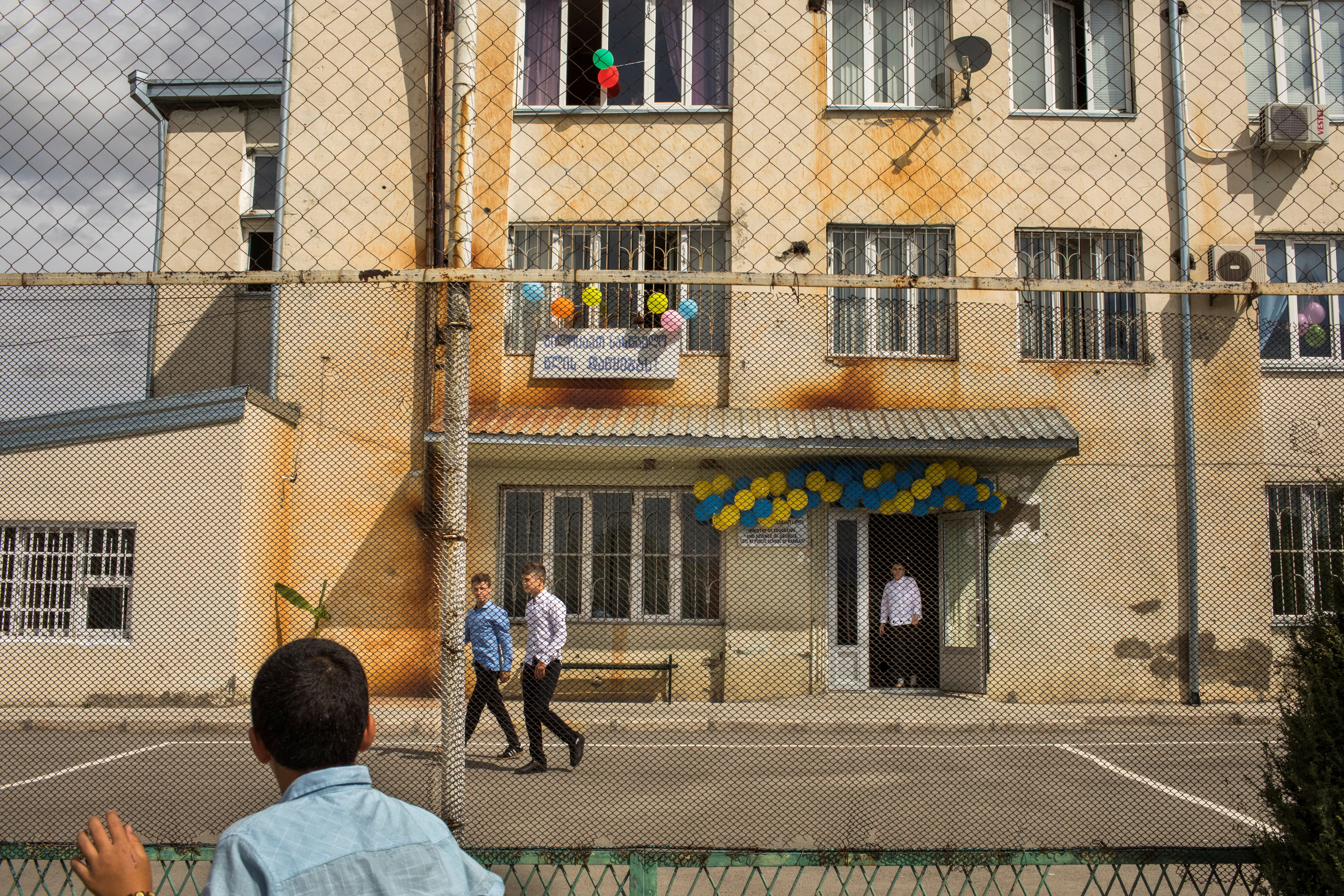
People walk next to a school, on a road leading to the village of Odzisi, near Mukhrani village, next to the de facto border of Georgia’s breakaway region of South Ossetia, Georgia, September 17, 2018. Authorities in South Ossetia planned to hold a so-called referendum in July on whether to become part of Russia, but later suspended the consultation. Georgia has called any such plan to join Russia unacceptable. REUTERS/Daro Sulakauri

Ani Gelashvili, 12, and Tamar Mazmashvili, 10, who are both originally from Argvisi in South Ossetia, pose for a photo near Georgia’s breakaway region of South Ossetia, in Shavshvebi IDP settlement, Georgia, September 22, 2018. “I was three years old and Tamar was three months old when the war happened,” Gelashvili said. “We had to flee our home. I don’t remember anything. I only imagine what home was like. I know my house is destroyed, some people showed me photos of my land from a plane. It’s now a home to Russians and Ossetians. There is a Russian military base in Argvisi village. Me and Tamar now call Shavshvebi settlement home. But if the Russians ever let us return home, we will.” REUTERS/Daro Sulakauri

Mari Melua, 6, who lives next to the de facto border with Georgia’s breakaway region of South Ossetia, plays outside in her village, near hills that stand in the region of South Ossetia, in the village of Khurvaleti, Georgia, April 29, 2019. After the 2008 Russo-Georgian war, Russia recognised South Ossetia and another breakaway region, Abkhazia, as independent states and garrisoned troops there. Russian forces and the separatists they back have erected barbed wire fences along the Administrative Boundary Line, the de facto limit of South Ossetia. The previously unmarked line between two regions of Georgia feels increasingly like an international border. Villagers say they are frequently detained, accused of straying into South Ossetia, which Georgia and most other nations do not consider to be a separate country. “No one dares to go up there,” Mari said about the hills. “People get scared of being kidnapped.” REUTERS/Daro Sulakauri

Family photos belonging to Sidonia Gochashvili, 67, hang on a wall in her home in Shavshvebi IDP Settlement, Georgia, September 22, 2018. “I lost my home during the war in 2008,” said Gochashvili. “I had to flee South Ossetia and settle here in Shavshvebi IDP settlement. Life gets lonely.” REUTERS/Daro Sulakauri

Local farmer Naira Mestavashvili, 63, the sister of the late Genadi Bestaevi, who was detained in 2019 and held in South Ossetia for two years before he had a stroke in custody and was returned to Georgia in a coma, wipes away tears in the village of Zardiantkari, Georgia, July 9, 2021. “The barbed wire fence was erected next to my brother’s home,” said Mestavashvili, who herself is half-Georgian and half-South Ossetian. “It was right next to his door. Russian troops patrolled there constantly. On the day he was kidnapped he did not cross into the occupied territory, but he was taken from his home. He was a healthy man, but he was in a coma when the South Ossetian authorities gave him back to us. He was in hospital for two months, and he is dead now. He is a victim of the Russian occupation. My brother had a wife and son in the South Ossetia region.” REUTERS/Daro Sulakauri

A hut stands on a mountain on the de facto border of Georgia’s breakaway region of South Ossetia, photographed from the village of Bershueti, Georgia, May 12, 2019. After the 2008 Russo-Georgian war, Russia recognised South Ossetia and another breakaway region, Abkhazia, as independent states and garrisoned troops there. Russian forces and the separatists they back have erected barbed wire fences along the Administrative Boundary Line, the de facto limit of South Ossetia. The previously unmarked line between two regions of Georgia feels increasingly like an international border. Villagers say they are frequently detained, accused of straying into South Ossetia, which Georgia and most other nations do not consider to be a separate country. REUTERS/Daro Sulakauri

‘Power is in Unity’ team member Davit Mtvarelishvili, 27, helps to read out a doctor’s prescription for Gogi Papitashvili, 59, in Gori, Georgia, June 15, 2021. Papitashvili, who works as a shepherd, says he was held captive for a few hours by Russian soldiers who accused Papitashvili of being on their territory. “I thought they would never let me go,” he said. “A young boy was with me but he ran for his life and escaped.” He recalls telling the soldiers he didn’t cross beyond the white cloth they hung on bushes and trees, but the soldiers claimed the cloth was simply used to mark the roads, not the border. REUTERS/Daro Sulakauri

A barbed wire fence, erected by Russian-backed forces, marks the breakaway region of South Ossetia, photographed from the village of Odzisi, Georgia, April 12, 2021. After the 2008 Russo-Georgian war, Russia recognised South Ossetia and another breakaway region, Abkhazia, as independent states and garrisoned troops there. Russian forces and the separatists they back have erected barbed wire fences along the Administrative Boundary Line, the de facto limit of South Ossetia. The previously unmarked line between two regions of Georgia feels increasingly like an international border. Villagers say they are frequently detained, accused of straying into South Ossetia, which Georgia and most other nations do not consider to be a separate country. REUTERS/Daro Sulakauri

A shrine on a tree, memorialising local people who died in car crashes at the spot, stands by a road that leads to the village of Upper Nikozi, Georgia, March 2, 2019. Upper Nikozi was heavily bombed during the 2008 war with Russia. REUTERS/Daro Sulakauri

‘Power is in Unity’ team member Davit Mtvarelishvili, 27, helps to read out a doctor’s prescription for Gogi Papitashvili, 59, in Gori, Georgia, June 15, 2021. Papitashvili, who works as a shepherd, says he was held captive for a few hours by Russian soldiers who accused Papitashvili of being on their territory. “I thought they would never let me go,” he said. “A young boy was with me but he ran for his life and escaped.” He recalls telling the soldiers he didn’t cross beyond the white cloth they hung on bushes and trees, but the soldiers claimed the cloth was simply used to mark the roads, not the border. REUTERS/Daro Sulakauri

Mari Melua, 9, and her sister Lola Melua, 7, stand on water pipes as they play together near mountains that stand in Georgia’s breakaway region of South Ossetia, in the village of Khurvaleti, Georgia, September 27, 2021. “Our neighbour went up the hill and got captured by a Russian soldier,” said Mari. “I know I am not supposed to go up there. I get scared sometimes.” REUTERS/Daro Sulakauri
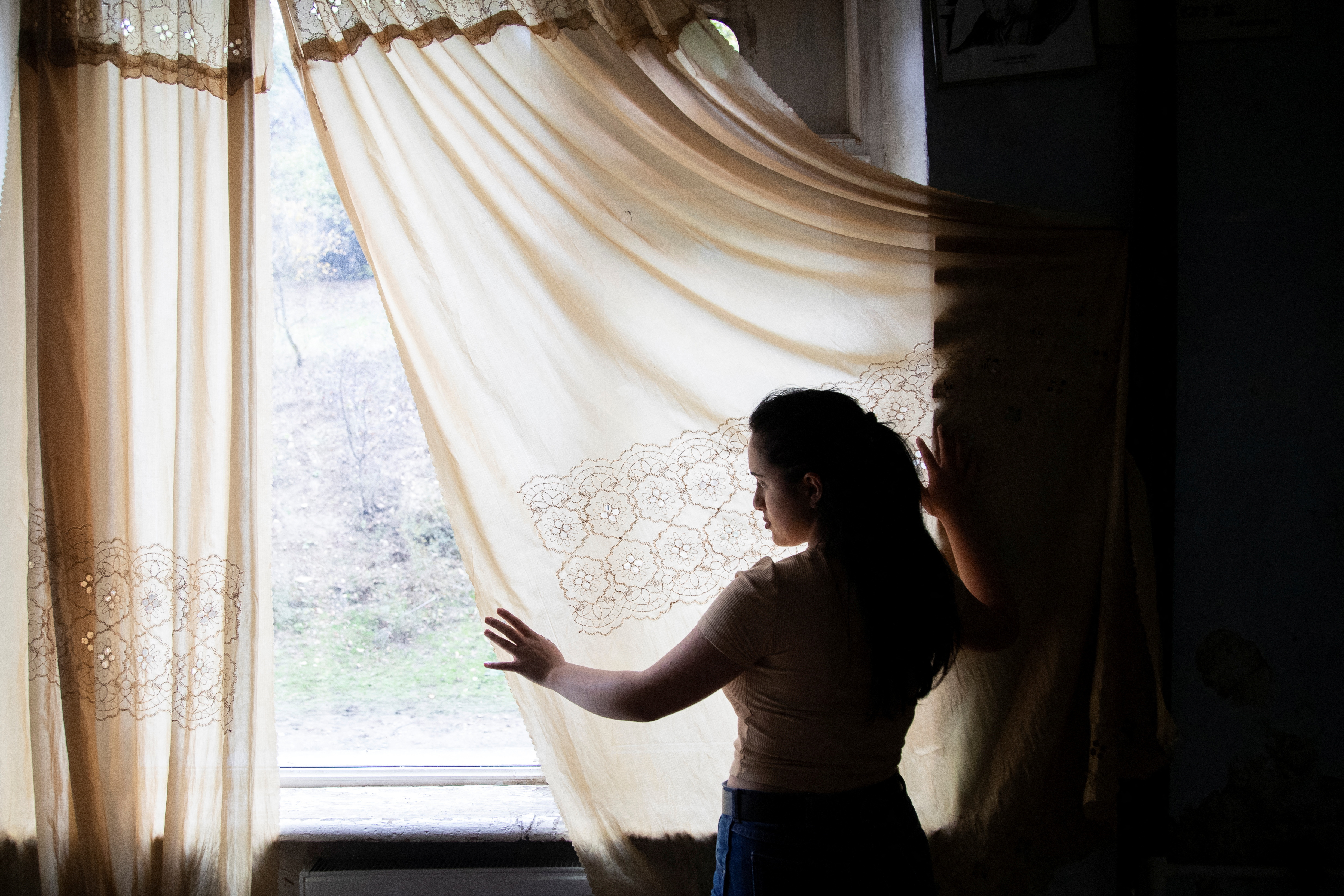
Mari Meladze, 17, opens the curtains at her former school in the village of Odzisi, Georgia, October 4, 2021. “There is nothing for me here in my village, no future,” said Meladze. “We all live near the occupied borderline, there is nothing going on here for kids my age. I want to be somebody, work, study. But I have to get out from here to be able to pursue my dreams. There were a couple of kidnappings near the house where my relatives live. Their house is divided in half by the occupation, but in reality no one really knows where the border is. I want live somewhere else.” REUTERS/Daro Sulakauri

Ramaz Begheluri, 35, who says he has been kidnapped several times by Russian-backed separatists, and his mother Nona Behgeluri, 53, pose for a picture at their home, near the border of Georgia’s breakaway region of South Ossetia, in the village of Gugutiantkari, Georgia, May 12, 2021. Ramaz says he suffered health issues after being beaten while he was detained. “The militants have no boundaries, they have a good training in beating people,” he said. “But now my main problem is that I can’t work, I can’t support myself or my mother. I want to die sometimes, I can’t bear to live like this. Why should I ask my mother for money…this is not life. Out of nowhere I am knocked out and have spasms. I get this weird smell in my nose and then start to feel bad, that’s when I know that I have to sit down.” REUTERS/Daro Sulakauri

Data Vanishvili, 84, holds on to a piece of a barbed-wire fence at the de facto border of Georgia’s breakaway region of South Ossetia, photographed from the village of Khurvaleti, Georgia, October 2, 2018. Vanishvili, his wife and their son woke up in 2013 to find a barbed-wire fence had been erected in the night, putting their home on the Ossetian side of the boundary. He became well-known in Georgia for staying put and defiantly speaking out publicly. Despite the risks, he crosses the boundary to get his pension and to buy food. “I voted in Georgia by going over the occupied border line. When I got home, the Russian soldiers came to my house and jailed me in Tskhinvali. I had to pay a fine to get out. I asked the Georgian police and they helped. They paid 2,000 roubles,” said Vanishvili. “Once I shook hands with the president of Ukraine and Georgia over the barbed-wire fence when they paid me a visit from the Georgian-controlled territory. I do not know how the Russians found out, but once that happened, the Russians once again came to my house blackmailing me. I was jailed twice. This is not a life to live. I am confused. I woke up discovering myself not in Georgian-controlled territory, but in the hands of the Russians.” REUTERS/Daro Sulakauri

David Katsarava, the leader of the “anti-occupation” group ‘Power is in Unity’, and his team member Davit Mtvarelishvili, 28, patrol the de facto border of South Ossetia near Karkushaani village, Georgia, August 19, 2022. Katsarava accuses the Georgian government as well as a civilian European Union monitoring mission of not doing enough to resist what he sees as Russian encroachment and illegal detentions. “A woman, Tsisana Khubashvili, was kidnapped in Mikeliani village cemetery, close to the occupied territory, while she was burying her dead brother. The cemetery is a dangerous place to be, no one dares to go near it, and people are afraid,” said Katsarava. REUTERS/Daro Sulakauri

An unidentified soldier emerges from the bushes as they cross the boundary line into Georgian-controlled territory, as activists from the “anti-occupation” group ‘Power is in Unity’ patrol the border, near the breakaway region of South Ossetia, in the village of Atotsi, Georgia, July 7, 2021. After the 2008 Russo-Georgian war, Russia recognised South Ossetia and another breakaway region, Abkhazia, as independent states and garrisoned troops there. Russian forces and the separatists they back have erected barbed wire fences along the Administrative Boundary Line, the de facto limit of South Ossetia. The previously unmarked line between two regions of Georgia feels increasingly like an international border. Villagers say they are frequently detained, accused of straying into South Ossetia, which Georgia and most other nations do not consider to be a separate country. REUTERS/Daro Sulakauri

Mari Meladze, 18, poses near Georgia’s breakaway region of South Ossetia in the village of Odzisi, Georgia, August 19, 2022. On that day, the de facto South Ossetian authorities announced they would reopen the Odzisi checkpoint after three years, for 10 days per month. “My village is so isolated,” Meladze said. “When the checkpoint closed in our village, many were left isolated from their family members. After three years, the checkpoint is open, and locals can relocate between the regions. For relocation locals need a special pass which has an expiration date. After the expiration date, the holder of the pass is not guaranteed to get extension of the pass. This makes it hard for anyone who works in the region or has a small business.” REUTERS/Daro Sulakauri

Grocery store owner Mari Otinashvili, 27, poses for a picture in her home next to sacks of wheat in the Khurvaleti IDP settlement, Georgia, August 21, 2022. “We don’t know what will happen,” she said. “Russia might invade, war can start. We have to be prepared. It is incredibly stressful to live here. A few months ago, the Russians moved the border at night. I was so scared of what was happening, I cried all night.” Otinashvili is originally from Achabeti village, which was completely destroyed when Russia invaded Georgia in 2008 when Otinashvili was 13 years old. She and her family had to flee their home after hiding in the basement during the bombing. Along the way, their car broke down and they had to walk all the way to Gori in Georgia, through a forest. “I remember walking past the body of a Georgian soldier. His body was still warm,” she recalls. REUTERS/Daro Sulakauri

An Ossetian person and a Georgian person pay respects to a deceased relative of theirs, as they have a drink together at a cemetery in the village of Khurvaleti, Georgia, April 29, 2019. After the 2008 Russo-Georgian war, Russia recognised South Ossetia and another breakaway region, Abkhazia, as independent states and garrisoned troops there. Russian forces and the separatists they back have erected barbed wire fences along the Administrative Boundary Line, the de facto limit of South Ossetia. The previously unmarked line between two regions of Georgia feels increasingly like an international border. Barbed wire now runs through gardens in Khurvaleti, and others like it, leaving family members unable to reach relatives on the other side, cut off from their crops and livelihoods. REUTERS/Daro Sulakauri

A young girl sits at a desk during her first day of school in the village of Meghvrekisi, Georgia, September 12, 2018. Meghvrekisi was one of the villages that was heavily bombed during the 2008 Russo-Georgian war, which many villagers had to flee. REUTERS/Daro Sulakauri

A member of the EUMM (European Union Monitoring Mission), an unarmed civilian monitoring mission, observes from afar the “anti-occupation” group ‘Power is in Unity’ patrolling the de facto border with Georgia’s breakaway region of South Ossetia, in the village of Atotsi, Georgia, July 7, 2021. After the 2008 Russo-Georgian war, Russia recognised South Ossetia and another breakaway region, Abkhazia, as independent states and garrisoned troops there. Russian forces and the separatists they back have erected barbed wire fences along the Administrative Boundary Line, the de facto limit of South Ossetia. The previously unmarked line between two regions of Georgia feels increasingly like an international border. Villagers say they are frequently detained, accused of straying into South Ossetia, which Georgia and most other nations do not consider to be a separate country. REUTERS/Daro Sulakauri

Valia Valishvili, 88, the widow of the late Data Vanishvili, who lives on the side of the village controlled by the Russian-backed authorities in Georgia’s de facto breakaway region of South Ossetia, is visited by activist David Katsarava, the leader of the “anti-occupation” group ‘Power is in Unity’, as he and his team bring her wood for the winter, in the village of Khurvaleti, Georgia, September 28, 2021. Data Vanishvili, then in his eighties, became a symbol of this fearful frontier existence after he, his wife and son woke up in 2013 to find a barbed-wire fence had been erected in the night, putting their home on the Ossetian side of the boundary. He became well-known in Georgia for defiantly staying put and speaking out publicly. On his death bed at the age of 88, his final words to his wife were a plea not to abandon their home. “Do not leave the house, do not go anywhere, sit by the stove, the Georgians will help you,” his family recall him saying. He was buried in the breakaway region of South Ossetia. REUTERS/Daro Sulakauri SEARCH “SULAKAURI BORDER” FOR THIS STORY.

Georgian “anti-occupation” activist David Katsarava, the leader of the group ‘Power is in Unity’, and his team patrol an area with a drone, where Katsarava said a local had been kidnapped and later released, near the border of Georgia’s breakaway region of South Ossetia, near Karkushaani village, Georgia, June 15, 2021. Katsarava hands out GPS trackers to shepherds and other residents to locate them rapidly if they run into trouble on the frontier so they can refute claims they have flouted it. He says Georgia has already lost tracts of land beyond the territory it initially lost control of. “The creeping occupation will not stop. It can be stopped only when you resist it and when you are constantly close,” he said. “The Russians must see that we are getting as close as possible to the occupation line.” REUTERS/Daro Sulakauri

Shepherd Jumber Psitidze, 64, wears an ‘SOS watch’ GPS tracker, as he poses for a photograph in the village of Akhalubani, Georgia, July 12, 2021. Psitidze, who lives close to the de facto border of Georgia’s breakaway region of South Ossetia, was given the tracker by Georgian “anti-occupation” activist David Katsarava, the leader of the group ‘Power is in Unity’. The GPS trackers handed out to residents have an ‘SOS’ button that they can push to prove their location when they are seized. Katsarava believes their activism has helped reduce the number of border kidnappings by 30 to 40 percent. “I feel protected wearing this watch,” Psitidze said. “Whoever has these watches, there was not one case of kidnapping. As if the Russians know that we are wearing it. I know that they know, they are not stupid.” REUTERS/Daro Sulakauri

School security officer Maia Otinashvili, 41, poses for a picture at her home in the village of Khurvaleti, Georgia, July 9, 2021. Otinashvili says she was walking near Khurvaleti when Russia-backed militants kidnapped her in 2018, pulling her over a barbed-wire fence and into Russia-controlled territory in South Ossetia, where they imprisoned her. She was then accused of crossing the boundary illegally. She denied the accusation but was sentenced that year by a South Ossetian court to eight months in jail. She was freed after 11 days following an outcry in Georgia. “They knocked me to the ground and hit me in the back,” Otinashvili said. REUTERS/Daro Sulakauri

Tiniko Mamagulashvili, 34, looks out of the window of her family home in the village of Dvani, Georgia, November 14, 2021. In the years since the 2008 Russo-Georgian war, Russian forces and the separatists they back have erected barbed wire fences along the Administrative Boundary Line, the de facto limit of South Ossetia. The previously unmarked line between two regions of Georgia feels increasingly like an international border. In Dvani, farming families fret about the dividing line that in one place passes directly through Mamagulashvili’s family home. Mamagulashvili says her husband likes to joke that he sleeps in Georgia with his feet in Russia. But the family is worried, she says. “If the occupation continues, what will happen to our house and our land? It is split in two and our main harvest and water is on the side of the occupation line. It is frustrating and scary to think about.” REUTERS/Daro Sulakauri    

Categories
Audio Sources - Full Text Articles

French lawmakers debate giving constitutional protection to abortion rights

2022-11-24T12:22:47Z

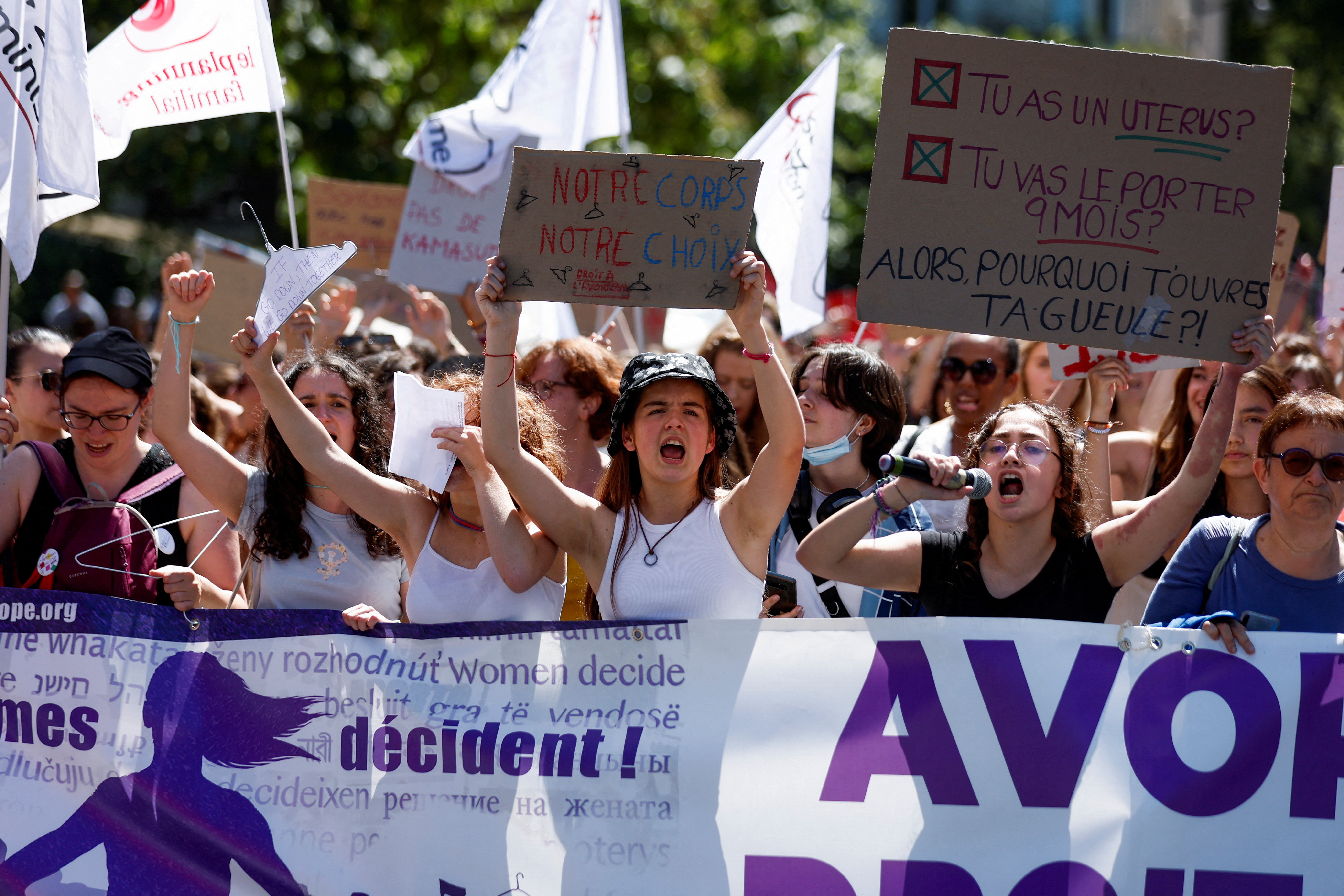
Protesters gather for a rally in support of abortion rights following the U.S. Supreme Court overturning Roe v. Wade, in Paris, France, July 2, 2022. REUTERS/Benoit Tessier/File Photo

French lawmakers debated on Thursday whether to enshrine abortion rights in the constitution, with MPs on the left and centre saying the U.S. Supreme Court’s overturning of a landmark ruling in June showed the need for new steps.

Women have had a legal right to abortion in France since a law adopted in 1974, and updated several times since, with the latest modification in February extending access to abortion to 14 weeks of pregnancy from 12.

Adding it to the constitution would further protect this right and make it harder to overturn in France, said La France Insoumise (France Unbowed) lawmaker Mathilde Panot.

“It aims to prevent any regression,” Panot told parliament. “We don’t want to give any chance to people hostile to abortion and contraception rights.”

Abortion rights are more widely accepted in France than in the United States or some fellow EU countries. Some 83% of French people are happy with the fact that abortion is legal, an Ifop poll showed in July, 16 percentage points more than about 30 years ago.

The same poll showed 81% back adding the right to abortion in the constitution.

Lawmakers will vote on Thursday on a proposal put forward by the left, and next week by President Emmanuel Macron’s Renaissance party, both of which would give a broad constitutional guarantee to abortion rights.

Yet the conservatives and far right have been largely opposed to it and many would only consider giving more weight to the 1974 law.

“Stop playing with fears of a reversal of abortion rights which you know are impossible in France,” hard-right lawmaker Emmanuelle Menard said.

But even if the lower house of parliament, where Renaissance is the biggest party, does vote one of the two proposals this week or next, the path to enshrining the right to abortion in the constitution will not be easy.

In order to change the constitution, a bill must be voted on in the same terms by the lower house and the Senate.

The latter is controlled by the right and last month rejected a cross-party bill aimed at constitutionalising the right to abortion and contraception.

Categories
Audio Sources - Full Text Articles

Prompted by the Rollback of U.S. Abortion Rights, France Debates Enshrining Abortion Law in Constitution

PARIS — Lawmakers in France’s lower house of parliament began debating a proposal Thursday to enshrine abortion rights in the country’s constitution, the first step in a lengthy and uncertain legislative battle prompted by the rollback of abortion rights in the United States.

Authors of the proposal, from a left-wing coalition, argued it was aimed at “protecting and guaranteeing the fundamental right to voluntary termination of pregnancy and to contraception by inscribing it into our Constitution.”

Abortion in France was decriminalized under a key 1975 law, but there is nothing in the constitution that would guarantee abortion rights.

[time-brightcove not-tgx=”true”]

Mathilde Panot, head of hard-left France Unbowed group at the National Assembly and co-signatory of the proposal, said “our intent is clear: we want not to leave any chance to people opposed to the right to abortion and to contraception.”

French Justice Minister Eric Dupond-Moretti said the centrist government supports the initiative.

Read More: The Abortion-Rights Messages That Resonate With Men

He referred to the U.S. Supreme Court’s decision in June, which eliminated the federal constitutional right to abortion and left the decision to the states.

“The right to abortion we thought was acquired for 50 years (in the U.S.) was in reality not at all acquired,” he said.

Another bill to inscribe the right to abortion into the constitution, initiated by a group of lawmakers from French President Emmanuel Macron’s centrist alliance, Renaissance, will also be debated Monday in the lower house, the National Assembly. That text does not include a mention to the right to contraception.

Both proposals are only the first step of a lengthy and uncertain process.

To be approved, any measure must be first approved by majorities in the National Assembly and the upper house, the Senate, and then in a nationwide referendum.

The Senate, where the conservative party, The Republicans, has a majority, rejected a similar proposal in September. The Republicans senators argued the measure is not needed since the right to abortion is not under threat in France.

Dupond-Moretti said he was “hopeful” that some senators could change their mind and form a majority in favor.

He and other proponents of constitutional change argue that French lawmakers should not take any chances on fundamental rights, since it is easier to change the law than the constitution.

Categories
Audio Sources - Full Text Articles

Team USA Looks to Make History Again in World Cup Match Against England

The first time the U.S. men’s national team faced England in a World Cup, in 1950, a miracle occurred. The hastily-assembled U.S. squad—which was partly made up of amateur players who held day jobs including as teachers, dishwashers, and mail carriers—knew that England had the stronger side. “We certainly didn’t entertain any ideas we were gonna beat ’em,” the former U.S. defender Harry Keough reflected decades later. “But we figured we could give them a battle for it.”

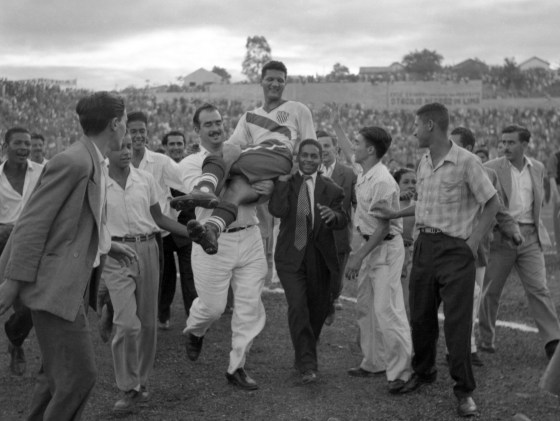
That battle came to a head at the 37th minute of the first half, when the Haitian-born U.S. forward Joe Gaetjens managed to graze the ball just enough to sink it into the English goal. England never recovered, and the match ended in a 1-0 U.S. victory. So unthinkable was the result that many news outlets, including the New York Times, presumed that the reported score was a typo.

[time-brightcove not-tgx=”true”]

Joe Gaetjens
APU.S. forward Joe Gaetjens is carried off by cheering fans after Team USA beat England 1-0 in a World Cup soccer match in Belo Horizonte, Brazil, June 28, 1950.

The last surviving member of the U.S. squad died in 2018, and few people alive today will remember that match. Still, its legacy looms large over the soccer rivalry between the U.S. and England, whose teams are slated to go head-to-head on Friday in Doha’s Al Bayt stadium. The last time these two nations faced each other in a men’s World Cup was more than 10 years ago, in South Africa. It ended in a 1-1 draw. Though England is the favorite to win this match in Qatar, American fans are hopeful that their team can once again pull off a miracle.

Read More: Meet the 22-Year-Old Star Who Could Make Team USA a World Cup Contender

More recent history doesn’t bode as favorably for the U.S. The team qualified for this World Cup after failing to do so four years ago in what was seen as a major setback in the effort to elevate the world’s most popular game on the American sports stage—the success of the U.S. women’s national team notwithstanding. Against England, in particular, the U.S. men’s team has lost the vast majority of its matches—all, in fact, but the 1950 World Cup group stage victory in Brazil and a 2-0 win at the 1993 U.S. Cup. Team USA is markedly younger and less experienced than the Three Lions (as the English squad is known), who arrived in Qatar off the back of formidable performances during last year’s UEFA European Football Championship as well as the 2018 World Cup.

But if the past is any guide, neither side should make any assumptions about how Friday’s game will go. England coach Gareth Southgate cautioned against complacency in a post-match news conference on Monday, noting that the U.S. team will “be coming for us full throttle.” And U.S. midfielder Christian Pulisic warned as much in the days leading up to the tournament. “We don’t look at the odds and we’re not at the World Cup just to make up the numbers,” he told Britain’s Daily Mirror. “We go, we give it everything in every game we play, we make America proud. Wherever that takes us we have to wait and see.”

Here’s everything you need to know ahead of match day.

When is the game and how can you watch in the U.S.?

Kickoff is scheduled for 2:00 p.m. Eastern time, Friday, Nov. 25. Viewers in the U.S. can watch the match live on FOX or via a variety of streaming options.

How have both teams fared in the tournament so far?

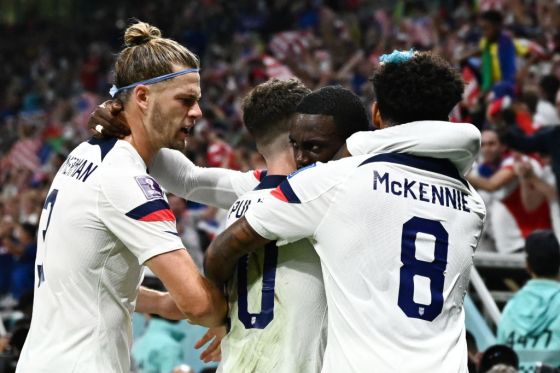
Both squads will enter Al Bayt stadium undefeated on Friday. England kicked off its 2022 World Cup on Monday with an emphatic 6-2 victory over Iran. Although the U.S. secured an early lead against Wales later that day with a stunning goal from forward Timothy Weah, the match ended in a draw after a penalty scored by Welsh captain Gareth Bale.

FBL-WC-2022-MATCH04-USA-WAL
Jewel Samad—AFP/Getty ImagesForward Timothy Weah embraces teammates after scoring the U.S.’s first goal during the Qatar 2022 World Cup in the match against Wales at the Ahmad Bin Ali Stadium, Nov. 21, 2022.

Read More: Team USA Held to 1-1 Tie Against Wales in World Cup Opening Game

In terms of points, which will ultimately determine which two teams in Group B will advance to the knockout stage, England tops the leaderboard with three points, followed by the U.S. and Wales with one point apiece, and Iran at zero. Assuming a win against Iran next week, which is poised to be the U.S.’s easiest (though by no means guaranteed) match in this stage of the tournament, victory or a draw against England on Friday would put the U.S. in a strong position to make it to the round of 16. If Team USA advances, it would face one of the top two teams from Group A—which includes the Netherlands, Ecuador, Senegal, and host nation Qatar. But a loss to England could put those hopes in the balance.

How much does history inform this matchup?

The U.S. and England have developed a healthy—and, at times, even meme-worthy—soccer rivalry over the years. Although the U.S. players are self-described “underdogs” in this World Cup, American fans know that the team has the capacity to deliver upsets against giants of the sport, having beaten Brazil in the 1998 CONCACAF Gold Cup, Portugal in the 2002 World Cup, and, of course, England in 1950.

When the U.S. defeated the Three Lions in Brazil 72 years ago, the news barely registered at home, according to Geoffrey Douglas, the author of the 1996 book The Game of Their Lives, which chronicled the story of the match and those who participated in it. When the players returned home after being knocked out of the competition, they discovered that “nobody knew anything about it,” Douglas tells TIME, noting that as a sport, soccer “just wasn’t on the radar” in the way that more popular games such as baseball and football were. It wasn’t until decades later—as soccer’s significance grew and as the story of the 1950 World Cup began to be memorialized in popular culture, including in a 2005 film based on Douglas’s book—that Americans started to become more aware of their country’s historic upset.

Read More: Your Complete Guide to the U.S. Men’s National Team at the 2022 World Cup in Qatar

As much as the U.S. squad will feel that it has something to prove, England will equally be eying this match as a crucial one to win in its quest for World Cup glory. After all, the Three Lions have suffered some heartbreaking defeats in their recent international competitions, including their loss to Italy in a penalty shootout during the European Championship final last year and their semifinal defeat at the hands of Croatia during the 2018 World Cup. The pressure to finally ensure that football’s coming home, as goes England fans’ popular rallying cry, a nod to the country’s invention of the sport Americans call soccer, will weigh heavily on Southgate’s team.

What are both teams’ strengths and weaknesses?

England’s squad under manager Southgate has been frequently criticized for being too defensive and overly cautious, a notion Monday’s 6-2 result against Iran may help dispel. The U.S. team is seen as having the reverse problem, lacking a solid defense on its backline.

But the England team is widely regarded as the favorite to win this game, and with good reason. England has seen a resurgence under Southgate, boosted in part by a young yet internationally-tested squad, including a number of rising stars, such as the 21-year-old forward Bukayo Saka.

World Cup 2022 - England - Iran
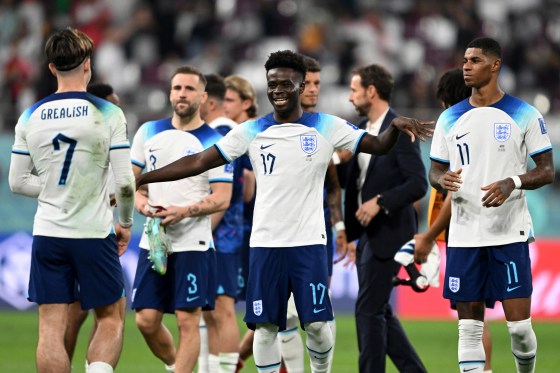
Robert Michael—picture-alliance/dpa/APEngland’s Bukayo Saka cheers after the final whistle, having scored two of the Three Lions’ six goals against Iran. Coach Gareth Southgate walks in the background, at Qatar’s Chalifa International Stadium, Nov. 21, 2022.

Younger players notwithstanding, England is fielding one of the most internationally-seasoned squads in this tournament—its captain Harry Kane was the top goalscorer in the 2018 World Cup. The U.S., on the other hand, claims one of the youngest teams, second only to Ghana, with an average age of 25. While the American players’ youth could be seen as an asset when it comes to the energy and intensity they can bring to matches, it can also be seen as a disadvantage: Team USA’s absence from the 2018 competition means that the squad has almost no World Cup experience, save for 2014 veteran DeAndre Yedlin.

Read more: Tyler Adams Is the World Cup Captain Team USA Desperately Needs

Nevertheless, players in the current U.S. squad have been sourced from some of the world’s top professional teams, including those competing in the toughest leagues in Europe. “We’ve never had a team that has had so many players who have been playing at such a high level on their club teams,” says Djorn Buchholz, the executive director of the National Soccer Hall of Fame in Texas, “and not just sitting on the bench, but starting.”

How important is this World Cup for the U.S.?

While Team USA is preoccupied with the World Cup at hand, it will undoubtedly also be thinking ahead to 2026, when the U.S. is slated to co-host the competition with neighbors Mexico and Canada.

“As long as they can stay healthy and keep playing at high levels, you’re going to see them in 2026 having had a World Cup under their belts,” says Buchholz. “And I think that’s going to be incredibly advantageous to us in 2026.”

An older, more experienced U.S. team bolstered by home turf advantage could emerge as a serious contender in four years’ time—one with the potential to take on not just England, but any national team. That, at least, is what fans such as Buchholz are hoping for. After all, miracles can happen.

Categories
Audio Sources - Full Text Articles

Turkish strikes hit oil installations in northern Syria, sources say

2022-11-24T11:50:06Z

Turkish drones are targeting key oil installations run by the Kurdish-led Syrian Democratic Forces (SDF) in northeast Syria, three local sources said, in air strikes which drew strong condemnation from the United States overnight.

The SDF said dozens of people including 11 of its fighters were killed in the strikes, which mark the first time Turkey has systematically targeted oil fields in the SDF-controlled region.

Turkey’s warplanes began conducting air strikes on Syrian Kurdish YPG militia bases in northern Syria at the weekend, prompting retaliatory strikes along the Syrian border.

The SDF, a U.S. partner in the fight against Islamic State, said Turkey had struck deeper into Syrian territory than in its previous operations. It said in a statement the strikes had killed 15 civilians and 25 Syrian government soldiers.

Turkish President Tayyip Erdogan has promised to expand the operation and said Ankara would launch a land incursion at a time it judges convenient.

“The enemy aims to inflict big blows on our defence forces, especially our commanders and command centres … In this way it prepares the ground for a ground offensive,” said the SDF statement.

Ankara has already carried out three land incursions into Syria targeting Kurdish militias since 2016.

Turkey launched the air operations in retaliation for a deadly Nov. 13 Istanbul bomb attack that it blamed on the YPG militia, which spearheads the SDF. Ankara views the YPG as an extension of the outlawed Kurdistan Workers Party (PKK).

Nobody has claimed responsibility and the PKK and YPG have denied involvement.

The Turkish drones hit oil installations late on Wednesday near the Syrian town of Qamishli, as well as the oil-rich area Rumeilan, near which U.S. troops are located, according to three sources in the Syrian cities of Qamishli and Hasaka.

Turkey has also escalated drone strikes in the heart of urban areas, targeting senior YPG military officials, said the sources, who are in touch with SDF figures.

The Pentagon said the Turkish air strikes threatened the safety of U.S. military personnel and that the escalating situation jeopardized years of progress against Islamic State militants in the area.

The United States has roughly 900 soldiers in Syria, mainly working with the SDF in the northeast.

Asked about the Pentagon comment, a Turkish defence ministry source said Ankara “selects targets sensitively” and was in close contact with U.S. counterparts. The source said oil fields were not among Ankara’s targets.

The PKK is considered a terrorist organisation by Turkey, the United States and the European Union. U.S. support for the SDF has for years been a major source of tension in ties with its NATO ally Turkey.

Related Galleries:

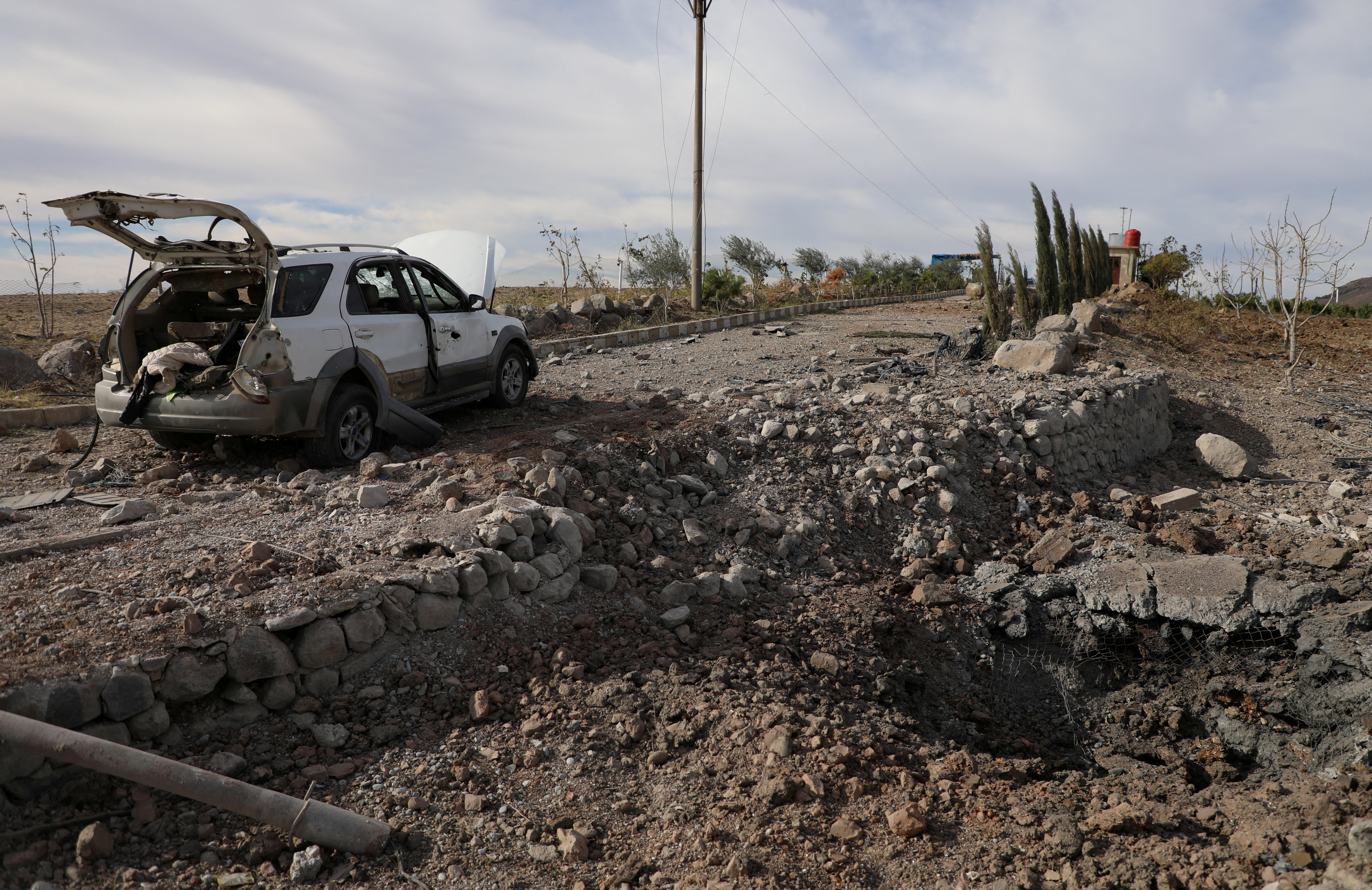
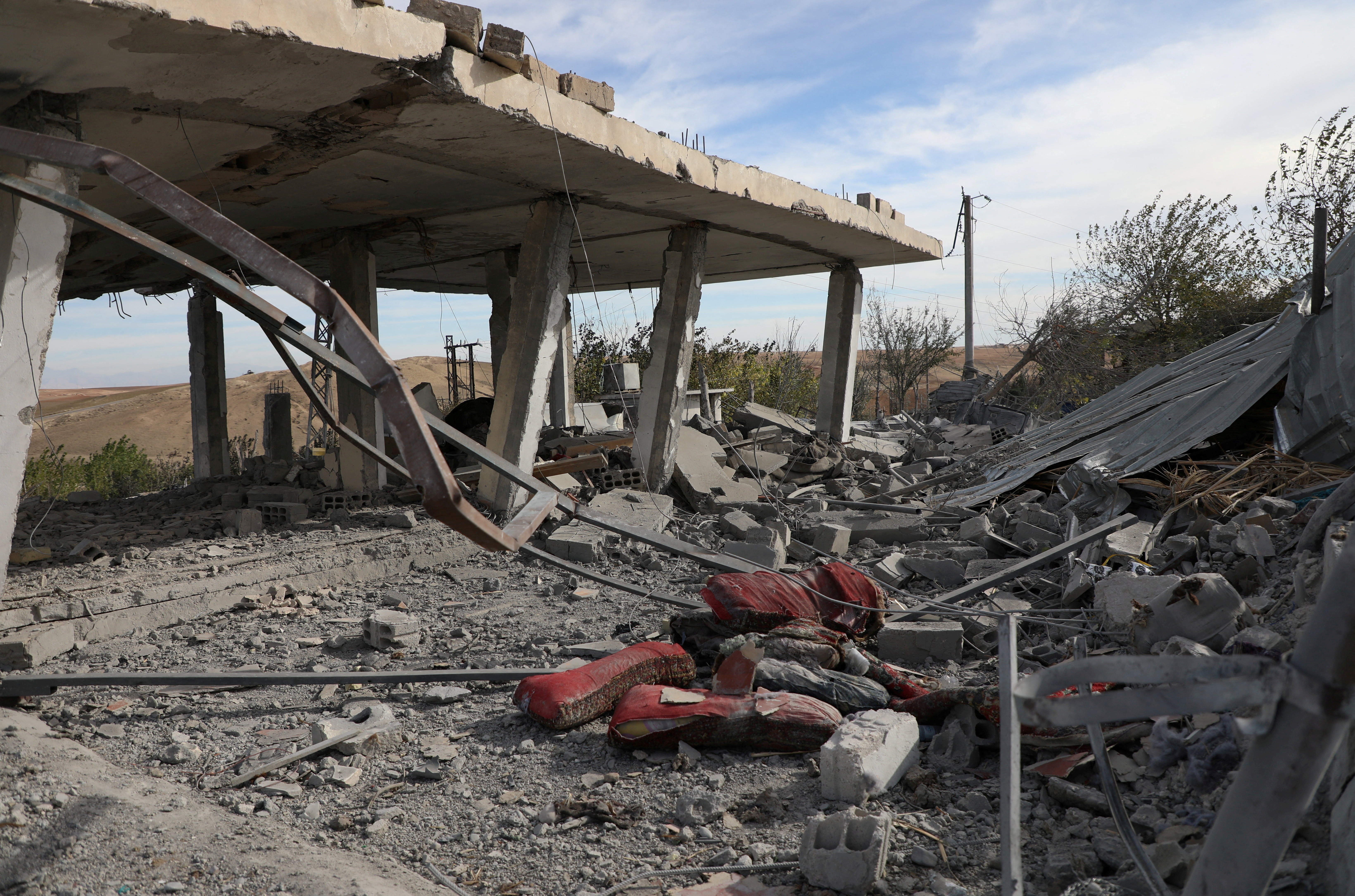
A view shows the aftermath after Turkish warplanes carried out air strikes, in Derik countryside, Syria November 21, 2022. REUTERS/Orhan Qereman

A view shows the aftermath after Turkish warplanes carried out air strikes, in Derik countryside, Syria November 21, 2022. REUTERS/Orhan Qereman N
Categories
Audio Sources - Full Text Articles

Happy Thanksgiving!

Happy-Thanksgiving-540x327

The Washington Free Beacon staff wishes its readers a happy Thanksgiving.

The post Happy Thanksgiving! appeared first on Washington Free Beacon.

Categories
Audio Sources - Full Text Articles

EXPLAINED: What Declaring Russia “State Sponsor of Terrorism” Actually Means

000_32ln4ru.jpg

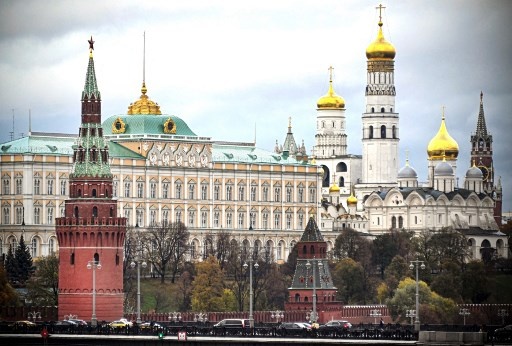
The European Parliament took the very dramatic-sounding step on Wednesday, Nov. 23, of declaring Russia a “state sponsor of terrorism”, accusing its forces of carrying out atrocities during its war on Ukraine.

“We called a spade a spade. Russia is not only a state sponsoring terrorism, but the state, which is using means of terrorism,” said Lithuanian MEP Andrius Kubilius, who spearheaded the push for the resolution.

“The recognition of this fact by the European Parliament sends a clear political signal. Europe, Europeans do not want to remain passive, when their big neighbour violates all humanitarian and international standards.”

That sounds like a big move?

Symbolically yes, but in reality, no.

Oh, so what does it actually mean?

Despite the resolution being adopted by the European Parliament with 494 votes in favor, 58 against and 44 abstentions, the European Union as a bloc has no official list of terrorist states and no legal definition of the consequences such a designation would have.

Wednesday’s declaration is basically a diplomatic international scolding without any legal consequences.

Who can declare someone a state sponsor of terrorism?

Individual countries can designate other countries as “terrorist states” and some including Estonia, Latvia, Lithuania and Poland, have already added Russia to their lists.

While the exact details will vary slightly from country to country, this designation usually means the cutting of trade and diplomatic ties with the target country, imposing sanctions and international isolation.

The consequences of the designation are directly tied to the financial and political clout of the country imposing it – not being allowed to trade with a global superpower is far more damaging than not being allowed to trade with a smaller country, for example.

It’s for this reason that the U.S. list of terrorist countries is the one that currently matters the most.

Will the U.S. declare Russia a state sponsor of terrorism?

The U.S. has so far resisted making the move which would trigger more sanctions and would remove the state immunity of Moscow’s officials.

At the moment only four countries – North Korea, Iran, Cuba and Syria – are on the U.S. State Department’s list.

So will anything happen because of the European Parliament’s decision?

 The MEPs of the European Parliament have urged the governments of the 27-nation EU to follow their lead, but right now it’s unclear if any more will.

They also called on Brussels to put in place the “legal framework” to allow a list of terrorist states so that Russia could be added, though this would likely take some time to implement.

The EU has already imposed eight rounds of unprecedented sanctions targeting Russia’s key oil exports and top officials since President Putin ordered his troops to attack in February.

European diplomats say work is under way on preparing a new package of sanctions after Moscow unleashed a ferocious missile and drone blitz against Ukraine’s energy infrastructure on Oct. 10 following losses on the battlefield.

What has Ukraine said?

Ukrainian Foreign Minister Dmytro Kuleba said the latest Russian attack on cities across Ukraine was a response to the decision by the European Parliament.

President Zelensky hailed the vote, saying on Wednesday evening: “Russia must be isolated at all levels and held accountable in order to end its long-standing policy of terrorism in Ukraine and across the globe. ”

What has Russia said?

Russian Foreign Ministry spokeswoman Maria Zakharova, wrote on Telegram: “I propose designating the European Parliament as a sponsor of idiocy.”

The post EXPLAINED: What Declaring Russia “State Sponsor of Terrorism” Actually Means appeared first on Kyiv Post.

Categories
Audio Sources - Full Text Articles

Weapons industry booms as Eastern Europe arms Ukraine

2022-11-24T11:10:53Z

Eastern Europe’s arms industry is churning out guns, artillery shells and other military supplies at a pace not seen since the Cold War as governments in the region lead efforts to aid Ukraine in its fight against Russia.

Allies have been supplying Kyiv with weapons and military equipment since Russia invaded its neighbour on Feb. 24, depleting their own inventories along the way.

The United States and Britain committed the most direct military aid to Ukraine between Jan. 24 and Oct. 3, a Kiel Institute for the World Economy tracker shows, with Poland in third place and the Czech Republic ninth.

Still wary of Russia, their Soviet-era master, some former Warsaw Pact countries see helping Ukraine as a matter of regional security.

But nearly a dozen government and company officials and analysts who spoke to Reuters said the conflict also presented new opportunities for the region’s arms industry.

“Taking into account the realities of the ongoing war in Ukraine and the visible attitude of many countries aimed at increased spending in the field of defence budgets, there is a real chance to enter new markets and increase export revenues in the coming years,” said Sebastian Chwalek, CEO of Poland’s PGZ.

State-owned PGZ controls more than 50 companies making weapons and ammunition – from armoured transporters to unmanned air systems – and holds stakes in dozens more.

It now plans to invest up to 8 billion zlotys ($1.8 billion)over the next decade, more than double its pre-war target, Chwalek told Reuters. That includes new facilities located further from the border with Russia’s ally Belarus for security reasons, he said.

Other manufacturers too are increasing production capacity and racing to hire workers, companies and government officials from Poland, Slovakia and the Czech Republic said.

Immediately after Russia’s attack some eastern European militaries and manufacturers began emptying their warehouses of Soviet-era weapons and ammunition that Ukrainians were familiar with, as Kyiv waited for NATO-standard equipment from the West.

As those stocks have dwindled, arms makers have cranked up production of both older and modern equipment to keep supplies flowing. The stream of weapons has helped Ukraine push back Russian forces and reclaim swathes of territory.

Chwalek said PGZ would now produce 1,000 portable Piorun manpad air-defence systems in 2023 – not all for Ukraine -compared to 600 in 2022 and 300 to 350 in previous years.

The company, which he said has also delivered artillery and mortar systems, howitzers, bulletproof vests, small arms and ammunition to Ukraine, is likely to surpass a pre-war 2022 revenue target of 6.74 billion zlotys.

Companies and officials who spoke to Reuters declined to give specific details of military supplies to Ukraine, and some did not want to be identified, citing security and commercial sensitivities.

Eastern Europe’s arms industry dates back to the 19th Century, when Czech Emil Skoda began manufacturing weapons for the Austro-Hungarian Empire.

Under Communism, huge factories in Czechoslovakia, the Warsaw Pact’s second-largest weapons producer, Poland and elsewhere in the region kept people employed, turning out weapons for Cold War conflicts Moscow stoked around the world.

“The Czech Republic was one of the powerhouses of weapons exporters and we have the personnel, material base and production lines needed to increase capacity,” its NATO Ambassador Jakub Landovsky told Reuters.

“This is a great chance for the Czechs to increase what we need after giving the Ukrainians the old Soviet-era stocks. This can show other countries we can be a reliable partner in the arms industry.”

The 1991 collapse of the Soviet Union and NATO’s expansion into the region pushed companies to modernise, but “they can still quickly produce things like ammunition that fits the Soviet systems”, said Siemon Wezeman, a researcher at the Stockholm International Peace Research Institute.

Deliveries to Ukraine have included artillery rounds of “Eastern” calibres, such as 152mm howitzer rounds and 122mm rockets not produced by Western companies, officials and companies said.

They said Ukraine had acquired weapons and equipment via donations from governments and direct commercial contracts between Kyiv and the manufacturers.

“Eastern European countries support Ukraine substantially,” Christoph Trebesch, a professor at the Kiel Institute, said. “At the same time it’s an opportunity for them to build up their military production industry.”

Ukraine has received nearly 50 billion crowns ($2.1 billion) of weapons and equipment from Czech companies, about 95% of which were commercial deliveries, Czech Deputy Defence Minister Tomas Kopecny told Reuters. Czech arms exports this year will be the highest since 1989, he said, with many companies in the sector adding jobs and capacity.

“For the Czech defence industry, the conflict in Ukraine, and the assistance it provides is clearly a boost that we have not seen in the last 30 years,” Kopecny said.

David Hac, chief executive of Czech STV Group, outlined to Reuters plans to add new production lines for small-calibre ammunition and said it is considering expanding its large-calibre capability. In a tight labour market, the company is trying to poach workers from a slowing car industry, he said.

Defence sales helped the Czechoslovak Group, which owns companies including Excalibur Army, Tatra Trucks and Tatra Defence, nearly double its first-half revenues from a year earlier, to 13.8 billion crowns.

The company is increasing production of both 155mm NATO and 152mm Eastern calibre rounds and refurbishing infantry fighting vehicles and Soviet-era T-72 tanks, spokesman Andrej Cirtek told Reuters.

He said supplying Ukraine was more than just good business.

“After the Russian aggression started, our deliveries for Ukrainian army multiplied,” Cirtek said.

“The majority of the Czech population still remember times of a Russian occupation of our country before 1990 and we don´t want to have Russian troops closer to our borders.”

($1 = 4.5165 zlotys)

($1 = 23.3850 Czech crowns)

Related Galleries:

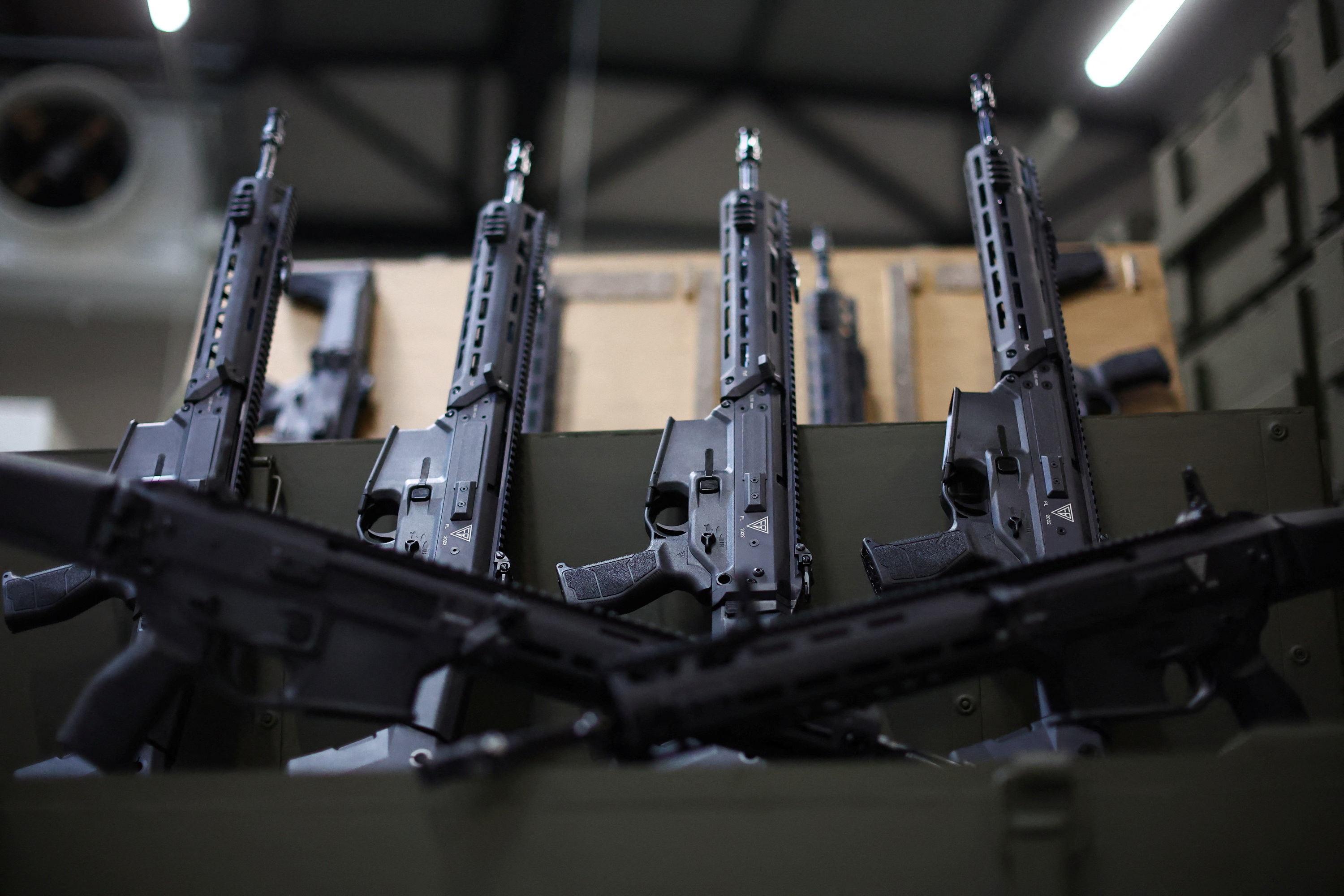
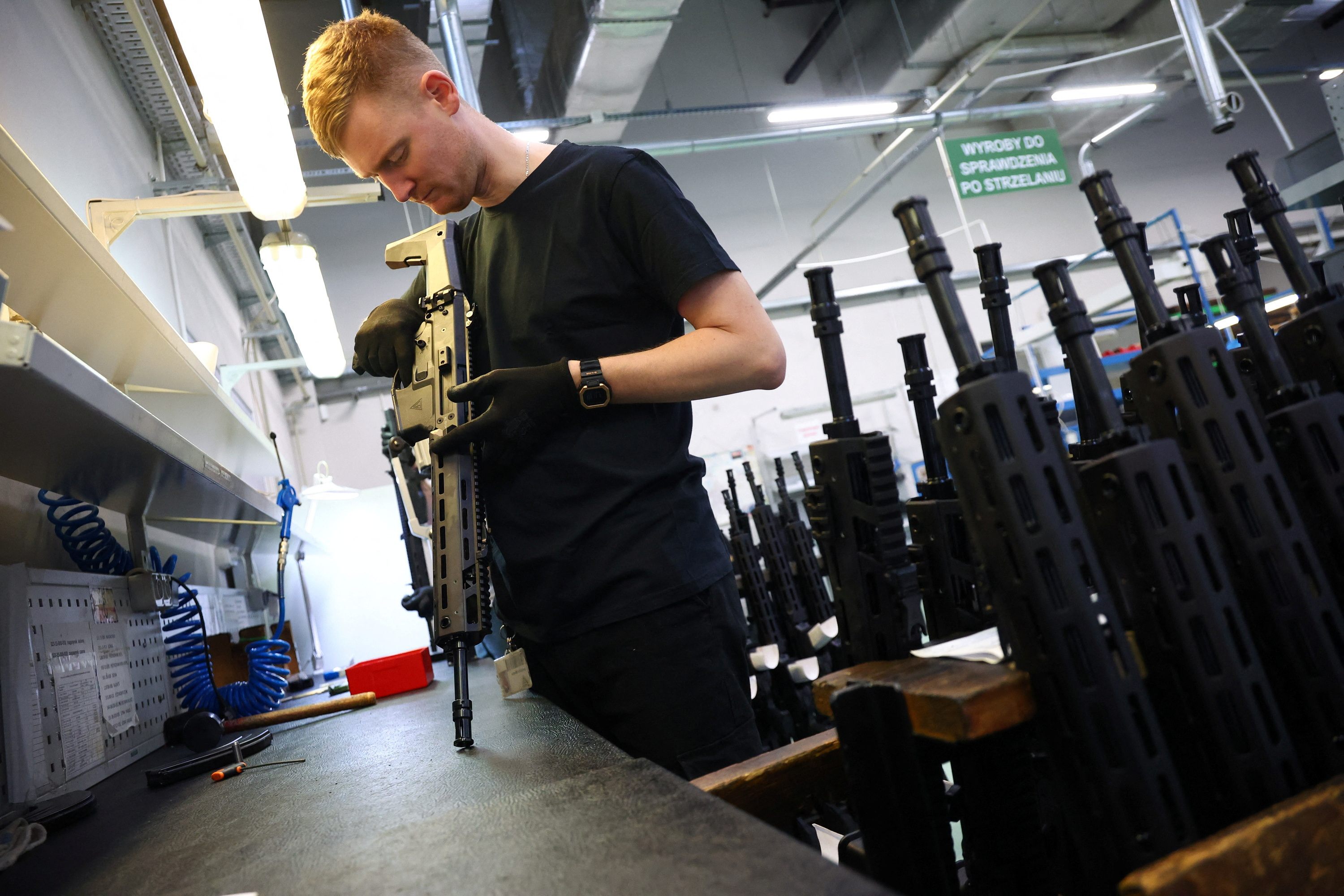
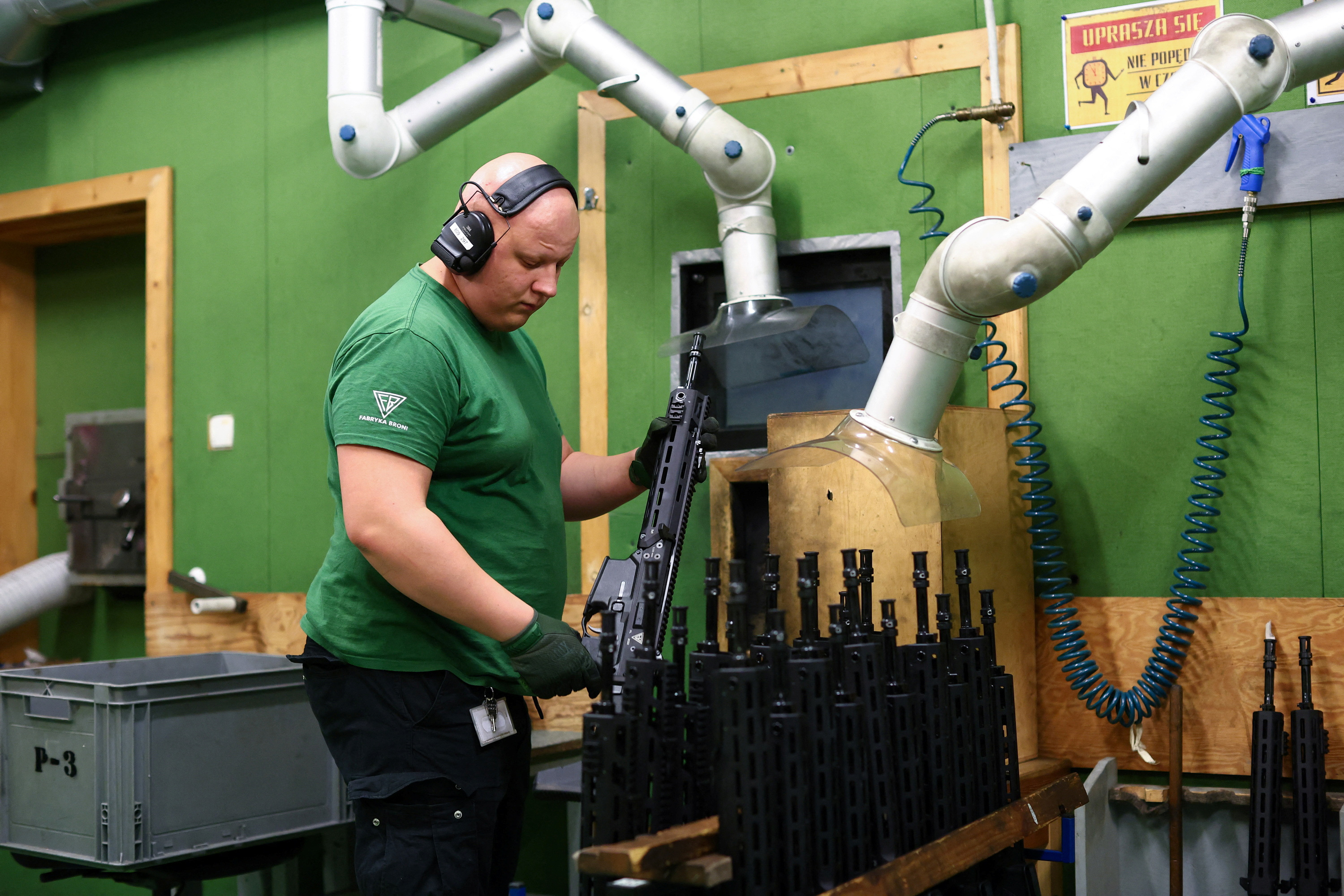
GROT C16 FB-M1, modular assault rifles system is seen at PGZ (Polska Grupa Zbrojna) arms factory Fabryka Broni Lucznikin Radom Poland, November 7, 2022. REUTERS/Kacper Pempel

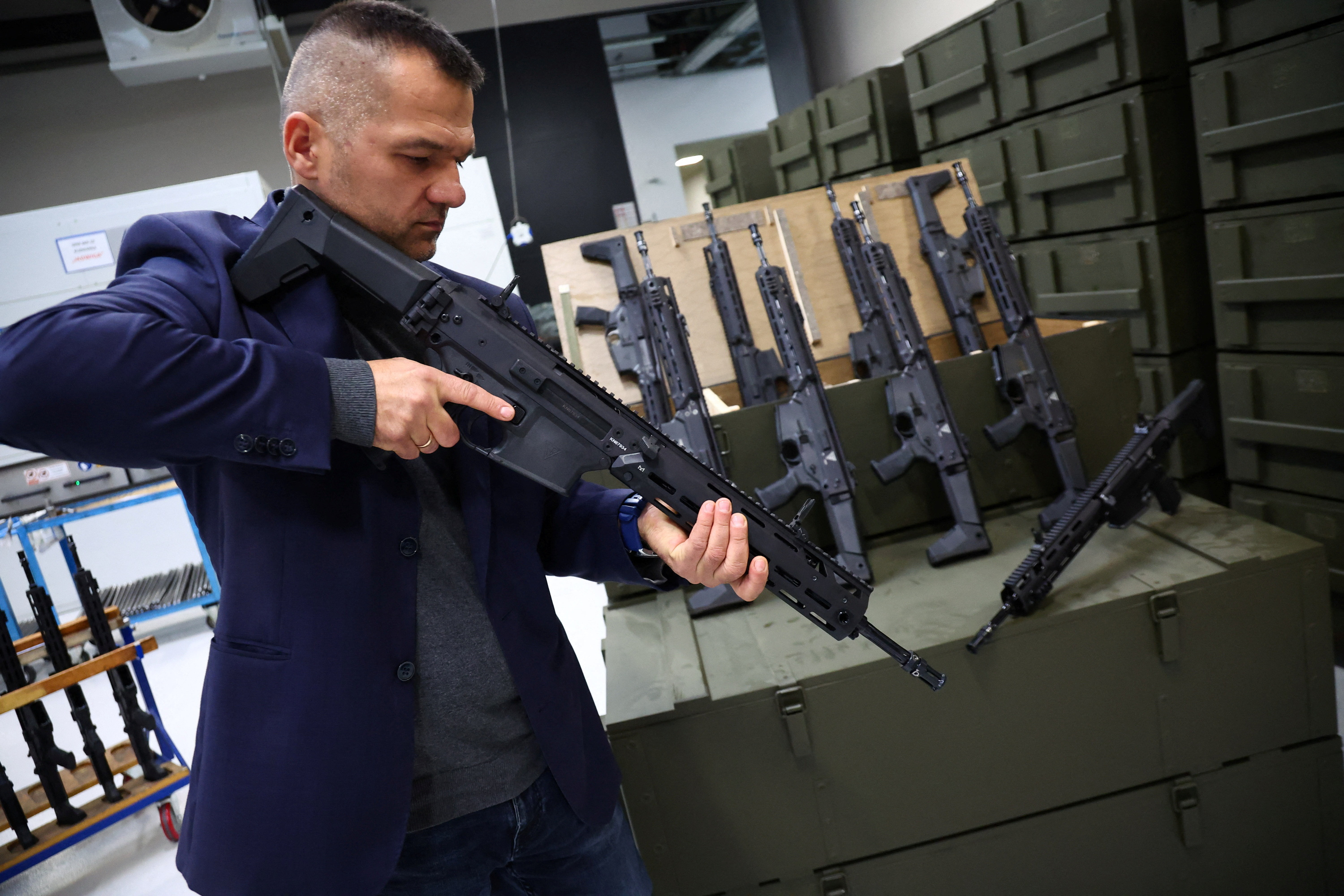
Michal Kowalczyk, 42 director of production, presents GROT C16 FB-M1, modular assault rifle system at PGZ (Polska Grupa Zbrojna) arms factory Fabryka Broni Lucznik in Radom, Poland November 7, 2022. REUTERS/Kacper Pempel

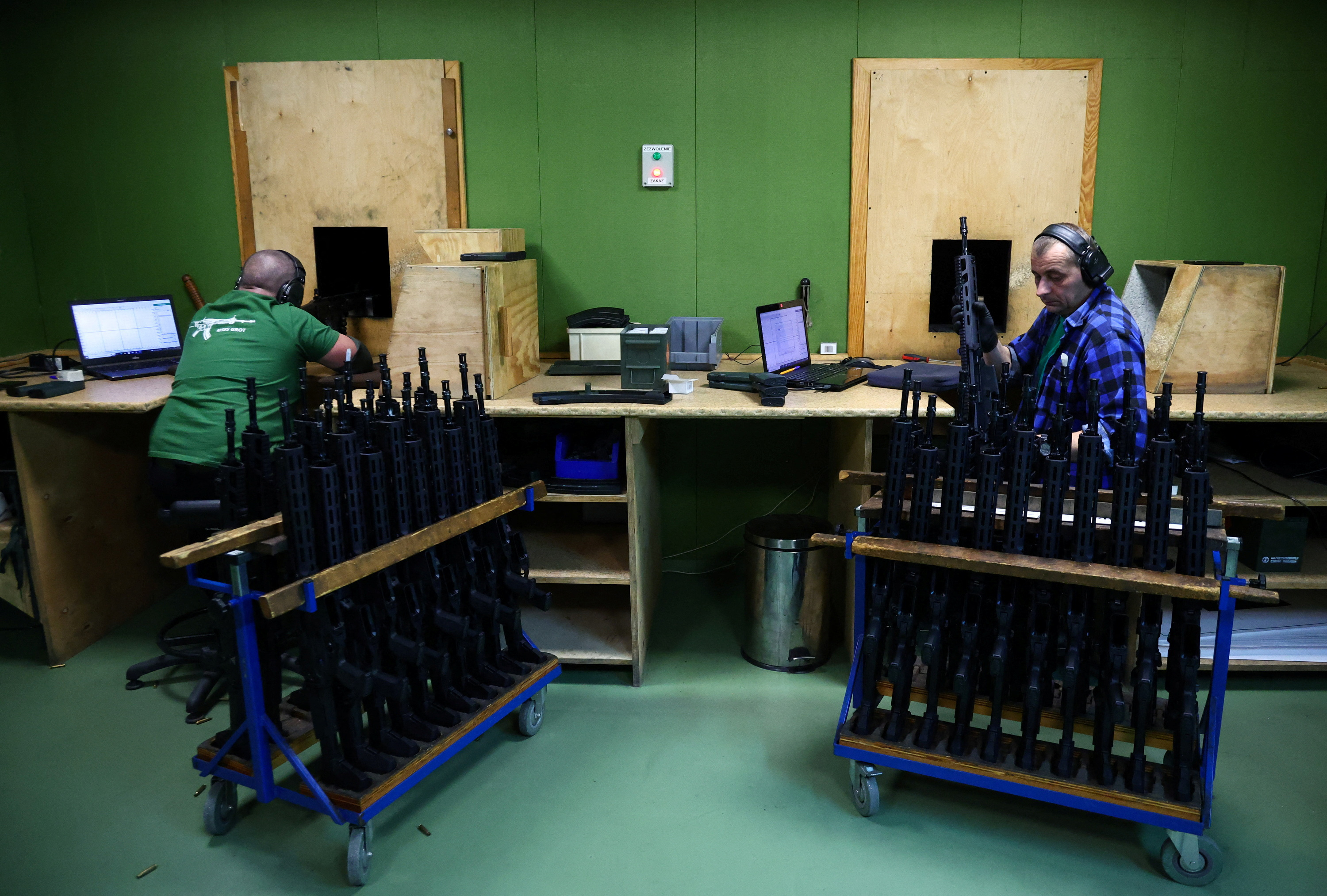
Workers check the quality of firing of GROT C16 FB-M1, modular assault rifle system at PGZ (Polska Grupa Zbrojna) arms factory Fabryka Broni Lucznik in Radom Poland, November 7, 2022. REUTERS/Kacper Pempel

A worker checks the quality of firing of GROT C16 FB-M1, modular assault rifle system at PGZ (Polska Grupa Zbrojna) arms factory Fabryka Broni Lucznik in Radom Poland, November 7, 2022. REUTERS/Kacper Pempel

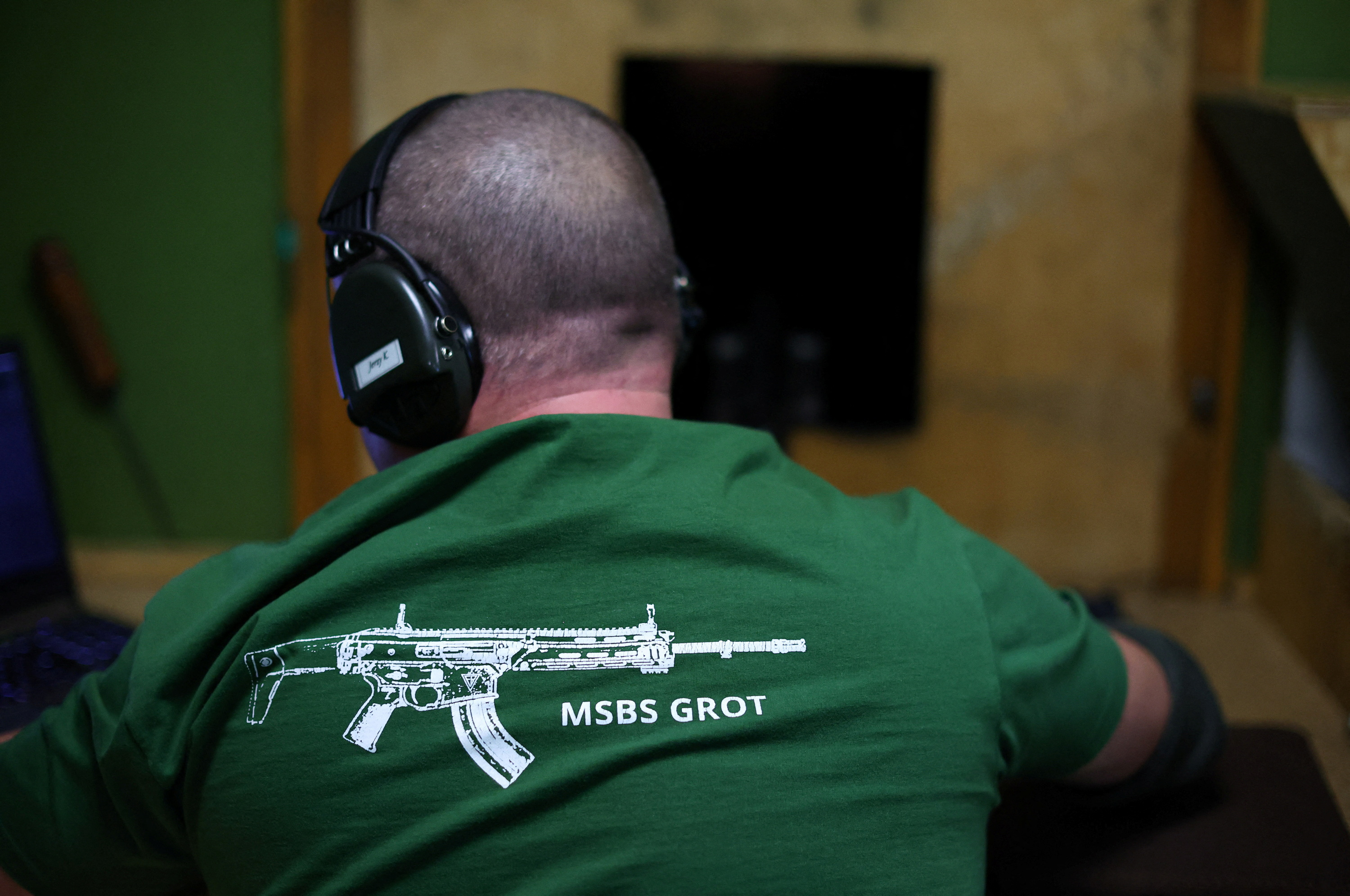
A worker checks the quality of GROT C16 FB-M1, modular assault rifle system at PGZ (Polska Grupa Zbrojna) arms factory Fabryka Broni Lucznik in Radom Poland, November 7, 2022. REUTERS/Kacper Pempel

A worker checks the quality of firing of GROT C16 FB-M1, modular assault rifle system at PGZ (Polska Grupa Zbrojna) arms factory Fabryka Broni Lucznik in Radom Poland, November 7, 2022. REUTERS/Kacper Pempel
WP Radio
WP Radio
OFFLINE LIVE