|
|||||||||||||||||||||||||||||||||||||||||||||||||||||||||||||||||||||||||



The News And Times Information Network – Blogs By Michael Novakhov – thenewsandtimes.blogspot.com
 The Brooklyn Times - bklyntimes.com
|
|||||||||||||||||||||||||||||||||||||||||||||||||||||||||||||||||||||||||
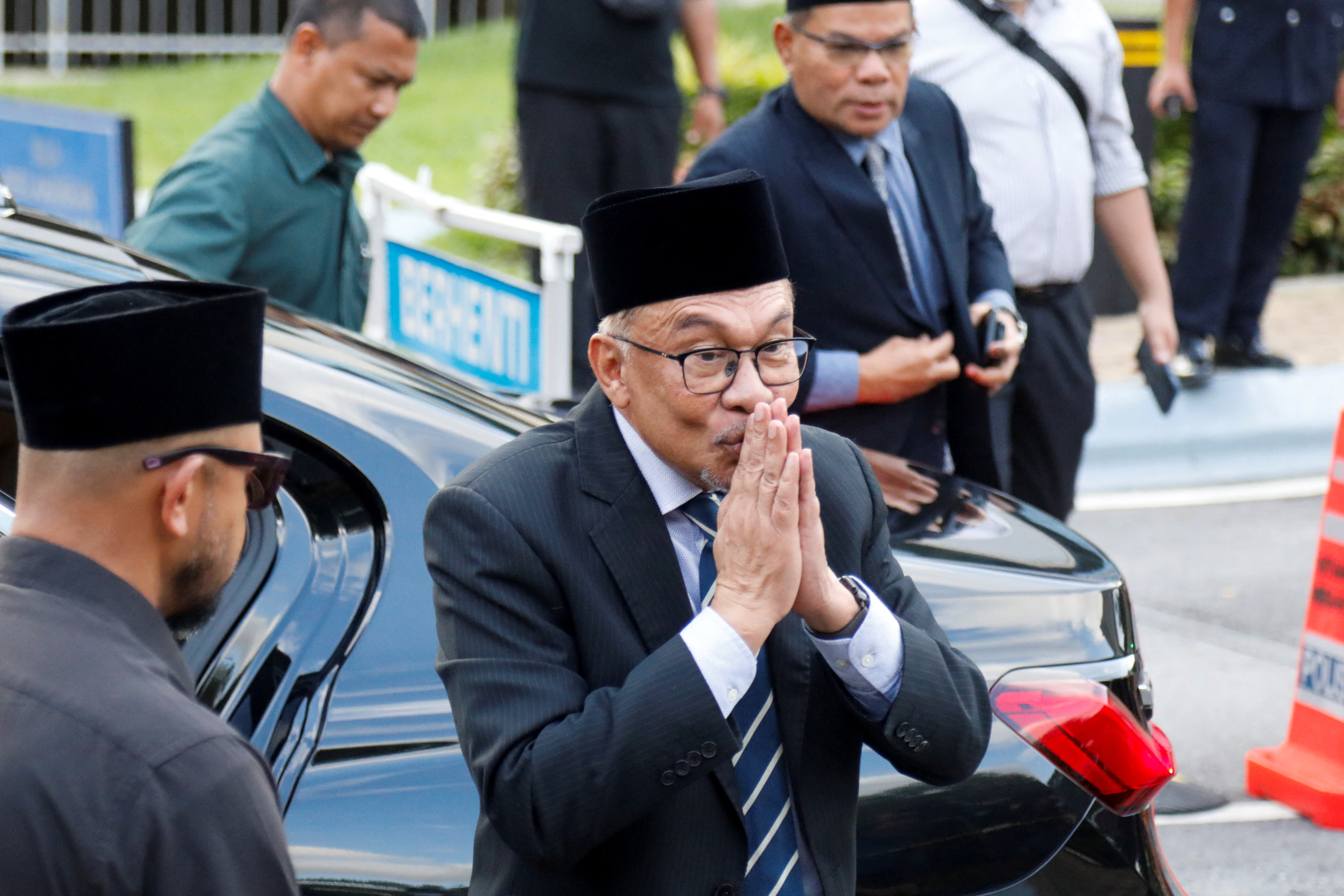
Malaysia’s former ruling coalition indicated that it may support opposition leader Anwar Ibrahim as prime minister, reversing a decision to stay neutral and potentially helping resolve a political stalemate.
The Barisan coalition will not support a government that is led by ex-premier Muhyddin Yassin’s alliance, its biggest component party said, though it did not make any reference to Anwar.
Five days after an election, Malaysia still does not have a government as the two contenders do not have enough support for a majority, resulting in an unprecedented hung parliament.
The uncertainty over the election prolongs political instability in the Southeast Asian country, which has had three prime ministers in as many years, and risks delaying policy decisions needed to foster economic recovery.
King Al-Sultan Abdullah Sultan will meet with other senior royals on Thursday to help decide who will become prime minister. Media said the meeting will begin at 10:30a.m. (0230 GMT) and last for three hours.
The constitutional monarch plays a largely ceremonial role but can appoint a premier he believes will command a majority in parliament.
The king had suggested that both the leaders work together to form a “unity government”, but Muhyiddin declined the proposal.
The incumbent Barisan Nasional, which came in a distant third in the election in its worst electoral showing, has become a crucial player as its support is needed for both Anwar and Muhyiddin to get a majority.
Barisan had this week said it would not support either and would be part of the opposition.
But late on Wednesday, its biggest component party – the United Malays National Organisation (UMNO) – said Barisan would support a “unity government” that is not led by Muhyiddin’s alliance. The statement did not mention Anwar.
Anwar’s progressive coalition, known as Pakatan Harapan, won the most seats in the Saturday election with 82, while Muhyiddin’s conservative Malay Muslim alliance called Perikatan Nasional won 73. They need 112 – a simple majority – to form a government. Barisan has 30.
Muhyiddin’s bloc includes an the Islamist party PAS, whose electoral gains have raised concern in a country with significant ethnic Chinese and ethnic Indian minorities, most of whom follow other faiths. Investors have also been spooked over worries about the Islamist party’s possible impact on policies.
Short video platform TikTok said on Wednesday it was on high alert for content that violates its guidelines in Malaysia after authorities warned of a rise in ethnic tension on social media following the election.
JUNEAU, Alaska (AP) — U.S. Rep. Mary Peltola has been elected to a full term in the House, months after the Alaska Democrat won a special election to the seat following the death earlier this year of longtime Republican Rep. Don Young.
Peltola defeated Republicans Sarah Palin and Nick Begich and Libertarian Chris Bye in the Nov. 8 election. Results of the ranked choice election were announced Wednesday. Palin and Begich also were candidates in the special election.
Peltola, who is Yup’ik, with her win in August became the first Alaska Native to serve in Congress and the first woman to hold Alaska’s House seat. The win also buoyed her fundraising, outpacing those of her rivals in the lead-up to this month’s election.
Peltola embraced Young’s legacy as she sought the two-year term and was endorsed by his daughters, one of whom presented her with a bolo tie of Young’s at an Alaska Federation of Natives conference where Peltola was treated like a rock star. Young held the seat for 49 years.
“Now, I’m a real congressman for all Alaska,” she said. Young often referred to himself that way. Peltola has described his legacy as one of bipartisanship and building support for Alaska interests in Congress.
Peltola, a state lawmaker from the small rural hub community of Bethel for 10 years, ending in 2009, surprised many with her fourth place finish in the June special primary, in which she emerged from a field of 48 candidates that included current state and local officeholders. That finish was enough to send her to the special election.
During the campaign, she cast herself as a coalition builder, emphasized a desire for more civility in politics and sought to stay out of the sniping between Palin and Begich. Peltola, who most recently worked for a commission whose goal is to rebuild salmon in Alaska’s Kuskokwim River, raised concerns with ocean productivity and cited a need to preserve struggling fisheries.
She also stressed her support of abortion rights.
During a speech in October, she talked about the need for unity and lamented what she said have become pervasive messages in politics “about hate and fear and self-pity. And yes, those resonate, those are compelling motivators. But they’re destructive, they’re acidic, they tear us down.”
She said her priorities for the new term included committee assignments and “working very hard on getting our inflation rates down, our shipping costs down, getting costs down for working families and all Alaskan households.”
JUNEAU, Alaska (AP) — Alaska Republican U.S. Sen. Lisa Murkowski has won reelection, defeating Donald Trump-endorsed GOP rival Kelly Tshibaka.
Murkowski beat Tshibaka in the Nov. 8 ranked choice election. The results were announced Wednesday, when elections officials tabulated the ranked choice results after neither candidate won more than 50% of first-choice votes.
The race also included Democrat Pat Chesbro and Republican Buzz Kelley, who suspended his campaign after the August primary and endorsed Tshibaka.
Murkowski was the only Senate Republican who voted to convict Trump at his impeachment trial last year who was on the ballot this year. Trump was not convicted. But her vote was a sore point for the former president, who vowed to campaign against her.
In 2020, before that year’s election and far before Tshibaka jumped into the Senate race, Trump announced plans to campaign against Murkowski after she criticized him: “Get any candidate ready, good or bad, I don’t care, I’m endorsing. If you have a pulse, I’m with you!”
He appeared at a rally in Anchorage in July for Tshibaka and Sarah Palin, whose run for Alaska’s lone U.S. House seat he endorsed. He more recently participated in a telerally for Tshibaka in late October. Tshibaka, who worked in federal inspectors general offices before leading the Alaska Department of Administration for two years, credited Trump with helping to raise her name recognition and give her candidacy a boost.
Murkowski, who was censured by state Republican party leaders last year for offenses that included her impeachment vote, paid little attention to Trump during a campaign in which she emphasized a willingness to work across party lines and focused on her record and seniority. Murkowski, a moderate who has been in the Senate since 2002, is the most senior member of Alaska’s congressional delegation following the death in March of Republican Rep. Don Young, who held Alaska’s House seat for 49 years.
Murkowski is no stranger to tough reelection fights. She won a general election write-in campaign in 2010 after losing her party primary that year to a tea party Republican. Coming into this race, she had never won a general election with more than 50% of the vote.
This year’s elections were held under a new system approved by voters in 2020 that replaced party primaries with open primaries and instituted ranked voting in general elections. Under the open primary system, the top four vote-getters, regardless of party affiliation, advance to the general election.
Tshibaka criticized a super PAC aligned with Senate Republican Leader Mitch McConnell for running ads against her when she said those resources could have been used to help Republicans in other states.
She said she “ranked the red,” or the Republican candidates, on her ballot — but not in the Senate race. She said she did not consider Murkowski a “red” candidate.
“I didn’t vote her either,” Murkowski said on Election Day.
In a diplomatic win for African states, the United Nations has agreed to lay the groundwork for the creation of a new system of international tax cooperation.
The U.N. approved a resolution today to begin talks on establishing a new global tax system that could reign in corporate tax dodging and curb money laundering around the world.
The resolution was submitted for consideration by Nigeria on behalf of the 54-member African group of states, who are hoping for a greater say in global tax policy — something that has traditionally been the domain of a small group of wealthy nations via the Organization for Economic Co-operation and Development.
“This is a historic win for the tax justice and the broader economic justice movement and a big step forward to combat illicit financial flows and tax abuses,” Global Alliance for Tax Justice’s executive coordinator Dereje Alemayehu said in a statement.
“Shifting power from the OECD is paramount to end the exploitation and plunder of developing countries.”
Investigations by the International Consortium of Investigative Journalists like the Pandora Papers and the Paradise Papers have shown the complex and sophisticated methods that corporations use to find ways to shift their profits to low-tax jurisdictions around the world. ICIJ’s Paradise Papers project exposed the efforts of numerous multinationals, including Nike and Apple, to move profits offshore at a massive scale.

The U.N.’s resolution could theoretically pave the way for curbing tax avoidance by establishing an international tax body that could set tax standards across countries and take the lead on enacting a long-sought global minimum tax.
Discussions around a global minimum tax have for years taken place under the auspices of the OECD, a group of 38 of the world’s wealthiest nations that has positioned itself as a leader in setting international tax standards.
The OECD’s minimum tax plan sought to stop tax avoidance by discouraging corporations from moving wealth to low-tax countries around the world. But disagreements among members and bureaucratic hurdles have badly delayed progress, which hinges on some countries including the U.S. seeing major tax changes approved by national legislatures.
The approval of the U.N. tax resolution is a sign of growing frustration with the OECD’s stalled efforts around taxation and it could shift power from the OECD to the U.N., where developing nations have more clout.
At the very least, the U.N.’s efforts around taxation appear to have driven the OECD to become more inclusive in its own tax efforts, Bruce Zagaris, an attorney focusing on global tax policy at Berliner Corcoran & Rowe, told ICIJ.
Zagaris says that a shift in tax policy power toward the U.N. is possible but would take years. “The OECD will continue to dominate and make most of the decisions around tax in the near term,” Zagaris said.
ICIJ is an independent, donor-supported investigative news outlet. Together, we expose wrongdoing so that the world can make it right.
The effectiveness of a new global tax system overseen by the U.N. would rely, among other things, on buy-in from wealthy countries that have previously resisted various actions by the international community.
In a sign of differing views on tax policy among U.N. members, the United States today submitted an amendment that would have significantly reduced the scope of the global tax resolution by deleting language describing the hoped-for framework in broad terms. The U.S.’s amendment failed by a wide margin.
Alex Cobham, the executive director of advocacy group the Tax Justice Network, said that the amendment “sought to make the intergovernmental discussions agreed by the resolution so vague as to be almost meaningless,” but noted that the U.S. subsequently joined in voting to approve the resolution.
“We must hope that the country will play a more constructive role in the discussions to come,” Cobham said.

Authorities on Wednesday identified the people killed in a mass shooting at a Walmart (WMT.N) store in Chesapeake, Virginia, ranging in age from a 16-year-old boy to a 70-year-old man.
A manager at the store opened fire on fellow employees in a break room, killing six people before turning the gun on himself.
“We are saddened to announce the names of those we lost on Tuesday evening at the shooting at Walmart on Sam’s Circle but hope that with this information we can honor their lives in our community,” officials wrote on the city’s website.
The youngest victim was a 16-year-old Chesapeake boy, whose name was not revealed because he was a minor.
Randall Blevins, 70, was the oldest victim. Blevins’ cousin wrote on Facebook that he had worked at Walmart for many years and was planning his retirement in the next year.
The other victims were Lorenzo Gamble, 43; Brian Pendleton, 38; Kellie Pyle, 52; and Tyneka Johnson, 22.
Johnson’s family, which had made desperate online posts pleading with the public for information after the shooting occurred, confirmed her death to local media. A relative described her as “the nicest person, who never bothered anyone.”
A cousin wrote on Facebook: “I’m sorry this happened to you so soon you had so many plans but I guess god had other plans. So this means no more phone calls? No more sending pictures of your tattoos and i pick them out?”
Pyle had updated her Facebook status on Nov. 1 to say she was in a relationship with Brian Baker. On Wednesday morning, Baker posted a picture of the couple on Facebook with the message: “Until we see each other again my angel.”
Pyle hailed from Norfolk, Virginia, and attended Norfolk Catholic High School, according to her Facebook profile.
The gunman was identified as Andre Bing, 31, of Chesapeake, Virginia. He said nothing as he began firing on workers gathered late on Tuesday ahead of their overnight shift.
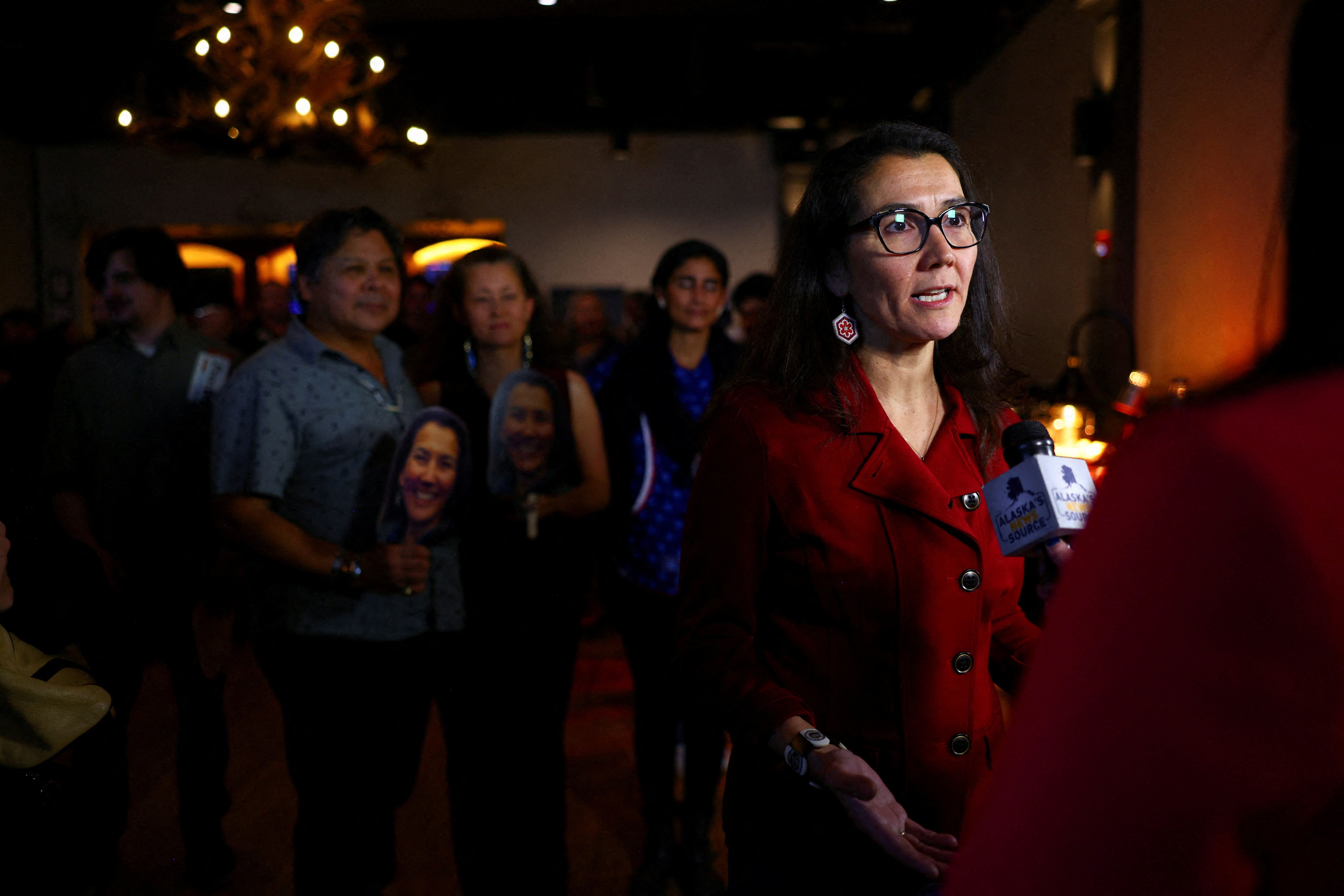
U.S. Representative Mary Peltola of Alaska, a Democrat first elected in August, was reelected to a full two-year term on Wednesday, beating two Republicans, former vice presidential candidate Sarah Palin and businessman Nick Begich, a state official said.
PHOENIX (AP) — Outgoing Arizona Gov. Doug Ducey said Wednesday his Republican administration will ensure an orderly transition to Democrat Katie Hobbs, his first public statement on her victory.
Ducey met with Hobbs in his office more than a week after her victory became clear and days after the last ballots were counted. However, defeated Republican Kari Lake has not conceded and has worked since the election to draw attention to voters who say they were affected by a problem with ballot printers at some polling places in Maricopa County.
“All of us have waited patiently for the democratic process to play out,” Ducey said in a statement. “The people of Arizona have spoken, their votes have been counted and we respect their decision.”
Ducey called to congratulate Hobbs the day after The Associated Press and other news outlets called the race, but he had not made a public statement about the outcome before Wednesday.
Ducey was co-chairman of the Republican Governors Association, which spent more than $10 million on television ads attacking Hobbs, but he was not an enthusiastic supporter of Lake. He endorsed her rival in the GOP primary and, though he endorsed the entire GOP ticket for the general election, he did not campaign with Lake.
Hobbs, currently secretary of state, has formed a transition team that is vetting potential staff and preparing for her to become the first Democrat to hold the state’s top office since Janet Napolitano stepped down to be U.S. Homeland Security secretary after the 2008 election.
The Ducey-Hobbs meeting came a day after the Republican National Committee and the GOP candidate for Arizona attorney general, Abraham Hamadeh, filed an election challenge in his race, which is slated for an automatic recount with Hamadeh trailing by 510 votes.
That challenge, filed in Maricopa County Superior Court, alleges a variety of problems affected the outcome of the extremely tight race. It says some ballots were counted that should not have been while others were rejected when they should have been counted. It alleges election workers made mistakes in duplicating ballots that could not be read by electronic tabulators and in determining the intent of voters when ballots were ambiguous.
The suit also claims some voters in Maricopa County were denied an opportunity to vote because of a widely publicized problem at some vote centers where printers produced ballots with markings that were too light to be read by on-site tabulators. Some voters experiencing problems left without voting and didn’t check out with poll workers, so they were unable to vote elsewhere because the county’s computer system shows them as voting.
The suit says Hamadeh and the RNC are not “alleging any fraud, manipulation or other intentional wrongdoing that would impugn the outcomes of the November 8, 2022 general election.”
“The voters of Arizona demand answers and deserve transparency about the gross incompetence and mismanagement of the General Election by certain election officials,” Hamadeh said in a statement.
Democrat Kris Mayes will ask a judge to dismiss Hamadeh’s complaint, Mayes attorney Dan Barr said.
“Abe Hamadeh’s complaint is devoid of actual facts,” Barr said in a statement. “It does not plausibly allege that mistakes in the administration of the election actually occurred, and if they did occur, that they would have made any difference in the result.”
Election Day votes went overwhelmingly for Republicans, but Democrats dominated mail ballots.
Maricopa County officials have acknowledged that some voters were inconvenienced by issues with printers, which were resolved in the early afternoon of Election Day. Board of Supervisors Chairman Bill Gates has said the problems were made worse by prominent Republicans who led their supporters to fear ballots would not be counted.
CHARLESTON, S.C. (AP) — After a student in his classroom had yet another outburst, Tyler Wright couldn’t bear to see him get written up again. Wright, then a student teacher at a Charleston elementary school, led the child out to the hallway for a chat.
Within minutes, the student started crying.
“He was telling me that he really doesn’t get to see his dad and stuff like that,” Wright said. “That his dad was supposed to come see him but never did. At the end of the day, that was the root cause for the outbursts, because the child was angry.”
Wright told him that he grew up in a similar situation, but he still paid attention the best he could, despite what was going on at home. The conversation was all it took, Wright said, for the student to open up and improve his behavior.
Wright became a full-time teacher at Stono Park Elementary in January, thanks to a program in Charleston aimed at making the teaching profession more accessible to Black men, who are vastly underrepresented in classrooms in South Carolina and around the United States.
Just 7% of America’s public school teachers were Black during the 2017-18 school year although Black students make up 15% of the student population, according to the most recent available data from the National Center for Education Statistics.
Their absence in classrooms is deeply felt, especially in states like South Carolina, where almost a fifth of students are Black and Black males account for less than 3% of teachers.
Having teachers who reflect the identity of their students can foster connections between teachers and students — and help avoid the kind of misinterpretation of behavior that can contribute to disparities in discipline for Black students, experts say. Research shows that Black teachers can lead to improved academic performance and higher graduation rates for Black students.
At a time of teacher shortages in South Carolina and around the country, the presence of Black teachers also can make it more likely for Black students to pursue careers in education themselves.
“The issue starts fairly young,” said Eric Duncan, a member of the policy team at the Education Trust, a nonprofit advocacy organization. “They get negative impressions of school because they are traditionally overdisciplined or misidentified in terms of behavior challenges, when they may have some other issues or challenges that should be addressed in a more culturally proficient way.”
There are other barriers to the teaching for Black men. Many come from low-income families and face pressure to find higher-paying jobs, and there are license requirements that were deliberately created to prevent people of color from becoming teachers, Duncan said.
The program in Charleston, Men of CHS Teach, is a partnership between the University of South Carolina and the Charleston County School District. It places new teachers in elementary classrooms even if they haven’t participated in a student teacher program and creates an alternative pathway for them to get teaching licenses.
CCSD decided to focus on recruiting elementary teachers because it’s typically difficult to fill those positions with men, and research shows that if Black students have a teacher of color in elementary school, they’re less likely to drop out of high school and more likely to consider college. For Black boys of low-income backgrounds, those effects are even greater.
Program organizers hope to hire 20 male teachers of color within the next five years. Close to half of the district’s student population is non-white.
Wright was one of the program’s first inductees. He decided he wanted to teach after working as a student concerns specialist at one of the district’s high schools. A few years later, Wright is leading a classroom of his own.
The South Carolina districts that have seen the greatest increase in Black male teachers in recent years are Charleston, York 3, Richland 1 and Aiken, with a net total of almost 80 new hires from 2017 to 2021. However, they still have a small share of Black male teachers overall.
Statewide, the racial demographics of teachers barely changed between 2016 and 2021, according to an analysis of state teacher workforce data.
The program in Charleston was partially inspired by Call Me MiSTER, a Clemson University program that aims to recruit, train and certify men of color to become elementary school teachers in South Carolina.
Mark Joseph, the program’s director, said they’ve seen a decrease in applicants in recent years and have had to put more effort into recruitment. It’s a new era of teaching after the pandemic, Joseph said, and the program has had to adapt.
“We took a different approach in terms of talking about leadership, talking about college, talking about what it’s like being a part of a program that provides support, encouragement, brotherhood and teamwork,” he said.
One realization, he said, has been that teachers are ambassadors for the teaching profession.
After all, the teachers they’re looking to recruit aren’t coming out of thin air — they’re sitting in classrooms across South Carolina.
___
This story is part of Tackling Teacher Shortages, a collaboration between AL.com, The Associated Press, The Christian Science Monitor, The Dallas Morning News, The Fresno Bee in California, The Hechinger Report, The Seattle Times and The Post and Courier in Charleston, South Carolina, with support from the Solutions Journalism Network.
___
The Associated Press education team receives support from the Carnegie Corporation of New York. The AP is solely responsible for all content.
Pay $5 to Palmer Report:

Pay $25 to Palmer Report:
Pay $75 to Palmer Report:
Pay $5 to Palmer Report:
Pay $25 to Palmer Report:
Pay $75 to Palmer Report:
Sign up for the Palmer Report Mailing List.
It’s a dangerous thing when narcissism and virtual reality come together. The result can often be chaos. And that’s sort of what happened to Traitor Trump just this week. Trump is unhappily ensconced in his own virtual reality pad, an uncool little place called Truth Social.
It’s not reality, but for Trump, it is. The reason for that is because it really is the only place these days he can go for any adulation whatsoever. Seriously — where else would he go? Who is prepared to worship and adore him?
Well, Forrest Gump is. So are the characters of the Kill Bill films and the Gremlins. All of these beings gathered together to worship and pay homage to his royal traitor. Of course, they didn’t, really. But our traitor is so far gone he may just believe they did.
Trump’s in his own virtual reality where movie characters are who he wants them to be, and the truth lies somewhere far away. You see, what Trump did — or someone closer to him did — was edit together a video. In said video, there are featured movie clips and scenes.
And in these scenes, there are featured movie characters — the ones I referenced above plus more. And in this video, they all watch Trump, admiration dripping from them as he lies, yells, and boasts.
Virtual reality can be a comfort; one supposes — especially if one is a malevolent traitor who has little else to do with his time. And it does not help that Lee Greenwood’s “God bless the USA” is playing in the background as Uma Thurman, Tom Hanks, and many others are edited to look as though they — gasp — actually LIKE Mr. Trump.
I saw the video. It was nauseating. But you know what I thought? How sad. This man is paying homage to himself because nobody else will. What a lonely, sad, bitter piece of crap Trump is. And locked in his virtual reality, he still only thinks of himself — and the imaginary cheers that non-existent people give him.
Pay $5 to Palmer Report:
Pay $25 to Palmer Report:
Pay $75 to Palmer Report:
Write for the Palmer Report Community Section.
Pay $5 to Palmer Report:
Pay $25 to Palmer Report:
Pay $75 to Palmer Report:
The post This whacked out Donald Trump “campaign” video is just sad appeared first on Palmer Report.
Advertisements – Advertising at The News And Times – advertising-newsandtimes.com | WE CONNECT!
Audio | Video | Top News | On Twitter | Security | FBI | Capitol Riot | JOSSICA | Trump | Russia | Putin | Russia – Ukraine War | Covid-19 | Brooklyn NY | Puerto Rico | World
September 5, 2026 4:45 am
The News And Times | Featured Posts | All Articles | Current News | Selected Articles | Shared Links | Opinions | In My Opinion | Sites | Blogs | Links | Twitter | Facebook

Contact Form | Blogs | Sites | News Reviews | Links | Advertising
All The News That’s Fit To Web