Categories
Audio Sources - Full Text Articles

Proposed merger of two publishing giants is officially over

NEW YORK (AP) — Simon & Schuster’s corporate parent has officially ended the agreement for Penguin Random House to purchase the publisher, a proposed sale a federal judge already had blocked last month.

Paramount Global also announced Monday that it still plans to sell Simon & Schuster, a nearly century-old company where authors include Stephen King, Colleen Hoover and Bob Woodward. Simon & Schuster has had a strong 2022 so far, thanks in part to bestsellers by Hoover and King, who had opposed the merger and even testified on behalf of the government during last summer’s antitrust trial.

“Simon & Schuster remains a non-core asset to Paramount, as was determined in early 2020 when Paramount conducted a strategic review of its assets,” Paramount announced. “Simon & Schuster is a highly valuable business with a recent record of strong performance, however it is not video-based and therefore does not fit strategically within Paramount’s broader portfolio.”

Other members of book publishing’s so-called “Big Five” — which include Penguin Random House, Simon & Schuster, HarperCollins Publishing, Hachette Book Group and Macmillan — may now try for Simon & Schuster. HarperCollins was among the losing bidders to Penguin Random House offered $2.2 billion. During the trial, Hachette CEO Michael Pietsch also expressed in Simon & Schuster.

Penguin Random House, which had planned to appeal the decision, issued a statement Monday saying it remained convinced it would have been “the best home for Simon & Schuster’s employees and authors.”

“However, we have to accept Paramount’s decision not to move forward,” the publisher’s statement reads.

The proposed merger of the two publishing giants, which would have resulted in by far the biggest book publishing house in U.S. history, was first announced late in 2020. But the Justice Department sued last year, contending that the new combination would stifle competition for best-selling books and lead to lower advances for authors. U.S. District Judge Florence Y. Pan seemed to favor the government’s arguments during the 3-week trial and issued a decision in late October agreeing that the merger would damage book publishing.

Her ruling was a break from decades of precedent, when numerous publishing mergers were allowed with little objection, and fit a larger pattern of the Biden administration’s efforts to more forcefully apply antitrust law.

On Monday, Simon & Schuster CEO Jonathan Karp issued a company memo expressing optimism about the publisher’s future.

“We will be celebrating our 100th anniversary in April of 2024, regardless of who our owner is — and we will have much to celebrate,” he wrote.

Categories
Audio Sources - Full Text Articles

Released Australian adviser supports sanctions against Myanmar officials

2022-11-21T23:43:25Z

Australian economist Sean Turnell (L) stands with fellow economist Tim Harcourt during the Australia Myanmar Institute conference at Yangon University in Yangon, Myanmar, November 2017, in this picture obtained from social media on November 17, 2022. Tim Harcourt/via REUTERS

Australia should sanction Myanmar’s military government and the regime’s bankers, Sean Turnell, the Australian economist and adviser to deposed leader Aung San Suu Kyi said in his first interview since being released from a Myanmar jail last week.

Speaking to The Australian newspaper on Monday, Turnell described 650 days of imprisonment following his arrest on 6 Feb 2021, first locked within the notorious colonial-era Insein Prison and then a detention centre in capital Naypyidaw.

Turnell says police officers initially accused him of working for Britain’s MI6 and smuggling guns. While pushed and shoved, Turnell says he was not beaten.

“They didn’t stick electrodes to me but I was thrown into filthy cells,” says Turnell.

“The food they used to deliver to me in a bucket. For 650 days, I ate out of a bucket and in Naypyidaw it wasn’t even a new bucket. They were paint buckets.”

Turnell was sentenced in September to three years prison for violating the official secrets act and immigration law, charges he denied.

He and three other foreigners were released as part of a mass amnesty of almost 6,000 prisoners last Thursday.

Turnell said he caught COVID five times during his imprisonment and endured months of solitary confinement without books or bed.

At Insein, Turnell was locked in a 6m by 2.5m (20 foot by 8 foot) cell with no toilet. An iron chair fitted with leg irons was bolted to the middle of the room.

Saying the Myanmar people’s dreams have been “completely shattered”, Turnell said he supported sanctions against regime officials and Myanmar bankers, without specifying which banks or financiers.

Australia bans arms exports to the country and has asset freezes in place on five military commanders.

Turnell’s release followed months of back channel negotiations including pressure from Cambodia and Thailand.

Before court appearances Turnell would reunite briefly with fellow co-defendants including Aung San Suu Kyi.

He said she was in fantastic form, and maintained she had a plan to end the violent persecution of the Rohingya Muslim minority. The Nobel Peace laureate faced widespread criticism from rights groups for defending Myanmar’s generals against charges of genocide in 2019.


Categories
Audio Sources - Full Text Articles

Russia“s war on Ukraine latest news: Kyiv struggles to restore power

2022-11-21T23:48:08Z

Russian drones hit Dnipro early on Wednesday (November 9), damaging a warehouse and wounding four workers, according to Ukraine officials.

Ukraine urged residents of Kyiv and several other areas to limit electricity use as it seeks to recover from Russian strikes on the power grid while the elderly and vulnerable were preparing for a voluntary evacuation of war-ravaged Kherson.

LIFE IN UKRAINE
* Ukrainians are most likely to live with blackouts at least until the end of March, the head of a major energy provider said.
* As they head into a cold winter, residents of a bombed-out Ukrainian village say they appreciate a warm bath in a mural painted by graffiti artist Banksy. The mural shows a man scrubbing his back in a bathtub.
CONFLICT

* There are no immediate nuclear safety or security concerns at the Russian-held Zaporizhzhia nuclear power plant in Ukraine despite shelling at the weekend that caused widespread damage, the U.N. atomic watchdog said after its experts toured the site.
* Moscow and Kyiv both blamed the other for the shelling of the facility.
* Russia’s leading war hawks rallied behind the humiliating decision for Moscow’s forces to retreat from the Ukrainian city of Kherson this month, but the commander who argued in favour of the move is now under growing pressure to prove it was worth it.

* The Kremlin said it was not discussing calling up more Russian soldiers to fight in Ukraine through a second round of mobilisation.

WAR CRIMES ACCUSATIONS
* Ukrainian police and prosecutors have identified four places in Kherson where they suspect Russian forces tortured people before abandoning the city, the prosecutor general’s office said.
* The United States is monitoring allegations that Ukrainian forces summarily executed Russian troops. Russia’s defense ministry on Friday cited videos circulating on social media that allegedly showed Ukrainian soldiers executing Russian prisoners of war. The Kremlin said it would bring to justice those responsible.

Related Galleries:

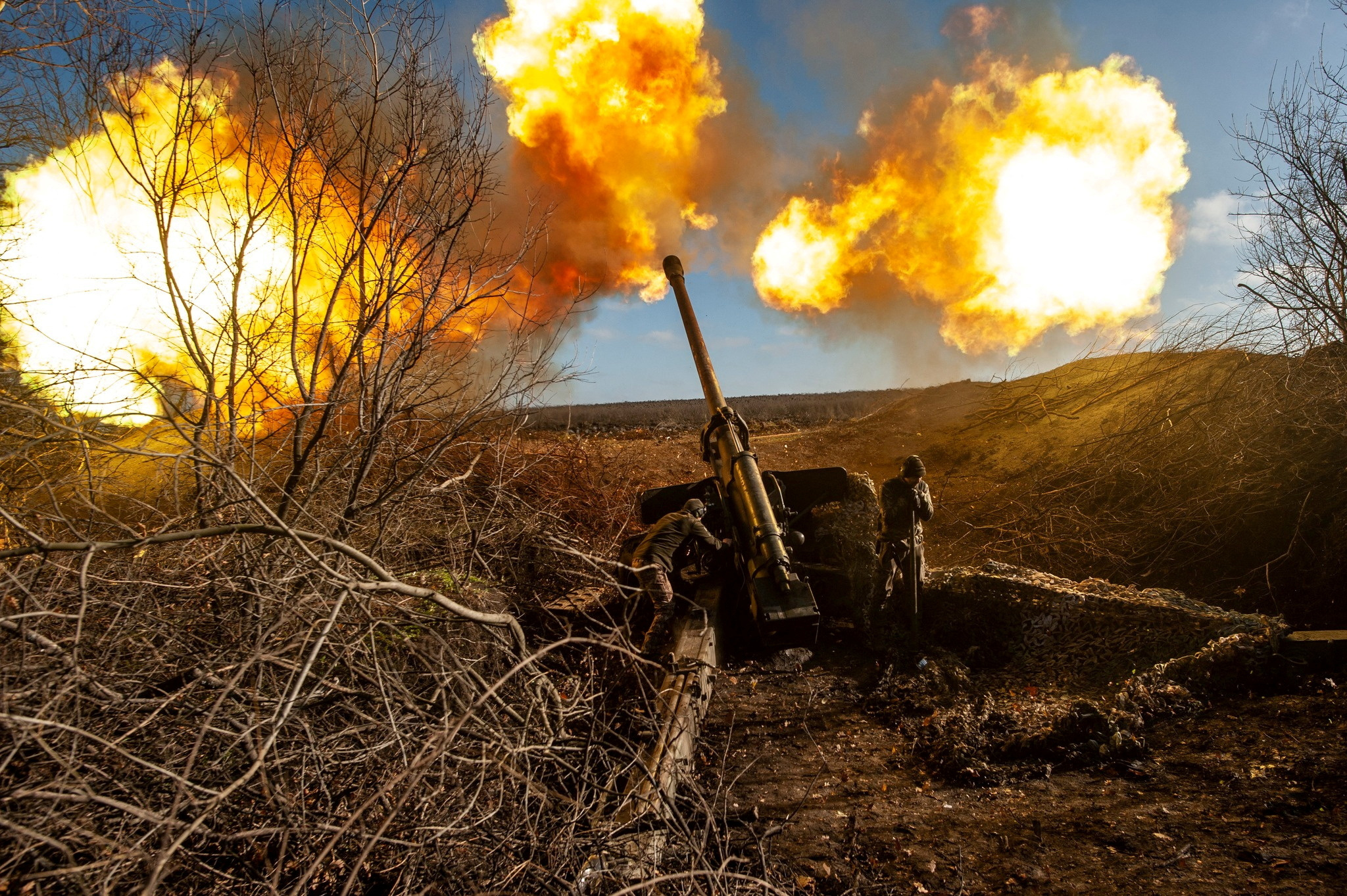
Ukrainian servicemen fire a 130 mm towed field gun M-46 on a front line, as Russia’s attack on Ukraine continues, near Soledar, Donetsk region, Ukraine, in this handout image released November 10, 2022. Iryna Rybakova/Press Service of the 93rd Independent Kholodnyi Yar Mechanized Brigade of the Ukrainian Armed Forces/Handout via REUTERS ATTENTION

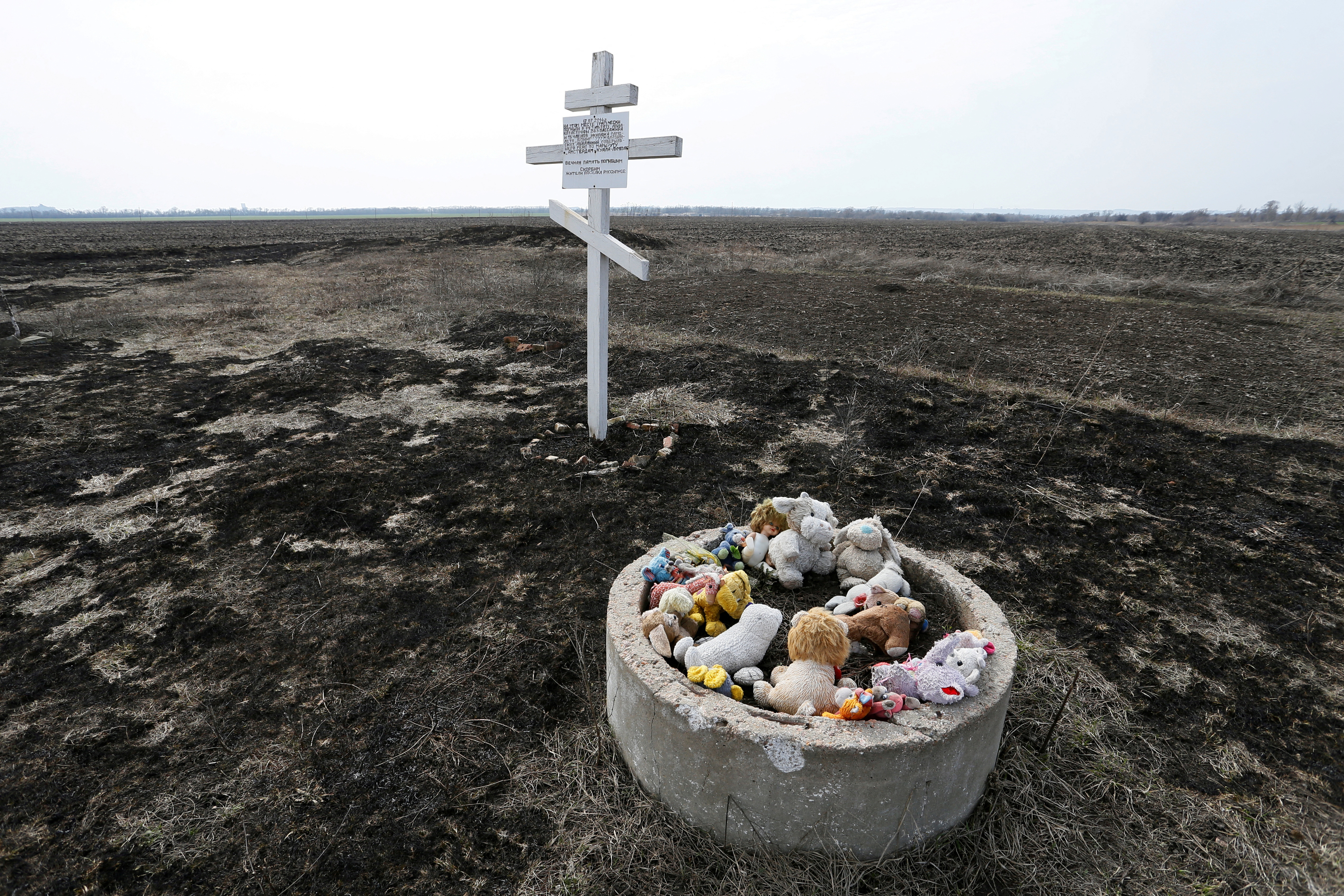
Toys are placed near the cross in memory of victims of Malaysia Airlines Flight MH17 plane crash in the village of Rozsypne in Donetsk region, Ukraine March 9, 2020. REUTERS/Alexander Ermochenko

A grain ship carrying Ukrainian grain is seen in the Black Sea, amid Russia’s attack on Ukraine, near Ukrainian port of Odesa, Ukraine November 2, 2022. REUTERS/Serhii Smolientsev

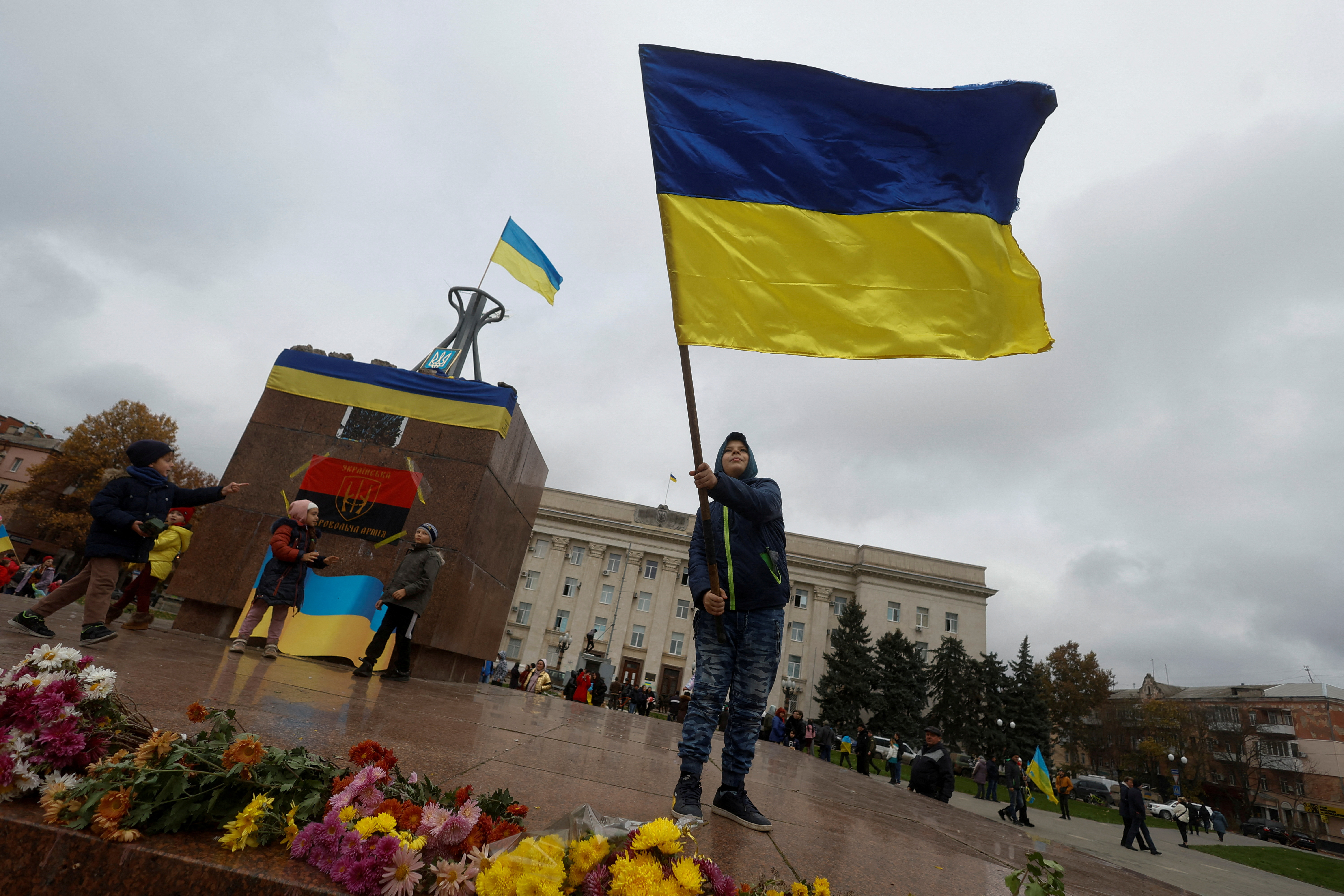
A boy waves a national flag as he celebrates after Russia’s retreat from Kherson, in central Kherson, Ukraine November 13, 2022. REUTERS/Valentyn Ogirenko

Police officers stand at a blockade after an explosion in Przewodow, a village in eastern Poland near the border with Ukraine, November 16, 2022. REUTERS/Kacper Pempel

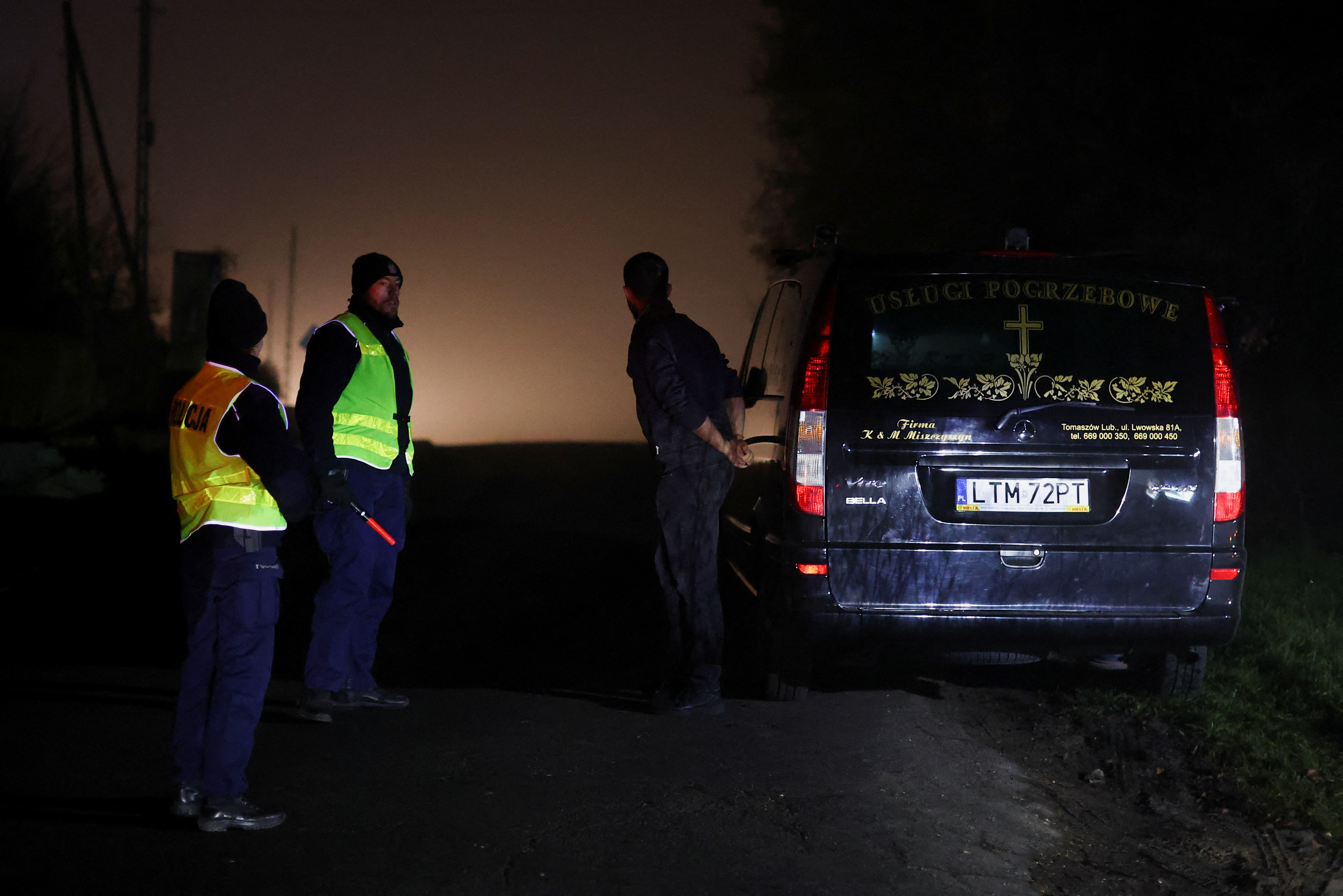
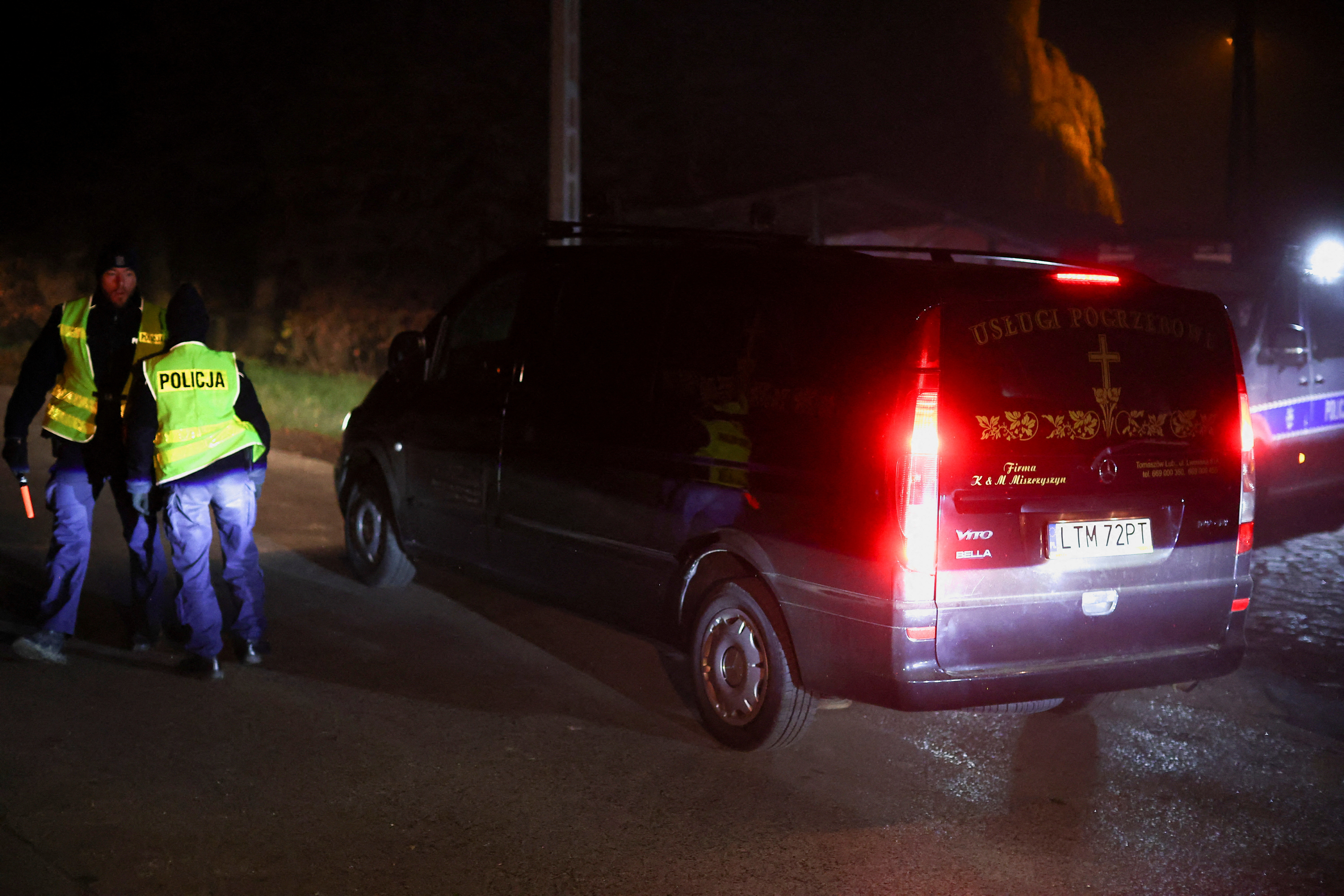
A hearse drives past a police blockade after explosions in Przewodow, a village in eastern Poland near the border with Ukraine, November 16, 2022. REUTERS/Kacper Pempel

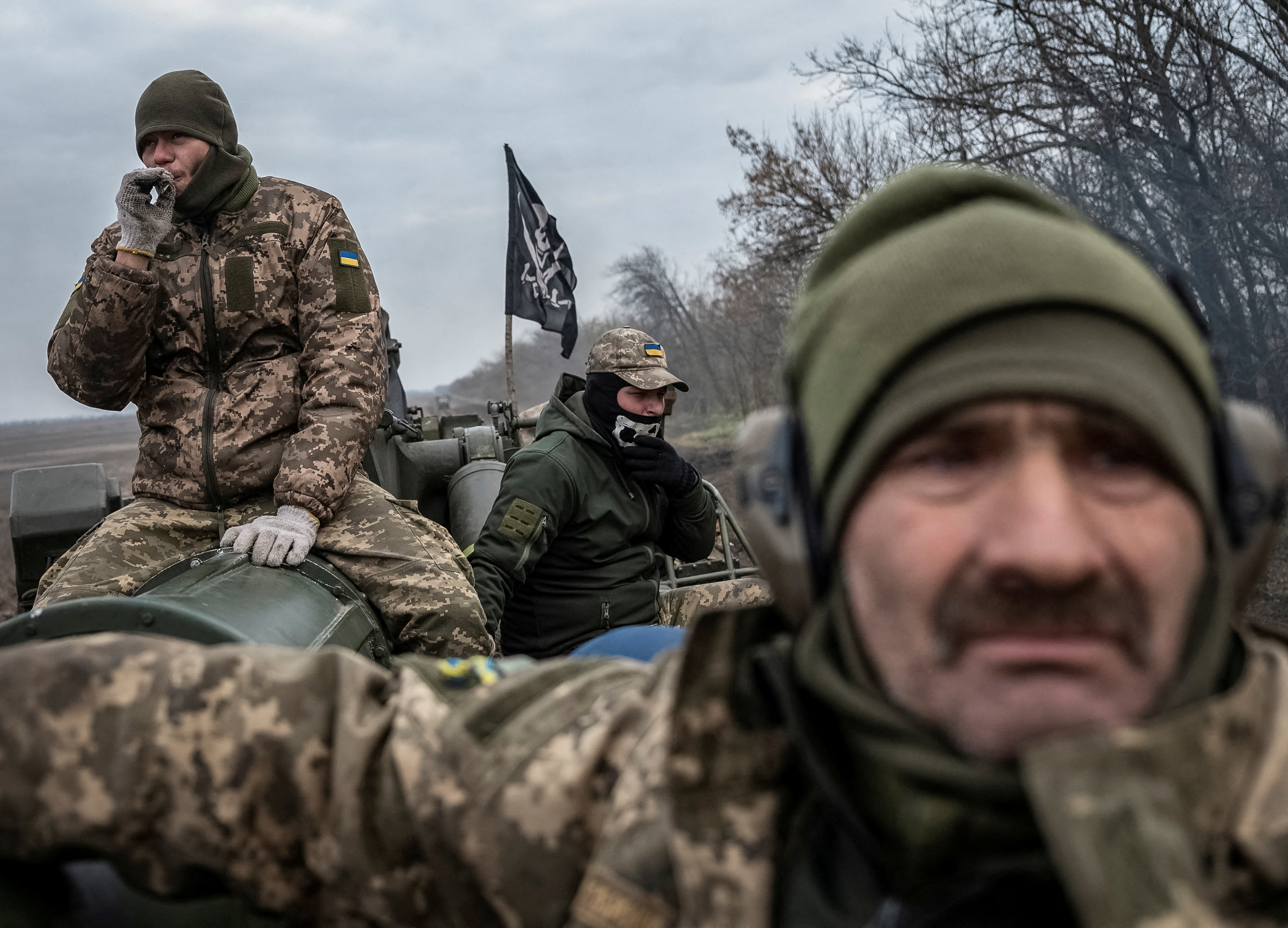
Ukrainian servicemen ride a 2S7 Pion self-propelled gun, as Russia’s attack on Ukraine continues, near a frontline in Kherson region, Ukraine November 9, 2022. REUTERS/Viacheslav Ratynskyi

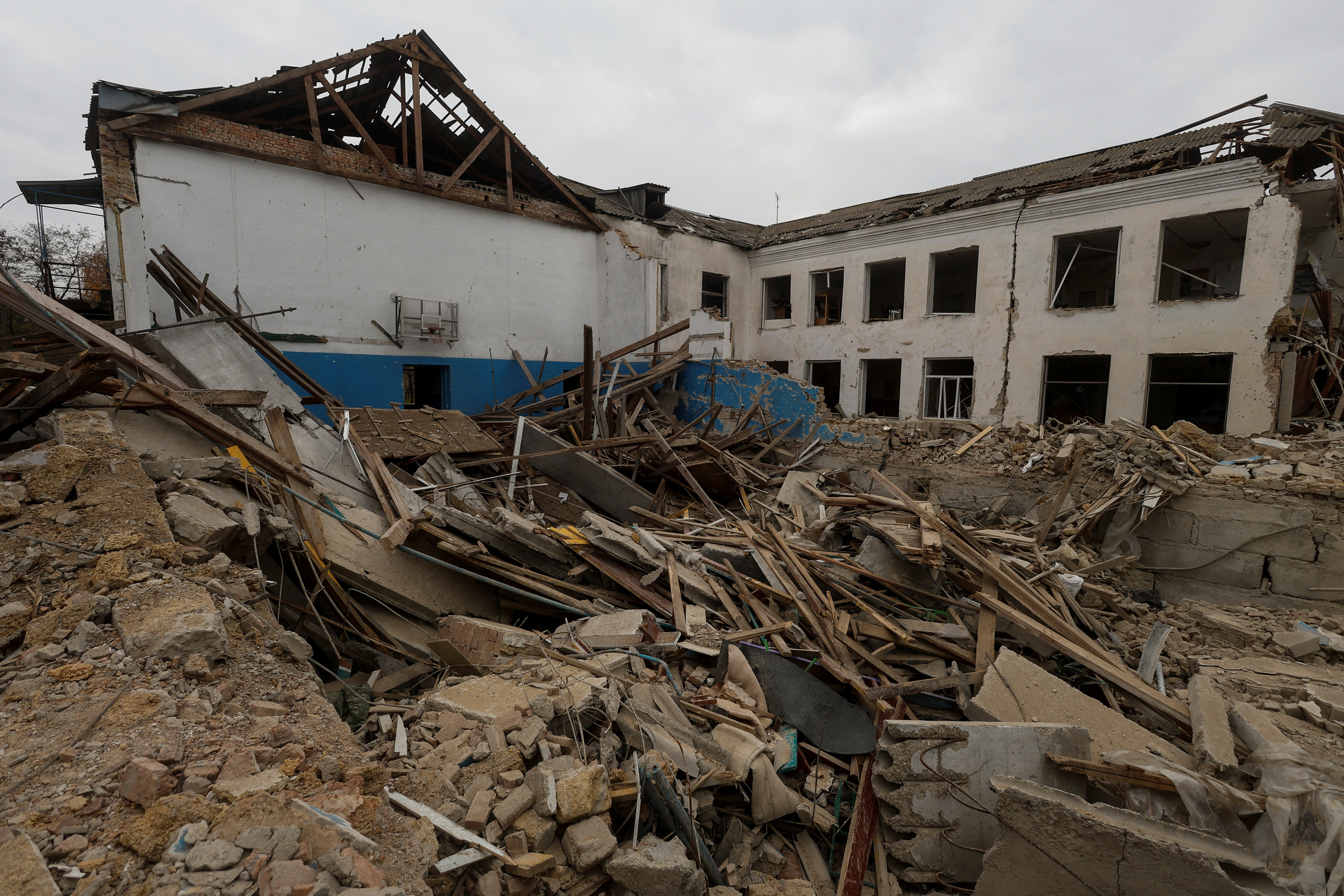
A view shows a building of a local school destroyed during a Russian missile attack in the village of Novooleksandrivka, in Kherson region, Ukraine November 9, 2022. REUTERS/Valentyn Ogirenko

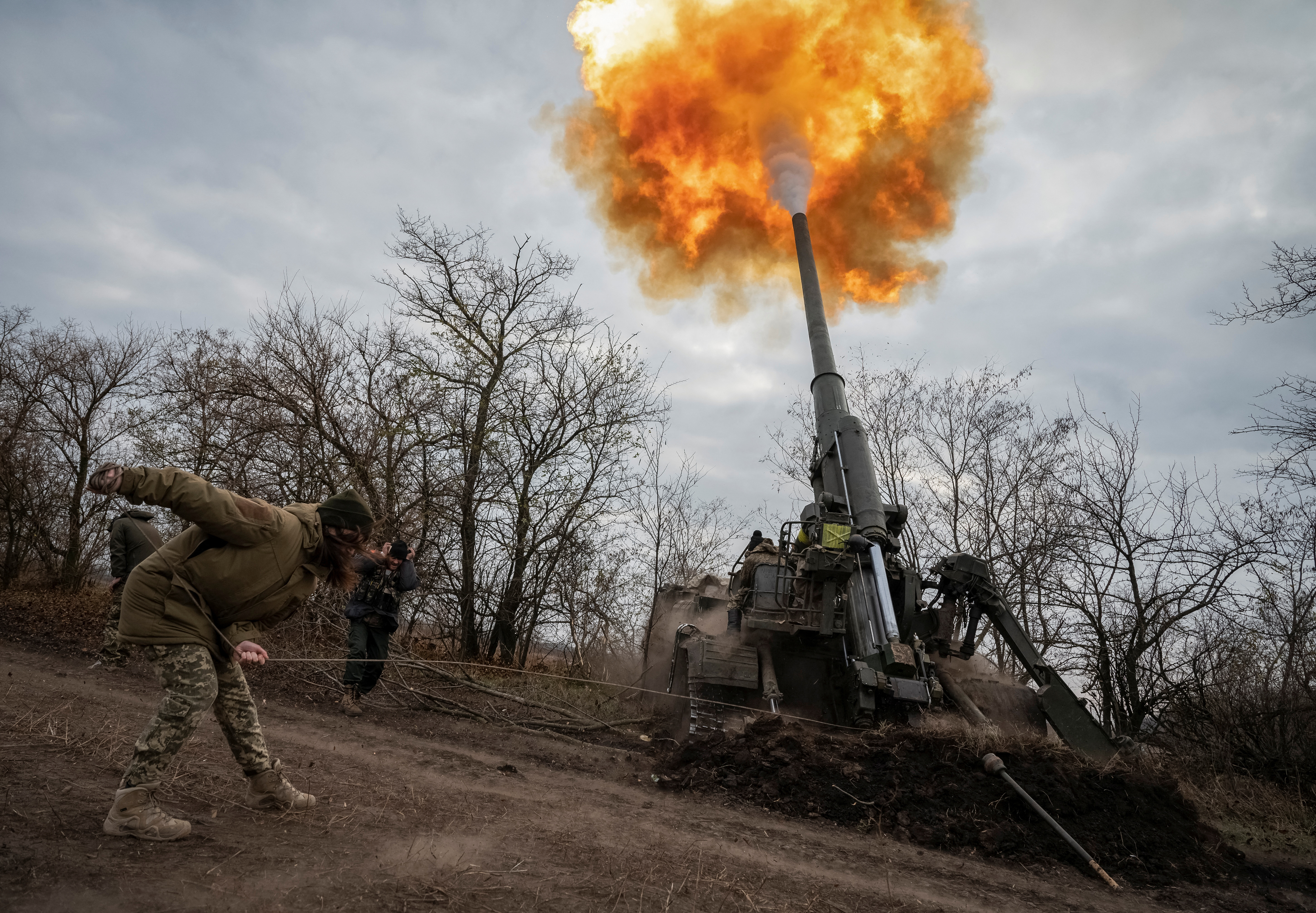
Ukrainian servicemen fire a 2S7 Pion self-propelled gun at a position, as Russia’s attack on Ukraine continues, on a frontline in Kherson region, Ukraine November 9, 2022. REUTERS/Viacheslav Ratynskyi

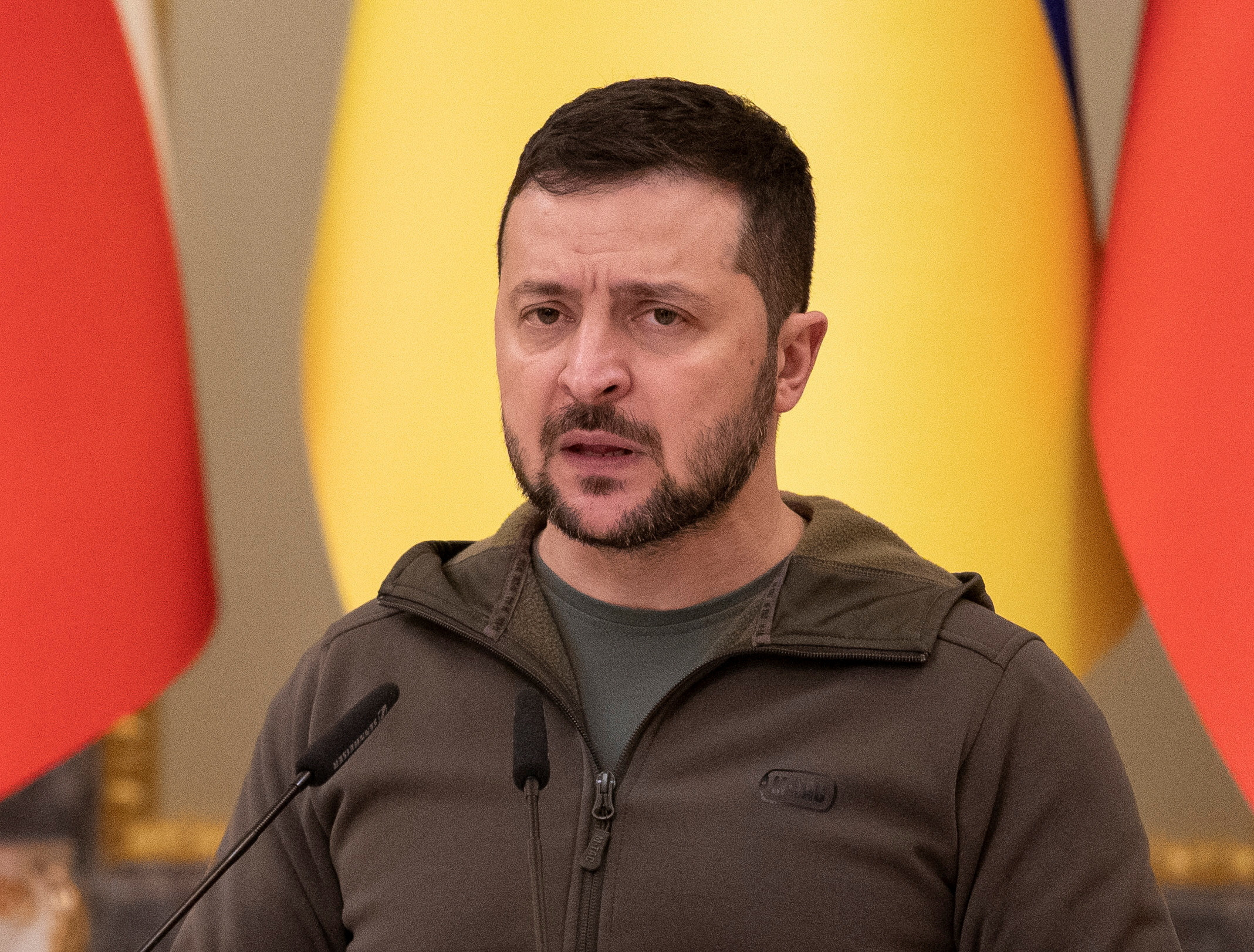
Ukraine’s President Volodymyr Zelenskiy speaks during a joint news conference with Czech Prime Minister Petr Fiala (not seen), as Russia’s attack on Ukraine continues, in Kyiv, Ukraine October 31, 2022. REUTERS/Viacheslav Ratynskyi

Combine harvesters load a truck with wheat in a field near the village of Tomylivka, as Russia’s attack on Ukraine continues, in Kyiv region, Ukraine August 1, 2022. REUTERS/Viacheslav Ratynskyi/File Photo


Categories
Audio Sources - Full Text Articles

Ukraine urges limiting electricity use and readies voluntary Kherson evacuation

2022-11-21T23:35:23Z

Ukraine urged residents of Kyiv and several other areas to limit electricity use as it seeks to recover from Russian strikes on the power grid while the elderly and vulnerable were preparing for a voluntary evacuation of war-ravaged Kherson.

Citizens in the recently liberated southern city of Kherson, where Kyiv says Russian troops destroyed critical infrastructure before leaving earlier this month, can apply to be relocated to areas where security and heating issues are less acute.

Ukrainians are most likely to live with blackouts – a daily occurrence across the country – at least until the end of March, the head of a major energy provider said on Monday.

Russia’s response to military setbacks in recent weeks has included a barrage of missile strikes against power facilities that left millions without electricity as winter sets in and temperatures drop below freezing.

President Volodymyr Zelenskiy has said that half of the country’s power capacity had been knocked out by Russian rockets.

In his nightly video address, he urged people to conserve energy, particularly in hard-hit areas such as Kyiv, Vinnytsia in the southwest, Sumy in the north and Odesa on the Black Sea.

“The systematic damage to our energy system from strikes by the Russian terrorists is so considerable that all our people and businesses should be mindful and redistribute their consumption throughout the day,” he said.

“…Try to limit your personal consumption of electricity.”

In a Telegram message for Kherson residents – especially the elderly, women with children and those who are ill or disabled – Deputy Prime Minister Iryna Vereshchuk posted a number of ways residents can express interest in leaving.

“You can be evacuated for the winter period to safer regions of the country,” she wrote, citing both security and infrastructure problems.

Kremlin spokesman Dmitry Peskov said that the blackouts and Russia’s strikes on energy infrastructure are the consequences of Kyiv being unwilling to negotiate, the state TASS news agency reported late last week.

On Monday evening, Ukrainian presidential adviser Mykhailo Podolyak said that Russia was bombarding Kherson from across the Dnipro River, now that its troops had fled.

“There is no military logic: they just want to take revenge on the locals,” he tweeted.

Moscow denies intentionally targeting civilians in what it calls a “special military operation” to rid Ukraine of nationalists and protect Russian-speaking communities.

Kyiv and the West describe Russia’s actions as an unprovoked war of aggression.

Battles continued to rage in the east following Russian troop movements into the industrial Donbas region from around Kherson in the south.

Ukraine’s military said late on Monday that Russian forces had tried to make advances around Bakhmut and Avdiivka in Donetsk, and bombarded nearby towns.

Moscow has been reinforcing the areas it still holds and pressing an offensive of its own along a stretch of front line west of the city of Donetsk held by its proxies since 2014.

Russia and Ukraine on Monday traded blame for at least a dozen explosions at Ukraine’s Zaporizhzhia nuclear power station, which has been under Russian control since soon after it invaded the country on Feb. 24 but is across the Dnipro River from areas controlled by Kyiv.

Ukraine narrowly escaped disaster during fighting at the weekend that rocked the plant, Europe’s largest, with a barrage of shells. Some fell near reactors and damaged a radioactive waste storage building, the U.N. nuclear watchdog said.

Zelenskiy urged NATO members to guarantee protection from “Russian sabotage” at nuclear facilities.

The head of Russia’s state-run nuclear energy agency, Rosatom, said it had discussed Sunday’s shelling with the IAEA, and said there was a risk of a nuclear accident.

IAEA experts toured the site on Monday, and the agency said they found widespread damage but nothing that compromised the plant’s essential systems.

The reactors are shut down but there is a risk that nuclear fuel could overheat if the power driving the cooling systems is cut. Shelling has repeatedly cut power lines.

Russia’s defence ministry said Ukraine fired at power lines supplying the plant.

Ukraine’s nuclear energy firm Energoatom said Russia’s military shelled the site, accusing it of nuclear blackmail and actions that were “endangering the whole world”.

Reuters could not immediately verify which side was responsible.

Repeated shelling of the plant during the war has raised concern about a grave disaster in the country that suffered the world’s worst nuclear accident, the 1986 Chornobyl meltdown.

Related Galleries:

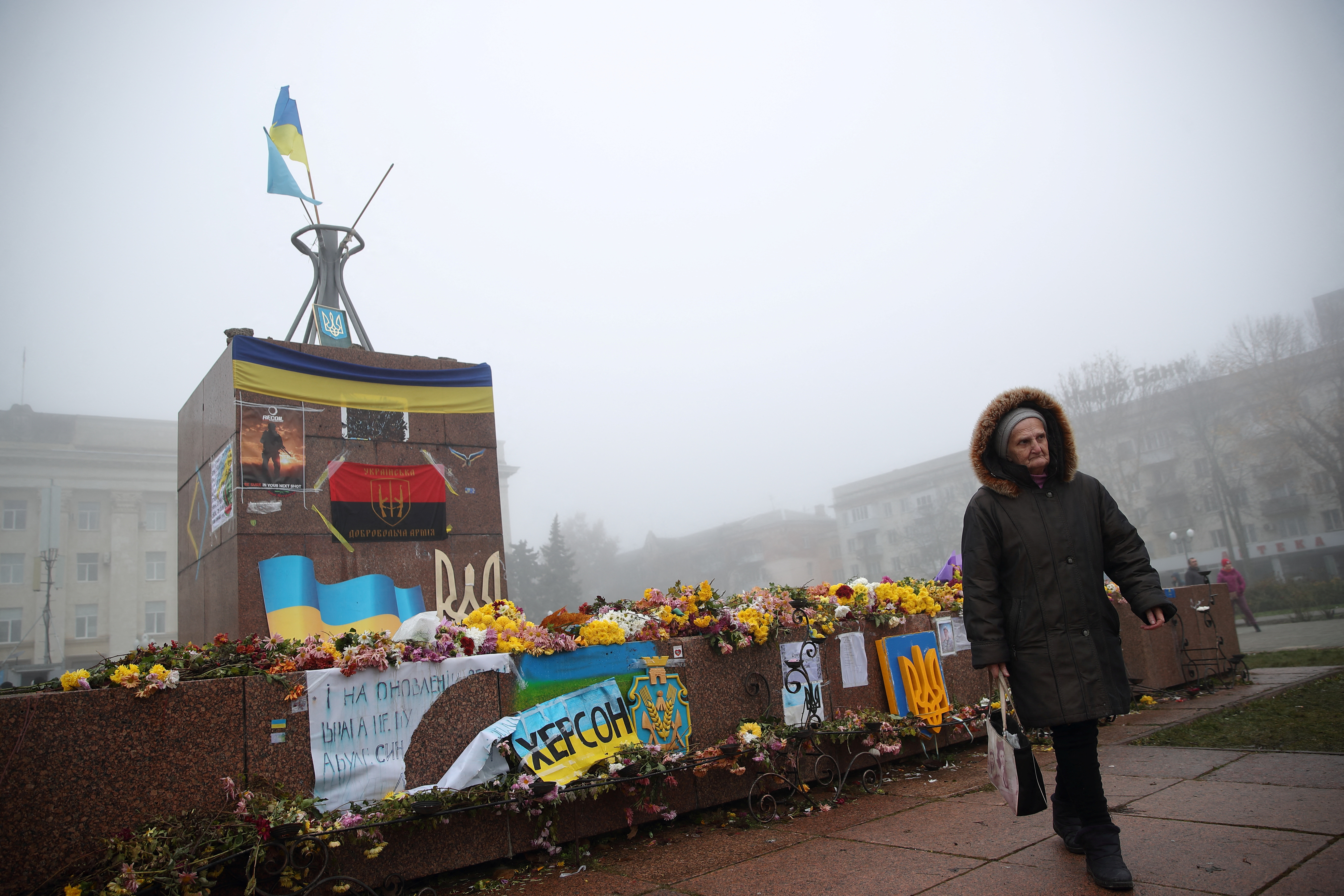
A woman walks past a statue in the central sqaure after Russia’s military retreat from Kherson, Ukraine November 21, 2022. REUTERS/Murad Sezer

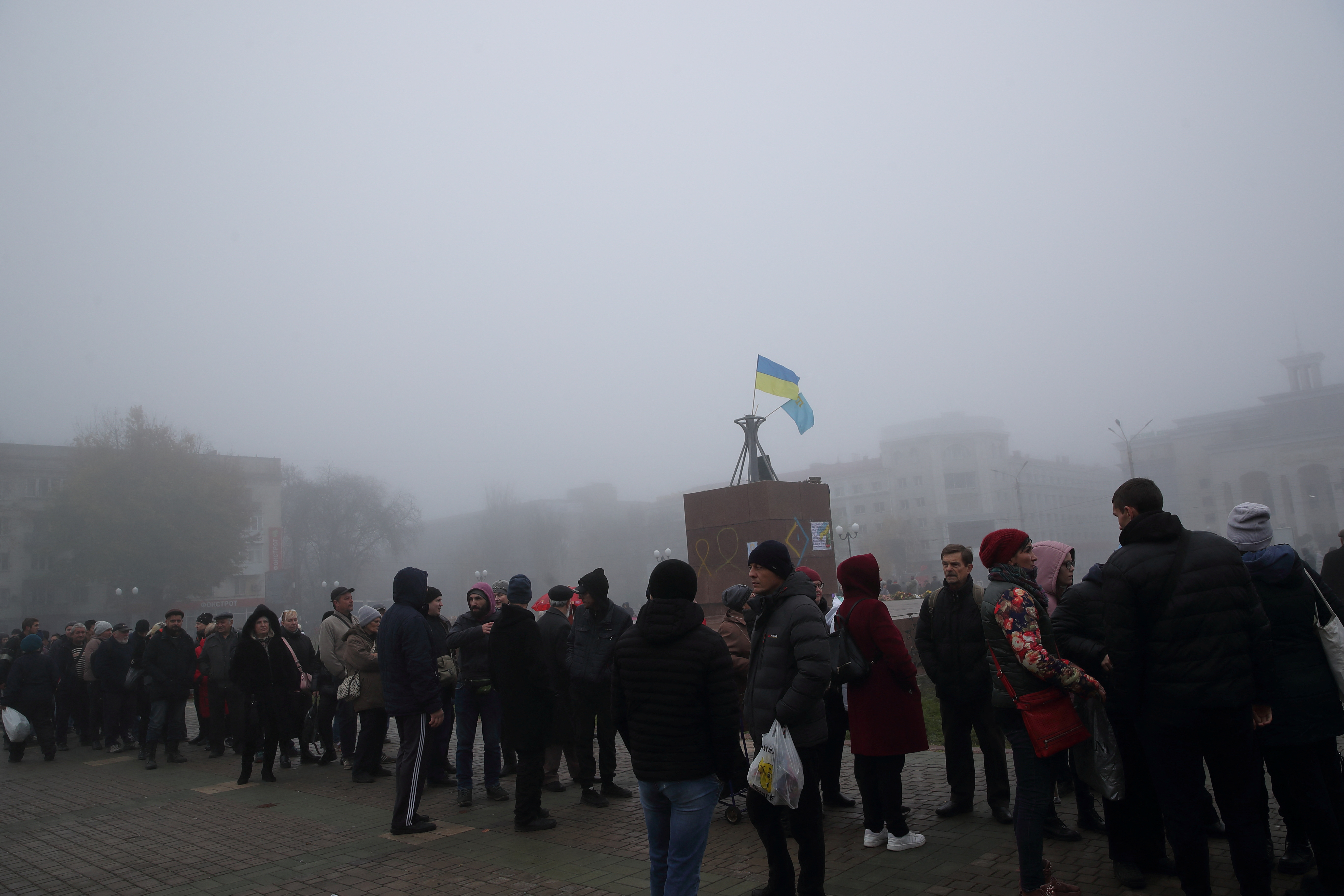
People wait in line to buy SIM cards in the central square after Russia’s military retreat from Kherson, Ukraine November 21, 2022. REUTERS/Murad Sezer

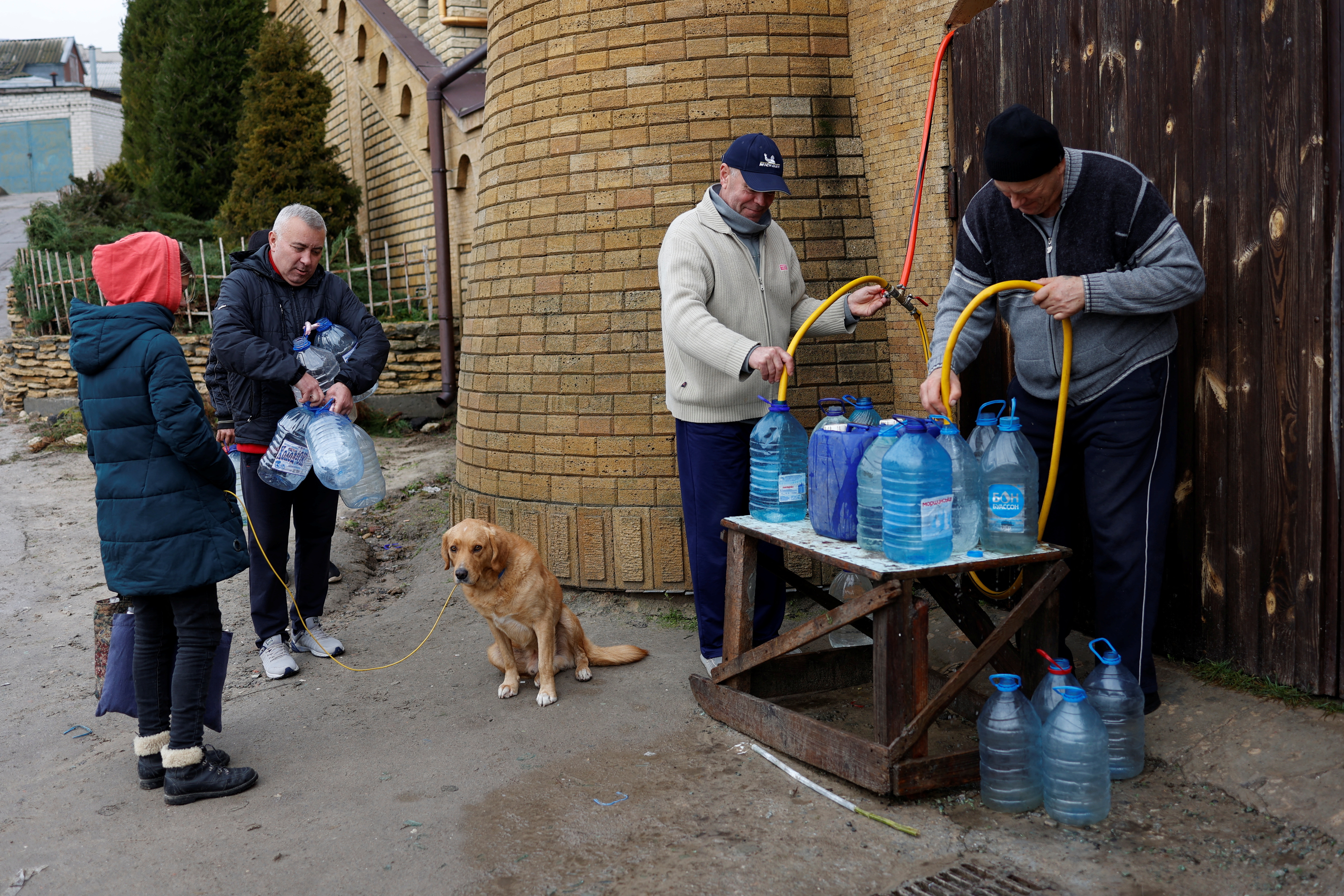
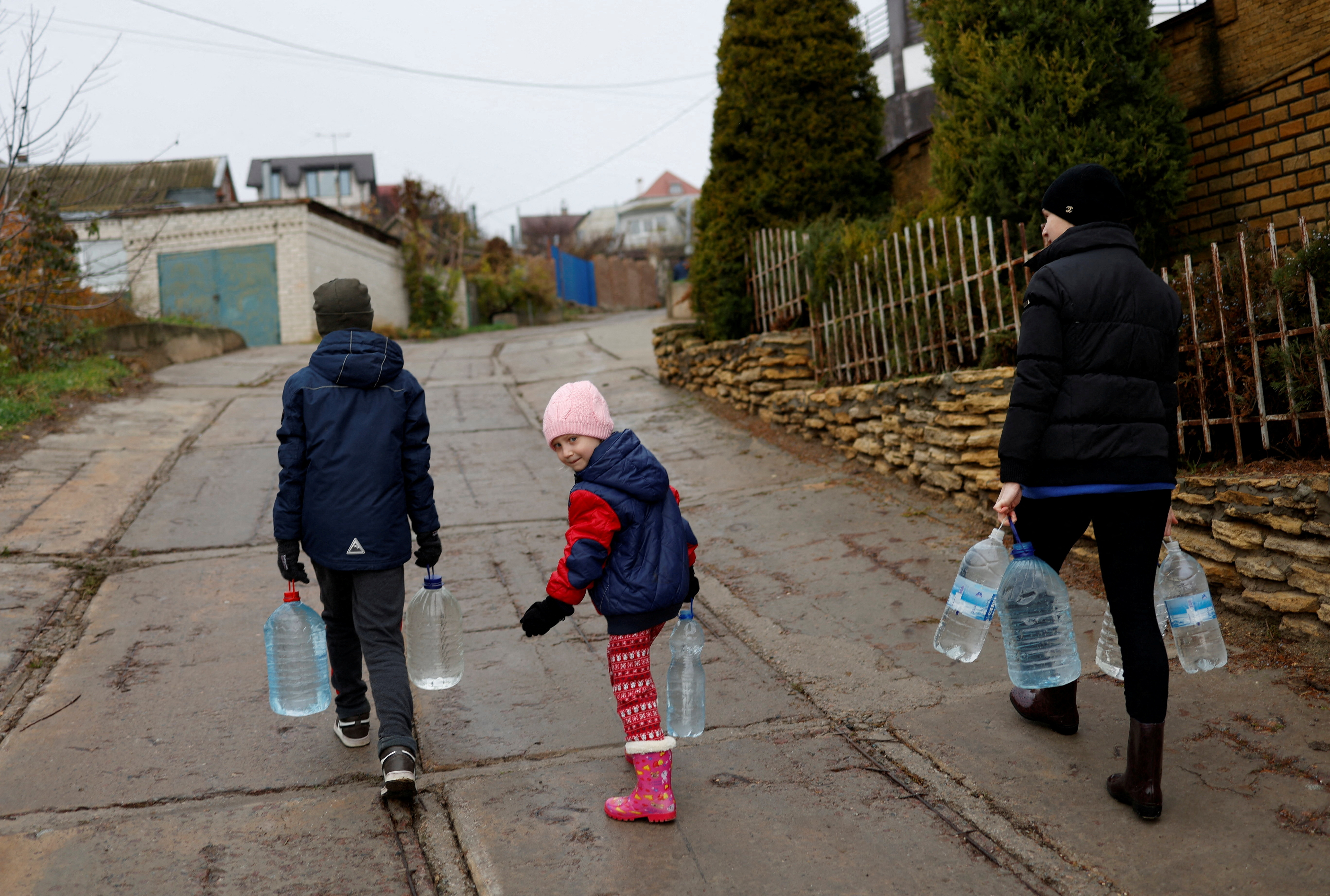
People fill up bottles with water near Dnipro river after Russia’s military retreat from Kherson, Ukraine November 21, 2022. REUTERS/Murad Sezer

People fill up bottles with water near Dnipro river after Russia’s military retreat from Kherson, Ukraine November 21, 2022. REUTERS/Murad Sezer

People make their way with bottles filled with water near Dnipro river after Russia’s military retreat from Kherson, Ukraine November 21, 2022. REUTERS/Murad Sezer
Categories
Audio Sources - Full Text Articles

These Are the Victims of the Colorado Springs LGBTQ Club Shooting

The shooting that killed five people and wounded 17 others at Club Q has profoundly shaken the small LGBTQ+ community in Colorado Springs. Among the victims were two recent transplants to Colorado, who came to the state seeking new opportunities. Some were members of the LGBTQ+ community, while others were friends and allies who were enjoying the bar.

Community members have gathered to honor the lives of those lost through vigils and memorial services. Allies like Tyler Hill, a spiritual director from Colorado Springs, are helping their neighbors heal by offering people guidance during their grieving.

“A safe place for so many was violated—so it was important for us to go above and beyond to ensure they knew where there are safe places to grieve,” Hill says. “ They are hurt, angry, scared, sad, confused. All emotions are on the table as they should be.”

While police have not released the identities of the victims, families have come forward with the names of the victims. Here’s what we know.

Daniel Aston, 28

Colorado Springs Shooting Victims
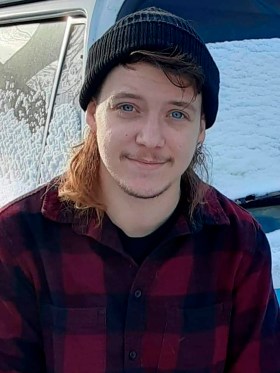
AP/Courtesy of Jeff AstonThis undated photo provided by Jeff Aston, shows his son Daniel Aston. Daniel Aston was one of five people killed when a gunman opened fire in a gay nightclub in Colorado Springs, Colo., on Saturday night, Nov. 19, 2022.

Twenty-eight year-old Daniel Aston’s bartending gig at Club Q was his first job in the city after moving there from Oklahoma two years ago. A transgender man, Aston was the self-proclaimed “Master of Silly Business,” family members told the Associated Press. He also worked as an entertainer in the nightclub.

Aston will be remembered for the way “he lit up a room, always smiling, always happy and silly,” his mother, Sabrina Aston said. The family is struggling to come to terms with his murder, which happened the night before the Transgender Day of Remembrance, which commemorates all the transgender people lost to violence.

“I keep thinking it’s a mistake, they made a mistake, and that he is really alive,” she said. The family was notified that their son was shot at 2 a.m. on Sunday. Police and a patient advocate notified the family that he had died later that morning.

Kelly Loving, 40

Kelly Loving, 40, recently moved to Colorado and was visiting Club Q during her weekend trip from Denver. Minutes after Loving hung up a FaceTime call from her longtime friend, Natalee Skye Bingham, she was shot and killed.

“I’m so devastated, because she was such a good person,” Bingham told the New York Times. “She was going to be at my house for Thanksgiving this upcoming Thursday and, now, it’s one less person at my table.”

Bingham credits Loving, whom she refers to as her “trans mother,” as the person who taught her how to ease into her transition. “In the gay community, you create your families, so it’s like I lost my real mother, almost,” she added.

Loving’s sister, Tiffany, described her as a kind, loving person that was “always fighting for people,” she told ABC News.

Derrick Rump, 38

Derrick Rump, 38, worked with Aston as a bartender. His friends described him to the Denver Post as someone who was “shy” but “warm” and “soulful.” He was “very understanding of other people’s situations,” his friend, Jessi Hazelwood said.

Julia Thames, Rump’s mother, described him as someone with a “heart of gold.” “He was always there for my daughter and myself when we needed him; also his friends from Colorado, which he would say was his family also. He was living his dream and he would have wanted everyone to do the same,” she said in a statement to ABC News.

Ashley Paugh, 35

Ashely Paugh, mother of an 11-year-old daughter, drove up from La Junta, Colorado to spend the day in the city with a friend. Paugh was at Club Q to watch a stand-up comedian perform, according to NBC.

Stephanie Clark, Paugh’s sister, confirmed her death to NBC News. “It just doesn’t seem real,” Clark told NBC. “We’re heartbroken. We’re sad. We’re mad, angry.”

The Colorado Sun says Paugh worked at a foster care organization in Colorado Springs.

Raymond Green

Raymond Green was at the nightclub to celebrate his friend’s birthday. His mother confirmed his death to the Colorado Springs Gazette.

“With an incredibly heavy and broken heart we lost Raymond, who had been a part of our lives since our daughter was in high school,” Jess Fierro, the mother of Green’s girlfriend said on Facebook, per the Colorado Sun. “We are going to miss him and his bright smile so much.” Green’s mother also confirmed his death, according to the Colorado Springs Gazette.

Green’s girlfriend was also present at Club Q. She broke her knee while running for cover.

Categories
Audio Sources - Full Text Articles

This App Could Change How Kids Learn About Historical Heroes

In mid-November, several striking monuments rose out of the earth in the heart of downtown Los Angeles. One paid tribute to Gaspar Yanga, a slave-turned-liberator who led a successful uprising against Spanish colonizers in the 16th century. Yanga doesn’t appear in many American textbooks, and the Los Angeles city council didn’t pay for the statue.

Instead, Yanga’s statue appeared in augmented reality, through an app called Kinfolk. Using tech similar to Pokémon Go, users can place and view monuments of oft-forgotten historical figures like Yanga in public spaces. The app then shows historical context through text, music and video.

The Kinfolk app’s launch comes as fierce debate rages about the monuments staring down at us from city centers: those that pay tribute to confederate leaders, slave owners, or other tarnished once-heroes.

Monuments of Thomas Jefferson, George Washington, Robert E. Lee and many others were torn from their perches in the summer of 2020, in turn causing a backlash in which some conservatives felt that their history and values were being desecrated. The tensions revealed the deep fractures in America’s own self-perception and the fundamental deficiencies in what we collectively know and understand about our own country.

Idris Brewster, the co-founder of Kinfolk, hopes that AR can be part of solving the very old problem of how history remembers heroes. With the Kinfolk app, available for Apple and Android, Brewster hopes to make virtual monuments visible across the country. In the process, he hopes to help people reimagine civic spaces, engage students in interactive learning, and allow those who have never seen themselves mirrored in their city’s monuments to do so for the first time.

“If we want an equitable future, we need to have our collective consciousness include the stories of those folks who have been sort of purposely erased from the canon of American history,” he says.


Andrew ChowA monument of Biddy Mason, as seen in the Kinfolk app.

“Public spaces aren’t built for us”

Brewster has long worked at the intersection of technology and equity: He previously worked on Google’s Code Next, which offered free computer science courses for Black and brown students. He founded Kinfolk, previously known as Movers and Shakers NYC, in 2017, when he and his creative partner Glenn Cantave were part of a dialogue on social media about New York’s historical statues and how they needed to be more diverse. For example, of the 150 or so historical statues in the city, historians counted only 5 women among them.

For Brewster, this discrepancy matters because monuments “show the values of a society: what people they revered, what histories are important,” he says. “And the point we’re at now, these public spaces aren’t built for us.”

While Brewster campaigned for the removal of problematic monuments—including the Christopher Columbus statue in Manhattan’s Columbus Circle, which he says represents an “oppressive figure” and a “tool of white supremacist history”—he also dreamed of erecting a new set of monuments of long-forgotten historical figures. But to build new monuments necessitates “a lot of bureaucracy, red tape, a lot of hoops you have to jump through,” he says.

Read More: Confederate Monuments and Other Disputed Memorials Have Come Down in Cities Across America. What Should Take Their Place?

At the time, the AR game Pokémon Go was sweeping the nation, inspiring millions of people to hunt for cartoon monsters by venturing through their towns and cities and across the world.

Brewster saw the technology as a potential way to circumnavigate some of his challenges. “With AR, we can create as many monuments as we want for the price of one physical monument, and we could put them anywhere,” he says.

Kinfolk’s app works using your smartphone’s camera function. Open the app and “place” an image of a monument wherever you wish. You can then walk around the monument, read about that historical figure’s history and listen to related music or interviews about them. For now, the monuments only appear on your phone’s version of the app, and disappear when you close the app. Each virtual monument is thoughtfully designed. Kinfolk handpicked artists to collaborate on how the AR monuments look. There are currently more than a dozen monuments available in the app, including those of Harry Belafonte and Maya Angelou.

Brewster and Kinfolk have been unveiling different AR projects over the last few years, but the November launch in Los Angeles, presented in collaboration with The Music Center and the artist collective For Freedoms, is their biggest yet. It honored Yanga as well as Biddy Mason, who co-founded the oldest African American church in the city, and Beatrice Alva, who helped preserve the history of California’s Gabrielino-Tongva tribe.

This release from Kinfolk added a geo-specific element to the app: last weekend, the only place you could see the monuments of Yanga, Biddy Mason, and Beatrice Alva was in Los Angeles’ Grand Park, where Kinfolk threw a public party complete with live music, DJ sets and digital art-making. (Those monuments are now available to the general public, and can be placed wherever users wish in the world.)


Momodu MansarayThe Black Fist Brass Band at Kinfolk’s Grand Park event in Los Angeles in November.

The geo-specific element both makes the app more interactive—in that you are forced to venture into the world and engage with history in the context of public spaces—and also places an emphasis on learning community-specific history.

Brewster hopes to elevate local history in cities across the country. After Los Angeles, he and Kinfolk will embark on a national tour to stage virtual monuments and in-person events. In Alabama, for example, Brewster plans to partner with the community-driven organization Project Say Something to both protest the Confederate monuments there while creating new digital ones in collaboration with local artists. As a whole, he hopes Kinfolk will serve as a digital archival project, in which all sorts of histories are unearthed and preserved.

Brewster expects to meet resistance, especially at a time in which school boards and local leaders are increasingly rejecting the spreading of Black history. “We’re going to try to go to Richmond, New Orleans, and other cities that are deeply entrenched in that. That is definitely going to increase the amount of angry emails we’re going to get,” he says.


Momodu MansarayIdris Brewster, left, and Glenn Cantave, the founders of Kinfolk. The recently unveiled an augmented reality app that teaches Black history.

An interactive way to explore history

While Brewster knows that some people will reject his mission out of hand, he hopes that the app will be particularly useful for Gen-Z students who respond better to more immersive forms of learning. “Kids are visual learners. They’re playing Fortnite, they’re on TikTok, editing videos; they don’t like to read,” he says. “We want to provide kids with an interactive way to engage; to be able to make more connections for themselves and explore, sort of like a video game.”

He hopes Kinfolk will especially be a resource for students in schools that have blocked courses related to Black history due to the larger backlash around Critical Race Theory. “I think that it’s really important that teachers have the tools to be able to bring these narratives into their classroom in easy ways,” he says.

And even if he will never be able to change the minds of those vehemently against him, Brewster is optimistic his app can make a difference, especially for a younger generation ready to embrace new modes of learning that use interactive technology, a familiar way to engage with the world. “There’s no way to move forward to a more equitable place if we can’t acknowledge the sins of our past—if we can’t acknowledge how Black and brown culture was exploited and killed to get to where we are now,” he says. “Monuments are really one tool to be able to have that conversation.”

Categories
Audio Sources - Full Text Articles

British comedian David Baddiel takes his ‘Jews Don’t Count’ argument to TV

LONDON (JTA) — David Baddiel, a comedian-turned-activist against antisemitism who calls himself “one of the U.K.’s very few famous Jews,” was holding court in the basement of one of Britain’s best-known TV studios. 

As a reporter headed hurriedly for the exit, Baddiel slouched into his chair, seemingly exhausted by the interview he had just completed about the forthcoming documentary based on his 2021 bestseller, “Jews Don’t Count.”

“I am speaking to many people like the last journalist who had not thought about any of this in their life,” he said.

The “this” Baddiel was referring to was to the idea, outlined in his book, that progressive anti-racists are guilty of hypocrisy towards Jews by not viewing them as worthy of similar protection or championing as other minorities because they are seen as white, privileged and wealthy. 

When the book came out last year, it received rave reviews, and Baddiel has since become seen by some as a “voice for Britain’s Jews.” He often litigates the finer points of contemporary antisemitism as a guest on radio and television, and he has been quick to square off with trolls and critics on Twitter. 

Now, with the premiere of an hour-long documentary also called “Jews Don’t Count” on Britain’s public Channel 4 network, Baddiel gets a primetime slot to make his case to a bigger audience. Featuring Baddiel’s interviews with Jewish stars of pop culture in both Britain and the United States — ranging from comedian Sarah Silverman to novelist Jonathan Safran Foer to actor Stephen Fry — the film argues that “in a culture where all forms of racism are being monitored, called out and held accountable, one form is apparently invisible.”

“With the intensification of identity politics and concerns about minorities, and offense and inclusion and representation, all that stuff seemed not to be tracking for Jews,” Baddiel explained to the Jewish Telegraphic Agency as the general point of his work. “We seemed to not be part of that conversation. There seemed to be less offense about antisemitism and less inclusion and representation of Jews.”

Baddiel, who shot to fame in the 1990s when he collaborated with fellow comedian Frank Skinner for a BBC sketch show on soccer, is also known as the co-author of “Three Lions,” which has become the de facto anthem for the English national soccer team and has recently enjoyed a revival during England’s tournament runs. He has also appeared on several TV shows and has published several children’s books.

He became a more prominent voice as a campaigner against antisemitism during Jeremy Corbyn’s scandal-plagued tenure as Labour Party leader from 2015 to 2020 — though he is keen to stress that neither the documentary nor his book are about “Jeremy f—ing Corbyn.” His move into documentary making follows his appearance in a well-received BBC documentary, “Confronting Holocaust Denial,” that aired last year.

Baddiel said he cares less about specific arguments under the umbrella of his broader argument. Regarding the “Jewface” debate, for example, over whether or not Jewish actors should play Jewish characters on screen, Baddiel claims he is “not really interested” either way — even though the topic takes up a large portion of his documentary, coming up in conversations with actors such as Silverman, Miriam Margolyes and David Schwimmer.

“What I am interested in is that it is empirically the case that in casting directors’ offices they are saying that ‘this is an autistic role, so we have to get an autistic actor.’ Or that ‘this is a gay role, so we have to get a gay actor,’” he continued. 

“Whether it is right or not is not the point,” he added. “They are not saying that ‘it is a Jewish role, so we have to get a Jewish actor.’” 
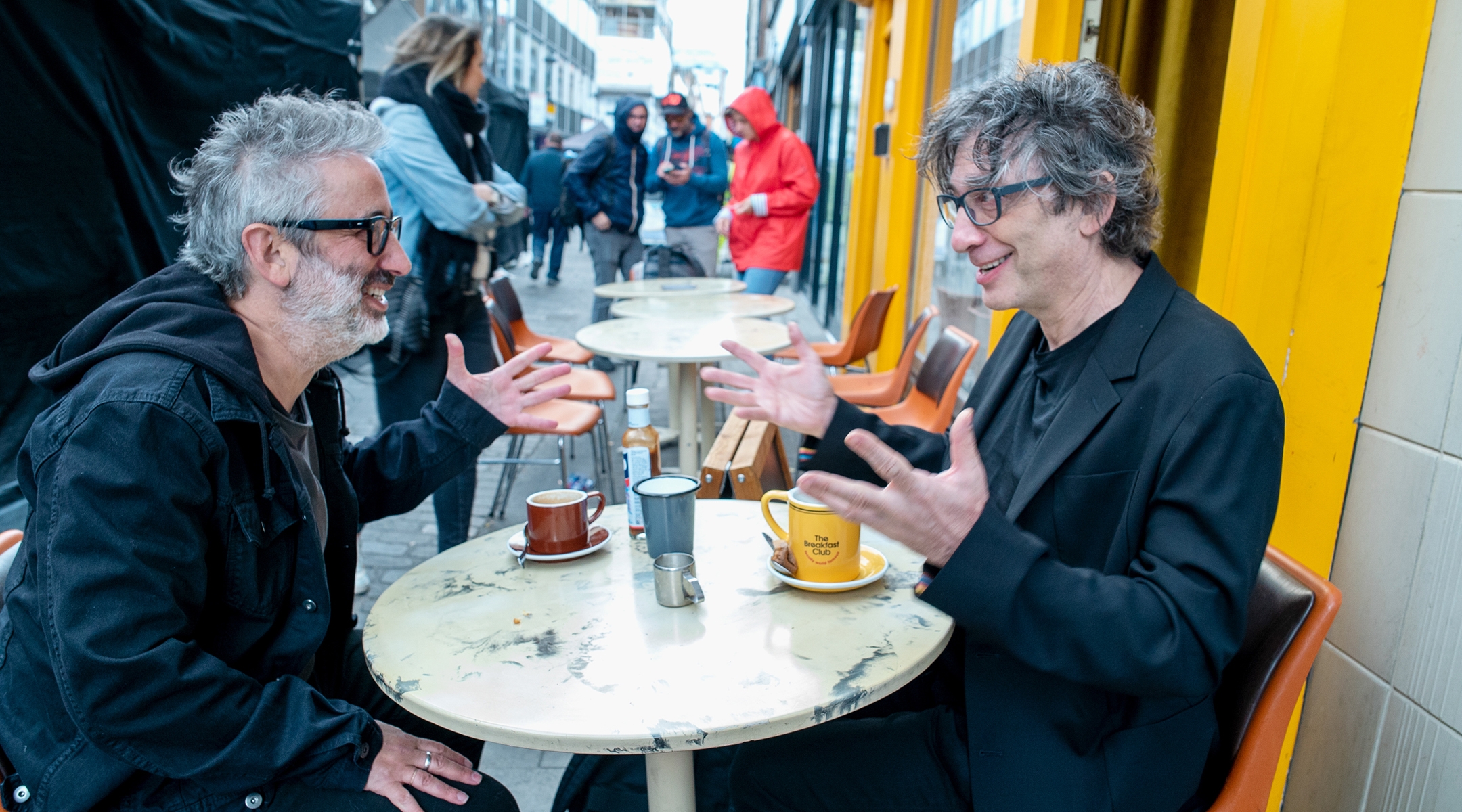
David Baddiel and Neil Gaiman.David Baddiel, left, speaks with Neil Gaiman in the upcoming Channel 4 documentary “Jews Don’t Count.” (Channel 4) Image by

Perhaps controversially, Baddiel — while recognizing that there is a certain privilege in being able to “pass” as white — has argued that being white is more about being “protected because you are a member of the majority culture” than it is about skin color. He says antisemitism is racism, and not about “religious intolerance.”

In the documentary, Schwimmer says, “I have never felt white.” 

“I am highly aware that I pass as white and I enjoy a lot of the privileges of being a straight, white, man, able bodied, I get it, I understand, and I am very aware of my privilege,” Schwimmer says before mentioning the murder of two Jewish civil rights activists by the Ku Klux Klan in Mississippi in 1964. “I never felt white, because for me, white means safe.” 

Schwimmer, who recently spoke at the Anti-Defamation League’s conference in New York City, goes on to say that while “Friends,” the sitcom he starred in, has been criticized for its lack of diversity, it did include a minority presence. There were multiple Jews, in the form of Schwimmer’s Ross Geller character and his sister Monica, along with Jennifer Aniston’s character Rachel Green.

“You know what would happen if you said that,” Baddiel says in response. “People would get aggressive about it.” 

Schwimmer responds: “You’re right, people would just be like: ‘not a real minority.’”

Baddiel is hardly speaking for all British Jews. One case in his book and documentary involves the fact that British Jews are not offered “Jew” as an option on the census when asked to select their ethnicity. (The same issue has been debated in the United States, where white respondents were asked in the 2020 census to write in their racial “origins.”)

“It is othering and alienating” that Jews do not have a distinct option box, Baddiel said.

But the view that Jews should not have an ethnicity option has historically and continues to be the position of the main representative body for British Jews, the Board of Deputies, as well as the Institute for Jewish Policy Research, a think tank that studies the demographics of British and European Jews. 

The Office for National Statistics, which administers the census, investigated the possibility of adding a Jewish ethnicity option ahead of the 2021 census in England and Wales. The ONS consulted with the Jewish groups and, in cooperation with polling firm Kantar, concluded that Jews in Britain viewed it “highly unacceptable” given historical concerns about discrimination and “the racialisation of religious groups.” 

The ONS and Kantar found that most Jews “did not identify as an ethnicity” and that adding an ethnic option would be counterproductive, as “its inclusion may cause participants to question whether they wanted to complete the census.” 

Baddiel questioned the conclusion, arguing that the most recent research was “a long time ago” and that such views were “massively out-of-date notions of what representation and inclusion looks like.” He said he had “certainly” felt demand for a Jewish option “from the people who speak to me.” 

Baddiel’s book garnered mostly positive reviews, but Josh Glancy, a British-Jewish journalist, wrote in the Jewish Chronicle that he Baddiel’s ideas implied “emphasising and amplifying every aspect of Jewish victimhood” to a point that would require “a level of self-imposed martyrdom that simply doesn’t align with most contemporary Jewish lives.” 

Stephen Bush — a prominent Black and Jewish journalist who conducted a landmark racial inclusivity report for the Board of Deputies last year, and who is interviewed for a few seconds in the documentary — argued in The Times that Baddiel was “so concerned with asserting his own lack of privilege that he forgets his obligations to others: not least to talk and to listen to them.” 

Baddiel’s idea that “progressives turn a blind eye to and dabble in just one form of racism, and that the experiences that he grapples with would not occur if he were black, Asian, or from another ethnic minority” would “struggle to survive a conversation with more than three people from any other minority,” Bush argued.
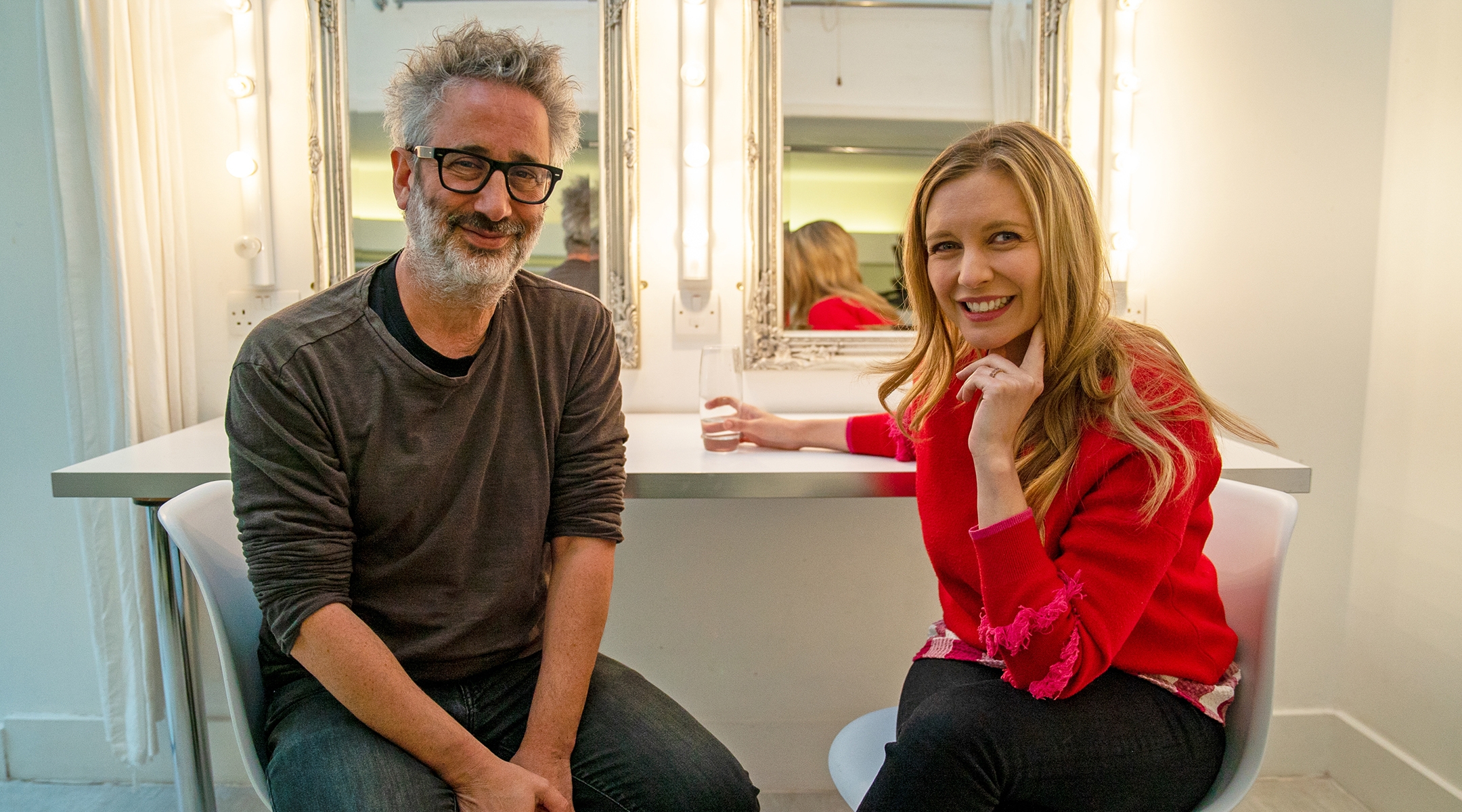
Rachel Riley.Rachel Riley, a British game show host, faced antisemitic abuse online after criticizing Jeremy Corbyn, the U.K.’s former embattled Labour Party leader. (Channel 4) Image by

Baddiel said he is “sort of not that interested” in people’s responses, adding, “Glancy is wrong. He doesn’t understand the book.”

In response to Bush, Baddiel said: “That is not something that most minorities are asked to do. I think that most minorities, particularly now, when they present testimony of their lived experience of racism, it would feel racist to say to most of them, ‘why should I listen to this, because you don’t seem to talk about any other minorities.’

“That’s a ‘Jew’s Don’t Count’ phenomenon, what you are talking about,” he continued, “that it is incumbent upon Jews to have to make more space.” 

Among the portions of the documentary that have attracted the most interest in Britain is an apology that Baddiel offers to Jason Lee, a former professional soccer player whom Baddiel mocked in blackface for a sketch in the 1990s. Many feel that Lee’s career was negatively affected by Baddiel’s sketch, even though he pushed back on that idea in a recent interview with the Guardian. Baddiel has accepted that his portrayal of Lee was racist. 

Lee, who has since gone on to campaign against racism in soccer, was also interviewed in The Times, opening up about how he had felt “violated on so many levels” by Baddiel’s sketch. 

For his fellow Jews, Baddiel is less conciliatory. He claimed to not be aware of criticism from within the Jewish community over his theses. “Literally no one” he said had come to him with any concerns, he said. He often feels “whatever the Jewish equivalent of the Bat Signal is” and recalled how a senior Labour Party politician “came up to me yesterday and said: How does it feel to be the person saving the Jews?” 

At one point during his JTA interview, Baddiel interrupted a question about why he had not chosen to speak to any visibly Orthodox Jews — despite their presence in the background of several shots in the documentary — by repeatedly asking: “What’s your problem? What’s your problem?” 

“I am not really interested in understanding Jews,” he said. “I am interested in the ways that our present way of seeing racism fails Jews.” 

This article originally appeared on JTA.org.

The post British comedian David Baddiel takes his ‘Jews Don’t Count’ argument to TV appeared first on The Forward.

Categories
Audio Sources - Full Text Articles

Elon Musk’s Twitter reinstates Rep. Marjorie Taylor Greene

Elon Musk’s Twitter has reinstated the personal account of far-right Rep. Marjorie Taylor Greene, which was banned in January for violating the platform’s COVID misinformation policies at the time.

Greene’s reinstatement comes after Musk over the weekend reinstated the account of former President Donald Trump, who was banned in the aftermath of the deadly Jan. 6 riots on the Capitol in 2021. Twitter — at the time — feared there was a risk of further incitement to violence if Trump was allowed to remain on the platform. Trump himself has said he won’t return to Twitter and as of Monday had not yet tweeted since the reinstatement, although he also hasn’t deleted his account.

Musk apparently based his decision to allow Trump back on the site on an unscientific Twitter poll he posted on his timeline. There appeared to be no such poll for Greene’s account. Earlier, Musk said he won’t make major decisions about content or restoring banned accounts before setting up a “ content moderation council ” with diverse viewpoints.

Musk has frequently expressed his belief that Twitter had become too restrictive. Before the U.S. midterm elections this month, he urged his “independent-minded” Twitter followers to vote Republican.

One account Musk has said he won’t allow back on Twitter is that of conspiracy theorist Alex Jones, who was banned in 2018 for abusive behavior.

“My firstborn child died in my arms. I felt his last heartbeat,” Musk tweeted Sunday in response to calls for Jones’ reinstatement. “I have no mercy for anyone who would use the deaths of children for gain, politics or fame.”

Categories
Audio Sources - Full Text Articles

U.S. Army“s weapons contract reviews accelerate to replace Ukraine aid

2022-11-21T22:55:45Z


U.S. Ambassador to the United Nations Linda Thomas-Greenfield (3rdL) examines explosive ammunition and weapons as she visits the Forensic Center of the Ukrainian Ministry of Internal Affairs In Kyiv, on November 8, 2022. Sergei SUPINSKY/Pool via REUTERS/File Photo

The U.S. Army is accelerating its weapons acquisition process to speed through a backlog of contracts needed to replenish U.S. stocks of weapons depleted by arms shipments to Ukraine, a U.S. official said on Monday.

Doug Bush, the chief weapons buyer for the Army, told reporters the accelerated contracting effort hinges on running processes simultaneously that used to be run in succession and is based on lessons learned from the coronavirus pandemic.

Ukraine has relied heavily on the Unites States for weapons, with Washington sending about $17.9 billion worth of arms since Moscow launched its invasion of the country on February 24.

According to recent Pentagon contracting data, $2.6 billion worth of contracts have been awarded to replace weapons rushed to Ukraine since the Washington began using a special Presidential Drawdown Authority, (PDA) which allows quick weapons transfers without congressional approval in response to an emergency.

The United States awarded about $1 billion in contracts to weapons makers since the second half of October, mostly for ammunition and rockets, suggesting the pace of contract decision making is picking up.

A $477 million contract for Lockheed Martin Corp (LMT.N) was one of those awarded.

Bush said this contracting pace is exceeding internal Pentagon spending speed benchmarks by 15%.

The Army got its first tranche of funds to replace weapons sent to Ukraine on May 3, and subsequently a tranche every few weeks, Bush said. Each tranche has ranged from few hundred million to nearly a billion, he said, and the rate of receiving funds has a high correlation to new contract awards for replacement weapons.

Categories
Audio Sources - Full Text Articles

Colorado Springs identifies victims and heroes in LGBTQ nightclub shooting

2022-11-21T23:21:44Z

A colorful memorial to victims could be seen Monday (November 21) outside an LGBTQ nightclub in Colorado Springs where a gunman killed at least five people and injured 25 others late on Saturday.

Colorado Springs officials on Monday identified the five shooting victims who died and the two heroes who helped subdue the shooter who opened fire in an LGBTQ nightclub Saturday night, killing those five and wounding 17 others with gunfire.

Suspected shooter Anderson Lee Aldrich, 22, was under arrest after police said he attacked Club Q, a night spot patronized by lesbian, gay, bisexual, transgender and queer people in Colorado’s second-largest city. Police said they had yet to determine a motive for the shooting.

Police Chief Adrian Vasquez identified the dead as Kelly Loving, Daniel Aston, Derek Rump, Ashley Paugh and Raymond Green Vance, providing their preferred pronouns but no further details, while telling reporters their families did not want to be interviewed.

The two patrons who stopped the shooter were identified as Richard Fierro and Thomas James.

Fierro is a U.S. Army veteran and owner of the Atrevida Beer Co. in Colorado Springs, according to his wife, Jess Fierro.

Colorado Springs Mayor John Suthers said he had a chance to speak with Fierro, who he said “saved a lot of lives.”

“I have never encountered a person who had engaged in such heroic actions that was so humble about it. He simply said to me, ‘I was trying to protect my family,'” Suthers told the news conference.

Jess Fierro told Reuters on Monday that her daughter’s boyfriend was killed in the shooting.

She said her husband injured his hands, knees and ankle while seizing a pistol from the shooter and hitting him with it to subdue him. She said the scene was “absolute havoc” and “terrifying.”

Related Galleries:

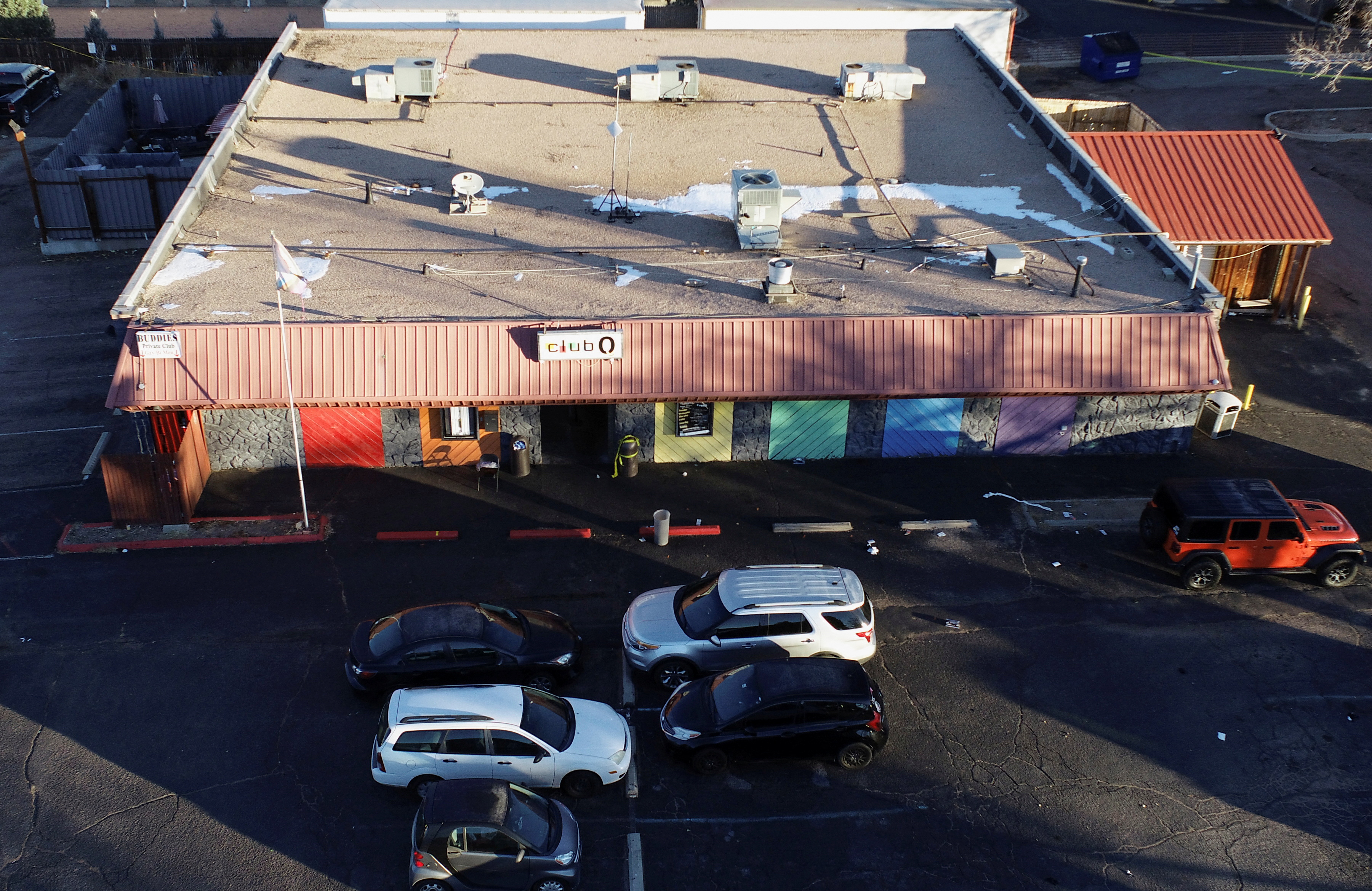
An aerial view shows vehicles parked at the scene, after a mass shooting, at the Club Q gay nightclub in Colorado Springs, Colorado, U.S., November 21, 2022. REUTERS/Drone Base

An aerial view shows police tape, after a mass shooting, at the Club Q gay nightclub in Colorado Springs, Colorado, U.S., November 21, 2022. REUTERS/Drone Base

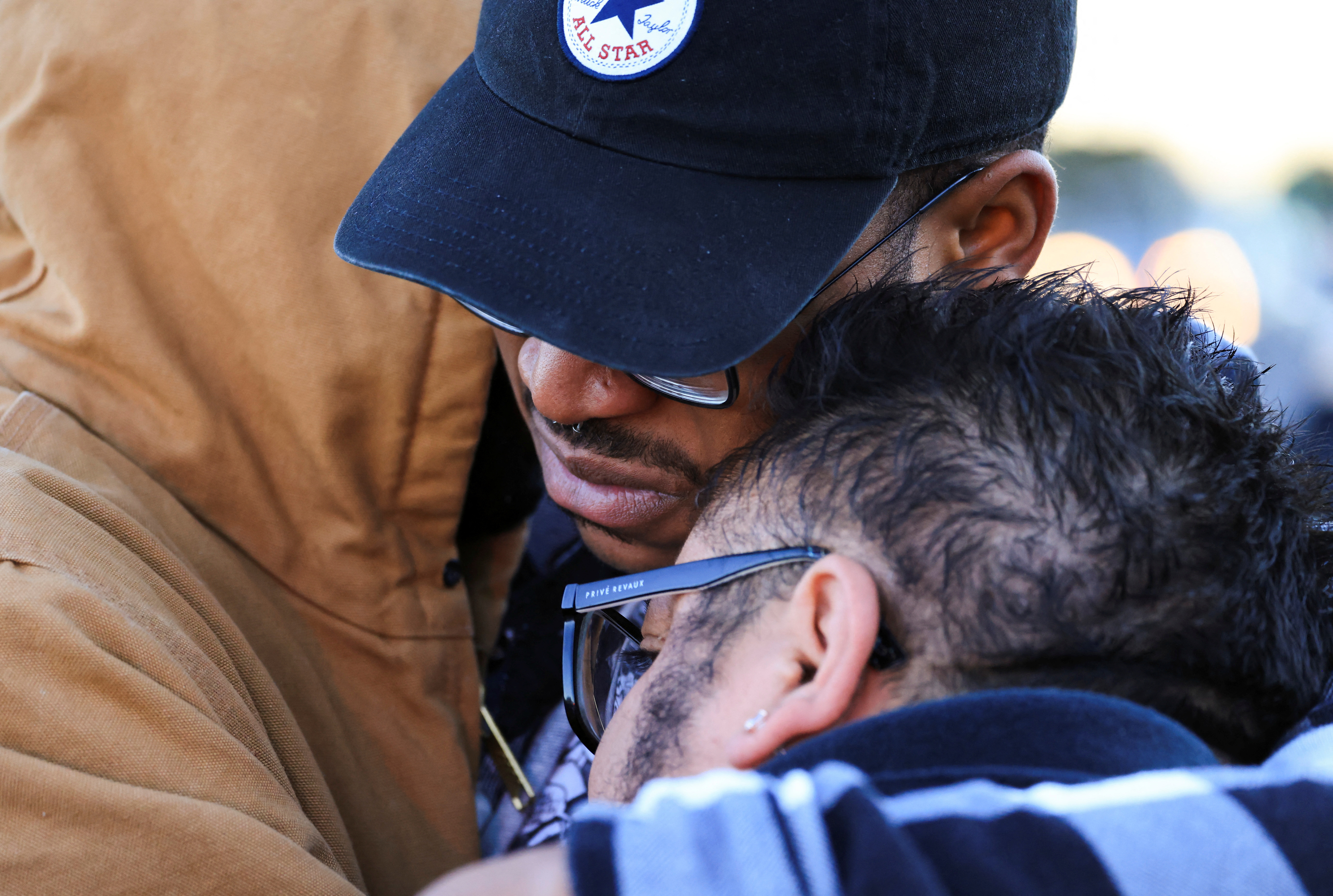
Jey Swisher embraces fellow mourners as they react after a mass shooting at the Club Q gay nightclub in Colorado Springs, Colorado, U.S., November 20, 2022. REUTERS/Kevin Mohatt

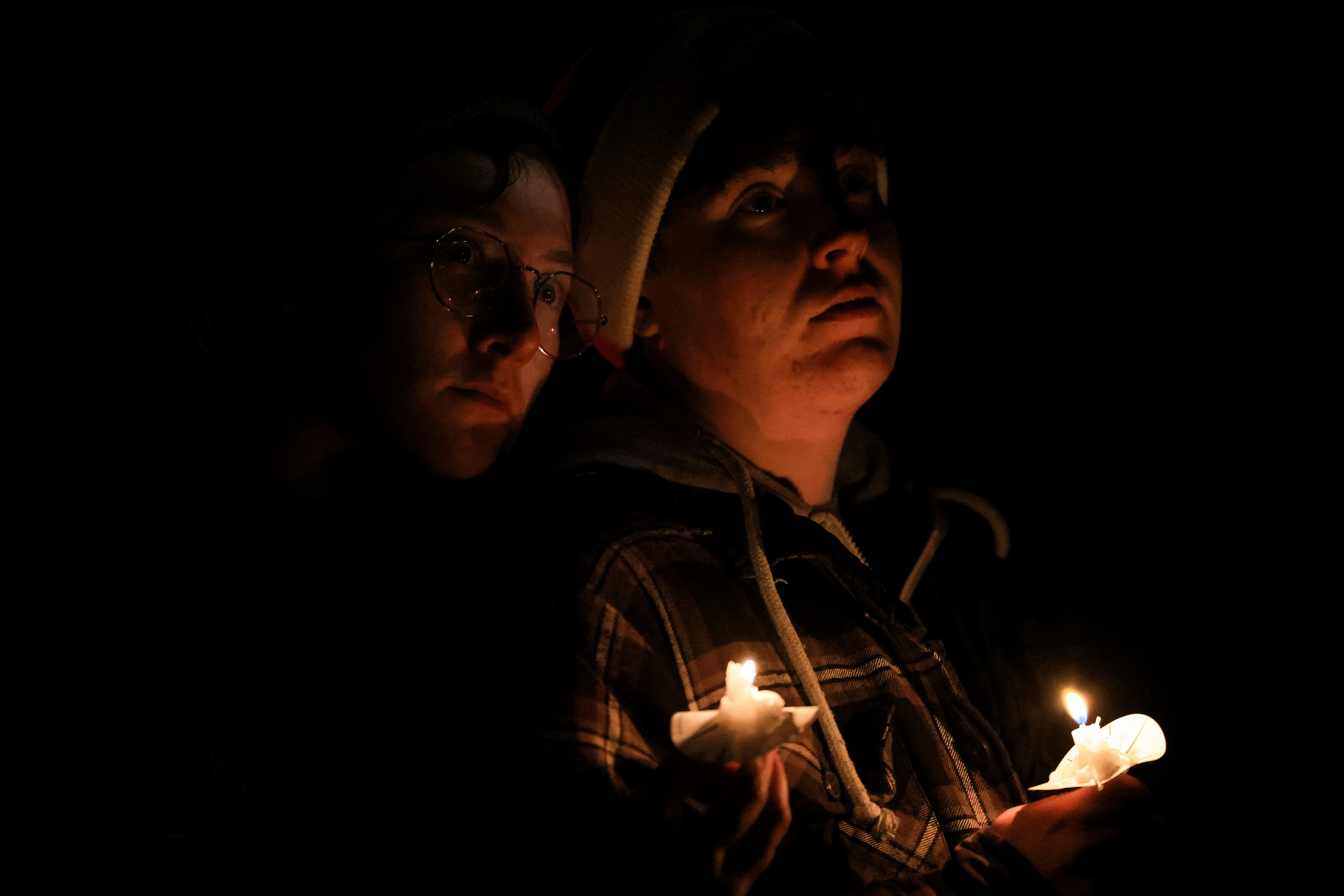
Sam Nichols and Forest Knight attend a vigil after a mass shooting at the Club Q gay nightclub in Colorado Springs, Colorado, U.S., November 20, 2022. REUTERS/Kevin Mohatt


People react after a mass shooting at the Club Q gay nightclub in Colorado Springs, Colorado, U.S., November 20, 2022. REUTERS/Kevin Mohatt
WP Radio
WP Radio
OFFLINE LIVE