Categories
Audio Sources - Full Text Articles

Ukraine Marks Dignity and Freedom Day

Ukraine marks Dignity and Freedom Day annually on Nov.21.

It was established in accordance with the Presidential Decree of Nov. 13, 2014, to mark the beginning of two significant events in contemporary Ukrainian history on this day – the Orange Revolution of 2004 and the Revolution of Dignity of 2013.

Dignity and Freedom Day became a kind of successor to the Freedom Day holiday which was celebrated in honor of the Orange Revolution on Nov. 22 from 2005 to 2011.

It was on Nov. 21, 2013, when Ukrainians started to hold the first protest rallies in response to the decision of the then government to stop the country’s movement towards European integration and freeze preparations for the signing of the EU-Ukraine Association Agreement.

However, unlike the events of the Orange Revolution, the defense of dignity and freedom led to 106 Ukrainian patriots killed and over 2,000 more injured. And in the spring of 2014, Russia’s military aggression began, accompanied by the occupation of Crimea and certain areas of Donetsk and Luhansk regions.

This year, Dignity and Freedom Day is celebrated against the background of Russia’s full-scale invasion which began on Feb. 24. Ukraine is again fighting for its freedom and independence, defending itself against the aggressor.

The post Ukraine Marks Dignity and Freedom Day appeared first on Kyiv Post.

Categories
Audio Sources - Full Text Articles

Eight Ships Leave Ports of Great Odesa in Two Days

Another eight ships with 342,000 tonnes of agricultural products for the countries of Africa, Asia and Europe left the ports of Great Odesa over the past two days, the Ukrainian Sea Ports Authority (USPA) reported on Facebook.

“Since Aug. 1, a total of 483 ships left the ports of Great Odesa, which exported 11.6 million tonnes of Ukrainian food to the countries of Asia, Europe and Africa,” the ministry said.

It clarified that four ships were also moving along the grain corridor on Sunday, Nov. 20, to load 130,500 tonnes of agricultural products.

As reported, in Istanbul on July 22, with the participation of the UN, Ukraine, Turkey and Russia, two documents were signed on the creation of a corridor for the export of grain from three Ukrainian ports: Chornomorsk, Odesa and Pivdenny, for a period of 120 days. Ukraine set as its goal to export 3 million tonnes of agricultural products per month as part of the initiative.

After Russia’s announcement on Oct. 29 that it was withdrawing from the grain initiative due to an alleged attack by Ukraine on ships in Sevastopol, exports of up to 10 million tonnes slowed down and were carried out intermittently: only about 100,000 tonnes per week, while previously such volumes were sent on average for day.

The lifting of the restrictions was announced on Nov. 2, and on Nov. 17, the extension of the grain initiative for another 120 days was announced. At the same time, Ukraine claims that it is able to ship more products, but its shipment is hindered by the insufficient work of the Joint Coordination Centre.

The post Eight Ships Leave Ports of Great Odesa in Two Days appeared first on Kyiv Post.

Categories
Audio Sources - Full Text Articles

Eight Ships Leave Ports of Great Odesa in Two Days – Kyiv Post


Released Nov. 21 at 10:41 am


The Sierra Leone-flagged ship Razoni leaves the port in Odesa right after restarting grain exports, Ukraine, Aug. 1, 2022. (Ukrainian Naval Forces Command)

A further 8 ships with 342,000 tonnes of agricultural goods for the nations of Africa, Asia and Europe left the ports of Terrific Odesa above the previous two times, the Ukrainian Sea Ports Authority (USPA) documented on Facebook.

“Since Aug. 1, a complete of 483 ships left the ports of Great Odesa, which exported 11.6 million tonnes of Ukrainian foods to the nations around the world of Asia, Europe and Africa,” the ministry said.

It clarified that four ships have been also relocating along the grain corridor on Sunday, Nov. 20, to load 130,500 tonnes of agricultural products and solutions.

As claimed, in Istanbul on July 22, with the participation of the UN, Ukraine, Turkey and Russia, two documents have been signed on the development of a corridor for the export of grain from 3 Ukrainian ports: Chornomorsk, Odesa and Pivdenny, for a interval of 120 times. Ukraine established as its objective to export 3 million tonnes of agricultural products and solutions for every thirty day period as component of the initiative.

After Russia’s announcement on Oct. 29 that it was withdrawing from the grain initiative thanks to an alleged attack by Ukraine on ships in Sevastopol, exports of up to 10 million tonnes slowed down and had been carried out intermittently: only about 100,000 tonnes for every week, although previously this kind of volumes have been despatched on typical for day.

The lifting of the restrictions was announced on Nov. 2, and on Nov. 17, the extension of the grain initiative for an additional 120 times was declared. At the exact time, Ukraine statements that it is able to ship additional merchandise, but its shipment is hindered by the inadequate perform of the Joint Coordination Centre.

Source link

The post Eight Ships Leave Ports of Great Odesa in Two Days – Kyiv Post appeared first on Ukraine Intelligence.

Categories
Audio Sources - Full Text Articles

Octocrypt, Alice, and AXLocker Ransomware, new threats in the wild

Experts from Cyble Research and Intelligence Labs (CRIL) discovered three new ransomware families: AXLocker, Octocrypt, and Alice Ransomware.

Threat intelligence firm Cyble announced the discovery of three new ransomware families named AXLocker, Octocrypt, and Alice Ransomware.

The AXLocker ransomware encrypts victims’ files and steals Discord tokens from the infected machine. The analysis of the code revealed that the startencryption() function implements the capability to search files by enumerating the available directories on the C: drive. The malware only targets specific file extensions and excludes a list of directories from the encryption process.

The AXLocker ransomware uses the AES encryption algorithm to encrypt files, unlike other ransomware it does not change the name or extension of the encrypted files.

AXLocker ransomware

“After encrypting the victim’s files, the ransomware collects and sends sensitive information such as Computer name, Username, Machine IP address, System UUID, and Discord tokens to TA.” reads the analysis published by Cyble.

The malware uses regex to find the Discord tokens in the local storage files, then sends them to the Discord server along with other information.

Once the ransomware has encrypted the files, it shows a pop-up window that contains a ransom note with instructions to contact the operators. The ransom note doesn’t include the amount requested to the victims to recover their files.

Cyble also discovered a new ransomware strain dubbed Octocrypt, it is a Golang ransomware and its operators are adopting the Ransomware-as-a-Service (RaaS) business model. The malware appeared in the threat landscape around October 2022 and is offered for USD400.

“The Octocrypt web panel builder interface allows TAs to generate ransomware binary executables by entering options such as API URL, Crypto address, Crypto amount, and Contact email address.” continues Cyble.

The third ransomware strain discovered by Cyble dubbed “Alice” is also offered as a Ransomware-as-a-Service (RaaS).

Follow me on Twitter: @securityaffairs and Facebook and Mastodon

Pierluigi Paganini

(SecurityAffairs – hacking, AXLocker ransomware)

The post Octocrypt, Alice, and AXLocker Ransomware, new threats in the wild appeared first on Security Affairs.

Categories
Audio Sources - Full Text Articles

ISW Russian Offensive Campaign Assessment, November 20

draftukrainecotnovember202022.png

Key inflections in ongoing military operations on November 20:

  • The Ukrainian Main Military Intelligence Directorate (GUR) reported on November 20 that Russian special services are planning false flag attacks on Belarusian critical infrastructure facilities to pressure the Belarusian military to enter the war in Ukraine.[18] The Ukrainian General Staff added that Ukrainian officials have not observed the formation of any Belarusian assault groups.[19] ISW continues to assess that it is unlikely that Belarusian forces will invade Ukraine.
  • Russian and Ukrainian sources reported ongoing fighting along the Svatove-Kreminna line on November 20.[20] Russian sources noted that deteriorating weather conditions are impacting hostilities.[21]
  • A Ukrainian military official stated that Ukrainian forces have liberated 12 settlements in Luhansk Oblast since the start of the eastern counteroffensive.[22]
  • The Russian Ministry of Defense (MoD) claimed to strike a Ukrainian troop concentration in the area of Novoselivske, Luhansk Oblast.[23] The Russian MoD previously claimed to repel Ukrainian attacks on the settlement, and this claim might indicate that Ukrainian forces advanced to the settlement.

The Kremlin has allowed the ever-growing informal milblogger community to gain a quasi-official but independent position despite otherwise increasing domestic repression and censorship. The Kremlin has historically promulgated its state narrative via Russian federal outlets, TV, and print media, but has allowed the highly individualistic and often critical milblogger community to put forth its own narratives regarding this war. The milblogger community is composed of a wide range of characters ranging from those who support the Kremlin while criticizing the Russian military command to some who have directly blamed Russian President Vladimir Putin for Russia’s consistent military failures in Ukraine. That the Kremlin tolerates the miblogger community is astonishing given its censorship of other more traditional outlets including opposition and foreign media.

Russian milbloggers are not merely cheerleaders for the war – they are emerging as a group with a distinct voice within Russia. Milbloggers offer a highly informal platform that differs dramatically from the Russian MoD’s structured presentation of the war. Milbloggers largely publish self-authored content on Russian social media platforms such as Telegram, VK, and RuTube in a casual and approachable manner. Most prominent milbloggers either operate on the frontlines or have sources within Russian military structures, which allows them to form assessments based on first-hand accounts independent of MoD information and censorship.

The milbloggers are not fully separate from the Russian government, however. Russian investigative outlet The Bell, for example, uncovered that the creator of one of the most influential Russian Telegram channels, Rybar, is a former employee of the Russian MoD’s press service.[2] Other milbloggers are correspondents of Russian state media outlets such as Komsomoslkaya Pravda, Ria, and RiaFan where they maintain their highly opinionated coverage of the war and even offer recommendations to improve the conduct of the Russian military campaign. Some proxy officials from occupied Donetsk and Luhansk oblasts also operate as milbloggers because they voice their opinions, share analysis from other milbloggers, and disseminate footage from the frontlines independent of the Kremlin and often at odds with the official MoD and Kremlin lines.

Select milbloggers are now holding official positions within the Kremlin. Putin has promoted some prominent milbloggers with large numbers of followers in order to reach the nationalist constituency to which they speak and most importantly to prevent this group from turning against Putinism. Putin appointed a prominent Russian milblogger and correspondent for Komsomolskaya Pravda, Alexander (Sasha) Kots as a member of the Russian Human Rights Council on November 20, for example, as ISW has previously reported.[3] Putin has met individually with some Russian milbloggers and invited them to attend his annexation speech on September 30.[4] Putin’s engagements with these milbloggers have not softened their commentary on the war, however. They continue to criticize the Russian war effort and especially the Russian MoD even as Putin defends and promotes them.

Some Russian milbloggers have close ties with prominent nationalist ideologists. Nationalist and former member of the Russian State Duma Zakhar Prilepin (known for creating a volunteer battalion in occupied Donetsk Oblast in 2017) and founder of the modern-day National Bolshevik Party Eduard Limonov reportedly celebrated Russian milblogger Semyon Pegov (known under the alias Wargonzo).[5] Milbloggers also host podcasts with widely known Russian neo-nationalists such as Alexander Dugin and perestroika-era Soviet TV personality Alexander Lyubimov.[6] The milbloggers’ affiliation and mutual promotion with these figures foster a maximalist goal of full Russian supremacy in Ukraine within the information space. Dugin even directly blamed Putin for Russia’s military failures following the Russian withdrawal from Kherson City, in fact, criticizing Putin for failing to embrace Russian nationalist ideology fully enough.[7] Dugin’s criticism did not lead other milbloggers to criticize Putin explicitly, but neither did the milbloggers defend Putin against Dugin’s critique or attack Dugin.

Putin has likely blocked MoD attempts to purge or otherwise control the milbloggers. ISW reported on October 14 that unspecified Russian senior officials within the Russian MoD attempted to criminally prosecute the most prominent milbloggers.[8] Russian milbloggers publicly criticized the Russian MoD for the censorship attempt, continued their normal war coverage, and did not report receiving criminal charges. Unknown Russian officials had previously attacked Russian milbloggers by accusing them of revealing Russian positions to Ukrainian forces.[9] Putin has apparently stood by the milbloggers, however, recently commenting on the importance of transparency and accuracy in war reporting—a comment that could only have been aimed at the milblogger coverage.[10]

The prominence of the milblogger community is likely a direct result of the Kremlin’s failure to establish an effective Telegram presence stemming from Putin’s general failure to prepare his people for a serious and protracted war. Russian media statistics center Brand Analytics noted that between the start of the war on February 24 and October 1, the number of Russian bloggers on Telegram increased by 58% while the use of banned Western social media platforms such as Instagram and Twitter decreased markedly.[11] Telegram also has the highest percent increase of daily published content (23%) compared with to other Russian social media outlets over that period. The Bell noted that Rybar’s following increased sharply in September and October to over a million followers amidst partial mobilization and the start of Ukrainian counteroffensives in the east and south.[12] The growth of Telegram and the case of Rybar highlight Russians’ distrust of the Kremlin’s official narratives and search for more accurate reporting. The Ukrainian government, it is worth noting, took the opposite approach. Instead of attempting to centralize reporting on the war, Kyiv tasked all regional officials to start official Telegram channels to provide information regarding the war in real time.[13]

The Kremlin struggles to emulate the success of Russian pro-war siloviki figures online. Chechen leader and silovik Ramzan Kadyrov is the most followed Russian milblogger with over three million followers on Telegram. Kadyrov’s Telegram channel closely resembles the other milbloggers’ in format and features Kadyrov’s video rants, combat footage, and unfiltered opinions on the course of the “special military operation.”[14] Kadyrov’s channel, however, has a more coherent narrative than the individual milbloggers given his personal interests in promoting his troops.[15] Wagner Group-affiliated milbloggers also promote mercenary forces at the expense of criticizing the Russian MoD and traditional forces.[16] Prominent Kremlin state TV propagandists Vladimir Solovyov and Margarita Simonyan, on the other hand, only have 1.4 million and 500,000 followers on Telegram respectively and have begun echoing some Russian milblogger critiques on their Telegram channels.[17] The Russian MoD channel has even fewer followers on Telegram than Solovyov and Simonyan despite the growth of the platform – only 480,000.

Putin continues to double down on support for the independence of milblogger reporting even as he doubles down on efforts to mobilize the Russian population for war. These two phenomena are almost certainly related.  Putin likely recognizes that the Kremlin and especially the MoD has lost whatever trust many Russians may have had in the veracity of its claims as well as the need to rely on such voices as pro-war Russians find authentic to retain support for the increasing sacrifices he is demanding.  Putin’s defense of the milbloggers’ criticisms of his chosen officials is remarkable. It suggests that he sees retaining the support of at least some notable segment of the Russian population as a center of gravity for the war effort if not for the survival of his regime and that he is willing to endure critiques from a group he perceives as loyal to secure that center of gravity. Will the milbloggers remain loyal to Putin and the war effort if the Russian military continues to struggle and suffer setbacks? How will Putin react if they do not? These questions could become significant as Putin increases his demands on his reluctant population to provide cannon fodder for a failing war.

See the full report here.

The post ISW Russian Offensive Campaign Assessment, November 20 appeared first on Kyiv Post.

Categories
Audio Sources - Full Text Articles

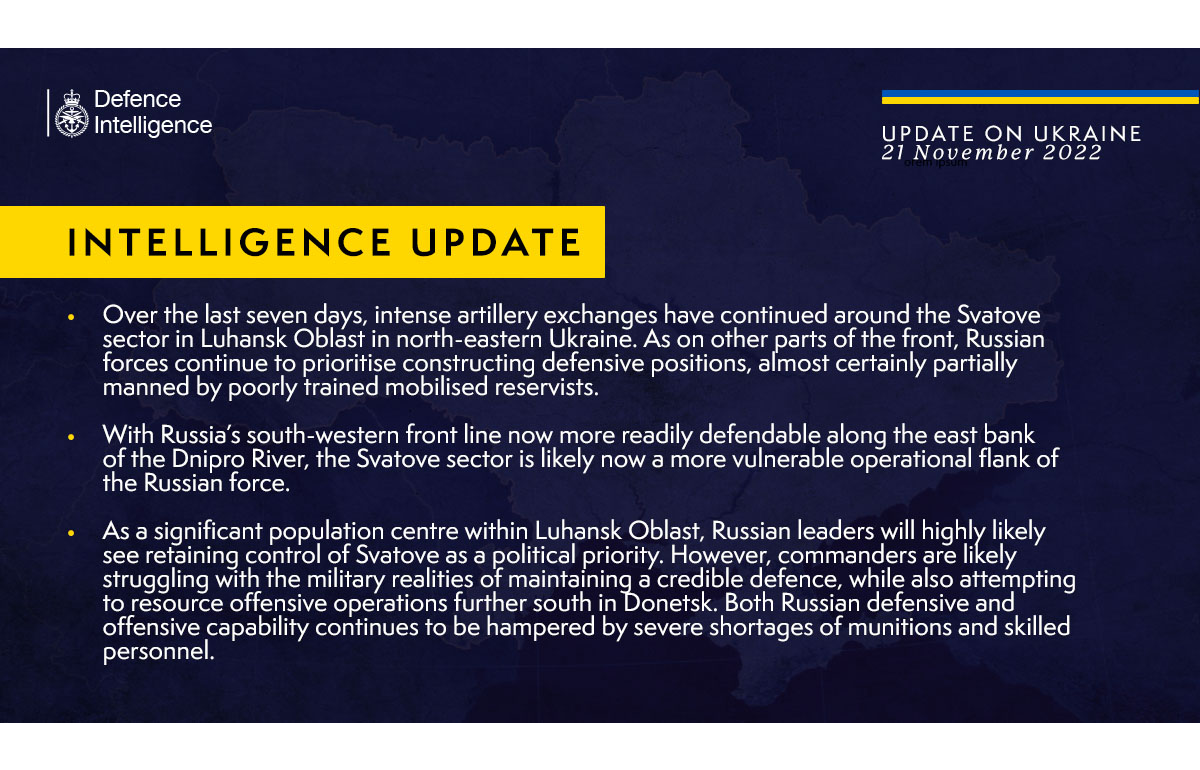
British Defence Intelligence Update Ukraine – 21 November 2022

fieskq8xwamfyvs.png

  • Over the last seven days, intense artillery exchanges have continued around the Svatove sector in Luhansk Oblast in north-eastern Ukraine.
  • As on other parts of the front, Russian forces continue to prioritise constructing defensive positions, almost certainly partially manned by poorly trained mobilised reservists.
  • With Russia’s south-western front line now more readily defendable along the east bank of the Dnipro River, the Svatove sector is likely now a more vulnerable operational flank of the Russian force.
  • As a significant population centre within Luhansk Oblast, Russian leaders will highly likely see retaining control of Svatove as a political priority.
  • However, commanders are likely struggling with the military realities of maintaining a credible defence, while also attempting to resource offensive operations further south in Donetsk.
  • Both Russian defensive and offensive capability continues to be hampered by severe shortages of munitions and skilled personnel.

The post British Defence Intelligence Update Ukraine – 21 November 2022 appeared first on Kyiv Post.

Categories
Audio Sources - Full Text Articles

Latest on Russia’s War Against Ukraine – Roundup

000_32pc4th.jpg

UN nuclear chief chief denounces strikes on Ukraine power plant –

The UN’s atomic watchdog chief on Sunday, Nov. 20,  denounced “targeted” strikes at Ukraine’s Russian-controlled Zaporizhzhia nuclear plant, calling for a “stop to this madness”, as Kyiv and Moscow traded blame.

Ukraine meanwhile dismissed Russian accusations that it had executed surrendering soldiers.

“The news from our team yesterday and this morning is extremely disturbing,” said a statement Sunday from Rafael Grossi, head of the International Atomic Energy Agency.

“Explosions occurred at the site of this major nuclear power plant, which is completely unacceptable.

“Whoever is behind this, it must stop immediately,” he added.

“As I have said many times before, you’re playing with fire!”

There were more than a dozen blasts overnight Saturday to Sunday, some of which a team of experts from the agency on site had themselves seen, the IAEA said in a statement.

Speaking to French broadcaster BFMTV later Sunday, Grossi was clear that the strikes on the plant were no accident.

“The people who are doing this know where they are hitting. It is absolutely deliberate, targeted.”

The IAEA is to send a team of experts to the plant — the biggest nuclear facility in Europe — and which is currently controlled by Russian troops.

– ‘Staged surrender’ –

Ukraine meanwhile dismissed Russian accusations that its soldiers had killed Russian troops as they were surrendering, in what Moscow has described as a “war crime”.

Extracts from the video footage in question showed that in fact, Russian forces had used a “staged surrender” to open fire on Ukrainian soldiers, Dmytro Lubinets, the parliament’s commissioner for human rights said Sunday.

“In this case, persons among the Russian servicemen cannot be considered prisoners of war, but are those who are fighting and committing treachery,” he added.

“Returning fire is not a war crime. On the contrary, those who want to use the protection of international law to kill must be punished.”

Video footage circulated on Russian social media last week purported to show the bodies of Russian servicemen killed after surrendering to Ukrainian troops.

AFP has not independently confirmed the videos.

A UN spokesperson told AFP on Friday it was “aware of the videos” and “looking into them”.

– Russian shelling –

In the southern city of Kherson, which Ukrainian troops recently recaptured, residents were facing a fresh challenge after eight months of occupation by Moscow’s troops — Russian artillery attacks.

After Russian shells pounded the industrial area next to their home, setting fire to an oil depot there, Yuri Mosolov and his wife decided it was time to leave.

“After yesterday’s shelling, my wife said: let’s not take too many risks and go,” Mosolov told AFP.

A carefully planned campaign by Kyiv targeting logistics networks, bridges and pontoon crossings battered Russian supply lines and forced their troops to abandon the city and retreat to the Dnipro’s eastern bank.

Now the armies are increasingly engaging in heavy artillery exchanges across the river.

“Artillery duels are still going on. The combat continues,” said Dmytro Pletenchuk, the Ukrainian military’s spokesman in the area. “Kherson is now on the frontline.”

Elsewhere near Kherson, Russian strikes hit near a humanitarian distribution area in the village of Bilozerka, sending residents fleeing on Saturday.

– Terms for peace –

Ukraine’s President Volodymyr Zelensky, in his daily address, said there had been nearly 400 Russian attacks in the east of the country alone on Sunday.

The toughest battles, he said, were in the eastern Donetsk region — one of those Russia now claims as its own. Fighting was also continuing in neighboring Lugansk.

Teams were working around the clock to repair damage to the energy infrastructure wrought by Russia’s artillery bombardments — but “stabilization blackouts” were nevertheless necessary in 15 regions, including Kyiv, he added.

And he once again set out Kyiv’s terms for peace, which include food and energy security, the release of all prisoners and deportees and the withdrawal of Russian troops from all Ukrainian territory.

The post Latest on Russia’s War Against Ukraine – Roundup appeared first on Kyiv Post.

Categories
Audio Sources - Full Text Articles

Philips recalls some previously replaced ventilators -FDA statement

2022-11-21T08:15:52Z

Logo of Dutch medical equipment maker Philips is seen at its company headquarters in Amsterdam, Netherlands, January 29, 2019. REUTERS/Eva Plevier

Philips (PHG.AS), which has been struggling with a major recall of ventilators, is recalling some machines it has previously replaced, according to an FDA statement.

A Philips spokesperson said on Monday that only Trilogy 100/200 venilator models were potentially affected.

The FDA said the company had notified it that the sound abatement foam could come loose in some refurbished models, “lowering the inspiratory pressure”.

In addition, trace amounts of particulate matter were found in air pathways of some reworked ventilators.

Philips has replaced more than 4 million ventilators and sleep apnoea machines over the past 18 months due to worries that foam used in the machines could become toxic.

The spokesperson said Trilogy 100/200 ventilators represent around 3% of the recall, and no sleep apnoea machines were affected.

Categories
Audio Sources - Full Text Articles

Latest on Russia’s War Against Ukraine – Roundup – Kyiv Post

UN nuclear chief main denounces strikes on Ukraine ability plant –

The UN’s atomic watchdog main on Sunday, Nov. 20,  denounced “targeted” strikes at Ukraine’s Russian-controlled Zaporizhzhia nuclear plant, calling for a “stop to this madness”, as Kyiv and Moscow traded blame.

Ukraine in the meantime dismissed Russian accusations that it experienced executed surrendering troopers.

“The news from our workforce yesterday and this morning is incredibly disturbing,” explained a assertion Sunday from Rafael Grossi, head of the Intercontinental Atomic Vitality Agency.

“Explosions transpired at the web-site of this major nuclear electric power plant, which is absolutely unacceptable.

“Whoever is powering this, it should cease quickly,” he extra.

“As I have explained many periods right before, you’re participating in with fireplace!”

There were much more than a dozen blasts right away Saturday to Sunday, some of which a workforce of specialists from the agency on web site experienced by themselves witnessed, the IAEA stated in a statement.

Speaking to French broadcaster BFMTV afterwards Sunday, Grossi was very clear that the strikes on the plant had been no incident.

“The persons who are doing this know where by they are hitting. It is completely deliberate, targeted.”

The IAEA is to send out a staff of specialists to the plant — the most important nuclear facility in Europe — and which is at this time managed by Russian troops.

– ‘Staged surrender’ –

Ukraine in the meantime dismissed Russian accusations that its soldiers experienced killed Russian troops as they were surrendering, in what Moscow has explained as a “war crime”.

Extracts from the video clip footage in problem showed that in reality, Russian forces had used a “staged surrender” to open up hearth on Ukrainian soldiers, Dmytro Lubinets, the parliament’s commissioner for human rights mentioned Sunday.

“In this situation, folks between the Russian servicemen simply cannot be viewed as prisoners of war, but are those people who are combating and committing treachery,” he included.

“Returning hearth is not a war criminal offense. On the contrary, those who want to use the security of international law to destroy should be punished.”

Movie footage circulated on Russian social media last 7 days purported to exhibit the bodies of Russian servicemen killed after surrendering to Ukrainian troops.

AFP has not independently confirmed the films.

A UN spokesperson instructed AFP on Friday it was “aware of the videos” and “looking into them”.

– Russian shelling –

In the southern metropolis of Kherson, which Ukrainian troops just lately recaptured, inhabitants had been facing a fresh new challenge after 8 months of occupation by Moscow’s troops — Russian artillery assaults.

Right after Russian shells pounded the industrial place upcoming to their residence, location fire to an oil depot there, Yuri Mosolov and his wife determined it was time to depart.

“After yesterday’s shelling, my spouse mentioned: let us not acquire too quite a few hazards and go,” Mosolov instructed AFP.

A carefully planned marketing campaign by Kyiv focusing on logistics networks, bridges and pontoon crossings battered Russian provide traces and compelled their troops to abandon the city and retreat to the Dnipro’s japanese financial institution.

Now the armies are increasingly participating in weighty artillery exchanges throughout the river.

“Artillery duels are however heading on. The fight continues,” explained Dmytro Pletenchuk, the Ukrainian military’s spokesman in the place. “Kherson is now on the frontline.”

In other places near Kherson, Russian strikes hit around a humanitarian distribution spot in the village of Bilozerka, sending inhabitants fleeing on Saturday.

– Terms for peace –

Ukraine’s President Volodymyr Zelensky, in his day by day tackle, explained there experienced been almost 400 Russian assaults in the east of the nation by itself on Sunday.

The toughest battles, he mentioned, ended up in the japanese Donetsk area — a person of those Russia now statements as its very own. Preventing was also continuing in neighboring Lugansk.

Teams had been performing about the clock to repair injury to the vitality infrastructure wrought by Russia’s artillery bombardments — but “stabilization blackouts” had been yet vital in 15 locations, including Kyiv, he included.

And he once once more established out Kyiv’s phrases for peace, which include things like foodstuff and electrical power security, the release of all prisoners and deportees and the withdrawal of Russian troops from all Ukrainian territory.

Supply hyperlink

The post Latest on Russia’s War Against Ukraine – Roundup – Kyiv Post appeared first on Ukraine Intelligence.

Categories
Audio Sources - Full Text Articles

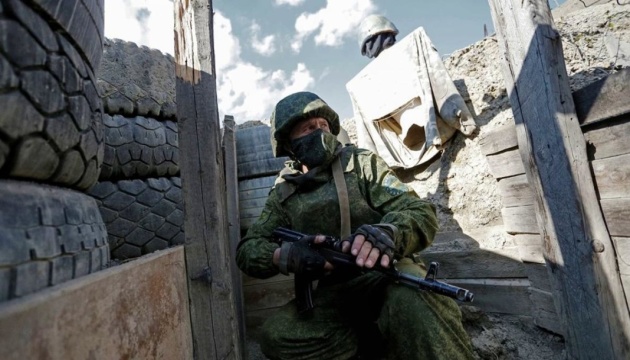
Svatove area most vulnerable spot in Russian defenses

630_360_1617786260-827.jpg

Russian troops are probably to prioritize retaining manage of the Svatove sector as the place is now the invaders’ most vulnerable operational flank.

That is in accordance to the British Protection Ministry referring to intelligence info, Ukrinform reports.

More than the previous 7 times, intensive artillery exchanges have continued close to the Svatove sector in Luhansk region in north-jap Ukraine, in accordance to the newest war update introduced on Twitter.

As on other components of the front, Russian forces continue on to prioritize setting up defensive positions, virtually definitely partly manned by badly skilled mobilized reservists, the report notes.

Browse also: Belarus programs to launch production of artillery, MLRS munitions – intelligence

“With Russia’s south-western entrance line now far more easily defendable alongside the east bank of the Dnipro River, the Svatove sector is probably now a far more susceptible operational flank of the Russian pressure,” the tweet reads.

As a important inhabitants middle within Luhansk area, Russian leaders will really very likely see retaining regulate of Svatove as a political priority, British intelligence indicates.

Even so, commanders are probable struggling with the armed forces realities of protecting a credible defense, although also attempting to source offensive operations even further south in Donetsk. The two Russian defensive and offensive capability carries on to be hampered by severe shortages of munitions and qualified personnel.

As Ukrinform noted previously, British intelligence considered Russian retreat from the ideal lender of the Dnipro in Kherson location a lot improved organized than in other areas, which may perhaps testify to a greater command of withdrawing troops.

Picture: AA

Source link

The post Svatove area most vulnerable spot in Russian defenses appeared first on Ukraine Intelligence.

WP Radio
WP Radio
OFFLINE LIVE