Categories
Audio Sources - Full Text Articles

The Observer view on the police’s failure to prioritise violence against women | Observer editorial

As the murders of Raneem Oudeh and Khaola Saleem reveals, some forces don’t regard domestic abuse as a serious crime

The police are charged with keeping citizens safe from violent assault. Yet for too many women and children facing abuse and brutality at the hands of men, failed by police officers who do not take male violence against partners and children seriously, this is a theoretical protection.

Last week, the Independent Office for Police Conduct published its investigation into a truly awful case of police failure to intervene in a case of domestic abuse. They found that West Midlands police “materially contributed” to the murders of Raneem Oudeh and her mother, Khaola Saleem, in 2018, through their repeated failures to address the threat that Oudeh’s violent former partner posed to their lives.

Continue reading…

Categories
Audio Sources - Full Text Articles

China says open to meeting with U.S. defence secretary

2022-11-20T06:35:19Z

China said on Sunday it is open to a meeting with the U.S. defence secretary on the sidelines of a regional security forum in Cambodia this week, in a sign of thawing relations after the countries’ top leaders met earlier this month.

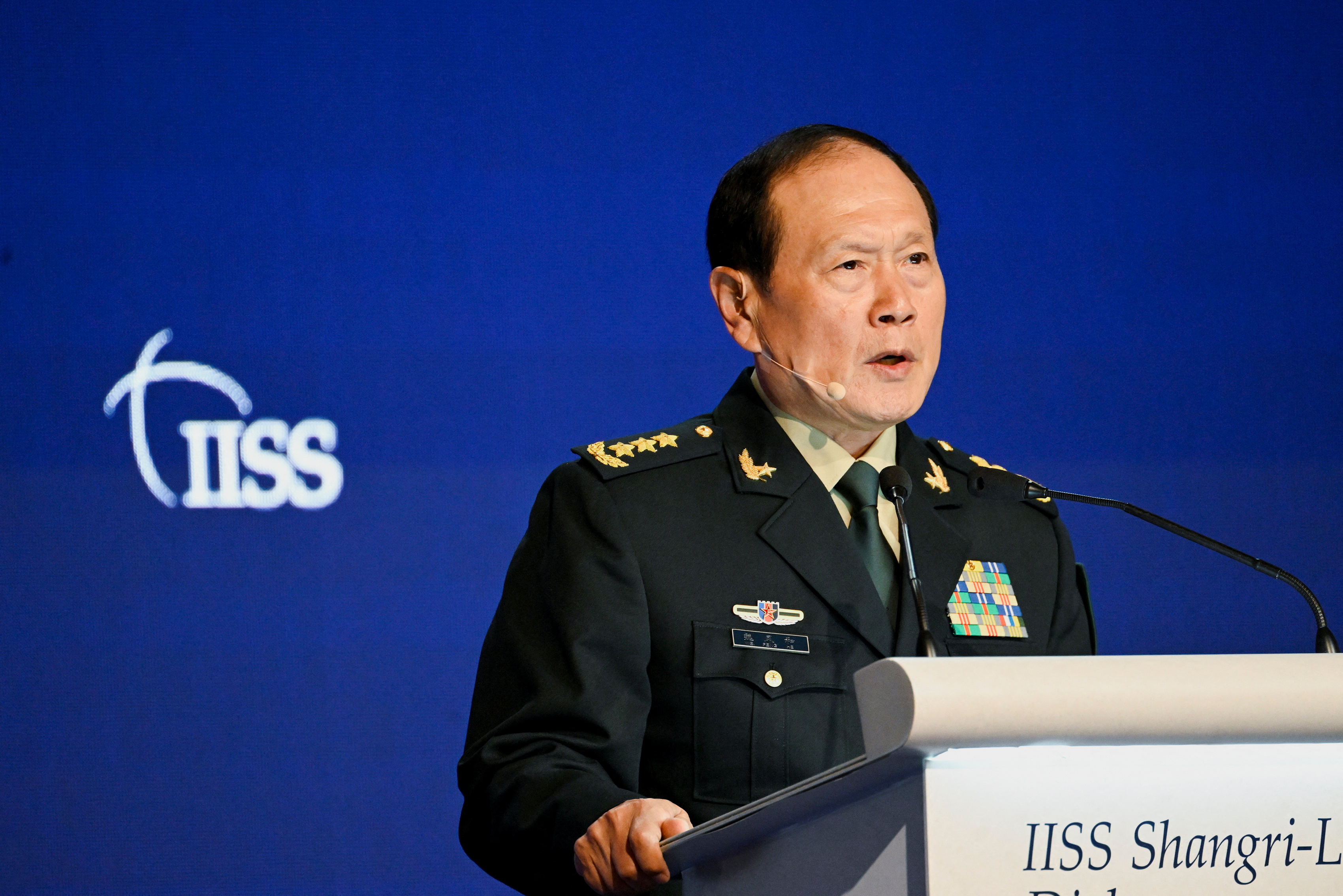
China Defence Minister Wei Fenghe and U.S. Secretary of Defense Austin Lloyd previously confirmed separately that they would attend the forum with Southeast Asian countries, the ASEAN Defence Ministers’ Meeting-Plus.

On Sunday, China’s defence ministry issued a statement featuring a question about whether the two would meet, with spokesman Tan Kefei quoted as saying, “China holds a proactive and open attitude for exchange with the United States.”

He also said both sides are coordinating regarding an “exchange” at the forum, set to take place on Wednesday.

A meeting would represent the first high-level military exchange between the countries since China halted regular dialogue between military commanders in August in retaliation for U.S. House Speaker Nancy Pelosi’s visit to Taiwan.

China regards democratically ruled Taiwan as a renegade province.

In Indonesia last week, on the sidelines of a Group of 20 summit, China President Xi Jinping and U.S. President Joe Biden held their first face-to-face meeting since the latter took office in early 2021.

Ties between the world’s two largest economies have deteriorated in recent years amid issues such as trade, human rights and Taiwan.

Related Galleries:

China’s State Councilor and Defence Minister General Wei Fenghe speaks at a plenary session during the 19th Shangri-La Dialogue in Singapore June 12, 2022. REUTERS/Caroline Chia

U.S. Defense Secretary Lloyd Austin speaks during a news briefing after participating a virtual Ukraine Defense Contact Group meeting at the Pentagon in Arlington, Virginia, U.S., November 16, 2022. REUTERS/Tom Brenner/File Photo
Categories
Audio Sources - Full Text Articles

COP27 deal delivers landmark on “loss and damage“, but little else

2022-11-20T06:48:10Z

Countries adopted a hard-fought final agreement at the COP27 climate summit early on Sunday that sets up a fund to help poor countries being battered by climate disasters – but does not boost efforts to tackle the emissions causing them.

After tense negotiations that ran through the night, the Egyptian COP27 presidency released the final text for a deal and simultaneously called a plenary session to quickly gavel it through.

The swift approval for creating a dedicated loss and damage fund still left many of the most controversial decisions on the fund until next year, including who should pay into it.

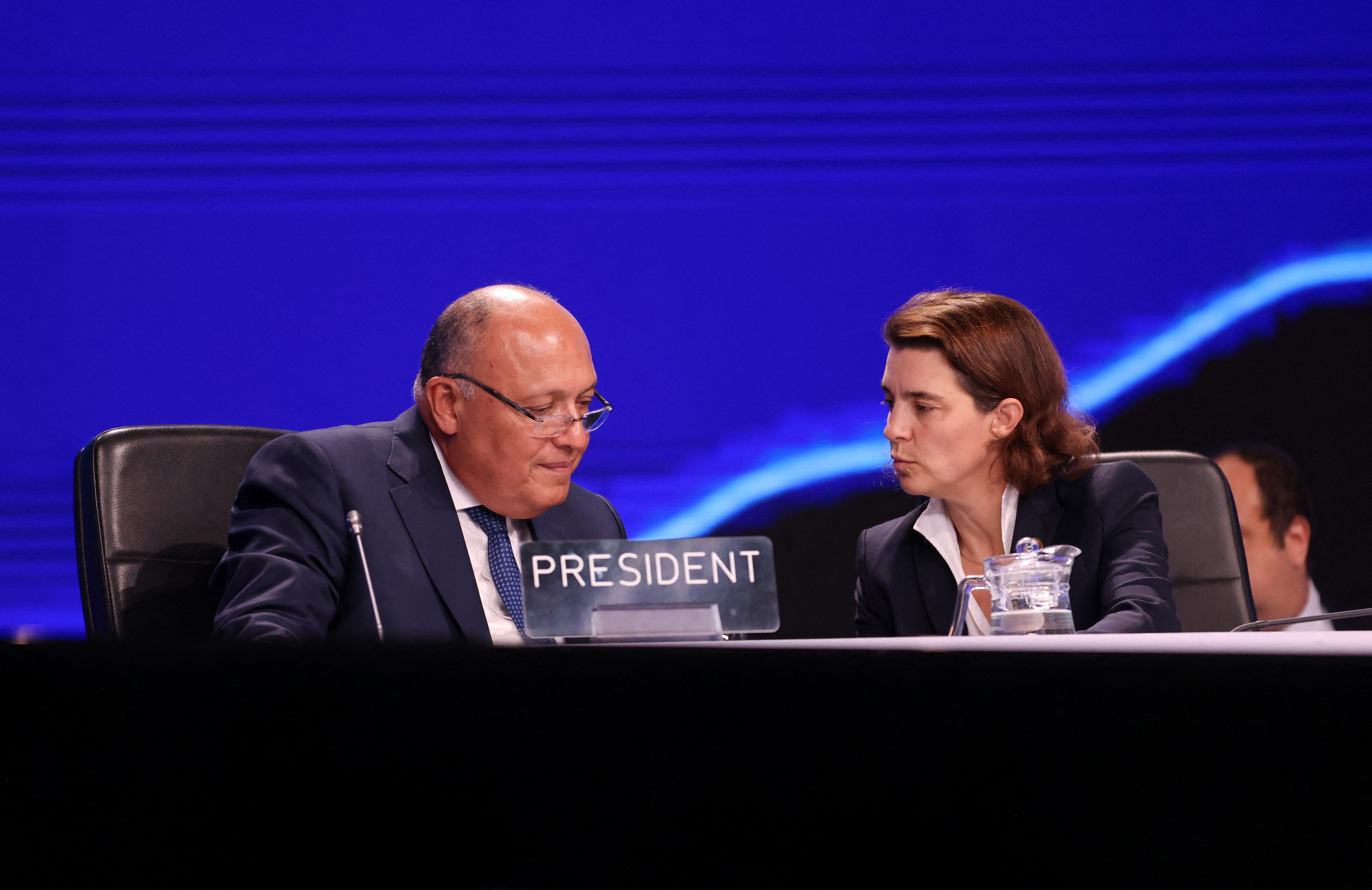
Negotiators made no objections as COP27 President Sameh Shoukry rattled through the final agenda items. And by the time dawn broke over the summit venue in the Egyptian resort of Sharm el-Sheikh on Sunday, the deal was done.

Despite having no agreement for tougher emissions reductions, “we went with what the agreement was here because we want to stand with the most vulnerable,” said Germany’s climate secretary Jennifer Morgan, visibly upset.

Delegates praised the breakthrough on setting up the fund as climate justice, for its aim in helping vulnerable countries cope with storms, floods and other disasters being fuelled by rich nations’ historic carbon emissions.

When asked by Reuters whether the goal of stronger climate-fighting ambition had been compromised for the deal, Mexico’s chief climate negotiator Camila Zepeda summed up the mood among exhausted negotiators.

“Probably. You take a win when you can.”

The two-week summit has been seen as a test of global resolve to fight climate change – even as a war in Europe, energy market turmoil and rampant consumer inflation distract international attention.

Billed as the “African COP,” the summit in Egypt had promised to highlight the plight of poor countries facing the most severe consequences from global warming caused mainly by wealthy, industrialised nations.

The United States also supported the loss and damage provision, but climate envoy John Kerry did not attend the session after testing positive for COVID-19 this week.

Negotiators from the European Union and other countries had said earlier that they were worried about efforts to block measures to strengthen last year’s Glasgow Climate Pact.

“It is more than frustrating to see overdue steps on mitigation and the phase-out of fossil energies being stonewalled by a number of large emitters and oil producers,” German Foreign Minister Annalena Baerbock said in a statement.

In line with earlier iterations, the approved deal did not contain a reference requested by India and some other delegations to phasing down use of “all fossil fuels”.

It instead called on countries to take steps toward “the phasedown of unabated coal power and phase-out of inefficient fossil fuel subsidies,” as agreed at the COP26 Glasgow summit.

“Too many parties are not ready to make more progress today in the fight against climate crisis,” EU climate policy chief Frans Timmermans said, describing the deal as “not enough of a step forward for people and planet.”

The text also included a reference to “low-emissions energy”, raising concern among some that it opened the door to the growing use of natural gas – a fossil fuel that leads to both carbon dioxide and methane emissions.

“It does not break with Glasgow completely, but it doesn’t raise ambition at all,” Norway’s Climate Minister Espen Barth Eide told reporters.

Small island nations facing a climate-driven rise in sea level had pushed for the loss and damage deal, but lamented the lack of ambition on curbing emissions.

“I recognise the progress we made in COP27” in terms of establishing the fund, the Maldives climate minister, Aminath Shauna, told the plenary. But “we have failed on mitigation … We have to ensure that we increase ambition to peak emissions by 2025. We have to phase out fossil fuel.”

The climate envoy from the Marshall Islands said she was “worn out” but happy with the fund’s approval.

“So many people all this week told us we wouldn’t get it. So glad they were wrong,” Kathy Jetnil-Kijiner said by email. Still, “I wish we got fossil fuel phase out. The current text is not enough.”

For daily comprehensive coverage on COP27 in your inbox, sign up for the Reuters Sustainable Switch newsletter here.

Related Galleries:

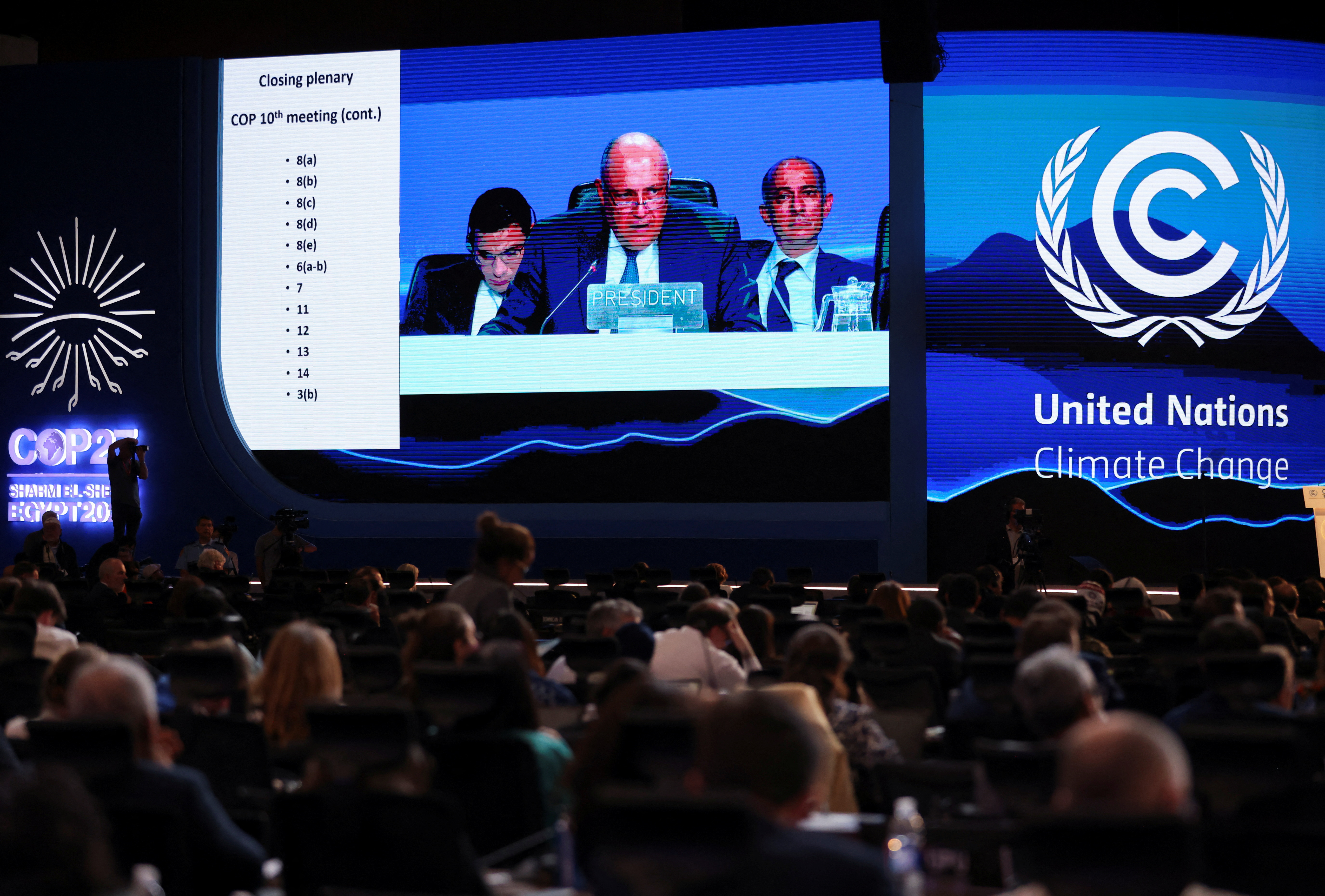
A screen shows COP27 President Sameh Shoukry delivering a statement during the closing plenary at the COP27 climate summit in Red Sea resort of Sharm el-Sheikh, Egypt, November 20, 2022. REUTERS/Mohamed Abd El Ghany


Ministers deliver statements during the closing plenary at the COP27 climate summit in Red Sea resort of Sharm el-Sheikh, Egypt, November 20, 2022. REUTERS/Mohamed Abd El Ghany

Ministers deliver statements during the closing plenary at the COP27 climate summit in Red Sea resort of Sharm el-Sheikh, Egypt, November 20, 2022. REUTERS/Mohamed Abd El Ghany

COP27 President Sameh Shoukry attends the closing plenary at the COP27 climate summit in Red Sea resort of Sharm el-Sheikh, Egypt, November 20, 2022. REUTERS/Mohamed Abd El Ghany

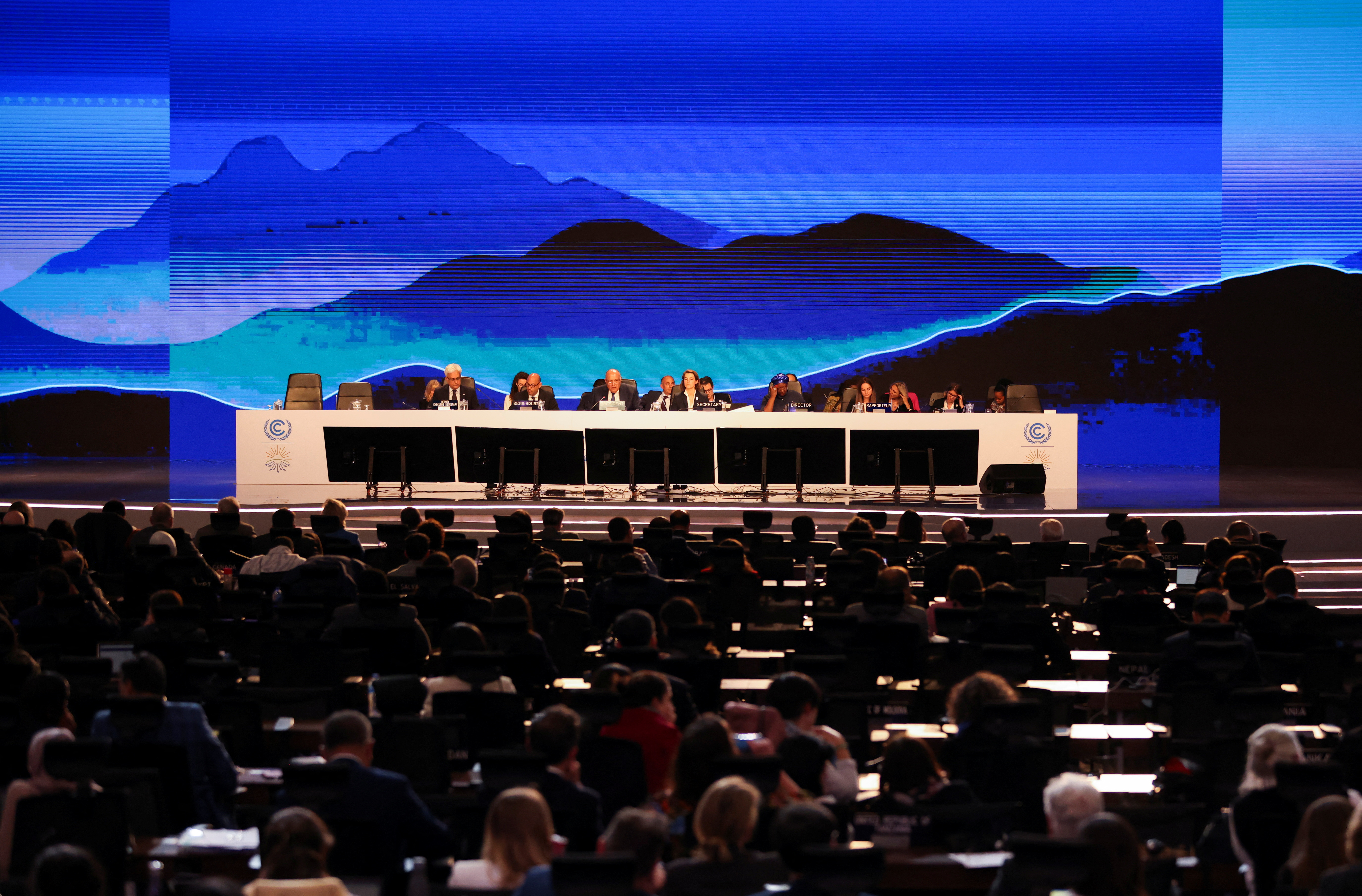
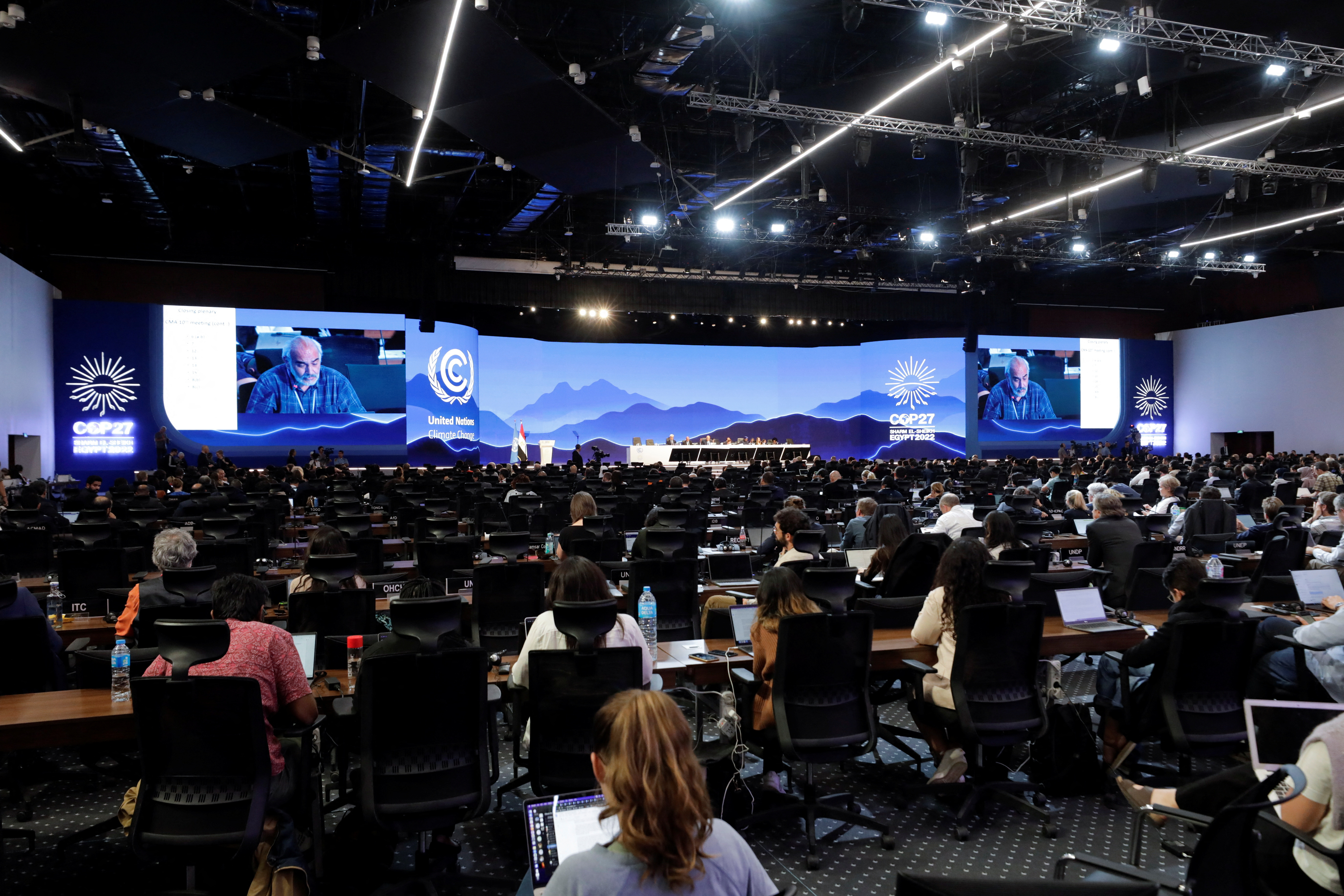
A general view shows the closing plenary at the COP27 climate summit in Red Sea resort of Sharm el-Sheikh, Egypt, November 20, 2022. REUTERS/Mohamed Abd El Ghany

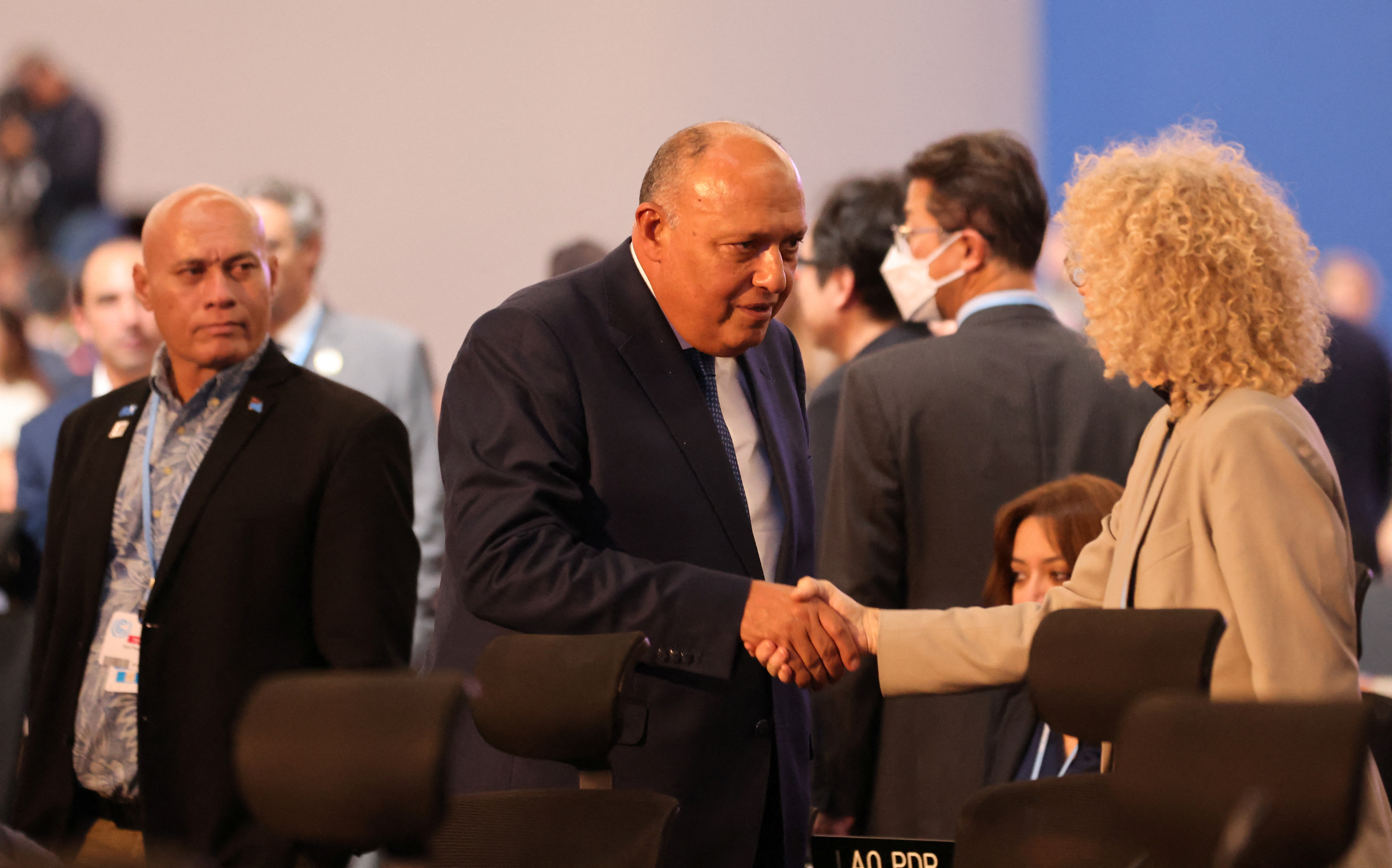
COP27 President Sameh Shoukry greets delegates during the closing plenary at the COP27 climate summit in Red Sea resort of Sharm el-Sheikh, Egypt, November 20, 2022. REUTERS/Mohamed Abd El Ghany

Delegates attend the closing plenary at the COP27 climate summit in Red Sea resort of Sharm el-Sheikh, Egypt, November 20, 2022. REUTERS/Mohamed Abd El Ghany
Categories
Audio Sources - Full Text Articles

With Philippines visit VP Harris seeks to reset relations

2022-11-20T06:08:41Z

U.S. Vice President Kamala Harris arrives in the Philippines on Sunday for talks aimed at reviving ties with Washington’s oldest ally in Asia and one that is central to U.S. efforts to counter China’s increasingly assertive policies towards Taiwan.

Harris, who will meet President Ferdinand Marcos Jr., comes to the region as the Biden administration seeks to shore up relations with allies worried about growing Chinese influence in Southeast Asia and possible conflict over Taiwan, the self-governing island China regards as its own.

The Philippines is an important part of this diplomatic push. Military access to the country, just 120 miles (193 km)from Taiwan and adjacent to the South China Sea, would greatly complicate any attempt by China to invade Taiwan, according to military analysts.

In Marcos, son and namesake of the Philippines’ onetime dictator, President Joe Biden and his national security aides see a strategic and unexpectedly strong ally for its top foreign policy challenge — competition with China — according to administration officials.

“It makes sense to invest high-level attention to restore deepened cooperation across the board with this youthful, populous, prospering, and strategically located ally,” said Daniel Russel, the top U.S. diplomat for East Asia under former President Barack Obama and now with the Asia Society.

The visit by Harris will be the highest-level trip to the Philippines by an administration official and marks a sharp turnaround in relations.

Marcos’ predecessor, Rodrigo Duterte, frustrated Washington with a strongman approach, perceived closeness to Beijing and a bellicose tone that included appearing to call Obama a “son of a bitch.”

With Marcos in office, the Biden administration is attempting a reset.

Biden called Marcos the night after his victory was announced, largely avoiding thorny issues, to send a congratulatory message, according to a person familiar with the call.

“I think I woke you up election night. I called you so late to congratulate you,” Biden recounted later when the two met face-to-face for the first time in September during a jocular exchange on the sidelines of the United Nations General Assembly.

Biden also dispatched Harris’ husband, Doug Emhoff, to Marcos’ June inauguration to send his regards to the Philippine leader.

The success of this initial outreach led to Harris adding a stop in the Philippines to a trip that was already being planned to the Asia-Pacific Economic Cooperation summit in Thailand, according to another person involved in the diplomacy.

The leaders are expected to discuss both Taiwan and the South China Sea as well as share notes on Marcos’ Thursday meeting with Xi and Biden’s with the Chinese leader on Monday.

“The U.S. is not taking us for granted,” said Manila’s ambassador to Washington, Jose Manuel Romualdez. “Marcos, of course, is responding to this in a manner that shows the U.S. that we are your friends.”

In Asia, the United States faces challenges in building a coalition to deter Chinese action against Taiwan. Many countries in the region are reluctant to antagonize their giant neighbor, which is not just a military power but also a key trading partner and source of investment.

While Washington is integrated with Japan’s and South Korea’s militaries and economies, it faces more skepticism of its China strategy among Southeast Asia’s diverse voices.

In response, the Biden administration has taken a range of steps, including hosting ASEAN leaders at the White House for the first time ever in May, and asking Congress for $800 million in 2023 spending in the region.

Biden himself has visited the region, with stops in Cambodia and Indonesia.

Harris will send a pointed symbolic message to China on Tuesday when she meets members of the Philippines’ coast guard in a Palawan province island city at the edge of the South China Sea.

Beijing claims some territories in the waters off Palawan and much of that sea, citing historical maps. A 2016 international arbitration ruling, however, said the Chinese claims had no legal basis, a victory for Manila that has yet to be enforced. The sea is believed to contain massive oil and gas deposits; it is also the stage for $5 trillion in ship-borne trade each year.

Meanwhile, a Taiwan crisis could destabilize the Philippine economy and trigger a refugee crisis.

Washington is investing millions to help modernize the Philippine military, but the country has not committed to supporting any U.S. intervention in a conflict over Taiwan. Romualdez said in September that the Philippines would only offer assistance “if it is important for us, for our own security.”

“Any overt campaign planning against China, planning for Taiwan, is still very sensitive,” said Randall Schriver, a former U.S. assistant secretary of defense focused on the region. “All of that has to be navigated carefully.”

Arsenio Andolong, a Philippine defense department spokesman, told Reuters there is no reason for China to fear Harris’ visit.

“We have no engagement with her during her visit,” said Andolong. “So there should be no reason for any of our neighbors to feel threatened.”

A senior Biden administration official offered a different summary. “China can take the message it wants,” the official said.

Related Galleries:

U.S. Vice President Kamala Harris speaks at a Veterans Day event at Arlington National Cemetery, in Arlington, Virginia, U.S. November 11, 2022. REUTERS/Tom Brenner/File Photo

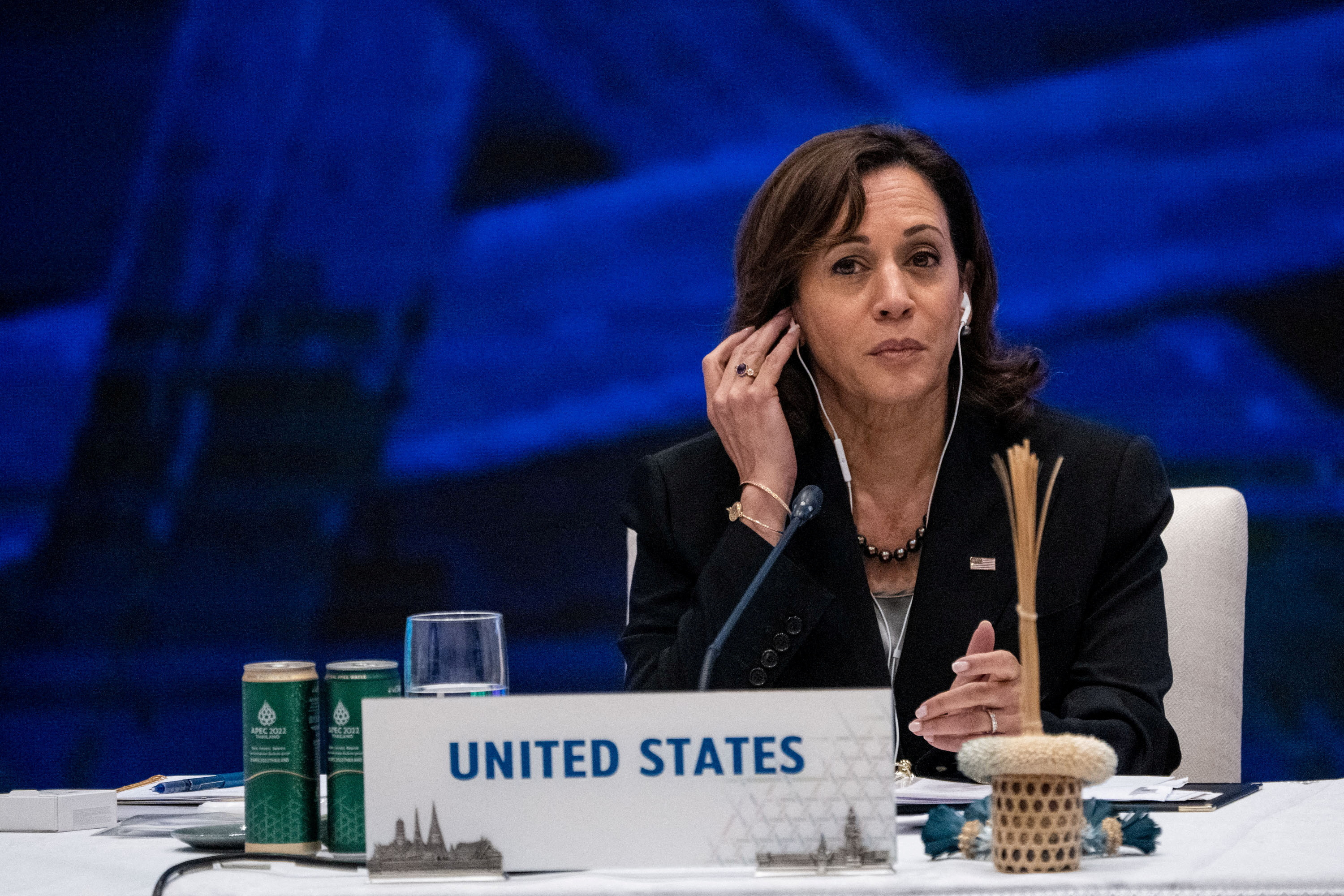
U.S. Vice President Kamala Harris attends a leaders’ meeting at the Asia-Pacific Economic Cooperation (APEC) summit at Queen Sirikit National Convention Center in Bangkok, Thailand, on Saturday, Nov. 19, 2022. Haiyun Jiang/Pool via REUTERS/File Photo


Categories
Audio Sources - Full Text Articles

Explainer-Why U.S. seeks closer security cooperation with the Philippines

2022-11-20T06:11:43Z

WASHINGTON/MANILA (Reuters) – U.S. Vice President Kamala Harris visits the Philippines this week in the Biden administration’s latest high-level engagement with America’s oldest Asian ally and an increasingly vital strategic partner as tensions rise with China over Taiwan.

?m=02&d=20221120&t=2&i=1614843677&r=LYNX

U.S. Vice President Kamala Harris holds a roundtable with Civil Society on Climate and Clean Energy at Chief of Mission Residence in Bangkok, Thailand, on Sunday, Nov. 20, 2022. Haiyun Jiang/Pool via REUTERS

The following are some of the main issues surrounding her visit:

Why is the Philippines so important to the United States?

The Philippines is a former U.S. colony and became a U.S. treaty ally in 1951, five years after independence. During the Cold War, it hosted some of America’s largest overseas bases, facilities vital to the U.S. wars in Korea and Vietnam. Philippine nationalism forced Washington to vacate those in the 1990s, but in recent years the allies have cooperated on counter-terrorism and in response to rising Chinese military pressure in the South China Sea, where the Philippines has rival claims.

Today, because of its geography, the Philippines is central to U.S. plans to deter and respond to any Chinese attack on Taiwan, a self-administered island China claims as it own.

Tensions over Taiwan are expected to feature when Harris meets with President Ferdinand Marcos Jr. on Monday, Manila’s ambassador to Washington Jose Manuel Romualdez told Reuters.

Harris also plans a highly symbolic stop on the Philippine islands of Palawan in the South China Sea to show U.S. support for its ally.

How does the country fit into U.S. planning for a possible conflict over Taiwan?

Of the five U.S. treaty allies in the Indo-Pacific – Australia, South Korea, Japan, the Philippines and Thailand – the Philippines is closest to Taiwan, its northernmost land mass of Luzon just 200 km (120 miles) away.

Experts such as Randall Schriver, who served in the Trump administration as the top Pentagon official for East Asia, said Luzon is of great interest to the U.S. Army, in particular, as a potential location for rockets, missiles and artillery systems that could be used to counter an amphibious invasion of Taiwan.

He said the political environment for greater military access appeared to be improving under Marcos after a rocky period of relations during the six-year term of President Rodrigo Duterte, who sought closer ties with China.

Washington has carefully courted Marcos and Harris’s visit follows two meetings between President Joe Biden and Marcos and a visit by Secretary of State Antony Blinken to Manila in August.

How are Washington and Manila boosting security cooperation?

The two sides have moved ahead with an Enhanced Defense Cooperation Agreement that dates back to Obama’s presidency and that languished under Duterte. EDCA allows U.S. access to Philippine military bases for joint training, pre-positioning of equipment and the building of facilities such as runways, fuel storage and military housing, but not a permanent presence.

To what extent the Philippines would allow its territory to be used to defend Taiwan remains unclear. Romualdez, the ambassador to Washington and a relative of Marcos, said in September it would let U.S. forces use its bases in the event of a Taiwan conflict only “if it is important for us, for our own security.”

The United States has proposed adding five more EDCA sites to the current five. Southeast Asia expert Gregory Poling at Washington’s Center for Strategic and International Studies said Harris’s trip could bring an announcement of an agreement.

How would a Taiwan conflict affect the Philippines?

Poling believes it would be extremely difficult for the Philippines to remain neutral in a Taiwan conflict given its proximity to the island and its treaty obligations to the United States. It would be the most likely destination for Taiwanese refugees and the some 150,000 Filipinos living on the island would be endangered by any Chinese attack.

“They have commitments to the Americans under the alliance,” Poling said. “So if they want American support in the South China Sea, the Americans will expect Philippine support on Taiwan.”

What would the Philippines expect in return?

Schriver said that with the Pentagon’s rising concern about a possible attack on Taiwan, Washington would want assurances over access within the next year or two, though any overt planning for a Taiwan contingency is highly sensitive for Manila.

Poling said providing Manila sufficient funding to help modernize its long-neglected armed forces was key. Washington recently announced $100 million in foreign military financing and $66.5 million for EDCA sites, but amounts are small compared to what Washington sends to the Middle East and Ukraine.

“The second Philippine demand is a continued clear commitment to defend Filipinos in the South China Sea,” Poling said. “They have that rhetorically, but the question for both sides is, do they have it functionally? If there was a Chinese attack on a Philippine base in the South China Sea tomorrow, could the Americans actually do anything about it? And that is far less clear, which is another reason EDCA is so important.”

Graphic: -Overlapping claims in the South China Sea-

Categories
Audio Sources - Full Text Articles

US VP Harris announces $20 mln new clean energy funding for Mekong region

2022-11-20T05:57:16Z

U.S. Vice President Kamala Harris attends a leaders’ meeting at the Asia-Pacific Economic Cooperation (APEC) summit at Queen Sirikit National Convention Center in Bangkok, Thailand, on Saturday, Nov. 19, 2022. Haiyun Jiang/Pool via REUTERS/File Photo

U.S Vice President Kamala Harris announced $20 million in new funding for clean energy projects in the Mekong region, during the last day of her tour of Thailand on Sunday following a regional summit.

She spoke to civil society and business leaders in Bangkok after the close of a meeting of the 21-member APEC bloc a day earlier.

“Bold climate action is not only necessary to protect the people of our planet and our natural resources, but it is also powerful driver of economic growth,” she said.

In an earlier news release, she said the administration would request funding from Congress for the Japan-U.S.-Mekong Power Partnership (JUMPP), through which the two countries partner with regional nations to promote sustainable energy.

“In particular we know that the climate crisis presents a real threat to the communities who depend on the Mekong River. In Thailand, in Vietnam, Laos.”

Categories
Audio Sources - Full Text Articles

Howie Carr: Happy birthday, Biden! You’re making 80 the new 150

Happy 80th birthday, Dementia Joe Biden.

It’s been said — not often, but sometimes — that 80 is the new 60. But for the nation’s oldest (by far) president, 80 is the new 150. Biden is 80 going on… take away the car keys and lock him up in the memory-wing of the local assisted living facility.

Let’s consider Biden’s recent comments. As always, all dialogue guaranteed verbatim.

One of Dementia Joe’s perennial targets is big business, or as he put it, the “55 largest, of the 55, 55 of the largest corporations.”

And what exactly did they do, Brandon?

“Those same companies spent 20 billion dollars buying back their own stock and most importantly buying back a buy back the most significant buy back in the last almost a decade.”

May we quote you on that, Mr. President?

On every subject, confusion abounds, and it’s only getting worse.

On the campaign trail, he forgot the name of the governor of New Mexico. (She does have three names). He lauded Oregon Sen. Ron Wyden, then seconds later couldn’t recall his name and instead described Wyden as “that other guy that I just talked about.”

He talked about his visit to Florida in the aftermath of “Hurricane Ivan.”

He wished a speedy recovery to Nancy Pelosi’s husband “Bobby.” (His name is Paul.)

At age 80, Biden is unable to read the simplest words off the Teleprompter. The word “ban” comes out as “blan.” He tries to urge people to vote, but instead says “veto.” Inflation is rendered as “implation.” The Obergefell decision by the Supreme Court (gay marriage) comes out as “Ogilfry.”

He called Intel “Inkel,” and recalled meeting with “the Chee-E-O.”

Likewise, he recounted a sit-down with the chairman of GM, “Amy Barrett.” No, Mr. President, that’s the Supreme Court justice. You met with Mary Barra, but at least whatever-her-name-is had some good news for the American people and their motor vehicles.

“We’re gonna go all electric by 3035.”

Not 2035, but 3035.

And when 3035 arrives, this is how the George Jetson vehicles are going to be powered — “electric charging stations all across America the power to fleet to to take care of the fleets of new electric vehicles… 50, excuse me, 500,000 charging stations around the country.”

You may not have realized this, but the U.S. had Medicare as far back as the Warren G. Harding administration.

“Look, in 1922 the price for one blood-pressure drug that millions of Medicare patients beneficiaries rely on went up one went up by 500 percent 500 percent.”

Many are worried about the economy, but Dementia Joe says it’s not a problem, because once “the Inflation Act” kicks in, there will be tax credits for, among other things, “a new coffee machine.”

A recession in the cards? Not likely, says the man whose campaign pocketed $5 million from crypto-scammer Sam Bankman-Fried.

“It hasn’t been there has there is no there’s no guarantee that they’re gonna be a recession I don’t think there will be a recession if this is it’ll be a very slight recession that is we’ll move down slightly.”

Then there’s geography. He confused Colombia with Cambodia, North Korea with China. He called the war in Ukraine the war in Iraq. In his befuddled mental state, he mixed up the battle of Kherson this year with the battle of Fallujah, in 2004.

Likewise, numbers are not Brandon’s forte.

“Well guess what we have American and non-American businesses investing literally several trillion billion I mean billion hundreds of billions of dollars.”

Speak more slowly, Mr. President, we can’t quite catch those figures. Can you repeat that?

“This year alone one trillion 400 dollar reduction 400 hundred billion dollars.”

How much money are we talking about here, Brandon? Take three, lights, camera, action.

“It’s gonna bring a billion seven a trillion 700 million dollars billion dollars off the sidelines in investment.”

Then there are the flat-out lies. His son died in Iraq. (Actually at Walter Reed). He has “literally” cut the national debt in half “by $1.4 trillion.” (The debt is $31 trillion, and skyrocketing.)

In college, he gave up a “starting job” on the football team. A gallon of gasoline was $5 when he was installed as president. (In reality, $2.39.) The $7-a-gallon price of gasoline in Los Angeles “has always been the case here.”

Blades become “blaze,” budget “buzz-it.” He drops letters in acronyms, fretting about military returning to the States with “PSD.” He denounces the waste and fraud of “PP” loans.

He told his non-working-class constituents to vote on “Nov. 9th.” (Too bad more of them didn’t get the message.)

A few more of Dementia Joe’s Greatest Hits, November edition:

“Make it clear that this election is a referendum it’s not a referendum I should say it’s a choice.”

“We have differences of agreement on.”

“Let me just plain as I let me be as plain as I can.”

“Every other nation that I’m aware of is aware of it.”

“If you get any questionable calls please tell us by going to report fraud report fraud d-o-t ftc dot gov.”

“Biden’s being a-popa, a-poca, a-, a-pop, a-copa, whew, Biden’s being extremist.”

“Back at the turn of the 20th century in the late 1900’s nineteen I mean excuse me 1890 in that range….”

“Well if anybody thinks we’re doing it for the first time now in the 20th century 21st century going into the 20 out from the 20th century going into the second quarter of the 21st century that we’d say 12 years is enough.”

“Get the shot, 5, 10, 20 dollars off the your drug store grocery purchase net or grocery purchase next time at the same time you get the shot.”

“My team at the White House posted a visio.”

“The biggest one-year jop in American history.”

“You can look it up. As my used to say you can google it.”

Happy birthday, Brandon. Many happy returns. Just not at 1600 Pennsylvania Avenue.

Categories
Audio Sources - Full Text Articles

Countries adopt COP27 deal with “loss and damage“ fund

2022-11-20T05:00:44Z

Countries adopted a hard-fought final agreement at the COP27 climate summit early on Sunday that sets up a fund to help poor countries being battered by climate disasters – but does not boost efforts to tackle the emissions causing them.

After tense negotiations that ran through the night, the Egyptian COP27 presidency released the final text for a deal and simultaneously called a plenary session to quickly gavel it through.

The session first swiftly approved the text’s provision to set up a “loss and damage” fund to help developing countries bear the immediate costs of climate-fuelled events such as storms and floods.

But it kicked many of the most controversial decisions on the fund into next year, when a “transitional committee” would make recommendations for countries to then adopt at the COP28 climate summit in November 2023.

Those recommendations would cover “identifying and expanding sources of funding” – referring to the vexed question of which countries should pay into the new fund.

Calls by developing countries for such a fund have dominated the two-week summit, pushing the talks past their scheduled Friday finish.

And after a pause requested by Switzerland to review the final text, negotiators gave no objections as COP27 President Sameh Shoukry rattled through the final agenda items.

By the time dawn broke over the summit venue in the Egyptian resort of Sharm el-Sheikh, the deal was done.

The two-week summit has been seen as a test of global resolve to fight climate change – even as a war in Europe, energy market turmoil and rampant consumer inflation distract international attention.

Billed as the “African COP,” the summit in Egypt had promised to highlight the plight of poor countries facing the most severe consequences from global warming caused mainly by wealthy, industrialised nations.

Negotiators from the European Union and other countries had said earlier that they were worried about efforts to block measures to strengthen last year’s Glasgow Climate Pact.

“While progress on loss and damage was encouraging, it is disappointing that the decision mostly copy and pasted language from Glasgow about curbing emissions, rather than taking any significant new steps,” said Ani Desgupta, president of the non-profit World Resources Institute.

In line with earlier iterations, the approved deal did not contain a reference requested by India and some other delegations to phasing down use of “all fossil fuels”.

It instead called on countries to take steps toward “the phasedown of unabated coal power and phase-out of inefficient fossil fuel subsidies,” as agreed at the COP26 Glasgow summit.

The draft also includes a reference to “low-emissions energy”, raising concern among some that it opened the door to the growing use of natural gas – a fossil fuel that leads to both carbon dioxide and methane emissions.

Norway’s Climate Minister Espen Barth Eide told reporters his team had hoped for a stronger agreement. “It does not break with Glasgow completely, but it doesn’t raise ambition at all,” he said.

“I think they had another focus. They were very focused on the fund,” he said.

For daily comprehensive coverage on COP27 in your inbox, sign up for the Reuters Sustainable Switch newsletter here.

Related Galleries:

Ministers deliver statements during the closing plenary at the COP27 climate summit in Red Sea resort of Sharm el-Sheikh, Egypt, November 20, 2022. REUTERS/Mohamed Abd El Ghany

COP27 President Sameh Shoukry attends the closing plenary at the COP27 climate summit in Red Sea resort of Sharm el-Sheikh, Egypt, November 20, 2022. REUTERS/Mohamed Abd El Ghany

A general view shows the closing plenary at the COP27 climate summit in Red Sea resort of Sharm el-Sheikh, Egypt, November 20, 2022. REUTERS/Mohamed Abd El Ghany

COP27 President Sameh Shoukry greets delegates during the closing plenary at the COP27 climate summit in Red Sea resort of Sharm el-Sheikh, Egypt, November 20, 2022. REUTERS/Mohamed Abd El Ghany

Delegates attend the closing plenary at the COP27 climate summit in Red Sea resort of Sharm el-Sheikh, Egypt, November 20, 2022. REUTERS/Mohamed Abd El Ghany
Categories
Audio Sources - Full Text Articles

Michael Bloomberg apologises for Boris Johnson speech criticising China

2022-11-20T04:51:30Z

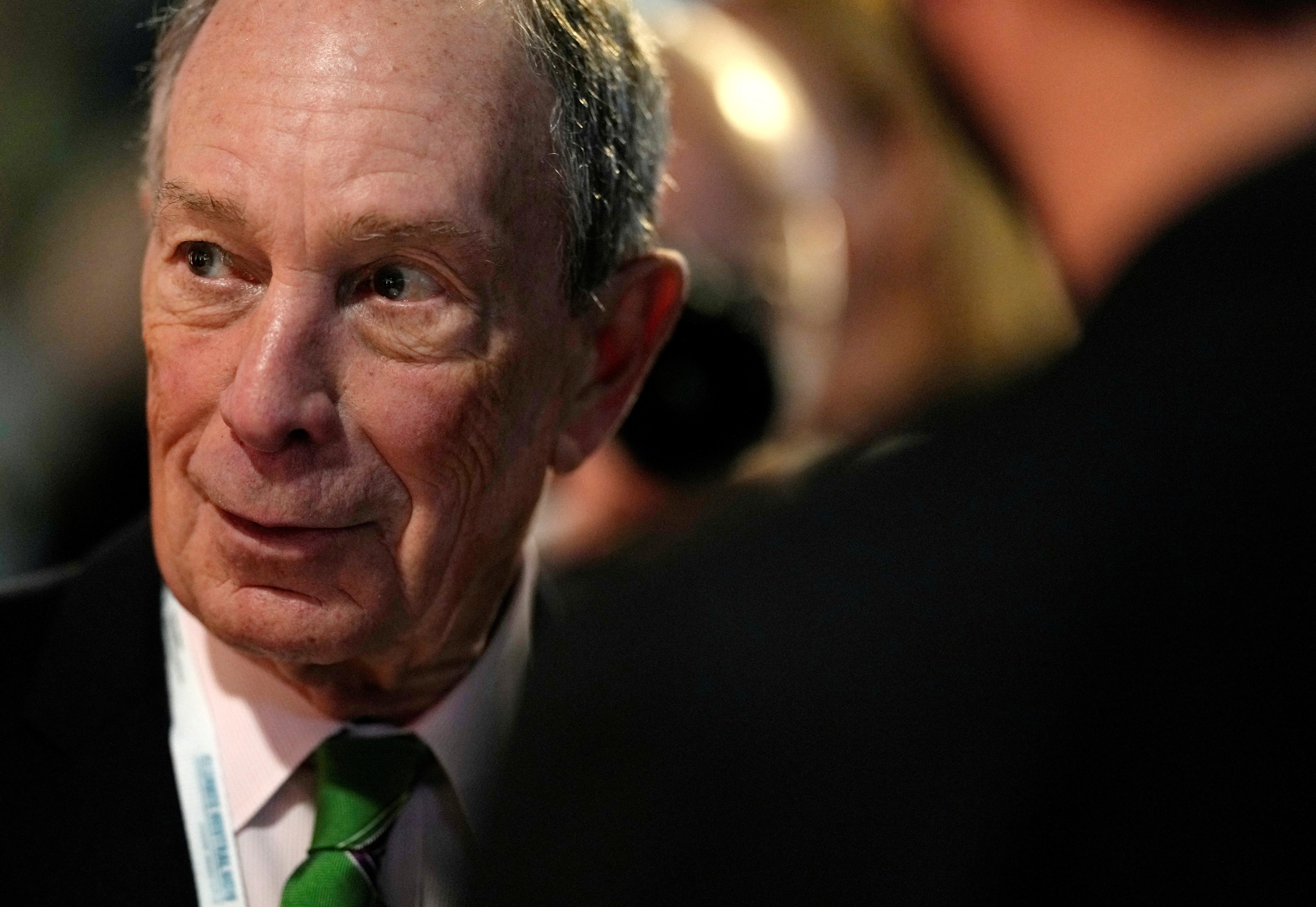
Michael Bloomberg apologised last week at a business forum hosted by the news agency he founded for remarks by British former Prime Minister Boris Johnson criticising China as autocratic.

The controversy highlights China’s influence in Asia and sensitivities about overt criticism of Beijing.

Bloomberg, a former New York mayor who ran for president in 2020, apologised on Thursday at the Bloomberg New Economy Forum in Singapore, a business gathering whose speakers included Chinese Vice President Wang Qishan and whose delegates included Chinese businessmen.

“Some may have been insulted or offended last night by parts of the speaker’s remarks referencing certain countries and their duly elected leaders,” Bloomberg said in remarks posted on Twitter.

Referring to Johnson, Bloomberg said: “Those were his thoughts and his thoughts alone, not cleared in advance by anyone or shared with me personally… To those of you who were upset and concerned by what the speaker said, you have my apologies.”

A spokesman for Bloomberg LP, which includes Bloomberg News and where Michael Bloomberg is the CEO, declined to comment to Reuters.

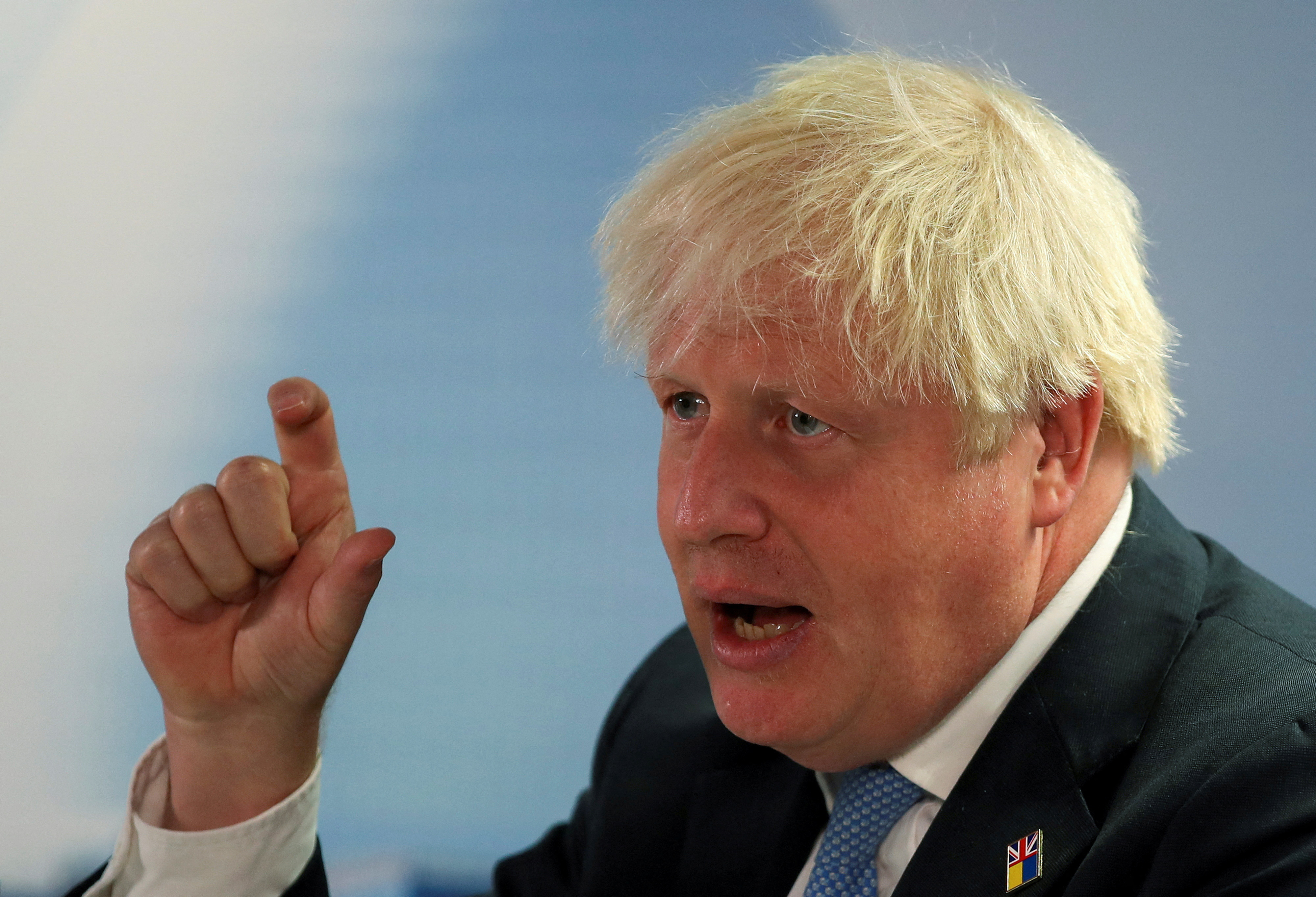
Johnson, who stepped down as Britain’s leader in September, had sharply criticised China’s and Russia’s political system and leaders in his Wednesday speech.

“Let’s look at Russia and China, the two former communist tyrannies in which power has once again been concentrated in the hands of a single ruler, two monocultural states that have been traditionally hostile to immigration and that are becoming increasingly nationalist in their attitudes,” Johnson said, according to his spokesman.

Johnson said Beijing and Moscow were “willing to show a candid disregard for the rule of international law and had over the past year “demonstrated the immense limitations of their political systems by the disastrous mistakes they have made”.

China’s foreign ministry did not respond to a Reuters request for comment.

Johnson’s spokesman said the former leader had been invited to speak by Bloomberg himself and that his criticism was aimed at the Chinese government, not the nation or its people.

“Mr Johnson is robust in his criticism of authoritarianism and autocracy – including in Russia and China – and will continue to be so,” the spokesman said. “He will continue to make the case for freedom and democracy on the world stage.”

Bloomberg did not specify whether his apology was aimed at Chinese or Russian people. But he sported a small Ukrainian flag badge on his suit, criticised President Vladimir Putin’s “brutal invasion” of Russia’s neighbour and announced that Ukrainian President Volodymyr Zelenskiy would address the forum remotely.

There were no Russian government speakers listed on the forum’s programme.

Related Galleries:

Former mayor of New York Michael Bloomberg speaks with participants prior to a meeting with Earthshot prize winners and finalists at the Glasgow Science Center during the UN Climate Change Conference (COP26) in Glasgow, Scotland, Britain, November 2, 2021. Alastair Grant/Pool via REUTERS/File Photo

Britain’s then-Prime Minister Boris Johnson speaks during his visit to EDF’s Sizewell B Nuclear power station, in Sizewell, Britain September 1, 2022. Chris Radburn/Pool via REUTERS/File Photo


Categories
Audio Sources - Full Text Articles

Voting begins in Nepal amid looming economic, political stability concerns

2022-11-20T04:00:02Z

Nepali women clad in saris and men in jeans and baseball caps were standing in long queues on Sunday as voting started in a general election that few expect to bring drastic change – or a government able to quickly revive the economy.

“I voted for economic development, ensuring jobs, food, clothes, education and health services,” Rajesh Kumar Subedi, a 52-year-old employee who was the first to vote at Phaimlamchuli voting centre, a Kathmandu suburb, told Reuters.

The election pits the ruling alliance of the Nepali Congress party, led by Prime Minister Sher Bahadur Deuba and some former Maoist rebels, against the Nepal Communist Unified Marxist Leninist (UML) party.

There are no pre-election polls, but political analysts expect the ruling alliance to retain power.

Polls close at 5 p.m. (1115 GMT), the Election Commission said. It could take up to two weeks to declare final results.

“We need political stability for faster growth of the economy and a government that can guarantee security to investors,” said another voter, Prakash Thapa, 25.

About 18 million people are eligible to vote for the 275-member parliament and the 550 members of seven provincial assemblies through a mix of first-past-the-post and proportional representation systems.

The government has declared a holiday for Sunday, which is a working day in Nepal.

Political stability has proven elusive for the poor nation, wedged between China and India, discouraging many investors. Nepal has had 10 governments since the abolition of a 239-year-old monarchy in 2008.

Political parties have promised to bring down prices, create jobs and boost the economy at nationwide rallies.

Several young and independent candidates, including medical and IT professionals, are challenging the old party leaders, hoping to cash in their quest for change.

“Old party leaders should change their style of functioning after this election,” said Thapa, the voter.

The Election Commission has urged voters to cast their secret votes without fear of threat, intimidation and obstacle.

“Voting is not only their right but also their duty to choose representatives through the secret ballot,” Chief Election Commissioner Dinesh Thapalia told Reuters.

Analysts said a new government would face the challenge of reviving the economy and curbing high prices.

There are fears that a global recession might reduce remittances, which account for about a quarter of gross domestic product (GDP).

Tourism, which contributed 4% to GDP before the pandemic, has yet to fully recover. In the first 10 months of this year, more than 450,000 tourists visited Nepal, less than half the number of pre-COVID-19 visitors in all of 2019.

Foreign reserves are shrinking and the retail inflation rate has been hovering at six-year highs of about 8% in the Himalayan nation, where one in five people live on less than $2 a day.

Related Galleries:

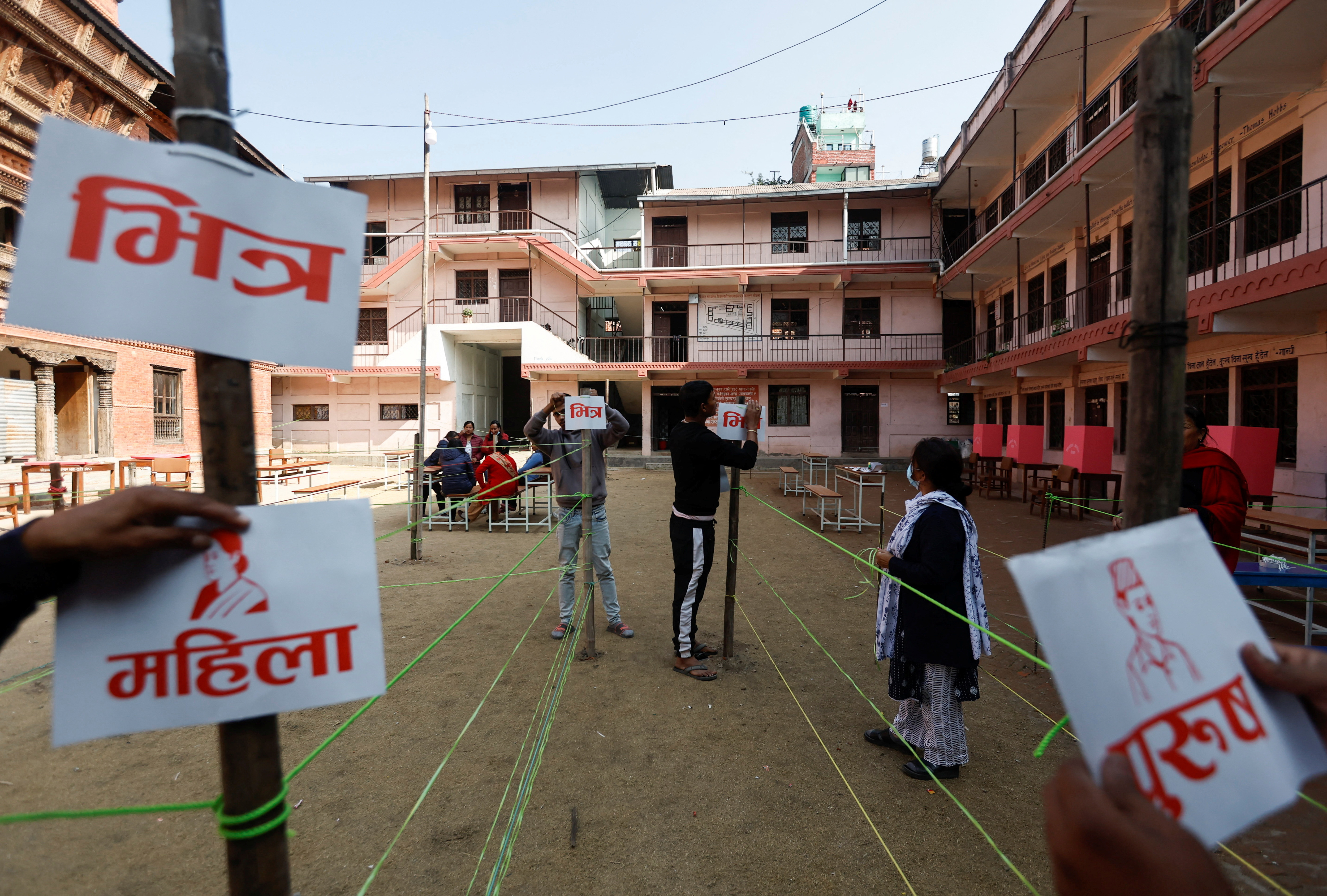
An official from the election commission works to set up a voting booth at the polling station a day ahead of the general elections, in Bhaktapur, Nepal November 19, 2022. REUTERS/Navesh Chitrakar

Officials from the election commission work to set up polling station a day ahead of the general elections, in Bhaktapur, Nepal November 19, 2022. REUTERS/Navesh Chitrakar
WP Radio
WP Radio
OFFLINE LIVE