Categories
Audio Sources - Full Text Articles

FTX begins strategic review, seeks court relief to pay critical vendors

2022-11-19T12:21:52Z

The logo of FTX is seen on a flag at the entrance of the FTX Arena in Miami, Florida, U.S., November 12, 2022. REUTERS/Marco Bello/File Photo

Collapsed crypto exchange FTX said on Saturday it has launched a strategic review of its global assets and is preparing for the sale or reorganisation of some businesses.

FTX, along with about 101 affiliated firms, also sought court relief to allow the operation of a new global cash management system and payment to its critical vendors.

The exchange and its affiliates filed for bankruptcy in Delaware on Nov. 11 in one of the highest-profile crypto blowups, leaving an estimated 1 million customers and other investors facing total losses in the billions of dollars.

FTX will explore sales, recapitalisations or other strategic transactions for some of its units, the company’s new Chief Executive officer John Ray said in a statement.

In a court filing on Saturday FTX asked for permission to pay prepetition claims of up to $9.3 million to its critical vendors after an interim order and up to $17.5 million after the entry of the final order.

The exchange said that if it fails to receive the requested court relief, it will result in “immediate and irreparable harm” to its businesses.

“Based on our review over the past week, we are pleased to learn that many regulated or licensed subsidiaries of FTX, within and outside of the United States, have solvent balance sheets, responsible management and valuable franchises,” FTX’s Ray said.

FTX has identified 216 debtor bank accounts with positive balances as of Nov. 16, but has only been able to verify the balances in 144 accounts so far, the company said in a separate court filing.

The company has appointed Perella Weinberg Partners LP as its lead investment bank to help with the sale process, subject to court approval.

Categories
Audio Sources - Full Text Articles

‘Most’ APEC Members Condemn War in Ukraine

apec.jpeg

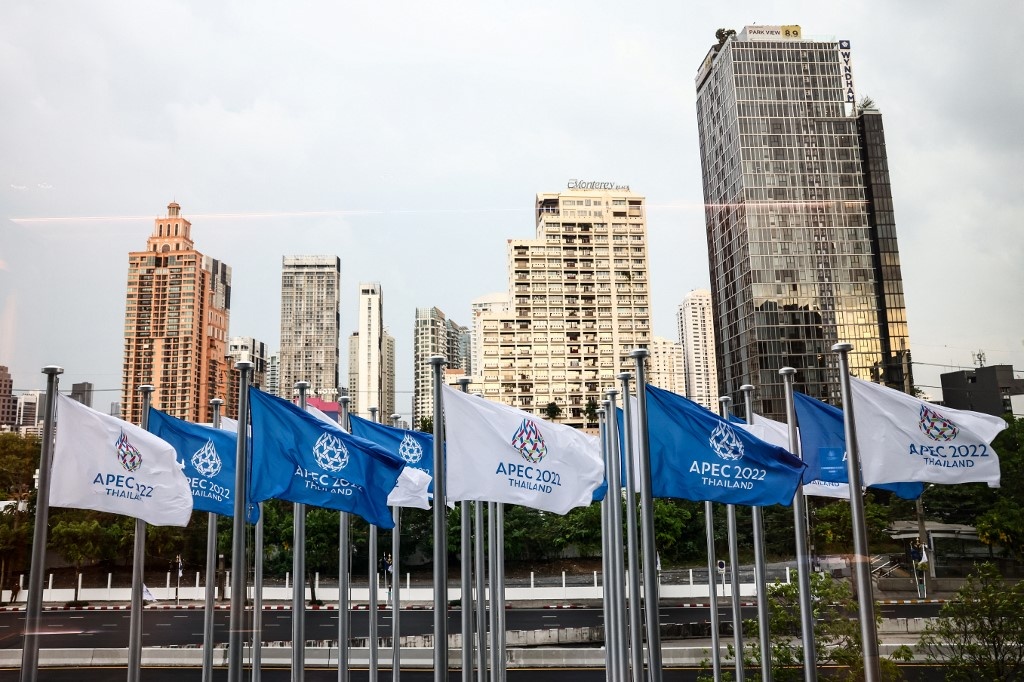
Asia-Pacific leaders added their voices on Saturday to international pressure on Russia over its invasion of Ukraine, issuing a summit statement saying “most” of them condemned the war.

The 21 members of the Asia-Pacific Economic Cooperation forum issued a joint declaration after a day and a half of talks in Bangkok criticising the conflict and the global economic turmoil it has unleashed.

The summit communique was agreed by all APEC members, including Russia and China — which has refrained from public criticism of Moscow for the invasion — but includes a number of diplomatic fudges.

“Most members strongly condemned the war in Ukraine and stressed it is causing immense human suffering and exacerbating existing fragilities in the global economy,” it said.

“There were other views and different assessments of the situation and sanctions.”

Apart from substituting the name of the organisation, the statement was word-for-word the same as a G20 declaration issued Wednesday after a summit in Indonesia and reportedly the fruit of intense diplomatic haggling.

The APEC statement highlighted the “immense human suffering” caused by the war, lamenting its impact on economic growth, inflation, supply chains and energy and food security.

Thai Prime Minister Prayut Chan-O-Cha, the summit host, hailed a “successful” conclusion to the gathering before handing duties over to next year’s chair, the United States.

Washington and its allies used the G20 summit to broaden the coalition against President Vladimir Putin’s invasion and scotch Kremlin claims of a war of East against West.

With his war effort floundering in the face of Ukrainian resistance backed by Western support, Putin refused to attend either the G20 or the APEC summits, sending his foreign minister to Bali and a deputy prime minister to Bangkok.

Putin’s emissary at APEC, Deputy Prime Minister Andrey Belousov said that despite some “quite unfair criticisms” of Russia, even “unfriendly countries” had shown restraint and a constructive approach to tackling common problems.

Moscow unleashed a hail of missile attacks across Ukraine this week after losing the city of Kherson in one of the biggest setbacks suffered by Russian forces since their invasion in February.

The onslaught has left millions of Ukrainian civilians suffering power shortages as winter bites and temperatures plunge.

The post ‘Most’ APEC Members Condemn War in Ukraine appeared first on Kyiv Post.

Categories
Audio Sources - Full Text Articles

The Dangers of Democrats Boosting MAGA Republicans

In July, just weeks before Arizona’s gubernatorial primaries, the state Democratic Party sent an unusual press release. The message addressed a Republican primary, criticizing the outgoing GOP governor’s handpicked successor, Karrin Taylor Robson, a real estate developer, in favor of her opponent, Kari Lake, a former TV news anchor backed by President Donald Trump.

The Democratic release dryly thanked Robson “for her longtime financial support to help elect Democratic candidates up and down the ballot” and described her past attacks against Lake for giving to Democrats as “hypocrisy.” Arizona Democrats insisted they were not spending on the race, but the email was widely interpreted by mainstream media and conservative outlets as an attempt to interfere in the Republican primary to boost Lake. Two weeks later, Lake pulled further ahead in polls and by early August won the Republican gubernatorial primary.

Last week’s election for governor was so close that it took almost a week to count enough ballots to call it. On Monday, Lake lost the general election to the Democratic candidate, Arizona Secretary of State Katie Hobbs, by less than 1 percentage point.

“The Democratic Party leadership should treat the rise of the authoritarian right as a real threat, not a talking point.”

The Arizona race was one of several key primaries in which national Democrats boosted Republicans they deemed more or less unelectable — candidates like Lake who denied the results of the 2020 presidential election. In what was anticipated to be a brutal midterm cycle, boosting extreme candidates could, the theory went, help Democrats fare better in general elections.

The strategy ended up working in Arizona. Yet even in defeat, Lake and some of the other extremist Republican candidates still out-performed expectations. For some political observers who work with Democrats, the Arizona race shows how dangerous the strategy could be in emboldening anti-democratic sentiment and fueling polarization.

“The Democratic Party leadership should treat the rise of the authoritarian right as a real threat, not a talking point,” Maurice Mitchell, national director for the Working Families Party, said in a statement to The Intercept. “Helping MAGA Republicans to win their primaries was reckless and irresponsible. I hope it doesn’t come back to bite us all.”

Not every election where Democrats employed the strategy ended up as close as Arizona. The party scored resounding wins in governors’ races in Maryland, Illinois, and Pennsylvania, as well as a crucial Senate election in New Hampshire.

Ken Snyder, a national Democratic campaign consultant with experience in Pennsylvania, who saw “smashing success” in Pennsylvania and Illinois, said, “This time the tactic worked more often than it didn’t.”

In races where the gambit clearly worked, Democrats spent millions boosting Republican candidates. Though Democrats didn’t spend to back Lake in the Arizona race, they did pour more than $53 million to back Republican primary candidates in races in California, Colorado, Illinois, Maryland, Michigan, New Hampshire, Pennsylvania, Virginia, and Nevada.

The Democratic Governors Association spent $2 million to boost the primary campaign of Maryland Republican gubernatorial candidate Dan Cox in a race that Democratic candidate Wes Moore won handily.

In Pennsylvania, Democratic gubernatorial candidate Josh Shapiro’s campaign raised eyebrows when it spent $840,000 on ads highlighting Republican Doug Mastriano’s extremism during the primary; Mastriano told a local news outlet he’d have to send Shapiro a thank-you card for the ad. Shapiro won the general election by 800,000 votes. In total, Pennsylvania Democrats spent at least $1.2 million boosting Mastriano.

Senate Majority PAC, a group aligned with Senate Majority Leader Chuck Schumer, D-N.Y., spent more than $3 million boosting the campaign of Republican Senate candidate Don Bolduc in New Hampshire. Following a tight race, Bolduc, another 2020 election denier, lost the race to Democratic incumbent Sen. Maggie Hassan.

And in Illinois, Democratic Gov. J.B. Pritzker used tens of millions from both his campaign and the Democratic Governors Association’s coffers to help elevate far-right candidate Darren Bailey to the Republican nomination. Again, voters rejected Bailey and went heavily for Pritzker.

Concerns over the high-dollar amounts were twofold. First, the extraordinary financial cost of backing extremist Republicans came as other struggling Democratic candidates have said they were spurned after requesting support from the party.

In addition, some Democrats worried that the push to boost far-right Republicans might alienate the party’s donors. “Historically, this has been a well-known tactic with minimal repercussions,” said Lauren Tsuboyama, a Democratic strategist at the consultancy Blue State. Today, donors might not want to see their money going to extremist Republicans: “Now, more than ever, voters — especially Democratic voters — are paying closer attention to where their hard-earned donations are being spent.”

Another potential downside for Democrats could have been their chosen MAGA Republican candidates being defeated in their primaries. “It looks like you’re running against the person you feared the most,” said Snyder, the Democratic consultant, noting that the more moderate GOP member would have a baked-in centrist narrative. That’s not how it played out, though.

In Colorado, Democrats put just under $6 million into more extreme Republican candidates who lost primary races for governor, Senate, and Congress. Democrats nonetheless beat the more moderate Republicans in all three races.

In Michigan’s 3rd Congressional District, the Democratic Congressional Campaign Committee, the party fundraising organ, spent half a million dollars on ads boosting a Trump-backed candidate. The incumbent Republican, who had voted to impeach Trump last year, lost the August primary by 3 points, but Democratic candidate Hillary Scholten went on to win the race by 13 points anyway.

“Foregrounding Republican extremism wins Democrats elections. When you’re devising campaigns, a really risky way to do that is by playing in those Republican primaries.”

For a party that’s had trouble crafting a coherent message around its achievements under President Joe Biden, Republican candidates touting election denials seem to have worked as an effective foil.

“While there is cognitive dissonance in this strategy,” said Alyssa Cass, a Democratic strategist who worked on Democratic candidate Pat Ryan’s competitive race in New York’s 18th District, “I’m not someone that shared the hand-wringing over it initially.”

Conventional wisdom leading up to the election — including polling, guidance, and general advice for Democratic strategists — was that messaging to voters that democracy was under threat wasn’t effective, Cass said. “This election shows that that was really wrong,” she said. “Foregrounding Republican extremism wins Democrats elections. When you’re devising campaigns, a really risky way to do that is by playing in those Republican primaries.”

A few hundred or a thousand votes the other way could have delivered a different outcome, Cass said, but the particularly grim political stakes this cycle played in Democrats’ favor.

Moreover, the dangers of stoking extremism and polarization, Snyder said, should be the responsibility of Republicans: “Whose fault is it when a radical extremist wins a Republican primary?” he asked. “I think national Republican leaders need to look in the mirror for having created this dynamic in which candidates with extreme radical views can win their primaries to begin with.”

The post The Dangers of Democrats Boosting MAGA Republicans appeared first on The Intercept.

Categories
Audio Sources - Full Text Articles

Nine grain ships left Odesa region’s ports over two days

630_360_1668856243-597.jpg

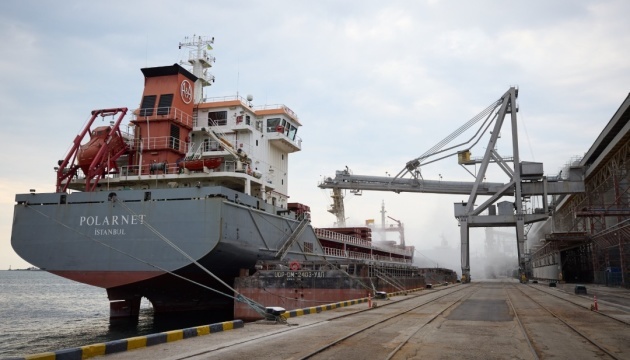
Nine ships loaded with 162,000 tonnes of Ukrainian-made agricultural products and solutions for African, Asian and European nations around the world have still left the Odesa region’s ports more than the past two times.

The suitable assertion was manufactured by the Ukrainian Infrastructure Ministry on Facebook, an Ukrinform correspondent reviews.

“In specific, the bulk carrier BOZBURUN-M, carrying 40,000 tonnes of wheat, has left for Ethiopia right now. It is the 8 vessel to have been chartered as section of the UN World Food Programme, supplying guidance to African and Asian nations around the world,” the report states.

Twenty-six vessels are now staying handled at the Odesa region’s ports. They are remaining loaded with 1 million tonnes of Ukrainian-created agricultural products and solutions.

Because August 1, 2022, a total of 475 vessels have exported 11.2 million tonnes of Ukrainian-generated agricultural merchandise from the Odesa region’s ports to Asian, African and European countries.

A reminder that, on November 17, 2022, Ukraine, the United Nations and Turkey agreed to increase the Black Sea Grain Initiative for a period of 120 times. To begin with, it was introduced on July 22, 2022, and the very first vessel remaining the Odesa region’s port on August 1, 2022.

Photo: Ukrainian Infrastructure Ministry

mk

Source link

The post Nine grain ships left Odesa region’s ports over two days appeared first on Ukraine Intelligence.

Categories
Audio Sources - Full Text Articles

Three Marines Released From Enemy Captivity

1-11.jpeg

Three servicemen of the separate marine infantry battalion of the Ukrainian Navy have been released from the Russian captivity.

The servicemen have been provided with first media air and psychological assistance, the press service of the Ukrainian Navy said.

“The Ukrainian Navy has once again proved that the slogan ‘We Never Abandon Our Guys’ is not just words. The Command of the Ukrainian Navy and marine infantry welcomes fellows, who have returned from captivity,” it said on the Telegram channel.


The post Three Marines Released From Enemy Captivity appeared first on Kyiv Post.

Categories
Audio Sources - Full Text Articles

World Cup opens with host country Qatar facing Ecuador

DOHA, Qatar (AP) — Given the level of focus on the Qatari regime, its attitudes toward human rights, immigrant workers, the LGBTQ community — and beer — the World Cup host’s soccer team has slipped under the radar.

Qatar opens the tournament against Ecuador on Sunday, but even the buildup to that match has been overshadowed by Friday’s announcement that the sale of beer will be banned inside the stadium grounds.

The World Cup is a source of immense national pride for Qatar in its attempt to raise its profile on the global stage and drive toward modernization. But what about the team?

Qatar has never before appeared in a World Cup and faces a major challenge just to emerge from Group A, which also includes Senegal and the Netherlands. South Africa in 2010 is the only host nation to fail to get beyond the group stage, so to avoid sharing that distinction would be success in itself.

Sunday may be Qatar’s best hope for a victory against an Ecuador team that is only five places above it at No. 44 in the FIFA rankings.

Qatar’s preparation for this tournament has been going on for several years, including involvement in the 2019 Copa America and 2021 CONCACAF Gold Cup. But it was victory in the 2019 Asian Cup that provided evidence of the country’s potential to provide a shock over the next few weeks.

That continental title was masterminded by coach Felix Sanchez, who has been in the position since 2017 and before that was in charge of the under-19 team. The 46-year-old Spaniard learned his trade at Barcelona’s famed academy and his impact has been remarkable, with the Asian Cup success his standout moment.

But the World Cup is another level entirely.

“We try to maintain normality,” Sanchez told Spanish sports newspaper Marca. “We already know that there is that pressure, and we don’t have to add to it. We have our routine. We try to isolate ourselves from the noise around us and focus on getting our best performance.

“It’s difficult because then you go onto the pitch, you see 60,000 people. It’s the first World Cup match and there’s so much expectation that it’s hard, but that experience will help them.”

Ecuador will hope to spoil the party — and has been talked about as a potential surprise package. But the team heads to the World Cup on the back of doubts about whether it would even be allowed to compete after claims it fielded an ineligible player during qualifying.

Chile and Peru argued that defender Byron Castillo was actually Colombian and illegally played in qualifying matches. That claim was rejected by the Court of Arbitration for Sport.

Ecuador kept its place at the World Cup, but will be deducted three points before the start of qualifying for the 2026 competition because of the use of false information on Castillo’s birthday and birthplace in its proceedings to grant him a passport.

Castillo was then left out of coach Gustavo Alfaro’s 26-man squad for Qatar.

With so much focus away from the field for both teams, Sunday’s opener will bring the conversation back to soccer.

___

AP World Cup coverage: https://apnews.com/hub/world-cup and https://twitter.com/AP_Sports

___

James Robson is at https://twitter.com/jamesalanrobson

Categories
Audio Sources - Full Text Articles

Was the Killing of a Migrant by a Former ICE Warden a Hate Crime or a Terrible Accident?

On a balmy evening in far West Texas in late September, several Mexicans were fired upon by two white Americans. A man was hit and died at the scene; a woman was gravely wounded.

The shooting victims were part of a group of 13 migrants, including a 13-year-old girl. Many were kin and friends from a cluster of small farming communities in northern Mexico. Most were poor and wanted to immigrate to the U.S. to work and send money to their families. One was fleeing homicidal violence in Mexico that had already landed him in the hospital with bullet wounds.

They walked into Texas illegally and hiked for two days through mountains, desert, and arroyos. They planned to meet up with a driver who would take them into the U.S. interior. Just before reaching their pick-up spot, they happened upon a shallow body of water ringed by lush greenery and golden wildflowers. They were at Fivemile Tank.

In Texas, tanks can refer to ponds of water that ranchers maintain for their cattle and other livestock. All kinds of wild animals are also drawn to them, and sometimes so are people, especially near the border. The migrants were exhausted and thirsty. They walked to the water and crouched down to drink.

The migrants said they ducked into the brush after hearing a vehicle approach. They had been drinking from the west side of the tank, which is shaped roughly like a circle some 200 feet in diameter, when they heard the noise from a public farm road on the east side. In an affidavit written by an investigator with the Texas Rangers and later made public, the Mexicans said the driver then backed up, exited the truck, and laid a firearm on the hood. Then, according to the affidavit, one of the Americans yelled, in Spanish, the English equivalent of “Come out, you sons of bitches, little asses!”

The shooter fired twice. One shot hit Jesús Iván Sepúlveda, a young father, in the head; it proved fatal. The other tore into the gut of Brenda Casias Carrillo, a mother of three children.

A national uproar ensued, with civil rights advocates and politicians denouncing the shootings as attacks against immigrants — as murder, attempted murder, and hate crime.

Cattle is pictured through a car window next to the Five Mile Tank, where a group of migrants were shot at by Michael and Mark Sheppard in late September, near Sierra Blanca, Texas on Sunday November 6, 2022.   Photo: Paul Ratje for The Intercept

Cattle pass by Fivemile Tank in late September, near Sierra Blanca, Tex., on November 6, 2022.

Photo: Photo: Paul Ratje for The Intercept

I reconnoitered the tank in the mid-afternoon a few days after the killings, and weeks later at sunset, the approximate time when the shootings occurred. I also reviewed the tank’s history with its owner and interviewed most of the migrants who were eyewitnesses to the shootings and who remain in the United States. People in Sierra Blanca acquainted with the men arrested in the shooting also spoke with me. And I connected with their lawyers.

What I found casts doubt on the commonly offered scenario — that this was a shooting deliberately done to harm the Mexicans — though the alternative explanation for the shootings is equally disturbing. Instead, they appear to have been a hunting accident, albeit one caused by indifference to various kinds of life — animal and human — on the border with Mexico. These days on the north side of the Rio Grande, it doesn’t take consciously bad actors to hurt and kill. The entire region is now a bad actor, saturated with fear, loathing, and suffering, especially among the newly arrived.

The accused shooters are Mike and Mark Sheppard, 60-year-old twins originally from Florida’s rural Panhandle. They are charged with manslaughter in the death of 22-year-old Sepulveda and aggravated assault with a deadly weapon in the wounding of Casias Carrillo. Neither of the charges implies an intent to harm or kill. Both imply criminal recklessness, behavior that any reasonable person would avoid as dangerous and deadly.

According to the Texas Ranger affidavit, Mark Sheppard said that, at Fivemile Tank, his brother used a shotgun on what they thought were javelinas, the Southwestern term for collared peccaries, 40- to 60-pound mammals that look something like wild hogs.

In Texas, javelinas are classified as game that must be retrieved, dressed, and processed for meat after being killed. But many people dislike the animals’ rank smell and taste. “I don’t know anyone who eats them or that brags about killing them,” said Liz Rogers, a longtime, small-town West Texan. “Lots of folks kill javelina just to kill them.”

The West Texas Detention Facility, where Michael and Mark Sheppard, who shot at a group of migrants in late September worked, is pictured at dusk in Sierra Blanca, Texas on Sunday November 6, 2022.   Photo: Paul Ratje for The Intercept

The West Texas Detention Facility, where Michael and Mark Sheppard worked, is pictured at dusk in Sierra Blanca, Texas, on Nov. 6, 2022.

Photo: Photo: Paul Ratje for The Intercept

Before the shootings, Mike Sheppard was warden of the West Texas Detention Facility, about a mile up the road from Fivemile Tank. A private jail that used to house noncitizens held on immigration law charges, it has been wracked in the past by reports of physical and verbal abuse, particularly against Black detainees — violations said to have been inflicted even by Sheppard himself. In 2018, 30 African detainees, represented by immigration advocate organizations including RAICES, alleged abuse by authorities at the jail. Among the accusations was that Sheppard had told one African inmate to “shut your black ass up” and called two others “boy.”

The Department of Homeland Security’s Office of the Inspector General immediately launched an investigation of Sheppard in his capacity as warden, and the department’s Office for Civil Rights and Civil Liberties followed months later with its own probe. Both organizations verified that, during Sheppard’s tenure in 2018, African detainees were tear-gassed on two occasions. The inspector general found that the gassings occurred after large groups of detainees became agitated, unruly, and violent about their impending mass deportations. A nurse said she heard Sheppard yell and curse at detainees during one of these events and call one African man a derogatory name.

Homeland Security’s Office of Detention Oversight also did an inspection. It found that some supervisors were not certified in the proper use of “less lethal munitions,” such as tear gas. The inspector general produced evidence suggesting substandard medical care. The detention oversight office noted unacceptable levels of dirt, dust, and debris in detainees’ living areas and toilets.

Nevertheless, the inspector general report declared that all the African detainees’ allegations of abuse were “unsubstantiated.” The Office for Civil Rights and Civil Liberties found no improper behavior by the warden or his staff. And the Office of Detention Oversight only recommended that the local field office “work with the facility to remedy any deficiencies.” Sheppard stayed on at the West Texas Detention Facility as warden.

The government reports remained virtually unpublicized until this year — when the shootings scandal erupted.

After the Fivemile Tank incident, U.S. Rep. Veronica Escobar, D-Texas, organized 16 Democratic members of Congress to write to the Department of Justice, urging an investigation into the September shootings as hate crimes. RAICES had co-sponsored the original abuse report, more than four years earlier. Now RAICES denounced the shootings as “xenophobic attacks” and the Sheppard brothers as white supremacists.

“Mike loves to hunt,” Arvin West told the New York Times. West is the sheriff of Hudspeth County, where the shootings occurred, and runs the county jail, where he employed Mark Sheppard as a maintenance worker. West also sometimes substituted for Mike Sheppard at the West Texas Detention Facility when Mike was unavailable to work. (Mike Sheppard was fired from the jail after the shootings.)

Hudspeth County owns the West Texas Detention Facility and leases it to LaSalle, a national private prison company. LaSalle detention centers, many of which are part of a sprawling network of Immigration and Customs Enforcement facilities for detaining migrants, have been the subject of numerous media reports and government investigations for allegations of substandard conditions and violations of detainees’ civil rights. The most infamous involved accusations that a LaSalle facility in Georgia contracted a doctor who performed invasive, often unnecessary gynecological procedures on women detainees without their knowledge or consent. (ICE no longer holds immigrant detainees there.)

Both the Hudspeth County jail and the West Texas Detention Facility are located in Sierra Blanca, a town 80 miles east of El Paso. Only about 800 people live there, most of Mexican American heritage.

Few outsiders have heard of Sierra Blanca. It consists of little more than crumbling old buildings, a gas station that sells fast-food pizza, a couple of cafes, and the state’s only courthouse made of adobe. The town is known mainly for its proximity to a Border Patrol checkpoint on Interstate 10, infamous for arrests of celebrities caught driving with small amounts of marijuana, including Willie Nelson, Snoop Dogg, and Fiona Apple.

An old building is seen through a reflection in the town of Sierra Blanca, Texas on Sunday November 6, 2022.   Photo: Paul Rate for The Intercept
Rough terrain is pictured near the U.S.-Mexico border in Hudspeth County, Texas on Sunday November 6, 2022. Photo: Paul Rate for The Intercept

Scenes from around the town of Sierra Blanca, Tex., on November 6, 2022.
Photo: Paul Ratje for The Intercept

Paul Rate for The Intercept

Fivemile Tank lies a few miles south of town. It’s popular with locals for shooting and hanging out. When I walked its perimeter a few days after the migrants were shot, the crime scene evidence had been removed. Left behind were dozens of spent shotgun shells, several empty beer containers, and the tattered straps of an old backpack, likely discarded by a migrant passing through.

Gwen Wilbanks owns the tank. She is the 87-year-old widow of Russell “Rusty” Wilbanks, a cattle rancher and for years the chief deputy sheriff of Hudspeth County. Rusty, who died in 2010, looked and acted the part. A 2001 book about Texas mountains described his lanky, Western good looks and cowboy attire, complete with Wranglers. His nickname was “Paladin,” after the hero of the television show “Have Gun – Will Travel.”

Gwen Wilbanks has known for years that people trespass onto Fivemile Tank with recreational alcohol and recreational guns. The property is all that’s left of over 12,000 acres that she and Rusty ranched until about two decades ago, when they sold the land to a Miami real estate investor. The investor created Sunset Ranches LLC, selling off hundreds of tiny plots that people in the area call “ranchettes.” Other companies have subdivided additional ranchland, with the parcels averaging 20 acres each. Many can be purchased for no money down and less than $300 a month. They generally come with no water hookup, no well, no electricity, and spotty internet. Street signage is irregular. Roads are often impassible, mired in drifts of desert sand.

Many ranchette newcomers hail from states far from the Mexico border. Knowing little or nothing about the area where they just bought land, they arrive with fantasies of peace and quiet and the Milky Way. Many are shocked by the hard reality of life off the grid, and many stop making their monthly payments. They leave, abandoning junked campers and cabins.

For generations, it’s been common to see migrants walking across the land. Many longtime Sierra Blanca residents have grandparents who came to Texas illegally from Mexico, and many speak Spanish. In the past, when she and her neighbors saw migrants, Hudspeth County Administrator Joanna MacKenzie recently told local media, “We would help them, we would give them a ride, it was not a problem.”

Last year, however, Texas Republican Gov. Greg Abbott began pushing border counties to issue “disaster declarations” describing migrant men as dangerous criminals out to commit violence and vandalize and steal landowners’ property. Hudspeth County issued one, and many newcomers seem to take the warnings seriously. Social media is littered with tips on how to prevent trespassing on the ranchettes. Responding on a “neighborhood watch” page on Facebook, one commenter wrote: “If I catch someone on my property without my permission they will be leaving in a body bag.” On another page discussing similar concerns, a poster said, “A twelve gauge will solve your problem.”

“There’s just not much to do. Young people go there to smooch and drink beer.”

Other ranchette owners hunker down, like Sharon Smoot. A 63-year-old ex-Floridian, Smoot was a full-time massage therapist until the Covid-19 pandemic decimated her business. Now she lives alone on desert scrub about five miles north of the border. She bought the land sight unseen and occupies an old camper trailer, surrounded by jury-rigged wood corrals for her seven dogs. She has arranged mystic-looking crystals and rocks into circles. Her closest neighbor is almost half a mile away.

“There’s just not much to do,” Gwen Wilbanks said, while explaining why she is fatalistic about trespassers at Fivemile Tank. “Young people go there to smooch and drink beer. People target-shoot and hunt quail. They should ask me for permission, but they don’t, though someone called recently and asked if they could shoot coyotes.”

Coyotes are the only big game in Texas that may legally be shot and left to rot. All other prey must be collected after being killed and harvested for meat. Wilbanks said she is happy to have people slaughter coyotes at Fivemile Tank. She readily told the caller yes.

She said she never gave the Sheppard brothers permission to hunt anything at the tank.

In addition to the shooters and drinkers, another set of denizens that frequent Fivemile Tank are green-uniformed Border Patrol agents. The state ranch road fronting the tank hosts a veritable parade of their vehicles, passing by every few minutes. Smoot said she often sees agents on a ridge overlooking the tank, surveilling for undocumented migrants who are trying to avoid detection.

The Border Patrol’s work intensified over the past two years. For the first time in local memory, the Big Bend Border Patrol Sector, which encompasses Sierra Blanca, saw dramatically rising numbers of undocumented immigrants. One of the largest and most remote of the nine Border Patrol sectors on the southern border, Big Bend covers 165,000 square miles of mostly unpopulated desert and mountains. It is a brutal place to hike through and historically has been the least traveled sector by migrants.

Lately, however, that has changed. According to Border Patrol statistics, only about 3,000 single adults were apprehended in Big Bend during the first quarter of fiscal year 2020, during the Trump administration. A year later, the numbers spiked, with over 14,000 single adults apprehended. Today, this group makes up the vast majority of unauthorized migrants encountered by Border Patrol agents in Big Bend.

The spike occurred in good part because the Biden administration has been accepting families and minors into the U.S. after they turn themselves in at the border. When single adults have tried to cross, however, most have been immediately expelled, under the Trump administration containment policy known as Title 42. It’s an old, little-used public health law ostensibly being employed lately to protect the country against immigrants with Covid-19, but the Centers for Disease Control and Prevention has said the law should not be implemented in this manner. Its use against immigrants has widely been seen as an excuse to deny people the right to claim asylum.

On November 14, a federal judge in Washington blocked this use of Title 42, calling it “arbitrary and capricious.” The order is now scheduled to be lifted on December 21. Meanwhile, the government used it to summarily expel over a million migrants in 2021 alone. Most were from Central America and, like the group who stopped at Fivemile Tank, from Mexico.

Single adults turned back by Title 42 at places like El Paso discovered the Big Bend sector as a good crossing spot because its vastness makes it easier to elude Border Patrol. Traversing the area on foot, though, can be deadly. Over the past two years, border counties in far West Texas have become charnel houses. In the fiscal year 2021, Hudspeth County recovered some two dozen bodies from the mountains and desert, up from only three the year before. All were presumed to be migrants who succumbed to exposure. Up and down the southwest border, migrant deaths recorded by Homeland Security have more than tripled since fiscal year 2020, from 247 to at least 853 deaths in 2022. The United Nations International Organization for Migration now calls the Mexico-U.S. border the deadliest land crossing for migrants in the world.

“It’s usually men walking alone. They’re thirsty and hungry and exhausted.”

Out on her ranchette, Sharon Smoot feels bad about the deaths, but she’s also annoyed by migrants walking through her land. She keeps guns for protection, though she said the migrants have never made her feel unsafe.

“It’s usually men walking alone,” she said. “They’re thirsty and hungry and exhausted. I give them water and crackers. They inhale the food! While they’re eating, I call Border Patrol. I have them on speed dial.”

“I am humanitarian toward the illegals,” Smoot said, employing the word practically every English speaker in Sierra Blanca uses. “It’s wrong for them to come into this country, but I don’t want them to be hurt. I don’t target-shoot out here; that would be dangerous. Whether or not I see them, I know there are people who are hiding.”

Mass concealment is a fact of life in the area. Gwen Wilbanks’s grown sons still manage family ranchlands, and when they go out to work, they go armed. Yet, Wilbanks said, the migrants are never glimpsed by her sons: “They hide.”

A beer can and shotgun shell casings are pictured on the banks of the Five Mile Tank, where a group of migrants were shot at by Michael and Mark Sheppard in late September, near Sierra Blanca, Texas on Sunday November 6, 2022. Photo: Paul Ratje for The Intercept

A beer can and shotgun shell casings on the banks of the Fivemile Tank, near Sierra Blanca, Texas. on Nov. 6, 2022.

Photo: Paul Ratje for The Intercept

Both times I visited Fivemile Tank, I found a multicolored riot of empty shotgun shells among crushed Pabst Blue Ribbon cans and Coors bottles, and the occasional ragged backpack. I unzipped one and shook it. Empty paper wrappers fell out, wrappers for Mexican candy. At the tank, animals and people in varying states of legality, vulnerability, and hiddenness share space with each other — and with deadly weapons.

On September 27, the day the migrants were shot, the tank was ringed by foliage that was unusually dense due to recent monsoon-like rains. Gwen Wilbanks said she doesn’t like that much vegetation. It blocks the view of the tank from the road, and she likes to see her water when she drives by. She’d been thinking she needed to send some maintenance workers to cut back the brush.

The sun would have set at 7 p.m., the approximate time the Sheppards and the migrants encountered each other, according to the affidavit. I later visited at sunset to compare visibility at that time with the same conditions on September 27. The light was remarkably dim. Looking west from the road 200 feet eastward, the shrubbery, brightly colored and crisply edged in the daytime, now resembled a grayish-black smudge. It was difficult to impossible to distinguish objects in front of the smudge — much less anything or anyone who might be hiding inside it.

A view of the Five Mile Tank after sunset where a group of migrants were shot at by Michael and Mark Sheppard in late September, near Sierra Blanca, Texas on Sunday November 6, 2022. Photo: Paul Ratje for The Intercept

A view of the Fivemile Tank from the road at sundown in late September.

Photo: Paul Ratje for The Intercept

The Texas Ranger affidavit does not mention visibility problems. It also appears flawed by numerous omissions and inaccuracies. For one, it has Mark Sheppard saying that Mike used a shotgun on the migrants. Shotguns have a relatively short range, and Kevin Marcantel, the assistant district attorney assigned to the Sheppards’ cases, referenced the affidavit while remarking at a recent court hearing that Mike must have fired on the migrants from close up. “I can’t hardly believe these guys didn’t know those were human beings they were shooting at, versus javelina,” Marcantel said.

According to Mike Sheppard’s defense lawyer, Brent Mayr,  however, Mike did not use a shotgun; instead, he employed a .204 Ruger rifle. It shoots over a long distance compared to shotguns, with exceptional lethality.

Mayr and Richard Esper, Mark’s attorney, did not allow me to speak with their clients. In a phone interview, Mayr said, “Mike has been hunting his entire life and has a hunting license.” He said the brothers arrived at Fivemile Tank with shotguns in their truck, and their plan was to hunt doves. Then Mike took up the Ruger, Mayr said. Looking through its scope, he thought he saw javelinas, and he took a shot. He saw movement and asked Mark to look through binoculars. “Mark told Mike he thought he saw the black butt of a javelina,” Mayr said. He said Mike fired again but didn’t think he’d hit anything with either shot.

At the tank, animals and people in varying states of legality, vulnerability, and hiddenness share space with each other — and with deadly weapons.

“Hunters have a sixth sense about whether or not they’ve hit things,” Mayr said. He contended that Mike did not know his bullets had struck anything. Mike apparently did not have the sixth sense Mayr described: His bullets did hit living things — two members of the species Homo sapiens.

Why didn’t Mike and his brother go looking for what they might have shot? Mayr noted that javelinas are considered by many hunters to be “trash,” as he put it — animals so derided that they are not worth looking for if the hunter is unsure of having hit one. This could well explain why Mike and Mark immediately drove off after the shootings, Mayr suggested.

Yet, in Texas, neglecting to retrieve javelina carcasses after killing them is illegal. The Texas Parks and Wildlife Department calls such behavior poaching, said Jen Shugert, a department spokesperson.

Taken as a whole, however, there is no convincing evidence that the Sheppards meant to harm human beings at Fivemile Tank — or commit hate crimes against migrants. In the weeks after the shootings, I located and interviewed five eyewitnesses: most of the eight survivors who are still in the United States. Not one of them reported hearing the Sheppards utter any epithets, in any language.

Three of the eyewitnesses recalled that Mike said something after firing the first shot — but his utterance was not Spanish, as the affidavit said. Instead, according to those I spoke with, Mike said something in English, incomprehensible to the Mexicans, who said they don’t speak or understand the language. A fourth eyewitness recalled hearing Spanish, but the words he reported are innocuous: “Van a verlo” — You (plural) will see it. Another witness said that Mike said nothing at all, nor did Mark.

Within minutes of the shootings, the brothers attended a county water board meeting. A woman who was there told me that no one noticed them acting at all out of the ordinary. The next day, Mike spent time on Facebook, writing on the page of a friend who has cancer and was complaining that he was suffering from intense discomfort. “You need anything?” Mike asked in the comments. And later: “You want something for pain?”

A day and a half after the shooting, Mike and Mark were arrested and moved to a county jail in El Paso. Each was charged with manslaughter in Jesús Sepúlveda’s death. Jail records indicate that neither of them was able to sign for his jail-issued toothpaste or toilet paper, because both were put on suicide watch.

Days later, they received a second charge, for the wounding of Brenda Casias Carrillo. Punishment for each crime is two to 20 years in prison. The brothers have paid large bonds and been released from jail. So far, their charges have not been presented to a grand jury for formal indictments.

A view from the banks of the Five Mile Tank at sunset where a group of migrants were shot at by Michael and Mark Sheppard in late September, near Sierra Blanca, Texas on Sunday November 6, 2022.   Photo: Paul Ratje for The Intercept

The moon rises over the banks of the Fivemile Tank at dusk on November 6, 2022.

Photo: Paul Ratje for The Intercept

In Sierra Blanca, the community is torn. Were their neighbors hapless, if careless, shooters in a tragic hunting accident? Or did they mean to murder and maim migrants?

A resident, whose job until Mike Sheppard’s arrest brought the two in frequent contact, said they had heard Mike use derogatory language about migrants. On multiple occasions, they heard Mike disparage Border Patrol agents as “lazy asses” for not making more arrests. (The person asked that their name not be published, for fear of losing work.) In addition, the person said, Mike complained about migrants passing through Sierra Blanca. “He said, ‘Why do these motherfuckers come when there’s nothing here for them?’” (Mike’s lawyer said his client “vehemently” denies making such statements.)

Echoing statements to the media from other locals, Sharon Smoot called the brothers her friends. “They were always kind to me,” she said, adding that many townspeople who used to like the Sheppards now condemn them as hate-crime perpetrators. She denounced the rush to judgment.

Standing at Fivemile Tank at sunset six weeks after the shootings, however, Smoot admitted that she herself felt anguished. She did not know what to believe.

Struggling with her thoughts, she gazed at streaks of orange turning purple in the sky. Down on the ground, beer cans, shotgun shells, and backpack trash littered the shore, with a flock of birds dotting the water. Though their species was impossible to discern in the waning light, their presence suggested other life, maybe nearby and maybe hiding.

The post Was the Killing of a Migrant by a Former ICE Warden a Hate Crime or a Terrible Accident? appeared first on The Intercept.


Categories
Audio Sources - Full Text Articles

FIFA head says fans should be able to abstain at World Cup

DOHA, Qatar (AP) — FIFA president Gianni Infantino downplayed Qatar’s last minute ban on the sale of beer at World Cup stadiums as nothing more than a brief inconvenience to spectators.

“If this is the biggest problem we have, I’ll sign that (agreement),” Infantino said Saturday, a day after the conservative Muslim emirate did an about-face on the deal it had made to secure the soccer tournament.

Infantino blamed “crowd flows” in Doha for the decision, though it appeared to be a ruling by Qatar’s autocratic government to placate its conservative Wahhabi citizens who already have been angered by some events around the tournament they view as Western excesses.

Infantino said the beer ban at stadiums was made jointly by Qatar officials and FIFA.

“We tried until the end to see whether it was possible,” Infantino said of allowing alcohol sales. “If for 3 hours a day you cannot drink a beer, you will survive. Maybe there is a reason why in France, in Spain, in Scotland, alcohol is banned in stadiums. Maybe they are more intelligent us, having thought maybe we should be doing that.”

Spectators can drink alcoholic beer in the evenings in “the FIFA Fan Festival,” a designated party area that also offers live music and activities. Qatar puts strict limits on the purchase and consumption of alcohol, though its sale has been permitted in hotel bars for years outside of the tournament-run areas.

The World Cup begins Sunday with an opening match between host country Qatar and Ecuador, and when Qatar made its pitch to host the tournament, the country agreed to FIFA’s requirements of selling alcohol in stadiums. The alcohol plans were only released 11 weeks before kickoff and then changed on Friday.

FIFA says non-alcoholic beer will still be sold at the eight stadiums, while champagne, wine, whiskey and other alcohol will be served in the luxury hospitality areas of the arenas.

Previous World Cup hosts have been asked to make concessions. For the 2014 tournament, Brazil was forced to change a law to allow alcohol sales in stadiums — but the same cultural issues were not at play.

AB InBev’s deal with FIFA was renewed in 2011, after Qatar was picked as host. However, the Belgium-based brewer has faced uncertainty in recent months on the exact details of where it can serve and sell beer in Qatar.

Infantio denied that the ban of beer sales has harmed FIFA’s relationship with Budweiser, it’s official beer sponsor.

“We are partners for some decades, and we look forward to partner for the future,” he said. “This particular situation has brought us even closer together.”

___

AP World Cup coverage: https://apnews.com/hub/world-cup and https://twitter.com/AP_Sports

Categories
Audio Sources - Full Text Articles

WATCH: Joe Biden’s Senior Moment of the Week Vol. 20

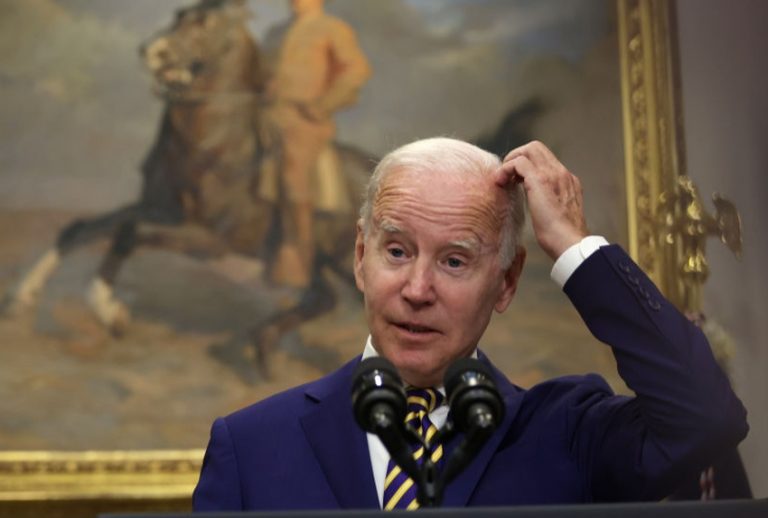
Welcome to the 20th installment of our weekly series on President Joe Biden’s senior moments. It’s an especially notable milestone because Biden is on the verge of making history. On Sunday, he will become America’s first octogenarian president. We don’t think he looks a day older than 79.

This week our bumbling commander in chief mistook Cambodia for Colombia during a meeting with Asian leaders, temporarily forgot how to read, and went lusting after a Russian man’s large biceps. (Collusion? Maybe.) “His biceps are as big as my calf,” Biden swooned. “There’s a man … He’s got some real biceps. We call them guns.”

Happy Birthday, Sleepy Joe! Have a great weekend!

BIDEN SENIOR MOMENT ARCHIVES:

WATCH: Biden’s Senior Moment of the Week Vol. 1

WATCH: Biden’s Senior Moment of the Week Vol. 2

WATCH: Biden’s Senior Moment of the Week Vol. 3

WATCH: Biden’s Senior Moment of the Week Vol. 4

WATCH: Biden’s Senior Moment of the Week Vol. 5

WATCH: Biden’s Senior Moment of the Week Vol. 6

WATCH: Biden’s Senior Moment of the Week Vol. 7

WATCH: Biden’s Senior Moment of the Week Vol. 8

WATCH: Biden’s Senior Moment of the Week Vol. 9

WATCH: Biden’s Senior Moment of the Week Vol. 10

WATCH: Biden’s Senior Moment of the Week Vol. 11

WATCH: Biden’s Senior Moment of the Week Vol. 12

WATCH: Biden’s Senior Moment of the Week Vol. 13

WATCH: Biden’s Senior Moment of the Week Vol. 14

WATCH: Biden’s Senior Moment of the Week Vol. 15

WATCH: Biden’s Senior Moment of the Week Vol. 16

WATCH: Biden’s Senior Moment of the Week Vol. 17

WATCH: Biden’s Senior Moment of the Week Vol. 18

WATCH: Biden’ Senior Moment of the Week Vol. 19

The post WATCH: Joe Biden’s Senior Moment of the Week Vol. 20 appeared first on Washington Free Beacon.

Categories
Audio Sources - Full Text Articles

How the Media Boosted Tim Ryan and Hurt Other Dems in the Process

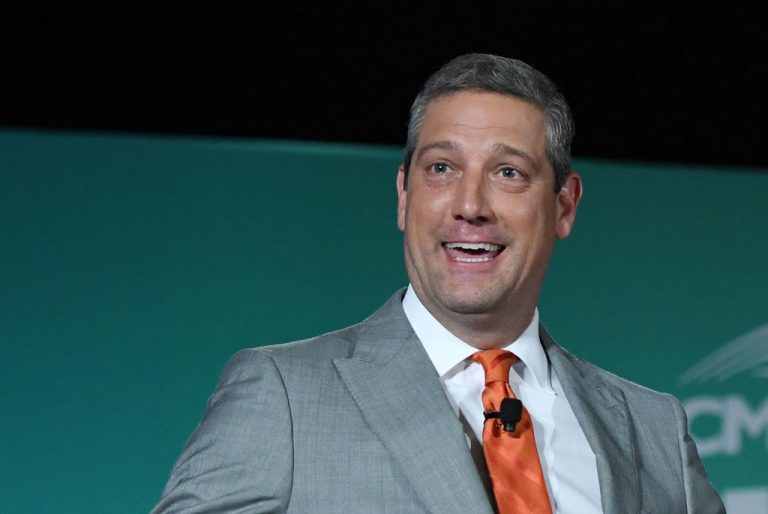
A senior staffer from Rep. Tim Ryan’s (D., Ohio) Senate campaign told the Atlantic in May that the candidate only had a shot at winning if President Joe Biden’s approval rating in Ohio was above 42 percent on Election Day. Since that article was published, not a single poll had Biden’s approval above 41 percent.

But that didn’t stop mainstream media journalists from pitching Ryan as the kind of culturally conservative Democrat who could pull off an upset in November. Without presenting evidence that he had any broad appeal in his home state of Ohio, article after article characterized him as the type of Democrat who had a playbook for success in a red state.

Politico declared Ryan the “Democrats’ best messenger on the economy,” and Time magazine lauded his ability to channel both Bobby Kennedy and Ronald Reagan on the trail. Ryan had “blue-collar credibility,” in the words of the New York Times, and was winning over voters with an “appeal to unity in these fractured times.” Ryan was “the perfect test case of whether somebody can bridge the gap between Democrats’ moderate and progressive wings,” according to the Wall Street Journal.

That kind of treatment likely led small-dollar Democratic donors around the country to believe Ryan possessed the secret formula to pull off an upset. Ryan successfully rode his army of small donors to a 400 percent cash advantage over his Republican challenger J.D. Vance. Ryan managed to raise more money than other Democrats who would end up losing their races by far smaller margins, such as Mandela Barnes in Wisconsin and Cheri Beasley in North Carolina. Ryan even raised more than the Democratic Congressional Campaign Committee and the Democratic National Committee.

Kyle Kondik, the managing editor of University of Virginia’s Crystal Ball and author of The Bellwether, a book about Ohio politics, said the praise from mainstream media outlets attracts donations from their readers.

“I think Ryan probably got a lot of credit for the quality of the campaign he ran before the results actually came in,” said Kondik. “If you look at who reads these kind of publications, they tend to be affluent and highly educated and willing to give money.”

Down the stretch, Ryan was soaking up Democratic donations. In the first half of October, Ryan received $8 million in contributions through ActBlue, the Democratic Party’s premier fundraising platform. Ryan was the third-largest recipient during that time period. Ryan ultimately lost Ohio by around 7 percentage points, a significantly larger margin than that by which Barnes lost in Wisconsin, where Democrats came just within 1.5 percentage points short of unseating incumbent Republican senator Ron Johnson. Beasley in North Carolina, a state that former president Donald Trump won twice, lost by 4 points.

It’s impossible to say what either would have done with more money, but in hindsight, strategists say Ryan’s campaign wasn’t the best place for such a large share of Democratic donor money.

“I think in any race where a lot of money is raised, and that candidate loses by a margin like Tim Ryan, you can see it as costing other candidates in closer races,” said Ohio political strategist Mike Hartley. “Despite what we may think, money is finite in campaigns. There is only so much to go around, but liberal donors have developed a reputation for donating with their feelings and ignoring reality.”

One individual close to Vance’s campaign said Ryan’s tremendous online funding apparatus amounted to an “own goal” for Democrats. Ryan’s massive campaign war chest came at the expense of other candidates who had a better shot at winning, the individual said.

“ActBlue is a great source of money, but it forces candidates to say unpopular things and it empowers liberal media figures to play gatekeepers to small-dollar donors,” said Luke Thompson, who ran a pro-Vance super PAC.

“Democratic donors sunk money into a white mediocrity who underperformed like Ryan instead of two black candidates,” Thompson said.

Ryan did enjoy a string of good polls in the summer, at times tying or leading Vance, but election prognosticators consistently kept the state in the Republican column. The reality that the media presented to voters, however, was that the state was a pure tossup up until Election Day.

Despite momentum moving in Vance’s favor by October, the media recommitted itself to the narrative that Ryan was poised to pull off a shocking win. The Times said Ohio was “the country’s unlikeliest Senate battleground” and just five days later said that “Democrats predict an upset” in the state.

The media played up the race’s competitiveness by highlighting Vance’s fundraising struggles, which were very real. But Vance’s paltry fundraising numbers over the summer—in July, his Senate campaign account was disastrously low, with several outlets labeling him “broke”—prompted Senate Minority Leader Mitch McConnell’s (R., Ky.) Senate Leadership Fund in August to pour nearly $30 million into his race. McConnell’s move drove the media-feedback loop that the Ohio Senate race was a tossup. As Politico declared that month, Ryan “turned his race into a surprise Senate battleground.”

By early September, however, McConnell’s team thought Vance was, as one individual close to the group’s spending said, “in good shape.” Internal polling showed the race was not likely competitive at that point. One Republican operative close to the Senate Leadership Fund predicted a victory of at least 7 points, which turned out to be within a half point of the actual margin.

By the end of October, Vance led in six of eight polls. But on Nov. 3, the same day a poll found Vance leading by 6 points, Politico said Ryan was running a “surprisingly competitive” campaign.

The coverage of Ryan as a uniquely moderate Democratic candidate was also far from reality. Bloomberg News, in a story that gushed over Ryan’s background as “a quarterback in high school” whose “grandfather was a steelworker for 40 years,” said that Ryan often “breaks with Biden.” The story failed to mention that the congressman votes with the president 100 percent of the time.

As the Washington Free Beacon documented, Ryan’s record was indistinguishable from the average left-wing Democrat. He supported Medicare for All, free college, eliminating gas cars and fracking, releasing large amounts of criminals from prison, and cutting Immigration and Customs Enforcement’s budget.

Even after his loss, Ryan remains a media darling. The day after his loss, MSNBC reporter Chris Jansing said that a “top Democrat” had high hopes for Ryan’s political future: “Watch for Tim Ryan years in the future to run for president.”

Ryan already has run for president, though he didn’t even make it to the Iowa caucuses. Ryan’s spokeswoman did not respond to a request for comment about Ryan’s future plans.

The post How the Media Boosted Tim Ryan and Hurt Other Dems in the Process appeared first on Washington Free Beacon.

WP Radio
WP Radio
OFFLINE LIVE