2022-11-18T07:53:17Z
South Korea and the United States held joint air force drills on Friday, using F-35A fighters, in response to North Korea’s test of an intercontinental ballistic missile, South Korea’s defense ministry said.
 The Brooklyn Times - bklyntimes.com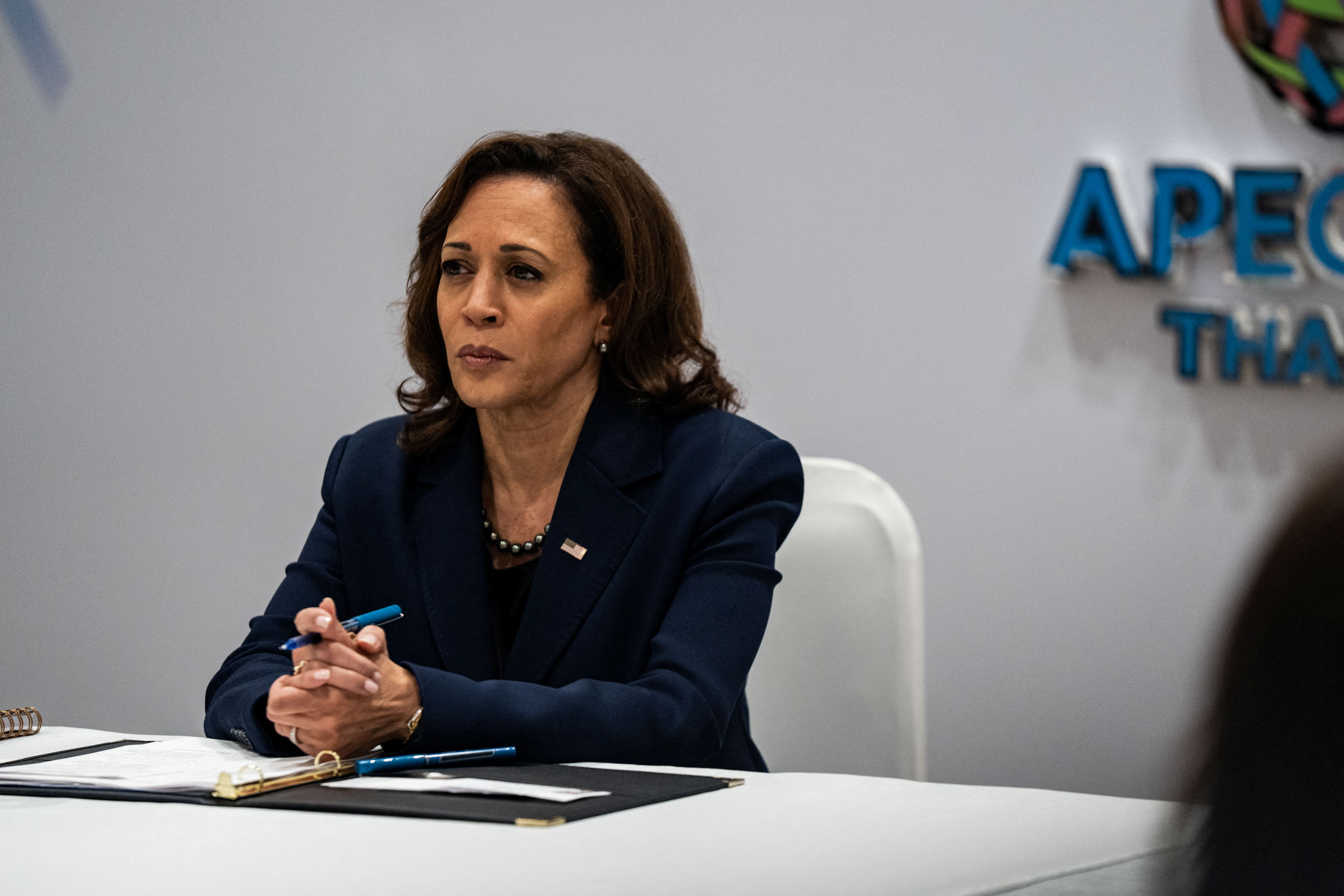
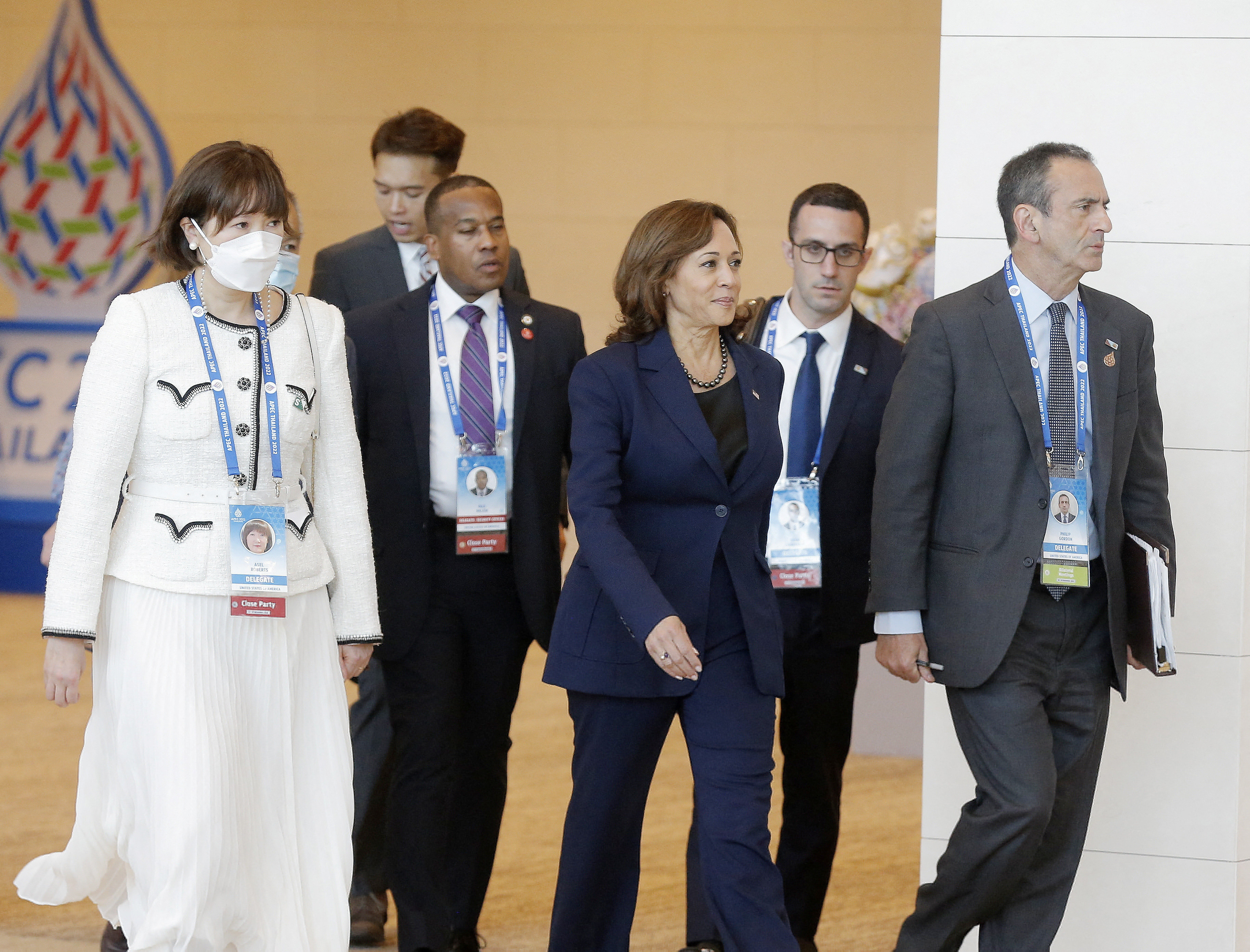
U.S. Vice President Kamala Harris told a CEO summit during an APEC summit in Bangkok on Friday that her country has an “enduring economic commitment” to the Indo-Pacific region.
The United States will continue to work to increase foreign direct investment and increase free flow of capital and trade with the region, she said, adding that partnering with the private sector is a “top priority” for the country.
A federal judge on Friday will decide whether disgraced Theranos CEO Elizabeth Holmes should serve a lengthy prison sentence for duping investors and endangering patients while peddling a bogus blood-testing technology.
Holmes’ sentencing in the same San Jose, California, courtroom where she was convicted on four counts of investor fraud and conspiracy in January marks a climactic moment in a saga that has been dissected in an HBO documentary and an award-winning Hulu TV series about her meteoric rise and mortifying downfall.
U.S. District Judge Edward Davila will take center stage as he weighs the federal government’s recommendation to send Holmes, 38, to federal prison for 15 years. That’s slightly less than the maximum sentence of 20 years she could face, but far longer than her legal team’s attempt to limit her incarceration to no more than 18 months, preferably served in home confinement.
Her lawyers have argued that Holmes deserves more lenient treatment as a well-meaning entrepreneur who is now a devoted mother with another child on the way. Their arguments were supported by more than 130 letters submitted by family, friends and former colleagues praising Holmes.
A probation report also submitted to Davila recommended a nine=year prison sentence for Holmes.
Prosecutors also want Holmes to pay $804 million in restitution. The amount covers most of the nearly $1 billion that Holmes raised from a list of sophisticated investors that included software magnate Larry Ellison, media mogul Rupert Murdoch, and the Walton family behind Walmart.
While wooing investors, Holmes leveraged a high-powered Theranos board that included former U.S. Defense Secretary James Mattis, who testified against her during her trial, and two former U.S. Secretaries of State, Henry Kissinger and the late George Shultz, whose son submitted a statement blasting Holmes for concocting a scheme that played Shultz “for the fool.”
Davila’s judgment – and Holmes’ reporting date for a potential stint in prison — could be affected by the former entrepreneur’s second pregnancy in two years. After giving birth to a son shortly before her trial started last year, Holmes became pregnant at some point while free on bail this year.
Although her lawyers didn’t mention the pregnancy in a 82-page memo submitted to Davila last week, the pregnancy was confirmed in a letter from her current partner, William “Billy” Evans, that urged the judge to be merciful.
In that 12-page letter, which included pictures of Holmes doting on their 1-year-old son, Evans mentioned that Holmes participated in a Golden Gate Bridge swimming event earlier this year while pregnant. He also noted Holmes suffered through a case of COVID in August while pregnant. Evans didn’t disclose Holmes’ due date in his letter.
Duncan Levin, a former federal prosecutor who is now a defense attorney, predicted that Davila’s sentencing decision won’t be swayed by the pregnancy, but expects the judge to allow her to remain free until after the baby is born.
“She will be no more of a flight risk after she is sentenced that she was while awaiting sentencing,” Levin said. “We have to temper our sentences with some measure of humanity.”
The pregnancy makes it more likely Davila will be criticized no matter what sentence he imposes, predicted Amanda Kramer, another former federal prosecutor.
“There is a pretty healthy debate about what kind of sentence is needed to effect general deterrence to send a message to others who are thinking of crossing that line from sharp salesmanship into material misrepresentation,” Kramer said.
Federal prosecutor Robert Leach emphatically declared Holmes deserves a severe punishment for engineering a scam that he described as one of the most egregious white-collar crimes ever committed in Silicon Valley. In a scathing 46-page memo, Leach told the judge he has an opportunity to send a message that curbs the hubris and hyperbole unleashed by the tech boom of the past decade.
Holmes “preyed on hopes of her investors that a young, dynamic entrepreneur had changed healthcare,” Leach wrote. “And through her deceit, she attained spectacular fame, adoration, and billions of dollars of wealth.”
Even though Holmes was acquitted by a jury on four counts of fraud and conspiracy tied to patients who took Theranos blood tests, Leach also asked Davila to factor in the health threats posed by Holmes’ conduct.
Holmes’ lawyer Kevin Downey painted her as a selfless visionary who spent 14 years of her life trying to revolutionize health care with a technology that was supposed to be able to scan for hundreds of diseases and other aliments with just a few drops of blood.
Although evidence submitted during her trial showed the tests produced wildly unreliable results that could have steered patients in the wrong direction, her lawyers asserted Holmes never stopped trying to perfect the technology until Theranos collapsed in 2018. They also pointed out that Holmes never sold any of her Theranos shares — a stake valued at $4.5 billion in 2014 when Holmes was being hailed as the next Steve Jobs on the covers of business magazines.
Defending herself against criminal charges has left Holmes with “substantial debt from which she is unlikely to recover,” Downey wrote, suggesting that she is unlikely ever to pay any restitution that Davila might order as part of her sentence.
“Holmes is not a danger to society,” Downey wrote.
Downey also asked Davila to consider the alleged sexual and emotional abuse Holmes suffered while she was romantically with Ramesh “Sunny” Balwani, who became a Theranos investor, top executive and eventually an accomplice in her crimes. Balwani, 57, is scheduled to be sentenced Dec. 7 after being convicted in a July trial on 12 counts of fraud and conspiracy.
TALLINN, Estonia (AP) — When Russia’s top military brass announced in a televised appearance that they were pulling troops out of the key city of Kherson in southern Ukraine, one man missing from the room was President Vladimir Putin.
As Defense Minister Sergei Shoigu and Gen. Sergei Surovikin, Russia’s chief commander in Ukraine, stiffly recited the reasons for the retreat in front of the cameras on Nov. 9, Putin was touring a neurological hospital in Moscow, watching a doctor perform brain surgery.
Later that day, Putin spoke at another event but made no mention of the pullout from Kherson -– arguably Russia’s most humiliating withdrawal in Ukraine. In the days that followed, he hasn’t publicly commented on the topic.
Putin’s silence comes as Russia faces mounting setbacks in nearly nine months of fighting. The Russian leader appears to have delegated the delivery of bad news to others — a tactic he used during the coronavirus pandemic.
Kherson was the only regional capital Moscow’s forces had seized in Ukraine, falling into Russian hands in the first days of the invasion. Russia occupied the city and most of the outlying region, a key gateway to the Crimean Peninsula, for months.
Moscow illegally annexed the Kherson region, along with three other Ukrainian provinces, earlier this year. Putin personally hosted a pomp-filled Kremlin ceremony formalizing the moves in September, proclaiming that “people who live in Luhansk and Donetsk, Kherson and Zaporizhzhia become our citizens forever.”
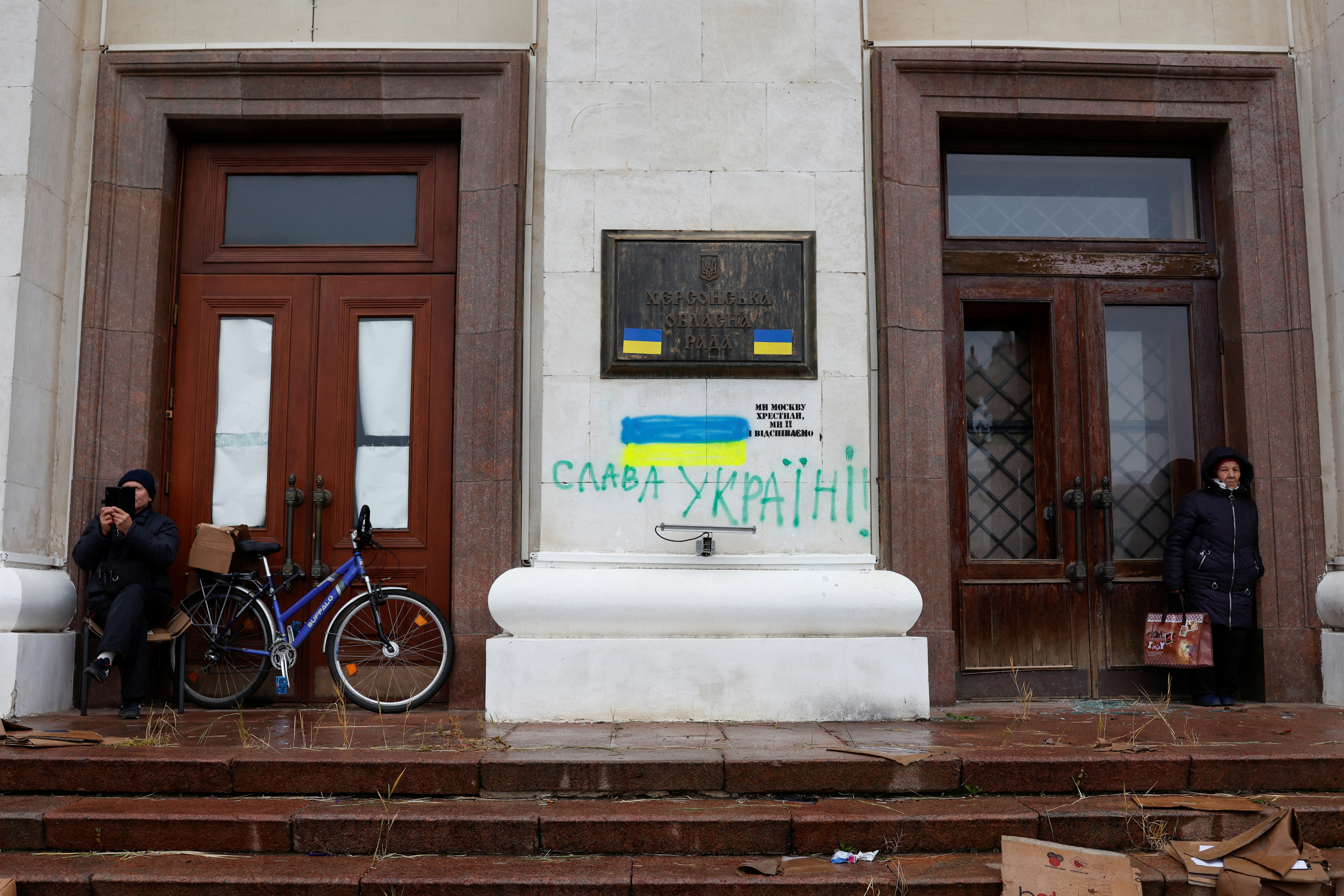
Just over a month later, however, Russia’s tricolor flags came down over government buildings in Kherson, replaced with the yellow-and-blue banners of Ukraine.
The Russian military reported completing the withdrawal from Kherson and surrounding areas to the eastern bank of the Dnieper River on Nov. 11. Since then, Putin has not mentioned the retreat in any of his public appearances.
Putin “continues to live in the old logic: This is not a war, it is a special operation, main decisions are being made by a small circle of ‘professionals,’ while the president is keeping his distance,” political analyst Tatyana Stanovaya wrote in a recent commentary.
Putin, who was once rumored to personally supervise the military campaign in Ukraine and give battlefield orders to generals, appeared this week to be focused on everything but the war.
He discussed bankruptcy procedures and car industry problems with government officials, talked to a Siberian governor about boosting investments in his region, had phone calls with various world leaders and met with the new president of Russia’s Academy of Science.
On Tuesday, Putin chaired a video meeting on World War II memorials. That was the day when he was expected to speak at the Group of 20 summit in Indonesia — but he not only decided not to attend, he didn’t even join it by video conference or send a pre-recorded speech.
The World War II memorial meeting was the only one in recent days in which some Ukrainian cities -– but not Kherson -– were mentioned. After the meeting, Putin signed decrees awarding the occupied cities of Melitopol and Mariupol the title of City of Military Glory, while Luhansk was honored as City of Labor Merit.
Independent political analyst Dmitry Oreshkin attributed Putin’s silence to the fact he has built a political system akin to that of the Soviet Union, in which a leader – or “vozhd” in Russian, a term used to describe Josef Stalin – by definition is incapable of making mistakes.
“Putin and Putin’s system … is built in a way that all defeats are blamed on someone else: enemies, traitors, a stab in the back, global Russophobia -– anything, really,” Oreshkin said. “So if he lost somewhere, first, it’s untrue, and second -– it wasn’t him.”
Some of Putin’s supporters questioned such obvious distancing from what even pro-Kremlin circles viewed as a critical developments in the war.
For Putin to have phone calls with the leaders of Armenia and the Central African Republic at the time of the retreat from Kherson was more troubling than “the very tragedy of Kherson,” said pro-Kremlin political analyst Sergei Markov in a post on Facebook.
“At first, I didn’t even believe the news, that’s how incredible it was,” Markov said, describing Putin’s behavior as a “demonstration of a total withdrawal.”
Others sought to put a positive spin on the retreat and weave Putin into it. Pro-Kremlin TV host Dmitry Kiselev, on his flagship news show Sunday night, said the logic behind the withdrawal from Kherson was “to save people.”
According to Kiselev, who spoke in front of a large photo of Putin looking preoccupied with a caption saying, “To Save People,” it was the same logic the president uses – “to save people, and in specific circumstances, every person.”
That’s how some ordinary Russians can view the retreat, too, analysts say.
“Given the growing number of people who want peace talks, even among Putin’s supporters, any such maneuver is taken calmly or even as a sign of a possible sobering up –- saving manpower, the possibility of peace,” said Andrei Kolesnikov, a senior fellow at the Carnegie Endowment.
For Russia’s hawks -– vocal Kremlin supporters who have been calling for drastic battlefield steps and weren’t thrilled about the Kherson retreat -– there are regular barrages of missile strikes on Ukraine’s power grid, analyst Oreshkin said.
Moscow launched one Tuesday. With about 100 missiles and drones fired at targets across Ukraine, it was the biggest attack to date on the country’s power grid and plunged millions into darkness.
Oreshkin believes that such attacks don’t inflict too much damage onto Ukraine’s military and don’t change much on the battlefield.
“But it is necessary to create an image of a victorious ‘vozhd.’ So it is necessary to carry out some kind of strikes and scream about them loudly. That’s what they’re doing right now, in my opinion,” he said.
—-
Follow AP coverage of the war in Ukraine at: https://apnews.com/hub/russia-ukraine
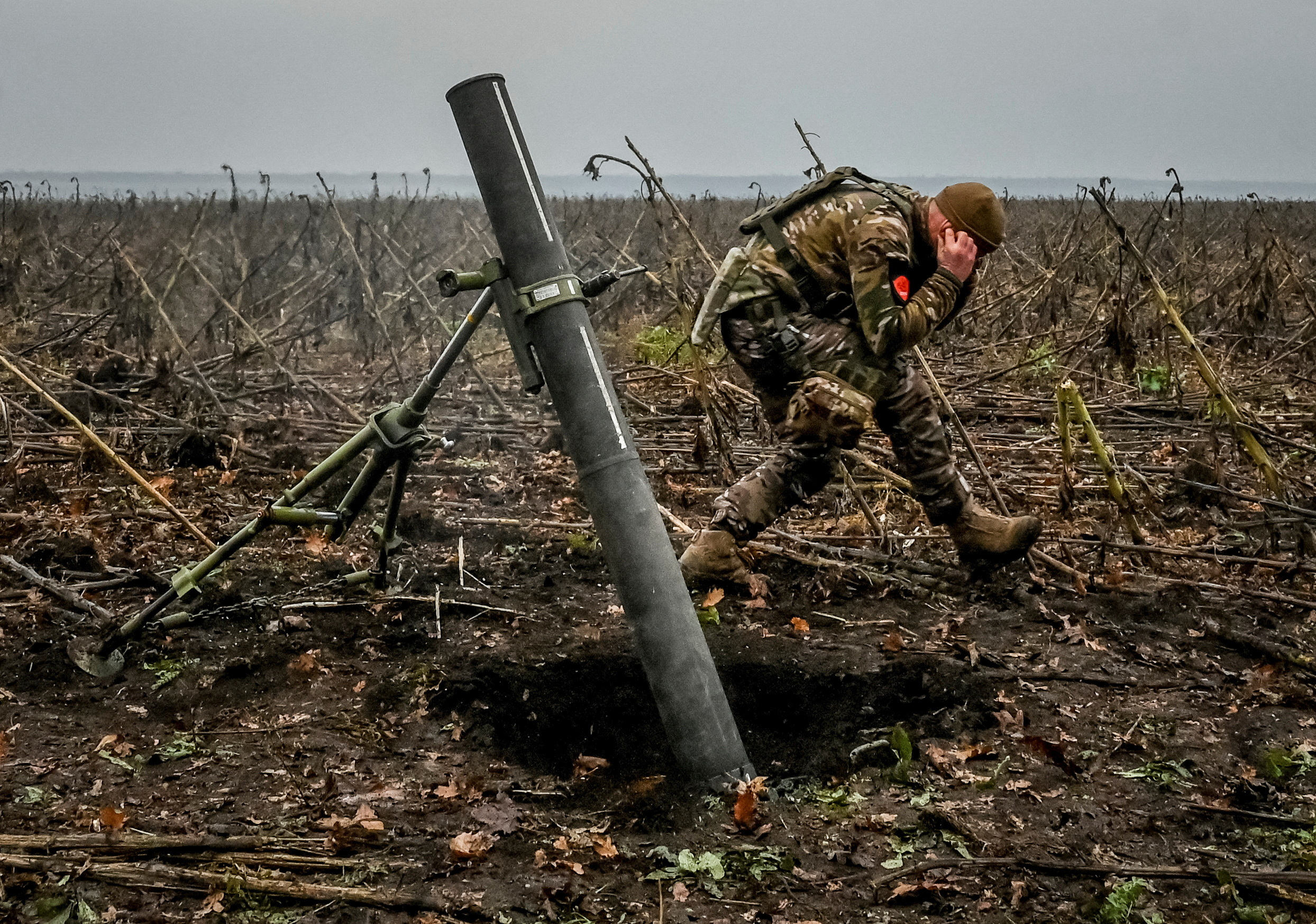
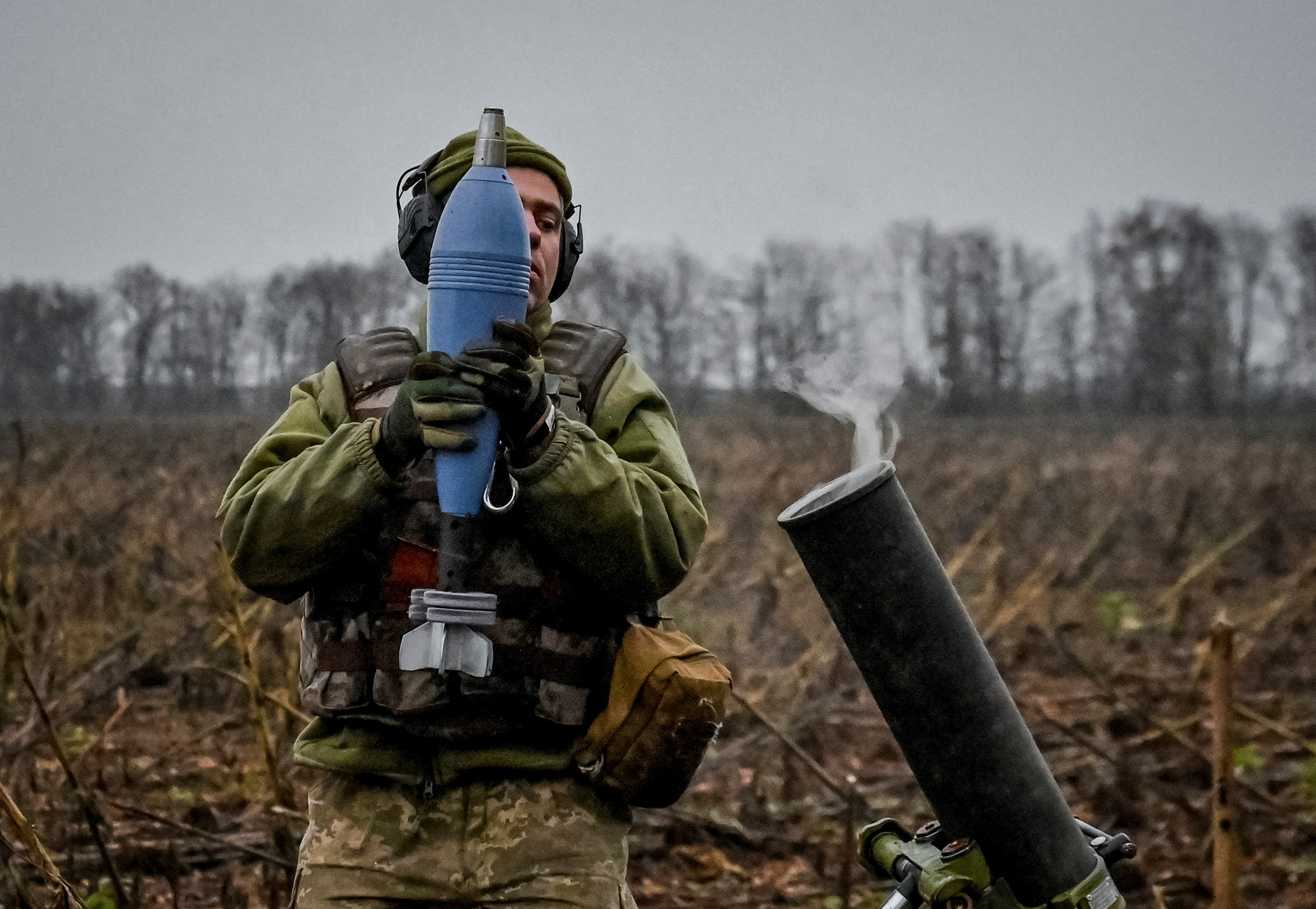
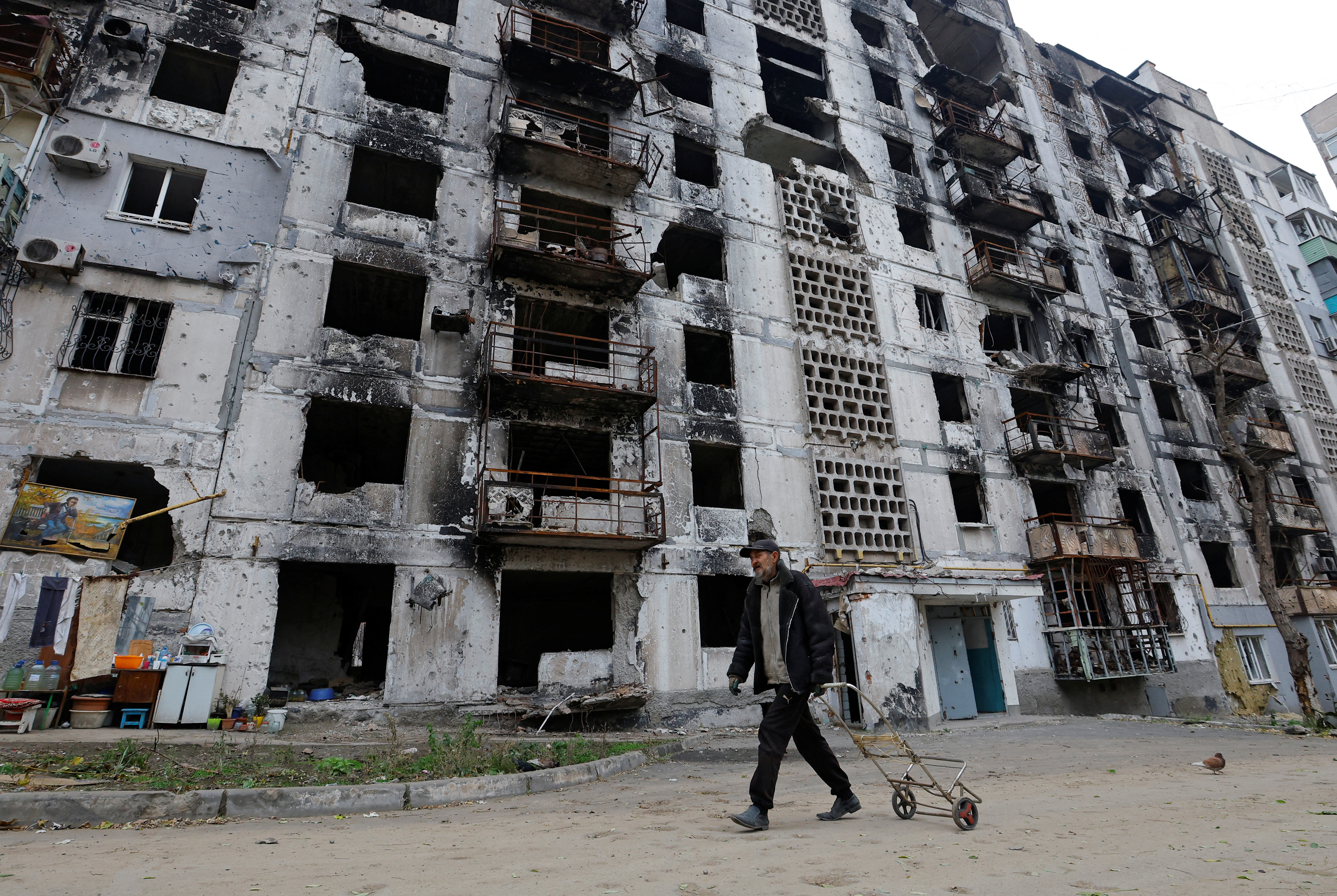
Russian missiles and shells hit Ukrainian positions in several regions and there was no let up in heavy fighting in Donetsk in the east, the Ukrainian military said as Moscow’s occupying forces appeared more active.
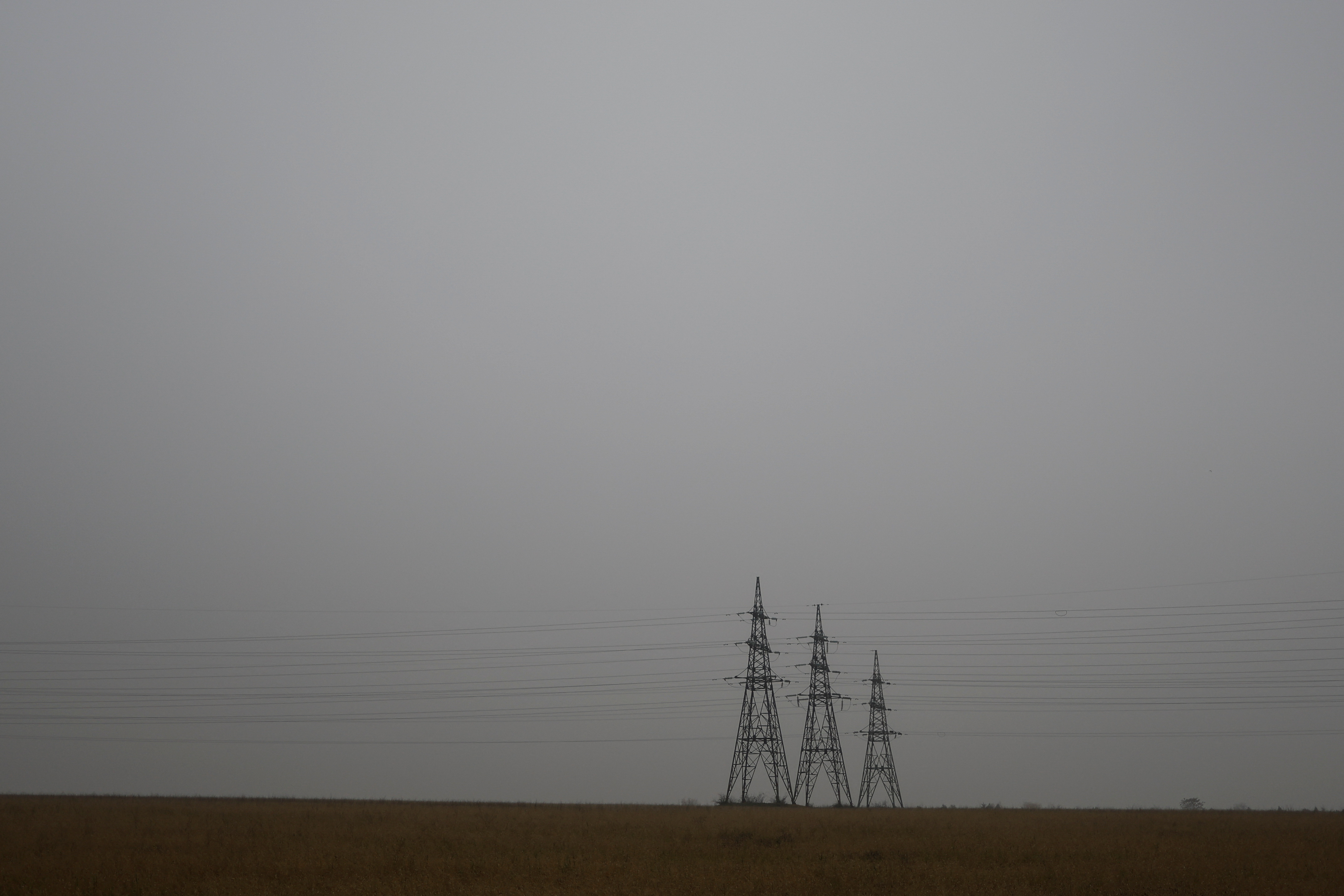
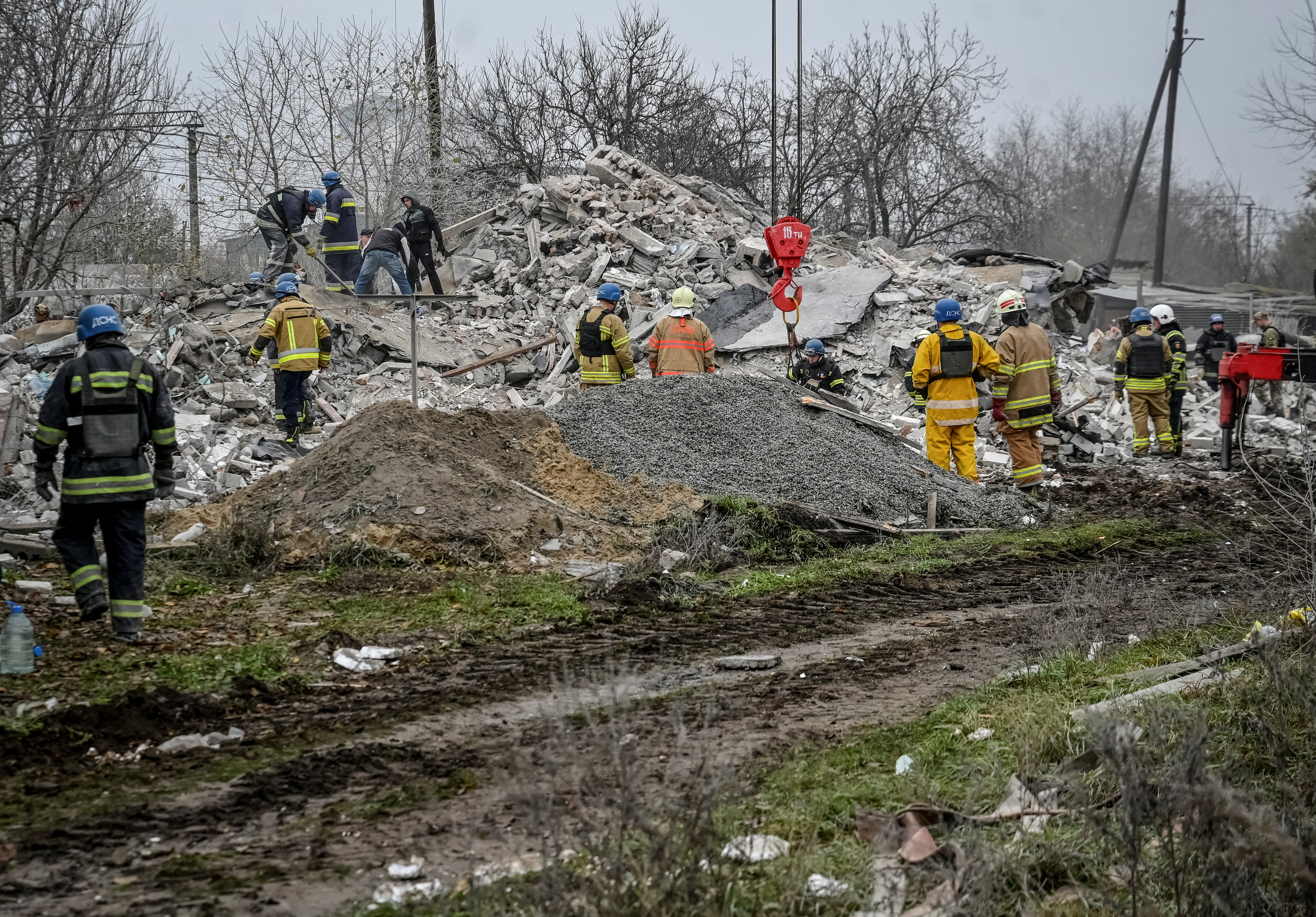
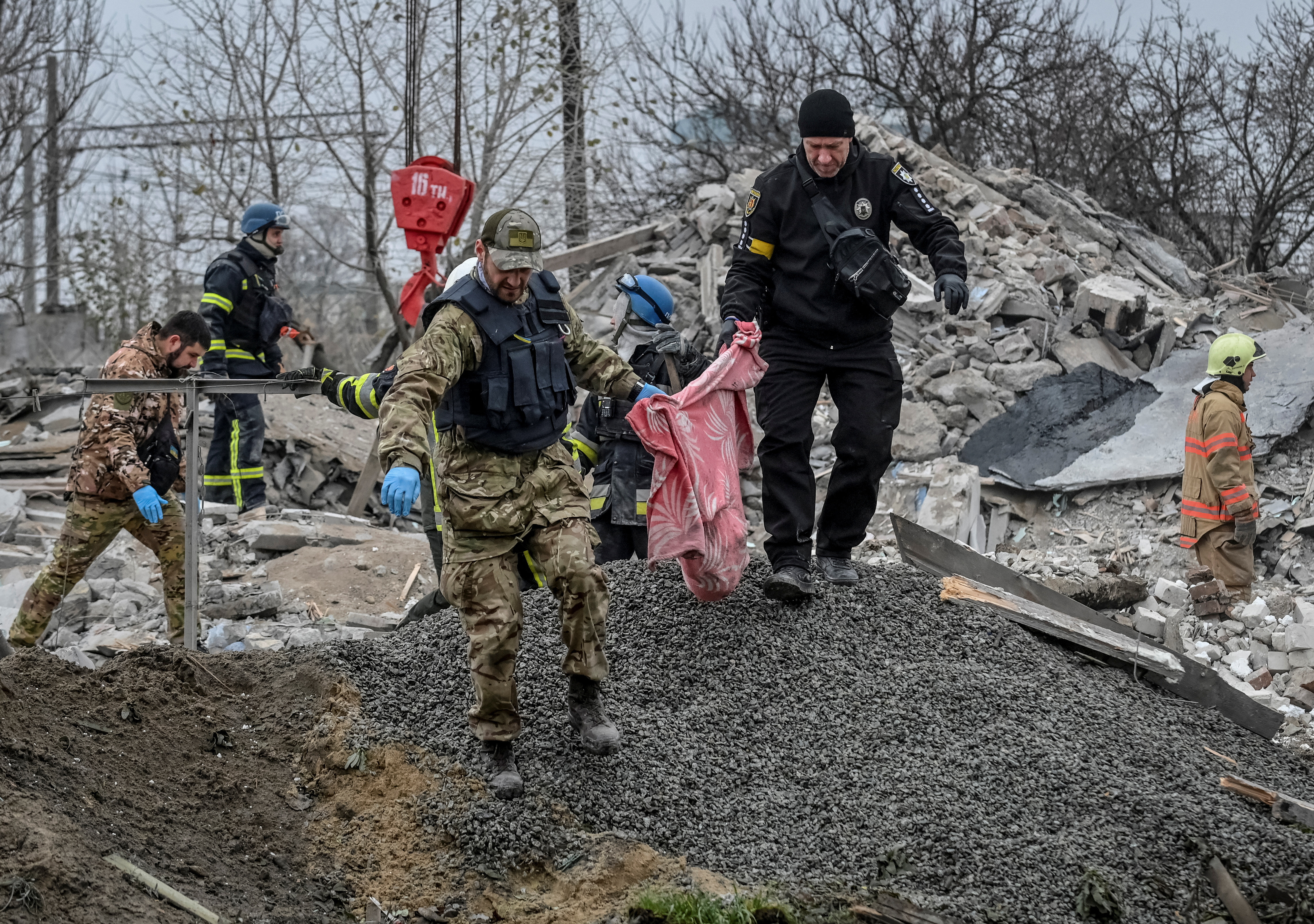
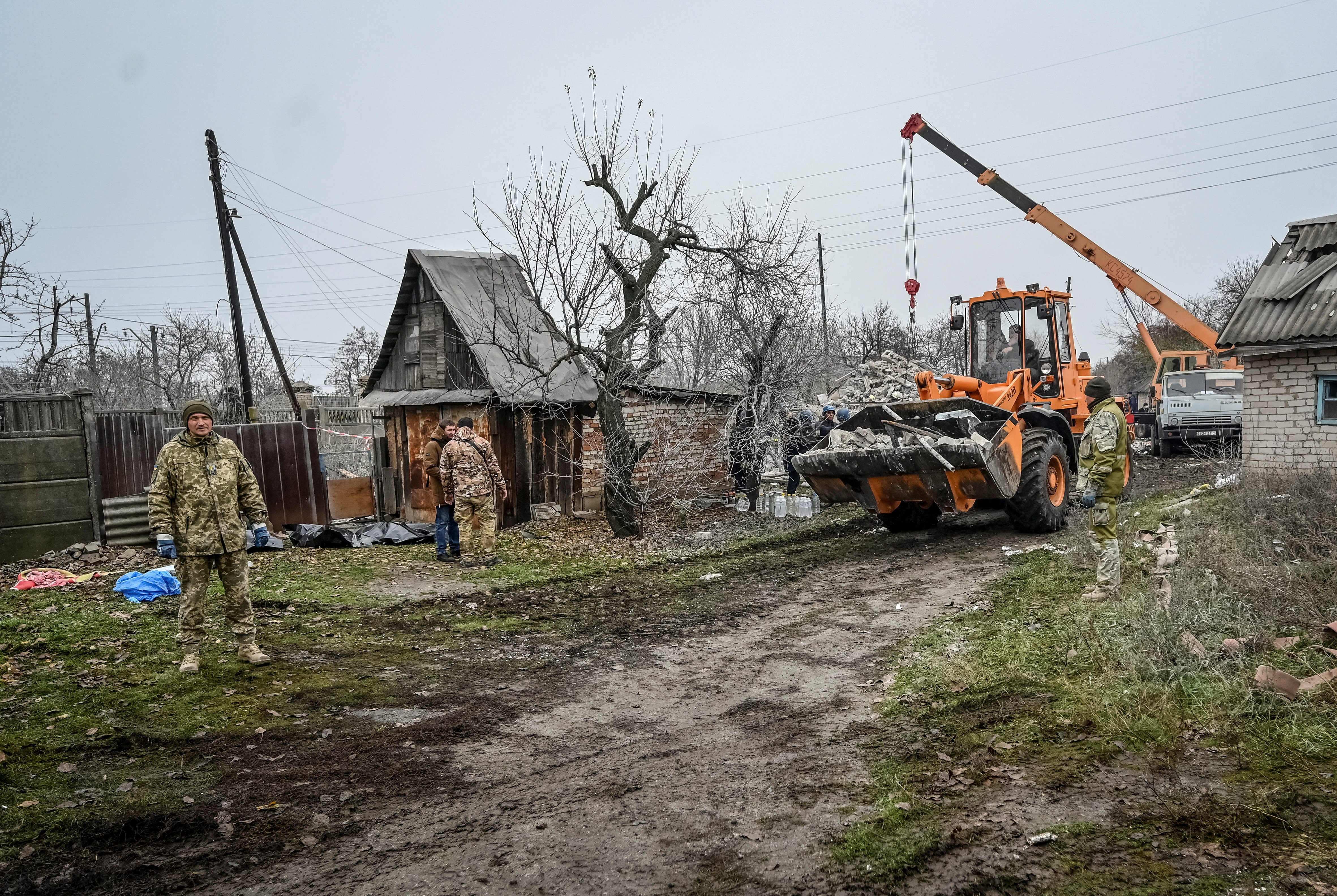
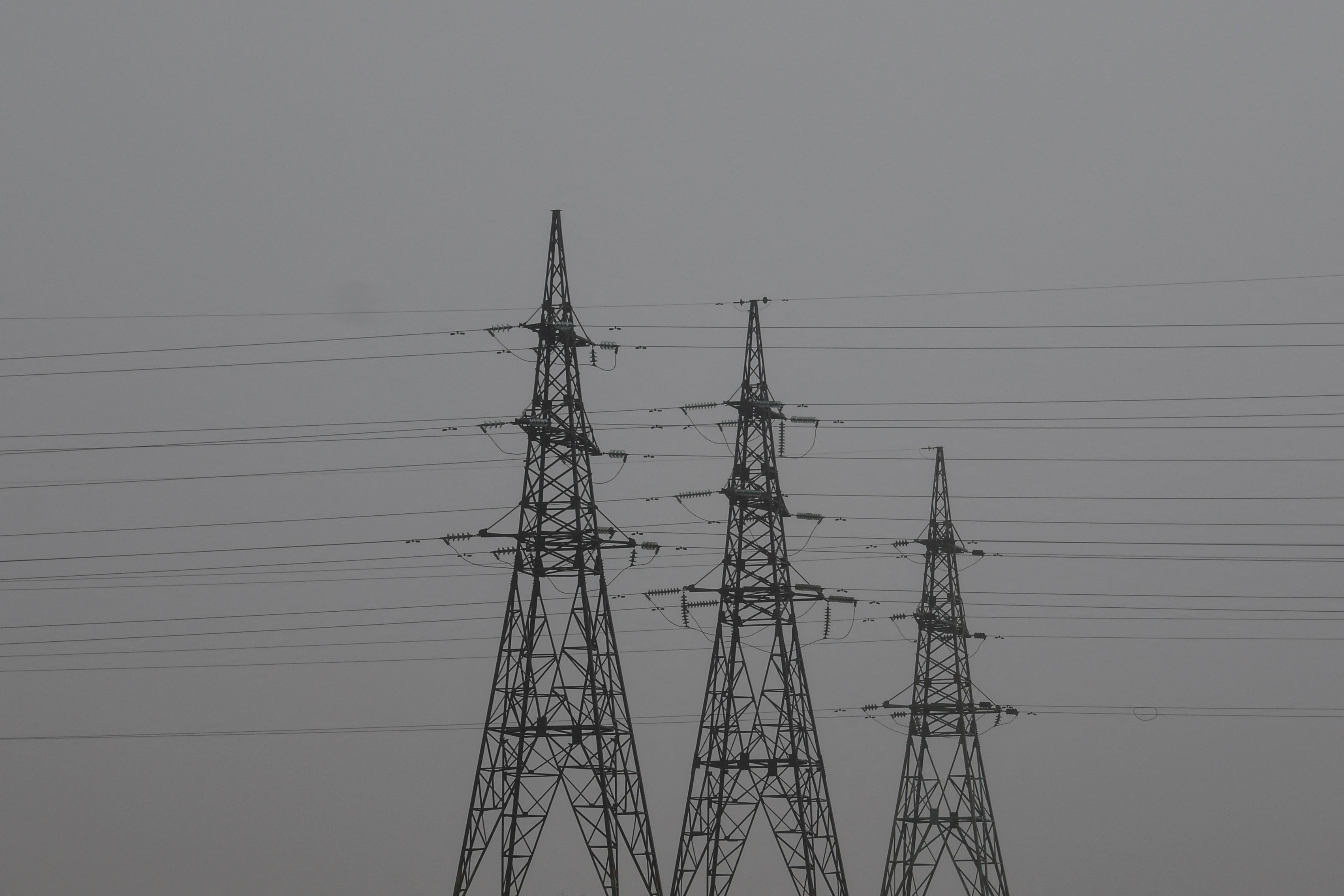
As the winter’s first snow fell in Kyiv, authorities said they were working to restore power nationwide after Russia earlier this week unleashed what Ukraine said was the heaviest bombardment of civilian infrastructure of the war, which began in late February when Russia invaded its neighbour.
Ukraine’s energy infrastructure was under persistent attack by Russian missiles and drones from the capital Kyiv in the north to Dnipro in central Ukraine and Odesa in the south, the military said in a statement.
Ukrainian forces in the past 24 hours had downed two cruise missiles, five air-launched missiles and five Iranian-made Shahed-136 drones, it said. Reuters was unable to verify battlefield reports.
About 10 million people were without power, President Volodymyr Zelenskiy said in a Thursday evening video address. Authorities in some places ordered forced emergency blackouts, he said.
A U.N. agency said a serious humanitarian crisis loomed, with millions facing “constant power cuts” as Ukraine’s typically long, cold winter begins.
Pope Francis reiterated on Friday the Vatican was ready to do anything possible to mediate and put an end to the conflict.
“We must all be pacifists,” he told Italian daily La Stampa. “Wanting peace, not just a truce that may only serve to rearm. Real peace, which is the fruit of dialogue.”
Meanwhile, a Dutch court convicted two Russian men and a Ukrainian man in absentia of murder for their role in the shooting down of Malaysian Airlines Flight MH17 over eastern Ukraine in 2014. Russian-backed forces and the Ukraine military have been fighting in eastern provinces since 2014, the same year Russia annexed Crimea from Ukraine.
“Punishment for all Russian atrocities – both present and past – will be unavoidable,” Zelenskiy wrote on Twitter in response to the court’s decision.
Moscow called the ruling “scandalous”.
In Donetsk region, Russian forces have been reinforced by troops pulled from Kherson city in the south which Ukraine recaptured last week. Russian forces fired artillery on the towns of Bakhmut and nearby Soledar, among others, the Ukrainian military said.
Russian fire also hit Balakliya in northeastern Kharkiv region, which Ukraine recaptured in September, and Nikopol, a city on the opposite bank of the Kakhovka reservoir from the Zaporizhzhia nuclear power station, the statement said.
Ukrainian presidential adviser Oleksiy Arestovych said seven people in Zaporizhzhia were killed, while Ukrainian forces had driven back Russian attacks on the town of Huliapole, to the east of the city of Zaporizhzhia.
Reuters was not able to verify the reports.
The board of the U.N. nuclear watchdog, the International Atomic Energy Agency (IAEA), again called on Russia to end all actions at Ukrainian nuclear power plants and immediately withdraw from Zaporizhzhia, Europe’s largest nuclear power plant.
A deal brokered by the United Nations and Turkey in July aimed at easing global food shortages by helping Ukraine export its agricultural products from Black Sea ports, was extended for four months on Thursday, although Russia said its own demands were yet to be fully addressed.
Since Aug 1, more than 450 ships had carried 11 million tonnes of Ukrainian grain and other foodstuffs around the world, Ukraine’s Zelenskiy said.
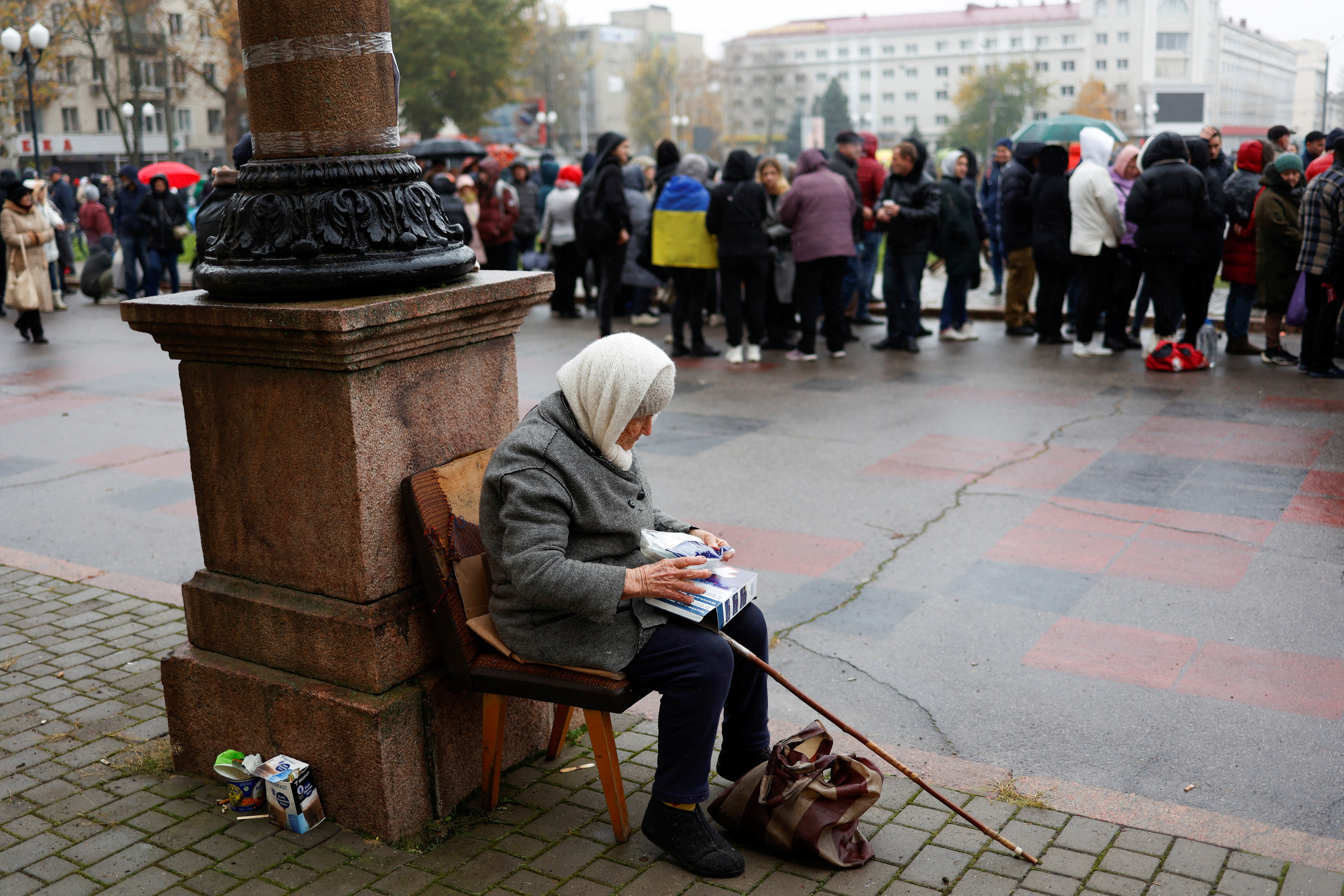
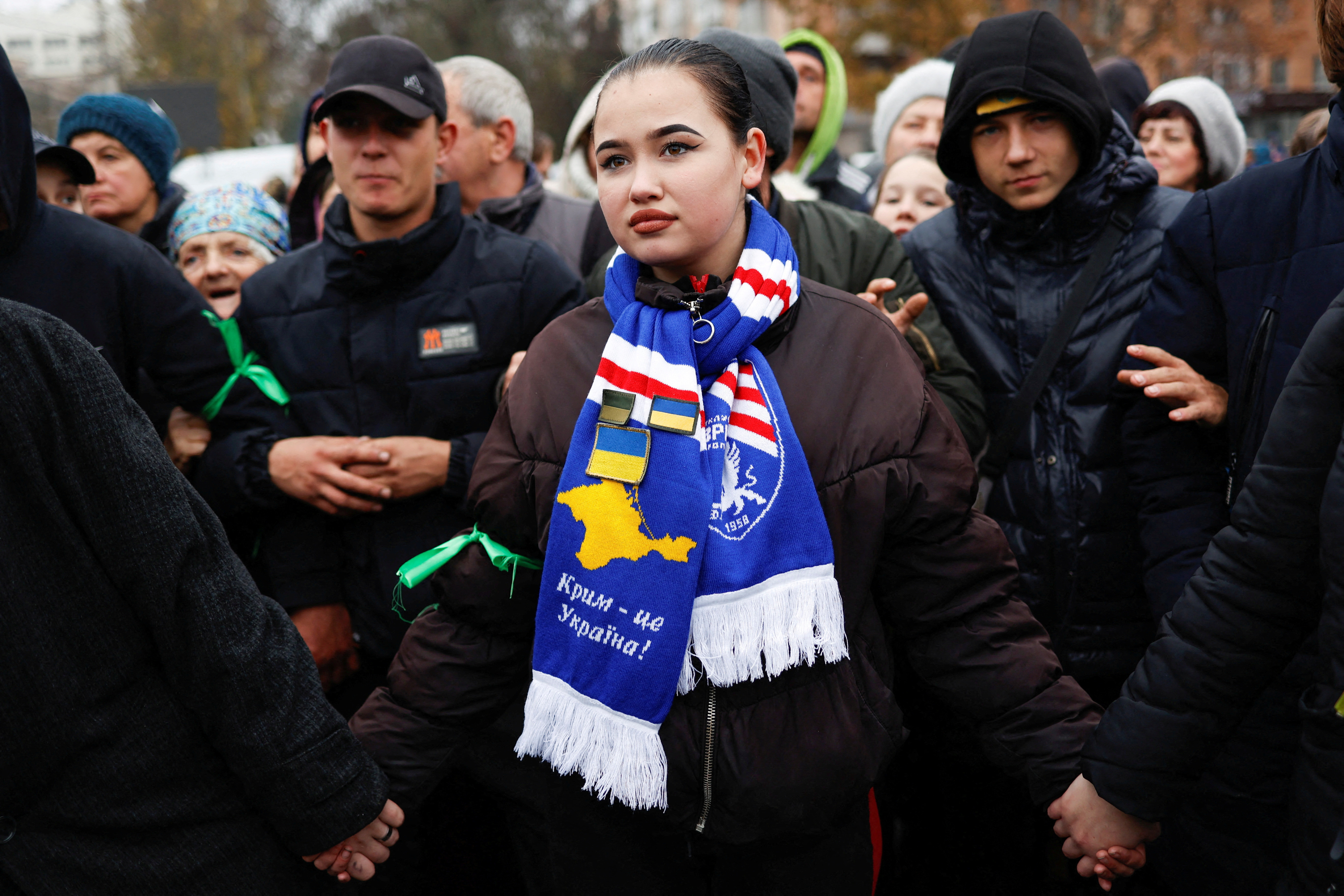
The retreat by Russian forces from the strategic southern city of Kherson last week following a Ukrainian counter-offensive was celebrated by its people, but also created uncertainty.
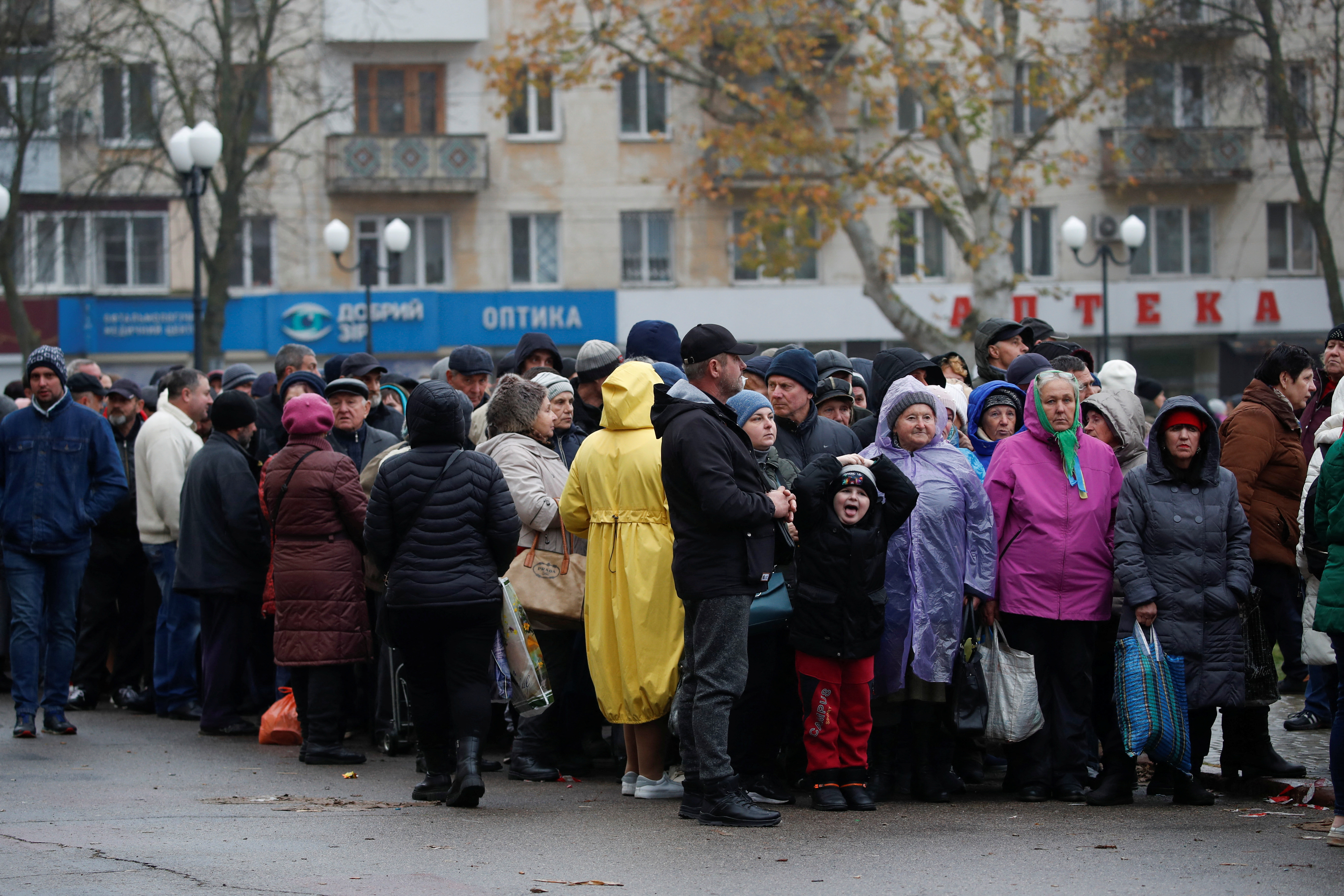
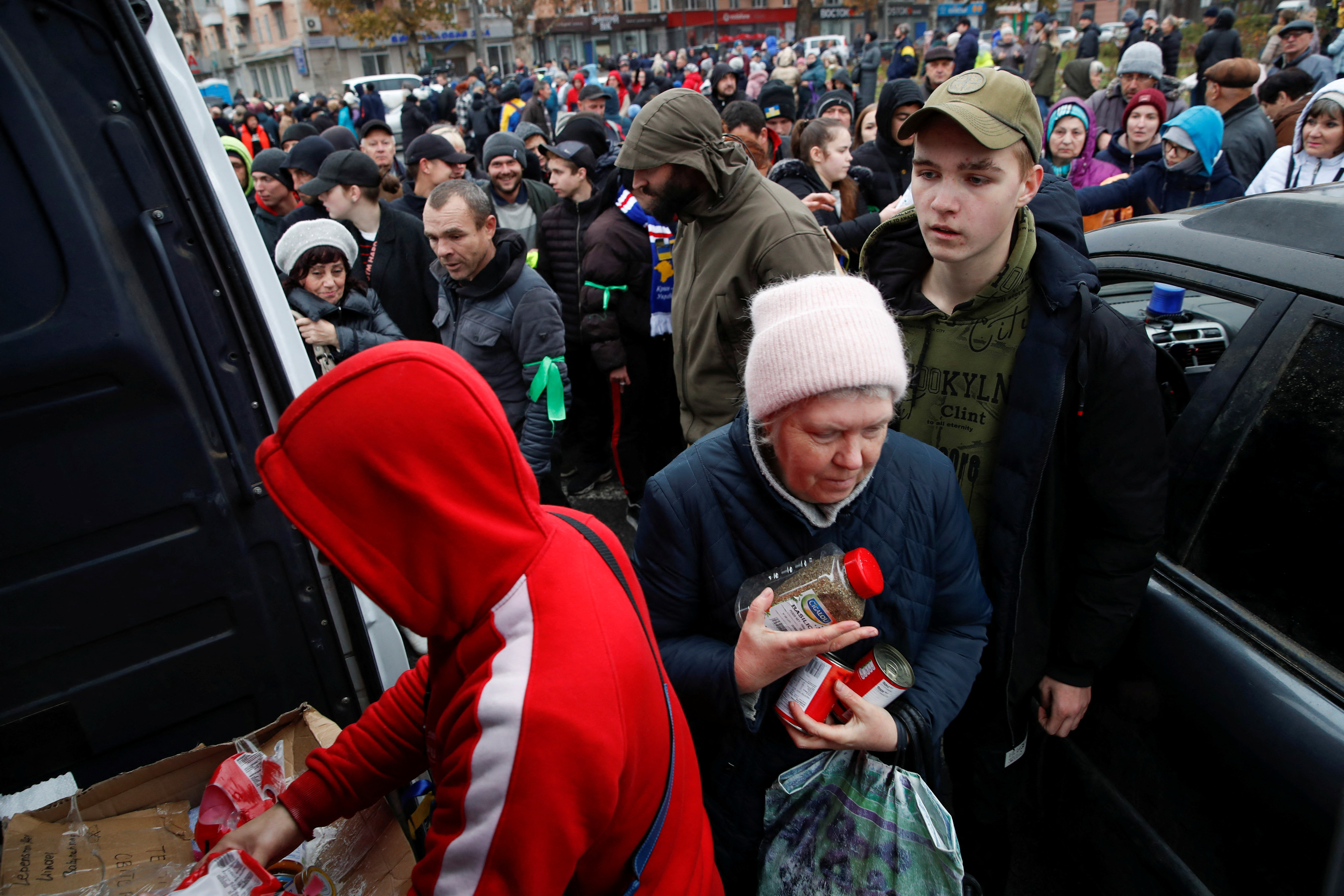
The central square on Thursday was a frenetic melee of humanitarian aid queues and displays of patriotism.
At one end, a man played the Ukrainian anthem on the accordion as bystanders sang along; a man strummed out popular Ukrainian rock songs on the other. Children and teenagers asked a soldier to sign flags draped around their shoulders.
People queued to swap Russian SIM cards in their mobile phones for Ukrainian ones and hundreds waited for humanitarian aid, but said they had no idea what they might receive.
“We’re fine, but we don’t know what to expect. Nothing is over yet. On that bank of the river, the forces are gathering. On this side, they are gathering. We are in the middle,” said Ihor, 48, an unemployed builder.
Ukrainian and Russian gunners on Thursday traded shellfire across the Dnipro River that bisects the Kherson region, the thumps echoing as a freezing rain drenched the city.
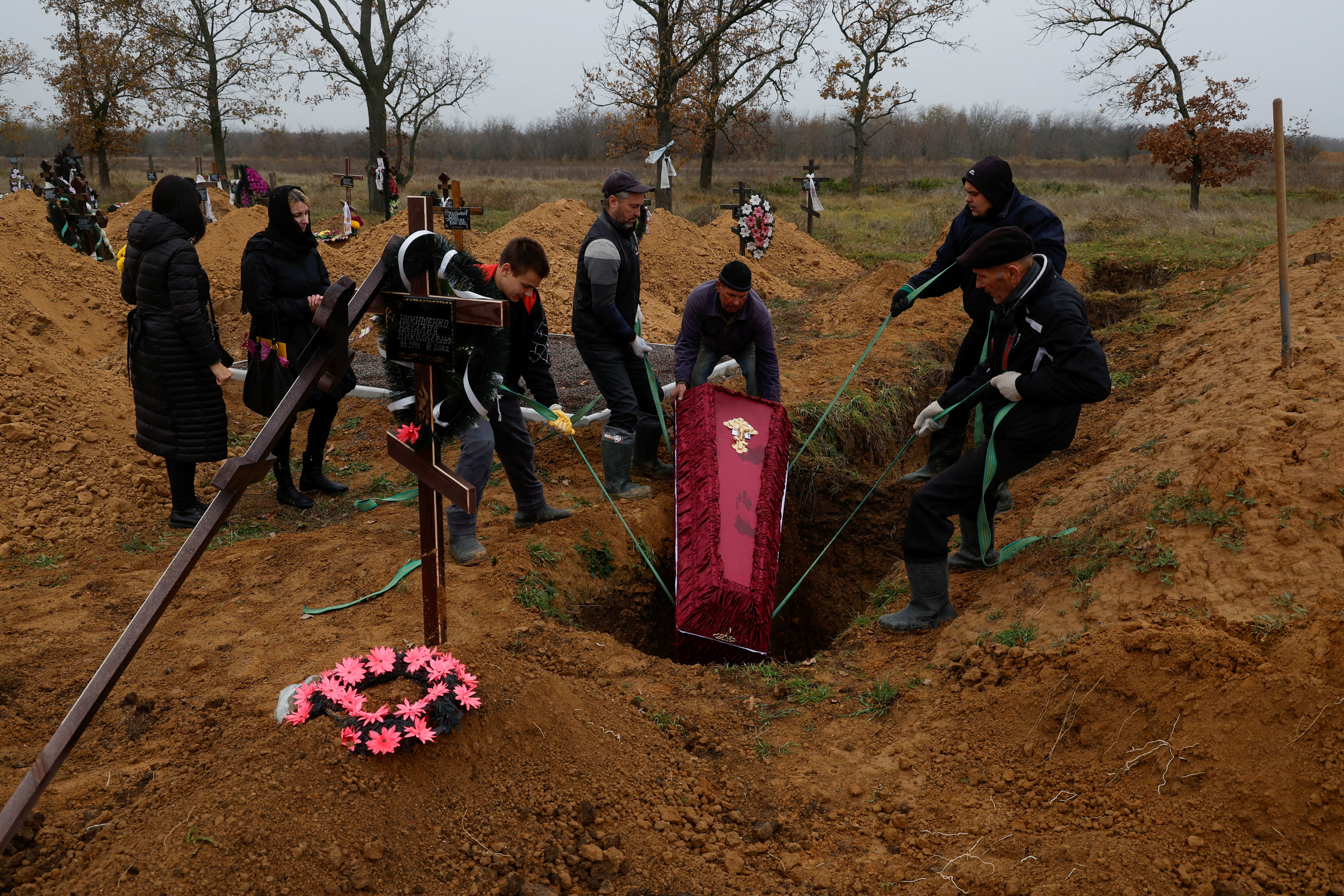
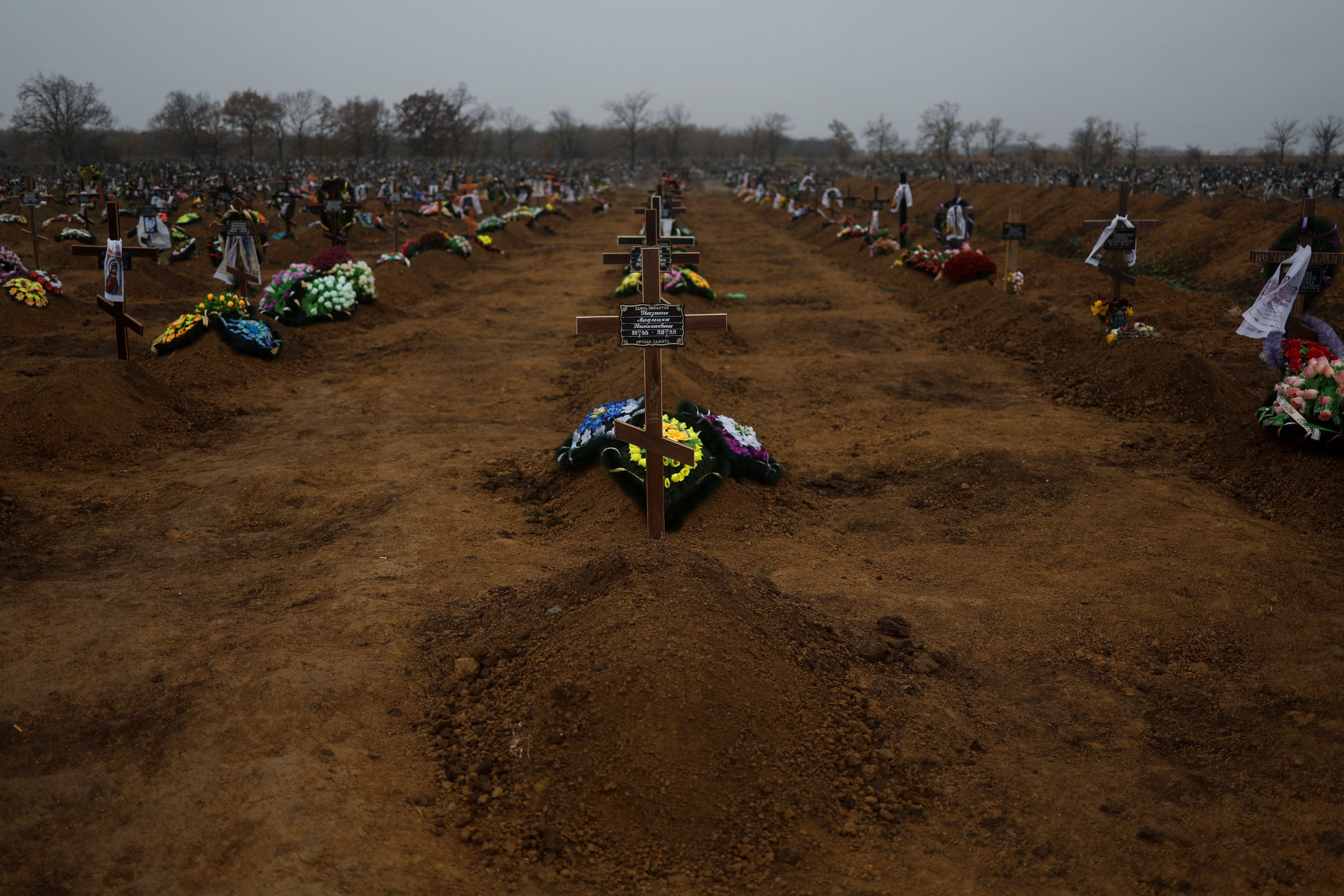
Investigators in recaptured territory in the area uncovered 63 bodies bearing signs of torture after Russian forces left, Ukraine’s interior minister was quoted as saying.
Russia denies its troops target civilians or have committed atrocities. Mass burial sites have been found in other parts previously occupied by Russian troops, including some with civilian bodies showing signs of torture.
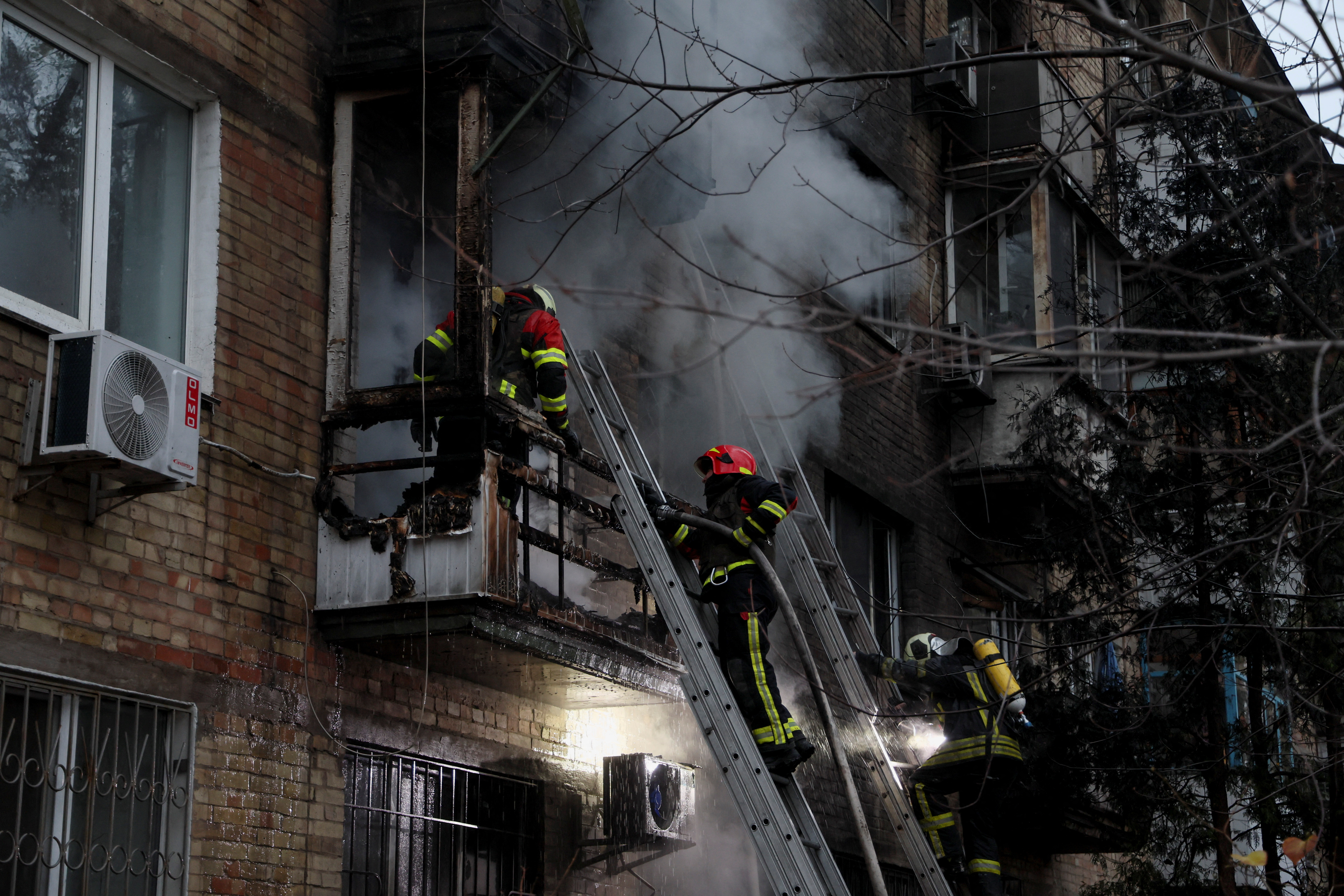
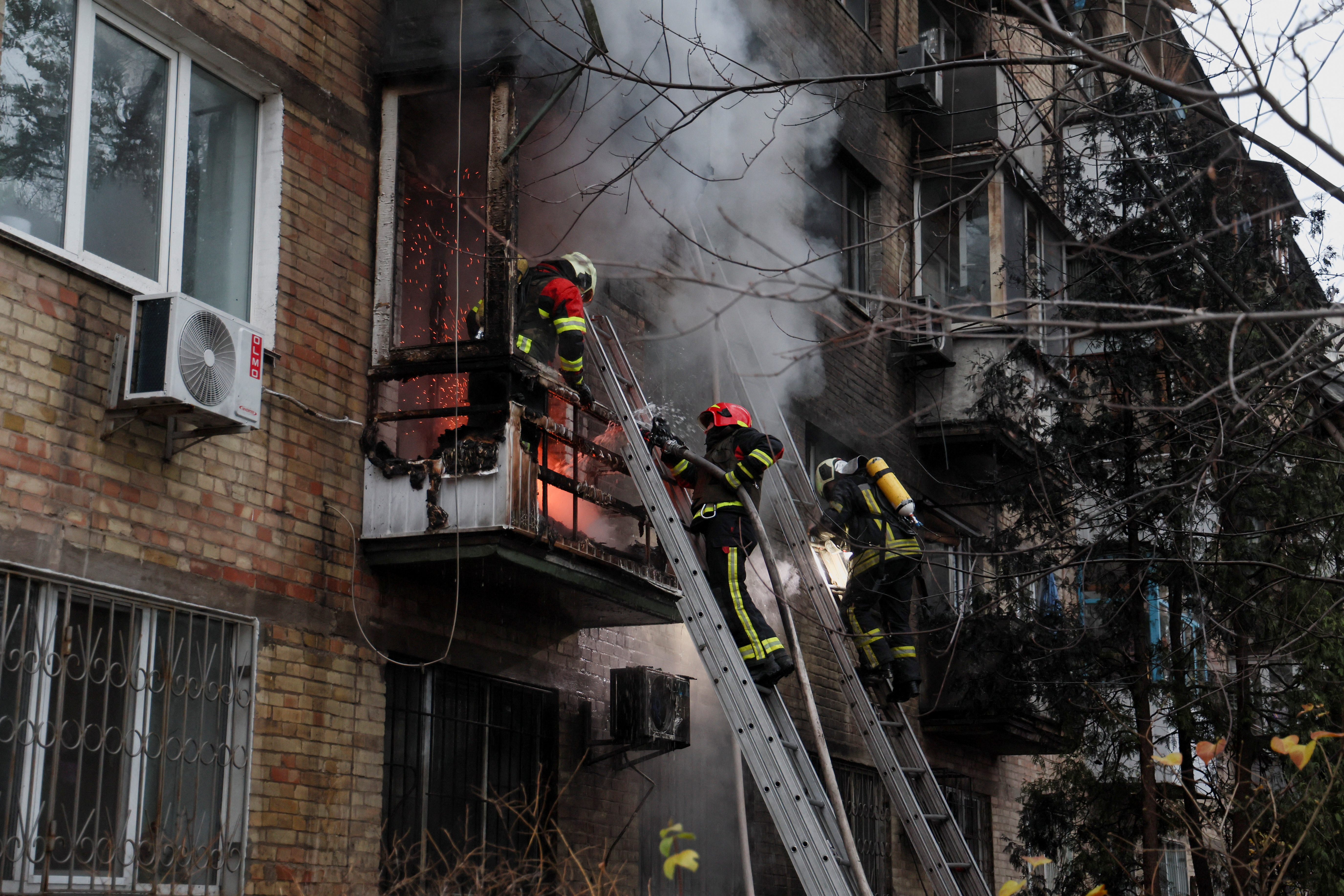

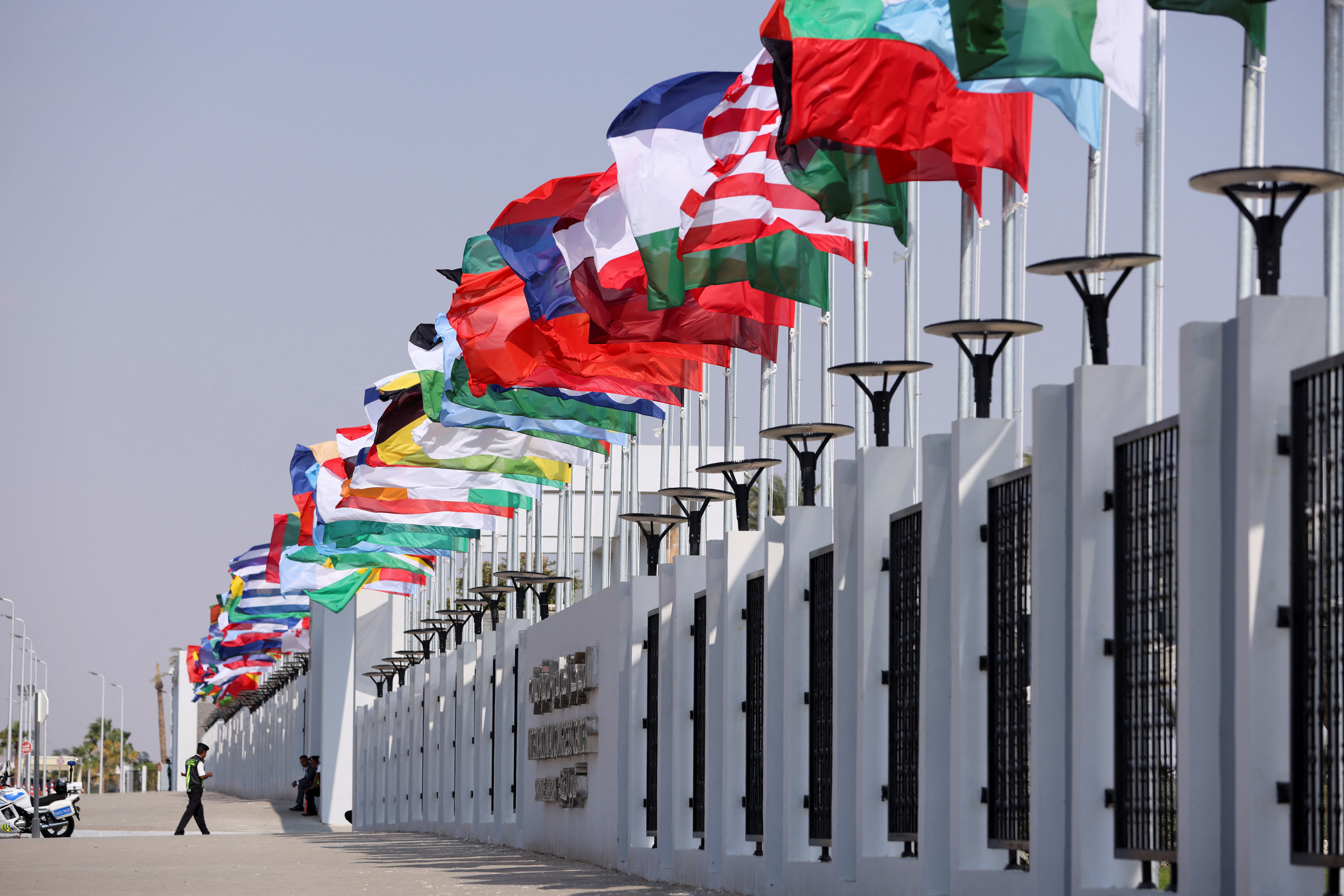
The United Nations climate agency on Friday published a draft negotiating text of the deal that delegates at the COP27 summit in Sharm el-Sheikh are hoping to agree in the coming days.
The text, which builds on earlier, less formal iterations, did not set out the proposed solution to one of the most contentious issues at the summit, the ‘loss and damage’ financial arrangements to provide funding to developing countries suffering catastrophic climate events.
Instead it contained placeholder text, indicating delegates were still seeking consensus on the matter.
The issue made it onto the formal summit agenda for the first time in what was seen as a breakthrough on a subject that has long divided developed and developing nations. Since then however, talks on what to do next have made little progress.
Late on Thursday, the European Union made a proposal aimed at resolving the impasse.
The overarching deal text, time-stamped at 03:30 AM reflecting the intensity of the final negotiations, reaffirmed key points in last year’s COP26 deal in Glasgow and the Paris 2015 agreement on limiting the rise in global temperatures.
The text said the conference: “Reaffirms the Paris Agreement temperature goal of holding the increase in the global average temperature to well below 2 °C above pre-industrial levels and pursuing efforts to limit the temperature increase to 1.5 °C above pre-industrial levels.”
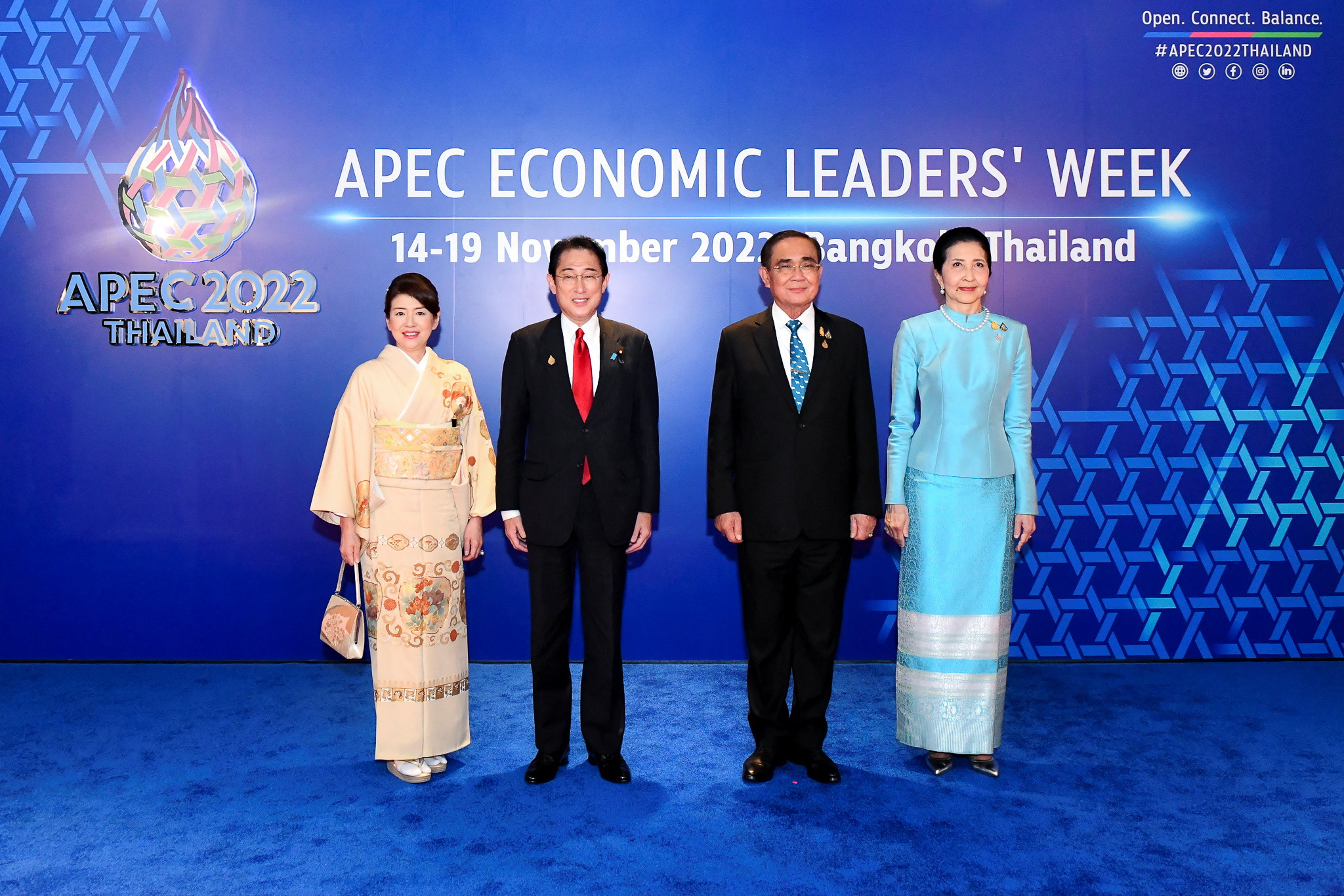
Leaders and heads of governments from the 21 member economies of the Asia-Pacific Economic Cooperation (APEC) have come to the Thai capital Bangkok for a meeting on Friday and Saturday.
As host, Thailand hopes to make progress on discussion of the Free Trade Area of the Asia Pacific (FTAAP), but talks come amid geopolitical tensions over the war in Ukraine and regional flashpoints such as Taiwan and the Korean peninsula.
What is APEC?
APEC is a regional economic forum established in 1989 to promote economic integration. As a grouping, it makes up 38% of the global population, 62% of GDP and 48% of trade.
APEC’s 21 members are:
Australia, Brunei, Canada, Chile, China, Hong Kong, Indonesia, Japan, South Korea, Malaysia, Mexico, New Zealand, Papua New Guinea, Peru, the Philippines, Russia, Singapore, Taiwan, Thailand, the United States and Vietnam.
Here is a look at who is attending:
Harris is standing in for President Joe Biden. The United States will be the APEC host in 2023. After the meeting in Bangkok, Harris will travel to the Philippines. Her visit to the Philippines will be at the edge of the disputed South China Sea, a move that Beijing may see as a rebuke.
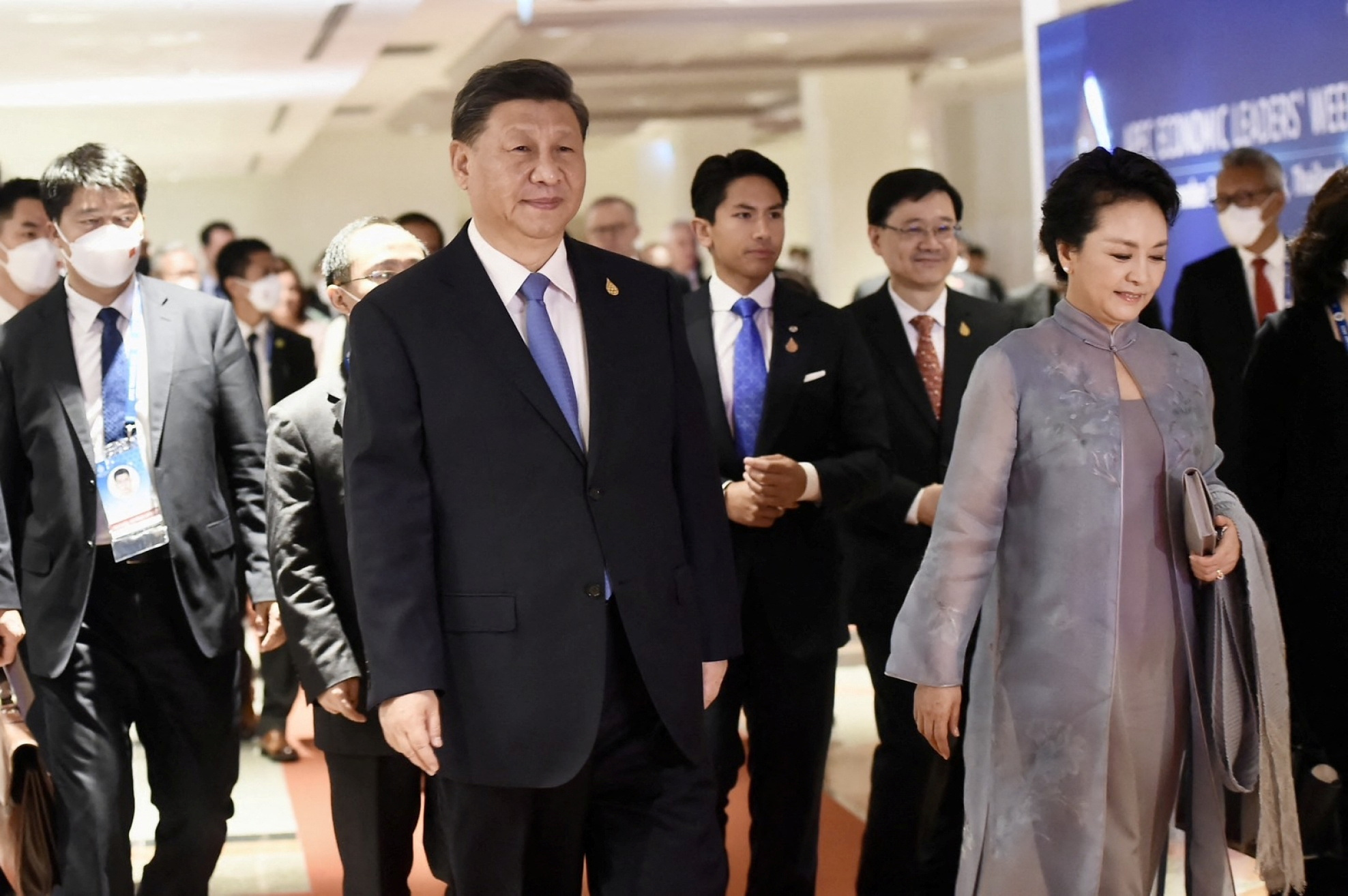
Xi met Japanese Prime Minister Fumio Kishida in Bangkok on Thursday for talks. Kishida said he conveyed concerns over regional security to Xi amid growing tensions in Asia over China’s maritime ambitions. Xi was quoted by Chinese state broadcaster CCTV as telling Kishida that China and Japan should deepen trust, areas of cooperation and regional integration, and resist “conflict and confrontation”.
Belousov will represent President Valadmir Putin at APEC. At an earlier APEC meeting in Bangkok this year, representatives from the United States and other countries walked out of a meeting in protest of Russia’s invasion of Ukraine when Russian Economy Minister Maxim Reshetnikov was delivering remarks.
THAILAND PRIME MINISTER PRAYUTH CHAN-OCHAAs meetings kicked off, Thailand urged APEC members to “rise above differences” after geopolitical tensions dominated summits in Bali and Phnom Penh over the war in Ukraine. Prayuth said he wanted the talks to discuss how leaders can help transition to sustainable economic growth and development.
China’s leader appeared to confront Trudeau at the G20 summit in Bali on Wednesday after accusing him of leaking details from a closed-door meeting, a rare public display of annoyance by Xi. China’s foreign ministry on Thursday said Xi was not criticising Trudeau over the alleged leaks.
Prime Minister Han Duck-soo is expected to hold meetings with New Zealand and Peru, and also seek support for South Korea’s bid to host the 2030 World Expo, according to Yonhap.
Malaysia is represented by its government secretary, with the country holding general elections on Nov. 19.
Marape will hold meetings with U.S. State Secretary Antony Blinken.
The ambassador will represent President Andres Manuel Lopez Obrador.
President Marcos will hold a bilateral meeting with China’s Xi and host U.S. Vice President Harris in Manila next week, with tensions over Taiwan on the agenda.
SINGAPORE PRIME MINISTER LEE HSIEN LOONG
Lee will hold bilateral meetings with China’s Xi
VIETNAM PRESIDENT NGUYEN XUAN PHUC
CHILE PRESIDENT GABRIEL BORIC FONT
INDONESIAN PRESIDENT JOKO WIDODO
NEW ZEALAND PRIME MINISTER JACINDA ARDERN
PERU VICE PRESIDENT DINA BOLUARTE
BRUNEI SULTAN HASSANAL BOLKIAH
AUSTRALIAN PRIME MINISTER ANTHONY ALBANESE
HONG KONG: CHIEF EXECUTIVE JOHN LEE KA-CHIU
TAIWAN: TSMC FOUNDER MORRIS CHANG
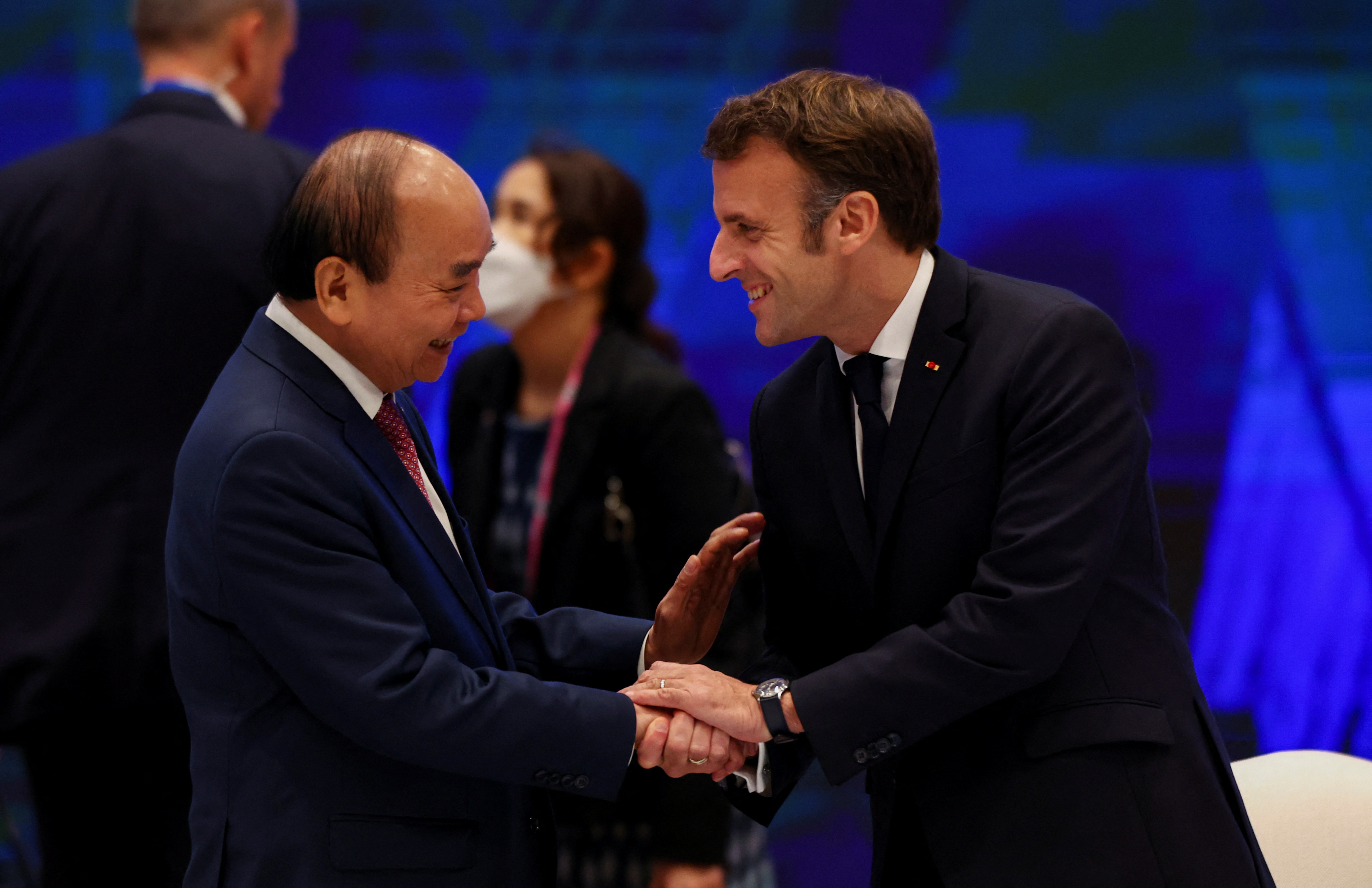
This year, host Thailand has also invited France and Saudi Arabia.
Macron is due to make a keynote address.
Saudi Arabia’s de facto ruler’s visit comes as the relationship between Thailand and Saudi Arabia starts to normalise this year. For nearly three decades diplomatic ties had been frozen over “the Blue Diamond Affair”, as the theft of $20 million in jewellery by a Thai janitor is known.
(This story has been corrected to fix references to Taiwan in paragraph 4 and in list of delegates)
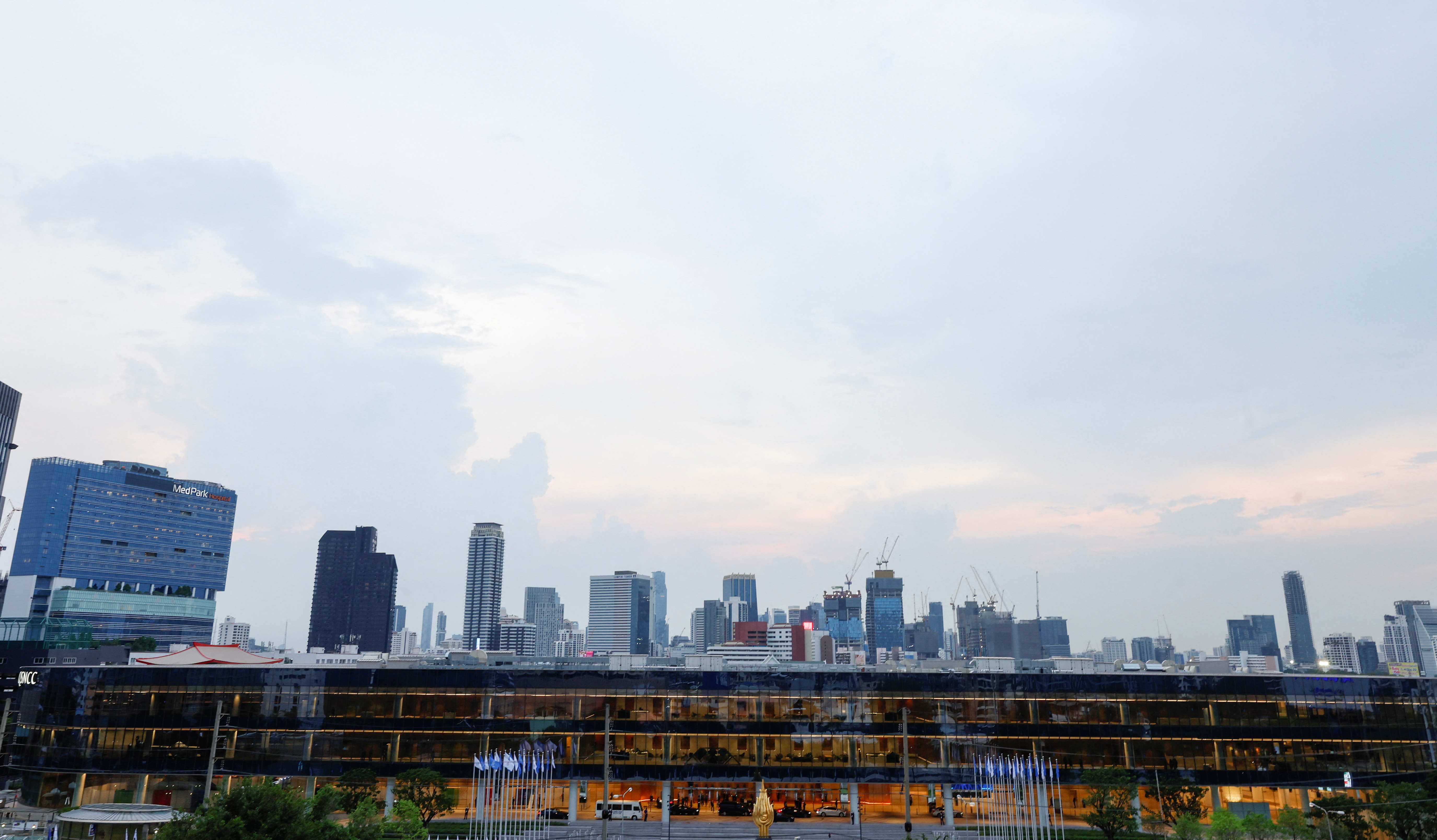
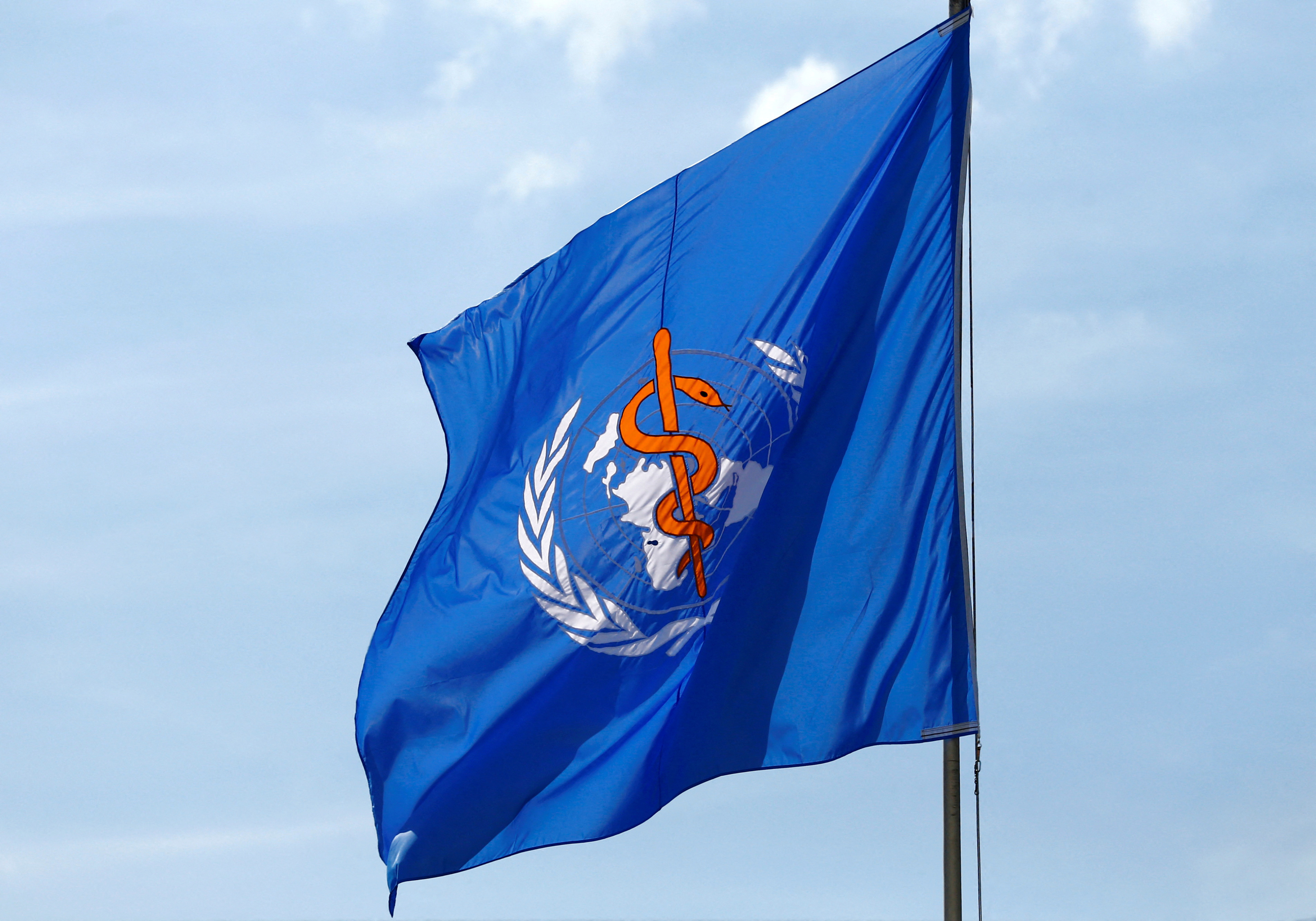
Negotiations on new rules for dealing with pandemics are underway at the World Health Organization (WHO), with a target date of May 2024 for a legally binding agreement to be adopted by the U.N. health agency’s 194 member countries.
A new pact is a priority for WHO chief Tedros Adhanom Ghebreyesus as his second five-year term at the head of the global health agency gets underway. It seeks to shore up the world’s defences against new pathogens following the COVID-19 pandemic that has killed more than 6.5 million people, according to the WHO.
The global health agency itself is facing calls for reform after an independent panel described it as “underpowered” when COVID-19 struck, with limited ability to investigate outbreaks and coordinate containment measures.
The WHO already has binding rules known as the International Health Regulations (2005) which set out countries’ obligations where public health events have the potential to cross borders. These include advising the WHO immediately of a health emergency and measures on trade and travel.
Adopted after the 2002/3 SARS outbreak, these regulations are still seen as functional for regional epidemics like Ebola but inadequate for a global pandemic.
Suggested proposals for the pact include the sharing of data and genome sequences of emerging viruses and rules on equitable vaccine distribution. read more
Member states agreed in July that the new agreement should be legally binding. Another key meeting is scheduled for December.
It would be only the second such health accord after the 2003 Framework Convention on Tobacco Control, a treaty which aims to reduce smoking via taxation and rules on labelling and advertising.
The EU proposed the accord and is seen as its biggest backer. Developing countries are keen to use the negotiations as an opportunity to secure better access to vaccines, following allegations of “vaccine apartheid” from the WHO’s Director-General Tedros.
Members are due to give their initial feedback to the draft in a public meeting between Dec. 5-7. With so many member countries involved, securing agreement is likely to be tricky.
It is not yet clear how the 2005 regulations and the new pandemic accord might fit together.
One suggestion is that they should be complementary, so that existing rules apply to local outbreaks with the new rules kicking in if the WHO declares a pandemic — something it does not currently have a mandate to do.
It remains to be determined whether negotiators will include measures such as sanctions to ensure compliance.
Separate talks on an initiative to overhaul the 2005 rules are taking place, with proposals submitted by the United States, the European Union and at least a dozen others, diplomats say.
Washington’s proposals aim to boost transparency and grant the WHO quicker access to outbreak sites. Several diplomats said they are likely to prove too ambitious, with opposition from China and others expected on national sovereignty grounds.
China did allow WHO-led expert teams to visit the COVID-19 epicentre in Wuhan, but the WHO says it is still withholding clinical data from early cases that may hold clues about the origins of the SARS-CoV-2 virus. read more
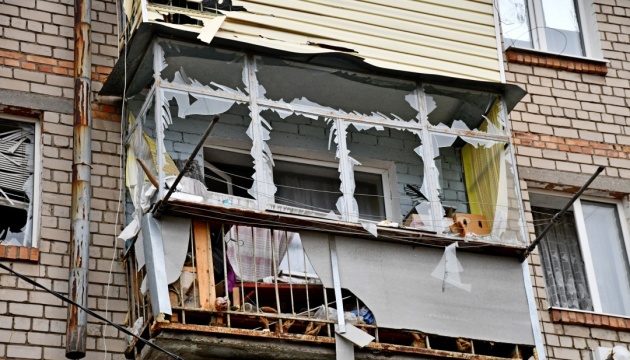
About the earlier day, a person civilian has been killed and four injured in Russia’s shelling of the Donetsk area.
The suitable statement was built by Donetsk Regional Army Administration Head Pavlo Kyrylenko on Telegram, an Ukrinform correspondent experiences.
“On November 17, 2022, Russians killed a single civilian in the Donetsk area, namely in Bakhmut. 4 people had been hurt in the area,” Kyrylenko wrote.
At the instant, it is also impossible to depend the specific amount of casualties in Mariupol and Volnovakha, Kyrylenko included.
A reminder that Russian troops struck the Dnipropetrovsk region’s Nikopol with a number of start rocket devices (MLRS) past night time, getting fired about 40 projectiles.
mk
The post One killed, four injured in Russia’s shelling of Donetsk region appeared first on Ukraine Intelligence.
NEW YORK (AP) — One hundred years ago, a revolutionary Polish patriot argued that Russia’s hunger for territory would continue to destabilize Europe unless Ukraine could gain independence from Moscow.
Poland’s Marshal Józef Piłsudski never managed to fulfil his hope for an independent Ukraine connected to Europe. But the farsighted and analytical statesman did manage to wrest his own homeland from the grip of czarism and from two other powers, Austria and Prussia.
At a time when many Poles had given up on the dream for full independence, Piłsudski put a sovereign Polish state back on the map of Europe at the end of World War I, after more than a century’s erasure.
Piłsudski’s story, complete with flaws, accomplishments and echoes of today’s war in Ukraine, is brought to life in a recent biography, “Józef Piłsudski Founding Father of Modern Poland,” by Joshua D. Zimmerman, a professor of Holocaust Studies and eastern European history at New York’s Yeshiva University. The book, published by Harvard University Press, also reexamines Piłsudski’s relationship to Ukraine.
Thickly mustached, with heavy brows and a hawk-like visage, Piłsudski lived modestly and inspired his troops by leading them in battle. He was celebrated at home and abroad in his day, but his memory outside of Poland has faded.
After proclaiming a new Polish republic, Piłsudski and his legionnaires fought a series of wars to define, secure and defend its borders, culminating with his greatest victory: turning back a Bolshevik army in 1920 that was threatening to drive all the way to Berlin and carry a Communist revolution to the heart of industrial Europe.
Before that battle, known as the “Miracle on the Vistula,” Piłsudski’s forces had marched deep into Ukraine and occupied Kyiv in an alliance with nationalist leader Symon Petliura, who also was fighting the Bolsheviks, amid Ukraine’s short-lived independence in 1918-21.
As Zimmerman recounts, Piłsudski had a vision of a multilingual and multiethnic Poland that respected the rights of minorities, especially Jews. That earned him the enmity of nationalists who wanted a Poland run for ethnic Poles.
After World War I, Piłsudski hoped Lithuania, Belarus and Ukraine could form an alliance to counter Russia in the style of the Polish-Lithuanian union that existed for centuries prior to 1795. But Ukrainians and Lithuanians were wary of Polish claims on their territories, and Pilsudski’s vision of an anti-Russian alliance never became reality.
In language that might be applied to today’s discourse, Piłsudski conceived of a sovereign Ukraine not merely to prevent Russian aggression but as an outpost of Western liberal democracy.
“There can be no independent Poland,” he is quoted as saying in 1919, “without an independent Ukraine.”
Piłsudski launched a military campaign in 1920 to support Ukrainian nationalists against Bolshevik rule, an action condemned by some as an overreach. Zimmerman believed he had a rationale that echoes today, when Poland, Lithuania and the Baltic countries, as well as Finland and Sweden, feel that Russia under President Vladimir Putin must be contained.
On May 7, 1920, Piłsudski’s cavalry entered Kyiv, followed by Polish and Ukrainian infantry. At the peak of his Ukrainian campaign, he ordered his commanders to withdraw “as soon as possible” in order to establish friendly relations with the new Ukrainian state. according to Zimmerman.
“My view is that he clearly championed an independent Ukraine, one that would be a democratic outpost on Russia’s border, a buffer between Russia and the West, but also a staunch Polish ally that shared Piłsudski’s democratic values and the values of at least his followers,” the author said.
Poland and Lithuania — two countries that emerged from Soviet rule — are among Ukraine’s strongest diplomatic champions against Putin’s Russia.
Zimmerman’s book makes a balanced and “significant contribution” to the understanding of Piłsudski, said Michael Fleming, a historian and director of the Institute of European Culture at the Polish University Abroad in London.
“Pilsudski was well aware of the challenges posed by Poland’s geography and concluded that an independent Ukraine would share Poland’s interest in limiting Russia’s expansionist tendencies,” Fleming said by email. “At the same time, however, it is important to remember that western Galicia (including Lviv) was much contested” between Poles and Ukrainians.
Indeed Polish and Ukrainian nationalists clashed in the early 1900s and again during and after World War II, and some ethnic animosities have lingered.
During Russia’s civil war between the Red Army and the anti-Bolshevik White Army, Pilsudski resisted pleas for Poland to help the Whites. No matter who won, he believed, Russia would remain “fiercely imperialistic.”
There was little to gain from negotiations because “we cannot believe anything Russia promises,” Piłsudski is quoted as saying.
Piłsudski, born in 1867 and raised in present-day Lithuania, was steeped in the romanticism of Polish independence. He acquired a burning hatred of czarist authority that held Poland, Lithuania, Belarus and Ukraine in its grip, and he and his brother were implicated in a plot to assassinate the czar and imprisoned.
Zimmerman traces how, upon his release, Piłsudski became the leading activist of the banned Polish Socialist Party, published its newspaper for years, made a daring escape from a second Russian imprisonment after he was caught — by pretending to be insane — and then turned to creating a military force in Austrian-ruled Poland that eventually fought against Russia during World War I.
Although they fought under Austria and Germany, Piłsudski’s insistence on Polish independence ultimately led to his imprisonment by the Germans, a sacrifice that enhanced his legend among his fellow Poles. Upon his release, he was acclaimed the country’s leader and the de facto founder of modern Poland on Nov. 11, 1918, now celebrated as Polish independence day.
After Poland’s borders were secured and a civil government established, Piłsudski mostly stepped back from public life. But after several years, he followed with his own turn to strongman rule.
Concerned that a democratic Poland was slipping away and disgusted by 13 failed Polish governments, he led a 1926 military putsch to restore order. After imposing a system of “managed” democracy and soft dictatorship, Piłsudski’s final years were burdened by declining health and growing worries about how to position Poland between a rising Soviet Union and Hitler’s Germany.
Zimmerman captures the difficulties of knitting together Poland and details its conflicts, including pogroms against Jews by some of Piłsudski’s troops. Yet he views Pilsudski as a defender of Jews and pluralism.
The author makes the case that Piłsudski, although flawed, possessed the judgment and skills to defend Poland’s interests. His death in 1935 left Poland with a vacuum in leadership, unable to stave off the German and Soviet invasions of 1939.
Yet Piłsudski’s creation of an independent Poland after World War I helped ensure that when World War II ended and Soviet rule receded, there would be no question that an independent Poland would reemerge.
___
John Daniszewski, editor-at-large for standards and former senior managing editor for international news at The Associated Press, is a former Warsaw correspondent.
Advertisements – Advertising at The News And Times – advertising-newsandtimes.com | WE CONNECT!
Audio | Video | Top News | On Twitter | Security | FBI | Capitol Riot | JOSSICA | Trump | Russia | Putin | Russia – Ukraine War | Covid-19 | Brooklyn NY | Puerto Rico | World
September 28, 2026 12:36 pm
The News And Times | Featured Posts | All Articles | Current News | Selected Articles | Shared Links | Opinions | In My Opinion | Sites | Blogs | Links | Twitter | Facebook

Contact Form | Blogs | Sites | News Reviews | Links | Advertising
All The News That’s Fit To Web