Categories
Audio Sources - Full Text Articles

The Climate Challenge of the World’s Population Hitting 8 Billion

Global population surpassed 8 billion this week, a shocking milestone because back in the 1990s this threshold was not expected to be breached until 2050. Whether you’re a dour Malthusian or a technological optimist, one thing is undeniable: The 2.7 billion people added to global population since 1990 makes the task of averting a climate catastrophe vastly more challenging than it was when global warming first arose as a mainstream concern.

Getting to zero net emissions in 1990—when fossil fuels were putting 22.4 billion metric tons of greenhouse gas emissions (GHG) into the atmosphere—was hard enough. Now, we have to eliminate those emissions along with roughly 14 billion tons of annual GHG emissions resulting from population growth. Equally daunting, with climate changes here and intensifying, we have to start now. Nor can we count on the biosphere to continue to sequester a small portion of our emissions as the oceans are already showing stress from existing accumulations of carbon dioxide and our forests continue to be degraded in the quest to feed and house our ever-growing numbers.

[time-brightcove not-tgx=”true”]

In short, we have a bigger rock to push up the hill and ever less time to do it. We have to. The alternative is simply too dire to imagine.

Read More: Global Population Size Should Not Be Cause For Alarm, But a Rally Cry For Change

Business as usual takes us to a 2.5 to 3 degree Celsius warming from pre-industrial levels. The last time the planet was that warm was during the Pliocene, some 2.6 million years ago. There was plenty of life back then, but no humans, and, given the way rising temperatures decrease yields and alter weather patterns, it’s very unlikely that a world that much warmer could feed the 8 billion alive today, much less the 2 billion people likely to be added in the coming decades.

So, we have to cut emissions and fast. How? There is no single magic bullet, but there are certain things that simply have to happen, and the global community can create the incentives to make them happen.

One of them is family planning, which until now has been largely absent from the conversation around global warming. Today, the global average for per capita carbon dioxide emissions (the dominant greenhouse gas) is about 4.4 metric tons, according to the International Energy Agency. (For comparison, India’s annual per capita CO2 emissions are about 1.7 metric tons, China’s 7 tons, and the U.S., 13 tons.)

Most of the expected 2 billion people will be born in the poorer nations. These nations burn fewer fossil fuels, but all aspire to raise their standard of living, which, given today’s energy mix, means more GHG emissions per capita. Even without economic growth, that population increase would mean roughly four billion additional metric tons of CO2 going into the atmosphere each year. That’s about a 10% increase, and, as of today, the world has never been able to voluntarily reduce annual emissions.

Population should be part of climate discussions, but I cannot remember a time when family planning has been featured in international efforts. Yes, it’s a hot button topic in many of the emerging nations, many of which take affront when the rich nations ask them to stabilize their numbers. But its absence from the agenda from last week’s COP27 is a tell that the Congress of Parties process is not a serious effort to really tackle the risk of climate change.

Population growth is the elephant in the room for climate change, but it is also the elephant in the room for ecological issues such as tropical deforestation, desertification, the extinction crisis, the destabilizing of earth’s life support systems on land and in the oceans; demographic issues such as involuntary migration, fresh water, and food insecurity; and political issues such as civil unrest and state failure. Slowing population growth will reduce pressures on all of these issues and threats.

Population growth is a fraught issue. In the last few decades, a major driver to limit family size has been the demographic shift towards urban areas. In cities, additional kids become a liability because of the higher costs of housing and food. This shows that people can change attitudes towards family size quite rapidly, given incentives and access to family planning. For governments, the incentive should be the prospect of a climate Hell if population continues to increase by several hundred million people every decade. Many emerging nations have made great strides in lowering infant mortality, but, all too often efforts on maternal and infant health are not coupled with access to family planning, which is one reason why human numbers surpassed 8 billion two decades ahead of schedule.

There are many reasons for not adding the next 2 billion to global population, but the absolute exigency of lowering global GHG emissions should be sufficient to return population pressures to the international agenda. More to the point, if humanity does not voluntarily control our numbers, climate change and its four horsemen of heat, floods, droughts, and storms, will do it for us.

Categories
Audio Sources - Full Text Articles

Russia says it“s open to more U.S. talks but dismisses idea of Putin-Biden summit

2022-11-18T13:27:26Z

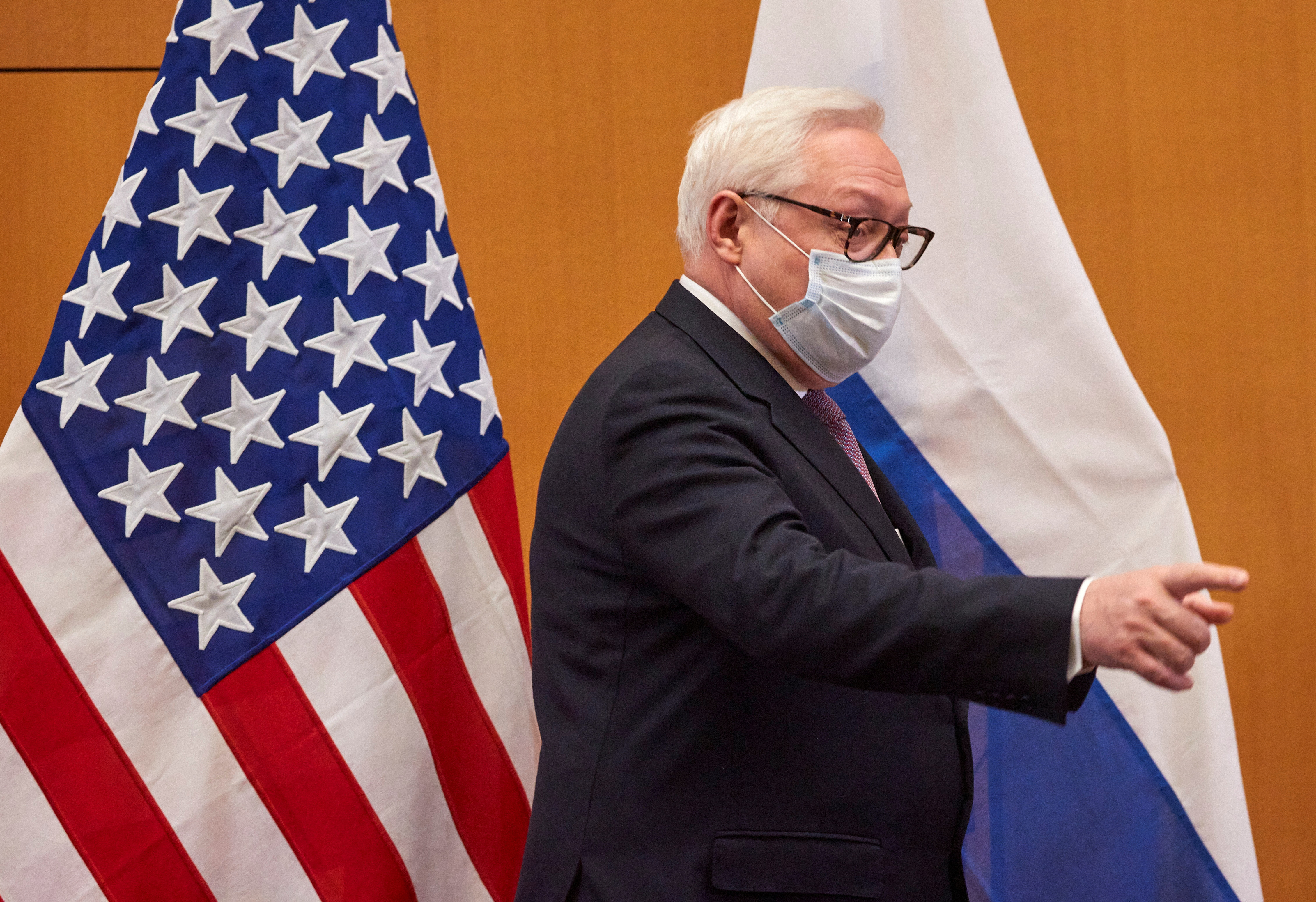
Russian Deputy Foreign Minister Sergei Ryabkov arrives for security talks with U.S. Deputy Secretary of State Wendy Sherman at the United States Mission in Geneva, Switzerland January 10, 2022. REUTERS/Denis Balibouse

Russia is open to more high-level talks with the United States, a top diplomat said on Friday, but the Kremlin dismissed the idea of a summit between President Vladimir Putin and U.S. President Joe Biden as “out of the question” for now.

Officials from the two countries are set to meet in the Egyptian capital of Cairo from Nov. 29 to Dec. 6 to discuss resuming inspections under the New START nuclear arms reduction treaty, although Moscow has played down the prospect of a quick breakthrough.

Deputy Foreign Minister Sergei Ryabkov said Moscow is open to further talks with the United States on “strategic stability” – a term used to mean reducing the risk of nuclear war – if Washington is willing.

“If the Americans show interest and readiness, we will not refuse,” Ryabkov was quoted by state media as saying.

He said, however, that there was “nothing to talk about” with the Americans on the subject of Ukraine. “There can simply be no dialogue, let alone negotiations, given the radical opposing positions,” he was quoted by Interfax as saying earlier.

The Kremlin, meanwhile, rejected the idea that Putin and Biden – who last met in person in June 2021 – could hold a summit again now.

“A summit is out of the question at the moment,” Kremlin spokesman Dmitry Peskov told reporters.

The White House in February agreed in principle to hold another meeting with Putin on the condition that Russia did not invade Ukraine, but Moscow sent troops in days later, sending bilateral relations to an all-time low.

Russian and U.S. officials have sporadically held talks since, with news emerging this month that U.S. national security adviser Jake Sullivan had engaged in confidential discussions with Russian officials, aimed at lowering the risk of a broader war over Ukraine.

CIA director William Burns met Sergei Naryshkin, head of Russian foreign intelligence, in Ankara this week and warned him about the consequences of any Russian use of nuclear weapons, the White House said. Russia has said the issues discussed were “sensitive” and declined to comment on them.


Categories
Audio Sources - Full Text Articles

Capsules for teams at the 2022 World Cup

DOHA, Qatar (AP) — QATAR

Best result: First appearance

2018 World Cup: Did not qualify

How they qualified 2022: Automatic as host

Coach: Felix Sanchez (Spain)

Players to watch: Abdelkarim Hassan, Hassan Al-Haydos, Saad Al Sheeb.

Schedule: vs. Ecuador on Nov. 20 at Al Bayt Stadium; vs. Senegal on Nov. 25 at Al Thumama Stadium; vs. Netherlands on Nov. 29 at Al Bayt Stadium.

ECUADOR

Best result: Round of 16 (2006)

2018 World Cup: Did not qualify

How they qualified 2022: Fourth place in South American qualifying group

Coach: Gustavo Alfaro (Argentina)

Players to watch: Piero Hincapie, Moises Caicedo, Pervis Estupinan.

Schedule: vs. Qatar on Nov. 20 at Al Bayt Stadium; vs. Netherlands on Nov. 25 at Khalifa International Stadium; vs. Senegal on Nov. 29 at Khalifa International Stadium.

SENEGAL

Best result: Quarterfinals (2002)

2018 World Cup: Group stage

How they qualified 2022: African playoffs

Coach: Aliou Cisse (Senegal)

Players to watch: Edouard Mendy, Kalidou Koulibaly, Iliman Ndiaye.

Schedule: vs. Netherlands on Nov. 21 at Al Thumama Stadium; vs. Qatar on Nov. 25 at Al Thumama Stadium; vs. Ecuador on Nov. 29 at Khalifa International Stadium.

NETHERLANDS

Best result: Runner-up (1974, 1978, 2010)

2018 World Cup: Did not qualify

How they qualified 2022: Won European qualifying Group G

Coach: Louis van Gaal (Netherlands)

Players to watch: Virgil van Dijk, Frenkie de Jong, Daley Blind.

Schedule: vs. Senegal on Nov. 21 at Al Thumama Stadium; vs. Ecuador on Nov. 25 at Khalifa International Stadium; vs. Qatar on Nov. 29 at Al Bayt Stadium.

ENGLAND

Best result: Champion (1966)

2018 World Cup: Semifinals

How they qualified 2022: Won European qualifying Group I

Coach: Gareth Southgate (England)

Players to watch: Harry Kane, Bukayo Saka, Jude Bellingham.

Schedule: vs. Iran on Nov. 21 at Khalifa International Stadium; vs. United States on Nov. 25 at Al Bayt Stadium; vs. Wales on Nov. 29 at Ahmad bin Ali Stadium.

IRAN

Best result: Group stage (1978, 1998, 2006, 2014, 2018)

2018 World Cup: Group stage

How they qualified 2022: Won Asian qualifying Group A

Coach: Carlos Queiroz (Portugal)

Players to watch: Sardar Azmoun, Ehsan Hajsafi, Mehdi Taremi.

Schedule: vs. England on Nov. 21 at Khalifa International Stadium; vs. Wales on Nov. 25 at Ahmad bin Ali Stadium; vs. United States on Nov. 29 at Al Thumama Stadium.

UNITED STATES

Best result: Semifinals (1930)

2018 World Cup: Did not qualify

How they qualified 2022: Third place in CONCACAF qualifying group

Coach: Gregg Berhalter (United States)

Players to watch: Christian Pulisic, Gio Reyna, Weston McKennie.

Schedule: vs. Wales on Nov. 21 at Ahmad bin Ali Stadium; vs. England on Nov. 25 at Al Bayt Stadium; vs. Iran on Nov. 29 at Al Thumama Stadium.

WALES

Best result: Quarterfinals (1958)

2018 World Cup: Did not qualify

How they qualified 2022: European playoffs

Coach: Robert Page (Wales)

Players to watch: Gareth Bale, Daniel James, Aaron Ramsey.

Schedule: vs. United States on Nov. 21 at Ahmad bin Ali Stadium; vs. Iran on Nov. 25 at Ahmad bin Ali Stadium; vs. England on Nov. 29 at Ahmad bin Ali Stadium.

ARGENTINA

Best result: Champion (1978, 1986)

2018 World Cup: Round of 16

How they qualified 2022: Second place in South American qualifying group

Coach: Lionel Scaloni (Argentina)

Players to watch: Lionel Messi, Lautaro Martinez, Angel Di Maria.

Schedule: vs. Saudi Arabia on Nov. 22 at Lusail Stadium; vs. Mexico on Nov. 26 at Lusail Stadium; vs. Poland on Nov. 30 at Stadium 974.

SAUDI ARABIA

Best result: Round of 16 (1994)

2018 World Cup: Group stage

How they qualified 2022: Won Asian qualifying Group B

Coach: Herve Renard (France)

Players to watch: Salem Al-Dawsari, Yasser Al-Shahrani, Salman Al-Faraj.

Schedule: vs. Argentina on Nov. 22 at Lusail Stadium; vs. Poland on Nov. 26 at Education City Stadium; vs. Mexico on Nov. 30 at Lusail Stadium.

MEXICO

Best result: Quarterfinals (1970, 1986)

2018 World Cup: Round of 16

How they qualified 2022: Second place in CONCACAF qualifying group

Coach: Gerardo Martino (Argentina)

Players to watch: Guillermo Ochoa, Hirving Lozano, Andres Guardado.

Schedule: vs. Poland on Nov. 22 at Stadium 974; vs. Argentina on Nov. 26 at Lusail Stadium; vs. Saudi Arabia on Nov. 30 at Lusail Stadium.

POLAND

Best result: Third place (1974, 1982)

2018 World Cup: Group stage

How they qualified 2022: European playoffs

Coach: Czeslaw Michniewicz (Poland)

Players to watch: Robert Lewandowski, Jan Bednarek, Wojciech Szczesny.

Schedule: vs. Mexico on Nov. 22 at Stadium 974; vs. Saudi Arabia on Nov. 26 at Education City Stadium; vs. Argentina on Nov. 30 at Stadium 974.

FRANCE

Best result: Champion (1998, 2018)

2018 World Cup: Champion

How they qualified 2022: Won European qualifying Group D

Coach: Didier Deschamps (France)

Players to watch: Kylian Mbappe, Karim Benzema, Raphael Varane.

Schedule: vs. Australia on Nov. 22 at Al Janoub Stadium; vs. Denmark on Nov. 26 at Stadium 974; vs. Tunisia on Nov. 30 at Education City Stadium.

AUSTRALIA

Best result: Round of 16 (2006)

2018 World Cup: Group stage

How they qualified 2022: Intercontinental playoffs

Coach: Graham Arnold (Australia)

Players to watch: Ajdin Hrustic, Awer Mabil, Mat Ryan.

Schedule: vs. France on Nov. 22 at Al Janoub Stadium; vs. Tunisia on Nov. 26 at Al Janoub Stadium; vs. Denmark on Nov. 30 at Al Janoub Stadium.

DENMARK

Best result: Quarterfinals (1998)

2018 World Cup: Round of 16

How they qualified 2022: Won European qualifying Group F

Coach: Kasper Hjulmand (Denmark)

Players to watch: Christian Eriksen, Simon Kjaer, Pierre-Emile Hojbjerg.

Schedule: vs. Tunisia on Nov. 22 at Education City Stadium; vs. France on Nov. 26 at Stadium 974; vs. Australia on Nov. 30 at Al Janoub Stadium.

TUNISIA

Best result: Group stage (1978, 1998, 2002, 2006, 2018)

2018 World Cup: Group stage

How they qualified 2022: African playoffs

Coach: Jalel Kadri (Tunisia)

Players to watch: Ellyes Skhiri, Dylan Bronn, Aissa Laidouni.

Schedule: vs. Denmark on Nov. 22 at Education City Stadium; vs. Australia on Nov. 26 at Al Janoub Stadium; vs. France on Nov. 30 at Education City Stadium.

SPAIN

Best result: Champion (2010)

2018 World Cup: Round of 16

How they qualified 2022: Won European qualifying Group B

Coach: Luis Enrique (Spain)

Players to watch: Pedri Gonzalez, Sergio Busquets, Alvaro Morata.

Schedule: vs. Costa Rica on Nov. 23 at Al Thumama Stadium; vs. Germany on Nov. 27 at Al Bayt Stadium; vs. Japan on Dec. 1 at Khalifa International Stadium.

COSTA RICA

Best result: Quarterfinals (2014)

2018 World Cup: Group stage

How they qualified 2022: Intercontinental playoffs

Coach: Luis Fernando Suarez (Colombia)

Players to watch: Keylor Navas, Bryan Ruiz, Celso Borges.

Schedule: vs. Spain on Nov. 23 at Al Thumama Stadium; vs. Japan on Nov. 27 at Ahmad bin Ali Stadium; vs. Germany on Dec. 1 Al Bayt Stadium.

GERMANY

Best result: Champion (1954, 1974, 1990 as West Germany; 2014)

2018 World Cup: Group stage

How they qualified 2022: Won European qualifying Group J

Coach: Hansi Flick (Germany)

Players to watch: Leroy Sane, Manuel Neuer, Jamal Musiala.

Schedule: vs. Japan on Nov. 23 at Khalifa International Stadium; vs. Spain on Nov. 27 at Al Bayt Stadium; vs. Costa Rica on Dec. 1 at Al Bayt Stadium.

JAPAN

Best result: Round of 16 (2002, 2010, 2018)

2018 World Cup: Round of 16

How they qualified 2022: Second place in Asian qualifying Group B

Coach: Hajime Moriyasu (Japan)

Players to watch: Takumi Minamino, Takehiro Tomiyasu, Kaoru Mitoma.

Schedule: vs. Germany on Nov. 23 at Khalifa International Stadium; vs. Costa Rica on Nov. 27 at Ahmad bin Ali Stadium; vs. Spain on Dec. 1 at Khalifa International Stadium.

BELGIUM

Best result: Third place (2018)

2018 World Cup: Third place

How they qualified 2022: Won European qualifying Group E

Coach: Roberto Martinez (Spain)

Players to watch: Kevin De Bruyne, Romelu Lukaku, Thibaut Courtois.

Schedule: vs. Canada on Nov. 23 at Ahmad bin Ali Stadium; vs. Morocco on Nov. 27 at Al Thumama Stadium; vs. Croatia on Dec. 1 at Ahmad bin Ali Stadium.

CANADA

Best result: Group stage (1986)

2018 World Cup: Did not qualify

How they qualified 2022: Won CONCACAF qualifying group

Coach: John Herdman (England)

Players to watch: Alphonso Davies, Jonathan David, Cyle Larin.

Schedule: vs. Belgium on Nov. 23 at Ahmad bin Ali Stadium; vs. Croatia on Nov. 27 at Khalifa International Stadium; vs. Morocco on Dec. 1 at Al Thumama Stadium.

MOROCCO

Best result: Round of 16 (1986)

2018 World Cup: Group stage

How they qualified 2022: African playoffs

Coach: Walid Regragui (Morocco)

Players to watch: Achraf Hakimi, Sofiane Boufal, Sofyan Amrabat.

Schedule: vs. Croatia on Nov. 23 at Al Bayt Stadium; vs. Belgium on Nov. 27 at at Al Thumama Stadium; vs. Canada on Dec. 1 at Al Thumama Stadium.

CROATIA

Best result: Final (2018)

2018 World Cup: Final

How they qualified 2022: Won European qualifying Group H

Coach: Zlatko Dalic (Croatia)

Players to watch: Luka Modric, Mateo Kovacic, Ivan Perisic.

Schedule: vs. Morocco on Nov. 23 at Al Bayt Stadium; vs. Canada on Nov. 27 at Khalifa International Stadium; vs. Belgium on Dec. 1 at Ahmad bin Ali Stadium.

BRAZIL

Best result: Champion (1958, 1962, 1970, 1994, 2002)

2018 World Cup: Quarterfinals

How they qualified 2022: Won South American qualifying group

Coach: Tite (Brazil)

Players to watch: Neymar, Vinicius Jr., Casemiro.

Schedule: vs. Serbia on Nov. 24 at Lusail Stadium; vs. Switzerland on Nov. 28 at Stadium 974; vs. Cameroon on Dec. 2 at Lusail Stadium.

SERBIA

Best result: Fourth place (1930, 1962 as Yugoslavia)

2018 World Cup: Group stage

How they qualified 2022: Won European qualifying Group A

Coach: Dragan Stojkovic (Serbia)

Players to watch: Dusan Vlahovic, Alejsandar Mitrovic, Dusan Tadic.

Schedule: vs. Brazil on Nov. 24 at Lusail Stadium; vs. Cameroon on Nov. 28 at Al Janoub Stadium; vs. Switzerland on Dec. 2 at Stadium 974.

SWITZERLAND

Best result: Quarterfinals (1934, 1938, 1954)

2018 World Cup: Round of 16

How they qualified 2022: Won European qualifying Group C

Coach: Murat Yakin (Switzerland)

Players to watch: Granit Xhaka, Xherdan Shaqiri, Yann Sommer.

Schedule: vs. Cameroon on Nov. 24 at Al Janoub Stadium; vs. Brazil on Nov. 28 at Stadium 974; vs. Serbia on Dec. 2 at Stadium 974.

CAMEROON

Best result: Quarterfinals (1990)

2018 World Cup: Did not qualify

How they qualified 2022: African playoffs

Coach: Rigobert Song (Cameroon)

Players to watch: Vincent Aboubakar, Andre Onana, Eric Maxim Choupo-Moting.

Schedule: vs. Switzerland on Nov. 24 at Al Janoub Stadium; vs. Serbia on Nov. 28 at Al Janoub Stadium; vs. Brazil on Dec. 2 at Lusail Stadium.

PORTUGAL

Best result: Third place (1966)

2018 World Cup: Round of 16

How they qualified 2022: European playoffs

Coach: Fernando Santos (Portugal)

Players to watch: Cristiano Ronaldo, Ruben Dias, Bruno Fernandes.

Schedule: vs. Ghana on Nov. 24 at Stadium 974; vs. Uruguay on Nov. 28 at Lusail Stadium; vs. South Korea on Dec. 2 at Education City Stadium.

GHANA

Best result: Quarterfinals (2010)

2018 World Cup: Did not qualify

How they qualified 2022: African playoffs

Coach: Otto Addo (Ghana)

Players to watch: Daniel Amartey, Mohammed Kudus, Andre Ayew.

Schedule: vs. Portugal on Nov. 24 at Stadium 974; vs. South Korea on Nov. 28 at Education City Stadium; vs. Uruguay on Dec. 2 at Al Janoub Stadium.

URUGUAY

Best result: Champion (1930, 1950)

2018 World Cup: Quarterfinals

How they qualified 2022: Third place in South American qualifying group

Coach: Diego Alonso (Uruguay)

Players to watch: Luis Suarez, Darwin Nunez, Federico Valverde.

Schedule: vs. South Korea on Nov. 24 at Education City Stadium; vs. Portugal on Nov. 28 at Lusail Stadium; vs. Ghana on Dec. 2 at Al Janoub Stadium.

SOUTH KOREA

Best result: Semifinals (2002)

2018 World Cup: Group stage

How they qualified 2022: Second place in Asian qualifying Group A

Coach: Paulo Bento (Portugal)

Players to watch: Son Heung-min, Hwang Ui-jo, Kim Min-jae.

Schedule: vs. Uruguay on Nov. 24 at Education City Stadium; vs. Ghana on Nov. 28 at Education City Stadium; vs. Portugal on Dec. 2 at Education City Stadium.

___

AP World Cup coverage: https://apnews.com/hub/world-cup and https://twitter.com/AP_Sports

Categories
Audio Sources - Full Text Articles

Alabama execution set in murder-for-hire of preacher’s wife

This undated photo provided by Alabama Department of Corrections shows inmate Kenneth Eugene Smith, who was convicted in a 1988 murder-for-hire slaying of a preacher’s wife. Smith, 57, is scheduled to receive a lethal injection at a south Alabama prison on Thursday, Nov. 17, 2022. (Alabama Department of Corrections via AP).

MONTGOMERY, Ala. (AP) — Alabama is preparing to execute a man convicted in the 1988 murder-for-hire slaying of a preacher’s wife, even though a jury recommended he receive life imprisonment instead of a death sentence.

Kenneth Eugene Smith, 57, is scheduled to receive a lethal injection at a south Alabama prison on Thursday evening. Prosecutors said Smith was one of two men who were each paid $1,000 to kill Elizabeth Sennett on behalf of her husband, who was deeply in debt and wanted to collect on insurance.

Elizabeth Sennett was found dead on March 18, 1988, in the couple’s home on Coon Dog Cemetery Road in Alabama’s Colbert County. The coroner testified that the 45-year-old woman had been stabbed eight times in the chest and once on each side of the neck. Her husband, Charles Sennett Sr, who was the pastor of the Westside Church of Christ in Sheffield, killed himself one week after his wife’s death when the murder investigation started to focus on him as a suspect, according to court documents.

Smith’s final appeals focused on the state’s difficulties with intravenous lines at the last two scheduled lethal injections. One execution was carried out after a delay, and the other was called off as the state faced a midnight deadline to get the execution underway. Smith’s attorneys also raised the issue that judges are no longer allowed to sentence an inmate to death if a jury recommends a life sentence.

John Forrest Parker, the other man convicted in the slaying, was executed in 2010. “I’m sorry. I don’t ever expect you to forgive me. I really am sorry,” Parker said to the victim’s sons before he was put to death.

According to appellate court documents, Smith told police in a statement that it was, “agreed for John and I to do the murder” but that he just took items from the house to make it look like a burglary. Smith’s defense at trial said he agreed to beat up Elizabeth Sennett but that he did not intend to kill her, according to court documents.

The U.S. Supreme Court on Wednesday denied Smith’s request to review the constitutionality of his death sentence.

Smith was initially convicted in 1989, and a jury voted 10-2 to recommend a death sentence, which a judge imposed. His conviction was overturned on appeal in 1992. He was retried and convicted again in 1996. This time, the jury recommended a life sentence by a vote of 11-1, but a judge overrode the jury’s recommendation and sentenced Smith to death.

In 2017, Alabama became the last state to abolish the practice of letting judges override a jury’s sentencing recommendation in death penalty cases, but the change was not retroactive and therefore did not affect death row prisoners like Smith.

The Equal Justice Initiative, an Alabama-based nonprofit that advocates for inmates, said that Smith stands to become the first state prisoner sentenced by judicial override to be executed since the practice was abolished.

Smith filed a lawsuit against the state seeking to block his upcoming execution because of reported problems at recent lethal injections. Smith’s attorneys pointed to a July execution of Joe Nathan James Jr., which an anti-death penalty group claimed was botched. The state disputed those claims. A federal judge dismissed Smith’s l awsuit last month, but also cautioned prison officials to strictly follow established protocol when carrying out Thursday’s execution plan.

In September, the state called off the scheduled execution of inmate Alan Miller because of difficulty accessing his veins. Miller said in a court filing that prison staff poked him with needles for over an hour and at one point, they left him hanging vertically on a gurney before announcing they were stopping for the night. Prison officials said they stopped because they were facing a midnight deadline to get the execution underway.

___

More of AP’s coverage of executions can be found at https://apnews.com/hub/executions

Categories
Audio Sources - Full Text Articles

Biography of poet John Donne wins UK nonfiction book prize

LONDON (AP) — A book that argues Elizabethan poet John Donne should rank alongside William Shakespeare as a literary genius won Britain’s leading nonfiction book award on Thursday.

British writer Katherine Rundell’s biography “Super-Infinite: The Transformations of John Donne” was named winner of the 50,000 pound ($59,000) Baillie Gifford Prize at a ceremony in London.

Journalist Caroline Sanderson, who chaired the judging panel, said winner was a unanimous choice by the six judges from among 362 books submitted for the prize. She said Rundell, who has published several prize-winning novels for children, had written “a masterpiece of passion and persuasion,” that “sends you off on a journey of discovery.”

Sanderson said the book argues that Donne — best known four centuries after his death for a poem that begins “No man is an island” – is “a writer perhaps as great as Shakespeare, and a writer we should all read for his writing on love, sex and death.”

She said Donne — who over the years was a seafarer, a legal scholar, a lawmaker and a priest — is a writer who “understands our slapdash, chaotic humanity. He understands the harshness of the world but also its beauty.”

The Baillie Gifford Prize recognizes English-language books from any country in current affairs, history, politics, science, sport, travel, biography, autobiography and the arts.

The other finalists were Caroline Elkins’ “Legacy of Violence: A History of the British Empire;” Sally Hayden’s “My Fourth Time, We Drowned: Seeking Refuge on the World’s Deadliest Migration Route;” Jonathan Freedland’s “The Escape Artist: The Man Who Broke Out of Auschwitz to Warn the World;” Anna Keay’s “The Restless Republic: Britain Without a Crown;” and Polly Morland’s “A Fortunate Woman: A Country Doctor’s Story.”

Last year’s winner was Patrick Radden Keefe’s “Empire of Pain: The Secret History of the Sackler Dynasty,” an expose of the family that helped unleash the United States’ opioid epidemic.

Categories
Audio Sources - Full Text Articles

The Lawfare Podcast: Rebecca Herman on ‘Cooperating with the Colossus’

Today, the U.S. military maintains around 800 bases in installations around the world with around 75 of those in Latin America, including perhaps its most notorious in Guantanamo Bay, Cuba. But it wasn’t always this way.

To learn more about this fraught and understudied history, Lawfare managing editor Tyler McBrien sat down with Dr. Rebecca Herman, assistant professor of history at UC Berkeley, to discuss her new book, “Cooperating with the Colossus: A Social and Political History of US Military Bases in World War II Latin America.” They discussed how the U.S. went from its good neighbor policy of the 1930s to nearly 200 military bases on sovereign Latin American soil by the end of the war, and the thorny questions of legal jurisdiction, labor rights, and gender relations that arose from those new sites. They also got into how, in Prof. Herman’s words, although national sovereignty and international cooperation are compatible concepts in principle, they’re difficult to reconcile in practice.

Categories
Audio Sources - Full Text Articles

Erdogan, Putin discuss Black Sea Grain Initiative, resumption of talks with Ukraine

630_360_1660844679-576.jpg

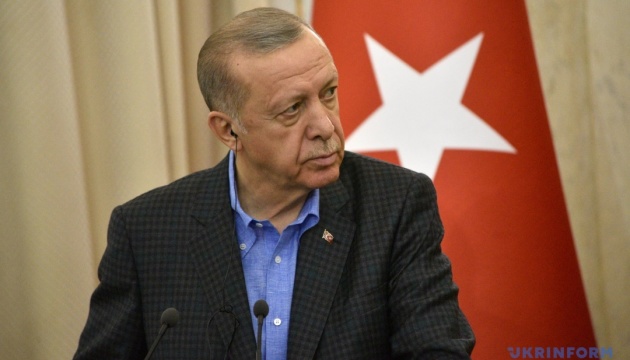
Turkish President Recep Tayyip Erdogan in a cell phone connect with with Russian President Vladimir Putin mentioned regional troubles, in particular Turkish-Russian relations, and the operating of the Black Sea Grain Initiative.

Which is in accordance to the Republic of Türkiye Directorate of Communications.

In the course of the discussion, Erdogan thanked Putin for his “constructive place” about a 120-day extension of the Black Sea Grain Initiative.

According to Erdogan, the continuation of the Russian-Ukrainian war will maximize the threats, so diplomatic negotiations should be resumed, and contacts in between the heads of Russian and U.S. intelligence companies in Turkey will participate in a key part in protecting against an uncontrolled escalation on the battlefield.

President Erdogan also claimed he was contented with Putin’s proposal to create a all-natural gas center in Turkey.

“The groups will make the vital technological, authorized and commercial assessments to attain typical targets as shortly as attainable,” he said.

Ukraine, the United Nations and Turkey agreed in Istanbul on November 17 to prolong the Black Sea Grain Initiative for a different 120 days.

Ukraine, Turkey and UN Secretary Standard Antonio Guterres signed the Initiative on the Protected Transportation of Grain and Foodstuffs from the ports of Odesa, Chornomorsk and Pivdennyi in Istanbul on July 22. The initially ship with Ukrainian grain still left the port of Odesa on August 1.

Source link

The post Erdogan, Putin discuss Black Sea Grain Initiative, resumption of talks with Ukraine appeared first on Ukraine Intelligence.

Categories
Audio Sources - Full Text Articles

Michael Novakhov retweeted: #SpyStuff! The NSA has signal intelligence spies placed in U.S. embassies or who pose as businesspersons- they plant antennas to intercept communications and have been known to insert eavesdropping devices in presidential palaces and foreign embassies in unmentioned countries.

Michael Novakhov retweeted:

#SpyStuff! The NSA has signal intelligence spies placed in U.S. embassies or who pose as businesspersons- they plant antennas to intercept communications and have been known to insert eavesdropping devices in presidential palaces and foreign embassies in unmentioned countries.

Fh2ZvnkWYAsc86c.jpg:large

Categories
Audio Sources - Full Text Articles

youtube.com/watch?v=fw0sL7…

youtube.com/watch?v=fw0sL7…
Categories
Audio Sources - Full Text Articles

Michael Novakhov retweeted: Россия не выдаст Нидерландам осужденных по делу МН17 россиян. В МИД РФ назвали приговор окружного суда Гааги “политически мотивированным”. В Москве отказались признавать решение суда dw.com/ru/a-63804833?…

Michael Novakhov retweeted:

Россия не выдаст Нидерландам осужденных по делу МН17 россиян. В МИД РФ назвали приговор окружного суда Гааги “политически мотивированным”. В Москве отказались признавать решение суда dw.com/ru/a-63804833?…

WP Radio
WP Radio
OFFLINE LIVE