Categories
Audio Sources - Full Text Articles

Russia launches more missile strikes, fighting rages in east Ukraine

2022-11-17T09:47:29Z

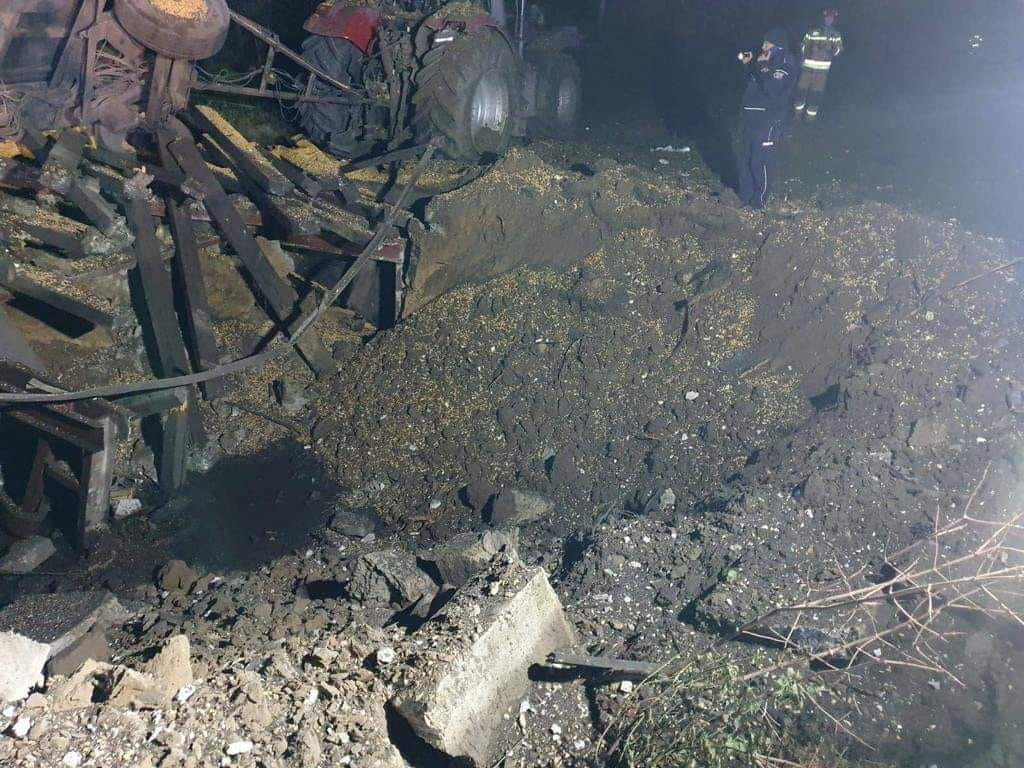
Two people died in an explosion in a Polish village near the border with Ukraine, firefighters said, with NATO allies investigating unconfirmed reports the blast was caused by stray Russian missiles. This report produced by Tamara Lindstrom.

Russia launched more missile strikes on Ukraine’s energy infrastructure on Thursday and its forces pressed attacks in the eastern Donetsk region, reinforced by troops pulled from Kherson city in the south which Kyiv recaptured last week.

NATO and Poland concluded that a missile that crashed in Poland on Tuesday, killing two people, was probably a stray fired by Ukraine’s air defences. Ukrainian President Volodymyr Zelenskiy contested this view in a rare public disagreement with his Western allies.

As the winter’s first snow fell in Kyiv, authorities said they were working hard to restore power nationwide after Russia earlier this week unleashed what Ukraine said was the most intense bombardment of civilian infrastructure of the nine-month war.

Explosions were heard again on Thursday morning in several parts of Ukraine, including the southern port of Odesa, the capital Kyiv and the central city of Dnipro, and civilians were urged to take shelter as air raid warnings were issued.

Local officials said two people were killed in a missile attack overnight on the southeastern region of Zaporhizhzhia, three were wounded in an attack on the northeastern city of Kharkiv and three were hurt in Odesa.

“Missiles are flying over Kyiv right now,” Interfax Ukraine news agency quoted Prime Minister Denys Shmyhal as saying at a conference. “Now they are bombing our gas production, they are bombing our enterprises in Dnipro and Yuzhmash (missile factory).”

On a brighter note, Ukraine’s infrastructure ministry said agreement had been reached on extending by 120 days a deal that allows for the export of food and fertilisers from Ukraine’s Black Sea ports via a protected sea transit corridor.

The Black Sea grain initiative, first agreed in July, has helped to alleviate global food shortages and U.N. Secretary General Antonio Guterres welcomed Thursday’s announcement.

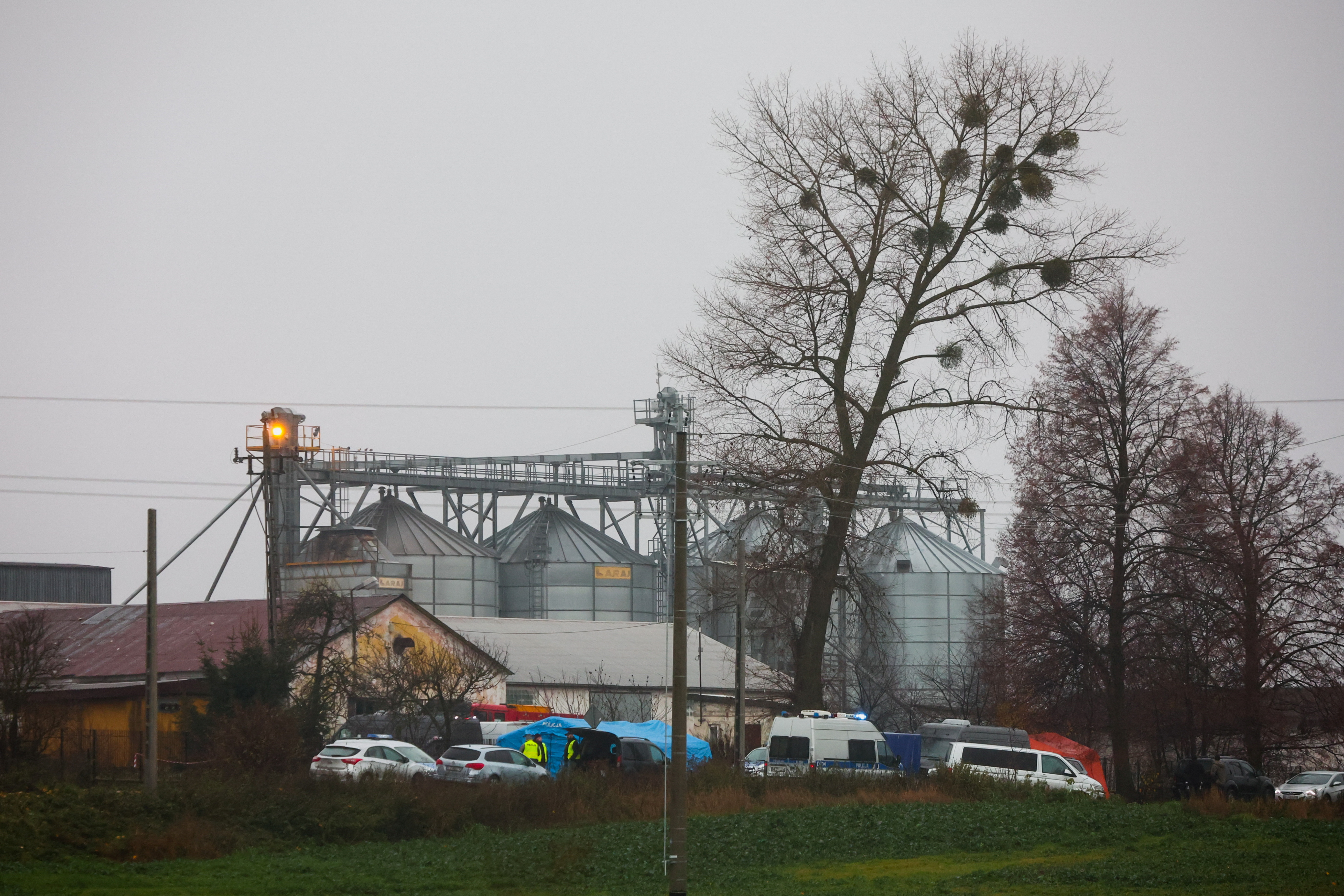
NATO ambassadors held emergency talks on Wednesday to respond to Tuesday’s blast at a grain facility in Poland, near the Ukrainian border, the war’s first deadly extension into the territory of the Western alliance.

“From the information that we and our allies have, it was an S-300 rocket made in the Soviet Union, an old rocket and there is no evidence that it was launched by the Russian side,” Polish President Andrzej Duda said, however.

“It is highly probable that it was fired by Ukrainian anti-aircraft defence.”

Russia and Ukraine both use the Soviet-era missile.

Nevertheless, NATO’s chief said Russia, not Ukraine, was still to blame for starting the war with its February invasion and launching scores of missiles on Tuesday that triggered Ukrainian defences.

“This is not Ukraine’s fault. Russia bears ultimate responsibility as it continues its illegal war against Ukraine,” NATO Secretary-General Jens Stoltenberg told reporters in Brussels.

Stoltenberg also said the missile was likely to have originated from Ukrainian air defence.

Ukraine’s Zelenskiy demurred, saying, “I have no doubt that it was not our missile”, Ukrainian media said on Wednesday. He said he based his conclusion on reports from Ukraine’s military which he “cannot but trust”.

U.S. President Joe Biden disputed Zelenskiy’s assertion that the missile was not Ukrainian in comments to reporters at the White House on Thursday following his return from a trip to Asia. “That’s not the evidence,” Biden said.

Moscow had denied responsibility, and Russia’s Foreign Ministry said the “mayhem” around accusations of Russian involvement in the missile were “part of a systematic anti-Russian campaign by the West”.

Following the latest wave of Russian missile attacks, Zelenskiy said late on Wednesday that technicians were working nonstop to restore electricity.

“We are talking about millions of customers. We are doing everything we can to bring back power. Both generation and supply,” he said.

Fighting was heavy in the eastern Donetsk region, including the towns of Pavlivka, Vuhledar, Maryianka and Bakhmut, Ukrainian presidential adviser Oleksiy Arestovych said in an online video.

Ukrainian forces repelled attacks on the Donetsk towns of Avdiivka and Bilohorivka, Ukrainian military analyst Oleh Zhadnov said in comments posted on YouTube.

Moscow’s forces retreated from the southern city of Kherson last week after a Ukrainian counteroffensive. It was the only regional capital Russia had captured since its Feb. 24 invasion, and the pullback was the third major Russian retreat of the war.

Investigators in the Kherson region uncovered 63 bodies bearing signs of torture after Russian forces left the area, Ukraine’s interior minister was quoted as saying on Thursday.

Interfax Ukraine news agency quoted the minister, Denys Monastyrsky, as telling national television: “The search has only just started, so many more dungeons and burial places will be uncovered.”

Russia denies its troops target civilians or have committed atrocities. Mass burial sites have been found in other parts previously occupied by Russian troops, including some with civilian bodies showing signs of torture.

Redeployed Russian forces have also gone on the attack in the southern Zaporizhzhia region as well as in the east, and may also be planning to launch another offensive in Kharkiv in the north, where they were pushed back by Ukraine earlier in the conflict, Arestovych said.

Vladimir Rogod, a Russian-installed official in the Russian-controlled part of Zaporizhzhia, said a Ukrainian missile struck a village there, killing two people and wounding nine.

The top U.S. general, Army General Mark Milley, chairman of the Joint Chiefs of Staff, played down chances of any outright military victory for Kyiv in the near term, saying Russia still had significant combat power in Ukraine despite setbacks.

Related Galleries:
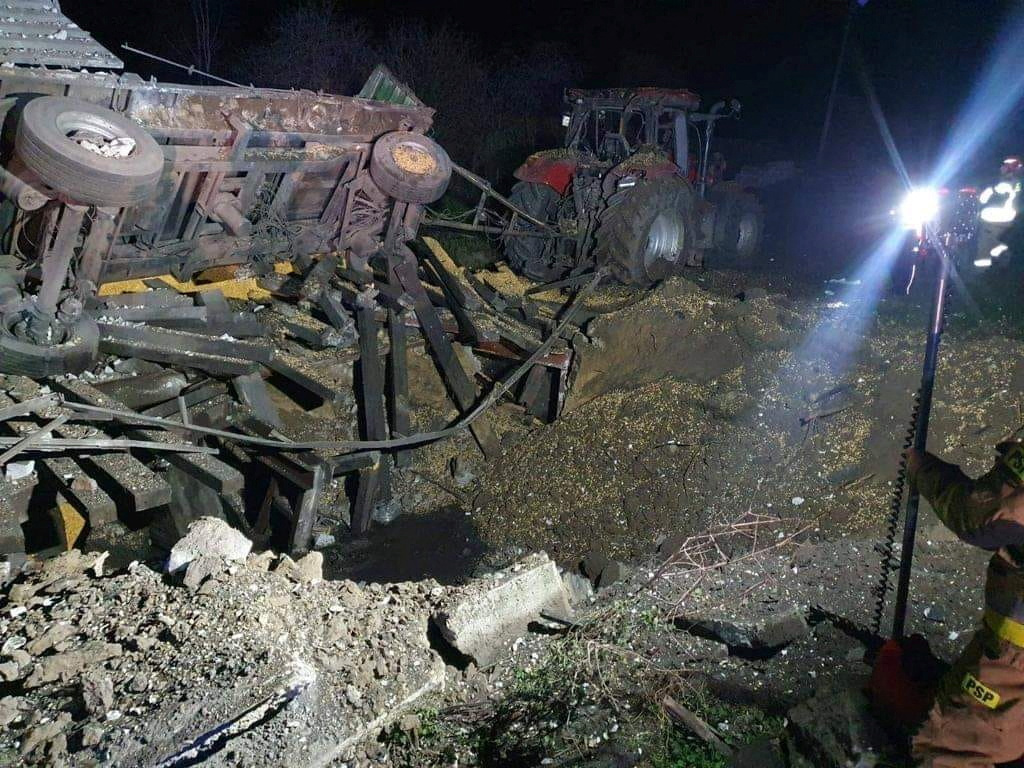
A view shows damages after an explosion in Przewodow, a village in eastern Poland near the border with Ukraine, in this image obtained from social media by Reuters released on November 15, 2022. /via REUTERS

A view shows damages after an explosion in Przewodow, a village in eastern Poland near the border with Ukraine, in this image obtained from social media by Reuters released on November 15, 2022. /via REUTERS

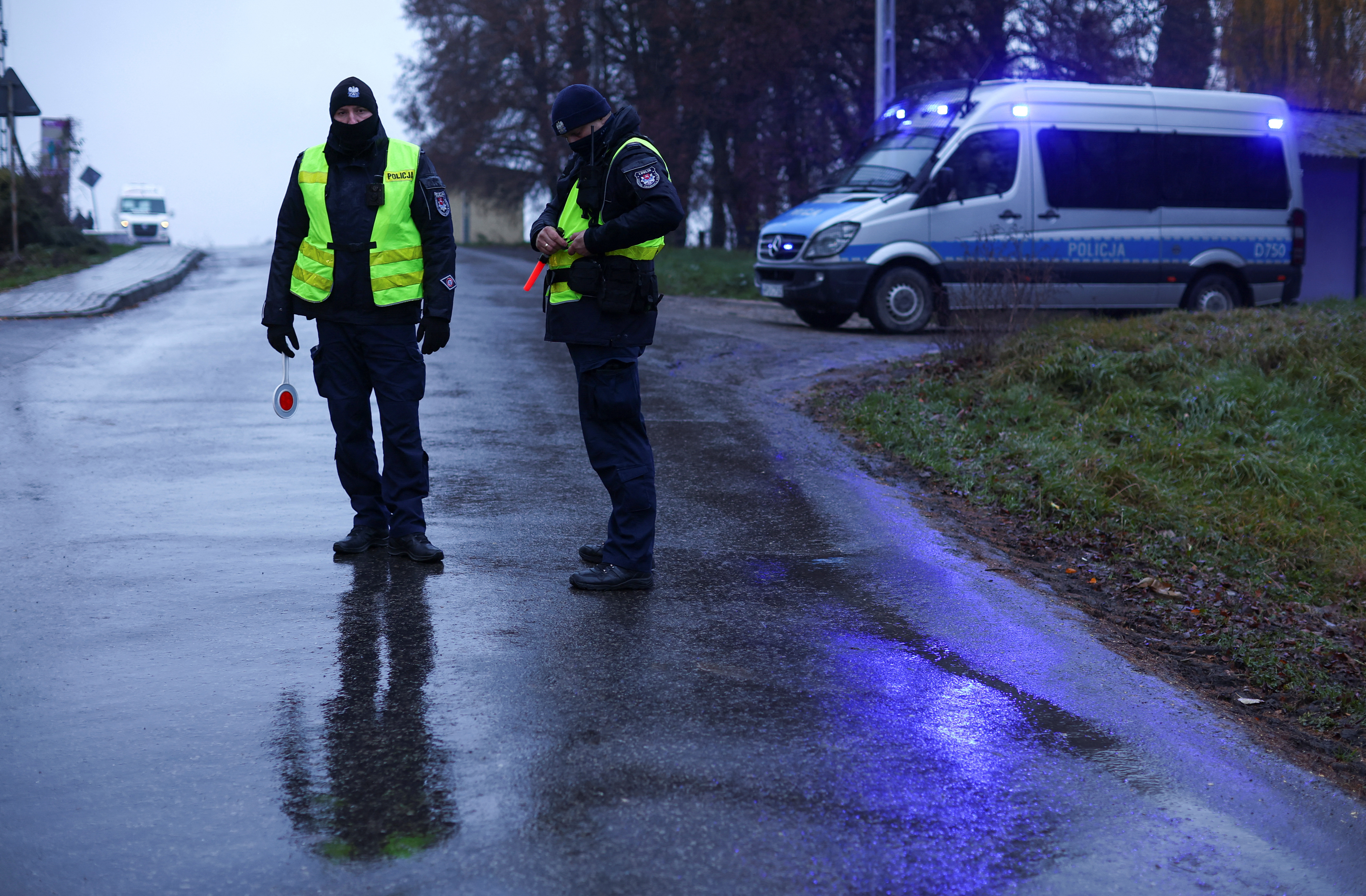
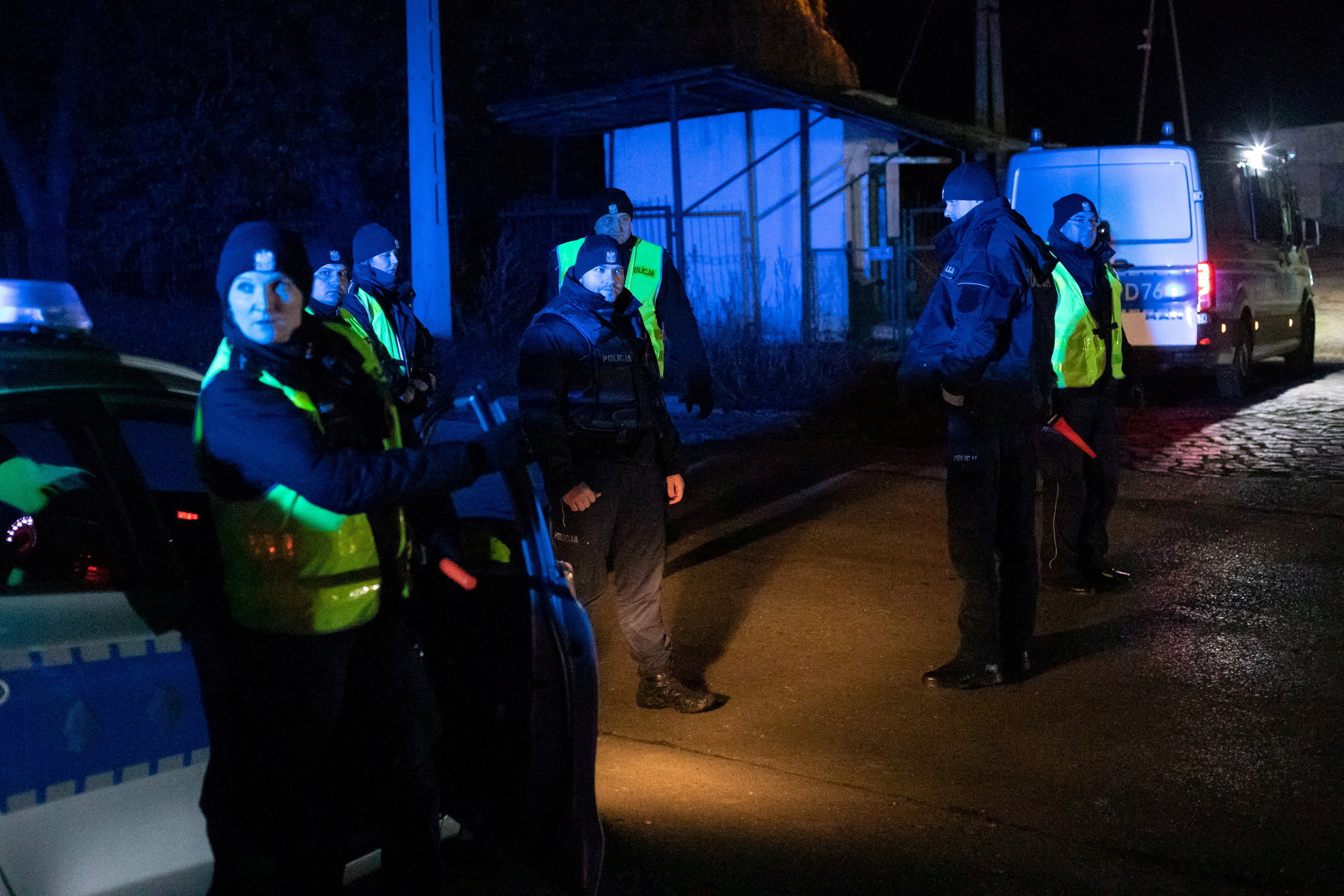
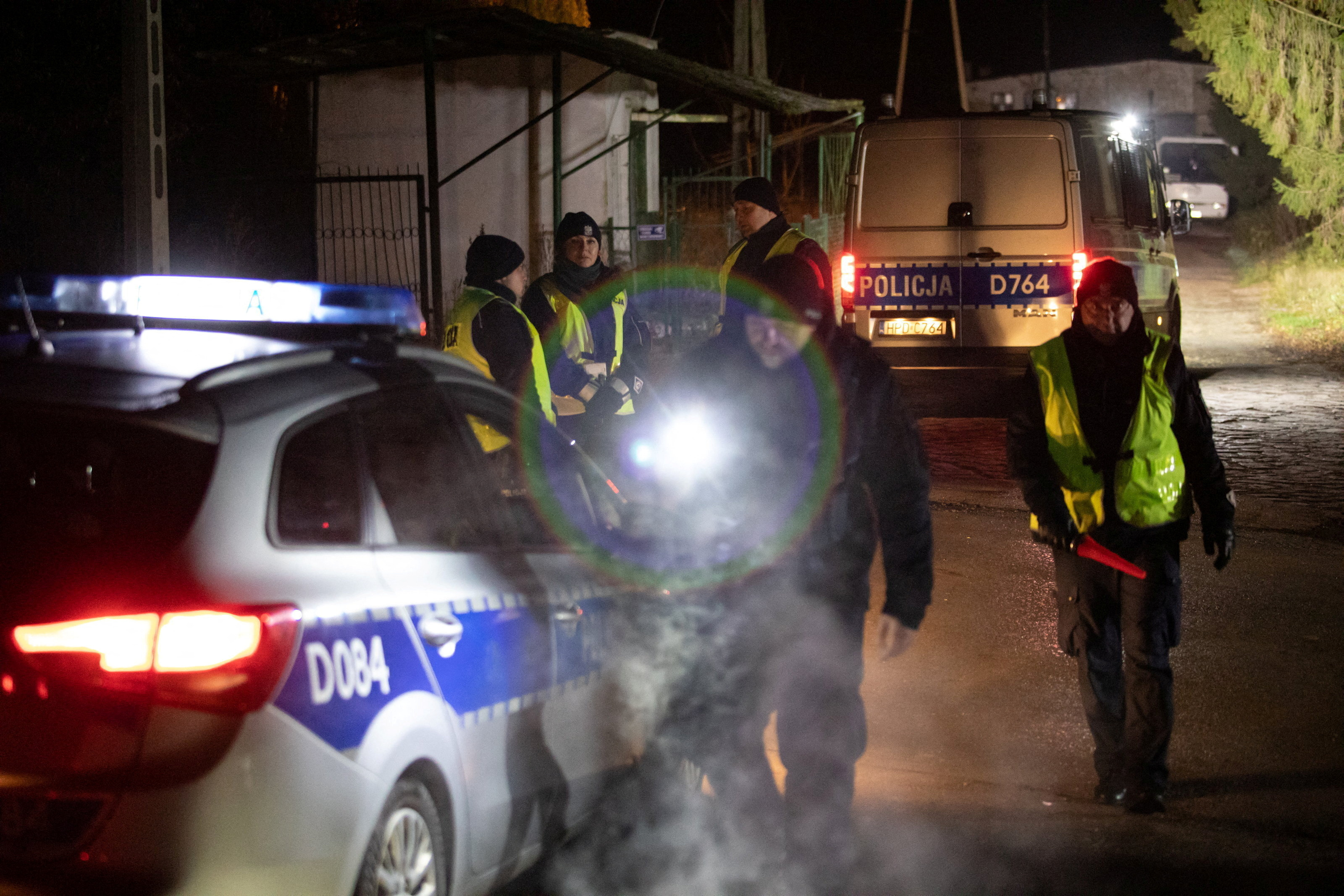
Police officers stand at a blockade after an explosion in Przewodow, a village in eastern Poland near the border with Ukraine, November 16, 2022. REUTERS/Kacper Pempel

Police officers work at the site after explosions in Przewodow, a village in eastern Poland near the border with Ukraine, November 16, 2022. REUTERS/Kacper Pempel

Police officers stand at a blockade after an explosion in Przewodow, a village in eastern Poland near the border with Ukraine, November 16, 2022. REUTERS/Kacper Pempel

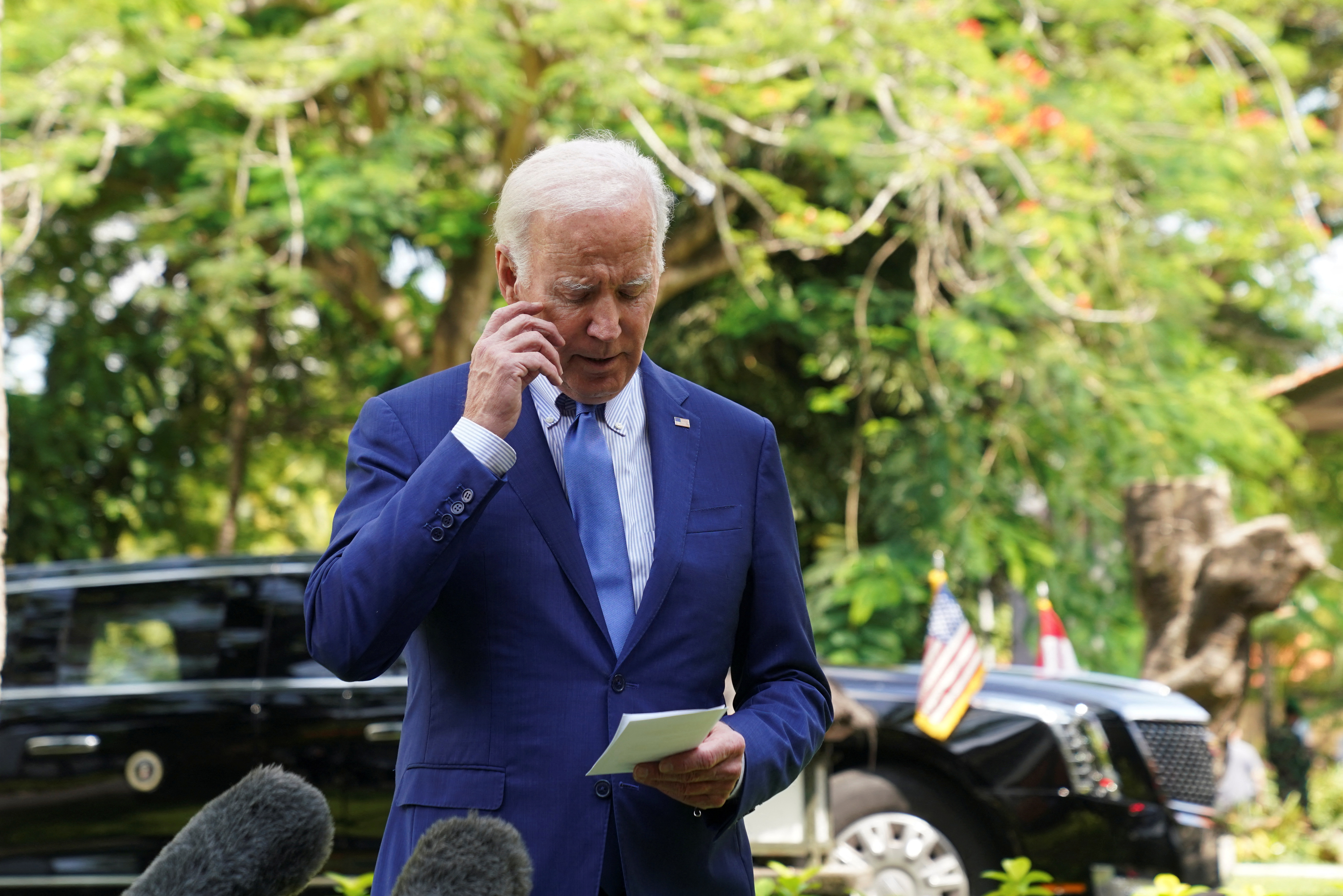
U.S. President Joe Biden speaks to the media after an alleged Russian missile blast in Poland, in Bali, Indonesia, November 16, 2022. REUTERS/Kevin Lamarque

Polish government spokesman Piotr Muller and Head of the Office of International Policy of the Chancellery of the President of the Republic of Poland Jacek Siewiera walk outside of National Security Bureau after a meeting of the security committee in connection with the missile attack on the territory of Poland, in Warsaw, Poland November 15, 2022. Maciek Jazwiecki/Agencja Wyborcza.pl via REUTERS

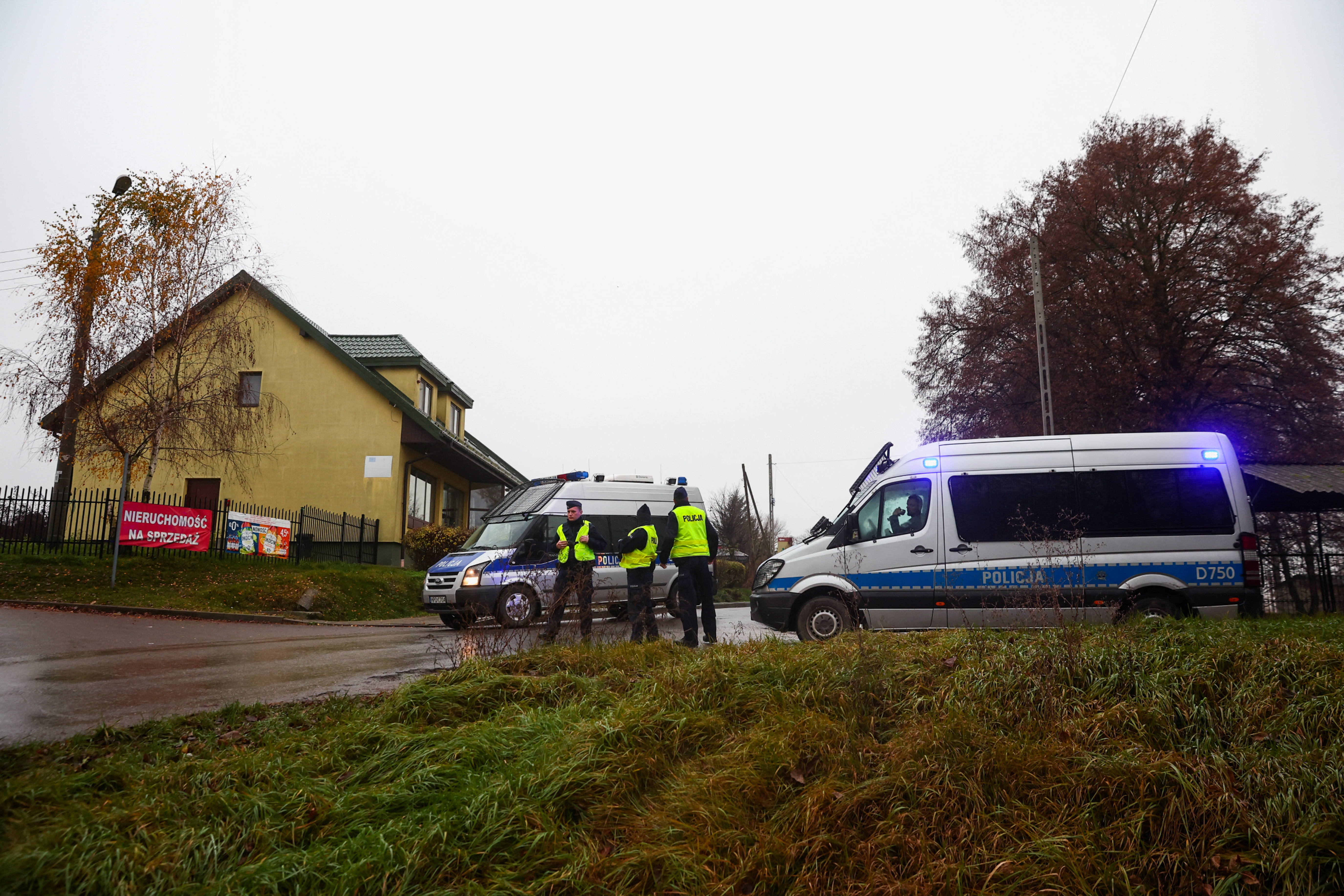
Police block a road, amid reports of two explosions, in Przewodow, Poland, November 15, 2022. Jakub Orzechowski/Agencja Wyborcza.pl via REUTERS

Police block a road, amid reports of two explosions, in Przewodow, Poland, November 15, 2022. Jakub Orzechowski/Agencja Wyborcza.pl via REUTERS ATTENTION EDITORS – THIS IMAGE WAS PROVIDED BY A THIRD PARTY. POLAND OUT. NO COMMERCIAL OR EDITORIAL SALES IN POLAND.

A Ukrainian national flag flies over the parliament building (Verkhovna Rada), in Kyiv, Ukraine, November 26, 2018. REUTERS/Gleb Garanich/File Photo

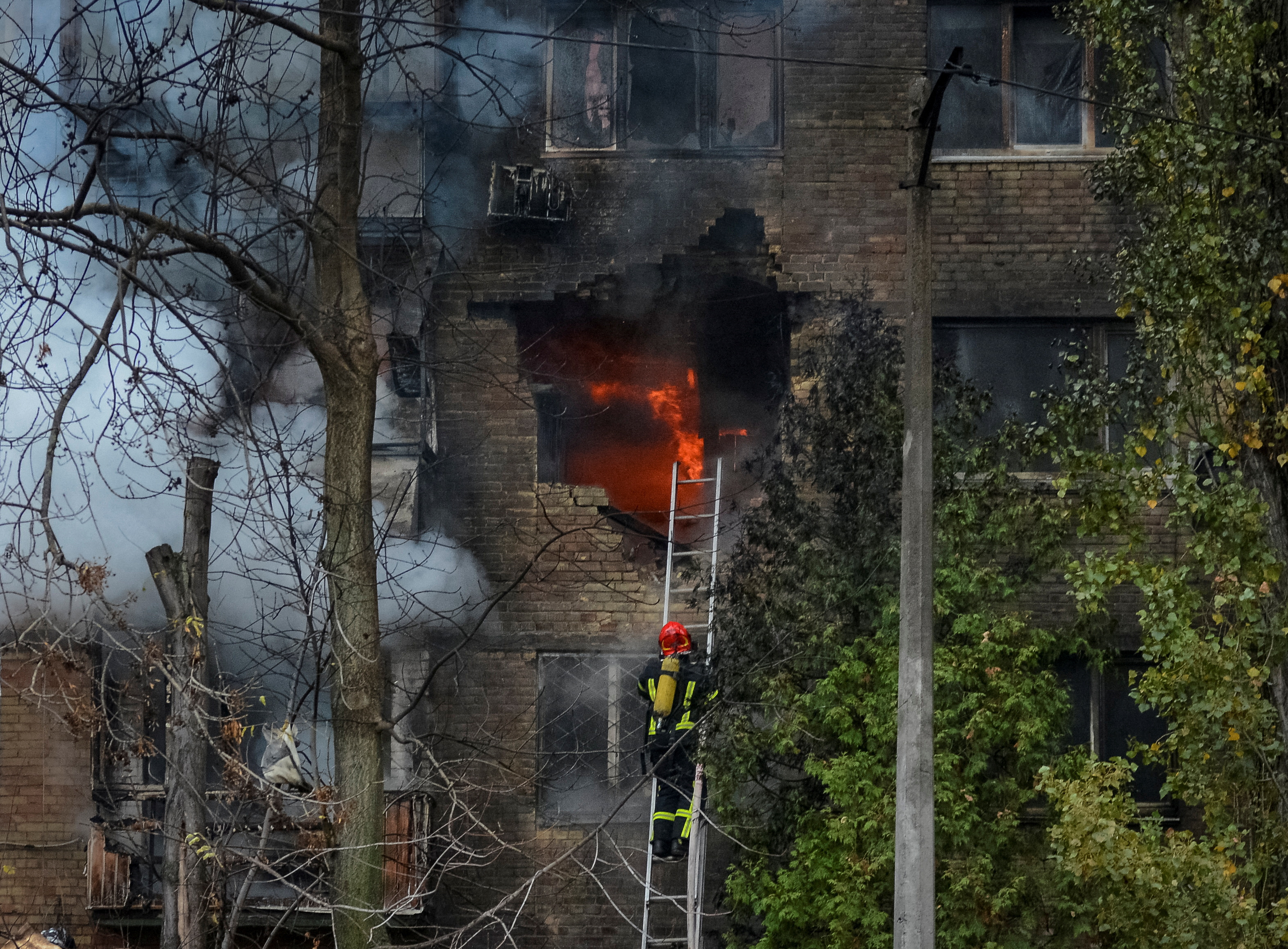
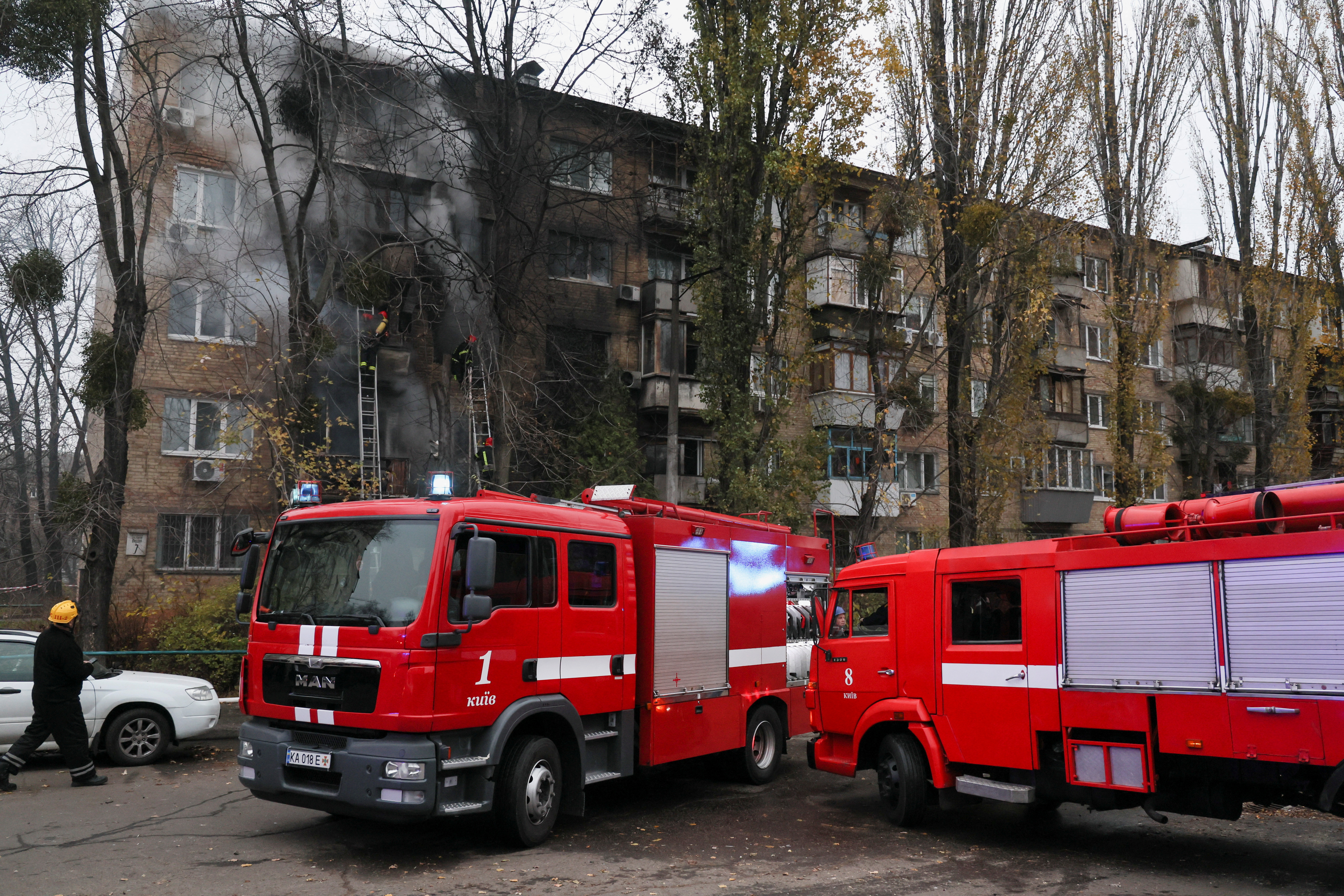
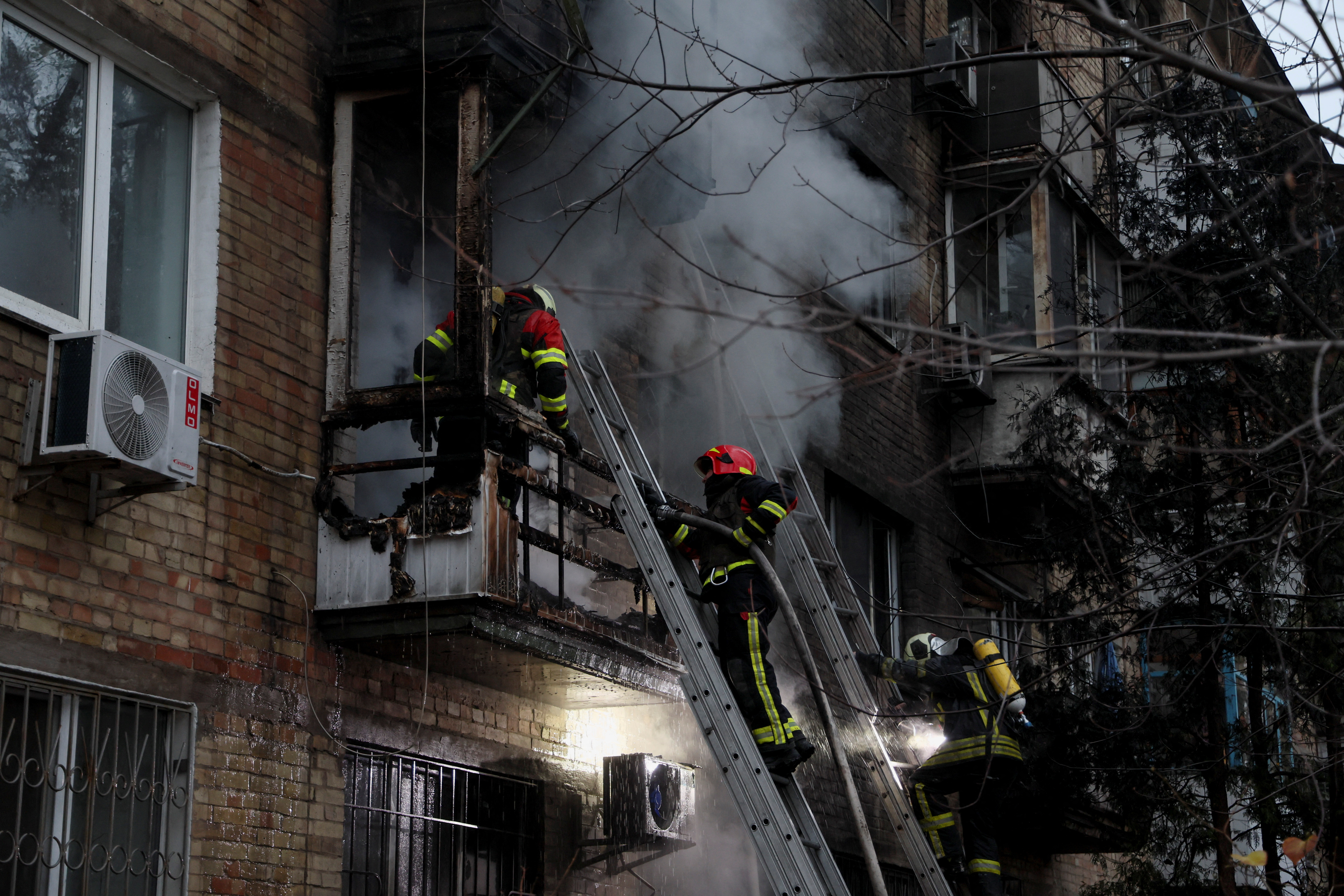
Firefighters work to put out a fire in a residential building hit by a Russian missile strike, amid Russia’s attack on Ukraine, in Kyiv, Ukraine November 15, 2022. REUTERS/Oleksandr Gusev

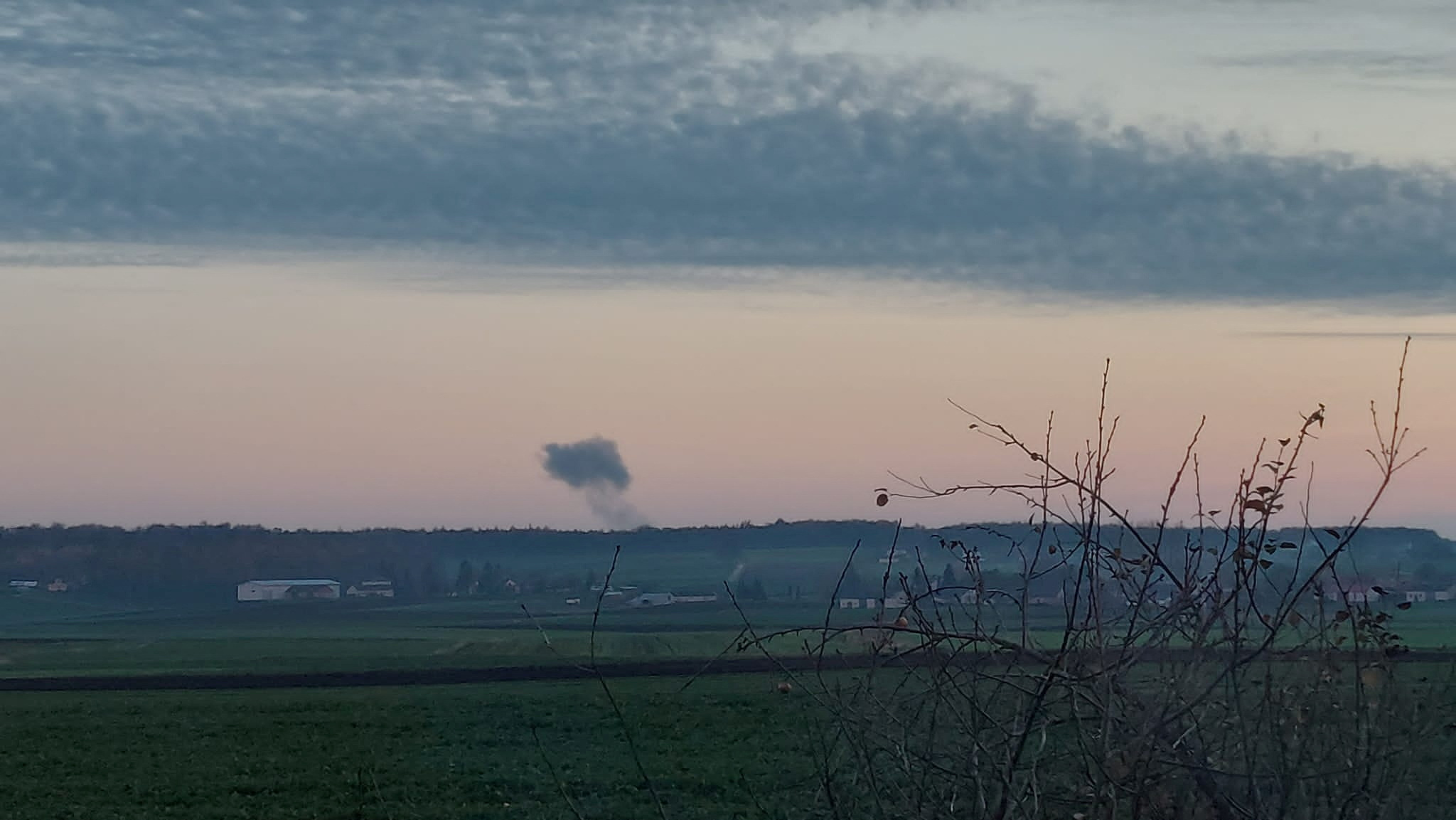
Smoke rises in the distance, amid reports of two explosions, seen from Nowosiolki, Poland, near the border with Ukraine November 15, 2022 in this image obtained from social media. Stowarzyszenie Moje Nowosiolki via REUTERS

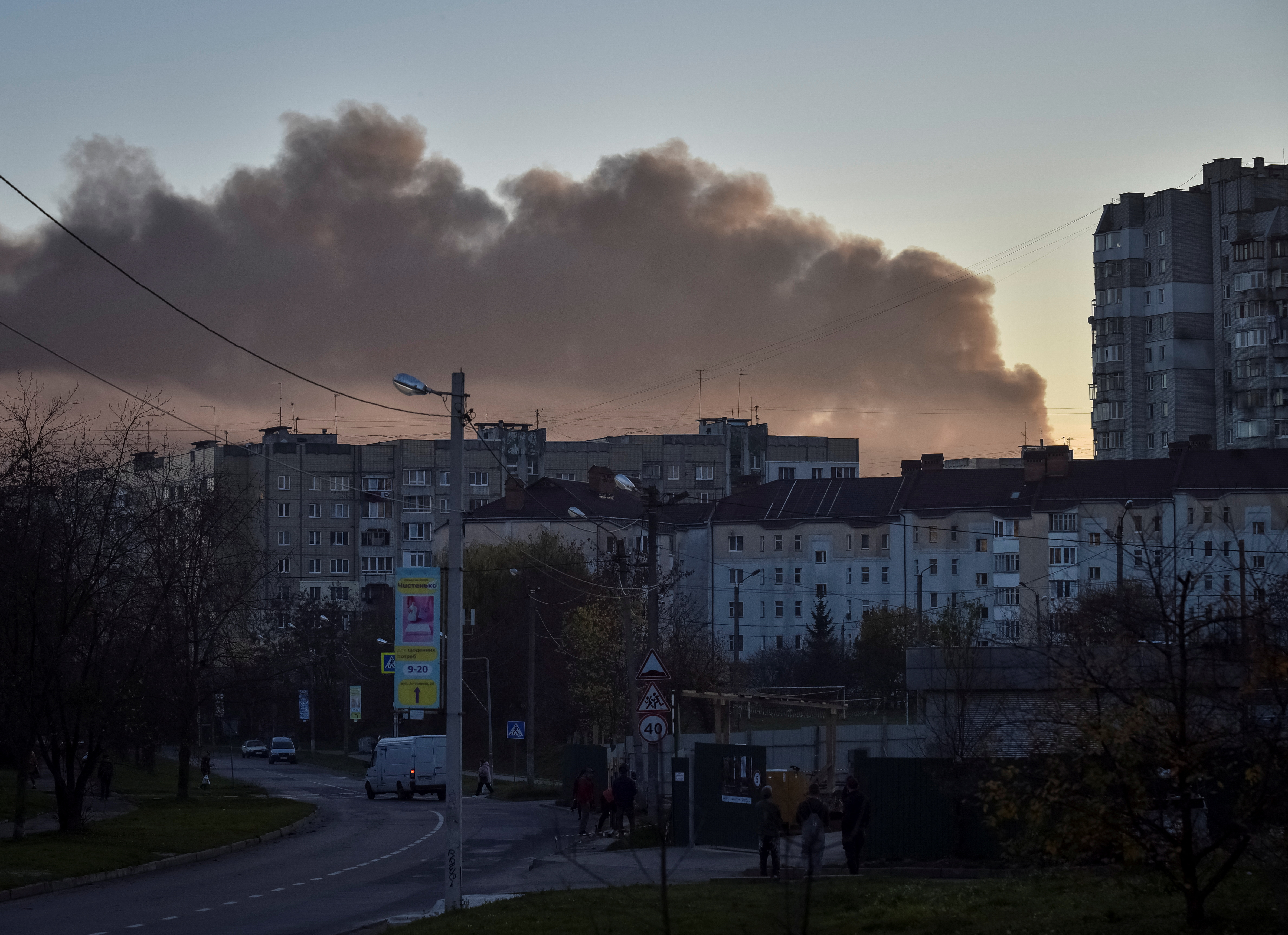
A smoke rises over the city after Russian missile strikes, amid their attack on Ukraine in Lviv November 15, 2022. REUTERS/Pavlo Palamarchuk

Local residents gather near their residential building hit by a Russian missile strike, amid Russia’s attack on Ukraine, in Kyiv, Ukraine November 15, 2022. REUTERS/Gleb Garanich

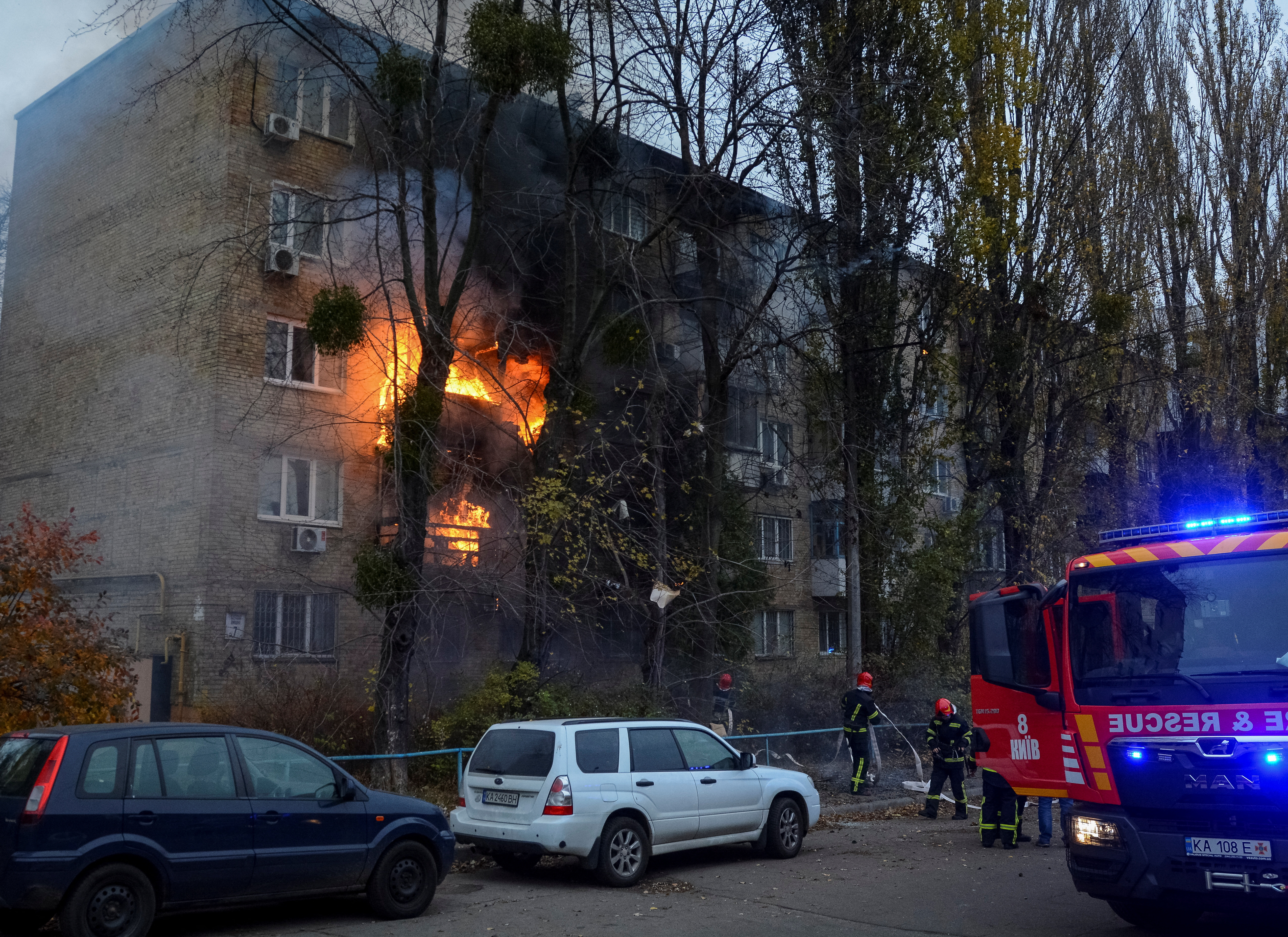
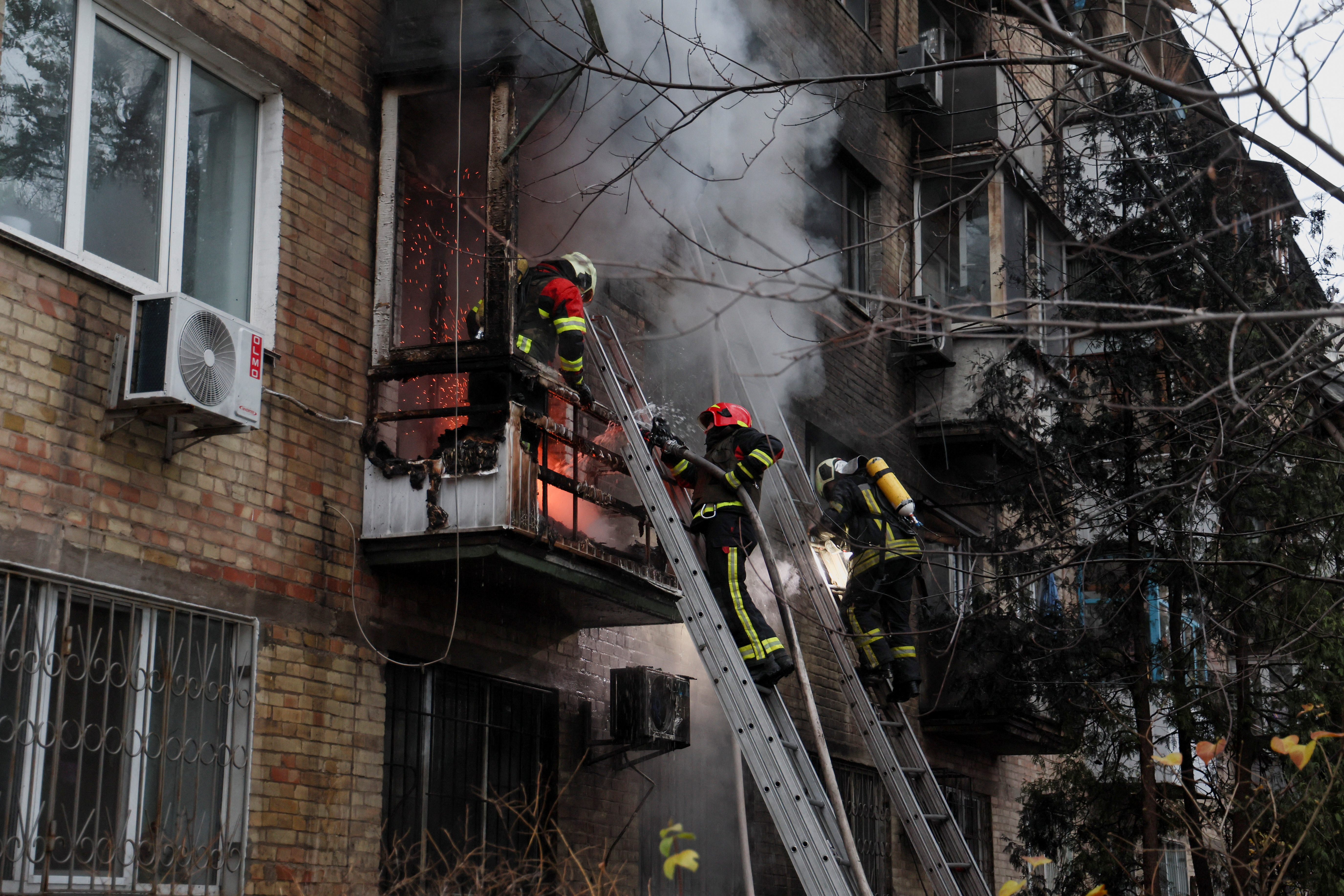
Firefighters work to put out a fire in a residential building hit by a Russian strike, amid Russia’s attack on Ukraine, in Kyiv, Ukraine November 15, 2022. REUTERS/Gleb Garanich

Firefighters work to put out a fire in a residential building hit by a Russian missile strike, amid Russia’s attack on Ukraine, in Kyiv, Ukraine November 15, 2022. REUTERS/Oleksandr Gusev

Firefighters work to put out a fire in a residential building hit by a Russian missile strike, amid Russia’s attack on Ukraine, in Kyiv, Ukraine November 15, 2022. REUTERS/Gleb Garanich

Firefighters work to put out a fire in a residential building hit by a Russian missile strike, amid Russia’s attack on Ukraine, in Kyiv, Ukraine November 15, 2022. REUTERS/Gleb Garanich

People speak with their smartphones on a bank of the Dnipro river after Russia’s retreat from Kherson, in Kherson, Ukraine November 14, 2022. REUTERS/Valentyn Ogirenko
Categories
Audio Sources - Full Text Articles

100 Tons of International Aid Supplied to Ukraine’s Energy Companies

iruios.png

Ukraine has received over 100 tons of aid from Western allies to support the country’s energy sector. The Ministry of Energy has now distributed the various equipment to energy companies.

On Nov. 15, the Ministry of Energy’s working group on the organization of humanitarian aid to the Ukrainian energy sector confirmed the distribution of more than 100 tons of various energy equipment, machinery, and materials.

In particular, 73 generators delivered from the U.K. and about 80 tons of equipment and materials provided by Ireland, Estonia, Germany, France, Norway, Switzerland, and Austria are being supplied according to the needs of several energy companies from the regions most affected by Russian armed aggression.

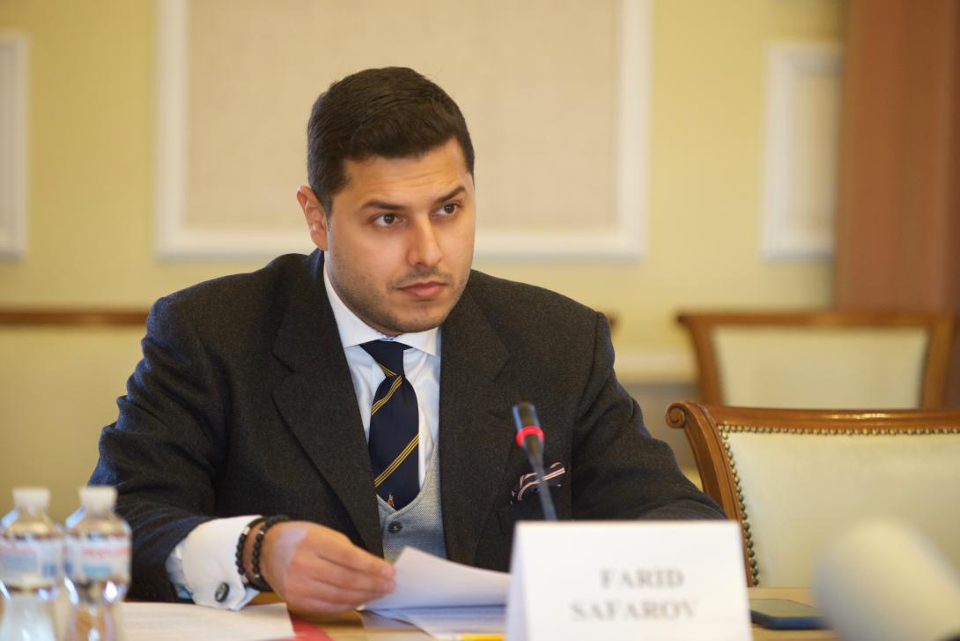
“We appreciate the assistance received from our international partners. At the same time, Ukraine’s needs for equipment and materials will increase significantly following massive shelling of energy infrastructure since the beginning of the war. We count on the support of our partners and friends and assistance in obtaining equipment and spare parts, which are critically necessary for the prompt restoration of energy supply to Ukrainian citizens,” said Farid Safarov, chairman of the working group and deputy minister of energy.

At the same time, the Minister of Energy of Ukraine, Herman Halushchenko, held an extraordinary meeting of the High-Level International Energy Advisory Council. The minister appealed to international partners with a request to provide Ukraine with additional equipment that will allow for rapid repairs and to restore the stable operation of Ukraine’s power system.

On Nov. 15, Russia fired around 100 missiles at the territory of Ukraine, mainly at critical infrastructure facilities. Halushchenko described it as the largest single attack on Ukraine’s energy system since the beginning of the full-scale war.

As a result of the strikes, there were massive power outages and emergency blackouts across the country. There is also a resulting power shortage in Moldova, while one of the power lines providing electricity from Romania was automatically disconnected.

The post 100 Tons of International Aid Supplied to Ukraine’s Energy Companies appeared first on Kyiv Post.

Categories
Audio Sources - Full Text Articles

What Options for Moscow after Setbacks In Ukraine?

000_32nk3hb.jpg

Humiliated by Russia’s battlefield routs, Vladimir Putin faces risky choices: dig in for a long fight, escalate — and risk seeing the conflict spiral out of control — or seek a face-saving path to talks that Ukraine has so far dismissed.

The decision will depend largely on how the war progresses as winter settles in, with analysts warning of a slow grind that could see further collateral damage like the Ukrainian missile that appears to have accidently struck Poland on Tuesday.

For Kyiv, the recent Russian retreat from Kherson was its third victory since the invasion was launched in February, after Russia’s failure to take the capital and the recovery of Kharkiv in a surprise counter-offensive last September.

Their will to fight bolstered, Ukrainians are now eyeing other Russian-occupied territories in eastern Ukraine and Crimea, the peninsula Russia seized in 2014 and which President Volodymyr Zelensky has said must be recovered for the war to end.

But a barrage of Russian missiles targeting civilian infrastructure across Ukraine on Tuesday shows the price will be high if Putin deems talks out of the question for now.

“Historically, Russian authorities never negotiate from a position of weakness,” said Cyrille Bret, a researcher at the Paris-based Jacques Delors Institute, a think-tank.

And with the recent call for 300,000 men to mobilise, “they’re thinking about how they can change the balance of force, with military operations but also diplomatic and economic or even covert initiatives,” he said.

A war of attrition punctuated by Russian airstrikes, for example, could sap Ukrainians’ resolve this winter, when reduced daylight will limit their capacity to conduct operations to claw back territory held by Russia in the east.

“The Russians are in a better state than when they arrived in February in the country, when they definitely were ill-prepared,” a senior Western official told AFP, on condition of anonymity.

“We’re seeing a greater kind of coherence of the overall military approach.”

– Costly calculations –

Further battlefield successes for Ukraine could also increase the pressure for a negotiated settlement, with Ukraine’s Western allies worried about Zelensky’s aim of retaking Crimea, analysts said.

Despite Ukraine’s claim, many residents on the peninsula want to remain part of Russia, which needs a base of operations for its Black Sea fleet.

“This is an existential issue for the Russian navy and for Russians themselves,” said William Alberque of the International Institute for Strategic Studies.

“Having leverage on Crimea, the deal might be to freeze the battle line here,” he said, noting that if Crimea is taken off the table, “you take the pressure off Russia.”

French President Emmanuel Macron said Tuesday that after talks with fellow G20 leaders in Bali, “the road to negotiations is not incompatible with [Ukraine’s] resistance… there is probably today a larger consensus on this position.”

Macron has said he plans to speak with Putin in the coming days, not least to hammer home a G20 warning to avoid any nuclear escalation of the conflict.

Some analysts also see a shifting stance by the US, whose military support is critical for Kyiv to keep fighting.

Last week, top US general Mark Milley said that military victory may not be possible in the war, saying there is “a window of opportunity for negotiation.”

Also last week, CIA director William Burns met Russian spy chief Sergei Naryshkin in Ankara, the highest level face-to-face meeting of US and Russian officials since the beginning of the war.

– To the table? –

Negotiations are unlikely, however, as long as the military situation remains in flux, with both sides believing they can still gain the upper hand.

“It is absolutely not in Ukraine’s interest to have fixed battle lines, they want to make gains through the winter in order to be in a much stronger positions next spring,” Alberque said.

Emma Ashford, a senior fellow at the Washington-based Stimson Center, said nonetheless that US President Joe Biden and his administration “must think through the right timing to push for negotiations and at what point the costs of continuing to fight will outweigh the benefits.”

She noted the three scenarios in coming months that could create conditions for talks: further Ukraine advances, a revived Russian assault, or a stalemate.

“What connects all three is that, in each, battlefield outcomes point to a relative consensus around which a settlement could be built,” she wrote in Foreign Affairs in late October.

The post What Options for Moscow after Setbacks In Ukraine? appeared first on Kyiv Post.

Categories
Audio Sources - Full Text Articles

ICU Bond Market Insight: Nov, 16, 2022

icu_16-1024x666.jpg

Rates higher; borrowings larger

On Nov. 15, the Ministry of Finance again raised interest rates on UAH bills and attracted a total of UAH5bn (US$137m), mostly in local currency.

FX-denominated paper received the largest number of bids, but the total volume of demand and proceeds was the smallest of the yesterday’s auction, just a total of US$7.9m at a rate of 4.25% for five months. These are the same conditions as two weeks ago, but the volume was almost five times smaller.

Local-currency bills played the leading role in attracting money yesterday. They brought UAH4.7bn (US$129m) to the budget, even though the Ministry of Finance narrowed the offer to two military bonds and one issue of ordinary government bonds, two of which with interest rates increased by 50bp.

The most significant amount of funds the MoF raised through ordinary securities was the one maturing in 1.5 years, with the interest rate increased to 19%. Five bids brought UAH3.3bn (US$89m) to the budget. These bills were not in great demand in previous weeks. Still, on Nov. 15, a rather large player with a large volume in the bid participated in the auction because the minimum rate of 18.5% did not affect the weighted average rate; it was also 19%, like the maximum.

Also, the MoF raised the interest rate on five-month paper to 14%, and borrowed nearly UAH1.2bn (US$31m). Here, too, the minimum rate did not affect the weighted average rate, so the size of demand in the bid with the maximum rate could be the reason that the Ministry of Finance took another step to meet the demand.

The rate for 10-month bills stayed the same, which is now the same as for bills with 5-month maturity. So, now the Ministry of Finance will either have to replace this issue or revise the rate if there are relevant bids.

Therefore, the Ministry of Finance reacted to the greater demand for higher rates and agreed to further upward movement. Nevertheless, military bonds offer significantly lower rates than ordinary bills. The demand shift toward ordinary paper continues and increases its advantage.

RESEARCH TEAM: Taras Kotovych

Read the full report here.


The post ICU Bond Market Insight: Nov, 16, 2022 appeared first on Kyiv Post.

Categories
Audio Sources - Full Text Articles

Republicans Take Control of US House, Congress Split: Projections

000_32nl4he.jpg

Republicans on Wednesday, Nov. 16, took control of the US House of Representatives from Democrats, networks said, narrowly securing a legislative base to oppose President Joe Biden’s agenda for the final two years of his term –- and leaving power in Congress split.

The slim Republican majority in the lower house of the US legislature will be far smaller than the party had been banking on, and Republicans also failed to take control of the Senate in a historically weak performance in the November 8 midterm elections.

NBC and CNN projected the victory for Republicans with at least 218 seats in the 435-member House of Representatives — the magic number needed to take control. This came a week after millions of Americans went to the polls for the midterms, which typically deliver a rejection of the party in the White House.

Biden congratulated top House Republican Kevin McCarthy “on Republicans winning the House majority” and added that he was “ready to work with House Republicans to deliver results for working families.”

Last week’s vote, he said, was “a strong rejection of election deniers, political violence and intimidation” and demonstrated “the strength and resilience of American democracy.”

Tweeting soon after the projection was called, McCarthy said that “Americans are ready for a new direction, and House Republicans are ready to deliver.”

The news came one day after former president Donald Trump — who loomed large during the election cycle, and whose endorsement appears to have doomed some of his party’s candidates — announced a new run for the White House.

With inflation surging and Biden’s popularity ratings cratering, Republicans had hoped to see a “red wave” wash over America, giving them control of both houses and hence an effective block over most of Biden’s legislative plans.

But instead, Democratic voters — galvanized by the Supreme Court’s overturning of abortion rights and wary of Trump-endorsed candidates who openly rejected the result of the 2020 presidential election — turned out in force.

And Republicans lost ground with candidates rejected by moderate voters as too extreme.

“In the next Congress, House Democrats will continue to play a leading role in supporting President Biden’s agenda — – with strong leverage over a scant Republican majority,” House speaker Nancy Pelosi said.

– ‘Officially flipped’ –

Biden’s party flipped a key Senate seat in Pennsylvania and held onto two more in battleground states Arizona and Nevada, giving them an unassailable majority in the upper chamber with 50 seats plus Vice President Kamala Harris’ tie-breaking vote.

A Senate runoff election in Georgia set for next month could see the Democrats ultimately improve their majority in the upper house.

The Senate oversees the confirmation of federal judges and cabinet members, and having the 100-seat body in his corner will be a major boon for Biden.

Meanwhile on Tuesday McCarthy won his party’s leadership vote by secret ballot, putting him in prime position to be the next speaker, replacing Democrat Nancy Pelosi.

The 57-year-old congressman from California, a senior member of House Republican leadership since 2014, fended off a challenge from Andy Biggs, a member of the influential far-right Freedom Caucus.

But potential far-right defections could yet complicate his path when the full chamber votes in January.

McCarthy now begins what is expected to be a grueling campaign to win the consequential floor vote on Jan. 3, when the House of Representatives’ 435 newly elected members — Democrats and Republicans — choose their speaker, the third most important US political position after president and vice president.

McCarthy has raised eyebrows by saying that his party might not grant a “blank check” for continued multi-billion dollar US funding for Ukraine’s fight against the Russian invasion.

The post Republicans Take Control of US House, Congress Split: Projections appeared first on Kyiv Post.

Categories
Audio Sources - Full Text Articles

Reznikov on Outcome of Ramstein Meeting

000_32l98az.jpg

Defense Minister Oleksii Reznikov of Ukraine summed up the outcome of the seventh meeting in the “Ramstein” format, which took place on Nov. 16 and was hosted virtually at the Pentagon.

He wrote about this on Twitter, Ukrinform reports.

“The free world is with us until we win. Ukraine’s strength now: increased economic potential, better training of UAarmy, modern logistics,” he wrote.

Reznikov also thanked Ukraine’s partners for their support and “new initiatives.”

The Minister noted that he expects “great results” before the next meeting in Germany.

U.S. Defense Secretary Lloyd Austin opened the seventh meeting in the Ramstein format on support to Ukraine. He said that the members of the group would maintain the pace of support for Kyiv throughout the winter, so that Ukraine could continue to consolidate its successes and seize the initiative on the battlefield.

The post Reznikov on Outcome of Ramstein Meeting appeared first on Kyiv Post.

Categories
Audio Sources - Full Text Articles

Analysis: Unmasked and in charge, China“s Xi puts personal diplomacy back in play

2022-11-17T09:18:37Z

President Xi Jinping, conspicuously absent from the main stage of diplomacy during China’s COVID isolation, has been mostly smiles and handshakes on his return this week with a flurry of meetings that Beijing hopes will begin to mend frayed relations.

But in an exchange that went viral, a mask-less Xi was also captured on-camera giving Canadian Prime Minister Justin Trudeau a dressing-down at the Group of 20 (G20) summit over media leaks, apparently from their bilateral meeting a day previously. It was a rare, candid glimpse of the Chinese leader and a reminder of Beijing’s testy relations with the West.

China’s absence from face-to-face interactions during the pandemic has been costly, diplomats and other experts say, as ties with the United States and some Asian neighbours have badly deteriorated over a range of disputes.

With other leaders having so little recent access to top Chinese officials, Xi’s presence this week on the Indonesian island of Bali for the G20 followed by an APEC summit in Bangkok is magnified by its scarcity value.

The resumption of dialogue, including Xi’s first meeting with Joe Biden as U.S. president and the first direct talks with an Australian leader since 2016, is itself a positive, China-watchers said, even if it doesn’t immediately yield concrete results.

Besides Biden, Trudeau and Australia’s Anthony Albanese, Xi also met the leaders of South Korea, Italy, Argentina, Holland and France for bilateral talks in Bali. A meeting with Britain’s Rishi Sunak was cancelled because of scheduling issues, Downing Street said, while Xi is set to hold talks with Japan’s Fumio Kishida amd New Zealand’s Jacinda Ardern in Bangkok.

Leif-Eric Easley, a professor of international studies at Ewha University in Seoul, described Xi’s busy schedule as a “charm offensive” after China shut its borders for nearly three years and after Xi consolidated power last month by clinching a third term at the ruling Communist Party’s congress.

“The meetings are probably not enough to make progress on thorny economic and security issues but could prevent diplomatic relations from getting worse,” Easley said.

Xi’s week has been headlined by his three-hour session with Biden, which showed signs of a thaw in frosty bilateral relations and led to plans for U.S. Secretary of State Antony Blinken to visit Beijing early next year.

Daniel Russel, the top U.S. diplomat for East Asia under former President Barack Obama, said signs China might be willing to take preliminary steps toward cooperation on some global issues “should be treated as an experiment, not a done deal.”

And while Biden returned to Washington after the G20 and is to be represented at the APEC meeting by Vice President Kamala Harris, Xi is participating in both events, which are taking place in a region that China considers its backyard.

Ja Ian Chong, a political scientist at the National University of Singapore, said other leaders this week were trying to gauge the state of their China relationships, “especially now that the system is much less accessible and a lot more opaque than it was before.”

Xi was ferried around Bali in his own Hongqi (Red Flag) limousine – Mao Zedong used an earlier model – China’s version of the U.S. presidential “Beast” limo.

Unlike Biden, Xi even attended the G20 group dinner, after skipping the ceremonial meal during a September summit of a regional security group in central Asia that was his only other trip abroad during the COVID era.

For China, the outreach is an opportunity to retake initiative
in an increasingly heated competition for influence with the United States, whose assertiveness in the Pacific through its support for Taiwan and its AUKUS partnership with Australia and Britain has increasingly alarmed Beijing.

China is also squeezed by U.S. efforts to cut it off from advanced semiconductor technology, prompting Xi to speak out against “decoupling” and the politicisation of economic and trade issues with Prime Minister Mark Rutte of the Netherlands, home to chip equipment giant ASML.

“It’s in China’s interest to pick away at the United States’ partners as much as possible,” said Masafumi Iida, fellow at the National Institute for Defence Studies in Japan.

“That thinking shows in the way Xi has held summits with Australia’s Albanese and South Korea’s Yoon (Suk-yeol), in hopes to forge better relationships with them,” he said.

Returning to in-person diplomacy also gives Xi a platform to push Chinese initiatives that further cement its stature as leader of the emerging world. He made a plug for his Belt & Road Initiative in his session with Argentina’s Alberto Fernandez.

Domestically, where COVID outbreaks are resurgent and where Xi’s decade in power has been increasingly authoritarian, the week of summit meetings conveys global stature and a sense of normalcy, although coverage is limited mostly to state media.

Before COVID, Xi was an enthusiastic practitioner of in-person diplomacy as China expanded its presence on the world stage through initiatives such as Belt & Road, generating goodwill in particular among developing countries, whose leaders were honoured with a one-on-one meeting and photos with Xi.

Li Mingjiang, associate professor of international relations at Singapore’s S. Rajaratnam School of International Studies said perceived pressure in Beijing from Washington’s global assertiveness may have been “extra incentive” to hurry back.

“I think in the coming years you’ll see China indeed making a serious effort to implement its major power diplomacy,” he said.

Related Galleries:
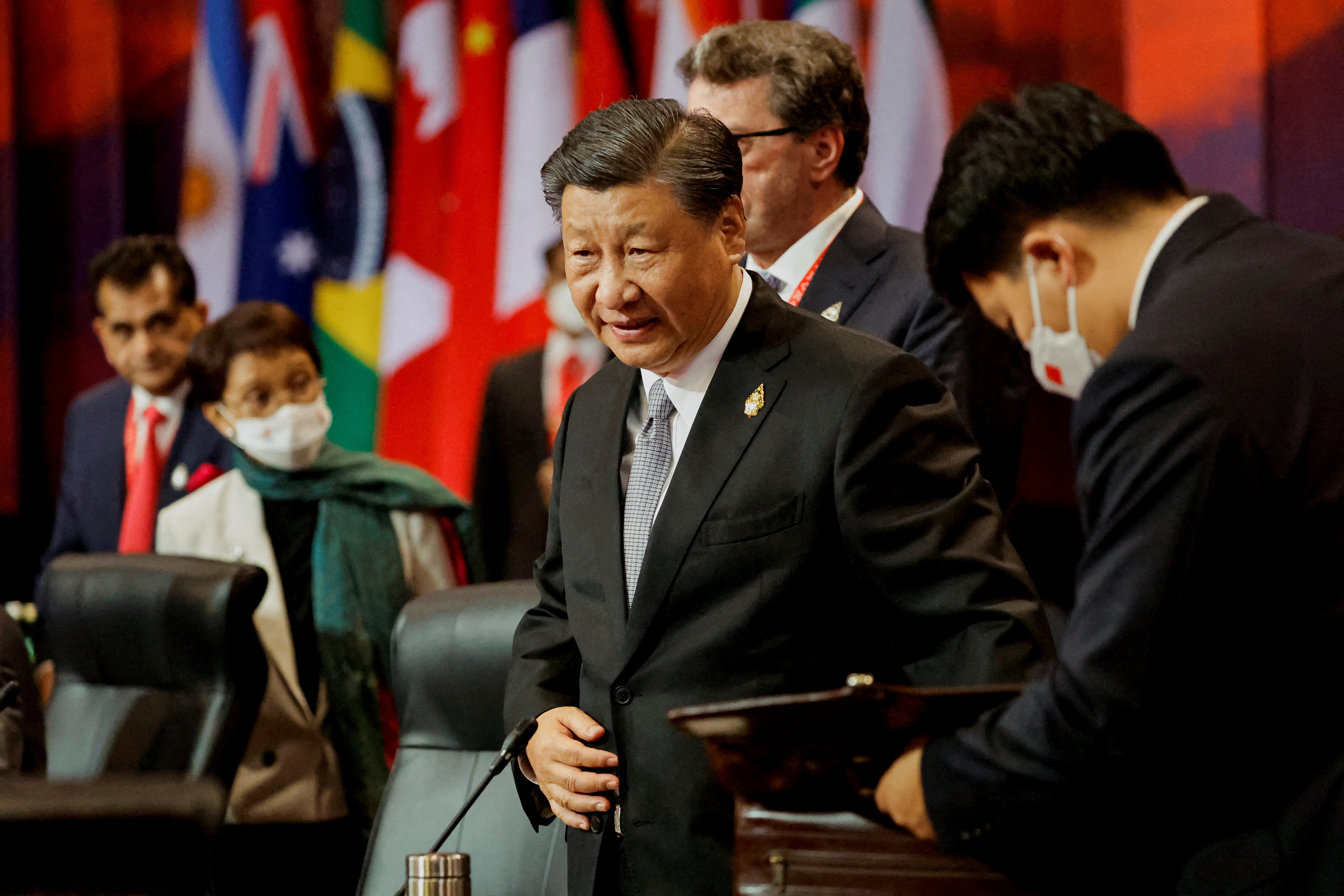
China’s President Xi Jinping attends a session during the G20 Leaders’ Summit, in Nusa Dua, Bali, Indonesia, November 16, 2022. REUTERS/Willy Kurniawan/Pool

Chinese President Xi Jinping and his wife Peng Liyuan arrive at Ngurah Rai International Airport ahead of the G20 Summit in Bali, Indonesia November 14, 2022. REUTERS/Ajeng Dinar Ulfiana/Pool
Categories
Audio Sources - Full Text Articles

COP27: Multi-lateral lenders have failed poorest over climate – Commonwealth head

2022-11-17T09:02:23Z

The world’s multi-lateral banks have “demonstrably failed” low and middle income countries when climate disasters hit and need to better assess their vulnerability and resilience when offering support, the head of the Commonwealth told Reuters.

Pressure on development finance institutions such as the World Bank has grown over the last year amid concern not enough money was being funnelled to developing countries to help them prepare for and withstand the impacts of global warming.

U.S. climate envoy John Kerry said in a side event at the COP27 climate talks in Egypt on Tuesday that he wanted a plan to reform the lending practices of the banks to be ready by early next year.

As secretary general of the Commonwealth, a voluntary association of 56 countries that evolved out of the British Empire, Patricia Scotland said the current global financial architecture was not fit for purpose.

“We have to think again; we cannot continue with the old structure because the old structure has demonstrably failed,” she said, calling for a greater focus on the link between climate change and debt levels.

While in the past, fiscal prudence was seen as the best way to manage and grow a country’s economy, thereby meeting the needs of the people, climate change had upended the calculation.

“You could have been as prudential as you wished. You could have been as fiscally tight as you wanted. Go tell that to the hurricane. When the hurricane hits you and takes away 226% of your GDP and you go from a middle income country to a no income country, that’s got nothing to do with fiscal rectitude.”

The Commonwealth, which emerged after World War Two, presents itself as a partnership of equals.

To help better assess the vulnerability of countries to shocks including climate disasters, the Commonwealth had created the Universal Vulnerability Index, Scotland said, urging the World Bank and others to use it in their decision-making.

Rather than assessing a country’s state of development, and any likely financial assistance, through the lens of Gross Domestic Product, Scotland cited recent destructive flooding in Pakistan as an example of why it was important to factor in climate vulnerability as well.

“Many of the middle income countries are acutely vulnerable to climate, and Pakistan… (is) an example of that.

“Pakistan would be considered too big, too prosperous. It has 172 countries underneath it (in terms of economic output), but it’s the fifth most vulnerable to climate; and that middle income status did not protect them from the monsoons.”

“It didn’t protect them, and it didn’t protect the people who died either. So we have to think again.”

Categories
Audio Sources - Full Text Articles

Iran accuses Israel and Western intelligence services of planning civil war in Iran – foreign minister on Twitter

2022-11-17T09:07:35Z

Iran’s foreign minister accused Israel and Western intelligence services of planning to divide Iran and start a civil war on Thursday, a day after seven people were killed in the southwestern city of Izeh in what state media presented as a “terrorist attack”.

“Various security services, Israel and some Western politicians who have made plans for civil war, destruction and the disintegration of Iran, should know that Iran is not Libya or Sudan,” Hossein Amirabdollahian tweeted, adding that Iranians would not fall for such plans.

Categories
Audio Sources - Full Text Articles

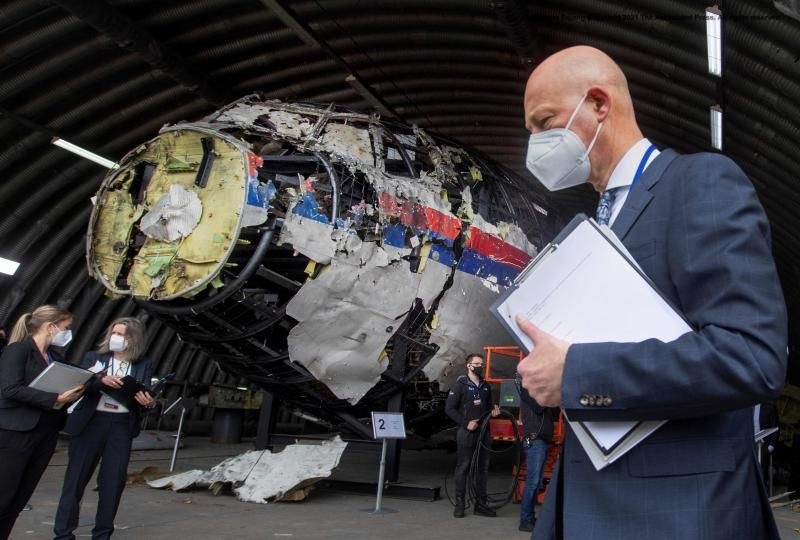
Netherlands to Announce Ruling on MH17 Case Today

1817029.jpg

The Hague District Court at 14.30 (15.30 Kyiv time) will announce its decision in the case of the Malaysian Airlines flight MH17, which was shot down on July 17, 2014 in the sky over Ukrainian Donbas, flying from Amsterdam to Kuala Lumpur.

The trial went on for over two and a half years, starting on March 9, 2020. How long the announcement will take is unknown. “The court will announce the decision orally in open session, briefly explaining how they came to the ruling. The start is scheduled for 14.30, however, how long the announcement of the decision will last is unknown. The hearing will take place in the same way as all other hearing days, in the courtroom, where it is possible to broadcast live, a temporary press center has been set up for the press,” the court told Interfax-Ukraine on the eve of the meeting.

It is expected that relatives and friends of the victims from ten countries will come to make a decision – citizens of the Netherlands (two-thirds), Malaysia, Australia, Indonesia, Great Britain, Belgium, Germany, the Philippines, Canada and New Zealand died in the tragedy. According to media reports, about 40 people arrived from Australia alone. A lot of media interest is also expected.

The post Netherlands to Announce Ruling on MH17 Case Today appeared first on Kyiv Post.

WP Radio
WP Radio
OFFLINE LIVE