Categories
Saved Web Pages

The Poisoned Relationship Between Trump and the Keepers of U.S. Secrets

11dc-trumpintel-1-facebookJumbo.jpg

The F.B.I. search of Mar-a-Lago is a coda to the years of tumult between an erratic president and the nation’s intelligence and law enforcement agencies.

  • Send any friend a story

    As a subscriber, you have 10 gift articles to give each month. Anyone can read what you share.

Former President Donald J. Trump’s relationship with the world of intelligence was the most fraught of any modern president.

Former President Donald J. Trump’s relationship with the world of intelligence was the most fraught of any modern president.Credit…Brittainy Newman for The New York Times

Mark Mazzetti

WASHINGTON— After four years of President Donald J. Trump’s raging against his intelligence services, posting classified information to Twitter and announcing that he took the word of President Vladimir V. Putin of Russia over that of his own spies, perhaps the least surprising thing he did during his final days in office was ship boxes of sensitive material from the White House to his oceanside palace in Florida.

The F.B.I. search of Mar-a-Lago on Monday was a dramatic coda to years of tumult between Mr. Trump and American intelligence and law enforcement agencies. From Mr. Trump’s frequent rants against a “deep state” bent on undermining his presidency to his cavalier attitude toward highly classified information that he viewed as his personal property and would occasionally use to advance his political agenda, the relationship between the keepers of American secrets and the erratic president they served was the most poisoned of the modern era.

Mr. Trump’s behavior led to such mistrust within intelligence agencies that officials who gave him classified briefings occasionally erred on the side of withholding some sensitive details from him.

It has long been common practice for the C.I.A. not to provide presidents with some of the most sensitive information, such as the names of the agency’s human sources. But Douglas London, who served as a top C.I.A. counterterrorism official during the Trump administration, said that officials were even more cautious about what information they provided Mr. Trump because some saw the president himself as a security risk.

“We certainly took into account ‘what damage could he do if he blurts this out?’” said Mr. London, who wrote a book about his time in the agency called “The Recruiter.”

During an Oval Office meeting with top Russian officials just months into his presidency, Mr. Trump revealed highly classified information about an Islamic State plot that the government of Israel had provided to the United States, which put Israeli sources at risk and angered American intelligence officials. Months later, the C.I.A. decided to pull a highly placed Kremlin agent it had cultivated over years out of Moscow, in part out of concerns that the Trump White House was a leaky ship.

In August 2019, Mr. Trump received a briefing about an explosion at a space launch facility in Iran. He was so taken by a classified satellite photo of the explosion that he wanted to post it on Twitter immediately. Aides pushed back, saying that making the high resolution photo public could give adversaries insight into America’s sophisticated surveillance capabilities.

He posted the photo anyway, adding a message that the United States had no role in the explosion but wished Iran “best wishes and good luck” in discovering what caused it. As he told one American official about his decision: “I have declassification authority. I can do anything I want.”

Two years earlier, Mr. Trump used Twitter to defend himself against media reports that he had ended a C.I.A. program to arm Syrian rebels — effectively disclosing a classified program to what were then his more than 33 million Twitter followers.

If there is not one origin story that explains Mr. Trump’s antipathy toward spy agencies, the 2017 American intelligence assessment about the Kremlin’s efforts to sabotage the 2016 presidential election — and Russia’s preference for Mr. Trump — played perhaps the biggest role. Mr. Trump saw the document as an insult, written by his “deep state” enemies to challenge the legitimacy of his election and his presidency.

The search at Mr. Trump’s home at Mar-a-Lago added an explosive new dimension to the array of investigations into the former president.Credit…Saul Martinez for The New York Times

Mr. Trump’s efforts to undermine the assessment became a motif in the early years of his presidency, culminating in a July 2018 summit in Helsinki with Mr. Putin. During a joint news conference, Mr. Putin denied that Russia had any role in election sabotage, and Mr. Trump came to his defense. “They think it’s Russia,” Mr. Trump said, speaking of American intelligence officials and adding, “I don’t see any reason it would be.”

Mr. Trump often took aim at intelligence officials for public statements he thought undermined his foreign policy goals. In January 2019, top officials testified to Congress that the Islamic State remained a persistent threat, that North Korea would still pursue nuclear weapons and that Iran showed no signs of actively trying to build a bomb — essentially contradicting things the president had said publicly. Mr. Trump lashed out, saying on Twitter that “The Intelligence people seem to be extremely passive and naive when it comes to the dangers of Iran. They are wrong!”

“Perhaps Intelligence should go back to school!” he wrote.

Mr. Trump was hardly the first American president to view his own intelligence services as enemy territory. In 1973, Richard M. Nixon fired Richard Helms, his spy chief, after he refused to go along with the Watergate cover-up, and installed James Schlesinger in the job with the mission of bringing the C.I.A. in line.

Speaking with a group of senior analysts on his first day, Mr. Schlesinger made a lewd comment about what the C.I.A. had been doing to Mr. Nixon, and demanded that it stop.

Chris Whipple, an author who cites the Schlesinger anecdote in his book “The Spymasters,” said there is a long history of tension between presidents and their intelligence chiefs, but that “Trump really was in a league of his own in thinking the C.I.A. and the agencies were out to get him.”

The exact nature of the documents that Mr. Trump left the White House with remains a mystery, and some former officials said that Mr. Trump generally was not given paper copies of classified reports. This had less to do with security concerns than with the way Mr. Trump preferred to get his security briefings. Unlike some of his predecessors, who would read and digest voluminous intelligence reports each day, Mr. Trump generally received oral briefings.

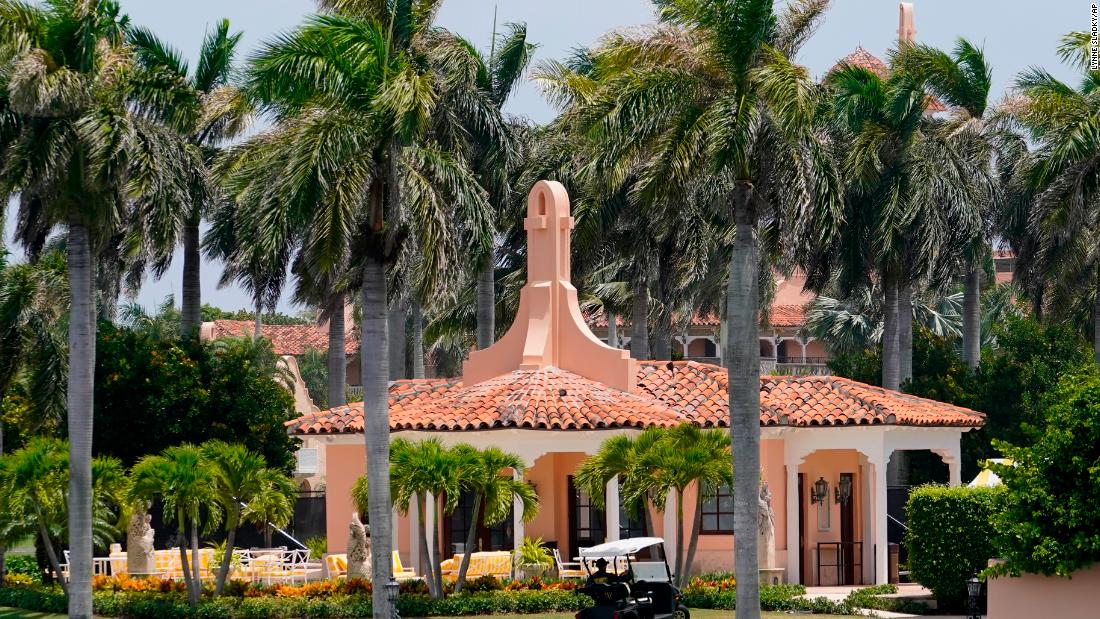
But for those charged with protecting secrets, there may have been no bigger challenge than the seaside resort where Mr. Trump spent so much of his time as president — and where so many boxes of classified material were stored after he left office. Besides its members, Mar-a-Lago is also open to members’ guests, who would often interact with Mr. Trump during his frequent trips to the club. Security professionals saw this arrangement as ripe to be exploited by a foreign spy service eager for access to the epicenter of American power.

One night during his first weeks in office, Mr. Trump was at Mar-a-Lago hosting Shinzo Abe, the Japanese prime minister, when North Korea test-fired a ballistic missile in the direction of Japan that landed in the sea.

Almost immediately, at least one Mar-a-Lago patron posted photos on social media of Mr. Trump and Mr. Abe coordinating their response over dinner in the resort’s dining room. Photos showed White House aides huddled over their laptops and Mr. Trump speaking on his cellphone.

The patron also published a photo of himself standing next to a person he described as Mr. Trump’s military aide who carries the nuclear “football” — the briefcase that contains codes for launching nuclear weapons.

Just two world leaders responding to a major security crisis — live for the members of Mr. Trump’s resort to watch in real time.

Categories
Saved Web Pages

Garland Moves to Release Details on Search of Trump’s Home

11dc-investigate-facebookJumbo.jpg

The search was part of a government effort to account for materials related to some of the most highly classified programs run by the United States, a person briefed on the matter said.

  • Send any friend a story

    As a subscriber, you have 10 gift articles to give each month. Anyone can read what you share.

Former President Donald J. Trump could oppose the motion to release the warrant and inventory of items taken from his home, and some of his aides were said to be leaning toward doing so.

Former President Donald J. Trump could oppose the motion to release the warrant and inventory of items taken from his home, and some of his aides were said to be leaning toward doing so.Credit…Emil Lippe for The New York Times

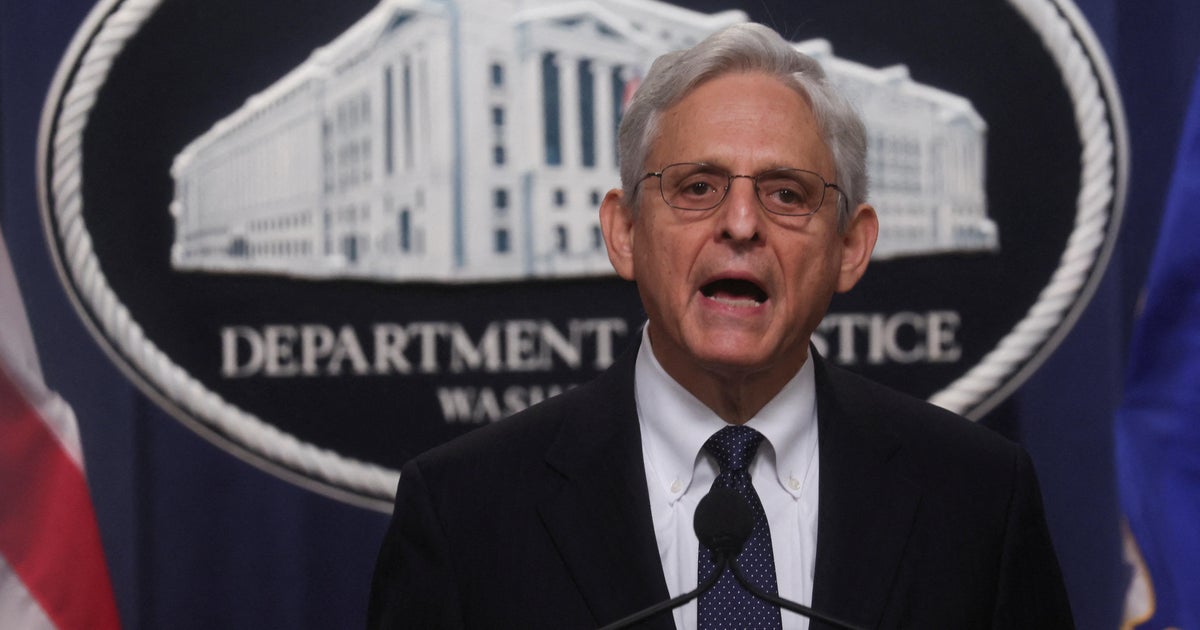
Attorney General Merrick B. Garland moved on Thursday to make public the legal authorization for the F.B.I.’s search of former President Donald J. Trump’s home in Florida, which was carried out as part of the government’s effort to account for documents that one person briefed on the matter said related to some of the most highly classified programs run by the United States.

Mr. Garland said he had personally approved the search after the failure of “less intrusive” attempts to retrieve material taken from the White House by Mr. Trump.

Mr. Garland provided no details. But the person briefed on the matter said investigators had been concerned about material from what the government calls “special access programs,” a designation even more classified than “top secret” that is typically reserved for extremely sensitive operations carried out by the United States abroad or for closely held technologies and capabilities.

Government officials have expressed concern that allowing highly classified materials to remain at Mr. Trump’s home could leave them vulnerable to efforts by foreign adversaries to acquire them, according to another person familiar with the Justice Department’s thinking.

In a clipped, two-minute statement to reporters at the Justice Department’s headquarters, Mr. Garland said he decided to break his silence and make a public statement because Mr. Trump had disclosed the action himself. The attorney general also cited the “surrounding circumstances” of the case and the “substantial public interest in this matter.”

But Mr. Garland also used the brief appearance to defend, at least implicitly, the Justice Department’s handling of the case against the torrent of criticism directed at it by Mr. Trump and his allies.

“Upholding the rule of law means applying the law evenly, without fear or favor,” Mr. Garland said. “Under my watch that is precisely what the Justice Department is doing.”

Minutes before Mr. Garland took the podium, a top official in the Justice Department’s national security division filed a motion to unseal the search warrant and an inventory of items retrieved in the search on Monday.

While the inventory provided to Mr. Trump’s team after the search is unlikely to reveal details about the specific documents he kept, it refers to an array of sensitive material, according to a person with knowledge of the matter.

Late on Thursday night, Mr. Trump said he would not oppose the motion to release the warrant and the inventory.

He wrote on his social media site, Truth Social, that he was “encouraging” their release. “Release the documents now!” he said.

Judge Bruce Reinhart, the federal magistrate in the Southern District of Florida who approved the search warrant and is handling the motion to unseal it, had issued an order requiring the Justice Department to serve a copy of its motion to Mr. Trump’s lawyers. It said the department would have to tell the judge by 3 p.m. on Friday whether Mr. Trump opposed the motion.

Mr. Garland’s statement amounted to a challenge to Mr. Trump, who has been free to release the search warrant and the list of items taken during the search on his own, but has declined to do so. Many Trump allies and Republicans have also called on Mr. Garland to explain his decision, adding political complexity — or hypocrisy — to any decision by Mr. Trump to oppose making the search warrant public.

The Justice Department did not seek to release the affidavits — which contain much more information about the behavior of Mr. Trump and evidence presented by others — that were used to obtain the warrant.

The public statement by Mr. Garland came at an extraordinary moment, as a sprawling set of investigations into the former president on multiple fronts gained momentum even as Mr. Trump continued to signal that he might soon announce another run for the White House.

Mr. Trump invoked his Fifth Amendment right against self-incrimination on Wednesday in a civil investigation into his business practices by the New York attorney general, and a close ally in the House had his phone seized by federal agents this week in one strand of the investigation into Mr. Trump’s efforts to remain in power despite his election loss in 2020.

Mr. Garland also spoke on the same day that law enforcement officers shot and killed a man who they said tried to break into the F.B.I.’s Cincinnati office on Thursday. Investigators were looking into whether he had ties to extremist groups, including one that participated in the Jan. 6 attack on the Capitol, according to two law enforcement officials familiar with the matter.

The search on Monday of Mr. Trump’s home at Mar-a-Lago, his private club, was the most explosive development yet in the various inquiries. The investigation centers on whether he improperly took sensitive materials with him from the White House when his term ended and then failed to return all of them — including classified documents — when the National Archives and the Justice Department demanded that he do so.

Months before the F.B.I. arrived at Mar-a-Lago, Mr. Trump had received a subpoena this spring in search of documents that federal investigators believed he had failed to turn over earlier in the year, when he returned 15 boxes of material to the archives, three people familiar with the matter said.

The existence of the subpoena helps to flesh out the sequence of events that led to the search, and suggests that the Justice Department tried methods short of a search warrant to account for the material before taking the politically explosive step of sending F.B.I. agents unannounced to Mar-a-Lago.

Mr. Garland did not address a subpoena during his appearance on Thursday, but said that “where possible, it is standard practice to seek less intrusive means,” indicating that other measures were tried before a search took place.

What we consider before using anonymous sources.
How do the sources know the information? What’s their motivation for telling us? Have they proved reliable in the past? Can we corroborate the information? Even with these questions satisfied, The Times uses anonymous sources as a last resort. The reporter and at least one editor know the identity of the source.

Two people briefed on the classified documents that investigators believed remained at Mar-a-Lago indicated that they were so sensitive, and related to national security, that the Justice Department had to act.

The subpoena was first disclosed by John Solomon, a conservative journalist who has also been designated by Mr. Trump as one of his representatives to the National Archives.

The existence of the subpoena is being used by allies of Mr. Trump to make a case that the former president and his team were cooperating with the department in identifying and returning the documents in question and that the search was unjustified.

Christina Bobb, a lawyer for Mr. Trump, did not respond to messages. It is not clear what precise materials the subpoena sought or what documents the former president might have provided in response.

The subpoena factored into a visit that Jay Bratt, the Justice Department’s top counterintelligence official, made with a small group of other federal officials to Mar-a-Lago in early June, one of the people said.

The officials met with Mr. Trump’s lawyer, Evan Corcoran. Mr. Trump, who likes to play host and has a long history of trying to charm officials inquiring about his practices, also made an appearance. During the visit, the officials examined a basement storage area where the former president had stowed material that had come with him from the White House.

A few days after the visit, Mr. Bratt emailed Mr. Corcoran and told him to further secure the remaining documents, which were kept in the storage area with a stronger padlock, one of the people said. The email was reported earlier by The Wall Street Journal.

Then, they subpoenaed surveillance footage from the club, which could have given officials a glimpse of who was coming in and out of the storage area, according to a person with knowledge of the matter. They received footage specifically from areas of the club where they believed the documents might have been stored, the person said.

During the same period, investigators were in contact with a number of Mr. Trump’s aides who had some visibility into how he stored and moved documents around the White House and who still worked for him, three people familiar with the events said.

Among those whom investigators reached out to was Molly Michael, Mr. Trump’s assistant in the outer Oval Office who also went to work for him at Mar-a-Lago, three people familiar with the outreach said.

Investigators have also reached out to Derek Lyons, the former White House staff secretary, whose last day was Dec. 18, 2020, and no longer works for Mr. Trump, with questions about the process for handling documents, according to a person familiar with the outreach.

Federal officials came to believe that Mr. Trump had not relinquished all the material that left the White House with him at the end of his term, according to three people familiar with the investigation.

Less than two months later after Mr. Bratt and the other officials visited Mr. Trump’s home, about two dozen F.B.I. agents, intentionally not wearing the blue wind breakers emblazoned with the agency’s logo usually worn during searches, appeared at Mar-a-Lago with a warrant.

The club was closed; Mr. Trump was in the New York area; the F.B.I. startled a crew fixing a large fountain, a maid who was dusting and a handful of Secret Service agents who guard the complex.

The search warrant was broad, allowing the agents to investigate all areas of the club where classified materials might have been stored. They went through the basement, Mr. Trump’s office and at least part of his residence at the club.

After hours of searching, they left with several boxes that were not filled to the brim and in some cases simply contained sealed envelopes of material that the agents took, one person familiar with the search said.

The person said the F.B.I. left behind a two-page manifest of what was taken. If the manifest is made public, it is likely to be heavily redacted to shield any classified material.

Some senior Republicans have been warned by allies of Mr. Trump not to continue to be aggressive in criticizing the Justice Department and the F.B.I. over the matter because it is possible that more damaging information related to the search will become public.

When Mr. Trump left the White House, he took with him boxes containing a mishmash of papers, along with items like a raincoat and golf balls, according to people briefed on the contents. The National Archives tried for months after Mr. Trump left office to retrieve the material, engaging in lengthy discussions with his representatives to acquire what should have been properly stored by the archives under the Presidential Records Act.

When archivists recovered 15 boxes this year, they discovered several pages of classified material and referred the matter to the Justice Department. Officials later came to believe that additional classified material remained at Mar-a-Lago.

During his appearance on Thursday, Mr. Garland, a former midlevel prosecutor, went out of his way to counter claims by Mr. Trump and his supporters that agents with the bureau or Justice Department lawyers were motivated by politics or behaved inappropriately in the course of requesting and executing the search warrant.

“I will not stand by silently when their integrity is unfairly attacked,” Mr. Garland said.

Christopher A. Wray, the F.B.I. director, said in an internal email earlier in the day that he would adjust the bureau’s “security posture” as needed. He also defended the work of the agents involved in the Trump case.

“We don’t cut corners,” he wrote. “We don’t play favorites.”

Categories
Saved Web Pages

Garland Calls Trump’s Bluff as Justice Department Moves to Unseal Warrant

11garland-sub-facebookJumbo.jpg

Former President Donald J. Trump has portrayed the search of his residence as baseless and political. Now, the attorney general wants to make the search warrant public.

  • Send any friend a story

    As a subscriber, you have 10 gift articles to give each month. Anyone can read what you share.

Video

Video player loading

Attorney General Merrick B. Garland said he personally approved of the decision to execute the warrant used in Monday’s F.B.I. search of former President Donald J. Trump’s residence in Mar-a-Lago.CreditCredit…Evelyn Hockstein/Reuters

Charlie Savage

WASHINGTON — Attorney General Merrick B. Garland on Thursday called former President Donald J. Trump’s bluff.

Ever since the F.B.I. executed a search warrant at Mr. Trump’s Florida residence on Monday, Mr. Trump and his supporters have been portraying the search as baseless and politically motivated.

The investigation centers on whether Mr. Trump improperly took sensitive materials with him from the White House and then failed to return all of them — including classified documents — when the National Archives and the Justice Department demanded that he do so.

But Mr. Trump has chosen to keep secret the warrant and the list of what the F.B.I. took from his Mar-a-Lago club and estate — documents that very likely lay out what law or laws investigators believe may have been broken, what evidence supporting that belief they thought they would find there and what they seized.

Mr. Garland and the investigators working on the case had made no public comments after the search, which allowed Mr. Trump and his supporters to make ever more elaborate claims of official wrongdoing and abuse of power.

But on Thursday, Mr. Garland broke his silence.

Speaking from a podium at the Justice Department, the attorney general said he had personally approved the request for a search warrant. He denounced the “unfounded attacks on the professionalism” and integrity of the F.B.I. and prosecutors.

And — most importantly — he announced that the Justice Department had filed a motion to unseal the warrant used in the search, as well as the inventory of what the F.B.I. took away, so that the government could make them public.

In so doing, the attorney general alluded to the fact that Mr. Trump was free to release the documents himself, but has chosen not to do so. “Copies of both the warrant and the F.B.I. property receipt were provided on the day of the search to the former president’s counsel, who was on site during the search,” Mr. Garland said.

Moving quickly, a federal magistrate judge — Bruce E. Reinhart, who has also come under attack by Trump supporters — set a deadline of 3 p.m. on Friday for the department to relay any objection from Mr. Trump about unsealing the documents. In his brief remarks, Mr. Garland said he decided to make a public statement because Mr. Trump had confirmed the action and because of the “substantial public interest in this matter.”

If Mr. Trump acquiesces, the public will have more information about the basis for the search — information that could rebut the former president’s claims that the Justice Department acted without cause. If Mr. Trump fights the disclosure, however, he risks looking as though he has something to hide.

How Times reporters cover politics.
We rely on our journalists to be independent observers. So while Times staff members may vote, they are not allowed to endorse or campaign for candidates or political causes. This includes participating in marches or rallies in support of a movement or giving money to, or raising money for, any political candidate or election cause.

Either way, there is another important caveat. Mr. Garland did not propose unsealing the department’s application for the search warrant and any accompanying affidavit from a criminal investigator explaining why there was probable cause to believe the search would uncover evidence of a crime.

Those materials would lay out in starker detail not just what criminal investigators think they know — for example, whether they believed Mr. Trump was illegally hoarding government documents, whether some of those files were classified and where at Mar-a-Lago they were being stored — but how the investigators knew those things.

In short, the application would make clear whether the Justice Department is talking to one or more confidential sources in the Trump camp who are providing information.

It is not surprising that the Justice Department is not proposing unsealing that particularly sensitive material because it would be careful to protect its sources. But at the same time, that is what Mr. Trump’s supporters are most eager to learn.

Senator Lindsey Graham, the South Carolina Republican who is a close Trump ally, released a statement on Thursday afternoon saying that he wanted to know the basis for the search — alluding to “the deep mistrust of the F.B.I. and D.O.J.” among the former president’s supporters.

Mr. Graham noted that in the Russia investigation, surveillance warrants obtained against an adviser to Mr. Trump were later deemed unjustified. The F.B.I. failed to tell the court about evidence that undercut its claim the adviser was most likely a Russian agent, according to an inspector general report.

“What I am looking for is the predicate for the search,” Mr. Graham said. “Was the information provided to the judge sufficient and necessary to authorize a raid on the former president’s home within 90 days of the midterm election? I am urging, actually insisting, the D.O.J. and the F.B.I. lay their cards on the table as to why this course of action was necessary. Until that is done the suspicion will continue to mount.”

By that standard, Mr. Graham and other Trump allies are unlikely to be satisfied with the documents that Mr. Garland is proposing to make public. The underlying application may be unsealed and become public someday — but that typically happens after an indictment, such as when a defendant files a motion to suppress evidence gathered in a search by arguing that it lacked a sufficient legal basis.

Still, even the documents the Justice Department wants to make public could shed significant light on why investigators carried out the search — documents that, for some reason, Mr. Trump has so far seen as in his interest to keep secret.

“Federal law, longstanding department rules, and our ethical obligations prevent me from providing further details as to the basis of the search at this time,” Mr. Garland said, adding: “This is all I can say right now. More information will be made available in the appropriate way and at the appropriate time.”

Categories
Saved Web Pages

NotedDC — Garland puts ball in Trump’s court

garlandmerrick_trumpdonald_081122gn_spli

Attorney General Merrick Garland is attempting to shift pressure to former President Trump while defending the FBI’s search of Mar-a-Lago this week.

Garland announced Thursday that the Justice Department had asked a federal court to unseal the contents of the search warrant authorizing the FBI raid at Trump’s Florida estate earlier this week.

In announcing the move, Garland responded to growing pressure to disclose more details while also putting the ball in the former president’s court on whether to allow more information to be released or try to block it.

“In these circumstances involving a search of the residence of a former President, the government hereby requests that the Court unseal the Notice of Filing and its attachment … absent objection by former President Trump,” the DOJ said in a court filing Thursday.

Trump’s lawyers have had a copy of the warrant since Monday but have not disclosed it to the public, though the former president has depicted the raid as a political conspiracy against him. Pushing back, Garland revealed that he personally approved of the unprecedented search. 

Another added wrinkle came Thursday when The New York Times reported that Trump was subpoenaed by the DOJ concerning possible classified material at Mar-a-Lago. 

Meanwhile, the DOJ is not seeking to unseal the affidavit, a detailed document that lays out the reasons why the FBI suspected criminal conduct at Mar-a-Lago, according to the Times.

Garland will likely still remain tight-lipped on the rest of the investigation, as our colleagues Rebecca Beitsch and Harper Neidig note. He refused to take questions after the press conference Thursday.

The Hill’s Morning Report — Garland to judge: Release Trump search warrant Astonished Democrats set to clear finish line with climate, tax, health care package

Welcome to NotedDC: Your guide to politics, policy and people of consequence in D.C. Have some news, juicy gossip, insight or other insider info? Send us tips: Elizabeth Crisp and Kelsey Carolan

Want a copy of this newsletter in your inbox each week? Sign up here: thehill.com/noted.

The Hill’s Morning Report — Garland to judge: Release Trump search warrant Astonished Democrats set to clear finish line with climate, tax, health care package

Trump-appointed FBI chief walking political tightrope

FBI DIRECTOR Christopher Wray is treading a fine line following the bureau’s search at Mar-a-Lago this week, amid widespread backlash among Trump’s backers.

  • During a stop at an FBI field office Wednesday, Wray condemned violent rhetoric used by Trump supporters against law enforcement following the raid.
  • At the same time, the FBI chief declined to answer questions about the search itself by agents at the former president’s Palm Beach, Fla., resort.

Why it matters: Former FBI Director James Comey was widely panned during the 2016 election for speaking out publicly about the agency’s investigation into former Secretary of State Hillary Clinton’s use of a private email server.

A unique position: Wray, who was appointed as FBI director by Trump in 2017 after the former president fired Comey, finds himself in the unique position of overseeing a bureau investigating his former boss, who once praised his “impeccable credentials.” 

For now: Wray is focused on defending members of the bureau against threats. “Violence against law enforcement is not the answer, no matter who you’re upset with,” Wray said Wednesday.

The Hill’s Morning Report — Garland to judge: Release Trump search warrant Astonished Democrats set to clear finish line with climate, tax, health care package

RISKS OF POLITICAL VIOLENCE ESCALATING

Republican lawmakers furious over the FBI’s search of Trump’s home have threatened to investigate or defund law enforcement agencies following the Monday raid, but some warn that political violence among supporters could also escalate.

Our colleagues spoke to experts about why some of the rhetoric being used by GOP leaders claiming the raid was meant to hurt Trump politically can be dangerous.

“The GOP’s choice to turn a probe into the mishandling of classified documents into a cause célèbre is dangerous, particularly given Trump’s history of calling on private violence, mobs, and militias for support,” said Rachel Kleinfeld, senior fellow at the Carnegie Endowment for International Peace.

The issue is also on President Biden’s radar, according to The Washington Post, after he met with four prominent historians last week who compared the current political atmosphere to “pro-fascist movements before World War II.”

What we’re watching: An armed man allegedly tried to break into an FBI building in Cincinnati on Thursday morning after reportedly making threats.

While details are still emerging, the incident came one day after the FBI director spoke out to condemn threats against law enforcement in the wake of Monday’s raid.

The Hill’s Morning Report — Garland to judge: Release Trump search warrant Astonished Democrats set to clear finish line with climate, tax, health care package

Cheney’s last stand

Embattled Rep. Liz Cheney (R-Wyo.) is making a final pitch to hold onto her seat in what’s arguably the most high-profile House primary of the 2022 cycle.

In an ad released Thursday, Cheney defends herself against former President Trump‘s ongoing attacks and insists the 2020 presidential election was valid.

Here’s what Cheney says in the ad:

America cannot remain free if we abandon the truth. The lie that the 2020 presidential election was stolen is insidious. It preys on those who love their country. It is a door Donald Trump opened to manipulate Americans to abandon their principles, to sacrifice their freedom, to justify violence, to ignore the rulings of our courts and the rule of law … This is Donald Trump’s legacy, but it cannot be the future of our nation. History has shown us over and over again how these types of poisonous lies destroy free nations.”

The race for Wyoming’s sole House seat, which Cheney has held for three terms, has become the ultimate personification of the battle between the traditional GOP base and Trump’s staunch allies.

The former president has taken particular interest in defeating Cheney because she voted for his impeachment last year after a mob of his supporters attacked the Capitol in an attempt to disrupt the certification of President Biden‘s 2020 win.

Trump has consistently refused to accept the election outcome while Cheney has used her perch as vice chair of the House select committee investigating the Jan. 6 riot to chastise the former president for his actions leading up to and during the riot.

Cheney was previously ousted from her House GOP leadership post over her rift with Trump and her refusal to keep quiet about what she sees as the former president’s role in the Jan. 6 attack.

“Like many candidates across this country, my opponents in Wyoming have said that the 2020 election was rigged and stolen. No one who understands our nation’s laws, no one with an honest, honorable, genuine commitment to our Constitution would say that. It is a cancer that threatens our great Republic,” Cheney says in her latest ad.   

Cheney, 56, is trailing Trump-backed rival Harriet Hageman by double digits in polling. Trump and more than 100 House GOP members have endorsed Hageman ahead of the Tuesday primary.

Given the uphill climb she faces in the primary, speculation has run rampant that Cheney may be mulling a run for president in 2024. And Thursday’s ad would do little to discourage it. 

“No matter how long we must fight, this is a battle we will win. Millions of Americans across our nation — Republicans, Democrats, Independents — stand united in the cause of freedom. We are stronger, more dedicated, and more determined than those trying to destroy our Republic,” she said.

The Hill’s Morning Report — Garland to judge: Release Trump search warrant Astonished Democrats set to clear finish line with climate, tax, health care package

White House seeks to revamp economic message

INFLATION is starting to cool, the job market is strong and Congress just passed two major bills addressing the economy — but is it enough for Democrats to hold off Republicans? 

The White House thinks so. 

The administration is starting to shift its message to attempt to tie Republicans to special interest groups, framing the party as pursuing an “extreme MAGA agenda” that will hurt families’ pocketbooks.

Our colleague Morgan Chalfant writes that a large part of the message unveiled Thursday focuses on how every Senate Republican voted against the Inflation Reduction Act, a sweeping bill on tax, climate and health care reforms. 

Still, prominent economic policy consultant Tony Fratto told our colleague Amie Parnes that the White House should focus solely on jobs instead of inflation because “people are upset about it, so if you can’t win the argument, change the subject.”

  • Most experts’ predictions for the July jobs report were blown out of the water when data released last week showed that a whopping more than 528,000 jobs were added.
  • Republicans are also unlikely to change their course on slamming Democrats for record levels of inflation, even if they are declining, less than 100 days until midterms.
  • “Put it on billboards. Shout it from the rooftops. Everything and anything,” a Democratic strategist told The Hill about the strong job market.

The Hill’s Morning Report — Garland to judge: Release Trump search warrant Astonished Democrats set to clear finish line with climate, tax, health care package

SEARCHING FOR CREDIT

The Inflation Reduction Act must still pass the House and get the president’s signature before it becomes law, but already Democrats are jockeying for credit over the long-awaited legislation.

Senate Majority Leader Charles Schumer (D-N.Y.) credited centrist Sen. Joe Manchin (D-W.Va.) while speaking back in his district this week.

“[Manchin] said ‘We have to do this in secret, you and I only,’ and we did,” Schumer said during an event in New York this week. “Under Joe Manchin’s request, which I honored, the White House didn’t know any of the details until everybody else did.” 

However: As The Hill’s Brett Samuels and Alex Gangitano reported, Biden officials have been touting the White House’s behind-the-scenes efforts to broker a deal, with Biden himself working the phones over the weekend. The officials credited the president with the vision for the package and patience. 

‘Two more seats’: During a radio interview with SiriusXM Urban View talk radio show host Joe Madison on Thursday, Schumer noted Manchin’s role in securing the reconciliation agreement while emphasizing that Democrats would have an easier time passing priority legislation if they could net several more Senate seats.

“If I got two or three more seats, the bill we did now, as good as it is, would be nothing … We would get the kind of things that, you know, Joe Manchin was against,” he said.  

Schumer added that with “two more seats” he also could get the Democrats’ voting rights legislation through the chamber. 

  • Schumer, who is hoping to hold onto his majority leader role past the midterms, has been using the August break to promote Democratic candidates and priorities.
  • Democrats hold a razor-thin majority in the chamber, which has required Vice President Harris to cast multiple tie-breaking votes.

The Hill’s Morning Report — Garland to judge: Release Trump search warrant Astonished Democrats set to clear finish line with climate, tax, health care package

Who’ll be in the House Friday? 

The House will be back in session Friday to pass Democrats’ $740 billion climate, health care and tax bill, sending it to President Biden‘s desk. But don’t expect everyone to make the brief trip back to D.C. for the vote.

At least 167 House members — nearly 40 percent of the chamber — have active “proxy letters” on file that will allow other members to vote for them even if they don’t come back to the District for the vote, House Clerk records show.

Nearly six dozen of them were filed just this week alone, in the days since the Senate approved the Inflation Reduction Act that it spent months trying to hash out. The Senate passed the bill on Sunday, sending it back to the House, where it’s expected to win final approval from the Democratic majority.

Members from both sides of the aisle have granted voting authority to fellow House members, copies of the letters show. 

The remote House floor voting process was adopted in May 2020 in response to the coronavirus pandemic. House Speaker Nancy Pelosi (D-Calif.) has repeatedly extended the proxy voting period on the advice of the House physician.  

It’s been used countless times in the two years since it was implemented, but it hasn’t been without controversy.  

Republican leaders, who raised an unsuccessful legal challenge to the rule, have vowed to permanently end the process if the GOP takes control of the chamber.

The Hill’s Morning Report — Garland to judge: Release Trump search warrant Astonished Democrats set to clear finish line with climate, tax, health care package

📺  MEDIA MOVE

Fox News anchor Shannon Bream will take the reins of “Fox News Sunday,” one of the networks most-watched programs, replacing longtime anchor Chris Wallace

  • Bream will be the first woman to host “Fox News Sunday” in its 26-year history, our colleague Dominick Mastrangelo writes, after Wallace left for a show at CNN, initially for the now-defunct CNN+ streaming service.
  • She’s been at the network for 15 years, most recently hosting an evening program.

And finally…the Commanders are back 

If you want to see the Washington Commanders play on home turf before tickets get expensive, you’re in luck!

The Commanders will play the Carolina Panthers this Saturday at FedEx Field in their first preseason game. Tickets start at $30. 

Check out how you can see them in preseason action.

The Hill’s Morning Report — Garland to judge: Release Trump search warrant Astonished Democrats set to clear finish line with climate, tax, health care package

Stay with TheHill.com for the latest and recommend NotedDC to others: thehill.com/noted. See you next week!

Categories
Saved Web Pages

Justice Department moves to unseal search warrant used to seize documents from Trump’s home

2022-08-11t191339z-1192143149-rc2fuv9r3a

Washington — The Justice Department moved to unseal the search warrant used by federal agents to seize documents from former President Donald Trump’s home in Florida, with Attorney General Merrick Garland revealing he “personally approved” the decision to seek the warrant.

In brief remarks from the Justice Department as the government filed its request, Garland defended the move to search Mar-a-Lago, and said he “does not take such decisions lightly.”

He noted, however, that he was bound by federal law, department rules and ethical obligations from providing more information about the basis of the search.

“Faithful adherence to the role of law is the bedrock principle of the Justice Department and our democracy. Upholding the rule of law means applying the law evenly without fear or favor,” he said. “Under my watch, that is precisely what the Justice Department is doing. All Americans are entitled to the even-handed application of the law, to due process of the law and to the presumption of innocence.”

The decision by the Justice Department to move to make public the warrant was made “in light of the former president’s public confirmation of the search, the surrounding circumstances and the substantial interest in this matter,” Garland said.

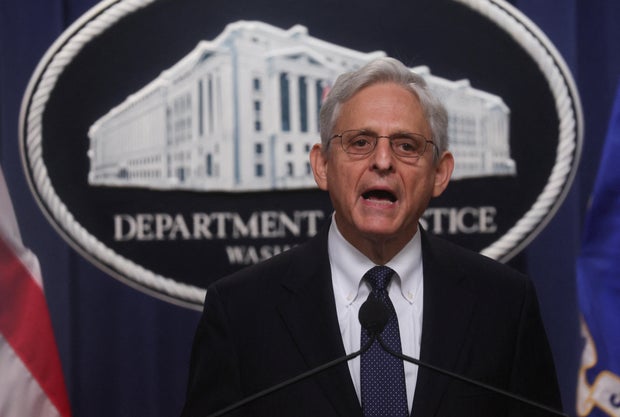
U.S. Attorney General Merrick Garland speaks about the FBI's search warrant served at the home of former President Donald Trump in Washington Attorney General Merrick Garland speaks about the FBI’s search warrant served at former President Donald Trump’s Mar-a-Lago estate in Florida during a statement at the U.S. Justice Department in Washington on Aug. 11, 2022. LEAH MILLIS / REUTERS

The former president revealed that the FBI had executed a search warrant at Mar-a-Lago on Monday, and sources confirmed to CBS News that the search was connected to a Justice Department investigation into Trump’s handling of presidential records. The National Archives and Records Administration retrieved 15 boxes of presidential records, some of which contained classified national security material, from Mar-a-Lago in mid-January, and asked the Justice Department to investigate.

During its search earlier this week, the FBI took boxes and documents, two sources confirmed to CBS News, and no electronics were taken. One official said some or possibly all of the seized records contained classified information.

Sources familiar with the matter told CBS News on Thursday that a federal grand jury issued a subpoena related to the document investigation in the spring, before Justice Department officials met with Trump attorneys at Mar-a-Lago in June regarding the records. The online news outlet Just the News first reported the existence of the subpoena.

Trump and his GOP allies were quick to denounce the search, claiming without evidence it is a politically motivated attack against a likely challenger to President Biden in 2024. House Minority Leader Kevin McCarthy forecasted an investigation into the Justice Department if Republicans win control of the House in the November midterm elections, telling Garland in a tweet to preserve records and prepare to testify next year.

Robert Costa and Andres Triay contributed reporting.

Categories
Saved Web Pages

FBI search of Trump’s Mar-a-Lago home followed tip classified records were there – report

4933.jpg?width=1200&height=630&quality=8

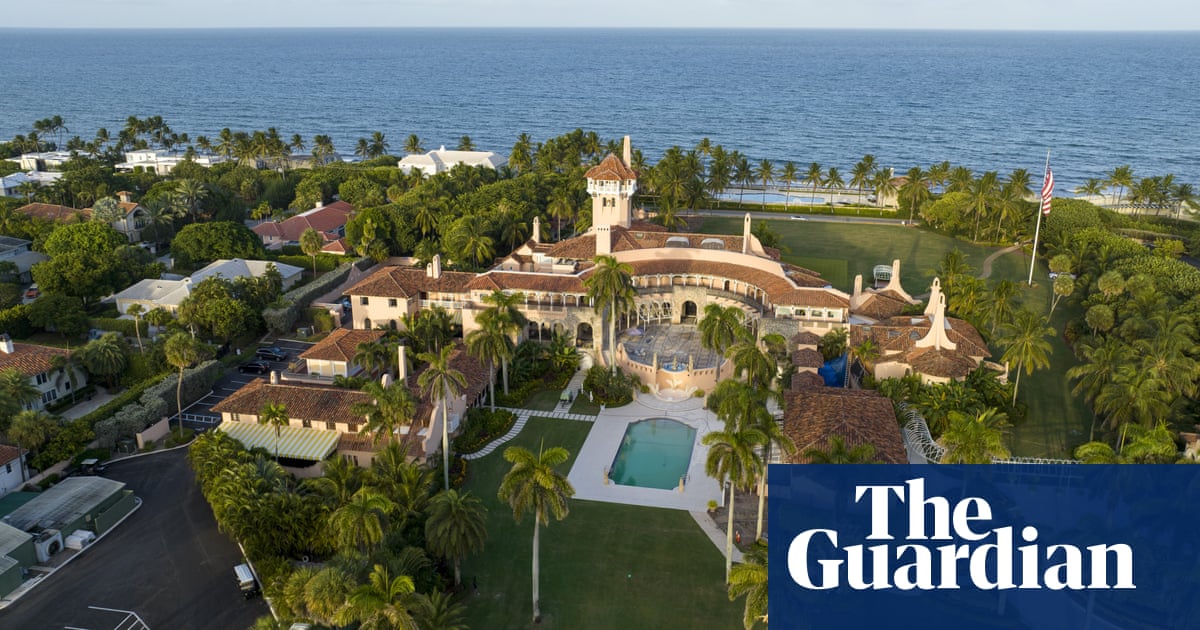
Federal investigators searched Donald Trump’s Mar-a-Lago home in Palm Beach after an informant told them he might be storing classified records at his private club, the Wall Street Journal has reported.

The search on Monday reportedly came two months after federal law enforcement officials came to Mar-a-Lago to talk about boxes of government documents that were being stored there.

Federal authorities searched Trump’s sprawling south Florida residence having obtained a warrant to seek classified and White House records that the US justice department thought Trump had kept unlawfully, two sources previously told the Guardian.

The warrant, executed by FBI agents, intimated that this investigation involving Trump is a strictly criminal inquiry.

The sources said justice department officials became worried that these records were being held unlawfully at Mar-a-Lago following government attorneys’ recent discussions with Trump’s legal team. The unprecedented search of an ex-president’s residence marked the apex of a fight between Trump and his overt disdain for the Presidential Records Act of 1978 – which mandates preservation of official records – and parties tasked with upholding that law.

The search and reports about an informant for the FBI in or around Trump’s inner circle has drawn condemnation from Trump loyalists, who have framed the search in partisan terms – and used it as a call-to-action for fundraising and voter mobilization for November’s election.

Extremist far-right Republican Georgia congresswoman Marjorie Taylor Greene derided any potential informants as “traitors”.

“We now know that there was an FBI informant at Mar-a-Lago, who is that and how many other FBI informants are around President Trump on a daily basis, working at his clubs, working at Mar-a-Lago, or maybe Bedminster, or on his staff?” Greene said on her web show, according to Newsweek.

The Journal’s report chronicled discussions between justice department officials and Trump’s lawyers over these records. On 3 June, a high-ranking justice department official and three FBI agents came to Trump’s Mar-a-Lago house “ to discuss boxes with government records sitting in a basement storage room along with suits, sweaters and golf shoes”.

Trump and his team seemed unaware of the possible gravity of the situation during this meeting, the newspaper said. “The former president even popped into the June 3 meeting at Mar-a-Lago, shaking hands,” the Journal reported. A source told the Journal that Trump said: “‘I appreciate the job you’re doing … anything you need, let us know.’”

The FBI sent a missive several days later asking for a more secure lock to be placed on the storage room’s door. “In the following weeks, however, someone familiar with the stored papers told investigators there may be still more classified documents at the private club,” the Journal reported.

The potential presence of these records follows the National Archives’ removal of 15 boxes earlier this year. Officials with the justice department were skeptical that Trump’s team was being forthright about the records that were still at his home, a source told the newspaper.

The warrant for this search alluded to the Presidential Records Act and a potential violation of statute governing classified records, an attorney for Trump reportedly said. Trump has neither disclosed this warrant nor discussed the records removed by federal agents.

Kevin McCarthy, the House Republican minority leader, said the justice department had come to “an intolerable state of weaponized politicization”. When Republicans win back the House, McCarthy said they will carry out oversight of the justice department – warning the attorney general, Merrick Garland, to “preserve your documents and clear your calendar”.

Categories
Saved Web Pages

Wall Street Journal: Informant tipped off investigators about more documents at Mar-a-Lago

220810164508-02-mar-a-lago-0809-super-te

Ex-Trump attorney: What Trump fears the most about the FBI search

(CNN)The FBI search of former President Donald Trump’s Mar-a-Lago residence on Monday was prompted by a tip to investigators about the possibility of additional classified documents at the Palm Beach club, according to a Wall Street Journal report.

CNN previously reported that investigators from the FBI and the DOJ met with Trump attorneys at Mar-a-Lago in June, seeking more information about classified material that had been taken to Florida after Trump departed the White House. Following that meeting, where investigators looked around the room where the documents were being stored, the Wall Street Journal reports that “someone familiar with the stored papers told investigators there may be still more classified documents at the private club” beyond what Trump turned over to the National Archives earlier this year.

CNN has not confirmed the WSJ report.

Monday’s search warrant execution pertained to both the handling of classified documents and the Presidential Records Act.

For months, investigators have been looking into how Trump handled material taken with him when he left the White House after the National Archives and Records Administration referred the case to the Justice Department earlier this year.

The Monday search followed a belief from authorities that the former President or his team had not returned all the documents and other materials that were property of the government, according to a person familiar with the matter. There had been suspicion that Trump representatives were not being completely truthful with investigators, according to another person familiar with the matter.

The concern arose after the former President returned some 15 boxes of materials to the National Archives in January.

Before FBI agents arrived at Trump’s private club earlier this week and searched his residence, people around the former President had been under the impression that the probe into how he handled classified information had stalled, according to two sources familiar with the thinking.

It remains unclear why those around the former President believed the investigation had stalled, but in June, his attorneys received a letter from investigators asking them to preserve the remaining documents in his possession “until further notice,” one source told CNN.

The Mar-a-Lago search, which focused on the area of the club where Trump’s offices and personal quarters are located, marked a major escalation of the classified documents investigation. Federal agents removed boxes of material from the Palm Beach property. The Secret Service had about an hour heads up before the FBI executed the warrant, a source familiar with the situation told CNN.

The Wall Street Journal’s report comes amid increased pressure for the Justice Department to provide a public statement about the unprecedented move to search a former President’s home.

Categories
Saved Web Pages

9:51 AM 2/13/2021

ANbyha2AV2PEp15eh6UNovigQNsD5OKmKX4VjT_6

  
And it was simply impossible to do it: to conduct the professional investigation of the extremely complex set of issues in 1-2 weeks. 
The artful montage of the video documentary is not a legal proof yet. We need to see and to understand the mechanisms, organizational structures, connections, foreign connections, finances, leaderships, their personalities, etc., etc. behind the facts and behind the screens. 
However, with all due respect to the intricacies of the “legal analysis”, met with the loud laughter in the Chamber, this Trump’s complicity question is like the situation with the suspected pregnancy: it is all or nothing. For Trump, just like for Putin and many other autocrats, it translates into the prospects of the prison term, lurking still from afar but quite realistically. He had all the motivation in the World to be complicit, and this type of behavior would be very much in line with his character. 
There are good reasons to believe that Trump was complicit, and therefore he might be viewed as culpable. The degree of culpability is the next legal exercise. 
It looks like everything was very carefully coordinated, and for some time. 
The Counterintelligence Investigations cannot be conducted within the legal framework, this attitude invites defeat and is the recipe for disaster. The CI activities are most optimal when they extend from the post factum, defensive stance to the pro-active, offensive stance and extend deeply into the adversaries camps, into their plans, and into their operations, as apparently practiced by the German and Russian Security Services. 
These are the observations of the lay observer.
That’s the ($1000K) Question! 

9:51 AM 2/13/2021

https://soundcloud.com/mike-nova-3/sets/news-and-music-february-2021


Categories
Saved Web Pages

Trump Claims He’s a Victim of Tactics He Once Deployed

10dc-assess-1-facebookJumbo.jpg

Donald J. Trump’s efforts to politicize the law enforcement system have now become his shield as he tries to deflect accusations of wrongdoing.

  • Send any friend a story

    As a subscriber, you have 10 gift articles to give each month. Anyone can read what you share.

Former President Donald J. Trump’s view of the law enforcement system has been shaped by his own encounters with it.

Former President Donald J. Trump’s view of the law enforcement system has been shaped by his own encounters with it.Credit…Brittainy Newman for The New York Times

Peter Baker
Published Aug. 10, 2022Updated Aug. 11, 2022, 7:20 a.m. ET

WASHINGTON — Two days after the 2020 election that Donald J. Trump refused to admit he lost, his oldest son, Donald Trump Jr., made an urgent recommendation: “Fire Wray.”

The younger Mr. Trump did not explain in the text he sent why it was necessary to oust Christopher A. Wray, the F.B.I. director his father himself had appointed more than three years earlier. He did not have to. Everyone understood. Mr. Wray, in the view of the Trump family and its followers, was not personally loyal enough to the departing president.

Throughout his four years in the White House, Mr. Trump tried to turn the nation’s law enforcement apparatus into an instrument of political power to carry out his wishes. Now as the F.B.I. under Mr. Wray has executed an unprecedented search warrant at the former president’s Florida home, Mr. Trump is accusing the nation’s justice system of being exactly what he tried to turn it into: a political weapon for a president, just not for him.

There is, in fact, no evidence that President Biden has had any role in the investigation. Mr. Biden has not publicly demanded that the Justice Department lock up Mr. Trump the way Mr. Trump publicly demanded that the Justice Department lock up Mr. Biden and other Democrats. Nor has anyone knowledgeably contradicted the White House statement that it was not even informed about the search at Mar-a-Lago beforehand, much less involved in ordering it. But Mr. Trump has a long history of accusing adversaries of doing what he himself does or would do in the same situation.

His efforts to politicize the law enforcement system have now become his shield to try to deflect accusations of wrongdoing. Just as he asserted on Monday that the F.B.I. search was political persecution, he made the same claim on Wednesday about the New York attorney general’s unrelated investigation of his business practices as he invoked his Fifth Amendment right to avoid testifying because his answers could incriminate him.

“Now to flip the script and falsely claim that he’s the victim of the exact same tactics that he once deployed is just the rankest hypocrisy,” said Norman L. Eisen, who served as special counsel to the House Judiciary Committee during the first Trump impeachment. “But consistency, logic, evidence, truth — those are always the first to go by the board when a democracy comes under assault from within.”

Mr. Trump’s Republican allies argue that he was not the one who undercut the apolitical tradition of the F.B.I. and law enforcement, or at least he was not the first to do so. Instead, they maintain, the system was corrupted by the bureau’s leadership and even members of the Obama administration when Mr. Trump and his campaign were investigated for possible collusion with Russia during the 2016 campaign, an inquiry that ended with no charges of conspiracy with Moscow.

The former president’s camp has long pointed to text messages between a pair of F.B.I. officials that sharply criticized Mr. Trump during that campaign and to surveillance warrants obtained against an adviser to Mr. Trump that were later deemed unjustified. The Justice Department acknowledged the warrants were flawed, and an inspector general faulted the F.B.I. officials for their texts. But the inspector general found nothing to conclude that anyone had tried to harm Mr. Trump out of political bias.

In a letter to Mr. Wray on Wednesday, Senator Marco Rubio of Florida, the top Republican on the Senate Intelligence Committee, alluded to the history of the F.B.I.’s previous investigation of Mr. Trump to cast doubt on the current inquiry that led to Monday’s search for classified documents that the former president may have improperly taken when he left office.

Christopher A. Wray’s F.B.I. executed an unprecedented search warrant at the former president’s Florida home.Credit…Stefani Reynolds for The New York Times

“The F.B.I.’s actions, less than three months from the upcoming elections, are doing more to erode public trust in our government institutions, the electoral process and the rule of law in the U.S. than the Russian Federation or any other foreign adversary,” Mr. Rubio said in the letter.

The search was approved by a magistrate judge and high-level law enforcement officials required to meet a high level of proof of possible crimes. Attorney General Merrick B. Garland, himself a former appeals court judge who was appointed by Mr. Biden with bipartisan support and whose caution in pursuing the former president until now had generated criticism from liberals, has offered no public explanation so far.

The degree to which Mr. Trump has succeeded in promoting his view of a politicized law enforcement system was evident in the hours after the F.B.I. search on Monday when many Republicans, including Representative Kevin McCarthy of California, the House minority leader, wasted little time assailing the bureau’s action as partisan without waiting to find out what it was based on or what it turned up.

Card 1 of 7

Numerous inquiries. Since Donald J. Trump left office, the former president has been facing several different civil and criminal investigations across the country into his business dealings and political activities. Here is a look at some notable cases:

Jan. 6 investigations. In a series of public hearings, the House select committee investigating the Jan. 6 attack laid out a powerful account of Mr. Trump’s efforts to overturn the 2020 election. This evidence could allow federal prosecutors, who are conducting a parallel criminal investigation, to indict Mr. Trump.

Georgia election interference case. Mr. Trump himself is under scrutiny in Georgia, where the district attorney of Fulton County has been investigating whether he and others criminally interfered with the 2020 election in the state. This case could pose the most immediate legal peril for the former president and his associates.

Even Republicans who have been critical of the former president in the past felt compelled to challenge the validity of the search. Senator Mitch McConnell of Kentucky, the minority leader who excoriated Mr. Trump for his role in the Jan. 6 attack on Congress, waited 24 hours but finally spoke out on Tuesday to question whether something untoward had happened.

How Times reporters cover politics.
We rely on our journalists to be independent observers. So while Times staff members may vote, they are not allowed to endorse or campaign for candidates or political causes. This includes participating in marches or rallies in support of a movement or giving money to, or raising money for, any political candidate or election cause.

“The country deserves a thorough and immediate explanation of what led to the events of Monday,” he said in a statement. “Attorney General Garland and the Department of Justice should already have provided answers to the American people and must do so immediately.”

But some law enforcement veterans said Mr. Trump simply projects his own views onto others. “Trump may actually believe that Merrick Garland is serving a political agenda because he has trouble processing anything else,” said Michael R. Bromwich, a former Justice Department inspector general. “Trump simply doesn’t understand people like Garland and the top leadership of D.O.J. and the F.B.I. because their values are so alien to him.”

The F.B.I. has a history at the intersection of politics and investigations. Under J. Edgar Hoover, its longtime director, the bureau bugged and pursued domestic opponents of the federal government, at times serving as a political tool of various presidents of both parties. But with revelations of past abuses after Hoover’s death in 1972, Congress and the F.B.I. sought to cast off the bureau’s history and transform it into a more professional, politically neutral organization.

F.B.I. directors were appointed to 10-year terms to make them less subject to presidential whims, a new office of professional responsibility was established, the House and the Senate set up intelligence oversight committees, and other reforms were enacted to remove the bureau from politics. Along the way, the bureau earned the respect of both parties and many Americans in the last half-century.

That built-up store of public credibility has eroded significantly in the Trump years. The proportion of Americans who told Gallup pollsters that they thought the F.B.I. was doing a good job fell from 57 percent in 2019 to 44 percent in 2021.

And while public approval of the bureau had long been bipartisan, views have now diverged along party lines. In Mr. Trump’s first year in office, as he attacked the F.B.I. over the Russia investigation, the share of Republicans who had a favorable view of the bureau fell to 49 percent from 65 percent in surveys by the Pew Research Center while remaining steady among Democrats at 77 percent.

“Trump upset the post-1970s status quo when he became president, tipping off-balance over 40 years of an imperfect-though-laudable D.O.J.- and F.B.I.-constructed culture of apolitical independence,” said Douglas M. Charles, a historian of the F.B.I. at Penn State and the author or editor of several books on the bureau. “It seems to me Trump has really put that culture and the F.B.I. itself to the test to expose the weaknesses and limitations of the post-1970s system.”

Mr. Trump’s view of the law enforcement system has been shaped by his own encounters with it, starting as a young developer in New York when the Justice Department sued his family company in 1973, accusing it of racial discrimination. Eventually, the Trump firm settled and agreed to change its policies, leaving a bitter taste in Mr. Trump’s mouth.

By the time he ran for office, Mr. Trump viewed the justice system through a political lens. He led rally crowds in “lock her up” chants as he suggested he would imprison his opponent, former Secretary of State Hillary Clinton, who was investigated but not prosecuted for improper handling of classified information — much as he is now suspected of doing.

James B. Comey, the former F.B.I. director, at the Capitol in 2018.Credit…Tom Brenner for The New York Times

After winning, Mr. Trump saw law enforcement agencies as another institution to bend to his will, firing the F.B.I. director James B. Comey when he declined to pledge personal loyalty to the president or publicly declare that Mr. Trump was not a target of the Russia inquiry. The president later fired Attorney General Jeff Sessions for recusing himself from that investigation and therefore not protecting Mr. Trump from it.

During his time in office, Mr. Trump repeatedly called on the Justice Department and the F.B.I. to investigate his foes and let off his friends. He publicly criticized the prosecutions of campaign advisers like Paul J. Manafort and Roger J. Stone Jr. and his former national security adviser Michael T. Flynn, eventually pardoning them. He complained when two Republican congressmen were charged shortly before the 2018 midterm elections because it could cost the party seats.

Frustrated with Mr. Wray, Mr. Trump sought to install a more supportive director at the F.B.I. in 2020, backing down after protests by Attorney General William P. Barr. By that fall, as the president trailed in the polls for re-election, he pushed for the prosecution of Mr. Biden’s son Hunter and lashed out at Mr. Barr and Mr. Wray for not prosecuting Democrats like the elder Mr. Biden and Barack Obama because of the Russia inquiry.

“These people should be indicted,” Mr. Trump said. “This was the greatest political crime in the history of our country, and that includes Obama and it includes Biden.”

After losing his bid for a second term, Mr. Trump ultimately disregarded his son’s advice and did not fire Mr. Wray, but in his final weeks in office pushed the Justice Department to help him overturn the election. Mr. Barr rebuffed Mr. Trump and publicly rejected the false election claims before resigning.

Mr. Trump repeatedly pressed Mr. Barr’s successor, Jeffrey A. Rosen, to go along with his scheme to discredit the election results and came close to firing him when he would not and installing an ally who would, Jeffrey Clark. The president was blocked only when told that every senior Justice Department official would resign in protest.

That was his last chance to influence law enforcement from the inside, at least for now. So from the outside, he rails against what he calls the injustice of a law enforcement agency run by his own appointee.

Categories
Saved Web Pages

Prosecutors say lawyer used clout to plant damaging information on Trump with FBI

LG7TY46WIROGBBCH6KXL2KKVKA.jpg

WASHINGTON, May 17 (Reuters) – Federal prosecutors on Tuesday sought to portray an attorney who formerly worked for Hillary Clinton’s 2016 presidential campaign as a privileged, high-powered person who abused his connections with the FBI in a bid to harm former President Donald Trump’s campaign just weeks before the election.

In opening arguments in a federal court in Washington, prosecutor Brittain Shaw told a jury that attorney Michael Sussmann misled the FBI about who he represented when he met with the bureau’s top lawyer on Sept. 19, 2016, to provide a tip alleging internet communications between Trump’s business and a Russian bank.

The allegations were investigated and later discredited.

Register now for FREE unlimited access to Reuters.com

“The evidence will show that this is a case about privilege – the privilege of a well-connected D.C. lawyer with access to the highest levels of the FBI,” Shaw said, adding that Sussmann abused his connections to “use the FBI as a political tool.”

The case against Sussmann is being led by Special Counsel John Durham, who was appointed by then-Attorney General William Barr in 2019 to probe any missteps in the FBI’s investigation into whether Trump’s campaign was colluding with Russia.

President Joe Biden’s Justice Department has allowed Durham to finish his work.

The case focuses on a meeting in which Sussmann met with then-FBI General Counsel James Baker to provide evidence of potential secret communications between the Trump Organization and Russia’s Alfa Bank, including thumb drives with technical data.

Prosecutors say Sussmann lied when he claimed he was not passing along information about Trump on behalf of any specific client, when in fact he was representing two clients: Clinton’s presidential campaign and Rodney Joffe, a technology executive who oversaw the research into the alleged connections between Alfa Bank and the Trump Organization.

“The FBI is our institution. It should not be used as a political tool for anyone,” Shaw told the jury, saying they should set aside their political beliefs about Trump and Clinton in this case.

Attorneys for Sussmann said on Tuesday that he did not lie to Baker and did not arrange the meeting on behalf of his clients.

“No one told him to go. No one authorized him to go,” said attorney Michael Bosworth.

Bosworth also poked holes in the government’s case, noting that Baker did not record or document his meeting with Sussmann in any way. “Mr. Baker’s memory is as clear as mud,” he said.

Baker is expected to be called to testify in the trial.

Scott Hellman, one of the FBI agents tasked with vetting the data, testified that he did not find allegations about the secret communications between Trump’s business and Alfa Bank to be credible.

“Whoever had written that paper had jumped to some conclusions that were not supported by the technical data,” Hellman said.

“I did not feel that they were objective in the conclusions that they came to.”

Register now for FREE unlimited access to Reuters.com

Reporting by Sarah N. Lynch in Washington
Editing by Andy Sullivan, Bill Berkrot and Matthew Lewis

Our Standards: The Thomson Reuters Trust Principles.

WP Radio
WP Radio
OFFLINE LIVE