Categories
Saved Web Pages

Baryshnikov: Putin ‘trying to create a new history of Russia’

Mikhail Baryshnikov attends the "Immersive Van Gogh" art experience at Pier 36 in New York. Andy Kropa/Invision/AP

Mikhail Baryshnikov attends the “Immersive Van Gogh” art experience at Pier 36 in New York.

Mikhail Baryshnikov is blasting Vladimir Putin over the Russian president’s invasion of Ukraine, saying he “does not care about people at all.”

“He’s trying to create a new history of Russia,” said the acclaimed ballet dancer — who was born in Latvia when the country was part of the Soviet Union and famously defected to Canada in 1974 — in a preview clip released Thursday from an upcoming interview on “CBS Sunday Morning.”

The full interview with Baryshnikov airs this weekend.

“How’s it possible he has kids himself?” Baryshnikov asked CBS’s Anthony Mason of Putin. “How’s it possible?”

Baryshnikov, the son of Russian parents, said witnessing the horrors of Russia’s offensive against Ukraine since the conflict began in February compelled him to speak out.

“I couldn’t stay silent this time,” Baryshnikov said.

Bill Clinton offers advice on talking to pro-gun rights activists: ‘Don’t talk down to them’ Bill Clinton on his favorite ‘fictional’ president: ‘Donald Trump’

Earlier this year, the former “Sex and the City” star co-founded True Russia, an online fundraising campaign for Ukrainian refugees.  

When Mason noted that Russians who publicly criticize Putin have “a way of kind of disappearing,” Baryshnikov replied, “Listen, I will be 75-years-old.”

“What have I to lose?” he said.

Categories
Saved Web Pages

Mystery of Black Death’s origins has been solved, scientists say

skynews-black-death-plague_4495406.jpg?2

Scientists believe they have uncovered the origins of the Black Death, more than 600 years after the plague killed millions of people in Europe, the Middle East and North Africa.

Despite decades of study, researchers have not been able to pinpoint where the medieval bubonic plague began.

Now the answer may have been provided by ancient teeth taken from graves.

The plague originated in Kyrgyzstan, central Asia, in the 1330s, analysis of DNA from the teeth of skeletons suggests.

“Our study puts to rest one of the biggest and most fascinating questions in history and determines when and where the single most notorious and infamous killer of humans began,” Dr Philip Slavin, a historian who helped make the discovery, said.

A team of Scottish and German scientists noticed a significant rise in burials near Lake Issyk Kul in the Tian Shan region of Kyrgyzstan from 1338 to 1339.

The researchers discovered that the cemeteries had been excavated in the late 1880s and about 30 skeletons taken.

The team, made up of scientists from the University of Stirling, the Max Planck Institute and the University of Tubingen, was able to track the skeletons down and take DNA from the teeth of seven people.

Sequencing, which determines the DNA structure, revealed that three people carried Yersinia pestis, a bacterium linked to the beginning of the Black Death outbreak before it arrived in Europe.

As part of the research, Dr Slavin studied the diaries of the excavations to match the skeletons to their headstones and translate the inscriptions, which were written in the Syriac language.

A view of the Tian Shan mountains in Kyrgyzstan, the region in Central Asia where researchers studying ancient plague genomes have traced the origins of the 14th century Black Death that killed tens of millions of people, in an undated photograph. Lyazzat Musralina/Handout via REUTERS. NO RESALES. NO ARCHIVES. THIS IMAGE HAS BEEN SUPPLIED BY A THIRD PARTY.

Image: The researchers studied skeletons from Tian Shan in Kyrgyzstan

Dr Maria Spyrou, of the University of Tubingen, and the first author of the study, said: “Despite the risk of environmental contamination and no guarantee that the bacteria would have been able to be preserved, we were able to sequence aDNA taken from seven individuals unearthed from two of these cemeteries.

“Most excitingly, we found aDNA of the plague bacterium in three individuals.”

Professor Johannes Krause, of the Max Planck Institute for Evolutionary Anthropology in Leipzig, said: “Just like Covid, the Black Death was an emerging disease and the start of a huge pandemic that went on for some 500 years.

“It’s very important to understand actually in what circumstances did it emerge.”

Read more from Sky News:
Teenage boy dies from ‘Black Death’ disease
Plague was spread ‘by humans not rats’
Is the UK on the brink of a new coronavirus wave?

The origins of the plague have been debated by historians since its appearance in Europe, the Middle East and North Africa in the 14th century.

The Black Death, considered one of the worst infectious diseases in human history, was the start of nearly 500 years of killer diseases known as the Second Plague Pandemic.

The study was published in the journal Nature.

Categories
Saved Web Pages

Europe: Putin’s aggressive autocracy reduces Russian soft power to ashes – FT

world-connected.jpg

Advertisements – Advertising at The News And Times – advertising-newsandtimes.com | WE CONNECT!

The writer is an FT contributing editor and chair of the Centre for Liberal Strategies, Sofia, and fellow at IWM Vienna

Advertisements – Advertising at The News And Times – advertising-newsandtimes.com | WE CONNECT!

Rumour has it that, asked who are Vladimir Putin’s most trusted advisers, one of his inner circle replied drily: “Ivan the Terrible, Catherine the Great and Peter the Great.”

Last week, Russia’s president openly compared himself to Peter, and the invasion of Ukraine with the tsar’s expansionist wars of three centuries ago. To an untrained eye, his actions can easily look like an effort to restore the Soviet Union, or even the tsarist empire.

In reality, what is unfolding is a perverted end of the last European empire. The so-called russky mir, or “Russian world”, conceived as something culturally bigger than the Russian Federation, is being sacrificed on the altar of autocracy and Russian ethnicity. This vision is shorn of any appeal to universal values and all attractiveness to Russia’s neighbours. Putin’s desperate attempt to grab Ukrainian lands is a show of strength that comes at the cost of the collapse of Moscow’s soft power. With the assault on Ukraine, he has cut Russia’s ties to Europe by making Europeans disgusted with the country.

A new report from the European Council on Foreign Relations, based on a pan-European opinion poll, suggests the break with Russia is irreversible, at least in the short and medium term. A majority of Europeans have lost any illusions about integrating Russia into their world. Many support cutting economic, cultural and even diplomatic ties with Russia. Western sanctions have failed to change Russian foreign policy, but they have forced European governments to part with the idea that Moscow can ever be a reliable partner to the west.

In terms of soft power, the invasion of Ukraine has achieved two things: a decisive end to any lingering post-Soviet identity, and the degradation of Moscow’s use of the Soviet victory over Hitler as part of its national mythology and international reputation.

Before Russia’s annexation of Crimea, many Russian-speakers in Ukraine went about their lives not needing to ask if they were Russian or Ukrainian. Their passports didn’t define their identity. Now, when Russian troops kill thousands of people for insisting they are not Russian but Ukrainian, any semblance of a post-Soviet identity is gone forever.

War in Ukraine is not Putin’s Soviet moment but his anti-Soviet one. On the day he launched it, he spoke like some White general from the Russian civil war, not the Red colonel he actually was before the fall of communism. He declared Russians the real victims of the Soviet regime and Ukraine a fiction, an entity invented by Vladimir Lenin.

In building his autocracy, Putin has laid waste to the “Russian world”. This is best seen in the field of culture. Empires are most often born on the battlefield, but they die in the bookstore.

Only a decade ago, Russian-language sections were the densest in many Ukrainian bookstores. No longer. After the war, there will quite likely be no Russian-language sections at all. In European cities where, until this year, most people could hardly distinguish Russians from Ukrainians and Belarusians, they have now learnt that difference. For many Ukrainians on the streets of Warsaw or Berlin, it is a political statement to speak Russian. We can be sure that many of their children will never want or bother to learn the language.

The Russian language’s role in European cultural life may turn out to be another victim of Putin’s invasion. The Bolshevik revolution and the communist regime that followed killed millions, but they failed to extinguish foreigners’ interest in the Slavic tongue. Many leftists in the west and the global south saw Russian as the language of the revolution and were eager to learn it.

Putin’s colonial war in Ukraine will not tempt people outside Russia to start learning Russian. Quite the contrary. Moscow’s provocative definition of Russian-speakers in neighbouring countries as ethnically Russian dramatically diminishes the willingness of governments in these countries to encourage Russian-language education.

Before the war, Moscow’s middle class and Putin’s oligarchs thought and acted as if they belonged to both the Russian and the western world. Such an “amphibious” life is no longer possible. Barricaded identities are replacing multiple affiliations. In Russia, being “Russian” is now defined by genuine or feigned public support for Putin’s war with the west. In the west, being Russian is increasingly identified with not belonging to the west. Many Russians living outside Russia today feel like exiles.

Changing the nature of the border, and not simply the place of the border, between Russia and the west is the major objective of Putin’s war. Tragically, he is achieving that goal.

Advertisements – Advertising at The News And Times – advertising-newsandtimes.com | WE CONNECT!

Categories
Saved Web Pages

US sending $1 billion more military aid to outgunned Ukraine

3000.jpeg

WASHINGTON (AP) — The U.S. announced it will send an additional $1 billion in military aid to Ukraine, as America and its allies provide longer-range weapons they say can make a difference in a fight where Ukrainian forces are outnumbered and outgunned by their Russian invaders.

President Joe Biden and his top national security leaders said Wednesday the U.S. is moving as fast as possible to get critical weapons to the fight, even as Ukrainian officials protest that they need more, faster, in order to survive.

The latest package, the U.S. said, includes anti-ship missile launchers, howitzers and more rounds for the High Mobility Artillery Rocket Systems (HIMARS) that U.S. forces are training Ukrainian troops on now. All are key weapons systems that Ukrainian leaders have urgently requested as they battle to stall Russia’s slow but steady march to conquer the eastern Donbas region.

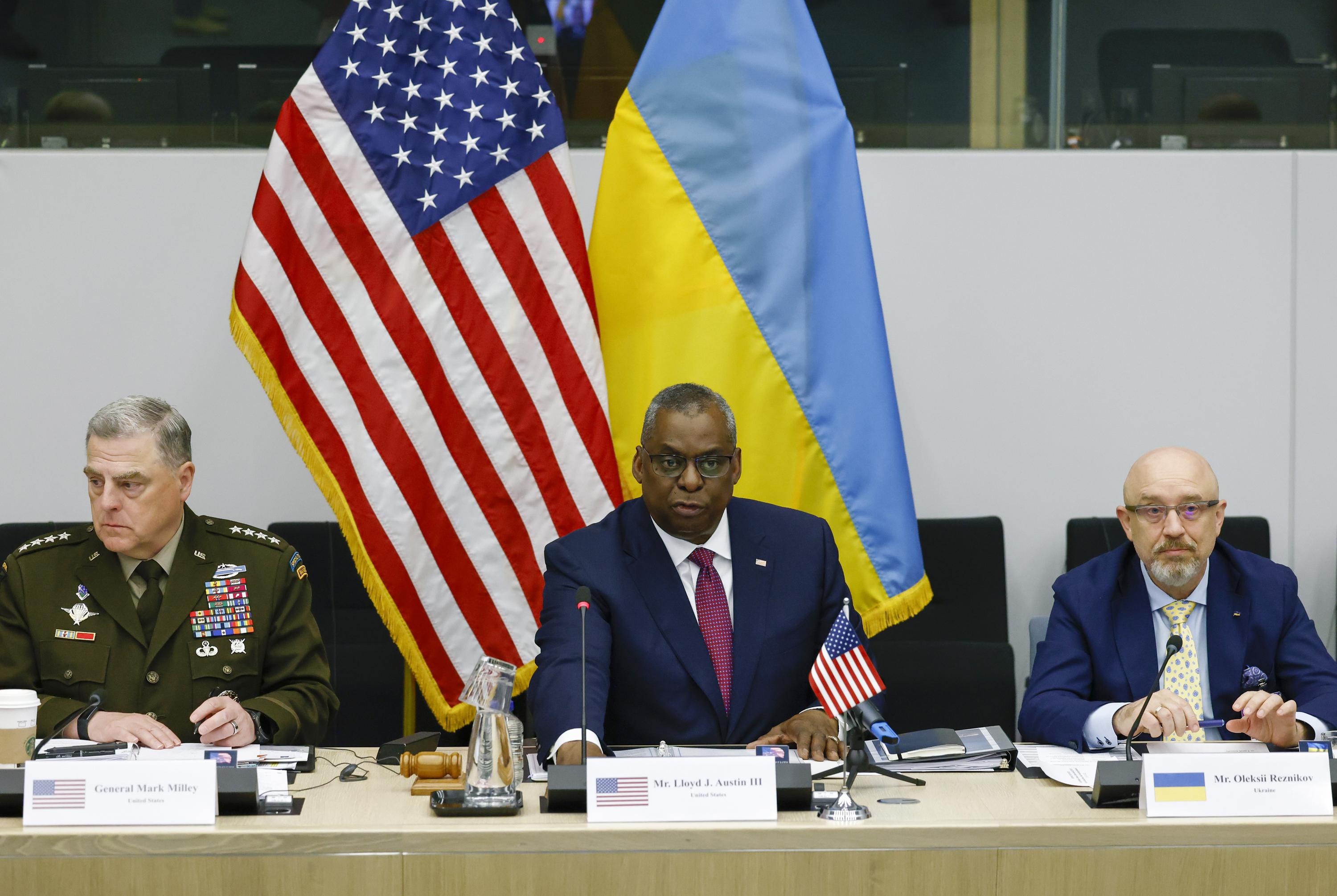
“Gen. Milley and I have been in a number of fights. And when you’re in a fight, you can never get enough,” Defense Secretary Lloyd Austin said at a press conference in Brussels, referring to Gen. Mark Milley, chairman of the Joint Chiefs of Staff.

“I certainly understand where the Ukrainians are coming from, and we’re gonna fight hard to give them everything they need.”

The HIMARS and anti-ship systems are the kinds of longer range capabilities that over time can make a difference in the fight, Milley said. He said Ukraine will have trained HIMARS crews in the fight in a few weeks.

“If they use the weapon properly and it’s employed properly, they ought to be able to take out a significant amount of targets and that will make a difference,” he said. But he also noted that the numbers clearly favor the Russians.

“In terms of artillery, they do outnumber, they out-gun and out-range” the Ukrainian forces.

The aid is the largest single tranche of weapons and equipment since the war began. Biden, who spoke by phone with Ukraine President Volodymyr Zelenskyy for about 40 minutes Wednesday, also said the U.S. will send $225 million more in humanitarian assistance to provide safe drinking water, medical supplies, food, health care, shelter and money for families to buy essential items.

The U.S. remains committed, Biden said in a statement, “to supporting the Ukrainian people whose lives have been ripped apart by this war.”

The aid comes as Austin convened a meeting in Brussels of more than 45 nations to discuss support for Ukraine. At the start of the meeting, he warned that the West must step up weapons deliveries to Ukraine and prove its commitment to helping the country’s military fight along a 1,000-kilometer (620-mile) front line in a grinding war of attrition with Russia.

He told the participating nations, “We can’t afford to let up and we can’t lose steam. The stakes are too high.”

Overall, since the war began in late February, the U.S. has committed about $5.6 billion in security assistance to Ukraine, including this latest package. Officials said that about one-third of the latest $1 billion will be from presidential drawdown authority, which means the Pentagon will take weapons and equipment from it’s own stock and ship them to Ukraine. The remaining two-thirds would be equipment and weapons purchased from industry by the U.S. and then transferred to Ukraine.

Austin’s meeting, also attended by Ukrainian Defense Minister Oleksii Reznikov, came on the opening day of a two-day gathering of NATO defense ministers at the alliance headquarters.

Increased arms supplies can’t come too soon for the Ukrainian forces battling to keep Russia from taking control of their country’s industrial east after more than 3½ months of war. In his nightly address to the nation, President Zelenskyy pleaded Tuesday for more and faster deliveries of Western arms, specifically asking for anti-missile defense systems.

“Allies are committed to continue providing the military equipment that Ukraine needs to prevail, including heavy weapons and long-range systems,” said Jens Stoltenberg, NATO secretary-general.

Ukrainian Deputy Defense Minister Hanna Malyar said Tuesday that without help from the West, “we will not be able to win this war.” She said Ukraine uses 5,000 to 6,000 artillery rounds a day, while Russia uses 10 times that many.

The defense ministers also planned to discuss moves to beef up forces along NATO’s own eastern flank and elsewhere, which have gathered strength since Russia invaded Ukraine.

“This will mean more presence, more capabilities and higher readiness, with more NATO forward deployed combat formations to strengthen our battlegroups in the East, more air, sea and cyber defenses, pre-positioned equipment and weapon stockpiles,” Stoltenberg said.

On a separate but related subject, he wouldn’t commit to a timeframe for Sweden and Finland joining NATO. Turkish President Recep Tayyip Erdogan is blocking the membership bids, accusing the Nordic nations of supporting Kurdish militants deemed by Turkey to be terrorists.

“My aim is to solve this issue as soon as possible, but since we are several nations involved in this process, there is no way to tell you exactly when we will solve it,” Stoltenberg said.

Because of Turkey’s concerns, “this will take some more time than we originally expected,” he said.

Erdogan signaled Wednesday he won’t back down.

“We will most definitely not change our stance until Sweden and Finland take clear, concrete and determined steps in the fight against terrorism,” Erdogan said in an address to his ruling party’s legislators.

All 30 NATO members must agree to admit new members.

___

Corder reported from The Hague, Jan M. Olsen in Copenhagen, Denmark, and Suzan Fraser in Ankara, Turkey, contributed.

___

Follow the AP’s coverage of the war at https://apnews.com/hub/russia-ukraine

Categories
Saved Web Pages

Biden is playing to lose in Ukraine. Give Ukrainians the weapons they need to win.

7a66444f-4227-4490-9376-1c79916af118-AP_

be6e47b5-ef87-492c-a431-97820bebc765-Get

play
Ukrainian president makes plea to US Congress
Ukrainian President Volodymyr Zelenskyy appealed to the U.S. Congress and directly to President Joe Biden to help bring an end to the war in Ukraine. (March 16)

Can the United States supply advanced weapons to Ukraine yet remain neutral in its war with Russia? Of course – it has been done before.

During the London Blitz in World War II, Britain stood alone against the Nazi onslaught. Ukrainian President Volodymyr Zelenskyy, who in his recent speech to the British Parliament channeled Prime Minister Winston Churchill, might recall Churchill’s February 1941 message to President Franklin D. Roosevelt: “Give us the tools and we will finish the job.”

The United States was officially neutral at that point in the war but was actively helping the British. Shortly after conflict broke out in 1939, Roosevelt instituted the “cash and carry” policy of arms sales, and in answer to Churchill’s call for the tools of war, Washington passed the Lend-Lease Act. Britain got what it needed to stem the tide.

Biden denies Ukraine critical weapons

However, President Joe Biden is no Franklin Roosevelt. When Poland offered Soviet-era MiG fighters to embattled Ukraine, the Biden administration blocked the transfer. This not only denied Ukraine critical weapons but also strained the NATO alliance during a crisis that demands unity.

Mental health: How to break cycle of fear driven by COVID and war. And protect your kids’ mental health.

True, the United States and other free-world countries are supplying other types of military assistance to Ukraine, such as portable anti-tank and anti-air weapons. On Wednesday, Biden authorized an additional $800 million in aid, and Congress has approved more than $13 billion in military and development assistance. Intelligence sharing has been ongoing. Humanitarian and medical aid is also pouring into the region from around the world. All of this is to the good.

But why not give the Ukrainians the tools they need to win? The usual one-word answer is “escalation.” The assumption is that there is an unstated threshold of support, which, once crossed, would result in an escalatory spiral, perhaps to the level of nuclear conflict. Biden invoked the escalation model when he said sending the Polish MiGs would start “World War III.”

By this logic, Washington can give Kyiv a little but not too much. Our policy seems to be to let Ukraine lose the war, just more slowly.

Soviets supplied North Vietnam

The Soviet Union was not concerned about escalation when it supplied America’s enemies during the Vietnam War. The Kremlin gave North Vietnam all manner of supplies, including advanced weaponry and aircraft. Moscow sent its most sophisticated anti-aircraft weapons to defend Hanoi, and even supplied crews that shot down American aircraft. (Ironically, many of these troops were from Ukraine.)

Ukraine war diary:: I grew up in Russia. Now I fight in Kyiv for Ukraine

And while the war raged, Washington and Moscow were actively negotiating important nuclear arms controls agreements. Strategic-level diplomacy was wholly detached from what was happening on the ground in Southeast Asia.

Current U.S. policymakers seem oblivious of the historical examples of American support – overt or covert – for friendly governments fighting adversary states. The Kosciuszko Squadron of American World War I veterans played a pivotal role in securing Polish independence against the Bolsheviks in 1919-20. Pilots of the American Volunteer Group, aka the Flying Tigers, flew American-made aircraft against Japanese forces over China.

And if the Biden administration is worried about MiGs flying into Ukraine from Poland, then just pull them over the border like the United States did when transferring planes to Canada in 1940 to get around Neutrality Acts restrictions.

More: Chris Cuomo is burning down CNN. And he’s taking Don Lemon with him.

The Kremlin has threatened to interdict arms shipments, which might explain the expanding Russian strikes on Ukrainian airfields. This is hardly surprising; a regime that targets helpless women and children will of course try to bomb military supplies.

That would not constitute escalation per se unless the attack took place outside of Ukraine. Russian attacks, sabotage or other active measures within NATO countries would be a dangerous escalation by Vladmir Putin, one that would demand a proportionate response.

Warn Russia about aid shipments

Former National Security Council staff member John Quattrocki also suggests giving public and advance warning to Moscow of the Washington’s intention to provide humanitarian relief to the people of Kyiv by flying in unarmed and unescorted cargo aircraft.

If Putin wanted open war with NATO, Ukraine would be the least of his worries. Remember that deterrence works both ways. Yes, Russia is a nuclear power. But the United States is also a nuclear power, with a more capable, more lethal force than the Kremlin commands.

Policymakers should pay less attention to what Putin might do if we annoy him and instead do more to communicate what price the Russian dictator will pay if he continues his crimes against peace.

Meanwhile, the international community should give the Ukrainians everything they need to make Putin’s forces suffer dearly for bringing open war to Europe. And if the Kremlin objects, double the amount.

James S. Robbins, a member of USA TODAY’s Board of Contributors and author of “This Time We Win: Revisiting the Tet Offensive,” is academic dean ad interim at the Institute of World Politics in Washington, D.C., and served as a special assistant in the office of the secretary of Defense in the George W. Bush administration. Follow him on Twitter: @James_Robbins

Categories
Saved Web Pages

U.S. and Allies Pledge Additional Arms for Ukraine, but Kyiv Wants More

15ukraine-nato-facebookJumbo.jpg

Some NATO countries are wary of sending heavy weapons, hoping for a negotiated truce, but the alliance insists publicly that it is committed to helping Ukraine defeat Russia.

Secretary of Defense Lloyd J. Austin III, left, and Gen. Mark A. Milley, the chairman of the Joint Chiefs of Staff, speaking at a NATO ministers’ meeting on Wednesday in Brussels.

Secretary of Defense Lloyd J. Austin III, left, and Gen. Mark A. Milley, the chairman of the Joint Chiefs of Staff, speaking at a NATO ministers’ meeting on Wednesday in Brussels.Credit…Valeria Mongelli/Agence France-Presse — Getty Images

Steven Erlanger

BRUSSELS — President Biden on Wednesday announced a further $1 billion in weapons and aid for Ukraine, as the United States and its allies met to craft a response to Ukraine’s increasingly urgent calls for advanced arms to beat back Russia’s invasion.

The package, detailed by Secretary of Defense Lloyd J. Austin III after a meeting with allies at NATO headquarters in Brussels, includes more long-range artillery, anti-ship missile launchers and more rounds for howitzers and for a sophisticated American rocket system on which Ukrainians are currently being trained. Overall, the United States has now committed about $5.6 billion in security assistance to Ukraine since Russia invaded on Feb. 24.

Mr. Biden said in a statement that he had told President Volodymyr Zelensky of Ukraine about the new weapons during a 40-minute call Wednesday morning. Mr. Zelensky and his aides have recently ramped up public pressure on the West to supply vastly more of the sophisticated armaments it has already sent, questioning their allies’ commitment to the Ukrainian cause and insisting that nothing else can stop the inexorable, brutal Russian advance in eastern Ukraine.

But Western officials and arms experts caution that flooding the battlefield with advanced weapons is far slower and more difficult than it sounds, facing obstacles in manufacturing, delivery, training and compatibility — and in avoiding depletion of Western arsenals.

President Biden speaking in Philadelphia on Wednesday.Credit…Kenny Holston for The New York Times

The leaders of the European Union’s largest countries — Germany, France and Italy — are expected to pay their first visit to Mr. Zelensky in Ukraine on Thursday, in a show of solidarity, but it remains unclear whether they will have much to offer. The leaders — Chancellor Olaf Scholz of Germany, President Emmanuel Macron of France and Prime Minister Mario Draghi of Italy — have all expressed the desire for a more rapid conclusion of the war through peace talks with Russia, raising hackles in Ukraine.

Mr. Austin, together with Ukraine’s defense minister, Oleksii Reznikov, met at NATO headquarters with defense officials from some 45 countries supporting Ukraine, to try to assess what weapons Ukraine needs right now and how its allies can best provide them.

“We can’t afford to let up, and we can’t lose steam,” Mr. Austin said in opening the gathering, urging allies to redouble their efforts to help Ukraine.

“We must intensify our shared commitment to Ukraine’s self-defense, and we must push ourselves even harder to ensure that Ukraine can defend itself, its citizens and its territory,” he added.

He said that Germany would offer Ukraine three long-range, multiple-launch artillery rocket systems with ammunition. Slovakia is promising helicopters and ammunition, and Canada, Poland and the Netherlands pledged more artillery.

President Vladimir V. Putin’s forces, advancing in the Donbas region of eastern Ukraine, are close to capturing Sievierodonetsk, the city that has been the focus of the fighting, and Ukrainian troops in the area are at risk of encirclement. In what seems like a replay of the siege in Mariupol, hundreds of civilians and troops are sheltering in bunkers below an industrial plant in the city.

Ukraine, Mr. Austin said, “is facing a pivotal moment on the battlefield.”

A destroyed building on Wednesday in Lysychansk, the sister city to the besieged Sievierodonetsk.Credit…Tyler Hicks/The New York Times

The Russian military in Donbas is relying heavily on its immense advantage in long-range artillery, pounding Ukrainian soldiers — as well as cities and towns — from a distance before trying to move in. The Ukrainians have drawn them into some close-quarters combat, with both sides reportedly suffering heavy casualties.

“It is vital to hold on there, in Donbas,” Mr. Zelensky said in a video address early Wednesday. “The more losses the enemy suffers there, the less power they will have to continue the aggression.”

Gen. Mark A. Milley, the chairman of the Joint Chiefs of Staff, said in Brussels that not just the sovereignty of Ukraine was at stake, but “the rules-based international order is also under threat due to the actions of Russia in Ukraine.”

NATO defense ministers are preparing for the alliance’s annual summit in Madrid this month, where it will unveil its first new strategic concept since 2010, when it described Russia as a potential partner. The new stance is being negotiated in drafts but is understood to set out a direction for NATO that sees Russia as an adversary, and mentions the threats posed to the trans-Atlantic alliance by China for the first time.

The ministers are also discussing how to satisfy Turkey, which has put a hold on the membership applications of Sweden and Finland over larger concerns about Kurdish separatism and terrorism. In response to Mr. Putin’s invasion of Ukraine, the Swedes and Finns decided to abandon their long-held military nonalignment and join NATO.

Ukrainian officials have been pleading daily for more long-range artillery and complaining loudly that the West has been to slow to provide it. The howitzers and rocket launchers delivered or pledged by the United States and others fall far short of what Ukraine says it needs to match Russian firepower.

Mykhailo Podolyak, a leading adviser to Mr. Zelensky, said this week that Ukraine needs 1,000 155-mm howitzers, 300 multiple-launch rocket systems and 500 tanks, among other things, to achieve battlefield parity — several times as much heavy weaponry as has been promised.

A Ukrainian gun crew firing a 155-mm howitzer toward Russian positions in the Donetsk region of Ukraine last month. Ukraine says it needs hundreds more of the long-range weapons.Credit…Ivor Prickett for The New York Times

Mr. Austin and NATO insist they understand the urgency.

“Russia is using its long-range fires to try to overwhelm Ukrainian positions,” said Mr. Austin, a retired four-star Army general.

The most advanced weapons the United States has so far supplied Ukraine include four HIMARS truck-mounted multiple-launch rocket launchers, with rockets that have a range of up to 40 miles, greater than anything Ukraine currently possesses. The first Ukrainian team is scheduled to complete its training on the system on Wednesday, and it will be deployed in the battlefield next week, a Biden administration official said.

The package announced on Wednesday includes another three HIMARS launchers. Germany pledged three similar launchers, and Britain had previously promised three.

The new U.S. commitment also includes 18 M777 155-mm howitzers, in addition to 108 already delivered, and 36,000 shells for them.

Mr. Austin and General Milley pushed back on the charge that the allies were being too cautious in rushing advanced weapons to Ukraine, saying that everything was being done in coordination with Ukrainian military leaders.

“I think the international community has done a pretty good job of providing that capability. But it’s never enough,” Mr. Austin said. “And so we’re going to continue to work hard to move as much capability as we can as fast as we can.”

But promising weapons and delivering them are two different things.

It’s one thing to get a large howitzer or tank or thousands of artillery shells to Ukraine’s western borders. But given that NATO countries do not want to risk direct confrontation with Russian forces, transport from there must be done by Ukrainians or private contractors.

Simply getting the weapons across Ukraine to the eastern battlegrounds depends on railroads and transport networks that are being bombed and shelled by Russian forces to disrupt supply.

Shipments of American weapons, including Javelin antitank missiles, arriving in Ukraine in January.Credit…Brendan Hoffman for The New York Times

Ukraine’s military is running very low on shells for its artillery based on Soviet designs, some of it dating to the Soviet era, and Western countries do not make compatible ammunition. Former Soviet bloc countries like Poland have only so many munitions that are familiar to Ukrainian soldiers and work with their guns.

More modern Western equipment requires training, done in other countries, with those Ukrainians trained sent back to operate equipment or train others.

Modern weapons also require sophisticated maintenance, which takes further training, and American weapons generally do not use the metric system, which means different tools and wrenches.

And different NATO member countries have varying equipment requiring varying training and tools. The French have provided Ukraine some of the most sophisticated artillery in the world, the Caesar self-propelled howitzer. Like the American M777, it fires 155-mm shells, but operating the two guns is not the same.

And not only are sophisticated weapons systems expensive, but the supply is limited and production is often slow. Some countries sending arms to Ukraine have expressed fears of depleting their own stocks and weakening their national security, and some have secured commitments from the United States and others to provide replacements.

The United States has also been concerned that the Ukrainians not be given weapons with such long ranges that they can hit targets deep within Russia itself. So it did not immediately supply the HIMARS mobile rocket launcher, and it is not supplying the longest-range rockets the system can use.

American M142 HIMARS rockets being launched during a military exercise in Morocco last year.Credit…Fadel Senna/Agence France-Presse — Getty Images

There are also concerns about keeping control of advanced technology. For instance, there are efforts to get Ukraine more sophisticated anti-ship missiles, to drive the Russian navy further from the Ukrainian coast off Odesa. But those missiles include technology that can only be exported after obtaining special permission, and there are concerns that such weapons not fall into the hands of the Russians.

The United States and its allies have been careful to express sympathy for Ukraine’s plight, and not to say that Kyiv’s complaints about the pace of supply are unfair or unfounded.

“It’s an evolving list,” said the U.S. ambassador to NATO, Julianne Smith. “The list that they gave us early on in the conflict looks very different from the list that we’re talking about now. We were heavily focused in the beginning on air defense. We transitioned to a conversation about ammunition. We’ve had moments where we’ve talked about coastal defense. We’re talking about heavy rocket artillery. We have shifted the conversation.”

NATO member countries will continue to provide Ukraine with heavy weapons and long-range systems, and a new package of assistance to Kyiv will be agreed on by allies in consultation with Ukraine, NATO’s secretary general, Jens Stoltenberg, said before the defense ministers’ meeting Wednesday.

“Ukraine is in a really very critical situation, so there is an urgent need for support,” he said.

Eric Schmitt, Michael D. Shear and David E. Sanger contributed reporting from Washington.

Categories
Saved Web Pages

US sending Ukraine new $1 billion arms package amid grinding Donbas fight

L2NCHCXM7BDDXFPXUZDXATRD2Y.jpg

WASHINGTON ― The U.S. will send Ukraine another $1 billion in weapons to fight Russia, including Harpoon anti-ship launchers for the first time, and more ammunition for high-tech, medium-range rocket launchers, the Biden administration announced Wednesday.

The U.S. aid will include two Harpoon launchers and an unspecified number of Guided Multiple Launch Rocket System, or GMLRS, rockets for previously committed M142 High Mobility Artillery Rocket Systems, or HIMARS, U.S. Defense Secretary Lloyd Austin announced in Brussels. Also included are 18 M777 howitzers, 36,000 rounds of 155mm ammunition and thousands of secure radios.

Amid calls from Washington and Kyiv for more and faster shipments of weapons for Ukrainian forces, Austin and Gen. Mark Milley, the chairman of the U.S. Joint Chiefs of Staff, acknowledged Russia’s military superiority and defended U.S. and allied efforts to even the odds. With Ukrainian forces facing a tough fight for Eastern Ukraine, the U.S. has been sending arms meant to take out positions from which Russian forces launch brutal artillery barrages.

“When you’re in the fight, you can never get enough, and you can never get it quick enough,” Austin said at a press conference with Milley. “But having said all that, we’re going to work hard to make sure we’re doing everything humanly possible ― we’re going to continue to move heaven and earth to get them the capability that they need.”

The new U.S. aid uses a combination of $350 million in presidential authority to draw equipment from U.S. military stocks and $650 million in the separate Ukraine Security Assistance Initiative. Defense officials say the Pentagon plans to use USAI to buy truck-mounted Harpoon launchers, which the U.S. doesn’t operate, but the missiles themselves would come from allies and partners. Denmark previously committed to providing Harpoons to Ukraine.

Austin hosted a meeting of about 50 nations at NATO headquarters in Brussels to discuss the weapons deliveries to the invaded nation. Afterward, he highlighted three multiple-launch rocket systems and GMLRS ammunition for Ukraine from Germany, Mi-series helicopters and rockets from Slovakia and artillery donations from Canada, Poland and the Netherlands.

Though Russia has more artillery, it’s using it for mass fires and isn’t necessarily hitting military targets, as Ukrainian forces are, Milley said. He argued Russia’s slow-moving gains in the nearly four-month war don’t mean its victory in Eastern Ukraine is inevitable.

“War takes many, many turns, so I wouldn’t say it’s an inevitability, but I would say the numbers do favor the Russians. In terms of artillery, they do outnumber, they outgun and outrange … and they do have enough forces,” Milley said. “But the Russians have run into a lot of problems. They’ve got command and control issues, logistics issues, morale issues and leadership issues.”

The administration pledged June 1 it would send the HIMARS, with GMLRS rockets that have a range of about 40 miles. Milley said Wednesday that by the end of the month, the U.S. will have supplied the systems and trained Ukrainian crews to operate and maintain them.

Within weeks, Ukrainian forces will have 10 multiple launch rocket systems from U.S., UK, and Germany, with more than 100 rounds of ammunition. “They’re top notch gunners, and the effect that they’re achieving on the battlefield right now with the [M777s] has been very, very good, very effective ― and we expect the same out of the HIMARS,” Milley said.

U.S. President Joe Biden announced the aid Wednesday after he held a call with Ukrainian President Volodymyr Zelenskyy. The U.S. is also sending $225 million in humanitarian assistance, including medical supplies, food, shelter, and cash for families to purchase essential items.

“The bravery, resilience, and determination of the Ukrainian people continues to inspire the world. And the United States, together with our allies and partners, will not waver in our commitment to the Ukrainian people as they fight for their freedom,” Biden said.

Noting “painful” losses in Severodonetsk, which he said would be the key to controlling the Donbas region, Zelenskyy pleaded anew with the West for more and faster deliveries of arms in a statement Tuesday. Ukraine needs “modern anti-missile weapons,” he said, adding that its air defense units had shot down “some” Russian missiles fired at Ukrainian cities.

“Even though Russia has fewer and fewer modern missiles with each passing day, Ukraine’s need for such systems remains,” Zelenskyy said

Republicans and Democrats in Congress have criticized the Biden administration directly in recent days, urging it to do more.

House Armed Services Committee Chairman Adam Smith, D-Wash., said he’s told the administration “near constantly” that it’s been overly timid about sending Ukraine sophisticated systems like long-range artillery and the Grey Eagle, a reusable flying drone with a 200-mile range that is used by the U.S. Army.

“I think we need to be giving more sophisticated systems, particularly when it comes to drones and long-range artillery,” Smith said Wednesday at a wide-ranging reporters’ roundtable ahead of the administration’s announcement. “I think we ought to get them that equipment more quickly.”

The administration’s been “too cautious” as it considers the risks of exposing U.S. technology and how long it will take to train Ukrainian troops, Smith added.

The U.S. has sent Ukrainian forces the Puma flying drone and Switchblade loitering munition as well as the Phoenix Ghost, a new drone developed by the U.S. Air Force.

Ukraine promised the U.S. it would not strike deep into Russian territory as part of the deal to acquire HIMARS ― a step meant to avoid escalating the war.

But Smith said he disagrees with Biden’s decision not to supply Ukraine with longer-range rockets that can reach into Russia and that the U.S. should be sending even more artillery and ammunition to help Ukraine stand up to Russia’s superior weaponry.

“Quantity is a huge part of the issue right now,” Smith said.

Amid such criticism, Pentagon policy chief Colin Kahl said Tuesday the U.S. intends to continue to send Ukraine what it needs and that the powerful, precision GMLRS ammunition allows Ukrainian forces to get more impact for a single shot.

“Think of this more like the effect of an airstrike than launching off full salvos,” Kahl said at a Center for a New American Security event. “In other words, you can do a lot for a little or you don’t need a lot to have a significant effect.”

Overall, the U.S. has committed about $4.6 billion in security assistance to Ukraine since the beginning of the Biden administration, including $3.9 billion since Russia invaded.

The Pentagon has pivoted to supplying Ukraine with western weapons like the M777 howitzer or truck-mounted HIMARS as stocks from former Warsaw Pact countries that match Ukraine’s Soviet-era weapons have run out, Kahl said.

He downplayed reports of Russia’s progress, saying both Russian and Ukrainian forces are taking “significant casualties.” Still, Kahl said Russian President Vladimir Putin, after failing to take Kyiv in the war’s early days, continues to want to take over Ukraine completely.

“Our sense is that he has not changed his overall objectives,” Kahl said. “He has designs on a significant portion of Ukraine, if not the whole country. That said, I do not think he can achieve those objectives.”

Joe Gould is senior Pentagon reporter for Defense News, covering the intersection of national security policy, politics and the defense industry.

OKNSPXQPBZBXFFF6RVTFMJZXCM.jpg
CJ2HRSYZXFGZ7ARAPTOS653J2A.jpg
Gen. Anthony Cotton, Air Force Global Strike Command commander, speaks during the Striker Stripe event May 9, 2022, at Barksdale Air Force Base, Louisiana. (Airman 1st Class Chase Sullivan/Air Force)
HKLL27XGYJAL7NK3OGUXD3Q7XQ.jpg
Categories
Saved Web Pages

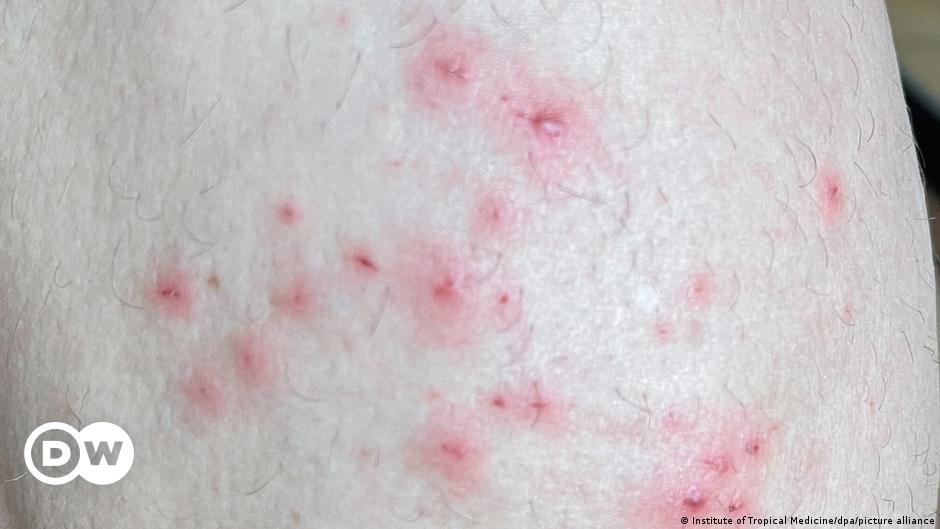
Monkeypox: Stigma undermines response, WHO says

61999158_6.jpg

Among global recorded infections, 80% of monkeypox cases have been detected in Europe, said the World Health Organization (WHO) Europe at a press briefing on Wednesday. 

The majority of the 1,160 confirmed cases come from a group of 22 nations that include EU countries, Iceland, Liechtenstein and Norway, said Dr. Andrea Ammon, Director of the European Center for Disease Prevention and Control.

WHO calls for early coordination 

Though there have been no reported deaths from the infectious disease, the WHO called for early coordination in preventing its spread. 

Mass vaccination is not recommended at this time, but “some countries have already begun to stockpile vaccines,” said the WHO’s regional director Hans Kluge.

He warned against governments acting alone, without considering needs of other nations. This “can lead to damaging consequences down the road,” the WHO official added.

There is currently one vaccine approved for monkeypox in the EU, but little has been done to make it widely available. The WHO is currently working on a system to establish fair distribution of the vaccine through COVAX — a dispersal mechanism designed to ensure that lower-income countries receive vaccines. 

Kluge also announced the WHO released emergency funds to “rapidly establish monkeypox identification and sequencing in countries that do not yet have the tools to detect the virus in labs.”

Pride celebrations will continue as planned

While the spread of monkeypox among men that have sex with men is higher than that of other groups, the disease “does not select according to gender orientation but uses opportunities to spread,” explained Ammon. 

Transmission is currently being driven by skin-to-skin and mouth-to-mouth contact. Monkeypox has an incubation period of 21 days, so it is hard to detect where it arises exactly, explained WHO expert Catherine Smallwood at the meeting. 

The WHO is still trying to understand the pattern of transmission. 

Europe will host over 750 Pride events this summer. Steve Taylor, board member at EuroPride, said that the disease’s concentration in the community of men who have sex with men should not be a reason to cancel Pride events. 

“Our community understands risk, but we also understand safety,” said Taylor. 

Instead, EuroPride will work with the WHO to develop messaging that raises awareness of monkeypox at Pride festivities. 

Categories
Saved Web Pages

Ukraine: German Chancellor Scholz arrives in Kyiv — live updates

62148761_6.jpg

  • 3 European leaders go to Kyiv, expected to meet with Ukraine’s Zelenskyy 
  • 10,000 civilians remaining in Sievierodonetsk, governor says 
  • Germany says can deliver weapons to Ukraine ‘end of July or the start of August’

This was last updated at 07:22 UTC/GMT

Governor says 10,000 civilians still in Sievierodonetsk 

Serhiy Gaiday, the governor of the eastern Ukrainian Luhansk region, said that around 10,000 civilians are still in the key city of Sievierodonetsk, where fighting has been raging amid a dire humanitarian condition. 

“Out of 100,000 residents, around 10,000 remain,” Gaiday said on the Telegram messaging app.

He said Ukraine’s army is “holding back the enemy as much as possible.”

Earlier this week, Ukraine said Russian forces destroyed all bridges connecting the city, making it difficult to evacuate civilians or deliver humanitarian aid. 

Russia is believed to be now in control of at least the majority of the city.

European leaders arrive in Kyiv

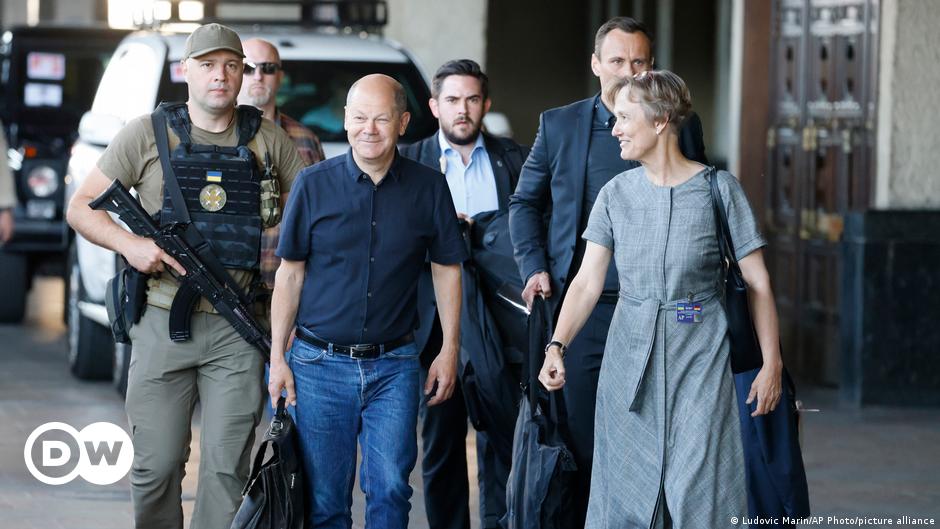
German Chancellor Olaf Scholz, French President Emmanuel Macron and Italian Prime Minister Mario Draghi arrived in Kyiv on Thursday, the French presidential palace said. 

Scholz said the three leaders wanted “to show their support for Ukraine and the citizens of Ukraine.”

“But we don’t just want to demonstrate solidarity, we also want to assure that the help we organize — financial and humanitarian, but also when it comes to weapons — will be continued,” he said. Support will continue for as long as is necessary, he said.

The trio took an overnight train to Kyiv from Poland. They are expected to meet with Ukrainian President Volodymyr Zelenskyy.

Major German and Italian media outlets, including Germany’s ZDF and Italy’s Repubblica, had earlier published a photo of the three leaders on the train.

It is the first time the three travel to Kyiv since the war started in Ukraine. 
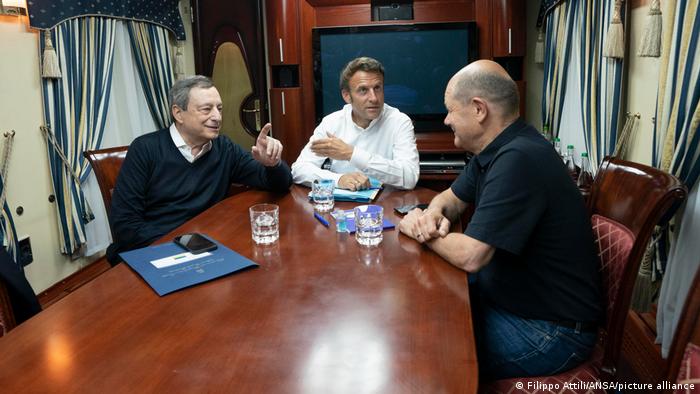
Italian Prime Minister Mario Draghi, French President Emmanuel Macron and German Chancellor Olaf Scholz on a train

Draghi, Macron and Scholz took an overnight train from Poland to Kyiv

There had been speculation earlier this week that Scholz would be part of the joint trip ahead of a G7 summit at the end of June.

The visit also comes a day before the European Commission is set to make a recommendation on Ukraine’s status as an EU candidate

The three leaders have come under criticism over their response to the war. Critics say France and Germany, and, to a lesser extent, Italy, have been slow to deliver weapons to Ukraine. Scholz and Macron have also been criticized for maintaining contact with Russian President Vladimir Putin

German minister: Weapons can be delivered to Ukraine by August

German Defense Minister Christine Lambrecht said three multiple rocket launchers could be delivered to Ukraine in July or August after Ukrainian forces receive adequate training on them. 

Kyiv has complained that weapons that Germany pledged to Ukraine were not delivered. Berlin says Ukrainian troops must first be trained to use them. 

“The training on these multiple rocket launchers can begin at the end of June, meaning they can be delivered at the end of July or the start of August,” Lambrecht told reporters as she arrived for a second day of talks with her NATO counterparts in Brussels.

German ex-chancellor seeks to recuperate parliamentary office

Former German Chancellor Gerhard Schröder has sent a letter to the Bundestag budget committee that challenges the decision to revoke his right to a parliamentary office.

Schröder was Germany’s chancellor from 1998 to 2005. After leaving office he was involved with Russian energy firms Gazprom and Rosneft. Since Moscow’s invasion of Ukraine, he has drawn criticism for his ties to Moscow.

The committee voted in May to wind down his office. The office was allocated more than €400,00 ($418,000) last year.

In a letter to the committee’s chair, Schröder’s lawyer said that the former chancellor had learned “via the media” that his office was being “put on hold.”

“This decision is based on the determination that he no longer has any ‘continuing obligations arising from the office,'” Schröders lawyer said in the letter, adding that this determination is not substantiated and that it was unclear what these “continuing obligations” would constitute.

The letter also argues that a resolution taken from the media is “evidently illegal and unconstitutional.”

Schröder’s lawyer said that he hopes for “the chance to reach a mutually acceptable settlement by way of conversation on an even playing field.”

Gazprom cuts gas supply to Germany by around 60% in 2 days

Russian energy giant Gazprom has begun reducing the volume of gas it supplies to Germany via the Nord Stream 1 pipeline to a daily maximum of 67 million cubic meters early on Thursday.

On Tuesday, Gazprom announced it would reduce the maximum delivery volume to 100 million cubic meters of gas per day, down from 167 million cubic meters.

Overall, the cut represents an approximate 60% reduction in gas supplies to Germany in just two days.

German Economy Minister Robert Habeck accused Moscow of attempting to create unease and increase gas prices. He added that it was still possible to source alternative gas supplies on the market, albeit at a high price.

Report: 2 US volunteers in Ukraine missing

Two Americans who volunteered to support Ukraine’s armed forces have reportedly gone missing.

The Telegraph newspaper cited an unnamed fellow fighter as saying that the two Americans were captured by Russian forces during a June 9 battle northeast of Kharkiv.

The two Americans are identified as Alexander Drueke and Andy Huynh, US military veterans who had been living in the state of Alabama.

White House spokesperson John Kirby said that he could not confirm the disappearance, but that “if it’s true, we’ll do everything we can to get them safely back home.”

Kirby went on to discourage Americans from volunteering to fight in Ukraine.

“It is a war zone. It is combat. And if you feel passionate about supporting Ukraine, there’s any number of other ways to do that that are safer and just as effective,” Kirby said.

Ukraine says Russian companies use Georgian entities to bypass sanctions

David Arakhamia, Ukraine’s chief negotiator with Russia, said Russian people and companies are circumventing Western sanctions by making use of Georgian entities to do so.

He told a German Marshall Fund event in Washington that Russians are “heavily” using “Georgian banks, Georgian financial system, Georgian companies and so on,” to dodge the West’s sanctions regime.

“If you are a sanctioned Russian person, you go to the Internet, you open up a Georgian company, open up remotely the bank account and start processing,” Arakhamia added.

He also urged Washington to take action to close the loophole.

What happened in Russia’s invasion of Ukraine on Wednesday

Ukrainian President Volodymyr Zelenskyy said defending the Donbas region in eastern Ukraine was “vital” as the outcome would indicate “who will dominate in the coming weeks” of the war.

Serhii Haidai, the governor of Luhansk province, said that the fighting around the contested city of Sievierodonetsk and other places in eastern Ukraine “is getting more difficult.” By contrast, Britain’s Ministry of Defense said that Russian forces were now in control of the city of Sievierodonetsk.

The United States will provide Ukraine with another $1 billion (€963 million) to help the country amid Russia’s assault in the eastern Donbas region. The latest boost of aid will include major weapons systems that the Ukrainian government has appealed for such as howitzers, anti-ship missile launchers and rounds for the High Mobility Artillery Rocket Systems.

The US will also send an additional $225 million in humanitarian aid to provide assistance for drinking water, food, shelter and other essential items. 

Russia’s Defense Ministry said its missiles had destroyed a warehouse in the Lviv region, which was being used to store ammunition for weapons donated by NATO members. 

Germany will only be able to deliver three instead of four planned rocket launchers to Ukraine, Defense Minister Christine Lambrecht said. 

Turkish Foreign Minister Mevlut Cavusoglu said his country is ready to host four-way talks with the UN, Russia and Ukraine in order to unblock the passage of grain through the Black Sea.

A UN panel investigating possible human rights violations said they are collecting evidence, but that it is too early to say whether the allegations constitute war crimes.

Chinese state media reported Chinese President Xi Jinping spoke with Russian leader Vladimir Putin by phone and said his country would continue to support Russia’s “sovereignty and security.”

You can revisit our updates from Tuesday, June 15, here.

fb, ar, sdi/jsi (AFP, AP, dpa, Reuters)

Categories
Saved Web Pages

US, Germany sending weapons to Ukraine as Russia advances

3000.jpeg

KYIV, Ukraine (AP) — The Russian military said it used long-range missiles Wednesday to destroy a depot in the western Lviv region of Ukraine where ammunition for NATO-supplied weapons was stored, and the governor of a key eastern city acknowledged that Russian forces are advancing in heavy fighting.

The battle for Sievierodonetsk in Ukraine’s eastern Donbas area has become the focus of Russia’s offensive in recent weeks.

Russia-backed separatists accused Ukrainian forces of sabotaging an evacuation of civilians from the city’s besieged Azot chemical plant, where about 500 civilians and an unknown number of Ukrainian fighters are believed to be sheltering from missile attacks. It wasn’t possible to verify that claim.

Russian officials had announced a humanitarian corridor from the Azot plant a day earlier, but said they would take civilians to areas controlled by Russian, not Ukrainian, forces.

The Ukrainian governor of Luhansk, Serhiy Haidai, told The Associated Press that “heavy fighting in Sievierodonetsk continues today as well.” The Luhansk and Donetsk regions make up the Donbas.

The situation in the city is getting worse, Haidai said, because Russian forces have more manpower and weapons. “But our military is holding back the enemy from three sides at once,” he added.

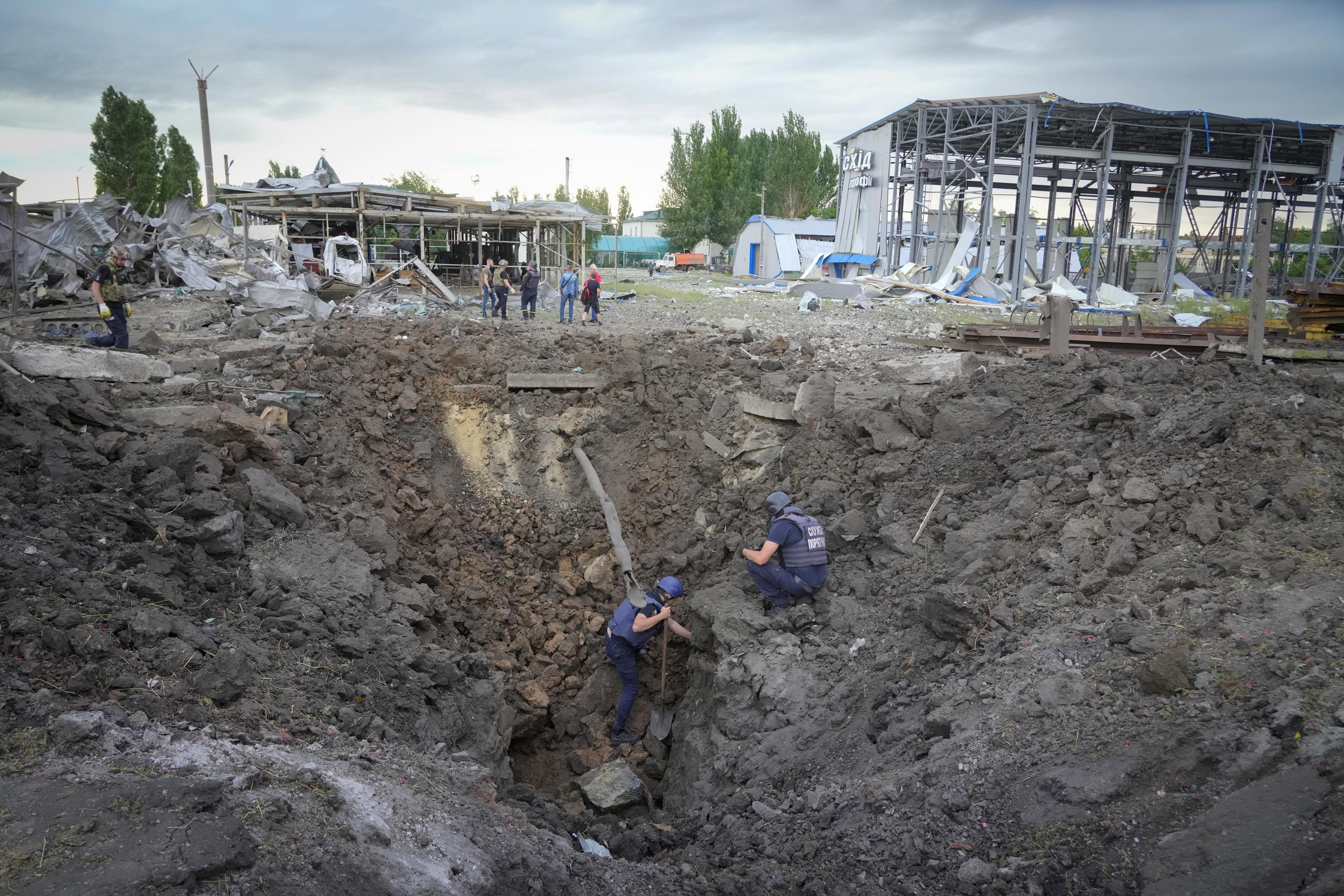
In the Lviv region near the border with NATO member Poland, Russian forces used high-precision Kalibr missiles to destroy the depot near the town of Zolochiv, Russian Defense Ministry spokesman Igor Konashenkov said. Konashenkov said shells for M777 howitzers, a type supplied by the United States, were stored there. He said four howitzers were destroyed elsewhere and that Russian airstrikes also destroyed Ukrainian “aviation equipment” at a military aerodrome in the southern Mykolaiv region.

Ukrainian officials did not immediately comment on the Zolochiv strike.

While focusing most of their attacks on eastern Ukraine, where they are trying to capture large swaths of territory, Russian forces have also been hitting more specific targets elsewhere, using high-precision missiles to disrupt the international supply of weapons and destroy military infrastructure. Civilian infrastructure has been bombarded as well, even though Russian officials have claimed they’re only targeting military facilities.

Youtube video thumbnail

NATO members are pledging to send more and longer-range weapons to Ukraine.

President Joe Biden said Wednesday the U.S. will send an additional $1 billion in military aid, the largest single tranche of weapons and equipment since the war began. The aid will include anti-ship missile launchers, howitzers and more rounds for the High Mobility Artillery Rocket Systems — all key weapons systems that Ukrainian leaders have urgently requested.

Germany is providing Ukraine with three multiple launch rocket systems of the kind that Kyiv has said it urgently needs to defend itself against Russia’s invasion. Defense Minister Christine Lambrecht said Wednesday that Germany will transfer three M270 medium-range artillery rocket systems along with ammunition.

Germany said the transfer, which echoes similar moves by Britain and the United States, will be accompanied by training and will have “a swift and significant battlefield impact.”

In recent days, Ukrainian officials have spoken of the heavy human cost of the war, with Kyiv’s forces outgunned and outnumbered in the east.

Ukrainian President Volodymyr Zelenskyy thanked Biden for the new aid package.

“The security support of the United States is unprecedented,” he said, reporting on a phone call the two leaders held earlier Wednesday. “It brings us closer to a common victory over the Russian aggressor.”

Zelenskyy said he has accepted invitations to speak at the NATO and Group of Seven summits at the end of the month.

“During the 112 days of this war, the Ukrainian army has proved that courage and wisdom on the battlefield, together with the ability to tactically outmaneuver the enemy, can have a significant result, even despite the Russian army’s significant advantage n number of soldiers and equipment,” he said in his nightly video address.

“Of course we are doing everything we can to overcome this advantage. Every day I fight for Ukraine to receive the weapons and equipment we need.”

Meanwhile, Dmitry Medvedev, the deputy chair of Russia’s Security Council, ominously suggested that Russia is intent on not just claiming territory but eliminating Ukraine as a nation. In a Telegram post, he wrote that he saw Ukraine wants to receive liquefied natural gas from its “overseas masters” with payment due in two years.

He added: “But there’s a question. Who said that in two years, Ukraine will even exist on the map?”

Mykhailo Podolyak, an adviser to Zelenskyy, responded on Twitter: “Ukraine has been and will be. Where will Medvedev be in two years? That’s the question.”

___

MORE STORIES ON THE RUSSIA-UKRAINE WAR:

Mines are killing people in Ukraine even after the fighting leaves their areas

U.S. sending $1 billion more in military aid

— Two U.S. veterans reported missing in Ukraine

— Russia again cuts natural gas exports to Europe

Russia’s economic forum takes place but with fewer participants

__ French president suggests he will visit Kyiv to show support for Ukraine

__

OTHER DEVELOPMENTS:

Turkish Foreign Minister Mevlut Cavusoglu said it may be possible to create secure corridors to transport Ukrainian grain through the Black Sea without the need to clear sea mines near Ukrainian ports.

Cavusoglu’s comments Wednesday came a week after he discussed with his Russian counterpart Sergey Lavrov a U.N. plan to open up Odesa and Ukraine’s other Black Sea ports to allow millions of tons of grains to be shipped to world markets.

Russia has demanded that Ukraine remove mines from the Black Sea before grain exports can resume by ship. Ukraine rejects the proposal, insisting it would leave its ports vulnerable to Russian attacks.

Cavusoglu told reporters that since the location of the mines is known, it would be possible to establish “secure corridors” that avoid them. Turkey, Russia and Ukraine have appointed military officers and set up a telephone hotline to try to overcome hurdles over crop exports.

U.N. spokesperson Stéphane Dujarric welcomed Cavusoglu’s comments as “extremely positive” but declined to discuss the plan.

___

A U.N. delegation investigating war crimes in Ukraine has visited areas of the country that were held by Russian troops and found evidence that could support war crimes allegations.

The delegation chaired by Erik Møse, a Norwegian judge, visited sites including the Kyiv suburbs of Bucha and Irpin, where Ukrainian authorities have accused Russia of mass killings of civilians.

“At this stage we are not in a position to make any factual findings or pronounce ourselves on issues of the legal determination of events,” Møse said.

“However, subject to further confirmation, the information received and the visited sites of destruction may support claims that serious violations of international human rights law and international humanitarian law, perhaps reaching war crimes and crimes against humanity, have been committed in the areas,” he said.

With Ukrainian and international organizations investigating war crimes cases, Møse expressed concern at the risk of investigations “overlapping” or causing witnesses more trauma by probing the same events repeatedly.

___

Karmanau reported from Lviv.

___

Follow the AP’s coverage of the war at https://apnews.com/hub/russia-ukraine

WP Radio
WP Radio
OFFLINE LIVE