Categories
Saved Web Pages

Zelenskyy might dismiss Bakanov as SSU head due to losses in Kherson – Politico

6256cef46f651-1.jpg

The Politico publication, citing its sources, announced the intention of President Volodymyr Zelenskyy to dismiss Ivan Bakanov from the post of the head of the Security Service of Ukraine (SSU) due to a number of unsuccessful operations and losses in Kherson.

So, according to the publication, due to failures and losses in Kherson, Bakanov fell out of favor with Zelenskyy.

Citing the words of four officials close to the president and a Western diplomat who advised Kyiv on reforms, Politico writes that Zelenskyy is seeking “to replace Bakanov with someone more suitable.”

Bakanov came under criticism from people close to Zelenskyy after Russia’s invasion of Ukraine on February 24, as the head of the SSU failed to properly cope with new challenges.

As Ukrainian News Agency reported, during the war, Bakanov received about half a million hryvnias in salary.

Earlier, Dnipro City Mayor Borys Filatov accused Bakanov and Danilov of unwillingness to fight organized crime groups in Dnipro.

Categories
Saved Web Pages

Una marihuana más potente

merlin_208895709_5cf4bc65-22d6-43a0-9867

Los efectos de vapes, gomitas y otros productos con alta concentración de THC en el cerebro adolescente y más para el fin de semana.

Elda Cantú
24 de junio de 2022 a las 06:00 ET

Cuando Laura Stack supo que su hijo de 14 años estaba consumiendo marihuana no se preocupó. “Ay, bueno, es solo hierba”, dice que pensó. “Gracias a Dios que no era cocaína”.

Pero Stack, quien de adolescente había probado la marihuana, no tenía idea de que el cannabis que consumen los jóvenes de hoy es muy distinto a los porros de su juventud.

Image<em>Vapes</em> (cigarrillos electrónicos) de colores brillantes junto a un recipiente de cera de resina de cannabis.

Vapes (cigarrillos electrónicos) de colores brillantes junto a un recipiente de cera de resina de cannabis.Credit…Michelle Groskopf para The New York Times

Los expertos en Estados Unidos, donde la legalización de la marihuana recreativa ha hecho que esta sea más accesible también para los menores de edad, han empezado a notar una inquietante serie de síntomas que van desde de los vómitos persistentes y la pérdida de memoria hasta los episodios psicóticos y el intento de suicidio.

El hijo de Laura Stack, contó ella, empezó a tener dificultades en la escuela y pasó por varios hospitales psiquiátricos, hasta que los médicos determinaron que tenía un caso grave de abuso de THC. Stack dirige ahora una organización que sensibiliza sobre el cannabis con alto contenido de THC y su efecto en el cerebro de los jóvenes.

Un reportaje de Christina Caron, quien habló con especialistas, familiares y adolescentes, presenta un panorama preocupante del impacto de estas presentaciones más potentes y concentradas de la marihuana en los menores, cuyo cerebro está apenas en desarrollo.

Una resina líquida viva. Algunos productos de cannabis concentrado están diseñados como cajas de jugo para resaltar sus sabores afrutadosCredit…Michelle Groskopf para The New York Times

Si alguien te reenvió este correo, puedes hacer clic aquí para recibirlo tres veces por semana.

Credit…Hiroko Masuike/The New York Times

Que tengas un fin de semana estupendo. Si te gustó este boletín, compártelo con tus amigos, colegas y seres queridos (y no tan queridos). Y por favor, cuéntanos qué te parece.

Categories
Saved Web Pages

Reform The FBI

FBI Director Christopher Wray assumed the office in 2017. Since then he has continuously failed and embarrassed the American people. Wray’s predecessors include Andrew McCabe who lied under oath. James Comey who protected the Clinton crime family. And Robert Mueller who fueled an impeachment scam of epic proportions.

The revelations surrounding the Larry Nassar abuse scandal where at least 265 girls were repeatedly sexually abused by their team doctor over 18 years only add to the fact that the FBI is a broken bureaucracy.

Categories
Saved Web Pages

All Agents Defect: Espionage in the Films of David Cronenberg

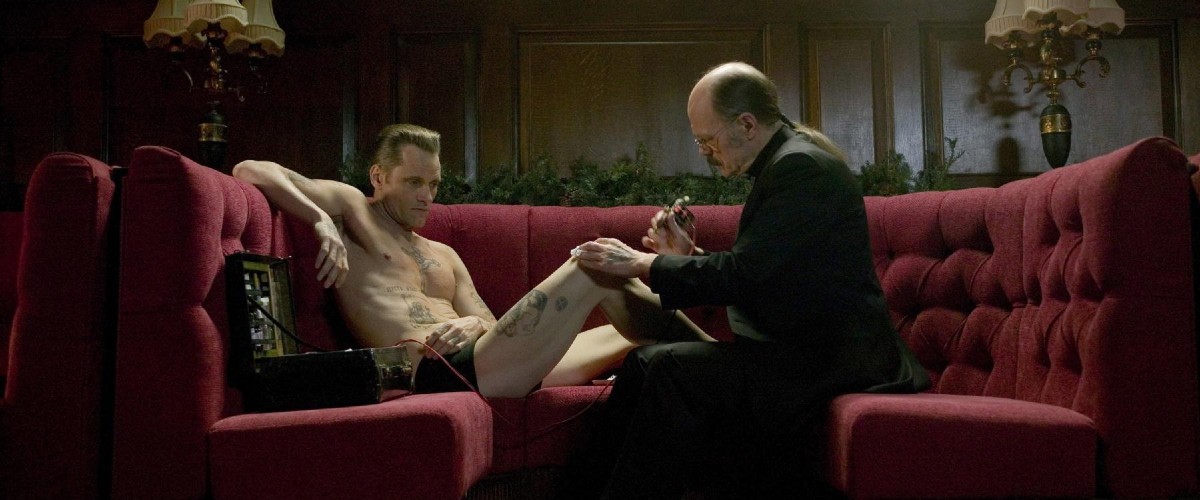
eastern-promises-slider.jpg

David Cronenberg is that rare filmmaker who is a genre unto himself, such that his name has become an adjective. Yet, when his name is invoked, it’s usually as shorthand for body horror. Certainly, and in spite of his objections, this is to be expected: more than any other director, Cronenberg has examined, in detail both coldly clinical and gleefully perverse, the ways in which psychosexual desire, trauma, and society’s increasing dependency on technology manifest in the gruesome evolution and/or evisceration of the human body. 

Indeed, we see a fresh example of this in the promotion and reception of his latest film—his first in eight years—Crimes of the Future (available on VOD today), despite the fact, for as horrific as many of the images and ideas within it are, it’s not really a horror movie. That said, the last thing I want to do is make another tired argument over what counts as a horror movie. Rather, I want to make the case that Cronenberg deserves to be equally synonymous with a different genre, one that he’s spent as much time exploring as body horror. 

That genre is espionage.

***

As with his other major themes—disease and mutation, biomechanism and evolution, transgressive sexuality and the pathology of fetishism—Cronenberg’s interest in espionage is evident from the earliest phase of his filmmaking career, with the original, 1970 Crimes of the Future. The experimental feature (his second) is set at dermatological clinic is a post-apocalyptic future where women have gone extinct. Cult-like organizations dedicated to various medical, spiritual and sexual practices—including, disturbingly, pedophilia—compete for political power.

Around the same time that Cronenberg was making his experimental films, he was also directing a lot of television, including a short teleplay for the Canadian anthology series Programme X, titled Secret Weapons. Like Crimes, it is set in a future dystopia (this one ravaged by North American civil war) and concerns a lone scientist (here, a chemist who’s manufacture a drug that can enhance fighting skills) sought by competing political factions.

Article continues after advertisement

Both Crimes of the Future and Secret Weapons are dizzyingly convoluted, so much so that they prove nigh impenetrable on first watch. This is an intentional artistic choice on Cronenberg’s part, one that he will continue to use throughout his career (although he’ll hone it as time goes on). Before he decided to embark on a career in filmmaking, Cronenberg wanted to be a novelist. Amongst his literary influences were Franz Kafka, William S. Burroughs, Vladimir Nabokov, Philip K. Dick and JG Ballard, all of whom would often load their stories with confounding political subplots so as to hold a mirror up to the widespread paranoia and anxiety spread by the often clandestine political, religious and corporate bureaucracies vying for power in the post-modern world. 

Like those writers, Cronenberg’s work reflects a core tenet of our increasingly dehumanized society: just because you’re paranoid, it doesn’t mean no one’s watching you.

***

After those early films, David Cronenberg helmed two Canuxsploitation flicks—Shivers (1975) and Rabid (1977)—that put a gnarly original spin on the zombie apocalypse by centering them around mutant venereal diseases. As soon as he stepped onto the scene, he’d planted his freak flag. In 1979, the Toronto native released two more films—the stock car sports dramedy Fast Company and the terrifyingly personal The Brood—before firmly establishing himself as a major director within the international horror scene with 1981’s Scanners.

For all of its sci-fi trappings and iconic moments of gore, including the infamous exploding head scene, the film—about competing factions of renegade psychics with telekinetic powers—is, at heart, a corporate espionage thriller. Cronenberg keeps the action and story tightly contained, yet he still manages to tell an epic story about the military and medical industrial complexes inspired by the real-life MK Ultra experiments conducted by the CIA. 

Article continues after advertisement

Scanners is the first in Cronenberg’s thematically linked trilogy, with the following installments both released in 1983: The Dead Zone and Videodrome. The former, an adaptation of the Stephen King best seller, made for his first (and arguably only real) foray into the mainstream, while the latter proved his most shockingly unfiltered work up to that point. But despite the disparity in mass appeal, those two films both explore many of the same ideas as Scanners, such that, taken together, they comprise a loose thematic trilogy which we might call The Assassin Trilogy. 

In the Dead Zone, Christopher Walken’s car crash survivor awakens from a years-long coma to discover he’s been gifted (or cursed) with psychic abilities. When he runs into a popular nationalist politician on the campaign trial, he is given a horrible glimpse into the near future: the would-be senator eventually becomes President of the United States and, in a moment of religious fervor, kicks off nuclear Armageddon. The last third of the film becomes a perverse spin on the ‘70s paranoid conspiracy thriller—namely, Alan J. Pakula’s ultra-bleak masterpiece The Parallax View—in which we find ourselves rooting for the political assassin.

In Videodrome, Max Renn (James Woods), the sleazy head of a late night cable television channel, falls down a nightmarish rabbit hole of psychosis and biochemical mutation after he discovers a series of seemingly real snuff films. It’s ultimately revealed that the films are the creation of a right-wing cabal that wants to reverse what they see as the moral decay of western civilization by using violent and sexually explicit media as psychic weapons against the populace. Max is initially brainwashed into becoming their assassin, before a competing group turns the tables and recruits him to kill his would-be masters.

In its examination of brainwashing and political treachery, as well as its specific story beats, Videodrome could very well be viewed as Cronenberg’s gruesome, XXX remake of Jon Frankenheimer’s The Manchurian Candidate, one of the greatest and most influential espionage movies ever made. 

Article continues after advertisement

It is also his most political film; one in which he explicates the ideas he touches upon in Scanners and The Dead Zone. This explication comes by way of a line of dialog in the first half of Videodrome, when Max is warned by an associate to stay away from the title organization: “It has something you don’t have. It has a philosophy. And that is what makes it dangerous.”

Cronenberg is amongst our least judgmental storytellers, such that even at their most shocking, it’s hard, if not outright impossible to read his work as cautionary tales. However, it’s clear from this section of his filmography—especially The Dead Zone and Videodrome—that he views zealotry, particularly in service to right wing ideology, as far greater threats to humankind than any technological or transhumanist evolution.

***

After scoring the biggest hit of his career in 1986 with The Fly, Cronenberg began moving away from the strictures of genre, into far stranger territory. And of all the films he’s made, none has ever proven as strange as his unlikely 1991 adaptation of William S. Burroughs’s infamous Beat classic, Naked Lunch.

Long considered unadaptable, the novel has no plot to speak of, but is comprised of hallucinatory “routines”—equal parts comic and nightmarish in their depiction of explicit sex, violence and scatological action—which Cronenberg combined with scenes from other of Burroughs’s work, episodes from his real life (most notably the accidental murder of his wife, Joan Vollmer, during a drunken game of William Tell) and a paranoid plot that borrows heavily from film noir and exotic spy films of the Cold War era.

Article continues after advertisement

The film is rife with the double agents, handlers, controllers, bagmen, fronts, cutouts and honeypots you expect to find in traditional espionage stories, only here they come in the form of sentient insectoid typewriters with talking asshole-mouths, giant reptilian mutants that excrete narcotic jism from phalluses that sprout through their heads, gender-and-species-bending figures who feast on human flesh and practice dark ritual magic. 

Yet, for as outrageous and absurd as Naked Lunch is, it contains the most penetrating musings on the existential nature of spy craft this side of John le Carré: “Homosexuality is the best all-around cover an agent ever had…”; “An unconscious agent is an effective agent…it’s your instincts that make you such a good operative…”; “All agents defect, and all resisters sell out. That’s the sad truth…”

Two years later, Cronenberg followed Naked Lunch with another meta-narrative adaptation: M. Butterfly. Based on David Henry Hwang’s stage play (itself loosely based a true story), the film sees an French diplomat (Jeremy Irons) engage in a passionate affair with a female Beijing opera singer (John Lone) who he discovers is not only actually a man, but a spy for the Chinese government sent to seduce him into revealing classified information

One of Cronenberg’s most underseen and underrated works, M. Butterfly holds up exceptionally well today, not necessarily as a trans drama (although it certainly approaches its subject matter with more sensitivity and sympathy than other, similarly-themed films from the same time) but as a damning indictment of white, Western orientalist fantasies and naivety.  

Article continues after advertisement

Both Naked Lunch and M. Butterfly use the trope of secret identities to examine the psychic toll placed upon individuals by repressive regimes, in so doing showing that it’s not the so-called sexual deviants that are truly depraved, but the supposedly lawful societies which inflict their heteronormative strictures upon them in the name of power.

***

After bringing yet another seemingly unadaptable book to screen by way of JG Ballard’s Crash, Cronenberg returned to more traditional (on the surface, at least) science fiction in 1999 with eXistenZ (1999), which combined the (literally) visceral biotech of Videodrome with the labyrinthian political machinations of those early works to look at other potential avenues of transhumanist evolution: virtual reality and video games. As in Crimes of the Future, Secret Weapons, Scanners and Videodrome, the core plot is but a small part of a larger, more complex story, the true nature of which is reveled to us only in the closing moments. 

Given how intertwined modern intelligence agencies are with the organized crime, it was only a matter of time before Cronenberg delved into mob underworld. On the other side of the new millennium, he teamed with actor Viggo Mortensen for two back-to-back gangster films:  A History of Violence (2005) and Eastern Promises (2007). In the former, Mortensen plays a psychotic mobster pretending to be a decent family man; in the latter, he plays an Interpol agent pretending to be a mobster in order to infiltrate the Russian mob. 

As in Naked Lunch and M. Butterfly, the conceit of secret identity is adopted to examine the way subconscious desire refuses to remain suppressed.

Article continues after advertisement

***

Cronenberg’s entered his late-career stage after Eastern Promises with a handful of films that proved underwhelming with critics and fans (although they all have their staunch defenders) A Dangerous Method (2011), an adaptation of Christopher Hampton’s play The Talking Cure about Carl Jung and Sigmund Freud’s developing psychoanalysis; and Cosmopolis (2012), an adaptation of Don DeLillo’s novel about the collapse of a tech billionaire’s finances and mental state amidst a stock market crash. 

Again, both films focus on small, personal stories backdropped by world-shaking political events just beyond the frame. In the former, it’s the growing specter of fascism in the lead-up to World War 2; in the later it’s an anti-capitalist uprising (although Cronenberg’s film was made post-Great Recession, post-Occupy Wall St., the ever-prescient DeLillo published his novel prior to both). Neither would be considered espionage movies in the strict sense, but both of them toe around the genre, particularly Cosmopolis, which contains many of the elements found throughout Cronenberg’s other work: corporate espionage, radical factions and assassins.  

A Dangerous Method, meanwhile, sees Cronenberg explore his Jewish heritage via the Nazi conspiracy that sought to extinguish it, a concept he touched on a few years earlier, by way of Hezbollah, in a 2007 short film titled At the Suicide of the Last Jew in the World in the Last Cinema in the World (in which he also starred).   

***

Cronenberg combined this intense engagement with the contemporary geopolitics with his overriding speculative obsessions—including a return to body horror—in his debut novel from 2014, Consumed, which includes, amongst its various plot threads, a sinister conspiracy carried out by North Korean spies. 

Article continues after advertisement

Cronenberg tried to adapt Consumed but was unable to. For several years, it looked as though he was finished making movies (even as his son, Brandon Cronenberg, took up his father’s mantle, directing his own gnarly spin on The Manchurian Candidate with 2020’s Possessor). However, that changed when a script he’d written in the early 2000s caught the attention of producers.

Taking the same title as his sophomore feature, the excellent new Crimes of the Future—about a couple who conduct live surgery as performance art in a near future where technology has eradicated pain, even as environmental catastrophe has rendered the world nearly uninhabitable—contains yet another intricate and often perplexing espionage plot in which various corporate, governmental and radical political interests wage a shadow war in the name of the future and where Viggo Mortensen again plays an undercover agent and informer. As in so many of his other films, his hero comes to understand that he’s working for the wrong side and must betray his masters in the name of a greater cause.

It’s fitting that Crimes of the Future shares its title with Cronenberg’s earlier film. Although it was not conceived as any sort of career-defining capstone (and indeed, Cronenberg already has another film in development), the way it combines all of his favorite themes, ideas and story beats—including, and indeed especially, the way he uses espionage and conspiracy to decode the murkiest intricacies of human psychology. 

Categories
Saved Web Pages

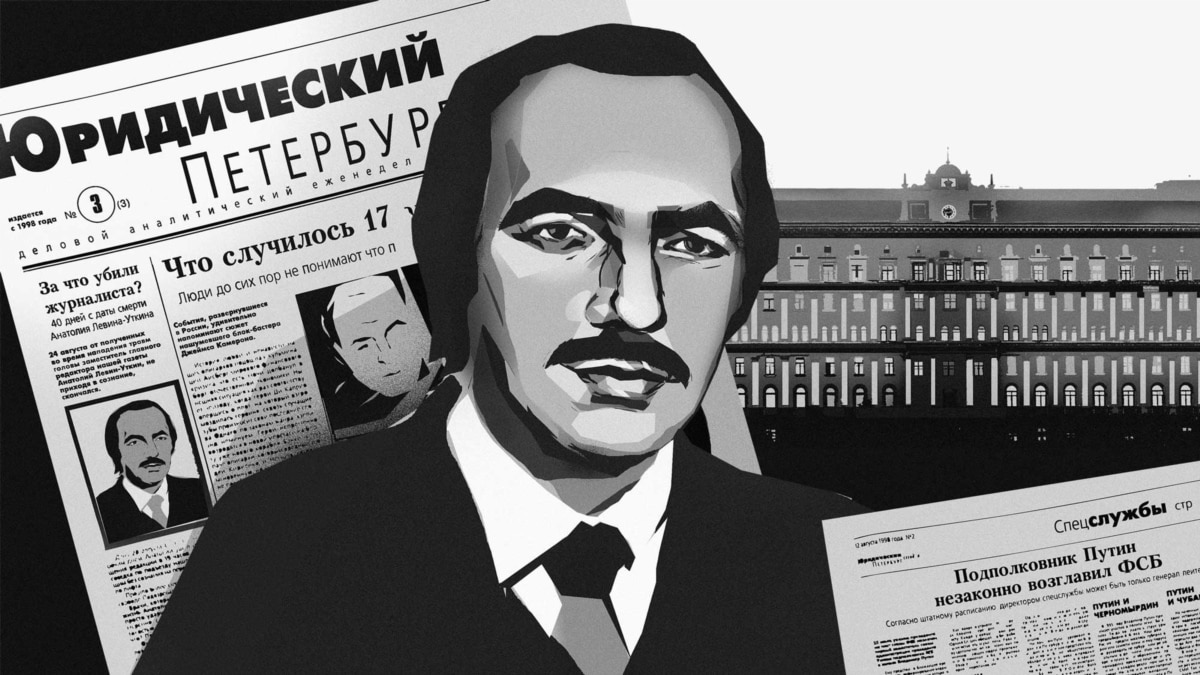
The Brutal Killing Of A Reporter Who Probed Putin’s Past

10040000-0aff-0242-a317-08da5437db24_w12

In the late summer of 1998, Russian journalist Anatoly Levin-Utkin was returning to his St. Petersburg apartment after a long day at the startup newspaper he’d helped launch. He made it as far as the elevator before his attackers pounced.

The assailants smashed the journalist’s skull with a metal bar and fled the scene with Levin-Utkin’s documents, cash, and a briefcase carrying material for his newspaper’s next issue.

Levin-Utkin was taken to the hospital after a neighbor found him unconscious next to the elevator. The doctors who tried to save him said his attackers “deliberately beat him to death with excessive brutality and cruelty,” his colleagues would later write.

Levin-Utkin died four days later, on August 24, 1998. He had turned 41 a week earlier.

Publicly, police said the deadly attack appeared most likely to be a robbery. But Levin-Utkin’s colleagues at Yuridichesky Peterburg segodnya (Legal Petersburg Today) linked it to his profession.

Anatoly Levin-Utkin in February 1998, six months before his death (Courtesy photo)

Levin-Utkin had worked closely with the reporters at the newspaper “and was one of the first to be aware of all the scandals,” Editor in Chief Aleksei Domnin told a news conference after his deputy editor’s death.

Just eight days before the attack, the newspaper had published its second issue, which included sensitive investigations into the regional customs directorate and Russia’s cutthroat banking sector.

Levin-Utkin’s colleagues say he was a phenomenal and dogged open-source researcher in an era before massive caches of public data and user-generated images were available to journalists online.

“Tolya had connections in [the National Library of Russia in St. Petersburg],” Domnin recalled, using a diminutive form of Levin-Utkin’s first name. “He was a bibliophile who collected an enormous home library.”

This report is the fifth and final installment of an investigative project examining the scandals and scams that swirled around Vladimir Putin and his associates during his tenure as a St. Petersburg city official in the 1990s.

According to Domnin, Levin-Utkin himself did not write the more explosive articles in the paper’s final issues before his death, though he contributed critical research and reporting. After publication, the paper fielded angry calls from the customs service and “not very bright people” from bank security staff trying to figure out where the information for the investigations came from, Domnin said.

There was another article Levin-Utkin worked on, Domnin added, that was published in his final issue and that also drew outside attention: a dive into the past of the newly appointed head of Russia’s Federal Security Service (FSB), an ex-KGB-spy-turned-functionary named Vladimir Putin.

‘As Befits A Spy’

On July 25, 1998, Russian President Boris Yeltsin named Putin as the new head of the FSB. For Putin, who had come to work in Yeltsin’s administration in 1996 after a six-year tenure at St. Petersburg city hall, it was a homecoming of sorts.

“I started as a junior agent…in the St. Petersburg [KGB] directorate. That was 23 years ago or so. I repeat, these walls are home to me,” Putin told a news conference following his appointment.

As the head of St. Petersburg’s External Relations Committee under Mayor Anatoly Sobchak, Putin was an influential local official whose involvement in lucrative and murky deals drew scrutiny from local lawmakers, who at one point called for his ouster.

Russian President Boris Yeltsin (right) meets with Vladimir Putin, whom he appointed head of the FSB a month earlier. The meeting was held on August 24, 1998, the day journalist Anatoly Levin-Utkin died. (TASS)

But outside of Russia’s tsarist-era capital, Putin was virtually unknown to the broader public. And his appointment to the country’s most powerful security post left journalists scrambling to dig up information on a man whose professional life had for years largely been devoted to misdirection and subterfuge.

It was Levin-Utkin’s newspaper, in Putin’s hometown, that offered readers one of the first profiles in the Russian print media to draw on deep digging into little-known aspects of his time as a city official in St. Petersburg.

Under the headline “Lieutenant Colonel Putin Illegally Heads Up FSB,” the article delves into Putin’s personal and professional ties with regional and national political figures, including his mentor, Sobchak; Yeltsin’s former chief of staff and first deputy prime minister, Anatoly Chubais; and former Prime Minister Viktor Cherdomyrdin, head of the Our Home Is Russia party, whose regional campaign in St. Petersburg was led by Putin in the 1995 parliamentary elections.

“Since his recent appointment, journalists have been trying to dig up more information about the past of the new Lubyanka [FSB headquarters] boss. It turned out that Putin has left neither good nor bad memories about himself: Very little is known about his career aside from the official information. As befits a spy, he doesn’t have a single major scandal on his record. Still, a few facts about his work in St. Petersburg have managed to be ‘declassified,'” the article states.

The article features no bombshell revelations about Putin. In fact, parts of it appear to have been plagiarized from a shorter piece published by the Moscow daily Kommersant two weeks earlier.

But the profile of Putin published in Levin-Utkin’s paper does touch on areas and claims unaddressed in the Kommersant piece, including the inquiry by St. Petersburg lawmaker Marina Salye into Putin’s suspicious barter deals as head of the External Relations Committee that led Salye to call for his firing.

The St. Petersburg Lawmaker Who Became Putin’s First Accuser

The profile, published under the pseudonymous byline “A. Kirilenko,” concluded with the questionable claim that Putin’s appointment as FSB director violated the agency’s internal staffing policy. It cited an alleged internal requirement that the position can only be filled by someone with the rank of general, while Putin had never risen higher than the rank of lieutenant colonel. (Russian law governing the FSB states that the director is appointed by the president and makes no mention of rank requirements.)

Domnin, the editor in chief of Yuridichesky Peterburg segodnya, told RFE/RL that Levin-Utkin did not write the profile but was among those who contributed research to it.

“I sent all of the newspaper’s employees to the libraries” to search for information, Domnin recalled in a telephone interview.

He also claimed that, after it was published, an associate of Putin’s approached him and inquired about how the paper was financing its operations.

Aleksei Domnin in 1995 (Courtesy photo)

Domnin gave the name of this alleged intermediary, a St. Petersburg political strategist who had worked with the St. Petersburg operations of Our Home Is Russia, whose regional campaign in 1995 had been spearheaded by Putin. He said the two men met at the McDonald’s on St. Petersburg’s central Sennaya Square.

“His first words were: ‘Why did you publish such a bad photo of Putin? If you’d called me, I would have given you a good one,'” Domnin recalled about the alleged meeting.

Reached by RFE/RL, the political strategist denied knowing Domnin or being familiar with the profile of Putin that Levin-Utkin worked on.

RFE/RL is not identifying the man by name because it could not independently corroborate Domnin’s account of the alleged meeting with the political strategist, who does not appear to have any current links to Putin or the Kremlin.

‘Encyclopedic Knowledge’

Information about Levin-Utkin is virtually nonexistent online beyond a handful of contemporaneous articles about the attack that led to his death and brief snapshots in lists the media watchdogs maintain on the dozens of Russian journalists who have been killed since the collapse of the Soviet Union in 1991.

But those who worked with him described Levin-Utkin as a bookish, kind, and cautious man and the archetype of a member of St. Petersburg’s intelligentsia.

“He was always searching for a grain of rationality. He was a very soft-spoken and knowledgeable person. It often seemed to me that he had encyclopedic knowledge,” Aleksei Lushnikov, who owned a St. Petersburg media holding where Levin-Utkin worked, told RFE/RL.

Before embarking on a career in journalism, Levin-Utkin had worked at a factory producing leather sofas, Lushnikov said.

“I still remember his tales about leather sofas: how they are made, what kinds of leather there are. Tolya knew almost everything about all of this. Tolya was always sitting in bookshops,” Lushnikov said.

Domnin said Levin-Utkin began working in the media in 1993. “They killed a professional journalist,” he told RFE/RL.

In an obituary published a month after Levin-Utkin’s death, his colleagues wrote that their fallen colleague “made no enemies in his 41 years of life.”

“We are confident that he simply didn’t have any,” they wrote. “He managed to preserve his childlike spontaneity in his relationship to people and to life in general. We loved him, as one can only love very good, wonderful people.”

The obituary of Anatoly Levin-Utkin published in Yuridichesky Peterburg segodnya a month after his death.

‘Deliberately Killed’

Nearly a quarter of a century after Levin-Utkin was beaten to death, the crime remains unsolved, like numerous other fatal attacks on journalists in post-Soviet Russia.

“For me it was completely incomprehensible precisely because Tolya was a cautious person,” Lushnikov, the media executive who employed Levin-Utkin, told RFE/RL. “How could he become a victim?”

In a newsletter shortly after Levin-Utkin’s death, the Glasnost Defense Foundation, a Russian media watchdog, quoted a doctor who treated him following the attack as saying that “the nature of the injuries allow us to state that the journalist was deliberately killed.”

The newsletter also quoted a St. Petersburg police precinct chief as saying that “as of now there is no confirmation that the attack on Anatoly Levin-Utkin was connected to his professional activities.”

“Police are inclined to believe that this case involved a routine robbery,” Sergei Kukshtel, chief of the 59th precinct, was quoted as saying in the newsletter.

Domnin, however, told RFE/RL that investigators appeared more interested in a different possible motive when he was questioned at a local police station.

“They were particularly interested in the professional motive,” he said.

Domnin said he was questioned twice in connection with the crime — once at the paper’s office on the day after the attack, and once at a police precinct in St. Petersburg’s Primorsky district, though the crime was committed in the city’s Vyborgsky district. Domnin said the men who questioned him at the police station did not even keep a record of the interview, and that he believes they were likely FSB officers rather than police.

St. Petersburg police did not respond to an inquiry about the status of the investigation of Levin-Utkin’s killing.

Yuridichesky Peterburg segodnya managed to put out four more issues after Levin-Utkin’s killing — six in total — before it was shut down in the wake of the Russian government’s default, which coincided with Levin-Utkin’s 41st birthday on August 17, 1998, and came three days before his fatal attack.

Domnin left the media industry in 2007 and now works as a musician and DJ.

Levin-Utkin’s editor, Aleksei Domnin, now works as a musician and DJ. (Courtesy photo)

Levin-Utkin was survived by his wife, who declined to speak with RFE/RL when reached by telephone. Despite the contemporaneous statements by police, media watchdogs, and Levin-Utkin’s colleagues about his work for Yuridichesky Peterburg segodnya, his widow claimed that he never worked for the newspaper. Follow-up calls for clarification about this claim went unanswered.

Levin-Utkin’s widow to this day lives in the same apartment where the couple resided 24 years ago, in the building where he was fatally beaten on his way home from work.

RFE/RL is publishing below an English translation of the profile of Vladimir Putin that Anatoly Levin-Utkin worked on shortly before his fatal beating. RFE/RL has added hyperlinks and images for background on the events and individuals cited in the text.

The profile looking at Vladimir Putin’s past published by Yuridichesky Peterburg segodya published in August 1998.

According to staffing structure, the director of the security service must be a lieutenant general.

On July 25, the first deputy of the presidential administration, retired KGB Lieutenant Colonel Vladimir Putin, was appointed director of the FSB by presidential decree.

He has been assigned to reform the agency in the short term, reducing its central staff several times over to 4,000 officers. The funds saved by this will allow for salary increases for the remaining staff. If the FSB is financed by the residual model, its best officers are likely to leave. As they say, a new broom sweeps clean. However, Putin has declared that there will be no massive reduction of FSB staff.

Kovalyov

Putin’s predecessor, army General Nikolai Kovalyov, was not particularly popular with his subordinates after he proved unable to secure salary increases, something the heads of the Interior Ministry and the Prosecutor-General’s Office succeeded in doing. Indeed, Kovalyov was notably shy for a high-ranking officer and preferred to report about the successes of his agency than its problems.

Within the FSB, his dismissal had been expected. That was the reason for the postponement of the staff exercises in the North Caucasus — which involved the Interior Ministry, army units, the FSB, the Emergency Situations Ministry, and the Federal Border Service — from July 25 to July 27. Interior Minister Sergei Stepashin was the commander of the exercises.

Kovalyov was appointed head of the FSB more than two years ago, following the famous scandal with the “Xerox box” that was used by the members of Yeltsin’s election campaign staff Sergei Lisovsky and Arkady Yevstafyev as they tried to take more than $500,000 from the White House [Russian government headquarters]. FSB head Mikhail Barsukov, who was involved in their detention, soon left his post.

No specific reason was given for Kovalyov’s dismissal. Prime Minister Sergei Kiriyenko conveyed the president’s “gratitude” for the “big and important” work he had done. However, Kovalyov isn’t known for any significant achievements. Quite the opposite. His only success was in setting up an FSB hotline for repenting agents of foreign intelligence services. But even without a hotline, the FSB had always worked steadily in its counterintelligence operations: In 1997 alone, 30 foreign intelligence officers were expelled from Russia, and seven Russian citizens working for foreign intelligence were neutralized.

[These successes] were not matched by the FSB’s economic counterintelligence department, which was constantly understaffed due to the transfer of many of its officers to the tax police. In 1997, however, economic counterintelligence helped to increase state budget revenues by more than 16 billion rubles.

A special operation under Kovalyov’s personal command to free a Swedish diplomat taken hostage late last year gained worldwide fame. During the operation, the Alfa special forces group shot one of its top officers, chief of staff, Anatoly Savelyev. To preserve the group’s reputation and support the officially declared cause of death as a “heart attack,” Savelyev’s colleagues removed his medical records from the hospital the next day. Anatoly Savelyev was posthumously awarded the title Hero of Russia.

In executive circles, they said Kovalyov had “stayed in his post too long.” Everything is good in its season. Yeltsin, however, promised him another job, and Kovalyov has received a few lucrative job offers, according to those in the know. It recalls one of Krylov’s fables, The Quartet: What was the result of all the reshuffles there?

Putin And The Security Apparatus

“After university, I started working as a junior investigator. Now — imagine that — I have become the director of the whole system,” Vladimir Putin told journalists when he took up the post.

Indeed, 23 years ago, Putin accepted an offer to work for the security services after he graduated from the law department of Leningrad State University. He started as a junior investigator at the KGB Directorate of Foreign Intelligence. He worked there for 15 years, specializing in German-speaking countries: West Germany, Austria, and Switzerland. He eventually rose to the rank of lieutenant colonel but resigned from the KGB voluntarily in 1991.

Since his recent appointment, journalists have been trying to dig up more information about the past of the new Lubyanka [FSB headquarters] boss. It turned out that Putin has left neither good nor bad memories about himself: Very little is known about his career besides the official facts. As befits a spy, he doesn’t have a single major scandal on his record. Still, a few facts about his work in St. Petersburg have managed to be “declassified.”

Putin and Sobchak

Putin’s career in St. Petersburg was inextricably linked to Anatoly Sobchak, right up until the former mayor lost the 1996 elections.

They first met when Putin was studying law at Leningrad State University, where Sobchak lectured on commercial law. Later, Putin’s experience in the security services helped him become vice rector for international relations at Leningrad State University (this area of operation had been monitored by the KGB), where he met his former professor and soon took a post in Leningrad’s first democratic city council. Putin’s administrative career began in May 1990, when Sobchak became chairman of the council. As his aide, Putin managed to be his assistant, desk officer, and secretary all at once.

St. Petersburg Mayor Anatoly Sobchak (right) sits next to his deputy, Vladimir Putin, in August 1993.

According to those who knew them, Putin had significant influence on the former mayor. But outside the Mariinsky Palace, the general public knew practically nothing about him. An experienced professional — he spoke German, had contacts with Western partners, and earned trust — Putin had the reputation of a power broker during his work in the city administration. After Sobchak was elected mayor of St. Petersburg, Putin became one of his three deputies and, in fact, one of the most influential political figures in the city.

But Putin never emphasized his exceptional proximity to power, not even when he served as acting mayor (which happened often). He always kept his distance.

Putin the bureaucrat oversaw the establishment of the currency exchange in St. Petersburg, diplomatic offices, the gambling industry, and nongovernmental organizations; he brokered the sale of the Astoria hotel and the opening of one of Russia’s first foreign bank offices, BNP-Dresdner Bank (Rossija). He also coordinated all security services: army, police, counterintelligence, prosecutor’s office, and customs. Only one of his foreign-investment projects was implemented: a Coca-Cola production facility was built.

During his tenure at the mayor’s office, Putin was officially accused of using the methods of secret services only once. According to the former chairman of the St. Petersburg city council, Aleksandr Belyayev, the External Relations Committee established by Sobchak and headed by Putin was collecting information on Russian companies to be sold to foreign owners. At the same time, the prosecutor’s office reproved Putin for being too gullible and issuing illegal gambling licenses.

In 1992, a [city] parliamentary investigation of the committee’s activities was conducted with regard to several import and export deals. It revealed that some of the deals were made at prices that did not correspond to world prices. Putin admitted errors during public hearings, the deals were called off, and no one was punished.

Putin and Chernomyrdin

In 1995, Putin took part in a political campaign. At the time, governors or their deputies were expected to run the regional offices of the [pro-Yeltsin] Our Home Is Russia party. Putin became the head of its St. Petersburg office. Residents of the city could see posters of [Viktor] Chernomyrdin on almost every billboard in the city. But Putin didn’t live up to the expectations: Our Home Is Russia took only third place in the parliamentary election in St. Petersburg, securing two seats (the mayor’s wife, Lyudmila Narusova, took one of them).

Russian President Vladimir Putin (right) listens to Viktor Chernomyrdin, leader of the Our Home is Russia faction, during the pro-government movement Unity congress in May 2000.

Putin And Yakovlev

Putin was the head of Sobchak’s campaign in the 1996 election, and in many respects the way the campaign was conducted determined its result. After Sobchak lost, there were rumors circulating in the city that Putin had “sold out” his boss at a meeting with his rival, Vladimir Yakovlev, a couple of days before the election. However, Putin resigned immediately after the election.

St. Petersburg Governor Vladimir Yakovlev (left) with Vladimir Putin in January 2000, shortly after Putin was named acting president by Boris Yeltsin.

This failure didn’t stop his career. According to Putin, he came to Moscow at the invitation of Pavel Borodin and became his deputy. But presumably the personal political preferences of powerful figures also played a role here.

Putin And Chubais

The head of the presidential administration, Anatoly Chubais, had supported Sobchak and, after his defeat, tried to weaken the new governor’s team. It was his initiative to invite two former first deputy mayors into the federal government: Chubais’s old friend Aleksei Kudrin, and Vladimir Putin.

In March 1997, Vladimir Putin took the vacant post of the head of the Government Accountability Office. He often grabbed headlines in this capacity: It was Putin who disclosed the sensational results of the inspection of arms sales to Armenia and systematic delays in army salary payments.

Russian President Vladimir Putin (center) at a meeting with Anatoly Chubais (right), Deputy Prime Minister Viktor Khristenko (left) and Gazprom head Rem Vyakhirev in October 2000.

For a few months before becoming the director of the FSB, Putin served as a deputy head of the presidential administration, where he was responsible for regional policy. A week before the new appointment, Yeltsin commissioned him to prepare papers on the demarcation of jurisdiction between federal and regional authorities.

Putin And Kovalyov

Putin has spoken about his predecessor with sympathy: [Kovalyov] worked in the agency during the tough early years of the reforms. Will Putin follow Kovalyov’s policies? It’s possible because he believes Kovalyov’s reform plans were sufficiently developed, so there’s no need to invent anything. The main thing is that reforms should increase the efficiency of the agency. Some sectors require expansion rather than cuts. According to Putin, that is the case with the department of economic crimes and the computer control group that prevents leaks of classified information to the Internet. The new head puts special focus on counterterrorism operations: In Putin’s opinion, these forces need to be less dispersed and more effective.

Russian President Vladimir Putin (right) and Nikolai Kovalyov, whom Putin succeeded in 1998 as head of Russia’s Federal Security Service (FSB).

Besides, a recent presidential decree has tasked the new FSB head with restoring the department of protection of the constitutional order. However, it’s similar to the KGB’s infamous Fifth Directorate [responsible for crackdowns on dissidents in the U.S.S.R.], so that shouldn’t be a tough challenge for Putin.

In the wake of Putin’s appointment, there has been a lot of interest in his former boss, Sobchak. He is a witness in a corruption case launched not only by Yury Skuratov, but also by the heads of the Interior Ministry and the FSB. Will Vladimir Putin use his position to protect his former boss? Putin has repeated in his interviews that the former mayor has nothing to fear should he decide to return to Russia.

As for the idea of uniting the FSB and the Interior Ministry, which has been recently promoted by Sergei Stepashin, Putin believes that it has already happened — he and Stepashin are friends and will be working together. But no FSB officers will ever become police officers.

Vladimir Putin is not worried in the least by the fact that, according to staffing policies, only a general can be head of the [FSB].

A. Kirilenko

Categories
Saved Web Pages

Feds say he was a Russian spy in Miami, now scientist gets 4 years behind bars

QWETNVHZOVHSFNK7RZ6ZUM4CWE.JPG?_a=ATAK9d

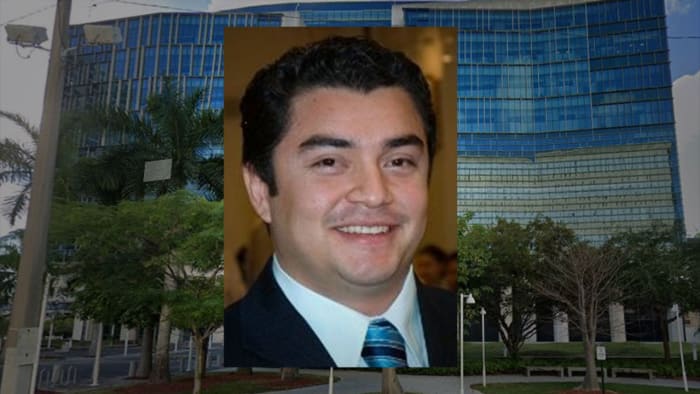
MIAMI – A judge sentenced a Mexican scientist who pleaded guilty in court to acting as an unregistered foreign agent behalf of Russia to four years and a day in prison Tuesday.

The story of Hector Cabrera, 36, involves, among other things, espionage tactics, trips to Moscow, and two wives on two separate continents. And it all comes back to South Florida.

Prosecutors said Cabrera arranged for an intermediary to lease an apartment in a Miami condominium building where a U.S. confidential source lived and he followed the source, keeping tabs on his or her vehicle, according to federal prosecutors in Miami.

FBI special agents in the counterintelligence division concluded Cabrera’s behavior was an example of Russian intelligence services’ tactics “for spotting, assessing, recruiting and handling intelligence assets and sources.”

Cabrera, a Mexican physician and scientist doing research in Singapore, earned doctorates in molecular microbiology from Kazan Federal University in Russia and molecular cardiology from the Justus Liebig University of Giessen in Germany, court records show.

He was also purportedly married to two women at once: one from Mexico and another from Russia.

U.S. Customs and Border Protection agents arrested Cabrera before he boarded a flight to Mexico City on Feb. 16, 2020, at Miami International Airport. While agents questioned him, he said he was traveling with his wife from Mexico, and his spying in Miami was related to his wife in Russia, according to the Feb. 18, 2020 complaint.

Cabrera will be deported at the end of his prison term, prosecutors said.

Read the criminal complaint here:

Copyright 2022 by WPLG Local10.com – All rights reserved.

Categories
Saved Web Pages

Moscow threatens NATO member Lithuania over transit ban on goods to Russia’s European exclave Kaliningrad

kaliningrad-lithuania-train-ap2217342687

June 22, 2022 / 1:29 PM / CBS News

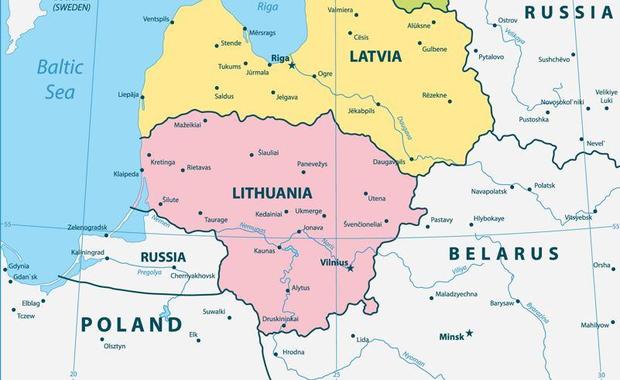
Lithuania’s decision to ban the transit of certain goods between Russia and its isolated exclave of Kaliningrad has provoked wrath among top officials in Moscow, and even a threat of retaliation against the European nation. Kaliningrad shares land borders with two NATO nations, Lithuania and Poland, but not Russia. Captured from Nazi Germany by the Soviet Red Army in 1945 and later ceded to the Soviet Union, the Russian territory is home to about 500,000 people.

While it is surrounded on two sides by NATO nations, it’s a strategically vital patch of ground for Moscow as it provides Russia’s only Baltic Sea coastline. It is home to the Russian military’s Baltic Fleet, and a number of advanced nuclear-capable Iskander missile installations.

But the isolated patch of ground relies on its rail connection to the rest of Russia for the majority of its civilian imports. That rail line runs through Lithuania and then neighboring Belarus, which is a Russian ally.

kaliningrad-map-russia.jpg A map shows Russia’s Kaliningrad Oblast, lower left, sandwiched between NATO and EU nations Poland and Lithuania. Getty/iStockphoto

On June 18, European Union member Lithuania prohibited the transit of all goods subject to EU sanctions imposed on Russia for its invasion of Ukraine via the rail link. That includes coal, metals, electronics, and construction materials.

Nikolai Patrushev, the Secretary-General of Russia’s Security Council and one of the most powerful figures in President Vladimir Putin’s inner circle, called Lithuania’s actions “hostile” and “in violation of the international law” during a visit to Kaliningrad on Tuesday.

“Russia will certainly respond to such hostile actions,” Patrushev was quoted as saying by Russian state media. “The consequences will have a serious negative impact on the population of Lithuania.”

In response, Lithuania said it was simply complying with EU decisions and stressed that the transit of passengers and non-sanctioned goods “continues uninterrupted.” 

The transit of passengers and #EU non-sanctioned goods to the #Kaliningrad region through the territory of #Lithuania continues uninterrupted. 🇱🇹 has not imposed any unilateral, individual, or additional restrictions on the transit and is acting fully in accordance with EU law. pic.twitter.com/qqgr9F84XM

— Lithuania MFA | #StandWithUkraine (@LithuaniaMFA) June 20, 2022

Anton Alikhanov, the Governor of Kaliningrad, said the ban was affecting about half of all imports to the territory.

“We consider this to be a most serious violation… of the right to free transit into and out of the Kaliningrad region,” he said in a video address posted on the Telegram messaging app the day after Lithuania’s announcement.

Videos posted on social media last weekend by residents in Kalingrad appeared to show panic buying at stores.

Lithuanian authorities have mocked the complaints from Russian officials, saying no “blockade” is being imposed on Russia’s European exclave.

“It’s ironic to hear rhetoric about alleged violations of international treaties from a country which has violated possibly every single international treaty,” Lithuanian Prime Minister Ingrida Simonyte told reporters, according to the Reuters news agency.

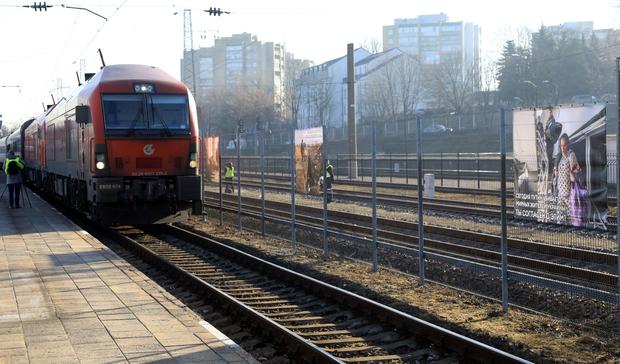
LITHUANIA-UKRAINE-RUSSIA-CONFLICT-TRANSPORT-PHOTOGRAPHY Photographs of Russia’s war in Ukraine are displayed as part of an exhibition at the railway station in Vilnius, Lithuania, March 25, 2022, where transit trains from Moscow to Kaliningrad make a stop over. The exhibition is intended to give transiting Russian travelers a true picture of the conflict.  PETRAS MALUKAS/AFP/Getty

Western officials have been quick to point to Russia’s blockade of all ports along Ukraine’s southern Black Sea coast, which has interrupted global food supplies. The United Nations has warned that blockade could lead to a prolonged global food crisis.

EU foreign policy chief Josep Borrell cautioned Moscow against any escalation over Lithuania’s enforcement of the bloc’s sanctions.

“We are in a precautionary mood,” Borrell said Monday. “But Lithuania is not guilty. It is not implementing national [unilateral] sanctions. It is not implementing their will. Whatever they are doing has been the consequence of the previous consultation with the [European] Commission.”

With its Baltic Sea port that remains ice-free year-round, Kaliningrad had provided Russia a viable way to try and bypass the myriad international sanctions imposed against it over the Ukraine war. But the restrictions on goods moving through Lithuania will greatly limit that prospect.

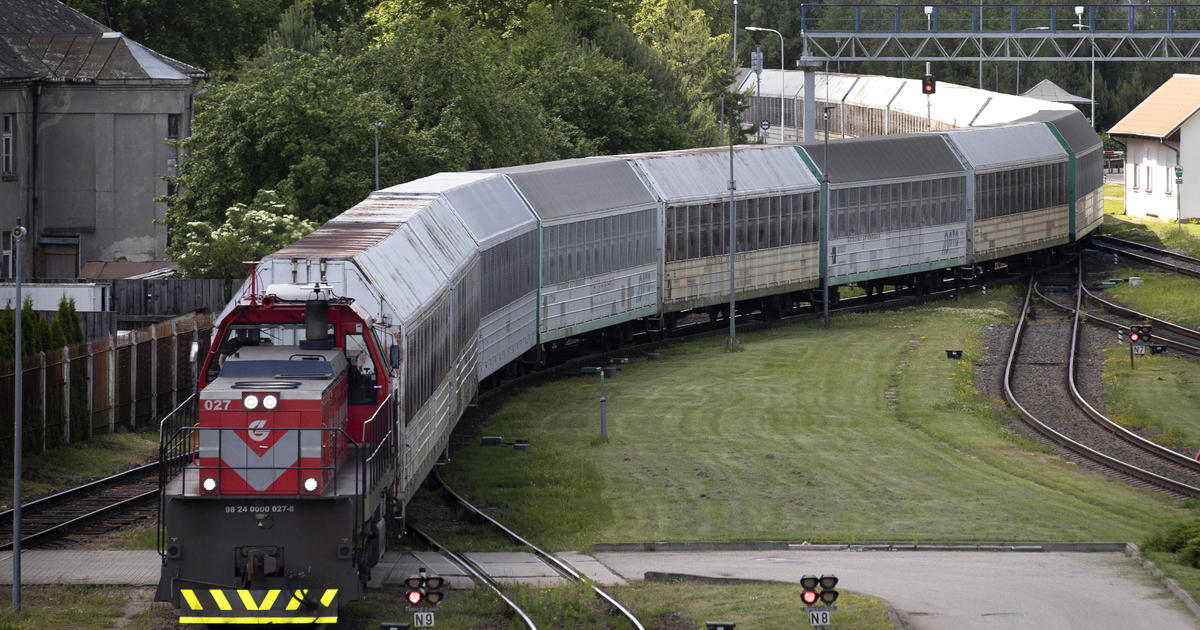
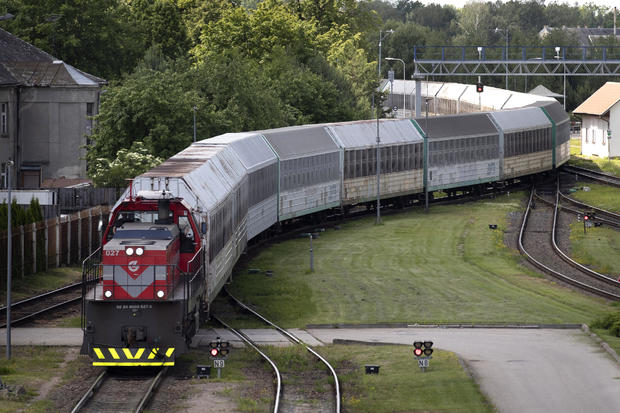
Lithuania Russia A cargo train from the Russian enclave of Kaliningrad moves to the border railway station in Kybartai, about 124 miles west of Lithuania’s capital Vilnius, June 22, 2022. Lithuania has defended its decision to bar rail transit from Russia to its Baltic Sea exclave of goods under European Union sanctions. Mindaugas Kulbis/AP

Both the Kremlin and Russia’s Foreign Ministry echoed Patrushev’s threats of “practical” retaliation against Lithuania, but Moscow hasn’t yet indicated what that will entail.

Russian lawmaker Leonid Slutsky told state news agency RIA Novosti on Wednesday that Moscow could, as a potential option, disconnect Lithuania from the regional power grid.  

On Wednesday, Lithuanian President Gitanas Nauseda told Reuters that his country was ready for Russia to retaliate by severing its connection to the BRELL power grid, but he added that he did not expect a military confrontation over the transit ban.

Three decades after they severed ties with the Soviet Union, Lithuania, Latvia and Estonia still depend on Russia for much of their power supply. Last year, however, Lithuania established a way to connect to the continental European grid via Poland, lowering its dependence on Moscow.

More

Categories
Saved Web Pages

Песков заявил о «различных» вариантах ответа Литве из-за Калининграда — РБК

756558918721181.jpg

По его словам, решение по ответным мерам из-за ограничения транзита товаров в российский регион находится на этапе обсуждения. МИД ранее указал, что ответ будет «практическим», а не дипломатическим

Дмитрий Песков

Дмитрий Песков (Фото: Михаил Джапаридзе / ТАСС)

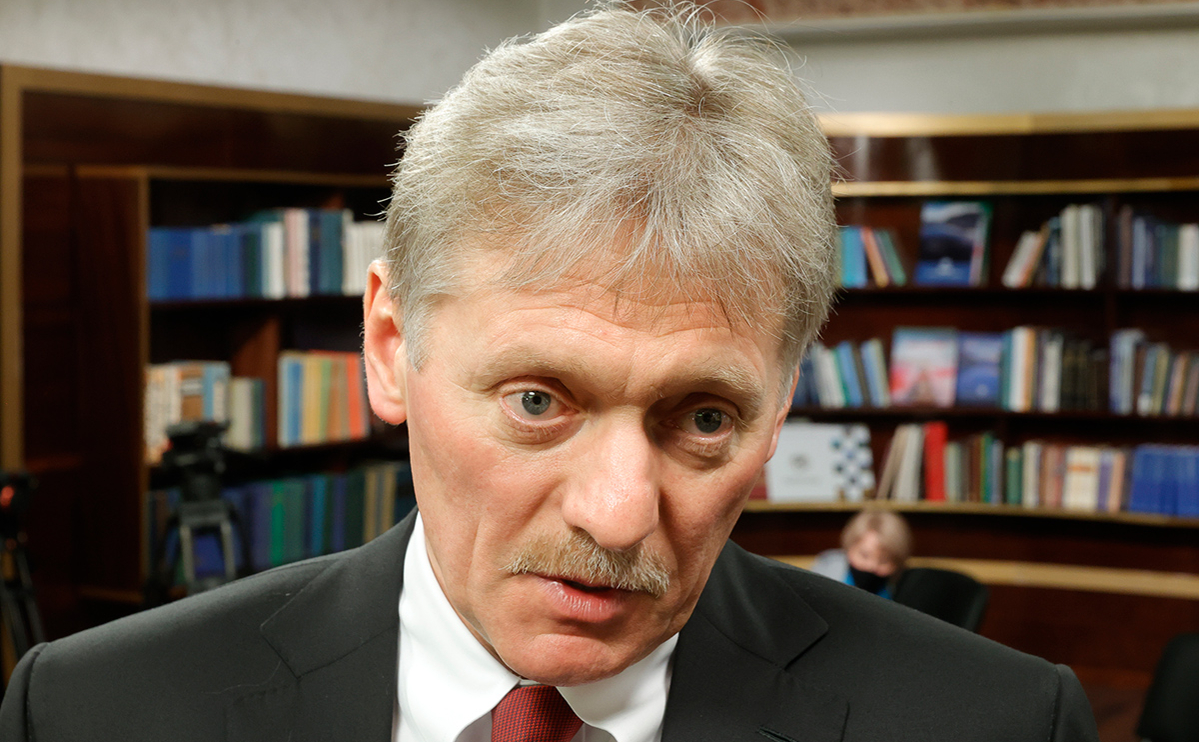
Россия рассматривает различные варианты мер в ответ на ограничения Литвы по транзиту в Калининград, сообщил журналистам пресс-секретарь российского президента Дмитрий Песков, передает корреспондент РБК.

«Обсуждаются конкретные меры, мы об этом говорили, разумеется. Мы убеждены, что эти незаконные санкции в данной ситуации абсолютно неприменимы», — сказал он.

По словам Пескова, применение санкций против Калининграда противоречит «основополагающим документам».

«Меры готовятся. После того как мы внимательно все взвесим, уже будем о чем-то говорить», — сказал представитель Кремля.

Ранее официальный представитель МИДа Мария Захарова сообщила на брифинге, что ответные меры на ограничения транзита в Калининград будут лежать «в практической плоскости». Она отрицательно ответила на вопрос, будут ли они в дипломатической плоскости.

Литовские железные дороги ввели запрет на транзит составов ряда товаров в Калининград с полуночи 18 июня. Среди них — цемент, строительные материалы, металлы и некоторые другие важные для производства товары. Министр иностранных дел Литвы Габриэлюс Ландсбергис пояснил, что страна не вводит никаких ограничений самостоятельно, а исполняет европейские санкции, вступившие в силу с 17 июня.«Это сделано после консультаций Еврокомиссии и под ее руководством», — отмечал министр.

Власти Калининградской области опубликовали список товаров, которые нельзя перевозить через Литву. Туда вошли технологические установки для сжижения природного газа, продукты из чугуна и стали, чистопородные лошади, трюфели и продукты из них, сигары, парфюмерия и другое. Глава региона Антон Алиханов заявил, что для доставки «санкционных» грузов будут использовать паромы и суда, а не попавшие под ограничения товары будут возить поездами. Губернатор также отметил, что транспортные трудности «вполне преодолимы», «самолеты летают, поезда пассажирские спокойно ходят».

После введения ограничений на транзит в МИД России вызвали посла ЕС Маркуса Эдерера, там он заявил, что о «блокаде» Калининградской области речи не идет, а также попросил решить вопрос дипломатическим путем. Российское ведомство также выразило протест временной поверенной в делах Литвы Виргинию Умбрасене (с апреля Литва понизила уровень дипотношений и отозвала посла).

Categories
Saved Web Pages

Scenarios for Russia’s strategic Kaliningrad exclave

Russia’s exclave in Kaliningrad has long given nightmares to NATO’s defense planners. The outcome of the Ukraine war will bear heavily on its future.

The Russian Baltic Fleet EnsembleThe Kaliningrad garrison serves as an intimidating Russian presence in the Baltic region. The Baltic Fleet, headquartered there, has been significantly upgraded in recent years with new ships, ground forces and missiles. © Getty Images

×

  • The outcome of the war in Ukraine may seal the future of Kaliningrad
  • Russia’s military forces serve as a lock on the Baltic
  • The exclave may morph from Moscow’s strategic asset to a liability

NATO military planners have long been concerned about Russia’s strategic Kaliningrad exclave. Wedged in between Poland and Lithuania, the chunk of Russian territory with fewer than half a million people has been a fixture in the security architecture of the Baltic Sea region. During the years leading up to the 2022 war in Ukraine, major Russian moves to upgrade its military presence there have triggered concerns. The scenarios hinge on how that war ends and if the regime in Belarus survives.

The heightened posture featured the introduction of Iskander ballistic missiles that may carry nuclear warheads, combined with Russia’s top-of-the-line S-400 air defense systems and Bastion coastal defense systems. Meanwhile, the ground forces were enhanced with new units, including more and better tanks and artillery. And the Baltic Fleet, also based in Russia’s westernmost town of Baltiysk, received both upgrades and additional ships.

As Russia’s “special military operation” in Ukraine continues to reveal disastrous shortcomings, it is becoming questionable how much of this still matters and if Kaliningrad will play much of a role in the future.

Kaliningrad exclave’s military significance

The main reason why NATO has been so concerned has to do with the exposed position of the two northern Baltic states. As shown in numerous war-gaming exercises, a Russian armed invasion of Estonia, for example, could have been swift and would have presented NATO with a fait accompli. Once it failed to repel the attack, the alliance would find itself in an unenviable position of having to expel the invader to honor its mutual defense obligations under Article 5.

If such a rescue were to be launched over land, it would have to proceed from Poland into Lithuania. NATO forces would need to transit the “Suwalki Gap,” a 70-kilometer stretch of land between Kaliningrad and Belarus, and the opposition would heavily bombard it from both sides. The alternative would be a combined airlift and naval convoy proceeding up the Baltic past Kaliningrad’s missile batteries.

Given that NATO assets attempting to pass through that area would have had to reckon with heavy losses, Kaliningrad served as an intimidating Russian lock on the Baltic. In military jargon, it was an “A2/AD (anti-access/area denial) bubble.” Adding that a Russian attack on one or more Baltic states would likely have been associated with a Russian assault to seize the demilitarized Swedish island of Gotland, strategically located in the center of the Baltic, the double lock seemed to be quite formidable.

With NATO troops present on the ground in Finland, the Russian rear would be dangerously exposed to missile and artillery strikes.

Although no NATO source would have admitted this possibility, Moscow may well have calculated that if it did choose to invade, say, Estonia, NATO would seek and find an excuse to settle the matter without the use of force. In the case of Finland and Sweden in NATO, that calculus changes beyond recognition.

Enter Finland and Sweden

It is true that Russia has long viewed both countries as de facto NATO members and that despite their nonaligned status, NATO troops would still have been able to come to the rescue of the Baltics via the Swedish and Finnish territories. But there are three important points to be made here.

One is that with NATO troops present on the ground in Finland, the Russian rear would be dangerously exposed to missile and artillery strikes. Another is that the Swedish and Finnish air forces, which now have ample experience in joint operations, would constitute a formidable problem for Russian aviation. And the third important circumstance is that the Swedish navy has advanced submarines that could swiftly take on the dual task of eliminating any Russian naval opposition and aggressively mining the approaches to St. Petersburg, including the Russian naval base in Kronstadt.

This enhancement in the ability of NATO to protect Estonia and Latvia will significantly reduce the importance of Kaliningrad. While this will erode the incentive for Russian military planners to invest in keeping it up to scratch, the garrison there will remain consequential. It retains its strategic location in the southern Baltic, and it has the capability of launching nuclear missile strikes against Warsaw, an option that has featured in war games.

×

However, from the Kremlin’s distant horizon, Kaliningrad could be transformed from an asset into a liability. The outlook features very different scenarios where the critical feature concerns what will happen in Belarus.

Pushing back Russia

The first scenario emerges if a decisive Russian defeat in Ukraine leads to a collapse of the regime of strongman Alexander Lukashenko. A cessation of economic support from Russia to Belarus could prompt a cascading crisis, strikes and civil unrest, with parts of the armed forces eventually switching their allegiance. Battle-hardened Belarusian volunteer forces that have fought against the Russians in Ukraine could be decisive here, returning home to help expel all remaining Russian troops from Belarus.

If Belarus switched sides, the consequences for the Russian garrison in Kaliningrad would be immense. Already depleted from having contributed troops to the war in Ukraine, the military outpost would find itself surrounded by hostile forces. As Russia’s borders in the West would be pushed back to roughly where they were at the end of the 16th century, the “Suwalki Gap” would cease to matter. Lines of communication between Poland and Lithuania – and points further north – would be wide open.

Defense consequences

Having already declared Russia a terrorist state and branded Russian warfare in Ukraine as genocide, the government in Lithuania could be expected to join Poland in putting a squeeze on Kaliningrad. It would not result in the exclave becoming formally demilitarized, but, over time, the situation of its garrison would come to resemble that of the Russian outpost in Transnistria in Moldova.

The military would become degraded. Even if Russia had resources to spare for Kaliningrad, which is doubtful, military planners would be constrained by the prohibition of transporting troops or military hardware over land. With the Baltic Sea in the hands of NATO, resupply by sea would be at the mercy of the alliance. With sophisticated missiles stationed on the Swedish island of Gotland, the airspace would also belong to NATO.

Economic deterioration

The exclave’s economy would become equally degraded. The sanctions regime would block all forms of imports over land, leaving shipping as the only lifeline, and Russian ships would have a hard time finding foreign ports at reasonable distances that would receive them. Shortages would become ubiquitous.

In consequence, the local population would find everyday life increasingly complicated. Those employed in the dominant military sector would feel the squeeze of dwindling payments from Moscow. At the same time, those living off border trade would no longer be able to continue such operations.

Under this broad scenario, Kaliningrad would fizzle into irrelevance. With its nuclear weapons eventually removed, the Baltic Sea region would enjoy peace and stability.

Russia prevails

An alternative scenario would occur if the Western resolve to stand by Ukraine erodes over time, and Kyiv is forced to accept a settlement. A deal between the European Union and Russia could end hostilities and cause a withdrawal of Russian forces from much of Ukraine. The price for that would be allowing the Kremlin to retain control over the Crimean Peninsula and Donbas (at least), plus most likely also the coastline up to, and possibly even beyond, Crimea.

Such an outcome would allow the Russian regime to save face, thus removing the threat of regime change via a coup. It would also be associated with a gradual lifting of sanctions to allow Russia to resume cooperation with its former European partners. And it would be associated with Belarus remaining within the Russian camp, fostering even deeper bonds between the two militarized autocracies.

If the Lukashenko regime survived, it may be expected to deal harshly with those who sought to undermine the Russian war effort in Ukraine, ranging from volunteer forces to railway saboteurs and civil society activists. Increased repression would feature the use of the recently reintroduced death penalty and possibly even assassinations of opposition figures abroad. The potential implications for Kaliningrad are considerable.

Regaining strength

As Russia recovered its economic strength, buoyed by continued energy exports to Europe and a resumption of trade that has European industry majors returning to the Russian market, it would also be able to start rebuilding its military capabilities. Embittered by its humiliation in Ukraine, the Kremlin would be prone to use the Belarus-Kaliningrad axis to drive home that its voice must still be heeded.

Given that a negotiated settlement of the war would still be associated with a heavy buildup of NATO forces along Russia’s western borders, and that its conventional military hardware has proven inferior to NATO weapons, Russian planners would be escalating their already loud nuclear saber-rattling.

Kaliningrad would be assigned a critical role in this endeavor. The exclave’s land-based Iskander missiles constitute a lethal threat to Poland. The Baltic Fleet has missile corvettes that may launch nuclear-capable Kalibr cruise missiles capable of striking land targets at 1,500-2,500 kilometer-distance and Kh-35 cruise missiles that may strike enemy ships. If these forces are maintained and upgraded, peace and security in the Baltic Sea region come under a very dark cloud.

Perpetual threat

A middle-of-the-road outcome is possible, where Russia suffered a decisive loss in Ukraine, but Belarus still manages to muddle through. Under this script, the country offers the Kremlin a vantage point to extend future influence toward Kaliningrad and the EU. But it would be a weak link, in constant danger of breaking.

The obvious alternative to a clear Russian defeat is a dubious deal. Western resolve could dissipate over time. The leading European powers may succeed in brokering a “peace” plan that would allow Russia to retain a hold over Ukraine and Belarus to remain in the Russian camp. This scenario ensures access to resources for Russian leaders bent on seeking revenge.

Categories
Saved Web Pages

Kaliningrad, Russia’s Westernmost Outpost, Is Again a Flash Point in East-West Relations

21ukraine-briefing-kaliningrad-explainer

Kaliningrad’s House of Soviets was never fully occupied but still towers over the remains of the Prussian Königsberg Castle, which the Soviet authorities demolished in the 1960s.

Kaliningrad’s House of Soviets was never fully occupied but still towers over the remains of the Prussian Königsberg Castle, which the Soviet authorities demolished in the 1960s.Credit…Emile Ducke for The New York Times

Dan Bilefsky
  • June 22, 2022, 9:13 a.m. ET

A former American national security adviser once called Kaliningrad, a Russian enclave sandwiched between the NATO members Poland and Lithuania, “a dagger in the heart of Europe.”

Now Kaliningrad, a port city captured from the Nazis by the Soviet Union during World War II, once again finds itself a fault line in a Cold War-style conflict between Russia and the West.

The Russian authorities this week threatened Lithuania with retaliation if the Baltic country did not swiftly reverse its ban on the transportation of some goods to Kaliningrad by rail. The restrictions exposed the geopolitical vulnerability of Kaliningrad, which is Moscow’s westernmost outpost but more than 200 miles from mainland Russia.

Russia’s invasion of Ukraine has stoked tensions in the region, where memories of Soviet subjugation run deep.

As nationalist rhetoric has grown more intense in recent years, Russia has moved advanced Iskander missiles into Kaliningrad, which is on the Baltic Sea. Lithuania’s defense minister said in April that Russia had stationed nuclear weapons in the region, which Moscow denies.

Having invaded Ukraine and deployed its troops to its pliant ally Belarus, Russia has suddenly flexed its military muscle near the borders of several NATO countries, including Baltic nations. Only a thin corridor between Lithuania and Poland, about 60 miles long, separates Russian forces in Belarus from Kaliningrad.

While analysts say that Moscow, already overextended in Ukraine, is unlikely to provoke another war in Europe, any attack on a Baltic state would trigger NATO’s mutual defense treaty. And any attempt to defend them would have to get past Kaliningrad and the missiles stationed there.

There was a time when Russia touted Kaliningrad as a symbol of its links with European culture. In the 1990s, the Russian authorities promoted Kaliningrad’s past ties to Germany to help attract tourists, lauding its role in the life and work of the 18th-century German philosopher Immanuel Kant, who was born and lived in Königsberg, the regional capital now named Kaliningrad. (The Soviet authorities renamed the city in 1946 after Mikhail Kalinin, a Bolshevik revolutionary.)

The city has had other high-profile residents: Lyudmila Ocheretnaya, the former wife of President Vladimir V. Putin of Russia, was born there.

In the immediate post-Soviet era, Moscow tried to reinvent Kaliningrad as its own duty-free Hong Kong. The region sprouted with factories producing cars, electronics and furniture. After the provincial government negotiated visa-less travel to Polish border areas, the Ikea outlet in nearby Gdansk, Poland, became a popular destination for Russians.

But Moscow historically has also sought to obfuscate Germany’s historical ties to the area. In the 1960s, the Soviet authorities blew up a still-standing portion of a Gothic castle to make way for the House of Soviets, a towering building meant to symbolize the Soviet Union’s control over former German territory. Instead, the building was marred by structural defects, was never fully occupied and became a monument of sorts to Soviet failure.

The latest flare-up with Lithuania is not the first time Kaliningrad has been the locus of tensions.

In 2016, about 70 nautical miles off Kaliningrad, two Russian Su-24 planes buzzed the American guided missile destroyer Donald Cook, simulating an attack and drawing protests from Washington.

In another episode that same month, a Russian warplane intercepted an American reconnaissance plane at an unsafe distance over the Baltic Sea.

WP Radio
WP Radio
OFFLINE LIVE