Categories
Saved Web Pages

US intelligence chief: Putin still wants most of Ukraine

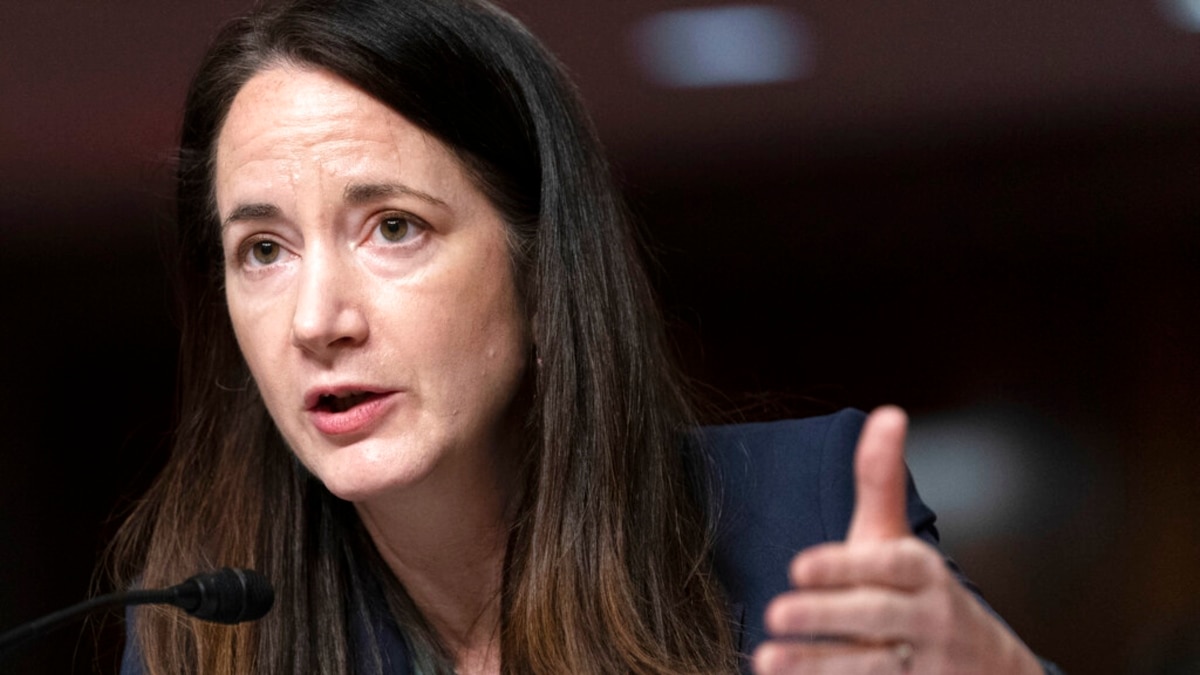
Avril-Haines-gestures-800x450.jpg

Russian President Vladimir Putin still wants to seize most of Ukraine, but his forces are so degraded by combat that they likely can only achieve incremental gains in the near term, the top US intelligence officer said Wednesday (29 June).

Director of National Intelligence Avril Haines, outlining the current US intelligence assessment of the more than four-month war, said that the consensus of US spy agencies is that it will grind on “for an extended period of time.”

“In short, the picture remains pretty grim and Russia’s attitude toward the West is hardening,” Haines told a Commerce Department conference.

Ukrainian President Volodymyr Zelenskyy this week told US President Joe Biden and other G7 leaders that he wants the war over by the end of the year.

But Haines’ comments suggested that the billions of dollars in modern arms being supplied by the United States and other countries to Zelenskyy’s forces may not give them the ability to turn the tide against Russia any time soon.

She said that Putin remains intent on overruning most of Ukraine even though Ukrainian forces beat back Russia’s attempt to capture the capital Kyiv in February, forcing Moscow to reduce its target to seizing the entire eastern Donbas region.

“We think he has effectively the same political goals that we had previously, which is to say that he wants to take most of Ukraine,” Haines said.

Russian forces, however, have been so degraded by more than four months of combat that it is unlikely they can achieve Putin’s goal any time soon, Haines said in her first public assessment of the war since May.

“We perceive a disconnect between Putin’s near-term military objectives in this area and his military’s capacity, a kind of mismatch between his ambitions and what the military is able to accomplish,” she said.

Haines said US intelligence agencies see three possible scenarios, the most likely being a grinding conflict in which Russian forces “make incremental gains, with no breathrough.”

The other scenarios include a major Russian breakthrough and Ukraine succeeding in stabilizing the frontlines while achieving small gains, perhaps near the Russian-held city of Kherson and other areas of southern Ukraine.

It will take years for Russia to rebuild its forces, she said.

“During this period, we anticipate that they’re going to be more reliant on assymetric tools that they have, such as cyber attacks, efforts to control energy, even nuclear weapons in order to try to manage and project power and influence globally,” Haines said.

“In the interim, Russian troops are unlikely to be able to conduct multiple simultaneous operations,” Haines continued.

Putin’s priority now, she said, is making gains in the Donbas region and collapsing Ukrainian forces, a development that Russia assesses will “cause the resistance from within to slump.”

Haines’ comments came after a summit of NATO leaders on Wednesday branded Russia the most “direct threat” to alliance security and vowed to modernize Kyiv’s forces, saying it stood behind their “heroic defense of their country.”

Russia launched what it calls a “special military operation” against Ukraine on 24 February to eliminate what it deemed a fascist government that threatened its security.

Ukraine, the United States and other countries say Russia is conducting an unjustified war of aggression against its neighbor.
Categories
Saved Web Pages

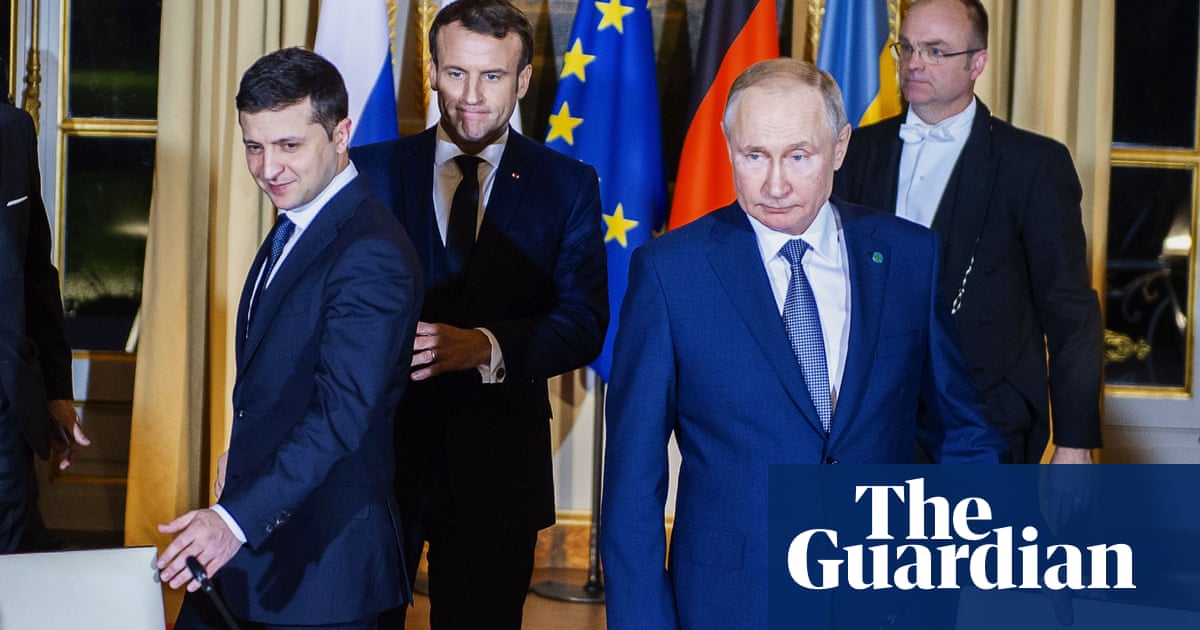
Zelensky: A Biography; Putin: His Life and Times reviews

2839.jpg?width=1200&height=630&quality=8

Volodymyr Zelenskiy is perhaps the closest thing to a mythical hero modern politics has to offer. Ukraine’s courageous wartime president captured the world’s imagination with his haunting, straight-to-camera monologues delivered under bombardment. A comic actor turned leader of the resistance, his story is a political fairytale. But is it almost too good to be true?

Truth and fiction collide in the Ukrainian journalist Serhii Rudenko’s quirky and fascinating biography, describing how a man best known for playing a teacher who unexpectedly becomes head of state subsequently did something similar himself.

Sign up to our Inside Saturday newsletter for an exclusive behind-the-scenes look at the making of the magazine’s biggest features, as well as a curated list of our weekly highlights.

When Zelenskiy interrupted his own show on New Year’s Eve 2018 to announce his real-life presidential candidacy direct to viewers, many wondered if it was a joke. Even by the end of the campaign, Rudenko writes, there was still “no such thing as Zelensky the politician”; just a comedian fronting an essentially virtual movement, with no formal members and little ideology beyond appealing to Ukrainians’ exasperation with corruption. “I am not your opponent, I am your verdict,” he memorably told the incumbent, Petro Poroshenko, during a TV debate.

As Rudenko points out, however, the idea of disrupting politics by starting a party from scratch potentially served a more serious purpose for Ihor Kolomoisky, the powerful oligarch owner of the TV station behind Zelenskiy’s show. Kolomoisky’s lawyer became one of the candidate’s closest advisers, prompting suspicions about who was really pulling the strings. Yet, in time, the new president would distance himself from his original patrons, finally emerging from their shadow – at least in Rudenko’s telling – as the man we see today.

This hero isn’t perfect, of course. His inexperience is painfully obvious in early dealings with Russia’s Vladimir Putin or on economic policy. Having promised to stop cronyism, he gives jobs to friends and media colleagues; scandals engulf some of his new MPs, and the cars of his political enemies develop an odd habit of catching fire. Disillusionment sets in. But then Putin invades, instantly uniting Ukrainians behind their charismatic leader in an existential battle that, Rudenko patriotically concludes, could signify the “final rupture” between Russia and Ukraine.

The book was originally intended for a Ukrainian audience, who I suspect may be able to read things between the lines that foreigners can’t, particularly in chapters involving some of the more scurrilous rumours about Zelenskiy. But whatever nuances are lost in translation, Rudenko’s central argument couldn’t be clearer: it’s that Putin fatally underestimated his opponent, and will now pay the price. But is that really how the story ends?

The former BBC Moscow correspondent Philip Short’s magisterial Putin: His Life and Times takes a more sober view. Eight years in its gestation and based on access to a Who’s Who of senior politicians, diplomats and intelligence sources, it’s an illuminating attempt to understand the Russian leader from a Russian rather than western perspective. The KGB man-turned-president is, the author suggests, “no more an aberration in Russia than Donald Trump in America, Boris Johnson in Britain or Emmanuel Macron in France”. Like it or not, he is one of the defining figures of our age, and all too often we’re reading him wrong.

A series of eccentric public appearances on the eve of war prompted some to question a clearly frail Putin’s sanity. But Short interprets these as a version of Richard Nixon’s “madman” gambit, “intended to make him appear so irrational and unpredictable that adversaries would hesitate before testing his resolve”. (If so, the west’s cautious approach to military involvement in Ukraine suggests it worked.) Where some see a cold-eyed killer routinely murdering opponents, Short distinguishes between attacks he thinks the president could conceivably have authorised personally – such as the poisoning of the former Russian agent Alexander Litvinenko in London, or the attempted murder of his rival Alexei Navalny – and those more likely attributable to freelancing among allies, while noting that allowing powerful figures to feel “that they could literally get away with murder” isn’t morally much different from ordering it.

One question haunting this book is whether there was in hindsight a way of avoiding the current war

Short’s Putin is a man of violent emotions ruthlessly repressed; habitually late (a powerplay over those kept waiting), devoid of small talk, so inscrutable that when he proposed to his wife she initially thought he was dumping her. This knack of being what the German security expert Franz J Sedelmayer calls “perfectly grey” in his intentions helped Putin transition seamlessly first from an unremarkable intelligence career into politics (initially working for the powerful mayor of St Petersburg) and then up through the Kremlin’s ranks without being perceived as a threat.

He is pragmatic – not necessarily a compliment in 1990s St Petersburg, where Short writes that “the distinction between politicians, businessmen and criminals was almost completely effaced” and running the city involved opening channels to organised crime – rather than ideological. But his guiding beliefs are nostalgia for past glory, a hankering for a national identity to fill the gap left by communism, and an abhorrence of showing weakness. The lesson of a childhood trading blows with local neighbourhood toughs, he has said, is that if “you want to win a fight you have to carry it through to the end, as if it were the most decisive battle of your life”. The defining event of his life, however, is the breakup of the Soviet Union in the 1990s, about which he once raged that “Russia had lost too much, it had been too humiliated”. Ukraine’s misfortune is to embody this humiliation for him.

Short traces the roots of conflict from promises made to Russia in the 1990s that Nato wouldn’t expand eastwards, through the Bush administration’s flirtation with the idea of Ukraine joining, to Putin’s 2014 invasion of Crimea – which Putin insisted was to keep Ukraine out of Nato. (The author gives rather less space to the counter-argument that, however wounding it is to Russian pride, former Soviet republics are free now to make their own choices, including over how to defend themselves from their volatile neighbour.)

Putin’s goal in the current war, Short thinks, is both to make Ukraine declare neutrality and “to show that the United States was powerless to prevent it”. Victory for him may be defined less by territory gained, and more by whether America’s reluctance to intervene directly causes Nato members such as Poland or the Baltics to wonder whether their allies would risk nuclear war to save them either, thus undermining the alliance.

One question haunting this book is whether there was a way of avoiding all this, given Putin’s initial willingness to work with the west in return for economic benefits he thought would help him domestically, plus Europe’s desire for peace. Towards the end, Short lists the decisions he thinks put Washington and Moscow on a collision path, arguing essentially that both sides did what seemed logical to them at the time, but failed at critical moments to grasp how that looked from the other side. There could be no more powerful case for reading both these books than that conflict is so often rooted in human failures of understanding.

  • Zelensky: A Biography by Serhii Rudenko is published by Polity (£20) and Putin: His Life and Times by Philip Short is published by Bodley Head (£30). To support the Guardian and Observer, order your copy at guardianbookshop.com. Delivery charges may apply.

Categories
Saved Web Pages

НАТО растет и крепнет, пока Путин в Туркменистане пытается собрать своих союзников – Atlantic Council

71_big.jpg?v1656574663

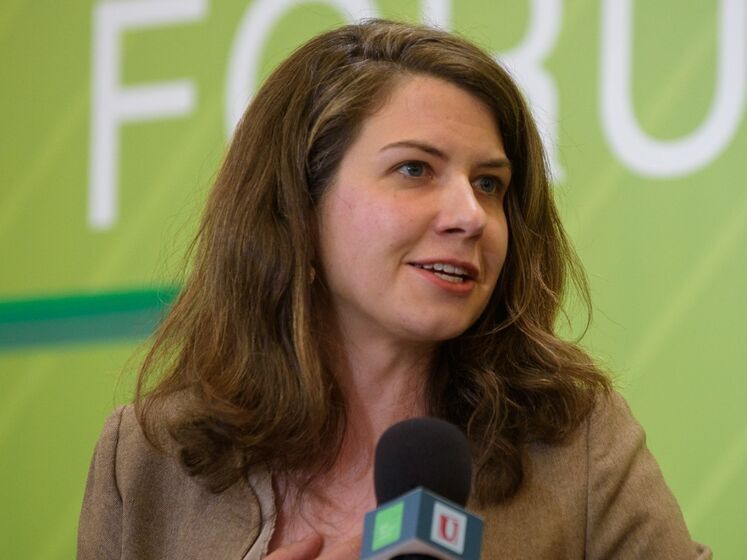
Харинг отметила, что союзников у России осталось немного

Харинг отметила, что союзников у России осталось немного
Фото: Melinda Haring / Facebook

Об этом она говорила во время онлайн-дискуссии Киевского форума по безопасности, которую транслировал в YouTube фонд премьер-министра Украины в 2014–2016 годах Арсения Яценюка Open Ukraine. 

“Мы видели отличные фотографии с саммита НАТО. А Путин знаете, что делал? Был в Туркменистане, пытался собрать страны Организации Договора о коллективной безопасности. И, в отличие от ОДКБ, Альянс НАТО растет и крепнет. А Путин сейчас где-то на юге пытается собрать своих союзников”, – сказала она.

Эксперт также отметила, что у РФ остается все меньше поддержки – Турция, по ее мнению, предпочла Запад России.

“Турция уже сейчас не возражает против членства Финляндии и Швеции [в НАТО]. Это очень серьезный шаг вперед, потому что он является сигналом того, что Турция предпочла все-таки Запад России”, – сказала Харинг. 

Разница между тем, как проходили саммит НАТО в Мадриде и Каспийский саммит в Ашхабаде, стала предметом множества шуток в сети.  

В состав ОДКБ в настоящее время входят: Армения, Беларусь, Казахстан, Кыргызстан, Россия и Таджикистан.

Контекст:

Саммит НАТО проходит сейчас в Мадриде, мероприятия запланированы с 28-го по 30 июня. Это первый полноценный саммит Альянса с начала полномасштабного вторжения РФ в Украину. 

Лидеры Альянса утвердили новую стратегическую концепцию, в которой говорится, что Россия представляет самую значительную и прямую угрозу” безопасности НАТО. В документе отмечается, что “сильная, независимая Украина жизненно необходима для стабильности евроатлантического пространства” и Альянс “подтверждает решение, принятое на Бухарестском саммите 2008 года” в отношении Украины (тогда члены Альянса решили, что Украина и Грузия будут членами НАТО, и этапом на этом пути должно стать выполнение ПДЧ). 

Также страны НАТО утвердили комплексный пакет оборонной помощи Украине и пригласили Финляндию и Швецию стать членами Альянса. 

Президент Владимир Зеленский выступая перед участниками саммита, призвал помочь Украине закончить войну с Россией победой на поле боя, а также заявил, что политика открытых дверей НАТО не должна напоминать старые турникеты киевского метро: на первый взгляд, дорога открыта, но когда подходишь – турникеты закрываются, пока не заплатишь. “Украина еще недостаточно заплатила? Неужели наш вклад в защиту Европы и всей цивилизации все еще недостаточен?” – сказал глава государства.

Categories
Saved Web Pages

A viral reprise: When COVID-19 strikes again and again

3000.jpeg

For New York musician Erica Mancini, COVID-19 made repeat performances.

March 2020. Last December. And again this May.

“I’m bummed to know that I might forever just get infected,” said the 31-year-old singer, who is vaccinated and boosted. “I don’t want to be getting sick every month or every two months.”

But medical experts warn that repeat infections are getting more likely as the pandemic drags on and the virus evolves – and some people are bound to get hit more than twice. Emerging research suggests that could put them at higher risk for health problems.

There’s no comprehensive data on people getting COVID-19 more than twice, although some states collect information on reinfections in general. New York, for example, reports around 277,000 reinfections out of 5.8 million total infections during the pandemic. Experts say actual numbers are much higher because so many home COVID-19 tests go unreported.

Several public figures have recently been reinfected. U.S. Health and Human Services Secretary Xavier Becerra and Canadian Prime Minister Justin Trudeau said they got COVID-19 for the second time, and U.S. Sen. Roger Wicker of Mississippi said he tested positive a third time. All reported being fully vaccinated, and Trudeau and Becerra said they’d gotten booster shots.

“Until recently, it was almost unheard of, but now it’s becoming more commonplace” to have COVID-19 two, three or even four times, said Dr. Eric Topol, head of Scripps Research Translational Institute. “If we don’t come up with better defenses, we’ll see much more of this.”

Why? Immunity from past infections and vaccination wanes over time, experts say, leaving people vulnerable.

Also, the virus has evolved to be more contagious. The risk of reinfection has been about seven times higher with omicron variants compared with when delta was most common, research out of the United Kingdom shows. Scientists believe the omicron mutants now causing the vast majority of U.S. cases are particularly adept at getting around immunity from vaccination or past infection, especially infection during the original omicron wave. U.S. health officials are mulling whether to modify boosters to better match recent changes in the coronavirus.

The first time Mancini got COVID-19, she and her fiancé spiked fevers and were sick for two weeks. She couldn’t get tested at the time but had an antibody test a couple months later that showed she had been infected.

“It was really scary because it was so new and we just knew that people were dying from it,” said Mancini. “We were really sick. I hadn’t been sick like that in a long time.”

She got vaccinated with Pfizer in the spring of 2021 and thought she was protected from another infection, especially since she was sick before. But though such “hybrid immunity” can provide strong protection, it doesn’t guarantee someone won’t get COVID-19 again.

Mancini’s second bout, which happened during the huge omicron wave, started with a sore throat. She tested negative at first, but still felt sick driving to a gig four hours away. So she ducked into a Walgreens and did a rapid test in her car. It was positive, she said, “so I just turned the car around and drove back to Manhattan.”

This bout proved milder, with “the worst sore throat of my life,” a stuffy nose, sneezing and coughing.

The most recent illness was milder still, causing sinus pressure, brain fog, a woozy feeling and fatigue. That one, positive on a home test and confirmed with a PCR test, hit despite her Moderna booster shot.

Mancini doesn’t have any known health conditions that could put her at risk for COVID-19. She takes precautions like masking in the grocery store and on the subway. But she usually doesn’t wear a mask on stage.

“I’m a singer, and I’m in these crowded bars and I’m in these little clubs, some of which don’t have a lot of ventilation, and I’m just around a lot of people,” said Mancini, who also plays accordion and percussion. “That’s the price that I’ve paid for doing a lot throughout these past few years. It’s how I make my living.”

Scientists don’t know exactly why some people get reinfected and others don’t, but believe several things may be at play: health and biology, exposure to particular variants, how much virus is spreading in a community, vaccination status and behavior. British researchers found people were more likely to be reinfected if they were unvaccinated, younger or had a mild infection the first time.

Scientists also aren’t sure how soon someone can get infected after a previous bout. And there’s no guarantee each infection will be milder than the last.

“I’ve seen it go both ways,” said Dr. Wesley Long, a pathologist at Houston Methodist. In general, though, breakthrough infections that happen after vaccination tend to be milder, he said.

Doctors said getting vaccinated and boosted is the best protection against severe COVID-19 and death, and there’s some evidence it also lessens the odds of reinfection.

At this point, there haven’t been enough documented cases of multiple reinfections “to really know what the long-term consequences are,” said Dr. Peter Hotez, dean of Baylor University’s tropical medicine school.

But a large, new study using data from the U.S. Department of Veterans Affairs, which hasn’t yet been reviewed by scientific peers, provides some insight, finding that reinfection increases the risk for serious outcomes and health problems such as lung issues, heart disorders and diabetes compared with a first infection. The risks were most pronounced when someone was ill with COVID-19, but persisted past the acute illness as well.

After Mancini’s last bout, she dealt with dizziness, headaches, insomnia and sinus issues, though she wondered if that was more due to her busy schedule. In a recent week, she had 16 shows and rehearsals — and has no room for another COVID-19 reprise.

“It was not fun,” she said. “I don’t want to have it again.”

___

The Associated Press Health and Science Department receives support from the Howard Hughes Medical Institute’s Department of Science Education. The AP is solely responsible for all content.

Categories
Saved Web Pages

Defence Intelligence Update on Situation in Ukraine – 30 June, 2022 – KyivPost – Ukraine’s Global Voice

fwektpowiaaj_ow.jpeg

Ukrainian forces continue to hold their positions in the city of Lyschansk following their withdrawal from Sieverodonetsk. Russian forces continue to pursue an approach of creeping envelopment from the Popasna direction, removing the need to force a major new crossing of the Siverskyi Donets River in this sector.

Current ground combat is likely focused around the Lyschansk oil refinery, 10km south-west of the city centre. At the operational level, Russian force continue to make limited progress as they attempt to encircle Ukrainian defenders in northern Donetsk Oblast via advances from Izium.

It is highly likely that Ukrainian forces’ ability to continue fighting delaying battles, and then withdraw troops in good order before they are encircled, will continue to be a key factor in the outcome of the campaign.

Found a spelling error? Let us know – highlight it and press Ctrl + Enter.

Categories
Saved Web Pages

Heavy Loses Could Persuade Russia, Putin to Pause Ukraine War

10050000-0aff-0242-8e96-08da5a23b8fe_w12

Russian President Vladimir Putin has no intention of relinquishing his desire to control all of Ukraine but appears to understand that his once-vaunted military may not be able to give him what he wants, at least for now.

The latest analysis, shared by the top U.S. intelligence official late Wednesday, further suggests there may be an opening to bring the current fighting in Ukraine to an end, even if Russia sees it only as a chance to better position itself for future conquest.

“We assess at this stage that their [Russia’s] ground forces have been degraded to the point where it will take them years to get back to where they were,” Director of National Intelligence Avril Haines said late Wednesday, during a discussion in Washington hosted by the Silverado Policy Accelerator and tech giant Google.

“Even their near-term military objectives are really not capable of being achieved by their military right now,” Haines said. “It is entirely plausible, from our perspective, that depending on how things develop over the coming months and so on that he [Putin] is convinced that there is value in effect, coming to some sort of agreement.”

Rescue workers try to evacuate an injured man from a residential building hit by a Russian military strike, in Mykolaiv, Ukraine, June 29, 2022, in this screen grab obtained from a handout video. (State Emergency Service of Ukraine/Reuters)


Rescue workers try to evacuate an injured man from a residential building hit by a Russian military strike, in Mykolaiv, Ukraine, June 29, 2022, in this screen grab obtained from a handout video. (State Emergency Service of Ukraine/Reuters)

U.S., European and NATO leaders have repeatedly voiced their support for Ukraine and backed it up with billions of dollars in weapons systems and other security aid that has allowed Ukrainian forces to blunt Russia’s invasion, which initially focused on capturing the capital of Kyiv.

But while Western nations have said Ukraine will decide how and when to end the war, U.S. officials have expressed hope for an eventual negotiated settlement.

Haines’ comments would seem to explain the thinking that a deal may eventually be possible. But she admitted that Putin’s coming to terms with the reality of his failed blitzkrieg is not a sign any settlement is imminent.

“We also, to be clear, don’t see right now an opportunity for both sides to come to a peaceful agreement,” she said.

Instead, Haines warned Russia’s forces appear to be focused on taking as much territory as they can in the Donbas region of eastern Ukraine while consolidating control of territory it has taken in the south.

“Russia thinks if they are able to crush really one of the most capable and well-equipped forces in the east of Ukraine, that they believe that will lead to a slump in the Ukrainian resistance and that will give them greater opportunities,” she said.

In comments at a separate Washington conference earlier Wednesday, Haines said Russia controls about 20% of Ukraine along a conflict line that stretches for 1,100 kilometers.

“In short, the picture remains pretty grim and Russia’s attitude toward the West is hardening,” she said.

Earlier this week, Ukrainian President Volodymyr Zelenskyy told U.S. President Joe Biden and other Group of Seven leaders he would like to see the war over by the end of this year. Zelenskyy has also said he wants to see all of Ukraine liberated, including Crimea, which Russia annexed in 2014 following a swift invasion.

In the meantime, U.S. and British military officials have described Russian gains in eastern Ukraine as incremental with officials warning that Russian forces are paying a heavy price.

“The Ukrainians are making them pay for a very small piece of ground,” a senior U.S. defense official told reporters Monday.

There are also indications that Ukrainian forces, while strategically ceding ground in places like Sievierodonetsk have started to mount a resistance against Russian occupation forces in the southern city of Kherson.

“Reporting suggests the Ukrainians have been successful in liberating several small towns northwest and west of Kherson, showing that despite tactical success by the Russians, they continue to hold on,” the defense official said.

Initial reports also indicate that Ukrainian forces have put four U.S.-provided High Mobility Artillery Rocket Systems, known as HIMARS, to good use, with another four systems set to enter Ukraine in the coming weeks.

But, in response, Russia has launched a growing number of missiles against Ukraine.

On Wednesday, Russia launched new attacks, with the mayor of Mykolaiv, a river port just off the Black Sea, saying eight missiles landed there, including one that hit an apartment building, killing four people and wounding five.

“There is fighting everywhere,” Luhansk Governor Serhiy Haidai said. The Russians are taking the city of Lysychansk building by building, he said.

Russia on Wednesday also responded to NATO’s decision to formally invite Finland and Sweden to join the alliance.

Putin told Russian state television that his goals for what the Kremlin has called a “special military operation” in Ukraine remains to liberate the Donbas.

He further warned that Russia would respond in-kind to any attempts by NATO to place troops and military infrastructure in Sweden or Finland.

“They want to join NATO, go ahead,” Putin said. “But they must understand there was no threat before, while now, if military contingents and infrastructure are deployed there, we will have to respond in kind and create the same threats for the territories from which threats towards us are created.”

Despite Putin’s warnings, the top U.S. intelligence official said there were no indications Russia was itching for another fight.

“We don’t expect that it [NATO expansion] will result in something that is truly confrontational largely because, frankly, they’re pretty focused on Ukraine,” Haines said, noting Moscow has instead engaged in ongoing influence operations and disinformation campaigns aimed at the Swedish and Finish people.

“It may result in them shifting their posture over a long time,’ she said. “We’ll just have to see.”

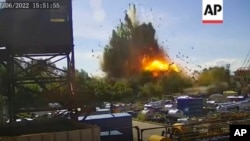
This image taken from video and provided by the Ukrainian Presidential Press Office , June 28, 2022, claims to show the moment just after a missile struck a shopping mall in Kremenchuk, Ukraine.


This image taken from video and provided by the Ukrainian Presidential Press Office , June 28, 2022, claims to show the moment just after a missile struck a shopping mall in Kremenchuk, Ukraine.

Some information for this report came from The Associated Press and Reuters.

Categories
Saved Web Pages

R. Kelly Sentenced To 30 Years In Prison For Brooklyn Sex Trafficking & Racketeering Case –

R.-Kelly-Press-Photo-2018.png

R. Kelly Sentenced To 30 Years In Prison For Brooklyn Sex Trafficking & Racketeering Case

In late September of 2021, the famed R&B singer-songwriter R. Kelly was found guilty on all charges in a sex-trafficking and racketeering case. The guilty verdict took place even after Kelly had been charged with sex crimes previously. Now, Fader has reported that Kelly has finally received his sentence for the September verdict, with the singer to spend 30 years in prison.

si?token=4be97d42-f32b-46e8-9b14-7ceb5be

According Fader, the case prosecutors’ sentencing letter described Kelly as having a “callous disregard” for his victims, with his crimes and misconduct “fueled by narcissism and a belief that his musical talent absolved him of any need to conform his conduct.” The singer’s lawyer, Jennifer Bonjean, asked for lenience on the basis that Kelly himself had been a victim of child sexual abuse.

Judge Ann Donnelly did not mince words in condemning the crimes of the defendant, stating that “These crimes were calculated and carefully planned and regularly executed for almost 25 years,” going on to explain that “[Kelly] taught them that love is enslavement and violence.”

Even after the three-decade long sentence, Kelly will go on to face trials in the state of Minnesota for allegations of sexual misconduct and child pornography. YouTube has recently removed the YouTube channel of the singer following his initial guilty verdict in September.

Categories
Saved Web Pages

Videos debunk Russia’s lies about missile strike on Ukraine mall

missile-russia-ukraine-mall-kremenchuk.j

By Ramy Inocencio

June 29, 2022 / 9:29 AM / CBS News

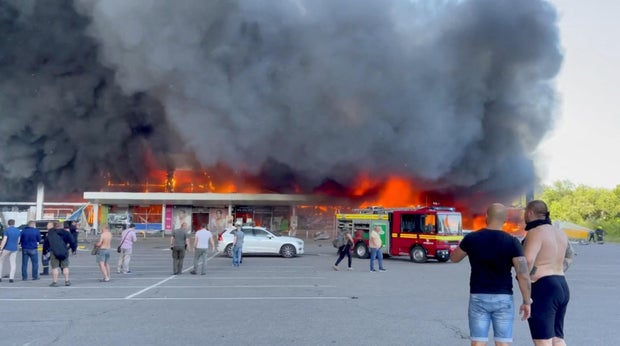
Kyiv — Video has emerged that appears to refute Russian propaganda suggesting that a missile strike on a shopping mall in Ukraine never happened. At least 18 people died and about 60 were wounded in the Monday strike, according to Ukrainian officials, but Russia claims it only hit a legitimate military target near the mall.

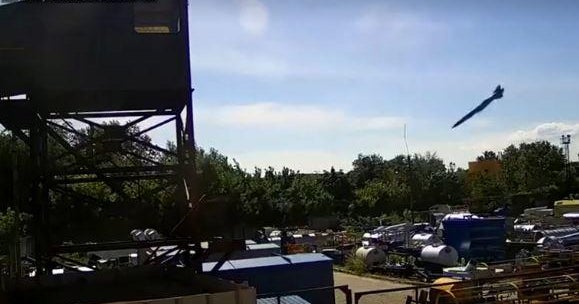
Video from security cameras in the area clearly caught the moment when Ukrainian President Volodymyr Zelenskyy says a Russian X-22 cruise missile slammed into the shopping center in the central city of Kremenchuk. A shockwave ripples across the area just before people in a park are seen falling to the ground and fleeing for cover. 

Emergency workers were still searching through the wreckage of the shopping center on Wednesday, with about 20 people still listed as missing.

Zelenskyy shared another video that he said showed the X-22 rocket — a long-range cruise missile designed in the former Soviet Union to sink American aircraft carriers — flying at an angle into the mall, sending a huge fireball and debris flying in all directions. The Ukrainian leader pleaded on Tuesday for the United Nations to “act immediately” to “hold Russia accountable” for what he has described as a terrorist attack on his country.

“Absolute terrorism” – says @ZelenskyyUa and publishes a video of a deliberate missile strike on the Kremenchuk shopping center with people inside. Russian propaganda always lies: there is no coincidence, it is a deliberate blow to intimidate the population and mass victims. pic.twitter.com/Gx1f90cMta

— Михайло Подоляк (@Podolyak_M) June 28, 2022

In his post sharing the video, Zelenskyy accused Russia of hitting the mall “purposefully.”

“They wanted to kill as many people as possible in a peaceful city, in a regular shopping mall,” he said.  

The security camera videos appear to debunk Russian propaganda spread online suggesting the attack was faked and that the Russian military only hit a military facility near the shopping center. Various Russian accounts have suggested the site targeted was a depot stocked with Western-supplied weapons or a base for Ukrainian military vehicles.

CBS News visited the facility just north of the mall, however, and found an asphalt factory. We met Mykola Danyleiko, chairman of the board for the Kredmash Road Machinery Plant, which mixes asphalt to pave roads.

“It’s fake,” he told CBS News of the Russian claims. “They said we send products from here by railroad. Do you see a railroad?” 

The cement plant was hit by a missile on Monday, too, but there was no railway there.

Russia's attack on Ukraine continues, in Kremenchuk Smoke rises from a shopping mall hit by a Russian missile strike, as Russia’s attack on Ukraine continues, in Kremenchuk, central Ukraine, June 27, 2022. Telegram/V_Zelenskiy_official/Handout/REUTERS

Russia’s Defense Ministry claimed fire spread from its strike on the plant to the mall, causing the shopping center to burn down. But our team saw no burn path after walking the third of a mile between the two locations.

Russian media also said the mall was “non-operating” at the time of the strike, but recent online videos suggest otherwise.

And fear can’t be faked: As we began interviewing a local woman near the mall a day after the strike, an air raid alert started beeping on her phone, and she bolted.

She was clearly afraid of another Russian missile strike — which Moscow might again insist never happened.

CBS News producer Barny Smith contributed to this report.

More

First published on June 29, 2022 / 9:29 AM

© 2022 CBS Interactive Inc. All Rights Reserved.

Categories
Saved Web Pages

Russia-Ukraine war: Nato calls Moscow ‘the most direct threat to security and stability’ as it welcomes Finland and Sweden – live

780.jpg?width=1200&height=630&quality=85

Nato leaders have announced a new “strategic concept” in response to Russia’s war against Ukraine which has “gravely altered our security environment”, describing Moscow as “the most significant and direct threat to allies’ security and stability”.

Nato has invited Sweden and Finland to become members of the military alliance, according to a communique published by the Nato summit in Madrid.

The statement reads:

The accession of Finland and Sweden will make them (the allies) safer, Nato stronger and the Euro-Atlantic area more secure.

The alliance pledged further help to Kyiv and agreed on a package of support aimed at modernising the country’s defence sector. Nato also said it had decided to significantly strengthen its own deterrence and defence.

The statement continues:

Allies have committed to deploy additional robust in-place combat-ready forces on our eastern flank, to be scaled up from the existing battlegroups to brigade-size units, where and when required underpinned by credible available reinforcements, prepositioned equipment, and enhanced command and control.

Ukraine’s defence ministry said 144 Ukrainian soldiers, including troops who were at Mariupol’s besieged Azovstal steel plant, have been freed in a prisoner swap with Russia.

The latest prisoner swap was the largest exchange since Russia invaded Ukraine, the main intelligence directorate of Ukraine’s defence ministry said on Telegram.

Of the 144 Ukrainian soldiers freed, 95 had been involved in defending the Azovstal steelworks, it said. It did not specify when and where the swap took place or how many Russian prisoners were released as part of the exchange.

Ukraine’s president, Volodymyr Zelenskiy, has shared CCTV footage of the moment a shopping mall in Kremenchuk was hit by a Russian missile strike on Monday, saying it was a deliberate attack.

“It is clear that Russian killers received those exact coordinates for this missile [launch]. They wanted to kill as many people as possible in a peaceful city,” Zelenskiy said in a video address.

Zelenskiy releases footage of ‘deliberate’ Russian strike on shopping mall – video

It’s 6pm in Kyiv. Here’s where we stand:

  • Nato leaders have announced a new “strategic concept” in response to Russia’s war against Ukraine, describing Moscow as “the most significant and direct threat to allies’ security and stability”. Nato has invited Sweden and Finland to become members of the military alliance, according to a communique published by the Nato summit in Madrid. Leaders also pledged further help to Kyiv and agreed on a package of support aimed at modernising the country’s defence sector.
  • Zelenskiy also accused the Russian president, Vladimir Putin, of becoming “a terrorist” leading a “terrorist state” and urged Russia’s expulsion from the United Nations. In a virtual address on Tuesday, Zelenskiy called for the UN to visit the site of Monday’s missile strike on a shopping mall in the city of Kremenchuk, which killed at least 18 people.

Hello everyone, it’s Léonie Chao-Fong with you today with all the latest developments from the war in Ukraine. Feel free to drop me a message if you have anything to flag, you can reach me on Twitter or via email.

Ukraine’s foreign minister Dmytro Kuleba praised Nato for its “clear-eyed stance” on Russia and for inviting Finland and Sweden to join the military alliance.

Kuleba tweeted that Nato leaders had taken “difficult, but essential decisions” at the summit in Madrid today, adding:

An equally strong and active position on Ukraine will help to protect the Euro-Atlantic security and stability.

Today in Madrid, NATO proved it can take difficult, but essential decisions. We welcome a clear-eyed stance on Russia, as well as accession for Finland and Sweden. An equally strong and active position on Ukraine will help to protect the Euro-Atlantic security and stability.

— Dmytro Kuleba (@DmytroKuleba) June 29, 2022

Chief of the Ukrainian presidential staff, Andriy Yermak, also welcomed the message Nato had sent to Russia.

Russia will not defeat Ukraine – Russia is going to be defeated.

That’s the message @NATO member states repeatedly emphasize at the summit.

Ukraine and its allies must win this battle for democracy. There’s no other way round.

— Andriy Yermak (@AndriyYermak) June 29, 2022

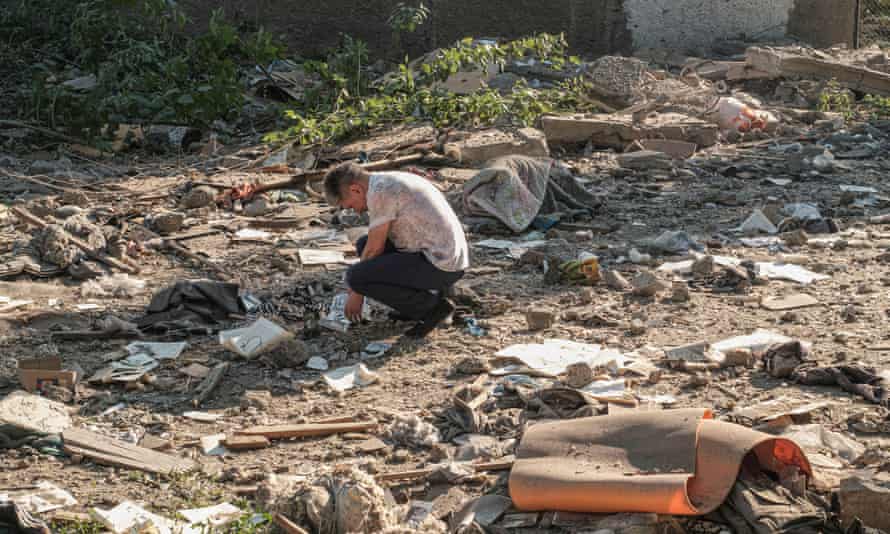
A man examines pictures over the debris after shelling at a residential area in Mykolaiv, southern Ukraine.

A man examines pictures over the debris after shelling at a residential area in Mykolaiv, southern Ukraine. Photograph: George Ivanchenko/EPA

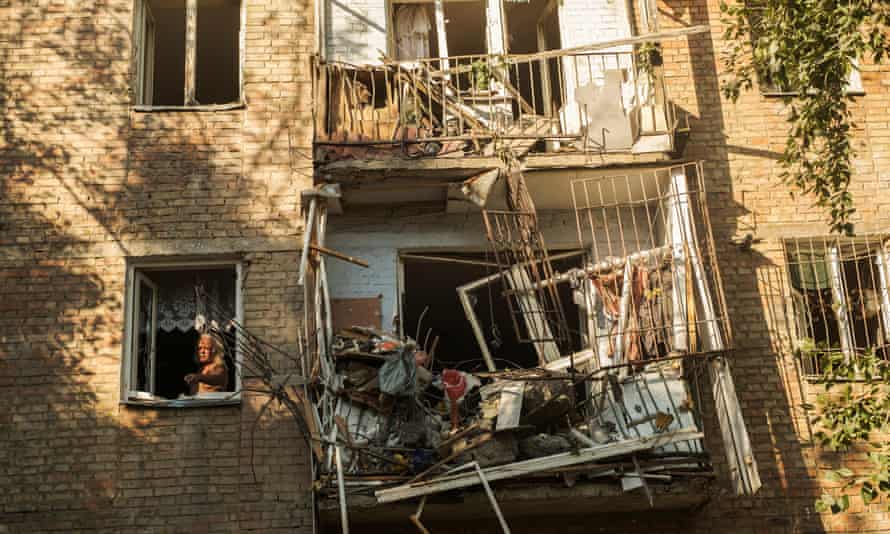
A man stands by a window inside his damaged apartment after shelling at a residential area in Mykolaiv.

A man stands by a window inside his damaged apartment after shelling at a residential area in Mykolaiv. Photograph: George Ivanchenko/EPA

Syria has said it officially recognised the independence and sovereignty of the Russian controlled territories of Luhansk and Donetsk in eastern Ukraine.

Reuters reports that the Syrian presidency had affirmed its intention to build relations with the two self-proclaimed republics in February, and that today the move was confirmed by state news agency SANA, citing a foreign ministry source.

The self-proclaimed Donetsk People’s Republic and Luhansk People’s Republic were formed in April 2014. Until now, the only UN member state to recognise their legitimacy had been Russia. South Ossetia, itself a breakaway region recognised by most international states as part of Georgia, has also previously offered them recognition.

Point 41 of the new 2022 Nato strategic concept document directly addresses the possibility of Ukraine joining the alliance in the future. The document reads:

The security of countries aspiring to become members of the Alliance is intertwined with our own. We strongly support their independence, sovereignty and territorial integrity. We will strengthen political dialogue and cooperation with those who aim to join the Alliance, help strengthen their resilience against malign interference, build their capabilities, and enhance our practical support to advance their EuroAtlantic aspirations. We will continue to develop our partnerships with Bosnia and Herzegovina, Georgia and Ukraine to advance our common interest in Euro-Atlantic peace, stability and security. We reaffirm the decision we took at the 2008 Bucharest Summit and all subsequent decisions with respect to Georgia and Ukraine.

Nato has published its new strategic concept in full on its website. The introduction lays out how starkly Nato portrays the threat of Russia, saying:

The Russian Federation’s war of aggression against Ukraine has shattered peace and gravely altered our security environment. Its brutal and unlawful invasion, repeated violations of international humanitarian law and heinous attacks and atrocities have caused unspeakable suffering and destruction. A strong, independent Ukraine is vital for the stability of the Euro-Atlantic area. Moscow’s behaviour reflects a pattern of Russian aggressive actions against its neighbours and the wider transatlantic community.

The introduction concludes:

Our vision is clear: we want to live in a world where sovereignty, territorial integrity, human rights and international law are respected and where each country can choose its own path, free from aggression, coercion or subversion. We work with all who share these goals. We stand together, as Allies, to defend our freedom and contribute to a more peaceful world.

Download: Nato 2022 strategic concept PDF

The Jens Stoltenberg Nato press conference in Madrid has finished, but while that has been happening, also speaking has been Maria Zakharova, press secretary of Russia’s foreign ministry. She has said that Russia does not rule out seizing western assets within its borders.

Reuters quotes her saying Russia was prepared to “act accordingly” if the west decided to use Russia’s frozen state assets – chief among them being around $300bn of central bank foreign currency reserves.

Zakharova, dismissed as a “comedy turn” by the UK defence secretary, Ben Wallace, earlier today, said the use of such funds “will be interpreted by us as an unlawful and defiantly unfriendly attack, giving us the right to take retaliatory actions to protect our interests”.

“We should not forget about the foreign assets of western countries, businesses and citizens who are located on the territory of our country,” she said.

If the west failed to adhere to the principles of democracy, an open economy, private property and judicial independence, then “we will recognise this and act accordingly”, Zakharova added.

A Ukrainian journalist at the Nato press conference asked Jens Stoltenberg what the reaction was like from the leaders in the room when Ukraine’s President Volodymyr Zelenskiy addressed the meeting. Stoltenberg said “the message from the leaders in the meeting room was a very strong special support.”

He went on to say:

Not only a special support, but actually they announced additional systems, weapons, equipment, that our Nato allies are now delivering to Ukraine. It is a message in words and deeds.

I think also it is very clear that allies are prepared for a long war. Wars are unpredictable, but we have to be prepared for the long haul. And that was the clear message to all of us in the room for President Zelenskiy.

And our answer was, yes, we are prepared because they are fighting for their independence, but they’re also fighting for values which are important for the sovereignty and territorial integrity of every nation.

And therefore, this matters for our security.

Our focus now is to support Ukraine. This war will, as most other wars do at some stage, end at the negotiating table.

But it is important that Ukraine is able to get an agreement on their terms, which is acceptable for Ukraine. And therefore we know that there is a very close link between what they can achieve around the negotiating table, and their strength on the battlefield.

And therefore our focus now is to support them on the battlefield with many different types of lethal or non-lethal support. That is the focus.

The journalist had also asked what chance Stoltenberg thought there might be after the war for a quick accession to Nato for Ukraine, in a similar manner to the one offered to Finland and Sweden. The secretary general said “Nato’s door remains open” and cited the alliance’s declaration in Bucharest in 2014 that Ukraine was welcome to apply.

Nato’s secretary general, Jens Stoltenberg, is taking questions from the media at the press conference now. The first question was whether Nato would be placing permanent bases in Sweden and Finland once their membership of the alliance was ratified. He said:

First of all, the decision to invite Finland and Sweden to become members demonstrate that Nato’s door is open. It demonstrates that President Putin did not succeed in closing Nato’s door. Nato’s door remains open.

And it also demonstrates that we respect the sovereign right of every nation to choose its own path. So we of course, respect that Finland and Sweden when they decided to stay out of Nato for many, many years, but then we also welcome them and respect the decision to join Nato.

Stoltenberg then emphasised that the plan would be to pre-position more equipment further forward closers to Nato’s borders. He said:

We know that actually to move, people can go quite fast. But to move heavy equipment, battle tanks, ammunition, fuel, all kinds of supplies, that takes time. So if we have that pre-positioned in place, then you can move in very quickly with the personnel.

He said that “what we will make sure with our presence is that we are able to defend all allies, including of course, Finland, and Sweden”.

Nato’s new strategic concept, Jens Stoltenberg has explained in Madrid, also looks at the environmental impact of the defence alliance. He said: “We cannot choose between having green militaries or strong militaries. They must be both. So we must maintain our operational effectiveness and readiness as we continue to adapt.”

He described the climate crisis as “the defining challenge of our time” and said that “Nato is committed to playing our part in mitigating the impact on our security.”.

Categories
Saved Web Pages

NATO Says Georgia’s Security Intertwined with its Own

NATO-HQ.jpg

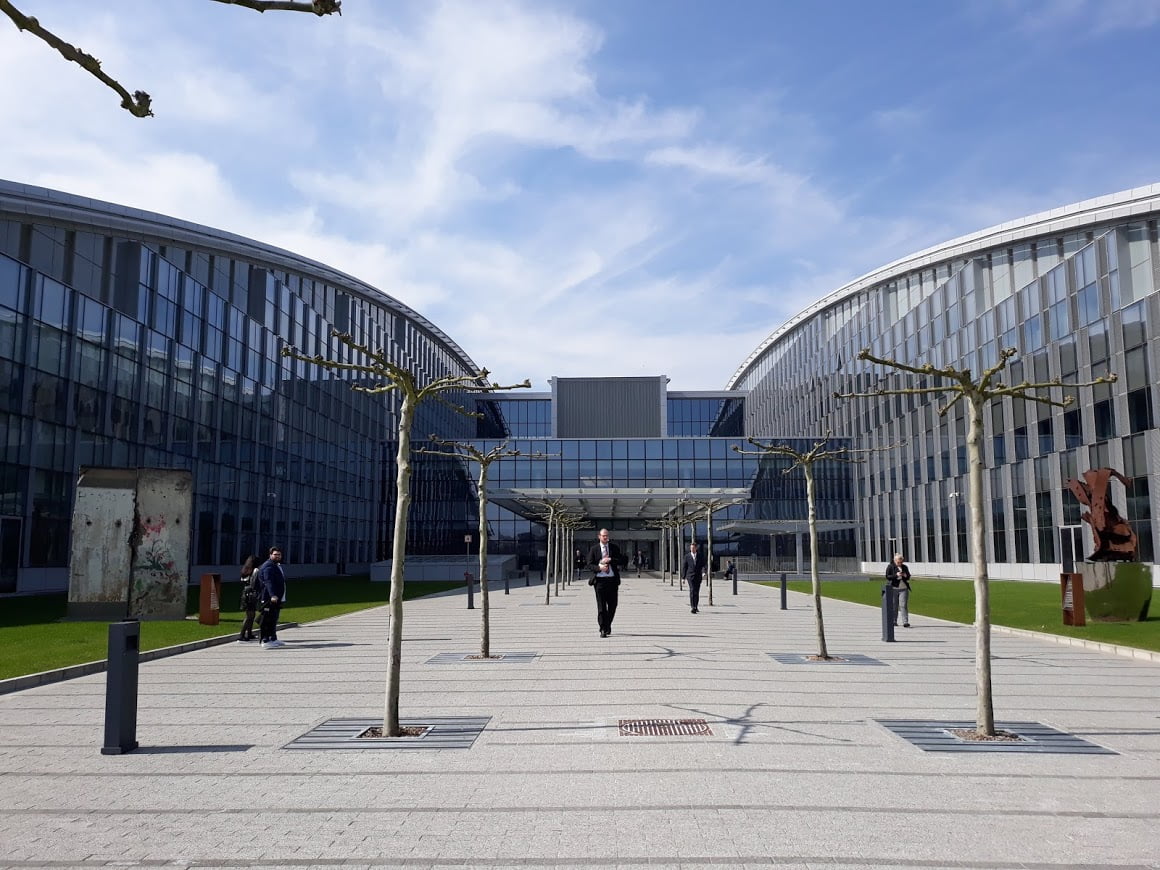
The North Atlantic Treaty Organization’s 2022 Strategic Concept pledged to continue developing its partnership with Georgia and reaffirmed its 2008 Bucharest Summit decision that the country will eventually become a member of the Alliance.

“We will continue to develop our partnerships with Bosnia and Herzegovina, Georgia and Ukraine to advance our common interest in Euro-Atlantic peace, stability and security,” reads the concept.

The document emphasized that “the security of countries aspiring to become members of the Alliance is intertwined with our own. We strongly support their independence, sovereignty and territorial integrity.”

“We will strengthen political dialogue and cooperation with those who aim to join the Alliance, help strengthen their resilience against malign interference, build their capabilities, and enhance our practical support to advance their Euro-Atlantic aspirations,” it added.

NATO Secretary-General Jens Stoltenberg said the concept, adopted at June 29-30 Madrid Summit, is “the blueprint for the Alliance in a more dangerous and competitive world.”

Russia “Most Significant Threat”

In the Strategic Concept, NATO Allies underlined that “the Russian Federation is the most significant and direct threat to Allies’ security and to peace and stability in the Euro-Atlantic area.” They said Moscow “seeks to establish spheres of influence and direct control through coercion, subversion, aggression and annexation. It uses conventional, cyber and hybrid means against us and our partners.”

The Strategic Concept also asserted that “Moscow’s military build-up, including in the Baltic, Black and Mediterranean Sea regions, along with its military integration with Belarus, challenge our security and interests.”

NATO also noted that “the Western Balkans and the Black Sea region are of strategic importance for the
Alliance. We will continue to support the Euro-Atlantic aspirations of interested countries in these regions.” “We will enhance efforts to bolster their capabilities to address the distinct threats and challenges they face and boost their resilience against malign third-party interference and coercion.”

Also Read:

This post is also available in:
ქართული (Georgian) Русский (Russian)

WP Radio
WP Radio
OFFLINE LIVE