By: Fern Sidman As diplomatic whispers intensify about President Donald Trump’s reported plan to announce an end to Israel’s war with Hamas, divisions within the Israeli political spectrum have burst into the open. Leaders from across the right, center, and religious parties are staking out positions that reflect not only their vision for the […]
ОЛБАНИ, штат Нью-Йорк — Губернатор Кэти Хоукул заявила, что Нью-Йорк выделит 30 миллионов долларов на 19 проектов, направленных на сдерживание наводнений и укрепление прибрежной обороны, […]
By Chuck Ross (Free Beacon) Zohran Mamdani’s political party, the Democratic Socialists of America (DSA), mourned Assata Shakur, one of the FBI’s former most wanted terrorists, who was convicted of murdering a New Jersey state trooper in 1973 before fleeing to Cuba years later. In a social media post Saturday, the DSA said the “American state brutally […]
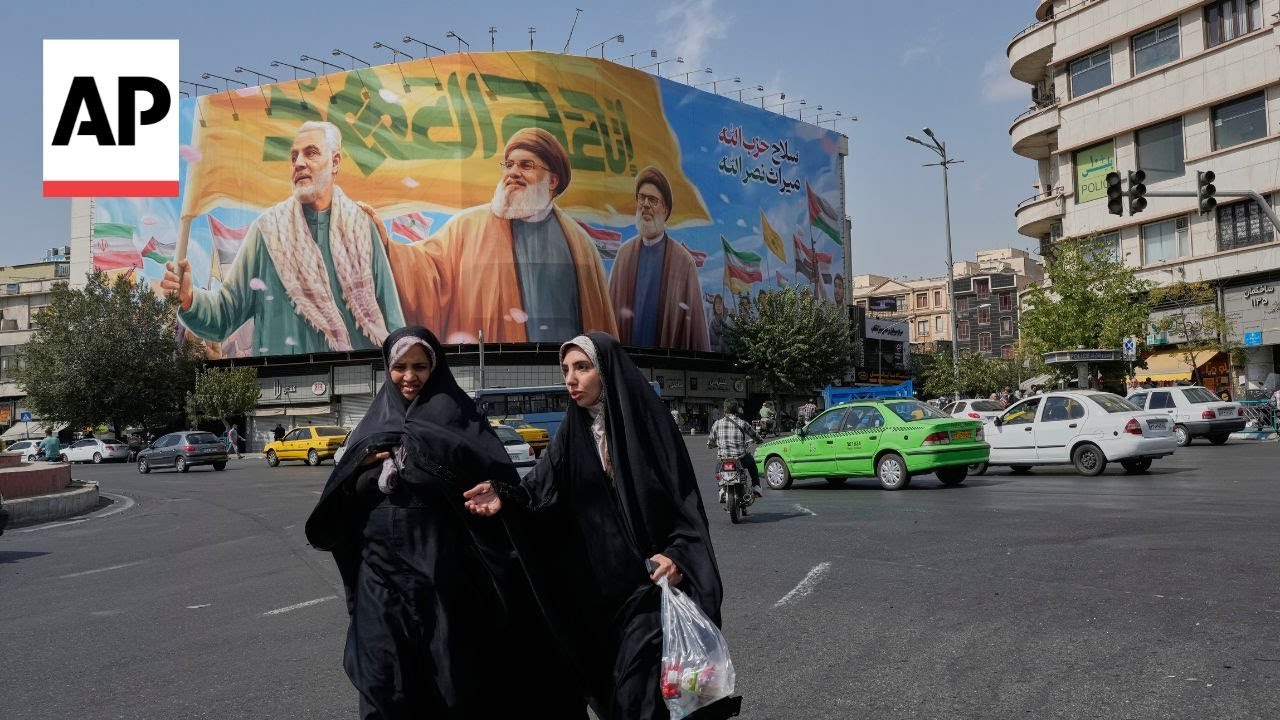
(AP) — The United Nations reimposed sanctions on Iran early Sunday over its nuclear program, further squeezing the Islamic Republic as its people increasingly find themselves priced out of the food they need to survive and worried about their futures. The sanctions will again freeze Iranian assets abroad, halt arms deals with Tehran, and penalize […]
The long and tumultuous feud between President Donald Trump and former FBI Director James Comey has reached a critical juncture with the recent indictment of Comey.1 This high-stakes legal battle is not merely a personal dispute but a stark reflection of the deep political divisions in the United States, raising profound questions about the rule of law, the politicization of justice, and the future of American democratic norms.2
Legal Analysis: A Case Fraught with Political Overtones
The indictment charges James Comey with making a false statement and obstructing a congressional proceeding.3 The case reportedly stems from Comey’s testimony regarding his knowledge of leaks from within the FBI. However, legal experts from across the political spectrum have raised serious concerns about the strength and motivation of the prosecution.
The indictment itself has been described as unusually thin, and reports indicate that the grand jury’s decision was not unanimous. Furthermore, the resignation of the previous U.S. Attorney for the Eastern District of Virginia, who reportedly had reservations about bringing charges, has fueled speculation that the prosecution is politically motivated.4
Comey’s defense is expected to argue that the prosecution is a vindictive act of political retribution orchestrated by the Trump administration. His legal team will likely highlight the former President’s long history of publicly attacking Comey and calling for his prosecution. To secure a conviction, the government faces the high legal burden of proving beyond a reasonable doubt that Comey knowingly and willfully intended to mislead Congress. Legal analysts suggest that proving such intent, particularly in the context of complex and nuanced testimony, will be a significant challenge.
The very act of prosecuting a former FBI director for his testimony before Congress is unprecedented and sets a dangerous precedent, potentially chilling future testimony from government officials.
Political and Social Significance: Erosion of Trust and Deepening Divides
The Trump-Comey saga has had a corrosive effect on public trust in key governmental institutions. The constant attacks on the integrity of the FBI and the Department of Justice have politicized these institutions in the public eye, with perceptions of their actions often filtered through a partisan lens.5 This erosion of trust in the foundational pillars of the justice system is a significant blow to the principle of equal justice under the law.
The conflict has also served as a powerful engine of partisan polarization.6 For Trump’s supporters, Comey is a symbol of the “deep state” bureaucracy that they believe has been working to undermine the former president. For Trump’s critics, the indictment of Comey is a chilling example of the weaponization of the justice system to target political enemies. This starkly divided narrative has left little room for common ground or a shared understanding of the facts.
The affair has also fundamentally altered the relationship between the presidency and federal law enforcement. The long-standing norm of a degree of independence for the FBI and the DOJ has been shattered, replaced by an expectation of personal loyalty to the president.7
Predictions: A Trajectory of Retaliation and Uncertainty
The indictment of James Comey has opened a new and perilous chapter in American politics, with several potential long-term consequences:
A Cycle of Political Prosecutions: The move against Comey could normalize the use of the legal system to settle political scores. Future administrations may feel empowered to launch investigations and prosecutions of their predecessors and political opponents, leading to a dangerous cycle of retaliatory justice that would further destabilize the political landscape.
Further Erosion of Institutional Norms: The willingness to disregard established norms of prosecutorial independence sets a precedent that will be difficult to reverse. Future presidents may feel less constrained in their efforts to influence the justice system, further blurring the lines between politics and law.
Deepening Political Paralysis: The hyper-partisan environment fueled by the Trump-Comey conflict is likely to intensify, making bipartisan cooperation on even the most pressing national issues increasingly difficult. The political discourse may become even more toxic and dominated by accusations of bad faith and criminality.
Uncertain Legal and Political Outcomes: The ultimate outcome of the legal case against James Comey remains uncertain. An acquittal could be seen as a rebuke of the Trump administration’s actions and could embolden critics. A conviction, on the other hand, would be a seismic event, further inflaming partisan tensions and raising fundamental questions about the fairness of the justice system.
In conclusion, the confrontation between Donald Trump and James Comey has transcended a personal feud to become a critical stress test for American democracy. The ongoing legal battle and its political fallout will have lasting implications for the rule of law, the integrity of governmental institutions, and the very nature of political discourse in the United States for years to come. –
The relationship between former President Donald Trump and former FBI Director James Comey has been marked by intense animosity, which culminated in Comey’s indictment in September 2025. The years-long feud has raised serious questions about the independence of U.S. law enforcement institutions and the role of partisan politics in the justice system. [1, 2, 3] Timeline of the Trump-Comey feud 2016 Campaign
• Controversial decisions: While heading the FBI, Comey made controversial decisions regarding the investigation into Hillary Clinton’s use of a private email server.
• In July 2016, he publicly announced that the FBI would not recommend charges against Clinton, though he characterized her actions as “extremely careless”. • In October 2016, just days before the election, Comey informed Congress that the investigation was being reopened due to newly discovered emails. He later closed the case again, but many, including Clinton herself, believe the damage was already done.
• Initial interactions: Trump initially praised Comey’s handling of the Clinton email investigation, but their relationship was fraught from the start. [1, 4, 5, 6, 7]
Trump’s first term
• The loyalty test: After his inauguration, Trump privately pressed Comey for a pledge of personal loyalty, which Comey declined to give. • Flynn investigation: Trump also asked Comey to drop the FBI investigation into his former National Security Advisor, Michael Flynn. • May 2017 firing: Trump fired Comey in May 2017, initially citing a memo from the Deputy Attorney General regarding Comey’s handling of the Clinton case. • Russia investigation: Trump later told NBC that “this Russia thing” was on his mind when he fired Comey. He also reportedly told Russian officials that firing Comey had relieved “great pressure” from the Russia investigation. • Mueller investigation: Comey’s firing and his testimony about his interactions with Trump prompted the appointment of Special Counsel Robert Mueller to investigate Russian interference and potential obstruction of justice by the president. • “A Higher Loyalty”: In his 2018 memoir, A Higher Loyalty, Comey compared Trump to a “mafia don” and detailed his concerns about the president’s ethics. [1, 4, 6, 8, 9]
Trump’s second term
• Continued pressure on DOJ: After taking office again in 2025, Trump escalated his efforts to target political opponents, publicly pressuring Attorney General Pam Bondi to prosecute Comey and others. • Social media post: In July 2025, Trump and his allies accused Comey of calling for the president’s assassination over a cryptic social media post showing shells arranged to read “86 47″—a phrase associated with “86-ing” or removing someone. Comey denied the allegation. • September 2025 indictment: Following Trump’s public demands, the Department of Justice indicted Comey on two felony counts: making a false statement and obstruction of a congressional proceeding.
• The charges relate to Comey’s September 2020 testimony before the Senate Judiciary Committee concerning media leaks related to the FBI’s investigations. • The indictment was brought by a Trump appointee in the U.S. Attorney’s office, overriding career prosecutors who saw insufficient evidence. • Comey has denied wrongdoing, stating in an Instagram video, “I am innocent. So, let’s have a trial”.
• Undermining the prosecution: Some analysts and legal experts say that Trump’s public comments may undermine the prosecution’s case by providing a basis to argue that the charges are politically motivated. [1, 3, 10, 11, 12, 13, 14, 15, 16]
Effects on U.S. institutions The Trump-Comey conflict has had a profound impact on American political and legal institutions by challenging the norms of law enforcement independence. Critics have pointed to the following issues:
• Political weaponization of justice: Critics allege that the Comey indictment and other actions against Trump’s political opponents reflect the use of the Justice Department as a tool for political retribution, eroding the tradition of keeping federal law enforcement insulated from political pressure. • Executive power and oversight: The feud raised fundamental questions about the balance of power between the president and the FBI, particularly a president’s ability to dismiss an FBI director and influence ongoing investigations. • Diminished public trust: The highly polarized conflict and allegations of misconduct on both sides have damaged public trust in law enforcement institutions and the broader political system. [3, 4, 5, 17, 18]
AI responses may include mistakes.
[1] abcnews.go.com/Politics/back… [2] npr.org/2025/09/27/nx-s1-555… [3] nytimes.com/2025/09/27/us/po… [4] en.wikipedia.org/wiki/Dismis… [5] npr.org/2017/05/09/527663050… [6] apnews.com/article/trump-com… [7] en.wikipedia.org/wiki/Dismis… [8] en.wikipedia.org/wiki/Dismis… [9] latimes.com/world-nation/sto… [10] cbsnews.com/news/former-fbi-… [11] nbcnews.com/politics/justice… [12] nytimes.com/2025/09/26/us/tr… [13] bbc.com/news/articles/cy50gg… [14] nytimes.com/2025/09/27/us/po… [15] cnn.com/2025/07/18/politics/… [16] abcnews.go.com/US/former-fbi… [17] nytimes.com/2017/05/09/us/po… [18] whro.org/2025-09-27/comeys-i… – GS – AI Mode Trump vs. Comey: A Nation’s Institutions Under Pressure . Their tumultuous history, which began during the 2016 presidential election, has consistently tested the independence of U.S. government institutions.The relationship between former President Donald Trump and former FBI Director James Comey is one of escalating, high-profile conflict, with the most recent development being the September 2025 federal indictment of Comey A timeline of the conflict 2016 election October 28: Just days before the election, then-FBI Director Comey announced the bureau was reopening its investigation into Hillary Clinton’s use of a private email server. The surprise move drew both praise and criticism, and many analysts believe it played a role in Clinton’s defeat. 2017: The start of Trump’s first term January: In the days following his inauguration, Trump held a private dinner with Comey where he reportedly asked the FBI director for his personal “loyalty”. May 9: Trump abruptly fired Comey. Though the White House initially claimed it was due to Comey’s handling of the Clinton email investigation, Trump later stated that “the Russia thing” was on his mind at the time of the firing. The dismissal led to the appointment of former FBI Director Robert Mueller as special counsel to investigate Russian interference in the 2016 election and potential links to the Trump campaign. June: During testimony to the Senate Intelligence Committee, Comey stated that he believed Trump had directed him to drop an investigation into then-national security adviser Michael Flynn. 2018: A war of words April: Comey published his memoir, A Higher Loyalty: Truth, Lies, and Leadership, in which he called Trump “morally unfit to be president”. Trump responded with a series of social media attacks, calling Comey a “proven LEAKER & LIAR”. 2020: The Russia probe and congressional testimony September: Comey testified before the Senate Judiciary Committee regarding the FBI’s investigation into the Trump campaign’s ties to Russia. His statements defending the probe would later become the basis for the 2025 indictment. 2025: The indictment May: The Trump administration launched an investigation into Comey after he posted a photo of seashells on social media arranged to spell “86 47”. Though Comey claimed it was a misunderstanding, critics claimed it was a coded threat of violence. September: Just one day after Trump publicly demanded that the Justice Department indict his political enemies, a federal grand jury indicted James Comey.The charges: The indictment includes two felonies: making a false statement and obstructing a congressional proceeding. The context: The indictment was sought by Trump and issued by U.S. Attorney Lindsey Halligan, who was appointed days earlier, after career prosecutors in the Eastern District of Virginia declined to pursue the case. Differing reactions: Comey has maintained his innocence, while Trump has celebrated the indictment as “justice” and hinted that more could follow.
Key issues for U.S. institutions The Trump-Comey conflict has placed immense pressure on key U.S. institutions, raising significant concerns among politicians, legal experts, and the public. Politicization of the Justice Department: The indictment of a political opponent following public pressure from the president has been criticized as an extreme example of the Justice Department being used as a political tool. Critics, including former federal officials, say it violates decades of established norms against politicizing criminal investigations. Erosion of FBI independence: Trump’s attempts to pressure Comey regarding the Russia investigation, his subsequent firing of the FBI director, and recent events have fueled concerns about the erosion of the FBI’s independence from political influence. Retribution vs. justice: The conflict has ignited an intense debate over whether the recent legal actions are genuine pursuits of justice or politically motivated acts of revenge. As Trump faces legal challenges himself, some of his supporters have framed the recent actions as justifiable retribution. –
Mamdani’s $100M Pledge for Migrant Deportation Defense Sparks Outcry Amid NYC’s Fiscal Strain By: Andrew Carlson New York City’s looming mayoral race has again turned into a proxy battle over immigration, fiscal priorities, and the direction of the city’s identity. This time, the firestorm centers on Democratic nominee Zohran Mamdani, who has declared that a […]
Trump’s 21-Point Gamble: Bold Gaza Blueprint Pits Ceasefire Dreams Against Israel’s Security Red Lines
By: Fern Sidman
The Washington Post published new details on Saturday night about a sweeping 21-point proposal drafted by the Trump administration aimed at ending the war in Gaza. The proposal—ambitious in scope yet riddled with uncertainties—was obtained by the Washington Post and verified by officials from two governments briefed on the plan. As reported, the framework includes an immediate halt to military operations, the freezing of battle lines, and a demand that Hamas release within 48 hours all 20 surviving hostages, along with the remains of those murdered during captivity.
According to a report that appeared on Israel National News (INN), the proposal marks one of the most comprehensive American efforts to shape the post-October 7 order in Gaza, combining ceasefire demands with security restructuring, prisoner exchanges, and even an economic redevelopment vision. Yet, despite the elaborate presentation, neither Israel nor Hamas has accepted the framework, leaving its fate uncertain as it awaits Monday’s high-stakes meeting between President Donald Trump and Israeli Prime Minister Benjamin Netanyahu at the White House.
The proposal centers on four initial measures:
Immediate cessation of hostilities – both Israel and Hamas would halt offensive military operations, effectively freezing battle lines where they currently stand.
Hostage release – Hamas would be compelled to release all 20 remaining living hostages within 48 hours, along with the remains of deceased captives.
Disarmament clauses – the group’s offensive weaponry—rockets, drones, and heavy arms—would be destroyed, while members committing to “peaceful co-existence” would be granted amnesty.
Safe passage for terrorists – Hamas operatives unwilling to remain under the terms of coexistence would be given safe passage to third countries.
As the Israel National News report emphasized, these provisions represent a dramatic gamble: on one hand, they seek to neutralize Hamas’s military capacity while averting further bloodshed; on the other, they hinge on a level of trust and compliance that past ceasefire arrangements have repeatedly failed to secure.
The 21-point outline also contains extensive sections on governance and reconstruction. While light on sequencing and operational detail, the plan envisages an interim governing authority for Gaza, presumably backed by the United Nations and international donors. This entity would manage humanitarian aid, security transitions, and infrastructure rebuilding.
The document makes two notable commitments:
No Gazans will be forced to leave their homes; those who temporarily relocate under the ceasefire arrangement will retain the right to return.
A “Trump economic development plan” will be launched to “rebuild and energize” Gaza, though no timeline or funding commitments are specified.
Israel National News reported that the vagueness of these proposals has already drawn skepticism in Jerusalem. Critics argue that absent firm enforcement mechanisms, Hamas could regroup under the guise of reconstruction while international funds flow freely into Gaza.
One of the most controversial aspects of the plan, first revealed by Saudi outlet Al-Hadath, is its proposed prisoner exchange. In return for the release of hostages, Israel would reportedly free thousands of Palestinian prisoners, including between 100 and 200 serving life sentences.
As the Israel National News report noted, the Israeli public remains deeply divided on this point. While hostage families have mounted emotional campaigns demanding concessions for their loved ones’ return, many Israelis fear that releasing hardened terrorists will only embolden Hamas and lead to future massacres. The memory of prior exchanges—such as the 2011 deal that freed over 1,000 prisoners for the release of Gilad Shalit—looms heavily over current deliberations.
The Trump framework also proposes sweeping changes to humanitarian assistance in Gaza. Aid would be allowed to flow freely and without limitation through the United Nations and allied NGOs. However, the existing humanitarian fund operating in the enclave would be shut down, a measure apparently intended to prevent diversion of resources by Hamas.
The Israel National News report emphasized that this provision reflects Israel’s longstanding concerns about aid diversion. Reports in recent months have detailed how Hamas gunmen looted food and fuel convoys, depriving civilians of vital supplies. Whether Trump’s plan includes sufficient safeguards to prevent such abuses remains unclear.
On Friday evening, Trump himself took to Truth Social to confirm ongoing negotiations. His message was characteristically buoyant:
“I am pleased to report that we are having very inspired and productive discussions with the Middle Eastern Community concerning Gaza. Intense negotiations have been going on for four days and will continue for as long as necessary in order to get a Successfully Completed Agreement. All of the Countries within the Region are involved, Hamas is very much aware of these discussions, and Israel has been informed at all levels, including Prime Minister Bibi Netanyahu. There is more Goodwill and Enthusiasm for getting a Deal done, after so many decades, than I have ever seen before. Everyone is excited to put this period of Death and Darkness behind them. It is an Honor to be a part of this Negotiation. We must get the Hostages back and get a PERMANENT AND LONGLASTING PEACE!”
As the Israel National News report observed, Trump’s personal investment in the deal calls attention to his broader legacy ambitions. Having previously engineered the Abraham Accords, he now seeks to frame himself as the architect of a post-Gaza peace.
The Israeli government has remained cautious in its response. According to the information contained in the Israel National News report, Prime Minister Netanyahu views parts of the plan as deeply problematic, particularly the absence of any requirement that Hamas disarm before a ceasefire takes effect. For Netanyahu and his coalition, demilitarization of Gaza remains a non-negotiable prerequisite.
Furthermore, the plan’s reliance on the Palestinian Authority—or other external actors—to play a role in governing Gaza is a red flag for Jerusalem. Netanyahu has repeatedly vowed never to allow PA control of the Strip, citing its history of incitement and “pay-for-slay” stipends to convicted terrorists.
Opposition voices in Israel, however, argue that Trump’s proposal may represent the best available chance to end the fighting and rescue hostages before more lives are lost.
Regional leaders have shown cautious interest in Trump’s framework. As the Israel National News report highlighted, Arab governments were briefed on the plan during high-level meetings at the UN last week. Several expressed guarded optimism but stressed that any ceasefire must guarantee meaningful Palestinian participation in post-war governance.
The European Union, for its part, has echoed support for a ceasefire and humanitarian relief but has not formally endorsed the specifics of the Trump proposal. Critics in Brussels and New York argue that offering amnesty and safe passage to Hamas terrorists could inadvertently reward terrorism.
Despite the ambitious framing, major questions remain unresolved:
Enforcement: Who will monitor the destruction of Hamas’s weapons and ensure compliance with the ceasefire?
Governance: What body will take responsibility for Gaza’s administration, and will it have real legitimacy among Gazans?
Security: How will Israel’s concerns about renewed rocket fire or tunnel reconstruction be addressed?
Funding: Where will the resources for the “Trump economic development plan” originate, and how will they be safeguarded from corruption?
As the Israel National News report noted, without concrete answers to these questions, the proposal risks being seen as another in a long line of unfulfilled peace initiatives.
The decisive moment will come on Monday, when Netanyahu sits down with Trump at the White House. According to the Israel National News report, U.S. envoys are expected to press Netanyahu to accept at least the framework’s opening measures—a ceasefire, hostage release, and humanitarian access—in order to prevent Israel’s further diplomatic isolation.
Yet Netanyahu, bolstered by hawkish members of his coalition, is unlikely to yield easily. His government views continued military pressure as essential to dismantling Hamas’s infrastructure, and many Israelis believe that premature concessions could squander hard-won gains.
The Trump administration’s 21-point Gaza plan represents both a bold diplomatic gambit and a potential trap. It seeks to marry humanitarian relief with hostage recovery, reconstruction with disarmament, and amnesty with accountability. But as the Israel National News report indicated, the core contradictions remain unresolved: Hamas is unlikely to surrender its arms or ideology willingly, while Israel is unwilling to risk a ceasefire without guarantees of security.
Whether the plan marks the beginning of a historic breakthrough or simply another entry in the long catalog of failed Middle East peace initiatives will depend on the willingness of leaders—Netanyahu, Hamas chiefs, and Trump himself—to navigate a treacherous path of trust, verification, and compromise.
From Pizzerias to Death Threats: Europe’s Jews Face a New Wave of Antisemitic Hostility Amid Gaza War Fallout By: Fern Sidman Jewish communities across Europe are confronting an alarming surge of antisemitic threats, harassment, and discrimination that has escalated dramatically since Hamas’s October 7, 2023 atrocities in Israel. What began as an outpouring of anti-Israel […]