The Giants have agreed to sell a minority stake in their franchise to Julia Koch and members of the billionaire Koch family, according to Bloomberg.
 The Brooklyn Times - bklyntimes.com
Inside Government is a Q&A series that gives New Yorkers a glimpse inside the role of the elected officials who represent them. This edition of Inside Government with PoliticsNY features New York State Assembly Member Robert Carroll. Assembly Member Carroll represents the 44th Assembly District in Brooklyn which includes the neighborhoods of Prospect Heights, Park Slope, Windsor Terrace, Kensington, Borough Park, Victorian Flatbush, and Ditmas Park.
A: A.2687/S.5569 will establish a Center for Dyslexia and Dysgraphia within the State Department of Education. As many as one in five children have dyslexia or another phonemic awareness issue – the Center will ensure the State follows best practices in addressing their needs so they can succeed in school. The Center was one of the 14 recommendations of the State Task Force on Dyslexia and Dysgraphia that was created pursuant to legislation I also authored.
A: My office supports constituents with everyday, quality-of-life issues as well as personal emergencies. We often break through roadblocks to resolve problems and disagreements with City and State agencies, landlords and management companies, private entities and businesses, and more. We provide direct access to services and service providers that would normally require tedious and frustrating channels online or by phone. We are facilitators, advisors and active partners in achieving positive results for our constituents.
A: Among top concerns for residents of the district are the quality of public schools, the impacts of climate change and environmental sustainability, pedestrian safety, housing issues, and Trump’s deportation policy. I have sponsored and/or co-sponsored and advocated for legislation pertaining to all these issues, as well as securing funding for local schools for literacy education and other needs.
A: I believe Governor Hochul should call a special session and the legislature should take action to protect immigrant New Yorkers against deportation by passing New York for All, Dignity Not Detention, and the Access to Legal Representation Act, and to prevent the shredding of our social safety net by passing revenue actions to offset the cuts the Trump Administration’s tax and spending bill makes to health care and food stamps.
A: The Dyslexia Diagnosis Access Act, a first of its kind in the nation to require private insurers to cover neuropsychological evaluations and the Build Public Renewables Act, a major piece of “green new deal” legislation which became law through the 2023-24 state budget. I am also very proud of the role I played in making sure Brooklyn’s St. Patrick’s Day Parade became inclusive to all communities in 2019.
The post Inside Government with PoliticsNY: A Q&A with Assembly Member Robert Carroll first appeared on The Ocean Avenue News – oceanavenuenews.com.
By: Fern Sidman
President Donald Trump issued one of his most direct appeals yet to Hamas on Wednesday, demanding the terrorist organization “IMMEDIATELY give back all 20 hostages” still believed to be alive in Gaza. The statement, made in a fiery post on his Truth Social platform, underscored the former president’s growing engagement with the hostage crisis that has haunted Israel for nearly two years since the Hamas-led October 7, 2023 massacre.
“Not 2 or 5 or 7!” Trump wrote, emphasizing the number 20 in capital letters. “If Hamas complies, things will change rapidly … IT WILL END!” His declaration suggested that the swift release of the hostages could pave the way toward a new stage of negotiations or even a resolution to the war.
As World Israel News (WIN) reported on Wednesday, Trump’s insistence on focusing on the 20 believed to be alive drew immediate reaction from the Hostages and Missing Families Forum, which has consistently lobbied for the release of all captives, including those confirmed to have been killed. In a statement, the group pushed back against Trump’s framing:
“This nightmare cannot end for our nation until ALL 48 hostages are accounted for – both those who survived and those who were brutally murdered during these 700 days of hell.” The Forum implored Trump to use his influence to push for the release of every captive, not just the survivors.
The president’s message marked a sharper and more urgent tone than his remarks earlier in the week, when he struck a cautionary note about Israel’s ongoing military campaign. In an interview published Monday, Trump said Israel “may be winning the war, but they are not winning in the court of public opinion,” a comment that triggered debate in Israel and among American supporters of the Jewish state.
As the WIN report noted, Trump’s comments reflected a dual approach: on the one hand, warning Israel about international backlash to its extended campaign; on the other, affirming his belief that securing the hostages could dramatically shift global perceptions. His call for the immediate release of 20 hostages, though narrower than some advocates wished, aligned with his long-standing view that dramatic, visible breakthroughs are essential to resetting diplomatic momentum.
While Trump’s intervention captured headlines, events on the ground in Israel underscored the immediacy of the military dimension. Prime Minister Benjamin Netanyahu declared in a recorded message to soldiers that Israel was entering “the stage of decision,” signaling that preparations for a full-scale Gaza City operation were moving into high gear.
“We are working to defeat Hamas … what began in Gaza must end in Gaza,” Netanyahu said, as was reported by WIN. He praised troops for enabling the government to make “very difficult decisions — decisions no one believed we could actually carry out.”
The speech coincided with the Israel Defense Forces’ announcement of its largest single call-up since the war began, summoning 60,000 reservists. According to the information provided in the WIN report, between 40,000 and 50,000 were ordered to report immediately after the start of the school year, with the remainder expected in subsequent waves. The mobilization means tens of thousands of reservists will spend the Jewish High Holidays away from their families as the campaign enters what officials are openly calling its decisive phase.
The mobilization was underscored by IDF Chief of Staff Lt. Gen. Eyal Zamir, who visited the Nachshonim Base on Tuesday alongside senior commanders. In remarks widely quoted by WIN, Zamir left no doubt about the military’s determination to crush Hamas once and for all.
“Our enemies, on October 7th and since then, across the Middle East, united in their attempt to harm us and to destroy us,” he told reservists. “We are operating against all of them, constantly, with determination, without pause. We are striking them, dismantling them, defeating them, and we are prevailing over them. We are operating across the entire Middle East. Hamas will have no place to hide from us. Wherever we locate them, whether they are senior or junior figures — we strike them all, all the time.”
The WIN report indicated that Zamir went on to describe how the IDF had already begun a new phase of its Gaza operations, moving into areas never previously penetrated. “We are already entering places we have never entered before and operating there with courage, strength, valor, and an extraordinary spirit,” he said. He pledged that the army would “increase and enhance the strikes of our operation,” promising escalation rather than de-escalation in the days ahead.
The hostage question remains deeply entangled with Israel’s battlefield decisions. Families of captives have repeatedly warned that time is running out for those still alive, and any major push into Gaza City could both increase the pressure on Hamas and endanger hostages held deep within its tunnel system.
Trump’s declaration that the war could “END” if Hamas released the 20 surviving captives highlighted precisely this tension. As the WIN report observed, the president framed the release as a near-magical solution to the conflict, but in practice, Israeli officials believe Hamas has weaponized the hostages to forestall decisive action.
The Hostages and Missing Families Forum, representing relatives of both living and deceased captives, has been vocal in warning against any outcome that would exclude some of the abducted. Their insistence that “all 48” must be accounted for reflects both the moral weight of the issue inside Israel and the national trauma that continues nearly two years after October 7.
For Prime Minister Netanyahu, the path forward remains fraught. On one hand, his government has pledged repeatedly that it will not stop until Hamas is dismantled. On the other, the hostage crisis exerts immense domestic pressure, with families staging near-daily protests and pressing for a deal that could endanger military momentum.
WIN has reported extensively on Netanyahu’s balancing act, noting that his rhetoric increasingly emphasizes total victory in Gaza as the only acceptable outcome. Yet his government faces mounting international scrutiny, particularly as images of devastation in Gaza fuel criticism abroad. Trump’s warnings about Israel “losing the public relations battle” reflect precisely this dynamic.
At the same time, Netanyahu’s message to soldiers — that Israel had made “very difficult decisions” but carried them out thanks to the army’s resilience — suggested a willingness to sustain heavy costs to achieve strategic goals. For him, as for Zamir, the decisive phase in Gaza is not just about territory but about restoring deterrence after October 7 shattered Israel’s sense of security.
Trump’s intervention also reflects his broader Middle East strategy, which has long emphasized bold moves to shift the diplomatic landscape. His administration was responsible for brokering the Abraham Accords, normalizing relations between Israel and several Arab states. In his Truth Social post, Trump appeared to suggest that a dramatic hostage release could serve as a new inflection point, resetting both the war and Israel’s international standing.
Yet as the WIN report emphasized, the gap between Trump’s blunt rhetoric and the complex realities on the ground remains significant. Hamas has repeatedly used negotiations over hostages to prolong its survival. Israeli officials, while eager for a breakthrough, are skeptical that the group would relinquish its remaining captives without extracting a heavy price — something Netanyahu has vowed not to pay if it compromises Israel’s security.
Trump’s demand that Hamas “IMMEDIATELY give back all 20 hostages” crystallized the agony and urgency surrounding the hostage issue, while simultaneously highlighting the divergence between American political rhetoric and Israeli strategic realities. His promise that “IT WILL END” if Hamas complies may resonate with families desperate for resolution, but in Israel, leaders continue to insist that only total defeat of Hamas can bring genuine closure.
As World Israel News has reported, Israel is preparing for its most decisive operation yet in Gaza City, with tens of thousands of reservists mobilized and commanders vowing to strike Hamas “all the time, everywhere.” The hostages remain at the center of this storm — symbols of national anguish, bargaining chips for Hamas, and potential keys to the war’s outcome.
Trump’s intervention may add pressure, but for Israel’s soldiers and citizens, the reality remains: the war will not truly end until Hamas is dismantled and every hostage, dead or alive, is brought home
The post Trump Demands Hamas Release All Hostages Immediately as Israel Prepares for Decisive Gaza City Offensive appeared first on The Jewish Voice.
By: Carl Schwartzbaum
The delicate chess game shaping the New York City mayoral race has taken yet another twist. According to a report that appeared in The New York Post on Wednesday, top officials in President Trump’s administration have been in quiet talks over whether to offer Mayor Eric Adams a senior federal post — potentially an ambassadorship — in what sources described as a strategic effort to clear the crowded mayoral field and boost the chances of a head-to-head showdown between socialist frontrunner Zohran Mamdani and former Gov. Andrew Cuomo.
The backroom maneuvering underscores how the city’s mayoral contest has become a proxy for larger national battles over ideology, governance, and party control. The White House’s involvement — albeit unofficial and carefully denied on the record — signals just how high the stakes have become, not only for New York City’s future but for Trump’s broader political project.
Mayor Adams, who has run an independent re-election bid after federal prosecutors dropped a corruption case against him, remains a deeply polarizing figure. While he insists he is “in the race to win,” The Post reported that his closest advisers have been quietly urging him to accept a “federal golden parachute” and exit gracefully.
“I have a job. I’m running for re-election, I’m still doing that and I’m looking forward to getting re-elected,” Adams told reporters this week. Yet his tone was notably less emphatic than in past denials, particularly after a Florida trip following his birthday. Asked directly whether he might drop out, Adams quipped: “Whenever I make a move, I’ll make an announcement. I’m in this race to win and if anything changes, trust me, I’ll be on Channel 5.”
Behind the scenes, according to The Post, administration officials and sources close to the mayor confirm that conversations have centered on Adams’ suitability for an ambassadorship. Such a position would align with his longstanding desire to pivot toward international consulting work after leaving City Hall. “He can have any ambassadorship he wants,” one confidant boasted to the paper.
Another official close to Trump described Adams as being in “a unique position” ideologically. Despite his Democratic origins, Adams’ tough-on-crime stance and hardline views on immigration mirror Trump administration priorities. “He could likely make a real impact whether at home or abroad,” the source said.
The practical effect of an Adams exit, insiders argue, would be to bolster former Gov. Andrew Cuomo, who lost to Mamdani in the Democratic primary but remains in the race as an independent. Polling consistently shows that Mamdani’s commanding lead is partly a function of a splintered opposition. In a one-on-one race, Cuomo is widely regarded as the only candidate capable of mounting a serious challenge.
As The Post report noted, Cuomo has long positioned himself as the “anti-Mamdani” candidate, emphasizing managerial competence and moderate appeal against the radical platform of the 33-year-old socialist assemblyman from Queens. Trump-world’s calculus appears straightforward: Adams’ lingering presence in the race is less a benefit than a liability, siphoning away anti-Mamdani votes and muddying the anti-socialist message.
The quiet hope among Trump allies is that Adams’ removal would replicate the effect of Jim Walden’s decision earlier this week to suspend his longshot independent campaign. Walden’s exit narrowed the field, though GOP nominee Curtis Sliwa remains. According to the information provided in The Post report, administration officials previously offered Sliwa a federal job in an effort to coax him out of the race — but he declined.
For weeks, speculation has swirled about how closely Trump himself is following the race. Reports surfaced, and Mamdani eagerly resurfaced them, that Cuomo and Trump had spoken by phone about the mayoral contest. While both camps downplayed the substance of those conversations, Mamdani seized on the opportunity to cast Cuomo as “Donald Trump’s choice to be the next mayor.”
“We have learned what New Yorkers have long suspected,” Mamdani declared at a press conference, “that Andrew Cuomo is Donald Trump’s choice.” He went on to insist he has no qualms about facing Cuomo directly: “That’s exactly what he wanted for so many months in the primary and we gave it to him, defeating him by 13 points.”
Still, for Trump operatives, the path forward remains obvious. As one insider told The Post: “They are seeing if Adams would be interested in working for the administration. It makes sense — he’s aligned on crime, aligned on immigration, and he’s taking up space in a race he can’t win.”
The urgency to remove Adams stems not only from polling but from the baggage he brings to the race. His mayoralty has been hobbled by a string of scandals, including investigations into donor relationships and management controversies that culminated in a now-dropped federal corruption case.
His campaign finance struggles add to the difficulty. As The Post reported, Adams’ independent run has struggled to attract donors, particularly after his team unsuccessfully attempted to maneuver Sliwa into a Trump administration post in order to secure the Republican Party line. The plan failed, leaving Adams politically stranded.
Now, according to campaign officials cited in The Post report, Adams and his inner circle are weighing whether to soldier on or bow out. A meeting scheduled this week is expected to determine whether his campaign will remain active or quietly wind down.
At the heart of the maneuvering lies the question of whether Zohran Mamdani, a self-described socialist and member of the Democratic Socialists of America, will capture the nation’s largest city. For critics, including The Post, Mamdani represents a radical threat to New York’s economic health and public safety. His past statements about policing, housing, and Israel have attracted particular controversy, with some accusing him of trafficking in anti-Israel rhetoric at a time of rising antisemitism.
Trump officials, while careful not to appear overtly partisan in a local contest, view Mamdani’s rise as emblematic of the broader leftward drift of urban politics. An Adams departure, clearing the lane for Cuomo, would sharpen the contrast between a seasoned centrist and a radical newcomer.
Officially, both the Trump White House and Adams’ campaign deny any concrete job offers have been made. “Mayor Adams has made it clear he will not respond to every rumor that comes up,” campaign spokesman Todd Shapiro said in a statement. “He will remain focused, not be distracted and grind for New Yorkers.”
Shapiro also pushed back against rumors reported by Politico that Adams had been offered a position at the Department of Housing and Urban Development. “Although Mayor Adams has been the most pro-housing mayor in New York City’s history, at no time did he ask for — nor was he offered — a job at HUD,” Shapiro said. He pointedly added: “And if the HUD job does open, Andrew Cuomo held that position before and can always continue where he left off.”
City Hall spokesperson Kayla Mamelak echoed the mayor’s insistence that he plans to continue serving out his term. “Mayor Adams is a lifelong New Yorker who has dedicated his entire career to this city, and he intends to continue that work for another four years as mayor,” she said.
For now, the field remains fractured. Mamdani dominates as the frontrunner, Cuomo lingers as the only plausible alternative, Sliwa holds on as the Republican nominee, and Adams straddles a precarious independent run. The Post report emphasized that the central dynamic is not about ideology alone but about arithmetic: Mamdani thrives when the opposition is divided. Only in a consolidated race does he face real peril.
This explains the ongoing efforts by Trump-world to cajole, persuade, or otherwise nudge marginal candidates out of the contest. Walden’s exit this week was a victory for that strategy; Adams, however, remains the largest obstacle to consolidation.
As New York barrels toward November, the calculus is stark. If Adams remains in the race, Mamdani’s path to City Hall becomes dramatically easier. If he exits, particularly with the cushion of a prestigious federal post, Cuomo has a fighting chance to rally centrist, moderate, and even disaffected conservative voters into a broad coalition.
The White House’s quiet courtship of Adams may or may not succeed. But as The New York Post has made clear, the very fact that such talks are occurring demonstrates the gravity with which Trump’s administration views the mayoral race.
For Adams, the choice is equally stark: cling to a longshot candidacy under scandal’s shadow, or accept the parachute and step aside — potentially reemerging on the global stage with the prestige of an ambassadorship.
For Cuomo, the calculus is simpler. Every opponent who bows out clears his path. For Mamdani, the challenge is to maintain momentum and paint all opposition as the product of Trump’s meddling.
And for New Yorkers, the stakes could not be higher. As The Post continues to emphasize, the contest is no longer just about who will manage garbage collection, policing, or housing. It is about whether America’s largest city will swing toward socialism or whether an uneasy coalition of moderates can coalesce to stop it.
The post Trump World Floats Adams for Ambassadorship as Cuomo Emerges as Main Anti-Mamdani Hopeful appeared first on The Jewish Voice.
A collection of topical political cartoons from various artists curated by the Brooklyn Eagle editorial staff.
The post Cartoon Sketchbook: September 4 appeared first on Brooklyn Eagle.
The post Cartoon Sketchbook: September 4 first appeared on The Ocean Avenue News – oceanavenuenews.com.
The off-duty police officer was killed in a hit-and-run while riding his motorcycle on the Brooklyn-Queens Expressway (BQE).
The post ✰PREMIUM <br>Off-duty officer killed in hit-and-run on BQE was Sunset Park native appeared first on Brooklyn Eagle.
The post ✰PREMIUM Off-duty officer killed in hit-and-run on BQE was Sunset Park native first appeared on The Ocean Avenue News – oceanavenuenews.com.
Before they became famous, many past New York City mayors had colorful backgrounds — Fiorello LaGuardia was a translator at the Ellis Island Immigration Center, John Lindsay was a “ski bum” and the scandal-plagued Jimmy Walker was a Broadway lyricist.
The four men running this November for what’s often called the second-toughest job in America also bring unique experiences to the table that may give voters a glimpse into their leadership style, and help inform them of making the right choice to serve as mayor for the next four years.
The field includes a rapper-turned state lawmaker, a three-term former governor whose father held the same position before him, and an incumbent mayor who walked the city streets as a cop for two decades. Those candidates are Democratic nominee Zohran Mamdani, and independent Democrats Andrew Cuomo and Eric Adams. Also running is GOP nominee Curtis Sliwa, an activist who has patrolled the city’s streets and subways since the 1970s.
Jim Walden, a high-powered attorney who has a history of representing powerful politicians in legal matters, will be on the ballot in November, but on Tuesday, he announced he was terminating his campaign. Walden had barely registered any support in recent polls.
Below, amNewYork dives into the backgrounds and experiences of each remaining mayoral candidate.
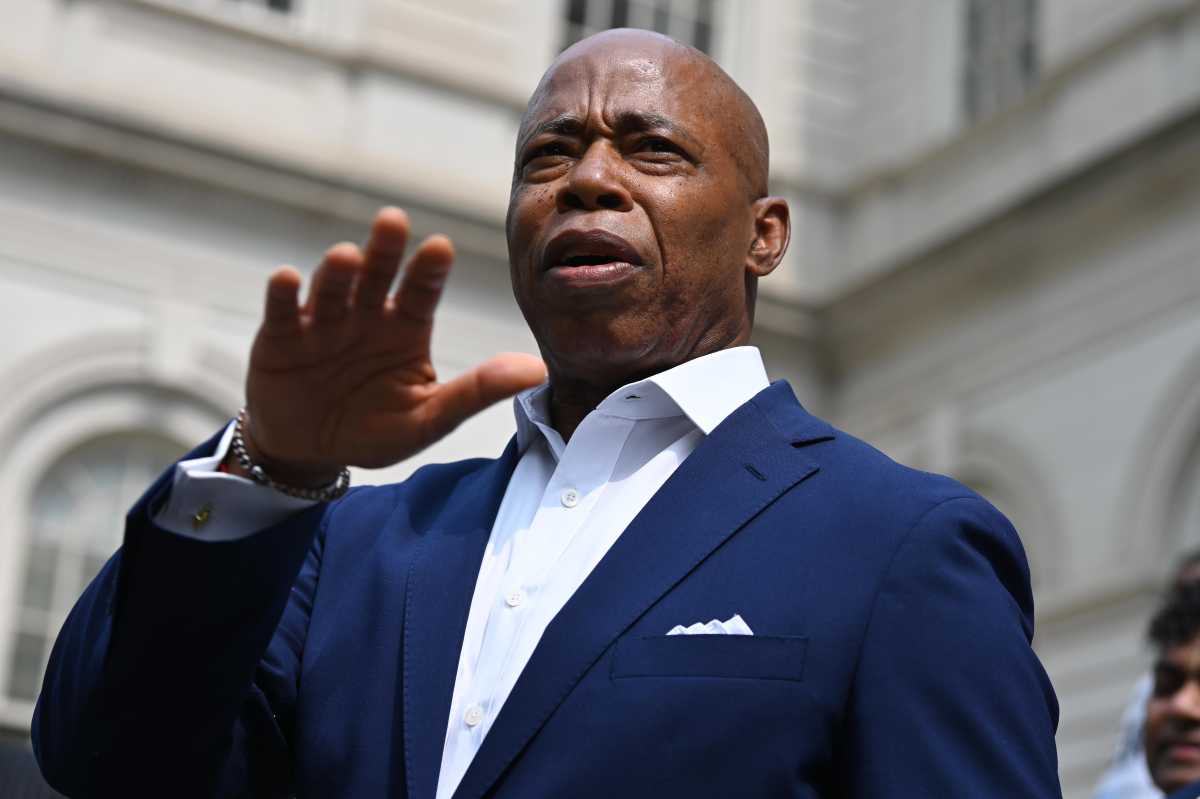
Eric Adams has served as New York City’s 110th mayor since the start of 2022, after overcoming a crowded field of challengers in the 2021 Democratic primary and blowing out Republican Curtis Sliwa in that year’s general election. The 65-year-old Democrat is the city’s second Black mayor.
Adams, like most mayors, lives in the mayor’s official residence at Gracie Mansion and owns a row house in the Bedford Stuyvesant section of Brooklyn. However, questions have been raised about how much time he spends at a co-op he co-owns with his long-time partner Tracey Collins in Fort Lee, NJ.
In 2006, he retired from the NYPD, ran for, and won a Brooklyn state Senate seat — a position he held for the nearly a decade. He then successfully ran for Brooklyn borough president in 2013 and served in that post until he won the mayoralty in 2021.
He counts double-digit drops in the city’s shooting and murder rates, passing a massive zoning overhaul known as “City of Yes,” and launching a push to containerize the city’s trash among his major accomplishments.
Adams brought an enthusiasm and “swagger” to the mayoralty that greatly contrasted with the style of his predecessor, Bill de Blasio. Nearly every day during Adams’ first two years in office, he boasted a packed public schedule, traveling to all corners of the city for ribbon cuttings, flag raisings, and the rollout of new initiatives.
But it did not take long before Adams’ mayoralty was derailed by both external and internal challenges.
First, there was the migrant crisis, which suddenly confronted Adams’ young administration with a series of logistical, financial, and legal challenges. He has often cited the deluge of over 200,000 new arrivals as a reason for making steep budget cuts and stifling his agenda.
Second was a series of corruption scandals that led many of Adams’ top aides to resign and culminated in his own now-dismissed federal indictment last fall. The case involved Adams allegedly recieving illegal foreign campaign donations and luxury travel perks in exchange for official favors.
The charges were dropped by a federal judge at the behest of President Trump’s administration earlier this year — though the judge said his decision was not based on the case’s merits. While Adams has maintained the indictment was “lawfare,” the manner in which it was dismissed led many to accuse him of securing Trump’s help by pledging his support for the president’s mass deportation push.
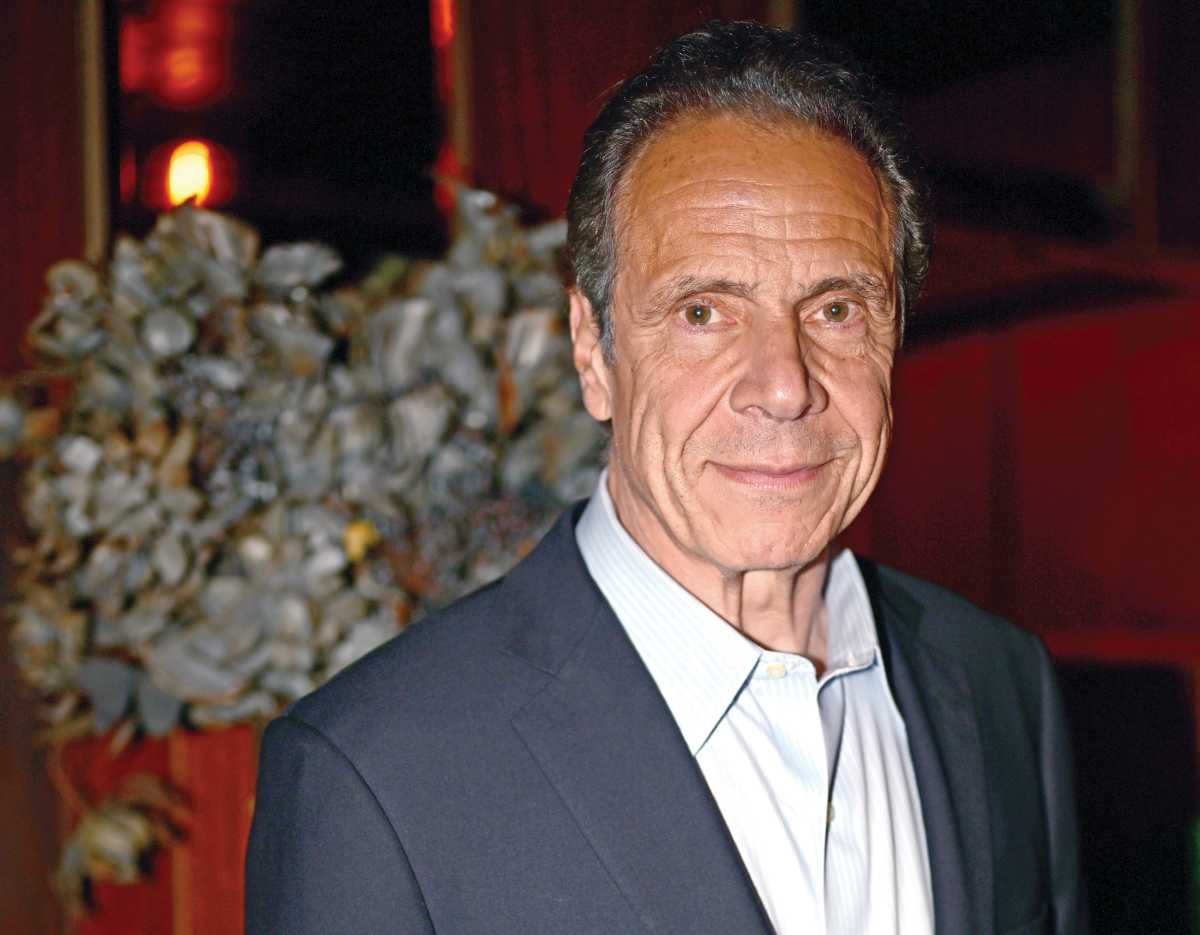
Andrew Cuomo, a 67-year-old Democrat, served as New York’s 56th governor from 2011 to 2021 before resigning amid two massive scandals.
He lives in the Sutton Place neighborhood of Manhattan. He moved back to the city last September after residing in Westchester and Albany.
Cuomo’s nearly decade-long tenure as governor was marked by significant policy wins, such as legalizing gay marriage and raising the statewide minimum wage to $15 an hour. He also completed several major infrastructure projects, including the first leg of the Second Avenue Subway, an overhaul of LaGuardia Airport, and Moynihan Train Hall.
Cuomo drew the national spotlight during the COVID-19 pandemic for his daily televised briefings, which sharply contrasted Trump’s handling of the crisis.
However, many in state government who interacted with Cuomo’s bare-knuckle politics accused him of bullying and of running a toxic work environment. In early 2021, Cuomo faced the first of two major scandals.
State Attorney General Letitia James’ office released findings that Cuomo’s administration undercounted the number of COVID-19 nursing home deaths across New York, following his Health Department’s heavily criticized 2020 guidance that the facilities readmit hospital patients who tested positive for the virus. The former governor has insisted his administration followed all federal guidelines.
Around the same time, Cuomo was hit with several accusations of sexual harassment, many of which came from staffers, prompting him to enlist AG James’ office to investigate the alleged misconduct. That August, James’ office released its report, which found that Cuomo had sexually harassed 11 women. He stepped down as governor soon after the report came out.
In his resignation speech, Cuomo apologized to the women he “deeply offended,” but still denied the allegations and has continued to do so in the years since.
Cuomo’s general election campaign is his second attempt at a political comeback after he lost the Democratic primary to Mamdani, despite polling showing him to be the frontrunner throughout that contest. He has positioned himself as a moderate and the only candidate with the experience to keep the city safe and address its affordability and housing crises.
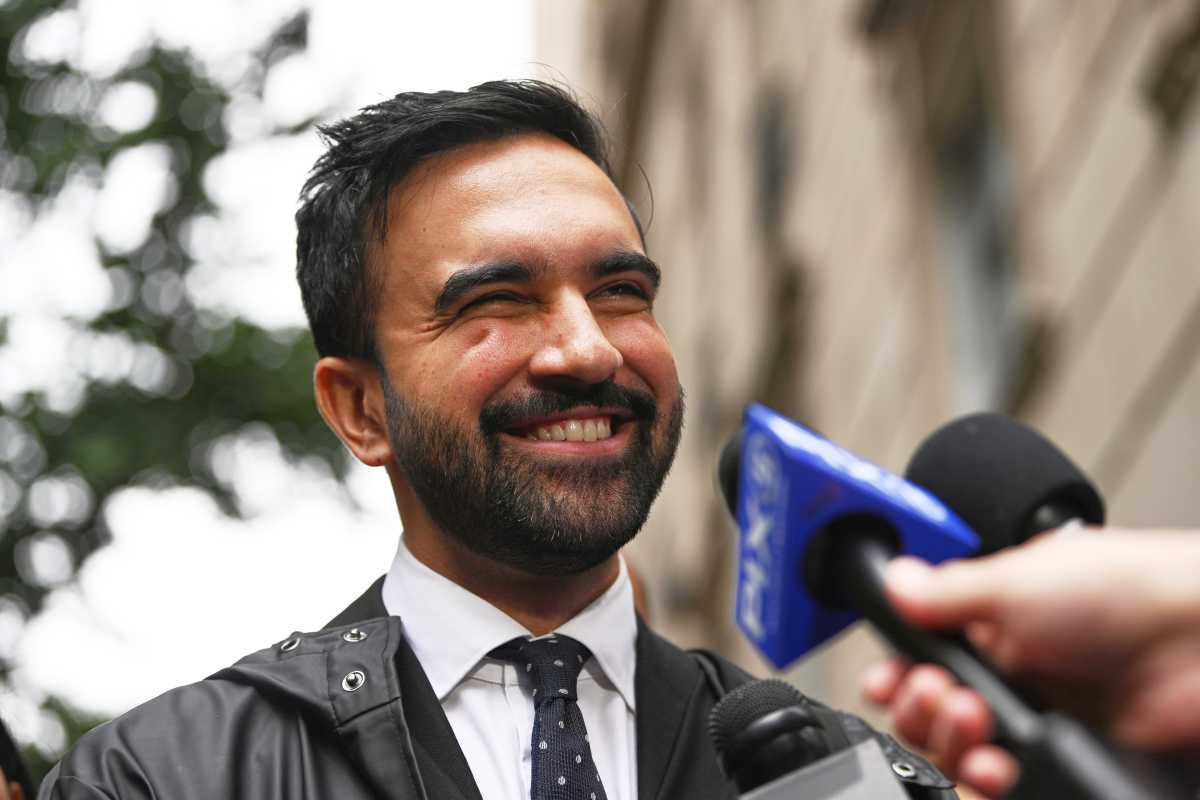
Zohran Mamdani, a 33-year-old democratic socialist, shocked the world with his upset nearly 13-point Democratic primary victory over Cuomo in June. He has represented western Queens neighborhoods, including Astoria and part of Long Island City, since 2021.
Mamdani grew up in the Morningside Heights section of Manhattan and attended the Bronx High School of Science.
According to his legislative website, Mamdani graduated from Bowdoin College in Maine in 2014 with a Bachelor’s Degree in Africana Studies. He co-founded the college’s chapter of Students for Justice in Palestine, which is part of the history of pro-Palestinian activism.
After graduating from college, Mamdani worked as a housing foreclosure prevention counselor, helping Queens residents fight eviction proceedings — the position he says inspired him to seek public office. At the same time, he pursued a side-hustle as a rapper named “Mr. Cardamom.”
Mamdani broke into local politics by working on several campaigns, including managing freelance opinion columnist Ross Barkan’s failed 2018 state Senate bid. According to a published report, he joined the Democratic Socialists of America (DSA) the previous year.
In 2020, Mamdani was elected as the first South Asian man to serve in Albany’s lower chamber, after narrowly defeating incumbent Aravella Simotas in the Democratic primary with the backing of DSA. Since then, he has handily won reelection in 2022 and 2024.
Mamdani’s signature legislative accomplishment was passing a nearly one-year pilot program making MTA bus routes in each of the five boroughs free. But while Mamdani has proposed 20 bills, his rivals have roundly criticized him for only getting three of them over the finish line during his four years in Albany.
The democratic socialist won the primary with an affordability-focused platform that includes proposals like making city buses free, freezing rent increases for the city’s nearly one million stabilized tenants, and implementing universal free child care. He proposes funding his expensive platform by getting the state to raise taxes on millionaires and corporations.
However, throughout both the primary and the general election, Mamdani has faced a torrent of criticism from opponents and others over his relative lack of experience, socialist ideology, ties to the DSA, and opposition to Israel. Cuomo and Adams have both argued that his platform is unrealistic and that he is unprepared for the mayoralty after just four years as a state lawmaker.
Detractors, including Trump, have even gone so far as to falsely label Mamdani “a communist” and call him antisemitic.
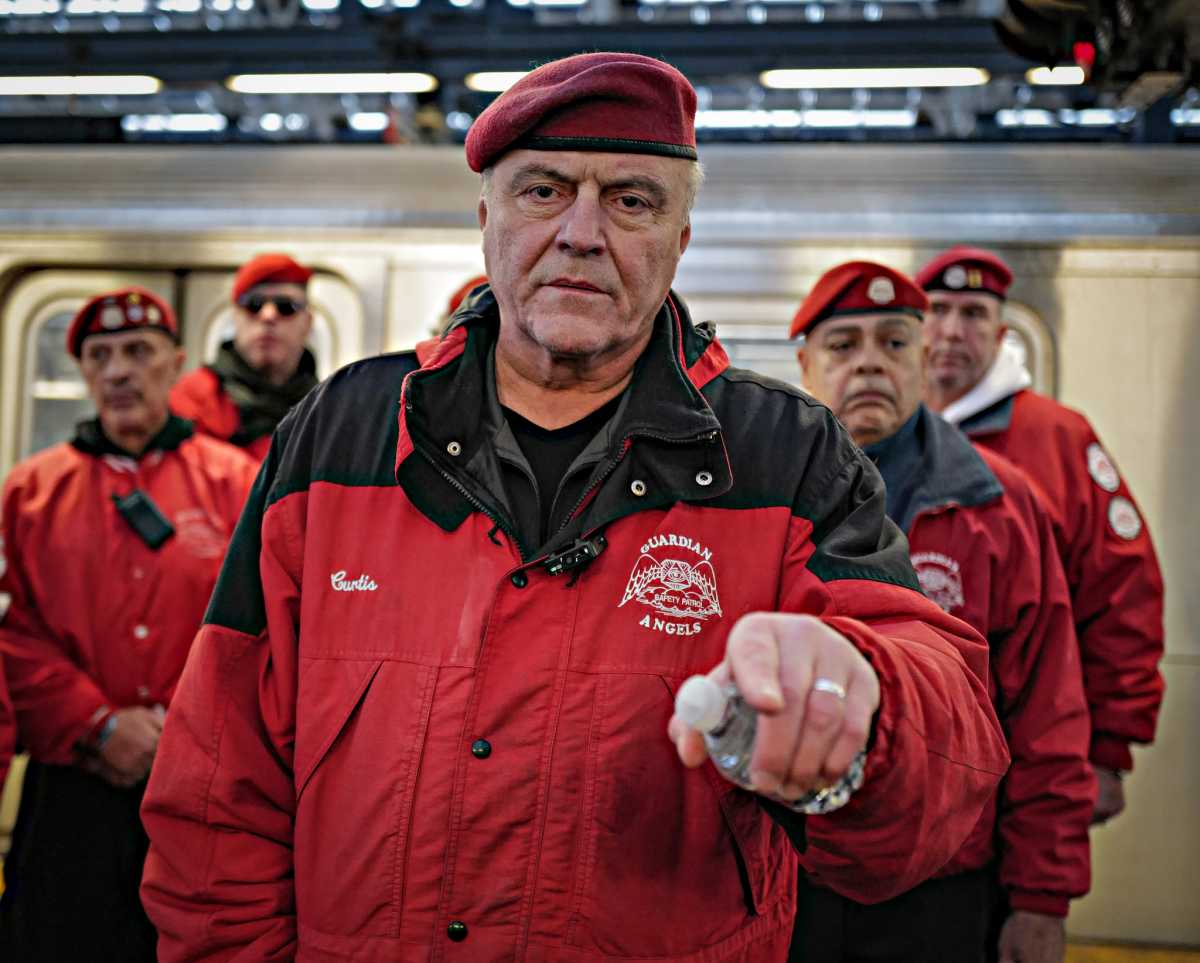
Curtis Sliwa, a 71-year-old long-time activist and radio personality, is the Republican Party’s mayoral nominee. He lives on the Upper West Side of Manhattan with his wife, Nancy Sliwa, and their cats.
Rarely seen without his signature red beret, Sliwa is known for founding the vigilante group The Guardian Angels and his attention-grabbing stunts over the past few decades. He was also the Republican nominee in 2021, but he soundly lost to Mayor Adams.
Over the years, Sliwa and the Guardian Angels drew attention for flashy incidents both real and fake, according to published reports.
For instance, he was shot and nearly killed by associates of the mob boss John Gotti Jr. in the early 1990s. After that incident, Sliwa confessed to fabricating several stories about The Guardian Angels’ heroics in order to burnish the group’s reputation, such as returning a wallet full of cash to its owner and kicking a shotgun away from a man on the subway. A 1992 New York Times piece further accused Sliwa of exaggerating the group’s membership and fabricating other instances beyond the six he confessed.
Sliwa apologized for the falsehoods, saying he deeply regretted them.
Sliwa and his group have drawn accusations of racism and anti-immigrant sentiment over the years. He was a vocal critic of Mayor Adams’ administration’s efforts to shelter tens of thousands of migrants.
The Guardian Angels founder has also had a long and successful career as a talk radio host. He has mainly appeared on WABC 770, the network owned by conservative supermarket magnet John Catsimatidis.
Sliwa is running on growing the NYPD’s ranks by 7,000 officers and creating a direct line of communication between the mayor’s office and the NYPD’s 78 precincts. He has also pledged to repeal Mayor Adams’ City of Yes zoning reforms, which are aimed at making it easier to build housing in the city.
The post amNY Your Vote: Who will be NYC’s next mayor? Here’s the story behind each candidate first appeared on The Ocean Avenue News – oceanavenuenews.com.
Advertisements – Advertising at The News And Times – advertising-newsandtimes.com | WE CONNECT!
Audio | Video | Top News | On Twitter | Security | FBI | Capitol Riot | JOSSICA | Trump | Russia | Putin | Russia – Ukraine War | Covid-19 | Brooklyn NY | Puerto Rico | World
September 26, 2026 2:45 am
The News And Times | Featured Posts | All Articles | Current News | Selected Articles | Shared Links | Opinions | In My Opinion | Sites | Blogs | Links | Twitter | Facebook

Contact Form | Blogs | Sites | News Reviews | Links | Advertising
All The News That’s Fit To Web