
#SouthCaucasus #SouthCaucasusNews
How Donald Trump Can Fix the Caucasus, Too | Opinion – Newsweek https://t.co/097v0scGFo
By Grigor Hovhannissian
Former Armenian DiplomatAs Donald Trump assumes once more the presidency in the United States, most of the foreign policy…
— Michael Novakhov (@mikenov) January 15, 2025
Day: January 15, 2025
Bilqis Coffee, a new specialty coffee shop in Bay Ridge, is all about giving Yemeni coffee the credit it deserves.
Nestled among other locally-owned businesses, Bilqis offers coffee with rich, smooth flavors — and an even richer history — paired with freshly baked pastries and served in a warm, inviting atmosphere.
“You can find all the types of coffee in the world in Yemen, but there are some Yemeni types [of coffee] that you will not get in any other place,” Salah Al-Abdali, Bilqis’ general manager, told Brooklyn Paper.
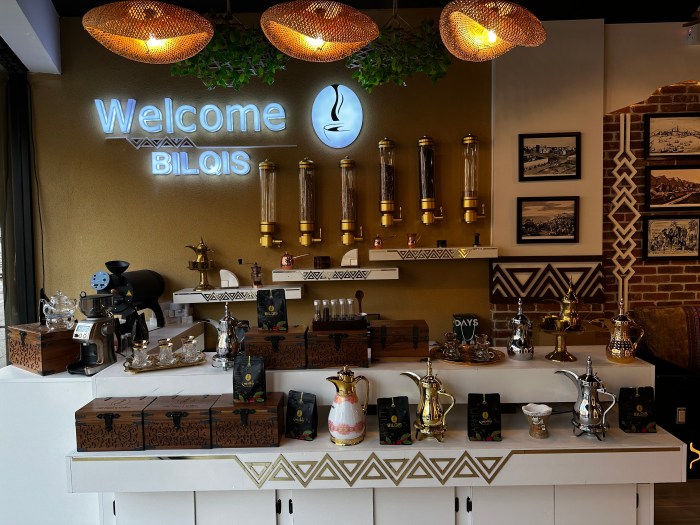
Those beans are available at Bilqis, Al-Abdali said. The cafe sources its coffee exclusively from smaller farmers in Yemen. Salah Al-Abdali and Bilqis’ founder, Arafat Tagaddin, have personally established a supply chain that sources their beans mainly from women growers, ensuring only high-quality coffee reaches the store.
“Yemeni coffee is very complex. You can sometimes taste the coffee from the same mountain just from east to west; the flavor is something different,” Al-Abdali said. “We have a few examples from East Haraz and West Haraz. It’s something definitely different — one is winey and fruity, and the other one is dark chocolate and a little bit vanilla.”
Yemen’s climate and the altitude of its coffee farms help cultivate beans that produce a light, flavorful cup. While many specialty coffee shops boast bold flavors, the coffee at Bilqis stands out for its low acidity and smooth finish — a surprising quality for coffee that packs such a flavorful punch.
From espresso to pour-over, Bilqis coffee pairs perfectly with the decadent desserts on offer, including gelato, pistachio-flavored treats, and Sabaya, a traditional Yemeni flaky pastry topped with honey.
Co-founder Arafat Tagaddin says he designed the café to make customers feel like they are visiting Yemen. Every painting on the walls is hand-drawn, showcasing different geographical or historical locations tied to the country’s long history of coffee production.

There is debate over the origin of coffee. While many experts trace the coffee bean’s origin to Ethiopia, Yemen holds a significant place in the early history and international distribution of coffee. Coffee cultivation in Yemen dates back more than 500 years.
Tagaddin and Al-Abdali are determined to share the history of Yemeni coffee, which has led to the rich cups they serve today.
“Everyone has heard of Mocha, but what is Mocha?” Tagaddin asked, gesturing to a hand-painted drawing of merchants on a beach. “Mocha is a seaport in Yemen where they started shipping coffee all over the world. Yemen is the birthplace of coffee cultivation all over the world, and it is the first international source of coffee historically.”
Zaid Nagi, CEO of the Yemeni American Group, supports Bilqis in sourcing their coffee beans and agrees that Yemen’s connection to the history of coffee has not been properly recognized in the U.S.
“We Yemeni-Americans feel a sense of injustice. Everyone knows the word Mocha, but nobody knows that it means a port in Yemen, which in turn means the story of coffee,” Nagi told Brooklyn Paper. “So we feel like stores and businesses like this can bring justice.”
Nagi believes that efforts like Bilqis’ are just the beginning.
“We’re just starting,” he said. “We’re not there yet, but America will fall in love with Yemeni coffee.”
Bilqis Coffee is located at 8018 Fifth Ave. in Bay Ridge. The shop, which celebrated its grand opening this month, is open Sunday through Thursday, from 8 a.m. to 10 p.m., and Friday through Saturday from 8 a.m. to 12 a.m. For more information, visit bilqiscoffee.co.
The post Bilqis Coffee brings Yemen’s rich coffee legacy to Bay Ridge first appeared on The Ocean Avenue News – oceanavenuenews.com.
 |
Michael_Novakhov shared this story . |
As Donald Trump assumes once more the presidency in the United States, most of the foreign policy discussion revolves around Ukraine, the Middle East, China and other big stories. Indeed, even before assuming office his first order of global business appears to have been Gaza. So it may surprise some to know that in my corner of the world, the South Caucasus, anticipation is also at a fever pitch.
That’s because under President Joe Biden‘s watch, Azerbaijan has been allowed to get away with a series of aggressions, culminating in the September 2023 destruction of the autonomous enclave of Artsakh (Nagorno-Karabakh) and the forced exodus of its 120,000 ethnic Armenians.
Days later, the Hamas invasion of Israel and the subsequent chain of events, including the fall of the Bashar al-Assad regime in Syria last month, seized global attention. Even now, while the world’s attention is focused elsewhere, Azerbaijan appears to be plotting another attack, this one of sovereign Armenian territory.
In an interview this month, Azerbaijani President Ilham Aliyev accused democratic Armenia of having a “fascist ideology” and being a “threat to the region.” He said “fascism must be destroyed” and threatened that “it will be destroyed either by the Armenian leadership or by us. We have no other choice.” This caused grave concerns in Armenia, which Aliyev is given to calling “Western Azerbaijan.”
Aliyev’s barely disguised aim is to seize the Syunik region of southern Armenia (also known as the Zangezur Corridor) and establish a land route to Turkey, its close ally. “The Zangezur corridor must and will be opened. The sooner they [Armenia] understand this, the better it is,” Aliyev said this month, warning that Armenia should not “act as a geographical barrier between Turkey and Azerbaijan.”
For Armenians, the Biden administration’s seeming indifference toward all this has been a deep disappointment. Its neglect of the refugee crisis and failure to hold Azerbaijan accountable have clearly emboldened Aliyev aad underscore the urgent need for a stronger approach from the incoming U.S. administration. This is a moment for leadership, and the Trump administration has an opportunity to correct course.
It must make clear to Aliyev—and to NATO ally Turkey—that aggression against Armenia will not stand. It should also prioritize the right of Armenian refugees to return home under guarantees of security and justice. Without decisive action, the South Caucasus will remain a flashpoint for instability and unresolved tensions.
Artsakh is not just a geographic entity; it is a land steeped in history and early Christian heritage, once a vibrant cultural and political hub. Its capital city boasted modern institutions, historic monasteries, and a self-governing parliament. Yet, within days of the invasion, Azerbaijan dismantled it all. The region was absorbed into an administrative unit devoid of its indigenous people, while Azerbaijani settlers moved in to repopulate the area. This act of ethnic cleansing erased nearly three millennia of Armenian civilization from the region.
Azerbaijan’s actions have undone decades of diplomatic efforts, including those led by the U.S. through the OSCE Minsk Group. These efforts aimed to foster coexistence between Armenians and Azerbaijanis and to find a peaceful resolution to their disputes. Instead, Aliyev, has claimed that the Artsakh question is now “resolved” by force. This dismissal of Armenian historical ties to the region ignores the profound humanitarian crisis that has ensued and sets a dangerous precedent for conflict resolution through brute force.
The international community’s silence has emboldened Azerbaijan. Major world powers and the United Nations have failed to take meaningful action, allowing the violation of international law to go unchecked. Even more alarming is Azerbaijan’s detention of Artsakh’s political leaders, who were previously recognized as credible partners in peace negotiations. Among them is Ruben Vardanian, a renowned philanthropist and humanitarian now imprisoned on baseless charges. This persecution aims to erase Armenian leadership and representation in the region, making reconciliation even more elusive.
Beyond demanding no further aggression from Azerbaijan, the Trump administration should also take the following steps:
- Demand the immediate release of Artsakh’s detained leaders (and holding) Azerbaijan accountable for its violations of international law. Instead, deposed leader Ruben Vardanyan and 16 others are facing trial for “waging war” and other trumped-up charges on Friday, Jan. 17, having been given mere days to prepare. Targeting these figures and treating them this way undermines peace efforts and sets a dangerous precedent for minority communities in conflict zones.
- Support the return of Armenian refugees under a framework that guarantees their safety and autonomy. International peacekeeping forces or other protective mechanisms must ensure that returning residents are shielded from aggression.
- Reassert U.S. leadership in the region by reviving diplomatic efforts and pressuring Azerbaijan to respect international norms. Without U.S. engagement, the South Caucasus will remain vulnerable to further conflict and authoritarian overreach.
Sanctions should also be considered against Azerbaijani officials responsible for the ethnic cleansing and against entities exploiting Artsakh’s natural resources. These measures would demonstrate that the international community will not tolerate such blatant human rights violations.
Many of us still believe peace between Armenia and Azerbaijan can be achieved. Yet the negotiations remain profoundly one-sided: Azerbaijan, secure in its victory, presses Armenia into untenable concessions—even amending its constitution. Thus far, U.S. engagement, steered by Secretary of State Antony Blinken, has kept talks alive. But as the 2025 horizon dims and the American political stage shifts, so do the odds of success. In this rare window, the Trump administration can revitalize the process, secure a lasting accord, and transform the region’s future.
This is not a call for vengeance but for justice—a justice rooted in restoring the rights and heritage of displaced Armenians. The U.S. has an opportunity to lead by example, addressing the crisis in Artsakh with the urgency it demands. The incoming administration can chart a path toward stability by ensuring the voices of displaced Armenians are heard and their rights upheld.
The writer was Armenia’s ambassador to the United States and Mexico, and the deputy foreign minister.
The views expressed in this article are the writer’s own.
THE NYPD IS ASKING for the public’s help in identifying a man suspected in a robbery that occurred in broad daylight in Marine Park.
The post NYPD seeks suspect in knife-point robbery on Flatbush Avenue appeared first on Brooklyn Eagle.
The post NYPD seeks suspect in knife-point robbery on Flatbush Avenue first appeared on The Ocean Avenue News – oceanavenuenews.com.
In my State of the State address yesterday, I announced that we are putting New York on a path to universal child care.
Your family is my fight, and our actions will give parents a break and set kids up for success. Join me live in Troy: https://t.co/G4JsSqV9lb
— Governor Kathy Hochul (@GovKathyHochul) January 15, 2025
Police Commissioner Jessica Tisch continued Wednesday to make sweeping changes within the NYPD — this time with dramatic shifts in the department’s vehicle pursuit policy.
Officer pursuits will now only be permitted in which suspected, serious offenders are wanted for felonies and violent misdemeanors. Traffic infractions or non-violent misdemeanors by themselves are no longer justification for officers to engage in a pursuit, the commissioner declared.
The location of the potential pursuit will also be taken into consideration. Officers are being given more discretion to disengage from a pursuit if if happens in a residential community or a school zone — or if the officers believe it cannot continue without risk to the public.
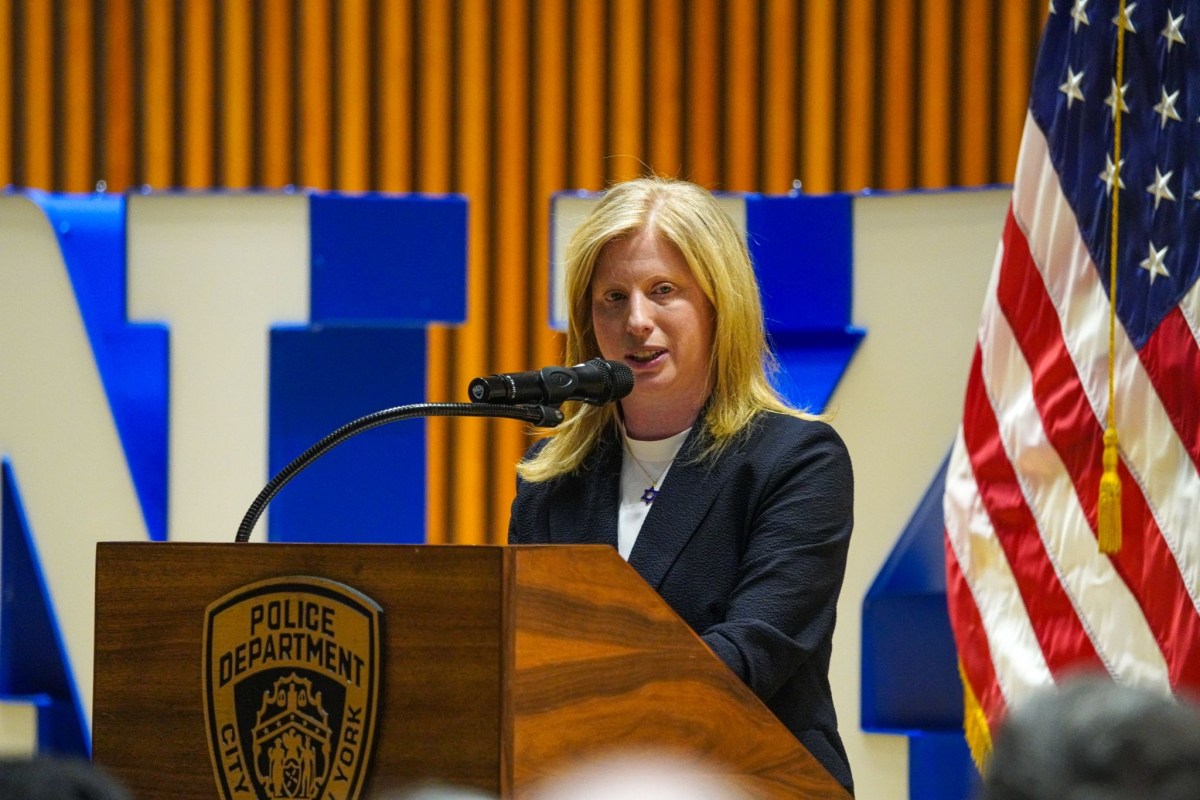
According to Tisch, the new regulations — which will be implemented on Feb. 1 to allow for proper training — set new standards that will help protect New Yorkers and cops alike.
“New York is one of the most densely populated cities in the world, and our officers deserve clear guidance and smart protocols when determining whether to engage in a vehicle pursuit on our streets,” she said on Jan. 15. “The NYPD’s enforcement efforts must never put the public or the police at undue risk, and pursuits for violations and low-level crimes can be both potentially dangerous and unnecessary. The advanced tools of modern-day policing make it possible to apprehend criminals more safely and effectively than ever before, making many pursuits unnecessary. Now, our cops will have clear, unambiguous parameters for when to initiate, continue, and terminate these pursuits.”
According to the NYPD, 2024 saw 2,278 pursuits — 25% of which resulted in collisions, physical harm, or property damage. Moreover, 67% of all chases were initiated by drivers fleeing car stops, something that no longer applies under the new policy change.
“Our overarching objective — every minute of every day — is to keep the people of this great city safe,” Chief of Department John Chell said. “In order to do that, we need to pursue criminals when appropriate and stay our hand when the risks to the public and to our cops outweigh the benefits. Our revised policy strikes that critical balance and will make our city safer for police and our communities.”
Police Benevolent Association (PBA) President Patrick Hendry also weighed in on the announcement, lauding the decision — though struck a cautious note.
“We thank the Department’s leadership for listening to our concerns regarding vehicle pursuits, and we welcome the additional clarity for our members on the streets,” Hendry said. “However, it will be up to the Department to ensure that this policy is applied so that neither police officers nor the public are unnecessarily put at risk.”
The post Chase ‘brake’: NYPD Commish Tisch bars unnecessary street pursuits in latest policy shift first appeared on The Ocean Avenue News – oceanavenuenews.com.
On Tuesday, Marvin “Mukk” Pippins, part of the 5-9 Brims gang, was sentenced to life imprisonment for murdering a rival gang member in 2015.
The post 5-9 Brims street gang member sentenced to life in prison appeared first on Brooklyn Eagle.
The post 5-9 Brims street gang member sentenced to life in prison first appeared on The Ocean Avenue News – oceanavenuenews.com.
IL PASSATORE TRATTORIA, a Williamsburg Italian restaurant, will shutter its doors on Feb. 2. The owners cited COVID, illness and inflation.
The post Il Passatore restaurant set to close on Feb. 2 appeared first on Brooklyn Eagle.
The post Il Passatore restaurant set to close on Feb. 2 first appeared on The Ocean Avenue News – oceanavenuenews.com.

I’m fighting for working people from Beacon to the Bronx and from Lake Placid to Long Island.
When I say your family is my fight, these are the people I’m talking about: pic.twitter.com/dBdUrNoNMd
— Governor Kathy Hochul (@GovKathyHochul) January 15, 2025