A lottery for six affordable artist studios in Gowanus— the first of more than 100 such studios slated to come to the neighborhood in the next few years — is now open.
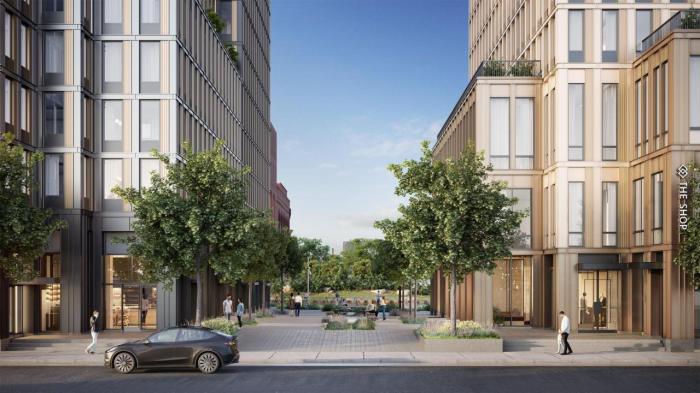
The studios, built as part of a Community Benefits Agreement signed ahead of the Gowanus rezoning, are set to open this spring at a new coworking space, The Shop, at 420 Carroll St.
Priced at around $1.66 per square foot per month, the studios will rent for between $275 and $331 per month, or $3,300 and $3,800 annually. Per the CBA, rents can only increase by 2% per year.
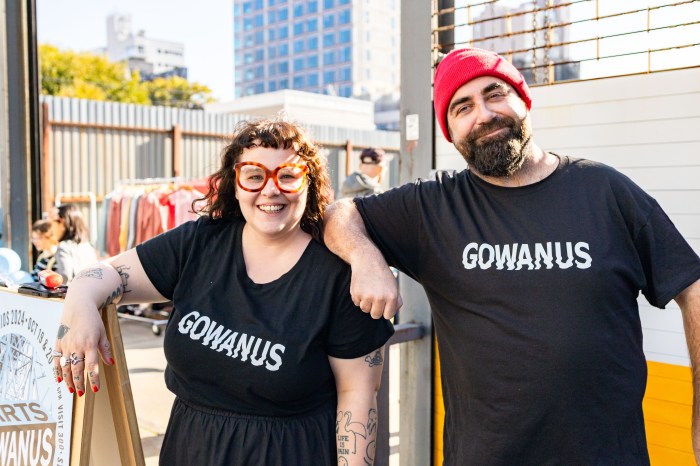
That’s well below market rate for the area, said Johnny Thornton, executive director of Arts Gowanus, which helped orchestrate the CBA and is overseeing the lottery and the affordable studios.
Thornton and Arts Gowanus’ program director, Emily Chiavelli. Photo courtesy of Arts Gowanus
Listings for arts studios in the area show rents two or three times higher than what’s expected at The Shop — a 220 square foot studio in Sunset Park costs $775 per month, where the largest affordable studio at 420 Carroll, at 223 square feet, costs $275 per month. A membership and a private studio at the Gowanus Studio Space runs at least $630 per month.
Gowanus used to be an affordable haven for artists, and still has a thriving arts scene. But as the neighborhood changed, rents started to creep up, forcing creators to move elsewhere. When the Gowanus rezoning was proposed, locals worried more artists would be displaced, either by high rents or by developers buying and knocking down the buildings they worked out of.
But as part of a 2021 agreement reached just before a critical City Council vote, ten developers agreed to include subsidized studio spaces in about a dozen new buildings around the nabe. More than three years later, the studios at 420 Carroll — a mixed-use building with housing and commercial space — are the first to come to fruition.
Anne Olson, Director of Coworking at The Domain Companies — the developer behind 420 Carroll — said the company “couldn’t be more excited” to provide the studios.
“Place based development is a major priority for us, the opportunity to work with the existing community to preserve what makes Gowanus special was incredibly appealing to us,” Olson told Brooklyn Paper. “The Community Benefits Agreement and the subsequent studios through Arts Gowanus has helped us get connected with the community organizers on the forefront in this neighborhood. It is truly a wonderful chance to support their existing efforts within the new development and we are eager and excited to continue to connect with more people and organizers as we move toward opening.”
The studios will be housed inside The Shop, a coworking space, at 420 Carroll. Rendering courtesy of NYC Housing Connect
“It all seems like an abstraction that’s finally becoming real, like, you can see it,” Thornton said. “When I first get to open one of the doors and go into these studios, it’ll blow my mind, because it’s been such an abstraction for years.”
Each artist is essentially a small business, Thornton explained, and while many work at home, a dedicated studio space allows them to expand their work, meet with curators and other business partners, and become part of a community of artists.
“Having a giant cost because of your dream, your passion, come out of your paycheck every month is a really difficult thing,” Thornton said. “So having [studios] that are affordable really can create a lot more flexibility, and create a lot more reasons to stay an artist and stay in New York City. That’s kind of one of our goals, to keep artists here, and keep them creating.”
The studio lottery, and an even more affordable option
The lottery for the studios isn’t quite as strict as for affordable housing, Thornton said, and it’s available via the Arts Gowanus website, not a city portal. The studios are meant for “fine artists,” per the site, who must prove that they’re actively working by providing photos of their recent pieces and either an artist statement and biography, CV, or a letter from someone established in the arts who can back the applicant.
An algorithm used to sort the applications will give more weight to artists who can prove they were previously displaced from Gowanus, and those who are part of an underrepresented community will also be given priority.
Arts Gowanus will interview top applicants remotely, but the final determination will be made by the landlord or property owner — who may ask for their own application and credit or background checks. The rent includes heating, cooling, ventilation, electricity, and shared Wi-Fi — plus a communal kitchenette, bathrooms, and slop sink.
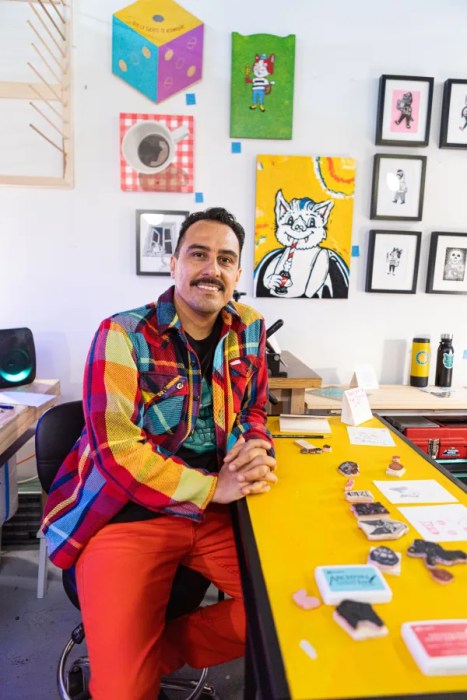
Artist Miguel Ayuso in his Brooklyn studio. Affordable individual studios are critical for working artists, Thornton said. File photo courtesy of Arts Gowanus
Applications for the first round of studios close on March 1, 2025. Applicants who don’t get studios will be kept in the system for future lotteries, since all are in the same neighborhood, and won’t have to re-enter.
There’s one more open space at 420 Carroll, for the Arts Gowanus Fellowship Program.
Before the Fellowship Program, one studio in each location was subsidized even further, for artists making below 50% of the Area Median Income. But that still presented a barrier for some in the nabe, Thornton said.
Instead, Arts Gowanus itself will rent those further-subsidized studios and pay all costs for its fellows, plus offer career counseling and other opportunities. All low-income Brooklyn artists will be considered, but the org will prioritize those living locally, especially at Gowanus Houses, Warren Houses, Wyckoff Gardens, and Red Hook Houses.
The fellows will have to commit to ten hours in the studio per week for one year, and participate in Arts Gowanus Programming and other workshops and events. Arts Gowanus is offering two fellowship spaces this spring, one at 420 Carroll and another at the Arts Gowanus office at 540 President St.
Looking ahead
“We couldn’t be more excited about both of these things, it’s really been a long time coming,” Thornton said. “So, this being the first ones that are coming online, it’s just a really special time and it’s taken a lot of work.”
With the studios at 420 Carroll set to be completed this spring, Thornton expects more studios in other buildings to start coming online later this year. Arts Gowanus’ new headquarters and community center, which will also include three free studios, will likely open in late 2026 or early 2027.
Выступление Дональда Трампа без купюр, которое к сожалению ( случайно ? ) искажают “радио #Свобода” – пропустив самое главное утверждение Трампа в ответ на вчерашний […]
The suspect accused of burning a woman alive on the F train in Brooklyn last month was arraigned on a grand jury indictment Tuesday as faith leaders announced a memorial service for the victim.
Sebastian Zapeta-Calil, 33, was arraigned before Brooklyn Supreme Court Justice Danny Chun on first-degree murder charges in the brutal killing on Dec. 22, 2024 that shocked the city.
Law enforcement sources allege that Zapeta-Calil used a lighter to set Debrina Kawam, 57, on fire as she slept aboard a Coney Island F train. Zapeta-Calil, a Guatemalan migrant who ICE says entered the country and was even deported in 2018, is accused of using a jacket to try and fan the flames engulfing her body and the subway car.
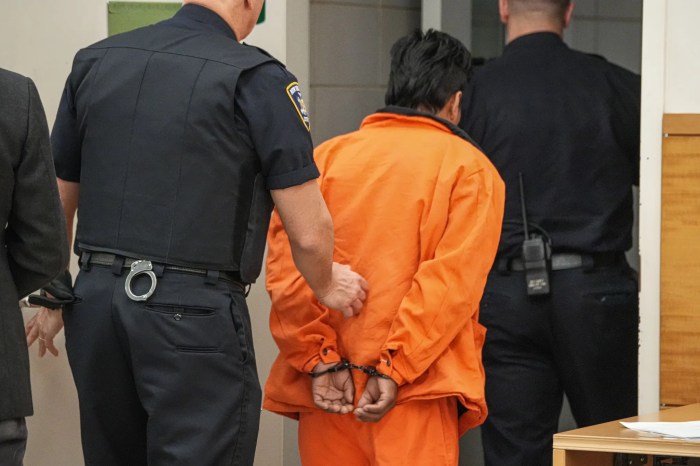
Zapeta-Calil was led out of the courtroom in handcuffs after the plea. Photo by Dean Moses
Police say the disturbing act was captured on MTA surveillance cameras.
At the Jan. 7 in Brooklyn Criminal Court, Zapeta-Calil pleaded not guilty; he was ordered held in custody indefinitely without bail.
Police say Kawam’s body was so badly burned that it took several days to identify her body through fingerprints. Family representatives say she grew up in Toms River, NJ, but was living in the New York City shelter system at the time of her murder.
Brooklyn District Attorney Eric Gonzalez on Tuesday called the homicide an “atrocious and horrific” act, and said his prosecutors are “determined to exact the most severe punishment for this heinous and inhumane act.”
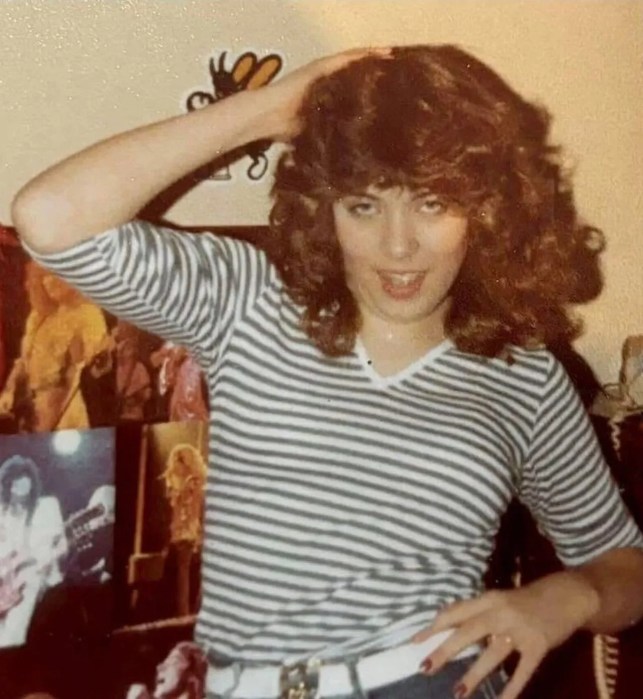
Debrina Kawam, the victim, years before her death. Photo courtesy of Kawam family
“Ms. Kawam and her loved ones deserve a measure of justice and New Yorkers deserve to feel safe in the subways,” Gonzalez added.
If convicted of first-degree murder, Zapeta-Calil faces life imprisonment without the possibility of parole.
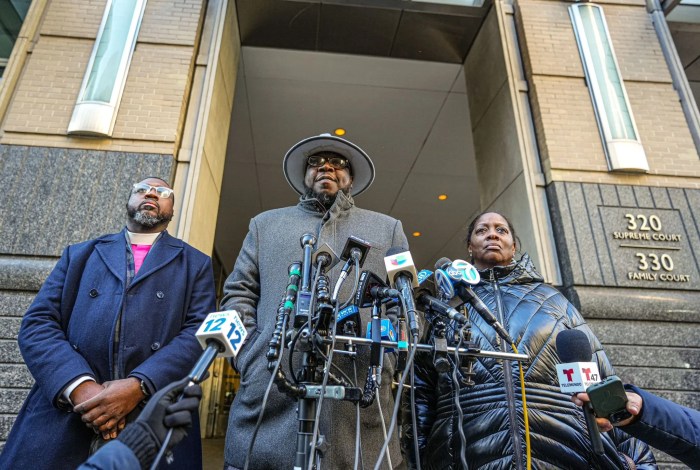
Meanwhile, Reverend Kevin McCall — who says he has been working with the family following the tragedy — announced Tuesday that the family will be holding a memorial service at the First Baptist Church in Sheepshead Bay on Jan. 12 at 5 p.m. According to McCall, the service will allow the Kawam family to honor her life.
“You will hear directly from family and friends that will share more about who she was, what type of individual she was, also people that met her through the system when she was homeless as well,” McCall said outside of the Brooklyn courthouse following the indictment.
Rev. Kevin McCall outside the courthouse on Jan. 7. Photo by Dean Moses
McCall attended Zapeta-Calil’s arraignment hearing Tuesday, saying that the suspect deserved to be remanded. Yet he also implied that the case reflected the repercussions of New York City not doing nearly enough to help the homeless and mentally ill.
“This is somebody that needed some type of support, but didn’t get it. He belongs in jail, but is jail the right thing for him to have without having the support of the city of services that the mayor and the governor are supposed to be able to provide? That’s the question to be asked,” McCall said. “But he’s a murderer, so when the judge said that he needs to be remanded, he needs to be remanded.
This story first appeared on Brooklyn Paper’s sister site amNewYork.