#SouthCaucasus https://t.co/bhSP448flT
— Michael Novakhov (@mikenov) December 31, 2024
Categories
 The Brooklyn Times - bklyntimes.com
The German government has accused Elon Musk of attempting to interfere in the country’s election campaign. The accusation stems from the billionaire’s repeated support for the far-right party Alternative for Germany (AfD), reports The Guardian.
In her statement about Musk’s attempts to influence the federal elections, German government spokesperson Christiane Hoffmann noted that the businessman’s posts under the hashtag “X” and his article last weekend in support of the anti-Muslim and anti-immigration AfD led to this conclusion.
At a regular media briefing, Hoffmann emphasized that while Musk has the right to freedom of speech, she questioned his conclusions. “After all, freedom of opinion also covers the greatest nonsense,” she said.
Musk’s posts on X
In November, Musk frequently expressed opinions about German government politics on his social media platform X. He even referred to Chancellor Olaf Scholz as a “fool.” However, his recent open calls for German voters to support AfD, a party suspected by federal authorities of extremism, sparked outrage and accusations of troubling interference in Europe’s leading economy.
The South African entrepreneur, whom Donald Trump appointed to co-chair a commission to reduce the size of the US federal government, wrote on X in early December: “Only the AfD can save Germany.”
In the post, he shared a video of the German right-wing leader Naomi Seibt, who criticized Friedrich Merz, the conservative leader running in Germany’s elections, and praised Javier Milei, Argentina’s self-styled “anarcho-capitalist” president.
Over the weekend, Milei published an op-ed in Welt am Sonntag. In the article, he claimed that Germany was on the brink of economic and cultural collapse and defended AfD against accusations of radicalism. He also praised the party’s economic approach, including its regulation and tax policy stance.
Eva Marie Kögel, editor of the center-right newspaper’s opinion section, wrote on X that she had resigned in protest over the decision to publish this article.
Musk’s technology and early elections
Politicians across the political spectrum criticized Musk’s attempts to “put his thumb on the scales of German democracy.” Health Minister Karl Lauterbach, from Chancellor Scholz’s Social Democratic party (SPD), called his interference “undignified and highly problematic.” On the other hand, Merz called it “intrusive and presumptuous.”
Merz told the Funke media group: “I cannot recall in the history of Western democracies a comparable case of interference in the election campaign of a friendly country.”
In November, as The Guardian notes, Scholz’s left-center coalition collapsed, forcing him to call a vote of confidence to initiate early elections in February — seven months ahead of schedule. The Chancellor’s SPD is expected to lose to Merz’s Christian Democratic Union/Christian Social Union (CDU/CSU) block amid voter frustration over the cost of living and weak economic growth.
Last week, German President Frank-Walter Steinmeier delivered a brief speech in which he directly criticized X and indirectly Elon Musk, announcing his official decision to dissolve parliament and set elections for February 23, 2025.
Steinmeier, whose role is largely ceremonial, warned of “outside influence” on the campaign, referring to the recent “open and blatant” attempts by X to affect the vote. His remarks were widely interpreted as a warning to Musk.
AfD’s influence
Members of AfD have spent months building connections with Trump’s camp. The party’s co-leader, Alice Weidel, was among the first foreign politicians to congratulate Trump on his election victory.
A small group of AfD activists posed with Trump at his private Mar-a-Lago club on US election day, November 5, chanting “Fight! Fight! Fight!” in both English and German for the cameras.
Musk also referred to “Weidel’s same-sex partner from Sri Lanka” as evidence that the portrayal of AfD as a right-wing extremist party was “clearly false.” “Does that sound like Hitler to you? Please!” Musk wrote.
AfD holds second place with around 19%, trailing the CDU/CSU’s 31%.
The high score of the party could complicate coalition-building after the elections, requiring the winner to seek two partners to form a governing majority. All key parties have ruled out cooperation with AfD at both the state and federal levels.
Musk’s controversial statements
This year, American billionaire Elon Musk supported Donald Trump and urged people to vote for him on the X social media platform. He also donated over $100 million to mobilize voters for the Republican candidate.
Later, Musk threatened to “destroy” anyone who linked his activities to Russia.
US Senator Elizabeth Warren reached out to Trump about Musk’s powerful influence over the incoming administration.
In response, Trump assured that Musk would not become the new head of the White House.
The German government has accused Elon Musk of attempting to interfere in the country’s election campaign. The accusation stems from the billionaire’s repeated support for the far-right party Alternative for Germany (AfD), reports The Guardian.
In her statement about Musk’s attempts to influence the federal elections, German government spokesperson Christiane Hoffmann noted that the businessman’s posts under the hashtag “X” and his article last weekend in support of the anti-Muslim and anti-immigration AfD led to this conclusion.
At a regular media briefing, Hoffmann emphasized that while Musk has the right to freedom of speech, she questioned his conclusions. “After all, freedom of opinion also covers the greatest nonsense,” she said.
Musk’s posts on X
In November, Musk frequently expressed opinions about German government politics on his social media platform X. He even referred to Chancellor Olaf Scholz as a “fool.” However, his recent open calls for German voters to support AfD, a party suspected by federal authorities of extremism, sparked outrage and accusations of troubling interference in Europe’s leading economy.
The South African entrepreneur, whom Donald Trump appointed to co-chair a commission to reduce the size of the US federal government, wrote on X in early December: “Only the AfD can save Germany.”
In the post, he shared a video of the German right-wing leader Naomi Seibt, who criticized Friedrich Merz, the conservative leader running in Germany’s elections, and praised Javier Milei, Argentina’s self-styled “anarcho-capitalist” president.
Over the weekend, Milei published an op-ed in Welt am Sonntag. In the article, he claimed that Germany was on the brink of economic and cultural collapse and defended AfD against accusations of radicalism. He also praised the party’s economic approach, including its regulation and tax policy stance.
Eva Marie Kögel, editor of the center-right newspaper’s opinion section, wrote on X that she had resigned in protest over the decision to publish this article.
Musk’s technology and early elections
Politicians across the political spectrum criticized Musk’s attempts to “put his thumb on the scales of German democracy.” Health Minister Karl Lauterbach, from Chancellor Scholz’s Social Democratic party (SPD), called his interference “undignified and highly problematic.” On the other hand, Merz called it “intrusive and presumptuous.”
Merz told the Funke media group: “I cannot recall in the history of Western democracies a comparable case of interference in the election campaign of a friendly country.”
In November, as The Guardian notes, Scholz’s left-center coalition collapsed, forcing him to call a vote of confidence to initiate early elections in February — seven months ahead of schedule. The Chancellor’s SPD is expected to lose to Merz’s Christian Democratic Union/Christian Social Union (CDU/CSU) block amid voter frustration over the cost of living and weak economic growth.
Last week, German President Frank-Walter Steinmeier delivered a brief speech in which he directly criticized X and indirectly Elon Musk, announcing his official decision to dissolve parliament and set elections for February 23, 2025.
Steinmeier, whose role is largely ceremonial, warned of “outside influence” on the campaign, referring to the recent “open and blatant” attempts by X to affect the vote. His remarks were widely interpreted as a warning to Musk.
AfD’s influence
Members of AfD have spent months building connections with Trump’s camp. The party’s co-leader, Alice Weidel, was among the first foreign politicians to congratulate Trump on his election victory.
A small group of AfD activists posed with Trump at his private Mar-a-Lago club on US election day, November 5, chanting “Fight! Fight! Fight!” in both English and German for the cameras.
Musk also referred to “Weidel’s same-sex partner from Sri Lanka” as evidence that the portrayal of AfD as a right-wing extremist party was “clearly false.” “Does that sound like Hitler to you? Please!” Musk wrote.
AfD holds second place with around 19%, trailing the CDU/CSU’s 31%.
The high score of the party could complicate coalition-building after the elections, requiring the winner to seek two partners to form a governing majority. All key parties have ruled out cooperation with AfD at both the state and federal levels.
Musk’s controversial statements
This year, American billionaire Elon Musk supported Donald Trump and urged people to vote for him on the X social media platform. He also donated over $100 million to mobilize voters for the Republican candidate.
Later, Musk threatened to “destroy” anyone who linked his activities to Russia.
US Senator Elizabeth Warren reached out to Trump about Musk’s powerful influence over the incoming administration.
In response, Trump assured that Musk would not become the new head of the White House.
The German government has accused Elon Musk of attempting to interfere in the country’s election campaign. The accusation stems from the billionaire’s repeated support for the far-right party Alternative for Germany (AfD), reports The Guardian.
In her statement about Musk’s attempts to influence the federal elections, German government spokesperson Christiane Hoffmann noted that the businessman’s posts under the hashtag “X” and his article last weekend in support of the anti-Muslim and anti-immigration AfD led to this conclusion.
At a regular media briefing, Hoffmann emphasized that while Musk has the right to freedom of speech, she questioned his conclusions. “After all, freedom of opinion also covers the greatest nonsense,” she said.
Musk’s posts on X
In November, Musk frequently expressed opinions about German government politics on his social media platform X. He even referred to Chancellor Olaf Scholz as a “fool.” However, his recent open calls for German voters to support AfD, a party suspected by federal authorities of extremism, sparked outrage and accusations of troubling interference in Europe’s leading economy.
The South African entrepreneur, whom Donald Trump appointed to co-chair a commission to reduce the size of the US federal government, wrote on X in early December: “Only the AfD can save Germany.”
In the post, he shared a video of the German right-wing leader Naomi Seibt, who criticized Friedrich Merz, the conservative leader running in Germany’s elections, and praised Javier Milei, Argentina’s self-styled “anarcho-capitalist” president.
Over the weekend, Milei published an op-ed in Welt am Sonntag. In the article, he claimed that Germany was on the brink of economic and cultural collapse and defended AfD against accusations of radicalism. He also praised the party’s economic approach, including its regulation and tax policy stance.
Eva Marie Kögel, editor of the center-right newspaper’s opinion section, wrote on X that she had resigned in protest over the decision to publish this article.
Musk’s technology and early elections
Politicians across the political spectrum criticized Musk’s attempts to “put his thumb on the scales of German democracy.” Health Minister Karl Lauterbach, from Chancellor Scholz’s Social Democratic party (SPD), called his interference “undignified and highly problematic.” On the other hand, Merz called it “intrusive and presumptuous.”
Merz told the Funke media group: “I cannot recall in the history of Western democracies a comparable case of interference in the election campaign of a friendly country.”
In November, as The Guardian notes, Scholz’s left-center coalition collapsed, forcing him to call a vote of confidence to initiate early elections in February — seven months ahead of schedule. The Chancellor’s SPD is expected to lose to Merz’s Christian Democratic Union/Christian Social Union (CDU/CSU) block amid voter frustration over the cost of living and weak economic growth.
Last week, German President Frank-Walter Steinmeier delivered a brief speech in which he directly criticized X and indirectly Elon Musk, announcing his official decision to dissolve parliament and set elections for February 23, 2025.
Steinmeier, whose role is largely ceremonial, warned of “outside influence” on the campaign, referring to the recent “open and blatant” attempts by X to affect the vote. His remarks were widely interpreted as a warning to Musk.
AfD’s influence
Members of AfD have spent months building connections with Trump’s camp. The party’s co-leader, Alice Weidel, was among the first foreign politicians to congratulate Trump on his election victory.
A small group of AfD activists posed with Trump at his private Mar-a-Lago club on US election day, November 5, chanting “Fight! Fight! Fight!” in both English and German for the cameras.
Musk also referred to “Weidel’s same-sex partner from Sri Lanka” as evidence that the portrayal of AfD as a right-wing extremist party was “clearly false.” “Does that sound like Hitler to you? Please!” Musk wrote.
AfD holds second place with around 19%, trailing the CDU/CSU’s 31%.
The high score of the party could complicate coalition-building after the elections, requiring the winner to seek two partners to form a governing majority. All key parties have ruled out cooperation with AfD at both the state and federal levels.
Musk’s controversial statements
This year, American billionaire Elon Musk supported Donald Trump and urged people to vote for him on the X social media platform. He also donated over $100 million to mobilize voters for the Republican candidate.
Later, Musk threatened to “destroy” anyone who linked his activities to Russia.
US Senator Elizabeth Warren reached out to Trump about Musk’s powerful influence over the incoming administration.
In response, Trump assured that Musk would not become the new head of the White House.
The Brooklyn Daily Eagle editorial staff highlights images from around the world, photos courtesy of the Associated Press.
The post Our world in photos: December 30 appeared first on Brooklyn Eagle.
The post Our world in photos: December 30 first appeared on The Ocean Avenue News – oceanavenuenews.com.
Explosions were heard in the area of temporarily occupied Sevastopol, including in Kozacha Bay (Crimea), on the night of December 31. This occurred amid a drone attack and the operation of Russia’s air defense systems, reports the Crimean Wind.
It was noted that the Russian forces’ air defense systems were active in Kozacha Bay. Located 15 kilometers from the center of Sevastopol, Kozacha Bay is situated northwest of Cape Fiolent, between Komysheva Bay and Cape Fiolent.
Meanwhile, Mikhail Razvozhayev, so-called head of the city’s occupation administration, stated on his Telegram channel that two drones had been allegedly shot down over the Black Sea area following a series of launches from a Pantsir-S1 system.
At the same time, social media reports indicated that something was exploding in Kozacha Bay near Sevastopol.
“Another loud explosion in Sevastopol at 1:18 AM (Moscow time -ed.), subscribers report. Explosions are heard from the sea, and Russian social media are saying that Sevastopol is under attack by marine drones. Again, a powerful explosion in Sevastopol, everything is shaking, subscribers report,” Crimean Wind reported.
Later, the channel added that there were reports of the destruction of a Russian Tor air defense system in the Kozacha Bay area. However, this information has not yet been confirmed.
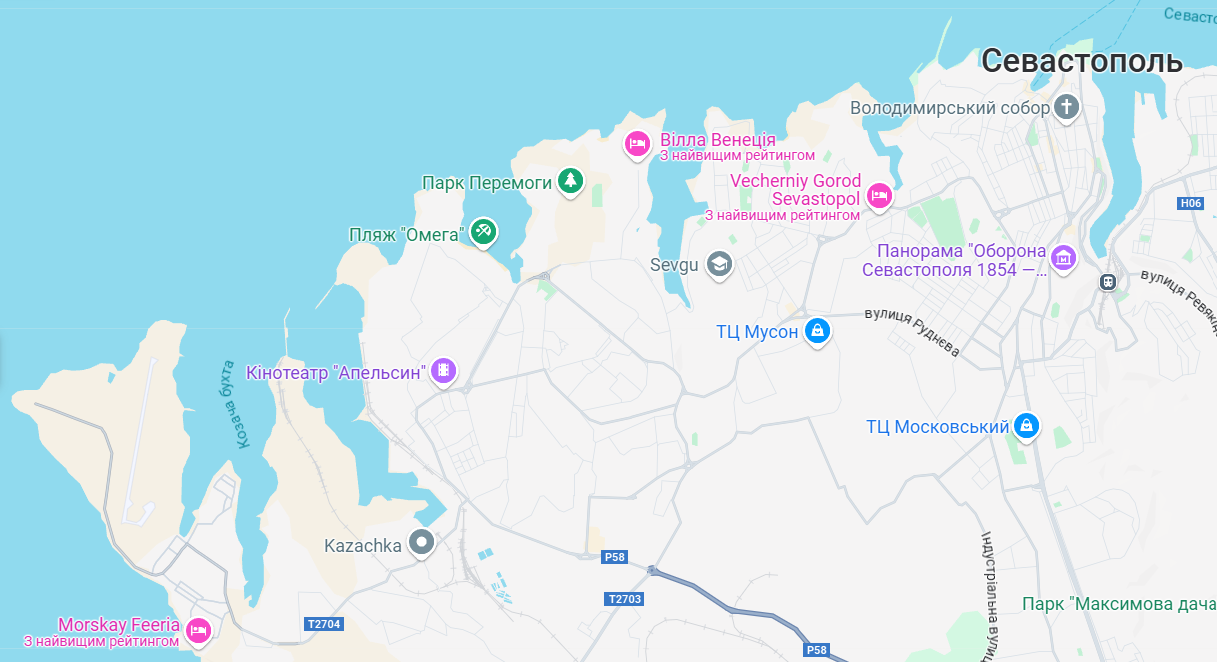
Kozacha Bay in the occupied Sevastopol area on the map (photo: google.com/maps/place)
Subsequently, a representative of the occupation administration of Sevastopol claimed that the loud noises heard in the city were related to “repelling an attempt by surface drones to attack.”
Despite claims of the supposed neutralization of the marine UAVs, he wrote on Telegram that “according to preliminary information, one unmanned boat was destroyed.”
Updated: Photo of explosion near Sevastopol appeared
Later, a photo of the explosion in the waters off Sevastopol appeared online. The image was shared by the Crimean Wind. Meanwhile, Russian public channels claim the footage allegedly shows an explosion caused by a sea drone.
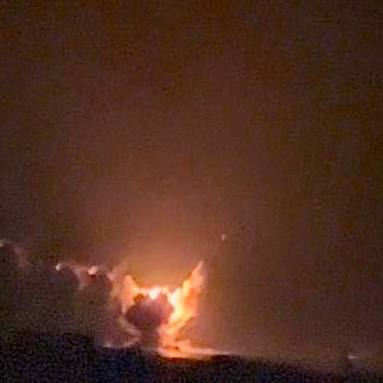
Photo: Explosion near Sevastopol appeared
Updated: New explosion in Sevastopol
According to the Crimean Wind, another explosion occurred near Sevastopol around 1:30 AM (Moscow time), following a period of relative quiet.
Reports also suggest that several enemy helicopters were seen taking off.
Later, the Crimean Wind channel reported that another powerful explosion occurred near the occupied city of Sevastopol around 2:30 AM.
As a reminder, earlier, on December 11, there were reports of explosions in occupied Crimea. Social media posts mentioned a “strike” in the area of Ocheretiana or Kozacha Bay, and explosions were also reported in Sevastopol.
On December 6, explosions were heard in occupied Kerch. Local residents wrote online about an attack by marine drones. It was later revealed that Ukrainian Defense Forces’ marine drones had broken through the Kerch Strait.
Explosions were heard in the area of temporarily occupied Sevastopol, including in Kozacha Bay (Crimea), on the night of December 31. This occurred amid a drone attack and the operation of Russia’s air defense systems, reports the Crimean Wind.
It was noted that the Russian forces’ air defense systems were active in Kozacha Bay. Located 15 kilometers from the center of Sevastopol, Kozacha Bay is situated northwest of Cape Fiolent, between Komysheva Bay and Cape Fiolent.
Meanwhile, Mikhail Razvozhayev, so-called head of the city’s occupation administration, stated on his Telegram channel that two drones had been allegedly shot down over the Black Sea area following a series of launches from a Pantsir-S1 system.
At the same time, social media reports indicated that something was exploding in Kozacha Bay near Sevastopol.
“Another loud explosion in Sevastopol at 1:18 AM (Moscow time -ed.), subscribers report. Explosions are heard from the sea, and Russian social media are saying that Sevastopol is under attack by marine drones. Again, a powerful explosion in Sevastopol, everything is shaking, subscribers report,” Crimean Wind reported.
Later, the channel added that there were reports of the destruction of a Russian Tor air defense system in the Kozacha Bay area. However, this information has not yet been confirmed.
Kozacha Bay in the occupied Sevastopol area on the map (photo: google.com/maps/place)
Subsequently, a representative of the occupation administration of Sevastopol claimed that the loud noises heard in the city were related to “repelling an attempt by surface drones to attack.”
Despite claims of the supposed neutralization of the marine UAVs, he wrote on Telegram that “according to preliminary information, one unmanned boat was destroyed.”
Updated: Photo of explosion near Sevastopol appeared
Later, a photo of the explosion in the waters off Sevastopol appeared online. The image was shared by the Crimean Wind. Meanwhile, Russian public channels claim the footage allegedly shows an explosion caused by a sea drone.
Photo: Explosion near Sevastopol appeared
Updated: New explosion in Sevastopol
According to the Crimean Wind, another explosion occurred near Sevastopol around 1:30 AM (Moscow time), following a period of relative quiet.
Reports also suggest that several enemy helicopters were seen taking off.
As a reminder, earlier, on December 11, there were reports of explosions in occupied Crimea. Social media posts mentioned a “strike” in the area of Ocheretiana or Kozacha Bay, and explosions were also reported in Sevastopol.
On December 6, explosions were heard in occupied Kerch. Local residents wrote online about an attack by marine drones. It was later revealed that Ukrainian Defense Forces’ marine drones had broken through the Kerch Strait.
Explosions were heard in the area of temporarily occupied Sevastopol, including in Kozacha Bay (Crimea), on the night of December 31. This occurred amid a drone attack and the operation of Russia’s air defense systems, reports the Crimean Wind.
It was noted that the Russian forces’ air defense systems were active in Kozacha Bay. Located 15 kilometers from the center of Sevastopol, Kozacha Bay is situated northwest of Cape Fiolent, between Komysheva Bay and Cape Fiolent.
Meanwhile, Mikhail Razvozhayev, so-called head of the city’s occupation administration, stated on his Telegram channel that two drones had been allegedly shot down over the Black Sea area following a series of launches from a Pantsir-S1 system.
At the same time, social media reports indicated that something was exploding in Kozacha Bay near Sevastopol.
“Another loud explosion in Sevastopol at 1:18 AM (Moscow time -ed.), subscribers report. Explosions are heard from the sea, and Russian social media are saying that Sevastopol is under attack by marine drones. Again, a powerful explosion in Sevastopol, everything is shaking, subscribers report,” Crimean Wind reported.
Later, the channel added that there were reports of the destruction of a Russian Tor air defense system in the Kozacha Bay area. However, this information has not yet been confirmed.
Kozacha Bay in the occupied Sevastopol area on the map (photo: google.com/maps/place)
Subsequently, a representative of the occupation administration of Sevastopol claimed that the loud noises heard in the city were related to “repelling an attempt by surface drones to attack.”
Despite claims of the supposed neutralization of the marine UAVs, he wrote on Telegram that “according to preliminary information, one unmanned boat was destroyed.”
Updated: Photo of explosion near Sevastopol appeared
Later, a photo of the explosion in the waters off Sevastopol appeared online. The image was shared by the Crimean Wind. Meanwhile, Russian public channels claim the footage allegedly shows an explosion caused by a sea drone.
Photo: Explosion near Sevastopol appeared
Updated: New explosion in Sevastopol
According to the Crimean Wind, another explosion occurred near Sevastopol around 1:30 AM (Moscow time), following a period of relative quiet.
Reports also suggest that several enemy helicopters were seen taking off.
As a reminder, earlier, on December 11, there were reports of explosions in occupied Crimea. Social media posts mentioned a “strike” in the area of Ocheretiana or Kozacha Bay, and explosions were also reported in Sevastopol.
On December 6, explosions were heard in occupied Kerch. Local residents wrote online about an attack by marine drones. It was later revealed that Ukrainian Defense Forces’ marine drones had broken through the Kerch Strait.
A ballistic missile was launched from Yemen toward Israel on the evening of December 30, prompting an air raid alert in the central part of the country. The target was intercepted by Israel’s air defense systems, reports the Israel Defense Forces (IDF).
According to Israeli military officials, air raid sirens sounded in several areas of central Israel at around 11 PM on Monday (local time) due to a “projectile that was launched from Yemen.”
The IDF later confirmed that its air defense systems successfully intercepted the missile before it could “cross into Israeli territory.”
“Sirens were sounded due to the possibility of falling shrapnel from the interception,” Israeli military officials added.
According to The Times of Israel reported that the projectile was a ballistic missile, likely launched by Houthi militants in Yemen.
Israeli media noted that Houthi militants fired a total of 11 ballistic missiles and at least nine drones toward Israel over the past month.
Magen David Adom emergency services reported that no injuries were reported as a result of the missile launch from Yemen toward central Israel.
However, medical personnel added that several people were affected by “acute anxiety” while rushing to bomb shelters.
Later reports revealed that fragments of the ballistic missile fell at the entrance to the Ramat Beit Shemesh Alef neighborhood near Jerusalem. No significant damage was reported.
בית שמש pic.twitter.com/R2ra1DkEfd
— Real News IL (@RealNewsIL) December 30, 2024
Houthi attacks from Yemen on Israel
Houthi militants from Yemen have frequently launched attacks on Israeli territory. They justify their strikes as support for the terrorist organization Hamas, which carried out a large-scale assault on Israel last spring. In response, the Israel Defense Forces (IDF) launched a military operation in the Gaza Strip.
The Houthis have also targeted commercial ships and other vessels passing through the Bab el-Mandeb Strait and the Red Sea.
As previously reported, on December 19, Houthi militants launched another missile at Israel. The IDF’s air defense systems successfully intercepted the missile.
On December 24, Israel announced another missile attack from Yemen, which was also intercepted.
It was later revealed that during the interception of the missile attack, Israel used the THAAD missile defense system for the first time, which was provided by the United States.
Additionally, in early October, the Houthis launched a ballistic missile at Israel, which was successfully intercepted by the IDF’s air defense systems.
On September 15, a Houthi missile struck central Israel for the first time but was destroyed by air defense. Later in September, the Houthis also targeted Tel Aviv Airport with a missile.
Advertisements – Advertising at The News And Times – advertising-newsandtimes.com | WE CONNECT!
Audio | Video | Top News | On Twitter | Security | FBI | Capitol Riot | JOSSICA | Trump | Russia | Putin | Russia – Ukraine War | Covid-19 | Brooklyn NY | Puerto Rico | World
September 26, 2026 4:47 am
The News And Times | Featured Posts | All Articles | Current News | Selected Articles | Shared Links | Opinions | In My Opinion | Sites | Blogs | Links | Twitter | Facebook

Contact Form | Blogs | Sites | News Reviews | Links | Advertising
All The News That’s Fit To Web