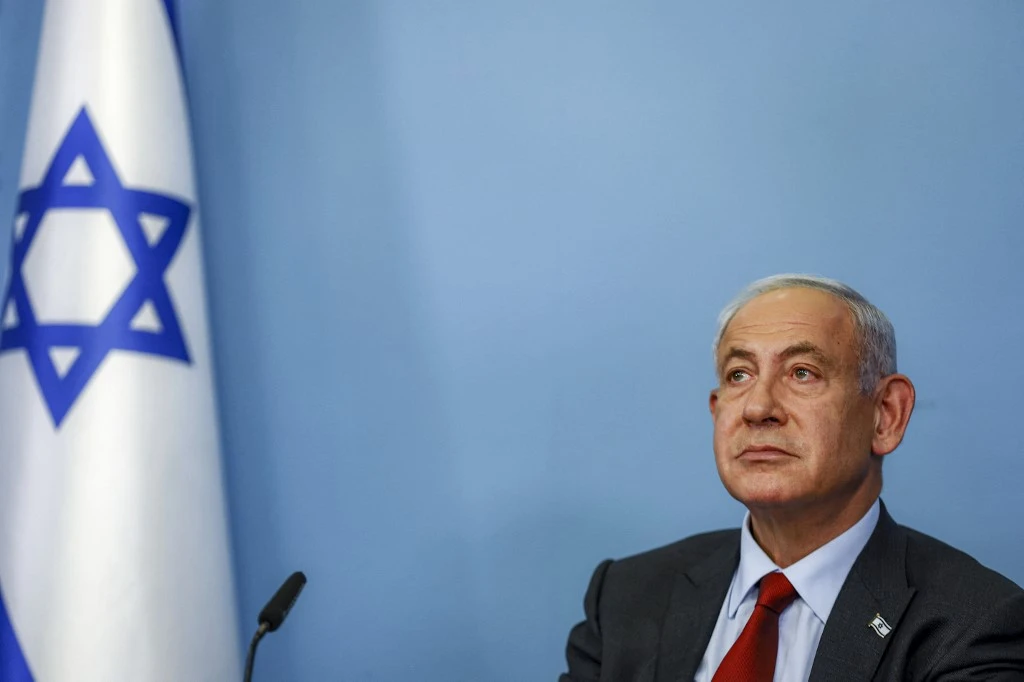
Prime Minister Benjamin Netanyahu has made several comments that will be well-received in Kyiv.
 The Brooklyn Times - bklyntimes.com
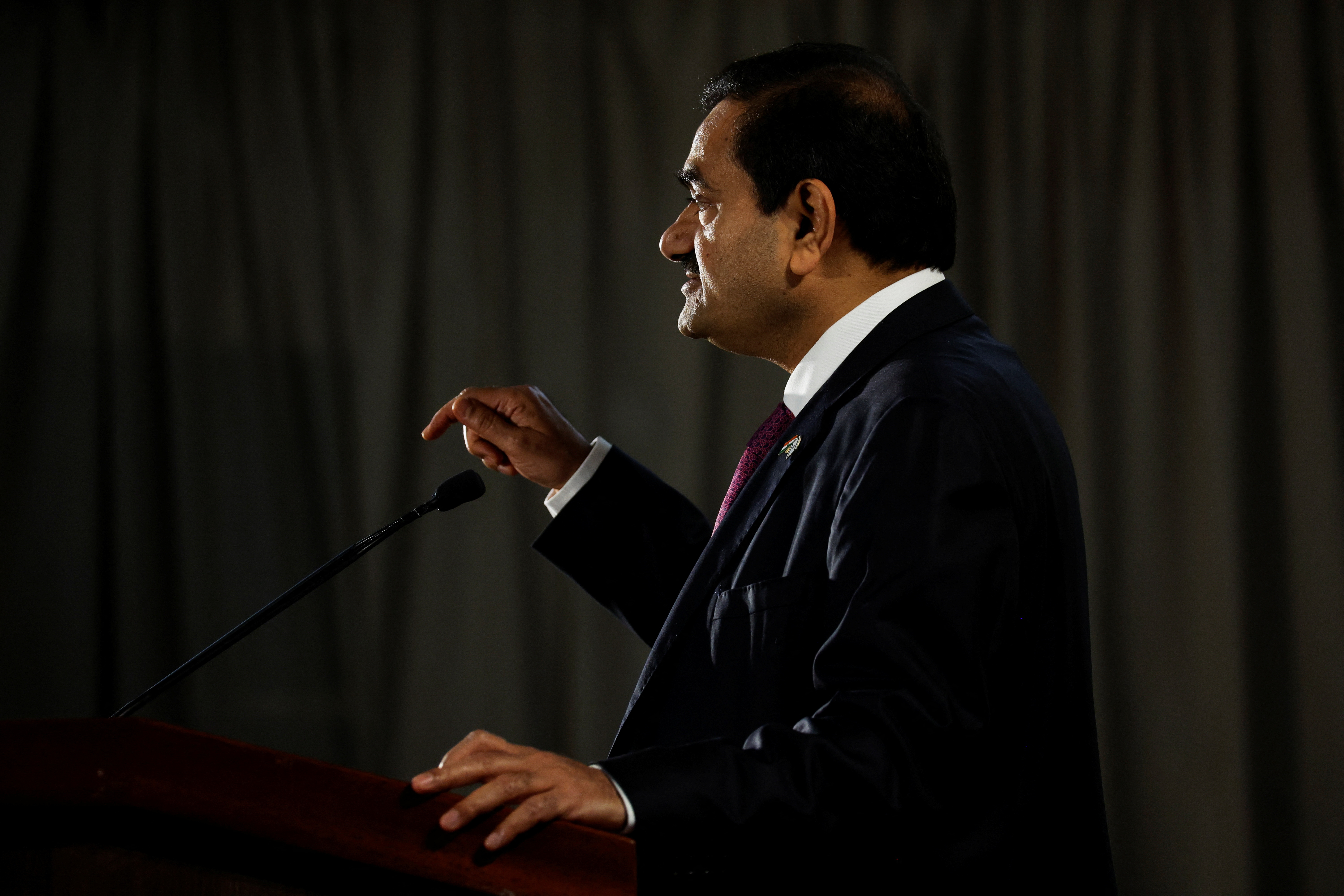
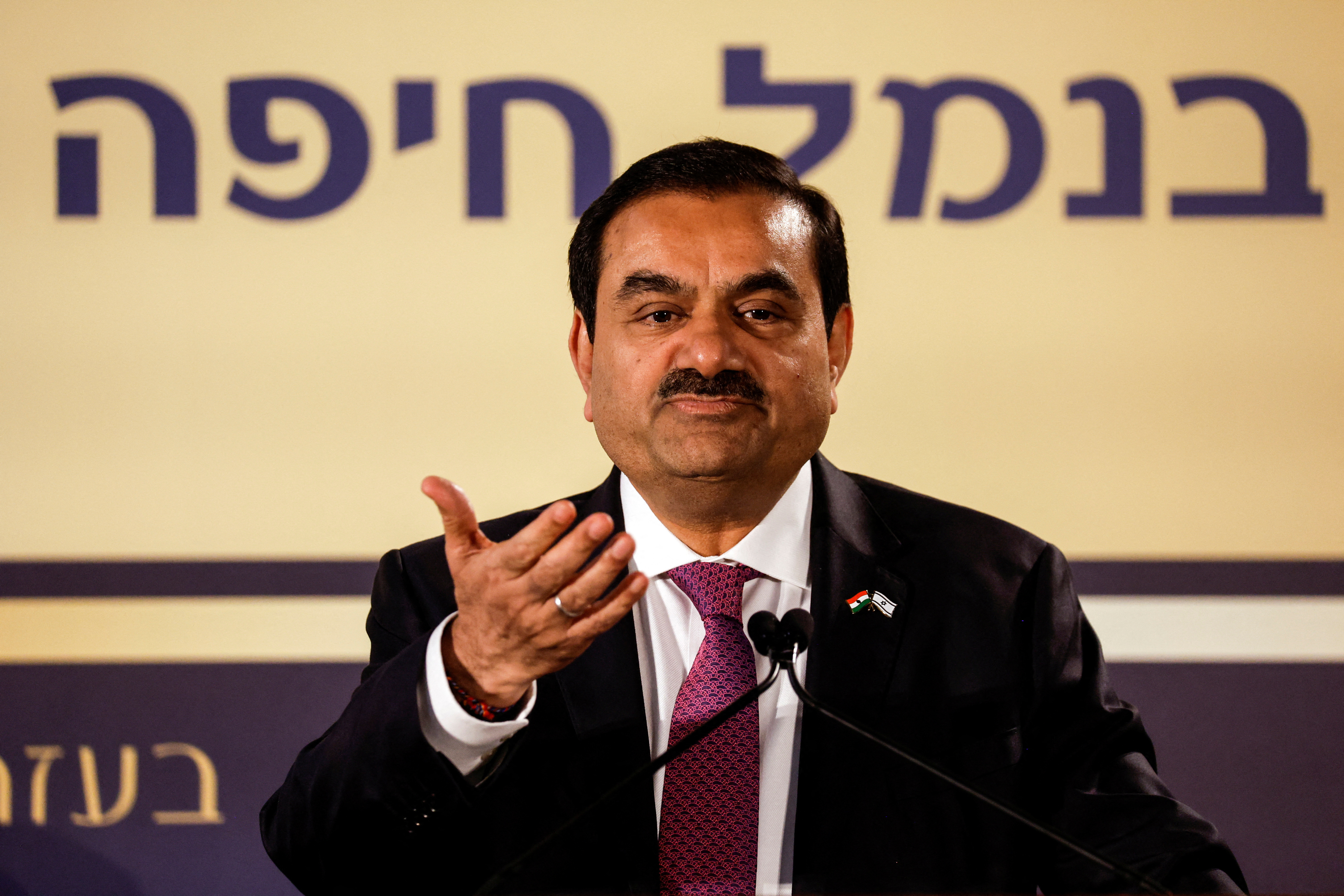
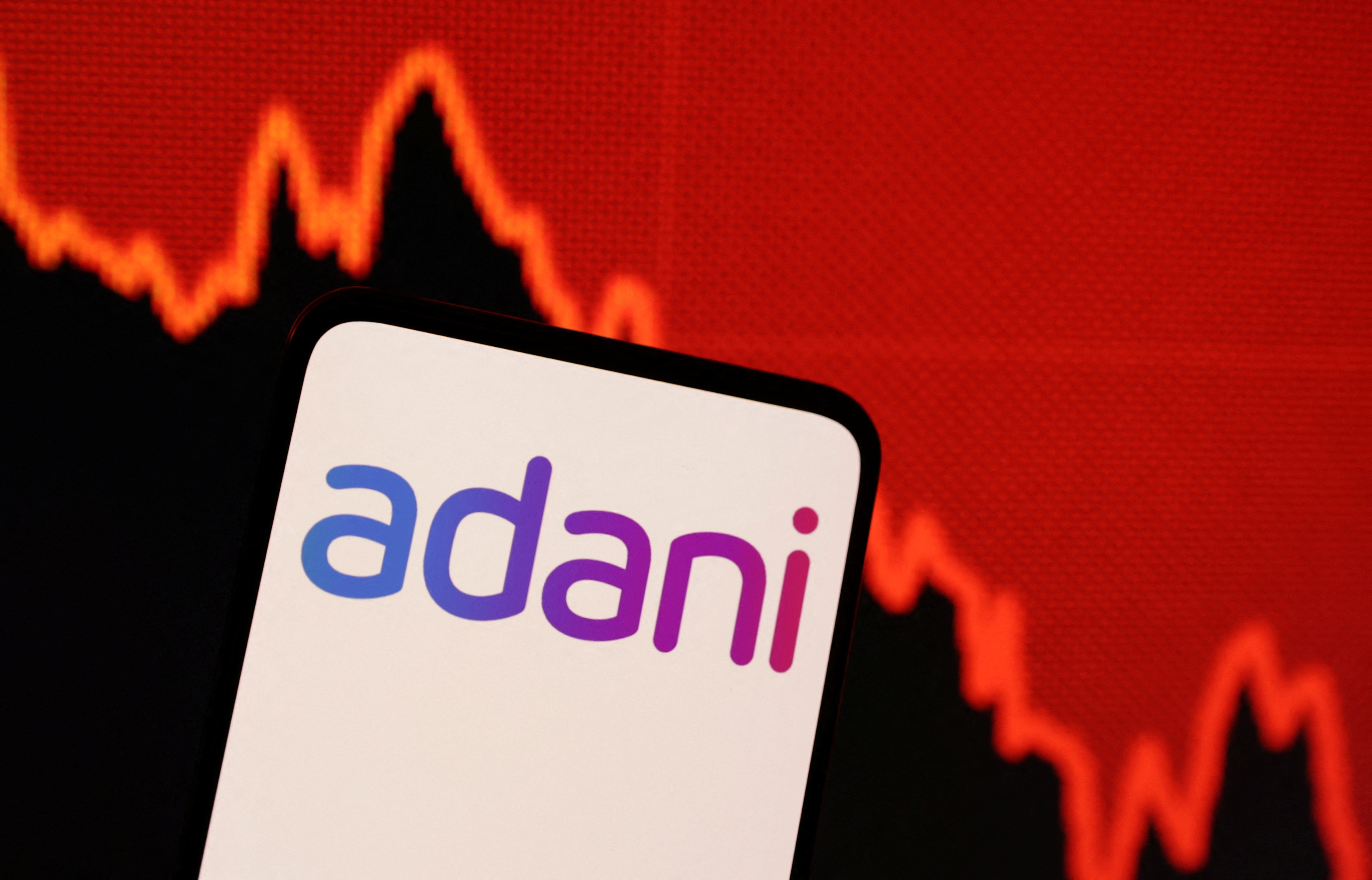
India’s Gautam Adani lost his title of Asia’s richest person on Wednesday as a rout in his conglomerate’s stocks deepened to $74 billion after a short-seller report.
A report by Hindenburg Research last week alleged improper use of offshore tax havens while flagging concerns about high debt and the valuations of seven listed Adani companies.
It has brought heightened scrutiny of the conglomerate with an Australian regulator saying on Wednesday that it would be reviewing the allegations to see if further enquiries are warranted.
The Adani Group has denied the allegations, calling them baseless and saying it has always made necessary regulatory disclosures.
Wednesday’s stock losses saw Gautam Adani slip to 10th on Forbes rich list with an estimated $84.1 billion, just below rival Mukesh Ambani, the chairman of Reliance Industries Ltd (RELI.NS) who has an estimated $84.4 billion. Before the Hindenburg report, Adani had ranked 3rd.
The worsening rout comes despite the group managing to muster support from investors to haul a share sale for flagship firm Adani Enterprises Ltd (ADEL.NS) over the line on Tuesday.
“There was a slight bounce yesterday after the share sale went through, after seeming improbable at a point, but now the weak market sentiment has become visible again after the bombshell Hindenburg report,” said Ambareesh Baliga, a Mumbai-based independent market analyst.
“With the stocks down despite Adani’s rebuttal, it clearly shows some damage on investor sentiment. It will take a while to stabilise,” Baliga added.
Adani Enterprises (ADEL.NS) lost 5% on Wednesday to bring its losses since the Hindenburg report to more than $8 billion. Adani Power (ADAN.NS) fell 5%, while Adani Total Gas (ADAG.NS) slumped 10%, down by its daily price limit.
Adani Total Gas, a joint venture between France’s energy major Total (TTEF.PA) and Adani Group, has been the biggest casualty of the short seller report, losing about $27 billion.
Data also showed that foreign investors sold a net $1.5 billion worth of Indian equities since the Hindenburg report – the biggest outflow over four consecutive days since Sept. 30.
Hindenburg said in its report it had shorted U.S.-bonds and non-India traded derivatives of the Adani Group.

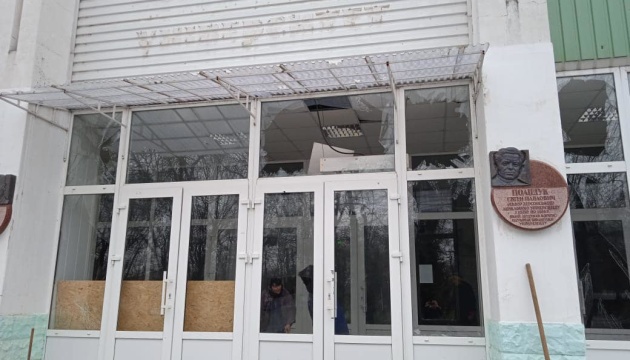
Russian troops shelled Kherson location 42 times above the past working day, January 31.
“The enemy attacked the settlements of the area with artillery, MLRS, and mortars. The Russian army shelled Kherson town eight situations. Residences in the metropolis ended up harmed owing to enemy strikes,” the Kherson Regional Army Administration posted on Telegram.
Yesterday, one resident of Kherson region was killed and yet another person was wounded in enemy shelling.
Study also: Russians strike Oleshky in Kherson location, damaging church
As reported, on January 31, the Russian military struck a church in Oleshky on the temporarily occupied still left lender of Kherson area.
ol
The post Russian troops hit Kherson region 42 times in past day. Civilian casualties reported appeared first on Ukraine Intelligence.
TrickGate is a shellcode-based packer offered as a service, which is used at least since July 2016, to hide malware from defense programs. A packer (aka “Crypter” and “FUD”) implements a series of functionalities to make it harder for antivirus programs to detect the malware.
The Check Point Research team reported that over the last 6 years, TrickGate was used to drop some of the most popular malware families, including Cerber, Trickbot, Maze, Emotet, REvil, Cobalt Strike, AZORult, Formbook, and AgentTesla.
“TrickGate managed to stay under the radar for years because it is transformative – it undergoes changes periodically. This characteristic caused the research community to identify it by numerous attributes and names.” reads the report published by Check Point Research. “While the packer’s wrapper changed over time, the main building blocks within TrickGate shellcode are still in use today.”
The developers of the TrickGate packer continually improve its code, it has been given many names based on its varied attributes. Its names include “TrickGate”, “Emotet’s packer”, “new loader”, “Loncom”, and “NSIS-based crypter.”
The attack chain observed by the experts can vary significantly, but in most cases, threat actors used phishing messages with malicious attachments or malicious links.
“The first stage mainly comes in the form of an archived executable, but we monitored many file types and delivery permutations that lead to the same shellcode.” continues the report. “The second stage is the shellcode loader which is responsible for decrypting and running the shellcode.”
The second stage is the shellcode loader which is responsible for decrypting and running the shellcode.
The shellcode loader was written in one of the following languages: NSIS script, AutoIT script, and C.
The shellcode is the core of the packer, because it decrypts the payload and stealthily injects it into a new process.

The TrickGate packer was primarily used in attacks aimed at the manufacturing sector, and other attacks aimed at the education, healthcare, government, and finance industries.
The most popular malware families used in the attacks are FormBook (42%), LokiBot (25%), and Agent (11%). Attacks were mainly reported in Taiwan, Turkey, Germany, Russia, and China.
“Understanding the packer’s building blocks is of crucial importance to detect the threat, as blocking the packer will protect against the threat in an early stage, before the payload starts to run.” concludes the report. “Packers often get less attention, as researchers tend to focus their attention on the actual malware, leaving the packer stub untouched. However, the identified packer can now be used as a focal point to detect new or unknown malware.”
Follow me on Twitter: @securityaffairs and Facebook and Mastodon
(SecurityAffairs – hacking, packer)
The post TrickGate, a packer used by malware to evade detection since 2016 appeared first on Security Affairs.
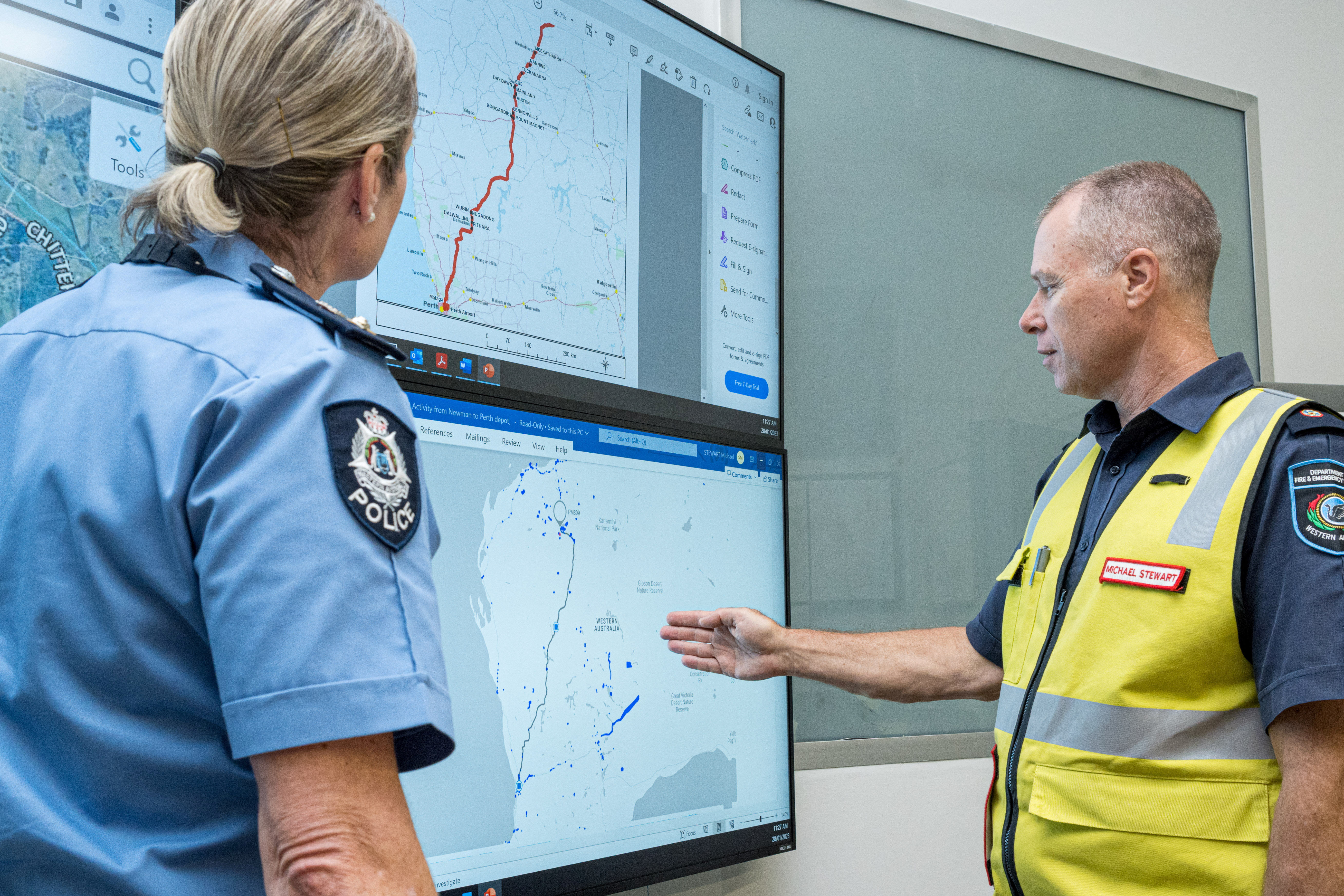
Australian authorities on Wednesday found a radioactive capsule that was lost in the vast Outback after nearly a week-long search along a 1,400 km (870-mile) stretch of highway, an emergency services official said.
The military was verifying the capsule and it would be taken to a secure facility in the city of Perth on Thursday, Emergency Services Minister Stephen Dawson said in a news conference.
“When you consider the scope of the research area, locating this object was a monumental challenge, the search groups have quite literally found the needle in the haystack,” Dawson said.
The radioactive capsule was part of a gauge used to measure the density of iron ore feed from Rio Tinto’s (RIO.AX) Gudai-Darri mine in the state’s remote Kimberley region. The ore was being taken to a facility in the suburbs of Perth – a distance longer than the length of Great Britain.
Officials from Western Australia’s emergency response department, defence authorities, radiation specialists and others have been combing the a stretch of highway for the tiny capsule that was lost in transit more than two weeks ago. read more
Officials said the capsule apparently fell off a truck and landed on the side of the road, adding that it was
unlikely there will be contamination in the area.
The silver capsule, 6 mm in diameter and 8 mm long, contains Caesium-137 which emits radiation equal to 10 X-rays per hour.
People had been told to stay at least five metres (16.5 feet) away from the capsule if they spot it as exposure could cause radiation burns or radiation sickness, though driving past it is believed to be relatively low risk, akin to taking an X-ray.
India’s government on Wednesday unveiled one of its biggest jumps in capital spending in the past decade and said the fiscal deficit would fall next year, as it tries to create jobs while maintaining financial discipline.
As Prime Minister Narendra Modi’s government faces elections in key states this year and a national vote in 2024, it has been under pressure to create jobs in the country of 1.4 billion where many have struggled to get employment.
“After a subdued period of the pandemic, private investments are growing again,” Finance Minister Nirmala Sitharaman said in parliament, referring to the COVID-19 crisis.
“The budget makes the need once again to ramp up the virtuous cycle of investment and job creation. Capital investment is being increased steeply for the third year in a row by 33% to 10 trillion rupees.”
The spending rise to about $122.3 billion in the next fiscal year starting on April 1 will be the biggest such jump after an increase of more than 37% between 2020/21 and 2021/22 as the pandemic forced the government to raise spending to support the economy.
Total expenditure is seen rising 7.4% to 45 trillion rupees, with longer-term capital spending budgeted to rise 33% to 10 trillion rupees.
Sitharaman said the government would target a budget deficit of 5.9% of gross domestic product (GDP) for 2023/24, down from 6.4% for the current year. A Reuters poll had pegged the deficit for the next fiscal year at 6%.
Gross market borrowing is estimated at 15.43 trillion rupees ($189 billion), while net borrowing is seen at 11.8 trillion rupees.
Since taking office in 2014, Modi has ramped up capital spending including on roads and energy, while wooing investors through lower tax rates and labour reforms, and offering subsidies to poor households to clinch their political support.
After Sitharaman revealed the big spending jump, ruling-party lawmakers thumped their desks as the camera moved to Modi.
A lack of enough jobs for young people has been one of the biggest criticisms of Modi, who is still widely projected to win the general election due next year.
Indian shares pared early gains, while bond yields moved higher. The benchmark indexes, Nifty 50 (.NSEI) and the S&P BSE Sensex (.BSESN), gave up gains, while the benchmark 10-year yield rose on the higher capital spending plans.
Sitharaman said the aim was to have strong public finances and a robust financial sector for the benefit of all sections of the country. She also allocated 350 billion rupees for an energy transition, as Modi focuses on green hydrogen and other cleaner fuels to meet the country’s climate goals.
Sitharaman said that despite a global slowdown because of the pandemic and the Russia-Ukraine war, the Indian economy was “on the right track”.
($1 = 81.7725 Indian rupees)





DALLAS (AP) — Winter weather brought ice to Texas and nearby states Tuesday, causing the cancellation of more than 980 flights and delays to nearly 800 more.
Numerous auto collisions were reported in Austin, Texas, with at least one fatality according to the Austin Fire Department.
More than 500 flights to or from Dallas-Fort Worth International Airport and nearly 125 to or from Dallas Love Field were canceled or delayed Tuesday, according to the tracking service FlightAware.
Dallas-based Southwest Airlines has canceled more than 300 flights and delayed nearly 100 more, FlightAware reported.
The storm began Monday as part of an expected “several rounds” of wintry precipitation through Wednesday across Texas, Oklahoma, Arkansas and Tennessee, according to National Weather Service meteorologist Marc Chenard.
“Generally light to moderate freezing rain resulting in some pretty significant ice amounts,” Chenard said.
“We’re expecting ice accumulations potentially a quarter inch or higher as far south as Austin, Texas, up to Dallas over to Little Rock, Arkansas, towards Memphis, Tennessee, and even getting close to Nashville, Tennessee,” according to Chenard.
The flight disruptions follow Southwest’s meltdown in December that began with a winter storm but continued after most other airlines had recovered. Southwest canceled about 16,700 flights over the last 10 days of the year, and the U.S. Transportation Department is investigating.
The weather service has issued a winter storm warning for a large swath of Texas and parts of southeastern Oklahoma and an ice storm warning across the midsection of Arkansas into western Tennessee.
A winter weather advisory is in place in much of the remainder of Arkansas and Tennessee and into much of Kentucky, West Virginia and southern parts of Indiana and Ohio.
Schools and colleges in Texas, Oklahoma and Arkansas planned to close or go to virtual learning Tuesday.

The Armed Forces of Ukraine eradicated about 128,420 Russian troops in Ukraine from February 24, 2022 to February 1, 2023, such as 920 soldiers over the previous working day by yourself.
The General Personnel of the Armed Forces of Ukraine stated this in a submit on Facebook, in accordance to Ukrinform.
The enemy’s full beat losses involve also 3,209 tanks (+8 in excess of the past day), 6,382 armored personnel motor vehicles (+8), 2,207 artillery units (+10), 458 multiple launch rocket units (+4), 221 air protection programs, 293 aircraft, 284 helicopters, 5,061 cars (+13), 18 warships/boats, 1,951 unmanned aerial autos, 200 special devices models. A total of 796 enemy cruise missiles have been shot down.
Read through also: Armed Forces of Ukraine strike more than 20 enemy focus areas
The data are becoming updated.
iy
The post Russian military death toll in Ukraine rises to 128,420 appeared first on Ukraine Intelligence.
SAN FRANCISCO (AP) — The maker of ChatGPT is trying to curb its reputation as a freewheeling cheating machine with a new tool that can help teachers detect if a student or artificial intelligence wrote that homework.
The new AI Text Classifier launched Tuesday by OpenAI follows a weeks-long discussion at schools and colleges over fears that ChatGPT’s ability to write just about anything on command could fuel academic dishonesty and hinder learning.
OpenAI cautions that its new tool – like others already available – is not foolproof. The method for detecting AI-written text “is imperfect and it will be wrong sometimes,” said Jan Leike, head of OpenAI’s alignment team tasked to make its systems safer.
“Because of that, it shouldn’t be solely relied upon when making decisions,” Leike said.
Teenagers and college students were among the millions of people who began experimenting with ChatGPT after it launched Nov. 30 as a free application on OpenAI’s website. And while many found ways to use it creatively and harmlessly, the ease with which it could answer take-home test questions and assist with other assignments sparked a panic among some educators.
By the time schools opened for the new year, New York City, Los Angeles and other big public school districts began to block its use in classrooms and on school devices.
The Seattle Public Schools district initially blocked ChatGPT on all school devices in December but then opened access to educators who want to use it as a teaching tool, said Tim Robinson, the district spokesman.
“We can’t afford to ignore it,” Robinson said.
The district is also discussing possibly expanding the use of ChatGPT into classrooms to let teachers use it to train students to be better critical thinkers and to let students use the application as a “personal tutor” or to help generate new ideas when working on an assignment, Robinson said.
School districts around the country say they are seeing the conversation around ChatGPT evolve quickly.
“The initial reaction was ‘OMG, how are we going to stem the tide of all the cheating that will happen with ChatGPT,’” said Devin Page, a technology specialist with the Calvert County Public School District in Maryland. Now there is a growing realization that “this is the future” and blocking it is not the solution, he said.
“I think we would be naïve if we were not aware of the dangers this tool poses, but we also would fail to serve our students if we ban them and us from using it for all its potential power,” said Page, who thinks districts like his own will eventually unblock ChatGPT, especially once the company’s detection service is in place.
OpenAI emphasized the limitations of its detection tool in a blog post Tuesday, but said that in addition to deterring plagiarism, it could help to detect automated disinformation campaigns and other misuse of AI to mimic humans.
The longer a passage of text, the better the tool is at detecting if an AI or human wrote something. Type in any text — a college admissions essay, or a literary analysis of Ralph Ellison’s “Invisible Man” — and the tool will label it as either “very unlikely, unlikely, unclear if it is, possibly, or likely” AI-generated.
But much like ChatGPT itself, which was trained on a huge trove of digitized books, newspapers and online writings but often confidently spits out falsehoods or nonsense, it’s not easy to interpret how it came up with a result.
“We don’t fundamentally know what kind of pattern it pays attention to, or how it works internally,” Leike said. “There’s really not much we could say at this point about how the classifier actually works.”
Higher education institutions around the world also have begun debating responsible use of AI technology. Sciences Po, one of France’s most prestigious universities, prohibited its use last week and warned that anyone found surreptitiously using ChatGPT and other AI tools to produce written or oral work could be banned from Sciences Po and other institutions.
In response to the backlash, OpenAI said it has been working for several weeks to craft new guidelines to help educators.
“Like many other technologies, it may be that one district decides that it’s inappropriate for use in their classrooms,” said OpenAI policy researcher Lama Ahmad. “We don’t really push them one way or another. We just want to give them the information that they need to be able to make the right decisions for them.”
It’s an unusually public role for the research-oriented San Francisco startup, now backed by billions of dollars in investment from its partner Microsoft and facing growing interest from the public and governments.
France’s digital economy minister Jean-Noël Barrot recently met in California with OpenAI executives, including CEO Sam Altman, and a week later told an audience at the World Economic Forum in Davos, Switzerland that he was optimistic about the technology. But the government minister — a former professor at the Massachusetts Institute of Technology and the French business school HEC in Paris — said there are also difficult ethical questions that will need to be addressed.
“So if you’re in the law faculty, there is room for concern because obviously ChatGPT, among other tools, will be able to deliver exams that are relatively impressive,” he said. “If you are in the economics faculty, then you’re fine because ChatGPT will have a hard time finding or delivering something that is expected when you are in a graduate-level economics faculty.”
He said it will be increasingly important for users to understand the basics of how these systems work so they know what biases might exist.
—-
O’Brien reported from Providence, Rhode Island. AP writer John Leicester contributed to this report from Paris.
Advertisements – Advertising at The News And Times – advertising-newsandtimes.com | WE CONNECT!
Audio | Video | Top News | On Twitter | Security | FBI | Capitol Riot | JOSSICA | Trump | Russia | Putin | Russia – Ukraine War | Covid-19 | Brooklyn NY | Puerto Rico | World
September 14, 2026 10:11 am
The News And Times | Featured Posts | All Articles | Current News | Selected Articles | Shared Links | Opinions | In My Opinion | Sites | Blogs | Links | Twitter | Facebook

Contact Form | Blogs | Sites | News Reviews | Links | Advertising
All The News That’s Fit To Web