Categories
Audio Sources - Full Text Articles

Howie Carr: Panic is over, not the payouts

The COVID Panic will officially end May 11 – more than three months from now, so that the feds can keep funneling hundreds of billions more in free funny money to the non-working classes and undocumented Democrats.

They’ve squandered more than $4 trillion so far on the biggest scam ever, and it’s breaking the Democrats’ hearts to even think about finally ending any of them.

What a boondoggle the Panic has been – millions of government hacks paid to do nothing, bloated food-stamp payments, extra welfare of all kinds, rent and student-loan moratoriums, so-called, not to mention the condoning of those “mostly peaceful” looting and arson sprees in the name of equity.

Someday, I believe, history may regard the COVID scam as a greater disaster for American society than the War on Poverty, or even the Great Depression.

The destruction of the nation’s work ethic, millions of businesses destroyed for no reason, a generation of young people whose educations were ruined, rampant drug and alcohol abuse, the end of any faith in government after years of officially sanctioned government lies….

In a related development, a House committee this morning will begin hearings on the “rampant waste” on assorted pandemic programs.

I hope the solons have set aside a lot of time. I mean, a lot of time, because there’s never been anything like the level of flim-flams and grifts encouraged by the government over the last three years.

You can check out the U.S. attorney’s website – any U.S. attorney’s – to get a small idea of how endemic this fraud has been. The amazing thing is, you sometimes find out about COVID welfare programs you never heard of that were ripped off for millions, maybe billions.

Here’s an example: did you ever hear of the Provider Relief Fund (PRF) for health-care professionals? Well, an accountant for a Hyannis dentist did, and he stole $52,000 as part of a larger $1.2 million embezzlement.

As with all types of crime, a wildly disproportionate amount is committed by illegal aliens.

Here’s a “Boston man” who stole $65,000 from another handout program – Pandemic Unemployment Assistance (PUA). The name of the “Boston man” is Wilson Radhames Peguero Brea, age 53, and he pleaded guilty to “fraudulently representing that he was a U.S. citizen.”

In other words, he wasn’t a “Boston man” at all. But he was a COVID fraudster.

The reports about the billions – trillions? – in COVID fraud come out on an almost daily basis. Here’s a headline yesterday from The Hill:

“Almost 70K ‘questionable’ Social Security numbers used for $5.4B in pandemic-related loans: watchdog.”

When the relief programs with the “forgivable” loans were announced three years ago, it was like blowing a dog whistle that only fraudsters could hear.

I personally knew the first guy arrested in the U.S. for scamming the biggest boondoogle of them all – the Payroll Protection Program (PPP). He was already an ex-con, a radio guy from the Cape. When he was lugged in Providence, he’d just gotten out on parole for earlier scams involving, among other things, bank fraud, diamonds and a minor-league baseball team.

I knew him as Kurt Sanborn, but now he’s locked up at Devens under the name of David Staveley, BOP #04230-049. His release date is July 13, 2024.

This former employee of WXTK on Cape Cod wasn’t the only local recidivist fraudster to dip his crooked snout into the free-money trough. There’s a guy named James Joseph Cohen, age 59, of Wenham, who pleaded guilty to stealing $1.2 million in PPP funds.

I mentioned this case on my radio show and somebody texted me that this Cohen used to be known as Jamie Edelkind. Under the name Edelkind, Cohen had been convicted twice, according to the feds, “including a 2005 conviction for bank fraud.”

He got 60 months and was ordered to pay $3.2 million in restitution, “much of which remains unpaid,” the complaint noted.

All you needed to get a “forgivable” PPP loan was an officially incorporated business. Now, a lot of businesses are briefly incorporated, but then go under after a brief time. The bust-out owners then stop paying what in Massachusetts is the $500 annual filing fee for corporations.

Guess what happened in 2020, when the feds blew that dog-whistle for the David Staveleys of the world? There was a stampede on the MA secretary of state’s office, as all the “dissolved” corporations were suddenly recreated, in order to… well, you know what.

Politicians rushed to the front of the line when the feds started handing out barrels of cash, no questions asked. Dementia Joe Biden likes to talk about $186,000 (which he sometimes calls $186) that Rep. Marjorie Taylor Green collected for her business.

However, Brandon somehow never mentions a company known as EDI Associates, in which Paul Pelosi has an 8.1 percent interest.

Pelosi’s company was “forgiven” its $1.7-million “loan.”

Some local derelict ex-pols did pretty well with this largest welfare program of all time. I remember a former legislator a couple of years ago bragging that his wife had just scored $12,000 for her tiny business.

“Putting in a new bathroom!” he said.

I keep a file with recent headlines and stories:

“’Deplorable’: Ex-Stonecrest (GA) mayor gets 57 months in COVID fund fraud case… Two California fugitives flee FBI to luxury Montenegro exile…. Rapper Nuke Bizzl pleads guilty to $1.2M COVID relief fraud after bragging in video… Queens mail carriers busted in alleged $16M fraud scheme….”

Most of these scammers spent the money on drugs, gambling, Bentleys – important stuff, in other words.

Consider one Vinicius Santana, 34, of Boca Raton FL, formerly of Revere, who was convicted of stealing $2.5 million in PPP funds. He got three loans claiming to have three employees in a home-care company. After realizing how there was absolutely nobody minding the store, on his fourth loan he claimed 154 employees.

According to the feds’ press releases, in addition to the usual real estate and luxury cars, Vinicius “invested in cryptocurrency.”

Cryptocurrency… or kleptocurrency, a la Sam Bankman-Fried? Is it possible that one scam artist was swindled by an even bigger con man? As the original Flim Flam Man used to say, “You can’t cheat an honest man.”

Easy come, easy go, even when you’re talking $4 trillion. Maybe especially when you’re talking $4 trillion.


Categories
Audio Sources - Full Text Articles

The Age of Verbiage

Categories
Audio Sources - Full Text Articles

India ramps up spending, cuts deficit in $550 bln budget ahead of 2024 vote

2023-02-01T09:47:12Z

India’s government on Wednesday unveiled one of its biggest jumps in capital spending in the past decade in its budget for the coming year and said the fiscal deficit would fall, as it tries to create jobs while maintaining financial discipline.

Prime Minister Narendra Modi’s party, which faces elections in key states this year and a national vote in 2024, has been under pressure to create jobs in the country of 1.4 billion where many have struggled to get employment despite it remaining one of the world’s fastest-growing major economies.

“After a subdued period of the pandemic, private investments are growing again,” Finance Minister Nirmala Sitharaman said as she presented the 2023/24 budget in parliament, with total spending rising 7.5% to 45.03 trillion rupees ($549.51 billion).

“The budget makes the need once again to ramp up the virtuous cycle of investment and job creation. Capital investment is being increased steeply for the third year in a row by 33% to 10 trillion rupees.”

The capital spending increase to about $122.3 billion, which would amount to 3.3% of gross domestic product (GDP), in the next fiscal year starting on April 1 will be the biggest such jump after an increase of more than 37% between 2020/21 and 2021/22.

“In the backdrop of an anticipated slowdown in global growth, reliance on public capex as a countercyclical policy will help in supporting overall growth,” said Vivek Kumar, an economist at QuantEco Research in Mumbai.

The finance ministry’s annual Economic Survey, released on Tuesday, forecast the economy could grow 6% to 6.8% next fiscal year, down from 7% projected for the current year, while warning about the impact of cooling global demand on exports.

Sitharaman said that despite a global slowdown because of the COVID-19 pandemic and the Russia-Ukraine war, the Indian economy was “on the right track”.

Sitharaman said the government would target a budget deficit of 5.9% of GDP for 2023/24, down from 6.4% for the current year. A Reuters poll had pegged the deficit for the next fiscal year at 6%.

The deficit plan will be aided by a 28% cut in subsidies on food, fertiliser and petroleum for the next fiscal year at 3.75 trillion rupees. The government cut the spending on a key rural jobs guarantee programme to 600 billion rupees – the smallest in more than five years – from 894 billion rupees for this fiscal year.

Moody’s Investors Service said the narrower fiscal deficit projection pointed to the government’s commitment to longer-term fiscal sustainability.

“Although the gradual fiscal consolidation trend remains intact and will help to stabilise the government’s debt burden relative to nominal GDP, the high debt burden and weak debt affordability remain key constraints that offset India’s fundamental strengths, including its high growth potential and deep domestic capital markets,” said Christian de Guzman, its senior vice president.

The government’s gross market borrowing is estimated at 15.43 trillion rupees ($189 billion) for the next fiscal year, while net borrowing is seen at 11.8 trillion rupees.

Since taking office in 2014, Modi has ramped up capital spending including on roads and energy, while wooing investors through lower tax rates and labour reforms, and offering subsidies to poor households to clinch their political support.

After Sitharaman revealed the capital spending jump, ruling-party lawmakers thumped their desks as the camera moved to Modi.

A lack of enough and well-paying jobs for young people has been one of the biggest criticisms of Modi, who is still widely projected to win the general election.

Indian shares rose after the government raised the minimum tax rebate limit to 700,000 rupees from 500,000 rupees earlier and stepped up spending. Bond yields moved lower after it lifted gross borrowing.

The surcharge on annual income above 50 million rupees has been cut to 25% from 37%.

Sitharaman said the aim was to have strong public finances and a robust financial sector for the benefit of all sections of the country. She also allocated 350 billion rupees for energy transition, as Modi focuses on green hydrogen and other cleaner fuels to meet the country’s climate goals.

($1 = 81.7725 Indian rupees)

Related Galleries:

Commuters travel in an overcrowded train near a railway station in Ghaziabad, on the outskirts of New Delhi, India, February 1, 2023. REUTERS/Anushree Fadnavis

India’s Finance Minister Nirmala Sitharaman holds up a folder with the Government of India’s logo as she leaves her office to present the federal budget in the parliament, in New Delhi, India, February 1, 2023. REUTERS/Adnan Abidi

India’s Finance Minister Nirmala Sitharaman holds up a folder with the Government of India’s logo as she leaves her office to present the federal budget in the parliament, in New Delhi, India, February 1, 2023. REUTERS/Adnan Abidi

India’s Finance Minister Nirmala Sitharaman holds up a folder with the Government of India’s logo as she leaves her office to present the federal budget in the parliament, in New Delhi, India, February 1, 2023. REUTERS/Adnan Abidi

Indian Finance Minister Nirmala Sitharaman speaks during a side event on the G20 Finance Ministers and Central Bank Governors Meeting in Nusa Dua, Bali, Indonesia, 14 July 2022. Made Nagi/Pool via REUTERS/File Photo
Categories
Audio Sources - Full Text Articles

Adani spotlight shifts to regulatory probes, response to allegations

2023-02-01T09:39:53Z

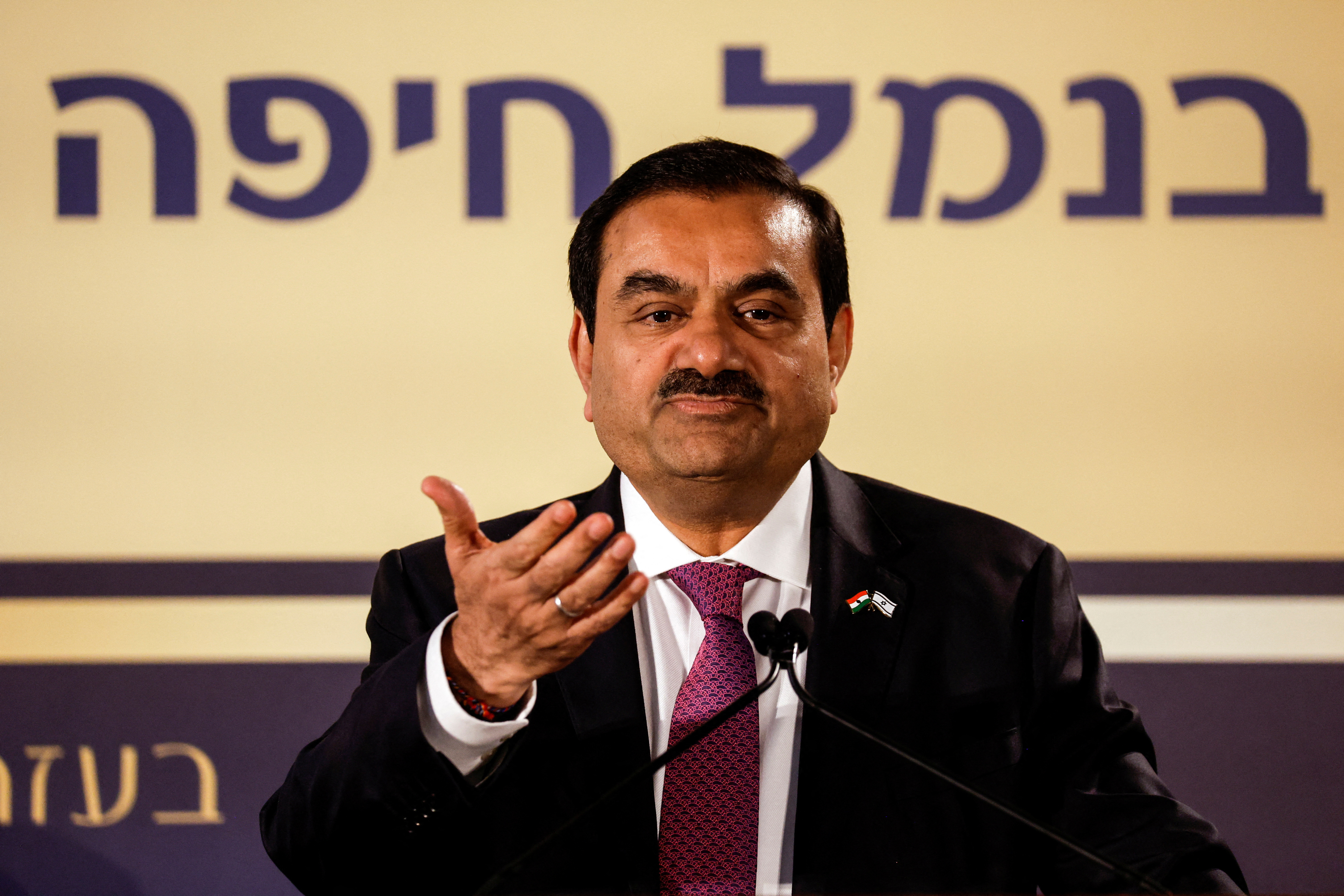
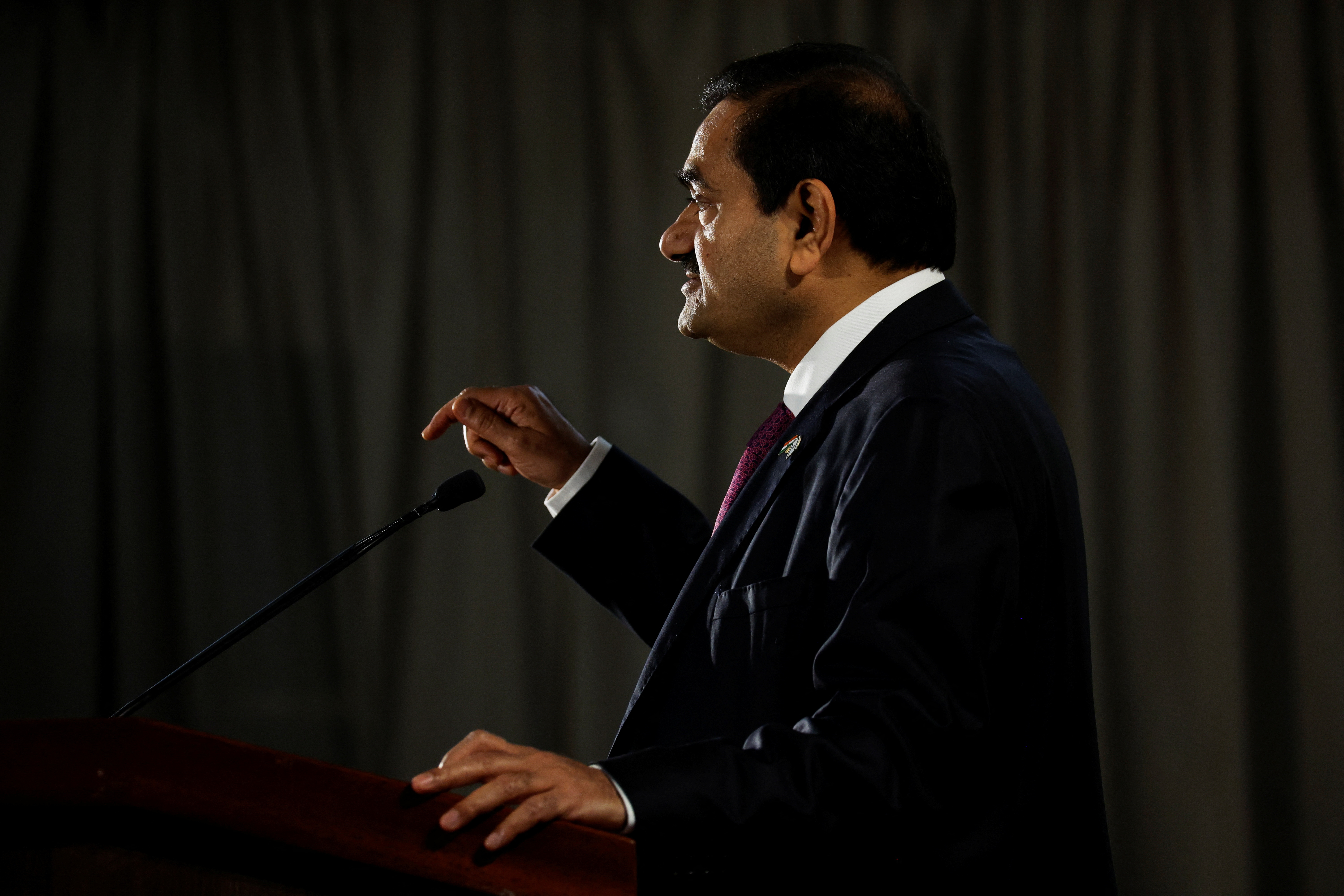
Indian billionaire Gautam Adani speaks during an inauguration ceremony after the Adani Group completed the purchase of Haifa Port earlier in January 2023, in Haifa port, Israel January 31, 2023. REUTERS/Amir Cohen/File Photo

India’s Adani Group may have passed a key test by raising $2.5 billion in the face of a short-seller attack, but its response to the allegations and the outcome of regulatory probes will shape its prospects, analysts and investors say.

Most of the conglomerate’s shares dropped on Wednesday, extending losses to $84 billion after Hindenburg Research’s report last week alleged improper use of offshore tax havens and flagged concerns about high debt.

The port-to-property group, led by Gautam Adani, one of the world’s richest people, has denied the allegations and called them baseless, adding it has always made the necessary regulatory disclosures.

Adani’s latest fundraising was critical, not just because it will help cut the group’s 2.2 trillion rupees ($27 billion) of debt, but also because it was viewed as a test of investor faith amid business and reputational challenges.

The completion of the secondary share offering to raise $2.5 billion, India’s largest such deal, alleviates some of the pressure on Adani’s credibility, said Ken Shih, Hong Kong-based head of wealth management at Saxo Markets.

“But from an offshore investor’s perspective the allegations (made by Hindenburg) … do not seem to be clearly addressed,” he said.

“There may be even more organised short sell attacks … given they were unable to clearly squash all remaining concerns and allegations yet. Until that happens there is blood in the water now and other short sellers might come circling.”

Adani has said Hindenburg’s report was a “calculated attack” on India and its institutions. The U.S. short-seller has said Adani’s “response largely confirmed our findings and ignored our key questions.”

While Adani’s share sale was slightly over-subscribed as bids poured in on the last day from foreign institutional and corporate investors, Indian financial firms stayed away and the response was muted from individual buyers.

The identity of the institutions that placed orders on the last day has not been revealed, but the 30% anchor portion of the sale attracted investors including Maybank Securities and Abu Dhabi Investment Authority.

Adani did not immediately respond to a Reuters request for comment for this story.

Soon after Hindenburg’s report was made public, the Securities and Exchange Board of India (SEBI) decided to study it, adding to the regulator’s own ongoing preliminary investigation into the group’s foreign portfolio investors, Reuters reported on Monday, citing sources.

Australia’s corporate regulator said on Wednesday it would review the Hindenburg report as concerns raised also relate to Adani’s Australian operations.

State-run Life Insurance Corporation (LIFI.NS), India’s largest insurer, is also reviewing Adani’s response to the scathing criticism and will hold talks with the group’s management within days to seek clarifications.

A U.S.-based investor in dollar bonds issued by Adani’s ports and power units said while it would pay “attention” to the information in the next few weeks, the fund would explore adding to holdings if others sell in the event of ratings downgrade.

“We would get worried if for some reason they couldn’t borrow more money or if their cash flow becomes insufficient to cover debt service. And those two things aren’t happening,” said the investor, who spoke on condition of anonymity.

However, underscoring the nervousness in some quarters, Bloomberg reported on Wednesday that Credit Suisse (CSGN.S) had stopped accepting bonds of Adani group companies as collateral for margin loans to its private banking clients.

Credit Suisse had no immediate comment.

“The question about what next for the allegations partly depends on whether SEBI or others take up the investigation,” said Quiddity Advisors analyst Travis Lundy, who writes on investment research network Smartkarma.

Adani Enterprises lost nearly 6% on Wednesday to bring its losses since the Hindenburg report to more than $8 billion. The current market price of 2,803 rupees is also below the indicative price band for the offering.

“To do another offering, they will need to prove that the last one was a success – either by stock price or by business growth – and they have a grand plan,” Lundy said.

Categories
Audio Sources - Full Text Articles

Suspects arrested over Pakistan mosque blast, police focus on how bomber got in

2023-02-01T09:44:08Z

Distraught relatives thronged hospitals in Pakistan’s Peshawar on Tuesday (January 31) to look for their kin a day after a suicide bombing ripped through a crowded mosque in a heavily fortified area of the city, killing more than 90 people, mostly policemen. Edward Baran reports.

Police investigating a suicide bombing that killed more than 100 people at a Pakistan mosque said on Tuesday that several people had been arrested, and they could not rule out the possibility that the bomber had internal assistance evading security checks.

The bombing was the most deadly in a decade to hit Peshawar, a restive northwestern city near the Afghan border, and all but three of those killed were police, making it most suffered by Pakistan’s security forces in a single attack in recent history.

The bomber struck on Monday as hundreds of worshippers gathered for noon prayers in a mosque that was purpose built for the police and their families living in a highly fortified area.

“We have found some excellent clues, and based on these clues we have made some major arrests,” Peshawar Police Chief Ijaz Khan told Reuters.

“We can’t rule out internal assistance but since the investigation is still in progress, I will not be able to share more details.”

Investigators, who include counter-terrorism and intelligence officials, are focusing on how the attacker managed to breach the military and police checkpoints leading into the Police Lines district, a colonial-era, self-contained encampment in the city centre that is home to middle- and lower-ranking police personnel and their families.

Defence Minister Khawaja Asif had said the bomber was in the first row in the prayer hall when he struck. Remains of the attacker had been recovered, provincial Police Chief Moazzam Jah Ansari told Reuters.

“We believe the attackers are not an organised group,” he added.

The most active militant group in the area, the Pakistani Taliban, also called Tehreek-e-Taliban Pakistan (TTP), has denied responsibility for the attack, which no group has claimed so far. Interior Minister Rana Sanaullah had told parliament a breakaway faction of the TTP was to blame.

The blast demolished the upper storey of the mosque. It was is the deadliest in Peshawar since twin suicide bombings at All Saints Church killed scores of worshippers in September 2013, in what remains the deadliest attack on the country’s Christian minority.

Peshawar sits on the edge of the Pashtun tribal lands, a region mired in violence for the past two decades.

The TTP is an umbrella group for Sunni and sectarian Islamist factions opposed to the government in Islamabad. The group has recently stepped up attacks against police.

Related Galleries:

Rescue workers clear the rubble as they search for victims, after a suicide blast in a mosque in Peshawar, Pakistan January 31, 2023. REUTERS/Fayaz Aziz

People and rescue workers gather to look for survivors under a collapsed roof, after a suicide blast in a mosque in Peshawar, Pakistan January 30, 2023. REUTERS/Fayaz Aziz

Chief of Army Staff (COAS) of Pakistan Asim Munir and Pakistan’s Prime Minister Shehbaz Sharif visit an injured, after a suicide blast in a mosque, at a hospital in Peshawar, Pakistan January 30, 2023. Prime Minister’s Office/Handout via REUTERS

People and rescue workers gather amid the damages, after a suicide blast in a mosque in Peshawar, Pakistan January 30, 2023. REUTERS/Fayaz Aziz

A man, who was injured after a suicide blast in a mosque, receives medical aid at a hospital in Peshawar, Pakistan January 31, 2023. REUTERS/Fayaz Aziz

A woman reacts as she searches for her relatives, after a suicide blast in a mosque in Peshawar, Pakistan January 30, 2023. REUTERS/Fayaz Aziz
Categories
Audio Sources - Full Text Articles

Ukrainian authorities raid billionaire Kolomoiskiy“s home – media reports

2023-02-01T09:47:33Z

Ukrainian business tycoon Ihor Kolomoiskiy speaks with journalists on the sidelines of the Yalta European Strategy (YES) annual meeting in Kyiv, Ukraine September 13, 2019. REUTERS/Valentyn Ogirenko

State security officials searched the home of billionaire businessman Ihor Kolomoiskiy on Wednesday as part of an investigation into possible financial crimes, several Ukrainian media outlets reported, citing an unnamed official source.

The State Security Service of Ukraine (SBU) did not immediately reply to a request for comment about the reports. Kolomoiskiy could not be reached for comment.

Kolomoiskiy is one of Ukraine’s richest men and a one-time ally of President Volodymyr Zelenskiy who launched a crackdown on wealthy businessmen known as “oligarchs” in late 2021, before Russia invaded its neighbour last year.

Kolomoiskiy, who is from the central city of Dnipro and owns an array of assets including one of Ukraine’s most influential television channels, backed Zelenskiy’s election campaign in 2019.

Ukrainska Pravda, one of at least three outlets reporting the raid on Kolomoiskiy’s home, said the move related to an investigation into the alleged embezzlement of oil products and evasion of customs duties.

The search was carried out by officials from the SBU and the Economic Security Bureau of Ukraine.

Categories
Audio Sources - Full Text Articles

Adani loses Asia“s richest crown as stock rout deepens to $84 billion

2023-02-01T09:53:23Z

Shares in Indian tycoon Gautam Adani’s conglomerate plunged again on Wednesday as a rout in his companies deepened to $84 billion in the wake of a U.S. short-seller report, with the billionaire also losing his title as Asia’s richest person.

Wednesday’s stock losses saw Adani slip to 15th on Forbes rich list with an estimated net worth of $76.8 billion, below rival Mukesh Ambani, the chairman of Reliance Industries Ltd (RELI.NS) who ranks ninth with a net worth of $83.6 billion.

Before the critical report by U.S. short-seller Hindenburg, Adani had ranked third.

The losses mark a dramatic setback for Adani, the school-dropout-turned-billionaire whose business interests stretch from ports and airports to mining and cement. Now, the tycoon is fighting to stabilise his businesses and defend his reputation.

It comes just a day after the group managed to muster support from investors for a $2.5 billion share sale for flagship firm Adani Enterprises on Tuesday, in what some saw as a stamp of investor confidence.

The report by Hindenburg Research last week alleged improper use by the Adani Group of offshore tax havens and stock manipulation. It also raised concerns about high debt and the valuations of seven listed Adani companies.

The group has denied the allegations, saying the short-seller’s narrative of stock manipulation has “no basis” and stems from an ignorance of Indian law. It has always made the necessary regulatory disclosures, it added.

Shares in Adani Enterprises (ADEL.NS), often described as the incubator of Adani businesses, plunged 30% on Wednesday. Adani Power (ADAN.NS) fell 5%, while Adani Total Gas (ADAG.NS) slumped 10%, down by its daily price limit.

Adani Transmission (ADAI.NS) was down 6% and Adani Ports and Special Economic Zone (APSE.NS) dropped 20%.

Adani Total Gas, a joint venture with France’s Total (TTEF.PA), has been the biggest casualty of the short seller report, losing about $27 billion.

“There was a slight bounce yesterday after the share sale went through, after seeming improbable at a point, but now the weak market sentiment has become visible again after the bombshell Hindenburg report,” said Ambareesh Baliga, a Mumbai-based independent market analyst.

“With the stocks down despite Adani’s rebuttal, it clearly shows some damage on investor sentiment. It will take a while to stabilise,” Baliga added.

Underscoring the nervousness in some quarters, Bloomberg reported on Wednesday that Credit Suisse (CSGN.S) had stopped accepting bonds of Adani group companies as collateral for margin loans to its private banking clients.

Deven Choksey, managing director of KRChoksey Shares and Securities, said this was a big factor in Wednesday’s share slides.

Credit Suisse had no immediate comment.

Scrutiny of the conglomerate is stepping up, with an Australian regulator saying on Wednesday it would review Hindenburg’s allegations to see if further enquiries were warranted.

Data also showed that foreign investors sold a net $1.5 billion worth of Indian equities after the Hindenburg report – the biggest outflow over four consecutive days since Sept. 30.

Headaches for the Adani Group are expected to continue for some time.

India’s markets regulator, which has been looking into deals by the conglomerate, has said it will add Hindenburg’s report to its own preliminary investigation.

State-run Life Insurance Corporation (LIC) (LIFI.NS)said on Monday it would seek clarifications from Adani’s management on the short seller report. The insurance giant was, however, a key investor in the Adani Enterprises share sale.

Hindenburg said in its report it had shorted U.S.-bonds and non-India traded derivatives of the Adani Group.

Related Galleries:

Indian billionaire Gautam Adani speaks during an inauguration ceremony after the Adani Group completed the purchase of Haifa Port earlier in January 2023, in Haifa port, Israel January 31, 2023. REUTERS/Amir Cohen

Indian billionaire Gautam Adani speaks during an inauguration ceremony after the Adani Group completed the purchase of Haifa Port earlier in January 2023, in Haifa port, Israel January 31, 2023. REUTERS/Amir Cohen/File Photo

Indian billionaire Gautam Adani is seen on a screen as he addresses delegates during the Bengal Global Business Summit in Kolkata, India April 20, 2022. REUTERS/Rupak De Chowdhuri

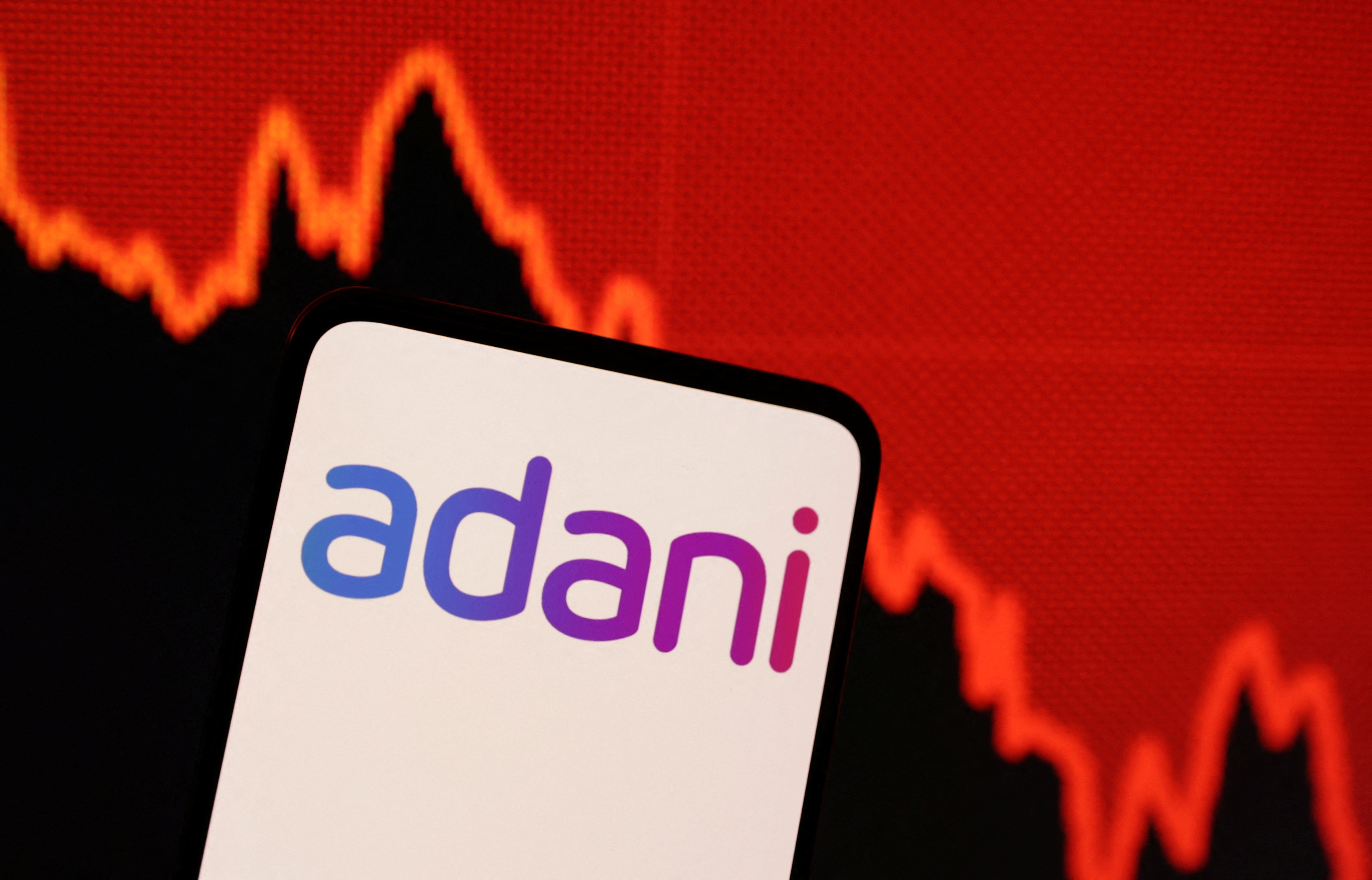
Adani logo and decreasing stock graph is seen in this illustration taken January 31, 2023. REUTERS/Dado Ruvic/Illustration


Categories
Audio Sources - Full Text Articles

An EV pricing war could be just what electric car-makers — and buyers — need right now

2021 Ford Mustang Mach-E.The pricing battle that the industry is seeing between Tesla and Ford might be good for automakers’ $1.2 trillion push into electrification through 2030.

Tim Levin/Insider

  • Tesla and Ford are battling for market share by dropping their electric car prices.
  • Other automakers like GM and Volkswagen say they won’t engage in that kind of price war.
  • A pricing battle could accelerate EV adoption, but automakers will have to sacrifice profits.

When Tesla dropped the prices of some of its most popular models in early January, the news shocked the industry. It goosed demand for Teslas and threatened rivals already trying to catch up to Elon Musk’s market share.

Ford went next, lowering the price of its Model Y competitor, the Mustang Mach-E, by up to $5,900.

Other automakers are holding steady: General Motors and Volkswagen executives have recently said they don’t plan to drop prices for their EVs

Even without full participation, a pricing battle might be good for the auto industry’s $1.2 trillion push into electrification through 2030 — and for the folks supposed to buy all those battery-powered cars. 

“Anytime you have competition in the space,” said Ed Egilinsky, managing director at financial products firm Direxion, “that could represent some pricing pressures which is not as great for the automakers, in the short term as much as it is for, potentially, the consumer.”

2023 Cadillac LYRIQGM doesn’t plan to participate in the price war and drop the cost of its EVs, like the Cadillac Lyriq.

Wade Payne for General Motors

With cheaper EVs come cheaper EVs

Despite automakers’ efforts to lower costs, EVs are too expensive for most people, selling for an average of $61,448 in December, per Kelley Blue Book. 

Today’s pricing war (coupled with new federal EV tax credits) could boost demand, helping automakers to boost volume, further helping with cost. 

“Scale will contribute towards parity in price,” said Steve Patton, EY Americas mobility sector leader. “We need to build more EVs and batteries before we get the prices down.”

This week, both Ford and GM mentioned plans to up EV production this year, though Ford is more ambitious than GM. More demand brought on by price cuts could accelerate those plans. 

“Scale ultimately is what’s going to drive down those costs,” Ben Prochazka, executive director of the Electrification Coalition, told Insider early January. “That’s what’s going to make it so that this is a market that becomes accessible to everyone.”

Ford CEO Jim Farley speaks about the company's plan to split up its EV and gas-powered vehicle divisionsFord’s recent Mach-E price cuts mean the company will deprioritize profitability, for now.

Photo provided by Ford Motor Co.

The problem lies in profitability

But Tesla and Ford’s price cuts mean they’ll deprioritize profitability for the time being, and that worries industry analysts. 

The cuts “highlight the conundrum facing automakers of improving the profitability of electric vehicles by increasing production volumes in a competitive marketplace,” Rene Lipsch, Moody’s vice president and senior credit officer, said in a statement. 

The cuts also could “prolong Ford’s timeframe for a meaningful contribution from its electric vehicle offering to profitability,” Lipsch added, “and underlines the need to reduce vehicle costs through lower battery costs and manufacturing efficiencies, in addition to higher production rates.”

Bank of America analysts called the automakers’ moves “odd” in a Monday note.

Both companies “are citing demand that exceeds supply, which means that cutting prices would be a direct hit to the bottom line today and unnecessarily degrades future earnings power,” the note said. “The current EV price cuts appear to defy logic… This will make the unprofitable low-return EV business that much more challenging until massive scale is achieved.”

Consumers are unlikely to be so upset, as they stand to benefit at the automakers’ expense, Garrett Nelson, senior equity analyst at CFRA Research, told Insider via email.

“We view the price war as being good for consumers and it should help with overall EV sales and adoption,” Nelson said. “We don’t think it will be a good thing for automakers because it will further pressure margins on EVs.” 

Read the original article on Business Insider
Categories
Audio Sources - Full Text Articles

Want a 4-day work week? Move to Maryland, where the government is pushing for it.

Stressed at work.Maryland lawmakers introduced a bill that aims to incentivize employers to adopt a four-day work week.

Maskot/Getty Images

  • Maryland lawmakers introduced a bill that would incentivize employers to adopt a four-day work week.
  • Employers who participate will receive a tax credit, and employee pay will remain the same.
  • Delegate Vaughn Stewart, a sponsor of the bill, said it will increase work morale and productivity.

The state of Maryland is pushing for a shorter work week. 

Earlier this month, Maryland lawmakers introduced a bill that will “promote, incentivize, and support the experimentation and study of the use of a 4-day workweek,” according to the proposed bill

Under the Four-Day Workweek Act of 2023, employers would cut their employees’ weekly work hours from 40 hours to 32 hours without reducing their pay or benefits. In return, employers would receive a tax credit.  The Maryland Department of Labor would give out up to $750,000 in tax credits every year. 

The bill would apply to public and private employers with at least 30 employees from all industries. Employers that choose to participate in the program would do so for up two years until it ends in 2028.

The new bill comes as stressed-out employees grapple with how to maintain a healthy work-life balance amid changing workplace norms. 

Maryland delegate Vaughn Stewart, the primary sponsor of the bill, told Insider that the research on the benefits of a four-day work week looks promising.

Stewart said that the program was inspired by a 2022 experiment conducted by nonprofit 4 Day Week Global. As part of the experiment, nearly 1,000 employees at 33 different companies worked four-day weeks for six months. Employees that participated noticed an increase in productivity and a decrease in burnout, whereas employers saw an 8% spike in overall revenue during that time frame.  

“I really think we’re on the verge of a win-win scenario here,” Stewart told Insider. “We can provide a higher quality of life, more free time for workers in Maryland, while at the same time not hurting the bottom line of businesses and maybe even increasing their profitability.”

Employers and employees are beginning to see the benefits of a shorter work week

American workers are expressing interest in a shorter work week. A 2022 Qualtrics study found that 92% of 1,021 full-time US employees surveyed were in favor of their employers cutting a work day. 

And the arrangement is beginning to become more common: One hundred companies in the United Kingdom have committed to issuing permanent four-day work weeks for employees without cutting pay, The Guardian reported.

Companies outside of the UK that have experimented with a shorter work week also said that they have seen their profits and productivity jump as a result.

Kickstarter, Unilever, Shopify, and even Shake Shack have experimented with 32-hour work weeks.

Even though Stewart has seen an “explosion of interest” in the bill from Maryland voters and his colleagues, he anticipates some challenges in getting the bill passed, including how the government will fund the tax credit incentives. 

“This bill is neither a slam dunk, nor is it dead on arrival,” Stewart said. “I am cautiously optimistic about the bill’s prospects, but we are gonna have to get a decent chunk of money.” 

While Stewart, a Democrat, thinks that his bill will be “popular across the economic spectrum,” he said that there may be disagreement along party lines which could potentially delay the bill from being passed. 

“I’m sure that Democrats are gonna be more likely to support it than Republicans,” he said. 

The state of Maryland plans to hold hearings on the bill in February. If it’s passed, the program will begin on July 1.

More states may adopt similar policies in the future

Maryland isn’t the only government entity looking to cut work hours. California and national law makers have introduced similar bills to shorten the work week, though they have stalled and failed, respectively. 

But given the “extremely persuasive” findings from the 4 Day Week Global study, Stewart believes that its only a matter of time before other states try to adopt measures to shorten the work week.

“I think that you’re going to see more and more states, including New York, put these types of bills in because I really think this is the way of the future,” he said. “I think the question is not if, but when America is going to move to a shorter work week.”

Read the original article on Business Insider
Categories
Audio Sources - Full Text Articles

DC’s slate for its new movie and TV universe is bizarre, risky, and a bit confusing — but still promising

James Gunn, Peter SafranDC Studios CEOs James Gunn and Peter Safran announced upcoming movies and TV shows on Tuesday, including new Superman and Batman films.

Warner Bros. Discovery

  • DC Studios announced the first wave of movies and TV shows for the new DC universe.
  • It features a strange mix of well-known characters and those you may not have heard of.
  • There are also aspects of the old DC movie universe — but it still shows promise.

An animated monster series. New Superman and Batman movies. A Wonder Woman spinoff show.

These are a few of the projects DC Studios co-CEOs James Gunn and Peter Safran announced on Tuesday as part of the first wave of content for their new, connected DC universe.

The slate, titled “Chapter 1: Gods and Monsters,” is, to put it plainly, bizarre — and even a bit risky.

It features a mix of well-known characters, like Superman and Batman, as well as ones who only diehard comic-book readers may recognize, like the antihero team The Authority, celebrity-superhero Booster Gold, and Swamp Thing, who recently starred in a one-season TV series and will now get his own horror movie.

Safran told a small group of journalists that one of the slate’s goals is “to build those lesser known properties into the diamond properties of tomorrow.”

In that way, Chapter 1 is similar to the Marvel Cinematic Universe, which has made household names out of formerly B- and C-list characters, like the Guardians of the Galaxy and Ant-Man. But the MCU didn’t launch with those characters out of the gate.

And Gunn stressed that the new DC universe is not “Marvel 2.0.” If anything, it’s still a bit of the old DC Extended Universe.

amazons wonder womanAmazons from “Wonder Woman” (2017).

Warner Bros. Movies

Not everything from the old DCEU is being scrapped

After WarnerMedia and Discovery merged last year to form Warner Bros. Discovery, one of the new company’s first priorities was to get DC movies on the right track after a largely unsuccessful attempt at a cinematic universe. That old ‘DCEU’ included critical and financial flops like director Zack Snyder’s “Batman v Superman: Dawn of Justice” and “Justice League.” 

Gunn and Safran, who were put in charge of DC Studios in October, have scrapped much of that universe. Henry Cavill’s Superman, for example, is being replaced by a younger version of the character who will appear in “Superman: Legacy,” which is being written by Gunn and is set to hit theaters in 2025.

But some aspects of the old DCEU will remain intact. Gunn and Safran announced “Waller,” a “Suicide Squad” and “Peacemaker” TV spinoff with Viola Davis reprising her role of Amanda Waller. And the TV series “Paradise Lost,” set on the island Themyscira, will be a prequel to the “Wonder Woman” movies — after a third film was scrapped.

Additionally, four DC movies will be released this year that were greenlit before Gunn and Safran came on board, including “The Flash,” starring controversial actor Ezra Miller.

None of those characters — which also include Shazam, Aquaman, and Blue Beetle — were mentioned in Gunn and Safran’s Chapter 1 plans, though they acknowledged that the actors may be included in future projects.

This isn’t to mention characters like Robert Pattinson’s Batman, who will live on under the DC Elseworlds banner, which includes projects that exist outside of the universe Gunn and Safran are building. The “Joker” sequel will also fall under this label.

batman and robin comicThe “Batman and Robin” comic by Grant Morrison and Frank Quitely.

DC Comics/Frank Quitely

It’s weird and a bit confusing, but the new plan shows promise

But once you get past the initial confusion of the multiple stages and universes, it’s clear that Gunn and Safran have a plan — and that there is promise.

If Gunn and Safran wanted to keep any aspects of the old DC movie universe, they picked the right ones. Gunn’s 2021 movie  “The Suicide Squad” and last year’s HBO Max series “Peacemaker” were critically praised and improved on the original 2016 “Suicide Squad” movie. And the first “Wonder Woman” is still the best-reviewed of the DCEU, and earned over $800 million at the global box office. 

They also seem to be taking inspiration from highly regarded comic stories. For example, writer Grant Morrison and artist Andy Kubert’s “Batman and Son” will be the template for the movie “The Brave and the Bold,” which is set to introduce a new Batman.

Gunn also promised that the projects would have “the individual expression of the writers and the director that are making those projects.” 

One thing is certain: The expectations are sky-high.

Read the original article on Business Insider
WP Radio
WP Radio
OFFLINE LIVE