Categories
Audio Sources - Full Text Articles

Russians fire dozens of projectiles at Nikopol district

630_360_1665379991-304.jpg

Previous night time Russian troops were again shelling the Dnipropetrovsk region’s Nikopol district.

The suitable statement was created by Dnipropetrovsk Regional Council Head Mykola Lukashuk on Telegram, an Ukrinform correspondent stories.

“Again, it was restless in the Nkopol district: Russian troops proceed leading to terror in opposition to regional communities, employing major artillery. Past night time the occupiers struck the Chervonohryhorivka territorial community, obtaining fired about 20 projectiles,” Lukashuk wrote.

In his phrases, the results are yet to be checked. The impression areas are remaining inspected. In accordance to the preliminary knowledge, civilians remained unharmed.

mk

Source link

The post Russians fire dozens of projectiles at Nikopol district appeared first on Ukraine Intelligence.

Categories
Audio Sources - Full Text Articles

Why Europe“s drug shortages may get worse

2023-02-08T06:11:21Z

When Ignasi Biosca-Reig heard there were shortages of amoxicillin in Spain, he quickly added shifts at his drug company’s factories to boost production of the popular antibiotic. But a few extra shifts was as far as he could go.

Much as he would have liked to significantly increase supplies, Biosca-Reig said he couldn’t justify investing millions of euros in new production lines unless he was paid more for the generic drug to cover sharply rising costs.

But, like many European countries, Spain set the price manufacturers are paid for paediatric amoxicillin when the generic version of the drug was first launched in the country two decades ago, and it has barely budged since.

“It’s a non-business,” said Biosca-Reig, chief executive of Spanish drugmaker Reig Jofre (RJFE.MC).

“We wanted to react, but we had a problem,” he said. “The costs go up, the price remains the same.”

While many countries around the world have reported shortages of antibiotics as respiratory infections return with a vengeance after the lifting of pandemic restrictions, the problem in Europe is particularly acute.

With prices for generics regulated, many European drugmakers said they are reluctant to expand capacity at a time when the war in Ukraine has pushed up the cost of everything from energy for factories to cardboard for packaging to aluminium for bottle caps – suggesting more shortages are on the cards.

According to 13 European manufacturers and six generic drug industry associations and trade groups who spoke with Reuters, many firms are struggling to make enough money to justify making antibiotics at all – let alone increase production.

“We cannot keep this capped pricing when all of our production, logistics and regulatory compliance costs are increasing at double digits or more,” said Adrian van den Hoven, director general of lobby group Medicines for Europe, which represents makers of generic drugs in the region.

The companies Reuters spoke with declined to disclose margins for specific generics for competitive reasons.

Before launching tenders, many European governments compare the price of a generic medicine to other markets in the region, or to similar drugs at home, to set a reference price which then serves as the benchmark in negotiations with suppliers.

They typically award contracts to manufacturers offering the lowest price, which then results in further downward pressure on prices in subsequent tenders, drugmakers say.

Generic medicines now account for about 70% of all dispensed medicines in Europe, but only 29% of the money spent on drugs by national health agencies, according to Medicines for Europe.

European generic drugmakers say the tender system and regulated prices have fuelled a race to the bottom, and European firms are being undercut by suppliers from Asia.

Over the past decade, this has forced some European companies to either cut output or move manufacturing of generics and active pharmaceutical ingredients (APIs) needed to make them to India and China, where costs are much lower.

Industry executives now say an overhaul of pricing schemes is the only way to reinvigorate manufacturing in Europe, both to avoid shortages in the future and to prevent the continent becoming even more dependent on Asia for essential medicines.

“There’s a growing awareness that we may have to pay more to ensure our supplies of these medicines is secure and not dependent on other regions, for our own health and national security,” said Rena Conti, a drug pricing expert and professor in the department of markets, public policy and law at Boston University’s Questrom School of Business.

The European Medicines Agency (EMA) and European Union lawmakers acknowledge there is a problem.

The EMA and the European Commission have met repeatedly with drugmakers and trade groups since the shortages were first reported in October, but no major action has yet been announced, all the parties involved said.

EMA chief medical officer Steffen Thirstrup told Reuters last month that it was fairly unusual to see so many countries reporting shortages of the same products, but forecast demand would ease as warmer weather approaches.

In the interim, alternative medicines could be used where amoxicillin is unavailable, Thirstrup said.

A number of patient groups warned last month, however, that substitutions were now squeezing supplies of other drugs.

The European Commission is scheduled to table revisions to the bloc’s pharmaceuticals law in March.

It is proposing measures including requiring manufacturers to hold larger reserve supplies and to give early warnings about shortages, but executives want Brussels to also back their calls for governments to change tender and pricing systems.

“The key long-term issue is not the production cost, it’s the overall European market framework, which doesn’t allow us as a producer to adjust prices flexibly to reflect change in input costs, especially on essential medicines,” said Giovanni Barbella, global supply chain head at Sandoz, the generic division of Swiss pharmaceutical giant Novartis (NOVN.S).

In Spain, the price of paediatric amoxicillin was set at 98 cents ($1.05) for 60 ml in 2003. In 2013, that became the price for 40 ml but it hasn’t changed since. Half the generic medicines sold in Spain are priced below 1.60 euros per box or bottle, the country’s generics manufacturing association said.

Prices of antibiotic generics in Britain are on a par with Spain, according to drug pricing expert Melissa Barber, while in Germany, the biggest generics market in Europe, the average amount manufacturers receive has fallen 66% over the past decade, Germany’s generic drug association Pro Generika said.

Elisabeth Stampa, a member of Spanish pharmaceutical company Medichem’s advisory board, said in most European countries there was no mechanism to review prices, link them to inflation, or justify an increase because APIs have become scarce.

“It’s extremely difficult to keep the same products you launch competitive after 10 years,” said Stampa, who was previously Medichem chief executive.

Some countries are promising to take action.

Germany’s parliament is due this year to consider legal changes to its tender system for generic drugs while Spain’s Health Ministry told Reuters last month the government was considering changes to its pricing system that could result in temporarily paying higher prices for drugs such as amoxicillin.

Executives and trade groups also said that they were often unaware when there was a risk of shortages because there was no central EU system that tracks supplies of essential generic drugs in each country, as is the case for patented medicines.

“You get what you pay for. With price being the decisive criterion in tenders, you are sending a message that security of supply, quality and environmental standards are less important,” said Thomas Cueni, director general of the International Federation of Pharmaceutical Manufacturers & Associations.

Years of price pressures on manufacturers has forced many smaller firms to get out of the business and only a few generics makers service much of Europe for drugs such as amoxicillin.

Five companies – Britain’s GSK (GSK.L), Sandoz, American drug company Viatris (VTRS.O), India’s Aurobindo (ARBN.NS), and France’s Servier – have nearly 60% of the amoxicillin market in Europe, according to market researcher IQVIA.

In Germany, for instance, Sandoz has a 70% market share for amoxicillin drugs, says Pro Generika.

When the shortfalls became apparent, some companies ramped up production, but not by enough to meet immediate demand.

“There has been a decline in European capacity and right now in this situation, there is not the spare capacity to really respond to these shortages,” said Rex Clements, chief executive of Dutch API maker Centrient Pharmaceuticals.

Sandoz told Reuters that by adding extra shifts at its Austrian factory, it aims to increase production of amoxicillin by a double-digit percentage this year compared with 2022, and an expanded facility will also come on stream in 2024.

GSK also hired new staff and added shifts at its amoxicillin plants in Britain and France, a spokesperson said.

But companies with smaller market shares, such as Israel’s Teva (TEVA.TA), which has 5% of the region’s amoxicillin market according to Medicines for Europe, are constrained.

“There is no way we can increase our capacity in order to fill the market gap,” said Erick Tyssier, Teva’s head of government affairs in Europe. “It’s just not possible.”

($1 = 0.9348 euros)

Related Galleries:

General view of the Teva Pharmaceuticals plant, in Ulm, Germany, in this undated handout image. Teva Pharmaceuticals/Handout via REUTERS

A view inside GSK pharmaceutical plant, in Mayenne, France, January 2023. GSK internal/Handout via REUTERS

Erick Tyssier, Teva Pharmaceuticals head of government affairs, poses for a portrait in Ulm, Germany, in this undated handout image. Teva Pharmaceuticals/Handout via REUTERS

Capsules of amoxicillin are seen at the Delpech pharmacy in Paris, France, January 9, 2023. REUTERS/Gonzalo Fuentes/File Photo

Categories
Audio Sources - Full Text Articles

Asian shares rise, dollar wobbles after “dovish“ Powell comments

2023-02-08T06:14:04Z

Men walk past an electric board displaying Nikkei and other countries’ indexes outside a brokerage in Tokyo, Japan January 16, 2023. The characters on the screen reads,”government bonds”. REUTERS/Kim Kyung-Hoon

Asian equities jumped, while the dollar was on the back foot on Wednesday after less hawkish than feared comments from Federal Reserve Chair Jerome Powell lifted sentiment and fuelled investor hopes the central bank may soon ease monetary policy.

In an eagerly awaited speech earlier on Tuesday, the Fed’s Powell reiterated that disinflation has begun but warned Friday’s eye-popping jobs report showed why the battle against inflation will “take quite a bit of time.”

Those jobs figures showed a surprising addition of 517,000 new jobs in January, stoking fears that the tight labour market may compel the Fed to remain hawkish.

“It didn’t take much for markets to re-find their mojo after last Friday’s payrolls shock, just a speech from Fed Chair Powell, at which he was not materially more hawkish than he was after the recent FOMC decision,” said Rob Carnell, ING’s regional head of research, Asia-Pacific.

Last week, the Fed raised interest rates by 25 basis points and said it had turned a key corner in the fight against high inflation but projected “ongoing increases” in borrowing costs would be needed.

Powell’s comments on Tuesday that the economy would need more interest rate rises to keep inflation on a consistent downward track was not really a deviation from what had already been said, Carnell noted. “And equity markets saw that as an excuse to rally.”

MSCI’s broadest index of Asia-Pacific shares outside Japan (.MIAPJ0000PUS) was 0.7% higher. The index is up about 8% for the year after shedding nearly 20% last year. Japan’s Nikkei (.N225) was 0.69% lower, while Australia’s S&P/ASX 200 index (.AXJO) rose 0.35%.

Futures indicated the exuberant mood looked set to continue in Europe, with the Eurostoxx 50 futures up 1.07%, German DAX futures 1.01% higher and FTSE futures up 0.59%.

Markets are pricing in a terminal rate of over 5% in June but anticipate the central bank to cut interest rates by the end of the year.

Investors will parse though data before the Fed next meets in March to gauge where the economy is headed.

“There’s always the danger in reacting too much to data and Powell seems to be aware of that,” said Shane Oliver, head of investment strategy for AMP Capital in Sydney. “I am left with the impression that they will probably raise interest rates in March and then it gets 50/50 after that.”

Oliver said as the year proceeds, the focus for markets will shift from sticky inflation and elevated interest rates to the extent of the slowdown in economy and its impact on profits.

“But at the moment, the markets’ a little hopeful that the Fed is getting close to the top and the recession might be avoided leading to a bit of relief rally,” he said, cautioning there may be a bit of pullback in February.

Meanwhile, China’s shares (.SSEC) fell 0.2%, while Hong Kong’s Hang Seng Index (.HSI) was 0.06% lower as U.S.-China balloon spat simmered and as some investors took profits after recent gains.

U.S. President Joe Biden in his State of the Union speech challenged Republicans to lift the U.S. debt ceiling and support tax policies that were friendlier to middle class Americans.

Assailing oil companies for making high profits and corporate America for taking advantage of consumers, Biden used his prime time speech to outline progressive priorities of his Democratic Party that are anathema to many Republican lawmakers.

E-mini futures for the S&P 500 were barely moved.

In the currency market, the dollar pulled back a bit after the speech. The dollar index , which measures the U.S. currency against six major rivals, was at 103.29, having dropped to as low as 102.99 in the previous session.

The Japanese yen was flat at 131.08 per dollar, after surging 1.2% in the previous session.

Oil prices were little changed on Wednesday, after gaining in the previous two days, with Brent crude at $83.66, down 0.04% on the day, after jumping 3.3% in the previous session.

U.S. West Texas Intermediate (WTI) crude futures rose 0.17% to $77.27 per barrel, after jumping 4.1% in the previous session.


Categories
Audio Sources - Full Text Articles

Taliban administration to send earthquake aid to Turkey, Syria

2023-02-08T06:15:13Z

Afghanistan’s Taliban administration will send around $165,000 in aid to Turkey and Syria to help the response to a devastating magnitude 7.8 earthquake that struck this week, according to a foreign ministry statement.

Afghanistan is in the grips of a severe economic and humanitarian crisis and is itself the location of one of the United Nation’s largest humanitarian aid programs. The Taliban took over in 2021 as foreign forces withdrew, sparking enforcement of sanctions on its banking sector, and no capital has formally recognised its government.

“The Islamic Emirate of Afghanistan … announces a relief package of 10 million Afghanis ($111,024) and 5 million Afghanis ($55,512) to Türkiye and Syria respectively on the basis of shared humanity and Islamic brotherhood,” a Ministry of Foreign Affairs statement said late on Tuesday.

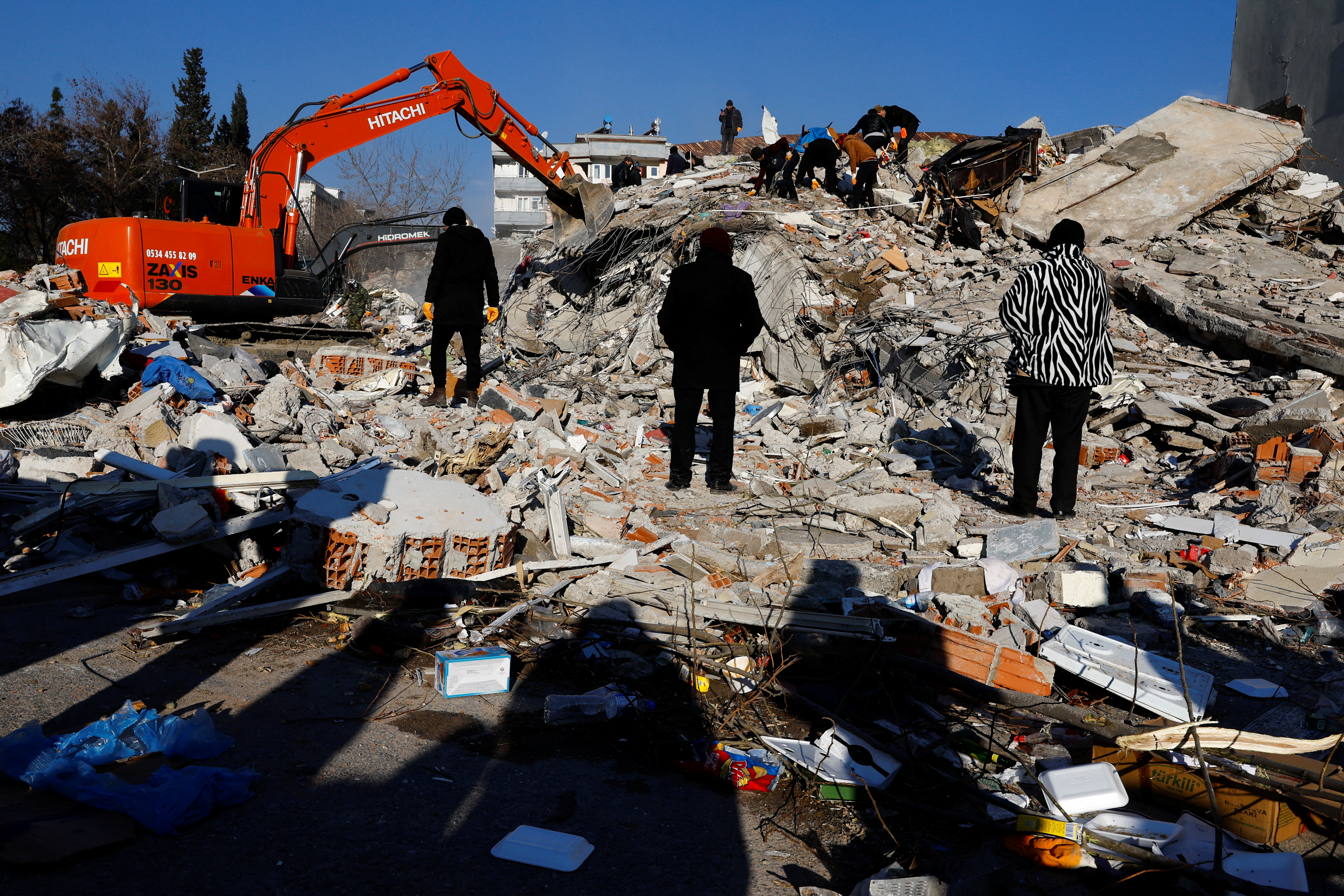
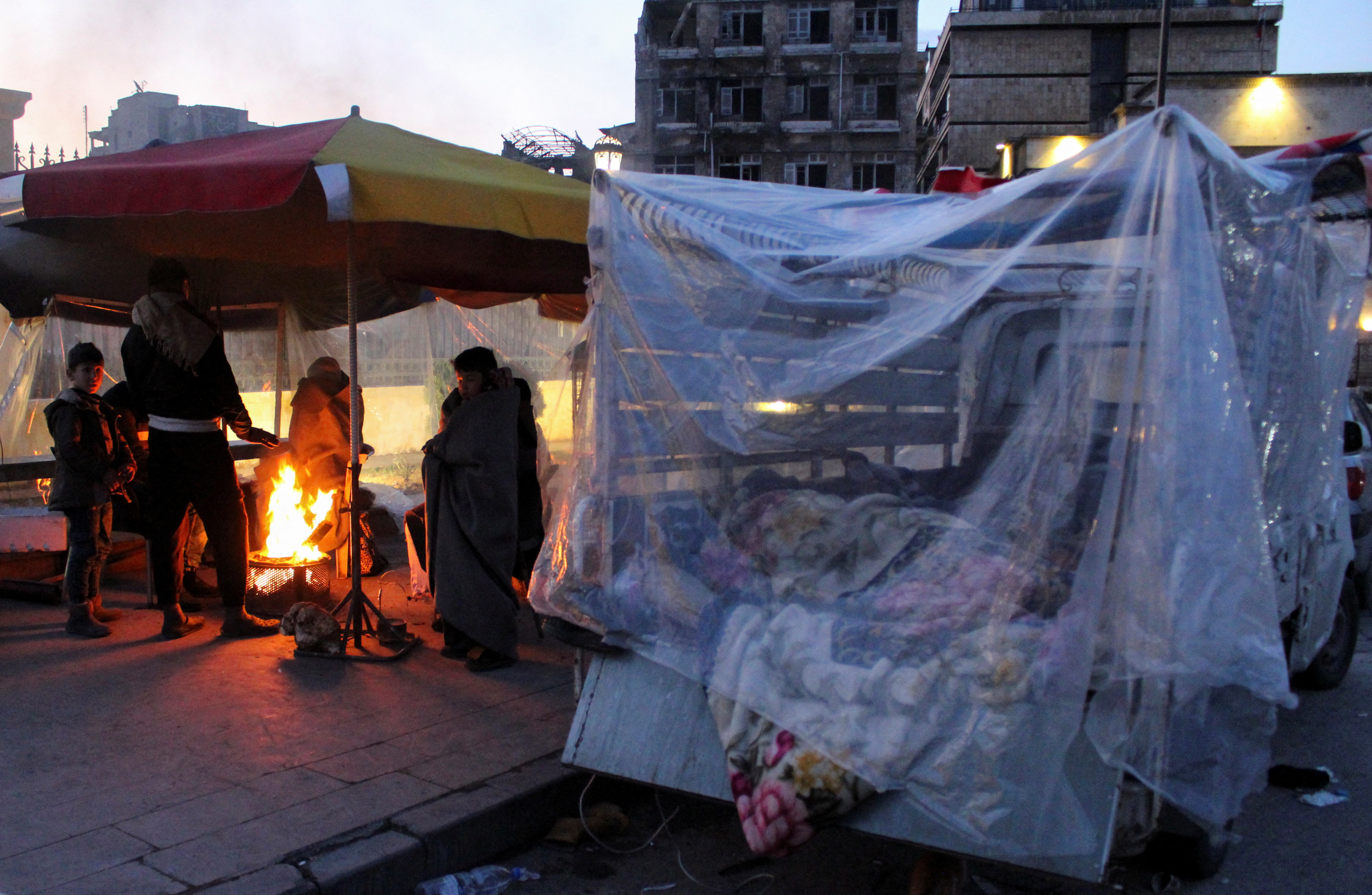
The death toll from the huge tremor in southern Turkey and Syria had jumped to more than 7,800 people on Tuesday as rescuers worked against time in harsh winter conditions to dig survivors out of the rubble of collapsed buildings. Tens of thousands more were injured and many people were left without homes in freezing temperatures.

In Afghanistan, hundreds have also died in recent weeks due to bitter cold and an economic crisis.

Many aid groups have partially suspended operations due to a Taliban administration ruling that most female NGO workers could not work, leaving agencies unable to operate many programmes in the conservative country. Western diplomats have said they will not consider formally recognising the administration unless it changes course on women’s rights.

Despite the cut of development funding that once formed the backbone of the Afghan state’s budget, the World Bank said in a report that the Taliban administration has increased exports – some of it coal to neighbouring Pakistan – and revenue collection remained strong, including from customs duties and mining royalties.

($1 = 90.0700 afghanis)

Related Galleries:

People look on as the search for survivors continues in the aftermath of an earthquake in Kahramanmaras, Turkey, February 8, 2023. REUTERS/Suhaib Salem

People who evacuated their homes warm up around a fire on a street, in the aftermath of the earthquake, in Aleppo, Syria February 8, 2023. REUTERS/Firas Makdesi
Categories
Audio Sources - Full Text Articles

Ukrainian forces repel enemy attacks near 22 settlements

630_360_1673440295-173.jpg

In the earlier 24 hrs, Ukraine’s Protection Forces have repelled attacks by Russian invaders near 22 settlements in the Luhansk and Donetsk locations.

The relevant assertion was produced by the Standard Employees of the Armed Forces of Ukraine on Fb, an Ukrinform correspondent stories.

“Attempting to attain complete manage around the Donetsk and Luhansk locations, enemy troops continue concentrating their primary attempts on conducting offensive steps in the Kupiansk, Lyman, Bakhmut, Avdiivka and Novopavlivka instructions in the vicinity of these types of settlements as Kreminna, Bakhmut, Avdiivka, Opytne, Marinka and Vuhledar. They are suffering considerable losses, especially in phrases of staff,” the report states.

More than the previous day, Ukrainian forces have repelled enemy assaults in the vicinity of the Luhansk region’s Novoselivske, Chervonopopivka, Shypylivka and Bilohorivka, and the Donetsk region’s Verkhniokamianske, Fedorivka, Orikhovo-Vasylivka, Dubovo-Vasylivka, Spirne, Vyimka, Bakhmut, Krasna Hora, Paraskoviivka, Ivanivske, Chasiv Yar, Kamianka, Vodiane, Pervomaiske, Krasnohorivka, Avdiivka, Marinka and Bohoiavlenka.

Russian troops launched 8 missile strikes, like 5 on civil infrastructure in Kharkiv, and 21 air strikes. Moreover, the enemy opened hearth with several start rocket programs (MLRS) 39 occasions, namely on civil infrastructure in the Mykolaiv and Kherson areas. Residential residences have been damaged.

The threat of Russian missile and air strikes is persisting all over Ukraine.

In the Volyn, Polissia, Siverskyi and Slobozhanskyi instructions, the problem remained unchanged. No enemy offensive groupings have been detected. Enemy shelling was recorded in the vicinity of the Sumy region’s Zarutske, Popivka and Sadky, and the Kharkiv region’s Veterynarne, Strilecha, Krasne, Hlyboke, Lyptsi, Starytsia, Morokhovets, Zelene, Neskuchne, Hatyshche, Vovchansk, Budarky, Vilkhuvatka, Krasne Pershe, Novomlynsk and Kamianka.

Russian occupiers also used an unmanned aerial automobile (UAV) loaded with ammunition close to the Sumy region’s Volfyne.

In the Kupiansk and Lyman directions, over 40 settlements came underneath enemy fireplace, which include the Kharkiv region’s Dvorichna, Hrianykivka, Kucherivka, Kupiansk, Kurylivka, Kyslivka, Kotliarivka, Tabaivka, Berestove, Krokhmalne, Vyshneve, Chervonopopivka and Kuzmyne, and the Luhansk region’s Novoselivske, Stelmakhivka, Novoiehorivka, Makiivka, Ploshchanka, Nevske, Pishchane, Kreminna, Dibrova and Bilohorivka. The enemy introduced air strikes in the vicinity of Kotliarivka, Krokhmalne and Bilohorivka.

In the Bakhmut course, Russian invaders shelled the Donetsk region’s Spirne, Berestove, Bilohorivka, Rozdolivka, Zaliznianske, Paraskoviivka, Krasna Hora, Bakhmut, Ivanivske, Mykolaivka, Predtechyne, Klishchiivka, Kurdiumivka, New York and Vesele. In excess of 30 settlements had been afflicted.

In the Avdiivka and Novopavlivka directions, Russian occupiers employed tanks, mortars and artillery to assault the Donetsk region’s Avdiivka, Vodiane, Marinka, Pobieda, Novomykhailivka, Vuhledar, Zolota Nyva and Neskuchne. The enemy launched air strikes in the vicinity of Avdiivka, Nevelske and Marinka. Around Vodiane, Russian invaders were dropping K-51 tear-gas grenades on the positions of Ukrainian forces with UAVs.

In the Zaporizhzhia path, in excess of 30 settlements arrived beneath enemy fireplace, such as the Zaporizhzhia region’s Novopil, Olhivske, Malynivka, Huliaipole, Mala Tokmachka, Orikhiv, Novodanylivka, Novoandriivka, Shcherbaky, Mali Shcherbaky and Stepove. The enemy introduced air strikes in the vicinity of Olhivske and Huliaipole.

In the Kherson course, Russian occupiers shelled 17 settlements, particularly Mykhailivka, Havrylivka, Mylove, Zmiivka, Novoberyslav, Kozatske, Lvove, Tiahynka, Ivanivka, Mykilske, Antonivka, Yantarne, Berehove, Veletenske and Kherson.

In the Kakhovka district’s Kairy, Russian occupiers are forcibly having away civilian cars and trucks from nearby inhabitants.

About the earlier day, Ukrainian air forces have introduced 12 strikes on enemy staff and military devices clusters, and two strikes on Russian air defense missile process positions. Additionally, the Ukrainian military ruined Russia’s Su-25 assault aircraft, Mi-24 helicopter and two Orlan-10 UAVs. Ukraine’s missile and artillery units strike two Russian command posts, seven staff clusters and one ammunition depot.

Picture: 45th Individual Artillery Brigade of the Armed Forces of Ukraine

mk

Source link

The post Ukrainian forces repel enemy attacks near 22 settlements appeared first on Ukraine Intelligence.

Categories
Audio Sources - Full Text Articles

Reaction to LeBron becoming the NBA’s career scoring leader

Reaction from social media and elsewhere poured in after LeBron James passed Kareem Abdul-Jabbar to become the NBA’s all-time leading scorer.

___

“To be in a position to break one of the all-time records of most points ever scored, it’s quite remarkable. I think it’s such a testament to him. And he’s not just sort of at the end of his career just like hanging around to get that record. He’s still playing at an incredibly high level. I think it’s spectacular.” — NBA Commissioner Adam Silver.

___

“Wow, never in my lifetime did I think I would see two NBA athletes score over 38,000 points! I still remember when my Showtime teammate, the legendary Kareem Abdul-Jabbar, broke the record. It was an honor to be the guy to pass it to him and cement his legacy!” — Los Angeles Lakers great Magic Johnson.

___

“We gave the keys to the whole entire business to an 18-year-old kid and now he’s 38 years old and he’s still dominating. I don’t think we should be surprised. I think we should congratulate him and celebrate him as much as possible, continue to enjoy the shows that he puts on.” — Dallas Mavericks guard Kyrie Irving.

___

“The most important individual record in the sport, a record that most people thought would never be broken.” — former NBA coach Stan Van Gundy, now an analyst for TNT.

___

“This record says a lot about who he is and how multifaceted he really is. He’s an elite caliber of player. He’s one of one. We hadn’t seen anything like him before, his size, his athleticism, his shooting capabilities, his playmaking capabilities. And he’s all about team. That’s the thing that shines through.” — Los Angeles Lakers coach Darvin Ham.

___

“LeBron, he’s a confident man. He knows he’s a hell of a player. He knows what he’s accomplished. But he still has his humility. He hasn’t lost it.” — San Antonio Spurs coach Gregg Popovich.

Categories
Audio Sources - Full Text Articles

Biden makes his case to Americans in the State of the Union

By William A. Galston

In a fighting State of the Union address, President Biden made few concessions to public skepticism about his record—and none to his political adversaries. He made it clear that he intends to run on his record and that the American people will respond favorably to it as they experience its benefits more fully. He focused on the economy and downplayed the cultural issues that have become more central to our politics over the past decade.

As President Biden stepped to the rostrum to deliver his address, he faced three key tasks: laying out a credible policy agenda for the 118th Congress, integrating this agenda with his political strategy for winning reelection in 2024, and dispelling widespread public doubts about the impact of increasing age on his fitness for a second term.

The president also faced several important obstacles. First, as my colleague Elaine Kamarck has written, there is a tension between the story of accomplishment he wanted to tell and the public’s perception of how things are going. As Kamarck noted, a recent NBC poll found that 71% of Americans think the country is on the wrong track—a continuation of what the pollsters called an unprecedented level of “sustained pessimism.”

A few days after her article appeared, a new ABC/Washington poll underscored Mr. Biden’s challenge. The poll found that 62% of Americans think that the president has accomplished “not very much” or “little or nothing” during the first two years of his presidency, compared to just 36% who say he has accomplished “a great deal” or a “good amount.” In a troubling sign, only 32% of Independents gave him credit for significant achievements. Mr. Biden needed to talk about the many significant bills he had moved through Congress—without describing their effects so expansively as to undermine his credibility.

Mr. Biden also faced tension between ambitious new domestic policy proposals and rising public concerns about the budget deficit. In the two years since he took the oath of office, according to a Pew Research Center survey released the day before his address, the share of Americans saying that deficit reduction should be a top priority surged by 15 points, from 42% to 57%. This increase was bipartisan—17 points among Republicans, but also 15 points among Democrats. The president had to choose between pleasing key constituencies pressing for expensive items such as a permanent child credit and responding to broad-based worries about the country’s fiscal course. Everyone expected him to reject Republicans’ efforts to tie an increase in the debt ceiling to big cuts in government spending. But would he open the door to negotiations in what he regards as the correct framework—crafting a budget for fiscal year 2024 and beyond?

Mr. Biden had to decide, moreover, how to deal with issues—such as crime and immigration—on which the public has given him especially low marks. The Economist/YouGov survey released at the end of January found that only 33% of the electorate approved of his handling of immigration and even fewer—30%—of his handling of crime. (His showing among Independents was especially dismal—just 23% and 19%, respectively.)

Finally, the president needed to make important decisions about his tone. Bill Clinton and Barack Obama—the two most recent Democratic presidents who faced new House Republican majorities after just two years in office—opened their addresses with warm words for the new Republican Speaker. Would Mr. Biden do the same? Would he emphasize that most of his legislative successes had been bipartisan and urge the continuation of this cooperation in the new congress? Would he use the phrase “extreme MAGA Republicans,” which many Republicans (reportedly including House Speaker Kevin McCarthy) regard as an obstacle to cooperation? How would Mr. Biden deal with the adjective problem: The state of the union is [fill in the blank]? If he declared it to be “strong,” as many of his predecessors had, would most Americans feel that he was out of touch? Would he use more tempered words, or avoid the phrase completely?

As President Biden began speaking, many of these questions were quickly answered. In addition to Democratic leaders past and present, he congratulated the new speaker and—for good measure—his long-term colleague, Senate Minority Leader Mitch McConnell. He underscored the bipartisan accomplishments of the 117th Congress and expressed confidence that the two parties could work together in the 118th. “The people sent us a clear message,” he declared. “Fighting for the sake of fighting, power for the sake of power, conflict for the sake of conflict, gets us nowhere.” Consistent with this theme, he refrained from all references to Republicans as MAGA or extreme. He delivered his speech forcefully if not flawlessly, adding no new fuel to questions about his fitness to serve a second term.

The president made no concessions to public skepticism about his accomplishments. He told the story of what he had done so far, bolstering his case with positive statistics about jobs and the economy. He talked of “progress and resilience,” doing his best to rebut the pervasive belief that the country was on the wrong track.

Mr. Biden spoke, as he often has, about building the economy from the bottom up and the middle out. He characterized his strategy as a “blue-collar blueprint to rebuild America.” As he laid out his plan, his tone turned populist and nationalist. “We should buy America to build America. We’ve been importing foreign goods and exporting American jobs,” he said, trends his proposals will reverse.

Continuing the populist tone, he repeatedly criticized large corporations. He pledged to toughen antitrust enforcement and crack down on abuses of consumers by banks, airlines, and drug companies, among others. To encourage corporations to invest more in their workers, he proposed quadrupling the current 1% tax on stock buybacks.

These and other features of the president’s speech signaled an important part of his reelection strategy—increasing Democrats’ share of the working-class vote, which fell to historically low levels during the 2016 and 2020 elections. He clearly believes that his party’s weakness among these voters reflects economic rather than cultural issues. Many analysts disagree with him, and we won’t know who’s right until November of 2024.

President Biden did not abandon his ambitious domestic agenda. He put back on the table items that a Democratic House and Senate did not enact during his first two years, including paid family and medical leave, affordable childcare, pre-K for 3- and 4-year-olds, and the reinstatement of the Child Tax Credit. He pledged to pay for these and the many other programs by increasing taxes on corporations and wealthy individuals who use special-interest provisions of the tax code to avoid paying what the president called “their fair share.” And he proposed a new tax on stock buybacks—a practice that many see as profiting shareholders at the expense of workers. “The math adds up,” he insisted. “We can reduce the deficit by $2 trillion without touching Social Security and Medicare.”

In one of his best moments of the night, Biden went on the attack, accusing “some” Republicans of wanting to cut Social Security and Medicare. (He was referring to Senator Rick Scott’s plan to sunset all federal programs.) This drew strong objections from Republicans in the audience who heckled him about this, knowing that being associated with Scott’s proposal meant touching the third rail of American politics. Rather than ignoring this interruption, Biden engaged with the objectors and, in a masterful moment of political jujitsu, concluded that they agreed with him not to touch those programs. Time will tell, but he may have won the debt ceiling debate then and there.

The president touched on the issues—crime and immigration—about which the people have given him his lowest marks, but he had nothing new to offer. And to the surprise of some, and the relief of many, he was silent on the issues—including critical race theory and the role of parents—that have roiled public education in recent years.

During the conclusion of his speech, President Biden firmly resolved what I called the adjective problem. “Because the soul of this nation is strong, because the backbone of this nation is strong, because the people of this nation are strong, the State of the Union is strong,” he declared. He left no doubt about the depth of his conviction. The question is whether he persuaded enough of his fellow citizens that he is right.

2023-02-08T031925Z_575536789_MT1USATODAY
fblike20.png pinterest20.png twitter20.png email20.png rss20.png  
Categories
Audio Sources - Full Text Articles

Biden played the State of the Union perfectly, but the raucous GOP proved he’s dealing with a whole new kind of opposition

Joe Biden and Marjorie Taylor GreeneA composite image of President Joe Biden and Rep. Marjorie Taylor Greene, a Georgia Republican, booing the president during the State of the Union.

Susan Walsh/AP; Win McNamee/Getty Images

  • Tuesday’s State of the Union address was an at times raucous affair.
  • Rep. Marjorie Taylor Greene shouted down Joe Biden, including calling the president a liar.
  • Biden also appeared to enjoy the verbal jousting, leading to an unprecedented back and forth. 

President Joe Biden is famous for saying that the Republican Party is “not your father’s GOP.” Tuesday night showed that this is no longer your father’s State of the Union address.

It was a multi-day scandal when Republican Rep. Joe Wilson shouted, “You lie” at President Barack Obama in 2009. The House later formally reprimanded him for the outburst. It appears almost quaint now.

Biden spent much of his Tuesday night national address touting all of the bipartisan laws he signed last year. But many of the seasoned dealmakers who made those deals possible are gone. In their place, lawmakers such as the far-right Rep. Marjorie Taylor Greene are not just resurgent but dominant. 

Parts of Biden’s second State of the Union resembled the United Kingdom’s raucous “Prime Minister’s Questions” sessions that C-SPAN nerds delight in. The State of the Union is not supposed to resemble the real-time grilling of a world leader though.

“Liar,” Greene shouted at Biden. “You lie!” 

—CSPAN (@cspan) February 8, 2023


Greene was fired up over Biden’s implication that Republican Sen. Rick Scott’s plan that would jeopardize the future of Medicare and Social Security was indicative of some larger point about a subsection of the GOP.

To be clear, opposition party members have long trolled the president during the State of the Union. Democrats booed President Donald Trump during his addresses. House Speaker Nancy Pelosi even ripped up one of Trump’s speeches. But this time was notable in that Biden didn’t ignore the guffaws, the president seemed to delight in the verbal jousting. 

“Anybody who doubts it, contact my office,” Biden said of Scott’s proposal. “I’ll give you a copy of the proposal.” 

When mentioning the GOP’s efforts to repeal Democrats’ sweeping climate and health care law, Biden added some ribbing.

“As my football coach used to say, lots of luck in your senior year!” the president added of efforts to repeal the Inflation Reduction Act.

It did appear that, at times, even Biden was unsure what to make of the unfolding scene. On Social Security and Medicare, however, the president delighted in getting Republicans to agree with him. (To be fair, House Speaker Kevin McCarthy said on Monday that the GOP would not propose cuts to the possible programs. Other members of his conference disagreed.)

“As we all apparently agree, Social Security and Medicare is off the books now, right?” Biden said. “Alright, we’ve got unanimity.” The president also added, “I enjoy some conversion.”

House Speaker Kevin McCarthy had warned Republicans to be on their best behavior during the speech, boasting that his party would not resort to childish tactics. If it wasn’t apparent during the speakership race, McCarthy clearly lacks control of a sizable portion of his conference. At times during the speech, the No. 2 person in line for the presidency appeared to try to shush lawmakers, as if he was a teacher who could sense that the class was growing too rowdy.

The night began on such a different note.

The beginning of Biden’s address didn’t hint at what was to come. The president kicked off his speech by congratulating McCarthy on his new job and Senate Minority Leader Mitch McConnell on his long tenure in charge of Senate Republicans. Biden then ticked off the long list of the more than 300 bipartisan bills he signed into law.

“To my Republican friends, if we could work together in the last Congress, there is no reason we can’t work together in this new Congress,” Biden said early on.

The reality, as Biden himself knows, is that some of that group is gone. 

Sen. Rob Portman, an Ohio Republican, took a lead role in negotiating Biden’s infrastructure law, among other measures. Portman retired and was replaced by JD Vance, a conservative who needed Trump’s endorsement to win a contested primary. Politico previously identified five other major dealmakers who are gone. Many had spent decades in politics, mastering both the inner workings of Congress and the art of compromise. 

Senate Republicans are also stuck in the minority. And while McCarthy’s House Republicans are now in the majority, to win the Speaker’s gavel McCarthy had to make significant concessions to some of the chamber’s most conservative members. He also brought Greene into the fold, accelerating her attempt at remaking herself from a firebrand to a leadership ally.

“So we called him out on the House floor,” Greene said in a video posted after the speech. “I called him a liar because that’s what he is.”

The truth is that few expect a divided Washington to accomplish any major legislation over the coming year. But there are some things that lawmakers must do, such as raising the debt ceiling later this summer.

The White House has warned that it won’t negotiate over raising the limit, which ensures that the US pays its outstanding bills. Biden added on Tuesday that he wouldn’t let Republicans hold the economy “hostage” over the topic. 

Soon after, the contentious “liar” exchange unfolded, an ominous warning about the state of the new Congress on a topic of utmost importance. 

Divided government is clearly here. In the future, the stakes won’t be the optics of a speech — it will be over a potential calamity for the global economy.

Read the original article on Business Insider
Categories
Audio Sources - Full Text Articles

Biden uses State of the Union to urge policing reform

(NewsNation) — Nearly a month after Tyre Nichols died at the hands of police officers in Memphis, President Joe Biden called on Congress to pass comprehensive policing reform Tuesday during his State of the Union address.

Threading the needle between voicing support for law enforcement and promoting accountability, the president said “it’s up to all of us” to create a better justice system that protects all Americans.

“We all want the same thing: neighborhoods free of violence, law enforcement who earn the community’s trust, our children to come home safely,” Biden said.

Police have released footage of the Jan. 7 arrest, which shows Memphis police officers repeatedly kicking, punching and beating Nichols, including after he was placed in handcuffs. Multiple officers have been charged with murder and kidnapping, and other first responders have been disciplined.

Biden said what happened to Nichols happens too often, an adverse effect of police officers being asked to do too much.

“We know police officers put their lives on the line every day, and we ask them to do too much — to be counselors, social workers, psychologists; responding to drug overdoses, mental health crises and more,” Biden said. “When police officers or departments violate the public’s trust, we must hold them accountable.”

In attendance at the State of the Union was Nichols’ mother, who buried her son last week. The family and activists have called for change.

“Here’s what Tyre’s mom shared with me when I asked her how she finds the courage to carry on and speak out: with faith in God, she said her son ‘was a beautiful soul and something good will come from this,'” Biden said during his address. “Imagine how much courage and character that takes.”

Biden’s approach to police reform included hiring more police in an effort to keep communities safe.

The president’s proposals to tackle police reform became stuck in a divided Congress, however. His $37 billion Safer America Plan, which would fund 100,000 police officers nationwide and invests $20 billion in criminal justice reform, is in Congress’ hands.

Biden’s fiscal year 2023 budget requests a fully paid investment of about $35 billion to support law enforcement and crime prevention.

Another piece of legislation that failed to gain traction was the George Floyd Justice in Policing Act, which would crack down on tactics such as no-knock warrants and make it easier to prosecute officers accused of misconduct and violence.

While Biden signed an executive order banning chokeholds and restricting no-knock warrants, significant widespread reform has been stymied. The president urged Congress to make the wishes of the Nichols family become reality.

“All of us in this chamber, we need to rise to this moment. We can’t turn away,” Biden said. “Let’s do what we know in our hearts we need to do. Let’s come together and finish the job on police reform.”

Categories
Audio Sources - Full Text Articles

Nurse licensure compacts before, during, and after COVID

By Lauren Bauer, Aidan Creeron, Joy Dada, Luiza Macedo

The COVID-19 pandemic highlighted major issues in the ways the health care workforce in the United States withstands shocks. Staffing issues put nurses in the headlines. In reaction to the public health emergency, all governors issued executive orders to allow nurses to work across state lines more freely. This action was a nationalization of an existing compact between many states. Those emergency orders have since expired, leaving room for policy interventions that can make labor markets more flexible and benefit workers.

In this post, we summarize changes to licensing requirements for nurses from before and during the pandemic, focusing on the Nurse Licensure Compact (NLC) and its reforms to interstate licensing. We provide evidence on both the benefits and consequences of licensing changes and outline the current debate surrounding these reforms. We also provide an overview of the current landscape of nurse licensing in the United States and conclude by considering the future of these reforms in four states that do not currently belong to the NLC.

The Introduction and Expansion of the Nurse Licensure Compact

The Nurse Licensure Compact (NLC) has grown since its inception in 1999. The compact increases the mobility of nurses nationwide by minimizing barriers to interstate practice. Prior to its implementation, nurses had to be licensed to work state-by-state, creating barriers to geographic mobility and interstate work. In the late 1990s, the National Council of State Boards of Nursing (NCSBN) explored a “mutual recognition model” between participating states for licensing of registered nurses (RNs) and practical/vocational nurses (LPN/VNs). This would allow in-person and virtual practice in participating states and would allow nurses to relocate to participating states without relicensing.

In 1997 the NCSBN unanimously endorsed a new model for nursing regulation, laying the foundation for the NLC to be ratified in 1999. Compact membership required Boards of Nursing to report to the newly formed Interstate Commission of Nurse Licensure Compact Administrators (ICNLCA), cease collecting licensing fees from nurses in other compact states, and pay a $6,000 annual membership fee.

Figure illustrating Nurse Licensure Compact membership, by state

Figure 1 shows the timing of the Nurse Licensing Compact adoption across states. The bulk of adoption took place in the first two years of the compact: 2000-2001. This amounted to 14 states. In the next 15 years, by comparison, Some attribute this plateau in new membership to the compact’s insufficient criminal background check requirements. On January 19, 2018, the Enhanced Nursing Licensure Compact (eNLC) was formed to address these concerns through 11 new uniform licensing requirements, aiming to encourage its national adoption. In the following two years, 9 more states joined the eNLC, and all previous member states were grandfathered into the new compact. One exception, Rhode Island, joined the NLC in 2008 but opted not to join the eNLC in 2018. After the incidence of the national pandemic which introduced the State of Emergency quasi-national compact discussed below, 3 more states joined the eNLC, the most recent of which is Ohio, joining the compact on January 1, 2023.

Evidence of the Effects of the Nurse Licensing Compact

Just prior to the pandemic, interstate nursing practice was becoming more common in eNLC states. Multi-state licensure take-up has been steadily increasing from 1.6% of NLC nurses working in a compact state in 2008, to almost a quarter of all RNs holding an interstate license (24%) by 2020. Thirty-three percent of nurses cite using their interstate license for travel nursing, with 16% for telehealth and 8% for distance education, yet only 4% cite travel nursing as their main motivation for obtaining this license.

The literature largely corroborates the causal impact of compact membership on greater mobility among nurses. Shakya, Ghosh, and Norris exploit the diversity in states’ timing of NLC adoption, calculating that compact nurses are 11% more likely to move and work in other compact states. Ghani finds that the single-state licensing system causes more rigidity in the labor market, whereas the NLC boosts interstate migration and might divert flows toward non-compact states. Moreover, Johnson and Kleiners’ report on labor migration patterns shows that the NLC both boosts job outflows within the health and social assistance industry by 11% and dampens the number of health workers moving from compact to non-compact states. Conversely, DePasquale and Stange’s research on commuting found no causal effects on labor supply or mobility; nurses living in a metropolitan statistical area that spans multiple states experience only a 1.2% increase in likelihood of interstate work after their state joins the NLC. research on commuting found no causal effects on labor supply or mobility; nurses living in a metropolitan statistical area that spans multiple states experience only a 1.2% increase in likelihood of interstate work after their state joins the NLC.

COVID-19 and the Emergency Licensing Waiver: A Quasi-National Compact

The outbreak of COVID-19 prompted all states to declare a State of Emergency in 2020 and implement an emergency licensing waiver for health care professionals, initiating a functionally national compact to make labor markets more flexible. Nurses could effectively practice anywhere without applying for an additional license or paying additional fees, regardless of a state’s pre-pandemic membership in the compact. In analyzing the impact of COVID-19 on the active nursing population, Chan and collaborators claim that “at no other time in the history of the United States has the NLC been more critical for nurse licensure regulation than the COVID-19 pandemic.”

There was an estimated 35% growth of travel nursing in 2020 and an additional 40% growth in 2021. Wages for those willing to travel skyrocketed to an average of $154 an hour, not including other cash incentives. For nurses willing to relocate on a more permanent basis, signing bonuses reached as high as $13,000.

Figure illustrating Date of Exit from Quasi-National Compact

States began rescinding their states of emergency as early as April 2021, and the majority of states allowed their temporary emergency authorizations to expire by September 2022. Figure 2 shows the timing of exit from the quasi-national emergency compact. States in solid colors exited the national compact into the existing eNLC while states with horizontal lines reverted to nonparticipation in the eNLC. To be clear, however, the historically tight labor market during the recovery from the pandemic has likely been—and continues to be—more consequential to the nursing labor market than changes to licensing.

The Debate Surrounding the Nursing License Compact

Many states have reconsidered NLC membership following temporary measures implemented over the pandemic as possible solutions to labor shortages and turnover. The Massachusetts State Legislature has recently considered joining the eNLC. As of February 2023, Bill H.1284 sits with the Joint Committee on Health Care Financing, bolstered by support from the Massachusetts Health and Hospital Association. During the pandemic, the state’s declaration of emergency permitted out-of-state licensed health professionals to practice in Massachusetts through June 30, 2023. By May 2021, the Board of Registration in Nursing had issued 8,500 temporary licenses. Washington state is also considering joining the compact, with both House Bill 1417 and Senate Bill 5499 in committee as of February 2023. Illinois is reconsidering its licensing practices in the face of looming shortages as well. In response to the public health emergency in early 2020, Governor J. B. Pritzker signed multiple executive orders to allow temporary nursing assistants to perform the tasks typically completed by certified nursing assistants. Out-of-state nurses could also complete the Health Care Temporary Practice Application to receive a temporary Illinois permit. The ability to practice with a temporary permit expired in February 2023.

While participating in the common market may help to alleviate nursing shortages, for a variety of reasons some states pursue a more limited strategy. For example, California and Oregon have considered joining the compact several times. Opposition to NLC implementation from Boards of Nursing have cited concerns over falling nursing board revenues and work standards, a lack of disciplinary oversight, and a loss of sovereignty to the ICNLCA. Some nursing advocacy organizations and affiliated unions highlight worries over diminished bargaining power, as well as wage depression caused by an influx of traveling nurses. If, for example, the removal of licensing restrictions encourages nurses to travel to a state that enjoys elevated wages, then unionized nurses may suffer from declining wages, erasing the above-average wages that the state boasted before joining the compact.

In California, the state of emergency permitted out-of-state nurses to practice without a California-issued license, but authorization expires at the end of February 2023. Oregon has also considered joining the NLC in the past but abandoned this effort in 2016 after facing opposition from the Oregon Nurse’s Association. Temporary emergency licenses for out-of-state nurses were allowed under Governor Kate Brown’s March 2020 emergency declaration; those with such licenses could practice until mid-2023. Oregon’s Nursing Board reports over 11,000 emergency authorizations issued over the two years, and as of June 2022, about one-third of the 9,000 active authorizations had applied for and received an Oregon state license to practice after the state of emergency expired.

Conclusion

States participating in a compact enjoy higher mobility and more interstate practice, with some uncertainty over the magnitude of these impacts. Supporters of the NLC have long envisioned a scaling up of those benefits through a standardized national framework for licensure reciprocity.

The pandemic and concurrent changes to occupational licensing highlighted the need for policy interventions that can benefit workers. Working conditions and burnout have worsened, perhaps exacerbated by significant workforce changes as more nurses temporarily moved across state lines. In addition, turnover and the impending wave of retirements may change post-pandemic workforce projections for nursing. While the current compact focuses on the standardization of state nursing licenses for in-person medical care, the rise of remote medical services before and during the pandemic presents a new challenge to individual state systems, where barriers remain to offering interstate telehealth services.

The flexibility provided to nurses during the pandemic, both in the model of the NLC allowing nurses to move to places of high demand, as well as the easing of requirements around remote medical care, represent possible reforms. In light of changing demographics and geographic disparities in health care access, the need is evident for more flexibility in the structure of medical licensing and provision of care alongside policies that improve working conditions.


The Brookings Institution is financed through the support of a diverse array of foundations, corporations, governments, individuals, as well as an endowment. A list of donors can be found in our annual reports published online here. The findings, interpretations, and conclusions in this report are solely those of its author(s) and are not influenced by any donation.

fblike20.png pinterest20.png twitter20.png email20.png rss20.png  
WP Radio
WP Radio
OFFLINE LIVE