Categories
Audio Sources - Full Text Articles

Maduro negotiator says Venezuela government, opposition making progress on $3.2 billion humanitarian fund

2023-02-06T23:26:48Z

Venezuela’s governing and opposition parties are making progress toward the creation of a $3.2 billion U.N.-administrated fund that would aim to use the country’s frozen assets for humanitarian purposes, the top lawmaker from the country’s ruling party said on Monday.

During Mexico-based talks in November, representatives for the government of President Nicholas Maduro and the U.S.-backed opposition party agreed to create the fund to support healthcare, food and education efforts needed to overcome Venezuela’s long-running social and political crisis.
“If (the fund) happens, and I think we are advancing on some steps in that direction, we can pass to another stage of the conversations,” the government’s lead negotiator and National Assembly President Jorge Rodriguez told television station Globovision.

The talks, which cover a range of issues, first began in August 2021 before a 15-month hiatus. They resumed briefly in November 2022 after Washington eased some sanctions on the Maduro government. The opposition hopes the negotiations will help guarantee that elections tentatively scheduled for 2024 are held in fair conditions.

Rodriguez did not offer details on what progress had been made toward creation of the humanitarian fund.

The United Nations office in Caracas did not immediately respond to a Reuters request for comment, nor did the head of the opposition’s legislature, Dinorah Figuera, who lives in exile in Spain.

Rodriguez has previously said there is no reason to return to the talks unless the funds are made available. The opposition’s head negotiator, Gerardo Blyde, has said money from the frozen assets is spread across different jurisdictions, each with their own legal requirements.

The opposition has said the money could be moved in small tranches to protect it from creditors.

Related Galleries:

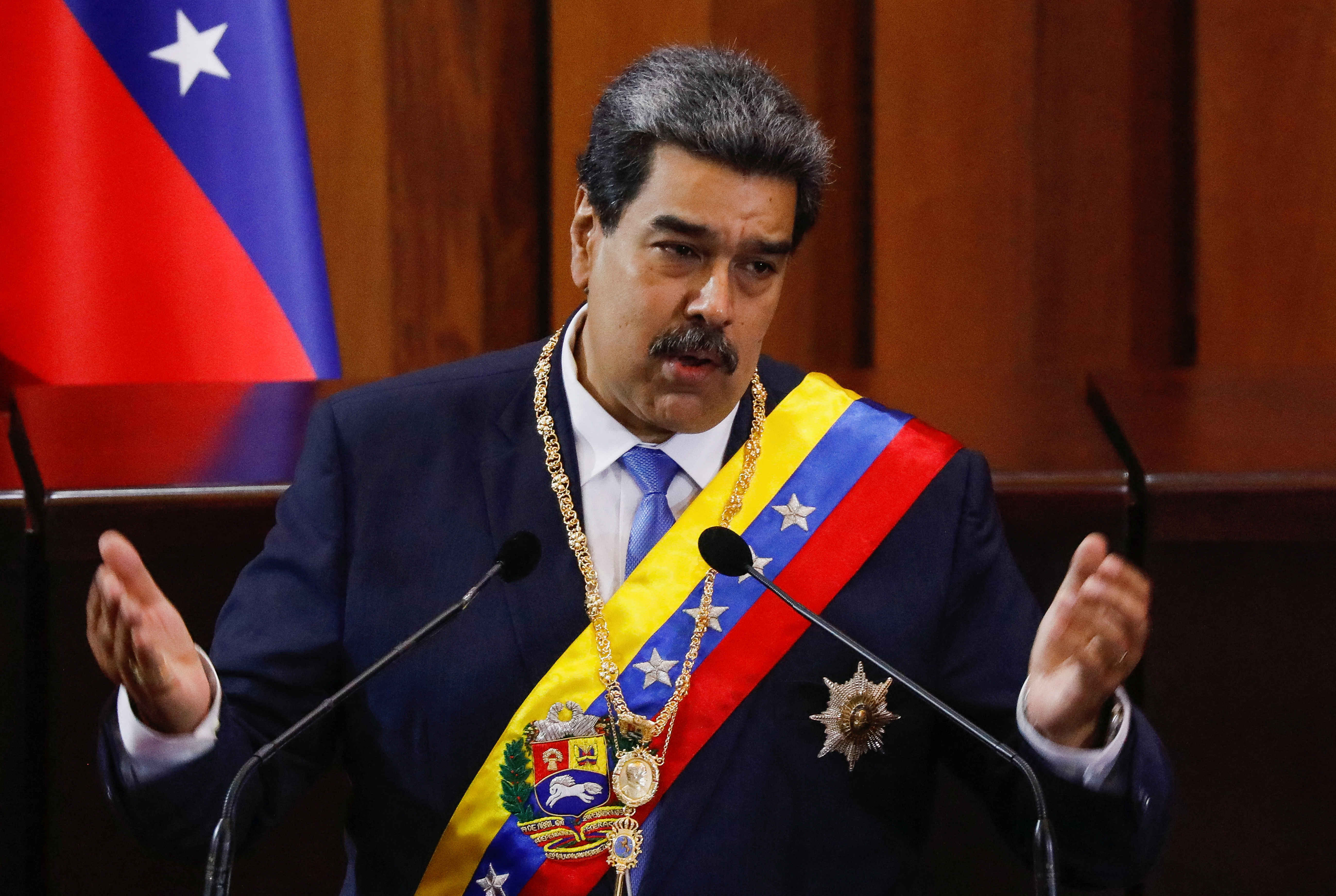
Venezuela’s President Nicolas Maduro delivers a speech in front of the Venezuelan Supreme Court of Justice magistrates during the opening of the new court term, in Caracas, Venezuela January 31, 2023. REUTERS/Leonardo Fernandez Viloria

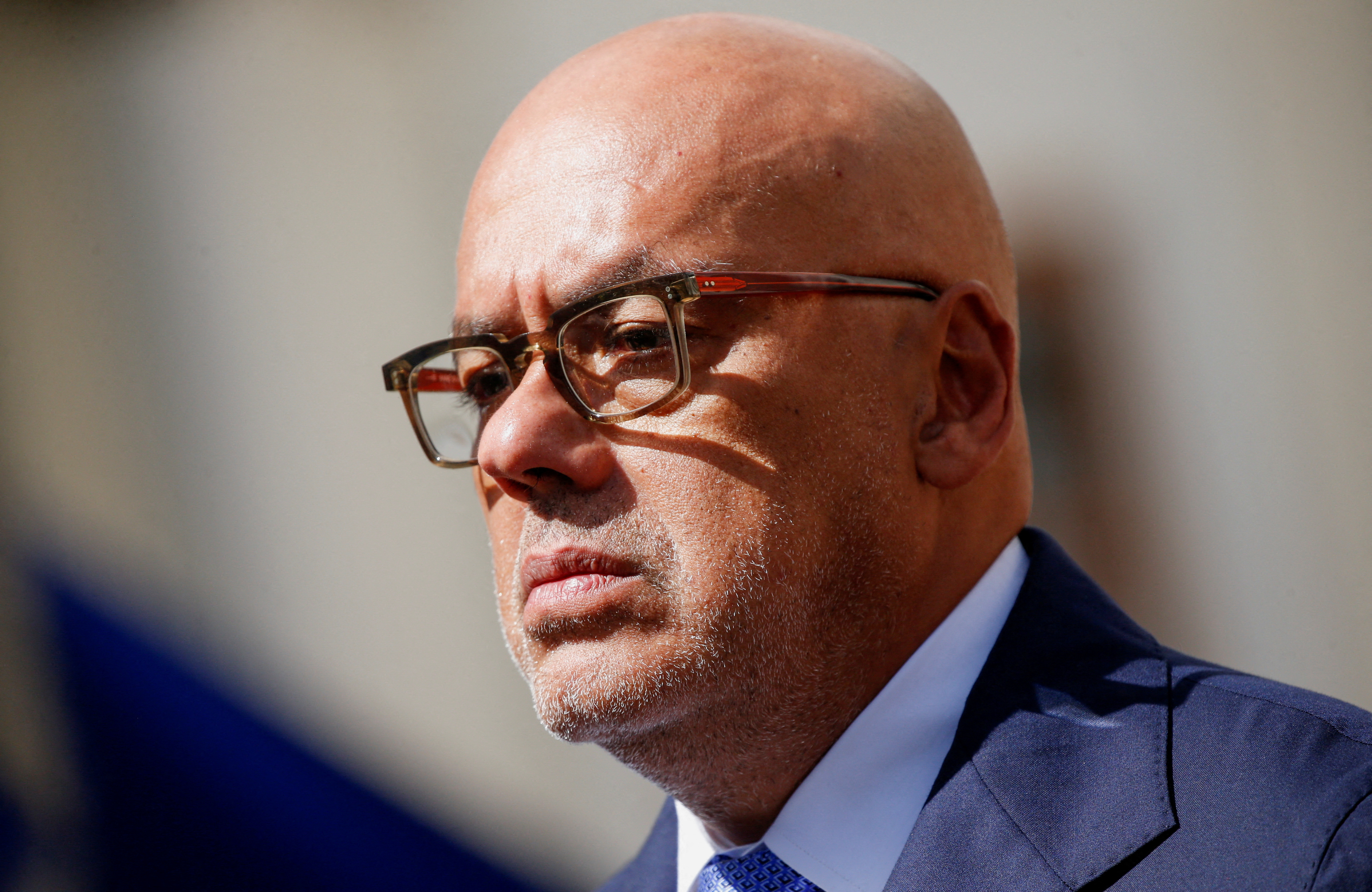
Venezuelan National Assembly’s President Jorge Rodriguez exits after the opening of the 2023 legislative period, in Caracas, Venezuela January 5, 2023. REUTERS/Leonardo Fernandez Viloria


Categories
Audio Sources - Full Text Articles

Texas Becomes Latest Red State to Ban TikTok on Govt Devices

Texas governor Greg Abbott on Monday became the latest Republican leader to ban TikTok on state devices, citing security concerns over the app’s connections to the Chinese Communist government.

“The security risks associated with the use of TikTok on devices used to conduct the important business of our state must not be underestimated or ignored,” Abbott said in a statement. He gave until Feb. 15 for agencies to remove the app from any state device and prevent certain business from being conducted on personal devices.

Abbott joins Republican governors in Virginia, Maryland, Alabama, and Utah in banning the Chinese spyware app on government devices. President Joe Biden in December signed into law a TikTok ban on federal devices after Republicans pushed the legislation through Congress.

“It is critical that state agencies and employees are protected from the vulnerabilities presented by the use of this app,” Abbott said.

The ban announcement comes as the military on Saturday shot down a Chinese spy balloon that traversed the nation last week.

The military has transported the balloon to Quantico, Virginia, for examination. China has threatened to retaliate against the United States over the downing of the balloon, which it claims was for “meteorological research.”

The post Texas Becomes Latest Red State to Ban TikTok on Govt Devices appeared first on Washington Free Beacon.

Categories
Audio Sources - Full Text Articles

Foreign Nations Poured Millions Into University That Houses Biden Institute

China, Saudi Arabia, Oman, and Turkey have poured millions of dollars into the University of Delaware since the school launched the Biden Institute, President Joe Biden’s domestic policy think tank led by his sister, according to U.S. Department of Education records reviewed by the Washington Free Beacon.

Since the Biden Institute was established in 2017, the University of Delaware has received $6,704,250 in funding from China, $23,610,996 from Saudi Arabia, $2,513,646 from Oman and $1,673,847 from Turkey, according to data from the U.S. Department of Education.

News of the funding comes as lawmakers have called for an investigation into President Joe Biden’s private papers housed at the University of Delaware, after federal authorities uncovered classified documents at Biden’s home and at the Penn Biden Center, the president’s other foreign-policy-focused think tank at the University of Pennsylvania. It also comes as the University of Pennsylvania has faced questions from Congress about foreign donations it received after launching the Penn Biden Center.

The University of Delaware has declined to disclose the Biden Institute’s donors and told the Free Beacon in 2020 that these records are not subject to public information laws because the Biden Institute is privately funded.

Government watchdogs said the University of Delaware’s secrecy over the Biden Institute’s funding raises questions about whether any foreign funds have gone to the think tank, which is chaired by Biden’s sister, Valerie Biden Owens, and has employed some of his top aides and political allies.

“The secrecy surrounding the suspected foreign funding of the Biden Institute at the University of Delaware is on a par with that of the Penn Biden Center of the University of Pennsylvania,” said Paul Kamenar, counsel to the National Legal and Policy Center, an ethics watchdog group that has investigated both think tanks. “The House oversight committees need to uncover the dark money sources in both cases, particularly from China.”

In late January, Sen. Ted Cruz (R., Texas) called on the FBI and the Department of Justice to search 1,875 boxes of records that Biden donated to the University of Delaware library in 2012, which are closed to the public.

Cruz said officials need to know if any “additional classified documents are in those records.”

“Given Biden’s pattern, we should have zero reason [to] have any confidence that there are not multiple classified documents,” Cruz said on his podcast.

Biden, who spent decades representing Delaware in the Senate, has a long relationship with the university. The University of Delaware is home to the Joseph R. Biden, Jr. School of Public Policy & Administration, which established the Biden Institute—a think tank focused on domestic policy—in 2017.

In January, House Foreign Affairs Committee chairman Michael McCaul (R., Texas) launched an inquiry into foreign funding to the University of Pennsylvania, which received $61 million from Chinese funders in the three years after the Penn Biden Center was launched in 2017, the Free Beacon reported in 2021. Since Biden’s inauguration, the university has accepted an additional $14 million from unnamed donors in China and Hong Kong, according to Department of Education records.

The University of Pennsylvania told the Free Beacon that none of the donations were specifically earmarked for the Penn Biden Center and said the think tank is funded through the school’s general budget.

The post Foreign Nations Poured Millions Into University That Houses Biden Institute appeared first on Washington Free Beacon.

Categories
Audio Sources - Full Text Articles

Biden Admin Distributes ‘Black Resistance’ Flyers to Border Agents

The Biden administration distributed “Black Resistance” flyers to U.S. Border Patrol agents that celebrated the Black Lives Matter movement and anti-American activist Colin Kaepernick, causing a stir among officers who criticized the agency’s promotion of groups that hate law enforcement.

The agency circulated a poster that features the words #BlackPower, #BlackLivesMatter, and “Abolitionist,” as well as watermarked images of Rep. Maxine Waters (D., Calif.) and Kaepernick, according to a copy of the flyer obtained by Townhall. The flyer infuriated officers, who say the agency is promoting people who “hate” them.

“BLM hates us, so does Maxine Waters,” one officer told the outlet. “Kaepernick hates us. They’re anti-police advocates against the nation’s largest police agency.”

Townhall

The flyer was sent as the agency battles a migrant crisis on both borders. On the southern border, more migrants were processed in December than ever before—251,487 in total. Nearly 600,000 “got aways” were reported in fiscal year 2022. On the northern border, agents have seen a massive spike in illegal entries. Agents in New York, New Hampshire, and Vermont saw a 743 percent increase in migrant encounters between October and December compared with the same time period in 2021.

Agents, who frequently say they’re overwhelmed by the stream of immigrants to the border, were told to “participate in local Diversity and Inclusion Program Committee activities at headquarters and various field offices in honor of National Black History Month,” Townhall reported.

More than five million migrants have crossed into the United States since Biden took office, the largest number in history. Former president Barack Obama’s Homeland Security secretary said the problem under Biden is “much bigger” than at any point during the Obama administration.

Black Lives Matter said in a 2021 statement that the CBP is “rooted in white supremacy and a history of slave-catching.”

The post Biden Admin Distributes ‘Black Resistance’ Flyers to Border Agents appeared first on Washington Free Beacon.

Categories
Audio Sources - Full Text Articles

U.S. senators question Meta on Chinese, other developers“ access to sensitive data

2023-02-06T22:57:02Z

Senators Mark Warner and Marco Rubio, chair and vice chair of the U.S. Senate Select Committee on Intelligence, wrote to Facebook parent Meta Platforms (META.O) on Monday about documents that show it knew developers in China and Russia had access to user data that could be used for espionage.

“It appears from these documents that Facebook has known, since at least September 2018, that hundreds of thousands of developers in countries Facebook characterized as ‘high-risk,’ including the People’s Republic of China, had access to significant amounts of sensitive user data,” Warner, a Democrat, and Republican Rubio wrote in the letter to company founder Mark Zuckerberg.

The letter said an internal Meta document showed that nearly 90,000 developers in China had been given access to information about users, including profile data, photos and private messages even though Facebook had never been able to operate in China.

More than 42,000 developers in Russia and thousands in Iran and North Korea also had access to the information, they wrote.

The unsealed documents came to light as part of litigation in the Northern District of California that was filed in 2018.

“We have grave concerns about the extent to which this access could have enabled foreign intelligence service activity, ranging from foreign malign influence to targeting and counter-intelligence,” the two senators wrote.

Facebook did not immediately respond to a request for comment.

Related Galleries:

Facebook app logo is seen in this illustration taken, August 22, 2022. REUTERS/Dado Ruvic/Illustration

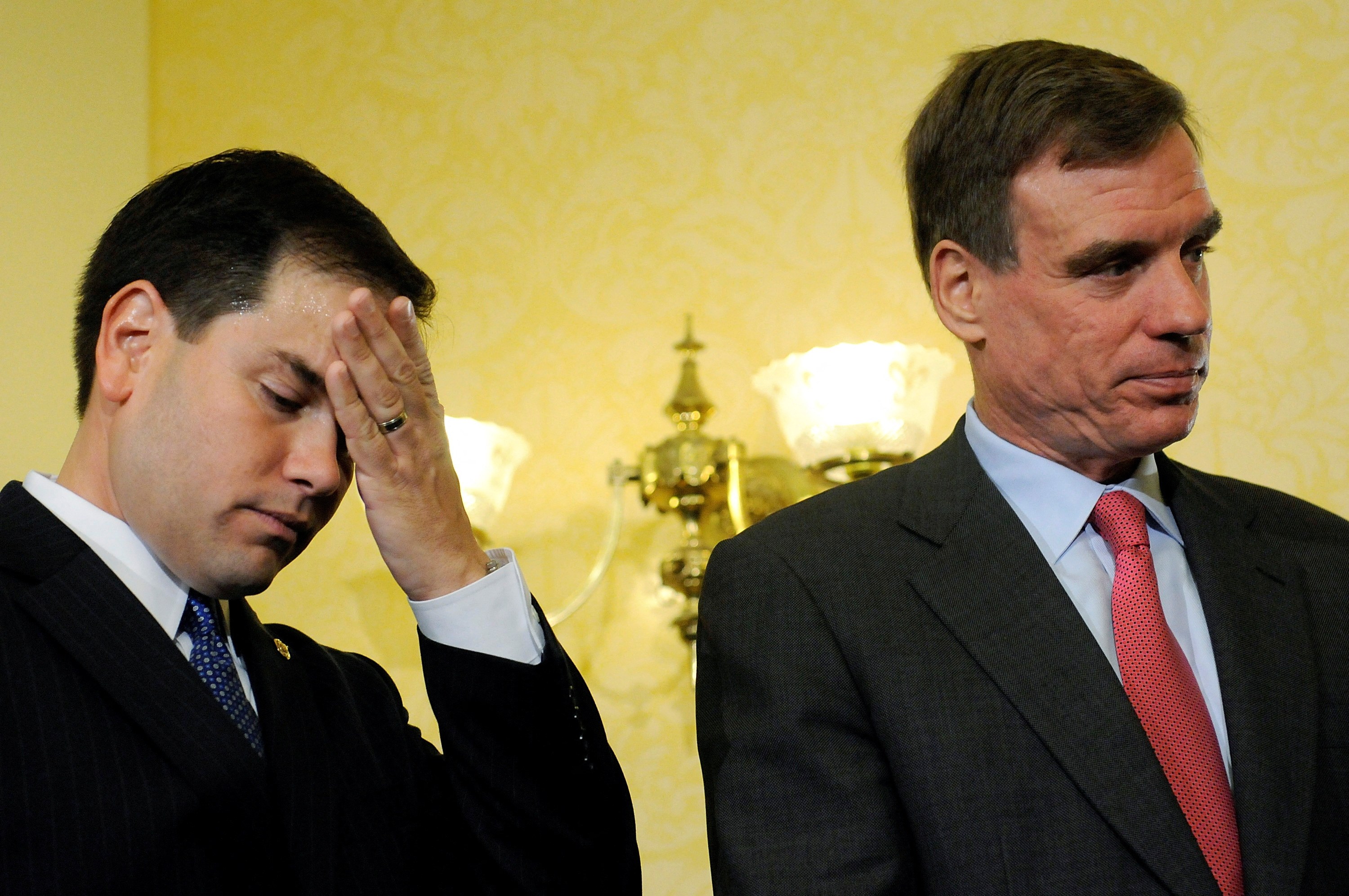
U.S. Senator Marco Rubio (R-FL) (L-R) and Senator Mark Warner (D-VA) attend a news conference unveiling Startup 2.0 legislation aimed at encouraging job growth through innovation and entrepreneurship, at the U.S. Capitol in Washington, May 22, 2012. REUTERS/Jonathan Ernst
Categories
Audio Sources - Full Text Articles

Zelenskiy vows changes will bolster Ukraine amid defence minister uncertainty

2023-02-06T23:18:18Z

President Volodymyr Zelenskiy said personnel changes on the border and front line will bolster Ukraine’s military efforts amid uncertainty over the future of his defence minister, just as Russia advances for the first time in six months in the east.

In his Monday evening address, Zelenskiy said he wanted to combine military and managerial experience in local and central government but did not directly address confusion about whether his defence minister, Oleksii Reznikov, would be replaced.

On Sunday, David Arakhamia, head of Zelenskiy’s parliamentary bloc, said Reznikov would be transferred to another ministerial job, but on Monday he wrote that “there will be no personnel changes in the defence sector this week.”

Zelenskiy’s government is cracking down on official wrongdoing, the biggest political and administrative shakeup since Russia’s invasion nearly a year ago.

Zelenskiy says he needs to show that Ukraine was a safe steward of billions of dollars of Western military and other aid.

“We are bolstering our managerial positions,” Zelenskiy said in his address, following a meeting of his top command involving the country’s commander-in-chief, sector commanders and the head of intelligence.

“In a number of regions, particularly those on the border or on the front line, we will appoint leaders with military experience. Those who can show themselves to be the most effective in defending against existing threats,” he said.

In eastern Ukraine, where there have been relentless battles for months, a regional governor has said Russia was pouring in reinforcements for a new offensive that could begin next week.

Russia launched five missile and 12 air attacks as well as 36 shelling incidents over a 24-hour period, hitting southern targets such as Kherson, the General Staff of the Ukrainian Armed Forces said in a Monday evening statement.

Ukrainian aircraft have launched nine strikes on areas of concentration of Russian forces and two anti-aircraft positions, it said. Reuters could not immediately verify battleground reports.

Ukraine is itself planning a spring offensive, but awaiting delivery of promised longer-range Western missiles and battle tanks.

The European Union said Zelenskiy has been invited to take part in a summit of EU leaders, amid reports he could be in Brussels as soon as this week, in what would be only his second known foreign trip since the invasion began.

Zelenskiy’s office did not respond to a request for comment.

Reznikov, a 56-year-old lawyer, has been the face of Ukraine at international meetings where allies have pledged billions of dollars in weaponry, and has been warmly received in Western capitals – including Paris just last week.

Arakhamia had said the 37-year-old head of military intelligence, Kyrylo Budanov, would replace Reznikov, who would become minister of strategic industries.

One obstacle to replacing Reznikov with Budanov, a fast-rising officer decorated for operations that remain secret, is a rule requiring the defence minister to be a civilian.

Ukraine’s defence ministry did not respond to a request for comment and Reuters could not immediately reach Reznikov or Budanov.

Reznikov said on Sunday that any decision was up to Zelenskiy but that he had heard nothing about a transfer. He said he would reject the strategic industry job because he lacked the expertise.

The war is reaching a pivotal point as its first anniversary approaches, with Ukraine no longer making gains as it did in the second half of 2022 and Russia pushing forward with hundreds of thousands of mobilised reserve troops.

Russia said its forces had captured Mykolaivka, a village in the eastern Donetsk region.

There was no immediate response from Ukraine, which has disputed other Russian battlefield reports.

Russia’s main target has been Bakhmut, where its state media said the Wagner mercenary group had gained a foothold. Ukraine said on Monday evening that Russian forces had trained tank, mortar and artillery fire there in the past 24 hours.

Wagner chief Yevgeniy Prigozhin, accused by Ukraine of sending thousands of Russian ex-prisoners to their deaths around Bakhmut, released a video purportedly showing him in a tactical bomber that had just struck the town.

He said he would fly a fighter on Tuesday and challenged Zelenskiy to an aerial duel.

Russia’s state Investigative Committee said on Monday it was examining the alleged use of chemical weapons by Ukrainian forces near Bakhmut and nearby Soledar.

Ukraine’s Armed Forces said they had never used chemical weapons anywhere at any time and accused Moscow of engaging in disinformation and of itself using banned weapons.

Since its invasion on Feb. 24, 2022, which it has cast as defending itself from an aggressive West, Russia has taken control of parts of Ukraine it says it will never return.

Ukraine has said that restoring its territorial integrity is not open for negotiation.

Related Galleries:
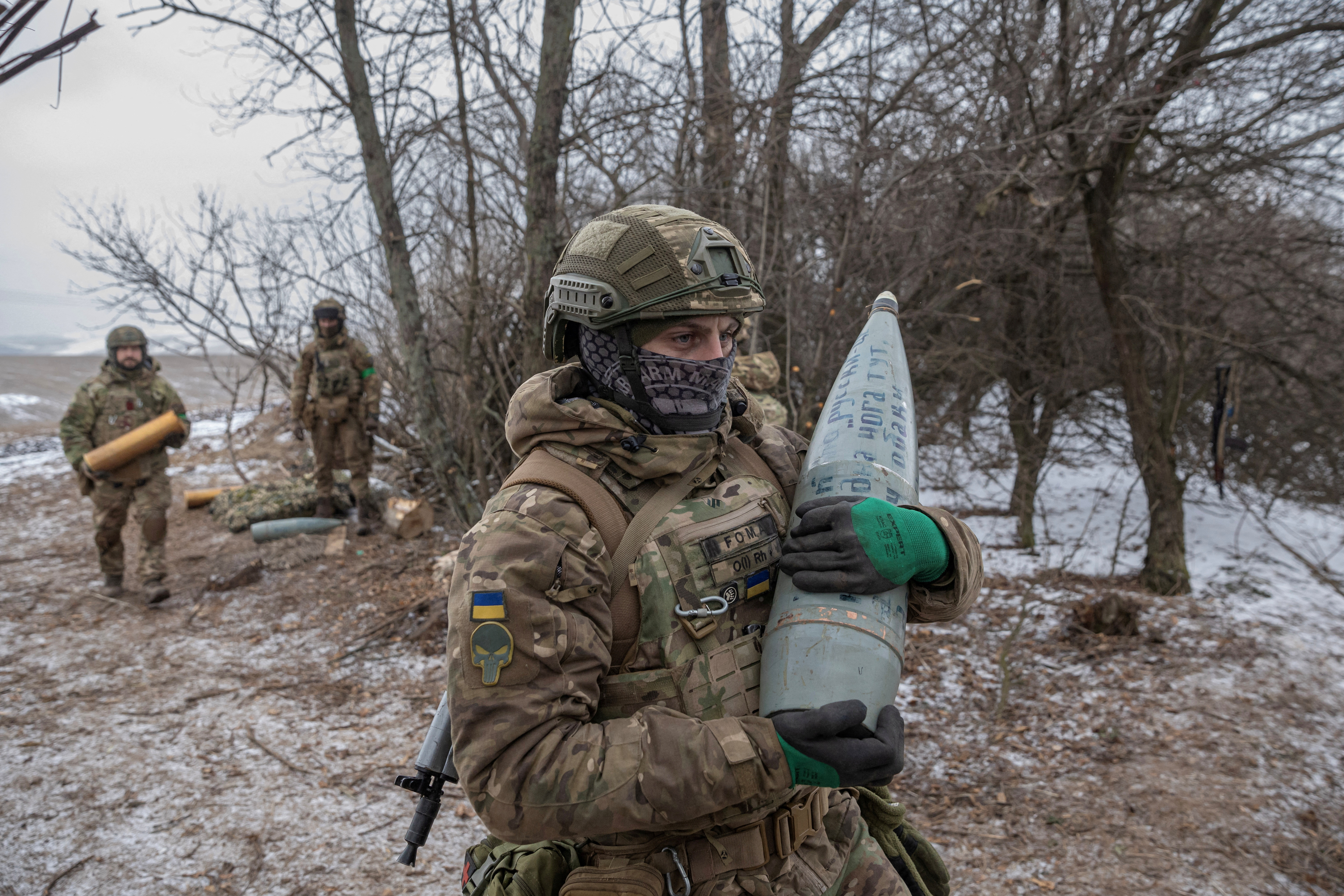
Members of the 3rd Separate Assault Brigade (Azov Unit) of the Armed Forces of Ukraine prepare to fire 152 mm howitzer 2A65 Msta-B, amid Russia’s attack on Ukraine, near Bahmut, in Donetsk region, Ukraine, February 6, 2023. REUTERS/Marko Djurica
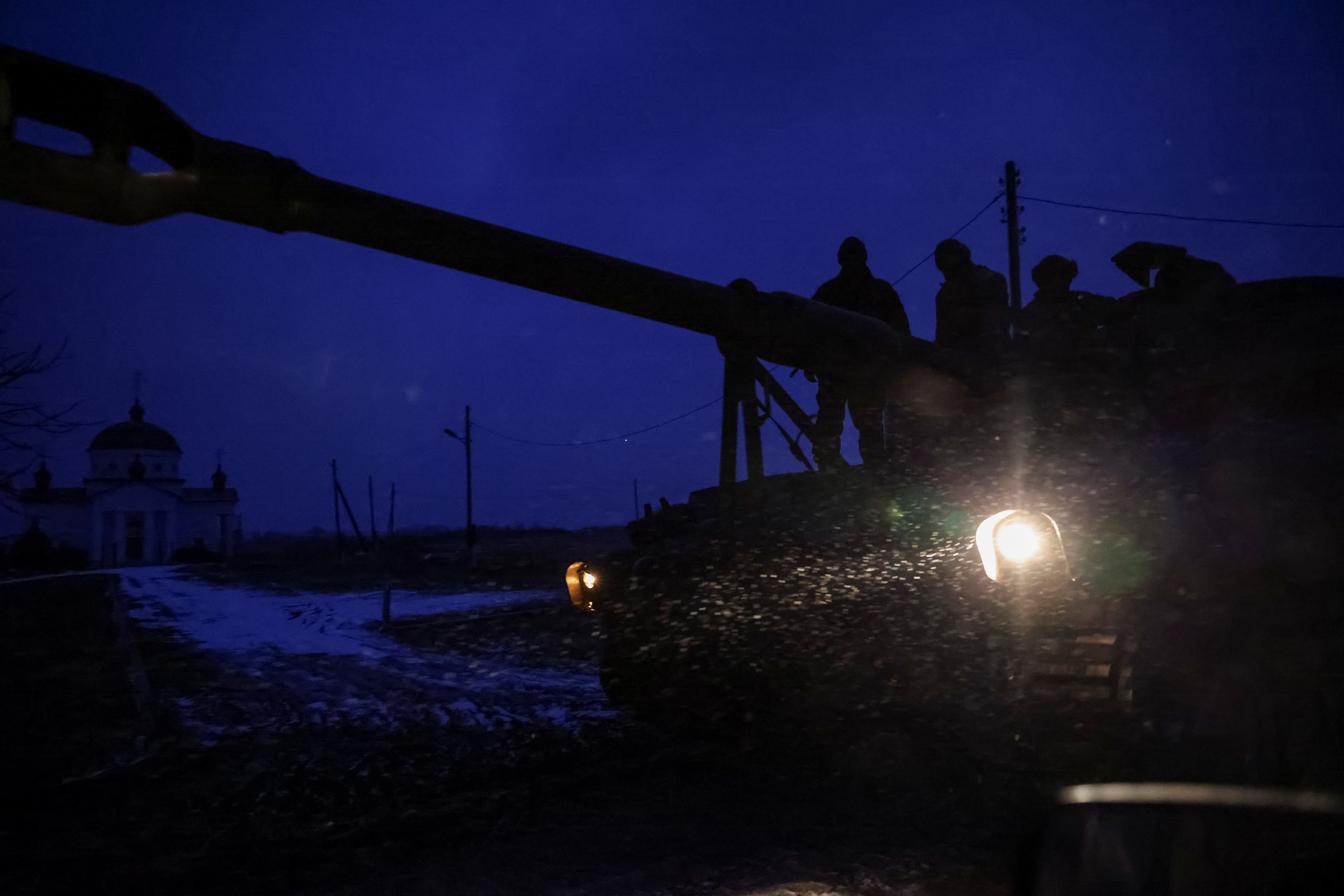
Ukrainian servicemen stand at a self-propelled howitzer, as Russia’s attack on Ukraine continues, near the frontline town of Toretsk, Donetsk region, Ukraine February 6, 2023. REUTERS/Yevhen Titov
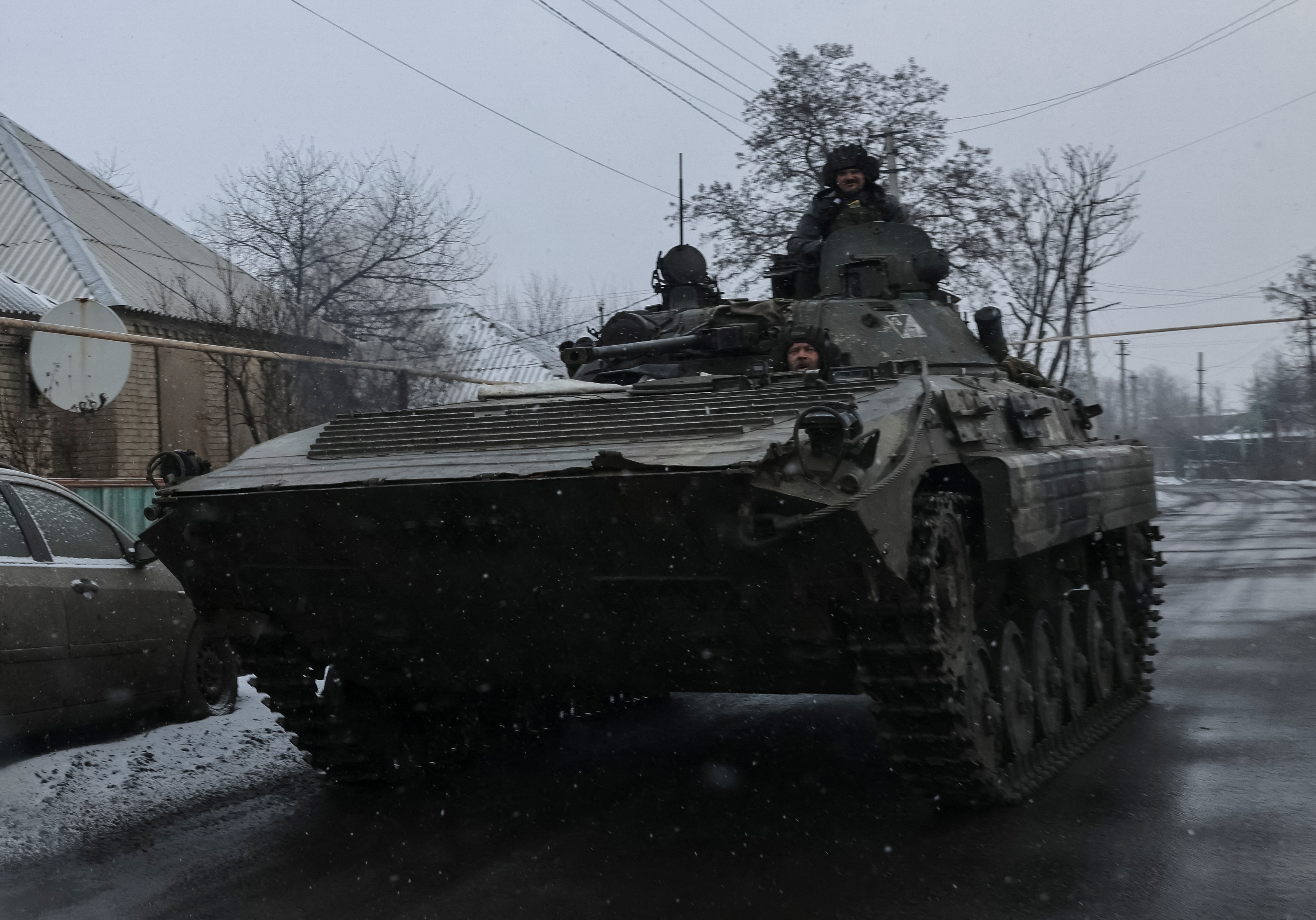
Ukrainian service members ride a BMP-2 infantry fighting vehicle, as Russia’s attack on Ukraine continues, near the frontline town of Bakhmut, Donetsk region, Ukraine February 6, 2023. REUTERS/Yevhen Titov

Ukrainian Defense Minister Oleksii Reznikov attends a joint news conference, as Russia’s attack on Ukraine continues, in Kyiv, Ukraine October 26, 2022. REUTERS/Max Hunder

Categories
Audio Sources - Full Text Articles

Exclusive: Record-breaking 2022 for North Korea crypto theft, UN report says

2023-02-06T23:05:39Z

A representations of cryptocurrencies in this illustration taken, January 24, 2022. REUTERS/Dado Ruvic/Illustration/File Photo

North Korea stole more cryptocurrency assets in 2022 than in any other year and targeted the networks of foreign aerospace and defense companies, according to a currently confidential United Nations report seen by Reuters on Monday.

“(North Korea) used increasingly sophisticated cyber techniques both to gain access to digital networks involved in cyber finance, and to steal information of potential value, including to its weapons programmes,” independent sanctions monitors reported to a U.N. Security Council committee.

The monitors have previously accused North Korea of using cyber attacks to help fund its nuclear and missile programs.

“A higher value of cryptocurrency assets was stolen by DPRK actors in 2022 than in any previous year,” the monitors wrote in their report – submitted to the 15-member council’s North Korea sanctions committee on Friday – citing information from U.N. member states and cybersecurity firms.

North Korea has previously denied allegations of hacking or other cyberattacks.

The sanctions monitors said South Korea estimated that North Korean-linked hackers stole virtual assets worth $630 million in 2022, while a cybersecurity firm assessed that North Korean cybercrime yielded cybercurrencies worth more than $1 billion.

“The variation in USD value of cryptocurrency in recent months is likely to have affected these estimates, but both show that 2022 was a record-breaking year for DPRK (North Korea) virtual asset theft,” the U.N. report said.

A U.S.-based blockchain analytics firm last week reached the same conclusion.

The U.N. report noted: “The techniques used by cyberthreat actors have become more sophisticated, thus making tracking stolen funds more difficult.”

The report is due to be released publicly later this month or early next month, diplomats said.

The monitors said most cyber attacks were carried out by groups controlled by North Korea’s primary intelligence bureau – the Reconnaissance General Bureau. It said those groups included hacking teams tracked by the cybersecurity industry under the names Kimsuky, Lazarus Group and Andariel.

“These actors continued illicitly to target victims to generate revenue and solicit information of value to the DPRK including its weapons programmes,” the U.N. report said.

The sanctions monitors said the groups deployed malware through various methods including phishing. One such campaign targeted employees in organizations across various countries.

“Initial contacts with individuals were made via LinkedIn, and once a level of trust with the targets was established, malicious payloads were delivered through continued communications over WhatsApp,” the U.N. report said.

It also said that, according to a cybersecurity firm, a North Korean-linked group known as HOlyGhOst had “extorted ransoms from small- and medium-sized companies in several countries by distributing ransomware in a widespread, financially motivated campaign.”

In 2019, the U.N. sanctions monitors reported that North Korea had generated an estimated $2 billion over several years for its weapons of mass destruction programs using widespread and increasingly sophisticated cyberattacks.

In their latest annual report, the monitors also said Pyongyang continued producing nuclear fissile materials at its facilities and launched at least 73 ballistic missiles, including eight intercontinental ballistic missiles last year.

The United States has long been warning that North Korea is ready to carry out a seventh nuclear test.

North Korea has long been banned from conducting nuclear tests and ballistic missile launches by the Security Council. Since 2006, it has been subject to U.N. sanctions, which the Security Council has strengthened over the years to target Pyongyang’s nuclear and ballistic missile programs.

But North Korea has continued illicit imports of refined petroleum and exports of coal, evading sanctions, the monitors said. They also said they have started an investigation into reports of ammunition exports by North Korea.

The United States has accused the Russian mercenary company Wagner Group of receiving arms from North Korea to help bolster Russian forces in Ukraine. North Korea has rejected the accusation as groundless and Wagner’s owner, Yevgeny Prigozhin, denied getting arms from North Korea.

Last May, China and Russia vetoed a U.S.-led push to impose more U.N. sanctions on North Korea. This included a proposed asset freeze on the Lazarus hacking group.

The Lazarus group has been accused of involvement in the “WannaCry” ransomware attacks, hacking of international banks and customer accounts, and the 2014 cyber-attacks on Sony Pictures Entertainment.

The United States linked North Korean hackers to the theft of hundreds of millions of dollars’ worth of cryptocurrency tied to the popular online game Axie Infinity, the United States said in April. Ronin, a blockchain network that lets users transfer crypto in and out of the game, said digital cash worth almost $615 million was stolen on March 2022.

Categories
Audio Sources - Full Text Articles

U.S. VP Harris to map out next steps to aid Ukraine at Munich meeting

2023-02-06T23:13:12Z

U.S. Vice President Kamala Harris is expected to discuss Washington’s future support for Ukraine when she travels to a major European security conference in Germany next week, as Russia’s invasion nears the one-year mark.

Harris will travel to Munich, Germany, from Feb. 16 to 18 to attend the Munich Security Conference as Ukraine, still waiting on promised longer-range Western missiles and battle tanks, readies itself for a new Russian offensive that could begin next week.

A White House official said Harris will use a speech there to celebrate the courage of the Ukrainian people, reaffirm international support for the country, condemn Russia’s actions, reaffirm Washington’s mutual defense commitments under NATO and “outline the path forward” on Ukraine.

She will “make clear that this fight is part of something bigger – the defense of international rules and norms and freedom and liberty,” according to the official.

Harris will also “meet with foreign leaders and continue our intensive diplomatic engagement with allies and partners regarding the war in Ukraine as well as other regional and global issues,” her spokesperson, Kirsten Allen, said.

With U.S. President Joe Biden’s support, Harris has tried to carve out a foreign policy niche during the first two years of the administration, meeting foreign leaders at the White House and shoring up relations with non-Chinese nations that border the South China Sea.

The United States has worked to keep up the pressure on Russia through the year, even as Biden’s Democratic Party lost control of the House of Representatives following November’s midterm elections.

Support for Ukraine has included $29.3 billion worth of pledged security assistance and an unprecedented use of economic sanctions, including an oil price cap, which have severely impacted Moscow.

Russia’s finance ministry said vital oil and gas revenues were down 46% from January 2022 because of the discount that Russian crude now trades at on world markets. Russia has nonetheless shrugged off any suggestions that their military operations will shift.

Harris met with and briefed Ukrainian President Volodymyr Zelenskiy at last year’s conference, which was held just days before Russia’s Feb. 24, 2022, invasion of Ukraine.

Related Galleries:

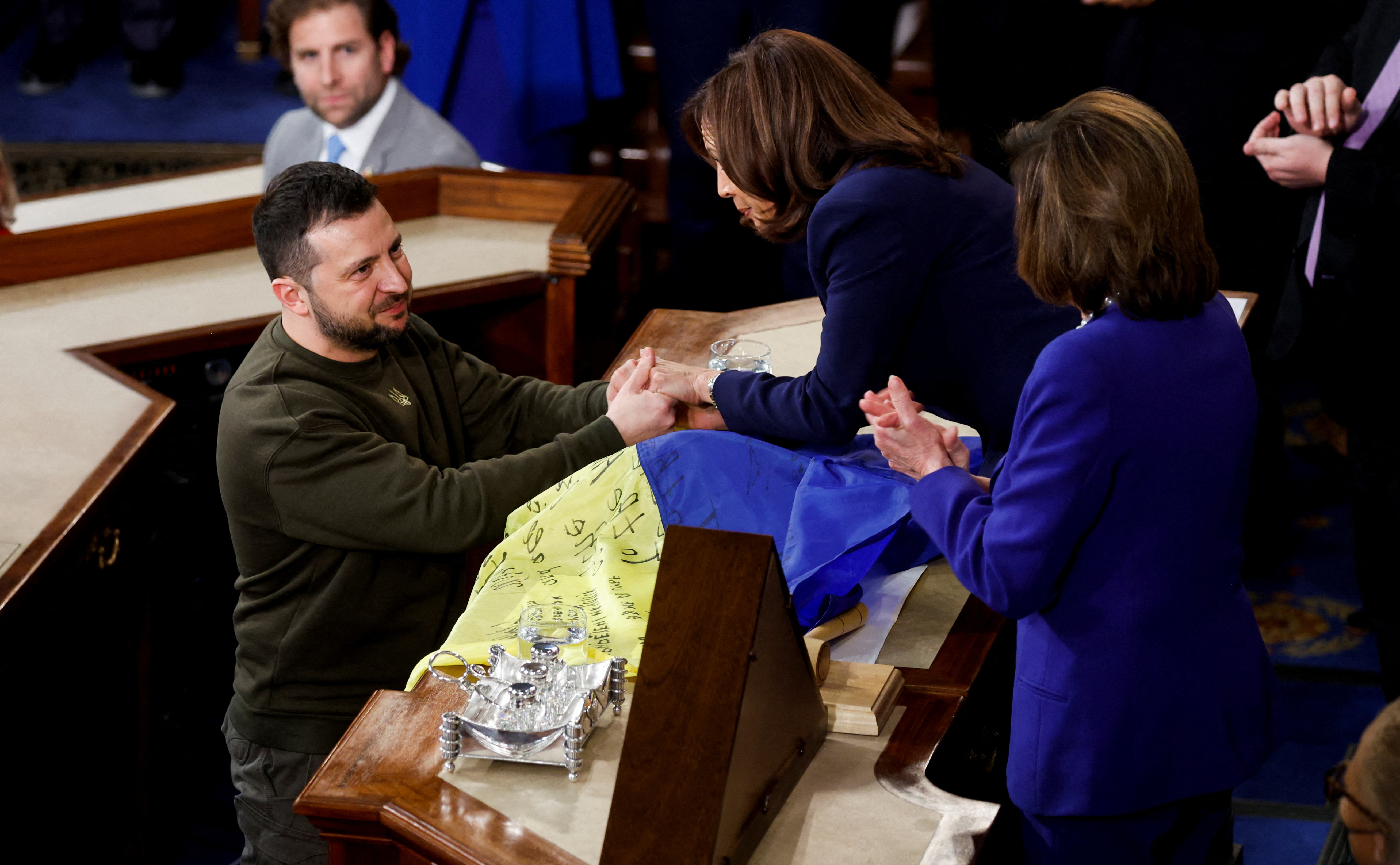
Ukraine’s President Volodymyr Zelenskiy greets U.S. Vice President Kamala Harris during a joint meeting of U.S. Congress in the House Chamber of the U.S. Capitol in Washington, U.S., December 21, 2022. REUTERS/Jonathan Ernst

U.S. ‪Vice President Kamala Harris‬ delivers remarks at a meeting with government officials and corporate leaders at the Eisenhower Executive Office Building on the White House campus in Washington, U.S. February 6, 2023. REUTERS/Jonathan Ernst


Categories
Audio Sources - Full Text Articles

North Korea calls for strengthened war readiness posture, expanded drills

2023-02-06T23:10:26Z

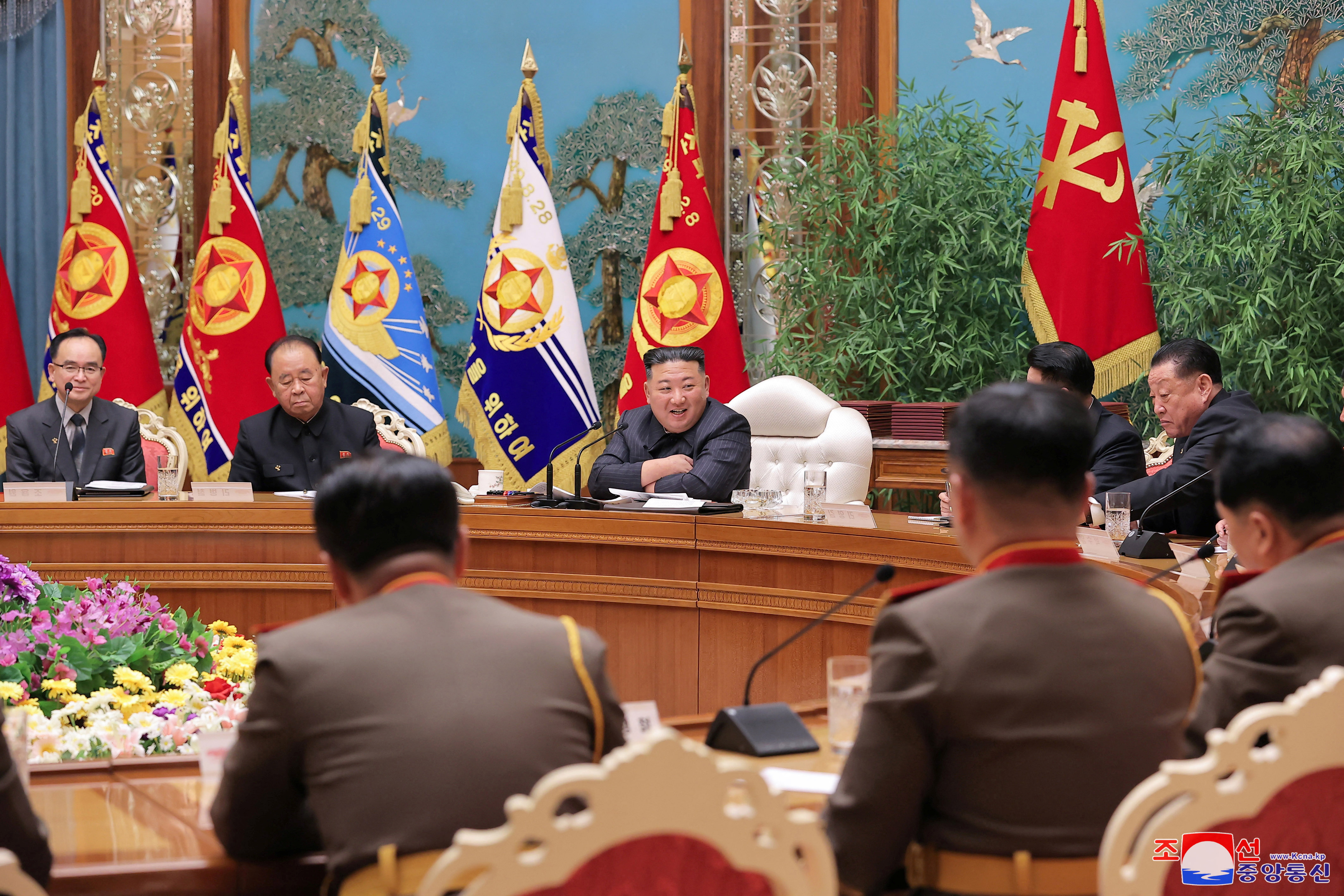
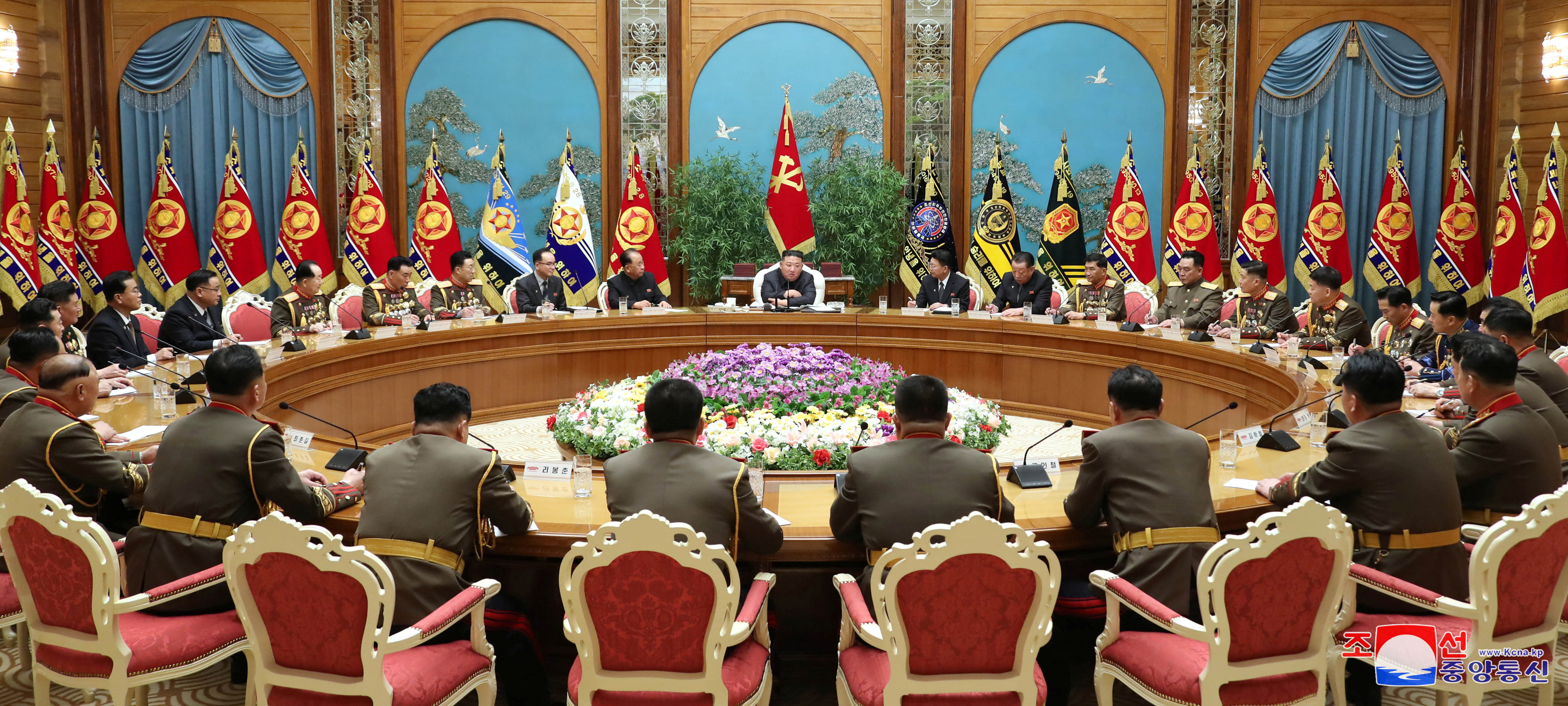
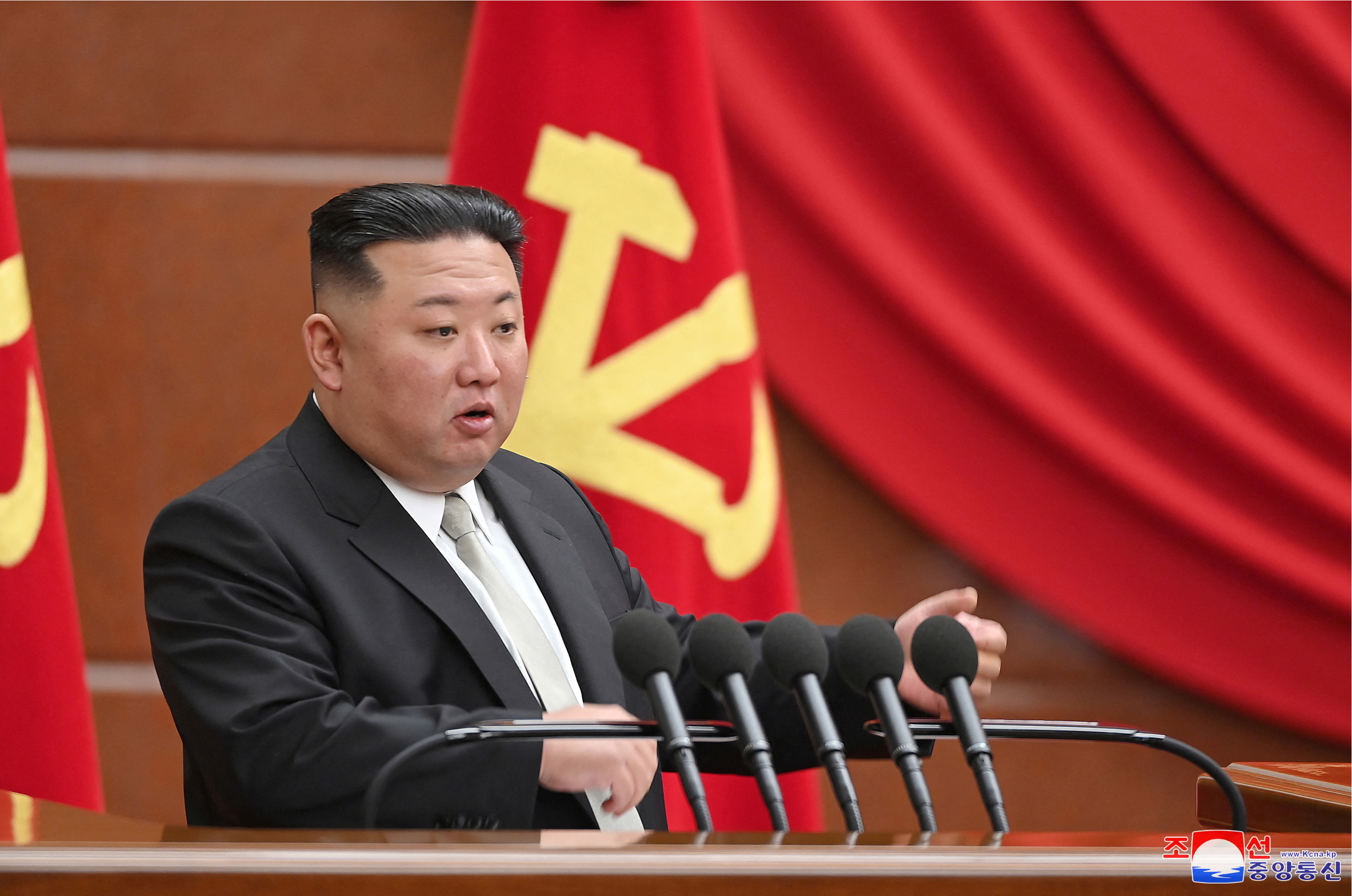
North Korean leader Kim Jong Un pledged to expand military drills and beef up the country’s war readiness posture, state media reported on Tuesday, as Pyongyang prepares to mark a military anniversary.

Kim presided over the meeting of the central military commission of the ruling Workers’ Party on Monday where officials discussed “major military and political tasks” for this year and the “long-term issues concerning the orientation for army building,” KCNA news agency said.

“Studied and discussed there were … the issue of constantly expanding and intensifying the operation and combat drills of the KPA to cope with the prevailing situation and more strictly perfecting the preparedness for war,” KCNA said, referring to the Korean People’s Army.

The meeting comes as North Korea is widely expected to stage a military parade to mark the founding anniversary of its armed forces on Wednesday.

Commercial satellite imagery has shown North Korean troops practicing in formation in Pyongyang, and South Korea has also said it was monitoring increased related activities.

The military meeting also follows North Korea on Thursday condemning drills by the United States and its allies, saying they have reached an “extreme red-line” and threaten to turn the peninsula into a “huge war arsenal and a more critical war zone.”

In Thursday’s statement, the North Korean foreign ministry condemned a visit to South Korea by U.S. Defense Secretary Lloyd Austin and said Pyongyang was not interested in dialogue as long as Washington pursues hostile policies.

Last Tuesday, Austin and his South Korean counterpart said they would expand military drills and deploy more “strategic assets,” such as aircraft carriers and long-range bombers, to counter North Korea’s weapons development and prevent a war.

When asked about the tensions with North Korea during a stop in the Philippines, Austin said that the U.S. goal was to promote greater security and stability and that it remained committed to defending South Korea.

Related Galleries:

North Korean leader Kim Jong Un presides over a military meeting in Pyongyang, North Korea February 6, 2023 in this photo released by North Korea’s Korean Central News Agency (KCNA) KCNA via REUTERS

North Korean leader Kim Jong Un presides over a military meeting in Pyongyang, North Korea February 6, 2023 in this photo released by North Korea’s Korean Central News Agency (KCNA) KCNA via REUTERS

North Korean leader Kim Jong Un attends a session of the sixth enlarged meeting of the eighth Central Committee of the Workers’ Party, in Pyongyang, North Korea, in this photo released on January 1, 2023 by North Korea’s Korean Central News Agency (KCNA). KCNA via REUTERS
Categories
Audio Sources - Full Text Articles

Generators, spoiled food: Slow power repairs anger Austin

AUSTIN, Texas (AP) — The future of Austin’s top city executive plunged into jeopardy Monday as frustration boiled over power outages that have left thousands of people without electricity in the Texas capital for nearly a week and could drag on for days longer.

Austin Mayor Kirk Watson, a Democrat, called a meeting for this week that will put City Manager Spencer Cronk’s job on the line. The move reflected the growing discontent in America’s 11th-largest city over slow repairs to power lines following a deadly ice storm that left residents with no sense about when their electricity might finally return.

Austin Energy, the city’s utility, warned Sunday in the face of growing criticism that full power restoration may not happen until Feb. 12 — nearly two weeks after the outages began.

“To all our Austin citizens who are furious about the ongoing power outage, you’re right,” Watson tweeted. “There must be accountability.”

Cronk, who oversees city staff, responded by telling reporters he was focused on the storm recovery and restoring power. Watson did not outright say whether he thinks Cronk should be fired but said Thursday’s meeting would “evaluate the employment” of the city manager.

For the vast majority of Austin residents, the lights were on Monday or never went out in the first place. At the peak of the outages, about 170,000 homes and businesses — nearly a third of utility customers in Austin — had no electricity, and in many cases, no heat. By Monday, that number was down to about 21,000, about 4% of all customers.

But in neighborhoods still without power, familiar scenes unfolded.

Outdoor extension cords ran from the homes that have power to neighbors across the street who didn’t. Spoiled food piled up in trash bins. Children walked past noisy generators while returning to class Monday for the first time since Austin closed schools for most of last week. And on text message groups and social media apps, the sights of repair crews were treated as urgent developments.

Katy Manganella, 37, grew so fed up that when Austin Energy came to her neighborhood Sunday with a charging station for residents — but still no repair trucks — she paced in front of the station holding a poster that read, “This pregnant lady is over it!”

“It’s been pretty miserable,” said Manganella, a therapist who is seven months pregnant and was unable to work last week because of the outages. “How is there no plan for this?”

Austin Energy has described the remaining outages as the most complicated and time-consuming. The storm plunged temperatures near or below freezing and coated trees with ice across Austin, weighing down branches that eventually snapped and crashed onto power lines. Iced-over equipment and crews driving on slick roads also slowed recovery efforts, according to city officials.

The utility warned Monday that a new front of high winds and potential storms starting Tuesday could further hamper restoration efforts.

“I’m sorry for how long this has taken,” said Jackie Sargent, general manager of Austin Energy.


Page 2

AUSTIN, Texas (AP) — The future of Austin’s top city executive plunged into jeopardy Monday as frustration boiled over power outages that have left thousands of people without electricity in the Texas capital for nearly a week and could drag on for days longer.

Austin Mayor Kirk Watson, a Democrat, called a meeting for this week that will put City Manager Spencer Cronk’s job on the line. The move reflected the growing discontent in America’s 11th-largest city over slow repairs to power lines following a deadly ice storm that left residents with no sense about when their electricity might finally return.

Austin Energy, the city’s utility, warned Sunday in the face of growing criticism that full power restoration may not happen until Feb. 12 — nearly two weeks after the outages began.

“To all our Austin citizens who are furious about the ongoing power outage, you’re right,” Watson tweeted. “There must be accountability.”

Cronk, who oversees city staff, responded by telling reporters he was focused on the storm recovery and restoring power. Watson did not outright say whether he thinks Cronk should be fired but said Thursday’s meeting would “evaluate the employment” of the city manager.

For the vast majority of Austin residents, the lights were on Monday or never went out in the first place. At the peak of the outages, about 170,000 homes and businesses — nearly a third of utility customers in Austin — had no electricity, and in many cases, no heat. By Monday, that number was down to about 21,000, about 4% of all customers.

But in neighborhoods still without power, familiar scenes unfolded.

Outdoor extension cords ran from the homes that have power to neighbors across the street who didn’t. Spoiled food piled up in trash bins. Children walked past noisy generators while returning to class Monday for the first time since Austin closed schools for most of last week. And on text message groups and social media apps, the sights of repair crews were treated as urgent developments.

Katy Manganella, 37, grew so fed up that when Austin Energy came to her neighborhood Sunday with a charging station for residents — but still no repair trucks — she paced in front of the station holding a poster that read, “This pregnant lady is over it!”

“It’s been pretty miserable,” said Manganella, a therapist who is seven months pregnant and was unable to work last week because of the outages. “How is there no plan for this?”

Austin Energy has described the remaining outages as the most complicated and time-consuming. The storm plunged temperatures near or below freezing and coated trees with ice across Austin, weighing down branches that eventually snapped and crashed onto power lines. Iced-over equipment and crews driving on slick roads also slowed recovery efforts, according to city officials.

The utility warned Monday that a new front of high winds and potential storms starting Tuesday could further hamper restoration efforts.

“I’m sorry for how long this has taken,” said Jackie Sargent, general manager of Austin Energy.

WP Radio
WP Radio
OFFLINE LIVE