Categories
Audio Sources - Full Text Articles

Explainer: When is the State of the Union 2023? Date of Biden“s address and what to expect

2023-02-07T01:29:14Z

U.S. President Joe Biden will deliver his first State of the Union address after Republicans took control of the House of Representatives in a speech that may mark the unofficial start of the 2024 presidential campaign season.

Here is what to expect.

Biden will deliver his 2nd State of the Union address on Tuesday, Feb. 7, 2023, at about 9 p.m. Eastern time (0200 GMT Wednesday). The speech will be broadcast live on the major U.S. broadcast television networks and online.

The speech could deliver Biden his largest television audience of the year. An estimated 38.2 million people watched the speech on U.S. television last year, according to the data provider Nielsen.

That audience will give Biden a chance to shape public perceptions over the debt limit, social spending, the Russian war in Ukraine and other topics as he plans to announce his re-election campaign in the coming weeks.

It also gives him an opportunity to shore up support among Democrats, some of whom are concerned about his age and other issues. Biden turned 80 in November and, if re-elected, would be 82 at the start of a second term.

He is expected to use the speech as an unofficial start to the 2024 presidential campaign season, laying out a set of policy priorities that may or may not find support in Congress.

He is expected to tout economic progress following the COVID-19 recession, draw sharp contrasts with the priorities of some Republican opponents and lay out “unity” agenda items that he believes should unite both parties.

The speech is weeks in the making and subject to many drafts between Biden, his speechwriters and various political and policy officials in the administration.

Last year, Biden’s speech came just days after Russia’s invasion of Ukraine and focused heavily on explaining Washington’s response.

The speech is delivered during a joint session of Congress. All members of both the Democratic-controlled Senate and Republican-controlled House are invited. Members of Biden’s Cabinet, the armed forces and the Supreme Court also attend. Partisan outbursts can occur.

Biden was formally invited to give the address earlier in January by House Speaker Kevin McCarthy. McCarthy will preside over the event and be accompanied by Vice President Kamala Harris, who is also the president of the Senate.

The president also invites family members and other guests who sit in the First Lady’s view box from the balcony and can be used to amplify points he is making during his speech.

Members of Congress invite guests, too.

This year, guests will include the mother and stepfather of Tyre Nichols, the Black man who was fatally beaten by Memphis police officers, who were invited by Congressional Black Caucus chair Representative Steven Horsford.

Missouri Democrat Cori Bush said she has invited Michael Brown Sr., the father of Michael Brown, whose 2014 shooting by a Ferguson police officer helped give birth to the Black Lives Matter movement.

House Foreign Affairs Committee Chair Michael McCaul, a Texas Republican, said he invited Roya Rahmani, who served as Afghanistan’s first female ambassador to the United States, to send a signal to the women of Afghanistan that they had not been forgotten, while Republican Conference Chair Elise Stefanik will bring Jeffrey Smith, a county sheriff from upstate New York.

One person who does not attend is a single member of Biden’s Cabinet who will be picked as a “designated survivor.” That individual will be housed in a secure location and is tasked with taking over the government in case of a catastrophe that impairs the president and his other successors at the Capitol.

The designated survivor for this year’s speech has not yet been announced.

Republicans have picked Arkansas Governor Sarah Huckabee Sanders, who served as White House press secretary under Donald Trump, to deliver their response. That speech is generally delivered shortly after the president’s.

Related Galleries:

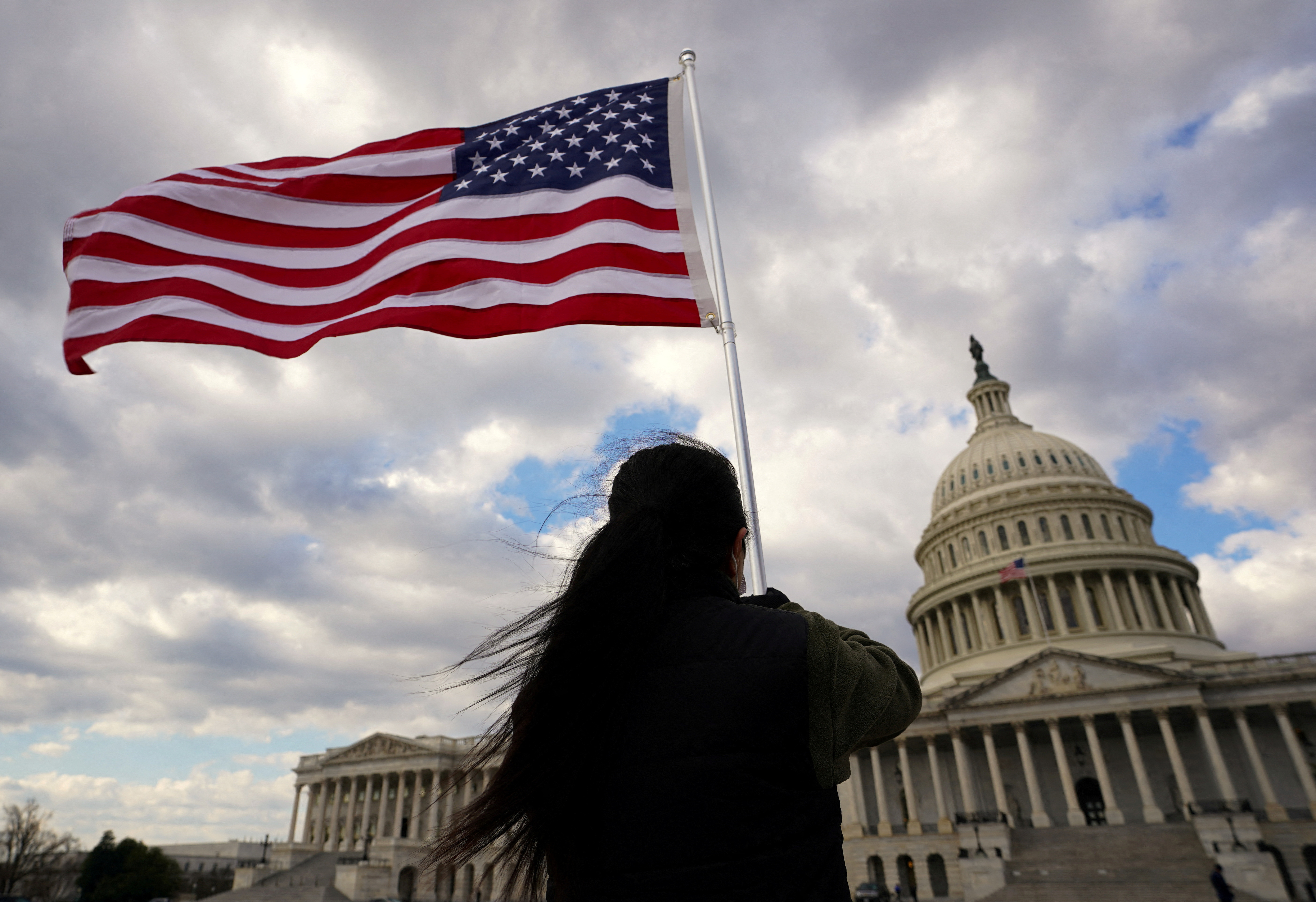
A person holds a flag aloft at the U.S. Capitol, where tomorrow night U.S. President Joe Biden will deliver his the State of the Union Address, in Washington, U.S., February 6, 2023. REUTERS/Kevin Lamarque

US President Joe Biden delivers his State of the Union Address before lawmakers in the US Capitol in Washington, DC, U.S., March 1, 2022. Jim Lo Scalzo/Pool via REUTERS
Categories
Audio Sources - Full Text Articles

Mexico rejects possible “Remain in Mexico“ revamp plan

2023-02-07T01:34:34Z

The Mexican government said on Monday it had informed the United States that it rejects a possible U.S. re-implementation of an immigration policy known as “Remain in Mexico,” which required asylum seekers to wait for hearings in Mexico.

In December, a U.S. judge paused President Joe Biden’s attempt to end the program. U.S. authorities later told Mexico’s foreign ministry the program would start up again, the ministry said in a statement.

Mexico’s decision leaves the future of the program unclear.

Biden had sought to end the Trump-era program, known officially as Migrant Protection Protocols (MPP), upon entering office. Republican-led states such as Texas and Missouri filed a lawsuit to keep the program active.

A federal court order forced the Biden administration to restart MPP in late 2021, which Mexico agreed to on several conditions such as expanding health policies and collaboration with international groups, the foreign ministry said.

Some 74,000 migrants went through Mexico under the program during Trump’s administration, it added. Under Biden, just 7,500 entered Mexico through MPP.

Mexico added on Monday that it supported the U.S. immigration program to allow some populations, such as Cubans, Haitians, Nicaraguans and Venezuelans, to enter the United States through an appointment system.

Human rights organizations have pushed for other nationalities to be included under the new program.

Categories
Audio Sources - Full Text Articles

Texas attorney shot by Cheney during 2006 hunting trip dies

Harry Whittington, the man who former Vice President Dick Cheney accidentally shot while they were hunting quail on a Texas ranch 17 years ago, has died. He was 95.

Whittington died at his home Saturday in Austin, family friend Karl Rove said Monday.

Before Whittington was thrust into the national spotlight after the accidental shooting, the attorney was long known for helping build the Republican Party in Texas into the dominant political force it is today and for being the man governors went to when they needed to clean up troubled state agencies.

Rove, an influential Republican strategist and former adviser to former President George W. Bush, said Whittington was “a man of enormous integrity and deep compassion” who was called on by leaders for “important tasks.”

Whittington and others were hunting with Cheney on the sprawling Armstrong Ranch in South Texas on Feb. 11, 2006, when Cheney, while aiming for a bird, struck Whittington, who was 78 at the time. The accident wasn’t publicly reported until the next day when the ranch owner called the local newspaper — the Corpus Christi Caller-Times — and told the paper what had happened.

Whittington was sprayed with birdshot pellets to his face, neck and chest and suffered a minor heart attack due to a pellet near his heart. When he left he hospital about a week after the accident, he said “accidents do and will happen,” and apologized to Cheney, saying he was “deeply sorry for everything” Cheney and his family had to deal with after the incident.

Cheney was criticized for breaking a cardinal rule of hunting — that someone holding a gun should make sure they know what they are firing at before pulling the trigger — and for not immediately going public with what happened.

The accident also spawned countless jokes. Jay Leno, then-host of “The Tonight Show” on NBC, quipped that Cheney would be capitalizing on the accident for the upcoming Valentine’s Day with a new cologne named “Duck.” Billionaire Bill Gates greeted his audience at a conference by saying, “I’m really glad to be here. My other invitation was to go quail hunting with Dick Cheney.”

In an interview with Fox News days after the accident, Cheney said it was “one of the worst days of my life at that moment.”

Cheney said the accident happened after Whittington had stepped out of the hunting party to get a downed bird in deep cover. Cheney said Whittington was dressed properly in orange and the upper part of his body was visible, but that he was standing in a gully with the sun behind him.

“You can’t blame anybody else,” Cheney said. “I’m the guy who pulled the trigger and shot my friend.”

Whittington owned a downtown Austin building where many of the state’s GOP power brokers built their empires. Bush used the building for his gubernatorial campaign headquarters, as did former Texas Gov. Rick Perry. Rove also had his office there.

Whittington was a longtime player in Texas politics. In 1961, he worked on John Tower’s campaign for the U.S. Senate and later helped a young Bush run for Congress, a race he lost. He was also a go-to guy for governors trying to clean up troubled state agencies and spent decades serving on state boards.

In the 1980s, Republican Gov. Bill Clements appointed him to the former Texas Board of Corrections, which oversaw a state prison system a federal judge had declared unconstitutional because of brutal conditions.

Whittington became an advocate for change in a prison system that lacked basic medical care and where people serving time were subjected to beatings by other inmates. He was also an advocate of the rights of inmates who have mental disabilities.

Bush, then governor of Texas, appointed him in 1999 to lead a restructured Texas Funeral Services Commission, which was embroiled in a whistleblower lawsuit.

Rove said Whittington not only served his community in countless ways but was also “an enormous source of good counsel and mentorship to dozens,” including him. He said Whittington was not only his landlord, but also the secretary and treasurer of his company.

“He was an extraordinary human being, and to be remembered as being the victim of a hunting accident sort of gripes me,” Rove said.

Categories
Audio Sources - Full Text Articles

Derailed train cars in Ohio drained of explosive chemical

2023-02-07T01:05:20Z

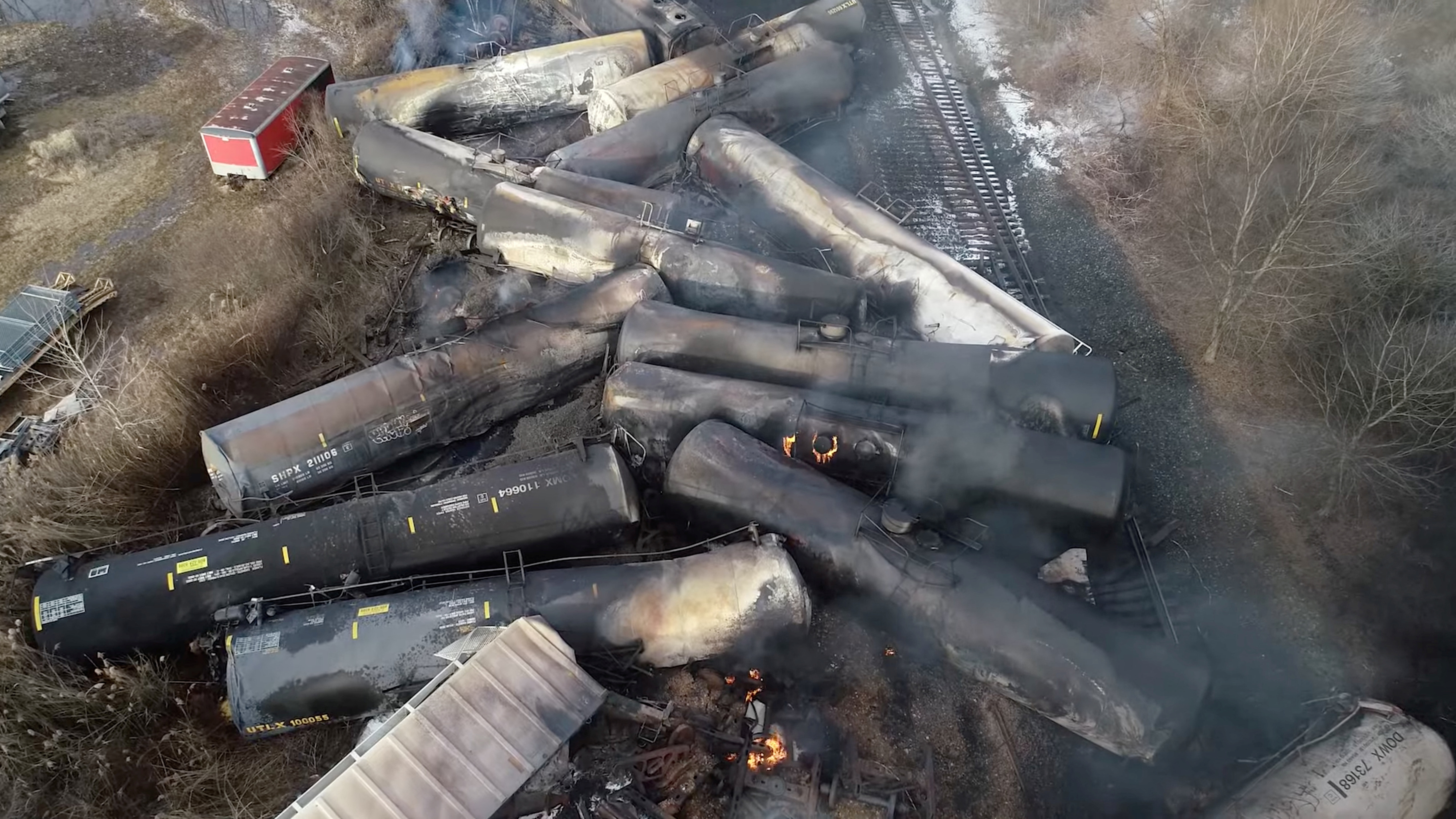
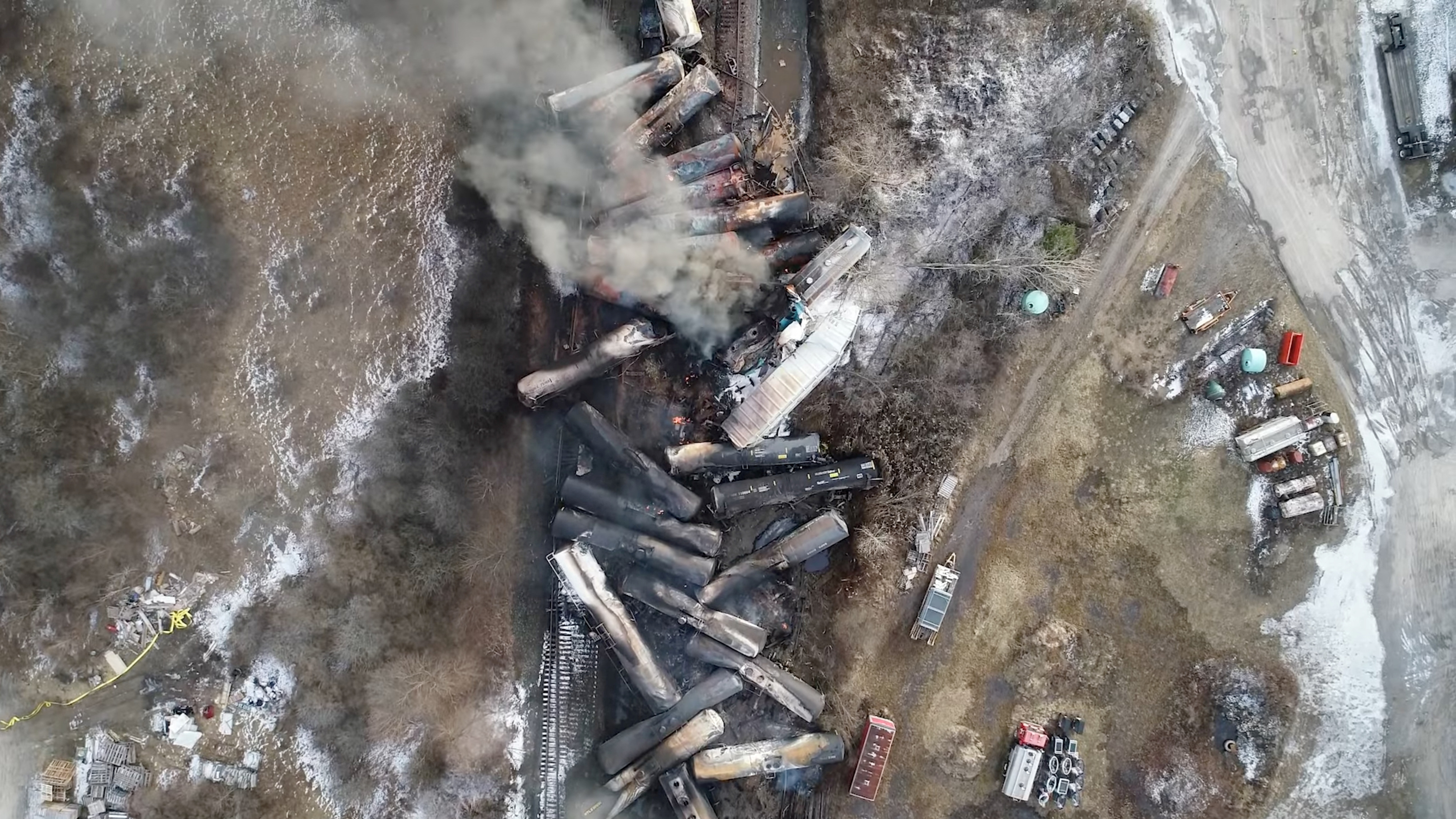
Crews in eastern Ohio conducted operations on Monday to drain and burn off an “unstable” toxic chemical cargo from five rail cars of a freight train that derailed in a fiery wreck three days earlier, prompting mass evacuations, authorities said.

The “controlled release” of pressurized vinyl chloride, a highly flammable and carcinogenic gas, began with a scheduled explosion, followed by continuous burning of the substance, said Sandy Mackey, a spokesperson for the Ohio Emergency Management Agency.

“That controlled release was the one explosion,” she told Reuters by telephone. “It went as planned. It seemed to be a successful incident.”

No injuries were reported, Mackey added.

Live video footage shot by local media showed a towering column of thick, black smoke rising from the accident site in East Palestine, Ohio, a town close to the Pennsylvania border northwest of Pittsburgh.

The train, operated by Norfolk Southern Railroad, derailed late on Friday, setting off a massive fire that forced evacuation of homes in the immediate vicinity.

Public safety concerns deepened after the railroad said pressure-relief devices on some of the stricken cars were found on Sunday to have stopped working, which the company said could “result in a catastrophic failure.”

Ohio Governor Mike DeWine said in a statement the chemical contents of the five rail cars in question were “unstable and could potentially explode, causing deadly disbursement of shrapnel and toxic fumes.”

Working with state and local emergency officials, Norfolk Southern said on Monday it devised a plan to manually vent the cars, allowing the contents to “be drained in a controlled fashion” under supervision of “experts and first responders.”

“This will be loud and visible,” the company said, adding that “some of the material will burn off as it drains for a short number of hours.”

As part of the plan, DeWine and Pennsylvania Governor Josh Shapiro ordered evacuations be expanded on Monday to encompass all homes within a 1- to 2-mile area around the derailment site, straddling either side of the state line.

DeWine’s office warned that fumes released into the air from the venting operation “can be deadly if inhaled” and that anyone in the designated “red” zone around the site faced “grave danger of death.” Those who remained in a “yellow” zone just beyond were “at a high risk of severe injury, including skin burns and serious lung damage,” the governor said.

The statement said residents with children who refused orders to leave the evacuation zone could be subject to arrest.

Vinyl chloride is a colorless, industrially produced gas that burns easily and is used primarily in the manufacture of polyvinyl chloride (PVC) pipe and other products, according to the National Cancer Institute. It also is a byproduct of cigarette smoke.

The precise means by which crews vented the toxic gas was not explained. But the railroad said its workers had prepared drainage pits and embankments, apparently to contain residue from the release. It said state environmental officials would monitor air quality.

The company said in a short statement nearly two hours after the operation began that the “controlled breach of several rail cars has been completed successfully.”

Related Galleries:

Drone footage shows the freight train derailment in East Palestine, Ohio, U.S., February 6, 2023 in this screengrab obtained from a handout video released by the NTSB. NTSBGov/Handout via REUTERS

Drone footage shows the freight train derailment in East Palestine, Ohio, U.S., February 6, 2023 in this screengrab obtained from a handout video released by the NTSB. NTSBGov/Handout via REUTERS

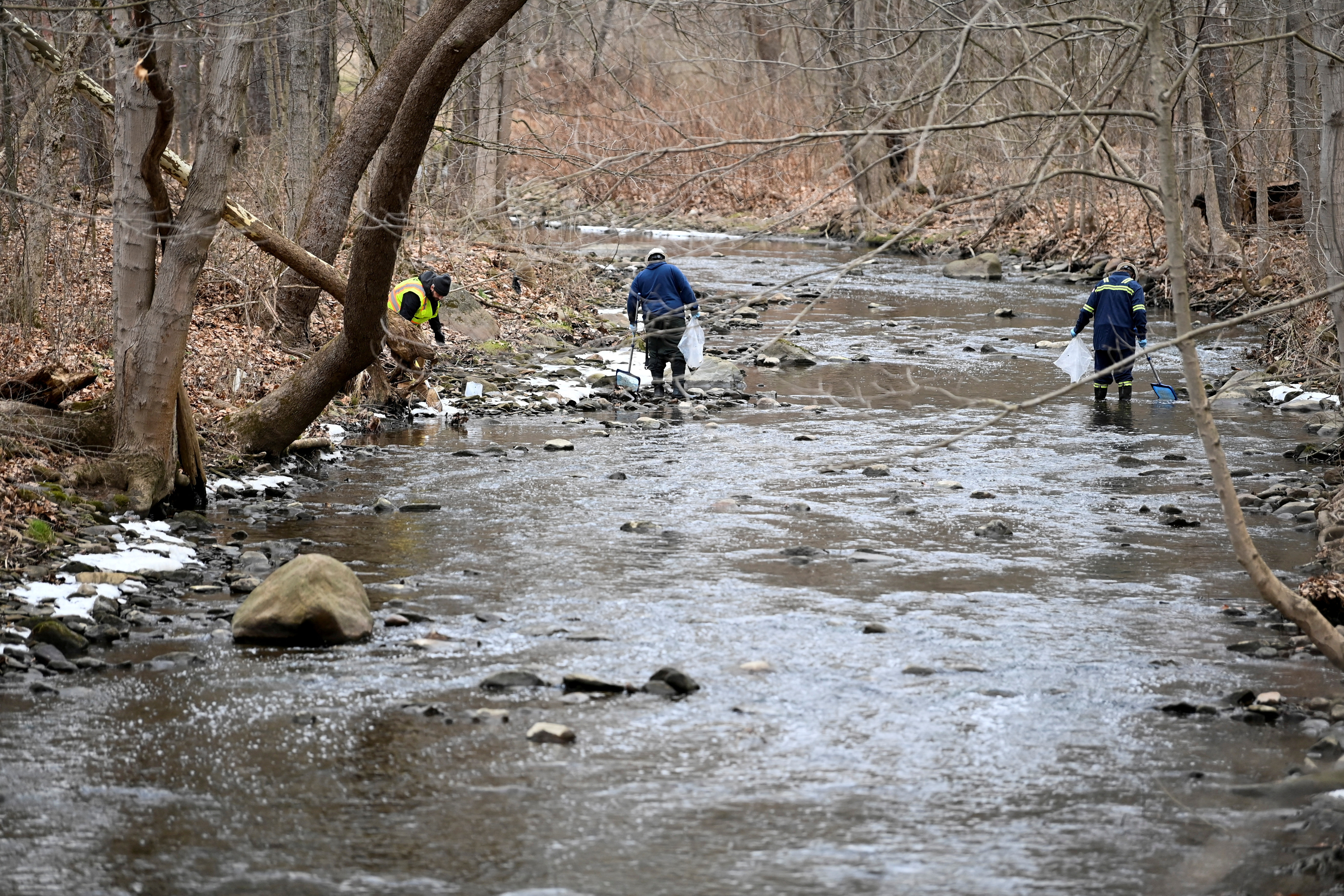
An environmental company is removing dead fish downstream from the site of the train derailment that forced people to be evacuated from their homes in East Palestine, Ohio, U.S., February 6, 2023. REUTERS/Alan Freed

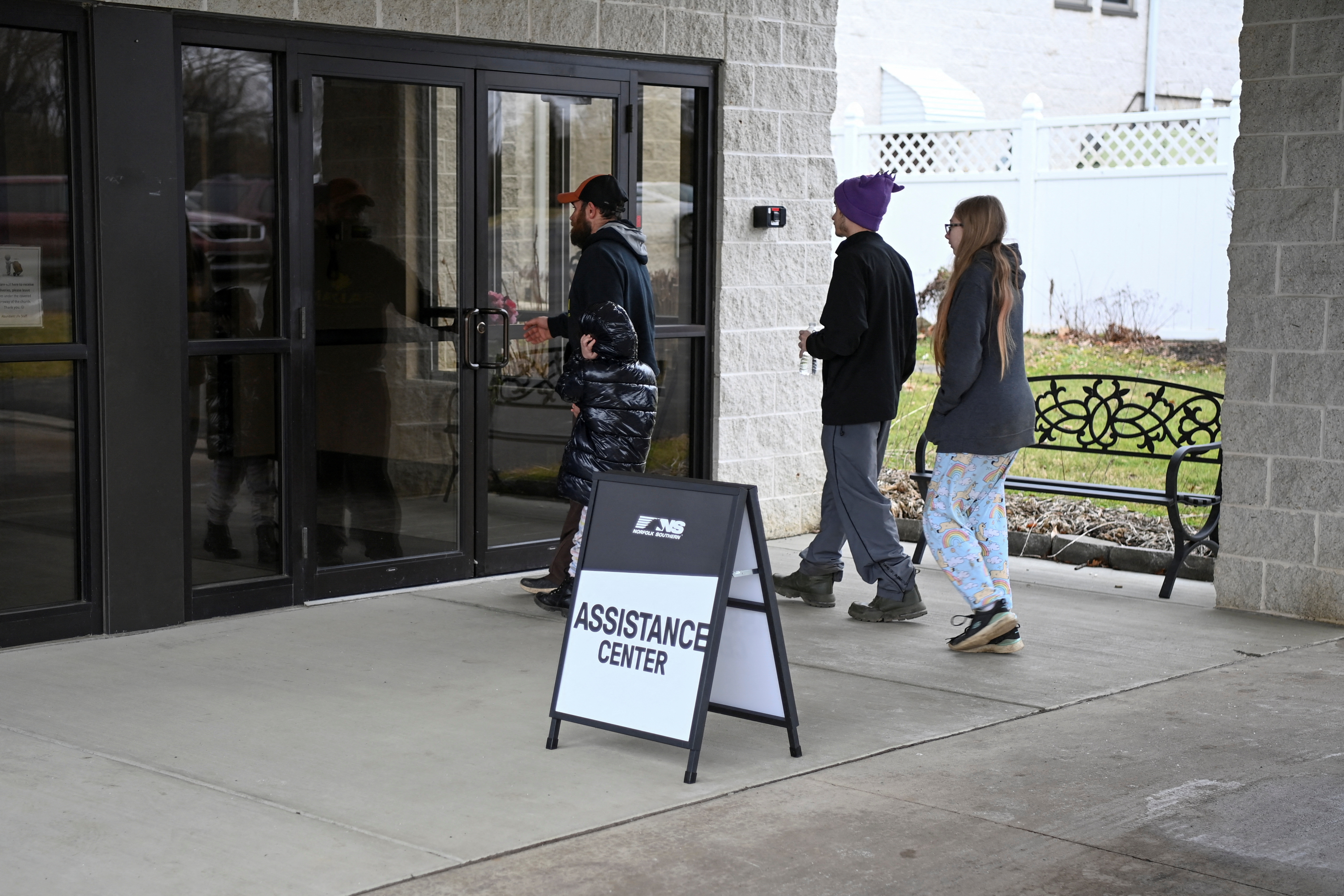
People enter to an assistance centre, following a train derailment that forced people to evacuate from their homes, in New Waterford, Ohio, U.S., February 6, 2023. REUTERS/Alan Freed
Categories
Audio Sources - Full Text Articles

Mexican drug cartels arrive in Big Sky Country

(NewsNation) — Once limited to cities along the southern border, the influence of Mexican drug cartels has spread to smaller American towns across the country, including several in the state of Montana.

Jami Rak has lived in Billings, Montana her entire life. The largest city in Big Sky Country sits northeast of the iconic national park known for its stunning natural beauty. Now, she said, it’s become unrecognizable.

“It’s not safe here anywhere anymore,” Rak said.

The lifelong resident said it’s been sad to see her hometown state struggle — a sentiment that’s backed up by crime trends that concern authorities.

Robberies, aggravated assaults and rape have risen statewide, per state-reported crime data.

Jami Rak, a lifelong Billings, Montana resident, said she no longer feels safe in the city.

Montana Attorney General Austin Knudsen said the state has never seen anything like this before. He thinks the rise in crime can be traced back to one place: Mexican drug cartels.

“We have specific intelligence that primarily two drug cartels based out of Mexico are operating here in Montana on a very large scale,” Knudsen said.

Law enforcement concerns about the cartel’s increasing presence became a reality in December, when an undercover investigation exposed a multimillion-dollar drug trafficking network in Butte.

Authorities arrested 22 people, three of whom were associates of the Sinaloa Cartel — the violent group once run by Joaquin “El Chapo” Guzman.

Some authorities point to the incident as evidence of the drug cartels’ expansion to smaller American cities.

“We’re 1,800 miles away from Sinaloa and 1,200 miles from the Mexican border, so it’s pretty shocking,” said Sheriff Ed Lester with Butte-Silver Bow Law Enforcement.

Lester said the massive cartel bust was a first for his community of fewer than 40,000 people. But he fears it won’t be the last.

“When you take that group of people down, you’re probably likely to see another group step up,” he said.

Sheriff Ed Lester with Butte-Silver Bow Law Enforcement said cartel activity is fairly new in his community.

For drug kingpins, the profit margins can be massive.

Traffickers along the southern border purchase fentanyl tablets for as little as $1 each but those same tablets can be sold for upwards of $70 a piece, Knudsen said.

In the first three quarters of 2022, authorities in Montana seized twice as much fentanyl than they did in the previous four years combined.

“It’s an invasion,” said Sgt. Jay Nelson, a trooper with Montana Highway Patrol, who pointed to the “skyrocketing” fentanyl seizures.

The cartels are notorious for smuggling their drugs and weapons via American highways, putting Nelson and other highway troopers on the frontlines of the fight.

It all starts at the U.S.-Mexico border, often at main entry points such as Tecate and Tijuana, where drug mules smuggle narcotics into the country. Once across the border, the drugs end up in stash houses across Southern California. From there, traffickers load them onto vehicles or in packages sent through the postal service.

Some make it 1,100 miles north to Butte, where local dealers move the drugs to nearby cities including Missoula, Helena, Great Falls, Bozeman and Billings for street-level distribution.

Republican Gov. Greg Gianforte believes the problem will only get worse unless the southern border is secured.

“It’s ripping families apart, it’s making our communities unsafe,” Gianforte said. “There isn’t a single community in the state of Montana that’s not impacted by our porous border.”

Rak agrees. Just last year, her 21-year-old son Keaton came within an inch of death after accidentally overdosing on fentanyl. Now, she wont even walk the streets of Billings alone.

“You can’t trust anyone, you can’t go anywhere freely,” she said.

Categories
Audio Sources - Full Text Articles

Fox News sinks to a sick new low

19121c5c768fb6ee35d5576afe2d9a7f?s=100&d

Help support Palmer Report! Our articles are all 100% free to read, with no forced subscriptions and nothing hidden behind paywalls. If you value our content, you’re welcome to pay for it:

Pay $5 to Palmer Report:

Pay $25 to Palmer Report:

Pay $75 to Palmer Report:


Support Palmer Report clicking here

Pay $5 to Palmer Report:

Pay $25 to Palmer Report:

Pay $75 to Palmer Report:


t’s never a good idea to come to work sick, as I learned the hard way many years back. A case of pneumonia struck me while I was at work. Being the stubborn person I am, I’d not been feeling well and had chosen to do nothing. Because of my negligence, I could have infected others.

Most corporations offer sick days. And it is understood that if one is sick, one should usually not come into the office. Only some at Fox non-news do not seem to think workers should HAVE vacation time. I say this because several Fox hosts, including Jeanine Pirro and Jesse Watters, openly talked on television about their contempt for sick days as well as declaring there may not be a need for them at all! Their solution? Just come to work sick.

“I’m not big on sick days,” Fox’s Martha McCallum said chattily. “I don’t think that you necessarily should have like the six sick days every year.”

“You don’t want people to think you are just lazy and want to stay home. And eat candy. Dark chocolate,” said Pirro. I have a few thoughts about this rather miserable conversation that — yes — made me feel a bit sick.

First, did you know that America has fewer paid sick days than many other countries, such as France and the United Kingdom? And in those other countries, vacation time is usually higher as well.

The fact of the matter is the better employees are treated, the harder they will work. That is just the way it is. And the Fox pundits that scornfully derided sick days are being a bit hypocritical because MANY of them frequently take time off and have substitute pundits anchoring their shows.


I bring all this up because Fox is in sync with the GOP. Often the GOP gets its worse ideas from Fox. So it would not surprise me if sick time inevitably came up on the GOP agenda. After all — they want to cut social security and medicare, so why not sick time?

Of coarse, that won’t happen. But in my opinion, many companies need more sick days, not fewer. But for pundits on the world’s fakest “news” station, it appears looking at their own viewers as human beings who are as subject to viruses and the common colds as anyone simply doesn’t interest them. Sickening.

Support Palmer Report clicking here

Pay $5 to Palmer Report:

Pay $25 to Palmer Report:

Pay $75 to Palmer Report:

Support Palmer Report by clicking here

Pay $5 to Palmer Report:

Pay $25 to Palmer Report:

Pay $75 to Palmer Report:

The post Fox News sinks to a sick new low appeared first on Palmer Report.

Categories
Audio Sources - Full Text Articles

Costa Rica says China apologizes for balloon “incident“ over its airspace

2023-02-07T00:29:37Z

China apologized to Costa Rica for a balloon that flew over its territory, the Central American country’s government said on Monday, after a separate suspected Chinese spy balloon traveling over the United States sparked a major political and diplomatic spat.

A U.S. military jet shot down that balloon just off its Atlantic coast on Saturday, after days of frenzied speculation over its mission, and on Monday President Joe Biden asserted that U.S.-Sino relations were not weakened by the episode.

According to a brief statement from Costa Rica’s foreign ministry, the Chinese government recognized that one of its balloons flew over Costa Rica, and China’s embassy in San Jose “apologized for the incident,” while insisting the balloon was focused on scientific research, mainly weather studies.

Costa Rican officials were told by Chinese officials the balloon flight path deviated from its original plan and it had a limited ability to correct the error, according to the statement.

A Chinese foreign ministry spokeswoman told reporters at a news conference in Beijing on Monday that the balloon spotted in Latin America was used for civilian purposes.

On Sunday, the head of Costa Rica’s civil aviation agency said local officials had received reports of a balloon flying over the country last Thursday, after Colombia’s military issued a statement on Saturday saying it had sighted an object similar to a balloon over its territory a day earlier.

Planes were notified at the time, but no further action was taken, according to the civil aviation director.

Categories
Audio Sources - Full Text Articles

Japan Plans to Dump Fukushima Wastewater Into a Pacific With a Toxic Nuclear History

Pacific Island nations have for decades been grappling with the environmental and health consequences of Cold War-era nuclear testing in the region by the likes of the U.S. and France. Now, they worry about another kind of nuclear danger from neighbors much closer to home.

As concerns over energy security and the desire to transition away from fossil fuels pushes several Asian nations to reconsider once-scrapped nuclear power programs, there is increasing anxiety over how the waste from those facilities—depending on the methods of disposal—might impact the lives of Pacific Islanders.

Notably, in the region, Philippines President Ferdinand “Bongbong” Marcos said in his first address to Congress in mid-2022 that he was open to adding nuclear energy to the country’s energy mix, the Indonesian government said in December it plans to build a nuclear power plant by 2039, and weeks later Japan announced that it plans to ramp up the use of nuclear energy.

[time-brightcove not-tgx=”true”]

Nuclear plants have long been touted as a reliable source of carbon-free energy, though many plants across the world had been shuttered in past decades over worries about the safety of nuclear waste disposal. In this new era of nuclear revival, similar uncertainties abound.

In Japan, one plant that isn’t even operational has become the frontline for the fight between activists seeking safety assurances for waste disposal and operators who are running out of space in on-site tanks to store the wastewater accumulating from keeping damaged reactors cool. Currently, Japan plans to release wastewater from the Fukushima Daiichi nuclear power plant into the Pacific Ocean later this year.

“It’s just horrendous to think what it might mean,” says Henry Puna, the secretary general of the Pacific Islands Forum (PIF), a regional intergovernmental organization that has more than a dozen member countries, including, for example, the Cook Islands, Fiji, Tonga, and Vanuatu. “The people of the Pacific are people of the ocean. The ocean is very much central to our lives, to our culture, to our livelihoods. Anything that prejudices the health of the ocean is a matter of serious concern.”

When a magnitude 9.1 earthquake and tsunami hit off the coast of Japan in 2011, it caused a meltdown at the Fukushima nuclear power plant. Since then, water is being used to cool the damaged reactors and prevent further catastrophe. Now, more than 1.3 million metric tons of radionuclide-contaminated water has been collected on site, and it continues to accumulate, as rain and groundwater seep in. Tokyo Electric Power Company (TEPCO), the operator of the plant, says that the storage tanks take up too much space and hinder decommissioning the plant. Japan initially said that it would begin releasing the water into the ocean in the spring of 2023. Chief Cabinet Secretary Hirokazu Matsuno told the media in January that the release target date is now around spring or summer, which appears to be a postponement, according to the Associated Press, due to construction delays on a pipeline and the apparent need to gain greater public support.

The plan has faced widespread opposition. Japanese fishermen, international environmentalists, and other governments in the region, including China, South Korea, and Taiwan, have all expressed concern. Some of the strongest pushback has come from Pacific Island countries, including from lawmakers, former leaders, regional fisheries management groups, and other organizations. Among those voices is the PIF, which is advocating for more time to deal with questions and concerns. Earlier this year, the PIF appointed a panel of independent global nuclear experts to help inform its members in their consultations with Japan and TEPCO. The experts have stressed that more data are needed to determine the safety of the water for disposal.

SKOREA-JAPAN-ENVIRONMENT-NUCLEAR
Jung Yeon-je—AFP/Getty ImagesSouth Korean environmental activists protest in Seoul against Japan’s plan to discharge Fukushima radioactive water into the sea, as they mark World Oceans Day on June 8, 2022.

“We think that there is not enough scientific evidence to prove that the release is safe, environmentally, healthwise, and also for our economy in the Pacific,” says Puna, who is also the former Prime Minister of the Cook Islands. Until more information is shared and evaluated, he asks that Japan “please defer the discharge of the water.”

Doubts and divisions over the data

TEPCO says the water will be purified so that the concentration of radioactive substances—with the exception of a hydrogen isotope called tritium, which it says haslittle impact on the human body”—falls below regulatory standards. The tritium will be diluted with a large volume of seawater. The government of Japan told TIME in an emailed statement that the measures it is taking are fully in line with international law and the safety standards of the International Atomic Energy Agency (IAEA). An IAEA task force, set up to review the safety of Japan’s plan, says that it completed a second review in Japan in January, and that it will release a report on its findings in about three months, as well as a comprehensive report before the discharge.

But there appears to be a major disconnect between TEPCO and others, including the PIF panel of experts—who say that they’re concerned with the adequacy, accuracy, and reliability of the data backing up the decision to release the water. Robert H. Richmond, a research professor and the director of the Kewalo Marine Laboratory at the University of Hawaii at Manoa, who is one of the panel experts, tells TIME that “the critical, foundational data upon which a sound decision could be made was either absent or, when we started getting more data,” he says, “extremely concerning.” He also casts doubt on if the IAEA is in the best position to assess the risks. “They’re an agency that has a mandate to promote the use of nuclear energy,” says Richmond, “and our mandate is to look after the people, the ocean, and the people who depend on the ocean. And our unanimous conclusion … is that this is a bad idea that is not defended properly at this point, and that there are alternatives that Japan should really be looking at.”

“One of the biggest surprises to me was the fact that the data was so sparse,” says Ferenc Dalnoki-Veress, scientist-in-residence and adjunct professor at the James Martin Center for Nonproliferation Studies at the Middlebury Institute of International Studies at Monterey, who is also on the PIF panel of experts. “There were prolonged gaps in data collection, which suggests that the matter may not have been given the level of attention and importance it deserved.” He adds that only a fraction of the tanks had been sampled, and only a handful of some 60 isotopes were typically measured in the samples—fewer than he would expect for this kind of assessment. (TEPCO says that the analysis done on a sample of tanks so far is just to assess the water’s condition in storage but that, after the purification process, further measurements will be taken on all the treated water before discharge to ensure that only that which meets sufficient standards of safety is released into the ocean).

Some still fear the safety of the treated water, and the far-reaching implications if it’s dumped into the ocean. Puna points out, for example, that the waters of the Western and Central Pacific Ocean produce much of the world’s tuna. If the tuna were to be impacted, it would cause major problems for Pacific nations, for which fisheries are a significant source of income, as well as for consumers globally.

In December, the U.S.-based National Association of Marine Laboratories also announced its opposition to TEPCO’s plans, publishing a position paper that says “there is a lack of adequate and accurate scientific data supporting Japan’s assertion of safety” while “there is an abundance of data demonstrating serious concerns about releasing radioactively contaminated water.”

Japan’s government told TIME in an emailed statement that it has provided detailed explanations, answered questions in a sincere manner, and that it stands ready to receive further questions. Puna says that the PIF panel of experts has been invited to Japan this year, but unless more data are offered, such a meeting would be “meaningless.” Richmond, similarly, says that requests for more data have not produced sufficient responses and that the panel of experts hasn’t been able to get the information they wanted via Zoom calls or emails, so he isn’t confident that a trip would produce enough information to make the panel of experts comfortable with the plan. “We asked ABC, and you answered with DEF,” he says.

When asked by TIME if it would indefinitely delay the discharge owing to the concerns of Pacific nations, TEPCO said in an emailed statement that it would “make every effort to foster understanding prior to the commencement of discharge.” The government of Japan also said that it “attaches great importance” to its relationship with the Pacific Island nations and that it “takes the PIF’s concerns sincerely,” but it stopped short of saying it wouldn’t go ahead with the discharge plan.

That approach may damage relations with the Pacific region. “We’ve been friends for a long time,” says Puna. “In the Pacific, we believe that if you are friends that you are always open to sharing information.”

A scarring past and a new path forward

Other nuclear plants across the globe have released treated wastewater containing tritium. Rafael Mariano Grossi, the IAEA’s director general, said in 2021 that Japan’s plan is “in line with practice globally, even though the large amount of water at the Fukushima plant makes it a unique and complex case.

But Pacific Island nations have particular reason to be anxious. There is a noxious legacy of nuclear testing in the region, and other countries have historically treated the Pacific as a dumping ground for their waste. The U.S. conducted 67 nuclear tests in the Marshall Islands between 1946 and 1957—and disposed of atomic waste in Runit Dome, where it’s still stored. That testing led not only to forced relocations, but also to increased rates of cancers. Today there is concern that the dome is leaking and that rising sea levels might impact its structural integrity. France also conducted 193 nuclear tests from 1966 to 1996 at Moruroa and Fangataufa atolls in French Polynesia.

Mushroom-shaped cloud and water column from the underwater Baker nuclear explosion.
Galerie Bilderwelt/Getty ImagesThe BAKER explosion during Operation Crossroads, a series of two tests conducted by the U.S. to investigate the effect of nuclear weapons on naval warships, at Bikini Atoll, July 25, 1946.

“To have this on top of that creates a feeling of fear and apprehension in the hearts and minds of our leaders and our people in the Pacific,” says Puna.

In the wake of Russia’s invasion of Ukraine and the ensuing energy crisis, many countries seem to be embracing nuclear power anew. Japan, for example, wound-down the use of nuclear energy in the wake of the Fukushima disaster. But in December it announced a major reversal of that policy and said that it plans to use more nuclear energy by restarting as many reactors as possible and prolonging the operating life of older reactors. (By late 2022, 10 of 50 nuclear reactors that were shut after the disaster had been restarted, according to the Economist Intelligence Unit.)

Rather than let dumping wastewater into the ocean become the norm, at this juncture for nuclear energy, some say it’s an opportunity to explore different ways of doing things. The panel of PIF experts has proposed several alternative solutions, including treating the water and storing it in more secure tanks to allow the tritium time to decay, or using the treated water to make concrete for use in projects that won’t have high contact with humans.

“This is not the first nuclear disaster and by no means is it going to be the last,” says Richmond. “This is an opportunity for Japan,” he says, “to do the right thing and to invest time, effort, and money into determining and coming up with new ways of handling radioactive waste and setting a new trajectory.”

Categories
Audio Sources - Full Text Articles

Sean Payton brings old-school style to Denver in his return

ENGLEWOOD, Colo. (AP) — Sean Payton is bringing an old-school style sown by his mentor Bill Parcells and steeped in discipline and accountability as he takes over as the Denver Broncos’ new head coach.

One thing that means is that Russell Wilson will no longer have his own entourage at the team’s headquarters as he did this past season.

Payton was introduced as the franchise’s 20th head coach Monday and he was asked in an informal gathering with reporters afterward about Wilson’s personal QB coach being on the premises in 2022, when Wilson suffered through the worst statistical season of his career.

“Yeah, that’s foreign to me,” Payton said. “That’s not going to take place here. I mean, I’m unfamiliar with it. But our staff will be here, our players will be here and that’ll be that.”

Members of Wilson’s support team having access to the building was one of many perks allowed the quarterback last season by general manager George Payton and rookie head coach Nathaniel Hackett, who was fired Dec. 26.

Given Payton’s stance on that matter, Wilson might also have to surrender his extra parking spaces and private upstairs office.

We also could see less of his globetrotting jaunts on social media and maybe his teammates will have to make do without the air hockey and gaming chairs that were part of Hackett’s conversion of the reporters’ workroom into a splashy players arcade a year ago.

The new head coach is all business, concerned not with creature comforts but about changing a losing culture that has permeated the franchise.

The Broncos surrendered their first-round pick, No. 29 overall, in the upcoming draft to the New Orleans Saints in order to sign Payton to a five-year deal worth around $18 million a year.

Payton has some unfinished business at his old job in broadcasting before diving into the task of turning around a franchise that has floundered under first-time head coaches Vance Joseph, Vic Fangio and Hackett during a seven-year playoff drought.

Payton said he’ll work the Super Bowl between the Philadelphia Eagles and Kansas City Chiefs in his final week as an analyst on Fox NFL Kickoff.

“I’m picking the Eagles,” Payton said. “We never want anyone in our division to win anything, right?”

Payton made a point of not piling on the former regime, but he did have this to say when asked about his game management skills: “I don’t anticipate the crowd having to count down the 30-second clock” as it did in Hackett’s home debut.

Fans mocking counting down the seconds led Paton to lure longtime assistant Jerry Rosburg out of retirement to handle those duties for Hackett, who also gave up play-calling duties later in the season.

Rosburg coached the final two games after Hackett’s dismissal when Wilson finally played like the nine-time Pro Bowler he is, something Payton mentioned Monday when asked about helping Wilson bounce back in 2023.

“I think the No. 1 job for us as coaches in evaluating our players is what are the things that they do really well and then let’s try to put them in those positions. At least that’s a starting point, and I think it’s important to highlight their strengths and minimize any weaknesses,” Payton said.

“None of us want to be at a karaoke bar with a song we don’t know the words to,” Payton said. “So, how do we get them comfortable and highlight their strengths? And that’s the process that’s going to begin right now as I’m learning about every one of these players, not just Russell.”

Payton invoked Parcells’ “law and order” mantra when talking about his coaching philosophies.

“You come in with your standards but you’re not coming in indicting anyone else’s,” Payton said. “… You really knock the rearview mirror off the automobile. We’re just looking forward.”

Payton went 161-97, including playoffs, in 15 seasons in New Orleans before stepping down last year when Drew Brees retired. He took over a moribund Saints team that had gone 3-13 in 2005 and led them to a 10-6 record and an appearance in the NFC championship game in his first season with the Saints.

As to whether a similar turnaround can be expected in Denver, Payton said, “I think it’s realistic for our fanbase to expect a completely different type of culture. And I think it’s realistic for them to expect us to win.”

To what degree, who knows?

“I know this: the work has started,” Payton said. “I kind of use this term, you know, a little bit more anonymous donors this season. Just know that we’re working. But a little bit less visibility on social media and all those other things. We’re going to get to work. And ultimately, it’s how we do in the fall.”

CEO and co-owner Greg Penner, who led the Broncos’ head coaching search that included eight candidates, said when he asked around the league about Payton, attention to detail was one attribute that kept coming up.

To that end, Payton, who also interviewed for the openings with the Texans, Panthers and Cardinals, acknowledged that his wearing an orange tie on television recently was by design.

“Like this pocket tissue I’m wearing right now has an angle going upwards if you can see it,” Payton said. “And so this morning when I put it on, that’s kind of symbolic about the direction we’re heading.”

___

AP NFL: https://apnews.com/hub/nfl and https://twitter.com/AP_NFL

Categories
Audio Sources - Full Text Articles

Haitian PM installs transition council to prepare for long-awaited elections

2023-02-07T00:14:52Z

PORT-AU-PRINCE (Reuters) – Haitian Prime Minister Ariel Henry on Monday formally installed a transition council whose job will be to prepare for long-overdue elections in the Caribbean country, amid a humanitarian crisis driven by violence from armed gangs.

?m=02&d=20230207&t=2&i=1622709569&r=LYNX

FILE PHOTO: Haiti’s Prime Minister Ariel Henry addresses the media after becoming also the country’s interior minister, in Port-au-Prince, Haiti November 14, 2022. REUTERS/Ralph Tedy Erol

Haiti, which has been without any elected representatives since early January, last held a presidential vote in 2016.

“This is the beginning of the end of dysfunction in our democratic institutions,” Henry said in a speech, adding that the High Transition Council (HCT) unanimously backed his request for an international force to help police restore order.

Henry took power in July 2021 days after the assassination of President Jovenel Moise. He has pledged to leave office by Feb. 7, 2024, after postponing elections indefinitely in the wake of a devastating earthquake that affected the Southern Peninsula, along with gang violence.

The transition council, composed of three members representing Haiti’s political, business and civil sectors, is expected to develop an ambitious road map for the next elections and choose members of a provisional electoral council as well as a committee to revise the country’s constitution.

Its members are: Mirlande Manigat, a former presidential candidate; Laurent Saint-Cyr, president of Haiti’s Chamber of Commerce; and Pastor Calixte Fleuridor, from the country’s Protestant Federation.

Manigat, a lawyer who ran for the presidency in 2010 and is the widow of former President Leslie Manigat, asked international allies to remember their commitment “to help law enforcement in the fight against social malevolence.”

The installment comes ahead of a visit from the U.N. High Commissioner for Human Rights, Volker Turk, who is scheduled to arrive in Haiti on Wednesday.

Hundreds have been killed and tens of thousands displaced amid bloody turf battles between gangs who have expanded their territory in Haiti since Moise’s assassination.

Henry requested the help of an “international force” in October, but the request is still being discussed at the United Nations, where no country has offered to lead such a force.

WP Radio
WP Radio
OFFLINE LIVE