Categories
Audio Sources - Full Text Articles

How the cases in Alex Murdaugh’s murder trial are shaping up

Two weeks into the double murder trial of South Carolina attorney Alex Murdaugh, prosecutors haven’t presented any direct evidence that he killed his wife and son at their home in June 2021.

There is no confession, no surveillance camera footage, no recording of the victims’ final moments.

If found guilty of murdering his wife, Maggie, 52, and their son, Paul, 22, Murdaugh faces 30 years to life in prison without parole. The disgraced lawyer, who also faces about 100 other charges ranging from stealing money from clients to insurance fraud, has adamantly denied fatally shooting his wife and son.

Murdaugh’s lawyers said he was visiting his ailing mother on the night of the murders and police wrongly focused on him from the start, ignoring the possibility that anyone else killed them.

HOW ARE PROSECUTORS MAKING THEIR CASE?

Prosecutors are trying to build a mountain of circumstantial evidence so high it removes any reasonable doubt with jurors that Murdaugh is guilty.

In seven days of testimony, prosecutors have presented crime scene photographs, guns collected from Murdaugh’s home, cellphone data and a video of Murdaugh wearing different clothes less than three hours before the time that he said he discovered the bodies at their Colleton County home.

They’ve also shown a video the son took five minutes before the victims suddenly stopped using their cellphones in which family friends say they can hear the voices of all three Murdaughs. Alex Murdaugh told investigators early in the case that he wasn’t there.

They contend Murdaugh shot the two to distract attention from his other crimes, for which he is awaiting trial.

HOW IMPORTANT IS THE CRIME SCENE EVIDENCE?

The evidence at the scene is key to unraveling what happened before Maggie and Paul Murdaugh were found shot with at least one bullet to the head by two different guns.

State agents drove two hours from Columbia to swarm the Murdaugh home the night of the killings, taking photos of blood spots, shoe prints and weapons casings. They collected guns, tested Murdaugh’s hands for gunshot residue and took DNA swabs.

“The crime scene is kind of a temporary thing. Once the crime scene has processed, you can’t go back to it. So … you really try to cover absolutely everything while you’re there,” said Kenneth Moses, a forensic scientist who led the crime scene investigations unit at the San Francisco Police Department and now works as a consultant, mostly for criminal defendants.

But there were things that weren’t done. In cross-examination, agents have said they didn’t test shower and sink drains for blood. They did not search the home of Murdaugh’s mother for months even though that’s where he was before he said he found the bodies. And they didn’t preserve tire tracks.

Defense lawyers are looking for a mistake, or potential mistake, that will resonate with a jury, Moses said.

It’s “different than police, who don’t care about juries at all. They’re looking to make an arrest,” Moses said.

WHAT ABOUT CELLPHONE EVIDENCE?

Murdaugh wasn’t charged with murder until 13 months after the killings. Through testimony, finally getting data from Paul Murdaugh’s phone appears to be a key development around that time.

Agents testified they couldn’t pull off the data off Paul Murdaugh’s phone until advances in technology got past the security features Apple puts on iPhones.

The phone contained a 50-second video Paul Murdaugh took about 8:45 p.m. near the dog kennels were both bodies were found. His friends testified they heard all three Murdaughs’ voices. Alex Murdaugh told police at least twice he was not at the kennels that night.

But cellphone evidence appears to have helped the defense, too.

Alex Murdaugh turned his cellphone over to investigators and evidence has it at his SUV still parked at the house at the same time his wife’s cellphone was being thrown on the side of the road a half-mile (800 meters) from the property, defense lawyers said.

WHO IS ALEX MURDAUGH?

Both sides are trying to get their version of Murdaugh, who comes from a family that’s well-known in local judicial circles, before the jury.

The defense wants to portray a loving family man and has asked any witness who knew the Murdaughs about their relationships. All have said Murdaugh and his wife appeared happy together and Alex Murdaugh was a doting father.

Prosecutors are trying to show an attorney living a double life who was so scared it would be discovered he stole millions of dollars that he committed the killings to try to buy time to cover up his other crimes. They asked every officer who encountered Murdaugh after he found the bodies of his wife or son if he was crying and all said he seems upset and distraught, but with no tears.

WHAT DOES THE DEFENSE SAY?

Defense lawyer Dick Harpootlian contends prosecutors incorrectly locked in on Murdaugh’s guilt from the start and have tried to jam bits of evidence that can be explained away or leave an incomplete picture into a story that frames the wrong man.

“There’s no direct evidence. There’s no eyewitnesses. There’s nothing on camera. There’s no fingerprints. There’s no forensics tying him to the crime. None,” Harpootlian said.

___

Maryclaire Dale in Philadelphia contributed to this report.

___

For more stories about the Alex Murdaugh trial, visit: https://apnews.com/hub/alex-murdaugh

Categories
Audio Sources - Full Text Articles

Pope Francis says he wants to go to Mongolia in September

2023-02-05T17:07:27Z

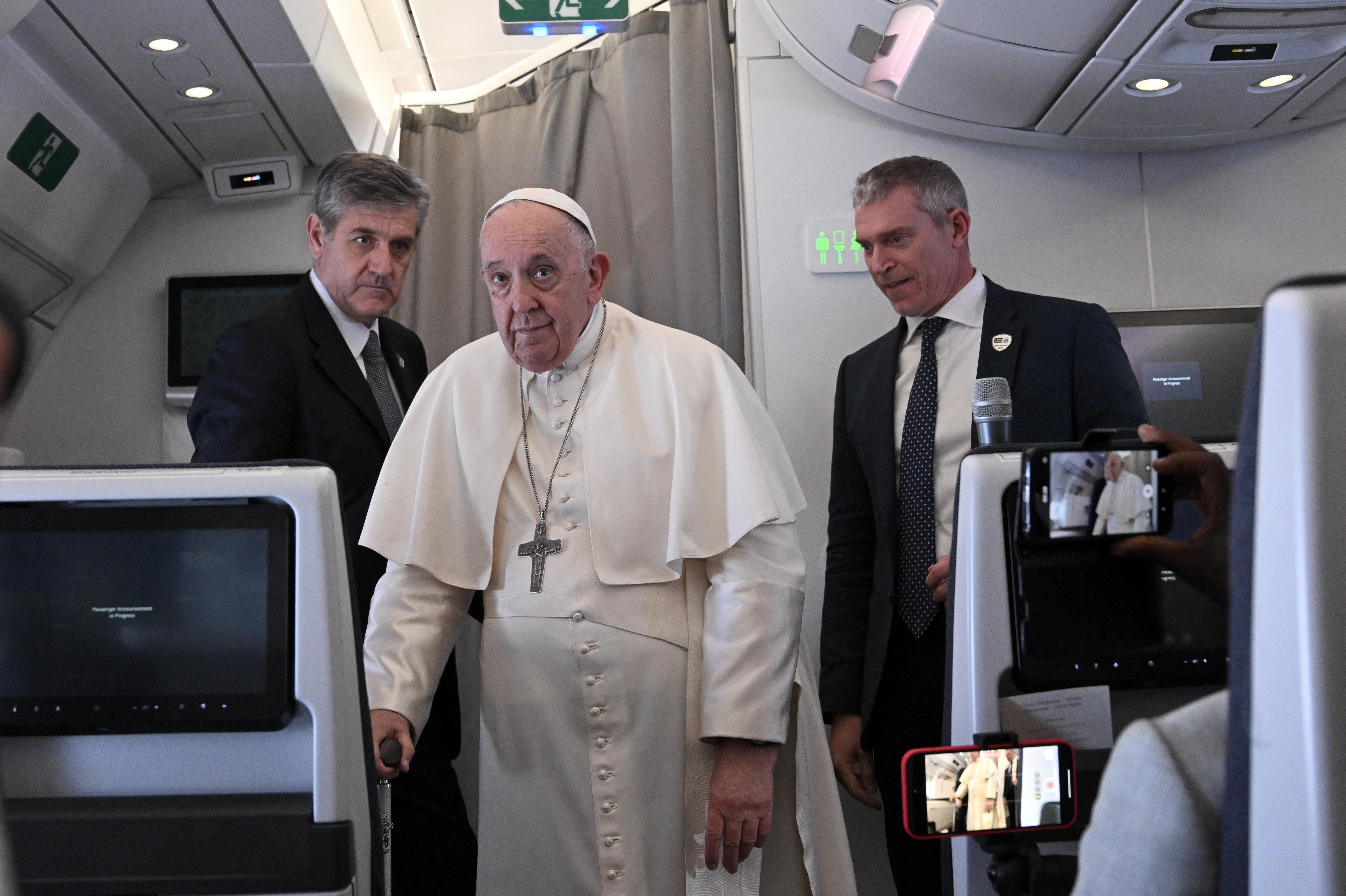
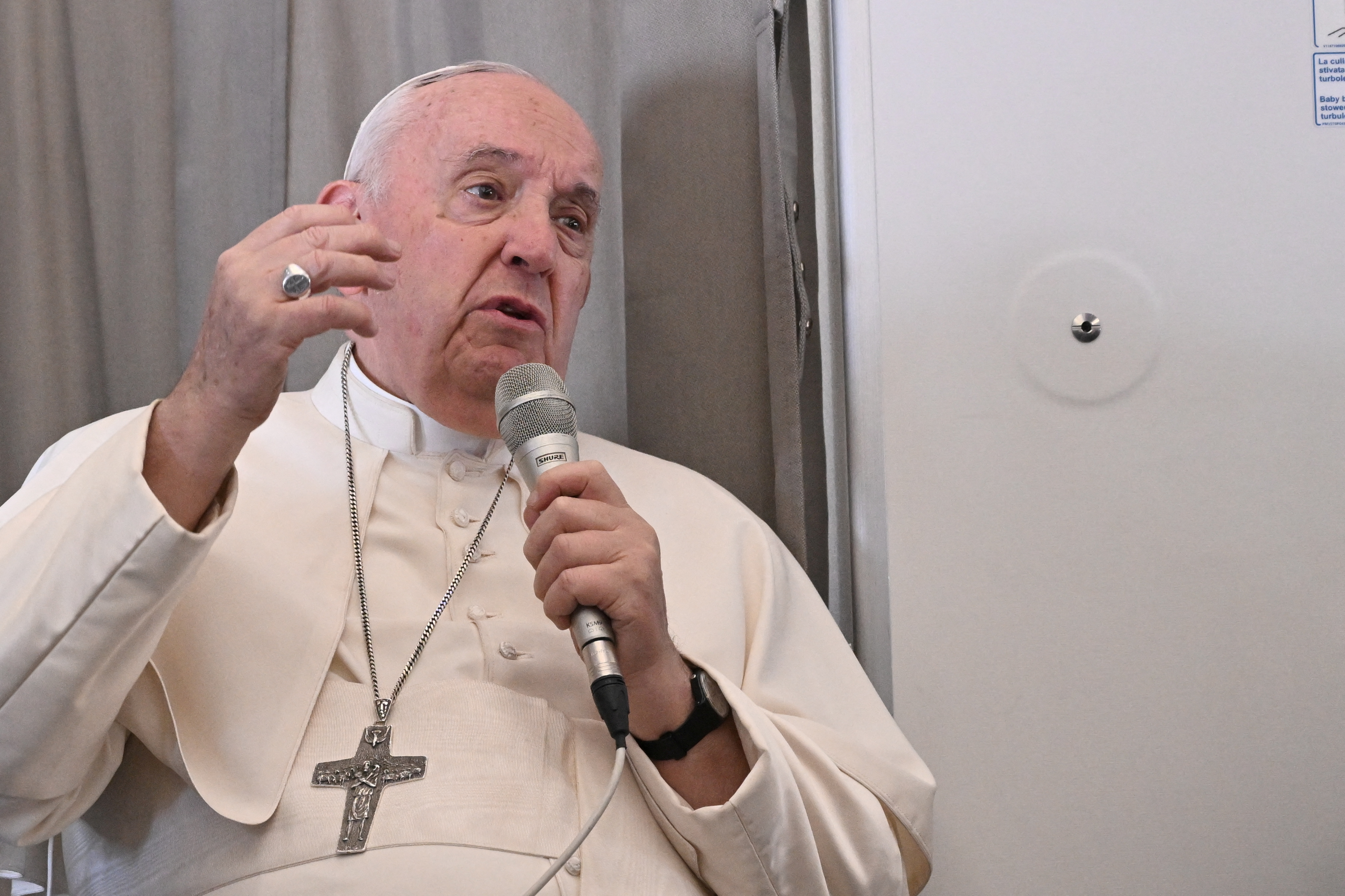
Pope Francis addresses the media while aboard the plane from Juba to Rome on February 5, 2023 returning from his visit to Democratic Republic of Congo and South Sudan. Tiziana Fabi/Pool via REUTERS

Pope Francis said on Sunday that he expected to continue travelling despite his knee ailment, joking that “weeds never die” and adding that he hoped to go to Mongolia in September.

The trip would be the first ever by a pope to the Asian country.

During his customary conversation with reporters on his return from a foreign trip, this time from Democratic Republic of Congo and South Sudan, the 86-year-old pope was asked about his health and travel plans.

For months, a chronic knee ailment has forced him to use a wheelchair and a cane. During recent trips, he has held the news conference on the plane while sitting, as he did on Sunday.

“On September 29 I will go to Marseille and from there I will fly to Mongolia but that is not yet certain, there is a possibility,” he said.

The day trip to the southern French city of Marseille was known about but the mention of Mongolia was a complete surprise to reporters, so much so that some thought he might have said Angola.

Speaking of his health, Francis, who became pope nearly 10 years ago, said “You know that weeds never die. It (his health) is not like it was at the start of the pontificate, that is true. This knee is bothersome but it moves ahead slowly. Then we will see.”

Last August Francis named Archbishop Giorgio Marengo, an Italian, the first cardinal to be based in Mongolia, where he is the Catholic Church’s administrator.

The country has fewer than 1,500 Catholics but is strategically significant because it borders with China, where the Vatican is trying to improve the situation of Catholics in the communist country.

Francis, who was on his way home from his 40th foreign trip as pope, also said he would probably go to India next year. He is due to go to Portugal this August.

Categories
Audio Sources - Full Text Articles

Super Bowl a showcase for next generation of quarterback talent

2023-02-05T17:20:02Z

It’s out with the old and in with the new as the Philadelphia Eagles’ Gen-Z talent Jalen Hurts takes on 27-year-old Kansas City Chiefs leader Patrick Mahomes on Sunday in a Super Bowl battle of fresh-faced quarterbacks.

With a combined age of 51 and 337 days — just six years older than newly re-retired Tom Brady – they are the first two quarterbacks under the age of 28 to face off for the Lombardi Trophy in roughly a quarter-century.

The next-youngest quarterback duo was Joe Montana and Dan Marino, who faced off at Super Bowl 19 at a combined age of 51 years and 350 days, according to ESPN, in 1985.

In a league where elder statesmen once dominated, the young guns are ready to shine.

“There’s a brand new generation of really gifted quarterbacks,” agent Leigh Steinberg, often credited as the real-life inspiration behind “Jerry Maguire”, told Reuters.

Whereas fresh talent used to need time to take hold, Steinberg said the new generation has a “different progression than their forebears”, meeting with quarterback coaches and becoming masters of their craft long before they begin studying for their SATs.

“Generally, what holds back a quarterback at younger age is the ability to see the field clearly,” he said. “Normally, the first couple of years of a quarterback are bad interceptions, calling time out inappropriately, lining up over guard instead of center.

“But this new group that we have… (is) much more ready to play than their predecessors.”

Hurts will become the first member of Gen-Z to start in a Super Bowl, with Pew Research Center defining his generation as those born in 1997 or later.

He has plenty of company among high-achieving young quarterbacks.

With Hurts, Mahomes, Cincinnati Bengals’ Joe Burrow and San Francisco 49ers “Mr. Irrelevant” Brock Purdy, it was the first time quarterbacks all aged under 28 started the AFC and NFC championship games last month.

And after 39-year-old Aaron Rodgers picked up back-to-back MVP honors in 2020 and 2021, the four quarterbacks among this year’s Most Valuable Player finalists were all 27 or younger.

It is a pattern that’s bound to favor budget-minded franchises in a league where established household names demand top dollar.

“To find some stability in that position is like finding a massive gold nugget,” ESPN analyst and retired twice Super Bowl champion Rob Ninkovich told Reuters.

“With the current contract status, you have to make a choice: do we pay $50 million annually to a quarterback and then lose other pieces? Or, like a lot of these teams right now, we have somebody under a rookie contract that expands our available money to go to other places?”

The Kansas City Chiefs play the Philadelphia Eagles in Super Bowl 57 on Feb. 12.

Categories
Audio Sources - Full Text Articles

Pope Francis says laws criminalising LGBT people are a “sin“ and an injustice

2023-02-05T17:06:25Z

Pope Francis arrives to address the media while aboard the plane from Juba to Rome on February 5, 2023 returning from his visit to Democratic Republic of Congo and South Sudan. Tiziana Fabi/Pool via REUTERS

Pope Francis said on Sunday that laws criminalising LGBT people are a sin and an injustice because God loves and accompanies people with same-sex attraction.

Francis, who made his remarks in response to a reporter’s question aboard the plane returning from a two-country trip to Africa, received full backing of his comments from two other Christian leaders on the plane with him.

“The criminalisation of homosexuality is a problem that cannot be ignored,” said Francis, who then cited unnamed statistics according to which 50 countries criminalise LGBT people “in one way or another” and about 10 others have laws including the death penalty for them.

Sixty-six U.N. member states continue to criminalise consensual same-sex sexual relations, according to data from ILGA World – the International Lesbian, Gay, Bisexual, Trans and Intersex Association. In several countries where same-sex relations are illegal, punishments can include a possible death penalty.

“This is not right. Persons with homosexual tendencies are children of God. God loves them. God accompanies them … condemning a person like this is a sin. Criminalising people with homosexual tendencies is an injustice,” Francis said.

He noted that the Catholic Church’s catechism, or book of teachings, says same-sex attraction is not a sin but homosexual acts are. It also says that LGBT people should not be marginalised.

Francis mentioned his now-famous phase from soon after he became pope in 2013 that he could not judge people with same-sex tendencies who are seeking God. He also noted that while visiting Ireland in 2018 he said that parents could not disown their LGBT children, but had to keep them in a loving family.

The pope made the trip to South Sudan, the second country on the tour, as a peace pilgrimage with Archbishop of Canterbury Justin Welby and Moderator of the General Assembly of the Church of Scotland Iain Greenshields.

Both Christian leaders were on the plane returning from there and participated in the pope’s customary news conference with reporters, a first on any papal trip.

Both praised the pope’s comments.

“I entirely agree with every word he said there,” Welby said, noting that the Anglican communion was itself divided over gay rights and that two resolutions against criminalisation of LGBT people “have not really changed many people’s minds”.

Welby added: “I shall certainly quote the Holy Father. He said it so beautifully and accurately”.

Expressing his own support of Francis, Greenshields referred to the Bible, saying:

“There is nowhere in my reading of the four Gospels where I see Jesus turning anyone away. There is nowhere in the four Gospels that I see anything other than Jesus expressing love to whoever he meets and as Christians that is the only expression that we can give to any human being in any circumstance”.

Francis repeated that the Catholic Church cannot permit sacramental marriage of same-sex couples but that he supported so-called civil union legislation giving same-sex couples legal protection in issues such as pensions, inheritance and health care.

Categories
Audio Sources - Full Text Articles

Arizona Republicans are falling to pieces after getting wiped out in the election

19121c5c768fb6ee35d5576afe2d9a7f?s=100&d

Help support Palmer Report! Our articles are all 100% free to read, with no forced subscriptions and nothing hidden behind paywalls. If you value our content, you’re welcome to pay for it:

Pay $5 to Palmer Report:

Pay $25 to Palmer Report:

Pay $75 to Palmer Report:


Support Palmer Report clicking here

Pay $5 to Palmer Report:

Pay $25 to Palmer Report:

Pay $75 to Palmer Report:


Arizona republicans are not happy campers right now. That is because absolutely nothing has gone right for them. Once a deeply red state, Arizona now has a democrat and a (former) democrat turned independent representing it in the Senate.

Its governor is a Democrat. All over Arizona, evidence of a blue tide is sparkling, and the Arizona GOP couldn’t be more bitter about it. So one would think they would concentrate on doing a better job. That IS what most sane people do in situations like this.

Only nobody ever said the Arizona Republicans were sane. It is being reported that a meeting was recently held. In that meeting, Arizona Republicans talked about censuring Republicans from past election cycles because these Republicans “were part of a conspiracy to help democrats win.”

Paranoia has struck the grand canyons of the state of Arizona. In this meeting from hell, one very angry republican stood up and offered what he thought of as good punishment for these people who perhaps dared to help Democrats.

“We should duct tape people to a tree in a dog park,” the man indifferently exclaimed, perhaps not understanding this isn’t a standard or sane thing to say. He then suggested they be duct taped for hours so dogs “can pee on them.” Nice!


There are rumors that Kari Lake AND Blake Masters are considering running for Senate. Having election deniers run on the republican ticket is precisely what got them in trouble in the first place, but they do not seem to comprehend that.

In short — the Arizona republican party is a mess. They are a walking disaster. Time and time again, their voters have TOLD them what they want and expect. Time and time again, the republican party of Arizona has tuned out its voters. They have nobody really to blame for their troubles except themselves.

Support Palmer Report clicking here

Pay $5 to Palmer Report:

Pay $25 to Palmer Report:

Pay $75 to Palmer Report:

Support Palmer Report by clicking here

Pay $5 to Palmer Report:

Pay $25 to Palmer Report:

Pay $75 to Palmer Report:

The post Arizona Republicans are falling to pieces after getting wiped out in the election appeared first on Palmer Report.

Categories
Audio Sources - Full Text Articles

Iran Grants Amnesty, Reduces Prison Sentences for Some Protesters

social

Categories
Audio Sources - Full Text Articles

Pervez Musharraf, Pakistan’s Military Ruler and President During 9/11 Wars, Dies at Age 79

ISLAMABAD (AP) — Gen. Pervez Musharraf, who seized power in a bloodless coup and later led a reluctant Pakistan into aiding the U.S. war in Afghanistan against the Taliban, has died, officials said Sunday. He was 79.

Musharraf, a former special forces commando, became president through the last of a string of military coups that roiled Pakistan since its founding amid the bloody 1947 partition of India. He ruled the nuclear-armed state after his 1999 coup through tensions with India, an atomic proliferation scandal and an Islamic extremist insurgency. He stepped down in 2008 while facing possible impeachment.

Later in life, Musharraf lived in self-imposed exile in Dubai to avoid criminal charges, despite attempting a political comeback in 2012. But it wasn’t to be as his poor health plagued his last years. He maintained a soldier’s fatalism after avoiding a violent death that always seemed to be stalking him as Islamic militants twice targeted him for assassination. “I have confronted death and defied it several times in the past because destiny and fate have always smiled on me,” Musharraf once wrote. “I only pray that I have more than the proverbial nine lives of a cat.”

[time-brightcove not-tgx=”true”]

Musharraf’s family announced in June 2022 that he had been hospitalized for weeks in Dubai while suffering from amyloidosis, an incurable condition that sees proteins build up in the body’s organs. They later said he also needed access to the drug daratumumab, which is used to treat multiple myeloma. That bone marrow cancer can cause amyloidosis.

Shazia Siraj, a spokeswoman for the Pakistani Consulate in Dubai, confirmed his death and said diplomats were providing support to his family. The Pakistani military also offered its condolences as did Pakistani Prime Minister Shahbaz Sharif, the younger brother of the prime minister Musharraf overthrew in 1999. “May God give his family the courage to bear this loss,” Sharif said.

Read more: TIME’s 2007 Interview With Shahbaz Sharif on His Brother

Pakistan, a nation nearly twice the size of California along the Arabian Sea, is now home to 220 million people. But it would be its border with Afghanistan that would soon draw the U.S.′s attention and dominate Musharraf’s life a little under two years after he seized power.

Al-Qaida leader Osama bin Laden launched the Sept. 11, 2001, attacks from Afghanistan, sheltered by the country’s Taliban rulers. Musharraf knew what would come next. “America was sure to react violently, like a wounded bear,” he wrote in his autobiography. “If the perpetrator turned out to be al-Qaida, then that wounded bear would come charging straight toward us.”

By Sept. 12, then-U.S. Secretary of State Colin Powell told Musharraf that Pakistan would either be “with us or against us.” Musharraf said another American official threatened to bomb Pakistan ”back into the Stone Age” if it chose the latter. Musharraf chose the former. A month later, he stood by then-President George W. Bush at the Waldorf Astoria in New York to declare Pakistan’s unwavering support to fight with the United States against “terrorism in all its forms wherever it exists.”
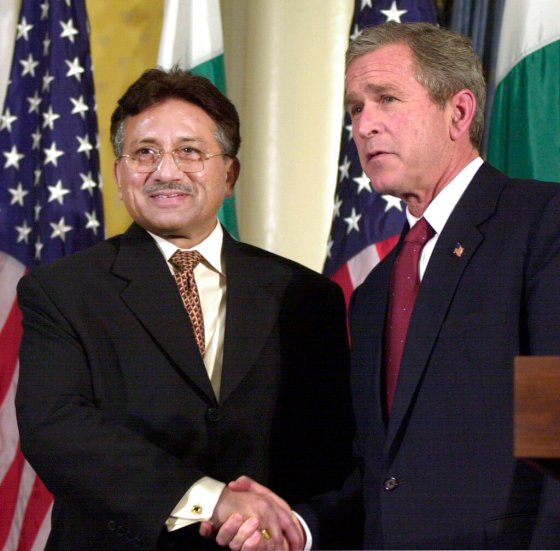
Pakistan Obit Pervez Musharraf
Ed Bailey—AP PhotoThen U.S. President George W. Bush, right, shakes hands with then Pakistani President Pervez Musharraf at a news conference at New York’s Waldorf – Astoria Hotel, on Nov. 10, 2001.

Pakistan became a crucial transit point for NATO supplies headed to landlocked Afghanistan. That was the case even though Pakistan’s powerful Inter-Services Intelligence agency had backed the Taliban after it swept into power in Afghanistan in 1994. Prior to that, the CIA and others funneled money and arms through the ISI to Islamic fighters battling the 1980s Soviet occupation of Afghanistan.

The U.S.-led invasion of Afghanistan saw Taliban fighters flee over the border back into Pakistan, including bin Laden, whom the U.S. would kill in 2011 at a compound in Abbottabad. They regrouped and the offshoot Pakistani Taliban emerged, beginning a yearslong insurgency in the mountainous border region between Afghanistan and Pakistan.

The CIA began flying armed Predator drones from Pakistan with Musharraf’s blessing, using an airstrip built by the founding president of the United Arab Emirates for falconing in Pakistan’s Balochistan province. The program helped beat back the militants but saw over 400 strikes in Pakistan alone kill at least 2,366 people — including 245 civilians, according to the Washington-based New America Foundation think tank.

Read more: Experts Say Drones Pose a National Security Threat — and We Aren’t Ready

Though Pakistan under Musharraf launched these operations, the militants still thrived as billions of American dollars flowed into the nation. That led to suspicion that still plagues the U.S. relationship with Pakistan.

“After 9/11, then President Musharraf made a strategic shift to abandon the Taliban and support the U.S. in the war on terror, but neither side believes the other has lived up to expectations flowing from that decision,” a 2009 U.S. cable from then-Ambassador Anne Patterson published by WikiLeaks said, describing what had become the diplomatic equivalent of a loveless marriage. “The relationship is one of co-dependency we grudgingly admit — Pakistan knows the U.S. cannot afford to walk away; the U.S. knows Pakistan cannot survive without our support.”

But it would be Musharraf’s life on the line. Militants tried to assassinate him twice in 2003 by targeting his convoy, first with a bomb planted on a bridge and then with car bombs. That second attack saw Musharraf’s vehicle lifted into the air by the blast before touching the ground again. It raced to safety on just its rims, Musharraf pulling a Glock pistol in case he needed to fight his way out. It wasn’t until his wife, Sehba, saw the car covered in gore that the scale of the attack dawned on him. “She is always calm in the face of danger,” he recounted. But then, “she was screaming uncontrollably, hysterically.”

Born Aug. 11, 1943, in New Delhi, India, Musharraf was the middle son of a diplomat. His family joined millions of other Muslims in fleeing westward when predominantly Hindu India and Islamic Pakistan split during independence from Britain in 1947. The partition saw hundreds of thousands of people killed in riots and fighting.

Musharraf entered the Pakistani army at age 18 and made his career there as Islamabad fought three wars against India. He’d launch his own attempt at capturing territory in the disputed Himalayan region of Kashmir in 1999 just before seizing power from Prime Minister Nawaz Sharif. Sharif had ordered Musharraf’s dismissal as the army chief flew home from a visit to Sri Lanka and denied his plane landing rights in Pakistan, even as it ran low on fuel. On the ground, the army took control and after he landed Musharraf took charge.

Yet as ruler, Musharraf nearly reached a deal with India on Kashmir, according to U.S. diplomats at the time. He also worked toward a rapprochement with Pakistan’s longtime rival.

Another major scandal emerged under his rule when the world discovered that famed Pakistani nuclear scientist A.Q. Khan, long associated with the country’s atomic bomb, had been selling centrifuge designs and other secrets to countries including Iran, Libya and North Korea, making tens of millions of dollars. Those designs helped Pyongyang to arm itself with a nuclear weapon, while centrifuges from Khan’s designs still spin in Iran amid the collapse of Tehran’s nuclear deal with world powers.

Musharraf said he suspected Khan but it wasn’t until 2003 when then-CIA director George Tenet showed him detailed plans for a Pakistani centrifuge that the scientist had been selling that he realized the severity of what happened. Khan would confess on state television in 2004 and Musharraf would pardon him, though he’d be confined to house arrest after that. “For years, A.Q.’s lavish lifestyle and tales of his wealth, properties, corrupt practices and financial magnanimity at state expense were generally all too well known in Islamabad’s social and government circles,” Musharraf later wrote. “However, these were largely ignored. … In hindsight that neglect was apparently a serious mistake.”

Musharraf’s domestic support eventually eroded. He held flawed elections in late 2002 — only after changing the constitution to give himself sweeping powers to sack the prime minister and parliament. He then reneged on a promise to stand down as army chief by the end of 2004.

Read more: Why TIME Chose Musharraf For 2006’s TIME 100 List

Militant anger toward Musharraf increased in 2007 when he ordered a raid against the Red Mosque in downtown Islamabad. It had become a sanctuary for militants opposed to Pakistan’s support of the Afghan war. The weeklong operation killed over 100 people.

The incident severely damaged Musharraf’s reputation among everyday citizens and earned him the undying hatred of militants who launched a series of punishing attacks following the raid. Fearing the judiciary would block his continued rule, Musharraf fired the chief justice of Pakistan’s Supreme Court. That triggered mass demonstrations. Under pressure at home and abroad to restore civilian rule, Musharraf stepped down as army chief. Though he won another five-year presidential term, Musharraf faced a major crisis following former Prime Minister Benazir Bhutto’s assassination in December 2007 at a campaign rally as she sought to become prime minister for the third time.

The public suspected Musharraf’s hand in the killing, which he denied. A later United Nations report acknowledged the Pakistani Taliban was a main suspect in her slaying but warned that elements of Pakistan’s intelligence services may have been involved.

Musharraf resigned as president in August 2008 after ruling coalition officials threatened to have him impeached for imposing emergency rule and firing judges. “I hope the nation and the people will forgive my mistakes,” Musharraf, struggling with his emotions, said in an hourlong televised address.

Afterward, he lived abroad in Dubai and London, attempting a political comeback in 2012. But Pakistan instead arrested the former general and put him under house arrest. He faced treason allegations over the Supreme Court debacle and other charges stemming from the Red Mosque raid and Bhutto’s assassination. The image of Musharraf being treated as a criminal suspect shocked Pakistan, where military generals long have been considered above the law. Pakistan allowed him to leave the country on bail to Dubai in 2016 for medical treatment and he remained there after facing a later-overturned death sentence.

But it suggested Pakistan may be ready to turn a corner in its history of military rule. “Musharraf’s resignation is a sad yet familiar story of hubris, this time in a soldier who never became a good politician,” wrote Patterson, the U.S. ambassador, at the time. “The good news is that the demonstrated strength of institutions that brought Musharraf down — the media, free elections and civil society — also provide some hope for Pakistan’s future. It was these institutions that ironically became much stronger under his government.”

___

Associated Press writer Rebecca Santana contributed to this report. Gambrell reported from Dubai, United Arab Emirates.

Categories
Audio Sources - Full Text Articles

Daniel Ellsberg – The Doomsday Machine: Confessions of a Nuclear War Planner

Daniel Ellsberg author of “The Doomsday Equipment: Confessions of a Nuclear War Planner” in discussion with Daniel Bessner …

resource

The post Daniel Ellsberg – The Doomsday Machine: Confessions of a Nuclear War Planner appeared first on Ukraine Intelligence.

Categories
Audio Sources - Full Text Articles

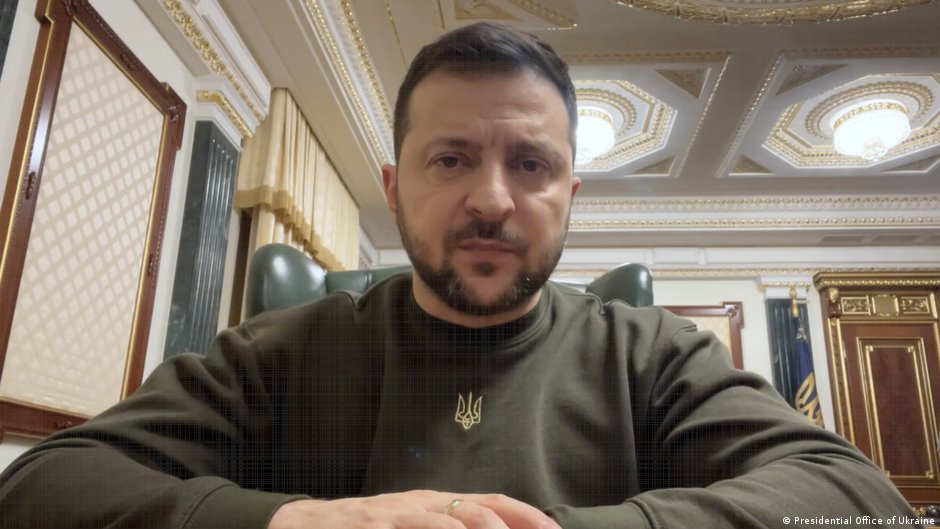
Michael Novakhov retweeted: “Сейчас очень тяжело в Бахмуте, в Угледаре, на Лиманском и других направлениях”, – признал Владимир Зеленский в видеообращении

Michael Novakhov retweeted:

“Сейчас очень тяжело в Бахмуте, в Угледаре, на Лиманском и других направлениях”, – признал Владимир Зеленский в видеообращении

FoLrEgmWYAE5keL.jpg:large

Categories
Audio Sources - Full Text Articles

Ukraine War Makes Unexpected Winner of Turkey’s Erdogan

social

WP Radio
WP Radio
OFFLINE LIVE