Categories
Audio Sources - Full Text Articles

Here’s why Israel, one of the toughest militaries, isn’t arming Ukraine despite a global push to do so. It’s got another fight in focus.

Israeli army M109 155mm self-propelled howitzers are positioned in the Israeli-annexed Golan Heights near the Syria border on January 2, 2023.Israeli army M109 155mm self-propelled howitzers are positioned in the Israeli-annexed Golan Heights near the Syria border on January 2, 2023.

JALAA MAREY/AFP via Getty Images

  • Israel, a major US partner, has not provided direct military aid to Ukraine.
  • The country is balancing Western interests and its own regional interests in the Middle East.
  • Russia allows Israel to conduct operations targeting Iran-linked forces in Syria, something it doesn’t want to jeopardize.

Since Russian forces launched a large-scale invasion of Ukraine nearly a year ago, the US and partner countries have provided Kyiv with tens of billions of dollars in widespread security assistance. 

But Israel, a prominent ally of NATO and Western militaries, has so far refused to send weapons to Ukraine, despite pressure to do so, opting instead to focus its efforts on providing humanitarian aid. 

Middle East experts say this is because Israel has a complicated relationship with Russia and works with the country to carry out operations in neighboring Syria. At the same time, Israel has been able to often strike a balance between the interests of major global powers and its own to avoid conflict.

Israel, as of February 2022, was the largest cumulative recipient of US foreign assistance — most of which comes in the form of military support. It also boasts one of the world’s strongest militaries, armed with drones, advanced fighter jets, and even nuclear weapons, though that isn’t openly acknowledged.

The US and its allies expected that Israel would support Ukraine when Russia invaded, but the country was slow to condemn Russian President Vladimir Putin and the unprovoked assault on Russia’s neighbor.

From the early days of the war, Israel has provided humanitarian aid and equipment for emergency forces — efforts that have continued under the new right-wing government headed by Prime Minister Benjamin Netanyahu. But the country has stopped short of providing direct lethal military aid to Ukraine, despite pleas from leadership in Kyiv. 

It’s complicated.

Israel’s complicated relationship with Russia has multiple dimensions to it. For starters, Israel is home to large Russian and Ukrainian communities, while both of these countries host Jewish populations.  

“How do you deal with countries — that have Jewish communities — and they fight with one another?” Yossi Mekelberg, an associate fellow with the Middle East and North Africa program at the UK-based Chatham House, told Insider. “You have to be careful how you act without endangering one or the other Jewish community.”

Israeli soldiers transport munitions off a vehicle at a position in the Israeli-annexed Golan Heights on January 2, 2023.Israeli soldiers transport munitions off a vehicle at a position in the Israeli-annexed Golan Heights on January 2, 2023.

JALAA MAREY/AFP via Getty Images

But the issue that remains front and center when it comes to Israel’s reluctance to send military aid to Ukraine involves neighboring Syria and a shadowy conflict between Israel and its regional foe, Iran.

Russia controls much of the airspace over war-torn Syria, and it allows Israel to carry out operations targeting Iran-linked assets and weapons shipments to its regional proxies like the Lebanon-based Hezbollah — which is designated as a foreign terrorist organization by the US State Department. 

“Russia doesn’t try to shoot down Israeli planes, and Israeli planes don’t try to destroy Russian anti-aircraft batteries,” Jon Alterman, director of the Middle East Program at the Center for Strategic and International Studies, told Insider.

Even as Moscow allows Israel to clamp down on Iranian influence in Syria, Russia and Iran have increased their military ties and support throughout the Ukraine war. Tehran has provided the Kremlin with suicide drones, which Russian forces have used to bombard Ukrainian cities and the country’s civilian infrastructure. 

A top UK official said in December that Russia was also seeking a massive supply of ballistic missiles from Iran and was prepared to offer the country “unprecedented” military support in return. 

‘Contradictory’ and ‘paradoxical’ behaviors

In theory, the threat posed by Russia-Iran cooperation in this space would appear to be the most likely impetus for Israel to provide additional support for Ukraine, Alterman said, but Israel is reluctant to lose the freedom of action it has in Syria because it perceives Hezbollah to be a tremendous danger.

“It would take a lot for Israel to feel that it should jeopardize freedom of action against these resupply efforts that go through Syria,” he said. So even with these increasing military ties between Moscow and Tehran, Israel has not made efforts to outfit Ukraine with lethal aid needed to defeat Russia. 

International relations occasionally have “contradictory” and “paradoxical behavior,” Mekelberg explained — a policy might not make much sense in the big picture but it works for a specific case, even if it contradicts a stance on another issue.   

An Israeli Air Force F-35 Lightning II fighter jet performs during a graduation ceremony of Israeli Air Force pilots, at the Hatzerim base in the Negev desert, near the southern city of Beer Sheva, on December 28, 2022.An Israeli Air Force F-35 Lightning II fighter jet performs during a graduation ceremony of Israeli Air Force pilots, at the Hatzerim base in the Negev desert, near the southern city of Beer Sheva, on December 28, 2022.

JACK GUEZ/AFP via Getty Images

An image grab from November 20, 2019 reportedly shows Syrian air defense batteries responding to Israeli missiles targeting the southern outskirts of Damascus.An image grab from November 20, 2019 reportedly shows Syrian air defense batteries responding to Israeli missiles targeting the southern outskirts of Damascus.

AFP via Getty Images

Another example of this contradictory behavior is that Russia doesn’t want Iran to have too much influence in Syria and is happy for Israel to carry out its operations in country. It could have stopped Israeli behavior a long time ago if it wanted to, Mekelberg added.  

“Every country has a complicated set of interests, so Israel and Russia have a certain amount of understanding. But you could argue that Russia and Iran are cooperating in a range of ways, some of which Israel finds threatening because Israel finds Iran so threatening,” Alterman said. “So it seems to me that what Israel is doing and what Israel expects countries to do is to balance between partners and between interests that nobody gets a hundred percent of anything.” 

Israel’s response to the Ukraine war does not seem to be a major cause for concern in Washington, and it’s not the only country with solid US ties — like South Korea and India — to sidestep directly sending lethal aid to Ukraine. 

“It’s partly a reflection of the complexity of the US-Israeli relationship,” Alterman said, “and partly a reflection of the Biden administration having to adjust for the fact that close partners are, in many cases, unwilling to line up across the board.”

Last week, Axios reported that the US asked Israel if it could transfer out-of-service Hawk anti-aircraft missiles, but it remains to be seen if Israel breaks with protocol and decides to transfer lethal military aid to Ukraine. Netanyahu told CNN recently that he would consider sending weaponry to Kyiv, which Moscow warned would lead to an escalation in the conflict, according to The Times of Israel.  

Meanwhile, Western security assistance to Ukraine is continuing to pile up. Hundreds of armored vehicles, including tanks and infantry fighting vehicles, are heading to Ukraine in the coming months to help it defend itself against what US officials describe as a potential Russian “onslaught.” 
Read the original article on Business Insider
Categories
Audio Sources - Full Text Articles

The Western-made tanks heading to Ukraine are unique — but that creates unique problems for Ukraine’s military

US military life Abrams tank US ArmyA US soldier scrambles into the driver’s compartment of an M1A1 Abrams tank at Fort Benning in Georgia in May 2016.

Army photo by Sgt. 1st Class Jon Soucy

  • Three kinds of Western tanks now are headed to Ukraine, and more may follow.
  • Those tanks have specific logistics needs and operational requirements — and some unique features.

Military supply officers have a tough job. Modern tanks are complex and require lots of maintenance and spare parts.

But what do you when your army is equipped with a half-dozen types of main battle tanks, each with its quirks and requirements? That’s the situation faced by Ukraine.

With three models of Western main battle tanks from three different nations on the way — and possibly more on the horizon — Ukrainian tank crews, mechanics, and quartermasters will have to learn to accommodate a variety of armored idiosyncrasies.

M1A2 Abrams

An armor crewmen performs maintenance on a M1 Abrams tank during a platoon combined arms live fire exerciseA soldier does maintenance on a US Army M1 Abrams during a combined-arms live-fire exercise.

U.S. Army photo by Spc. Dustin D. Biven / 22nd Mobile Public Affairs Detachment

Take the US M1A2 Abrams, of which Ukraine is slated to receive 31. While most modern tanks run on diesel, the Abrams uses a Honeywell 1,500-horsepower gas-turbine engine that functions best when burning JP-8 jet fuel.

This gives the Abrams a powerful power plant capable of brisk acceleration while remaining remarkably quiet. But the price is ferocious gas-guzzling.

The Abrams gets about 0.6 miles per gallon. In 1993, Sweden compared the M1 to the Leopard 2, and found the German tank got double the Abrams’ gas mileage.

Compounding the problem is that Ukraine’s pre-war fleet of Soviet- and Russian-designed tanks, as well as the German Leopard 2s and British Challenger 2s it is receiving, run on diesel.

This means that Ukraine will have to ensure a separate fuel supply for the Abrams. (Abrams tanks can use diesel but doing so creates additional maintenance needs.)

Challenger 2

Soldiers work on a British Challenger 2 tankSoldiers work on a Challenger 2 during an exercise in Hampshire in March 2022.

ADRIAN DENNIS/AFP via Getty Images

Then there is Britain’s Challenger 2, of which Ukraine will get 14. While most tanks today are armed with smoothbore cannon, the Challenger 2 has a rifled L30 120 mm cannon.

Most tank guns use hollow-charge or armor-piercing fin-stabilized discarding-sabot (APFSDS) rounds that punch through the armor of enemy tanks.

But the Challenger 2 can also fire high-explosive squash head (HESH) shells that essentially plant a big charge of plastic explosive on the surface of the target tank, which causes the inner armor to spew fragments that wound or kill the crew and set off ammunition.

British army Challenger 2 tankA British army Challenger 2 during a rehearsal in Salisbury Plain in October 2018.

British Army/Sergeant Steve Blake RLC

HESH rounds are particularly suited for rifled cannon, but this means Challengers need a different type of ammunition than the Abrams and Leopard 2, which can share some ammo.

Also unusual is that the L30’s shells come in two pieces (explosive and propellant) rather than a unitary shell. While that offers some advantages in safety and stowage, Ukrainian gunners and loaders will have to learn new procedures to use them.

The Challenger 2 also consists of a modernized Challenger 1 hull from the 1990s and a new turret. An unfortunate consequence of that combination is that the Challenger 2 “requires at least two sets of tools because the turret uses metric measurements and the hull imperial,” noted Britain’s Daily Telegraph.

However, it is not true that the Challenger 2 comes with a built-in teapot.

Leopard 2

Norwegian Leopard 2 tank leads a CV-90 armored personnel carrierA Norwegian Leopard 2 enters a military training town during an exercise in Germany in June 2018.

Klaus-Dietmar Gabbert/picture alliance via Getty Images

Then there is the German-made Leopard 2, which hasn’t seen much combat.

The Abrams and the Challenger 2’s predecessor, the Challenger 1, saw a fair bit of combat against Iraq’s T-72 and other Russian tanks in the First Gulf War. Challenger tanks were credited with destroying 300 Iraqi tanks.

When Turkish Leopard 2s battled ISIS fighters in Syria in 2016, the results were less than impressive.

Turkey’s 2nd Armored Brigade reportedly lost 10 Leopards “in the fight for the Syrian city of al-Bab to anti-tank weapons and improvised explosives,” according to German magazine Der Spiegel. “Islamic State terrorists began using images of the burned-out tanks in their propaganda material.”

German Leopard 2 tank engine repairGerman soldiers repair a Leopard 2 at a training area in Munster in October 2017.

PATRIK STOLLARZ/AFP via Getty Images

Most likely, these losses were because of poor Turkish combined-arms tactics rather than any glaring deficiencies with the Leopard 2. (Iraqi and Saudi M1s have been destroyed for the same reason.)

The question with the Leopard 2 may be maintenance and availability.

The Bundeswehr, which has long struggled with readiness and spare parts issues, only has 350 Leopard 2s, which doesn’t leave many for Ukraine.

Leopard manufacturer Rheinmetall has 22 Leopard 2s and 88 older Leopard 1s in its inventory, but those can’t be made battle-ready until at least 2024.

Useful, but challenging

Army National Guard soldiers and Abrams tankIdaho Army National Guard soldiers on an Abrams in May 2022.

Idaho Army National Guard/Thomas Alvarez

To be clear, a quirk is not necessarily a flaw. And there are perfectly valid reasons why tanks differ between nations.

For example, HESH rounds are best suited for a rifled cannon, and gas-turbine engines are not an unreasonable choice for armies willing to pay the logistical price.

In the end, what will be key isn’t the technical characteristics of these tanks. They are all formidable and better than the Russian tanks they will be facing.

What matters is how many Ukraine will receive — 31 Abrams and 14 Challenger 2s are not a lot — and how Ukraine’s military uses them.

Michael Peck is a defense writer whose work has appeared in Forbes, Defense News, Foreign Policy magazine, and other publications. He holds a master’s in political science. Follow him on Twitter and LinkedIn.

Read the original article on Business Insider
Categories
Audio Sources - Full Text Articles

Why the U.S. Decided Not to Shoot Down the Chinese Spy Balloon Over Montana

The U.S. military has identified a suspected Chinese spy balloon flying high above the northern part of the continental United States in recent days, which prompted President Joe Biden to ask for military options against it, according to senior defense officials.

“The United States government has detected and is tracking a high-altitude surveillance balloon that is over the continental United States right now,” Pentagon spokesperson Brigadier General Pat Ryder said in a statement. “The balloon is currently traveling at an altitude well above commercial air traffic and does not present a military or physical threat to people on the ground.”

[time-brightcove not-tgx=”true”]

Biden was briefed on the matter Wednesday when he asked Defense Secretary Lloyd Austin to develop options against the large slow-moving balloon, according to a senior U.S. official, who wasn’t authorized to speak publicly on the matter. The Pentagon had considered scrambling fighter jets to shoot it down as it traveled over Montana but determined not to do so out of fears such an act create a debris field and endanger Americans on the ground, the official said.

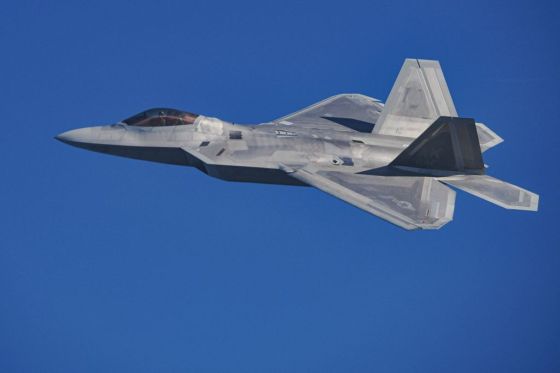
U.S. military worked with the civil aviation authorities to put a halt on flights coming in and out of the city of Billings in southern Montana, the official said, and even mobilized F-22 stealth fighter jets, which are the Air Force’s premier air-to-air combat aircraft.

POLAND-NATO-DEFENCE-DRILL
Radoslaw Jozwiak–AFP/Getty ImagesA U.S. F-22 Raptor fighter jet takes part in the NATO Air Shielding exercise near the air base in Lask in central Poland on Oct. 12, 2022.

“We put some things on station in the event that a decision was made to bring this down while it was over Montana,” the official said. “We wanted to make sure…to empty out the airspace around that potential area. But even with those protective measures taken—and it was the judgment of our military commanders—that didn’t drive the risk down low enough, so we didn’t take the shot.”

The official wouldn’t say how big the balloon was or high it was flying but simply said that it “is significantly above where civilian air traffic is active,” which is why it’s not believed to pose a threat to civilian aviation.

The Biden Administration has determined that the balloon doesn’t give the China any additional surveillance capabilities beyond what it already can collect through spy satellites currently orbiting the Earth, the official said.

When the balloon was detected by U.S. intelligence, the official said the military acted swiftly to guard against the Chinese collecting sensitive information. “The current flight path does carry it over a number of sensitive sites,” the official told reporters. “Out of an abundance of caution, we have taken additional mitigation steps.” The official wouldn’t detail what those actions were.

Montana is one of five states that host the U.S. military’s land-based, nuclear-tipped Minuteman III missile fields.

In recent years, “a handful” of surveillance balloons have been spotted, but this one “is appearing to hang out for a longer period of time,” the official said.

Categories
Audio Sources - Full Text Articles

Wide open field

Help support Palmer Report! Our articles are all 100% free to read, with no forced subscriptions and nothing hidden behind paywalls. If you value our content, you’re welcome to pay for it:

Pay $5 to Palmer Report:

Pay $25 to Palmer Report:

Pay $75 to Palmer Report:


Help fund Palmer Report here

Pay $5 to Palmer Report:

Pay $25 to Palmer Report:

Pay $75 to Palmer Report:


Nikki Haley, whose relevance has dropped off so badly that most people have forgotten why they hated her to begin with, is now entering the 2024 race for President. Why would she do this? She obviously has zero chance of winning, or even coming close to winning. The reason why Haley is running is the same reason why so many other unpopular also-rans ranging from Mike Pompeo to Mike Pence are also entering the race: the 2024 Republican field is likely to be wide open.

Donald Trump is now just days away from being criminally indicted in Fulton County, and just weeks from also being indicted by the DOJ and in Manhattan. This year he’ll be put on criminal trial (at least) three times, and at his age, a conviction on even one of those many felony charges will be a de facto life sentence for him. More to the point, it’ll obviously take him out of the 2024 race.

Yes, you can technically run for President from prison. Eugene Debs tried that about a century ago, but he only got around three percent of the vote. So yes, Donald Trump could try to continue being a candidate in the 2024 Republican primary race, even from his prison cell. But all that would do is screw up the primary; Trump obviously wouldn’t come out of that scenario anywhere close to the nomination.

Even if Trump weren’t heading for prison (and to be clear he absolutely is), his 2024 prospects are weak at best. When he left office, at the height of his incumbency and name recognition advantage over any future Republican field, polls showed that barely half of Republican primary voters said they wanted him to be their party’s 2024 nominee. He would have needed to become massively more popular between then and now, just to retain his previous numbers. That hasn’t happened, and now Trump’s numbers are far worse. Those numbers will drop even further once Trump is indicted, and absolutely plummet once he’s convicted. Even people who like the sick bastard are likely to move on from the idea of him running again, given the impracticality of it.

But again, Trump is being criminally indicted in three different jurisdictions. His life is over. The only real discussion to be had regarding Trump and 2024 is which kind of prison he’ll be in. He wasn’t going to dominate the 2024 Republican field even if he were legitimately running. And he isn’t going to be legitimately running.

This creates a golden opportunity for some other Trump-like Republican monster to step into the race in savvy fashion and inherit Trump’s support… if any such savvy candidate existed. There has been endless breathless hype about Ron DeSantis. But while he’s certainly got the monster part right, all he’s really done lately is flail around and demonize children while derisively saying the word “woke” over and over again. He’s such a brainless broken record, he’s almost surpassing Marco Rubio in terms of just how little of a political brain he has. The media, on both sides, talks endlessly about how smart DeSantis supposedly is. His every move reveals him to be a moron with zero political savvy.

In other words, we’re looking at wide open 2024 Republican field. Who will end up being the nominee? That’s anyone’s guess. It’ll likely be some new fresh faced right wing bullshitter who hasn’t yet been properly vetted and therefore isn’t yet saddled with endless popularity-sapping scandals.

But in the meantime, a wide open field means that anyone with a name – Haley, Pence, Pompeo, even John Bolton – can enter the race and remain in it for a long time before dropping out. If you’re a “name” candidate but you’re only polling at one or two percent, and there’s a dominant frontrunner polling at 40% or 60%, donors tend to give up on you quickly, and you have to drop out before the calendar even turns over to 2024. But in a wide open race with no frontrunners, the candidates getting one or two percent of the vote can keep conning donors into giving them just enough to keep the lights on, all the way to Iowa and New Hampshire, before finally dropping out. And by that time those candidates have landed lucrative book deals that are worth millions of dollars.

It doesn’t matter that people like Haley or Pence or Pompeo are unpopular and that no one will actually read their books. What matters is that they can use their failing candidacies to limp into Iowa and New Hampshire and use the national media circus to hype their well-timed book releases such that the public gets carried away with preorders in the hope of learning the inevitable tidbits of dirt about other candidates that are contained within the book. The publisher doesn’t care that no one who preorders the book is actually going to read it by the time it arrives. It’s all about the revenue – and that’s why publishers will give million dollar book deals to failing candidates who can pull off the launch hype.


This business model allows unpopular and irrelevant political has-beens to make millions of dollars simply by running for President. All they have to do is limp along long enough to reach the part where they can abuse the process to hype their book. There are literally millions of dollars up for grabs, and it’s the reason that these losers run.

Sure, Nikki Haley will humiliate herself by spending a year running for President and dropping out after getting 1% of the vote in the Iowa caucus. But she’ll be able to wipe her tears with her money after she lands her book deal. It’s the wide open 2024 Republican field that’ll allow her and others like her to cash in by losing. The fact that so many also-rans are entering the 2024 Republican race is de facto proof that it’s set to be a wide open Republican field with no Trump and no clear frontrunner. The media can hype “Trump 2024” for ratings all it wants. Those from Trump’s former inner circle, who would never even enter the race if they thought he was actually going to be a participant, are making clear that they think he’ll be in prison before the 2024 race truly gets underway.

Help fund the Ruben Gallego 2024 Senate campaign here

Help fund Palmer Report here

Pay $5 to Palmer Report:

Pay $25 to Palmer Report:

Pay $75 to Palmer Report:

Help fund the Ruben Gallego 2024 Senate campaign here

Help fund Palmer Report here

Pay $5 to Palmer Report:

Pay $25 to Palmer Report:

Pay $75 to Palmer Report:

The post Wide open field appeared first on Palmer Report.

Categories
Audio Sources - Full Text Articles

Looking for love online? New study shows mixed experiences

NEW YORK (AP) — Whether looking for love or a casual encounter, 3 in 10 U.S. adults say they have used a dating site or app — with mixed experiences, according to a Pew Research Center study out Thursday. For the under-35 set, more than half have tried it.

The overall number, which amounts to 30%, is unchanged since 2019, the last time the center took a broad look at online dating. In 2015, 15% of U.S. adults said they had used a dating site or app, said lead researcher Colleen McClain.

“When we talk to users who have been on the sites more recently, we see that there is really a mix of emotions,” she said. “Everything from burnout to elation.”

Among the study’s key takeaways for McClain: 1 in 10 adults who have a partner said they met their current significant other on a dating site or app. The number rises to 1 in 5 for those under 30.

Asked about their reasons for using the platforms, 44% of current or recent users had finding a long-term partner top of mind, with 40% responding that they wanted to date casually. Twenty-four percent were in search of casual sex and 22% were hunting for new friends.

Using dating sites and apps is most popular among adults under 30, Pew reported, with 53% saying they have done it. That compares with 37% of those ages 30 to 49; 20% of those 50 to 64; and 13% of those 65 and older.

Atlanta firefighter Andy Giron, 33, is among the pleasantly surprised. He said he had always considered digital dating “a little weird” until recently.

Giron had just gotten out of a long-term relationship in 2019 when he decided to give Tinder a try for some casual dating. That didn’t work out after a couple of times but he hit gold on Hinge a short time later.

“My wife was my first date on Hinge,” he said. “She was so easy to talk to and we had a lot in common. There was an immediate connection when we first met in person.”

The two married six months later, soon after the COVID-19 pandemic hit. They now have a year-old daughter. Giron was inspired to turn to online dating by his sister, who found her spouse the same way.

“I always thought you should meet someone the regular way, in person, but this is the way the world is now,” Giron said.

Across age groups, 51% of lesbian, gay and bisexual adults have used a dating site or app.

Men are more likely than women to report positive experiences in digital dating, 57% vs. 48%, and LGB users are more likely than straight users to say the same, 61% vs. 53%. White or Black adults who have used one of the platforms are more likely than Hispanic users to say their experiences have been negative.

The number of men who have used dating sites or apps in the past year and said having casual sex was a major reason was 18 percentage points greater than female users who said the same.

The Pew research is based on a survey of about 6,000 U.S. adults taken from July 5-17 last year.

Online daters’ experiences were mixed, with 53% saying they have been at least somewhat positive. Fourteen percent said they have been very positive, and 48% said their experiences have included at least one of four unwanted behaviors explored in the study.

Thirty-eight percent of those reporting negative experiences said they received unsolicited sexual messages or images, and 30% cited unwanted continued contact. Twenty-four percent said they were called an offensive name, and 6% said they were physically threatened.

Female users were more likely to report such experiences, especially those under 50.

Like Giron, 22-year-old Liv Loughlin, a tech company marketing associate in San Jose, California, had just ended a long-term relationship when she first tried digital dating last September.

“I wanted to jump into it, especially to meet people because I was new to the area,” she said. “My first date on a dating app was on Hinge and it was crazy. He was immediately very, very touchy and there were all these sexual overtones to everything he said. … I ended up bailing.”

But Loughlin didn’t give up. She turned to Bumble and is now happily in a relationship with a man she met there.

“I figured I had hit rock bottom and it couldn’t go anywhere but up,” she said.

Safety is a large concern for some digital daters. There have been demands over the years for more protections, such as required background checks, in light of reported stalking, and sexual assaults and other violence. Few sites require such checks of every user.

“We see that Americans are divided on this,” McClain said. “Forty-eight percent say that dating sites are a safe way to meet people. A very similar share, 49%, say that they’re not safe.”

A majority overall said dating sites and apps should require people to undergo background checks.

Stacy Overcamp, 58, an unemployed marketing specialist, knows the dangers firsthand. She’s been dating online since about 1998, with several contacts leading to relationships over the years.

“I’ve never had a problem meeting men online. I’ve had a problem meeting quality men online,” said Overcamp, in suburban San Francisco. One long-term relationship ended in stalking, harassment and a restraining order, she said. Other men she dated turned out to be broke, drug users or liars. But she remains active as her priorities have shifted to marriage.

Overcamp estimates 30 or 40 contacts a month.

“It would take me five years to talk with and connect with that many men if I weren’t online,” she said.

Pew studied eight sites and apps. Tinder was the most commonly used, with 46% of digital dating users saying they had tried it. That amounts to 14% of all U.S. adults. About 10% of U.S. adults said they had used Match or Bumble. Six percent said they had tried OkCupid, eharmony and Hinge.

Grindr and HER were far more popular among lesbian, gay or bisexual online dating users than straight users. Some 34% of LGB users said they had tried Grindr and 10% said they had tried HER.

___

Find Leanne Italie on Twitter at http://twitter.com/litalie

Categories
Audio Sources - Full Text Articles

Judge dismisses lawsuit over US utility’s long-term deals

NASHVILLE, Tenn. (AP) — A federal judge has dismissed a lawsuit by environmental groups that challenged how the nation’s largest public utility signs up local power providers for two-decade contracts.

On Wednesday, a ruling by U.S. District Judge Thomas L. Parker in Memphis sided with the Tennessee Valley Authority, agreeing that the environmental groups don’t have legal standing. The judge also found that TVA “acted reasonably” under a law requiring it as a federal agency to assess environmental effects of major projects before making decisions.

The lawsuit filed in August 2020 argued that 20-year deals signed by most of TVA’s customers lock the power distributors into exclusive contracts with the TVA and “will forever deprive distributors and ratepayers the opportunity to renegotiate with TVA to obtain cheaper, cleaner electricity,” according to the Southern Environmental Law Center, which filed the suit for three plaintiff groups.

The judge, however, agreed with TVA that the groups — Protect Our Aquifer, Energy Alabama and Appalachian Voices — have no standing to sue for a variety of reasons, saying in part that they “have not shown a particularized, imminent environmental injury.”

Additionally, Parker wrote that TVA did not violate the National Environmental Policy Act, either. The law “does not require review of every major federal action,” but only those closely related to causing environmental changes, the judge said.

The judge wrote that the environmental groups’ arguments are resolvable by congressional lawmakers, not the court system.

TVA commended the decision, saying 147 of 153 local power companies have signed long-term agreements, while arguing they help keep TVA’s power affordable, reliable and resilient.

“We are pleased with the court’s decision which affirms that TVA followed the law in offering the long-term agreement to local power company customers,” TVA spokesperson Scott Brooks said in a statement.

The Southern Environmental Law Center, meanwhile, said it is evaluating its legal options after the ruling.

“We are disappointed the court ruled against this challenge to TVA’s never-ending contracts,” Amanda Garcia, the Southern Environmental Law Center’s Tennessee office director, said in a statement. “These highly restrictive contracts make it essentially impossible for TVA customers to have meaningful negotiations with the federal utility.”

The issue has sprung up prominently in Memphis, Tennessee. The utility company there announced in December that it rejected a 20-year contract with TVA, but will remain the power provider’s largest customer for the “foreseeable future.” It stuck with its five-year rolling contract.

The environmental groups argued that the deals hurt the ability of local power companies to seek out and use renewable power such as solar energy from sources outside the TVA. The deals replaced existing agreements of varying lengths, or followed expiring ones. Contracts require a 20-year notice to terminate, and they renew each year.

Garcia has argued that the notice-to-terminate provision made the contracts “never-ending,” and violate TVA’s own rules that its contracts with power companies should not last longer than 20 years. The deals carry a 3.1% monthly rebate on wholesale power rates that local companies could pass on to their customers, or use to invest in infrastructure, TVA has said.

The deals also allow local power companies to seek up to 5% in acquired renewable energy, which TVA says could help them meet their energy needs. But the groups say that percentage is too limiting.

TVA provides power to millions of people in parts of Tennessee, Alabama, Georgia, Kentucky, Mississippi, North Carolina and Virginia.

Categories
Audio Sources - Full Text Articles

Abdul-Jabbar to attend Lakers games as LeBron closes on record – source

2023-02-02T23:49:42Z

Kareem Abdul-Jabbar attends the premiere of Apple’s “They Call Me Magic” in Los Angeles, California, U.S., April 14, 2022. REUTERS/David Swanson

Kareem Abdul-Jabbar will be in the stands for two Lakers home games in which LeBron James is likely to surpass him and become the NBA’s all-time leading scorer, a source close to the Lakers great told Reuters on Thursday.

Abdul-Jabbar and James have had a frosty relationship amid a range of public disagreements leaving some to wonder whether the Hall of Famer would want to witness the fall of the record he has held for nearly four decades.

Abdul-Jabbar criticized James for saying that getting the COVID-19 vaccine was a personal choice and has described James’s on-court celebrations as “stupid and childish”.

Magic Johnson in October said losing the scoring title would be a “hard pill to swallow” for his former team mate, a six-times champion and 19-times All-Star who retired in 1989.

James raised eyebrows in September when after being asked his thoughts on potentially passing Abdul-Jabbar and his relationship with him he offered a curt reply.

“No thoughts and no relationship,” James told reporters.

Prior to tip-off of the Lakers game against the Pacers in Indiana on Thursday, James needed 89 points to pass Abdul-Jabbar’s career total of 38,387.

The Lakers next head to New Orleans to take on the Pelicans on Saturday before returning to Los Angeles to face the Thunder on Tuesday and the Bucks on Thursday.

James, 38, has shown no signs of slowing down in his 20th season. Since turning 38 on Dec. 30, the four-times champion has averaged nearly 35 points per game.


Categories
Audio Sources - Full Text Articles

CIA chief warns against underestimating Xi“s ambitions toward Taiwan

2023-02-02T23:52:38Z

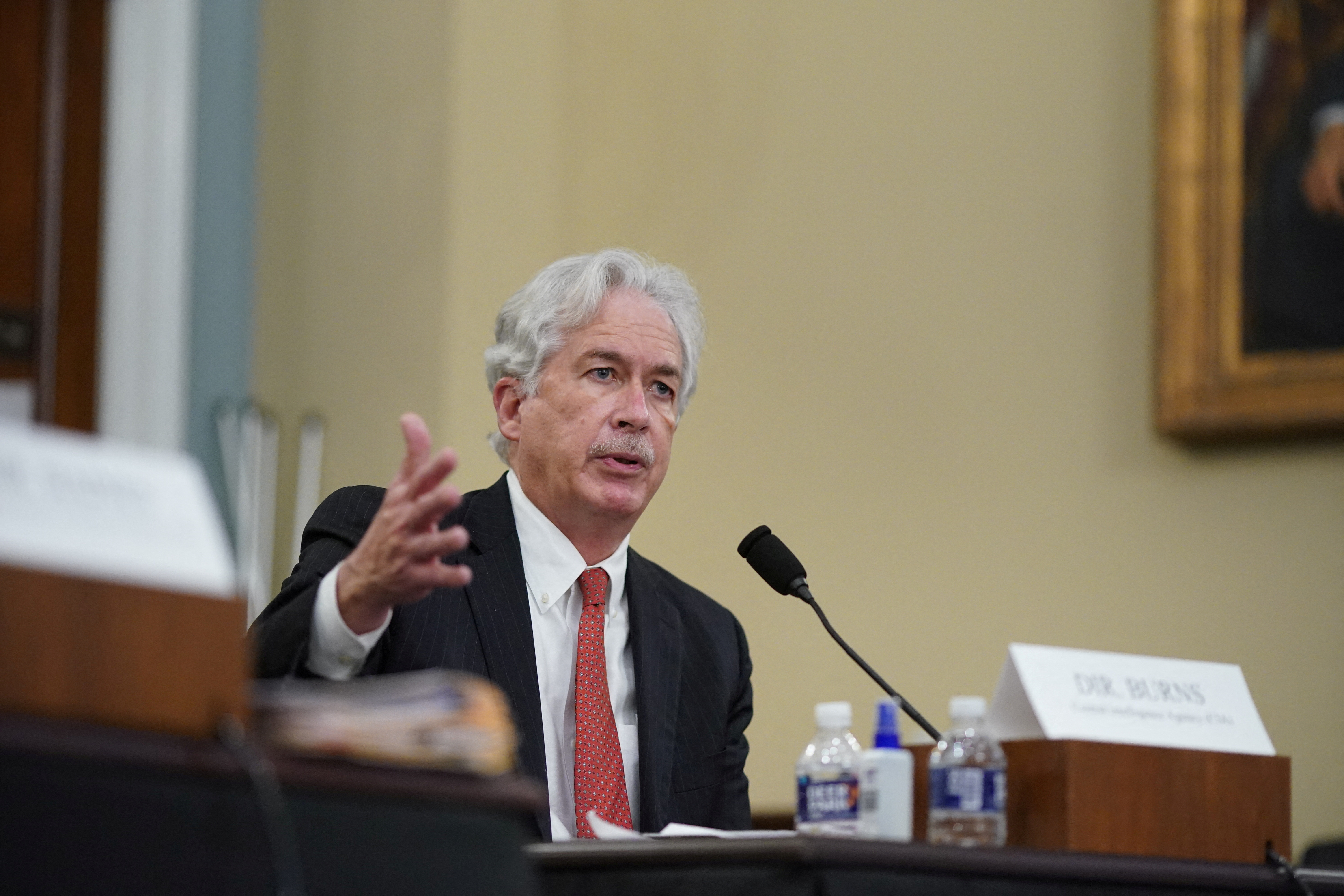
CIA Director William Burns gestures as he speaks during a House Intelligence Committee hearing on worldwide threats in Washington, D.C., U.S., April 15, 2021. Al Drago/Pool via REUTERS

U.S. Central Intelligence Agency Director William Burns said on Thursday that Chinese President Xi Jinping’s ambitions toward Taiwan should not be underestimated, despite him likely being sobered by the performance of Russia’s military in Ukraine.

Burns said that the United States knew “as a matter of intelligence” that Xi had ordered his military to be ready to conduct an invasion of self-governed Taiwan by 2027.

“Now, that does not mean that he’s decided to conduct an invasion in 2027, or any other year, but it’s a reminder of the seriousness of his focus and his ambition,” Burns told an event at Georgetown University in Washington.

“Our assessment at CIA is that I wouldn’t underestimate President Xi’s ambitions with regard to Taiwan,” he said, adding that the Chinese leader was likely “surprised and unsettled” and trying to draw lessons by the “very poor performance” of the Russian military and its weapons systems in Ukraine.

Russia and China signed a “no limits” partnership last February shortly before Russian forces invaded Ukraine, and their economic links have boomed as Russia’s connections with the West have shriveled.

The Russian invasion had fueled concerns in the West of China possibly making a similar move on Taiwan, a democratic island Beijing says is its territory.

China has refrained from condemning Russia’s operation against Ukraine, but it has been careful not to provide the sort of direct material support which could provoke Western sanctions like those imposed on Moscow.

“I think it’s a mistake to underestimate the mutual commitment to that partnership, but it’s not a friendship totally without limits,” Burns said.

Burns said the next six months will be “critical” for Ukraine, where Moscow has been making incremental gains in recent weeks.

He also said Iran’s government was increasingly unsettled by affairs within the country, citing the courage of what he described as “fed up” Iranian women.

Categories
Audio Sources - Full Text Articles

Suspected Chinese “spy balloon“ flying over the United States

2023-02-02T22:35:55Z

WASHINGTON (Reuters) -A suspected Chinese spy balloon has been flying over the United States for a few days, and senior U.S. officials have advised President Joe Biden against shooting it down for fear the debris could pose a safety threat.

?m=02&d=20230202&t=2&i=1622252604&r=LYNX

The Pentagon building is seen in Arlington, Virginia, U.S. October 9, 2020. REUTERS/Carlos Barria

“Clearly the intent of this balloon is for surveillance,” a senior U.S. defense official told reporters on Thursday.

China and the United States, the world’s two largest economies, have experienced tensions of late, clashing over Taiwan and China’s human rights record and its military activity in the South China Sea.

Washington has been tracking the balloon since it entered U.S. airspace a couple of days ago, including by observing it with manned U.S. military aircraft.

Officials declined to say how high the balloon was flying but acknowledged it was operating above civilian air traffic and below “outer space.”

Senior U.S. military leaders considered shooting down the balloon over Montana but eventually recommended against it because of the potential safety risk from debris.

U.S. officials brought up the issue with their Chinese counterparts.

“We have communicated to them the seriousness with which we take this issue,” the official added.

Spy balloons have flown over the United States several times in recent years, but this balloon appeared to be lingering longer than in previous instances, the official said.

“Currently, we assess that this balloon has limited additive value from an intelligence collection perspective, but we are taking steps nevertheless to protect against foreign intelligence collection of sensitive information,” the official said.

Categories
Audio Sources - Full Text Articles

EU-Ukraine wartime summit to deliver on some issues, disappoint on others

2023-02-02T23:15:57Z

Ukraine’s President Volodymyr Zelenskiy, Prime Minister Denys Shmyhal and European Commission President Ursula von der Leyen attend an EU summit, as Russia’s attack on Ukraine continues, in Kyiv, Ukraine February 2, 2023. Ukrainian Presidential Press Service/Handout via REUTERS

European Union leaders will meet Ukrainian President Volodymyr Zelenskiy in Kyiv on Friday, bringing the promise of new sanctions against Russia but disappointing Ukraine’s hope for swift membership to the EU.

The head of the group’s executive commission, Ursula von der Leyen, arrived in Kyiv by train on Thursday, a symbolic journey to demonstrate support for Ukraine as the first anniversary of Russia’s Feb. 24, 2022, invasion of its neighbour approaches.

Senior members of the EU’s executive met their counterparts in the Ukrainian government and von der Leyen and the chairman of the 27 EU national leaders, Charles Michel, will convene talks with Zelenskiy on Friday.

Zelenskiy called for more punitive measures against Russia by the European Union, but new sanctions the bloc is preparing for the anniversary are set to fall short of the Kyiv government’s demands.

“Today … we reached a very important mutual understanding,” Zelenskiy said in his Thursday night video address. “That only together – a strong Ukraine and a strong European Union – can we defend the life that we value, and through our further integration, provide energy and motivation for our people to fight on regardless of obstacles and threats.”

While the EU backs Ukraine and supports democratic and economic reforms there, it is not ready to admit a country at war and in any case, the process takes years. The last country to have joined the EU was Croatia in 2013, a decade after formally applying. Ukraine’s neighbour Poland took 20 years until joining in 2004.

Ukraine applied to join shortly after the invasion and in June received formal candidate status from the EU.

The United States and its Western allies stepped up pledges to deliver more weapons to Ukraine in January.

EU officials said talks included discussion of more arms and money for Ukraine as well as more access for Ukrainian products to the EU market, helping Kyiv cover energy needs, sanctions on Russia, prosecuting Russia’s leadership for the war and extending an EU no-roaming mobile calls zone to Ukraine.

The EU has demanded more anti-corruption measures from Ukraine, which is perceived as having endemic state graft, saying it must build a credible track record over time.

To that end Zelenskiy this year already has announced investigations and dismissals of some officials, pointedly saying during the last week that the defence ministry needs to be clean.

Authorities were investigating senior military officials in two separate cases of suspected corruption, officials said on Thursday. Separately, a “criminal group” suspected of embezzling state funds by selling overpriced eggs and other foodstuffs to defence officials had been arrested, the State Bureau of Investigation said.

The EU-Ukraine summit coincides with an intensification of Russian pressure on Ukrainian forces in eastern battlegrounds but also in the northeast and south. The refrain from Ukraine officials and military analysts is that the Russians are exploiting the main resource they have – superiority in manpower.

Russian forces made two strikes on the town of Kramatorsk in Donetsk region – where an apartment block was hit on Wednesday, killing three people, the General Staff of the Ukrainian Armed Forces said in a statement on Thursday night.

“As a result, 13 two-storey buildings and three four-storey buildings were damaged as well as a children’s clinic, a school and garages and vehicles. There were civilian casualties.”

Ukrainian aircraft launched four air raids on areas of concentration of Russian troops and one command post, the statement said. One drone was destroyed, it said.

Reuters was not able to verify battlefield reports.

Ukraine and its Western allies have accused Russian forces of war crimes and targeting civilians, charges Russia rejects.

Russian President Vladimir Putin ordered what he called a “special military operation” to protect Russian security. The war has killed thousands of civilians, uprooted millions and reduced cities to rubble.

More recently Russia has characterized the conflict as confronting what it says is an aggressive and expansionist U.S.-led NATO military alliance. Ukraine and its allies accuse Moscow of an unprovoked war to grab territory.

WP Radio
WP Radio
OFFLINE LIVE