Categories
Audio Sources - Full Text Articles

Factbox: High-altitude spy balloons: old concept, new applications

2023-02-03T02:15:46Z

A balloon flies in the sky over Billings, Montana, U.S. February 1, 2023 in this picture obtained from social media. Chase Doak/via REUTERS

U.S. officials said on Thursday that a Chinese “surveillance balloon” has been flying over the United States for several days.

Using high-altitude balloons for spying and other military missions is a practice that dates to the middle of the last century. Here is what is known about how they operate and what they can be used for:

* During World War 2, the Japanese military tried to loft incendiary bombs into U.S. territory using balloons designed to float in jet stream air currents. No military targets were damaged, but several civilians were killed when one of the balloons crashed in an Oregon forest.

* Just after World War 2, the U.S. military started exploring the use of high-altitude spy balloons, which led to a large-scale series of missions called Project Genet. The project flew photographic balloons over Soviet bloc territory in the 1950s, according to government documents.

* Such balloons typically operate at 80,000-120,000 feet (24,000-37,000m), well above where commercial air traffic flies – airliners almost never fly higher than 40,000 feet. The highest-performing fighter aircraft typically do not operate above 65,000 feet, although spy planes such as the U-2 have a service ceiling of 80,000 feet or more.

* The advantages of balloons over satellites include the ability to scan wide swathes of territory from closer in, and to be able to spend more time over a target area, according to a 2009 report to the U.S. Air Force’s Air Command and Staff College.

* Unlike satellites, which require space launchers that cost hundreds of millions of dollars, balloons can be launched cheaply.

* The balloons are not directly steered, but can be roughly guided to a target area by changing altitudes to catch different wind currents, according to a 2005 study for the Air Force’s Airpower Research Institute.

* The U.S. military has tracked other spy balloons in recent years, including before President Joe Biden’s administration, according to a senior U.S. defense official.

Categories
Audio Sources - Full Text Articles

Kevin McCarthy is in over his head when it comes to Joe Biden

shirley-kennedy-100x100.jpg

Help support Palmer Report! Our articles are all 100% free to read, with no forced subscriptions and nothing hidden behind paywalls. If you value our content, you’re welcome to pay for it:

Pay $5 to Palmer Report:

Pay $25 to Palmer Report:

Pay $75 to Palmer Report:


Help fund Palmer Report here

Pay $5 to Palmer Report:

Pay $25 to Palmer Report:

Pay $75 to Palmer Report:


Politicians in Washington can play games all they want, but they had better not do anything to harm our economy, which is already precariously hanging on. They can play partisan politics as much as they like, but when they start threatening veterans, retirees, and the population in general, they had better think about whether or not they want to remain in Washington. As CNN reported, Kevin McCarthy finally won the speakership by caving to the far-right members of his party. One issue about which they were most clear is their unwillingness to raise the debt ceiling. Now, McCarthy has to balance his debt to those members of his party who didn’t want him with the desires of the American public. Now is the time for both parties to learn to work together for the good of the country.

Life has been hard on Americans for the last few years. We suffered through the worst pandemic in a century, which disrupted everyday life in many negative ways. We lost over one million of our fellow citizens, many of which can rightfully be blamed on Donald Trump and his lies and deception. Even as we continue to crawl out of that hole, there are a few bright spots. Job growth is steady, fears of inflation have flattened out (for the time being), and the stock market is up. This is all despite the Covid crisis. Joe Biden took office, pledging to do battle with Covid, and he kept his promise, as that was one of his major fights. Unlike President Biden, McCarthy has something to prove.


McCarthy wants to shake the notion that he is a weak leader, though everything about him proves that notion true. He bent, cajoled, and contorted himself into the speakership, and anything that makes his cronies unhappy could prove to be his downfall. After all, he did allow to pass the rule that one person could move to take away the speakership. He is seen as nothing more than a puppet of Donald Trump. He has not done one thing in office to prove otherwise, and it continues to boggle the mind how he gets reelected. Regardless, both sides must be ready to listen. According to Politico, both sides agreed that the first meeting “could have gone worse.” Speaking to reporters, McCarthy said: “No agreements, no promises, except that we would continue this conversation.” There will be additional conversations, though Politico also reported that President Biden “made clear that it is their shared duty not to allow an unprecedented and economically catastrophic default. It is not negotiable or conditional.”

Republicans, of course, want to use the opportunity to get things they want, but McCarthy shared that he believes they “can eventually strike a potential two-year funding deal.” That would suffice for now. Hopefully, at the end of two years, Republicans will no longer be in power, and a speaker will be in place who wants to do what is necessary for the people. The only thing that will save these talks is for everyone to check their egos, roll up their sleeves, and get this done for the sake of the American people.

Help fund the Ruben Gallego 2024 Senate campaign here

Help fund Palmer Report here

Pay $5 to Palmer Report:

Pay $25 to Palmer Report:

Pay $75 to Palmer Report:

Help fund the Ruben Gallego 2024 Senate campaign here

Help fund Palmer Report here

Pay $5 to Palmer Report:

Pay $25 to Palmer Report:

Pay $75 to Palmer Report:

The post Kevin McCarthy is in over his head when it comes to Joe Biden appeared first on Palmer Report.

Categories
Audio Sources - Full Text Articles

Saved Web Pages – Daily Report at 9 p.m. [Inoreader digest]

1636973850.png

Saved Web Pages – Daily Report at 9 p.m.

created by Michael Novakhov  •  Feb 02 2023

The most notable news articles in full text version.
Current Page:
https://www.inoreader.com/stream/user/1006407045/tag/web-pages/view/html

Of course, the timing of revelations like this is always an issue (such as in this case, the fact it…
fcnp.com 10h

In the course of writing two books on Donald Trump’s ties to Russia, the same question occurred to me…
newrepublic.com 10h

Mary McCord, former acting assistant attorney general for national security at the Department of Justice,…
youtube.com 11h

The question of who becomes the president of the United States should be answered by voters, not federal…
theatlantic.com 12h

UPDATE: A lot more recent info on him based on that Daily Beast article Kallstrom is the NYPD sex…
pressbooks.pub 15h

българскиAfrikaansazərbaycanbosanskicatalàČeštinaCymraegDanskDeutscheestiEnglish (United Kingdom)English…
google.com 15h

But according to a Daily Beast article published Thursday, Kallstrom first denied speaking at all to…
politico.com 16h

You can unsubscribe from those emails at any time.

Inoreader. Take back control of your news feed. Follow us on Twitter and Facebook.
Innologica Ltd. 35 Akad. Boris Stefanov str., 1700 Sofia, Bulgaria

The News And Times Information Network – Blogs By Michael Novakhov – thenewsandtimes.blogspot.com
Categories
Audio Sources - Full Text Articles

Shooting rattles Jewish center in San Francisco

russianjewishcentersanfrancisco.jpg

This article originally appeared on J. The Jewish News of Northern California and was reprinted here with permission.

A man fired blanks from a handgun at a Jewish center in San Francisco Wednesday, shocking a group gathered for a study session in a community space serving mainly Russian-speaking Jews.

The man entered the Schneerson Center around 7:20 p.m. in the middle of a session on the life of the Lubavitcher Rebbe Menachem Mendel Schneerson, according to Rabbi Bentzion Pil, who leads the community.

The man said in accented Russian that he was from Mossad, the Israeli intelligence service, and that he was going to start shooting.

“I thought he was joking,” Pil told J. on Thursday. “He looked like a Russian Jew.”

Located in a Richmond District neighborhood near what’s often called “Little Russia,” the Schneerson Center is a node of Jewish life for immigrants from the former Soviet Union in the Bay Area, where FSU households number between 15,000 and 20,000, according to Rabbi Shimon Margolin, who leads a local nonprofit serving Russian-speaking Jews.

After the man entered, Pil said he first asked whether he wanted to join their session. It soon became clear that was not his intention.

A jarring video of the incident captured on a security camera shows a man wearing a baseball cap, jacket and sneakers enter the room and gesture animatedly with his arms while speaking to those seated around a table. After about 15 seconds, he reaches into his jacket pocket and reveals a handgun. He appears to struggle to cock the weapon, while an elderly man makes a phone call and starts walking toward him. As the elderly man approaches, the suspect starts firing his weapon, and the elderly man crouches down. He fires in a direction away from those seated around the table, then proceeds to fire around the room while some people clutch their ears and duck. In total the suspect fires between six and eight shots. Then he leaves.

CCTV footage of man firing blanks from a handgun at a Russian Jewish center in San Francisco yesterday, shocking a group gathered for a study session.

Read the full story by @jnewsgabe:https://t.co/pvGYr4WDmb pic.twitter.com/GtnvT1mP2e

— J. The Jewish News of Northern California (@jewishsf) February 3, 2023

“Everyone was stunned and shocked,” Pil said.

The video shows little movement from a dozen or so people around the table — many of whom are in their 60s or older, shul members said.

Pil said the group was perplexed. “It was so unexpected from him,” he said.

The fact that the man was clearly not a “Nazi” nor a Muslim terrorist indicated to the group that their lives were probably not in danger, he added. One person in the group said he might have seen the suspect before. Still, after the shooting started, Pil said he went into the kitchen to grab a knife, but by the time he got back the man was gone.

After the man left, those gathered deliberated about whether to call the police, Pil said.

“I still believe it was just a crazy guy,” he said. “He didn’t scream any antisemitic words or expressions.”

Ultimately they decided it wasn’t worth contacting the police because they were unhurt and they doubted the man would be kept in detention for long if he was caught.

Only the next day was law enforcement contacted after some of the younger community members heard about what had happened.

“I was shaken,” said Alon Chanukov, who viewed the incident on security footage. He said he reached the San Francisco Police Department Thursday morning and was told the matter would be referred to the investigations unit. The SFPD did not respond to a J. request for information in time for this article.

Chanukov said the video disturbed him greatly.

“There is a man, with a gun, who was in my shul. And I see elderly people cowering as he is firing his gun,” he said.

“This is a terrorist attack. The point of this was to cause terror,” Chanukov said. “Not to kill people. But to literally terrify Jews, as best as I can see.”

According to statistics compiled by the California attorney general’s office, hate crimes targeting Jews have been on an upward trend over the past 10 years. Jews are the most frequent target of religiously motivated hate crimes, numbers that accord with national figures.

In an interview with J., the rebbetzin Mattie Pil, Rabbi Bentzion Pil’s wife, lent another interpretation as to why the mostly senior Jews from the former Soviet Union did not contact police.

“They still feel like they’re in the Soviet Union,” she said. “There, when something happens, it’s always the fault of the Jews. If you called police, it would be your fault. So they didn’t want to make any waves.”

The post Shooting rattles Jewish center in San Francisco appeared first on The Forward.

Categories
Audio Sources - Full Text Articles

South Dakota lawmaker quotes MLK Jr. out of context during her vote to restrict health care for trans youth

Martin Luther King Jr. giving his final speech.Martin Luther King Jr. giving his final speech.

Getty Images

  • South Dakota is seeking to restrict gender-affirming care for trans youth. 
  • A state representative quoted Martin Luther King, Jr. while qualifying her vote to the chamber.
  • The quote had nothing to do with gender-affirming care.

On the second day of Black History Month, South Dakota State Representative used a Martin Luther King, Jr. quote without context to support a bill that would restrict health care for trans youth.

“I do support this bill and I think it is necessary in this time and place we live and in the time and place in history that we are in. And as other issues from the East Coast and West Coast crawl into our state, I think this is a good piece of legislation to protect our children,” Rep. Brandei Schaefbauer said Thursday.

Schaefbauer is a Republican representing the state’s third district.

She then went on to quote Dr. King’s 1966 speech at Illinois Wesleyan University where he pushed for racial equality. He argued that the solution doesn’t come with time, but with legislation. 

The portion Schaefbauer quoted is as follows: “It may be true that you can’t legislate integration, but you can legislate desegregation. It may be true that morality cannot be legislated, but behavior can be regulated. It may be true that the law cannot change the heart, but it can restrain the heartless. It may be true that the law can’t make a man love me, but it can restrain him from lynching me, and I think that’s pretty important also. So while the law may not change the hearts of men, it does change the habits of men. And when you change the habits of men, pretty soon the attitudes and the hearts will be changed. And so there is a need for strong legislation constantly to grapple with the problems we face.”

—Katelyn Burns (@transscribe) February 2, 2023

After quoting the speech and joining a long list of Republicans who have quoted MLK while advocating for issues that marginalize people of color and/or the LGBTQ community, Schaefbauer added, “And as we look around our nation, this is a problem we will be facing in South Dakota. So I believe this bill will protect our children into the future.”

The bill, House Bill 1080, would prevent transgender youth from access to gender-affirming care. South Dakota is a notably conservative state.

Last year, South Dakota limited the teaching of Critical Race Theory in schools by restricting “inherently divisive concepts” such as discussing how a person can be “racist, sexist or oppressive,” CNN reported

Schaefbauer did not immediately respond to Insider’s request for comment.

Read the original article on Business Insider
Categories
Audio Sources - Full Text Articles

YouTube Shorts surpassed 50 billion daily views, a bright spot for Alphabet as it faces fierce competition from TikTok and declining ad revenue

Hand holding phone with YouTube shorts logo and money flying around 2x1YouTube Shorts logo.

YouTube; Rachel Mendelson/Insider

  • YouTube Shorts now sees more than 50 billion daily views, up from 30 billion the year prior. 
  • The short-form video format was launched in 2021 as a response to TikTok. 
  • Beginning February 1, YouTube enabled creators to generate ad revenue from their Shorts videos.

YouTube Shorts has surpassed 50 billion daily views, up from 30 billion a year ago, Alphabet CEO Sundar Pichai said during its fourth quarter earnings call on Thursday.

Shorts’ growth was a rare bright spot for a quarter where Alphabet saw declining revenue in segments like Search, YouTube, and advertising. YouTube in particular saw its second quarter in a row of declining revenue from this time the previous year as it faces fierce competition from TikTok

YouTube generated just under $8 billion in revenue, down from $8.6 billion in revenue this time last year. Like other tech giants suffering from slumping ad revenue, Alphabet attributed the decline to a pullback in spend from advertisers over concerns of a looming recession.

The announcement of strong Shorts viewership comes just a day after YouTube enabled creators to share advertising revenue from short-form videos with the company. Once accepted into the YouTube Partner Program, users will receive a cut of revenue from the ads that appear against both long and now short-form videos. Some creators are already contemplating moving more of their content over to YouTube Shorts because of this. 

This provides potential for YouTube Shorts if the company can draw people away from TikTok. TikTok is privately owned, and it’s unclear exactly how many views it sees per day. TikTok said in September 2021 that it had one billion monthly users. TikTok CEO Shou Zi Chew had said the app was on-track to generate $10 billion in revenue in 2022. 

It’s “early days” for Shorts, Google chief business officer Philipp Schindler said on the call. Still, YouTube has long been considered the gold standard for video creators when it comes to making money as they can take a direct cut from advertising revenue.

Schindler described YouTube as “the only destination where creators can produce all forms of content across multiple formats, across multiple screens, and really, with multiple ways to make a living.” He added that Alphabet’s goal is to “make YouTube the best place for Shorts and creators.”

Other apps like Snapchat and TikTok have rolled out creator funds, but those are essentially the companies creating pools of money and distributing it out based on factors like overall views. Creators have complained that these programs are opaque and barely pay anything at all

Meta is contemplating the possibility of sharing ad revenue with creators after years of resistance, The Information reported. Instagram, which Meta owns, has its own short-form video product called Reels. 

Read the original article on Business Insider
Categories
Audio Sources - Full Text Articles

The latest news on Russia“s war on Ukraine

2023-01-29T15:22:15Z

Ukraine’s military said its forces repelled an attack in the area of Blahodatne in the eastern part of the Donetsk region, while Russia’s Wagner private military group said it took control of the village.

* Russia accused the Ukrainian military of deliberately striking a hospital in a Russian-held area of eastern Ukraine on Saturday in what it said was a war crime that killed 14 people and wounded 24 patients and medical staff. There was no immediate response to the allegations from Ukraine. Reuters was not able to independently verify the report.

* Ukrainian President Volodymyr Zelenskiy described the situation at the front as “extremely acute“, especially in the eastern Donetsk region where Russia is stepping up an offensive.

* Tearful mourners in Kyiv commemorated a British volunteer aid worker, Andrew Bagshaw, killed while attempting a rescue mission from the eastern Ukrainian town of Soledar.

* Russian President Vladimir Putin is open to contacts with German Chancellor Olaf Scholz though has no phone call scheduled with him, a Kremlin spokesman said. Scholz, who last week approved providing Leopard 2 battle tanks to Ukrainian forces, was quoted in a published interview as saying he would speak to Putin again but the onus was on the Russian leader to withdraw troops from Ukraine “to end this horrendous, senseless war…”

* Russia’s deputy foreign minister Sergei Ryabkov will hold a meeting with Lynne Tracy, the new U.S. ambassador, early next week, RIA news agency reported.

* Zelenskiy condemned the idea of neutrality in sports at a time when his country’s athletes fight and die in war, while their Russian counterparts might be allowed to compete.

* Russia said it will not hold annual talks with Japan on renewing a pact that allows Japanese fishermen to operate near disputed islands, saying Japan had taken anti-Russian measures.

* Expedited talks are under way among Ukraine and its allies about its requests for long-range missiles that it says are needed to prevent Russia from destroying its cities, a top aide to President Zelenskiy said.

* German arms-maker Rheinmetall is ready to greatly boost output of tank and artillery munitions to satisfy strong demand in Ukraine and the West, and may start producing HIMARS multiple rocket launchers in Germany, CEO Armin Papperger told Reuters.

* Ukraine has been promised 321 heavy tanks by several countries, its ambassador to France said.

* Poland will send an additional 60 tanks to Ukraine on top of 14 German-made Leopard 2 tanks it has pledged, the Polish prime minister said in an interview with Canadian television.

* Ukraine imposed sanctions on 182 Russian and Belarusian companies, and three individuals, in the latest of a series of steps by Zelenskiy to block their links to his country.

* On a trip to Turkey and the Middle East this week, the U.S. Treasury Department’s top sanctions official will warn countries and businesses that they could lose U.S. market access if they do business with entities subject to U.S. curbs as Washington cracks down on Russian attempts to evade sanctions.

Related Galleries:

People take shelter inside a metro station during massive Russian missile attacks in Kyiv, Ukraine January 26, 2023. REUTERS/Viacheslav Ratynskyi
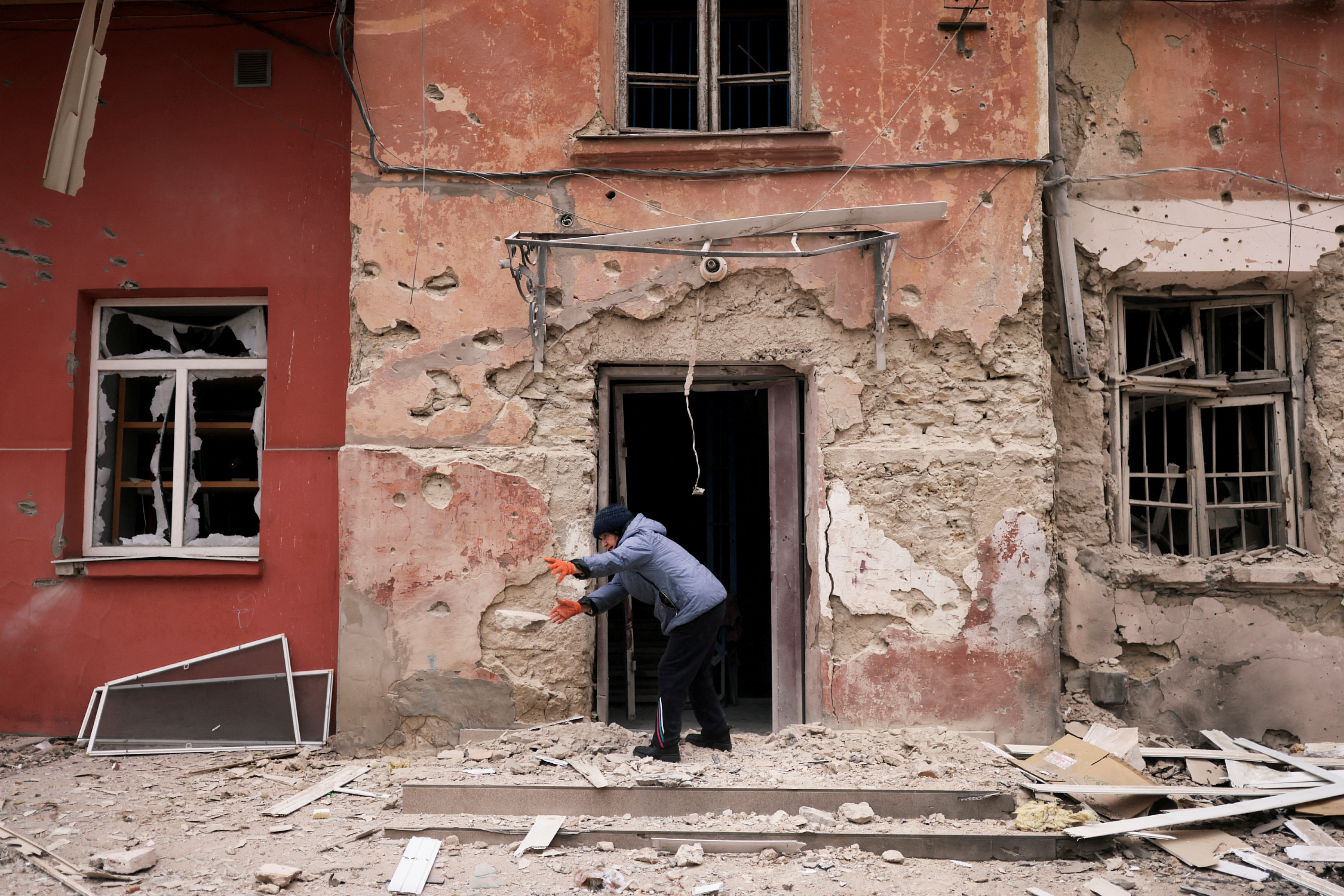
Zoya Mykolaivna, 84, removes debris in front of her apartment at a residential building damaged by a Russian military strike, amid Russia’s invasion of Ukraine, in Kherson, Ukraine January 25, 2023. REUTERS/Nacho Doce

Protesters gather in support of Ukraine during a meeting of European Union (EU) Foreign Ministers in Brussels, Belgium January 23, 2023. REUTERS/Johanna Geron

South Africa’s Foreign Minister Naledi Pandor and Russia’s Foreign Minister Sergei Lavrov attend a media briefing, in Pretoria, South Africa, January 23, 2023. REUTERS/Siphiwe Sibeko

U.S. Secretary of Defense Lloyd Austin, Ukraine’s Defense Minister Oleksiy Reznikov, Iceland’s Minister of Foreign Affairs Thordis Kolbrun Reykfjord Gylfadottir and NATO Secretary General Jens Stoltenberg, meet to discuss how to help Ukraine defend itself, at Ramstein Air Base, Germany, January 20, 2023. REUTERS/Wolfgang Rattay

German Defence Minister Boris Pistorius speaks to the media at Ramstein Air Base, Germany, January 20, 2023. REUTERS/Wolfgang Rattay
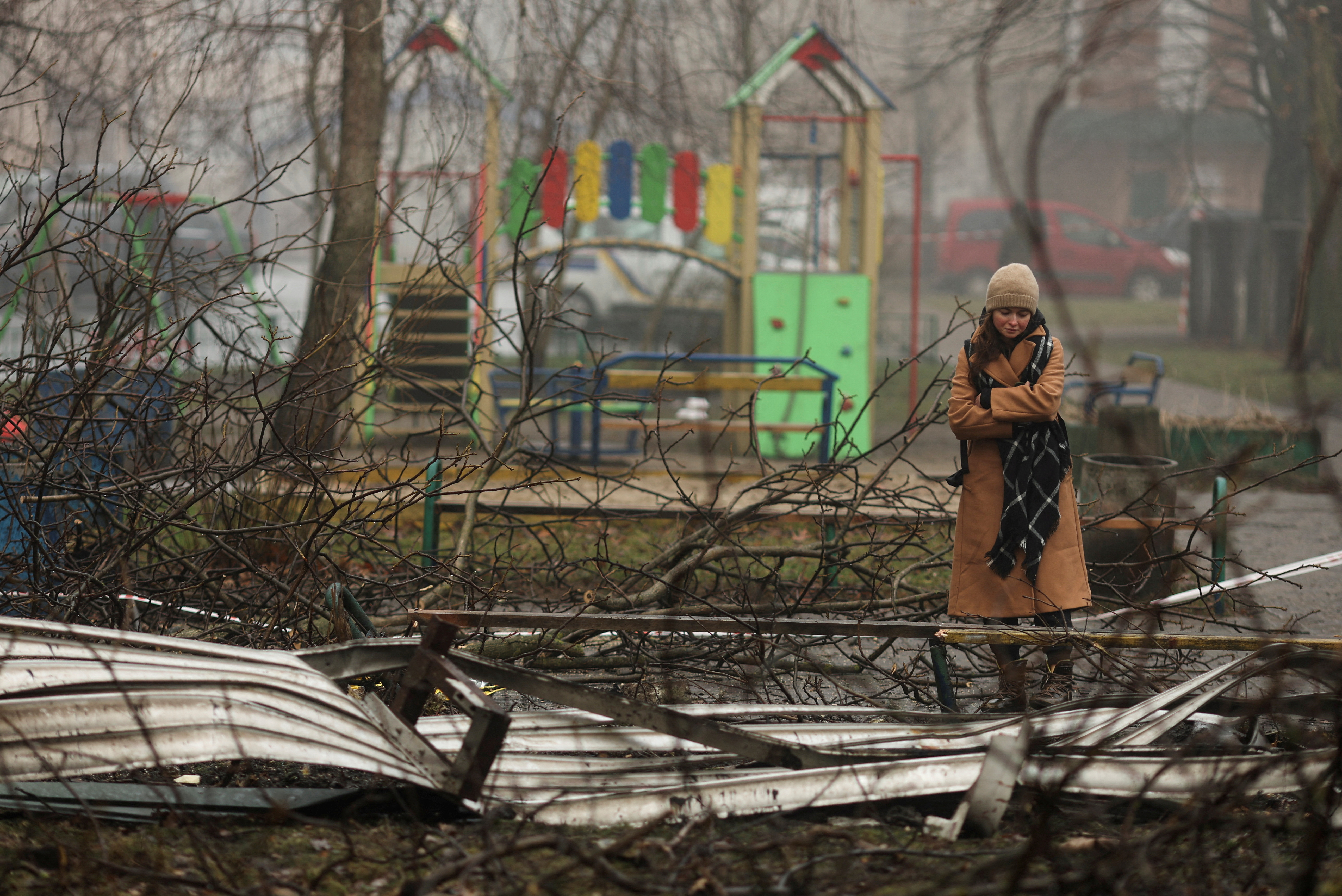
A relative looks at the site of a helicopter crash, amid Russia’s attack on Ukraine, in the town of Brovary, outside Kyiv, Ukraine, January 19, 2023. REUTERS/Nacho Doce

An employee works on the Senator APC at vehicle manufacturer Roshel after Canada’s defence minister announced the supply of 200 Senator armored personnel carriers to Ukraine, as part of a new package of military assistance, in Mississauga, Ontario, Canada January 19, 2023. REUTERS/Carlos Osorio
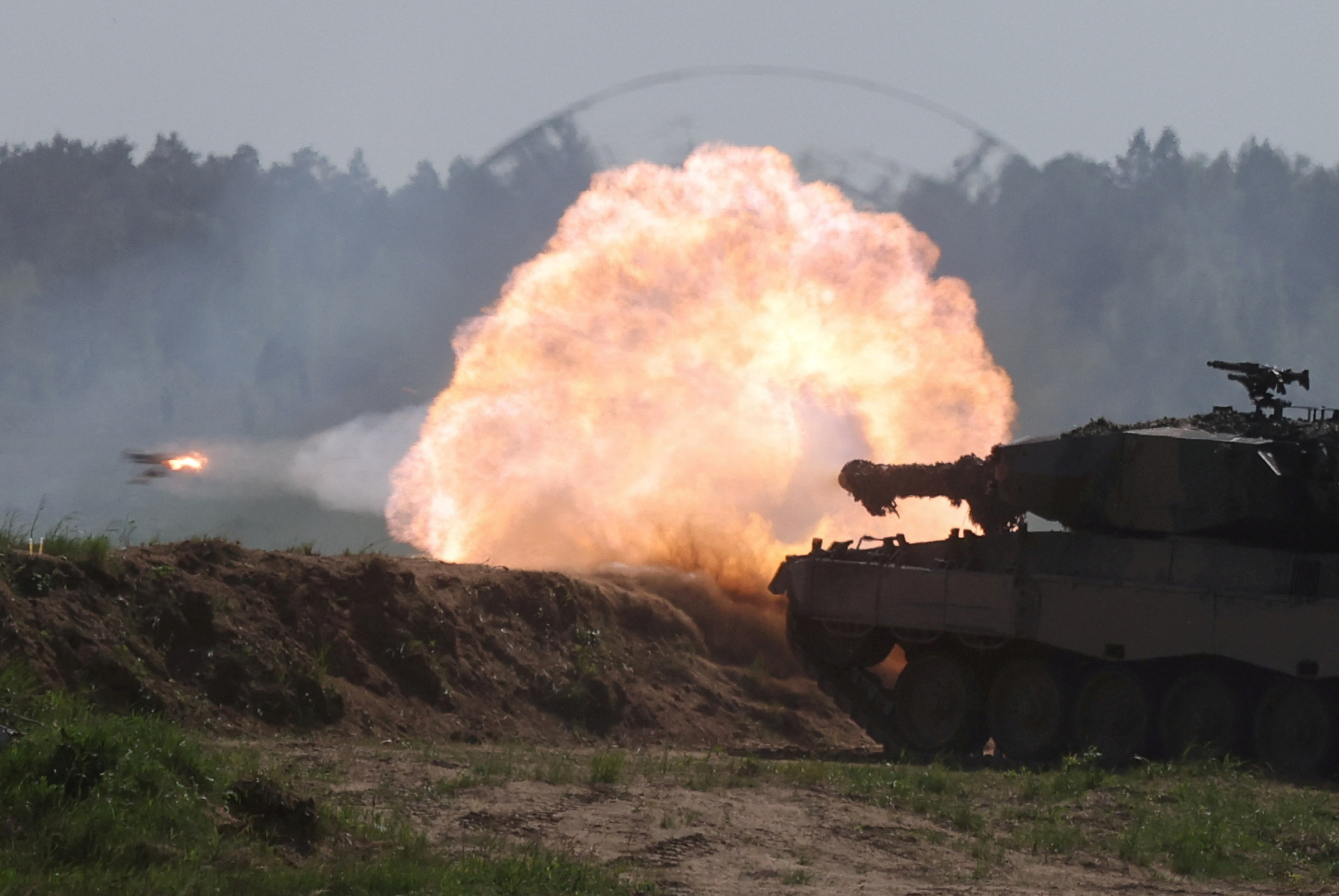
A Polish Leopard 2PL tank fires during Defender Europe 2022 military exercise of NATO troops including French, American, and Polish troops, amid the Russian invasion of Ukraine, at the military range in Bemowo Piskie, near Orzysz, Poland May 24, 2022. REUTERS/Kacper Pempel
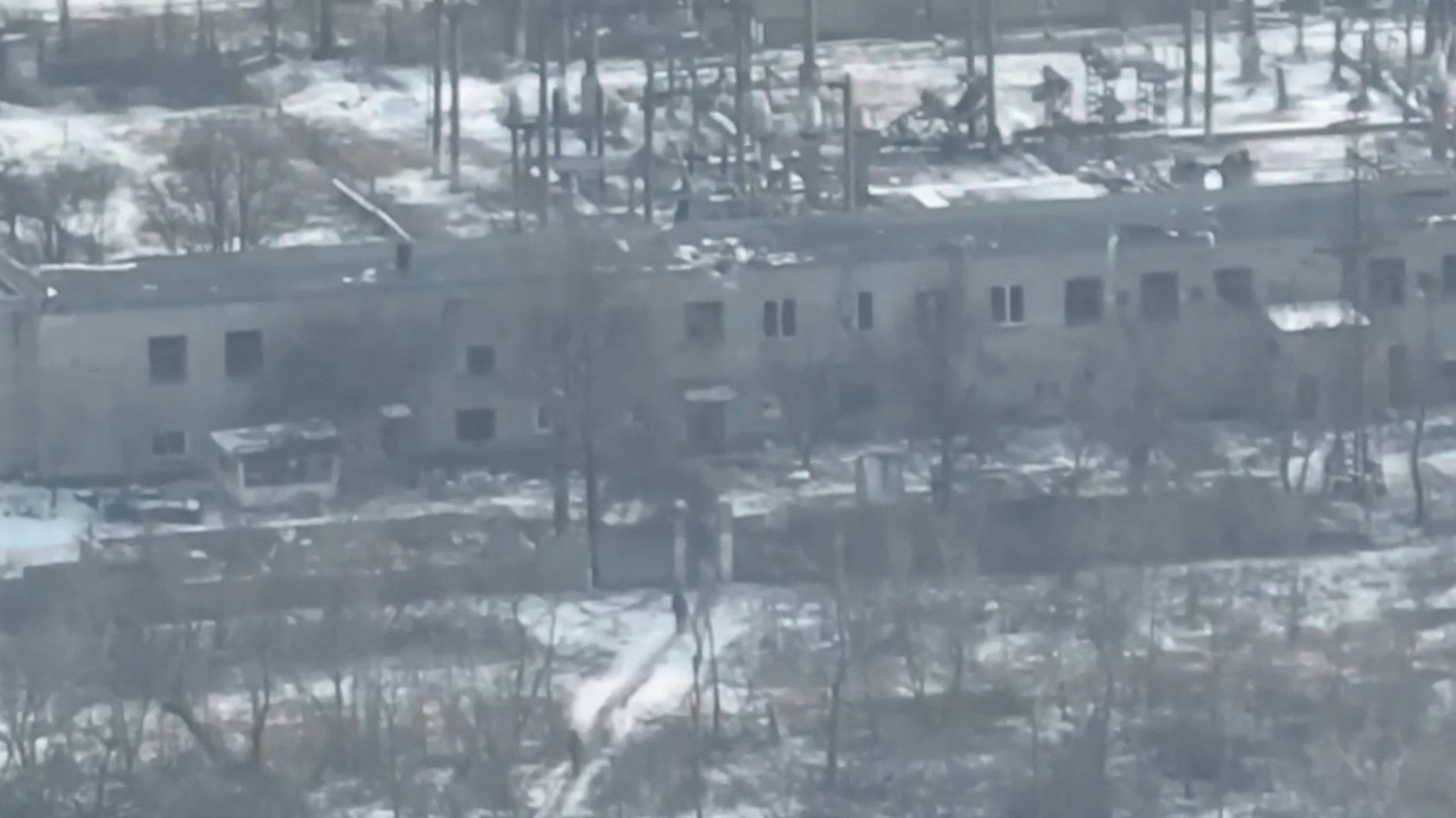
A general view of people said to be Russian soldiers seeking for shelter, in Kurdyumivka, amid Russia’s attack on Ukraine, in Donetsk region, Ukraine in this screengrab obtained from a handout drone footage on January 22, 2023. National Guard of Ukraine Press Service/Handout via REUTERS
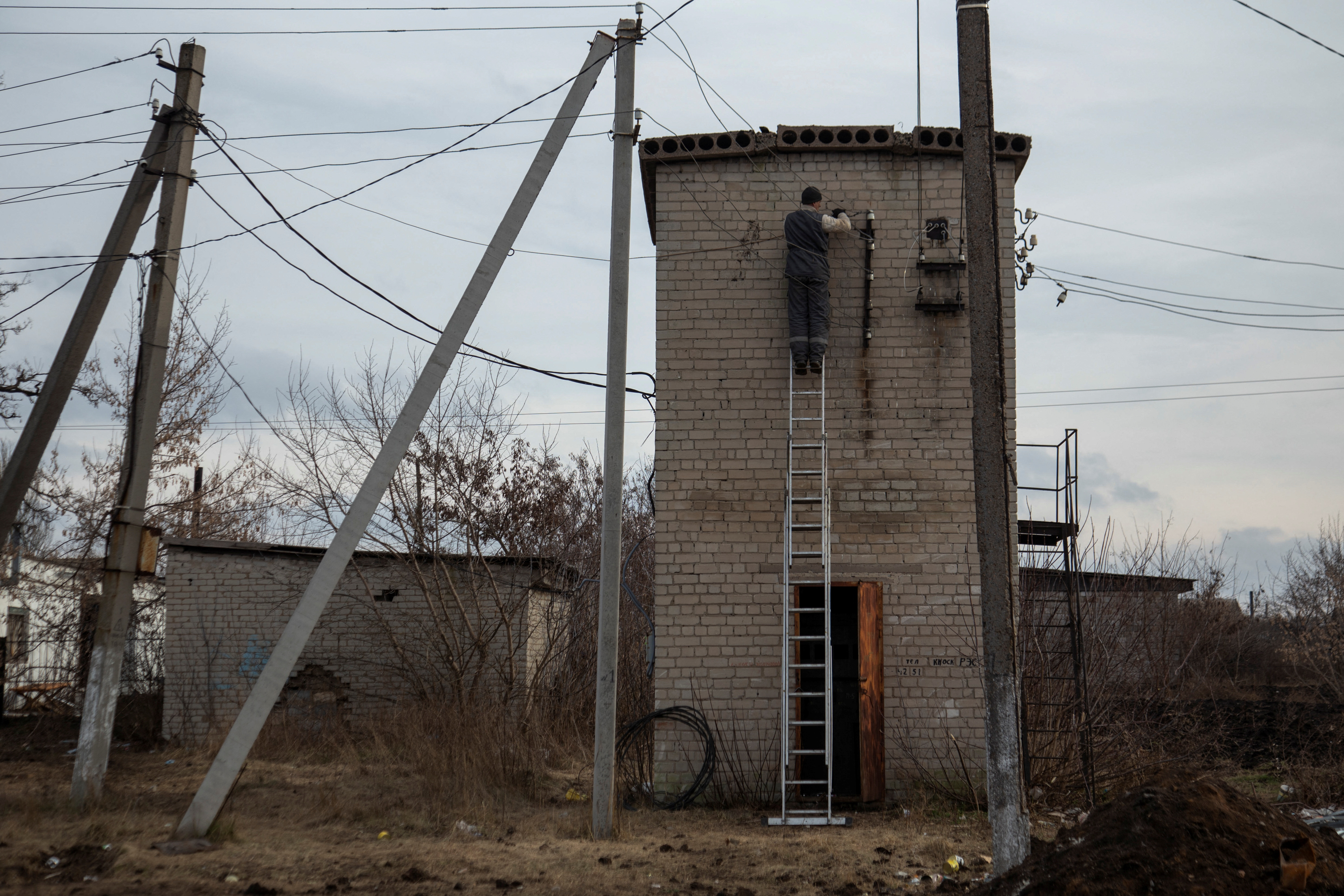
A man repairs power lines, amid Russia’s attack on Ukraine, in the village of Bilokuzmynivka, Donetsk region, Ukraine January 21, 2023. REUTERS/Oleksandr Ratushniak

Ritual workers carry bodies of victims as they walk past tributes for victims, near the site of a helicopter crash, amid Russia’s attack on Ukraine, in the town of Brovary, outside Kyiv, Ukraine, January 18, 2023. REUTERS/Nacho Doce
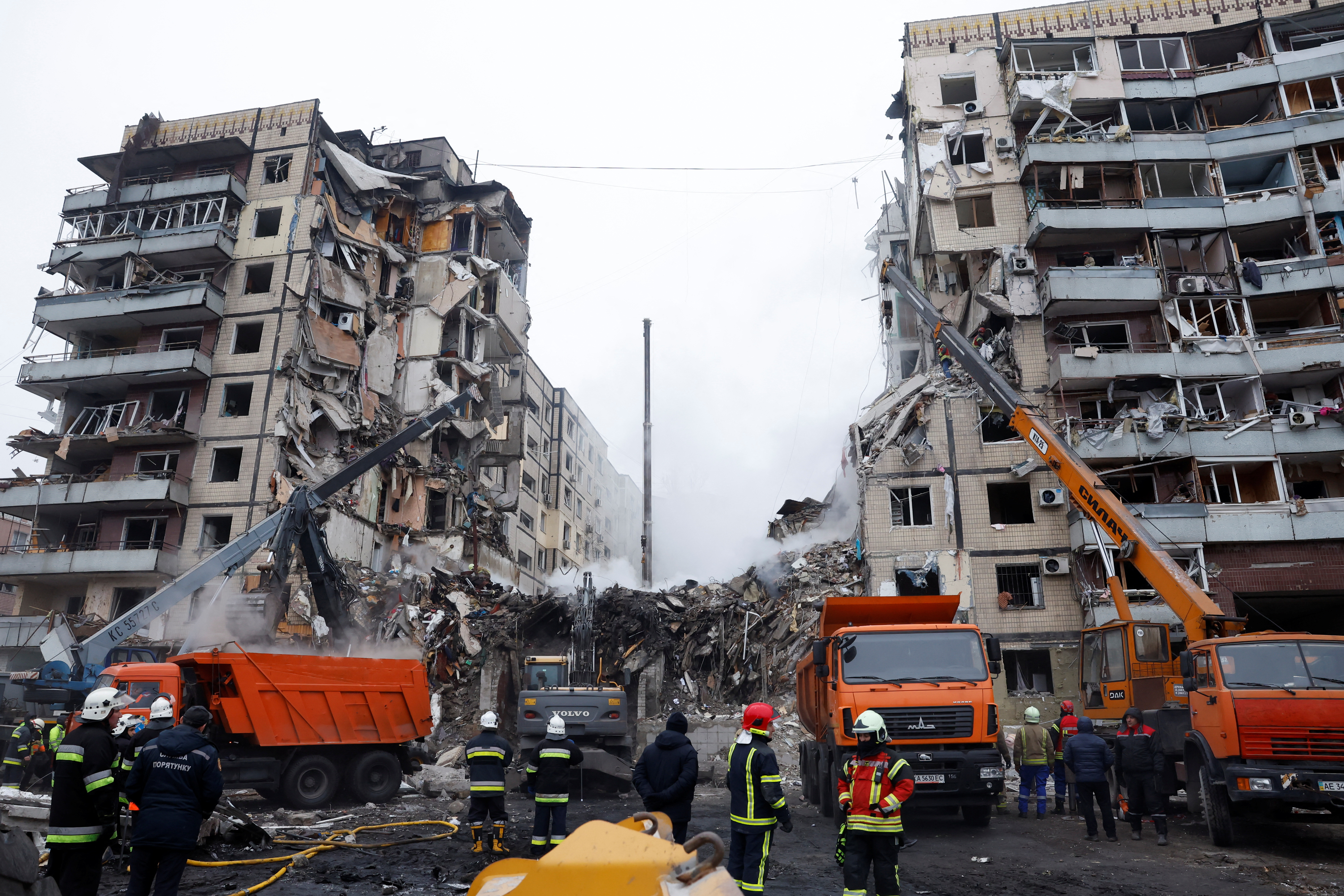
Emergency personnel work at the site where an apartment block was heavily damaged by a Russian missile strike, amid Russia’s attack on Ukraine, in Dnipro, Ukraine January 15, 2023. REUTERS/Clodagh Kilcoyne
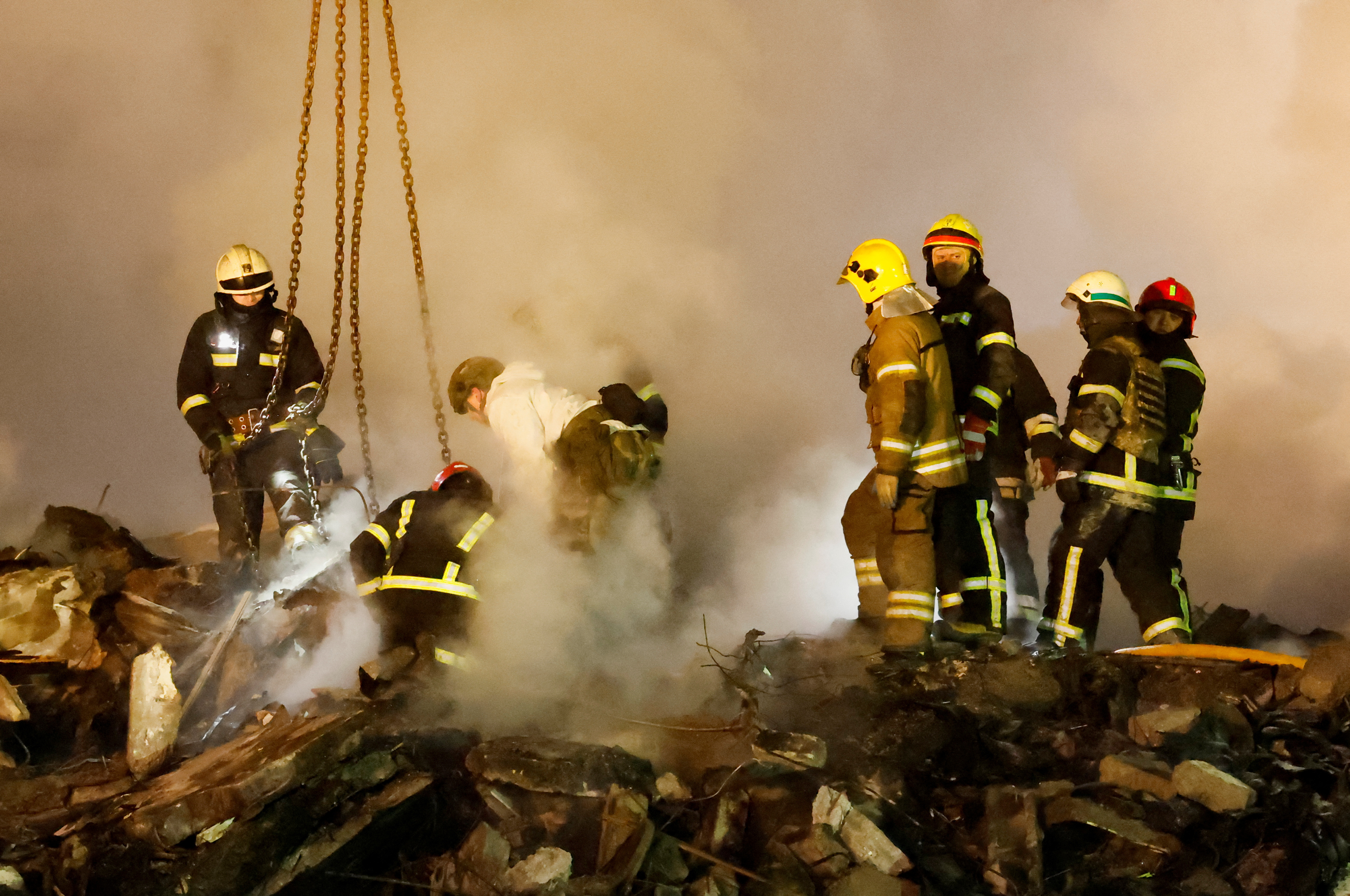
Emergency personnel work at the site where an apartment block was heavily damaged by a Russian missile strike, amid Russia’s attack on Ukraine, in Dnipro, Ukraine January 15, 2023. REUTERS/Clodagh Kilcoyne

A local woman holds her cat rescued by emergency workers at the site where an apartment block was heavily damaged by a Russian missile strike, amid Russia’s attack on Ukraine, in Dnipro, Ukraine January 15, 2023. REUTERS/Yevhenii Zavhorodnii
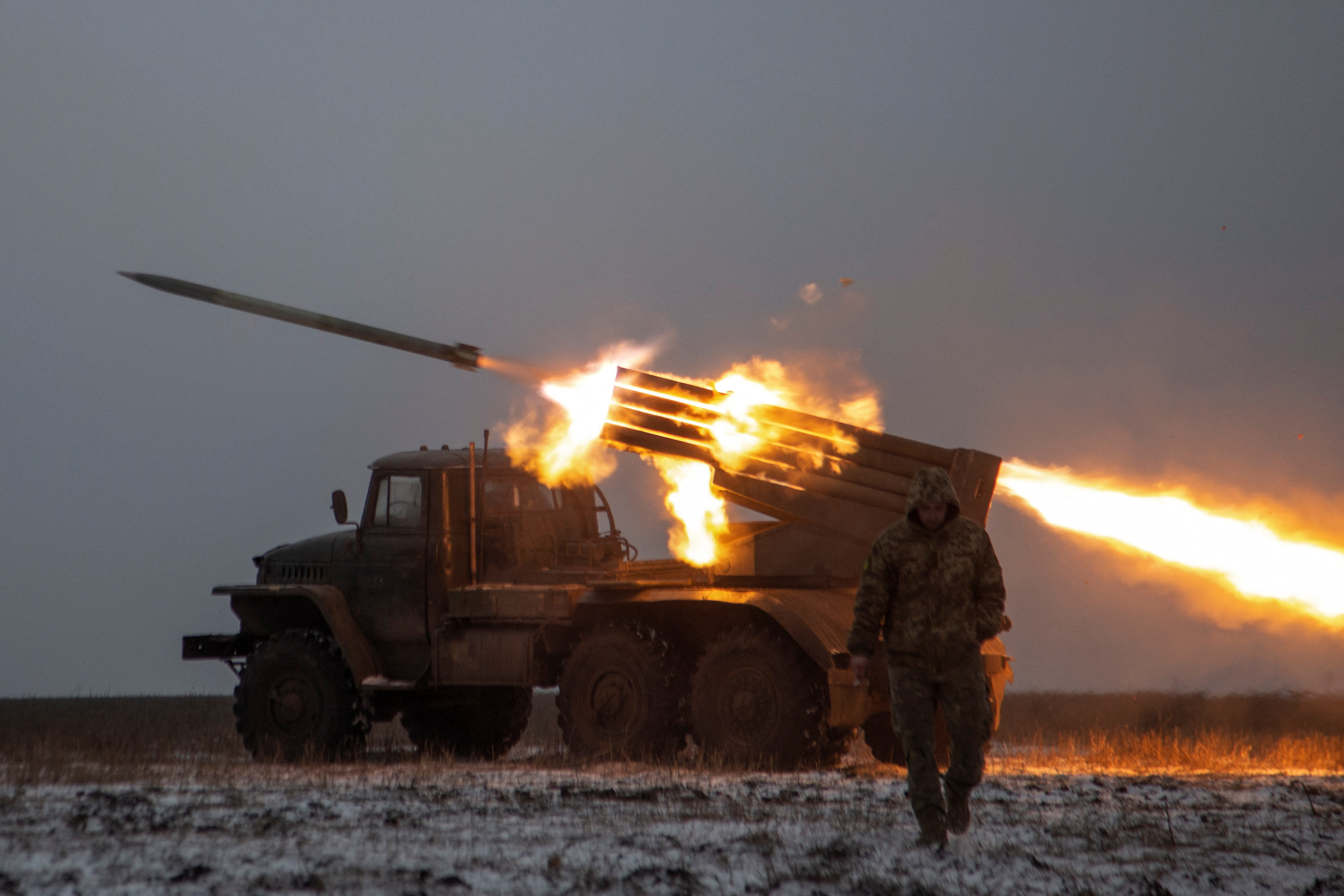
Ukrainian servicemen fire a BM-21 Grad multiple launch rocket system towards Russian positions on a frontline near the town of Bakhmut, amid Russia’s attack on Ukraine, in Donetsk region, Ukraine January 15, 2023. REUTERS/Oleksandr Ratushniak

Natalya and Yelena, 65, who didn’t give their family names react while standing in a corridor of a temporary accommodation centre located in a local dormitory for civilians evacuated from the salt-mining town of Soledar in the course of Russia-Ukraine conflict, in Shakhtarsk (Shakhtyorsk) in the Donetsk Region, Russian-controlled Ukraine, January 14, 2023. REUTERS/Alexander Ermochenko
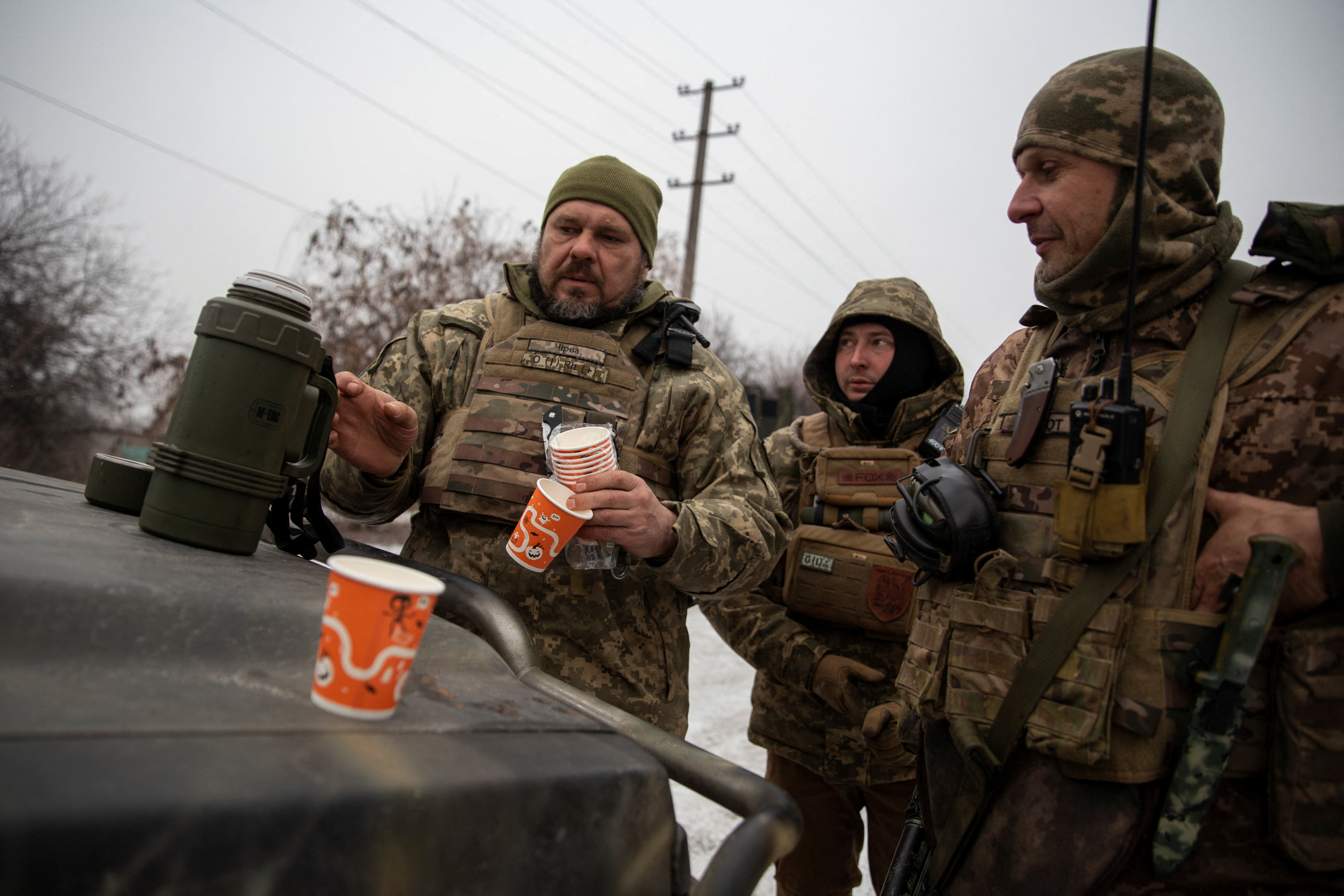
Ukrainian servicemen have coffee before moving to their position on a frontline near the town of Bakhmut, amid Russia’s attack on Ukraine, in Donetsk region, Ukraine January 15, 2023. REUTERS/Oleksandr Ratushniak

A woman pushes a stroller loaded with a sack of coal for heating her house, amid Russia’s attack on Ukraine, in the village of Nykyforivka, Donetsk region, Ukraine, January 15, 2023. REUTERS/Oleksandr Ratushniak
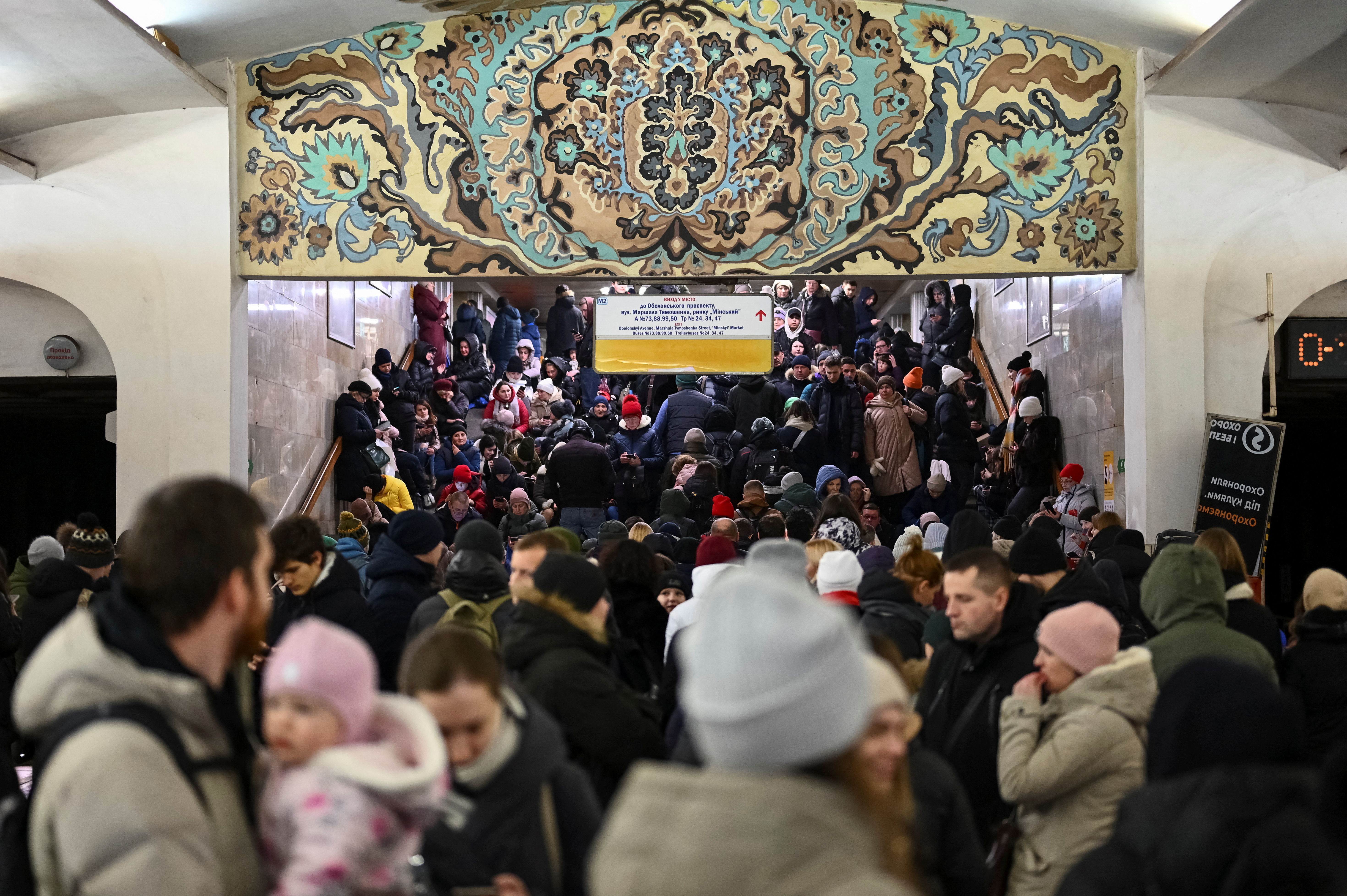
People take shelter inside a metro station during massive Russian missile attacks in Kyiv, Ukraine January 14, 2023. REUTERS/Viacheslav Ratynskyi
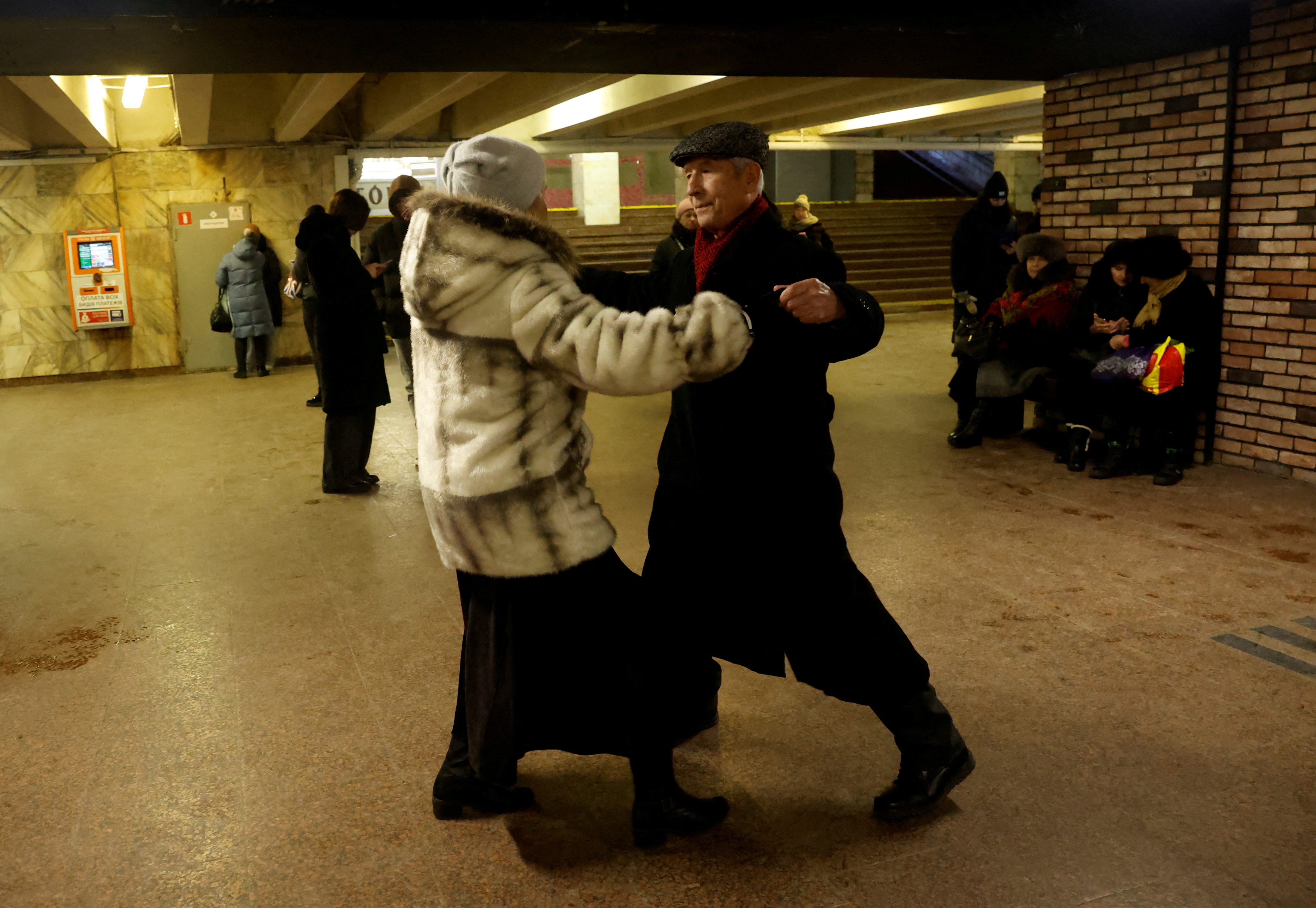
People dance to music as they take shelter inside a metro station during massive Russian missile attacks in Kyiv, Ukraine January 14, 2023. REUTERS/Clodagh Kilcoyne
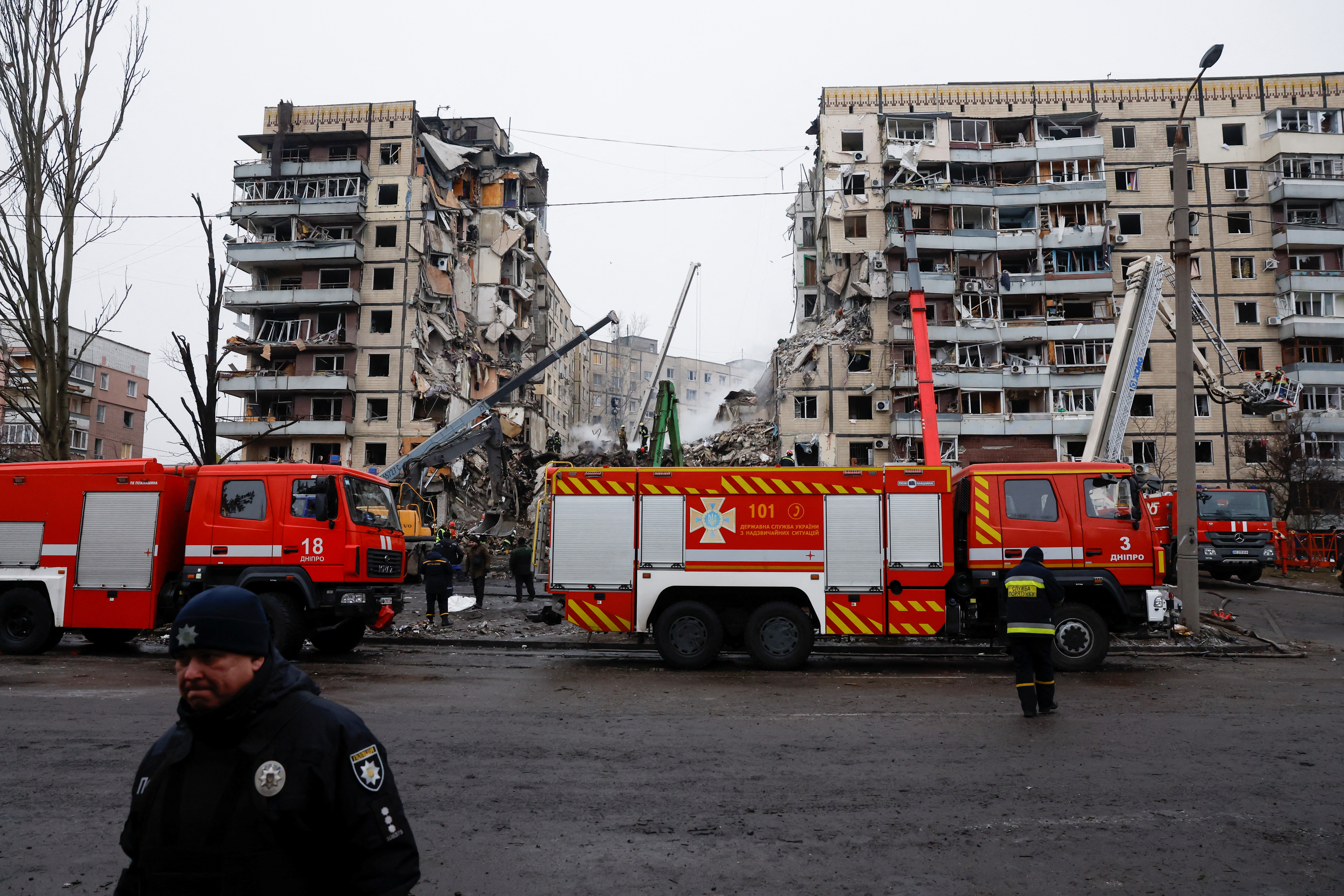
Emergency personnel work at the site where an apartment block was heavily damaged by a Russian missile strike, amid Russia’s attack on Ukraine, in Dnipro, Ukraine January 15, 2023. REUTERS/Clodagh Kilcoyne
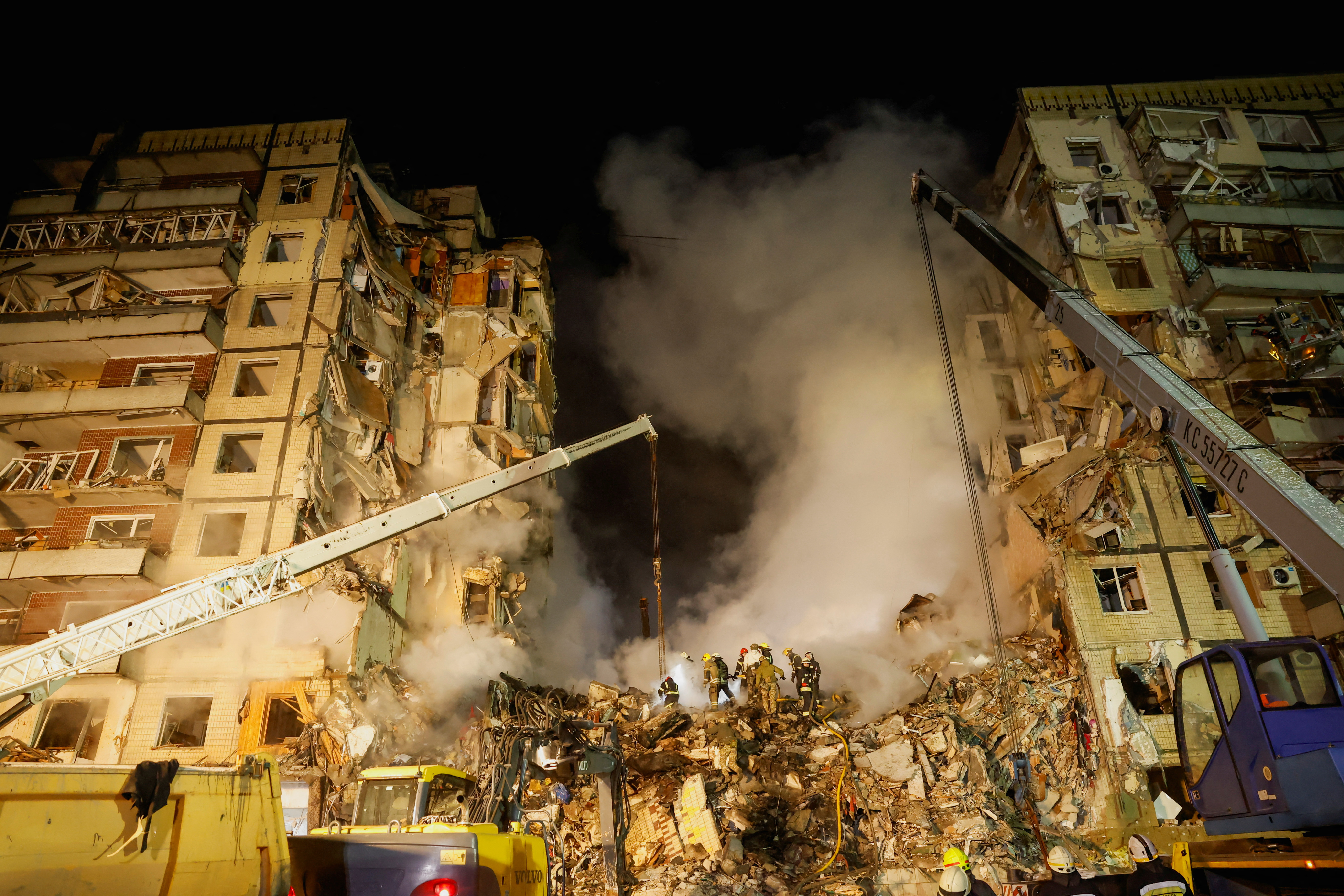
Emergency personnel work at the site where an apartment block was heavily damaged by a Russian missile strike, amid Russia’s attack on Ukraine, in Dnipro, Ukraine January 15, 2023. REUTERS/Clodagh Kilcoyne

A satellite view shows a closer view of exploding munitions, in Bakhmut, Ukraine, January 3, 2023. Satellite image 2023 Maxar Technologies./Handout via REUTERS

A satellite view shows destroyed apartment buildings and homes, in Soledar, Ukraine, January 10, 2023. Satellite image ?2023 Maxar Technologies./Handout via REUTERS



Categories
Audio Sources - Full Text Articles

A Minnesota synagogue built an ice rink — and is inaugurating it with a klezmer skate

(JTA) — A forecasted low of -16 degrees in the Twin Cities on Thursday has the stage set perfectly for two frozen Jewish firsts — a Klezmer on Ice festival and a synagogue-run skating rink.

Such is life in Minnesota, where bone-chilling temperatures are no match for Jewish festivities.

“It kind of shows us the Minnesota-style of thinking about the winter where just because it’s freezing cold outside, you don’t have to stop doing everything,” said Marcus Rubenstein, rabbi at Temple of Aaron in St. Paul.

“I used to be a rabbi in New York. They said you couldn’t schedule any big events in the winter because no one would come in case it snowed,” Rubenstein said. “But [here] sometimes it will snow 6, 7 inches and be -5, -10 degrees, and you’ll have everybody come out. I mean people in their 80s, 90s to little kids. And they just put on their coats and go out and have fun.”

Rabbi Marcus Rubenstein of Temple of Aaron test drives his synagogue’s new ice rink. (Courtesy of Marcus Rubenstein)

Temple of Aaron, a Conservative congregation of about 700 families, is inviting families to bundle up and have fun on what Rubenstein believes is the first-ever skating rink on a synagogue property. The rink, which can accommodate about 30 people at a time, was built and is being maintained by “Ice Captains” — synagogue members who clear it of snow and shovel off any extra ice that forms.

On Thursday, skaters at the rink heard the kickoff performance of the klezmer festival, featuring Jewbalaya, a hybrid klezmer and New Orleans jazz band in which Rubenstein plays the trumpet.

But the music will be piped in from inside the synagogue — a concession, Rubenstein and others associated with the festival said, to the cold.

Last week, musicians promoting Klezmer on Ice with a pre-festival performance alongside Lake Harriett, the (usually frozen-over) body of water at the heart of Minneapolis, ran into some technical challenges. Anticipating frigid temperatures, the musicians planned to play from a lakeside booth decorated like a boom box as part of a pop-art initiative called Art Shanty. But there was a wrinkle.

“We were supposed to have a sousaphone player who by the time they got their heavy big brass instrument into the box, the valves were frozen so they couldn’t play,” said Josh Rosard, an organizer of Klezmer on Ice. The performance went on without the sousaphone.

It’s not just brass instruments that are vulnerable to cold snaps. Strings and woodwinds can quickly go out of tune in the cold, as metal contracts and wood begins to warp. Clarinets and violins, staples of the Eastern European Jewish music genre, just can’t take it.

That’s why most of the Klezmer on Ice events will take place indoors — including but not only at Temple of Aaron. On the schedule for the weekend-long festival are local and national performers Sarina Partridge, Tzipporah Johnson, Izzy Buckner, the Klezmommies and the band Midwood. There will also be a cabaret variety show; klezmer-infused Shabbat services; and a luminary Havdalah ceremony.

Rosard said he saw the event as a breakout moment for the Twin Cities’ klezmer scene and, given the strong track record of longstanding klezmer festivals at spawning new acts, an opportunity.

“I’m really excited for what players in the community are going to take out of the workshops in particular and excited to see what may come out of it in the future,” said Rosard, who grew up casually playing the accordion but got more seriously involved in the klezmer world during the pandemic. He met his Klezmer on Ice co-organizer, Jewish musician and folklorist Sarah Larsson, with whom he attended KlezCanada and the Portland Klezmer Festival.

Still, he acknowledged, “It’s a little bit tongue in cheek to do something like this in the middle of February in Minnesota.”

Rubenstein said his congregants are up for it. Temple of Aaron’s new ice rink will be open not only during the klezmer festival’s opening night but for skating sessions most Saturdays after Shabbat morning services and Hebrew school classes finish.

The sun sets ahead of the Klezmer on Ice Festival’s opening night, which features a free skate session at Temple of Aaron’s ice rink. (Courtesy of Marcus Rubenstein)

If the activity isn’t exactly standard after-synagogue fare, it’s perfectly permitted under the Conservative movement’s interpretation of Jewish law. The movement, of which Temple of Aaron is a part, permits non-competitive ice skating on Shabbat, so long as no Shabbat rules are violated (such as driving to or from a rink or paying to rent skates), and the skating takes place within the boundaries of an eruv, or Jewish legal enclosure inside which certain objects can be carried on Shabbat.

Rubenstein said he was thinking about the activity in different terms — as it relates to making Temple of Aaron a centerpiece of a St. Paul Shabbat.

“The kids are ice skating anyway,” he added. “So why not ice skate at shul and come do it together with their Jewish friends, and build community that way?”

Temperatures are supposed to rise over the course of the weekend, but the high on Friday should be in the low single-digits. So for the klezmer performance that is supposed to take place at Lake Harriet, Rosard says, a plan is in place to avoid last weekend’s snafus.

“We’ll have the sousaphone player drive up as close as possible, then run-slash-briskly walk straight into the performance shelter,” he said. “We didn’t quite have the urgency last time.”

This article originally appeared on JTA.org.

The post A Minnesota synagogue built an ice rink — and is inaugurating it with a klezmer skate appeared first on The Forward.

Categories
Audio Sources - Full Text Articles

Inside the US Army Plant Making Artillery Shells for Ukraine

A batch of artillery rounds destined for the Ukrainian battlefield twists and turns its way down a serpentine production line in northeastern Pennsylvania. Here, inside a series of red brick buildings where steam locomotives were repaired a century ago, teams of workers toil around the clock to ensure the industrial grinders, lathes and furnaces don’t stop rumbling.

“Everything is very large. It’s very complex, a lot of moving parts, tremendous amounts of heat,” says Richard Hansen, who oversees manufacturing operations at the Scranton Army Ammunition Plant. “You have to continually… keep it running. And it’s important for us to do that because we’re making ammunition.”

[time-brightcove not-tgx=”true”]

The 155-millimeter shells, which are fired from howitzers several miles from their targets, are critical to the Ukrainian military’s nearly yearlong defense against the Russian invasion. Thousands of the unguided projectiles are fired each day in the conflict—a consumption rate that U.S. and Ukrainian officials compare to World War II—draining existing U.S. Army stockpiles.

The Biden Administration has already given Ukraine more than 1 million 155-millimeter shells. With hundreds of miles of contested frontlines, the Ukrainian military depends on firing the rounds from about 300 155-millimeter howitzers to repel Russian positions. With no end to the fighting in sight, the U.S. Army plans to boost its current production rate of around 14,000 155-millimeter howitzer shells per month to 20,000 by this spring and as many as 90,000 by 2025, spending $1.9 billion this year alone in the process.

The Scranton plant, which is contracted to crank out 11,040 shells per month, finds itself at the center of the Army’s planned industrial transformation. Roughly 300 employees work across the 15-acre complex, where hulking machinery cuts, melts, reshapes and refines 2,000-pound steel rods into sleek, two-foot-tall projectiles. The plant is owned by the Army but is operated by General Dynamics Corp.’s ordnance unit and currently runs 24 hours a day, five days a week with a weekend shift.

Each day, trucks deliver 20-foot-long steel rods weighing 2,000 pounds to the factory. The rods are left outside where a massive magnet hoists them into a red brick building known as the “forge shop,” where robotic saws slice the rods into foot-long chunks called “billets.”

Step inside the shop, away from the Pennsylvania winter winds, and you’ll immediately feel the warmth emanating from the three massive furnaces heated to 2,000 degrees. Each billet is fed into the fire where they stay for an hour, before emerging like red-hot coals that slide to a stop inside a darkened room with robotic arms.

The metal arms snatch each billet with smooth efficiency and move them to three individual stations. Over a 90-second period, the billet is pierced, stretched, and pressed into three-foot lengths against extreme heat. This happens hundreds of times each day. “Speed is key,” Hansen says, watching the process.

In the last stage, a robotic arm grasps the billet and places it over a round door where it’s neatly pushed into an underground assembly line, called “the subway.” Each billet, still scorching hot, falls onto a conveyor. “Don’t touch it,” Hansen says. “It won’t just burn your hand. It will take it off—bone and everything.” The billets are collected by hanging claws that carry them one by one around a large empty room along a track for four hours. Later, each billet is inspected to ensure its shape and consistency are up to specifications so it can become a projectile.

The last building is a 60-foot-tall warehouse the size of a city block. Exterior light streams in from the windows, which were installed before the widespread availability of indoor lighting. A successive series of machines gradually shave 30 pounds of excess metal from the ribbed, dark gray billets until they emerge as polished shells with tapered noses. “We work in specifications that are thousandths of an inch,” Hansen says. “Essentially, we’re taking a tube and turning it into a projectile.”

Each shell is hung on a hook where it receives a coat of Army green paint. The entire process takes about three days, but it could take several months before the shells are loaded onto pallets, driven 10 hours away on a big rig to another plant in Iowa, where they’re filled with explosives and affixed with fusing—effectively converting them into oversized bullets, ready to be fired from a howitzer.

The Ukraine conflict has exposed serious problems in the U.S. defense industrial base, according to Mark Cancian, a retired Marine colonel who’s now a senior advisor at the Center for Strategic and International Studies think tank in Washington. The Pentagon has spent the past quarter-century investing in expensive, high-tech weaponry. “The increased production will take months to come online and still will not fully cover the current artillery expenditure rates,” he writes. “Encouraging NATO countries and other close allies to provide stocks would help, and the United States has been pursuing this effort aggressively.”

Congress has stepped up. Since August, alone, Scranton and its sister-facility in nearby Wilkes-Barre have received more than $420 million in federal funding for a new building, additional equipment and improved automation that the Army hopes will boost production rates. The flood of money is a welcome turn for the Scranton plant, which was first constructed in 1908 by the DL&W Railroad as a steam locomotive repair shop. The Army acquired the property in 1951 at the onset of the Korean War and converted the facility to manufacture artillery shells.

Back then, the U.S. had 86 military ammunition plants as part of an industrial mobilization designed to meet wartime ammunition needs. Over the decades, the number of facilities dwindled. Today, the Pentagon has just five so-called “government-owned, contractor-operated” plants that supply the military with most of its conventional ammunition, propellants and explosives. General Dynamics has been enhancing recruitment efforts in anticipation of additional artillery orders for the Scranton plant.

Douglas Bush, an assistant secretary of the Army who is the service’s top acquisition official, said the Army might establish a new 155-millimeter assembly line in Texas and has invested $68 million in Canada “for them to stand up to retool a facility” to aid in artillery shell production. “We are sourcing and looking worldwide and a lot of that’s now actually flowing through,” he told reporters Jan. 25. “So, that’s going to be critical because production ramp-ups do take time and we are looking at various sources, including foreign production, to make sure Ukraine has what it needs.”

Categories
Audio Sources - Full Text Articles

The ghosts of Donald Trump’s past are coming for him

19121c5c768fb6ee35d5576afe2d9a7f?s=100&d

Help support Palmer Report! Our articles are all 100% free to read, with no forced subscriptions and nothing hidden behind paywalls. If you value our content, you’re welcome to pay for it:

Pay $5 to Palmer Report:

Pay $25 to Palmer Report:

Pay $75 to Palmer Report:


Help fund Palmer Report here

Pay $5 to Palmer Report:

Pay $25 to Palmer Report:

Pay $75 to Palmer Report:


The past always has a pesky little habit of reaching its tentacles into the present and tampering with it. As much as some people run from their pasts, there are few ways of escape — the ghosts of the past maybe murky, but they are not still, and they ALWAYS come rearing their heads at some point. For Donald Trump, that time is now.

Palmer Report warned that as indictments drew near, Trump would start to cave in on himself even more than he already has. We warned of his lunacy which would be lit aflame all over again as the ghosts of Trump’s past rose to embrace, with grizzly precision, the present day.

And on truth social, Trump shared a post clothed in dark, unlit violence, from another user. It shows where Trump’s head is at — it is in the past, locked in time, on January 6. Here are parts of what this wretched post said:

“People my age will physically fight for him this time.”

“What we got to lose?”

“I’ll donate the rest of my time here on this planet to do it.”

“They got my 6, and we are Locked and LOADED.”


Trump, of course, would share a post like that. It’s violent, it’s unhinged, and it shows darkness. There is nothing for Trump not to like in that post. All of this is happening because of Trump’s coming indictments. And I use the plural form intentionally. I believe there will be more than one. I think they will be any day now. Do I know this as a fact? No. But it is what I firmly believe, as do most people.

The ghosts of the past have risen; their hands are reaching out for Trump; he is in despair, he is trapped by these ghosts, and he can’t get free. These next few weeks will be electrifying to watch, and watch we will. So will trump because he’s helpless — helpless as the ghosts of the past march toward him with steady precision.

Help fund the Ruben Gallego 2024 Senate campaign here

Help fund Palmer Report here

Pay $5 to Palmer Report:

Pay $25 to Palmer Report:

Pay $75 to Palmer Report:

Help fund the Ruben Gallego 2024 Senate campaign here

Help fund Palmer Report here

Pay $5 to Palmer Report:

Pay $25 to Palmer Report:

Pay $75 to Palmer Report:

The post The ghosts of Donald Trump’s past are coming for him appeared first on Palmer Report.

WP Radio
WP Radio
OFFLINE LIVE