
Categories
Audio Sources - Full Text Articles

Hartman Institute received major donations from U.S. billionaires funding attack on Israeli judiciary

iStock-641067732.jpg

This article originally appeared on Haaretz, and was reprinted here with permission. Sign up here to get Haaretz’s free Daily Brief newsletter delivered to your inbox.

The American-Jewish billionaires behind the controversial think tank that is pushing for an overhaul of Israel’s judiciary are also major donors to the Shalom Hartman Institute – an educational center dedicated to Jewish pluralism and liberal Zionism.

Public records show that for a decade, the Hartman Institute received more than $25 million in donations from the CLAWS Foundation. That organization is headed by Jeffrey Yass and Arthur Dantchik, the main funders of the Kohelet Policy Forum – the conservative-libertarian think tank that built the groundwork for the plan to weaken Israel’s court system.

The Knesset is currently discussing legislation submitted by Justice Minister Yariv Levin that would give parliament the power to override Supreme Court decisions with a simple majority, provide the governing coalition with a majority on the committee that appoints judges and do away with the standard of reasonability in court rulings.

The legislation draws much of its inspiration from policy papers drafted over the years by Kohelet, and Israel’s new far-right government is working full speed to push it through despite fierce public opposition and fears that it could spell the end of democracy in the Jewish state.

Among those who have spoken out publicly against the plan is Donniel Hartman, the president of the Shalom Hartman Institute, which was founded by his father.

On a podcast he co-hosts, Hartman said last week that his opposition to the judiciary overhaul had prompted him to take to the streets for the first time in his life, joining hundreds of thousands of other Israelis taking part in the weekly Saturday night protests around the country.

“For those of us who oppose this government’s far-reaching plans to weaken the independence of our judiciary by making it subservient to the politicians, this is one of those essential moments that we feel are determining the face of our nation,” Hartman said.

A 2021 Haaretz investigation traced donations to Kohelet back to Yass and Dantchik, who until then had been anonymous benefactors. The American business partners control Susquehanna International Group, a securities trading firm, and are both major donors to the U.S. Republican Party.

Public records show that between 2010 and 2020, virtually every single year, their CLAWS Foundation also donated to the Hartman Institute. Most years, the annual donation was $3.25 million. That makes CLAWS one of the biggest, if not the biggest, single donor to the Hartman Institute during this period. In some years, donations from CLAWS accounted for nearly half to a third of its total fundraising from private organizations.

When asked how he could take money from a foundation that supports the Kohelet Forum when he is so opposed to its judicial agenda, Hartman said: “I don’t talk about people I receive money from. The only thing I would say to you is that people might be a little more complicated and a little more multidimensional than you give them credit for.”

Referring to the CLAWS Foundation as “very good friends,” he insisted they had no influence on the agenda of the Hartman Institute. “Our record speaks for itself,” he said.

Professor Lila Corwin Berman, who holds a chair in American Jewish history at Temple University, said the U.S. experience has shown that the source of funding does matter. “Big donors, like Kohelet’s funders, whose primary causes are privatization and deregulation churn their money into anti-democratic policies,” she said. “Even if they also support a museum wing or another institution that seemingly strays from their message, they are being validated by a system that offers no true democratic check on their actions.”

A prominent authority on American Jewish philanthropy, Corwin Berman said the Hartman Institute could respond to an expected backlash against revelations concerning its donors in one of two ways. “It can effectively say that it does good work with the money it is given, no matter what the source, or it can say that the money is connected to the world it is trying to build.”

She added, “The first response is validated by American law, which asks for only minimal transparency in return for maximal tax benefits. The second response, however, might be a requirement of our moment, when we should be asking whether democracy can possibly sustain the assault of dark money that floods the zone of law and policy.”

The mission of the Hartman Institute, as described on its website, is “to strengthen Jewish peoplehood, identity and pluralism; to enhance the Jewish and democratic character of Israel; and to ensure that Judaism is a compelling force for good in the 21st century.”

The institute, headquartered in Jerusalem, comprises five independent centers, including two high schools in Jerusalem and the Shalom Hartman Institute of North America. Thousands of Diaspora Jews have attended programs it sponsors, including interfaith activities and programs on gender inequality.

When contacted by Haaretz, Yehuda Kurtzer, president of the Shalom Hartman Institute of North America, declined to comment.

The post Hartman Institute received major donations from U.S. billionaires funding attack on Israeli judiciary appeared first on The Forward.
Categories
Audio Sources - Full Text Articles

Conservative synagogue makes history with hiring of Hebrew Israelite clergy

Like hundreds of synagogues across the nation, Newark’s Congregation Ahavas Sholom is celebrating Black History Month.

The largely Ashkenazi synagogue is also making history itself.

Last September, the United Synagogue of Conservative Judaism affiliate appointed as its first associate rabbi Eliyahu Elijah Collins, a fifth-year student at the Israelite Rabbinical Academy in Queens, N.Y. The shul also last year brought on Robert Azriel Devine, another Israelite Academy student, as a rabbinical intern.

Crossovers between mainstream Judaism and Hebrew Israelites — largely African American groups that range from radical street preachers to others resembling Conservative congregations — are not rare. There are many people who practice both streams of the related faiths, including Collins and Devine, who refer to themselves as both Israelites and Jews.

But their appointments are unusual, if not precedent-setting, as possibly the first Israelite-affiliated clergy to regularly lead a mainstream Jewish congregation.

Unusual, but not at all unimaginable, in the view of Eric Freedman. Ahavas Sholom’s longtime president, Freedman said since childhood he’s never recognized a distinction between mainstream Jews and Israelites.

“If anything, they are more observant than we are,” he told the Forward.

‘It felt normal’

The Israelite adherents Freedman has become most familiar with evolved out of the Commandment Keepers in New York, a congregation led through most of the 20th century by Rabbi Wentworth Arthur Matthew and connected to the Israelite Academy and other Ethiopian Hebrew congregations across the country. Though most members are Black Americans, there are those of other races, including whites and a growing Latinx population.

For Freedman, the outreach across racial lines as well as religious barriers that deem who is or isn’t Jewish serves two purposes. One is to help bridge racial divides in mostly Black Newark as that city’s “last remaining synagogue born of the Great European Migration at the turn of the 20th century,” as the shul bills itself. The other is to attract new worshippers to the historic but dwindling congregation.

“We have humble goals, most of which is trying to keep the synagogue alive,” Freedman said, adding that before the rabbinical pair joined, Ahavas Sholom had other African American members. “We had eight to 10 Hebrew Israelite community members who were congregants at one time. For me, it felt normal. I realize immediately if people are regular members of the community, everything becomes normalized.

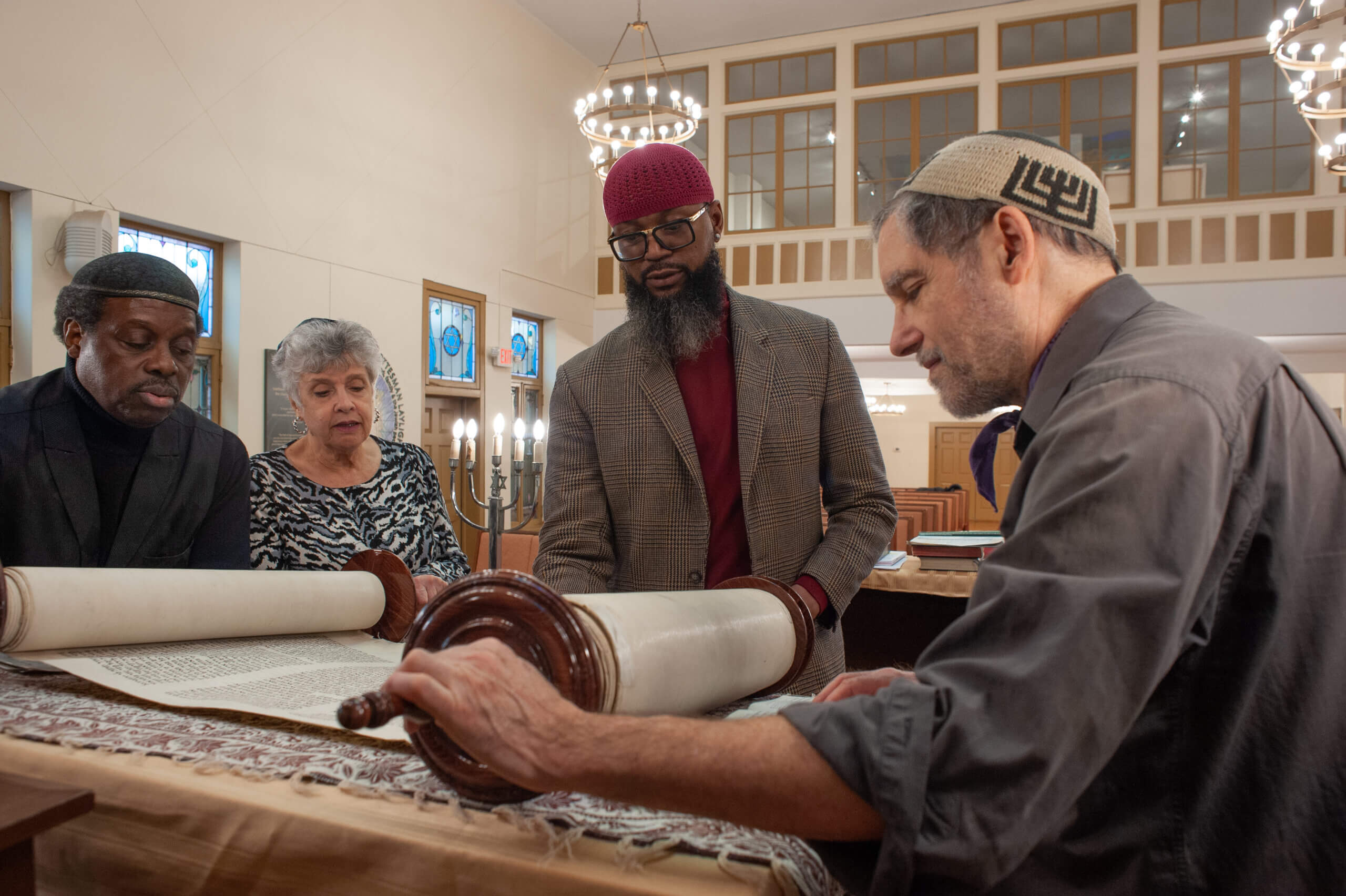
Robert Azriel Devine, Amy Schonhaut, Eliyahu Elijah Collins and Jeff Haveson roll up a Torah scroll at Newark’s Congregation Ahavas Sholom. The Conservative synagogue has added Devine and Collins, who are students at New York’s Israelite Rabbinical Academy, to its spiritual staff. Photo by Tim Lee

“The idea of African American Jews never seemed strange to me,” Freedman continued, adding he never asks first-time attendees if they are Jewish.

More diplomatically, he may instead query “Kohen or Levi?” before allowing a new face up to the bimah.

That respect is missing in far too many congregations, Freedman said. “If an African American walks in, the question becomes much more heightened. It’s crazy. It shouldn’t be that way.”

The appointments of Collins, 47, and Devine, 66, followed conversations over several years between Freedman and Rabbi Capers Funnye, Jr., the spiritual leader of Chicago’s Beth Shalom B’nai Zaken Ethiopian Hebrew Congregation. Funnye is also a Conservative Jew and the chief rabbi of the International Israelite Board of Rabbis.

When Ahavas Sholom reopened for in-person gathering after the building was closed for two years during the pandemic, Freedman said the discussions with Funnye and other Israelite leaders turned to the idea of taking on interns.

“I said, ‘Let’s see how our community reacts to being led by a Black rabbi. I need to get them in front of people,’” Freedman said.

Familiar tunes

Another reason for adding spiritual staff was that the synagogue’s rabbi, Simon Rosenbach, has aphasia, a condition that diminishes the capacity to understand or express speech. “My aphasia brought me to the end of the road. I will retire as of June 30, 2023,” he wrote in a recent synagogue bulletin.

Devine, the rabbinical intern, said he developed a bond with Rosenbach. Both men turned to the rabbinate in middle age, enrolling at the Academy for Jewish Religion, an interdenominational seminary founded in 1956 and based in New York and Los Angeles. Devine later left and is completing study at the Israelite Academy.

“I really connect with him a lot,” Devine said of Rabbi Rosenbach. “He sees my mannerisms on the bimah. He’ll say, ‘This is supposed to be like that. This is supposed to be like this,’ which is very helpful.”

Devine may not need much help, however. Though his impending smicha is under Israelite auspices, as was that of his late father, an esteemed Israelite rabbi, the younger Devine grew up in a Conservative environment at Chicago’s Congregation Rodfei Zedek.

“I had my bar mitzvah there. I went to Hebrew school, summer camp at Camp Ramah,” he said. “I’ve had a lot of good experiences with Conservative shuls.”

Wouldn’t a Conservative bar mitzvah make you Conservative? he was asked.

“It makes you a Jew,” he replied.

Elaborating, Devine described Collins and himself, saying, “We’re Hebrew Israelites who practice Judaism, as opposed to some other denominations that include the New Testament” — or more radical factions better known for antics especially targeting Jews.

Returning to his Conservative upbringing, Devine said of Ahavas Sholom: “I was familiar with the melody and tunes because I grew up in Rodfei Zedek. The liturgy is the same. Eric has always encouraged us to daven the way we do in our community. I sing in a very operatic style, but they like it.”

Added Collins: “There wasn’t that much of a difference except for the cadence

and in various tunes. I’m very, very familiar with the liturgy.”

“Ahavas does not play musical instruments on shabbat. Neither does Beth Shalom,” Collins continued in a comparison to his Israelite home congregation in New York.

There is a difference in the absence of a mechitzah to separate women worshippers from men at the Newark shul, and its presence at the Israelite synagogue.

Or its mental presence.

“Beth Shalom had it, but they did some construction of the sanctuary and the mechitzah was not erected again. However, everyone is accustomed to going to their sides.”

‘Driven by Torah precepts’

While Freedman’s recruitment through the Israelite Academy may be groundbreaking, it may not have been in accordance with rules of the shul’s rabbinical authority, according to Steve Rabinowitz, a spokesperson for the United Synagogue of Conservative Judaism and its affiliated rabbis’ group, the Rabbinical Assembly.

“United Synagogue and the Rabbinical Assembly have real guidelines about recruitment of rabbis, about advertising and about vacancies. Their members are expected to follow them,” he told the Forward.

“This particular shul did not use those guidelines. They found this rabbi on their own,” he continued, declining further comment except to say, “In the hundreds and hundreds of placements, it’s fairly rare.”

In Newark, both nascent rabbis spoke with affection about their congregants, giving particular praise to Freedman.

“Eric’s congeniality intrigued me,” Collins said. “His compassion to reach out and build bridges was in alignment with my own.”

Said Devine: “Eric is tops among all my relationships. I call him my friend.”

Freedman said the most important result of his outreach is how well both men fit in.

“If you come to a service on Shabbat and listen to Azriel and Eliyahu give a drash, it’s blatantly obvious they’re driven by Torah precepts and that’s how they go about their lives,” he said.

“I just want people to come to Shabbos services and say, ‘This is normal,’” he said — adding, however: “The goal is not to turn them into Ashkenazi clones.”

The post Conservative synagogue makes history with hiring of Hebrew Israelite clergy appeared first on The Forward.

Categories
Audio Sources - Full Text Articles

North Korea says U.S. drills have pushed situation to “extreme red-line“ -KCNA

2023-02-01T22:03:32Z

U.S. Air Force F-22 fighter jets take part in a joint drill with South Korea’s Air Force at Kunsan air base, in Gunsan, South Korea, December 20, 2022. The Defence Ministry/Handout via REUTERS/File Photo

North Korea’s Foreign Ministry said on Thursday that joint drills by the United States and its allies have pushed the situation to an “extreme red-line” and threaten to turn the peninsula into a “huge war arsenal and a more critical war zone.”

The statement, carried by state news agency KCNA, said Pyongyang was not interested in dialogue as long as Washington pursues hostile policies.

“The military and political situation on the Korean peninsula and in the region has reached an extreme red-line due to the reckless military confrontational maneuvers and hostile acts of the U.S. and its vassal forces,” an unnamed ministry spokesperson said in the statement.

The statement cited a visit to Seoul this week by U.S. Defense Secretary Lloyd Austin. On Tuesday Austin and his South Korean counterpart vowed to expand military drills and deploy more “strategic assets,” such as aircraft carriers and long-range bombers, to counter North Korea’s weapons development and prevent a war.

“This is a vivid expression of the U.S. dangerous scenario which will result in turning the Korean peninsula into a huge war arsenal and a more critical war zone,” the North Korean statement said.

North Korea will respond in kind to any military moves by the United States, and has strong counteraction strategies, including “the most overwhelming nuclear force” if necessary, the statement added.

More than 28,500 American troops are based in South Korea as a legacy of the 1950-1953 Korean War, which ended in an armistice rather than a peace treaty.

Last year, North Korea conducted a record number of ballistic missile tests, which are banned by United Nations Security Council resolutions. It was also observed reopening its shuttered nuclear weapons test site, raising expectations of a nuclear test for the first time since 2017.

On Wednesday the United States and South Korea carried out a joint air drill with American B-1B heavy bombers and F-22 stealth fighters, as well as F-35 jets from both countries, according to South Korea’s Defense Ministry.

“The combined air drills this time show the U.S.’ will and capabilities to provide strong and credible extended deterrence against North Korea’s nuclear and missile threats,” the Defense Ministry said in a statement.

Categories
Audio Sources - Full Text Articles

Biden, McCarthy found “common ground“ in debt meeting, House Speaker says

2023-02-01T22:20:33Z

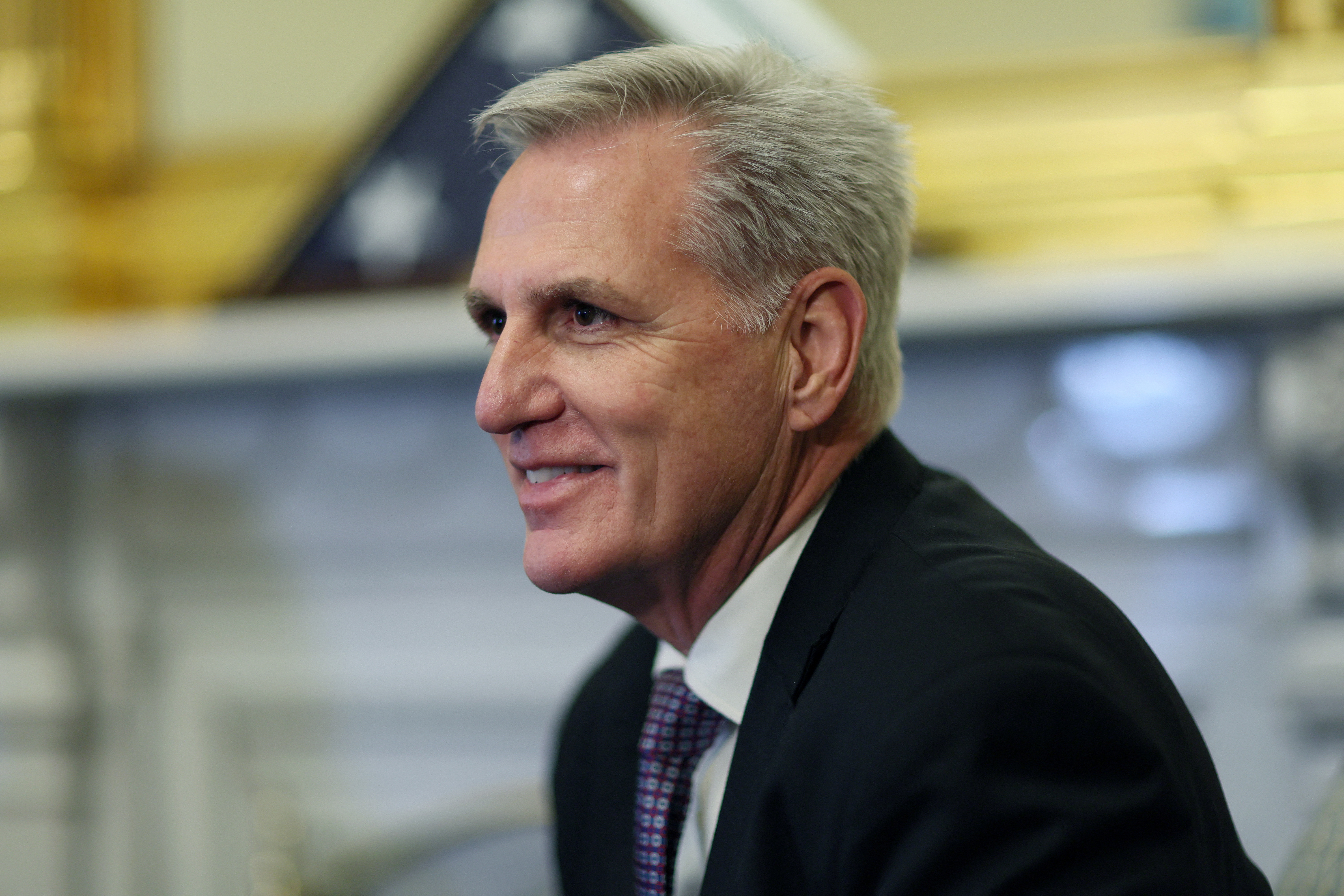
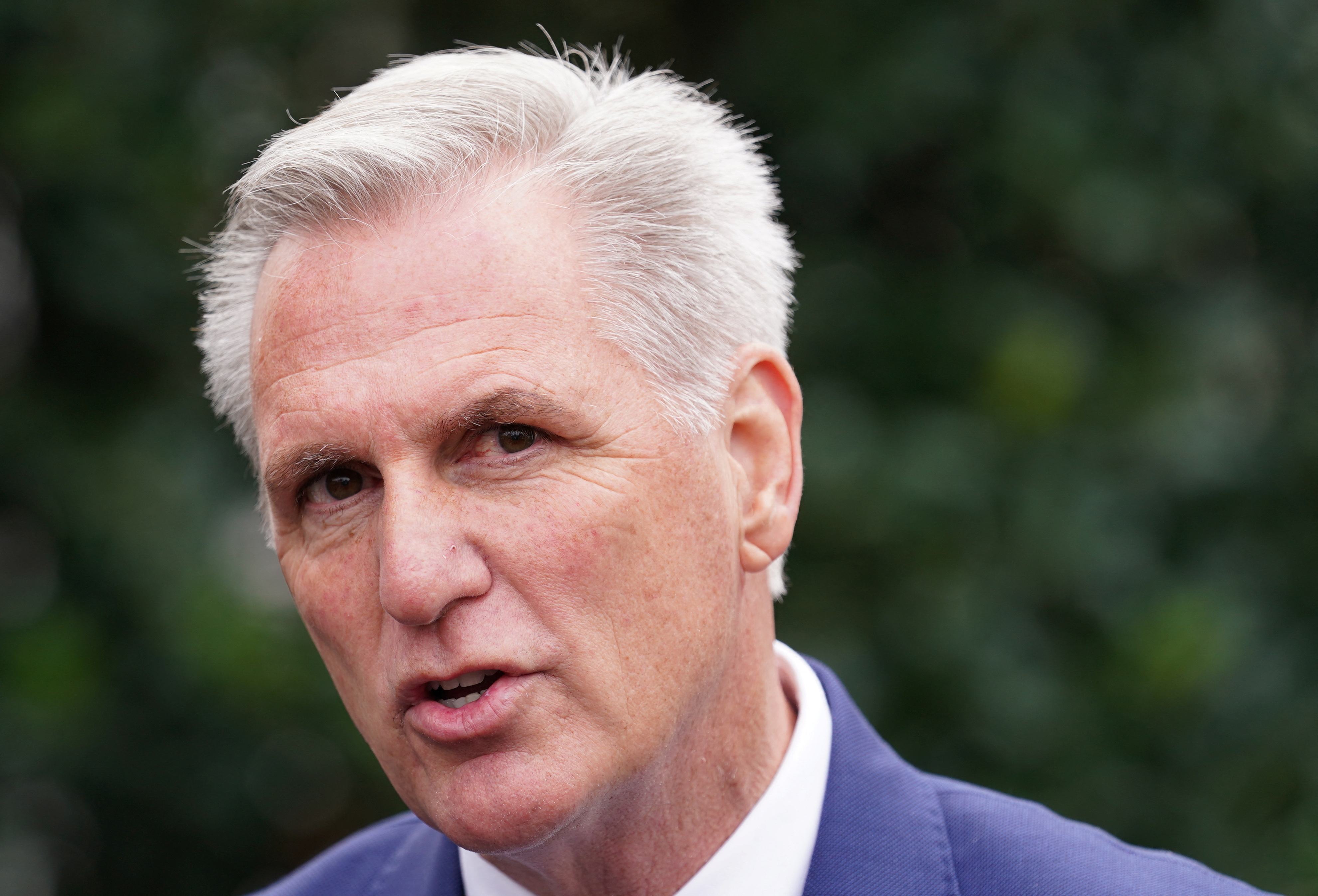
President Joe Biden and Republican House Speaker Kevin McCarthy held initial talks on Wednesday on raising U.S. government borrowing limitsin a first test of how the two will work together, with the meeting ending on a positive note as McCarthy said the two found “common ground.”

“The President and I had a good first meeting,” McCarthy told reporters after the nearly one and a half hour meeting ended. “I shared my perspective with him and he shared his,” he said.

“I can see where we can find common ground,” he said.

The Democratic president and Republicans, who won control of the U.S. House of Representatives in November’s elections, are locked in a standoff over raising the federal government’s $31.4 trillion U.S. debt ceiling.

Just before the meeting, White House press secretary Karine Jean-Pierre told reporters: “The president is looking forward to working closely and trying to figure out how we can deliver with Republicans who are willing to work in a good faith, bipartisan way.”

The Oval Office talks may serve as the opening bell for months of back-and-forth maneuvering. Neither side expects a solution to emerge from a single meeting. Without action, the government could lose its ability to pay all its bills as early as June.

McCarthy was optimistic, however, that such a scenario could be avoided.

“I believe if we’re able to get to an agreement, we could have a funding agreement for the next two years,” McCarthy said. “You’ll see the Senate and the House actually do the job the American public has elected us to do.”

Biden said earlier he will ask McCarthy for a specific budget plan and a commitment to supporting the nation’s debt obligations, the White House said, and he will discuss federal spending cuts with Republicans, but only after the debt ceiling is lifted.

House Republicans want to use the debt ceiling as leverage to exact cuts, though they have yet to unite around a specific plan. The increase covers the costs of spending programs and tax cuts previously approved by Congress, and is usually approved on a bipartisan basis.

The 80-year-old president, a longtime former senator who served as vice president during a similar 2011 showdown that led to a historic downgrade of the federal government’s credit rating, enters the talks with what some of his aides believe is a strong hand that includes a narrow Senate majority, a party that is unified on this issue and a strong message for voters.

Speaker for less than a month, McCarthy, 58, leads a fractious House Republican caucus with a narrow 222-212 majority that has given a small group of hardline conservatives outsized influence.

Despite years of mingling with other Washington lawmakers, Biden has little personal history with McCarthy, who joined the Republican leadership on Capitol Hill under former Speaker John Boehner after Biden had already left to become Barack Obama’s vice president.

Just one in four Republicans serving in the House today held their seats in 2011, and some may not be fully aware of the risks of courting default, or the difficulties of negotiating in a divided government.

Unlike most other developed countries, the United States puts a hard limit on how much it can borrow, and Congress must periodically raise that cap because the U.S. government spends more than it takes in.

Minutes before the White House meeting, Federal Reserve chair Jerome Powell told reporters: “There is only one way forward here and that’s for Congress to raise the debt ceiling.

“No one should assume that the Fed can protect the economy from the consequences of failing to act in a timely manner,” Powell said.

The 2011 crisis was resolved with a bipartisan deal that cut spending and raised the debt limit but left Obama administration officials smarting. Many felt they had given up too much and had still harmed the economy by letting talks persist.

McCarthy has less room to maneuver than his Republican counterpart in 2011 did.

To win the speaker’s gavel, he agreed to enable any single member to call for a vote to unseat him, which could lead to his ouster if he seeks to work with Democrats. He also placed three hardline conservatives on the Rules Committee, which would allow them to block any vote on a compromise.

Biden seemed to question McCarthy’s ability to keep Republicans in line at a fundraiser in New York on Tuesday, calling McCarthy “a decent man, I think,” but noting the concessions he made to become speaker.

McCarthy, for his part, said Biden needed to be willing to make concessions to get a debt-ceiling increase through Congress, saying it would be “irresponsible” not to negotiate.

Related Galleries:

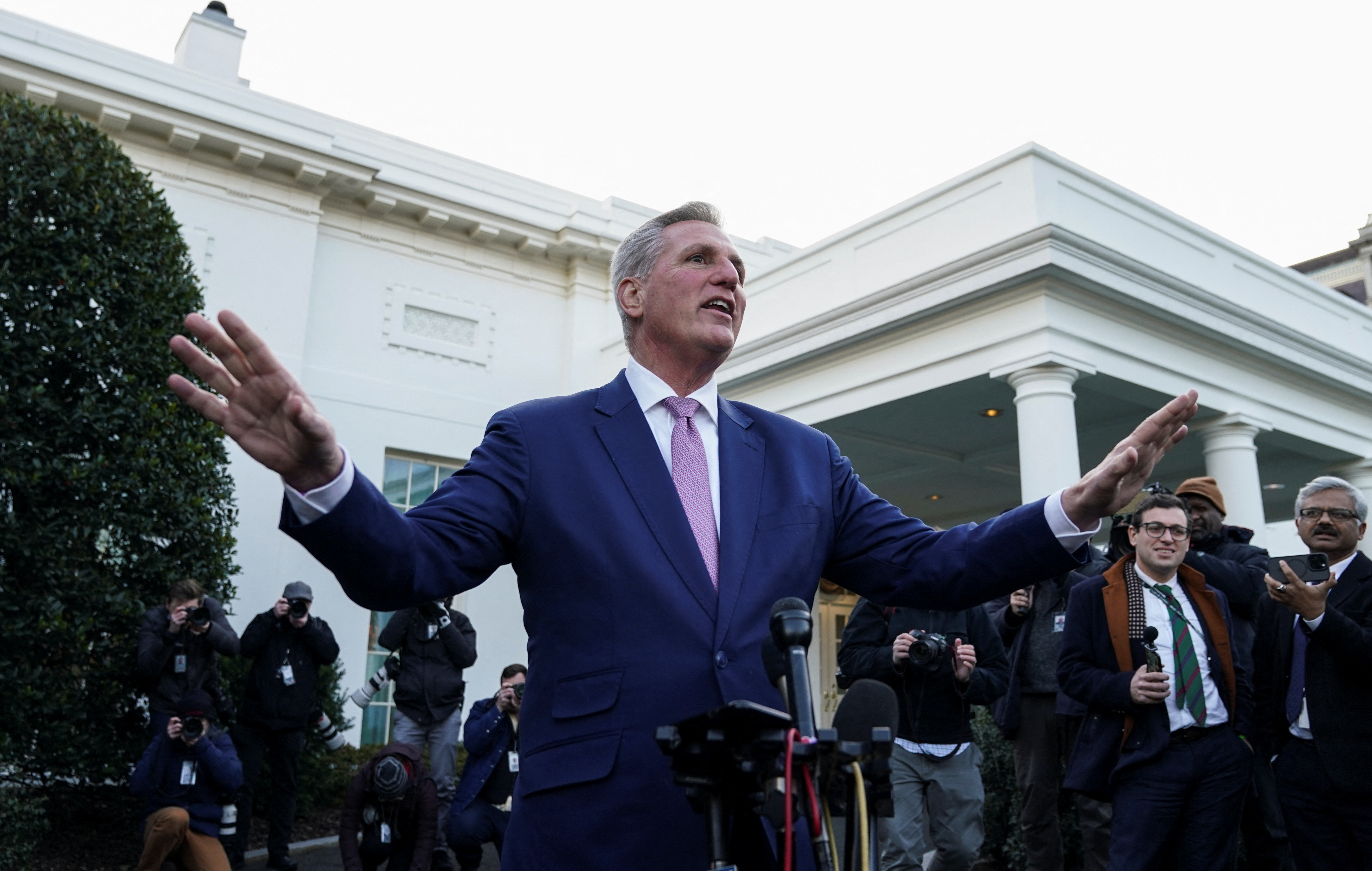
U.S. House Speaker Kevin McCarthy (R-CA) talks to reporters after he met with U.S. President Joe Biden to discuss the federal debt limit and spending, at the White House in Washington, U.S., February 1, 2023. REUTERS/Kevin Lamarque

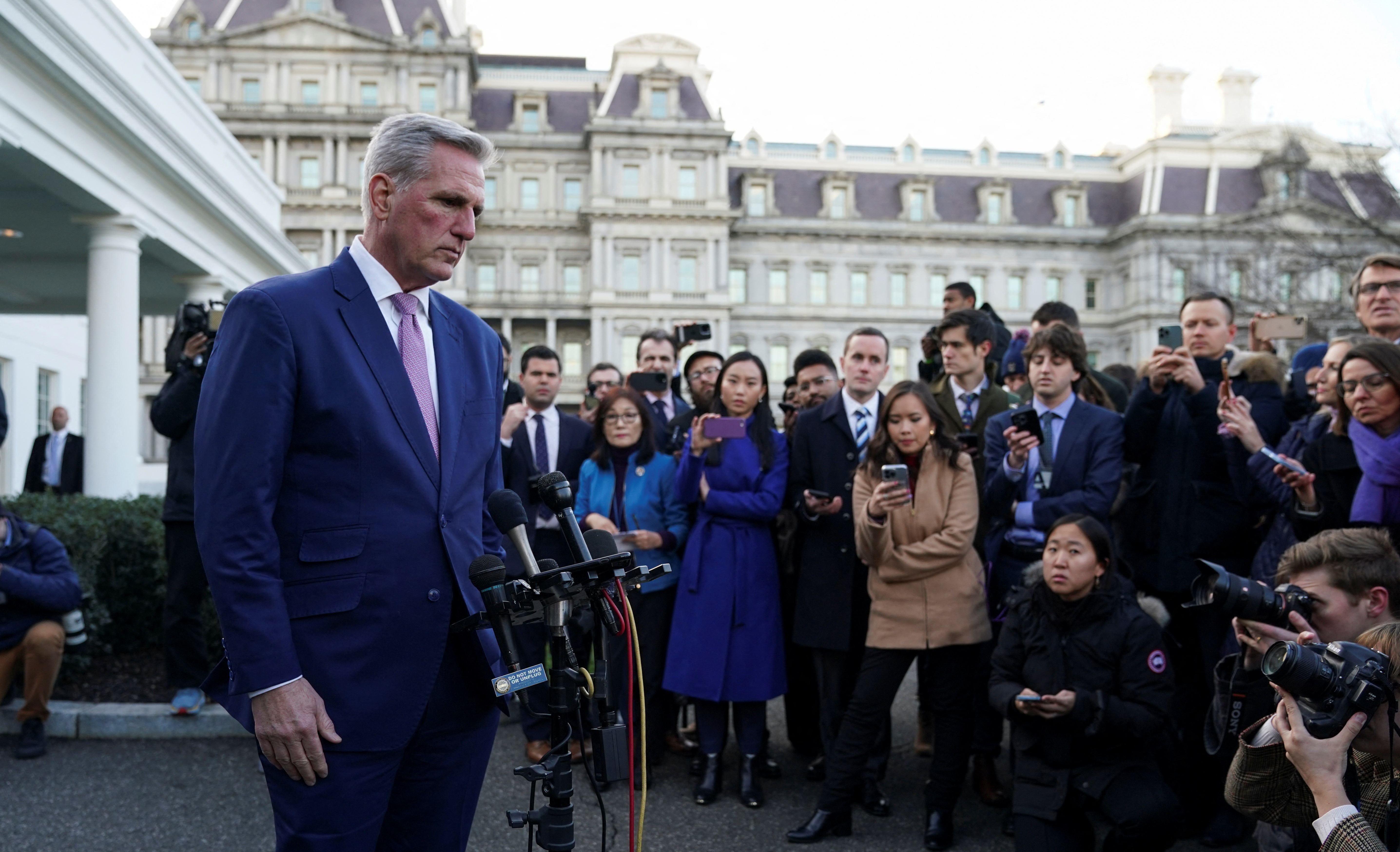
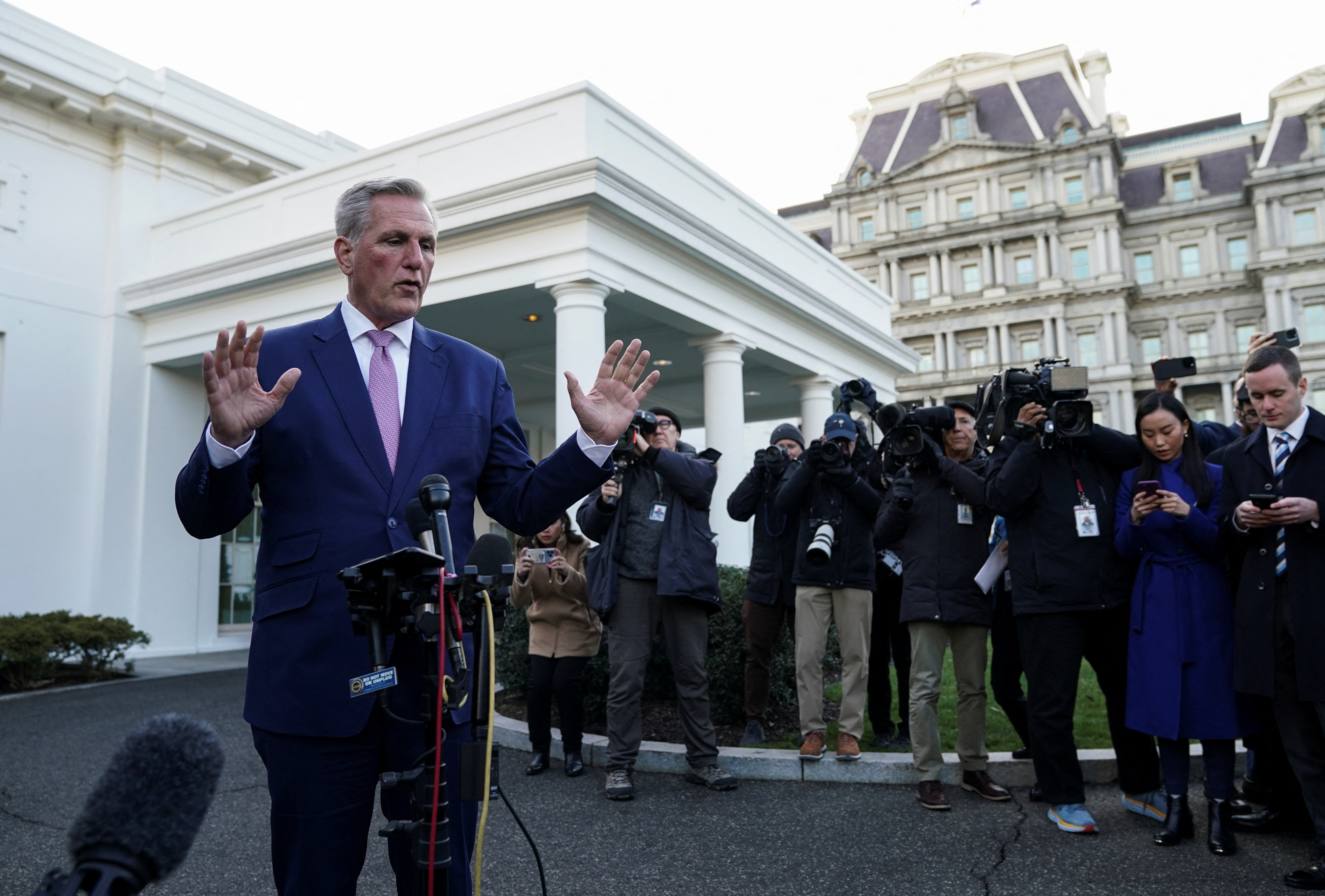
U.S. House Speaker Kevin McCarthy (R-CA) takes questions from reporters after he met with U.S. President Joe Biden to discuss the federal debt limit and spending, at the White House in Washington, U.S., February 1, 2023. REUTERS/Kevin Lamarque

U.S. House Speaker Kevin McCarthy (R-CA) exits the West Wing as he walks to face reporters after he met with U.S. President Joe Biden to discuss the federal debt limit and spending, at the White House in Washington, U.S., February 1, 2023. REUTERS/Kevin Lamarque

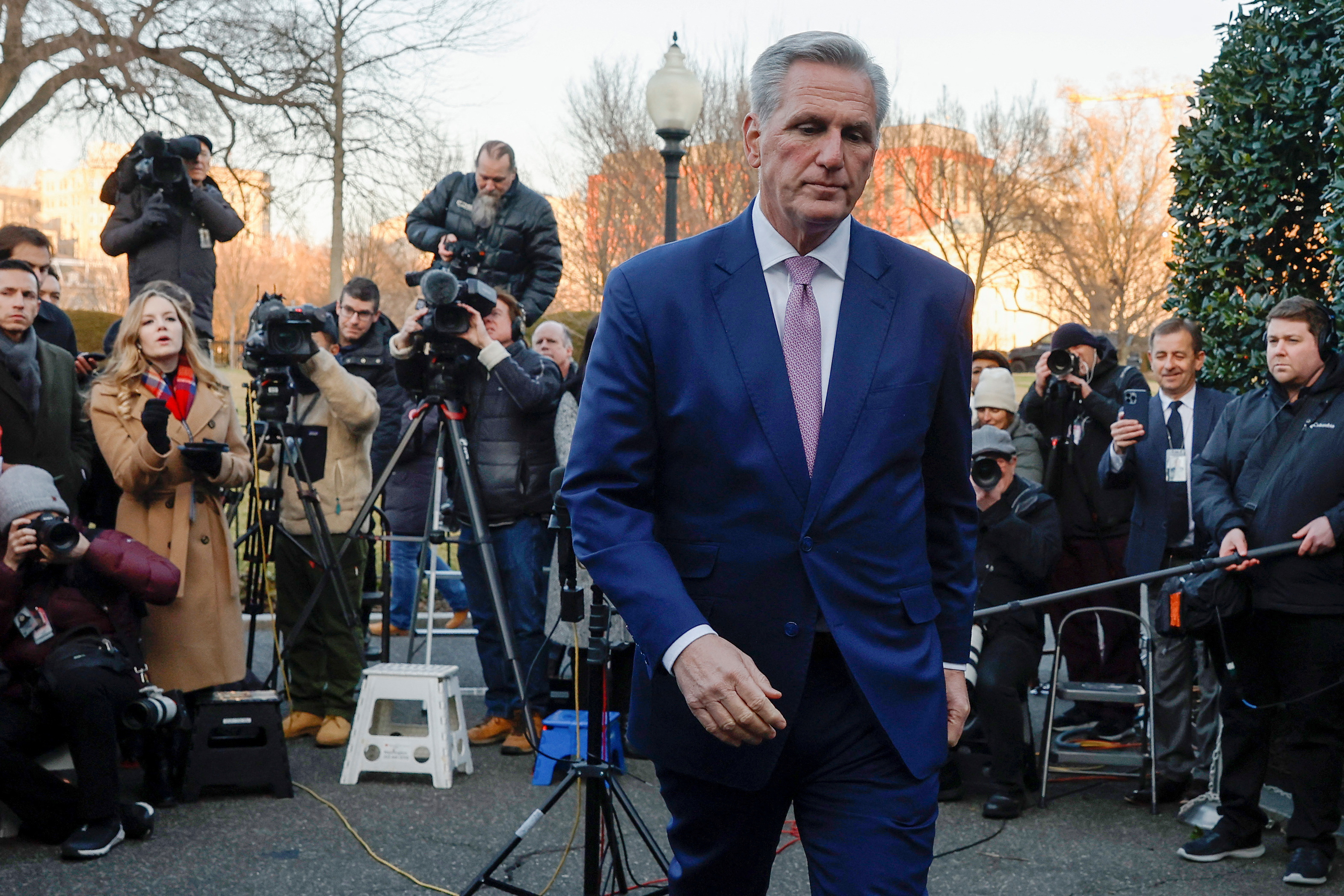
U.S. House Speaker Kevin McCarthy (R-CA) departs after addressing reporters following his meeting with President Joe Biden about the looming debt ceiling issue at the White House in Washington, U.S. February 1, 2023. REUTERS/Jonathan Ernst

U.S. House Speaker Kevin McCarthy meets with Jordan’s King Abdullah II at the U.S. Capitol building in Washington, U.S., January 31, 2023. REUTERS/Leah Millis

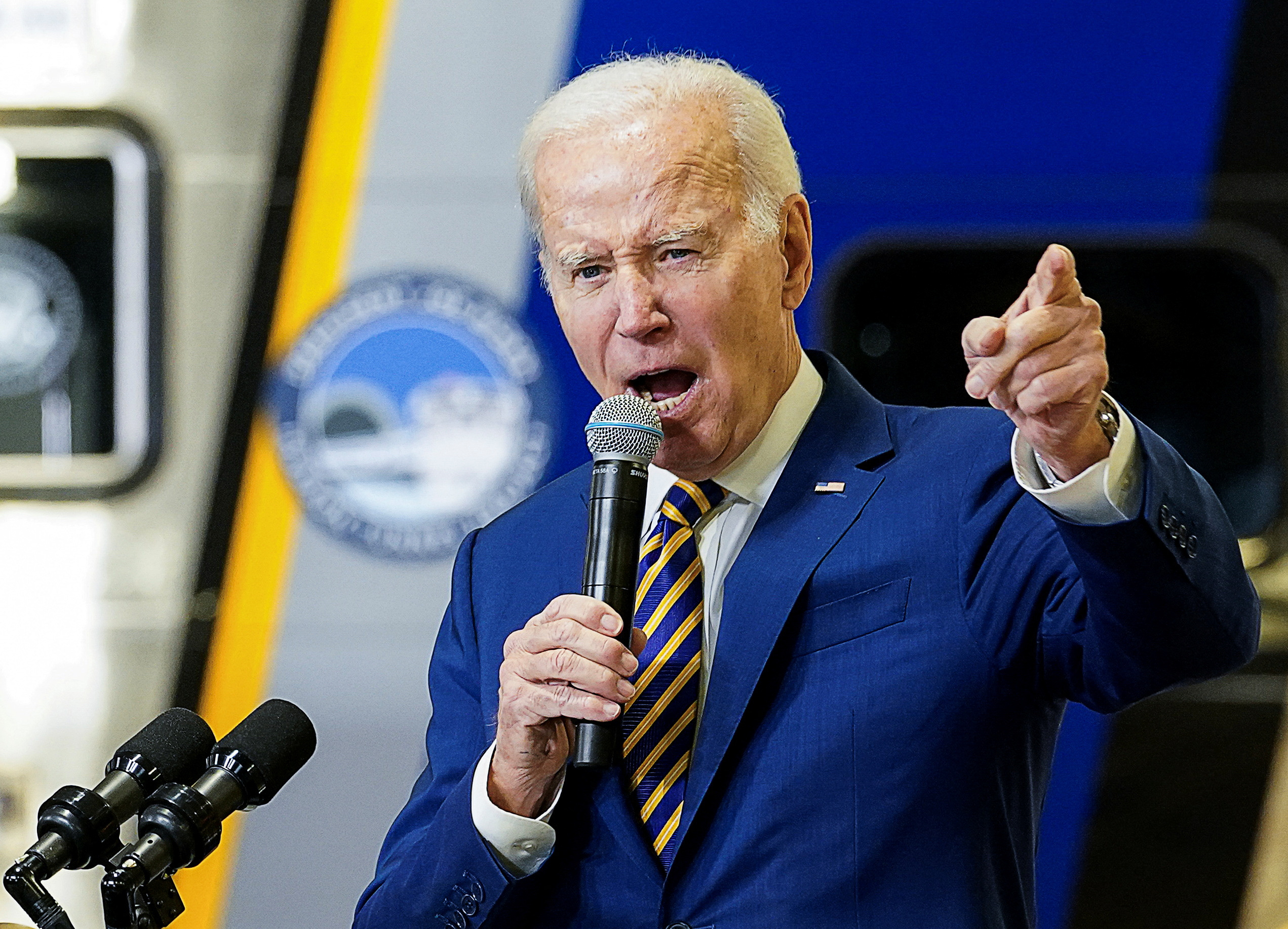
U.S. President Joe Biden delivers remarks touting how Infrastructure Law funding will be used for the Hudson River Tunnel project, during an event at the West Side Rail Yard in New York City, U.S., January 31, 2023. REUTERS/Kevin Lamarque

House Republican leader Kevin McCarthy speaks to reporters following a meeting with U.S. President Joe Biden and other congressional leaders at the White House in Washington, U.S., November 29, 2022. REUTERS/Kevin Lamarque
Categories
Audio Sources - Full Text Articles

Why Joe Biden, Who Loves to Make Deals, Is Not Offering One to Kevin McCarthy

This article is part of The D.C. Brief, TIME’s politics newsletter. Sign up here to get stories like this sent to your inbox.

As President Joe Biden welcomed House Speaker Kevin McCarthy to the White House on Wednesday for the first time since the California Republican fulfilled a long-chased dream of wielding the gavel, Biden knew he was going to ask—no, demand, White House officials previewed—that Republicans commit to not defaulting on the nation’s bills and boosting the borrowing limit to cover past debts.

It wasn’t a natural posture for Biden, who campaigned on the promise of making deals and finding common ground based on a pledge of mutual compromise. Yet it is where Biden’s advisers have positioned him over the last few weeks and heading into an expected re-election campaign set to start soon after next week’s State of the Union speech to Congress.

[time-brightcove not-tgx=”true”]

The whole reboot will test both Biden’s appetite for confrontation and his trust in his inner circle, which for months has been trying to convince a man who has spent more than half of his life in elected office that he may be out of touch with what voters in his opposition party demand. Put simply, this won’t be a comfortable repositioning for Biden or his team, but ultimately it’s where senior members of the Democratic Party believe the White House needs to land if they’re going to navigate the next years of divided power in Washington.

Biden is a deal-maker. As much as his predecessor before him, Biden thinks he can ultimately cajole colleagues to yes if they just keep talking. He shepherded the 1994 crime bill into law, as well as the Violence Against Women Act. He famously worked as the go-between for President Barack Obama and Congress to end a similar 44-day debt-ceiling standoff back in 2011, although Republicans to this day have questions about just how much of what came out of Biden’s mouth started in the Oval Office with the then-President and how much was Biden going with his gut with his old pal Mitch McConnell.

But ahead of the midterms last year, the White House sent Biden out on a pivot. He took off his gloves and started arguing that the GOP’s embrace of election denialism was tantamount to “semi-facism.” The White House and its allies started leaning into messaging about “extreme MAGA Republicans” being a threat to democracy itself. The tone left some of the party’s most vulnerable members clearly uncomfortable, especially in places where Democrats were counting on peeling some centrist Republicans away from the GOP. Similarly, it left Biden a little squeamish about going so forcefully against former colleagues in the Senate whom he considered friends even when he was at political odds with them.

But it worked. And the scoreboard in politics is as powerful a guide as any strategy memo. Biden might not have been entirely at ease with the tactic, but he still has a Democratic Senate and a within-striking-distance House minority at the other end of Pennsylvania Avenue. That victory calmed Biden’s stomach, and he seems ready to run the play again.

In recent weeks again, Biden has been again turning up the heat on Republicans. The swings haven’t always landed, but the White House feels like they’re taking their toll. Ahead of the Biden-McCarthy summit in the Oval Office, White House aides circulated a memo that would make any opposition researcher proud: in this telling, Republicans were hypocrites who turned their backs on Ronald Reagan, Social Security, food stamps, and Medicare. It was bold and set the tone, for sure. But it’s not entirely clear how much of that messaging document might ring true when it’s just Biden and McCarthy—and no cameras—doing the talking.

Biden has seen this taint-the-opposition play work out successfully before on the very topic on the table Wednesday: the debt ceiling. Back in 2011, Biden was at the middle of a so-called grand bargain that paired cuts with a hike in the national AmEx. Compromise, of course, was in the mix, but so was brand management. “Instead of making it look like we are being held hostage, we just have to change public opinion about what’s happening here,” Biden told Nancy Pelosi, according to Bob Woodward’s exhaustive book on the era. “We have to get people to turn against the Republicans.”

Turning people, however, may prove tricky. New polling from Pew suggests 64% of Republicans want their elected leaders to “stand up” to Biden, even if that makes governing tougher. And almost as many—58%—of Democrats want Biden to compromise with Republicans, even if it comes at a cost. A White House-led confrontation may be sexy, but it might end up being a colossal bungle.

As The D.C. Brief has explained before, the debate over the debt ceiling isn’t about spending, it’s about paying the bill for things already purchased. Really, the United States is alone among major economies in creating this self-imposed crisis, which creeps up like a predictable poison. The deadline, though, carries tremendous risk. It’s a hostage that demands de-escalation. Failing to raise the debt ceiling threatens to tank the U.S. and global economies, send retirement funds into the basement and unemployment into the attic. Put simply, Washington has no choice but to raise the borrowing limit, but politics always demands a price.

Biden knows the space well. He basically owned it during the 2011 negotiations—and he gave a whole lot to get the limit kicked until after the 2012 re-election. “Look,” Biden told McConnell during one of his many phone calls acting as Obama’s proxy, “we’ve given up on revenues, we’ve given on dollar for dollar. All the major things we’re interested in we’ve given up. So basically you’ve pushed us to the limit.”

This time, Biden is negotiating on his own behalf. He is the ultimate decider of what is on the table and what is not. Obama was exhausted and exasperated, rightly seeing the GOP as an obstructionist force looking to embarrass the sitting President heading into his re-election bid. This time, Biden seems to have inched toward his old boss’ posture, but at his core Biden remains the optimist about what is possible in Washington. He’s a creature of D.C., and souring on its potential is far from Biden’s biggest heartbreak.

Make sense of what matters in Washington. Sign up for the D.C. Brief newsletter.

Categories
Audio Sources - Full Text Articles

The Adani Crisis Could Push Clean Energy Investors Away From India

Allegations that the Indian conglomerate Adani Group committed “accounting fraud, stock manipulation, and money laundering” rattled markets and political observers when activist investor group Hindenburg Research made them last week. Indian stocks tumbled and analysts questioned how the affair would affect the political prospects of the current Indian government.

The crisis made me think of my time in India in December. Given the country’s rapidly growing population, economy, and emissions, I had traveled there to learn about how the country is managing the energy transition. And what I heard over and over again from government and industry leaders is that the country is hoping that an infusion of private investment will make its transition possible. The argument was simple: private financiers could support the country’s efforts to decarbonize while making money.

[time-brightcove not-tgx=”true”]

The Adani crisis is bound to affect how foreign investors see the country and, by extension, how willing they are to provide capital for the transition. On the one hand, if the allegations are found to be true, or if the Indian government doesn’t investigate them, investors might become skeptical about putting money into India’s energy transition. On the other, a thorough investigation or debunking of the claims would likely engender confidence.

Read more: How India Became the Most Important Country in the Climate Fight

Understanding what the Adani crisis could mean for green-energy investment in India is less about grappling with Adani’s environmental track record than it is about considering the current global climate finance picture. The International Energy Agency estimates that emerging and developing countries will need more than $1 trillion of annual investment in clean energy by the end of this decade to align with global climate goals. India alone will need $1.4 trillion by 2040. Governments will provide some of that money. Indeed, the Indian government announced on Wednesday more than $4 billion in green spending as part of its annual budget. But climate finance experts say the private sector will be needed to get from billions to trillions of dollars.

One of the biggest challenges for countries like India is the perceived risk that investments may not generate the promised return—both because of an entrenched bureaucracy that can make it challenging to do business and also because of potential corruption and mismanagement issues. For example, until recently, it was a common practice for states to renege on their commitments to pay power companies. Because of these risks, financiers expect a higher return on investments in India than they might in other parts of the world. A 2021 report from the International Energy Agency found that the average cost of capital—a finance term for the necessary return to make a project worth investing in—to be more than twice as high for solar projects in India than in the U.S and Europe.

The Adani crisis will only elevate these concerns for investors in hubs like New York and London. In the wake of the announcement, the Wall Street Journal reported that the “Adani Group Saga Is Credibility Test for India’s Markets, Institutions” while the Financial Times said the “Adani affair is a test for India Inc.” Indeed, the NIFTY 50 index of Indian stocks declined to its lowest level since October in the wake of the crisis—defying positive investor sentiment over the same time period in other countries.

To keep the fear from spreading, investors are calling for a robust government investigation of Adani to signal that potential fraud and mismanagement is being taken seriously. That will help maintain investor confidence in India—and also help the global efforts to tackle climate change.

A version of this story also appears in the Climate is Everything newsletter. To sign up, click here.

Categories
Audio Sources - Full Text Articles

How Skateboarding Shaped Tyre Nichols

As the horrific video showing Tyre Nichols being beaten by Memphis police demoralizes and disgusts a nation—five officers were charged with murder, assault, kidnapping, misconduct, and oppression—millions have taken some solace in another clip: a 104-second montage of Nichols skateboarding on ramps and rails, flipping his board in the air with his heels, sun shining in the background throughout.

Nichols, a 29-year-old Black man who died on Jan. 10, three days after he was pulled over for a traffic stop and attacked by police, was an avid skateboarder since childhood years. The highlight reel is a reminder that Nichols found, in skateboarding, a unique mode of personal expression. “A lot of us skateboarders, we’re not watching the video of his murder,” says Kava Vasquez, program manager at the Harold Hunter Foundation, a New York City-based nonprofit that offers skateboarding opportunities to underserved communities. “We’re focused on humanizing him. We’re watching video clips of him skateboarding, and experiencing Black boy joy.”

[time-brightcove not-tgx=”true”]

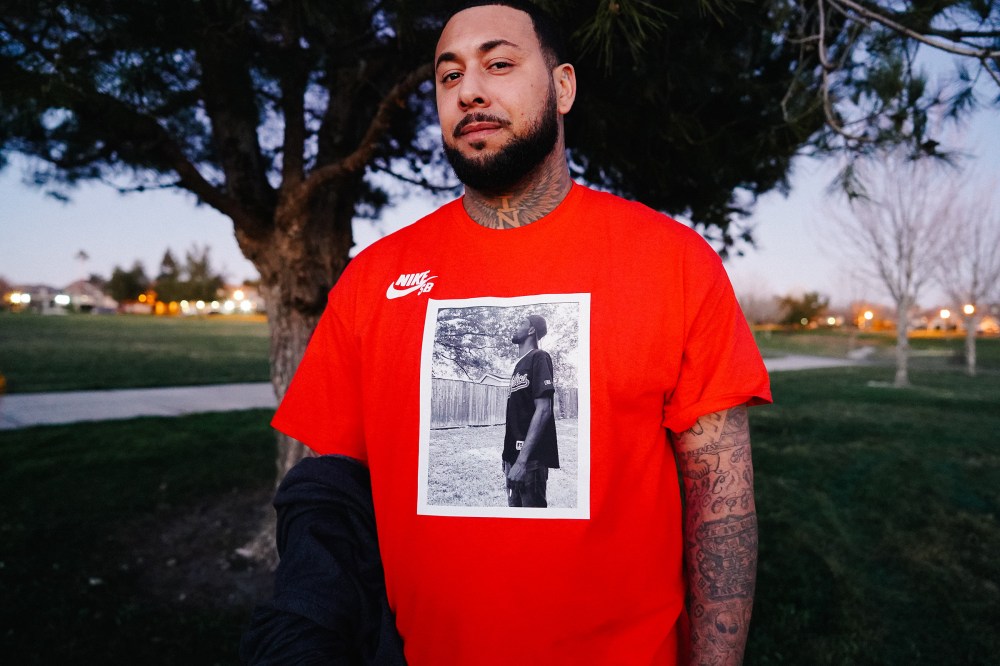
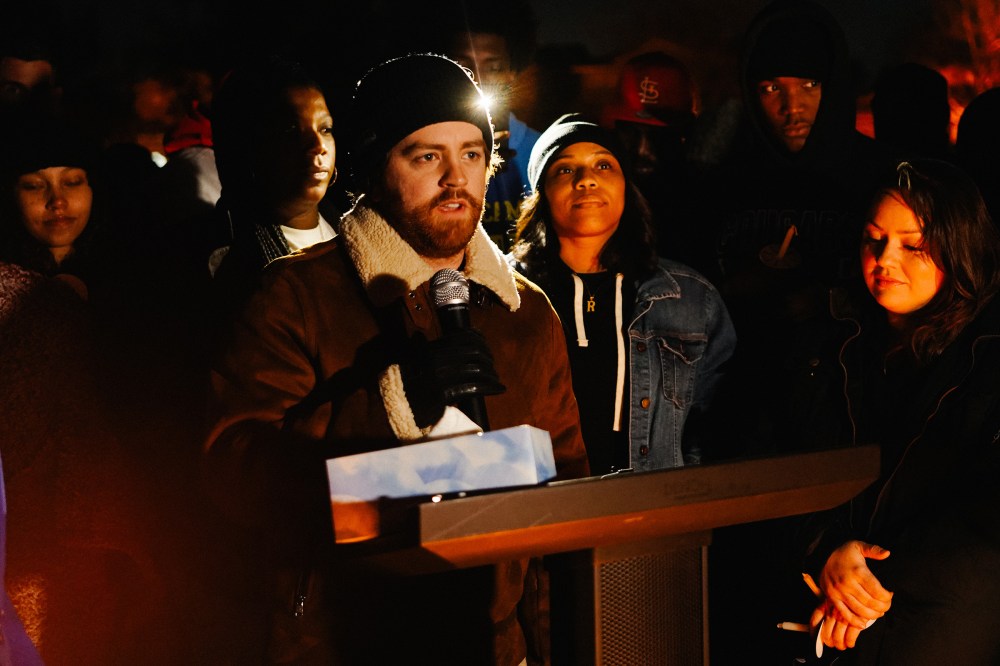
Anderson Williams at the vigil for Nichols at Regency Skate Park. Nichols grew up in Sacramento and started skating as a kid.
Mark Dillon for TIMEAnderson Williams at the vigil for Nichols at Regency Skate Park. Nichols grew up in Sacramento and started skating as a kid.
Jemetrick Jones skates at the Jan. 30 vigil. He and Nichols skated often together.
Mark Dillon for TIMEJemetrick Jones skates at the Jan. 30 vigil. He and Nichols skated often together.

Skateboarding shaped Tyre Nichols. The sport provided an athletic outlet, helped him forge friendships, and ignited a passion for filming the exploits of other skaters. At the same time, Nichols’ tragic death is shining a new light on skateboarding, an activity which many people still view as a public nuisance. Skateboarders, in general a tight-knit bunch, have held vigils for Nichols at skate parks in Memphis, Sacramento—Nichols’ hometown—and Portland, Ore. Tony Hawk has donated $1,000 to Nichols’ memorial fund, which now exceeds $1.3 million, and voiced support for the family’s desire to build a memorial skate park in Nichols’ honor.

Skateboarding is less a sport than a lifestyle. At its best moments, it offers a safe space for camaraderie, and welcomes a diverse set of newcomers just crazy enough to try these risky tricks. So Nichols’ death has the skateboarding community—particularly the Black skateboarding community, which has made great strides establishing a presence in a sport with roots in white, Southern California surfer-dude culture—especially hard.

“As a skateboarder, you get chastised by the police all the time,” says Kameron Blakely, 25, who knew Nichols through the Memphis skate scene. “Who’s to say, if I go out and skate, this couldn’t happen to me.” Blakely takes a deep breath. “Skateboarding aside, photography aside, he got robbed of the opportunity that he should be able to grow up on,” says Blakely. “Which is life.”

Ryan Wilson, a friend of Nichols, speaks during the vigil in Sacramento.
Mark Dillon for TIMERyan Wilson, a friend of Nichols, speaks during the vigil in Sacramento.

Ryan Wilson, 28, first met Nichols at the Regency Skate Park in Sacramento, when Wilson was about 12, and Nichols was in his early teens. “He sort of kept to himself a little bit,” says Wilson. “He was a little shy at first. You could tell he was sort of waiting to come out of his shell because, through the years, he became the goofiest, funniest guy I ever met. He would have his headphones in, always playing his music so freaking loud.” After a while, Nichols and Wilson began to strike up conversations, and they became close friends.

After Nichols and Wilson began to find their footing on skateboards, they branched out, heading to different parks and spots around Sacramento, meeting more people around town. “Once you build confidence, you really find yourself and your personality and things that make you unique,” says Wilson. “You feel more comfortable around other people. Once Tyre hit that phase, where he was happy with what he was doing, he became very, very social.”

Wilson noted that Nichols did have occasional mood swings. He’d get down on himself at times. “But the thing that always stood out about Tyre was when it came to family and friends, he was always trying to put a smile on everyone’s face,” says Wilson. “He was like, I don’t care if I can’t be happy all the time, as long as I can make other people happy all the time. He did a good job of that.”

A fellow Sacramento skater, Jerome Neal, recalls Nichols pulling off his favorite trick, the “heel flip,” in which a skater flicks the board with a heel, flipping it in the air before landing back on the deck. “He had a mean heel flip,” says Neal, 31. “He could do it on command, any time of the day. His style was so unique. Just relaxed and laid back. The man had it going on, bro.”

In Sacramento, he stood out. “Skaters have this worldwide bond of allowance and tolerance to other skaters,” says Neal. “Always help each other. It’s a little cult. Tyre was definitely molded by that cult, down to the music he listened to, the videos we used to make, his clothes. Everything. Tyre was a full skater, through and through.”

While Nichols established himself in Sacramento, he was newer to the skate scene in Memphis, where he’s lived since 2020. But according to Blakely, he passed the “vibe check” that made him welcome in the Black skate community there.

Memphis is home to the NBA’s Grizzlies and a college basketball team, the Memphis Tigers, that expects to compete nationally every year. The city is located in the Southeast—a college-football hotbed. So it’s a basketball and football town. Black kids who take up skateboarding sometimes receive funny looks from classmates and neighbors, for taking up what can still be perceived as a white pastime. “I was wearing either the skinny jeans or the fat cargo shorts,” says Blakely, who started skateboarding in middle school. “They’re like dude, what are you doing? You look terrible.” But Blakely fell in with a crowd of about eight or so Black skateboarders his age, and as he got older, he’s witnessed the Memphis skate scene growing more diverse.

Which makes Nichols’ death all the more painful. While some Black skateboarders have refused to watch the video of Nichols’ beating, Courtlan Black, 18, did view the violent tape. “I feel hopeless, in a sense,” says Black, a high school senior. “Truthfully, I don’t think things will ever get to the point where we can all say that they’re OK. Over the years, of me being a kid and seeing time and time again Black people on the news being killed by police officers through various means, it makes me lose a lot of hope in society. It makes me want to be by myself.”

Nichols' sister, Kenyana Dixon, pays tribute to her brother at the vigil, wearing his image on her shirt and pendant.
Mark Dillon for TIMENichols’ sister, Kenyana Dixon, pays tribute to her brother at the vigil, wearing his image on her shirt and pendant.
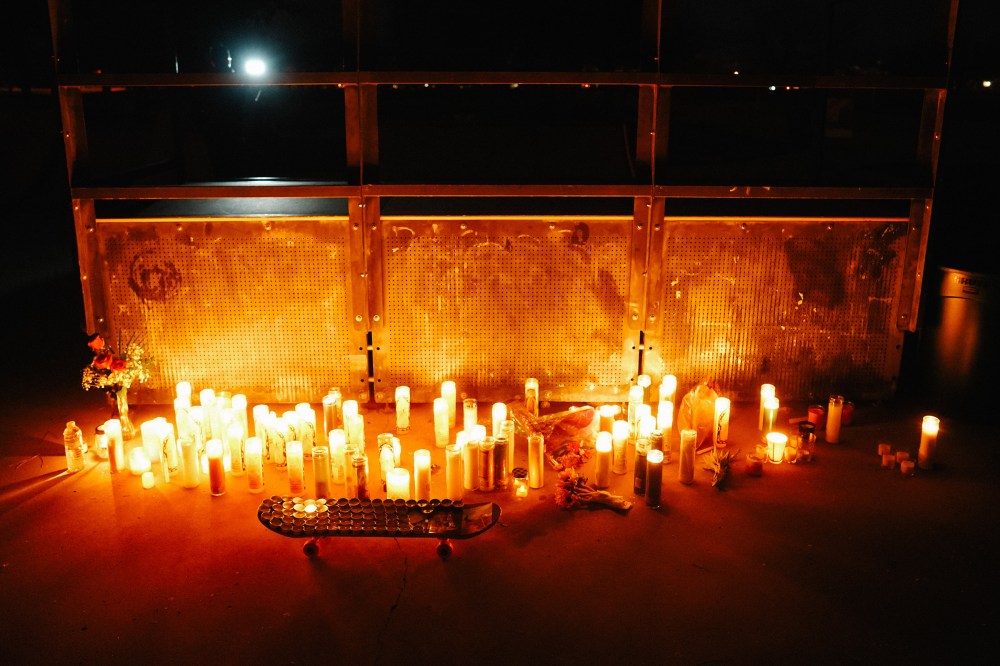
Candles are lit in Nichols' honor at the vigil in Sacramento.
Mark Dillon for TIMECandles are lit in Nichols’ honor at the vigil in Sacramento.

Several skaters noted that the five Black officers in the Nichols case were quickly fired and charged, even as white police officers who perpetrate violence against Black people have not always faced such swift consequences. But they see this decisive action as evidence that calls for accountability, emanating from movements like Black Lives Matter, are slowly being heeded—and hope that the race of the officers isn’t used as an argument that racism isn’t an ongoing presence in law enforcement.

Black attended a candlelight vigil for Nichols last week at Tobey Skate Park in Memphis. His mother, RowVaughn Wells, sat at a table. A sign in front of her read, This Must Stop. “The whole skate community is feeling this,” Black says. “Everyone is pretty much on the same page with this. Everyone is standing together. I just want that to be known.”

Categories
Audio Sources - Full Text Articles

A Brief History of Nikki Haley’s Biggest Flip Flops on Trump

Former South Carolina Governor Nikki Haley is set to formally announce her presidential bid two weeks from now, multiple outlets including the Post and Courier, CNN, and Politico reported Tuesday. If no one else jumps into the race before then, she will be the first prominent Republican to challenge former President Donald Trump, who launched his presidential campaign in November.

Haley served in South Carolina’s state house before becoming the state’s first female governor in 2011. During her tenure, she signed a bill that removed the Confederate flag from the state capitol following the 2015 mass shooting of Black churchgoers in Charleston. In 2016, she gave her party’s response to President Barack Obama’s State of the Union address. In 2017, Haley became U.S. ambassador to the United Nations under Trump. Over the past several years—before, during, and after taking a position in his Administration—she’s flip-flopped on Trump multiple times, oscillating from criticizing the 45th President to praising him.

[time-brightcove not-tgx=”true”]

A spokesperson for Haley did not respond to a request for comment.

Here are four key examples of when Haley changed her position on Trump.

2016 campaign

Haley was sharply critical of Trump during his 2016 presidential campaign.

“Every time someone criticizes him, he goes and makes a political attack back,” Haley said in 2015. “That’s not who we are as Republicans. That’s not what we do.”

She also slammed his plan to build a border wall and his other positions on immigration. “Republicans need to remember that the fabric of America came from these legal immigrants,” Haley, the daughter of Indian immigrants, said. “If you want to talk about tackling illegal immigration, then let’s talk about it, but we don’t need to attack so many millions of people who came here. . . and did it the right way, like my parents.”

In her 2016 State of the Union response, Haley did not mention Trump by name but said, “During anxious times, it can be tempting to follow the siren call of the angriest voices.”

Ahead of her state’s primary, she was even more direct, saying that Trump represented “everything a governor doesn’t want in a President.” She said she would not back the controversial business tycoon and ultimately endorsed Florida Senator Marco Rubio. When he dropped out, she supported Texas Senator Ted Cruz.

Eventually, Haley said before the general election that she planned to vote for Trump, even though she was “not a fan.” Weeks later, she accepted a position in his Cabinet.

Ambassador to the U.N.

During her tenure as Trump’s ambassador to the U.N., Haley was willing to publicly distinguish herself from the President.

While Trump was criticized for refusing to unequivocally condemn Russian election meddling, Haley took a tough stance on the country’s actions, saying, “When a country can come interfere in another country’s elections, that is warfare.”

While Trump called the North Atlantic Treaty Organization (NATO) “obsolete,” Haley said, “I think NATO is an important alliance for us to have, and now we need more allies than ever.” She continued: “Any comments the President-elect has made are his comments,” Haley said. (Trump later walked back his position.)

Asked in 2017 about the women who had accused Trump of sexual harassment—allegations Trump has denied—she said, “We should all be willing to listen to them.”

Haley ultimately resigned from the post on her own terms in 2018, receiving a glowing parting speech from Trump—a rarity in an Administration rife with turmoil and bitter exits. She continued to put daylight between herself and Trump at times, responding to his 2019 tweet pointing out a burglary at Maryland Democratic Rep. Elijah Cummings’ home by tweeting, “This is so unnecessary.”

But in her book published that year, With All Due Respect: Defending America With Grit and Grace, she was all-in on the Trump presidency. She lavished the President with praise, explaining his strategy in complimenting Russian President Vladimir Putin as a maneuver intended to keep communication open. Talking to NBC during her book tour, she spoke positively about Trump: “In every instance I dealt with him, he was truthful, he listened and he was great to work with,” she said.

Jan. 6 attack

Haley blamed Trump for the deadly Jan. 6, 2021 attack on the U.S. Capitol and suggested that the GOP would move on without him.

“I think he’s going to find himself further and further isolated,” Haley told Politico the week after the attack. “I think he’s lost any sort of political viability he was going to have… He’s not going to run for federal office again… I don’t think he’s going to be in the picture. … I don’t think he can. He’s fallen so far.”

“We need to acknowledge he let us down,” she continued. “He went down a path he shouldn’t have, and we shouldn’t have followed him, and we shouldn’t have listened to him. And we can’t let that ever happen again.”

By October 2021, she seemed to have changed her mind. “He has the ability to get strong people elected, and he has the ability to move the ball, and I hope that he continues to do that,” Haley told the Wall Street Journal. “We need him in the Republican Party. I don’t want us to go back to the days before Trump.”

2024 campaign

Haley also backtracked on how her former boss’s campaign plans would affect her own. In a 2021 press conference, she said that she would support Trump if he ran in 2024.

“I would not run if President Trump ran, and I would talk to him about it,” Haley said. “That’s something that we’ll have a conversation about at some point if that decision is something that has to be made.”

Over the past few months, Haley has hinted that her own campaign was in the works, and multiple news outlets reported in late January that an announcement is imminent.

Even if she does go back on her pledge not to face off against the former President, she did seek his blessing before her announcement: “I talked to her for a little while,” Trump told reporters Saturday. “I said, ‘Look, you know, go by your heart if you want to run. She’s publicly said that ‘I would never run against my President, he was a great President.’”

Categories
Audio Sources - Full Text Articles

Nasdaq climbs 2% as US stocks rise following smaller rate hike from the Fed

Jerome PowellFed Chairman Jerome Powell

Joshua Roberts/Reuters

  • US stocks rose in volatile trading on Wednesday after the Fed hiked interest rates 25 basis points.
  • That brings the fed funds rate target to 4.5%-4.75%, the highest since 2007.
  • Fed Chairman Jerome Powell hinted more hikes are coming and warned rates would need to stay high for “some time.”

US stocks finished a volatile session higher on Wednesday after the Federal Reserve hiked interest rates by 25 basis points, continuing to slow the pace of tightening.

Stocks initially slumped as investors braced themselves for the policy move, with the Dow Jones Industrial Average at one point losing over 400 points. Stocks then whipsawed higher as Fed Chairman Jerome Powell delivered encouraging comments on inflation.

“We can now say for the first time that the disinflationary process has started,” he said, while noting rates would need stay restrictive for “some time.”

The latest increase brings the fed funds rate target to 4.5%-4.75%, the highest since October 2007. Powell signaled the Fed would deliver another rate hike at the March Federal Open Markets Committee meeting, where markets are pricing in another 25-basis-point increase, according to the CME FedWatch tool.

Here’s where US indexes stood at the 4:00 p.m. closing bell on Wednesday:   

The Fed has eased the size of its rate hikes as inflation continues to moderate, and the 25-basis-point hike on Wednesday is softer than December’s 50-basis-points increase, which followed four straight 75-basis-point hikes. 

“This second consecutive lower hike serves as evidence that the Federal Reserve is signaling that significant progress has been made in tamping down inflation and that we have reached a point where rate hikes can be further scaled back,” Michele Raneri, the vice president of TransUnion said in a statement.

But investors could be overly optimistic, as rates could go higher than markets are expecting, according to Lazard chief market strategist Ronald Temple.

“The FOMC announcement indicates that additional rate hikes may be appropriate, while markets are only pricing one more increase,” Temple said in a statement. “I believe markets remain too dovish regarding how high rates will go and how long they will stay there. The more markets resist the Fed, the tighter conditions will have to be to tame inflation.”

Here’s what else is going on: 

In commodities, bonds, and crypto: 

Read the original article on Business Insider
Categories
Audio Sources - Full Text Articles

Photos of Tyre Nichols’ funeral at Mississippi Boulevard Church in Memphis show a community jolted into activism

Tyre Nichols’ funeral was held Wednesday at Mississippi Boulevard Christian Church in Memphis.Tyre Nichols funeralA man arranges flowers around Tyre Nichols’ casket at Mississippi Boulevard Christian Church in Memphis, Tenn., on Wednesday, Feb. 1, 2023.

Andrew Nelles/The Tennessean via AP, Pool

The funeral of Tyre Nichols, the 29-year-old Memphian who was brutally beaten by five police officers on January 7, was held Wednesday at the Mississippi Boulevard Christian Church in Memphis. 

Nichols, who has a 4-year-old son, has been remembered by his family and friends as a lover of sunsets, photography, and skateboarding. 

Vice President Kamala Harris spoke with Nichols’ mother, RowVaughn Wells, on Tuesday, accepting her invitation to the funeral.

Rev. Al Sharpton, the Founder and President of the National Action Network (NAN), eulogized Nicholas and attorney Ben Crump delivered “a call to action” in a service led by Rev. J. Lawrence Turner.  

Tamika Palmer, the mother of Breonna Taylor, and Philonise Floyd, the brother of George Floyd, also attended.


Mississippi Boulevard Christian Church, known as “The BLVD”, is the first African American church in the city of MemphisTyre Nichols funeral churchThe sanctuary at Mississippi Boulevard Christian Church is seen before the start the funeral service for Tyre Nichols in Memphis, Tenn., on Wednesday, Feb. 1, 2023.

Andrew Nelles/The Tennessean via AP, Pool

Nichols’ death jolted Memphis activists into action this month. The police department was also quick to launch an investigation into the officers involved. 

Within a week, the Tennessee Bureau of Investigations, Shelby County District Attorney’s Office, and the Department of Justice had all launched investigations into the officers’ actions. 

On January 20, five officers — all of them Black and members of the SCORPION anti-crime unit — were fired. 

On Thursday— 28 hours before the release of the body camera video showing the brutal beating — they were charged with second-degree murder.

Their unit was disbanded on Saturday.

Two other officers have been on paid administrative leave since the start of the investigation, the Memphis police department announced this week.

Reporters and media were kept out of the Mississippi Boulevard Christian Church sanctuary on Wednesday, but the service was livestreamed for the public. 

Inclement weather delayed the service by a few hoursTyre Nichols funeralTerry Lawrence, of Memphis, Tenn., spreads ice melting salt around Mississippi Boulevard Christian Church where a funeral service for Tyre Nichols will be held after a delay due to weather on Wednesday, Feb. 1, 2023

AP Photo/Jeff Roberson

Inclement weather caused travel delays to Memphis on Tuesday and Wednesday, prompting organizers to move the funeral from 10:30 a.m. CT to 1 p.m. CT. 

Snow and frigid 27-degree weather did not deter guests from showing up to the church to honor Nichols. 

At the start of the service on Wednesday, Rev. J. Lawrence Turner noted guests ventured out in “treacherous” conditions to make it to the funeral. 

The church is located in midtown, about a 10-minute drive from the Raines Road and Ross Road intersection where Nichols was pulled over by Memphis officers on January 7.


Civil Rights Attorney Ben Crump escorted Tyre Nichols’ mother and step-father into the churchTyre Nichols funeral Ben Crump,Attorney Benjamin Crump, left, RowVaughn Wells, mother of Tyre Nichols, center, and stepfather Rodney Wells, center right, all arrive to the funeral service for Tyre Nichols, at Mississippi Boulevard Christian Church

AP Photo/Jeff Roberson

Civil rights attorney Ben Crump is representing the Nichols family. 

Crump has become the go-to lawyer for high-profile police killings in the US. 

On Tuesday, Crump’s office announced that Vice President Kamala Harris would attend the funeral. 

“Vice President Harris and Ms. Wells spoke exclusively, and during this emotional time, the Vice President was able to console Ms. Wells and even help her smile,” Crump said in a statement Tuesday. “Tyre’s parents invited Vice President Harris to the funeral tomorrow, and were pleased that she accepted their invitation.”

Tyre Nichols funeralFormer New Orleans mayor Mitchell Joseph Landrieu is recognized during the funeral service for Tyre Nichols.

Andrew Nelles/The Tennessean via AP, Pool

Politicians, activists, and families of police brutality victims filled the church for the funeral. 

Al Sharpton said that people who show up when the cameras are around need to support the family when the cameras are gone, too. 


RowVaughn Wells wept as she approached her son’s casketTyre Nichols funeralRowVaughn Wells cries as she and her husband Rodney Wells arrive for the funeral service for her son Tyre Nichols at Mississippi Boulevard Christian Church in Memphis, Tenn.

Andrew Nelles/The Tennessean via AP, Pool

RowVaughn Wells has addressed the community several times since her son died.

Each time, she asked that demonstrations stay peaceful in his honor.

Nichols’ was severely beaten less than 100 yards from his mother’s home. 

Speaking at Mt. Olive CME Church in downtown Memphis last week, Wells said that she had a pain in her stomach the night her son was beaten and she didn’t know why. Now, she believes it was her son’s pain that she was feeling. 

On Wednesday, Tiffany Rachal, mother of Houston police shooting victim Jalen Randle, sang a song at Nichols’ funeral. 

Before she did, she addressed Wells.

“My condolences go out to this mother. I’m here to offer my condolence to you. I pray that God bless you. I pray that God heal your broken heart,” she said. “We’re fighting together and all the mothers all over the world need to come together and stop all of this.” 

Vice President Kamala Harris demanded that Congress pass George Floyd Justice in Policing ActVice President Kamala Harris hugs RowVaughn Wells during the funeral service for Wells’ son Tyre Nichols.

Andrew Nelles/The Tennessean via AP, Pool

Vice President Kamala Harris spoke Wednesday at the funeral. 

After embracing RowVaughn Wells, Rev. Al Sharpton asked Harris to share a few words at the church.

“Mrs. Wells. Mr Wells, you have been extraordinary in terms of your strength, your courage, and your grace,” Harris said. “And we mourn with you, and the people of our country mourn with you.” 


Kamala Harris, Tyre Nichols funeralVice President Kamala Harris speaks during the funeral service for Tyre Nichols at Mississippi Boulevard Christian Church.

Andrew Nelles/The Tennessean via AP, Pool

Harris said that Nichols’ death was not in the service of public safety and that he should be alive.

“Mothers around the world, when their babies are born, pray to God when they hold that child that that body and that life will be safe for the rest of their life,” she said. “Yet we have a mother and a father here who mourn the life of a young man who should be alive today.”

Harris demanded that congress pass the George Floyd Justice in Policing Act, saying President Biden will sign it. 

Rev. Al Sharpton spoke directly to the officers who beat NicholsTyre Nichols funeral Al SharptonRev. Al Sharpton stands in the front of the sanctuary at Mississippi Boulevard Christian Church in Memphis, Tenn., before the funeral service for Tyre Nichols on Wednesday, Feb. 1, 2023.

Andrew Nelles/The Tennessean via AP, Pool

Rev. Al Sharpton told the church he understood that “as a Black man” he understood why Tyre’s last words were calling for his mother. 

“He knew if he could just get mother, they would stop beating him, stop stomping on him,” Sharpton said.

The civil rights leader opened the first part of his eulogy with harsh words for the five officers who beat Nichols. 

He called their actions “offensive” in the city where Dr. Martin Luther King was assassinated.

“Five Black men who wouldn’t have had a job in the police department, would not have been thought of to be in an elite squad, in the city where Dr. King lost his life, he said.

Sharpton said that those officers and their Chief C.J. Davis never would have had a job if it wasn’t for activists fighting and marching on their behalf.

“How dare you act like that sacrifice was for nothing,” Sharpton said. “You ain’t in no New England state, you in Tennessee where we had to fight for you.” 

Sharpton also spoke of the importance of passing the George Floyd Justice in Policing Act, which would end qualified immunity for officers.

Doing so would ensure ‘the same manners you have on the white side of town you have on the white side of town,” he said.

“Why do we want the George Floyd Justice in Policing Act to pass, because then you’ll have to think twice before you beat Tyre Nichols,” he said. “If you don’t have qualified immunity, your wife would be telling you before you leave home, ‘behave yourself because we could lose the house, we could lose the car.'” 

Tyre Nichols funeralVice President Kamala Harris greets friends and family of Tyre Nichols.

Andrew Nelles/The Tennessean via AP, Pool

Keyana Dixon, Nichols’ big sister, was 11 years older. 

She said that when she was growing up she had to watch her little brothers, sometimes taking them places she didn’t want to. 

Nichols, though, was easy to watch, she said. 

“He didn’t want anything other than to watch TV with a big bowl of cereal,” she said.

Dixon told the guests at the funeral she was devastated when she learned of her brother’s death, but even in death he didn’t lose his light.

“When my mother called me and said my baby brother was gone I lost my faith. I cried. I screamed at God, asking how could he let this happen. Then my tears turned to anger and anger turned to deep sorrow,” she said.

“Pain l never felt when those monsters murdered my baby brother, they left me completely heartbroken,” she added. “All I want is my baby brother back.”


Read the original article on Business Insider
WP Radio
WP Radio
OFFLINE LIVE