Categories
Audio Sources - Full Text Articles

Violence frustrates historic Black cultural hub in Baltimore

BALTIMORE (AP) — Joe Johnson-Winfield remembers when west Baltimore’s Pennsylvania Avenue attracted locals and tourists alike to its renowned jazz clubs, upscale shops and vibrant nightlife. Back then, the bustling commercial strip, also known as The Avenue, was a Black cultural hub frequented by civil rights leaders.

Over a half-century later, nearly everything has changed.

On his way to the store for cat food Monday morning, Johnson-Winfield walked past the scene of a Saturday evening shootout that killed two people and left three others injured.

At least one of the gunshot victims, a young mother, was an apparent bystander. She was waiting for takeout with her two small children when gunfire broke out, according to police. She tried to drive away, but a bullet left her critically wounded behind the wheel. Her vehicle continued down the block before crashing into a pole. The children — a baby and a toddler — both suffered serious injuries from the crash. The woman died Monday in the hospital, police said.

Less than two weeks earlier, a man was stabbed to death at the same busy intersection, which includes a subway stop, corner stores and other businesses.

The brazen displays of violence left residents on edge, worried for their safety and further frustrated at the current state of Baltimore’s Upton neighborhood, which emerged during segregation as a bastion of Black culture and entertainment. Its cultural artifacts include the childhood home of Thurgood Marshall, the first African American appointed to the U.S. Supreme Court, and a bronze statue of jazz legend Billie Holiday, who also had roots in west Baltimore and performed at nearby clubs.

But since Upton’s heyday, the area has experienced a steady decline driven by urban flight and growing disinvestment.

“It breaks your heart,” said Johnson-Winfield, 65, a semi-retired hair stylist and lifelong resident of the area.

He gestured toward nearby blighted buildings and overgrown lots, familiar signs of poverty in an environment largely defined by the local drug trade and its devastating impacts: addiction, homelessness and violence. People were milling around on the sidewalks, some exhibiting obvious signs of substance abuse.

Several makeshift memorials commemorated the recent victims with balloons, candles, liquor bottles, stuffed animals and photos. Trash bins lined the sidewalk, overflowing with discarded yellow crime tape.

“This city is just one big memorial, candlelight vigils every week,” Johnson-Winfield said, shaking his head sadly at the number of young men carrying guns and resorting to violence in Baltimore, which recently recorded over 300 annual homicides for the eighth consecutive year.

After losing younger relatives to gun violence, he sees no easy solution. He believes police officers should do more to address obvious criminal activity, but he also acknowledged the challenges they face, especially in areas that seem heavily saturated with guns and drugs.

The Upton of his childhood was a different place altogether. The neighborhood rose to prominence in the early 1900s and its heyday lasted into the ’50s and ’60s.

“It was a hub,” Johnson-Winfield said. “On Friday and Saturday nights, people would get dressed to the nines and hit The Avenue.”

He recalled shopping with his family and sampling different cuisines at their local public market. The food hall now sits largely vacant next to the Upton subway stop, with several nearby corner stores and takeout joints offering little more than fast food, he griped. But officials announced plans last year to renovate the building, an investment they hope will spur additional revitalization in what was once Baltimore’s preeminent Black business district, filled with retail shops, grocery stores and restaurants.

Other initiatives to preserve Upton history and stimulate positive development are ongoing, including its designation in 2019 as an arts and entertainment district, which officials said would provide tax breaks and other incentives to attract artists. But after witnessing decades of decline, Johnson-Winfield and other residents are skeptical.

He said some business owners left the area after social unrest broke out along Pennsylvania Avenue following the 1968 assassination of Martin Luther King Jr., when the area experienced widespread looting and destruction. A confluence of factors helped place the neighborhood on a downward trajectory, he said.

Adrian Ferrell, a local minister, said the recent violence pushes him to keep showing up in underserved Baltimore communities, trying to instill hope.

“How many more must die for some to live,” he bellowed into a microphone Monday afternoon at the scene of Saturday’s shooting. He questioned how the city would respond if more of its homicide victims were white.

Ferrell said he speaks openly about his past transgressions, including drug sales and other crimes, because he wants to show people change is possible.

But many young men growing up in poverty struggle to envision a future beyond the environment they’re raised in, said Kenneth Taylor, 58, who often hangs out along Pennsylvania Avenue. He said the community needs more help and called on city leaders to invest more in after school programs, recreation centers and job opportunities for youth.

“In Baltimore, you’ve got the haves and the have-nots,” Taylor said — often with just a few blocks separating them in a city crisscrossed by stark racial and economic divides.

To address a surge in gun violence that began in the wake of Freddie Gray’s 2015 death in Baltimore police custody, city leaders have pursued a number of initiatives and increased funding of existing anti-violence efforts. Last year, they reorganized a mediation program that deploys violence interrupters to intervene in disputes and launched a “focused deterrence” strategy that offers services, mentoring and other supports to young men at high risk of violence.

Outside the Upton subway station Monday morning, Taylor pointed to a sign that describes the neighborhood’s “glory days” and directs visitors to learn more about the “Baltimore African Americans who helped build the city and changed the face of American music, art, literature and politics.”

Several yards away, blue and orange balloons commemorated the man who died from stab wounds in early January in a display of violence that occurred during daylight hours. Police later released surveillance video showing two suspects leaving the scene, but they haven’t announced any arrests.

When gunfire erupted Saturday evening, two men were injured, one fatally, while standing outside near the intersection, according to Baltimore police. Moments later, a group of people fired back from a short distance away. The young mother killed was caught in the crossfire while trying to escape with her children.

Baltimore Police Commissioner Michael Harrison said detectives are investigating who was the intended target.

“What we need right now is information from our community,” Harrison said at the scene Saturday. “We know people heard something. We know people saw something.”

Police released surveillance images Tuesday morning showing three suspects who allegedly returned fire after the initial gunshots.

Mayor Brandon Scott, a Baltimore native who has made public safety a top priority for his administration, called on Black men to stand together against gun violence. He questioned when people will stop shooting each other over petty disputes.

“We as a community, as people, we’ve got to be better,” he said.

Categories
Audio Sources - Full Text Articles

Russia-Ukraine war at a glance: what we know on day 344 of the invasion

Russian rocket destroys apartment building in Kramatorsk, killing two; UK’s Wallace says sending jets not right approach ‘for now’

Continue reading…

Categories
Audio Sources - Full Text Articles

13,000 People From the Niger Delta Just Sued Shell for Years of Oil Spills

The water in Ogale, a rural community in Nigeria, is so toxic and polluted with oil that it comes out brown and stinks of sulphur. Children and families get sick just trying to bathe or stay hydrated. In Bille, a fishing community of around 45 islands surrounded entirely by water, there are no fish left. Oily water seeps into people’s homes, and, without a source of income, money is scarce. The signs that once warned people of the dangers of chronic pollution are covered in rust.

These Niger Delta communities have been facing pollution caused by Shell for decades, devastating their health and livelihoods. In 2011, the United Nations Environment Programme reported that the threat to public health warranted “emergency action.” At the time, the cleanup process would have taken 30 years, if initiated immediately.

It never happened. Shell refused to cooperate, and the situation has only gotten worse, with 55 oil spills in the last 12 years. Amnesty International called the Niger Delta region “one of the most polluted places on earth.”

On January 27, over 11,300 residents from Ogale — which has a population of approximately 40,000 — and 17 local organizations, including churches and schools, filed individual claims at the High Court in London against Shell. With the existing claims from the Bille community, this brings the total number against the oil company to over 13,650.

The Ogale and Bille locals attribute environmental destruction, death, and diseases to the repeated spills. Infants in the Niger Delta, for instance, are twice as likely to die in their first month of life if their mothers live near an oil spill, according to a study published in 2017.

Local leaders are distraught and angry. “As we speak, oil is spilling in my community every day, people are dying,” King Emere Godwin Bebe Okpabi, leader of the Ogale community, told The Intercept.

“If you don’t have money, you can’t drink water. It’s like we are living in a desert, while we are living on the water.”

In 2016, a year after the initial legal case got underway, Okpabi flew to London for a High Court hearing with plastic bottles full of contaminated water from Ogale, visibly covered in an oil sheen.

In Bille, Chief Bennett Dokubo, a community leader and claimant, told The Intercept that drinking water has caused massive cholera outbreaks. The only way to avoid disease is buying bottled water from the city, which is expensive.

“If you don’t have money, you can’t drink water,” he said. “It’s like we are living in a desert, while we are living on the water.”

Shell has so far managed to brush aside accountability. In February 2021, though, the Niger Delta communities secured a procedural win: The U.K. Supreme Court unanimously ruled that there was a “good arguable case” that Shell plc, the U.K. parent company, was legally responsible for the pollution caused by its Nigerian subsidiary, Shell Petroleum Development Company, and that the case would proceed in the English courts.

The following November, Shell filings claimed the company had no legal responsibility to deal with the consequences of spills. The oil giant contended that any legal claim must be brought within five years of any specific spill, even if a cleanup never took place. Shell also claimed that only the Nigerian regulatory authorities have the power to force them to clean up; those authorities, however, are chronically under-resourced. (The Nigerian government could not be reached for comment.)

“The overwhelming majority of spills related to the Bille and Ogale claims were caused by illegal third-party interference, including pipeline sabotage, illegal bunkering and other forms of oil theft,” said Tara Lemay, a Shell spokesperson, in a statement to The Intercept. “Irrespective of cause, SPDC has and will continue to clean up and remediate areas affected by spills from its facilities or pipeline network.”

Since 1956, when Shell first discovered oil in the Niger Delta, extractive industries have pumped the region for profits and bolstered a rapidly growing Nigerian economy. Nigeria is now Africa’s largest oil producer, and Shell continues to reap unprecedented financial gains, bringing in over $30 billion in profit in 2022.

“All the money they have made from then until now is blood money,” Okpabi, the king of Ogale, said. “And we are going from courthouse to courthouse.”

Despite the fact that the cleanup would cost Shell a fraction of its profits — the U.N. estimated the first five years would cost around $1 billion — the company has been “incredibly resistant” to any form of public health monitoring or investigations, said Matthew Renshaw, a partner at law firm Leigh Day who represents the claimants in Nigeria.

Renshaw told The Intercept that Shell will not engage with the health dangers and that the company is currently only facing the tip of the iceberg.

“There are literally hundreds of communities that have been impacted by Shell’s oil pollution,” he said, “and could seek to bring legal claims against Shell.”

“There are literally hundreds of communities that have been impacted by Shell’s oil pollution.”

Leigh Day previously represented the Bodo community in the Niger Delta, on behalf of 15,000 fishers and farmers. In 2015, the suit, in British court, resulted in compensation for loss of livelihoods of approximately $68 million, along with the world’s largest cleanup of oil-impacted mangroves in history.

LONDON, ENGLAND - NOVEMBER 10: Protesters assemble behind an anti-Shell banner as they march through the City of London on November 10, 2022 in London, England. It is the 27th anniversary of the Ogoni 9, including Ken Saro-Wiwa, being executed in Nigeria for opposing Shell and their fossil fuel business in the Niger delta. Extinction Rebellion are putting Vanguard on trial as protesters believe their investing in fossil fuel companies is unethical. (Photo by Martin Pope/Getty Images)

Protesters assemble on the 27th anniversary of the Ogoni 9, including Ken Saro-Wiwa, being executed in Nigeria for opposing Shell in London on Nov. 10, 2022.

Photo: Martin Pope/Getty Images

As the cases proliferate, Shell has moved toward leaving the region. In 2021, the company announced its plan to leave the Niger Delta and sell its onshore oil fields — leaving environmental disaster and any sense of obligation behind.

Last June, though, Shell was forced to suspend sales, complying with a Nigerian Supreme Court ruling that said it had to wait for the outcome of an appeal over a 2019 oil spill, brought in Nigerian court, which stated the company needed to pay the Niger Delta communities nearly $2 billion in compensation.

Leigh Day’s current case is now proceeding to trial to determine whether Shell’s parent company in London, as well as its Nigerian subsidiary, are legally responsible for the harm caused to the communities in the Niger Delta. The trial in the High Court in London is expected to take place in 2024.

Until then, the communities try to remain hopeful about the case.

“We are very hopeful,” said Okpabi, “but time is not on our side.”

The post 13,000 People From the Niger Delta Just Sued Shell for Years of Oil Spills appeared first on The Intercept.

Categories
Audio Sources - Full Text Articles

Ready to run for president, Nikki Haley is a star in the pro-Israel community

Reports from South Carolina indicate that Gov. Nikki Haley will jump into the presidential race later this month. She told backers to expect a  “special announcement” on Feb. 15. 

Like many other Republicans considering a bid — including former Vice President Mike Pence, former Secretary of State Mike Pompeo, Florida Gov. Ron DeSantis, and John Bolton, former U.S. national security adviser — Haley has established herself as a strong ally of Israel. That matters to many Republican voters, including Christian evangelicals and Republican Jewish megadonors. 

Her announcement, first reported by the Charleston Post and Courier, will enable her to build a donor base and a campaign infrastructure in South Carolina, one of the early primary states. It may also provoke former President Donald Trump, who appointed her ambassador to the U.N., as well as other Republicans still contemplating a bid. Trump is the only Republican so far to have declared his intention to run.

Here’s what you need to know about Haley’s relationship with American Jews and her views on Israel: 

The United Nations as launchpad 

Haley became a source of pride for the pro-Israel community during her short tenure as U.S. ambassador to the U.N. in the first half of the Trump administration. 

There she spoke out forcefully in defense of Israel in the international body, where Israel faces many antagonists, and forged close ties with the then-Israeli ambassador, Danny Danon, in leading the fight against anti-Israel resolutions.

During her time in office, from January 2017 to December 2018, Haley led the effort to stop U.S. funding for the United Nations Relief Works Agency (UNRWA), which serves Palestinian refugees, and blocked the appointment of former Palestinian prime minister Salam Fayyad as a U.N. envoy to Libya. She spearheaded the U.S. withdrawal from the United Nations Human Rights Council, a move that was welcomed in Israel given the council’s frequent criticism of the Jewish state. After 128 nations voted against Trump’s recognition of Jerusalem as Israel’s capital, Haley hosted a reception for the countries that voted against the resolution or abstained.

Those moves made her a star at the American Israel Public Affairs Committee’s annual policy conferences. Her famous applause lines include, “The days of Israel bashing are over,” “There’s a new sheriff in town,” and “I wear heels, but it’s not a fashion statement. It’s because if I see something wrong, I’m gonna kick ’em every single time.” 

Haley was also on the close-knit team that worked on Trump’s Middle East peace plan. 

Trump’s whisperer on Iran

Haley was the Trump administration’s most vocal public supporter for the U.S. withdrawal from the 2015 nuclear deal with Iran. Earlier on in the administration, Haley battled Trump’s national security team, former Defense Secretary James Mattis and Secretary of State Rex Tillerson, who advocated for a different tack: certifying that Iran was complying with the terms of the agreement, which was negotiated by the Obama administration. 

Former President Donald Trump and then U.N. Ambassador Nikki Haley on Sept. 24, 2018. Photo by Official White House Photo by Shealah Craighead
Haley reportedly offered to lead the case for decertification, traveling abroad and pressing officials about Iranian compliance. That boosted her standing with Trump, who was critical of the deal. 

In 2021, Haley called Iran “the sugar daddy of Hamas” in the Gaza Strip. And later that year, speaking at the Republican Jewish Coalition’s annual leadership meeting, Haley criticized AIPAC for its ties to some Democratic politicians who strongly supported the Iran nuclear deal. 

Years in the making

Just two years into her term as ambassador, Haley announced she would leave office to spend more time with her family. She was initially rumored to be Trump’s choice as a running mate in 2020 after declaring she wouldn’t challenge him in a primary. 

Mike Pompeo, her former colleague, who is also teasing a White House bid, accused Haley in his recently released memoir of plotting Pence’s removal so that she could become vice president. Pompeo deemed her resignation irresponsible. “She has described her role as going toe-to-toe with tyrants,” Pompeo writes. “If so, then why would she quit such an important job at such an important time?”

But for many Republicans, Haley was seen as the future of the party after Trump’s presumed departure. Though Jews, historically, vote overwhelmingly for Democrats, some have opined that she could be the first Republican presidential candidate to win a majority of the Jewish vote. 

Jewish support

Haley is currently polling at 3% among Republican primary voters. But a focus on foreign policy and building on her strong donor base could make her a stronger contender.

Haley’s super PAC, Stand for America, raised more than $17 million in the last election cycle and has $2 million cash on hand. Prominent Jewish donors who contributed to her PAC include Miriam Adelson and her late husband Sheldon Adelson; Paul Singer, a veteran hedge fund manager; Bernie Marcus, co-founder of Home Depot; Daniel Loeb, a New York-based hedge fund manager; Jay Lefkowitz, an attorney and former adviser to President George W. Bush; Ira Rennert, a real estate investor; Norman Braman, a Florida auto dealer who supported Jeb Bush and Marco Rubio in the 2016 primary; Samuel Zell, a businessman and philanthropist; and Ronald Lauder, president of the World Jewish Congress. 

Charles Kushner, father of Jared Kushner, Trump’s son-in-law, hosted a fundraiser for Haley last year.

Since the death of Sheldon Adelson in 2021, the Republican kingmaker in past election cycles,  Miriam Adelson has kept a low profile and pledged to stay neutral in the upcoming Republican presidential primary. 

Haley’s inner circle

Haley’s longtime advisor, Jon Lerner, who is Jewish, is expected to take a leading role in her campaign. 

Lerner was a senior aide to Haley when she was governor of South Carolina and became her deputy at the U.N. A Minnesota native, Lerner considered the late Republican campaign strategist Arthur Finkelstein — who played a critical role in the rise of Benjamin Netanyahu in 1996 — a mentor. In 2013, Facebook founder Mark Zuckerberg tapped him to help run a political advocacy group that lobbied for legislative reform on immigration and education. Throughout the 2016 presidential primary, Lerner played a key role in the “Never Trump” camp. In the past, he has worked with Republican Senators Marco Rubio of Florida and Tim Scott of South Carolina.

Haley recently hired Nachama Soloveichik, a conservative political consultant, to lead her communications team. She is the scion of one of the distinguished Soloveichik Orthodox rabbinical lineage, and sister of Rabbi Meir Soloveichik.


The post Ready to run for president, Nikki Haley is a star in the pro-Israel community appeared first on The Forward.

Categories
Audio Sources - Full Text Articles

Peru“s Congress fails to agree over holding early elections

2023-02-01T23:27:47Z

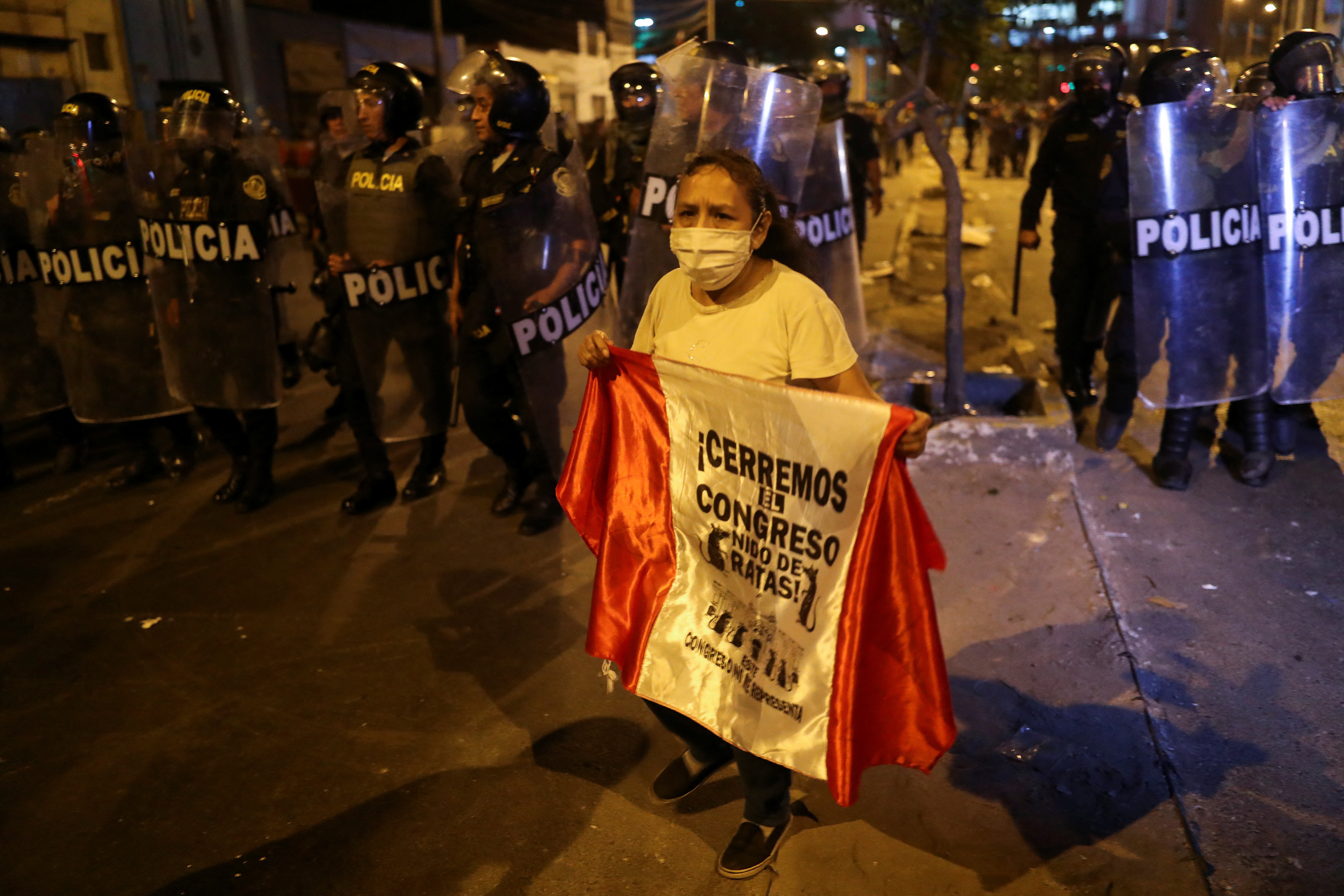
A demonstrator holds a flag in front of riot police officers standing guard during a protest to demand Peru’s President Dina Boluarte to step down, in Lima, Peru, January 31, 2023. REUTERS/Sebastian Castaneda

Peru’s Congress on Wednesday rejected a proposal to move elections forward to December 2023, despite nearly two months of protests that have left dozens dead following the ousting of former President Pedro Castillo.

Lawmakers will continue debating a different proposal to hold early elections, a key demand of the protesters. But Peru’s Congress is deeply fragmented and reaching an agreement is tricky.

The first proposal, which came from the right-wing Popular Force party, was rejected by 68 lawmakers, and voted in favor of by 54, with two abstentions.

Jorge Montoya, a congressman and spokesperson for the far right-wing Popular Renovation party, said during Wednesday’s debate that early elections were unconstitutional and that members of Congress should be allowed to finish their term.

Now Castillo’s party, Peru Libre, will try to wrangle votes for their proposal, which includes a non-binding referendum for a new constitution and new members of Congress.

“We want to leave our seats, but not before taking the first steps for a new constitution,” Maria Aguero, a congresswoman for Peru Libre, told Reuters after the vote.

“That means asking the people if they do or don’t want a new constitution.”

A supermajority of 87 votes is needed to advance the proposal, while 66 votes are needed to trigger a national referendum.

Violent protests erupted over the weekend after Congress delayed the vote amid infighting, leading to the death of one protester and prompting President Dina Boluarte to say she would submit her own proposal if Congress failed to reach an agreement.

Protesters have over past weeks blocked roads, taken over airports and set some buildings on fire, with demands including early elections, Congress’ closure, the resignation of Boluarte and Castillo’s release from jail. Castillo is being held in pre-trial detention on charges of rebellion after attempting to illegally dissolve Congress.

Congress, which has an approval rating of just 7% according to latest polls, had previously agreed to move the scheduled 2026 elections to April 2024, but that failed to quell the unrest.

Categories
Audio Sources - Full Text Articles

Russian missile destroys Ukrainian apartment building; 3 dead, say police

2023-02-01T22:01:58Z

(Reuters) -A Russian missile destroyed an apartment building and damaged seven more in the eastern Ukrainian city of Kramatorsk on Wednesday night, killing at least three people and injuring 20, regional police said.

?m=02&d=20230201&t=2&i=1622116379&r=LYNX

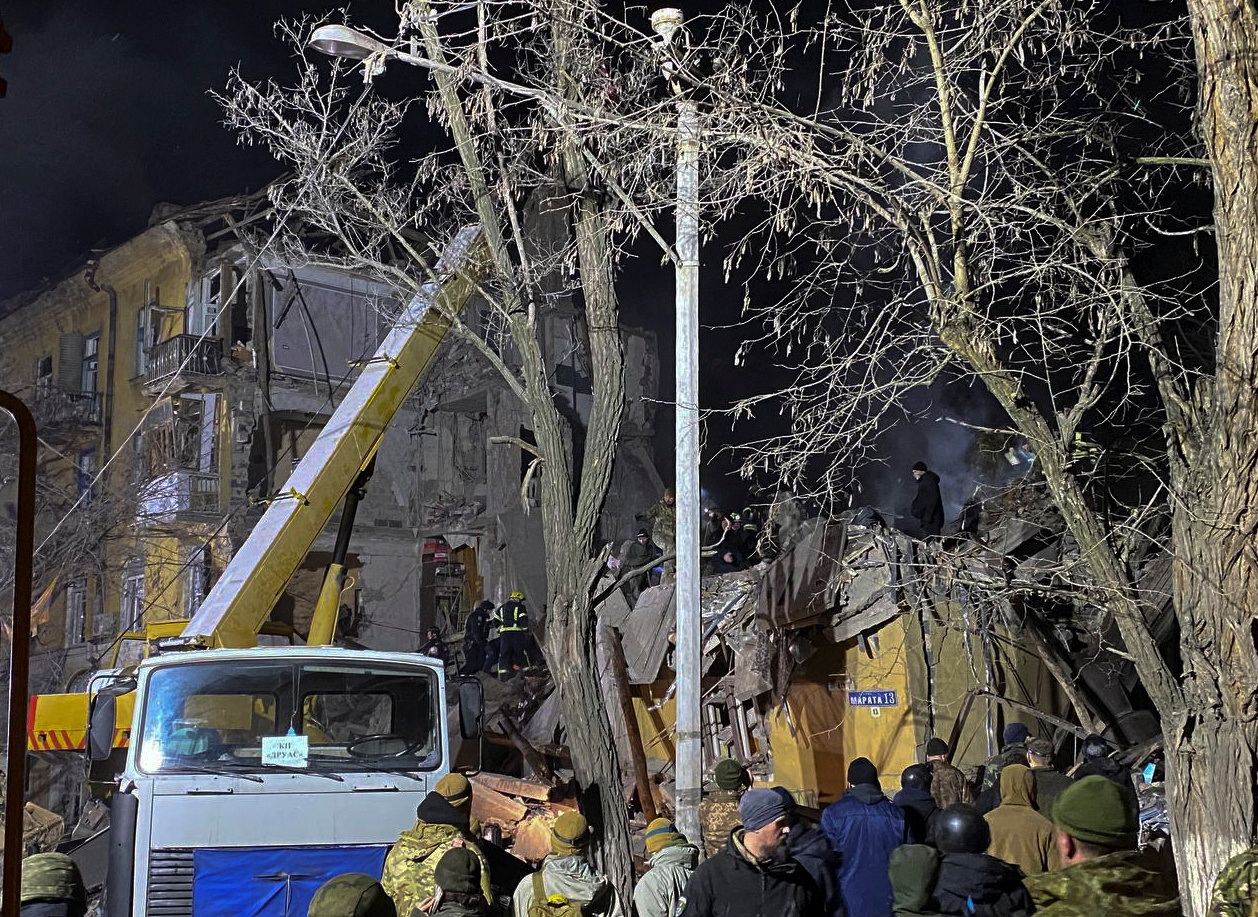
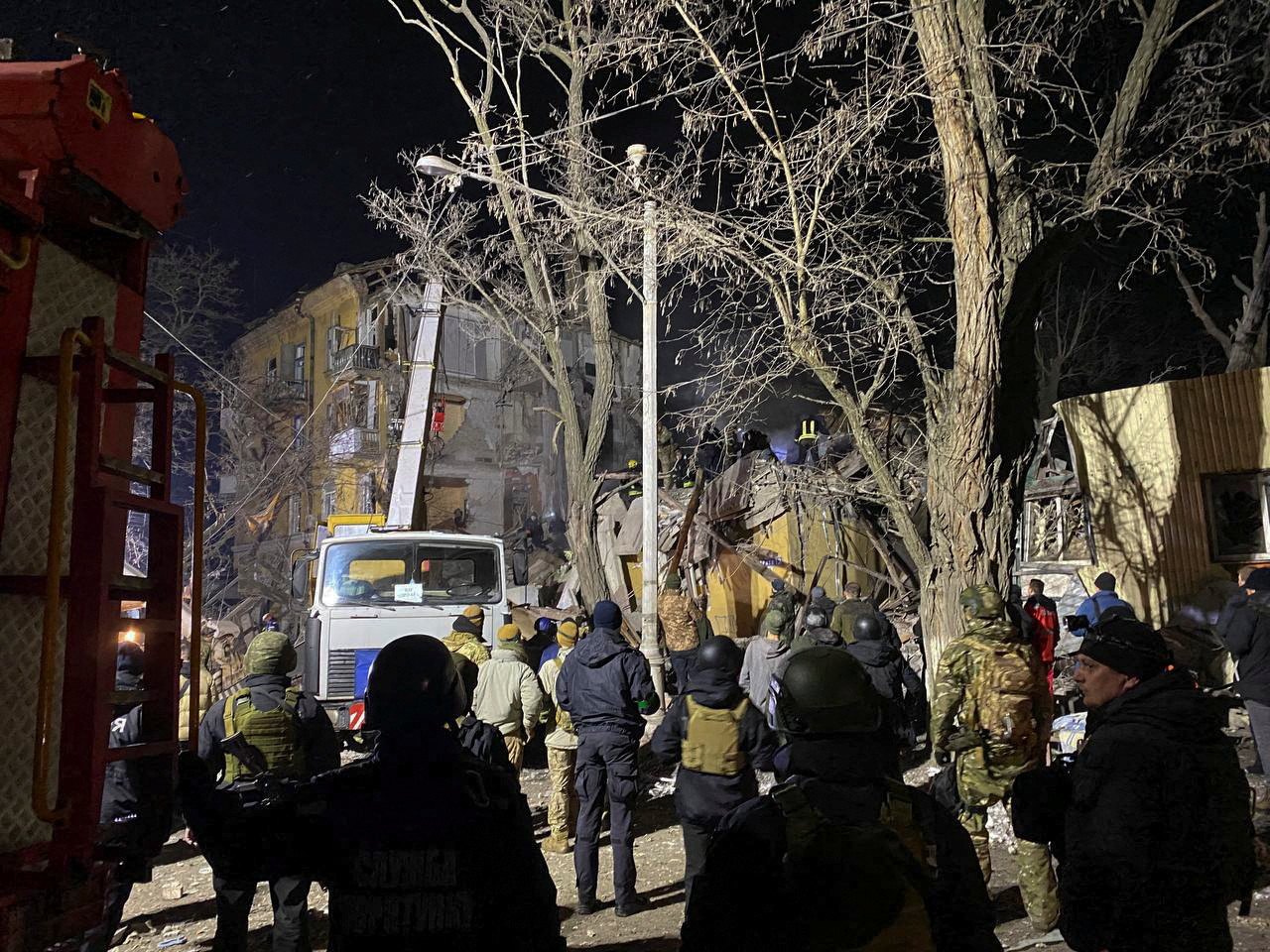
People remove debris at a site of a residential building destroyed by a Russian missile strike, amid Russia’s attack on Ukraine, in Kramatorsk, Ukraine February 1, 2023. Head of the Donetsk Regional Military Administration Pavlo Kyrylenko/Handout via REUTERS

Local authorities initially said Russia had fired a rocket but the police force later said an Iskander-K tactical missile had struck at 9.45 pm local time (1945 GMT).

“At least eight apartment buildings were damaged. One of them was completely destroyed,” police said in a Facebook post. “People may remain under the rubble.”

At least 44 people were killed last month when a Russian missile hit an apartment building in the eastern city of Dnipro.

“This is not a replay of the past, it is the daily reality of our country – a country with absolute evil on its borders,” President Volodymyr Zelenskiy wrote on Telegram messaging app.

In a separate tweet, Zelenskiy wrote: “The only way to stop Russian terrorism is to defeat it. By tanks. Fighter jets. Long-range missiles.”

Ukraine, which last week secured promises of battle tanks, wants allies to supply fighters and missiles.

Regional governor Pavlo Kyrylenko posted a picture showing a four-storey Kramatorsk building that had suffered major damage.

Radio Free Europe’s Ukrainian outlet published a brief video clip which showed rescuers working under floodlights as snow fell on the rubble.

Ukraine accuses Russian forces of indiscriminately shelling civilian infrastructure, a charge Moscow routinely rejects.

Last April, Ukraine said 57 people died when a Russian missile hit the train station in Kramatorsk. Moscow denied responsibility, saying the missile was Ukrainian.

Categories
Audio Sources - Full Text Articles

U.S. African American studies does not include material targeted by Florida governor

2023-02-01T23:30:03Z

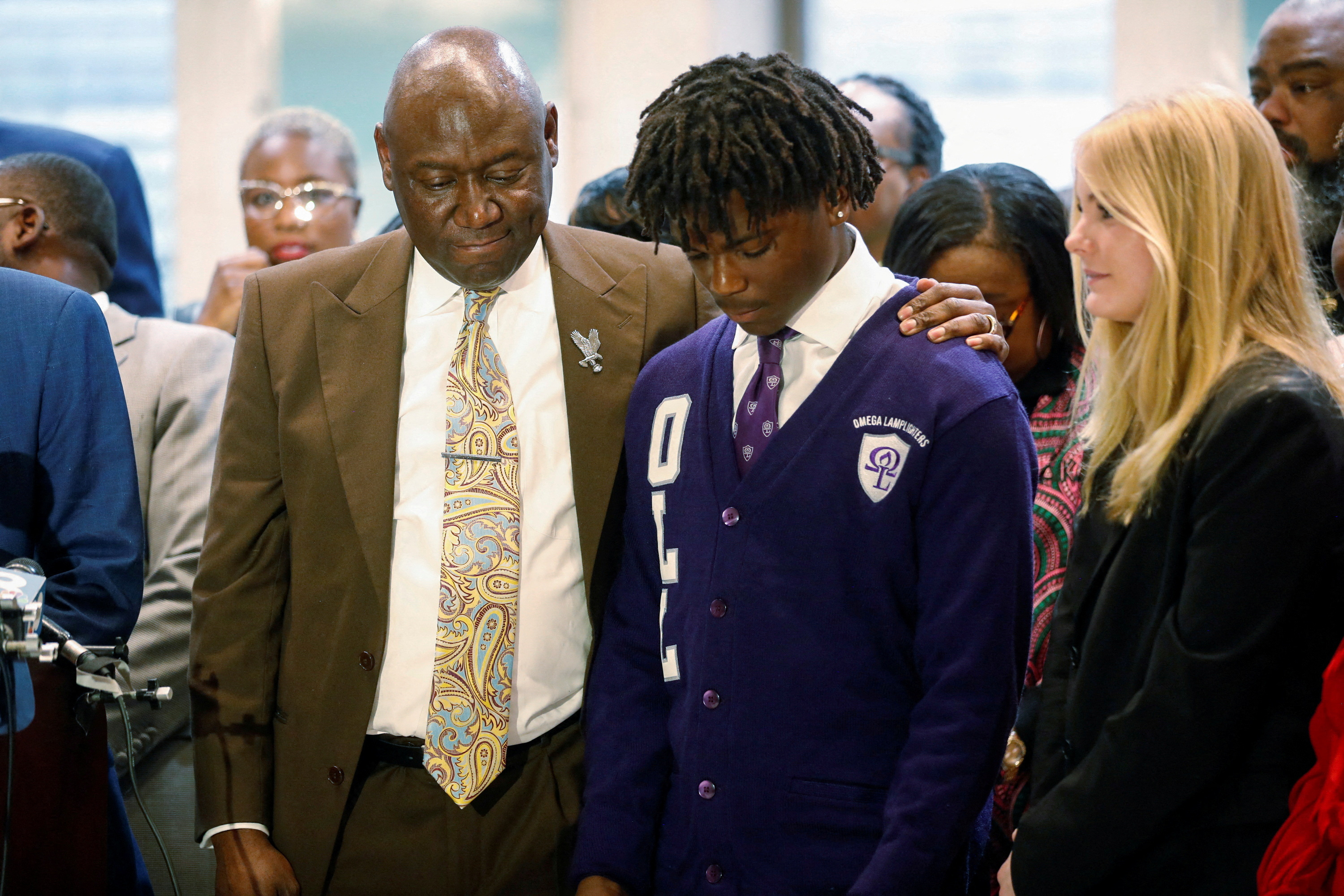
Civil Rights attorney Ben Crump stands with Elijah Edwards, 14, a student at Sail High School during a “Stop The Black Attack” rally against ongoing state legislation at the Florida State Capitol building in Tallahassee, Florida, U.S. January 25, 2023. REUTERS/Octavio Jones

An African American studies course for U.S. high school students that was released on Wednesday does not include material that Florida’s conservative governor said pushed a liberal agenda, the latest development in a fierce debate about politics, education and censorship.

The College Board, a non-profit that administers Advanced Placement courses that help high school students gain college credits, said changes to its pilot version of the course, which was leaked last fall, were made weeks before Florida Gov. Ron DeSantis blasted its contents and forbade it being taught in his state.

The board said the final version of the course, released on the first day of Black History Month in the United States, had been under development for nearly a year, reflected input from hundreds of experts, and did not bend to anyone’s political will.

“No states or districts have seen the official framework that is released, much less provided feedback on it,” the College Board said in a statement.

Henry Louis Gates Jr., director of Harvard University’s Hutchins Center for African and African American Research, was among scholars who praised the curriculum in the College Board statement.

But critics said the final version had been stripped of or downplayed topics that drew criticism from DeSantis.

A Reuters comparison of the curriculum released Wednesday to the leaked material dated February 2022 shows that work by some writers and scholars, such as Yale professor Roderick Ferguson, best-selling writer Ta-Nehisi Coates and Columbia law professor Kimberle Crenshaw, were no longer cited.

Studying the contemporary Black Lives Matter movement for racial justice and an end to police violence was optional instead of part of the course. “Black conservatism” appeared as a possible research topic in the version released Wednesday, but not in the leaked material.

“We are now in the dismaying situation where the governor and conservative forces have determined the parameters of Black history and African American Studies in Florida,” Ferguson, who writes on Black queer issues, said in an email.

On Tuesday, more than 200 African American studies faculty members from dozens of universities published an open letter defending the course and expressing their “outrage at the efforts of Florida Governor Ron DeSantis to delegitimize the AP’s pilot curriculum in African American Studies.”

“This is censorship and a frontal attack on academic freedom,” the professors wrote. “We categorically reject DeSantis’s autocratic claim to knowing what college-level material should be available in an AP African American Studies course.”

DeSantis had no comment Wednesday, saying he had not yet reviewed what the College Board had released.

The governor in January said the course would not be allowed in his state. DeSantis and other Florida officials accused the lessons of being “indoctrination” for including Black queer studies, Black Lives Matter, reparations, and the abolishment of prisons.

White House spokesperson Karine Jean-Pierre, calling Florida’s rejection “incomprehensible,” said last month the action was of a piece with earlier moves by DeSantis, including banning teaching young children about LGBTQ issues.

Categories
Audio Sources - Full Text Articles

Russia advances in eastern Ukraine, strike on apartments kills civilians

2023-02-01T23:42:38Z

President Volodymyr Zelenskiy and a senior defence official issued dire accounts of Russian forces shelling and advancing in Ukraine’s eastern province of Donetsk, the main focal point of the 11-month-long war.

Fierce fighting was unabated in eastern Ukraine, where Russian troops are trying to gain ground near the strategic logistics hub of Lyman, Deputy Defence Minister Hanna Malyar said on Wednesday evening.

Bakhmut town and 10 communities around it came under Russian artillery and tank fire, the General Staff of the Ukrainian Armed Forces said in a statement on Wednesday night. Bakhmut has suffered relentless bombardment for months by Russian troops.

Separately, Avdiivka, another major target, and the nearby contested town of Maryinka and other settlements were also hit, the statement said.

“A definite increase has been noted in the offensive operations of the occupiers on the front in the east of our country. The situation has become tougher,” Zelenskiy said in a Wednesday evening video address.

The Russian forces were trying to make gains that they could show on the anniversary of their Feb 24, 2022 invasion, Zelenskiy said.

At least three people were killed and 20 wounded on Wednesday night after a Russian rocket strike destroyed a residential building in the eastern city of Kramatorsk, officials said.

“People are screaming under the rubble. Another terrorist act by Russia. The only way to stop it and save people’s lives is more weapons for Ukraine,” Ukrainian government minister Mykhailo Fedorov wrote on Twitter.

The United States and other Western allies of Ukraine have provided it a steady steam of weaponry, most recently also pledging modern battle tanks and long-range missiles.

Regional governor Pavlo Kyrylenko posted a picture that appeared to show a four-storey building in Kramatorsk that had suffered major damage. Radio Free Europe’s Ukrainian outlet published a brief video clip that showed rescuers working under floodlights as snow fell on the rubble.

At least 44 people were killed in January when a Russian missile hit an apartment building in the city of Dnipro. In April 2022, Ukraine said 57 people died when a Russian missile hit the train station in Kramatorsk. Moscow denied responsibility, saying the missile was Ukrainian.

Ukraine and its Western allies have accused Russian forces of war crimes and targeting civilians, charges Russia rejects.

After a failed advance on the capital Kyiv early in the campaign, Russia said it was reorienting its military drive to secure control of the industrial eastern region known as the Donbas.

It is made up of Luhansk and Donetsk provinces, which were declared annexed by Moscow in September following sham referendums denounced by most countries. Moscow-aligned fighters seized large areas of both in 2014, and in recent months after a slow advance south and east, Russian forces control most of Luhansk region. Local proxies say Russian forces have captured about half of Donetsk region.

“Fierce fighting rages in the east. The enemy is trying to expand the area of its offensive in the Lyman sector,” the deputy minister Mylar said on the Telegram messaging app. “It is making powerful attempts to break through our defences.”

Ukrainian troops drove Russian forces out of Lyman in October, a significant setback for a military with more troops and weapons.

Russian President Vladimir Putin ordered what he called a “special military operation” to protect Russian security and Russian speakers nearly a year ago. The invasion has killed thousands of civilians, uprooted millions and reduced cities to rubble.

More recently Russia has characterized the conflict as confronting what it says is an aggressive and expansionist U.S.-led NATO military alliance. Ukraine and its allies accuse Moscow of an unprovoked war to grab territory.

A former commander of Russia’s Wagner mercenary group who fled to Norway in January told Reuters he wanted to apologise for fighting in Ukraine. The group has been locked in battle in Donetsk region.

“Many consider me to be a scoundrel, a criminal, a murderer,” Andrei Medvedev, 26, said in an interview. “First of all, repeatedly, and again, I would like to apologise, and although I don’t know how it would be received, I want to say I’m sorry.”

Medvedev said he wanted to speak out about his experiences so “the perpetrators are punished” for their crimes in Ukraine.

Meanwhile, Zelenskiy is cracking down on corruption in his government, a campaign that appears to reflect determination to demonstrate that it can be a steward of billions of dollars in Western aid and shed a reputation for endemic graft.

Security services searched the home of one of Ukraine’s most influential businessmen, Ihor Kolomoiskiy, two days before senior European Union officials visit Kyiv on Friday. Ukraine sees the meeting as important to its hopes of one day joining the EU, a process that can take years.

A Ukrainian political shake-up has led to more than a dozen officials quitting or being dismissed.

Zelenskiy said he is prepared to make more personnel changes to fight corruption.

Related Galleries:

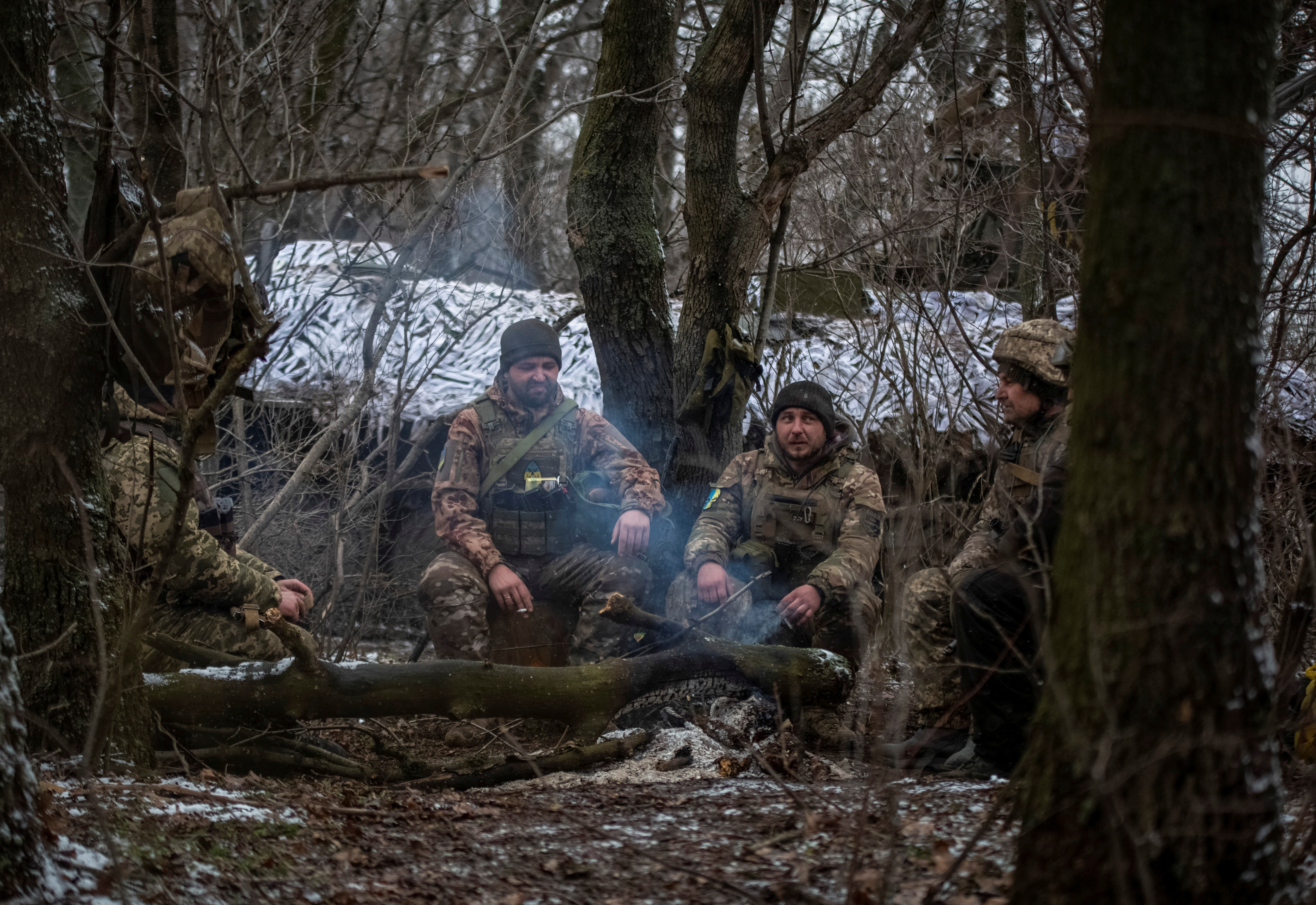
Ukrainian servicemen look on from a military vehicle at their positions near a front line, amid Russia’s attack on Ukraine, in Donetsk region, Ukraine February 1, 2023. REUTERS/Oleksandr Ratushniak

Ukrainian servicemen stand at their positions near a front line, amid Russia’s attack on Ukraine, in Donetsk region, Ukraine February 1, 2023. REUTERS/Oleksandr Ratushniak

Ukrainian servicemen rest at their positions near a front line, amid Russia’s attack on Ukraine, in Donetsk region, Ukraine February 1, 2023. REUTERS/Oleksandr Ratushniak

People work at a site of a residential building destroyed by a Russian missile strike, amid Russia’s attack on Ukraine, in Kramatorsk, Ukraine February 1, 2023. Radio Free Europe/Radio Liberty/Serhii Horbatenko via REUTERS.

People work at a site of a residential building destroyed by a Russian missile strike, amid Russia’s attack on Ukraine, in Kramatorsk, Ukraine February 1, 2023. Radio Free Europe/Radio Liberty/Serhii Horbatenko via REUTERS
Categories
Audio Sources - Full Text Articles

Ukraine Ramps Up Corruption Fight

social

Categories
Audio Sources - Full Text Articles

Democratic-backed Connecticut bill would ban ‘Latinx’ term

HARTFORD, Conn. (AP) — A group of Hispanic lawmakers in Connecticut has proposed that the state follow Arkansas’ lead and ban the term “Latinx” from official government documents, calling it offensive to Spanish speakers.

The word is used as a gender-neutral alternative to “Latino” and “Latina” and is helpful in supporting people who do not identify as either male or female, according to the word’s backers.

But state Rep. Geraldo Reyes Jr. of Waterbury, the bill’s chief sponsor and one of five Hispanic Democrats who put their names on the legislation, said Latinx is not a Spanish word but is rather a “woke” term that is offensive to Connecticut’s large Puerto Rican population.

“I’m of Puerto Rican decent and I find it offensive,” he said.

Last month, Arkansas banned government officials from using Latinx on formal documents as part of several orders issued by Republican Gov. Sarah Huckabee Sanders within hours of her taking office.

Reyes said his motivations might be different from Sanders’, but he believes her decision was the right one.

The League of United Latin American Citizens, the oldest Latino civil rights group in the U.S., announced in 2021 that it would no longer use the term Latinx.

“The Spanish language, which is centuries old, defaults to Latino for everybody,” Reyes said. “It’s all-inclusive. They didn’t need to create a word, it already exists.”

But Maia Gil’Adi, an assistant professor of “Latinx and Multiethnic Literature” at Boston University, said the word actually dates back to Latino and Latina youth and queer culture in the 1990s, with the “x” being a nod to many people’s indigenous roots.

“The word Latino is incredibly exclusionary, both for women and for non-gender conforming people,” she said. “And the term Latinx is really useful because of the way it challenges those conceptions.”

David Pharies, a Spanish language professor at the University of Florida, said another movement would replace the “o” and “a” in many Spanish nouns referring to people with an “e.” He said that is something that would be easier for Spanish-speakers to pronounce than the word Latinx.

“Latinx was clearly a solution that was proposed outside the Spanish-speaking world,” he said.

It’s not clear how often the term Latinx has been used in state documents. A search for the word on the state government’s portal returned 945 hits for documents including press releases, blogs, and reports using the word. Michelle Dumas Keuler, an attorney for the Commission on Human Rights and Opportunities, told Hearst Connecticut Media that it uses the term in any a complaint it submits about housing, employment or other types of discrimination, when requested.

Reyes said he expects the bill to get a hearing before the Democratic-controlled Legislature’s Government Administration and Elections Committee during the current session.

Democratic Gov. Ned Lamont’s spokesman, Adam Joseph, said the governor’s office will follow the debate as the bill moves through the Legislature.

WP Radio
WP Radio
OFFLINE LIVE