Categories
Audio Sources - Full Text Articles

Russian troops shell Toretsk, damage houses

630_360_1672562718-583.jpg

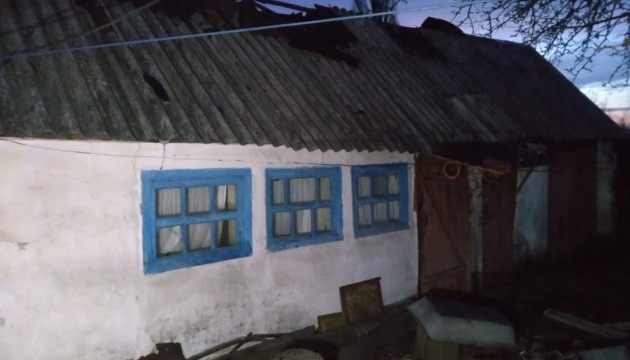
Russian troops have shelled the town of Toretsk in the Donetsk region, harmful homes.

The head of the Donetsk Regional Navy Administration, Pavlo Kyrylenko, reported this in a put up on Telegram, Ukrinform studies.

“Toretsk arrived below shelling in the Horlivka way — 8 structures were broken, no information and facts about casualties was received,” he stated.

In addition, according to him, Vuhledar and the outskirts of the town arrived less than fire in the Volnovakha way, with no casualties recorded.

“In the Donetsk course, personal homes in Kurakhove arrived beneath shelling yesterday, and following midnight, the Russians shelled Avdiivka two times from Grads — no one was injured,” Kyrylenko famous.

Source link

The post Russian troops shell Toretsk, damage houses appeared first on Ukraine Intelligence.

Categories
Audio Sources - Full Text Articles

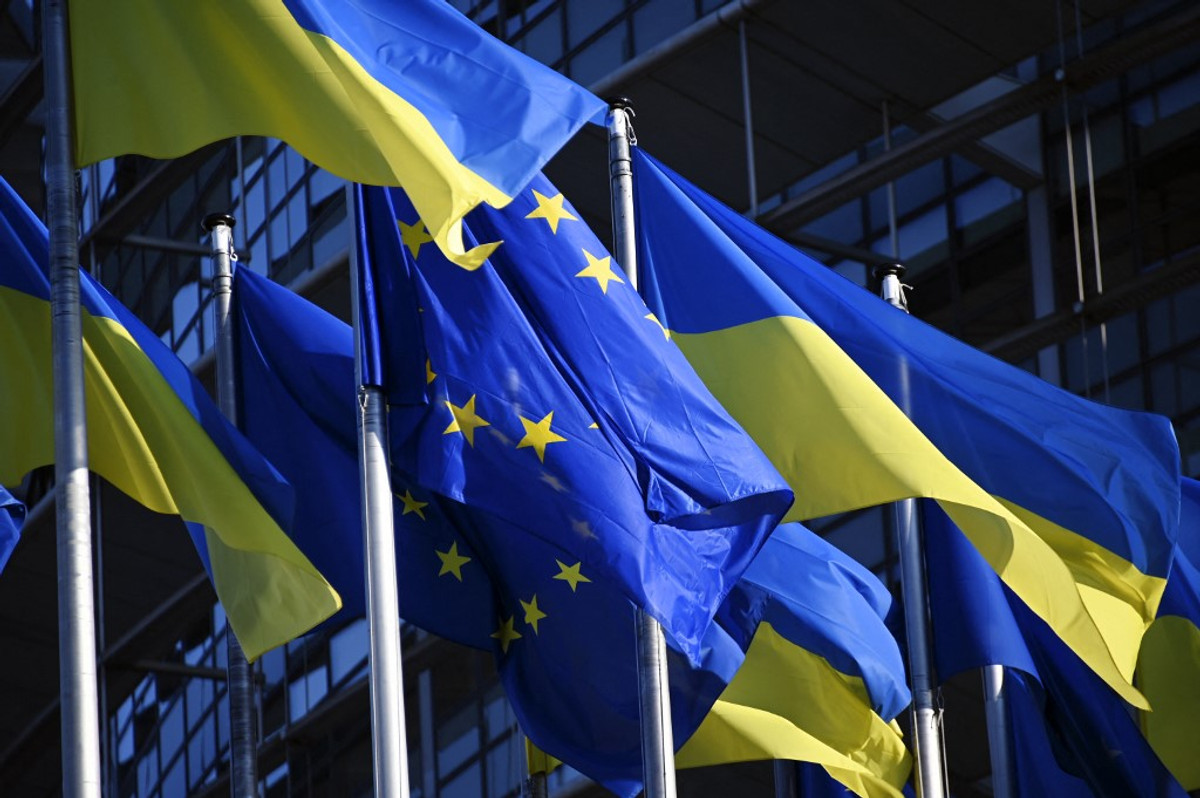
Borrell: EU Resolved to Continue Standing by Ukraine in 2023

4aba901a0d6b8bb135d842bf532a8706.jpeg?w=

In 2022, the EU provided financial assistance to Ukraine in the amount of EUR 19 billion.

Categories
Selected Articles

Authorities tracked the Idaho student killings suspect cross-country to Pennsylvania, sources say

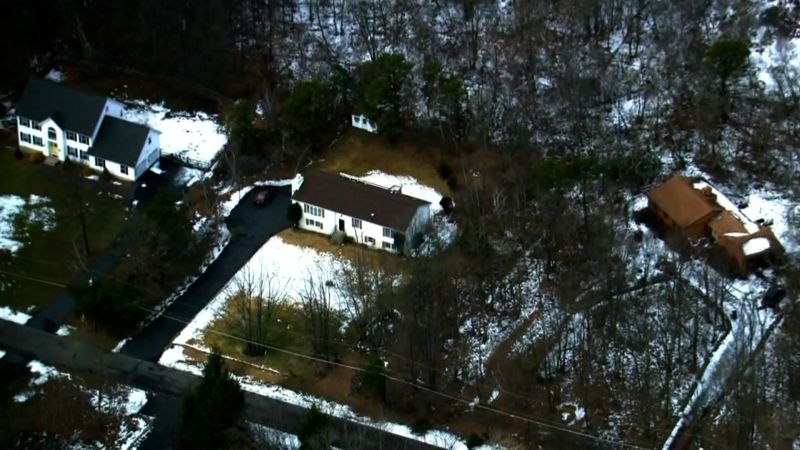
221230185217-pennsylvania-home-idaho-mur


Stroudsburg, Pennsylvania
CNN
 — 

Authorities tracked the man charged in the killings of four Idaho college students all the way to Pennsylvania and surveilled him for several days before finally arresting him on Friday, sources told CNN.

Bryan Christopher Kohberger, 28, was arrested in his home state of Pennsylvania and charged with four counts of murder in the first degree, as well as felony burglary in connection with the stabbing deaths of four University of Idaho students in November, according to Latah County Prosecutor Bill Thompson.

Still, investigators have not publicly confirmed the suspect’s motive or whether he knew the victims. The murder weapon has also not been located, Moscow Police Chief James Fry said Friday.

In the nearly seven weeks since the students were found stabbed to death in an off-campus home, investigators have conducted more than 300 interviews and scoured approximately 20,000 tips in their search for the suspect. News of the killings – and the long stretch of time without a suspect or significant developments – have rattled the University of Idaho community and the surrounding town of Moscow, which had not seen a murder in seven years.

Investigators honed in on Kohberger as the suspect through DNA evidence and by confirming his ownership of a white Hyundai Elantra seen near the crime scene, according to two law enforcement sources briefed on the investigation.

Kohberger, who authorities say lived just minutes from the scene of the killings, is a PhD student in Washington State University’s Department of Criminal Justice and Criminology, the school confirmed.

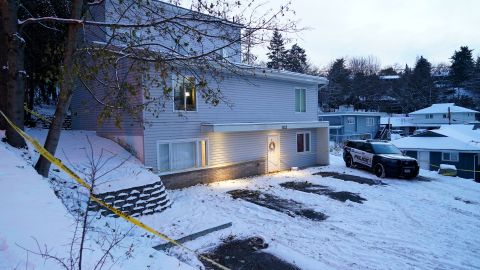
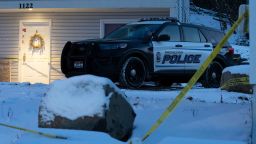
The home where four University of Idaho students were killed in the early morning hours of November 13.

He drove cross-country in a white Hyundai Elantra and arrived at his parents’ house in Pennsylvania around Christmas, according to a law enforcement source. Authorities began tracking him at some point during his trip east from Idaho.

“Sometime right before Christmas we were zeroing in on him being in or going to Pennsylvania,” the source told CNN.

An FBI surveillance team tracked him for four days before his arrest while law enforcement worked with prosecutors to develop enough probable cause to obtain a warrant, the two law enforcement sources said.

Genetic genealogy techniques were used to connect Kohberger to unidentified DNA evidence, another source with knowledge of the case tells CNN. The DNA was run through a public database to find potential family member matches, and subsequent investigative work by law enforcement led to him as the suspect, the source said.

Kohberger was arraigned Friday morning in Pennsylvania and is being held without bail, records show.

Kohberger intends to waive his extradition hearing to expedite his transport to Idaho, Monroe County Chief Public Defender Jason LaBar said in a statement to CNN on Saturday.

“Mr. Kohberger is eager to be exonerated of these charges and looks forward to resolving these matters as promptly as possible,” LaBar said.

LaBar later told CNN Kohberger arrived in Pennsylvania around December 17 to celebrate the holidays with his family.

“His father actually went out (to Idaho) and they drove home together,” LaBar said.

He said Kohberger’s white Hyundai Elantra was found at his parents’ house, where authorities apprehended him early Friday. LaBar said his client’s father, Michael, answered the door to police. Father and son were both cooperative, he said.

LaBar said he has recommended his client be psychologically tested before court proceedings.

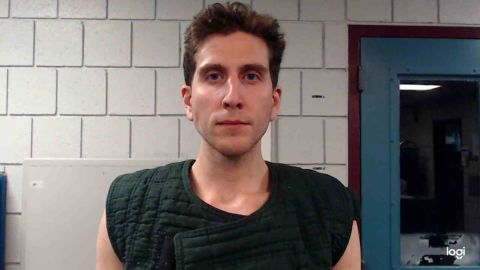
Bryan Kohberger

Kohberger is in a cell alone, LaBar, said and “on 24-hour watch by the guards there to ensure his safety.”

LaBar said the extradition hearing is a “formality proceeding.” He said all the Commonwealth needs to prove is that his client resembles or is the person on the arrest warrant and that he was in the area at the time of the crime.

LaBar said he spoke to Kohberger for around an hour Friday evening, discussing where he was at the time of the killings. “Knowing of course that it’s likely they have location data from his cell phone already putting him on the border of Washington and Idaho,” LaBar told CNN, “it was an easy decision obviously, since he doesn’t contest that he is Bryan Kohberger.”

Kohberger is “shocked a little bit,” LaBar said.

LaBar added, “We don’t really know much about the case. I don’t have any affidavit or probable cause. I didn’t want to discuss the case with him because I’m merely his representation for this procedural issue as to whether or not he wants to be extradited back to Idaho.”

Even with a suspect charged, law enforcement’s work is far from over, prosecutors said.

“This is not the end of this investigation. In fact, this is a new beginning,” Thompson said Friday night.

Thompson urged people to continue submitting tips, asking anyone with information about the suspect “to come forward, call the tip line, report anything you know about him to help the investigators.”

Since the killings of the four students – Kaylee Goncalves, 21; Madison Mogen, 21; Xana Kernodle, 20; and Ethan Chapin, 20 some community members have grown frustrated as investigators have yet to offer a thorough narrative of how the night unfolded. Authorities have released limited details, including the victims’ activities leading up to the attacks and people they have ruled out as suspects.

Fry told reporters Friday state law limits what information authorities can release before Kohberger makes an initial appearance in Idaho court. The probable cause affidavit – which details the factual basis of Kohberger’s charges – is sealed until the suspect is physically in Latah County, Idaho, and has been served with the Idaho arrest warrant, Thompson said.

Kohberger is a resident of Pullman, Washington, a city just about nine miles from the site of the killings, authorities said. His apartment and office on the Washington State University’s Pullman campus were searched by law enforcement Friday morning, the university confirmed in a statement.

In June 2022, he finished graduate studies at DeSales University, where he also was an undergraduate, according to a statement on the school’s website. He also got an associate degree from Northampton Community College in 2018, the college confirmed to CNN.

LaBar called Kohberger “very intelligent.”

The attorney said he spoke with Kohberger’s family Friday night for 15 to 20 minutes.

“They’re also very shocked,” he said. “Out of character for Bryan… The FBI, local police, Idaho State Troopers were at their house at approximately 3 a. m. yesterday knocking on the door and announcing themselves to enter, out of real shock and awe to them.”

In a Reddit post removed after Kohberger’s arrest was announced, a student investigator named Bryan Kohberger who was associated with a DeSales University study sought participation in a research project “to understand how emotions and psychological traits influence decision-making when committing a crime.”

“In particular, this study seeks to understand the story behind your most recent criminal offense, with an emphasis on your thoughts and feelings throughout your experience,” the post said.

CNN reached one of the principal investigators of the study, a professor at DeSales University, but they declined to comment on the matter. The university has not responded to requests for comment.

CNN’s John Miller, Pamela Brown, Jay Croft, Mark Morales, Josh Campbell, Jim Sciutto, Elizabeth Joseph, Stephanie Becker, Veronica Miracle and Paul Murphy contributed to this report.

Categories
Audio Sources - Full Text Articles

What the United States Owes Afghan Women

In this picture taken on December 23, 2022, Marwa (C), a student reads books with her brother Hamid (L) at their home in Kabul. - Marwa was just a few months away from becoming the first woman in her Afghan family to go to university -- instead, she will watch achingly as her brother goes without her. Women are now banned from attending university in Taliban-controlled Afghanistan, where they have been steadily stripped of their freedoms over the past year. "Had they ordered women to be beheaded, even that would have been better than this ban," Marwa told AFP at her family home in Kabul. (Photo by Ahmad SAHEL ARMAN / AFP) (Photo by AHMAD SAHEL ARMAN/AFP via Getty Images)

Marwa, center, was months away from attending university as the first woman in her family to do so. She now can’t go under Taliban rule, as her brother, Hamid, left, will attend without her. They read together in their home in Kabul, Afghanistan, on Dec. 23, 2022.

Photo: Ahmad Sahel/AFP via Getty Images

In the early days of the U.S. war in Afghanistan, alleviating the plight of Afghan women under the Taliban was a major part of the campaign to sell the conflict to the American public — and eventually to justify an open-ended military occupation. Whether the United States did much to help Afghan women is a debatable point, largely dependent on which women you ask.

Yet there is no question that today, under the Taliban, a young, educated, and urbanized generation of Afghan women who enjoyed a period of opportunity over the past 20 years is experiencing a catastrophic attack on their basic rights.

The Taliban’s recent decision to ban girls’ education past the sixth grade is only the latest outrage to be inflicted on Afghan women, and another step in a campaign to drag Afghan society back to the climate of medieval repression that reigned during the last Taliban government of the 1990s.

There is one thing that could easily be done to ease the suffering of Afghans under Taliban rule: giving a home to Afghan refugees.

This unhappy situation was not inevitable. There are ideological divisions inside the Taliban, particularly between its leaders who spent the war years abroad mingling in foreign capitals, and those who spent it fighting a grueling insurgency inside the country.

While the Taliban government showed initial hints of pragmatism upon coming to power, today it has become clear that the extremist faction of its leadership is in control and willing to sacrifice the well-being of Afghans and the goodwill of the international community to fulfill its ideological mission.

The United States has scant leverage left to change the calculus of an organization so dead set on its goals. If the words about human rights and women’s empowerment that justified the war for 20 years had any meaning at all, there is one thing that could easily be done to ease the suffering of Afghans under Taliban rule, without risking more harm in the process: giving a home to Afghan refugees.

Last week, Congress failed to pass the Afghan Adjustment Act, a measure that would have given the tens of thousands of Afghans who escaped to the U.S. after the fall of Kabul a path to permanent legal residency. The measure had been supported by everyone from former senior U.S. military officials, who issued a letter calling protection of the refugees a “moral imperative,” to human rights organizations. The Afghan Adjustment Act, however, was left out of the omnibus spending bill passed at the end of the year, reportedly due to opposition from 89-year-old Iowa Republican Sen. Chuck Grassley.

These Afghans arrived in the U.S. on flights hastily arranged by the U.S. military as the Taliban marched on Kabul last summer. They remain in the U.S. on a precarious legal status known as temporary humanitarian parole that places them at risk of deportation.

Many of these refugee families include those who fought with the U.S. during the war or supported the U.S.-backed government — making them and their families prime targets of the new Taliban regime.

The failure to pass the law also leaves Afghans who worked with the U.S. military but remain trapped in Afghanistan today out in the cold, denying them eligibility for Special Immigrant Visas that could provide a legal hope of immigrating to the U.S. if they escape the country.

Many former Afghan allies of the U.S. continue to be hunted down by the Taliban as the group consolidates a regime that is prioritizing taking revenge for the past 20 years above rebuilding their shattered country.

If they are not provided a path to permanent status and are thus left to their fate, the ex-U.S. military officials warned in their letter, in future conflicts, “potential allies will remember what happens now with our Afghan allies.”

The Taliban’s recent decision to kick women out of school has been met with outrage by the international community and international Muslim religious figures, but most of all from ordinary Afghans. Many Afghans, including many men, have staged inspiring walkout protests from their classes to denounce the measure.

Having done more than anyone to take advantage of the opportunities afforded by the U.S. presence in their country, these are the people who deserve whatever support can be provided to them and their families. In the absence of that support, their future is likely to be grim.

Donald Trump’s recent anti-immigrant presidency and the general tenor of Republican politics means that any effort to resettle refugees — those here today and those who may arrive in the future — is inevitably going to be a political fight. That said, a Democratic president will be in office for at least the next two years and will have an opportunity to use their political capital to right an obvious wrong that was done to Afghans by the U.S. — particularly if, as seems likely, the Taliban continue down a course of provocative repression against Afghan women and minorities.

Amid the terrible events now unfolding, it is worth remembering that, for a few months last year, when they appeared to send the world’s most powerful military into a scrambling retreat, the Afghan Taliban enjoyed a strange kind of recognition — maybe even popularity — around the world. Everyone loves a winner, and the triumphant march of the Taliban into Kabul was greeted warmly by everyone from former Pakistani Prime Minister Imran Khan, who said that the group was “breaking the shackles of slavery,” to the American alt-right who projected their own idealized vision of hypermasculinity onto the new social-media-savvy militants.

Even mainstream conservative politicians like Rep. Matt Gaetz, R-Fla., claimed at the time that the Taliban was “more legitimate than the last government in Afghanistan or the current government here” — a statement made with apparent relish at the humiliation of a sitting Democratic president who presided over the final defeat.

Today, that bizarre honeymoon is over. It’s time to deal with the harsh reality of Afghanistan under Taliban rule and its consequences for Afghans.

The U.S. has done a great deal of harm to the Afghan people, using their country as a proxy battlefield, subjecting them to sanctions, and killing them in huge numbers during the war. The least it can do today is give safe haven to those, particularly women, fleeing the collapse of the shoddy government in Kabul that the U.S. government had propped up, and who are now suffering a harrowing attack on their basic freedoms by a Taliban regime that grows more draconian with each passing day.

The post What the United States Owes Afghan Women appeared first on The Intercept.

Categories
Audio Sources - Full Text Articles

A brother and sister had to stop 6 times in 1 day to charge their rented Tesla in cold weather because the battery drained so quickly

Alice Steavenson and her brother Xaviar in the Tesla.Alice and Xaviar Steavenson rented a Tesla from Hertz.

Alice Steavenson/Badax.life

  • A brother and sister rented a Tesla and found they had to stop six times in one day to charge it. 
  • Xaviar Steavenson and his sister Alice drove from Orlando, Florida to Wichita, Kansas.
  • They said other customers with rented Teslas had called Hertz with similar charging problems.

Xaviar and Alice Steavenson wanted to find out what it’s like to drive a Tesla, so they rented one from Hertz for a road trip from Orlando, Florida to Wichita, Kansas.

They knew that the electric car would need charging en route, but what the siblings did not expect was just how often they’d need to plug it in.

They realized it would take longer to charge the car after the weather turned so cold in late December.

However, it got to the point that the “battery would drain faster than it would charge,” Xavier told Insider. 

When they set off they could drive for at least two and a half hours before needing to charge the Tesla. “We ended up having to stop every one to one and a half hours to charge for an hour, then an hour and a half, then two hours,” he said.

A picture of a rented Tesla at a supercharger.Their rented Tesla at a supercharger.

Alice Steavenson/Badax.life

“So beyond the lost time, it also got to the point it was between $25 and $30 to recharge. Just in one day, we stopped six times to charge at that cost,” Xaviar said.

Hertz said on its website that renting a Tesla was “always cheaper than gas,” according to Xaviar, but he said that claim was far from the truth.

The first time the siblings called Hertz, Xaviar said the agent told him he’d had “had nothing but Tesla calls today – I have no idea why they’re having issues.”

A spokesperson for Hertz told Insider: “We have not experienced a significant increase in communication from customers about the battery of their EV rentals. However, battery range varies by vehicle manufacturer and can be influenced by multiple factors including weather and driving conditions.”

The Steavensons were not alone in experiencing Tesla charging problem in very cold weather. A 44-year-old radio presenter, from Lynchburg in eastern Virginia, told Insider it was 19 degrees (minus 7 C) when he was left stranded just before Christmas because his Model S wouldn’t charge. 

Xaviar said Hertz told him to go to the closest branch to get a new car. “However, they don’t have Teslas there or not even the equivalent, so I’m headed back in a Nissan Rogue Sport – at least it’s economical.”

Tesla didn’t respond to a request for comment from Insider.

Read the original article on Business Insider
Categories
Selected Articles

Suspect in Idaho killings plans to waive extradition hearing

63afc57ec0d8e.image.jpg?crop=1811%2C951%

BOISE, Idaho (AP) — A suspect arrested in connection with the slayings of four University of Idaho students plans to waive an extradition hearing so he can be quickly brought to Idaho to face murder charges, his defense attorney said Saturday.

Bryan Kohberger, a 28-year-old Ph.D. student and teaching assistant in the Department of Criminal Justice and Criminology at Washington State University, was taken into custody early Friday morning by the Pennsylvania State Police at his parents’ home in Chestnuthill Township, authorities said.

“We believe we’ve got our man,” Moscow Police Department Captain Anthony Dahlinger told The Associated Press on Saturday.

Investigators obtained samples of Kohberger’s DNA directly from the suspect after he was arrested, Dahlinger said.

“He’s the one that we believe is responsible for all four of the murders,” he said.

Bill Thompson, a prosecutor in Latah County, Idaho, said during a press conference Friday that investigators believe Kohberger broke into the University of Idaho students’ home near campus “with the intent to commit murder.” The bodies of the students — Kaylee Goncalves, Madison Mogen, Xana Kernodle and Ethan Chapin — were found on Nov. 13, several hours after investigators believe they died.

The arrest in the disturbing case brought a sense of relief to the small northern Idaho college town after weeks passed with little information released by police. But it has also raised questions about whether the suspect knew the victims, what he has been doing in the weeks since the killings and how authorities tracked him down in Pennsylvania.

Many of those details will be released after Kohberger makes his first appearance in an Idaho courtroom, Dahlinger said. State law prohibits police from releasing most investigation records while the investigation is underway, and investigators kept many details about the investigation secret to avoid damaging the case, he said.

“I just really hope that everybody out there can understand the ‘why’ behind us holding a lot of information close to our vest,” Dahlinger said. “This is the positive outcome that we were searching for the entire time.”

Kohberger’s attorney, chief public defender Jason LaBar, said Kohberger is eager to be exonerated and plans to tell a judge in Monroe County, Pennsylvania on Tuesday that he will waive his extradition hearing so he can be quickly brought to Idaho.

LaBar also cautioned people against passing judgment on the case until a fair trial is held. The case has generated massive amounts of speculation on social media, with would-be sleuths suggesting possible motives and frequently trying to pin the blame for the deaths on various friends and acquaintances of the victims.

“Mr. Kohberger has been accused of very serious crimes, but the American justice system cloaks him in a veil of innocence,” LaBar wrote in a prepared statement. “He should be presumed innocent until proven otherwise — not tried in the court of public opinion.”

Police are now trying to understand “every aspect” of Kohberger, Dahlinger said. When the arrest was announced, investigators asked that anyone that knows Kohberger call a tip line to share information.

The response was immediate.

“We got 400 phone calls within the first hour after the press conference, which is great,” Dahlinger said. “We’re trying to build this picture now of him: Who he is, his history, how we got to this event, why this event occurred.”

Neighbors of the Kohberger family in Chestnuthill Township, Pennsylvania told The (Scranton) Times-Tribune on Friday they were shocked to see law enforcement vehicles outside the home.

Eileen Cesaretti, who lives across the street, said she loves Kohberger’s parents and is fond of their son, who she said helped her and her husband around their house when he was home from school.

“I don’t think he’s capable of doing something like this. I pray to God he’s innocent,” Cesaretti said.

Nephi Duff lives next door to Bryan Kohberger at a Washington State University apartment complex for graduate students and families. He told Spokane, Washington-based television station KREM2 that recent crimes like the slayings in Moscow have left him feeling unsafe.

“I don’t recall ever seeing him around,” Duff said of Kohberger. “I thought I was moving to a safe, small community, but that hasn’t been the case recently. I just think if these things are happening right under my nose, how do I protect (my family)?”

BK Norton, a student in the WSU Criminal Justice and Criminology Department, said Friday that they didn’t know Kohberger well, but didn’t like him.

“We interacted in class, but personally I was not a fan of Bryan because of comments he had made about LGBTQ+ individuals,” they said in an email to The Associated Press. “He was a little off, but I always thought it was because he was awkward and wanted to fit in.”

Federal and state investigators are now combing through Kohberger’s background, financial records and electronic communications as they work to identify a motive and build the case, a law enforcement official who could not publicly discuss details of the ongoing investigation and spoke to The Associated Press on condition of anonymity. The investigators are also interviewing people who knew Kohberger, including those at WSU, the official said.

Kohberger is being held without bond in Pennsylvania and will be held without bond in Idaho once he is returned, Thompson, the Latah County prosecutor, said. The affidavit for four charges of first-degree murder in Idaho will remain sealed until he is returned, Thompson said. He is also charged with felony burglary in Idaho. An extradition hearing is scheduled for Tuesday.

The students — Kaylee Goncalves, 21, of Rathdrum, Idaho; Madison Mogen, 21, of Coeur d’Alene, Idaho; Xana Kernodle, 20, of Post Falls, Idaho; and Ethan Chapin, 20, of Conway, Washington — were members of the university’s Greek system and close friends. Mogen, Goncalves and Kernodle lived in the three-story rental home with two other roommates. Kernodle and Chapin were dating and he was visiting the house that night.

Autopsies showed all four were likely asleep when they were attacked. Some had defensive wounds and each was stabbed multiple times. There was no sign of sexual assault, police said.

Ben Roberts, a graduate student in the criminology and criminal justice department at WSU, described Kohberger as confident and outgoing, but said it seemed like “he was always looking for a way to fit in.”

“I had honestly just pegged him as being super awkward.” Roberts said.

Roberts started the program in August — along with Kohberger, he said — and had several courses with him. He described Kohberger as wanting to appear academic.

“One thing he would always do, almost without fail, was find the most complicated way to explain something,” he said.

The arrest marked a bittersweet moment for law enforcement officers, Dahlinger said.

“We’re very excited by the fact that we were able to locate Mr. Kohberger and bring him into custody, but we all still feel the sadness and the sorry,” he said. “We feel horrible for the families and the loss of their loved ones.”

Levy reported from Harrisburg, Pennsylvania and Balsamo reported from Washington. News Researcher Rhonda Shafner in New York; reporters Mark Scolforo and Brooke Schultz in Harrisburg, Pennsylvania; Michael Kunzelman in Silver Spring, Maryland; and Martha Bellisle in Seattle also contributed.

Categories
Audio Sources - Full Text Articles

The Decisive Battle of the Russo-Ukraine War So Far: Putin’s Disastrous Attempt to Capture Kyiv

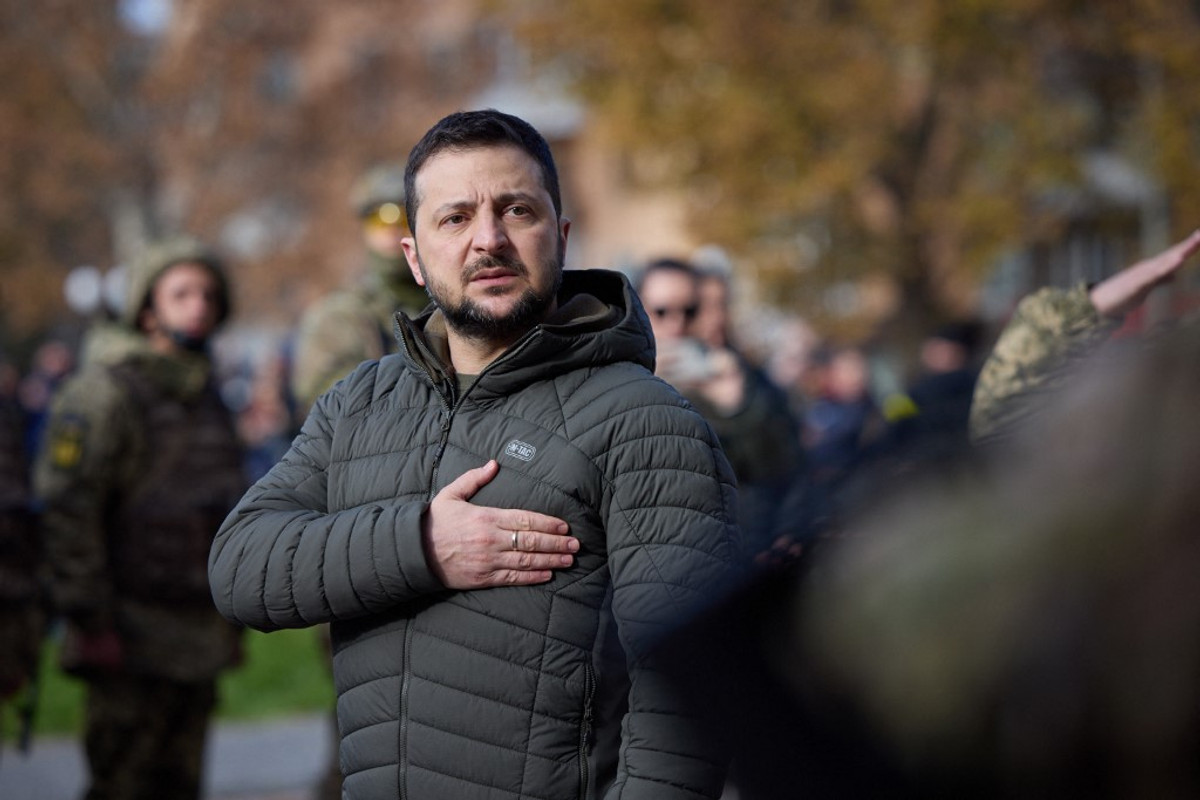
The planet remembers President Volodymyr Zelensky’s inspiring declaration, when Russia invaded Ukraine with the aim of capturing Kyiv in 3 times and using above Ukraine in a 7 days, that he prepared to stay put and battle.

But it was tens of hundreds of Ukrainian troopers and civilians, preventing and volunteering in Ukraine’s northern areas in late February and early March, that manufactured the Struggle of Kyiv virtually absolutely the most decisive defeat handed Russian President Vladimir Putin in 11 months of war.  

Fought in Kyiv’s northern suburbs, in the thick woods and swamps of the Zhytomyr and Chernihiv regions, and throughout the rolling hills and farmland of the Kharkiv region, the Armed Forces of Ukraine’s (AFU) successful defense of the country’s north eviscerated some of Russia’s best battle formations, certain significant conclusion-makers in Washington that Ukraine would fight, and rubbished the Kremlin’s assumption that Ukrainian resistance would be weak and easily get over, and that the war would be brief.

Zelensky’s Feb. 24 declaration that he intended to remain in Kyiv, of program, inspired Ukrainians. A widespread response was that the previous comedian’s stand was a little astonishing for a specialist entertainer, but the proper factor for Ukraine’s nationwide leader to do. His message that Ukraine would combat flashed onto personal computer screens and clever phones across the planet, therefore beginning Ukraine’s very long, and in some circumstances ongoing, battle to convince the world that surrender to Russia is not an choice. But the Battle of Kyiv was not received by words. It was received by the actions of ordinary Ukrainians on the ground.

 What went mistaken for the Russians

The Russian system identified as for massed paratrooper and heliborne infantry landings at two airports on the edges of Ukrainian capital, to be adopted up by armored columns lunging south from Belarus. Russian brokers inside of Kyiv would assault essential govt properties, and missiles and bombers would decapitate Ukrainian state and military services communications. A person Kyiv Put up reporter observed the particles of a cruise missile on the street in entrance of his apartment making.

A good offer of the Kremlin techniques went completely wrong incredibly rapidly. The Ukrainians experienced pre-positioned anti-aircraft gunners about the airfields, armed with lately delivered Polish and American anti-plane missiles. Hundreds of Russian troopers died in helicopter and air transportation crashes. At the Vasylkiv air base, to the south of Kyiv, air defenders shot down a Russian Il-76 transport jet, killing upwards of 250 elite Russian paratroopers with a one missile.

Russian air assault fighters that produced it to the ground located on their own surrounded by a short while ago elevated territorial defense units – at situations armed by police on an “anyone who wishes one gets an AK” basic principle – and underneath amazingly correct hearth by Ukrainian artillery. A territorial protection important afterwards explained to Kyiv Put up his device captured Russian officers who ended up utilizing 1970s-era maps. The Russians typically appeared misplaced as they walked into ambushes, he claimed.

Russia sent exclusive forces infantry to take around govt structures in numerous metropolis facilities. Ukrainian police, territorials and armed civilians, working on their individual ground, corralled the elite Russian troops, and captured or killed them. Kyiv Publish reporters and hundreds of citizens, on the 2nd day of the war, observed bits of a film-like chase of Russian agents by town legislation enforcers down a central avenue of the capital. The Russians were being cornered and killed. The similar disaster met a column of Russian operatives trying to drive armored cars and trucks into the center of Kharkiv.

 Ukrainian ingenuity

A Ukrainian water will work engineer of genius took advantage of the truth that the pine woods north of Kyiv are moist and drained by canals, and that the winter freezes have been relative light he purchased locks keeping back again the drinking water opened, flooding hundreds of square kilometers about the money to develop swampland. International military analysts scratched their heads at the Kremlin choice to start an armored attack in 1 of Europe’s most important wetlands – at the outset of the soften period, no significantly less.

Russian tanks and infantry preventing autos found themselves locked on roads in visitors jams, at 1 place 60 kilometers long. Ukrainian infantry, applying superior-tech American, British and Swedish anti-armor missiles, hiding in woods and villages, picked off Russian cars in the hundreds.

A retired British army sniper, volunteering as a coach for territorial infantry models defending the northern Kyiv suburb of Irpin, instructed Kyiv Write-up that the untrained territorials took significant casualties finding out to battle house-to-home, but there always appeared to be volunteers ready to consider a couple of missiles and go tank looking, and that the Russian military was hesitant to press into developed-up regions where a guy with an anti-tank missile could possibly be hiding behind any corner.

Prowling Turkish-built Bayraktar strike drones hunted down Russian anti-plane methods. And as soon as the sky was apparent, the Bayraktars, outfitted with substantial-tech thermal sights, thinned the Russian columns in night time strikes.

The Russians sent flanking columns to encircle Kyiv, but Ukrainian reinforcements begun arriving on the scene. On March 4, a Kyiv Write-up reporter centered in a village to the west of the money noticed hundreds of AFU tanks and infantry battling vehicles from 95th Air Assault and 24th Mechanized Brigades going at night time to get up positions in the Buchansky disctrict. They looked grim and cold, but they instructed civilians the Russians weren’t coming any farther south.

In swirling, cell armored battles not noticed in Europe because Planet War II, typical AFU formations like 92nd Mechanized Brigade dry-gulched Russian tank and BMP models in the case of Russia’s 200th Guards Individual Motor Rifle Brigade, the ambushes had been recurring two or three occasions. The Russian grand plan of functions, it turned out, contained no true contingency for hardcore Ukrainian defenders with awareness of fighting strategies. Journalist Yuriy Butusov, a regular customer to the 92nd, explained pretty much the full chain of the command was already struggle-examined, getting served in several rotations to the Donbas starting up in 2014, immediately after Russia’s initially invasion of Ukraine.

Ukrainian artillery, as it turned out, was not just knowledgeable, it had stepped firmly into the 21st century, using hand held desktops loaded up with group-sourced apps, and communicating through Elon Musk’s Starlink program, to determine targets to bombard and determine which Ukrainian guns ought to do the shooting. Thanks to their Donbas overcome experiences, the Ukrainian gunners, Butusov reported, have been working with off-the-shelf drones to fall shells and mortar rounds on targets within minutes, whilst in a comparable circumstance the Russian army’s paper-using artillery would acquire several hours or days. A volunteer from Aerorozvidka, a general public action team of volunteers working to put drones into the fingers of Ukrainian soldiers, later told Kyiv Post the AFU is most likely the most innovative drone-running armed forces in the world right now.

 What to anticipate

By mid-March the terrific Russian offensive to capture the Ukrainian cash was stopped chilly, and by the get started of April the Kremlin’s forces experienced retreated back again into Belarus. The AFU adopted at a respectful distance, capturing hundreds of abandoned and typically late-model Russian tanks and preventing autos –starting a development, nevertheless the case 11 months afterwards, that designed the Russian military Ukraine’s solitary major contributor of battle devices.

By early April, Vladimir Putin and his generals’ bid to conquer Ukraine quickly and painlessly, with a significant assault from the north, was not just a shambles, but the troops ended up correct back wherever they commenced. Propaganda, maneuver and shock-and-awe had had their chance to decide the result of the war – and they failed. The Fight of Kyiv and its final result has manufactured the Russo-Ukraine war a contest of will and content.

By mid-April, most NATO nations, led by the United States, had publicly declared the Russian invasion of Ukraine would not be authorized to stand, pitting Russia – which at the time of the invasion had a GDP lesser than Italy’s – versus the economies and production ability of North America and the European Union merged.

Supply hyperlink

The post The Decisive Battle of the Russo-Ukraine War So Far: Putin’s Disastrous Attempt to Capture Kyiv appeared first on Ukraine Intelligence.

Categories
Audio Sources - Full Text Articles

The Decisive Battle of the Russo-Ukraine War So Far: Putin’s Disastrous Attempt to Capture Kyiv

27f8761bd0196f9ef0daf8234917ffce.jpg?w=1

With the Battle of Kyiv, at the outset of the war, Ukraine convinced the world that it could stand up to Moscow’s military might. It may well be remembered as a harbinger of the Russian Federation’s i

Categories
Audio Sources - Full Text Articles

‘A Lot of Pain’: The Battle of Firefighters on Ukraine’s Frontline

25dbfc54cff4122611bd9d328587c110.jpeg?w=

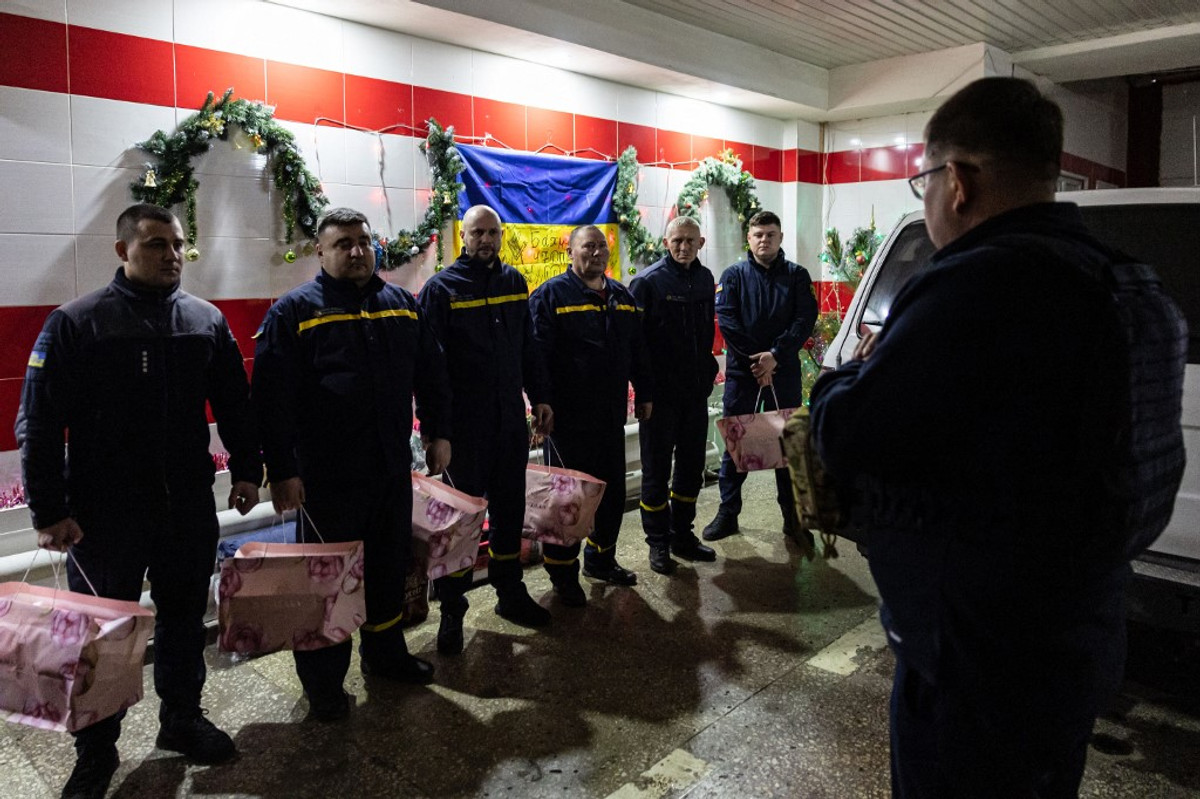
The firefighters are in one of the hotspots of fighting in eastern Ukraine.

Categories
Audio Sources - Full Text Articles

In US, sharply contrasting views on Benedict XIV’s legacy

NEW YORK (AP) — In the United States, admirers of Pope Emeritus Benedict XVI remembered him warmly for his theological prowess and devotion to traditional doctrine. However, some U.S. Catholics, on learning of his death Saturday, recalled him as an obstacle to progress in combating clergy sex abuse and expanding the role of women in the church.

Professor Kathleen Sprows Cummings, director of the University of Notre Dame’s Cushwa Center for the Study of American Catholicism, depicted Benedict as “a man of unwavering faith, deep conviction and towering intellect,” yet added that he left “a complicated legacy.”

She noted that last February, following a report that implicated him in the cover-up of sexual abuse during the years he served as Archbishop of Munich, Benedict “acknowledged his failure to act decisively at times in confronting sexual abusers.”

Steven Millies, a professor of public theology at Catholic Theological Union in Chicago, noted that Benedict – before becoming pope – had a lead role in enforcing church discipline at a time when the sex-abuse crisis was making headlines in the U.S. two decades ago.

“When he was elected to succeed John Paul II as pope in 2005, Benedict XVI was the person who was most knowledgeable about clergy sexual abuse.” Millies said via email. “Yet, the crisis continued to fester throughout Benedict’s papacy past his resignation in 2013 and even today.”

Millies suggested that Benedict’s most important legacy was his resignation, arising from “his recognition that he could not fix the abuse crisis or accomplish much else in the face of the deeply entrenched power of the Vatican’s centralized bureaucracy.”

Archbishop Timothy Broglio, who heads the Archdiocese for the Military Services, USA, and is president of the U.S. Conference of Catholic Bishops, praised Benedict as “a superb theologian” and recalled how the announcement of his resignation “shocked the world.”

“He recognized the great demands made of him as the chief shepherd of the Universal Church of a billion Catholics worldwide, and his physical limitations for such a monumental task,” Broglio said in a statement. “Even in retirement, retreating to live out a life in quiet prayer and study, he continued to teach us how to be a true disciple of Christ.”

Cardinal Timothy Dolan, who was appointed archbishop of New York and nominated as a cardinal by Benedict, praised the pope emeritus as a “erudite, wise, and holy man, who spoke the truth with love.”

Monsignor Kevin Irwin, dean emeritus at Catholic University of America, called Benedict a “theology professor extraordinaire… a clear thinker who was a quiet contributor to the church’s continuity after Pope John Paul II.”

Irwin said Benedict’s resignation left him stunned.

“But, in the end it was about understanding he was overwhelmed and letting him go,” Irwin said.

Monsignor Stephen Doktorczyk, vicar general for the Diocese of Orange in Southern California, remembered Benedict as a gracious leader who had the ability to build bridges and foster reconciliation.

“There was this unfair perception that he was there to cut people off at the knees,” said Doktorczyk, who served for five years — from September 2011 to December 2016 – in the Congregation for the Doctrine of the Faith, the Vatican office responsible for processing clergy sex abuse complaints. “He tried to be a peacemaker. When there was a way to reconcile, he tried to look outside the box.”

Others were more critical, including Kate McElwee, executive director of the U.S.-based Women’s Ordination Conference, which seeks to enable women to be ordained as Catholic priests.

“For many Catholics, Pope Benedict’s papacy is a chapter of our church’s history that we are still healing from,” McElwee said. Her statement asserted that Benedict, as head of the Vatican’s doctrine office and as pope, “orchestrated a rigid campaign of theological suppression on the question of women’s ordination, creating a culture of fear and pain within the church.”

Also offering a harsh judgment was David Clohessy, a longtime leader of the Survivors Network of those Abused by Priests.

“In more than 30 years as a mighty Vatican bureaucrat – nearly 10 of them as the world’s top Catholic figure – Benedict enabled countless child sex crimes and cover ups to continue by virtually refusing to publicly expose even one child molesting cleric or a complicit church official,” Clohessy said via email.

“With his extensive power and bully pulpit, he could have prevented hundreds or perhaps thousands of kids from being sexually assaulted. But he didn’t. Instead, he chose, time and time again, to side with ordained clergy over vulnerable children.”

___

Associated Press reporter Deepa Bharath in Southern California contributed to this report.

___

Associated Press religion coverage receives support through the AP’s collaboration with The Conversation US, with funding from Lilly Endowment Inc. The AP is solely responsible for this content.

WP Radio
WP Radio
OFFLINE LIVE