
The country’s defense minister has promised them ‘as soon as possible.’
 The Brooklyn Times - bklyntimes.com
General Motors Co (GM.N) on Tuesday reported a higher quarterly net income for the fourth quarter, and forecast stronger-than-expected earnings in 2023, sending its shares up over 5% in premarket trading.
The company expects its core auto operations to perform at a consistently strong level in 2023, with full-year net income attributable to stockholders of $8.7 billion-$10.1 billion, adjusted EBIT of $10.5 billion-$12.5 billion, and diluted and adjusted earnings per share of $6.00-$7.00.
For the full year, GM’s profit dropped to $9.9 billion from $10 billion in 2021. EBIT-adjusted income of $14.5 billion was a record, up slightly from $14.3 billion a year earlier.
The company expects adjusted automotive free cash flow of $5.0 billion to $7.0 billion in 2023, with net automotive cash from operating activities of $16.0 billion to $20.0 billion.
In the fourth quarter, GM earned $2.0 billion, up from $1.7 billion the previous year. EBIT-adjusted income of $3.8 billion topped the year-earlier $2.8 billion, as higher prices and increased sales volume in North America more than offset higher costs.
Diluted adjusted earnings per share of $2.12 in the quarter compared with $1.99 a year earlier.

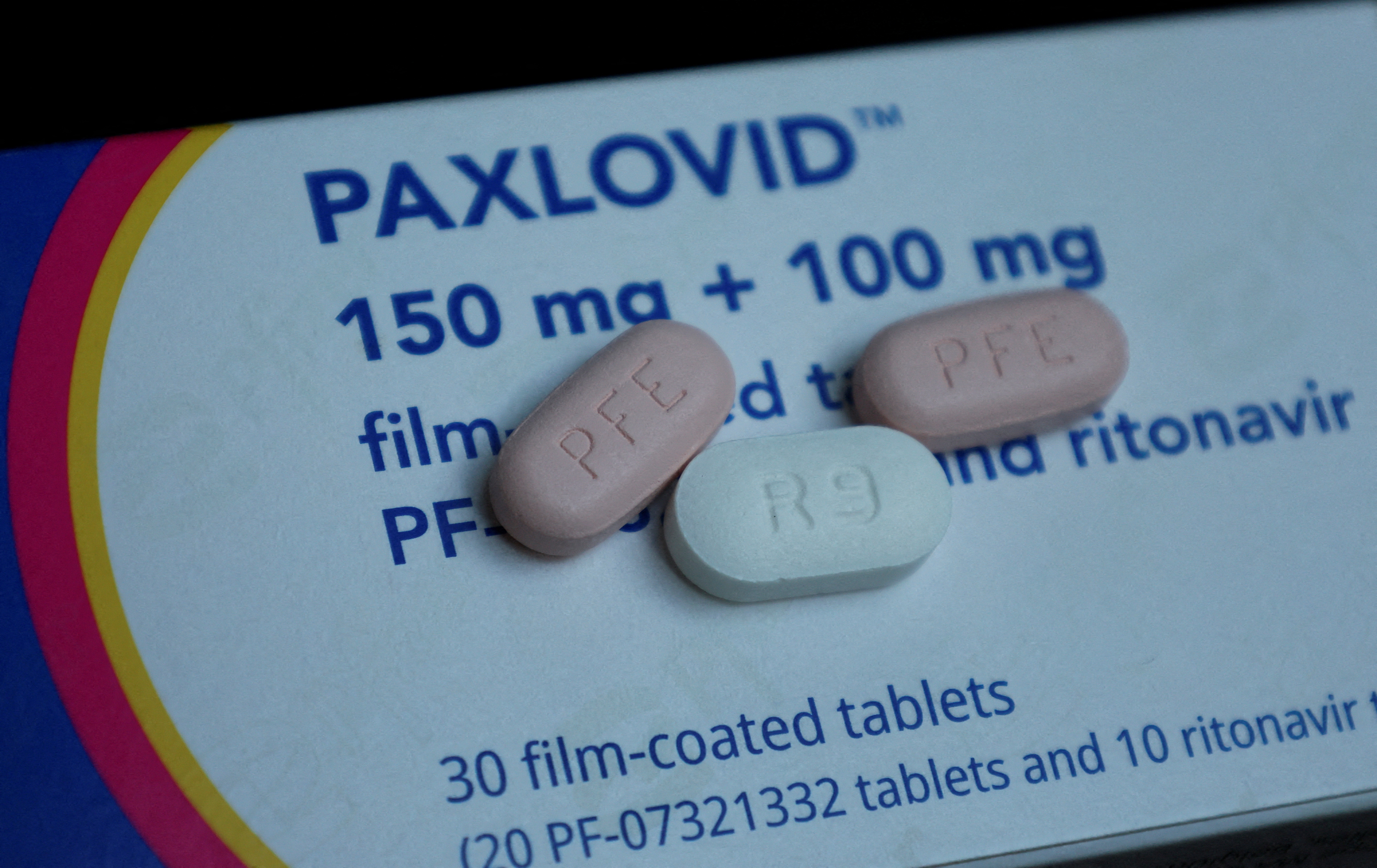
Pfizer Inc (PFE.N) on Tuesday forecast a steeper-than-expected drop in sales of its COVID-19 vaccine and pills in 2023, intensifying investor concerns over demand for the products as governments reduce orders.
The company’s shares fell 3.1% to $42.22 before the bell.
The forecast casts some uncertainty over future sales of Pfizer’s biggest selling products this year, which are expected to come under pressure as government spending on COVID vaccines and treatments declines.
The U.S. drugmaker said it expects sales of $13.5 billion from the vaccine for 2023, below Refinitiv estimates of $14.39 billion, and projected $8 billion in sales of its antiviral pill, Paxlovid, short of analysts’ expectation of $10.33 billion.
That compared with sales of $37.81 billion for the vaccine and $18.93 billion for Paxlovid in 2022.
The drugmaker has been hoping to offer its vaccine through the private market in the United States and other regions as government-backed vaccination campaigns for original shots near their end.

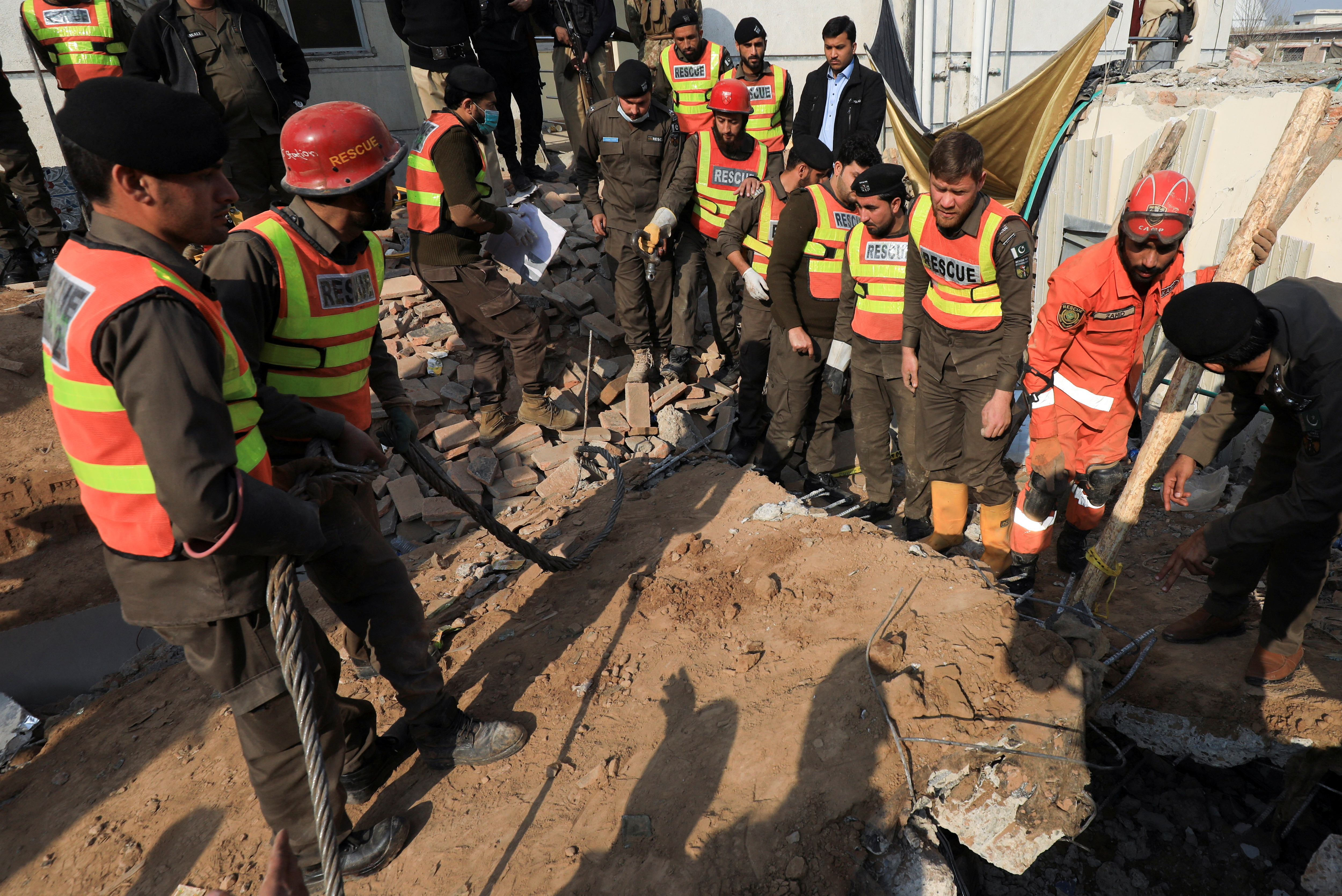
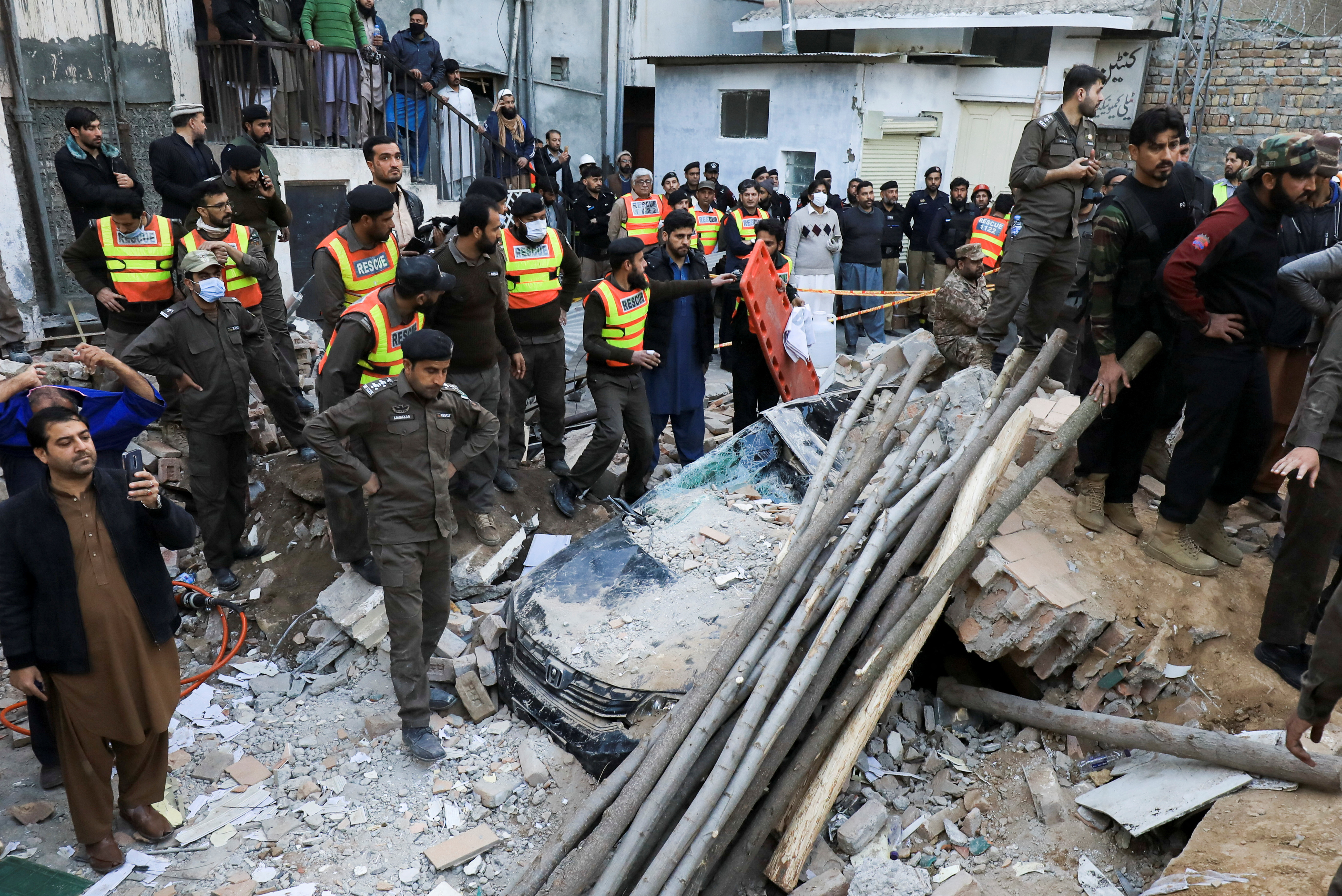
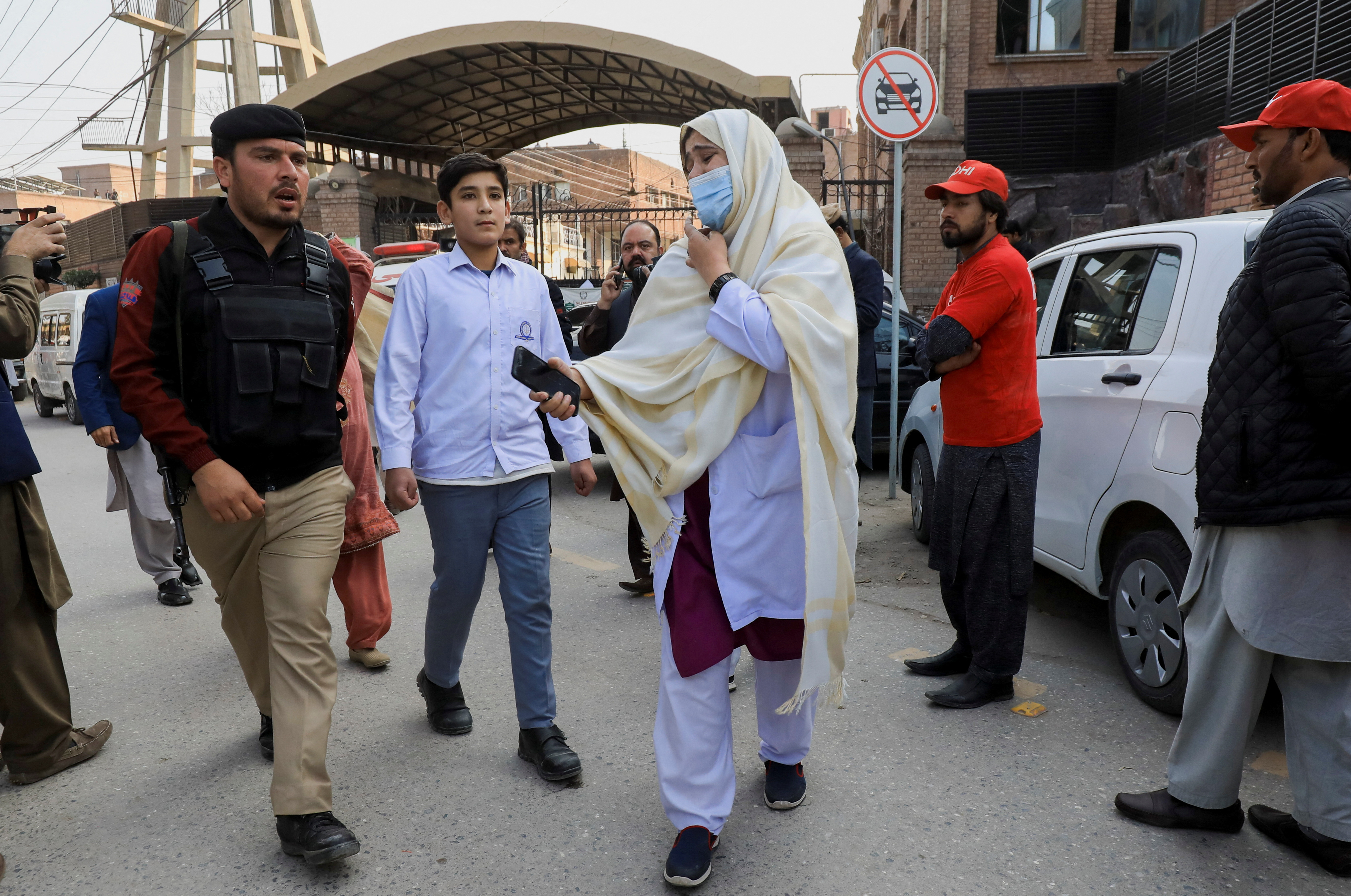
Distraught relatives thronged hospitals in Pakistan’s Peshawar on Tuesday to look for their kin a day after a suicide bombing ripped through a crowded mosque in a heavily fortified area of the city, killing more than 90 people, mostly policemen.
The attack, in the Police Lines district, was the deadliest in a decade to hit this restive, northwestern city near the Afghan border and comes amid a surge in violence targeting police. No group has claimed responsibility.
“My son, my child,” cried an elderly woman walking alongside an ambulance carrying coffins, as rescue workers stretchered wounded people to a hospital emergency unit.
At least 170 people were wounded in the blast, which demolished the upper storey of the mosque as hundreds of worshippers performed noon prayers.
Riaz Mahsud, a senior local government official, said the casualty toll was likely to rise as workers searched through the debris just over 24 hours later.
Authorities say they do not know how the bomber managed to breach the military and police checkpoints leading into the Police Lines district, a colonial-era, self-contained encampment in the city centre that is home to middle- and lower-ranking police personnel and their families.
Given the security concerns in Peshawar, the mosque was recently built to allow police to pray without leaving the area. Defence minister Khawaja Asif said the bomber was in the first row in the prayer hall when he struck.
The attack is the deadliest in Peshawar since twin suicide bombings at All Saints Church killed scores of worshippers in September 2013, in what is the deadliest attack on Pakistan’s Christian minority.
Peshawar sits on the edge of the Pashtun tribal lands, a region mired in violence for the past two decades. The most active militant group in the area is the Pakistani Taliban, also called Tehreek-e-Taliban Pakistan (TTP), an umbrella group for Sunni and sectarian Islamist factions opposed to the government in Islamabad.
The TTP denied responsibility for Monday’s bombing, though it has stepped up attacks since withdrawing from a peace deal with the government last year.
The bombing took place a day before an International Monetary Fund (IMF) mission arrives in Islamabad for talks on a stalled $7 billion bailout.



Striking workers disrupted French refinery deliveries, public transport and schools on Tuesday in a second day of nationwide protests over President Emmanuel Macron’s plan to make people work longer before retirement.
Crowds marched through cities across France to denounce a reform that raises the retirement age by two years to 64 and which is a test of Macron’s ability to push through change now that he has lost his working majority in parliament.
On the rail networks, only one in every three high-speed TGV trains were operating and even fewer local and regional trains. Services on the Paris metro were thrown into disarray.
Buoyed by their success earlier in the month when more than a million people took to the streets, trade unions which have been battling to maintain their power and influence urged the public to turnout en masse.
“We won’t drive until we’re 64!” bus driver Isabelle Texier said at a protest in Saint-Nazaire on the Atlantic coast, adding that many careers involved tough working conditions.
Others felt resigned ahead of likely bargaining between Macron’s ruling alliance and conservative opponents who are more open to pension reform than the left.
“There’s no point in going on strike. This bill will be adopted in any case,” said 34-year-old Matthieu Jacquot, who works in the luxury sector.
Unions said half of primary school teachers had walked off the job. TotalEnergies (TTEF.PA) said 55% of its workers on morning shifts at its refineries had downed tools, a lower number than on Jan. 19. The hard-left CGT union said the figure was inaccurate.
For unions, the challenge will be maintaining a strike movement at a time when high inflation is eroding salaries.
At a local level, some announced “Robin Hood” operations unauthorised by the government. In the southwestern Lot-et-Garonne area, the local CGT trade union branch cut power to several speed cameras and disabled smart power meters.
“When there is such a massive opposition, it would be dangerous for the government not to listen,” said Mylene Jacquot, secretary general of the CFDT union’s civil servants branch.
Opinion polls show a substantial majority of the French oppose the reform, but Macron intends to stand his ground. The reform was “vital” to ensure the viability of the pension system, he said on Monday.
A street march in Paris takes place later in the day.
The pension system reform would yield an additional 17.7 billion euros ($19.18 billion) in annual pension contributions, according to Labour Ministry estimates.
Unions say there are other ways to raise revenue, such as taxing the super rich or asking employers or well-off pensioners to contribute more.
“This reform is unfair and brutal,” said Luc Farre, the secretary general of the civil servants’ UNSA union. “Moving (the pension age) to 64 is going backwards, socially.”
French power supply was down by 4.5% or 3 gigawatts (GW), as workers at nuclear reactors and thermal plants joined the strike, data from utility group EDF (EDF.PA) showed.
TotalEnergies said deliveries of petroleum products from its French sites had been halted because of the strike, but that customers’ needs were met.
The government made some concessions while drafting the legislation. Macron had originally wanted the retirement age to be set at 65, while the government is also promising a minimum pension of 1,200 euros a month.
Prime Minister Elisabeth Borne has said the 64 threshold is “non-negotiable”, but the government is exploring ways to offset some of the impact, particularly on women.
Hard-left opposition figure Jean-Luc Melenchon, a vocal critic of the reform, said parliament would on Monday debate a motion calling for a referendum on the matter.
“The French are not stupid,” he said at a march in Marseille. “If this reform is vital, it should be possible to convince the people.”




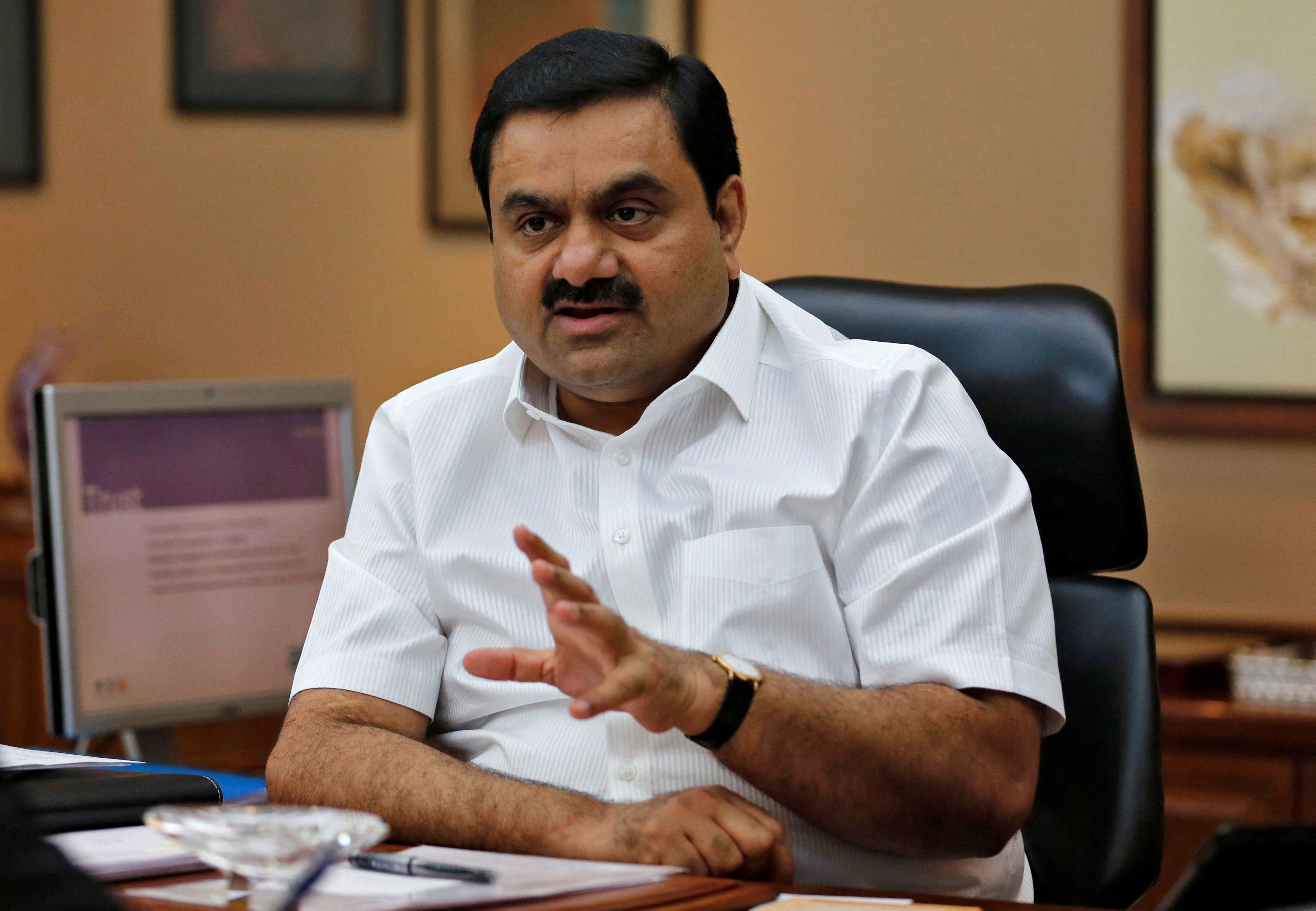
Gautam Adani’s crucial $2.5 billion share sale was fully subscribed on Tuesday as investors pumped funds into his flagship firm, despite a $65 billion rout in the Indian billionaire’s stocks sparked by a short-seller’s report.
The fundraising is critical for Adani, not just because it will help cut his group’s debt, but also because it is being seen by some as a gauge of confidence at a time when the tycoon faces one of his biggest business and reputational challenges.
Hindenburg Research’s report last week alleged improper use of offshore tax havens and concerns about high debt, which Adani denied, but the subsequent market meltdown has led to a dramatic and sudden fall in his fortunes as he slipped to eighth from third in Forbes rich list rankings.
India’s largest ever secondary share sale attracted participation from anchor investors including Maybank Securities and Abu Dhabi Investment Authority, as well as India’s HDFC Life Insurance and state-backed Life Insurance Corporation (LIFI.NS).
But while the 30% anchor portion of the issue had been subscribed fully last week, the book building had only 3% in bids on Monday, amid concerns over the rout in Adani’s stocks.
By Tuesday the overall share sale was fully subscribed as foreign institutional investors and corporate funds flooded in, although participation by retail investors and Adani Enterprises (ADEL.NS) employees remained low.
“Investors would view the successful completion of the FPO (follow-on public offering) as a welcome relief, as it implies that the company still has the support of institutional investors,” Leonard Law, Senior Credit Analyst at Lucror Analytics Singapore, said on Tuesday.
“The FPO would help to enlarge Adani Enterprises’ public float (thereby partly addressing the issue over the promoters’ concentrated shareholding), as well as reduce leverage for the company and improve investor sentiment,” Law added.
The offer closes days after Adani’s public face-off with Hindenburg Research, which last week flagged concerns about the use of tax havens and “substantial debt” at the group. It added that shares in seven Adani listed companies have an 85% downside due to what it called “sky-high valuations”.
That Adani group has said it complies with all laws and disclosure requirements, calling the report baseless and adding it is considering taking action against Hindenburg.
Support for Adani’s share sale came even as the flagship’s shares closed at 2,973.9 rupees, up nearly 3% but below the lower end of the sale price band of 3,112 rupees.
Adani Group’s total gross debt in the financial year ended March 31, 2022, rose 40% to 2.2 trillion rupees ($26.83 billion). Adani said on Sunday in response to Hindenburg’s allegations that over the past decade the group has “consistently de-levered”.
Adani said the Hindenburg report was a “calculated attack” on India and its institutions, while its CFO compared the market rout of its stocks to a colonial-era massacre.
Hindenburg later said Adani’s “response largely confirmed our findings and ignored our key questions.”
Asked about the Adani-Hindenburg saga, India’s chief economic adviser V. Anantha Nageswaran told reporters the “corporate sector as a whole has deleveraged and their balance sheets are healthy. So, what happens to one particular corporate group, is a matter between the market and the corporate group.”
Adani had in recent days repeatedly said investors were standing by its side and the share offering would go through. Bankers at one point had considered tweaking the pricing of the issue, or extending the sale, Reuters had reported.
Most of the demand during the public book building process came from non-institutional investors who invested more than 1 million rupees each, with bids totalling five times the shares on offer. The portion for qualified institutional buyers, which includes foreign investors, was 1.2 times subscribed.
But domestic financial institutions or banks, as well as domestic mutual funds, made no bids. And demand from retail investors and company employees remained muted, garnering bids of 12% and 55% of shares on offer.
“The Hindenburg report has taken a toll on the sentiment especially at the retail level. The purpose of the FPO was two fold – to raise funds to reduce the debt and to broadbase the shareholding … they haven’t been able to broadbase the shareholding,” Ambareesh Baliga, a Mumbai-based independent market analyst, said.
Adani’s firm held extensive discussions over the weekend and through Monday with investment bankers and institutional investors to attract subscriptions, according to two sources with direct knowledge of the talks.
The names of investors is not yet available, but Abu Dhabi conglomerate International Holding Company (IHC.AD) said late on Monday that it will invest $400 million.
Adani Transmission (ADAI.NS) closed nearly 4% higher on Tuesday after losing 38% since the Hindenburg report, while Adani Ports and Special Economic Zone (APSE.NS) climbed 2.6%.
Adani Total Gas (ADAG.NS) closed down 10% at its lower price limit, while Adani Power (ADAN.NS) and Adani Wilmar (ADAW.NS) were down 5% each.
Hindenburg said in its report it had shorted U.S.-bonds and non-India traded derivatives of the Adani Group. On Tuesday, U.S. dollar-denominated bonds issued by Adani Ports and Special Economic Zone continued their fall into a second week.

Turkish Foreign Minister Mevlut Cavusoglu said on January 10 that he could meet with his Syrian counterpart Faisal Mekdad in early February.
Such a meeting would mark the highest-level talks between Ankara and Damascus since the Syrian war began in 2011 and signal a rapprochement between the two countries.
This meeting is preceded by several movements in which Moscow has been most interested.
After several talks between Ankara and Moscow, Russian President Vladimir Putin convinced Erdogan to talk to Damascus.
Russia is quite clear that it is able to influence Turkish decision-making at this moment. The first reward that Turkey received from Russia was the grain agreement with Ukraine, which allowed grain to be sent from Ukraine through Türkiye to countries in the Middle East and Africa.
Although Türkiye continues to aid Ukraine militarily and sell drones to it, it has not respected the sanctions imposed on Russia and has yet to ratify the admission of Sweden and Finland to NATO.
After Türkiye improved relations with the United Arab Emirates, Israel and Saudi Arabia, Erdogan is trying to get closer to Egypt. The next step will be Syria.
Initially, Turkish intelligence chief Hakan Fidan met with his Syrian counterpart and other senior figures. Later, the first ministerial-level meeting was held in December 2022 in Moscow, where Turkish Defense Minister Hulusi Akar met with Ali Mahmoud Abbas, the Syrian Defense Minister.
Shortly thereafter, the Turkish Foreign Minister announced that the second ministerial level meeting between foreign ministers will be held in the second half of January. Due to the following disagreements, this meeting was postponed to the beginning of February, with the presence of the Russian foreign minister.
The friendship between Erdogan and Bashar al-Assad was severed 12 years ago, after the start of the civil war in Syria when Erdogan insisted on Assad’s removal from power before considering the restoration of relations between the two countries.
The pressure for the normalization of relations comes on the one hand from Moscow, which does not want and has prevented any attempt by Türkiye for airstrikes in the north of Syria since 2019. For Russia, it is important that Assad completes the restoration of control over the entire Syrian territory .

Read also: Russia chisels away at Assad’s entourage
It should not be forgotten that the threat of US sanctions hangs over Türkiye, with a decision by the Trump administration in 2019, if it will launch a military operation against the regions controlled by the YPG in northern Syria.
Erdogan’s goal is to create a border cushioning zone of 30 km wide, populated by Arabs.
Another circumstance that has changed in the Turkish panorama and pushes Erdogan towards relations with Assad is the pressure of its public opinion regarding the presence of Syrian refugees. The refugees have become a source of conflict with Turkish citizens who blame them for taking jobs and are partly responsible for the country’s economic crisis.
The normalization of relations with Assad is seen as an opportunity for their return based on an agreement between the two countries, even though the Lebanese and Jordanian experience shows the opposite.
But with Turkey in an economic crisis, with rising inflation, the strong fall in the value of the lira, and the promises of the opposition parties to solve the refugee issue by normalizing relations with Assad, Erdogan does not have many choices left.
In this scenario, the winner is undoubtedly Bashar al-Assad. It manages to have Russian control over Erdogan in order not to suffer a fourth invasion by Türkiye in the north of the country, and by normalizing relations with Erdogan, it weakens the Syrian opposition, which until now has found on Erdogan its main support.
Not to mention the strong legitimacy that Assad’s figure would receive after the normalization of relations with Turkey. This would be a further political victory after the opening of the embassies of the United Emirates and Bahrain.
Senior officials in several Arab states are pushing to reinstate Syria’s membership in the Arab League, including Algeria, which will host an upcoming League summit in March. Syria is already set to host an Arab energy conference in 2024.
And recently, another conditioning circumstance for Türkiye has been the lack of European support for Turkey and the US’s inability, or unwillingness, to influence the Syrian conflict and seriously address Turkish security issues regarding the YPG.
Regarding the Syrian refugees, the Turks felt used by the Europeans, since the EU never implemented many of the aspects of the agreement that was made regarding the permanence of the Syrian refugees in Turkey, starting from the liberalization of visas for Türkiye, or funds further.
According to various Arab media reports, the three countries (Türkiye, Syria and Russia) have agreed in principle that all Turkish forces withdraw from Syrian territory, to be replaced by Syrian units, together with militias loyal to the regime.
These reports have not yet been officially confirmed, but if they are true, detailed agreements should follow.
Washington does not seem to be keen on such an agreement. But as it has happened so far, maintaining the status quo in northern Syria in defense of the interests of the Kurdish allies in the war against ISIS seems to still have priority.
The Iranian foreign minister stated that he was “very satisfied” with the December talks between Ankara and Damascus, but the fact is that Iran has been excluded from all talks regarding Syria between Moscow and Türkiye.
Despite the ties with all three countries involved and the military assistance it provides to Russia in its war with Ukraine, Tehran has never been included in the talks and Moscow continues to allow Israel to attack Iranian targets on Syrian territory.
It seems that the maxim attributed to Lord Palmerston “We have no eternal allies and no permanent enemies. Our interests are eternal and permanent, and these interests it is our duty to pursue”, applies to anyone at any time.
NEW YORK (AP) — Exxon Mobil posted record annual profits in 2022 as Americans struggled with high prices for gasoline, home heating and consumer goods.
The oil giant brought in $12.75 billion in profits in the fourth quarter, bringing annual profits to $55.7 billion. That exceeded Exxon’s previous annual record of $45.22 billion in annual profits Exxon set in 2008, when a barrel of oil soared close to $150.
The Irving, Texas, company brought in $95.43 billion in revenue during the fourth quarter.
Exxon said it achieved its best-ever annual refining throughput in North America and the highest globally since 2012.
Exxon earned $3.09 per share in the quarter.
The price of oil ranged between $70 to $90 for a barrel of U.S. benchmark crude during the quarter. Domestic natural gas prices, which affect the cost of home energy and electricity , ranged from $6 to $7 per million British thermal units during the quarter, according to FactSet, which was higher than in recent years.
Since Russia invaded Ukraine, Russia’s decreased its supply of natural gas to Europe, which resulted in higher prices of natural gas and its liquid counterpart, LNG, on the global market.
President Joe Biden has accused oil companies of profiting from the war Russia waged on Ukraine, and has previously raised the possibility of a war profit tax on oil companies.
______
Elements of this story were generated by Automated Insights (http://automatedinsights.com/ap) using data from Zacks Investment Research.
In his 5th-century B.C. History of the Peloponnesian War, ancient Athenian historian and military general Thucydides posits, “it was the rise of Athens and the fear that this instilled in Sparta that made war inevitable.”
It’s a musing that prompted American political scientist Graham T. Allison in 2012 to venture a theory known as the “Thucydides Trap,” noting that of 16 historical occasions when a presumptive power challenged an established one, no less than 12 resulted in war.
Today, the “Thucydides Trap” is most often used to describe fractious U.S.-China relations and where they may lead—though it is a matter of hot debate. Objectors cite intertwined supply chains, established international governance mechanisms, and bilateral trade that reached a record $760 billion last year. Endorsers point to resurgent nationalism, concerted military build-ups, and increasingly bellicose rhetoric on both sides—arguably the most worrying of which emerged Friday, when U.S. Four-Star General Mike Minihan warned his troops of China: “My gut tells me we will fight in 2025.” (The Pentagon says that Minihan’s comments “are not representative of the department’s view on China.”)
[time-brightcove not-tgx=”true”]
“I hope I am wrong,” Minihan, who heads the Air Force’s Air Mobility Command, wrote in a memo, which circulated on social media, to the leadership of its 110,000 members. Chinese President Xi Jinping, he explains, “secured his third term and set his war council in October 2022. Taiwan’s presidential elections are in 2024 and will offer Xi a reason. United States’ presidential elections are in 2024 and will offer Xi a distracted America. Xi’s team, reason, and opportunity are all aligned for 2025.”
The subject of the memo is “February 2023 Orders in Preparation for — The Next Fight,” and Minihan goes on to direct troops to undergo a monthly progression of readiness, including ordering personnel to “consider their personal affairs” and to “fire a clip into a 7-meter target with the full understanding that unrepentant lethality matters most. Aim for the head.”
The sensational remarks have provoked consternation on both sides of the Pacific. “All these are things that you say when you’re getting ready to go to combat,” retired U.S. Lt. Col. Daniel L. Davis tells TIME. “Either he knows something that we don’t, or he’s just really trying to get everybody fired up. But I can tell you, for sure, it’s very out of the ordinary.”
The Pentagon’s press secretary Brig. Gen. Patrick Ryder, meanwhile, said in a statement that “China is the pacing challenge for the Department of Defense and our focus remains on working alongside allies and partners to preserve a peaceful, free and open Indo-Pacific.”
Minihan’s memo was described as “reckless and provocative” in a headline by the strident Chinese Communist Party tabloid Global Times. And Zhou Bo, a retired senior colonel of the People’s Liberation Army and senior fellow at the Center for International Security and Strategy at Tsinghua University, tells TIME that Minihan’s projection is “irresponsible,” adding that the American general is “probably just using the tactics of smearing the image or credibility of China without wasting a bullet.”
Minihan’s comments are merely the most immediate of a worrying, emerging consensus that the U.S. and China are destined to clash over Taiwan, the self-ruling island of 23 million that Beijing claims as its sovereign territory. On Jan. 23, former chief of the U.S. Indo-Pacific Command Philip Davidson said he stood by an earlier assessment that China may attack Taiwan by 2027.
Notably, when asked about Minihan’s remarks at a press conference, a spokeswoman for the Chinese Foreign Ministry was quick to direct official ire toward Taipei. “The real cause of the new round of tensions across the Taiwan Strait is the [ruling Democratic Progressive Party] authorities’ continued act of soliciting U.S. support for ‘Taiwan independence,’” she said.
It’s clear that a war between the world’s top two economies would upset the global economy at a scale utterly eclipsing the disruption wrought by Russia’s invasion of Ukraine. But recently, there were signs that China was attempting to mend fences. So-called “Wolf Warrior” diplomats—named after a jingoistic action movie—have been reassigned to less prominent roles.
Liu He, the CCP’s outgoing chief economic strategist, was all smiles at the World Economic Forum in Davos, where he gushed that China’s “opening up to the world is a must.” And unlike the previous year, Xi didn’t use his New Year address to call for China-Taiwan reunification. Instead, he said, “We cherish peace and development and value friends and partners.”
Observers suggest that China is keen to repair some of the damage done to his country’s foreign and economic relations caused by the pandemic and Xi’s backing of Putin’s aggression. But the same red lines remain, and the nature of American democracy means that, on both sides of the aisle, needling them scores easy political points. On Jan. 10, 365 lawmakers in the House voted to form a new China Select Committee to probe the most divisive areas of bilateral ties.
“There is bipartisan consensus that the era of trusting Communist China is over,” new Republican House Speaker Kevin McCarthy told legislators. McCarthy, worryingly, has indicated that he intends to follow the example of his predecessor, Nancy Pelosi, who in August visited Taiwan—a trip that Beijing met with unprecedented military drills.
Meanwhile, a military build-up by both sides gathers pace. While the U.S. maintains a strong lead in aircraft carriers, nuclear-powered submarines, and larger ships, China’s navy is now the world’s largest by raw numbers. And China is expected to expand its navy by nearly 40% between 2020 and 2040, according to the U.S. Navy. In November 2021, the U.S. Department of Defense predicted that China was set to quadruple its nuclear stockpile and “have at least 1,000 warheads by 2030.” In December, China and Moscow held joint military drills in the East China Sea close to both Japan and Taiwan. Beijing is also reportedly opening a new military base in Cambodia.
The U.S., meanwhile, continues to spend more on its military than the next nine countries combined—the defense budget was recently approved to hit a record high of $858 billion this year—and it has been busy beefing up regional alliances such as the Quad and AUKUS. In January, President Joe Biden and Japanese Prime Minister Fumio Kishida agreed to new cooperation on thwarting potential threats from space, developing uninhabited islands for joint military drills, and reconfiguring U.S. troop deployments on Japan’s island of Okinawa with a new $8 billion base opening on Guam.The U.S. is also reportedly negotiating for enhanced access to Philippines military bases this very week.
The trap is set. The world can only hope we avoid walking into it. “I see hotheads in Beijing, and I see hotheads in the Pentagon and the various commands,” says Davis, the American former army man. “And I worry about it a lot.”
Exxon Mobil Corp (XOM.N) posted $59 billion in adjusted profit for 2022, the company said on Tuesday, taking home more than $6.7 million per hour last year, and setting not only a company record but a historic high for the Western oil industry.
Oil majors are expected to break their own annual records on high prices and soaring demand, pushing their combined take to near $200 billion. The scale has renewed criticism of the oil industry and sparked calls for more countries to levy windfall profit taxes on the companies.
Exxon’s results far exceeded the then-record $45.2 billion net profit it reported in 2008, when oil hit $142 per barrel, 30% above last year’s average price. Deep cost cuts during the pandemic helped supercharge last year’s earnings.
“Overall earnings and cashflow were up pretty significantly year on year,” Exxon Chief Financial Officer Kathryn Mikells told Reuters. “So that came really from a combination of strong markets, strong throughput, strong production, and really good cost control.”
Exxon said it incurred a $1.3 billion hit to its fourth quarter earnings from a European Union windfall tax that began in the final quarter and from asset impairments. The company is suing the EU, arguing the levy exceeds its legal authority.
The results may set up another confrontation with the White House. On Friday, President Joe Biden’s administration blasted oil firms for pouring cash into shareholder payouts rather than production.
Exxon boasted its cash flow from operations soared to $76.8 billion last year, up from $48.1 billion in 2021.
Windfall profit taxes are “unlawful and bad policy,” countered Mikells. Slapping new taxes on oil earnings “has the opposite effect of what you are trying to achieve,” she said, adding it would discourage new oil and gas production.
Exxon posted $14 billion in fourth quarter profit excluding charges, 60% more than the same period last year but down almost 25% from the previous quarter as oil prices eased and some operations suffered from cold-weather related outages.
Adjusted fourth quarter per share profit was $3.09 per share, below the $3.32 per share forecast by Zacks Financial.
Exxon’s spending on new oil and gas projects bounced back last year to $22.7 billion, up 37% from the prior year. The company increased outlays on discoveries in Guyana, in the top U.S. shale field, and on fuel refining and chemicals.
“The counter-cyclical investments we made before and during the pandemic provided the energy and products people needed as economies began recovering,” Exxon Chief Executive Officer Darren Woods said in a statement.
Its results come ahead of what are expected to be strong earnings from Shell plc on Thursday and from BP plc and TotalEnergies next week.
Including charges, profit for the full year was $55.74 billion.
Advertisements – Advertising at The News And Times – advertising-newsandtimes.com | WE CONNECT!
Audio | Video | Top News | On Twitter | Security | FBI | Capitol Riot | JOSSICA | Trump | Russia | Putin | Russia – Ukraine War | Covid-19 | Brooklyn NY | Puerto Rico | World
September 22, 2026 7:20 am
The News And Times | Featured Posts | All Articles | Current News | Selected Articles | Shared Links | Opinions | In My Opinion | Sites | Blogs | Links | Twitter | Facebook

Contact Form | Blogs | Sites | News Reviews | Links | Advertising
All The News That’s Fit To Web